EP1051604B1 - Verfahren zur bestimmung der qualitativen zusammensetzung der organischen bodensubstanz von mineralböden - Google Patents
Verfahren zur bestimmung der qualitativen zusammensetzung der organischen bodensubstanz von mineralböden Download PDFInfo
- Publication number
- EP1051604B1 EP1051604B1 EP98908027A EP98908027A EP1051604B1 EP 1051604 B1 EP1051604 B1 EP 1051604B1 EP 98908027 A EP98908027 A EP 98908027A EP 98908027 A EP98908027 A EP 98908027A EP 1051604 B1 EP1051604 B1 EP 1051604B1
- Authority
- EP
- European Patent Office
- Prior art keywords
- soil
- weight loss
- obs
- soils
- sample
- Prior art date
- Legal status (The legal status is an assumption and is not a legal conclusion. Google has not performed a legal analysis and makes no representation as to the accuracy of the status listed.)
- Expired - Lifetime
Links
- 239000002689 soil Substances 0.000 title claims description 72
- 238000000034 method Methods 0.000 title claims description 20
- 229910052500 inorganic mineral Inorganic materials 0.000 title claims description 10
- 239000011707 mineral Substances 0.000 title claims description 10
- 239000000126 substance Substances 0.000 title description 28
- 230000004580 weight loss Effects 0.000 claims description 48
- 238000010438 heat treatment Methods 0.000 claims description 7
- 238000002411 thermogravimetry Methods 0.000 claims description 6
- 239000004016 soil organic matter Substances 0.000 claims 2
- 239000000523 sample Substances 0.000 description 22
- 235000015097 nutrients Nutrition 0.000 description 14
- 239000003864 humus Substances 0.000 description 9
- 239000004927 clay Substances 0.000 description 8
- 229910052799 carbon Inorganic materials 0.000 description 6
- OKTJSMMVPCPJKN-UHFFFAOYSA-N Carbon Chemical compound [C] OKTJSMMVPCPJKN-UHFFFAOYSA-N 0.000 description 5
- 241000196324 Embryophyta Species 0.000 description 5
- 230000001419 dependent effect Effects 0.000 description 4
- 239000003673 groundwater Substances 0.000 description 4
- 230000008569 process Effects 0.000 description 4
- 238000001303 quality assessment method Methods 0.000 description 4
- XLYOFNOQVPJJNP-UHFFFAOYSA-N water Substances O XLYOFNOQVPJJNP-UHFFFAOYSA-N 0.000 description 4
- 230000006399 behavior Effects 0.000 description 3
- 230000015572 biosynthetic process Effects 0.000 description 3
- 230000000813 microbial effect Effects 0.000 description 3
- 238000004181 pedogenesis Methods 0.000 description 3
- 239000002028 Biomass Substances 0.000 description 2
- 238000004458 analytical method Methods 0.000 description 2
- 230000003139 buffering effect Effects 0.000 description 2
- 238000004364 calculation method Methods 0.000 description 2
- 238000004040 coloring Methods 0.000 description 2
- 238000011161 development Methods 0.000 description 2
- 230000018109 developmental process Effects 0.000 description 2
- 238000003745 diagnosis Methods 0.000 description 2
- 230000000694 effects Effects 0.000 description 2
- 239000003337 fertilizer Substances 0.000 description 2
- 230000002068 genetic effect Effects 0.000 description 2
- 150000002894 organic compounds Chemical class 0.000 description 2
- 230000009467 reduction Effects 0.000 description 2
- 235000013311 vegetables Nutrition 0.000 description 2
- 240000000731 Fagus sylvatica Species 0.000 description 1
- 235000010099 Fagus sylvatica Nutrition 0.000 description 1
- 238000012271 agricultural production Methods 0.000 description 1
- 238000007605 air drying Methods 0.000 description 1
- 150000001413 amino acids Chemical class 0.000 description 1
- 230000008901 benefit Effects 0.000 description 1
- 230000031018 biological processes and functions Effects 0.000 description 1
- 235000014633 carbohydrates Nutrition 0.000 description 1
- 150000001720 carbohydrates Chemical class 0.000 description 1
- 150000004649 carbonic acid derivatives Chemical class 0.000 description 1
- 150000001768 cations Chemical class 0.000 description 1
- 235000013339 cereals Nutrition 0.000 description 1
- 230000008859 change Effects 0.000 description 1
- 238000012512 characterization method Methods 0.000 description 1
- 230000000052 comparative effect Effects 0.000 description 1
- 150000001875 compounds Chemical class 0.000 description 1
- 238000010276 construction Methods 0.000 description 1
- 238000012272 crop production Methods 0.000 description 1
- 230000006378 damage Effects 0.000 description 1
- 230000006735 deficit Effects 0.000 description 1
- 238000001514 detection method Methods 0.000 description 1
- 238000006073 displacement reaction Methods 0.000 description 1
- 230000002349 favourable effect Effects 0.000 description 1
- 230000035558 fertility Effects 0.000 description 1
- 229940088597 hormone Drugs 0.000 description 1
- 239000005556 hormone Substances 0.000 description 1
- 239000004021 humic acid Substances 0.000 description 1
- 150000002632 lipids Chemical class 0.000 description 1
- 239000000463 material Substances 0.000 description 1
- -1 microbial exoenzymes Chemical class 0.000 description 1
- 244000005700 microbiome Species 0.000 description 1
- 230000001151 other effect Effects 0.000 description 1
- 230000020477 pH reduction Effects 0.000 description 1
- 238000004445 quantitative analysis Methods 0.000 description 1
- 239000002994 raw material Substances 0.000 description 1
- 239000003802 soil pollutant Substances 0.000 description 1
- 238000003860 storage Methods 0.000 description 1
- 239000000758 substrate Substances 0.000 description 1
- 238000003971 tillage Methods 0.000 description 1
- 230000007704 transition Effects 0.000 description 1
- 238000010792 warming Methods 0.000 description 1
- 239000003643 water by type Substances 0.000 description 1
Images
Classifications
-
- G—PHYSICS
- G01—MEASURING; TESTING
- G01N—INVESTIGATING OR ANALYSING MATERIALS BY DETERMINING THEIR CHEMICAL OR PHYSICAL PROPERTIES
- G01N5/00—Analysing materials by weighing, e.g. weighing small particles separated from a gas or liquid
- G01N5/04—Analysing materials by weighing, e.g. weighing small particles separated from a gas or liquid by removing a component, e.g. by evaporation, and weighing the remainder
-
- G—PHYSICS
- G01—MEASURING; TESTING
- G01N—INVESTIGATING OR ANALYSING MATERIALS BY DETERMINING THEIR CHEMICAL OR PHYSICAL PROPERTIES
- G01N33/00—Investigating or analysing materials by specific methods not covered by groups G01N1/00 - G01N31/00
- G01N33/24—Earth materials
Definitions
- the invention relates to a method for determining the qualitative composition of organic Soil substance (OBS) of mineral soils by means of Thermogravimetry.
- OBS organic Soil substance
- organic soil With the organic Soil substance is all in the soil organic compounds without living biomass designated.
- the OBS is made up of humus, dead vegetable and animal biomass, water soluble organic compounds (e.g. carbohydrates, Amino acids, microbial exoenzymes, lipids, vegetable and animal hormones etc.) and other non-living organic substances or organo-mineral Components together.
- humus denotes those organic Components of mineral soils that develop during the Enrich soil formation or soil genesis. she are different from all other organic ones Substances through their soil-specific character.
- DD 249 972 A1 and DD 252 890 A1 for example, methods for determining the Feasibility of organic soil described in which the difficult to mineralize Humic acids are separated, which makes it easy mineralizable components of the OBS with high Accuracy can be determined. This makes possible a better calculation of the nutrient release the floor throughout the year. Relationships with Classification characteristics of soils, individual Soil formation processes or properties of soils in individual climate zones, functions of the soils in the Biosphere or to the regularities of the succession of Ecosystems can be derived from the results of these methods do not derive.
- DD 259 460 A1 contains a method that the different meaning of thermal stability humified and non-humified components for Assessment of biological accessibility and thus for the biological usability of components that can be implemented uses. It complements quantitative methods Determination of implementable components by a qualitative parameters, but remains on individual Components of the OBS and dependent processes of the Limited release of plant nutrients.
- the object of the invention was therefore to provide a simple, inexpensive and for mineral soils in all regions, Climatic zones and directions of use applicable method for determining the quality of the organic soil to provide which is the elaborate material identification of individual components of the OBS does not require and instead subscribe generally applicable, evolutionary principles oriented towards today's bottom formation.
- the air-dry to be examined is Soil sample analyzed thermogravimetrically after it in a thin layer with constant and high relative Humidity over 50% stored to constant weight has been. Storage is particularly preferred at 60-95% relative humidity. Air drying the Samples were preferably taken at below 30 ° C and over 50% relative humidity. With thermogravimetric Analysis will lower the sample from 20 ° C to over 960 ° C aerobic conditions warmed, and weight loss recorded. The rate of warming will increase between 1 ° C and 50 ° C per minute chosen so that a rapid, but possibly simultaneous heating of the entire sample volume.
- the composition of the OBS determine and this effect of climatic factors as well as the clay content is dependent, the Quality of the OBS using a quotient from the summaries thermogravimetric weight loss between 200 ° C and 450 ° C (primary decay range non-humified, microbially implementable components the OBS) to the summaries thermogravimetric Weight loss between 95 ° C to 190 ° C Determine (weight loss due to water release).
- Weight loss quotient by dividing the Weight loss between 295 ° C and 305 ° C through the Weight loss between 135 ° C and 145 ° C (priority Decay area for buffered exoenzymes) certainly.
- This weight loss quotient describes Proportion of non-humus substances in the OBS based on the Amount of bound water of the humus substances. He is regardless of the clay content and applies to all mineral soils regardless of the region, the climate zone or the Direction of use of the soil.
- weight loss quotients> 1 found, it is soils in which by Buffer effects of humus substances at constant Soil moisture microbial components of the OBS (Non-humus substances) were enriched and only a few or there are no buffered exoenzymes (e.g. Brown earth under natural forest vegetation).
- weight loss quotients ⁇ 1 found, it concerns soils, their share in Exoenzymes is greater than the proportion Non-humic substances. These characteristics are for floors with strongly changing soil moisture (e.g. black earth under natural steppe vegetation) characteristic. You can still find yourself in all soil horizons Soil genetic low supply of feasible organic residues with otherwise cheap Living conditions for soil microorganisms (horizons below the A horizons), i.e. in layers with Soil genetic, low proportions of feasible Components.
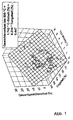
- the weight fraction of implementable components quantify the OBS. It is calculated from the Total weight loss less weight loss tone dependent components of the OBS using the Fig. 1 coefficients for the influence of the clay content on the total weight loss as well minus the weight losses due to carbonates.
- To make weight loss more organic Substance in the amount of convertible carbon To convert a factor can be determined, which the mean weight loss of OBS per% C in the soil expresses. It is calculated from the division of the Total weight loss up to 800 ° C minus the Weight loss through hygroscopic water through the C content of the soil in percent. The division of the Weight loss of the convertible substance through this Faktor delivers information about the content percentage of carbon in the soil.
- Weight loss quotient is in combination with that Possible implementation of OBS shares possible, specifics the nutrient release for the productive Land use (forestry and agriculture) and tasks targeted use of soil protection. such The following are examples of individual examples explained.
- the weight loss quotient varies the most in Dependence on the climate and the influence of groundwater on the soil moisture, less depending on the Vegetation, the clay content and other factors as well as on lowest in the course of the year. This enables at known soil climatic conditions (climate, Groundwater influence, vegetation) a diagnosis of Soil types based on the weight loss quotient or the OBS quality expressed in it. at agricultural soils is an assessment of the Supply status with organic substance possible. However, is the soil type, land use and supply known to implementable organic residues allowed the weight loss quotient draws conclusions about specifics bottom formation, especially the middle Variability in humidity conditions.
- small weight loss quotients indicate alternating moist conditions, such as those characteristic of the A h horizons (humus enrichment horizons) of podsoles and black earths.
- Large weight loss ratios are typical for brown soils and soils in the evenly humid tropics (among natural forest vegetation).
- Differences in the weight loss quotient are also accompanied by differences in the intensity of the coloring (color intensity of the OBS per C content), which can be used for a comparative diagnosis of the OBS quality if the same contents of coloring cations (eg Fe, Mn) are available. This results in possibilities for the development of field methods, which can be regionally calibrated and adapted using the thermogravimetric method.
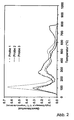
- thermogravimetric analyzes of these samples were carried out with a converted "derivograph" from the Hungarian company "MOM” and the results were verified by means of the same analyzes with a thermo balance from Mettler-Toledo GmbH (TGA / SDTA 851 e ).
- the heating took place from room temperature (20 - 25 ° C) to over 960 ° C with a heating rate of 5 ° C per minute under aerobic conditions. Temperature and weight loss were continuously recorded during the thermogravimetric analysis.
- the weight of the soil samples was 1700 mg (for the TGA / SDTA 851 e : 900 mg). To prepare the analysis, the air-dry soil samples were analyzed in a max.
- thermogravimetric analysis total weight loss in mg / g weight for the temperature ranges from (° C) 295 135 30 105 355 415 660 30 to (° C) 305 145 800 115 365 425 970 190 column 1 2 3 4 5 6 7 8th Sample 1 0205 0088 6.90 0195 0175 0107 00:16 2:05 Sample 2 0143 0098 6.77 0256 0092 0085 0.97 2.27 Sample 3 0165 0307 9:38 0653 0116 0113 00:40 4:54
- OBS quality of sample 1 serve as a basis for comparison here. They are typical for A h - horizons (humus enrichment horizons) of soils of the temperate humid climate under forest or of brown earth under natural vegetation. Agricultural use of the same soil (sample 2) leads to a significant reduction in the amount of convertible carbon, while the content of the inert or humified carbon does not change (difference between the C content and the C of the convertible substance). This explains a significantly lower weight loss ratio for OBS quality. The latter is again significantly smaller in sample 3 and reaches orders of magnitude of black earth, ie of soils with pronounced alternating moisture and steppe vegetation.
- sample 1 offers a pronounced buffering of nutrient resources the best conditions for a slow and continuous supply of nutrients, as for forestry issues and keeping the groundwater clean (reduction of displacement of nutrients) is favorable.
- the weight loss quotient can be as Use classification feature because values over 1 in Ap horizon (plow horizon, samples 1 and 2) exclusively with brown earth and only in rare cases in lessiviert (clay muddy) and podsol vigilant Soils (soils with clay destruction) occur.
- the results the quality assessment confirm the Correctness of the assignments of the samples to individual Soil types and climatic zones (the latter only in known vegetation), even without knowledge of Profile construction.
- the low weight loss ratio at Sample 3 refers to an assignment Black earth. Without the inclusion of further samples however, it cannot be said which quality quotient for this soil under natural vegetation is characteristic. However, because of the undersupply with organic substance found Expect values much closer to 1, so it's just a transition floor from black earth to brown earth can act. This conclusion agrees with that Hand of the profile structure made assignment of the floor to match brown black earths. Even with sample 3 is thus based on the quality assessment with knowledge of arable use and the most important climatic Soil formation conditions an assessment of the Soil type possible.
Landscapes
- Life Sciences & Earth Sciences (AREA)
- Health & Medical Sciences (AREA)
- Chemical & Material Sciences (AREA)
- Immunology (AREA)
- Pathology (AREA)
- Engineering & Computer Science (AREA)
- General Physics & Mathematics (AREA)
- General Health & Medical Sciences (AREA)
- Biochemistry (AREA)
- Analytical Chemistry (AREA)
- Physics & Mathematics (AREA)
- Medicinal Chemistry (AREA)
- Food Science & Technology (AREA)
- Environmental & Geological Engineering (AREA)
- General Life Sciences & Earth Sciences (AREA)
- Remote Sensing (AREA)
- Geology (AREA)
- Investigating Or Analyzing Non-Biological Materials By The Use Of Chemical Means (AREA)
- Measuring Or Testing Involving Enzymes Or Micro-Organisms (AREA)
- Cultivation Of Plants (AREA)
- Fertilizers (AREA)
Description
| Ausgewählte Meßwerte der thermogravimetrischen Analyse | ||||||||
| summare Gewichtsverluste in mg / g Einwaage für die Temperaturbereiche | ||||||||
| von (°C) | 295 | 135 | 30 | 105 | 355 | 415 | 660 | 30 |
| bis (°C) | 305 | 145 | 800 | 115 | 365 | 425 | 970 | 190 |
| Spalte | 1 | 2 | 3 | 4 | 5 | 6 | 7 | 8 |
| Probe 1 | 0.205 | 0.088 | 6.90 | 0.195 | 0.175 | 0.107 | 0.16 | 2.05 |
| Probe 2 | 0.143 | 0.098 | 6.77 | 0.256 | 0.092 | 0.085 | 0.97 | 2.27 |
| Probe 3 | 0.165 | 0.307 | 9.38 | 0.653 | 0.116 | 0.113 | 0.40 | 4.54 |
Claims (2)
- Verfahren zur Bestimmung der qualitativen Zusammensetzung der organischen Bodensubstanz (OBS) von Mineralböden,
dadurch gekennzeichnet, daß eine gewichtskonstante Bodenprobe in üblicher Weise thermogravimetrisch analysiert wird und der Quotient aus den summaren Gewichtsverlusten der Probe bei Erwärmung von 200 bis 450°C zu den summaren Gewichtsverlusten der Probe bei Erwärmung von 95 bis 190°C gebildet wird. - Verfahren nach Anspruch 1,
dadurch gekennzeichnet, daß
der Quotient aus den summaren Gewichtsverlusten der Probe bei Erwärmung von 295 auf 305°C zu den summaren Gewichtsverlusten der Probe bei Erwärmung von 135°C auf 145°C gebildet wird.
Applications Claiming Priority (1)
| Application Number | Priority Date | Filing Date | Title |
|---|---|---|---|
| PCT/EP1998/000509 WO1999039180A1 (de) | 1998-01-30 | 1998-01-30 | Verfahren zur bestimmung der qualitativen zusammensetzung der organischen bodensubstanz von mineralböden |
Publications (2)
| Publication Number | Publication Date |
|---|---|
| EP1051604A1 EP1051604A1 (de) | 2000-11-15 |
| EP1051604B1 true EP1051604B1 (de) | 2002-05-08 |
Family
ID=8166849
Family Applications (1)
| Application Number | Title | Priority Date | Filing Date |
|---|---|---|---|
| EP98908027A Expired - Lifetime EP1051604B1 (de) | 1998-01-30 | 1998-01-30 | Verfahren zur bestimmung der qualitativen zusammensetzung der organischen bodensubstanz von mineralböden |
Country Status (4)
| Country | Link |
|---|---|
| US (1) | US6382830B1 (de) |
| EP (1) | EP1051604B1 (de) |
| DE (1) | DE59804100D1 (de) |
| WO (1) | WO1999039180A1 (de) |
Families Citing this family (3)
| Publication number | Priority date | Publication date | Assignee | Title |
|---|---|---|---|---|
| CN101726448B (zh) * | 2008-10-10 | 2012-12-26 | 中国科学院沈阳应用生态研究所 | 一种监测土样中有机质残存量的方法 |
| CN103018401A (zh) * | 2012-12-13 | 2013-04-03 | 南京信息工程大学 | 一种飞播林沙质土壤有机碳储量测定的方法 |
| CN114324054B (zh) * | 2021-12-14 | 2024-01-02 | 万宝矿产有限公司 | 一种快速判断矿石黏土含量的方法 |
Family Cites Families (6)
| Publication number | Priority date | Publication date | Assignee | Title |
|---|---|---|---|---|
| DE252890C (de) | ||||
| DE249972C (de) | 1910-09-26 | |||
| SU1386899A1 (ru) * | 1986-04-14 | 1988-04-07 | Почвенный институт им.В.В.Докучаева | Способ определени агрегированности дерново-подзолистой почвы |
| DD259460A1 (de) * | 1987-04-01 | 1988-08-24 | Forschzent Bodenfruchtbarkeit | Verfahren zur bestimmung der umsetzbarkeit organischer substanz |
| US5085527A (en) * | 1988-10-19 | 1992-02-04 | The United States Of America As Represented By The Secretary Of The Army | Computer controlled microwave oven water content determination |
| DE19638731C1 (de) * | 1996-09-12 | 1998-04-23 | Christian Dr Siewert | Verfahren zur Bestimmung der qualitativen Zusammensetzung der organischen Bodensubstanz von Mineralböden |
-
1998
- 1998-01-30 DE DE59804100T patent/DE59804100D1/de not_active Expired - Fee Related
- 1998-01-30 US US09/601,256 patent/US6382830B1/en not_active Expired - Fee Related
- 1998-01-30 WO PCT/EP1998/000509 patent/WO1999039180A1/de not_active Ceased
- 1998-01-30 EP EP98908027A patent/EP1051604B1/de not_active Expired - Lifetime
Also Published As
| Publication number | Publication date |
|---|---|
| US6382830B1 (en) | 2002-05-07 |
| WO1999039180A1 (de) | 1999-08-05 |
| DE59804100D1 (de) | 2002-06-13 |
| EP1051604A1 (de) | 2000-11-15 |
Similar Documents
| Publication | Publication Date | Title |
|---|---|---|
| Marinari et al. | Influence of organic and mineral fertilisers on soil biological and physical properties | |
| Brang et al. | Klimawandel als waldbauliche Herausforderung| Climate change as a challenge for silviculture | |
| EP3853189B1 (de) | Düngemittelträgerstoff, verfahren zur herstellung eines düngemittels und düngemittel | |
| EP3235370B2 (de) | Holzfasermatte zur verwendung als pflanzensubstrat | |
| DE202014008417U1 (de) | Tensidkonzentrate zur Förderung von Bodenbefeuchtung und Pflanzenwachstum | |
| EP1102065A2 (de) | Verfahren zur Ermittlung der Verfügbarkeit von Stickstoff und/oder Kohlenstoff in Böden und von Erden, Sedimenten und Komposten für das Pflanzenwachstum zur Quantifizierung der Stickstoffdüngung | |
| EP1051604B1 (de) | Verfahren zur bestimmung der qualitativen zusammensetzung der organischen bodensubstanz von mineralböden | |
| Hacin et al. | Nitrogen mineralization in marsh meadows in relation to soil organic matter content and watertable level | |
| Mazalla et al. | Nardus grasslands and wet heaths are affected differently by reintroduction of management and pH recovery. | |
| DE68908936T2 (de) | Pilzdüngemittel und Verfahren zu dessen Herstellung. | |
| DE4111313C2 (de) | ||
| EP1739067B1 (de) | Verfahren zur Herstellung eines Bodenhilfsstoffs | |
| DE19638731C1 (de) | Verfahren zur Bestimmung der qualitativen Zusammensetzung der organischen Bodensubstanz von Mineralböden | |
| DE4331546C2 (de) | Nährstoffangereicherte Klärschlämme sowie ihre Herstellung und Verwendung | |
| DE10055821A1 (de) | Verfahren zur Ermittlung der Verfügbarkeit von Stickstoff und/oder Kohlenstoff in Böden und von Erden, Sedimenten und Komposten für das Pflanzenwachstum zur Quantifizierung der Stickstoffdüngung | |
| Luther-Mosebach | Soil carbon stocks and dynamics in soils of the Okavango catchment | |
| Neitzke | Changes in nitrogen supply along transects from farmland to calcareous grassland | |
| EP0330760B1 (de) | Verfahren zur Ermittlung einer optimalen Düngemittelmenge | |
| DE19954783A1 (de) | Verfahren zur Ermittlung des Gehaltes an Stickstoff und/oder Kohlenstoff aus der organischen Substanz in Böden, Erden, Sedimenten und Komposten | |
| Stix et al. | Zunahme der Artenvielfalt in zentralalpinen Mooren. | |
| DE29618816U1 (de) | Bodenhilfsstoff zur Rekultivierung von biologisch- und errosionsgeschädigten Böden | |
| DE19935712C2 (de) | Pflanzsubstrat | |
| DE19508145C1 (de) | Verfahren zum Verbessern eines Bodens | |
| DE102014118129A1 (de) | Mulchmaterial | |
| DE102006036821A1 (de) | Nitrifizierungsinhibitor sowie diesen enthaltendes Bodenverbesserungsmittel und den Nitrifizierungsinhibitor enthaltendes Düngemittel |
Legal Events
| Date | Code | Title | Description |
|---|---|---|---|
| PUAI | Public reference made under article 153(3) epc to a published international application that has entered the european phase |
Free format text: ORIGINAL CODE: 0009012 |
|
| 17P | Request for examination filed |
Effective date: 20000816 |
|
| AK | Designated contracting states |
Kind code of ref document: A1 Designated state(s): DE FR GB |
|
| GRAG | Despatch of communication of intention to grant |
Free format text: ORIGINAL CODE: EPIDOS AGRA |
|
| 17Q | First examination report despatched |
Effective date: 20011105 |
|
| REG | Reference to a national code |
Ref country code: GB Ref legal event code: IF02 |
|
| GRAG | Despatch of communication of intention to grant |
Free format text: ORIGINAL CODE: EPIDOS AGRA |
|
| GRAH | Despatch of communication of intention to grant a patent |
Free format text: ORIGINAL CODE: EPIDOS IGRA |
|
| GRAH | Despatch of communication of intention to grant a patent |
Free format text: ORIGINAL CODE: EPIDOS IGRA |
|
| GRAA | (expected) grant |
Free format text: ORIGINAL CODE: 0009210 |
|
| AK | Designated contracting states |
Kind code of ref document: B1 Designated state(s): DE FR GB |
|
| PG25 | Lapsed in a contracting state [announced via postgrant information from national office to epo] |
Ref country code: GB Free format text: LAPSE BECAUSE OF FAILURE TO SUBMIT A TRANSLATION OF THE DESCRIPTION OR TO PAY THE FEE WITHIN THE PRESCRIBED TIME-LIMIT Effective date: 20020508 Ref country code: FR Free format text: LAPSE BECAUSE OF FAILURE TO SUBMIT A TRANSLATION OF THE DESCRIPTION OR TO PAY THE FEE WITHIN THE PRESCRIBED TIME-LIMIT Effective date: 20020508 |
|
| REF | Corresponds to: |
Ref document number: 59804100 Country of ref document: DE Date of ref document: 20020613 |
|
| GBV | Gb: ep patent (uk) treated as always having been void in accordance with gb section 77(7)/1977 [no translation filed] |
Effective date: 20020508 |
|
| EN | Fr: translation not filed | ||
| PGFP | Annual fee paid to national office [announced via postgrant information from national office to epo] |
Ref country code: DE Payment date: 20030124 Year of fee payment: 6 |
|
| PLBE | No opposition filed within time limit |
Free format text: ORIGINAL CODE: 0009261 |
|
| STAA | Information on the status of an ep patent application or granted ep patent |
Free format text: STATUS: NO OPPOSITION FILED WITHIN TIME LIMIT |
|
| 26N | No opposition filed |
Effective date: 20030211 |
|
| PG25 | Lapsed in a contracting state [announced via postgrant information from national office to epo] |
Ref country code: DE Free format text: LAPSE BECAUSE OF NON-PAYMENT OF DUE FEES Effective date: 20040803 |