EP1052231A1 - Method and apparatus for the thermal treatment of raw meal - Google Patents
Method and apparatus for the thermal treatment of raw meal Download PDFInfo
- Publication number
- EP1052231A1 EP1052231A1 EP00108456A EP00108456A EP1052231A1 EP 1052231 A1 EP1052231 A1 EP 1052231A1 EP 00108456 A EP00108456 A EP 00108456A EP 00108456 A EP00108456 A EP 00108456A EP 1052231 A1 EP1052231 A1 EP 1052231A1
- Authority
- EP
- European Patent Office
- Prior art keywords
- pyrolysis
- rotary kiln
- duct
- exhaust gas
- kiln exhaust
- Prior art date
- Legal status (The legal status is an assumption and is not a legal conclusion. Google has not performed a legal analysis and makes no representation as to the accuracy of the status listed.)
- Withdrawn
Links
Images
Classifications
-
- C—CHEMISTRY; METALLURGY
- C04—CEMENTS; CONCRETE; ARTIFICIAL STONE; CERAMICS; REFRACTORIES
- C04B—LIME, MAGNESIA; SLAG; CEMENTS; COMPOSITIONS THEREOF, e.g. MORTARS, CONCRETE OR LIKE BUILDING MATERIALS; ARTIFICIAL STONE; CERAMICS; REFRACTORIES; TREATMENT OF NATURAL STONE
- C04B7/00—Hydraulic cements
- C04B7/36—Manufacture of hydraulic cements in general
- C04B7/43—Heat treatment, e.g. precalcining, burning, melting; Cooling
- C04B7/434—Preheating with addition of fuel, e.g. calcining
-
- F—MECHANICAL ENGINEERING; LIGHTING; HEATING; WEAPONS; BLASTING
- F27—FURNACES; KILNS; OVENS; RETORTS
- F27B—FURNACES, KILNS, OVENS OR RETORTS IN GENERAL; OPEN SINTERING OR LIKE APPARATUS
- F27B7/00—Rotary-drum furnaces, i.e. horizontal or slightly inclined
- F27B7/20—Details, accessories or equipment specially adapted for rotary-drum furnaces
- F27B7/2016—Arrangements of preheating devices for the charge
- F27B7/2025—Arrangements of preheating devices for the charge consisting of a single string of cyclones
- F27B7/2033—Arrangements of preheating devices for the charge consisting of a single string of cyclones with means for precalcining the raw material
-
- F—MECHANICAL ENGINEERING; LIGHTING; HEATING; WEAPONS; BLASTING
- F27—FURNACES; KILNS; OVENS; RETORTS
- F27D—DETAILS OR ACCESSORIES OF FURNACES, KILNS, OVENS OR RETORTS, IN SO FAR AS THEY ARE OF KINDS OCCURRING IN MORE THAN ONE KIND OF FURNACE
- F27D99/00—Subject matter not provided for in other groups of this subclass
- F27D99/0001—Heating elements or systems
- F27D99/0033—Heating elements or systems using burners
- F27D2099/0051—Burning waste as a fuel
-
- Y—GENERAL TAGGING OF NEW TECHNOLOGICAL DEVELOPMENTS; GENERAL TAGGING OF CROSS-SECTIONAL TECHNOLOGIES SPANNING OVER SEVERAL SECTIONS OF THE IPC; TECHNICAL SUBJECTS COVERED BY FORMER USPC CROSS-REFERENCE ART COLLECTIONS [XRACs] AND DIGESTS
- Y02—TECHNOLOGIES OR APPLICATIONS FOR MITIGATION OR ADAPTATION AGAINST CLIMATE CHANGE
- Y02P—CLIMATE CHANGE MITIGATION TECHNOLOGIES IN THE PRODUCTION OR PROCESSING OF GOODS
- Y02P40/00—Technologies relating to the processing of minerals
- Y02P40/10—Production of cement, e.g. improving or optimising the production methods; Cement grinding
- Y02P40/125—Fuels from renewable energy sources, e.g. waste or biomass
Definitions
- the invention has for its object to provide a cement kiln upstream of the rotary kiln, equipped with secondary firing calciners in cement clinker production lines, in which in particular coarse fuels such.
- this task is procedural with the measures of the characterizing part of claim 1 and device-wise with the features of the characterizing part of the claim 9 solved.
- Advantageous embodiments of the invention are shown in the respective subclaims.
- Coarse fuel can be used in addition to shredded old tires other secondary fuels such as B. compact residual materials from garbage, plastic material or other flammable substances that previously outside of the cement clinker manufacturing process in one separate process have been compacted into the pyrolysis channel or be introduced into the pyrolysis chamber.
- Fuel in the pyrolysis chamber can be horizontal or Gusset area between rotary kiln exhaust gas duct and pyrolysis duct be arranged at an incline.
- the grate stands with advantage a push-off device for ejecting the pyrolysis residue or unburnt residues in the rotary kiln exhaust duct.
- the grate can also be a traveling grate.
- the pyrolysis channel with the pyrolysis chamber for pyrolysis of the coarse fuel is not integrated into the actual calcining channel, which also has a partial flow of tertiary air, with at least one raw meal inlet and at least one fuel inlet, but is installed next to this calcining channel.
- the pyrolysis channel is advantageously arranged between the rotary kiln exhaust gas channel and the calcining channel, the calcining channel opening into the rotary kiln exhaust gas channel above the junction of the pyrolysis channel and rotary kiln exhaust gas channel.
- the calcination channel for the coarse fuel into the calcining stage of a cement clinker production line according to the invention, the calcination channel with the raw meal calcination taking place there is not disturbed by the pyrolysis process, even if large bulky solids are pyrolyzed, and there is therefore no pulsation in the gas flow of the overall system .
- the pyrolysis process can advantageously be controlled depending on the process by means of an actuator that controls the air supply.
- the CO cloud resulting from the pyrolysis of the coarse fuel is an effective means of reducing NO x in the exhaust gas.
- a further partial flow of tertiary air flows into the rotary kiln exhaust gas channel for the purpose of combusting the CO strands remaining from the reduction zone and / or other unburned fuel components, for the purpose of residual burnout of such remaining fuels.
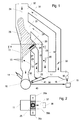
- the cement clinker production line with calciner of Figure 1 has one Rotary tube furnace 10 with a rotary kiln exhaust gas duct 11, which according to above to the bottom cyclone of a cyclone floating gas preheater system, not shown leads. That in the penultimate (second lowest) cyclone preheated raw meal separated from the exhaust gas flow is divided and a raw meal partial stream arrives via a raw meal entry 12 in the rotary kiln exhaust gas duct 11, the above, below and / or in the amount of the raw meal entry 12 with at least one Focal point 13 is provided, in the embodiment with four focal points 13, in which fuel is preferably flameless with an excess of oxygen or burned with a deficit of oxygen.
- the Rotary kiln 10 can in the area of its inlet chamber with a partial gas vent or bypass gas discharge 14.
- the one produced in the rotary kiln 10 from the calcined raw cement meal Cement clinker is cooled in a clinker cooler 15.
- a part the cooler exhaust air drawn off from the clinker cooler 15 is called tertiary air led to the calciner via tertiary air line 16.
- a partial flow 17 of the tertiary air is drawn through a calcination channel 18, the one with at least one raw meal entry 19 also from the penultimate one (second lowest) cyclone stage of the cyclone suspended gas preheater system and with at least one focal point 20, in the exemplary embodiment four burners 20, which is above, arranged below and / or at the level of the raw meal entry 19 could be.
- the exhaust gases from the calcination channel 18 open at 21 in the rotary kiln exhaust gas duct 11.
- tertiary air partial stream 30 flows into the rotary kiln exhaust gas duct 11, which is branched off via at least one further branch line 31 from the tertiary air line 16 coming from the clinker cooler.
- This tertiary air partial flow 30, which opens at 32, is used for the most complete possible residual burnout of the CO which is not fully converted in the rotary kiln exhaust gas duct 11 and, if appropriate, any other combustible exhaust gas components present.
- the volume flow of the tertiary air 30 introduced via the branch line 31 can be controlled by a control device 33 such as an air flap.
- the gas-solid suspension 34 is then from the induced draft fan Cyclone floating gas preheater system is withdrawn upwards and in usually after a flow diversion into the lowest cyclone of the preheater system to separate the highly calcined Raw meal imported from the gas stream.
- the separated calcined Raw meal is then fed directly to the rotary kiln 10.
- the grate 26 in the pyrolysis chamber 24 can be made from a suitable one thermally highly resilient material or indirectly cooled his.
- the grate 26 can also consist of a traveling grate with which Direction of movement z. B. from 35a to 35c.
- the pyrolysis of the coarse fuel in the pyrolysis chamber 24 can take place in such a way that it proceeds sub-stoichiometrically, that is to say that a highly CO-containing atmosphere 29 is deliberately created in the rotary kiln exhaust gas duct 11 in order to reduce the oven-compatible NO x .
- used tires and other coarse secondary fuels up to compacted plastic waste packages are usefully disposed of and used to produce highly calcined raw cement meal.
Landscapes
- Engineering & Computer Science (AREA)
- Chemical & Material Sciences (AREA)
- Ceramic Engineering (AREA)
- Physics & Mathematics (AREA)
- Thermal Sciences (AREA)
- General Engineering & Computer Science (AREA)
- Mechanical Engineering (AREA)
- Materials Engineering (AREA)
- Structural Engineering (AREA)
- Organic Chemistry (AREA)
- Muffle Furnaces And Rotary Kilns (AREA)
- Curing Cements, Concrete, And Artificial Stone (AREA)
- Processing Of Solid Wastes (AREA)
Abstract
Description
Die Erfindung betrifft ein Verfahren zur thermischen Behandlung von mehlförmigen Rohmaterialien, insbesondere bei der Herstellung von Zementklinker aus Rohmehl, wobei das Rohmehl in einem Brennprozeß durch Vorwärmen, Calcinieren, Sintern und Kühlen thermisch behandelt wird, und der Abgasstrom der Sinterstufe (Drehofen) und ein Abluftstrom (Tertiärluft) der Kühlstufe (Klinkerkühler) in der Weise in der Calcinierstufe zur Calcination des Rohmehls genutzt werden, daß sowohl in den Drehofenabgaskanal als auch in den Tertiärluftkanal Brennstoff eingeführt wird, beide Kanäle zusammengeführt werden und die darin enthaltene Gas-Feststoff-Suspension in den untersten Zyklon des Zyklonschwebegas-Vorwärmersystems zwecks Abtrennung des calcinierten Rohmehls vom Gasstrom eingeführt wird. Außerdem betrifft die Erfindung eine Anlage zur Durchführung des Verfahrens.The invention relates to a method for the thermal treatment of flour-shaped raw materials, especially in the production of Cement clinker from raw meal, the raw meal in a firing process thermally treated by preheating, calcining, sintering and cooling is, and the exhaust stream of the sintering stage (rotary kiln) and a Exhaust air flow (tertiary air) of the cooling stage (clinker cooler) in the manner in the calcining stage for calcining the raw meal can be used that both in the rotary kiln exhaust gas duct and in the tertiary air duct When fuel is introduced, both channels are merged and the gas-solid suspension contained therein in the lowest Cyclone of the cyclone suspended gas preheater system for separation of the calcined raw meal is introduced from the gas stream. The invention also relates to a system for carrying out the Procedure.
Verfahren und Anlagen der oben beschriebenen Art, bekannt z. B. aus der EP-B-0 526 770, müssen in der Lage sein, in der dem Drehrohrofen vorgeschalteten, mit Zweitfeuerungen ausgestatteten Calcinierstufe ein hochgradig calciniertes Rohmehl vor Einführung in den Drehrohrofen zu erzeugen. Gleichzeitig werden die Erbauer und Betreiber von Zementklinkerproduktionslinien mit immer schärferen Forderungen nach niedrigen Emissionswerten bei Schadstoffen wie NOx und CO konfrontiert. Methods and systems of the type described above, known for. B. from EP-B-0 526 770, must be able to produce a highly calcined raw meal before introduction into the rotary kiln in the calcining stage upstream of the rotary kiln equipped with secondary firing. At the same time, the builders and operators of cement clinker production lines are confronted with increasingly stringent demands for low emission values for pollutants such as NO x and CO.
Die Erbauer und Betreiber von Zementklinkerproduktionslinien werden aber auch mit dem Problem konfrontiert, bei den in der Calcinierstufe eingesetzten Brennstoffen einen möglichst hohen Anteil an grobstückigen Brennstoffen wie z. B. unzerkleinerte Altreifen und/oder andere grobstückige ggf. reaktionsträge schwer zündbare bzw. schwer brennbare Brennstoffe, insgesamt Sekundärbrennstoffe genannt, einzusetzen und solche Stoffe auf diese Weise zum Zwecke der Calcination des Zementrohmehls nutzbringend zu entsorgen. Beim Einsatz von z. B. Altreifen zwecks Nutzung von deren Brennenergie gehen die Bemühungen verstärkt dahin, auch große Altreifen, speziell Lastkraftwagen-Reifen im Prozeß zu verwenden, ohne diese vorher durch kostenaufwendige Zerkleinerungsarbeit in stückige kleinere Partikel zu zerteilen.The builders and operators of cement clinker production lines will be but also faced with the problem with those in the calcining stage used fuels as high as possible coarse fuels such as B. shredded tires and / or other coarse pieces which are slow to ignite and which are slow to react or hardly combustible fuels, total secondary fuels called to use and such substances for the purpose of the calcination of the cement raw meal. When using z. B. old tires for the use of their combustion energy efforts are increasing, even large tires, specifically to use truck tires in the process without them beforehand through costly shredding into small pieces To break up particles.
So ist es z. B. aus der EP-A-0 803 693 bei einer Zementklinkerproduktionslinie bekannt, ganze Autoreifen in liegender Position in den Drehofenabgaskanal bzw. in den Einlaufschacht zum Drehofen einzuschieben, wobei die Altreifen im Einlaufschacht vergasen und verbrennen sollen und die Reststoffe in den Drehofen nach unten fallen sollen. Bei dieser Lösung besteht ein Nachteil zunächst einmal darin, daß jeweils dann, wenn ein Reifen in den Einlaufschacht geschoben wird, eine erhebliche Querschnittsverengung des Schachts stattfindet, die zu einer Druckverlusterhöhung sowie zu einem instabilen Betrieb der Anlage führt. Darüberhinaus stört ein in den Einlaufschacht als Rostplatte oder Festplatte eingebauter Tisch zur Lagerung der eingeschobenen Altreifen den normalen Prozeß ganz erheblich wegen der Gefahr der Ansatzbildungen. Außerdem entsteht beim Einschieben eines Altreifens plötzlich eine konzentrierte Energiezufuhr im Einlaufschacht bzw. im Drehofeneinlaufbereich. Für den unmittelbar danach einsetzenden Pyrolyse-, Vergasungs- und Verbrennungsprozeß ist dann meist nicht mehr genügend Sauerstoff vorhanden, so daß es im Drehofenabgas zu unerwünschten CO-Stößen bzw. So it is z. B. from EP-A-0 803 693 in a cement clinker production line known, whole car tires in a lying position in the To insert the rotary kiln exhaust gas duct or into the inlet shaft to the rotary kiln, whereby the old tires gasify and burn in the inlet shaft and the residues fall down into the rotary kiln should. A disadvantage of this solution is first of all that each time a tire is pushed into the inlet shaft a significant cross-sectional narrowing of the shaft takes place, which lead to an increase in pressure loss and an unstable Operation of the plant leads. In addition, a disturbance in the inlet shaft built-in table as a rust plate or hard disk for storage the inserted old tire considerably the normal process because of the risk of build-up. In addition, the Inserting an old tire suddenly results in a concentrated supply of energy in the inlet shaft or in the rotary kiln inlet area. For the immediate then the pyrolysis, gasification and combustion process there is usually not enough oxygen left, so that undesired CO surges or
CO-Spitzen kommt, die dann zum Abschalten der nachgeschalteten elektrostatischen Staubabscheider (Elektrofilter) führen können, falls die CO-Spitzen einen bestimmten Grenzwert überschreiten. Die plötzliche Energiedarbietung im Prozeß ist in der Regel unerwünscht, weil nicht die notwendigen Rohmaterialmassenströme spontan zur Verfügung stehen, um die Wärme in Calcinationsarbeit umzuwandeln.CO peaks, which then turn off the downstream electrostatic dust collector (electrostatic precipitator) if the CO peaks exceed a certain limit. The sudden performance of energy in the process is usually undesirable, because not the necessary raw material mass flows spontaneously Are available to convert the heat into calcination work.
Beim Einsatz von Altreifen im Zementklinkerherstellungsprozeß ist es auch bekannt (EP-B-0 439 824), die Altreifen in der Drehofeneinlaufkammer bzw. im Guteinlaufbereich des Drehrohrofens mit Sauerstoffüberschuß zu verbrennen. Hierbei muß aber der Sauerstoffüberschuß in Form überschüssiger Sekundärluft durch den ganzen Drehrohrofen hindurchgezogen werden. Auch hier treten unerwünschte CO-Stöße auf, welche die Einsatzmenge an Altreifen begrenzen.It is when using old tires in the cement clinker manufacturing process also known (EP-B-0 439 824), the used tires in the rotary kiln inlet chamber or in the inlet area of the rotary kiln with excess oxygen to burn. Here, however, the excess of oxygen in the form of excess secondary air through the entire rotary kiln be pulled through. Unwanted occur here too CO impacts that limit the amount of used tires.
Schließlich ist aus der Fachzeitschrift "Zement-Kalk-Gips" Nr. 1/1999 eine Calciniereinrichtung mit einem separaten, Schachtvergaser genannten Nebenreaktor bekannt geworden, in dem ganze Altreifen vergast werden, wobei dann das entstehende Produktgas in einer separaten Rohrleitung dem Calcinator zugeführt wird. Die Reststoffe der im Schachtvergaser vergasten Altreifen sollen durch eine mechanische Abstoßvorrichtung in den Drehofeneinlaufschacht transportiert werden. Bei diesem Schachtvergaser fallen die eingebrachten Altreifen von oben auf einen nicht gasdurchströmten Tisch, und der als Vergasungsmittel eingesetzte Teilstrom aus der Tertiärluft wird ebenfalls von oben in den Schachtvergaser-Reaktor eingeführt. Durch die unmittelbare Einführung des Pyrolysegases aus dem Schachtvergaser in den Calcinator wird der eigentliche Calcinierprozeß, der beim bekannten System nur in der Drehofenabgasleitung erfolgt, vom Vergasungs- oder Pyrolyseprozeß, der starken Schwankungen unterliegen kann, beeinflußt. Es befinden sich immer große Mengen an Sekundärbrennstoff im Reaktor. Dies macht eine besondere Sicherheitseinrichtung erforderlich, um das Pyrolysegas im Falle einer Störung der Gesamtanlage über Dach nach den entsprechenden Sicherheitsbestimmungen abfackeln zu können.Finally, from the trade magazine "Zement-Kalk-Gips" No. 1/1999 a calciner with a separate shaft gasifier called Secondary reactor became known, in the whole used tires be gasified, the resulting product gas then in a separate Pipeline is fed to the calciner. The residues of In the shaft carburetor, old tires gasified are said to be mechanically Repulsion device transported into the rotary kiln inlet shaft become. The used tires fall on this shaft carburetor from the top of a table not flowed through by gas, and the as Gasification medium used partial flow from the tertiary air also introduced into the shaft gasifier reactor from above. By the direct introduction of the pyrolysis gas from the shaft gasifier the actual calcining process, the in the known system only in the rotary kiln exhaust pipe from Gasification or pyrolysis process, which are subject to strong fluctuations can, affects. There are always large quantities Secondary fuel in the reactor. This makes a special security device required to the pyrolysis gas in the event of a fault the entire system over the roof according to the relevant safety regulations to be able to flare up.
Der Erfindung liegt die Aufgabe zugrunde, bei Zementklinkerproduktionslinien der oben beschriebenen Art einen dem Drehrohrofen vorgeschalteten, mit Zweitfeuerungen ausgestatteten Calcinator zu schaffen, in dem insbesondere grobstückige Brennstoffe wie z. B. unzerkleinerte Altreifen und/oder andere grobstückige Sekundärbrennstoffe nutzbringend zum Zwecke der Calcination des Zementrohmehls durch Pyrolyse oder wahlweise Verbrennung entsorgt werden können, ohne daß der Pyrolyseprozeß bzw. Verbrennungsprozeß den Calcinationsprozeß stört und ohne daß es zu Pulsationen im Gesamtsystem kommt, wobei gleichzeitig ein Restausbrand von CO-Stößen sowie ein Abgas mit niedrigen NOx-Emissionen gesichert sind.The invention has for its object to provide a cement kiln upstream of the rotary kiln, equipped with secondary firing calciners in cement clinker production lines, in which in particular coarse fuels such. B. uncrushed old tires and / or other coarse secondary fuels useful for the purpose of calcining the raw cement meal by pyrolysis or optional combustion without the pyrolysis or combustion process disrupting the calcination process and without causing pulsations in the overall system, with a residual burnout CO surges and exhaust gas with low NO x emissions are ensured.
Diese Aufgabe wird erfindungsgemäß verfahrensmäßig mit den Maßnahmen
des Kennzeichnungsteils des Anspruchs 1 und vorrichtungsmäßig
mit den Merkmalen des Kennzeichnungsteils des Anspruchs
9 gelöst. Vorteilhafte Ausgestaltungen der Erfindung sind in
den jeweiligen Unteransprüchen angegeben.According to the invention, this task is procedural with the measures
of the characterizing part of
Charakteristisch für die erfindungsgemäße Calcinierstufe einer Zementklinkerproduktionslinie ist, daß grobstückiger Brennstoff wie z. B. jeweils ein ganzer Altreifen auf eine quer in einem Tertiärluftkanal im Bereich der Zusammenführung mit dem Drehofenabgaskanal angeordnete Verlagungseinrichtung wie z. B. einen Rost eingeschleust wird, auf dem der grobstückige Brennstoff mittels eines von der Tertiärluftleitung abgezweigten Tertiärluftteilstromes pyrolysiert wird und von dem der Pyrolyserückstand in den Drehofenabgaskanal abgestoßen wird. Das Pyrolysegas wird ebenfalls in den Drehofenabgaskanal eingeführt, wo es eine CO-haltige Reduktionszone (CO-Wolke) bildet zwecks Reduktion des im Drehofenabgas enthaltenen NOx.It is characteristic of the calcining stage of a cement clinker production line according to the invention that coarse fuel such as e.g. B. each a whole old tire on a transversely arranged in a tertiary air duct in the area of the merge with the rotary kiln exhaust gas such as. B. is introduced into a grate on which the coarse fuel is pyrolyzed by means of a branched from the tertiary air partial flow and from which the pyrolysis residue is repelled into the rotary kiln exhaust gas duct. The pyrolysis gas is also introduced into the rotary kiln exhaust gas duct, where it forms a CO-containing reduction zone (CO cloud) for the purpose of reducing the NO x contained in the rotary kiln exhaust gas.
Der für die Pyrolyse des grobstückigen Brennstoffs vorgesehene Tertiärluftkanal ist in der Weise ein Pyrolysekanal, daß er im Bereich seiner Einführung in den Drehofenabgaskanal als Pyrolysekammer zur Pyrolyse des grobstückigen Brennstoffs wie z. B. Altreifen ausgebildet ist. In der Pyrolysekammer ist zur Aufnahme des grobstückigen Brennstoffs wie z. B. Altreifen der Rost angeordnet, der sich ausgehend etwa vom Zwickelbereich zwischen dem Drehofenabgaskanal und dem Pyrolysekanal quer über wenigstens einen Teil des Querschnitts der Pyrolysekammer erstreckt. Außerhalb der Pyrolysekammer ist seitlich am Pyrolysekanal eine Vorrichtung zum Einschleusen des grobstückigen Brennstoffes wie z. B. Altreifen angeordnet.The tertiary air duct intended for the pyrolysis of the coarse fuel is a pyrolysis channel in such a way that it is in the range its introduction to the rotary kiln exhaust gas duct as a pyrolysis chamber for pyrolysis of the coarse fuel such. B. old tires is. In the pyrolysis chamber is to accommodate the large pieces Fuel such as B. old tires arranged the grate, starting out approximately from the gusset area between the rotary kiln exhaust gas duct and the pyrolysis channel across at least a portion of the cross section extends the pyrolysis chamber. Outside the pyrolysis chamber is a device for infiltration at the side of the pyrolysis channel the coarse fuel such as B. disposed tires.
Als grobstückiger Brennstoff können außer unzerkleinerte Altreifen auch andere Sekundärbrennstoffe wie z. B. kompaktierte Restwertstoffe aus Müll, Plastikmaterial oder anderen brennbaren Stoffen, die vorher außerhalb des Zementklinkerherstellungsprozeßes in einem separaten Prozeß kompaktiert worden sind, in den Pyrolysekanal bzw. in die Pyrolysekammer eingeschleust werden. Der von einem Tertiärluftteilstrom durchströmte Rost zu Aufnahme des grobstückigen Brennstoffs in der Pyrolysekammer kann horizontal oder zum Zwickelbereich zwischen Drehofenabgaskanal und Pyrolysekanal schräg geneigt angeordnet sein. Dabei steht der Rost mit Vorteil mit einer Abstoßvorrichtung zum Abwurf des Pyrolyserückstands bzw. nicht verbrannter Reststoffe in den Drehofenabgaskanal in Verbindung. Der Rost kann aber auch ein Wanderrost sein.Coarse fuel can be used in addition to shredded old tires other secondary fuels such as B. compact residual materials from garbage, plastic material or other flammable substances that previously outside of the cement clinker manufacturing process in one separate process have been compacted into the pyrolysis channel or be introduced into the pyrolysis chamber. The one Partial stream of tertiary air flowed through the grate to accommodate the large piece Fuel in the pyrolysis chamber can be horizontal or Gusset area between rotary kiln exhaust gas duct and pyrolysis duct be arranged at an incline. The grate stands with advantage a push-off device for ejecting the pyrolysis residue or unburnt residues in the rotary kiln exhaust duct. The grate can also be a traveling grate.
Der Pyrolysekanal mit der Pyrolysekammer zur Pyrolyse des grobstückigen Brennstoffs ist nicht in den ebenfalls mit einem Tertiärluftteilstrom durchströmten eigentlichen Calcinierkanal mit wenigstens einer Rohmehleinführung und wenigstens einer Brennstoffeinführung integriert, sondern neben diesem Calcinierkanal installiert. Mit Vorteil ist der Pyrolysekanal zwischen dem Drehofenabgaskanal und dem Calcinierkanal angeordnet, wobei der Calcinierkanal oberhalb der Zusammenführung von Pyrolysekanal und Drehofenabgaskanal in den Drehofenabgaskanal einmündet. Bei dieser erfindungsgemäßen Integration des Pyrolysekanals für den grobstückigen Brennstoff in die Calcinierstufe einer Zementklinkerproduktionslinie wird der Calcinierkanal mit der dort ablaufenden Rohmehlcalcinierung von dem Pyrolyseprozeß nicht gestört, auch nicht wenn große sperrige Feststoffe pyrolysiert werden, und es kommt dadurch auch nicht zu Pulsationen im Gasfluß des Gesamtsystems. Der Pyrolysevorgang kann mittels eines Stellorgans, welches die Luftzuführung steuert, vorteilhaft prozeßabhängig gesteuert werden. Gleichzeitig ist die aus der Pyrolyse des grobstückigen Brennstoffs resultierende CO-Wolke ein wirksames Mittel zur NOx-Reduktion im Abgas. Strömungsabwärts von der Zusammenführung von Drehofenabgaskanal und Pyrolysekanal mündet zwecks Verbrennung der aus der Reduktionszone etwa verbliebenen CO-Strähnen und/oder unverbrannt gebliebener anderer Brennstoffkomponenten ein weiterer Tertiärluftteilstrom in den Drehofenabgaskanal ein zwecks Restausbrandes solcher restlicher Brennstoffe.The pyrolysis channel with the pyrolysis chamber for pyrolysis of the coarse fuel is not integrated into the actual calcining channel, which also has a partial flow of tertiary air, with at least one raw meal inlet and at least one fuel inlet, but is installed next to this calcining channel. The pyrolysis channel is advantageously arranged between the rotary kiln exhaust gas channel and the calcining channel, the calcining channel opening into the rotary kiln exhaust gas channel above the junction of the pyrolysis channel and rotary kiln exhaust gas channel. With this integration of the pyrolysis channel for the coarse fuel into the calcining stage of a cement clinker production line according to the invention, the calcination channel with the raw meal calcination taking place there is not disturbed by the pyrolysis process, even if large bulky solids are pyrolyzed, and there is therefore no pulsation in the gas flow of the overall system . The pyrolysis process can advantageously be controlled depending on the process by means of an actuator that controls the air supply. At the same time, the CO cloud resulting from the pyrolysis of the coarse fuel is an effective means of reducing NO x in the exhaust gas. Downstream of the junction of the rotary kiln exhaust gas channel and the pyrolysis channel, a further partial flow of tertiary air flows into the rotary kiln exhaust gas channel for the purpose of combusting the CO strands remaining from the reduction zone and / or other unburned fuel components, for the purpose of residual burnout of such remaining fuels.
Die Erfindung und deren weitere Merkmale und Vorteile werden anhand des in den Figuren schematisch dargestellten Ausführungsbeispieles näher erläutert.The invention and its further features and advantages are based on of the embodiment shown schematically in the figures explained in more detail.
Es zeigt:
- Fig. 1:
- in schematischer Darstellung ausschnittsweise in Seitenansicht die Calcinierstufe bzw. den Calcinator einer Anlage zur Herstellung von Zementklinker aus Zementrohmehl, und
- Fig. 2:
- in Draufsicht einen Schnitt längs der Linie II-II der
Figur 1.
- Fig. 1:
- a schematic representation of a side view of the calcining stage or the calciner of a plant for the production of cement clinker from raw cement meal, and
- Fig. 2:
- in plan view a section along the line II-II of Figure 1.
Die Zementklinkerproduktionslinie mit Calcinator der Figur 1 weist einen
Drehrohrofen 10 auf mit einem Drehofenabgaskanal 11, der nach
oben zum untersten Zyklon eines nicht dargestellten Zyklonschwebegas-Vorwärmersystems
führt. Das im vorletzten (zweituntersten) Zyklon
aus dem Abgasstrom ausgeschiedene vorgewärmte Rohmehl
wird geteilt und ein Rohmehlteilstrom gelangt über einen Rohmehleintrag
12 in den Drehofenabgaskanal 11, der oberhalb, unterhalb
und/oder in Höhe des Rohmehleintrages 12 mit wenigstens einer
Brennstelle 13 versehen ist, im Ausführungsbeispiel mit vier Brennstellen
13, in welchem Brennstoff vorzugsweise flammenlos mit Sauerstoffüberschuß
oder mit Sauerstoffunterschuß verbrannt wird. Der
Drehofen 10 kann im Bereich seiner Einlaufkammer mit einem Teilgasabzug
bzw. Bypassgasabzug 14 ausgestattet sein.The cement clinker production line with calciner of Figure 1 has one
Rotary
Der im Drehrohrofen 10 aus dem calcinierten Zementrohmehl erzeugte
Zementklinker wird in einem Klinkerkühler 15 gekühlt. Ein Teil
der vom Klinkerkühler 15 abgezogenen Kühlerabluft wird als Tertiärluft
über Tertiärluftleitung 16 zum Calcinator herangeführt. Ein Teilstrom
17 der Tertiärluft wird durch einen Calcinierkanal 18 gezogen,
der mit wenigstens einem Rohmehleintrag 19 ebenfalls aus der vorletzten
(zweituntersten) Zyklonstufe des Zyklonschwebegas-Vorwärmersystems
sowie mit wenigstens einer Brennstelle 20, im Ausführungsbeispiel
vier Brennstellen 20, ausgestattet ist, die oberhalb,
unterhalb und/oder in Höhe des Rohmehleintrages 19 angeordnet
sein können. Die Abgase des Calcinierkanals 18 münden bei 21 in
den Drehofenabgaskanal 11 ein. The one produced in the
Beim erfindungsgemäßen Calcinator ist ein weiterer von einem Tertiärluftteilstrom
22 durchströmter Tertiärluftkanal in der Weise als ein
Pyrolysekanal 23 vorhanden, daß er im Bereich seiner Einführung in
den Drehofenabgaskanal 11 als Pyrolysekammer 24 zur Pyrolyse
grobstückigen Brennstoffes wie z. B. unzerkleinerter Altreifen 25 ausgebildet
ist, die auf einem vom Tertiärluftteilstrom 22 durchströmten
Rost 26 verlagert sind, der sich ausgehend etwa vom Zwickelbereich
27 zwischen Drehofenabgaskanal 11 und Pyrolysekanal 23 quer über
wenigstens einen Teil des Querschnitts der Pyrolysekammer 24 erstreckt.
Die Menge des zur Pyrolysekammer 24 strömenden Tertiärluftteilstroms
22 kann durch Verstellung der Regelklappe 28 gesteuert
werden. Damit wird auch der Pyrolyseprozeß gesteuert, d. h. zusätzlich
zu der CO-Wolke, die bei unterstöchiometrischer Brennstoffverbrennung
an den Brennstellen 13 erzeugt werden kann, kann im
Drehofenabgaskanal die in Figur 1 rechtsschraffierte CO-haltige
Wolke 29 erzeugt werden, die wirkungsvoll mitwirkt zu verhindern,
daß NOx-Bildungen, die aus dem Drehofen 10 kommen, in die oberen
Bereiche des erfindungsgemäßen Calciniersystems gelangen können.
Strömungsabwärts von der Zusammenführung von Drehofenabgaskanal
11 und Pyrolysekanal 23, im zeichnerischen Ausführungsbeispiel
auch nach Einmündung des Calcinierkanals 18, mündet in den
Drehofenabgaskanal 11 ein weiterer Tertiärluftteilstrom 30 ein, der
über wenigstens eine weitere Zweigleitung 31 von der vom Klinkerkühler
kommen Tertiärluftleitung 16 abgezweigt ist. Dieser bei 32
einmündende Tertiärluftteilstrom 30 dient zum möglichst vollständigen
Restausbrand des im Drehofenabgaskanal 11 nicht vollständig
umgesetzten CO sowie ggf. noch anderer vorhandener brennbarer
Abgasbestandteile. Der Volumenstrom der über die Zweigleitung 31
eingeführten Tertiärluft 30 kann über eine Regeleinrichtung 33 wie
Luftklappe gesteuert werden. In the calciner according to the invention, a further tertiary air duct through which a tertiary air
Die Gas-Feststoffsuspension 34 wird dann vom Saugzuggebläse des
Zyklonschwebegas-Vorwärmersystems nach oben abgezogen und in
der Regel nach einer Strömungsumlenkung in den untersten Zyklon
des Vorwärmersystems zwecks Abtrennung des hochgradig calcinierten
Rohmehls vom Gasstrom eingeführt. Das abgetrennte calcinierte
Rohmehl wird dann direkt dem Drehrohrofen 10 zugeleitet.The gas-
Wie deutlich aus Figur 2 hervorgeht, ist zur Beschickung der Pyrolysekammer
24 mit dem grobstückigen Brennstoff wie z. B. Altreifen
außerhalb der Pyrolysekammer seitlich am Pyrolysekanal 23 eine
Vorrichtung 35a bzw. 35b bzw. 35c angeordnet, wobei die Einschleuserichtung
von der örtlichen baulichen Situation des Calcinators abhängt.
Die Einschleusevorrichtungen sind gasdicht zum Calcinationssystem
verschlossen, um einen Falschlufteintritt zu verhindern. Der
Rost 26 steht auch mit einer Abstoßvorrichtung 36 in Verbindung, mit
in Figur 2 angezeigter bevorzugter Abstoßrichtung 37, um durch Kippen,
Schwenken, Rütteln des Rostes den Pyrolyserückstand bzw.
nicht verbrannte Reststoffe in den Drehofenabgaskanal 11 abzustoßen,
von wo diese Reststoffe in den Drehrohrofen 10 gelangen.As is clear from FIG. 2, the pyrolysis chamber is charged
24 with the coarse fuel such. B. old tires
outside of the pyrolysis chamber on the side of the
Der Rost 26 in der Pyrolysekammer 24 kann aus einem geeigneten
thermisch hoch belastbaren Material bestehen oder indirekt gekühlt
sein. Der Rost 26 kann auch aus einem Wanderrost bestehen, mit der
Bewegungsrichtung z. B. von 35a nach 35c.The
Jedenfalls kann beim erfindungsgemäßen Calciniersystem die Pyrolyse
des grobstückigen Brennmaterials in der Pyrolysekammer 24 so
stattfinden, daß sie unterstöchiometrisch abläuft, d. h. daß bewußt
eine hochgradig CO-haltige Atmosphäre 29 im Drehofenabgaskanal
11 geschaffen wird, um das ofengängige NOx zu reduzieren. Gleichzeitig
werden erfindungsgemäß Altreifen und andere grobstückige
Sekundärbrennstoffe bis hin zu verdichteten Plastikmüllpaketen nutzbringend
entsorgt und zur Erzeugung hochgradig calcinierten
Zementrohmehls verwertet.In any case, in the calcining system according to the invention, the pyrolysis of the coarse fuel in the
Der durch den Rost 26 und den Pyrolysekanal 23 nach unten durchfallende
Staub wie z. B. Asche sowie auch der im benachbarten
Calcinierkanal 18 nach unten durchfallende Staub kann jeweils in einer
Zitze 38 bzw. 39 gesammelt werden, und diese feinkörnigen
Stoffe können je nach den räumlichen Verhältnissen der Calcinieranlage
ggf. über Leitungen 40, 41 direkt in den Drehrohrofen 10 eingeführt
werden.The one falling down through the
Claims (15)
dadurch gekennzeichnet, daß grobstückiger Brennstoff (25) auf eine quer in einem weiteren Tertiärluftkanal (23) im Bereich der Zusammenführung mit dem Drehofenabgaskanal (11) angeordnete Verlagerungseinrichtung (26) eingeschleust wird, auf welcher der grobstückige Brennstoff mittels eines Tertiärluftteilstromes (22) pyrolysiert oder verbrannt wird und von welcher der Pyrolyse- bzw. Brennrückstand in den Drehofenabgaskanal (11) abgestoßen wird und das Pyrolysegas bzw. Rauchgas ebenfalls in den Drehofenabgaskanal (11) eingeführt wird. Process for the thermal treatment of raw materials in the form of meal, in particular in the production of cement clinker from raw meal, the raw meal being thermally treated in a firing process by preheating, calcining, sintering and cooling, and the exhaust gas stream from the sintering stage (10) (rotary kiln) and an exhaust air stream ( Terita air) of the cooling stage (15) (clinker cooler) can be used in the calcining stage for calcining the raw meal in such a way that fuel is introduced into both the rotary kiln exhaust gas duct (11) and the tertiary air duct (18), the two ducts are brought together and are contained therein contained gas-solid suspension (34) is introduced into the bottom cyclone of the cyclone suspended gas preheater system for the purpose of separating the calcined raw meal from the gas stream,
characterized in that coarse fuel (25) is introduced into a displacement device (26) arranged transversely in a further tertiary air duct (23) in the region of the junction with the rotary kiln exhaust gas duct (11), on which the coarse fuel pyrolyses or by means of a tertiary air partial flow (22) is burned and from which the pyrolysis or burning residue is expelled into the rotary kiln exhaust gas duct (11) and the pyrolysis gas or flue gas is likewise introduced into the rotary kiln exhaust gas duct (11).
dadurch gekennzeichnet, daß als grostückiger Brennstoff unzerkleinerte Altreifen (25) in den Pyrolysekanal (23) eingeschleust werden.Method according to claim 1,
characterized in that uncrushed old tires (25) are introduced into the pyrolysis channel (23) as bulk fuel.
dadurch gekennzeichnet, daß als grobstückiger Brennstoff andere grobstückige Sekundärbrennstoffe wie kompaktierte Restwertstoffe aus Müll, Plastikmaterial oder anderen brennbaren Stoffen, die vorher außerhalb des Zementklinkerherstellungsprozeßes in einem separaten Prozeß kompaktiert worden sind, in den Pyrolysekanal (23) eingeschleust werden.Method according to claim 1,
characterized in that other coarse secondary fuels, such as compacted residual materials from waste, plastic material or other combustible materials, which have previously been compacted in a separate process outside the cement clinker production process, are introduced into the pyrolysis channel (23) as coarse fuel.
dadurch gekennzeichnet, daß im Pyrolysekanal (23) als Verlagerungseinrichtung für die eingeschleusten grobstückigen Brennstoffe (25) ein vom Tertiärluftteilstrom (22) von unten nach oben durchströmter Rost (26) verwendet wird.Method according to claim 1,
characterized in that a grate (26) through which the tertiary air partial flow (22) flows from bottom to top is used in the pyrolysis channel (23) as a displacement device for the introduced coarse-particle fuels (25).
dadurch gekennzeichnet, daß der sich auf dem Rost (26) sammelnde Pyrolyserückstand bzw. die nicht verbrannten Reststoffe selbsttätig über eine Materialböschung oder durch Rostbewegung vom Rost (26) in den Drehofenabgaskanal (11) abgestoßen werden.Method according to claims 1 or 4,
characterized in that the pyrolysis residue collecting on the grate (26) or the unburnt residues are automatically repelled from the grate (26) into the rotary kiln exhaust gas duct (11) via a material slope or by moving the grate.
dadurch gekennzeichnet, daß der in den Pyrolysekanal auf die Verlagerungseinrichtung wie z. B. den Rost (26) eingeschleuste grobstückige Brennstoff (25) im Tertiärluftteilstrom (22) unterstöchiometrisch mit Sauerstoffunterschuß verbrannt wird zwecks Bildung einer CO-haltigen Reduktionszone (29) (CO-Wolke) im Drehofenabgaskanal (11) zur Reduktion des vom Drehofen (10) kommenden NOx, wobei strömungsabwärts von der Zusammenführung von Drehofenabgaskanal (11) und Pyrolysekanal (23) gesehen in die Suspension ein weiterer Tertiärluftteilstrom (30) zum Restausbrand der CO-Wolke eingeführt wird.Method according to claim 1,
characterized in that in the pyrolysis channel on the displacement device such. B. the grate (26) introduced coarse fuel (25) in the tertiary air partial flow (22) is burned substoichiometrically with a deficit of oxygen in order to form a CO-containing reduction zone (29) (CO cloud) in the rotary kiln exhaust gas duct (11) to reduce the amount of rotary kiln (10 ) coming NO x , whereby downstream of the junction of the rotary kiln exhaust gas duct (11) and pyrolysis duct (23), another tertiary air partial flow (30) is introduced into the suspension for the residual burnout of the CO cloud.
dadurch gekennzeichnet, daß in den Drehofenabgaskanal (11) unterhalb der Zusammenführung mit dem Pyrolysekanal (23) Rohmehl (12) und Brennstoff (13) eingeführt werden.Method according to one or more of claims 1 to 6,
characterized in that raw meal (12) and fuel (13) are introduced into the rotary kiln exhaust gas duct (11) below the junction with the pyrolysis duct (23).
dadurch gekennzeichnet, daß in den Drehofenabgaskanal (11) oberhalb der Zusammenführung mit dem Pyrolysekanal (23) der von einem Tertiärluftteilstrom (17) durchströmte Calcinierkanal (18) einmündet, in den Rohmehl (19) und Brennstoff (20) eingeführt werden.Method according to one or more of claims 1 to 7,
characterized in that the calcining duct (18) through which a tertiary air partial flow (17) flows opens into the rotary kiln exhaust gas duct (11) above the junction with the pyrolysis duct (23) and raw meal (19) and fuel (20) are introduced into it.
gekennzeichnet durch folgende Merkmale:
characterized by the following features:
dadurch gekennzeichnet, daß die Verlagerungseinrichtung zur Aufnahme des grobstückigen Brennstoffes (25) ein von einem Tertiärluftteilstrom durchströmter Rost oder umströmte Platte (26) ist, der bzw. die horizontal oder zum Zwickelbereich (27) zwischen Drehofenabgaskanal (11) und Pyrolysekanal (23) schräg geneigt angeordnet ist, und daß der Rost oder die Platte (26) mit einer Abstoßvorrichtung (36) zum Abwurf des Pyrolyserückstandes bzw. nicht verbrannter Reststoffe in den Drehofenabgaskanal (11) in Verbindung steht.System according to claim 9,
characterized in that the displacement device for receiving the coarse fuel (25) is a grate or plate (26) through which a partial flow of tertiary air flows and which is inclined horizontally or obliquely to the interstice area (27) between rotary kiln exhaust gas duct (11) and pyrolysis duct (23) is arranged inclined, and that the grate or the plate (26) is connected to a push-off device (36) for discharging the pyrolysis residue or unburned residues into the rotary kiln exhaust gas duct (11).
dadurch gekennzeichnet, daß die Abstoßvorrichtung (36) für den Rost/Platte (26) eine Einrichtung zum Schwenken/Kippen und/oder Verschieben und/oder Rütteln des Rostes/Platte ist, oder daß der Rost ein Wanderrost ist. System according to claim 10,
characterized in that the push-off device (36) for the grate / plate (26) is a device for pivoting / tilting and / or shifting and / or shaking the grate / plate, or in that the grate is a traveling grate.
Applications Claiming Priority (2)
| Application Number | Priority Date | Filing Date | Title |
|---|---|---|---|
| DE19920143A DE19920143A1 (en) | 1999-05-03 | 1999-05-03 | Process and plant for the thermal treatment of meal-like raw materials |
| DE19920143 | 1999-05-03 |
Publications (1)
| Publication Number | Publication Date |
|---|---|
| EP1052231A1 true EP1052231A1 (en) | 2000-11-15 |
Family
ID=7906708
Family Applications (1)
| Application Number | Title | Priority Date | Filing Date |
|---|---|---|---|
| EP00108456A Withdrawn EP1052231A1 (en) | 1999-05-03 | 2000-04-18 | Method and apparatus for the thermal treatment of raw meal |
Country Status (3)
| Country | Link |
|---|---|
| US (1) | US6595772B1 (en) |
| EP (1) | EP1052231A1 (en) |
| DE (1) | DE19920143A1 (en) |
Cited By (4)
| Publication number | Priority date | Publication date | Assignee | Title |
|---|---|---|---|---|
| WO2002090283A1 (en) * | 2001-05-04 | 2002-11-14 | Polysius Ag | Plant and method for the production of cement clinker |
| DE10340414A1 (en) * | 2003-09-02 | 2005-03-24 | Polysius Ag | Plant and process for the thermal treatment of flour-like raw materials |
| EP4313898B1 (en) | 2021-03-26 | 2025-02-26 | thyssenkrupp Polysius GmbH | Method for the thermal treatment of a mineral feedstock |
| EP4313897B1 (en) | 2021-03-26 | 2025-02-26 | thyssenkrupp Polysius GmbH | Device and method for the thermal treatment of a mineral feedstock |
Families Citing this family (6)
| Publication number | Priority date | Publication date | Assignee | Title |
|---|---|---|---|---|
| DE10039934A1 (en) * | 2000-08-14 | 2002-03-07 | Eiro Rohstoffgmbh | Process for controlling endothermic chemical reactions |
| DE10146418A1 (en) * | 2001-09-20 | 2003-04-17 | Kloeckner Humboldt Wedag | Process and plant for the thermal treatment of meal-like raw materials |
| DE102004009689A1 (en) * | 2004-02-27 | 2005-09-08 | Polysius Ag | Solid fuel gasification reactor providing fuel gas to the calcining and sinter zones of a cement kiln, has extended residence period for the solid fuel, using a travelling floor |
| US7279039B2 (en) * | 2004-12-30 | 2007-10-09 | Envirocare International, Inc. | Method and apparatus for controlling pollution from a cement plant |
| DE102009018099B4 (en) * | 2009-04-20 | 2013-01-17 | Thyssenkrupp Polysius Ag | Plant for heat treatment of lumpy solid |
| TWI532701B (en) * | 2010-10-21 | 2016-05-11 | Kawasaki Heavy Ind Ltd | Waste disposal equipment |
Citations (3)
| Publication number | Priority date | Publication date | Assignee | Title |
|---|---|---|---|---|
| EP0526770A2 (en) * | 1991-07-13 | 1993-02-10 | Klöckner-Humboldt-Deutz Aktiengesellschaft | Thermic treatment installation for raw fines |
| EP0764614A2 (en) * | 1995-09-22 | 1997-03-26 | Krupp Polysius Ag | Installation and process for manufacturing cement clinker |
| EP0803693A2 (en) * | 1996-04-23 | 1997-10-29 | Blue Circle Industries Plc | Disposal of waste tyres |
Family Cites Families (10)
| Publication number | Priority date | Publication date | Assignee | Title |
|---|---|---|---|---|
| JPS55136154A (en) * | 1979-04-03 | 1980-10-23 | Sumitomo Cement Co | Method and device for utilizing combustible matter |
| DE3326375A1 (en) * | 1983-07-21 | 1985-01-31 | Krupp Polysius Ag, 4720 Beckum | Process and device for the heat treatment of fine granular material |
| DE3538707A1 (en) * | 1985-10-31 | 1987-05-07 | Kloeckner Humboldt Deutz Ag | METHOD AND DEVICE FOR THE THERMAL TREATMENT OF MOLDED RAW MATERIALS |
| DE3701964A1 (en) * | 1987-01-23 | 1988-08-04 | Krupp Polysius Ag | DEVICE FOR THE HEAT TREATMENT OF FINE GRAIN |
| DE4002553A1 (en) * | 1990-01-30 | 1991-08-01 | Kloeckner Humboldt Deutz Ag | Cement clinker mfr. burns used tyres - in rotary kiln with excess oxygen for exhaust to be burned with further fuel |
| DE9018023U1 (en) * | 1990-08-24 | 1993-12-16 | Klöckner-Humboldt-Deutz AG, 51063 Köln | Plant for the thermal treatment of flour-like raw materials |
| FR2691790B1 (en) * | 1992-05-29 | 1997-09-19 | Cle | INSTALLATION AND METHOD FOR PRE-CALCINATION OF ANY MINERAL MATERIAL. |
| FR2736910B1 (en) * | 1995-07-21 | 1997-10-10 | Technip Cie | PLANT AND METHOD FOR CALCINATING MINERAL MATERIALS WITH REDUCED EMISSION OF NITROGEN OXIDES |
| DE19649922A1 (en) * | 1996-12-02 | 1998-06-04 | Krupp Polysius Ag | Method and device for the heat treatment of fine-grained material |
| DE19854582B4 (en) * | 1998-11-25 | 2007-11-22 | Khd Humboldt Wedag Gmbh | Process for the thermal treatment of cement raw meal |
-
1999
- 1999-05-03 DE DE19920143A patent/DE19920143A1/en not_active Withdrawn
-
2000
- 2000-04-18 EP EP00108456A patent/EP1052231A1/en not_active Withdrawn
- 2000-05-03 US US09/564,462 patent/US6595772B1/en not_active Expired - Fee Related
Patent Citations (3)
| Publication number | Priority date | Publication date | Assignee | Title |
|---|---|---|---|---|
| EP0526770A2 (en) * | 1991-07-13 | 1993-02-10 | Klöckner-Humboldt-Deutz Aktiengesellschaft | Thermic treatment installation for raw fines |
| EP0764614A2 (en) * | 1995-09-22 | 1997-03-26 | Krupp Polysius Ag | Installation and process for manufacturing cement clinker |
| EP0803693A2 (en) * | 1996-04-23 | 1997-10-29 | Blue Circle Industries Plc | Disposal of waste tyres |
Cited By (4)
| Publication number | Priority date | Publication date | Assignee | Title |
|---|---|---|---|---|
| WO2002090283A1 (en) * | 2001-05-04 | 2002-11-14 | Polysius Ag | Plant and method for the production of cement clinker |
| DE10340414A1 (en) * | 2003-09-02 | 2005-03-24 | Polysius Ag | Plant and process for the thermal treatment of flour-like raw materials |
| EP4313898B1 (en) | 2021-03-26 | 2025-02-26 | thyssenkrupp Polysius GmbH | Method for the thermal treatment of a mineral feedstock |
| EP4313897B1 (en) | 2021-03-26 | 2025-02-26 | thyssenkrupp Polysius GmbH | Device and method for the thermal treatment of a mineral feedstock |
Also Published As
| Publication number | Publication date |
|---|---|
| DE19920143A1 (en) | 2000-11-09 |
| US6595772B1 (en) | 2003-07-22 |
Similar Documents
| Publication | Publication Date | Title |
|---|---|---|
| DE69115084T2 (en) | Incineration smelting plant for urban waste disposal. | |
| EP0302310B1 (en) | Process and plant for the thermal disposal of waste | |
| DE10202776A1 (en) | Plant for the production of cement clinker | |
| DE2929056A1 (en) | COMBUSTION METHOD AND FLUID BED SUITABLE FOR THIS | |
| DE3347056A1 (en) | METHOD FOR PROCESSING HOUSEHOLE AND / OR HOUSEHOLD SIMILAR COMMERCIAL MATERIAL FOR PRODUCING A FUEL, AND COMBUSTION OVEN | |
| DE102020004372A1 (en) | Co-current counter-current regenerative shaft kiln and method for firing carbonate rock | |
| EP1052231A1 (en) | Method and apparatus for the thermal treatment of raw meal | |
| DE102021210662B4 (en) | Device and method for drying material and asphalt mixing plant with such a device | |
| EP1390316B1 (en) | Plant and method for the production of cement clinker | |
| EP0497937A1 (en) | PLANT FOR THE HEAT TREATMENT OF FLOURISH RAW MATERIALS. | |
| DE69010512T2 (en) | METHOD AND DEVICE FOR TREATING GAS FROM A GAS GENERATOR OR COMBUSTION CHAMBER. | |
| EP0862019A1 (en) | Method and device for thermal treatment of fly ash from grate incinerators | |
| DE2161411B2 (en) | METHOD AND DEVICE FOR REDUCING THE ALKALINE CONTENT OF CEMENT CLINKERS | |
| DE2843925A1 (en) | FLUID BED ARRANGEMENT AND METHOD OF OPERATING IT | |
| DE10349365A1 (en) | Carburetted boilers for solid fuels, in particular for straw bales, with optimized exhaust gas values | |
| DE2745756A1 (en) | INCINERATOR | |
| DE102005057346A1 (en) | Plant for the production of cement clinker, and method of operating such a plant | |
| EP1026465B1 (en) | Installation for the heat treatment of raw fines | |
| EP1111305A1 (en) | Process for thermal processing of grate ashes from waste incinerators | |
| EP0040857B1 (en) | Process and apparatus for the separation of gaseous and solid noxious products from residues arising from thermal processes, particularly from the pyrolysis of refuse | |
| DE3324411C2 (en) | ||
| EP3537043B1 (en) | Combustion assembly | |
| DE3434970A1 (en) | Device for reducing the content of solid particles and pollutants in a positively conveyed waste gas stream from the combustion of carbonaceous solids in a reactor bed | |
| DE19617749C1 (en) | Combustor for fine solid carbonaceous fuel and, optionally, waste | |
| DE10064971A1 (en) | Plant for the thermal treatment of flour-like raw materials |
Legal Events
| Date | Code | Title | Description |
|---|---|---|---|
| PUAI | Public reference made under article 153(3) epc to a published international application that has entered the european phase |
Free format text: ORIGINAL CODE: 0009012 |
|
| AK | Designated contracting states |
Kind code of ref document: A1 Designated state(s): DE DK FR |
|
| AX | Request for extension of the european patent |
Free format text: AL;LT;LV;MK;RO;SI |
|
| 17P | Request for examination filed |
Effective date: 20010508 |
|
| AKX | Designation fees paid |
Free format text: DE DK FR |
|
| 17Q | First examination report despatched |
Effective date: 20030331 |
|
| RAP1 | Party data changed (applicant data changed or rights of an application transferred) |
Owner name: KHD HUMBOLDT WEDAG GMBH |
|
| STAA | Information on the status of an ep patent application or granted ep patent |
Free format text: STATUS: THE APPLICATION IS DEEMED TO BE WITHDRAWN |
|
| 18D | Application deemed to be withdrawn |
Effective date: 20051101 |