EP1052576A2 - Verfahren zum Suchen in grossen Datenbänken von automatisch erkanntem Text - Google Patents
Verfahren zum Suchen in grossen Datenbänken von automatisch erkanntem Text Download PDFInfo
- Publication number
- EP1052576A2 EP1052576A2 EP00107990A EP00107990A EP1052576A2 EP 1052576 A2 EP1052576 A2 EP 1052576A2 EP 00107990 A EP00107990 A EP 00107990A EP 00107990 A EP00107990 A EP 00107990A EP 1052576 A2 EP1052576 A2 EP 1052576A2
- Authority
- EP
- European Patent Office
- Prior art keywords
- node
- nodes
- data structure
- word
- probability
- Prior art date
- Legal status (The legal status is an assumption and is not a legal conclusion. Google has not performed a legal analysis and makes no representation as to the accuracy of the status listed.)
- Withdrawn
Links
Images


Classifications
-
- G—PHYSICS
- G06—COMPUTING OR CALCULATING; COUNTING
- G06F—ELECTRIC DIGITAL DATA PROCESSING
- G06F16/00—Information retrieval; Database structures therefor; File system structures therefor
- G06F16/30—Information retrieval; Database structures therefor; File system structures therefor of unstructured textual data
- G06F16/31—Indexing; Data structures therefor; Storage structures
- G06F16/316—Indexing structures
- G06F16/322—Trees
-
- Y—GENERAL TAGGING OF NEW TECHNOLOGICAL DEVELOPMENTS; GENERAL TAGGING OF CROSS-SECTIONAL TECHNOLOGIES SPANNING OVER SEVERAL SECTIONS OF THE IPC; TECHNICAL SUBJECTS COVERED BY FORMER USPC CROSS-REFERENCE ART COLLECTIONS [XRACs] AND DIGESTS
- Y10—TECHNICAL SUBJECTS COVERED BY FORMER USPC
- Y10S—TECHNICAL SUBJECTS COVERED BY FORMER USPC CROSS-REFERENCE ART COLLECTIONS [XRACs] AND DIGESTS
- Y10S707/00—Data processing: database and file management or data structures
- Y10S707/99931—Database or file accessing
- Y10S707/99933—Query processing, i.e. searching
- Y10S707/99936—Pattern matching access
Definitions
- the present invention relates generally to the searching for query keywords in large databases of automatically recognized text and, more specifically, to a method for searching using approximate matching techniques which compensate for errors in text generated by an optical character recognition (OCR) system or a speech recognition (SR) system.
- OCR optical character recognition
- SR speech recognition
- the invention indexes the databases in a way that facilitates and speeds up the retrieval process.
- speech recognition systems are becoming more widely used. With a commercially available speech recognition system, a user may dictate a new document for the database or convert an existing document from text to machine readable form by simply reading the document into a microphone connected to a personal computer. While these systems are generally accurate with sufficient training, it is well known that some errors do occur. Typically, the speech recognition system allows these errors to be corrected manually by the user. A user may not, however, detect all of the errors and, so, the resulting database may include words which are not in the original text document.
- the scanned database may contain words that were misspelled in the conversion process.
- the conventional method of using direct searching techniques may not locate all of the appropriate documents in the database that contain a given query word because the corresponding word in the database is misspelled in some of the documents.
- Another problem with the conventional method of using direct searching techniques is that the size of the database may be very large, and hence the search process may be very slow.
- the conventional solution is insufficient to find words in the database that have been recognized incorrectly and are misspelled. Also, the conventional solution is too slow in searching large database. There is a need for a more efficient search algorithm.
- the present invention provides a simple and effective method for searching for a query word in a hierarchical data structure.
- the data structure has branch nodes and leaf nodes, each branch node represents a respective portion of one or more words and each leaf node represents a word,
- the data structure is searched for each query word by selecting the first letter of the query word and also selecting a root node in the hierarchical data structure as the current node. All possible child nodes of the current node are identified.
- Respective estimated probability values for matching respective components of the query word with the components associated with the nodes in the path taken through the hierarchical data structure is calculated for each identified child node.
- the identified child nodes are then added to a list of candidate nodes.
- the candidate node with the highest probability value is selected as the current node and is then deleted from the list of candidate nodes. If a leaf node has been reached, then a determination is made whether to store the word into a list of best matches. Processing repeats itself for each portion of the query word. When all portions of the query word have been matched, the matched words with their respective probability values are stored into the list of best matches.
- each query keyword is desirably retrieved using matching techniques that account for the existence of errors in the automatically recognized text.
- Current search algorithms do not search the index efficiently.
- a new search algorithm is provided that cures some of the deficiencies of other search techniques (e.g. depth-first).
- the invention is described in terms of an exemplary embodiment which processes documents containing words that were automatically recognized using optical character recognition and speech recognition, the invention has more general application to processes in which an "alphabet" of symbols may be combined to form groupings of symbols that are then converted to a machine-readable form using an automated process which may erroneously recognize the groupings of symbols by substituting, inserting or deleting arbitrary symbols from any particular group.
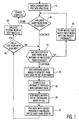
- Fig. 1 shows an overview of an exemplary method for searching for query words in an indexed database according to the present invention.
- the search method is a computer program, which may reside on a carrier such as a disk, diskette or modulated carrier wave.
- step 10 the database, stored in a trie data structure, is indexed.
- decision step 20 each query input word is processed.
- decision step 30 processing continues until each letter of the input word is processed or the budget is exhausted.
- step 80 stores the words that best match the input word along with their associated probabilities and processing returns to step 20 to process the next input word.
- step 40 the candidate (child) nodes from the next level of the Trie are added to the list of candidate nodes (hereafter referred to as the OPEN set). If the first letter of a word is being processed at step 40, the root node of the Trie is added to the OPEN set.
- step 50 the probability f(n) for each newly added candidate node is calculated.
- the probability is calculated initially using a simplified error model (described below).
- the present invention provides a means for migrating from the simplified error model to a more detailed error model (also described below) as sufficient training data becomes available.
- step 60 the OPEN set of candidate nodes is sorted by the probability f ( n ) that was calculated in step 50.
- step 70 the node with the highest probability is visited and is deleted from the OPEN set.
- decision step 80 a check is made to determine if a leaf node has been reached on any of the branches of the Trie. Then in step 90, a determination is made whether to add the word that is associated with the leaf node to the list of best matches. Processing returns to decision block 30.
- the search strategy according to the present invention advantageously removes the prefix sensitivity of the depth-first search method because it is capable of backtracking before following a branch off the Trie all the way to a leaf node.
- the search method for the Trie may also provide for matching in the presence of recognition errors.
- the errors in text generated using OCR or SR can be modeled as framing errors of the following types: insertion, deletion, and m - n substitution errors. The following explains each error type briefly and gives examples of their occurrences.
- An insertion error occurs when extra letters are added into a word because of noise in a digitized document.
- An example of an insertion error is when the word "airmail" is recognized as “airnmail.” In this case, the letter n is mistakenly inserted in the middle of the word by the scanner and OCR algorithm or by the microphone and the SR algorithm.
- a deletion error occurs when some letters in the original word are omitted from the automatically recognized word.
- An example of a deletion error is when the word "airmail" is recognized as “aimail,” i.e., missing the letter r .
- An m - n substitution error occurs when m letters in the original word are substituted by n other symbols in the automatically recognized word.
- An example of a 1-2 substitution error is when the word "airmail" is seen by the system as the word “airrnail.” In this case, the letter m of the original word is substituted by the letters r and n in the recognized word.
- the invention uses one of two models. These two models are the detailed and the simplified error models. Generally, the invention begins by using the simplified error model and may migrate to the detailed model once sufficient training data becomes available to populate the detailed model.
- the detailed error model is described below.
- the detailed error model assumes that x, y, and z are letters of the alphabet.
- x) is used to denote the probability that the letter x in the database word is erroneously recognized as the letter y during the automatic recognition processes.
- the following probabilities are defined( ⁇ stands for the null letter):
- the edit distance measure is used to estimate a measure of similarity between two words.
- the cost of mapping a query word w q to a database word w d is computed by determining the operations necessary to map w q to w d and multiplying the probability values associated with all the operations.
- the similarity measure between the database word "art” and the query word "are” can be computed as: p n (a) x p n (r) x p s (t
- dynamic programming techniques may be used to find the set of operations with minimum cost (or with maximum likelihood).
- a dynamic programming algorithm can be used to compare any two words, e.g., a query word against a database word.
- the method presented in the exemplary embodiment of the invention does not use dynamic programming techniques directly, because, to do this, would imply doing a sequential scan over the entire document database. Accordingly, the new method may be viewed as hierarchically searching through the document database and incrementally applying techniques similar to dynamic programming only to the portion of the database where it is more likely to find words that are closely similar to the query word.
- the trie structure used in the exemplary embodiment of the invention is an M -ary tree, the nodes of which each have M entries, and each entry corresponds to a digit or a character of the alphabet.
- An example trie is given in Figure 2 where the alphabet is the digits 0 . . . 9.
- Each node on level l of the trie represents the set of all keys that begin with a certain sequence of l characters; the node specifies an M -way branch, depending on the ( l + 1)st character. Notice that in each node an additional null entry is added to allow for storing two numbers a and b where a is a prefix of b .
- the trie of Figure 2 can store the two words 91 and 911 by assigning 91 to the null entry of node A. In this instance, 91 is stored as a branch node and 911 is stored as a leaf node.
- the memory space of the trie structure can be significantly reduced (at the expense of running time) if, for example, a linked list is used for each node, since most of the entries in the nodes tend to be empty.
- This embodiment amounts to replacing the trie of Figure 2 by the forest of trees shown in Figure 3.
- the present invention is described using a trie data structure, it may also be implemented with other hierarchical data structures. As described below, the subject invention operates by traversing a single tree. Where the hierarchical data structure includes a forest of trees, it may be desirable to add a fictional root node to the data structure to simplify the processing of the data structure by the algorithm.
- Searching for a word in the trie proceeds as follows. The search starts at the root and looks up the first letter, and then follows the pointer next to the letter and looks up the second letter in the word in the same way. On the other hand, searching in the forest version of the trie proceeds by finding the root node and matching the first letter in the query word, then finding the child node of that root which matches the second letter, etc. It can be shown that the average search time for N words stored in the trie is log M N and that the "pure" trie requires a total of approximately N/lnM nodes to distinguish between N random words. Hence the total amount of space is MN/lnM.
- the trie data structure is prefix-sensitive.
- the process of matching when using depth-first search and backtracking, there is a tendency towards correcting mismatches that may have occurred at the deeper levels of the trie before correcting errors that may have occurred at higher levels.
- the correcting of mismatches that may have possibly occurred at the higher levels of the trie is typically performed only after exhausting possible matches that are deeper in the trie.
- All the leaf nodes in the Figure are labeled with the overall accepting probabilities.
- the node a is visited first since the word in the database was erroneously recognized as "getna” instead of "aetna.”
- the trie paths will be searched in the following order: acorn, armor, arena, and finally getna .
- the algorithm may run out of the allowable search time before it reaches the correct word ( getna ).
- the above example demonstrates the sensitivity of the depth-first search algorithm to the decisions performed by the algorithm at the levels in the trie that are close to the root.
- the present invention provides a new algorithm, based on the A* graph search algorithm, that reduces the problems demonstrated above.
- the new search algorithm uses a variant of the A* graph search algorithm to overcome prefix sensitivities of the trie. It can be used for matching words that may contain some errors in them.
- An evaluation function f is computed at every visited node n during the search.
- f ( n ) is defined such that it provides an estimate of the overall probability of matching the query word with the words in the leaves of the subtree rooted at n .
- the value of f ( n ) determines the order by which the search algorithm visits the nodes of the trie. This is in contrast to visiting the nodes in a last-in first-out manner when using a depth-first-like algorithm.
- OPEN A list termed OPEN is maintained that stores all the candidate nodes that are visited during the search. Nodes in OPEN are sorted in decreasing order by their f value. Initially this list includes only the root node of the trie or only the root nodes of the forest of the trees.
- a path from the root to a leaf node defines a word in the database.
- an optimal path is defined to be the path from the root node to the leaf that contains the word s m in the database such that s in has the highest accepting probability over the probabilities of all the other words in the database.
- f *( n ) is the highest possible matching probability for all the words in the database with paths passing through node n . This corresponds to a path passing from the root r to n and finally to the leaf node containing w n . From this definition of f *, it can be concluded that, for the trie, the optimal match for an input word is f *( r ) where r is the root of the trie, since r is in the path of all the words in the database.
- h(t) can be estimated as:
- the new search algorithm can handle the following types of errors: insertion, deletion, and m-n substitution errors.
- the elements of the list OPEN are in the form of the 5-tuples ⁇ error-type, node, word-location, g ( node ), h ( node ) ⁇ .
- the overall evaluation function f ( node ) is computed as the product of g ( node ) and h ( node ).
- the 5-tuples in OPEN are sorted according to the values of f(n) .
- the tuple with the highest possible f(n) is selected from OPEN and is visited by the algorithm.
- the query word is represented by the letters a 1 a 2 . . . a L , where L is the number of letters in the query word.
- the algorithm is at node n , and that the query word is matched up to letter a t (i.e., that the remaining portion of the word that still needs to be matched is: a t+1 , ...
- the values of p 11 , p d , p I , p s1 and p s21 reflect the probabilities that the word scanned into the database contains an insertion, deletion or a substitution error. These probability values may also be viewed as parameters that can be tuned to direct the search. The exact values of these probabilities are scanner dependent and hence are difficult to quantify in general terms.
- These values may be estimated by, for example, using results from studies that empirically measure the frequencies of occurrence of these types of errors by different types of scanners. Using these values as initial guesses, the system may be incrementally trained by updating the values of these parameters each time a match is performed by the system.
- An alternative method of calculating the probabilities is to perform a separate training session and then count the number of errors that occur in the session. These errors are then used as estimates for the desired probability values.
- the invention maintains the following data structures: a list or queue OPEN and the list best_matches .
- the input to the method is a query word s in and an integer variable budget that controls the run-time of the invention.
- the variable budget gets decremented with each iteration of the invention.
- the matched word as well as its matching probability are stored in the sorted list best_matches .
- the size or number or words that can be kept in best_matches at a given time can be limited by a constant, say k .
- the k words in best_matches can be reported as the best k matches that are found so far.
- a fictional root node corresponding, for example, to the null character, may be added to the forest of trees prior to step 1 shown in the Table. This converts the forest of trees into a single tree having a single root node.
Landscapes
- Engineering & Computer Science (AREA)
- Theoretical Computer Science (AREA)
- Software Systems (AREA)
- Data Mining & Analysis (AREA)
- Databases & Information Systems (AREA)
- Physics & Mathematics (AREA)
- General Engineering & Computer Science (AREA)
- General Physics & Mathematics (AREA)
- Information Retrieval, Db Structures And Fs Structures Therefor (AREA)
- Character Discrimination (AREA)
Applications Claiming Priority (2)
| Application Number | Priority Date | Filing Date | Title |
|---|---|---|---|
| US09/310,512 US6662180B1 (en) | 1999-05-12 | 1999-05-12 | Method for searching in large databases of automatically recognized text |
| US310512 | 1999-05-12 |
Publications (2)
| Publication Number | Publication Date |
|---|---|
| EP1052576A2 true EP1052576A2 (de) | 2000-11-15 |
| EP1052576A3 EP1052576A3 (de) | 2002-03-13 |
Family
ID=23202833
Family Applications (1)
| Application Number | Title | Priority Date | Filing Date |
|---|---|---|---|
| EP00107990A Withdrawn EP1052576A3 (de) | 1999-05-12 | 2000-04-18 | Verfahren zum Suchen in grossen Datenbänken von automatisch erkanntem Text |
Country Status (2)
| Country | Link |
|---|---|
| US (1) | US6662180B1 (de) |
| EP (1) | EP1052576A3 (de) |
Cited By (8)
| Publication number | Priority date | Publication date | Assignee | Title |
|---|---|---|---|---|
| GB2369695A (en) * | 2000-11-30 | 2002-06-05 | Indigo One Technologies Ltd | Index tree structure and key composition for a database |
| WO2004006126A1 (en) * | 2002-07-05 | 2004-01-15 | Syslore Oy | Searching for symbol string |
| US7010520B2 (en) | 2002-04-26 | 2006-03-07 | International Business Machines Corporation | Method and system for searching documents with numbers |
| EP2264626A1 (de) * | 2009-06-19 | 2010-12-22 | Siemens Aktiengesellschaft | Verfahren und Vorrichtung zum speichereffizienten Suchen mindestens eines Anfragedatenelementes |
| WO2011073281A1 (fr) | 2009-12-16 | 2011-06-23 | Laboratoires Expanscience | Composition comprenant au moins un sucre en c7 pour le traitement de l'alopécie, pour le traitement cosmétique des phanères, et pour le soin des cheveux, cils ou ongles |
| CN104900231A (zh) * | 2014-03-05 | 2015-09-09 | 卡西欧计算机株式会社 | 语音检索装置以及语音检索方法 |
| WO2016144367A1 (en) * | 2015-03-12 | 2016-09-15 | Hewlett Packard Enterprise Development Lp | Database records associated with a trie |
| CN109147793A (zh) * | 2018-08-17 | 2019-01-04 | 南京星邺汇捷网络科技有限公司 | 语音数据的处理方法、装置及系统 |
Families Citing this family (57)
| Publication number | Priority date | Publication date | Assignee | Title |
|---|---|---|---|---|
| US6047284A (en) | 1997-05-14 | 2000-04-04 | Portal Software, Inc. | Method and apparatus for object oriented storage and retrieval of data from a relational database |
| AU777693B2 (en) | 1999-03-05 | 2004-10-28 | Canon Kabushiki Kaisha | Database annotation and retrieval |
| US7310600B1 (en) * | 1999-10-28 | 2007-12-18 | Canon Kabushiki Kaisha | Language recognition using a similarity measure |
| EP1228452B1 (de) * | 1999-10-28 | 2007-09-19 | Canon Kabushiki Kaisha | Methode und apparat zum prüfen von musterübereinstimmungen |
| US6678675B1 (en) * | 2000-03-30 | 2004-01-13 | Portal Software, Inc. | Techniques for searching for best matches in tables of information |
| GB0011798D0 (en) * | 2000-05-16 | 2000-07-05 | Canon Kk | Database annotation and retrieval |
| GB0015233D0 (en) * | 2000-06-21 | 2000-08-16 | Canon Kk | Indexing method and apparatus |
| GB0023930D0 (en) | 2000-09-29 | 2000-11-15 | Canon Kk | Database annotation and retrieval |
| GB0027178D0 (en) | 2000-11-07 | 2000-12-27 | Canon Kk | Speech processing system |
| AU2002230484A1 (en) * | 2000-11-16 | 2002-05-27 | Interlegis, Inc. | System and method of managing documents |
| GB0028277D0 (en) | 2000-11-20 | 2001-01-03 | Canon Kk | Speech processing system |
| US8099393B2 (en) | 2002-03-22 | 2012-01-17 | Oracle International Corporation | Transaction in memory object store |
| US7222129B2 (en) * | 2002-03-29 | 2007-05-22 | Canon Kabushiki Kaisha | Database retrieval apparatus, retrieval method, storage medium, and program |
| US7287026B2 (en) * | 2002-04-05 | 2007-10-23 | Oommen John B | Method of comparing the closeness of a target tree to other trees using noisy sub-sequence tree processing |
| US20030237096A1 (en) * | 2002-06-25 | 2003-12-25 | Barrett Peter T. | Program guide data text search |
| US6961733B2 (en) * | 2003-03-10 | 2005-11-01 | Unisys Corporation | System and method for storing and accessing data in an interlocking trees datastore |
| US20050281450A1 (en) * | 2004-06-18 | 2005-12-22 | Digicor Llc | System and method for correcting data in financial documents |
| GB0413743D0 (en) * | 2004-06-19 | 2004-07-21 | Ibm | Method and system for approximate string matching |
| US20060067296A1 (en) * | 2004-09-03 | 2006-03-30 | University Of Washington | Predictive tuning of unscheduled streaming digital content |
| US8108386B2 (en) * | 2004-09-07 | 2012-01-31 | Stuart Robert O | More efficient search algorithm (MESA) using alpha omega search strategy |
| US7792808B2 (en) * | 2004-09-07 | 2010-09-07 | Stuart Robert O | More efficient search algorithm (MESA) using virtual search parameters |
| US7761286B1 (en) | 2005-04-29 | 2010-07-20 | The United States Of America As Represented By The Director, National Security Agency | Natural language database searching using morphological query term expansion |
| US8223935B2 (en) | 2005-04-30 | 2012-07-17 | Oracle International Corporation | Revenue management systems and methods |
| US8116326B2 (en) | 2005-06-28 | 2012-02-14 | Oracle International Corporation | Revenue management system and method |
| EP1938193A4 (de) | 2005-07-28 | 2010-08-04 | Oracle Int Corp | Umsatz-verwaltungssystem und -verfahren |
| US8223777B2 (en) | 2005-11-15 | 2012-07-17 | Oracle International Corporation | Gateway for achieving low latency and high availability in a real time event processing system |
| US7797152B1 (en) * | 2006-02-17 | 2010-09-14 | The United States Of America As Represented By The Director, National Security Agency | Method of database searching |
| US8238351B2 (en) * | 2006-04-04 | 2012-08-07 | Unisys Corporation | Method for determining a most probable K location |
| US7526486B2 (en) | 2006-05-22 | 2009-04-28 | Initiate Systems, Inc. | Method and system for indexing information about entities with respect to hierarchies |
| EP2030134A4 (de) | 2006-06-02 | 2010-06-23 | Initiate Systems Inc | System und verfahren für automatische gewichtsgenerierung für wahrscheinlichkeitsabgleich |
| US8356009B2 (en) | 2006-09-15 | 2013-01-15 | International Business Machines Corporation | Implementation defined segments for relational database systems |
| US7685093B1 (en) * | 2006-09-15 | 2010-03-23 | Initiate Systems, Inc. | Method and system for comparing attributes such as business names |
| US7698268B1 (en) | 2006-09-15 | 2010-04-13 | Initiate Systems, Inc. | Method and system for filtering false positives |
| US7627550B1 (en) * | 2006-09-15 | 2009-12-01 | Initiate Systems, Inc. | Method and system for comparing attributes such as personal names |
| US8359339B2 (en) | 2007-02-05 | 2013-01-22 | International Business Machines Corporation | Graphical user interface for configuration of an algorithm for the matching of data records |
| US8515926B2 (en) | 2007-03-22 | 2013-08-20 | International Business Machines Corporation | Processing related data from information sources |
| US8321393B2 (en) | 2007-03-29 | 2012-11-27 | International Business Machines Corporation | Parsing information in data records and in different languages |
| US8423514B2 (en) | 2007-03-29 | 2013-04-16 | International Business Machines Corporation | Service provisioning |
| US8429220B2 (en) | 2007-03-29 | 2013-04-23 | International Business Machines Corporation | Data exchange among data sources |
| US8370355B2 (en) | 2007-03-29 | 2013-02-05 | International Business Machines Corporation | Managing entities within a database |
| EP2026264A2 (de) | 2007-08-17 | 2009-02-18 | Searete LLC | Wirksame Dokumentation von Abweichungen in einer reagierenden Benutzerumgebung |
| BRPI0817530B1 (pt) | 2007-09-28 | 2020-02-04 | Initiate Systems Inc | método e sistema para processamento de registros de dados em múltiplos idiomas e mídia de armazenamento legível por computador |
| US8713434B2 (en) | 2007-09-28 | 2014-04-29 | International Business Machines Corporation | Indexing, relating and managing information about entities |
| JP5306360B2 (ja) | 2007-09-28 | 2013-10-02 | インターナショナル・ビジネス・マシーンズ・コーポレーション | データ記録を一致させるシステムの分析のための方法およびシステム |
| US8094976B2 (en) * | 2007-10-03 | 2012-01-10 | Esker, Inc. | One-screen reconciliation of business document image data, optical character recognition extracted data, and enterprise resource planning data |
| US8301437B2 (en) * | 2008-07-24 | 2012-10-30 | Yahoo! Inc. | Tokenization platform |
| US8423363B2 (en) * | 2009-01-13 | 2013-04-16 | CRIM (Centre de Recherche Informatique de Montréal) | Identifying keyword occurrences in audio data |
| US8874663B2 (en) * | 2009-08-28 | 2014-10-28 | Facebook, Inc. | Comparing similarity between documents for filtering unwanted documents |
| JP5699570B2 (ja) * | 2010-11-30 | 2015-04-15 | 富士ゼロックス株式会社 | 画像処理装置及び画像処理プログラム |
| US20120209590A1 (en) * | 2011-02-16 | 2012-08-16 | International Business Machines Corporation | Translated sentence quality estimation |
| US9508345B1 (en) | 2013-09-24 | 2016-11-29 | Knowles Electronics, Llc | Continuous voice sensing |
| JP6011565B2 (ja) * | 2014-03-05 | 2016-10-19 | カシオ計算機株式会社 | 音声検索装置、音声検索方法及びプログラム |
| US10964316B2 (en) * | 2017-08-09 | 2021-03-30 | Lenovo (Singapore) Pte. Ltd. | Performing action on active media content |
| US11016959B2 (en) * | 2018-01-31 | 2021-05-25 | Salesforce.Com, Inc. | Trie-based normalization of field values for matching |
| US11227176B2 (en) | 2019-05-16 | 2022-01-18 | Bank Of Montreal | Deep-learning-based system and process for image recognition |
| US20230214579A1 (en) * | 2021-12-31 | 2023-07-06 | Microsoft Technology Licensing, Llc | Intelligent character correction and search in documents |
| CN116137149B (zh) * | 2023-04-18 | 2023-07-14 | 杰创智能科技股份有限公司 | 语音识别方法、装置和设备 |
Family Cites Families (19)
| Publication number | Priority date | Publication date | Assignee | Title |
|---|---|---|---|---|
| US3969698A (en) * | 1974-10-08 | 1976-07-13 | International Business Machines Corporation | Cluster storage apparatus for post processing error correction of a character recognition machine |
| US5075896A (en) * | 1989-10-25 | 1991-12-24 | Xerox Corporation | Character and phoneme recognition based on probability clustering |
| US5257323A (en) * | 1991-05-29 | 1993-10-26 | Canon Kabushiki Kaisha | Selection agent for a symbol determination system with multiple character recognition processors |
| US5377281A (en) * | 1992-03-18 | 1994-12-27 | At&T Corp. | Knowledge-based character recognition |
| TW222337B (de) * | 1992-09-02 | 1994-04-11 | Motorola Inc | |
| US5748807A (en) * | 1992-10-09 | 1998-05-05 | Panasonic Technologies, Inc. | Method and means for enhancing optical character recognition of printed documents |
| US5455872A (en) * | 1993-04-26 | 1995-10-03 | International Business Machines Corporation | System and method for enhanced character recogngition accuracy by adaptive probability weighting |
| DE69423838T2 (de) * | 1993-09-23 | 2000-08-03 | Xerox Corp., Rochester | Semantische Gleichereignisfilterung für Spracherkennung und Signalübersetzungsanwendungen |
| JPH07319924A (ja) * | 1994-05-24 | 1995-12-08 | Matsushita Electric Ind Co Ltd | 手書き電子文書のインデックス付けおよび探索方法 |
| US5649023A (en) * | 1994-05-24 | 1997-07-15 | Panasonic Technologies, Inc. | Method and apparatus for indexing a plurality of handwritten objects |
| US5524240A (en) * | 1994-05-24 | 1996-06-04 | Panasonic Technologies, Inc. | Method and apparatus for storage and retrieval of handwritten information |
| US5528701A (en) * | 1994-09-02 | 1996-06-18 | Panasonic Technologies, Inc. | Trie based method for indexing handwritten databases |
| US5768423A (en) * | 1994-09-02 | 1998-06-16 | Panasonic Technologies Inc. | Trie structure based method and apparatus for indexing and searching handwritten databases with dynamic search sequencing |
| US5850480A (en) * | 1996-05-30 | 1998-12-15 | Scan-Optics, Inc. | OCR error correction methods and apparatus utilizing contextual comparison |
| US5889897A (en) * | 1997-04-08 | 1999-03-30 | International Patent Holdings Ltd. | Methodology for OCR error checking through text image regeneration |
| US5950158A (en) * | 1997-07-30 | 1999-09-07 | Nynex Science And Technology, Inc. | Methods and apparatus for decreasing the size of pattern recognition models by pruning low-scoring models from generated sets of models |
| US5963902A (en) * | 1997-07-30 | 1999-10-05 | Nynex Science & Technology, Inc. | Methods and apparatus for decreasing the size of generated models trained for automatic pattern recognition |
| US6304674B1 (en) * | 1998-08-03 | 2001-10-16 | Xerox Corporation | System and method for recognizing user-specified pen-based gestures using hidden markov models |
| US6351574B1 (en) * | 1998-12-11 | 2002-02-26 | International Business Machines Corporation | Interactive verification of OCRed characters |
-
1999
- 1999-05-12 US US09/310,512 patent/US6662180B1/en not_active Expired - Fee Related
-
2000
- 2000-04-18 EP EP00107990A patent/EP1052576A3/de not_active Withdrawn
Non-Patent Citations (1)
| Title |
|---|
| None * |
Cited By (17)
| Publication number | Priority date | Publication date | Assignee | Title |
|---|---|---|---|---|
| US8224829B2 (en) | 2000-11-30 | 2012-07-17 | Bernard Consulting Limited | Database |
| GB2369695A (en) * | 2000-11-30 | 2002-06-05 | Indigo One Technologies Ltd | Index tree structure and key composition for a database |
| GB2369695B (en) * | 2000-11-30 | 2005-03-16 | Indigo One Technologies Ltd | Database |
| GB2406680A (en) * | 2000-11-30 | 2005-04-06 | Coppereye Ltd | A database having a hierarchical index structure |
| GB2406680B (en) * | 2000-11-30 | 2005-05-18 | Coppereye Ltd | Database |
| US7010520B2 (en) | 2002-04-26 | 2006-03-07 | International Business Machines Corporation | Method and system for searching documents with numbers |
| US8532988B2 (en) | 2002-07-05 | 2013-09-10 | Syslore Oy | Searching for symbol string |
| WO2004006126A1 (en) * | 2002-07-05 | 2004-01-15 | Syslore Oy | Searching for symbol string |
| US8788483B2 (en) | 2009-06-19 | 2014-07-22 | Siemens Aktiengesellschaft | Method and apparatus for searching in a memory-efficient manner for at least one query data element |
| EP2264626A1 (de) * | 2009-06-19 | 2010-12-22 | Siemens Aktiengesellschaft | Verfahren und Vorrichtung zum speichereffizienten Suchen mindestens eines Anfragedatenelementes |
| WO2011073281A1 (fr) | 2009-12-16 | 2011-06-23 | Laboratoires Expanscience | Composition comprenant au moins un sucre en c7 pour le traitement de l'alopécie, pour le traitement cosmétique des phanères, et pour le soin des cheveux, cils ou ongles |
| CN104900231A (zh) * | 2014-03-05 | 2015-09-09 | 卡西欧计算机株式会社 | 语音检索装置以及语音检索方法 |
| CN104900231B (zh) * | 2014-03-05 | 2018-12-28 | 卡西欧计算机株式会社 | 语音检索装置以及语音检索方法 |
| WO2016144367A1 (en) * | 2015-03-12 | 2016-09-15 | Hewlett Packard Enterprise Development Lp | Database records associated with a trie |
| US10552398B2 (en) | 2015-03-12 | 2020-02-04 | Micro Focus Llc | Database records associated with a tire |
| CN109147793A (zh) * | 2018-08-17 | 2019-01-04 | 南京星邺汇捷网络科技有限公司 | 语音数据的处理方法、装置及系统 |
| CN109147793B (zh) * | 2018-08-17 | 2020-11-10 | 南京星邺汇捷网络科技有限公司 | 语音数据的处理方法、装置及系统 |
Also Published As
| Publication number | Publication date |
|---|---|
| US6662180B1 (en) | 2003-12-09 |
| EP1052576A3 (de) | 2002-03-13 |
Similar Documents
| Publication | Publication Date | Title |
|---|---|---|
| US6662180B1 (en) | Method for searching in large databases of automatically recognized text | |
| US5768423A (en) | Trie structure based method and apparatus for indexing and searching handwritten databases with dynamic search sequencing | |
| US5850480A (en) | OCR error correction methods and apparatus utilizing contextual comparison | |
| JP3947202B2 (ja) | 複数のストリングエントリを含むデータベースをアクセスするいくつかのユーザのリクエストの衝突検出又は衝突マネージメントのための方法、とりわけ、ロックマネージメントのための方法 | |
| US5787430A (en) | Variable length data sequence backtracking a trie structure | |
| US7827025B2 (en) | Efficient capitalization through user modeling | |
| US7113950B2 (en) | Automated error checking system and method | |
| US5819291A (en) | Matching new customer records to existing customer records in a large business database using hash key | |
| EP0709801B1 (de) | Verfahren zum Durchführen eines Vergleichs von Datenketten | |
| US6687697B2 (en) | System and method for improved string matching under noisy channel conditions | |
| US5553284A (en) | Method for indexing and searching handwritten documents in a database | |
| US7152063B2 (en) | Scheme for filtering documents on network using relevant and non-relevant profiles | |
| US20040267713A1 (en) | String predicate selectivity estimation | |
| US20040220907A1 (en) | Technique for searching for contact information concerning desired parties | |
| CN113642320B (zh) | 文档目录结构的提取方法、装置、设备和介质 | |
| CN111782892B (zh) | 基于前缀树的相似字符识别方法、设备、装置和存储介质 | |
| US8051060B1 (en) | Automatic detection of separators for compression | |
| TWI285849B (en) | Optical character recognition device, document searching system, and document searching program | |
| JP4584507B2 (ja) | 住所認識装置、記録媒体及びプログラム | |
| US7580942B2 (en) | Indexing and ranking processes for directory assistance services | |
| EP3506123B1 (de) | Computersystem und verfahren zur schnellen auswahl von namen in einer datenbank mit personenbezogenen daten | |
| CN113157861A (zh) | 一种融合Wikipedia的实体对齐方法 | |
| JP2585951B2 (ja) | コードデータ検索装置 | |
| 권수용 | Cardinality Estimation of Approximate String Queries using Deep Learning | |
| Douïeb et al. | Near-entropy hotlink assignments |
Legal Events
| Date | Code | Title | Description |
|---|---|---|---|
| PUAI | Public reference made under article 153(3) epc to a published international application that has entered the european phase |
Free format text: ORIGINAL CODE: 0009012 |
|
| AK | Designated contracting states |
Kind code of ref document: A2 Designated state(s): DE FR GB Kind code of ref document: A2 Designated state(s): AT BE CH CY DE DK ES FI FR GB GR IE IT LI LU MC NL PT SE |
|
| AX | Request for extension of the european patent |
Free format text: AL;LT;LV;MK;RO;SI |
|
| PUAL | Search report despatched |
Free format text: ORIGINAL CODE: 0009013 |
|
| AK | Designated contracting states |
Kind code of ref document: A3 Designated state(s): AT BE CH CY DE DK ES FI FR GB GR IE IT LI LU MC NL PT SE |
|
| AX | Request for extension of the european patent |
Free format text: AL;LT;LV;MK;RO;SI |
|
| 17P | Request for examination filed |
Effective date: 20020703 |
|
| AKX | Designation fees paid |
Free format text: DE FR GB |
|
| 17Q | First examination report despatched |
Effective date: 20050422 |
|
| 17Q | First examination report despatched |
Effective date: 20050422 |
|
| STAA | Information on the status of an ep patent application or granted ep patent |
Free format text: STATUS: THE APPLICATION IS DEEMED TO BE WITHDRAWN |
|
| 18D | Application deemed to be withdrawn |
Effective date: 20070619 |