EP1052996B1 - Zusammensetzung von oligosacchariden zur regulierung von apoptose - Google Patents
Zusammensetzung von oligosacchariden zur regulierung von apoptose Download PDFInfo
- Publication number
- EP1052996B1 EP1052996B1 EP99901702A EP99901702A EP1052996B1 EP 1052996 B1 EP1052996 B1 EP 1052996B1 EP 99901702 A EP99901702 A EP 99901702A EP 99901702 A EP99901702 A EP 99901702A EP 1052996 B1 EP1052996 B1 EP 1052996B1
- Authority
- EP
- European Patent Office
- Prior art keywords
- apoptosis
- medicine
- product
- fasab
- iota
- Prior art date
- Legal status (The legal status is an assumption and is not a legal conclusion. Google has not performed a legal analysis and makes no representation as to the accuracy of the status listed.)
- Expired - Lifetime
Links
Images


Classifications
-
- A—HUMAN NECESSITIES
- A61—MEDICAL OR VETERINARY SCIENCE; HYGIENE
- A61K—PREPARATIONS FOR MEDICAL, DENTAL OR TOILETRY PURPOSES
- A61K31/00—Medicinal preparations containing organic active ingredients
- A61K31/70—Carbohydrates; Sugars; Derivatives thereof
- A61K31/702—Oligosaccharides, i.e. having three to five saccharide radicals attached to each other by glycosidic linkages
-
- A—HUMAN NECESSITIES
- A61—MEDICAL OR VETERINARY SCIENCE; HYGIENE
- A61P—SPECIFIC THERAPEUTIC ACTIVITY OF CHEMICAL COMPOUNDS OR MEDICINAL PREPARATIONS
- A61P43/00—Drugs for specific purposes, not provided for in groups A61P1/00-A61P41/00
Definitions
- the subject of the invention is a medicament for the treatment of apoptosis disorders.
- apoptosis designates death programmed cell or cell suicide.
- This death corresponds to a self-elimination of cells according to a defined program.
- the nucleus condenses and the DNA is cleaved into small pieces (Raff, "Nature”, 356, 397, 1992; Bortner et al., "Trends in Cell. Biol.” 5 , 21, 1995).
- the apoptotic cell is recognized by macrophages which will phagocyte it and eliminate it in the absence of any inflammatory process.
- apoptosis is widely used by living organisms to control populations cells, in particular lymphocytes following their activation.
- apoptosis plays a role during organism development, a key role in removal of unnecessary embryonic tissue (lizard tail, draft of the genitals of one sex or on the other), and in the sculpture of the organism (elimination of interdigital flutter between future fingers and others).
- apoptotic phenomenon For example in mammals, the ligand binding Fas at the Fas membrane receptor, also designated by APO-1 or CD95, specifically induces apoptosis; this apoptosis is used by the living organism to control lymphocyte populations, especially T lymphocytes
- the above receptor and ligand represent a extremely interesting physiological system which is involved in the specific elimination of cells which are more desired in the body.
- Fas system that is to say Fas ligand / Fas receptor, plays a key role in immune system homeostasis.
- the Fas receiver is a member of a family of proteins that act as receptors on the surface of cells and which also include TNF receptors (tumor necrosis factor) and NGF (growth factor nerves).
- the Fas receptor is expressed in many cells; it would accumulate at the level of the Golgi.
- Fas system induces cell death calls for activation proteases known as ICE-like ("interleukin-1 beta-converting enzyme" in English) or caspases.
- the ligand Fas can be secreted by cells to induce their own suicide; But since this ligand is also found on the surface of activating cells, these will therefore induce suicide of target cells by simple contact. Once activated, the Fas receiver interacts with numerous intracellular proteins to transmit the signal triggering apoptosis.
- This product is very effective in inducing death cells by apoptosis.
- EP 795 560 describes an oligosaccharide sulfate keratan as an agent capable of inducing apoptosis.
- the execution of the death program induced by these two modes of activation is equivalent and characterized by an activation of the cascade of caspases and a disturbance of the mitochondria which releases compounds (for example the cytochrome C) which will promote programmed destruction of the cell.
- This phenomenon is energy-dependent but does not does not require the synthesis of new proteins. In fact, everything is ready in a cell to ensure its own destruction.
- apoptosis is activated by routes not yet known.
- the Applicant Company in view of the findings recalled above, had the merit of finding that, from then on that we have a drug capable of modulating apoptosis disorders both from the point of view of a activation in the case of pathologies from the group of those including autoimmune diseases and pathologies of the cancer type only from the point of view of its inhibition in the case of pathologies of the group of those including AIDS, it became possible to fight against these diseases.
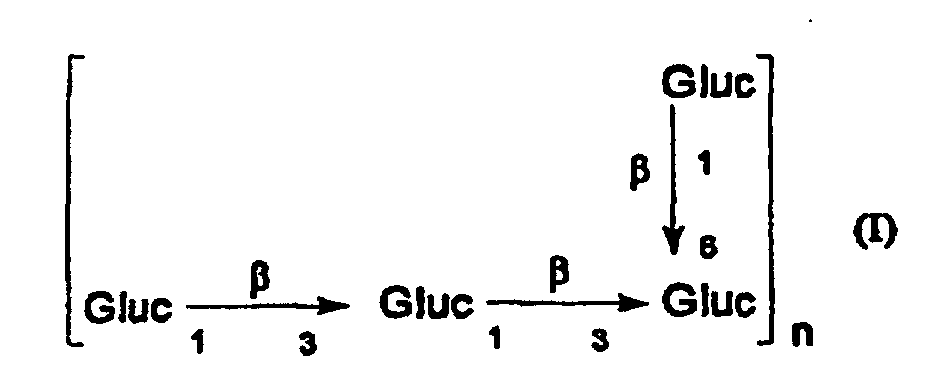
- the medicament in accordance with the invention comprises, as active principle, an effective amount of at least one oligosaccharide capable of modulating the dysregulations of apoptosis and corresponding to the formula in which n represents an integer from 1 to 50, preferably from 5 to 10 and in which the number of connections varies from 0 to 3 per unit of repetition.
- the medicament in accordance with the invention comprises, as active principle, an effective amount of at least one repeating disaccharide capable of modulating the dysregulations of apoptosis and corresponding to the formula in which n represents an integer from 1 to 50, preferably from 1 to 20, at least some of the repeating disaccharides of formula (II) possibly comprising one or more sulfate groups.
- the medicament in accordance with the invention comprises, as active principle, an effective amount of the product capable of at least partially inhibiting apoptosis and obtained by hydrolysis from sodium iota-carrageenate, this product being constituted by a mixture of oligo-iota-carrageenans designated by I 9 , whose total ose content (determined according to Tillmans and Philippi) is 62% and whose size distribution profile, estimated by gel electrophoresis of polyacrylamide according to Zablakis and Perez, is: Iota-néocarratétraose (DP 2) 8-12% Iota-néocarrahexaose (DP 3) 23-27% Iota-néocarraoctaose (DP 4) 18-22% Iota-néocarradécaose (DP 5) 13-17% Iota-néocarradodécaose (DP 6) 8-12% Trace i
- the iotacarraghenane is incubated in the presence of the partially purified iotacarraghenase enzyme at a temperature of 45-50 ° C., then the hydrolysis products are ultrafiltered on a 10,000 Da membrane. The product I 9 is thus obtained.
- the iotacarraghenane polymer is hydrolyzed by a recombinant iotacarraghenase overexpressed in the Escherichia coli strain .
- the enzyme is prepared by dissolving the bacterial pellet (corresponding to 1 liter of culture) in 50 ml of 10 mM Tris buffer pH 7.5, 100 mM NaCl, 5 mM CaCl 2 , so as to have, in the end, 500 U / ml.
- the enzyme is added to 50 U / g of polymer. Continuous ultrafiltration is started after 30 minutes; it is an ultrafiltration tangential.
- the filtrate outlet is partially closed to maintain the filtration rate at 1 liter per hour.
- the characteristics of the reaction vessel are chosen to allow a supply of the enzyme in the substrate until the 20 l of solution is used up and maintaining a fixed volume of 2 liters.
- the oligocarraghenans of fraction I 9 thus obtained were subjected to additional fractionation by low pressure chromatography on a column of Biogel P6 then on a column of Sephadex G10.
- the medicament in accordance with the invention comprises, as active principle, an effective quantity of the product capable of at least partially inhibiting apoptosis and consisting of the DP 7 fraction of the product I 9 .
- the medicament in accordance with the invention comprises, as active principle, an effective amount of the product capable of activating the disorders of apoptosis, obtained by acidic aqueous extraction from a brown alga called Laminaria digitata , this product consisting of a mixture of oligo ⁇ 1-3 glucans designated by L 11 and comprising from 1 to 50, preferably from 20 to 30 saccharide units, the product in question having the NMR spectrum shown in the figure 1.
- the product L 11 can also be obtained by aqueous extraction from brown algae in general, of which Laminaria digitata is a representative.
- the preparation of product L 11 can be carried out as follows.
- the operation is carried out in a double boiler temperature of around 70 ° C for 2 hours and 30 minutes under agitation.
- the extract obtained is clarified by filtration on a 1.2 ⁇ m porosity filter.
- the liquid resulting from this filtration is subjected to tangential ultrafiltration on a membrane of porosity 50,000 Daltons.
- Ultrafiltration is achieved by maintaining a pressure of 1 bar.
- a dialysate is obtained which is concentrated to a volume 100 ml by evaporation at 80 ° C using a ROTOVAPOR type, then lyophilized.
- oligo ⁇ 1-3 glucans constituting the above powder have in fact 1 to 50, preferably 20 to 30 saccharide units.
- the chromatographic conditions being the following: Column Carbopac PA1 Debit 1 ml / min Detection amperometric - gold electrode Injection 50 ⁇ l Elution gradient 50 mM soda / 500 mM sodium acetate - demineralized water Analysis time 15 minutes Retention time ⁇ 9 - 10 minutes we obtained the curve which is shown in figure 16 and which identifies the product L 11 .
- the medicaments in accordance with the invention defined more top feature conventional formulation adjuvants corresponding to their mode of administration and the dosage retained.
- the invention also relates to a method of preparation of a medicament for the treatment of apoptosis disorders, characterized by the fact that causes a pharmaceutical composition to contain at least one of active ingredients identified above.
- the above dosage composition is suitable for administration by intravenously.
- the invention also relates to the use, for the purpose of preparation of a medicament for the treatment of disorders of apoptosis, saccharide substances group comprising oligosaccharides derived by route enzymatic or chemical of polymers from the group comprising ⁇ 1-3 glucans optionally comprising ⁇ 1-6 ramifications, and oligosaccharides derived by enzymatic or chemical route of sulfated galactans, especially carrageenans, agars and porphyranes.
- the medium used for the culture of murine fibroblasts is that marketed by the Company Life Technologies under the name "Dulbecco's Modified Eagle Medium”; this medium is described in "Virology" 8, 396 (1959) by Dulbecco et al.
- This medium was then inoculated with murine fibroblasts in the presence of a sufficient quantity of antibiotics to eliminate the possibility of contamination; the concentration of the fibroblast culture medium was 10 5 cells per ml of medium.
- the culture was carried out inside an incubator in which the temperature was maintained at 37 ° C; the atmosphere filling the incubator contained 5% CO 2 .
- Fas ligand After a 24 hour incubation, either the Fas ligand, or FasAb directly in the middle.
- the amount of FasAb added was 50 ⁇ g per ml of culture medium.
- the effect obtained was noted using successively 0, then 5, then 10, then 50, then 100 and finally 500 ng of FasAb per ml of culture and, in each case, concentrations of active ingredient successively equal to 0.25, then 0.5 and finally 1 mg per ml of culture medium, it being understood that we also have noted the effect obtained in the absence of active ingredient, i.e. for a concentration of 0%.
- the survival rate for each of the four active ingredient concentrations i.e. 0 mg / ml, 0.25 mg / ml, 0.5 mg / ml and 1 mg / ml, by four rectangles parallel to the ordinate axis, the standard deviation being materialized each times by a segment surmounting the corresponding rectangle parallel to the ordinate axis.
- the rectangle corresponding to 0 mg / ml of principle active is the one on the far left, corresponding to 0.25 mg / ml of active ingredient is located on its right, the one corresponding to 0.5 mg / ml is located at the right of the previous one and so on.
- the four rectangles are identified each time by hatching, dotted or particular gradations.
- staurosporine induces death apoptotic in the case of most cells at doses varying from 0.5 to 5 ⁇ M.
- I 9 Two doses of I 9 were used , namely 0.2 mg / ml and 0.5 mg / ml.
- Staurosporine has been used at a rate of 0.5 ⁇ M then 1 ⁇ M and finally 1.5 ⁇ M.
- the survival rate of the treated cells was determined in each case after 18 hours of incubation.
- results recorded appear on the histogram represented in FIG. 9 and which shows the survival rate expressed in% as a function of the concentration of staurosporine and for the doses of I 9 identified above.
- the medicament according to the invention allows achieve significant attenuation of apoptosis when this is induced by different agents.
- the cell culture studied was a culture of immortalized human cells, made up of T lymphocytes (Jurkat type).
- the culture medium used is that sold by Life Technologies under the name “RPMI 1640 Medium”; this medium is described by Moore et al. in the publication "AMA” 199, 519 (1967).
- calf serum 10% by volume of calf serum is added to this medium. fetal and antibiotics to eliminate the possibilities contamination.
- This medium is inoculated with an amount of 10 6 T cells per ml of medium.
- the temperature of the incubation is 37 ° C and the atmosphere filling the incubator contains 5% CO 2 .
- FasAb this is the one made by Upstate Biotechnology and marketed under catalog number 05-201 by Euromedex
- the amount of FasAb is 50 ng / ml of culture.
- the active principle consists successively of the product I 9 and the product L 11 .
- the quantities used are in each case 0.5 mg / ml.
- This survival analysis consists in passing a volume of culture containing 10 4 cells through an apparatus of the type which operates by flow cytometry, in this case that marketed by the Beckton Dickinson Company under the name "FAC Scan cytometer”. .
- This device uses a probe that detects the presence of phosphatidyl serine on the cell surface; the presence of this product shows that the cells in question are apoptotic.
- Figure 10 illustrates the survival analysis performed on a sample of a culture medium in which there is no added neither FasAb, nor active ingredient; it is a witness; in this case, we see that there are substantially only living cells that are in polygon A (see row 1 of table II).
- Figure 11 illustrates the survival analysis performed on a sample of a culture medium in which there is no added that FasAb; in this case, we see that polygon B contains 21% of apoptotic cells (see line 2 of table II).
- FIG. 12 illustrates the survival analysis carried out on a sample of a culture medium having been added simultaneously with FasAb and with active principle I 9 (0.5 mg / ml); in this case, we see that polygon B contains practically no apoptotic cells (2%), polygon A containing many living cells and polygon C a certain concentration (6%) of dead cells (see row 3 of the table II).
- FIG. 13 illustrates the survival analysis carried out on a sample of a culture medium having been added simultaneously with FasAb and with active principle L 11 (0.5 mg / ml); in this case, we see that polygon B contains a large quantity (13%) of apoptotic cells and polygon C a non-negligible quantity (9%) of dead cells (see liane 4 of table II).
- L 11 is much more active when administered before FasAb.
- FasAb identified above a FasAb from another origin, i.e. the one produced by Alexis Corporation (San Diego, USA) and marketed by lich Coger SA (Paris).
- Fas apoptosis can be induced using a FasAb from Euromedex; such a apoptosis can be of the order of 3 to 10%.
- Fas apoptosis can be induced using a FasAb from Alexis Corporation; a such apoptosis can be of the order of 20 to 50%.
- FIG. 14 shows the recorded effects, that is to say either the stimulation or the inhibition of apoptosis (expressed in%) as a function of the intensity of apoptosis (in%) induced by FasAb alone (concentrations of 50 to 200 ng / ml).
- This medication may therefore help correct apoptosis in the sense of potentiation when the subject has a cancer-like condition or autoimmune disease corresponding to weak apoptosis and in the sense of inhibition when the subject is has an immunodeficiency syndrome condition corresponding to a strong apoptosis.
- T lymphocytes Jurkat present in cultures subjected to experiments that precede are cells whose suppressor gene p53 tumor or p53 protein (Bing An et al., 1998, "Cell Death and Differentiation "5, 1062-1075) is transferred and done, inactive.
- the p53 protein is mutated, therefore inactive; it follows that the use of a medicament based on one of the products in accordance with the invention and in particular of the products I 9 and L 11 makes it possible to remedy the dysfunctions of the protein p53 and to treat the affections of the such as cancer and autoimmune diseases.
- the invention therefore makes it possible to treat affections in question by a basically way different and simpler than gene therapy which is based on the principle aiming in particular to reintroduce a p53 gene normal in the genome of mutated cells of a sick subject.
- the FasAb system is crucial for the destruction of cancer cells, either by the immune system or by the action of anticancer drugs; it follows that the fact that the products used in accordance with the invention and in particular I 9 and L 11 modulate the apoptosis of said cancer cells independently of p53, is of considerable importance and makes it possible to envisage the development of 'a new generation of drugs, notably anticancer drugs.
- the product I 9 is composed, as shown above, of a mixture of oligo-iota-carrageenans.
- the polymer constituting the raw material of I 9 was also tested, as well as the product called KIK (hexasaccharide of the kappa-iota-kappa type).
- Example 1 the procedure was carried out as in Example 1 by simultaneously introducing, on the one hand, 0.2 mg / ml of each of the above-mentioned fractions of I 9 and, on the other hand, 100 ng / ml of FasAb of Euromedex origin.
- fractions DP 2, DP 3, DP 4 and DP 5 are inactive and do not stimulate apoptosis induced by low dose (100 ng / ml) of FasAb from Euromedex which induced by itself 6% cell death after 6 p.m. incubation.
- the polymer constituting the raw material for the preparation of I 9 before cleavage by the iotase enzyme is also active and stimulates a low intensity Fas apoptosis.
- the iotase enzyme itself, used in the proportion of 50 units, has no activity when it is incubated with the cells.
- caspase 8 the first of the caspases of the caspase cascade activated is caspase 8.
- this capsase 8 which is a proteolytic enzyme, was measured after lysis of Jurkat cells treated or not with FasAb alone and with FasAb at the same time as with I 9 .
- the product I 9 therefore represents a product capable of modulating the activity of caspase 8.
Landscapes
- Health & Medical Sciences (AREA)
- Life Sciences & Earth Sciences (AREA)
- Veterinary Medicine (AREA)
- Chemical & Material Sciences (AREA)
- Medicinal Chemistry (AREA)
- Pharmacology & Pharmacy (AREA)
- Animal Behavior & Ethology (AREA)
- General Health & Medical Sciences (AREA)
- Public Health (AREA)
- Epidemiology (AREA)
- Molecular Biology (AREA)
- Engineering & Computer Science (AREA)
- Bioinformatics & Cheminformatics (AREA)
- Chemical Kinetics & Catalysis (AREA)
- General Chemical & Material Sciences (AREA)
- Nuclear Medicine, Radiotherapy & Molecular Imaging (AREA)
- Organic Chemistry (AREA)
- Pharmaceuticals Containing Other Organic And Inorganic Compounds (AREA)
- Medicines That Contain Protein Lipid Enzymes And Other Medicines (AREA)
- Polysaccharides And Polysaccharide Derivatives (AREA)
Claims (10)
- Medikament, dadurch gekennzeichnet, dass es als Wirkstoff eine wirksame Menge von mindestens einer oligosaccharidischen Substanz, die dazu geeignet ist, Unregelmäßigkeiten der Apoptose zu modulieren, aufweist und gegebenenfalls, auf mindestens einigen seiner Einheitsmotive, mindestens einen Substituenten der Gruppe, umfassend die Gruppierungen Sulfat, Methyl und Acetyl, aufweist, wobei die Substanz ausgewählt ist aus der Gruppe, umfassendOligosaccharide, auf enzymatischem oder chemischem Weg abgeleitet von Polymeren der Gruppe, umfassend β 1-3 Glukane, gegebenenfalls enthaltend β 1-6 Verzweigungen, undOligosaccharide, auf enzymatischem oder chemischem Weg abgeleitet von Carrageenanen, Agaren und Porphyranen.
- Medikament, dadurch gekennzeichnet, dass es als Wirkstoff eine wirksame Menge von mindestens einem Oligosaccharid aufweist, das dazu geeignet ist, Unregelmäßigkeiten der Apoptose zu modulieren und der Formelentspricht, in welcher n eine ganze Zahl von 1 bis 50 darstellt, vorzugsweise von 5 bis 10, und in welcher die Zahl der Abzweigungen von 0 bis 3 pro Repetitionseinheit variiert.
- Medikament, dadurch gekennzeichnet, dass es als Wirkstoff eine wirksame Menge von mindestens einem Repetitions-Disaccharid, das dazu geeignet ist, Unregelmäßigkeiten der Apoptose zu modulieren, und der Formelentspricht, in welcher n eine ganze Zahl von 1 bis 50 darstellt, vorzugsweise von 1 bis 20, wobei mindestens einige der Repetier-Disaccharide der Formel (II) eine oder mehrere Sulfatgruppe(n) aufweisen können.

- Medikament, dadurch gekennzeichnet, dass es als Wirkstoff eine wirksame Menge des Produkts aufweist, das dazu geeignet ist, die Apoptose mindestens teilweise zu inhibieren, und das erhalten wird durch Hydrolyse von Nattium Jota-Catrageenat ("iota-carraghénate de sodium"), wobei das Produkt durch ein Gemisch aus Oligo-Jota-Carrageenanen, bezeichnet als I9, gebildet wird, deren Gesamtgehalt an Monosacchariden (bestimmt nach Tillmans und Philippi) 62% beträgt, und deren Größenverteilungsprofil, bestimmt mittels Polyacrylamid-Gelelektrophorese nach Zablakis und Perez, ist:
Jota-Neocarratetraose (DP 2) 8-12% Jota-Neocarrahexaose (DP 3) 23-27% Jota-Neocarraoctaose (DP 4) 18-22% Jota-Neocarradecaose (DP 5) 13-17% Jota-Neocartadodecaose (DP 6) 8-12% Oligo-Jota-Carrageenan (DP 7) 3- 7% Oligo Jota-Carrageenanen, gebildet aus 8 bis 15 Repetier-Disacchariden (DP 8-15) 13-17%. - Medikament, dadurch gekennzeichnet, dass es als Wirkstoff eine wirksame Menge des Produkts aufweist, das dazu geeignet ist, Unregelmäßigkeiten der Apoptose zu aktivieren, und das erhalten wird durch wässerig-sauere Extraktion aus Braunalgen, insbesondere aus einer Braunalge, die als Laminaria digitata bezeichnet wird, wobei das Produkt durch ein Gemisch aus Oligo β 1-3 Glukanen, bezeichnet als L11, gebildet wird und von 1 bis 50, vorzugsweise von 20 bis 30 Saccharideinheiten aufweist, wobei das besagte Produkt das NMR-Spektrum präsentiert, das in der Figur 1 gezeigt ist.
- Medikament, dadurch gekennzeichnet, dass es als Wirkstoff eine wirksame Menge des Produkts enthält, das dazu geeignet ist, Unregelmäßigkeiten der Apoptose zu aktivieren, und aus der Fraktion DP 7 des Produkts I9 nach Anspruch, 4 gebildet wird.
- Verfahren zur Herstellung eines Medikaments für die Behandlung von Unregelmäßigkeiten der Apoptose, dadurch gekennzeichnet, dass es in einer galenischen Zusammensetzung mindestens einen der Wirkstoffe der Medikamente nach mindestens einem der Ansprüche 1 bis 6 aufweisen muss.
- Verwendung zur Herstellung eines Medikaments zur Behandlung von Unregelmäßigkeiten der Apoptose von mindestens einer der oligosaccharidischen Substanzen, die gegebenenfalls, auf mindestens einigen ihrer Einheitsmotive, mindestens einen Substituenten der Gruppe, umfassend die Gruppierungen Sulfat, Methyl und Acetyl aufweisen, wobei diese Substanzen geeignet sind, Unregelmäßigkeiten der Apoptose zu modulieren und wobei sie ausgewählt sind aus der Gruppe, umfassendOligosaccharide, auf enzymatischem oder chemischem Weg abgeleitet von Polymeren der Gruppe, umfassend β 1-3 Glukane, gegebenenfalls aufweisend β 1-6 Verzweigungen, undOligosaccharide, auf enzymatischem oder chemischem Weg abgeleitet von Carrageenanen, Agaren und von Porphyranen.
- Verwendung, zur Herstellung eines Medikaments zur Behandlung von Unregelmäßigkeiten der Apoptose, von Oligosacchariden der Formel (I) und denen der Formel (II).
- Verwendung von Produkten, bezeichnet als I9, und L11 und des Produkts, das die Fraktion DP 7 des Produkts I9 nach Anspruch 4 bildet, zur Herstellung von Medikamenten zur Behandlung von Unregelmäßigkeiten der Apoptose.
Applications Claiming Priority (3)
| Application Number | Priority Date | Filing Date | Title |
|---|---|---|---|
| FR9801237A FR2774289B1 (fr) | 1998-02-03 | 1998-02-03 | Medicament pour le traitement des dereglements de l'apoptose |
| FR9801237 | 1998-02-03 | ||
| PCT/FR1999/000229 WO1999039718A1 (fr) | 1998-02-03 | 1999-02-03 | Medicament pour le traitement des dereglements de l'apoptose contenant des oligosaccharides |
Publications (2)
| Publication Number | Publication Date |
|---|---|
| EP1052996A1 EP1052996A1 (de) | 2000-11-22 |
| EP1052996B1 true EP1052996B1 (de) | 2004-07-28 |
Family
ID=9522539
Family Applications (1)
| Application Number | Title | Priority Date | Filing Date |
|---|---|---|---|
| EP99901702A Expired - Lifetime EP1052996B1 (de) | 1998-02-03 | 1999-02-03 | Zusammensetzung von oligosacchariden zur regulierung von apoptose |
Country Status (10)
| Country | Link |
|---|---|
| US (1) | US6750208B1 (de) |
| EP (1) | EP1052996B1 (de) |
| JP (1) | JP2002502887A (de) |
| AU (1) | AU2171099A (de) |
| CA (1) | CA2319677A1 (de) |
| DE (1) | DE69918953T2 (de) |
| ES (1) | ES2226331T3 (de) |
| FR (1) | FR2774289B1 (de) |
| PT (1) | PT1052996E (de) |
| WO (1) | WO1999039718A1 (de) |
Families Citing this family (6)
| Publication number | Priority date | Publication date | Assignee | Title |
|---|---|---|---|---|
| FR2808687B1 (fr) * | 2000-04-27 | 2003-12-05 | Goemar Lab Sa | Medicament contenant des substances polysaccharidiques pour l'activation de l'apoptose |
| US20050065114A1 (en) * | 2003-09-23 | 2005-03-24 | Jean-Claude Yvin | Therapeutical treatment with oligo-beta- (1,3) -glucans, drugs used in said treatment |
| US7080478B2 (en) | 2003-11-20 | 2006-07-25 | Noritech Seaweed Technologies Ltd. | Technology for cultivation of Porphyra and other seaweeds in land-based sea water ponds |
| US7484329B2 (en) | 2003-11-20 | 2009-02-03 | Seaweed Bio-Technology Inc. | Technology for cultivation of Porphyra and other seaweeds in land-based sea water ponds |
| US7691388B2 (en) | 2006-03-24 | 2010-04-06 | Ocean Nutrition Canada Limited | Compositions comprising Porphyra and methods of making and using thereof |
| FR3023292A1 (fr) * | 2014-07-01 | 2016-01-08 | Centre Nat Rech Scient | Oligo-lambda-carraghenanes, compositions cosmetique, dermatologique et pharmaceutique les contenant, et leurs utilisations |
Family Cites Families (4)
| Publication number | Priority date | Publication date | Assignee | Title |
|---|---|---|---|---|
| KR0141685B1 (ko) * | 1988-09-01 | 1998-07-01 | 야마따니 와따루 | 참게 아메보사이트 라이세이트 g 인자 활성화 저해제 |
| ES2138971T3 (es) * | 1991-07-03 | 2000-02-01 | Otsuka Pharma Co Ltd | Regulador de la apoptosis. |
| FI960165L (fi) * | 1993-07-16 | 1996-01-26 | Univ Leland Stanford Junior | Säädetty apoptoosi |
| DE69532293T2 (de) * | 1994-12-01 | 2004-10-21 | Seikagaku Kogyo Co Ltd | Keratansulfatoligosaccharid-fraktion und sie enthaltendes medikament |
-
1998
- 1998-02-03 FR FR9801237A patent/FR2774289B1/fr not_active Expired - Fee Related
-
1999
- 1999-02-03 WO PCT/FR1999/000229 patent/WO1999039718A1/fr not_active Ceased
- 1999-02-03 CA CA002319677A patent/CA2319677A1/fr not_active Abandoned
- 1999-02-03 DE DE69918953T patent/DE69918953T2/de not_active Expired - Lifetime
- 1999-02-03 AU AU21710/99A patent/AU2171099A/en not_active Abandoned
- 1999-02-03 JP JP2000530215A patent/JP2002502887A/ja not_active Withdrawn
- 1999-02-03 EP EP99901702A patent/EP1052996B1/de not_active Expired - Lifetime
- 1999-02-03 PT PT99901702T patent/PT1052996E/pt unknown
- 1999-02-03 ES ES99901702T patent/ES2226331T3/es not_active Expired - Lifetime
- 1999-02-03 US US09/601,665 patent/US6750208B1/en not_active Expired - Fee Related
Also Published As
| Publication number | Publication date |
|---|---|
| US6750208B1 (en) | 2004-06-15 |
| CA2319677A1 (fr) | 1999-08-12 |
| DE69918953T2 (de) | 2005-08-04 |
| DE69918953D1 (de) | 2004-09-02 |
| ES2226331T3 (es) | 2005-03-16 |
| AU2171099A (en) | 1999-08-23 |
| PT1052996E (pt) | 2004-11-30 |
| JP2002502887A (ja) | 2002-01-29 |
| FR2774289B1 (fr) | 2002-05-24 |
| EP1052996A1 (de) | 2000-11-22 |
| FR2774289A1 (fr) | 1999-08-06 |
| WO1999039718A1 (fr) | 1999-08-12 |
Similar Documents
| Publication | Publication Date | Title |
|---|---|---|
| Wang et al. | Hydrogen sulfide alleviates the anxiety-like and depressive-like behaviors of type 1 diabetic mice via inhibiting inflammation and ferroptosis | |
| JP4353982B2 (ja) | 糖尿病処置用相乗作用組成物 | |
| EP0352147A2 (de) | Verwendung von Naringin, Naringenin oder ihrer Derivate zur Herstellung eines Antikrebsmittels | |
| US11129864B2 (en) | Method for obtaining a plant extract and associated compositions | |
| EP3071212A1 (de) | Extrakt aus algen zur verwendung als immunmodulator | |
| US20170204151A1 (en) | Mesenchymal Stem Cells Expressing Biomarkers that Predict the Effectiveness of Mesenchymal Stem Cells for Treating Diseases and Disorders | |
| CN110420315A (zh) | 枸杞糖肽在制备治疗三高药物中的应用 | |
| EL-Tantawi et al. | Evaluation of the side effects of different doses of spirulina on various organs in rats: Biochemical, histological and histochemical assessment | |
| CN120435297A (zh) | 一种用于防治糖尿病及其并发症的人参二醇皂苷组合物及其制备方法和应用 | |
| CA2319677A1 (fr) | Medicament pour le traitement des dereglements de l'apoptose contenant des oligosaccharides | |
| JPH08503921A (ja) | カポジ肉腫を処置、及び脈管浸透を阻止又は阻害するための方法 | |
| El Dib et al. | Allopurinol and Albendazole efficacy against trichinosis in experimentally-infected mice | |
| US20230149475A1 (en) | Composition for preventing, improving, or treating sarcopenia, comprising tenebrio molitor larval protein or hydrolysate thereof as active ingredient | |
| GB2359561A (en) | Lak activity potentiator orginating in shiitake mushroom hyphae extract and lak activity potentiating preparations containing the same | |
| KR20180111280A (ko) | 톱니모자반 추출물을 포함하는 염증성 장질환의 예방 또는 치료용 조성물 | |
| EP2556828B1 (de) | Zusammensetzung zur linderung von hypalbuminämie | |
| EP1888092B1 (de) | Medikament aus laminarin oder oligolaminarinen zur behandlung von septikämie und schock | |
| CN120131746B (zh) | 具有协同降糖活性的植物提取物组合物及其应用 | |
| FR2600892A1 (fr) | Utilisation du fructose-1,6-diphosphate pour la preparation d'une composition pharmaceutique pour la protection contre la toxicite induite par l'administration d'anthracyclines et compositions correspondantes | |
| CN104162163A (zh) | 脂酰辅酶a氧化酶作为糖尿病的治疗靶点的应用 | |
| JP4649617B2 (ja) | 医薬およびこれに使用する抽出物 | |
| KR20240139551A (ko) | 허혈-재관류 손상의 예방 또는 치료용 약학 조성물 | |
| KR100513125B1 (ko) | 장생도라지 추출물을 유효성분으로 포함하는 간장의항섬유화제 | |
| JP2008208081A (ja) | Ampk活性化剤 | |
| TW202527977A (zh) | 具有護腎功效的咪唑二肽組合物及其應用 |
Legal Events
| Date | Code | Title | Description |
|---|---|---|---|
| PUAI | Public reference made under article 153(3) epc to a published international application that has entered the european phase |
Free format text: ORIGINAL CODE: 0009012 |
|
| 17P | Request for examination filed |
Effective date: 20000824 |
|
| AK | Designated contracting states |
Kind code of ref document: A1 Designated state(s): DE ES FR GB GR IT NL PT |
|
| 17Q | First examination report despatched |
Effective date: 20020104 |
|
| GRAP | Despatch of communication of intention to grant a patent |
Free format text: ORIGINAL CODE: EPIDOSNIGR1 |
|
| GRAS | Grant fee paid |
Free format text: ORIGINAL CODE: EPIDOSNIGR3 |
|
| GRAA | (expected) grant |
Free format text: ORIGINAL CODE: 0009210 |
|
| AK | Designated contracting states |
Kind code of ref document: B1 Designated state(s): DE ES FR GB GR IT NL PT |
|
| REG | Reference to a national code |
Ref country code: GB Ref legal event code: FG4D Free format text: NOT ENGLISH |
|
| REF | Corresponds to: |
Ref document number: 69918953 Country of ref document: DE Date of ref document: 20040902 Kind code of ref document: P |
|
| REG | Reference to a national code |
Ref country code: GR Ref legal event code: EP Ref document number: 20040403545 Country of ref document: GR |
|
| REG | Reference to a national code |
Ref country code: PT Ref legal event code: SC4A Free format text: AVAILABILITY OF NATIONAL TRANSLATION Effective date: 20041011 |
|
| GBT | Gb: translation of ep patent filed (gb section 77(6)(a)/1977) |
Effective date: 20041201 |
|
| REG | Reference to a national code |
Ref country code: ES Ref legal event code: FG2A Ref document number: 2226331 Country of ref document: ES Kind code of ref document: T3 |
|
| PLBE | No opposition filed within time limit |
Free format text: ORIGINAL CODE: 0009261 |
|
| STAA | Information on the status of an ep patent application or granted ep patent |
Free format text: STATUS: NO OPPOSITION FILED WITHIN TIME LIMIT |
|
| 26N | No opposition filed |
Effective date: 20050429 |
|
| PGFP | Annual fee paid to national office [announced via postgrant information from national office to epo] |
Ref country code: PT Payment date: 20100119 Year of fee payment: 12 Ref country code: ES Payment date: 20100223 Year of fee payment: 12 |
|
| PGFP | Annual fee paid to national office [announced via postgrant information from national office to epo] |
Ref country code: IT Payment date: 20100227 Year of fee payment: 12 Ref country code: FR Payment date: 20100316 Year of fee payment: 12 |
|
| PGFP | Annual fee paid to national office [announced via postgrant information from national office to epo] |
Ref country code: GB Payment date: 20100205 Year of fee payment: 12 Ref country code: DE Payment date: 20100211 Year of fee payment: 12 |
|
| PGFP | Annual fee paid to national office [announced via postgrant information from national office to epo] |
Ref country code: GR Payment date: 20100126 Year of fee payment: 12 |
|
| REG | Reference to a national code |
Ref country code: NL Ref legal event code: V1 Effective date: 20110901 |
|
| GBPC | Gb: european patent ceased through non-payment of renewal fee |
Effective date: 20110203 |
|
| PG25 | Lapsed in a contracting state [announced via postgrant information from national office to epo] |
Ref country code: PT Free format text: LAPSE BECAUSE OF NON-PAYMENT OF DUE FEES Effective date: 20110803 |
|
| REG | Reference to a national code |
Ref country code: FR Ref legal event code: ST Effective date: 20111102 |
|
| PG25 | Lapsed in a contracting state [announced via postgrant information from national office to epo] |
Ref country code: GR Free format text: LAPSE BECAUSE OF NON-PAYMENT OF DUE FEES Effective date: 20110902 |
|
| PG25 | Lapsed in a contracting state [announced via postgrant information from national office to epo] |
Ref country code: NL Free format text: LAPSE BECAUSE OF NON-PAYMENT OF DUE FEES Effective date: 20110901 Ref country code: IT Free format text: LAPSE BECAUSE OF NON-PAYMENT OF DUE FEES Effective date: 20110203 |
|
| REG | Reference to a national code |
Ref country code: DE Ref legal event code: R119 Ref document number: 69918953 Country of ref document: DE Effective date: 20110901 |
|
| PG25 | Lapsed in a contracting state [announced via postgrant information from national office to epo] |
Ref country code: FR Free format text: LAPSE BECAUSE OF NON-PAYMENT OF DUE FEES Effective date: 20110228 |
|
| PG25 | Lapsed in a contracting state [announced via postgrant information from national office to epo] |
Ref country code: GB Free format text: LAPSE BECAUSE OF NON-PAYMENT OF DUE FEES Effective date: 20110203 |
|
| REG | Reference to a national code |
Ref country code: ES Ref legal event code: FD2A Effective date: 20120411 |
|
| PG25 | Lapsed in a contracting state [announced via postgrant information from national office to epo] |
Ref country code: ES Free format text: LAPSE BECAUSE OF NON-PAYMENT OF DUE FEES Effective date: 20110204 |
|
| PG25 | Lapsed in a contracting state [announced via postgrant information from national office to epo] |
Ref country code: DE Free format text: LAPSE BECAUSE OF NON-PAYMENT OF DUE FEES Effective date: 20110901 |
|
| PGFP | Annual fee paid to national office [announced via postgrant information from national office to epo] |
Ref country code: NL Payment date: 20100228 Year of fee payment: 12 |