EP1056433B1 - Färbungsverfahren unter verwendung von einer spezifischen aktiven methylenverbindung und einer verbindung augewählt aus einem spezifischen aldehyd, einem spezifischen keton, einem chinon und einem diimino-isoindolin- oder 3-aminoisoindolonderivat - Google Patents
Färbungsverfahren unter verwendung von einer spezifischen aktiven methylenverbindung und einer verbindung augewählt aus einem spezifischen aldehyd, einem spezifischen keton, einem chinon und einem diimino-isoindolin- oder 3-aminoisoindolonderivat Download PDFInfo
- Publication number
- EP1056433B1 EP1056433B1 EP99961139A EP99961139A EP1056433B1 EP 1056433 B1 EP1056433 B1 EP 1056433B1 EP 99961139 A EP99961139 A EP 99961139A EP 99961139 A EP99961139 A EP 99961139A EP 1056433 B1 EP1056433 B1 EP 1056433B1
- Authority
- EP
- European Patent Office
- Prior art keywords
- group
- alkyl
- substituted
- unsubstituted
- denotes
- Prior art date
- Legal status (The legal status is an assumption and is not a legal conclusion. Google has not performed a legal analysis and makes no representation as to the accuracy of the status listed.)
- Revoked
Links
- 0 *[C@]1C=CC(C(N2*)=NCC2=O)=CC=C1 Chemical compound *[C@]1C=CC(C(N2*)=NCC2=O)=CC=C1 0.000 description 7
Classifications
-
- A—HUMAN NECESSITIES
- A61—MEDICAL OR VETERINARY SCIENCE; HYGIENE
- A61Q—SPECIFIC USE OF COSMETICS OR SIMILAR TOILETRY PREPARATIONS
- A61Q5/00—Preparations for care of the hair
- A61Q5/10—Preparations for permanently dyeing the hair
-
- A—HUMAN NECESSITIES
- A61—MEDICAL OR VETERINARY SCIENCE; HYGIENE
- A61K—PREPARATIONS FOR MEDICAL, DENTAL OR TOILETRY PURPOSES
- A61K8/00—Cosmetics or similar toiletry preparations
- A61K8/18—Cosmetics or similar toiletry preparations characterised by the composition
- A61K8/30—Cosmetics or similar toiletry preparations characterised by the composition containing organic compounds
- A61K8/33—Cosmetics or similar toiletry preparations characterised by the composition containing organic compounds containing oxygen
-
- A—HUMAN NECESSITIES
- A61—MEDICAL OR VETERINARY SCIENCE; HYGIENE
- A61K—PREPARATIONS FOR MEDICAL, DENTAL OR TOILETRY PURPOSES
- A61K8/00—Cosmetics or similar toiletry preparations
- A61K8/18—Cosmetics or similar toiletry preparations characterised by the composition
- A61K8/30—Cosmetics or similar toiletry preparations characterised by the composition containing organic compounds
- A61K8/33—Cosmetics or similar toiletry preparations characterised by the composition containing organic compounds containing oxygen
- A61K8/35—Ketones, e.g. benzophenone
-
- A—HUMAN NECESSITIES
- A61—MEDICAL OR VETERINARY SCIENCE; HYGIENE
- A61K—PREPARATIONS FOR MEDICAL, DENTAL OR TOILETRY PURPOSES
- A61K8/00—Cosmetics or similar toiletry preparations
- A61K8/18—Cosmetics or similar toiletry preparations characterised by the composition
- A61K8/30—Cosmetics or similar toiletry preparations characterised by the composition containing organic compounds
- A61K8/49—Cosmetics or similar toiletry preparations characterised by the composition containing organic compounds containing heterocyclic compounds
-
- A—HUMAN NECESSITIES
- A61—MEDICAL OR VETERINARY SCIENCE; HYGIENE
- A61K—PREPARATIONS FOR MEDICAL, DENTAL OR TOILETRY PURPOSES
- A61K8/00—Cosmetics or similar toiletry preparations
- A61K8/18—Cosmetics or similar toiletry preparations characterised by the composition
- A61K8/30—Cosmetics or similar toiletry preparations characterised by the composition containing organic compounds
- A61K8/49—Cosmetics or similar toiletry preparations characterised by the composition containing organic compounds containing heterocyclic compounds
- A61K8/4906—Cosmetics or similar toiletry preparations characterised by the composition containing organic compounds containing heterocyclic compounds with one nitrogen as the only hetero atom
- A61K8/4913—Cosmetics or similar toiletry preparations characterised by the composition containing organic compounds containing heterocyclic compounds with one nitrogen as the only hetero atom having five membered rings, e.g. pyrrolidone carboxylic acid
- A61K8/492—Cosmetics or similar toiletry preparations characterised by the composition containing organic compounds containing heterocyclic compounds with one nitrogen as the only hetero atom having five membered rings, e.g. pyrrolidone carboxylic acid having condensed rings, e.g. indol
-
- A—HUMAN NECESSITIES
- A61—MEDICAL OR VETERINARY SCIENCE; HYGIENE
- A61K—PREPARATIONS FOR MEDICAL, DENTAL OR TOILETRY PURPOSES
- A61K8/00—Cosmetics or similar toiletry preparations
- A61K8/18—Cosmetics or similar toiletry preparations characterised by the composition
- A61K8/30—Cosmetics or similar toiletry preparations characterised by the composition containing organic compounds
- A61K8/49—Cosmetics or similar toiletry preparations characterised by the composition containing organic compounds containing heterocyclic compounds
- A61K8/4906—Cosmetics or similar toiletry preparations characterised by the composition containing organic compounds containing heterocyclic compounds with one nitrogen as the only hetero atom
- A61K8/4926—Cosmetics or similar toiletry preparations characterised by the composition containing organic compounds containing heterocyclic compounds with one nitrogen as the only hetero atom having six membered rings
-
- A—HUMAN NECESSITIES
- A61—MEDICAL OR VETERINARY SCIENCE; HYGIENE
- A61K—PREPARATIONS FOR MEDICAL, DENTAL OR TOILETRY PURPOSES
- A61K8/00—Cosmetics or similar toiletry preparations
- A61K8/18—Cosmetics or similar toiletry preparations characterised by the composition
- A61K8/30—Cosmetics or similar toiletry preparations characterised by the composition containing organic compounds
- A61K8/49—Cosmetics or similar toiletry preparations characterised by the composition containing organic compounds containing heterocyclic compounds
- A61K8/494—Cosmetics or similar toiletry preparations characterised by the composition containing organic compounds containing heterocyclic compounds with more than one nitrogen as the only hetero atom
-
- A—HUMAN NECESSITIES
- A61—MEDICAL OR VETERINARY SCIENCE; HYGIENE
- A61K—PREPARATIONS FOR MEDICAL, DENTAL OR TOILETRY PURPOSES
- A61K8/00—Cosmetics or similar toiletry preparations
- A61K8/18—Cosmetics or similar toiletry preparations characterised by the composition
- A61K8/30—Cosmetics or similar toiletry preparations characterised by the composition containing organic compounds
- A61K8/49—Cosmetics or similar toiletry preparations characterised by the composition containing organic compounds containing heterocyclic compounds
- A61K8/4973—Cosmetics or similar toiletry preparations characterised by the composition containing organic compounds containing heterocyclic compounds with oxygen as the only hetero atom
-
- A—HUMAN NECESSITIES
- A61—MEDICAL OR VETERINARY SCIENCE; HYGIENE
- A61Q—SPECIFIC USE OF COSMETICS OR SIMILAR TOILETRY PREPARATIONS
- A61Q5/00—Preparations for care of the hair
- A61Q5/06—Preparations for styling the hair, e.g. by temporary shaping or colouring
- A61Q5/065—Preparations for temporary colouring the hair, e.g. direct dyes
Definitions
- the present invention relates to the use for the dyeing keratinous fibers of at least one methylene compound specific active agent and at least one compound selected from an aldehyde, a ketone, a quinone and a derivative of di-imino-isoindoline or 3-amino-isoindolone, with dyeing compositions comprising the combination of these compounds, to the dyeing processes said compounds and to a multi-compartment device containing these compounds.
- oxidation dyes oxidation bases and couplers
- oxidation bases and couplers which are initially colorless or weakly colored compounds, under the action of an oxidant, compounds colored by a process of oxidative condensation.
- the oxidation colorations are, compared to direct, permanent, powerful, and resistant to external agents (light, bad weather, washes, perspiration and friction). Nevertheless, the use of the agent oxidant can alter the keratin fibers and makes the processes of implementation of relatively complex oxidative dyes.
- the compounds used by the applicant are small molecules that can easily penetrate the keratin.
- the plaintiff has found, surprisingly, that these compounds can then condense into chromophores or dyes, molecules more bulky that remain trapped within the keratin.
- the subject of the present invention is therefore the use for the dyeing keratinous fibers of an active methylene compound and a compound selected from a specific aldehyde, a specific ketone, a quinone and a derivative of diimino-isoindoline or 3-amino-isoindolone.
- Application EP-A-0 847 749 relates to the use of derivatives di-imino-isoindoline or 1,3 amino-isoindolone for dyeing keratinous fibers. These compounds are used as precursors staining, they can dye keratin fibers without agent oxidant, in the presence of primary or secondary amine compounds.
- Another subject of the invention relates to the compositions of dyes comprising these compounds.
- the present invention also relates to a method of dyeing of keratinous fibers by applying to the fibers a specific active methylene compound and a compound selected from specific aldehyde, a specific ketone, a quinone and a derivative di-iminoisoindoline or 3-amino-isoindolone, either simultaneously, in the form of an extemporaneous mixture, either successive.
- Another object of the invention is also an agent of dyeing for carrying out the process of the invention.
- the main object of the present invention is therefore the use for dyeing keratinous fibers, in particular human keratin fibers such as human hair, from minus one specific active methylene compound and at least one compound selected from an aldehyde, a ketone, a quinone, and a derived from diimino-isoindoline or 3-amino-isoindolone to obtain, by reaction without an oxidizing agent, a coloration said keratinous fibers.
- a compound Active methylene is defined as a substituted methylene group by two groups having an electro effect or mesomeric attractor.
- Such compounds are described in particular in Advanced Organic Chemistry JERRY MARCH, 4th edition Wiley Interscience pages 279, 741, 795.
- the compounds of formula (IV) may in particular be the pyrazolone (5), 3-methyl-pyrazolone (5), 1-phenyl-3-methyl-pyrazolone (5), 1- (b-cyanethyl) -3-methyl-pyrazolone (5), 1,3-dimethyl-pyrazolone (5), 1- (b-acetoxyethyl) -3-methyl-pyrazolone (5), 1- (o-chlorophenyl) -3-methyl-pyrazolone (5), 1-phenyl-3-carbomethoxy-pyrazolone (5) 1- (3-aminophenyl-pyrazolone (5), 1- (4-aminophenyl) pyrazolone (5), 3-methyl-pyrazolone (5) -1-carboxamide, 1-phenyl-pyrazolone (5) -3-carboxamide, amino-pyrazole, 1-phenyl-5-aminopyrazole, 1-benzyl-5-amino-pyrazole, 1-cyclohexy
- the barbituric acid derivatives of formula (VI) can be chosen from di-n-butyl-, di-iso-butyl-, di-N-amyl-, di-iso-amyl-, di-n-hexyl-, di-benzyl-, di- ⁇ -phenylethyl-, di-cyclohexyl-, di-phenyl-, di-p-tolyl-, di-p-methoxybenzyl-barbittiric; the acids N-methyl-N'-n-butyl-, N-methyl-N'-benzyl-, N-methyl-N'- ⁇ -phenylethyl-, N-methyl-N'- ⁇ -phenylpropyl-, N-methyl-N'- ⁇ -phenylbutyl-, N-methyl-N'- ⁇ -isobutyl- ⁇ -phenylpropyl-, N-methyl-N'-cyclohexyl-, N-methyl-N'-pheny
- the pyridines and pyridones of formula (VII) may, for example, 2,6-dihydroxy-3-cyano-4-methyl-pyridine, families of cyanopyridones, aminonitropyridones and aminocyanopyridones and in particular: N-methyl, 3-cyano-4-methyl-6-hydroxy-2-pyridone, N-ethyl, 3-cyano-4-methyl-6-hydroxy-2-pyridone, N-b-methoxyethyl-3-cyano-4-methyl-6-hydroxy-pyridone 2,6-dihydroxy-3-cyano-4-methyl-pyridine, N-b-hydroxyethyl-3-cyano-4-methyl-6-hydroxy-pyridone-2, N-butyl, -3-cyano-4-methyl-6-hydroxy-pyridone-2 and N-phenyl, 3-cyano-4-methyl-6-hydroxy-2-pyridone.
- families of cyanopyridones aminonitropyridones and aminocyanopyri
- the derivatives of formula (VIII) can in particular be chosen from 6-hydroxy-benzofuran- (2H) -one and benzofuran 2- (H) -one.
- the derivatives of formula (XI) are preferably chosen from the derivatives for which R 17 denotes a hydrogen atom, for example 2,4-dihydroxyquinoline.
- the derivatives of formula (XIII) are preferably chosen among rhodamine and 4-imino-4,5-dihydro-thiazol-2-ylamine.
- Preferred compounds of formula (XVII) include: 1,1-dioxo-1,2-dihydro-11,6-benzo [b] thiophen-3-one, 2- (1,1-dioxo-1,2-dihydro-11,6-benzo [b] -thiofen-3-ylidene) -malonitrile.
- the di-imino-isoindoline or 3-amino-isoindolone derivatives may be those corresponding to the following formula (XXIII): in which R 35 and R 36 , which may be identical or different, denote a hydrogen atom, an alkyl, mono or polyhydroxyalkyl, alkylhydroxyalkyl, aminoalkyl, alkylaminoalkyl or (di-hydroxy) alkylaminoalkyl group, or an NR'R "alkyl group, with R '.
- R denotes alkyl or may form together with the nitrogen atom to which they are attached an aryl ring or a 5- or 6-membered heterocyclic ring
- A denotes an oxygen atom or NH
- X and Z together form an aryl ring or a 5- or 6-membered heterocycle, substituted or unsubstituted; or cosmetically acceptable salts of these compounds.
- ketones of formulas (XIX) and (XX) can be chosen among the 2,3 indolinedione, 2,3-butanedione, 2,3-pentanedione, (2,3), (3,4) -hexanedione, 1-phenyl-1,2-propanedione, benzyl, furil, 2,2'-pyridil, nitro-benzyl, anisil, 3,3'-dimethoxybenzyl, 4,4'-bis (dimethylamino) benzyl, the camphoroquinone, cyclohexane-1,2-dione, isatin, N-methyl-isatin, 4,5,6,7-monomethylisatin, (4,5), (4,7), (5,7), (6,7) -dimethyl-isatin, N-ethyl-isatin, N-hydroxymethyl-isatin, 5,6,7-Monomethoxy-isatin, 4,5,6,7-monochloro
- Preferred quinones of formulas (XXI) and (XXII) are, among others, 1,4 naphthoquinone, spinulosin, atromentine, aurentioglyocladine, 2,5-dihydroxy-6-methylbenzoquinone, 2-hydroxy-3-methyl-6-methoxylbenzoquinone, 2,5-dihydroxy-3,6-diphenylbenzoquinone, 2,3-dimethyl-5-hydroxy-6-methoxy-benzoquinone, 2,5-dihydroxy-6-isopropylbenzoquinone, the lawsone, juglone, fafiolin, naphthazarin, naphtopurpurine, lapachol, plumbagine, chloroplumbagine, droserone, shikonin, 2-hydroxy-3-methyl-1,4-naphthoquinone, 3,5-dihydroxy-1,4-naphthoquinone, 2,4-dihydroxy-1,4
- the derivatives of formula (XXIII) are especially represented with 3-imino-3H-isoindol-ylamine, 3-imino-4-methyl-3H-isoindol-ylamine, 3-imino-4-tert-butyl-3H-isoindol-1-ylamine, 3-imino-7-nitro-3H-isoindol-1-ylamine, 3-amino-1-imino-1H-isoindol-4-ol, the 3-imino-7-isopropoxy-3H-isoindol-1-ylamine, 3-imino-7- (2,2,2-trifluoroethoxy) -3H-isoindol-1-ylamine, 3-imino-7-ethoxy-3H-isoindol-1-ylamine, 3-imino-7-butoxy-3H-isoindol-1-ylamine, 3-amino-1-imino-1H-isoindole-4-sul
- Halogen atoms preferentially denote an atom fluorine, chlorine, bromide or iodine.
- Alkyl radicals monohydroxyalkyl, polyhydroxyalkyls, alkylhydroxyalkyls, alkylsulfonyls, carboxyalkyl, aminoalkyl, alkylaminoalkyl, dihydroxyaminoalkyl can be linear or branched.
- Alkyl groups in particular denote groups of 1 to 20 carbon atoms, for example, methyl, ethyl, propyl, isopropyl, n-propyl, butyl, n-butyl, tert-butyl, pentyl, n-pentyl or isopentyl groups. , n-hexyl, isohexyl, heptyl, octyl, nonyl, decyl, undecyl, dodecyl and pentadecyl.
- the alkyl groups denote a group of 1 to 6 carbon atoms; these alkyl groups may be substituted; for example, with a halogen atom, a cyano or hydroxy radical, and can thus represent the trifluoromethyl, ⁇ -chloropropyl, ⁇ -cyanoethyl or ⁇ -hydroxyethyl radicals.
- monohydroxyalkyl groups it is possible to mention may be made of hydroxymethyl and hydroxyethyl groups, hydroxypropyl and hydroxybutyl.
- polyhydroxyalkyl radicals it is possible, for example mention the radicals dihydroxyethyl, dihydroxypropyl, trihydroxypropyl and dihydroxybutyl.
- Alkoxy groups denote a group -O-R, R representing an alkyl group as defined above.
- Alkenyl groups denote a monovalent radical corresponding to ethylenic carbons, such as, for example, alkyl or 3,3-dimethylallyl.
- Acetyloxy groups denote a group -O-CO-R, R representing an alkyl group as defined above.
- cycloalkyl radicals mention may especially be made of cyclohexyl and cyclopentyl.
- aryl radicals which can be mono or polycyclic, there may be mentioned phenyl groups or naphthyl.
- heterocycles which can be mono or polycyclic and containing one or more heteroatoms
- alkylaryl radicals mention may especially be made of benzyl, phenethyl or naphthylmethyl group.
- aminoaryl groups denote the NHR groups, R representing an aryl radical.
- the cycloalkyl and aryl radicals and the heterocycles may be substituted or polysubstituted, for example by a halogen, by a C 1 -C 4 alkyl, a C 1 -C 4 alkoxy or a nitro group, a hydroxy group, a carboxylic group, a C 1 -C 4 acetyloxy group, a carboxamide group, a sulfonamide, sulfonic, nitrile, -CF 3 group , -OCF 3 , or a cycloalkyl or aryl radical that may be substituted; by a C 1 -C 4 alkyl.
- a halogen by a C 1 -C 4 alkyl, a C 1 -C 4 alkoxy or a nitro group, a hydroxy group, a carboxylic group, a C 1 -C 4 acetyloxy group, a carboxamide group, a sulfon
- formulas (I) (XXIII) are not limited to those specifically described but also include their tautomeric forms when they exist.
- cosmetically of the abovementioned compounds may be hydrochlorides, sulphates, hydrobromides or tartrates.
- compositions for dyeing keratinous fibers are essentially characterized in that they comprise at least one methylene compound as defined above and at least one compound selected from aldehyde of formula (XVIII), a ketone of formula (XIX) or (XX), a quinone and a derivative of di-imino-isoindoline or 3-amino-isoindolone as defined above, in a suitable medium for the dyeing.
- the active methylene compound of these compositions is selected from benzofuran (2H) one, benzoylacetonitrile, 5-amino-2H-pyrazol-3-ol and 4-imino-4,5-dihydro-thiazol-2-ylamine.
- the compound chosen from an aldehyde of formula (XVIII), a ketone of formula (XIX) or (XX), a quinone and a di-imino-isoindoline derivative or 3-amino-isoindolone is selected from naphthoquinone, isatin, N-methylisatin, 3-imino-3H-isoindol-1-ylamine, 4-dimethylaminobenzaldehyde and 4-dimethylaminonaphthaldehyde.
- the active methylene compound may be present in a concentration ranging from 0.01 to 10%, and preferably from 0.05 to 5% by weight relative to the total weight of the composition.
- the compound chosen from an aldehyde of formula (XVIII), a ketone of formula (XIX) or (XX), a quinone and a derivative of di-imino-isoindoline or 3-amino-isoindolone may be present in a concentration ranging from 0.01 to 10% and preferably from 0.05 to 5% by weight relative to the total weight of the composition.
- the medium suitable for dyeing is preferably one aqueous medium consisting of water and / or organic solvents cosmetically acceptable, and more particularly, Alcohols such as ethyl alcohol, isopropyl alcohol, alcohol benzyl alcohol, and phenylethyl alcohol, or glycols or ethers of glycol such as, for example, ethylene glycol and its ethers monomethyl, monoethyl and monobutyl, propylene glycol or its ethers such as, for example, the monomethyl ether of propylene glycol, butylene glycol, dipropylene glycol and diethylene glycol alkyl ethers such as, for example, monoethyl ether or monobutyl ether of diethylene glycol, in concentrations between about 0.5 and 20% and preferably between about 2 and 10% by weight relative to the total weight of the composition.
- Alcohols such as ethyl alcohol, isopropyl alcohol, alcohol benzyl alcohol, and phenylethyl alcohol
- fatty amides such as mono- and di-ethanolamides of the acids derivatives of coconut, lauric acid or oleic acid, concentrations between about 0.05 and 10% by weight.
- surfactants well known in the state of the art and of type anionic, cationic, nonionic, amphoteric, zwitterionic or their mixtures, preferably in a proportion of between about 0.1 and 50% by weight and preferably between about 1 and 20% by weight relative to the total weight of the composition.
- Thickeners can also be used in a proportion ranging from about 0.2 to 20%.
- Said dye composition may further contain various usual adjuvants such as antioxidants, perfumes, sequestering agents, dispersing agents, hair conditioning, preservatives, agents opacifiers, as well as any other adjuvant usually used in dyeing keratin materials.
- adjuvants such as antioxidants, perfumes, sequestering agents, dispersing agents, hair conditioning, preservatives, agents opacifiers, as well as any other adjuvant usually used in dyeing keratin materials.
- the dye composition according to the invention can be formulated at acidic, neutral or alkaline pH, the pH may vary by example of 2 to 11 and preferably 5 to 10, and which can be adjusted to alkalizing agents or acidifying agents or buffers previously well known.
- Alkalinizing agents that may be mentioned are ammonia, alkali carbonates, alkanolamines, for example mono- and triethanolamines and their derivatives, sodium or potassium hydroxides, and compounds of formula: in which R is a propylene residue optionally substituted by a hydroxyl group or a C 1 -C 4 alkyl radical; Ra, Rb, Rc and Rd, simultaneously or independently of one another represent a hydrogen atom, an alkyl radical in C 1 -C 4 hydroxyalkyl or C 1 -C 4.
- Acidifying agents are conventionally mineral acids or organic such as hydrochloric acids, tartaric, citric and phosphoric.
- buffers there may be mentioned, for example, phosphate potassium diacid / sodium hydroxide.
- composition applied to the hair can present itself in various forms, such as in the form of liquid, cream, gel or in any other form suitable for dyeing keratinous fibers.
- it can be packaged under pressure in an aerosol bottle in the presence of a propellant and form a foam.
- the dyeing process keratinous fibers in particular human keratinous fibers such as hair, is essentially characterized by the fact that a component (A) consisting of a composition containing in a medium suitable for dyeing, minus one active methylene compound as defined above, and one component (B) consisting of a composition containing in a medium suitable for dyeing, at least one compound selected from aldehyde of formula (XVIII), a ketone of formula (XIX) or (XX), a quinone and a derivative of di-imino-isoindoline or 3-amino-isoindolone such as, for example, one of those defined above, to allow the development of a dye on said fibers keratin.
- a component (A) consisting of a composition containing in a medium suitable for dyeing, minus one active methylene compound as defined above
- component (B) consisting of a composition containing in a medium suitable for dyeing, at least one compound selected from
- the components (A) and (B) are mixed just before job and then the resulting composition is immediately applied on keratinous fibers, and left to act for 1 to 60 minutes and preferably from 1 to 30 minutes; the keratin fibers being then rinsed, washed with shampoo, rinsed again, then dried.
- Another method of the present invention consists essentially to be applied to the keratinous fibers the component (A), followed or preceded by the application on said fibers of the component (B), to let each component act for 1 to 60 minutes and preferably from 1 to 30 minutes, to possibly proceed to rinsing with water between each application; the keratin fibers being then rinsed, washed with shampoo, rinsed again, then dried.
- An object of the invention is also constituted by an agent of dyeing for keratin fibers, in particular hair characterized by the fact that it consists of the components (A) and (B) stored in separate form, as defined above.
- Components (A) and (B) are intended either to be mixed all just before use, or to be applied successively on the fibers to be treated.
- the different components (A) and (B) in a multi-device compartments also called “dye kit” including all components intended to be applied for the same dye on keratinous fibers, in particular human keratinous fibers such as hair, in successive applications with or without premix.
- Such devices may comprise a first compartment containing the component (A) containing the compound active methylene and a second compartment comprising the component (B) containing the compound selected from an aldehyde, a ketone, a quinone and a derivative of di-imino-isoindoline or 3-amino-isoindolone.
- Another variant may also consist in storing the component (A) or the component (B) in the form of an anhydrous composition and in providing a third compartment containing an aqueous medium that is suitable for dyeing and that is cosmetically acceptable.
- the contents of the third compartment are mixed in just one or both compartments containing the anhydrous components (A) and (B) just before use, or the three compartments are mixed before use.
- the above composition was applied to locks of natural gray hair at 90% white and allowed to stand for 30 minutes. After rinsing with running water and drying, the hair was dyed in a lemon yellow shade.
- the above composition was applied to locks of gray hair permed 90% white and allowed to stand for 30 minutes. After rinsing with running water and drying, the hair was dyed in a bright orange shade.
- the above composition was applied to locks of gray hair permed 90% white and allowed to stand for 30 minutes. After rinsing with running water and drying, the hair was dyed in a dark purple shade.
- the following dyeing composition was prepared just prior to use: isatin 0.441 g benzofuran (2H) -one 0.402 g ethyl alcohol 30.0 g water qs 100 g
- isatin 0.441 g benzofuran (2H) -one 0.402 g ethyl alcohol 30.0 g water qs 100 g
- the above composition was applied to locks of discolored hair and left for 30 minutes. After rinsing with running water and drying, the hair was dyed in a coppery shade.
- the above composition was applied to locks of discolored hair and allowed to stand for 30 minutes. After rinsing with running water and drying, the hair was dyed in a yellow mustard shade.
- the above composition was applied to locks of gray hair permed 90% and allowed to stand for 30 minutes. After rinsing with running water and drying, the hair was dyed in a bright red orange shade.
- the above composition was applied to locks of gray hair permed 90% and allowed to stand for 30 minutes. After rinsing with running water and drying, the hair was dyed in a nutty shade.
- the following dyeing composition was prepared just prior to use: isatin 0.441 g benzoylacetonitrile 0.435 g ethyl alcohol 30.0 g water qs 100 g
- the above composition was applied to locks of discolored hair and allowed to stand for 30 minutes. After rinsing with running water and drying, the hair was dyed in a red coppery shade.
- the above composition was applied to locks of gray hair permed to 90% of white and it is easy to pose during 30 minutes. After rinsing with running water and drying, the hair has been dyed in a golden yellow shade.
- the above composition was applied to locks of gray hair permed to 90% white and allowed to pose during 30 minutes. After rinsing with running water and drying, the hair has dyed in an orange-yellow shade.
- the above composition was applied to locks of gray hair permed 90% white and left to ask during 30 minutes. After rinsing with running water and drying, hair was dyed in a nutty shade.
- the following dyeing composition was prepared just prior to use: isatin 0.441 g 6-hydroxy-benzofuran (2H) -one 0.450 g ethyl alcohol 30.0 g water qs 100 g
- the above composition was applied to locks of gray hair permed to 90% white and allowed to pose during 30 minutes. After rinsing with running water and drying, the hair were dyed in a slightly coppery yellow shade.
- the above composition was applied to locks of discolored hair and allowed to stand for 30 minutes. After rinsing with running water and drying, the hair was dyed in a golden beige shade.
- the above composition was applied to locks of gray hair permed to 90% white and allowed to pose during 30 minutes. After rinsing with running water and drying, the hair have been dyed in an orange-yellow shade.
- the above composition was applied to locks of gray hair permed to 90% white and allowed to pose during 30 minutes. After rinsing with running water and drying, the hair have been dyed in a golden brown shade.
- the above composition was applied to locks of natural 90% white and allowed to stand for 30 minutes. After rinsing with running water and drying, the hair was dyed in a yellow-green shade.
- the above composition was applied to strands of hair discolored leave to stand for 30 minutes. After rinsing with water current and drying, the hair was dyed in an orange shade bright.
- the above composition was applied to locks of gray hair permed to 90% white and allowed to pose during 30 minutes. After rinsing with running water and drying, the hair has been dyed in a dark brown shade.
- the above composition was applied to locks of natural gray hair at 90% white and allowed to stand for 30 minutes. After rinsing with running water and drying, the hair was dyed in a bright orange shade.
- the above composition was applied to locks of natural gray hair at 90% white and allowed to stand for 30 minutes. After rinsing with running water and drying, the hair was dyed in a yellow shade.
Landscapes
- Health & Medical Sciences (AREA)
- Life Sciences & Earth Sciences (AREA)
- Public Health (AREA)
- Veterinary Medicine (AREA)
- Animal Behavior & Ethology (AREA)
- General Health & Medical Sciences (AREA)
- Epidemiology (AREA)
- Birds (AREA)
- Emergency Medicine (AREA)
- Cosmetics (AREA)
- Coloring (AREA)
- Heat Sensitive Colour Forming Recording (AREA)
- Indole Compounds (AREA)
Claims (12)
- Verwendung mindestens einer Verbindung mit aktivem Methylen, die eine Methylengruppe aufweist, welche mit zwei Gruppen mit -I-Effekt oder -M-Effekt substituiert ist, und die unter den folgenden Verbindungen ausgewählt ist, zum Färben von Keratinfasern:und mindestens einer Verbindung, die ausgewählt ist unter:1) Verbindungen der folgenden Formel (I):worin bedeuten:
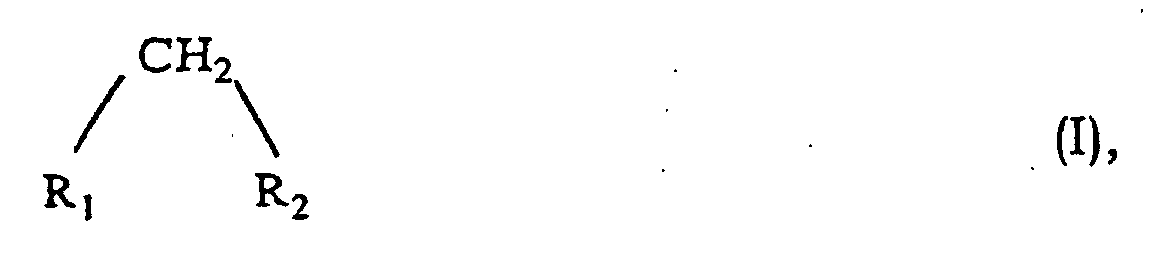 eine Alkylarylgruppe, wobei die Alkylgruppe unsubstituiert sein kann oder mit einem Halogenatom, einer Cyanogruppe oder einer Hydroxygruppe substituiert ist und die Arylgruppe unsubstituiert vorliegt oder substituiert ist mit einem Halogen, C1-4-Alkyl, C1-4-Alkoxy, Nitro, Hydroxy, Carboxy, C1-4-Acetyloxy, Carboxamid, Sulfonamid, einer Sulfonsäuregruppe, Nitril, -CF3, -OCF3 oder einer Cycloalkyl- oder Arylgruppe, die mit einer C1-4-Alkylgruppe substituiert sein kann; oder ein Heterocyclus, der unsubstituiert vorliegt oder substituiert ist mit einem Halogen, C1-4-Alkyl, C1-4-Alkoxy, Nitro, Hydroxy, Carboxy, C1-4-Acetyloxy, Carboxamid, Sulfonamid, einer Sulfonsäuregruppe, Nitril, -CF3, -OCF3 oder einer Cycloalkyl- oder Arylgruppe, die mit einer C1-4-Alkylgruppe substituiert sein kann;R1 eine Gruppe -COR oder -COOR, wobei R ein Wasserstoffatom oder eine Alkylgruppe bedeutet,R2 die für R1 angegebenen Gruppen, eine Nitrilgruppe, eine unsubstituierte Arylgruppe oder eine Arylgruppe, die substituiert ist mit einem Halogen, C1-4-Alkyl, C1-4-Alkoxy, Nitro, Hydroxy, Carboxy, C1-4-Acetyloxy, Carboxamid, Sulfonamid, einer Sulfonsäuregruppe, Nitril, -CF3, -OCF3 oder mit einer Cycloalkyl- oder Arylgruppe, die mit C1-4-Alkyl substituiert sein kann;2) Verbindungen der folgenden Formel (II):worin bedeuten:
 eine Alkylarylgruppe, wobei die Alkylgruppe unsubstituiert vorliegt oder mit einem Halogenatom, einer Cyanogruppe oder einer Hydroxygruppe substituiert ist und die Arylgruppe unsubstituiert vorliegt oder substituiert ist mit einem Halogen, C1-4-Alkyl, C1-4-Alkoxy, Nitro, Hydroxy, Carboxy, C1-4-Acetyloxy, Carboxamid, Sulfonamid, einer Sulfonsäuregruppe, Nitril, -CF3, -OCF3 oder mit einer Cycloalkyl- oder Arylgruppe, die mit einer C1-4-Alkylgruppe substituiert sein kann;R3 die für R2 angegebenen Gruppen,R4 eine Alkylgruppe, die unsubstituiert vorliegt oder mit einem Halogenatom, einer Cyanogruppe oder einer Hydroxygruppe substituiert ist, wobei sie die Gruppen Trifluormethyl, δ-Chlorpropyl, β-Cyanoethyl oder β-Hydroxyethyl bedeuten kann; Acetyloxy; Cycloalkyl;
eine Aralkylgruppe; eine Arylgruppe, die unsubstituiert vorliegt oder substituiert ist mit einem Halogen, C1-4-Alkyl, C1-4-Alkoxy, Nitro, Hydroxy, Carboxy, C1-4-Acetyloxy, Carboxamid, Sulfonamid, einer Sulfonsäuregruppe, Nitril, -CF3, -OCF3 oder mit einer Cycloalkyl- oder Arylgruppe, die mit einer C1-4-Alkylgruppe substituiert sein kann;
eine Aminoarylgruppe, die unsubstituiert vorliegt oder substituiert ist mit einem Halogen, C1-4-Alkyl, C1-4-Alkoxy, Nitro, Hydroxy, Carboxy, C1-4-Acetyloxy, Carboxamid, Sulfonamid, einer Sulfonsäuregruppe, Nitril, -CF3, -OCF3 oder mit einer Cycloalkyl- oder Arylgruppe, die mit einer C1-4-Alkylgruppe substituiert sein kann; und
einen Heterocyclus, der unsubstituiert vorliegt oder substituiert ist mit einem Halogen, C1-4-Alkyl, C1-4-Alkoxy, Nitro, Hydroxy, Carboxy, C1-4-Acetyloxy, Carboxamid, Sulfonamid, einer Sulfonsäuregruppe, Nitril, -CF3, -OCF3 oder mit einer Cycloalkyl- oder Arylgruppe, die mit einer C1-4-Alkylgruppe substituiert sein kann;3) Verbindungen der folgenden Formel (III):worin bedeuten: eine Aralkylgruppe, wobei die Alkylgruppe unsubstituiert ist oder mit einem Halogenatom, einer Cyanogruppe oder einer Hydroxygruppe substituiert ist und die Arylgruppe unsubstituiert vorliegt oder substituiert ist mit einem Halogen, C1-4-Alkyl, C1-4-Alkoxy, Nitro, Hydroxy, Carboxy, C1-4-Acetyloxy, Carboxamid, Sulfonamid, einer Sulfonsäuregruppe, Nitril, -CF3, -OCF3 oder mit einer Cycloalkyl- oder Arylgruppe, die mit einer C1-4-Alkylgruppe substituiert sein kann;R5 die für die Gruppe R2 angegebenen Bedeutungen,R6 eine Arylgruppe, die unsubstituiert vorliegt oder substituiert ist mit einem Halogen, C1-4-Alkyl, C1-4-Alkoxy, Nitro, Hydroxy, Carboxy, C1-4-Acetyloxy, Carboxamid, Sulfonamid, einer Sulfonsäuregruppe, Nitril, -CF3, -OCF3 oder mit einer Cycloalkyl- oder Arylgruppe, die mit einer C1-4-Alkylgruppe substituiert sein kann;
eine Aminoarylgruppe, die unsubstituiert vorliegt oder substituiert ist mit einem Halogen, C1-4-Alkyl, C1-4-Alkoxy, Nitro, Hydroxy, Carboxy, C1-4-Acetyloxy, Carboxamid, Sulfonamid, einer Sulfonsäuregruppe, Nitril, -CF3, -OCF3 oder mit einer Cycloalkyl- oder Arylgruppe, die mit einer C1-4-Alkylgruppe substituiert sein kann; oder
einen Heterocyclus, der unsubstituiert vorliegt oder substituiert ist mit einem Halogen, C1-4-Alkyl, C1-4-Alkoxy, Nitro, Hydroxy, Carboxy, C1-4-Acetyloxy, Carboxamid, Sulfonamid, einer Sulfonsäuregruppe, Nitril, -CF3, -OCF3 oder mit einer Cycloalkyl- oder Arylgruppe, die mit einer C1-4-Alkylgruppe substituiert sein kann;4) Pyrazolderivaten (i) der folgenden Formeln (IV) und (V): worin bedeuten:
 und (ii) aus zwei Pyrazolringen der Formel (IV) oder (V) gebildeten Derivaten, die über R7 oder R8 verbunden sind;R7 und R8, die gleich oder verschieden sind, die für R4 angegebenen Gruppen,R9 ein Wasserstoffatom oder eine Alkylgruppe, die unsubstituiert vorliegt oder substituiert ist mit einem Halogenatom, einer Cyanogruppe oder einer Hydroxygruppe, wobei sie die Gruppen Trifluormethyl, δ-Chlorpropyl, β-Cyanoethyl oder β-Hydroxyethyl bedeuten kann;5) Barbitursäurederivaten (i) der folgenden Formel (VI):worin bedeuten:
 oder eine Arylgruppe, die unsubstituiert vorliegt oder substituiert ist mit einem Halogen, C1-4-Alkyl, C1-4-Alkoxy, Nitro, Hydroxy, Carboxy, C1-4-Acetyloxy, Carboxamid, Sulfonamid, einer Sulfonsäuregruppe, Nitril, -CF3, -OCF3 oder mit einer Cycloalkyl- oder Arylgruppe, die mit einer C1-4-Alkylgruppe substituiert sein kann;R10 und R11, die gleich oder verschieden sind, eine Alkylgruppe, die unsubstituiert ist oder mit einem Halogenatom, einer Cyanogruppe oder einer Hydroxygruppe substituiert ist, wobei sie die Gruppen Trifluormethyl, δ-Chlorpropyl, β-Cyanoethyl oder β-Hydroxyethyl bedeuten kann; eine Alkenylgruppe; eine Cycloalkylgruppe; eine Alkylarylgruppe, wobei die Alkylgruppe unsubstituiert vorliegt oder substituiert ist mit einem Halogenatom, eine Cyanogruppe oder einer Hydroxygruppe und wobei die Arylgruppe unsubstituiert vorliegt oder substituiert ist mit einem Halogen, C1-4-Alkyl, C1-4-Alkoxy, Nitro, Hydroxy, Carboxy, C1-4-Acetyloxy, Carboxamid, Sulfonamid, einer Sulfonsäuregruppe, Nitril, -CF3, -OCF3 oder mit einer Cycloalkyl- oder Arylgruppe, die mit einer C1-4-Alkylgruppe substituiert sein kann;
und (ii) aus zwei Ringen der Formel (VI) gebildeten Derivaten, die über R10 oder R11 verbunden sind;6) Pyridinderivaten der Formel (VII):worin bedeuten: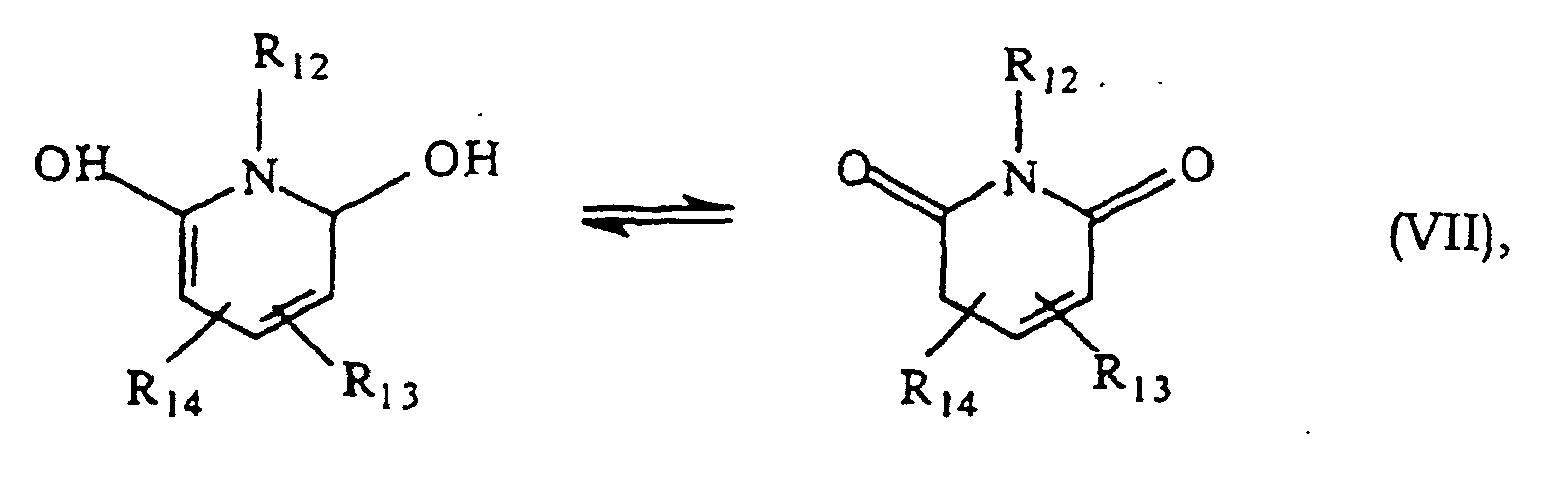 R12 eine Alkylgruppe, die unsubstituiert vorliegt oder substituiert ist mit einem Halogenatom, einer Cyanogruppe oder einer Hydroxygruppe, wobei sie die Gruppen Trifluormethyl, δ-Chlorpropyl, β-Cyanoethyl oder β-Hydroxyethyl bedeuten kann; eine unsubstituierte Arylgruppe oder eine Arylgruppe, die substituiert ist mit einem Halogen, C1-4-Alkyl, C1-4-Alkoxy, Nitro, Hydroxy, Carboxy, C1-4-Acetyloxy, Carboxamid, Sulfonamid, einer Sulfonsäuregruppe, Nitril, -CF3, -OCF3 oder mit einer Cycloalkyl- oder Arylgruppe, die mit einer C1-4-Alkylgruppe substituiert sein kann;R13 ein Wasserstoffatom, eine Alkylgruppe, die unsubstituiert ist oder mit einem Halogenatom, einer Cyanogruppe oder einer Hydroxygruppe substituiert ist, wobei sie die Gruppen Trifluormethyl, δ-Chlorpropyl, β-Cyanoethyl oder β-Hydroxyethyl bedeuten kann; eine Arylgruppe, die unsubstituiert vorliegt oder substituiert ist mit einem Halogen, C1-4-Alkyl, C1-4-Alkoxy, Nitro, Hydroxy, Carboxy, C1-4-Acetyloxy, Carboxamid, Sulfonamid, einer Sulfonsäuregruppe, Nitril, -CF3, -OCF3 oder mit einer Cycloalkyl- oder Arylgruppe, die mit einer C1-4-Alkylgruppe substituiert sein kann;R14 ein Wasserstoffatom, eine Nitrilgruppe, eine Alkylgruppe, die unsubstituiert ist oder mit einem Halogenatom, einer Cyanogruppe oder einer Hydroxygruppe substituiert ist, wobei sie die Gruppen Trifluormethyl, δ-Chlorpropyl, β-Cyanoethyl oder β-Hydroxyethyl bedeuten kann, eine Gruppe -COOR, wobei R ein Wasserstoffatom oder eine Alkylgruppe bedeutet, die unsubstituiert vorliegt oder substituiert ist mit einem Halogenatom, einer Cyanogruppe oder einer Hydroxygruppe, wobei sie die Gruppen Trifluormethyl, δ-Chlorpropyl, β-Cyanoethyl oder β-Hydroxyethyl bedeuten kann;7) Derivaten der folgenden Formel (VIII):worin bedeuten:
 X ein Sauerstoffatom, ein Schwefelatom, ein Stickstoffatom oder eine Gruppe NR', wobei R' eine Alkylgruppe bedeutet,R15 ein Wasserstoffatom, ein Chloratom, ein Bromatom, eine Hydroxygruppe, eine Nitrogruppe, eine Alkylgruppe, eine Alkoxygruppe, eine Carboxamidgruppe, eine Sulfonamidgruppe oder eine Nitrilgruppe;8) Derivaten der folgenden Formeln (IX) und (X):worin bedeuten:
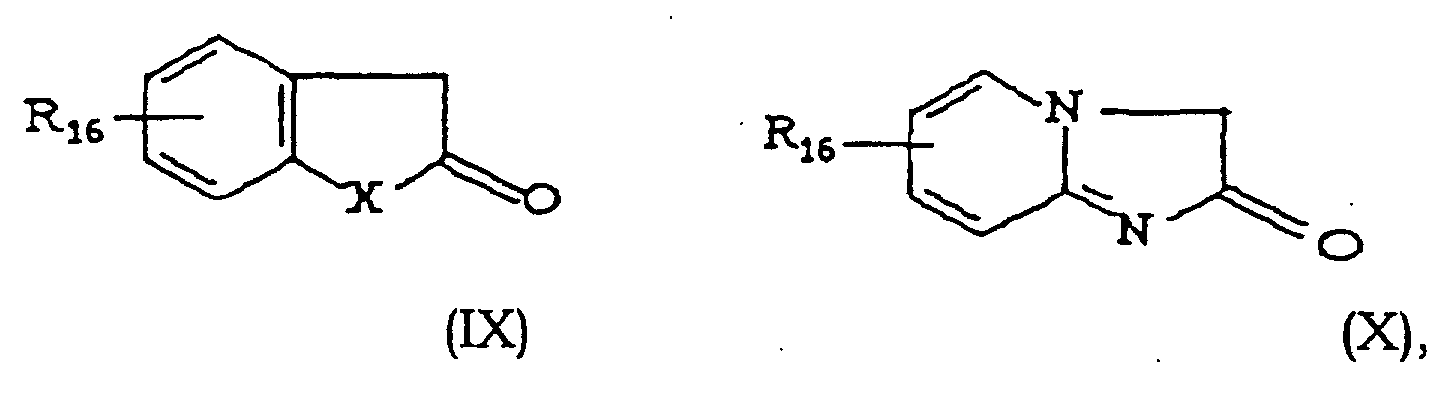 X ein Sauerstoffatom, ein Schwefelatom, ein Stickstoffatom oder eine Gruppe NR', wobei R' eine Alkylgruppe bedeutet,R16 die Atome und Gruppen, die für R15 angegeben wurden;9) Derivaten der folgenden Formel (XI):worin bedeuten:
 eine Alkylarylgruppe, wobei die Alkylgruppe unsubstituiert ist oder mit einem Halogenatom, einer Cyanogruppe oder einer Hydroxygruppe substituiert ist und die Arylgruppe unsubstituiert vorliegt oder substituiert ist mit einem Halogen, C1-4-Alkyl, C1-4-Alkoxy, Nitro, Hydroxy, Carboxy, C1-4-Acetyloxy, Carboxamid, Sulfonamid, einer Sulfonsäuregruppe, Nitril, -CF3, -OCF3 oder mit einer Cycloalkyl- oder Arylgruppe, die mit einer C1-4-Alkylgruppe substituiert sein kann;R17 ein Wasserstoffatom, eine Hydroxygruppe oder eine Alkylgruppe, die unsubstituiert ist oder mit einem Halogenatom, einer Cyanogruppe oder einer Hydroxygruppe substituiert ist, wobei sie die Gruppen Trifluormethyl, δ-Chlorpropyl, β-Cyanoethyl oder β-Hydroxyethyl bedeuten kann; oder eine Arylgruppe, die unsubstituiert ist oder substituiert ist mit einem Halogen, C1-4-Alkyl, C1-4-Alkoxy, Nitro, Hydroxy, Carboxy, C1-4-Acetyloxy, Carboxamid, Sulfonamid, einer Sulfonsäuregruppe, Nitril, -CF3, -OCF3 oder mit einer Cycloalkyl- oder Arylgruppe, die mit einer C1-4-Alkylgruppe substituiert sein kann; oder10) Indandionderivaten der folgenden Formel (XII):worin bedeuten:
 R18 Wasserstoff, Chlor, Brom, Nitro, Alkyl, Alkoxy, Carboxamid, Sulfonamid oder Nitril;11) Derivaten der folgenden Formel (XIII):worin bedeuten:
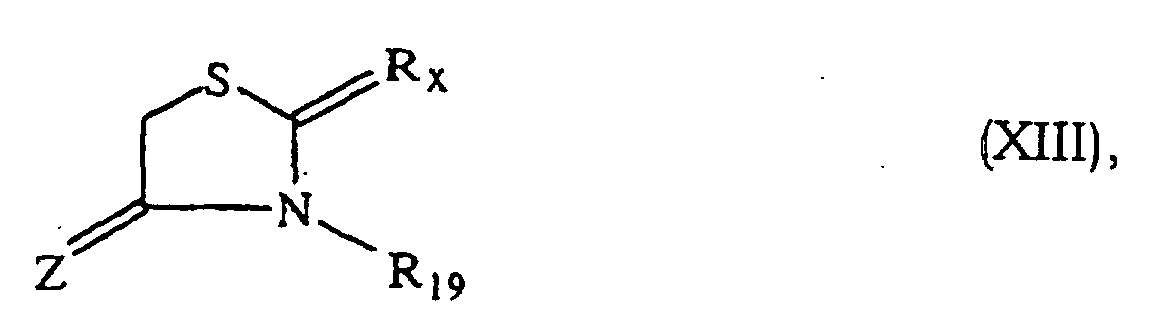 Z O oder NR mit R = H oder Alkyl;Rx ein Schwefelatom oder NR, wobei R ein Wasserstoffatom oder eine Alkylgruppe bedeutet;R19 ein Wasserstoffatom, Alkyl, Alkoxy, Nitro oder Nitril;12) Dioxopyrazolderivaten der folgenden Formel (XIV):worin bedeuten;
 R20 und R21, die gleich oder verschieden sind, ein Wasserstoffatom, Alkyl, Alkoxy, Nitro oder Nitril;13) 5-Oxoimidazolderivaten der folgenden Formel (XV):worin bedeuten:
 R22 ein Wasserstoffatom oder Alkyl,R23 ein Wasserstoffatom, Alkyl, Alkoxy, Nitro oder Nitril;14) Dehydrobutyrolactonderivaten der folgenden Formel (XVI):worin bedeuten:
 R24 ein Wasserstoffatom, Alkyl, Alkoxy, Nitro oder Nitril;15) Verbindungen der folgenden Formel (XVII):worin bedeuten:
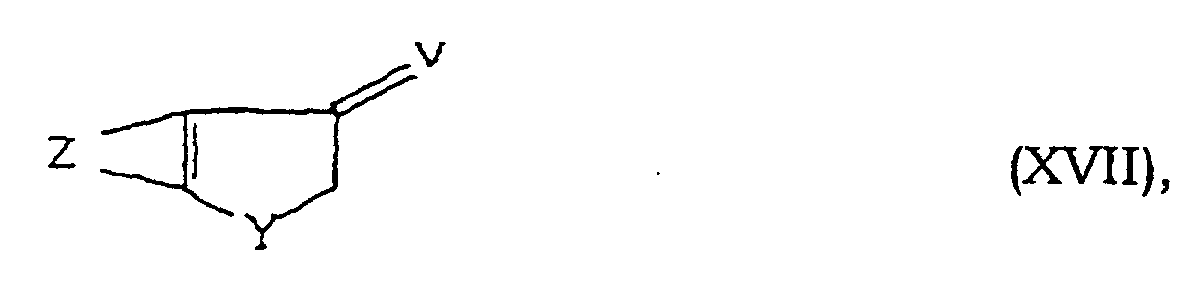 und den kosmetisch akzeptablen Salzen der oben definierten Verbindungen;Z einen aromatischen Ring,V ein Sauerstoffatom oder eine Gruppe A-CH2-E, wobei A oder E einen Substituenten, der eine Hammet-Konstante im Bereich von 0,4 bis 2,0 aufweist, oder Substituenten bedeuten, deren Summe der Hammet-Konstanten im Bereich von 0,4 bis 2,0 liegt,Y CO, O, S, NR, wenn V von Sauerstoff verschieden ist, oder CS, C = NR2, SO, SO2, wobei R1 oder R2 Wasserstoff oder Alkyl bedeuten;wobei mit diesen Verbindungen durch eine Reaktion ohne Oxidationsmittel die Keratinfasern gefärbt werden können;Aldehyden der folgenden Formel (XVIII):worin bedeuten:
 R25 eine Gruppe der folgenden Formel (XVIII A),wobei R26 und R27, die identisch oder voneinander verschieden sind, Wasserstoff, Alkyl, Mono- oder Polyhydroxyalkyl, Alkylhydroxyalkyl, Alkoxy, -CF3 oder -OCF3 bedeuten,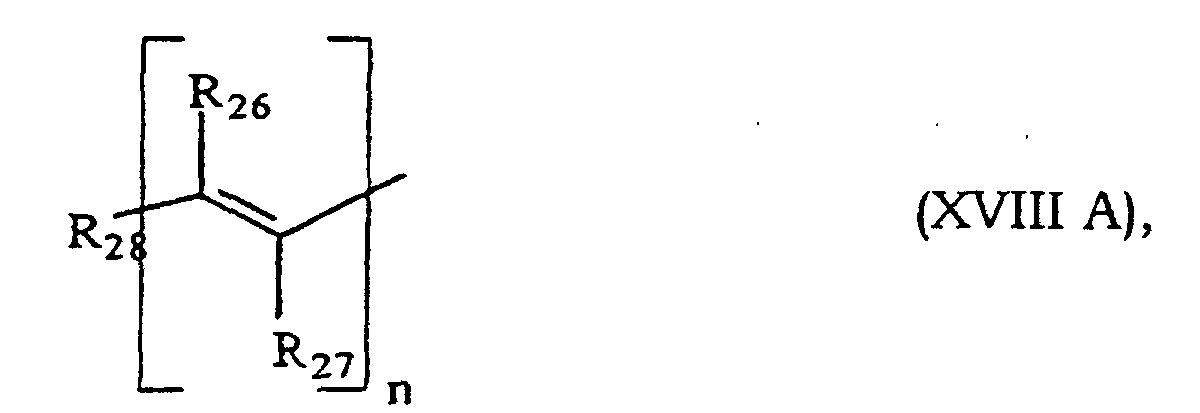
R26 und R27 auch mit den Atomen, an die sie gebunden sind, einen Arylring oder einen Heterocyclus mit 5 oder 6 Bestandteilen bilden können, wobei die Ringe unsubstituiert sein können oder substituiert mit einem Halogen, C1-4-Alkyl, C1-4-Alkoxy, Nitro, Hydroxy, Carboxy, C1-4-Acetyloxy, Carboxamid, Sulfonamid, einer Sulfonsäuregruppe, Nitril, -CF3, -OCF3 oder mit einer Cycloalkyloder Arylgruppe, die mit einer C1-4-Alkylgruppe substituiert sein kann;
n 0 oder eine ganze Zahl von 1 bis 3 bedeutet,
R28 bedeutet die für R26 angegebenen Substituenten, eine Arylgruppe, eine Alkylarylgruppe, wobei die Alkylgruppe unsubstituiert vorliegt oder substituiert ist mit einem Halogen, einer Cyanogruppe oder einer Hydroxygruppe und die Arylgruppe unsubstituiert vorliegt oder substituiert ist mit einem Halogen, C1-4-Alkyl, C1-4-Alkoxy, Nitro, Hydroxy, Carboxy, C1-4-Acetyloxy, Carboxamid, Sulfonamid, einer Sulfonsäuregruppe, Nitril, -CF3, -OCF3 oder mit einer Cycloalkyl- oder Arylgruppe, die mit einer C1-4-Alkylgruppe substituiert sein kann;
einen 5- oder 6-gliedrigen Heterocyclus, der unsubstituiert vorliegt oder substituiert ist mit einem Halogen, C1-4-Alkyl, C1-4-Alkoxy, Nitro, Hydroxy, Carboxy, C1-4-Acetyloxy, Carboxamid, Sulfonamid, einer Sulfonsäuregruppe, Nitril, -CF3, -OCF3 oder mit einer Cycloalkyl- oder Arylgruppe, die mit einer C1-4-Alkylgruppe substituiert sein kann; oder den kosmetisch akzeptablen Salzen dieser Verbindungen;Ketonen der folgenden Formeln (XIX) oder (XX):worin bedeuten: wobei R29 und R30 auch mit den Atomen, an die sie gebunden sind, einen 5- oder 6-gliedrigen Arylring oder einen Heterocyclus bilden können, der Heteroatome wie N oder S enthält, wobei der Ring oder Heterocyclus selbst an einen Arylring mit 5 oder 6 Ringbestandteilen oder einen Heterocyclus, der Heteroatome wie N oder S enthält, gebunden sein kann, wobei der Ring oder Heterocyclus unsubstituiert vorliegt oder substituiert ist mit einem Halogen, C1-4-Alkyl, C1-4-Alkoxy, Nitro, Hydroxy, Carboxy, C1-4-Acetyloxy, Carboxamid, Sulfonamid, einer Sulfonsäuregruppe, Nitril, -CF3, -OCF3 oder mit einer Cycloalkyl- oder Arylgruppe, die mit einer C1-4-Alkylgruppe substituiert sein kann;R29 die für R25 angegebenen Substituenten,R30 eine Alkylgruppe, eine Mono- oder Polyhydroxyalkylgruppe, eine Alkylhydroxyalkylgruppe; eine Arylgruppe, eine Alkylarylgruppe, einen 5- oder 6-gliedrigen Heterocyclus, der unsubstituiert vorliegt oder substituiert ist mit einem Halogen, C1-4-Alkyl, C1-4-Alkoxy, Nitro, Hydroxy, Carboxy, C1-4-Acetyloxy, Carboxamid, Sulfonamid, einer Sulfonsäuregruppe, Nitril, -CF3, -OCF3 oder mit einer Cycloalkyl- oder Arylgruppe, die mit einer C1-4-Alkylgruppe substituiert sein kann;
oder den kosmetisch akzeptablen Salzen dieser Verbindungen;Chinonen der folgenden Formeln (XXI) und (XXII):worin bedeuten;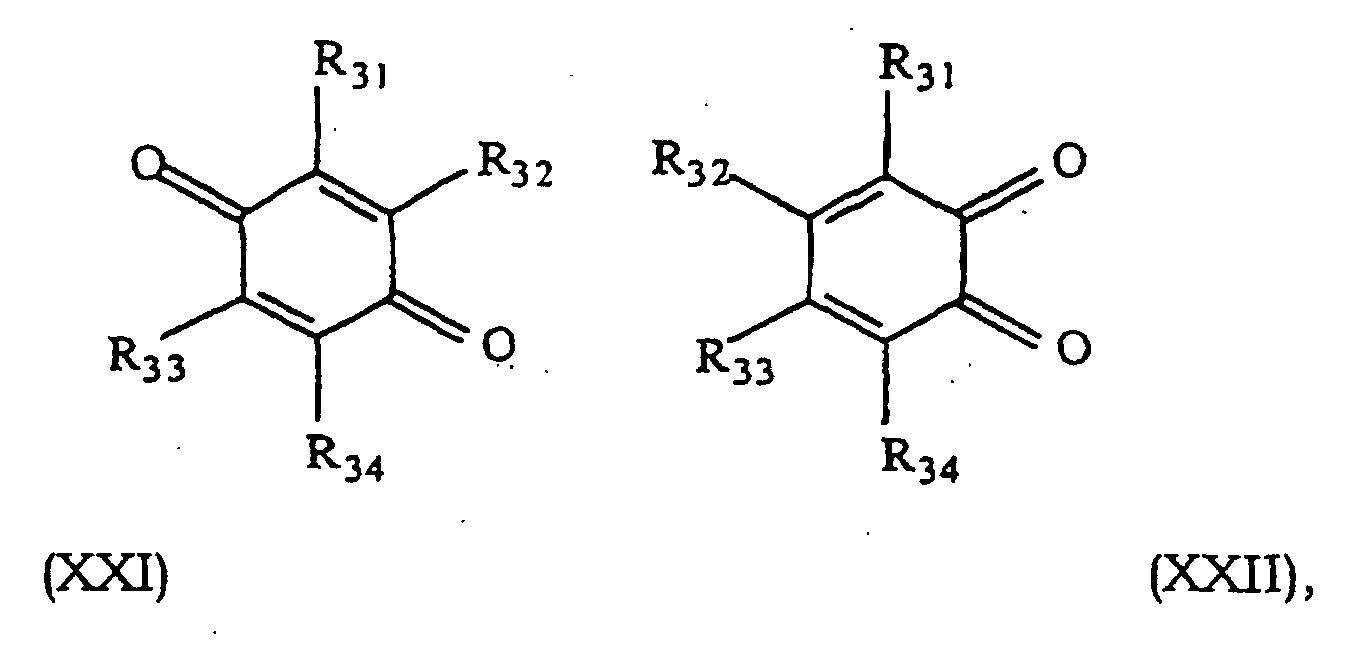 R31 ein Wasserstoffatom, ein Halogenatom, eine Sulfonsäuregruppe oder eine Alkoxygruppe;R32, R33 und R34, die gleich oder verschieden sind, ein Wasserstoffatom, ein Halogenatom, Hydroxy, Alkyl, Monooder Polyhydroxyalkyl, Alkylhydroxyalkyl, Alkylsulfonyl, Carboxyalkyl, Aminoalkyl, Alkylaminoalkyl, (Dihydroxy)-alkylaminoalkyl oder Alkyl-NR'R", wobei R' und R" Alkyl bedeuten oder gemeinsam mit dem Stickstoffatom, an das sie gebunden sind, einen Arylring oder einen Heterocyclus mit 5 oder 6 Ringbestandteilen bilden können, Aryl, eine Aminogruppe, die mit Alkyl oder Hydroxyalkyl substituiert sein kann, wobei R31 und R32, R31 und R33 oder R33 undR34 gemeinsam mit den Atomen, an die sie gebunden sind, einen Arylring oder einen Heterocyclus mit 5 oder 6 Ringbestandteilen bilden können, der unsubstituiert vorliegt oder substituiert ist mit einem Halogen, C1-4-Alkyl, C1-4-Alkoxy, Nitro, Hydroxy, Carboxy, C1-4-Acetyloxy, Carboxamid, Sulfonamid, einer Sulfonsäuregruppe, Nitril, -CF3, -OCF3 oder mit einer Cycloalkyl- oder Arylgruppe, die mit einer C1-4-Alkylgruppe substituiert sein kann; oder den kosmetisch akzeptablen Salzen dieser Verbindungen,und Diiminoisoindolinderivaten oder 3-Aminoisoindolonderivaten der folgenden Formel (XXIII):worin bedeuten:
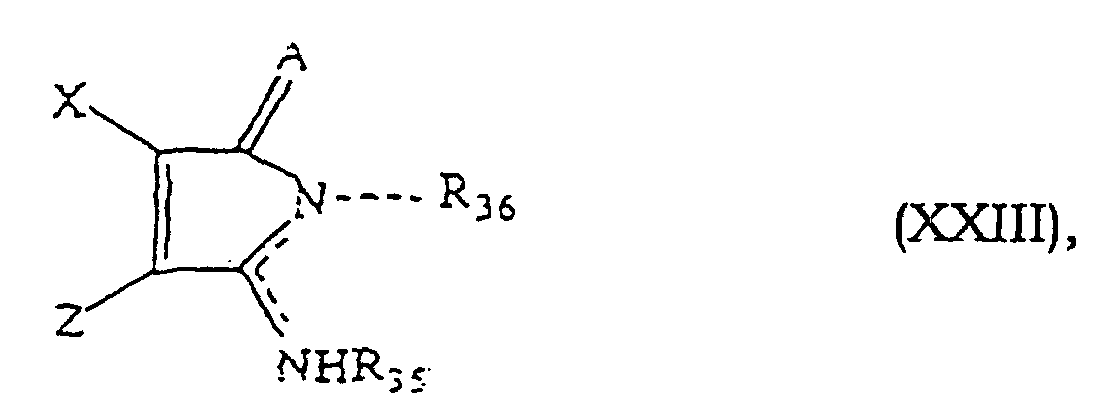 oder den kosmetisch akzeptablen Salzen dieser Verbindungen,R35 und R36, die gleich oder verschieden sind, ein Wasserstoffatom, Alkyl, Mono- oder Polyhydroxyalkyl, Alkylhydroxyalkyl, Aminoalkyl, Alkylaminoalkyl, (Dihydroxy)-alkylaminoalkyl oder eine Gruppe Alkyl-NR'R", wobei R' und R" Alkyl bedeuten oder gemeinsam mit dem Stickstoffatom, an das sie gebunden sind, einen Arylring oder einen Heterocyclus mit 5 oder 6 Ringbestandteilen bilden können, A ein Sauerstoffatom oder NH, wobei X und Z gemeinsam einen Arylring oder einen Heterocyclus mit 5 oder 6 Ringbestandteilen bilden, der unsubstituiert ist oder substituiert mit einem Halogen, C1-4-Alkyl, C1-4-Alkoxy, Nitro, Hydroxy, Carboxy, C1-4-Acetyloxy, Carboxamid, Sulfonamid, einer Sulfonsäuregruppe, Nitril, -CF3, -OCF3 oder mit einer Cycloalkyl- oder Arylgruppe, die mit einer C1-4-Alkylgruppe substituiert sein kann;
sowie den Kombinationen der folgenden Verbindungen:3-Imino-3H-isoindol-1-ylamin und Benzoylacetonitril;4-Dimethylaminobenzaldehyd und Benzoylacetonitril;1,4-Naphthochinon und Benzoylacetonitril;Isatin und Benzoylacetonitril;3-Imino-3H-isoindol-1-ylamin und 5-Amino-2H-pyrazol-3-ol;4-Dimethylaminobenzaldehyd und 5-Amino-2H-pyrazol-3-ol;1,4-Naphthochinon und 5-Amino-2H-pyrazol-3-ol;3-Imino-3H-isoindol-1-ylamin und 3-Amino-1-phenyl-2-pyrazolin-5-on;4-Dimethylaminobenzaldehyd und 3-Amino-1-phenyl-2-pyrazolin-5-on;1,4-Naphthochinon und 3-Amino-1-phenyl-2-pyrazolin-5-on. - Zusammensetzung zum Färben von Keratinfasern, insbesondere menschlichen Keratinfasern, beispielsweise zum Färben der Haare, dadurch gekennzeichnet, dass sie mindestens eine Verbindung mit aktivem Methylen, die unter den in Anspruch 1 definierten Verbindungen ausgewählt ist, und mindestens eine Verbindung, die unter Aldehyden, Ketonen, Chinonen und Diiminoisoindolinderivaten oder 3-Aminoisoindolonderivaten nach Anspruch 1 ausgewählt ist, in einem zum Färben geeigneten Medium enthält.
- Zusammensetzung zum Färben nach Anspruch 2, dadurch gekennzeichnet, dass sie einen pH-Wert im Bereich von 2 bis 11 aufweist.
- Zusammensetzung nach Anspruch 2 oder 3, dadurch gekennzeichnet, dass die Verbindung mit aktivem Methylen in einer Konzentration von 0,01 bis 10 % und vorzugsweise 0,05 bis 5 Gew.-%, bezogen auf das Gesamtgewicht der Zusammensetzung, enthalten ist.
- Zusammensetzung nach einem der Ansprüche 2 bis 4, dadurch gekennzeichnet, dass die Verbindung, die unter Aldehyden, Ketonen, Chinonen und Diiminoisoindolinderivaten oder 3-Aminoisoindolonderivaten ausgewählt ist, in einer Konzentration von 0,01 bis 10 % und vorzugsweise 0,05 bis 5 Gew.-%, bezogen auf das Gesamtgewicht der Zusammensetzung, enthalten ist.
- Zusammensetzung nach einem der Ansprüche 2 bis 5, dadurch gekennzeichnet, dass das zum Färben geeignete Medium ein wässriges Medium ist, das aus Wasser und/oder organischen Lösungsmitteln, die unter Alkoholen, Glykolen und Glykolethern ausgewählt sind, in Mengenanteilen von 0,5 bis 20 Gew.-%, bezogen auf das Gesamtgewicht der Zusammensetzung, besteht.
- Verfahren zum Färben von Keratinfasern, insbesondere menschlichen Keratinfasern, wie Haaren, dadurch gekennzeichnet, dass es darin besteht, auf die Fasern eine Komponente (A), die aus einer Zusammensetzung besteht, die in einem zum Färben geeigneten Medium mindestens eine in Anspruch 1 definierte Verbindung mit aktivem Methylen enthält, und mindestens eine Komponente (B) aufzutragen, die aus einer Zusammensetzung besteht, die in einem zum Färben geeigneten Medium mindestens eine Verbindung enthält, die unter den Aldehyden, Ketonen, Chinonen, Diiminoisoindolinderivaten oder 3-Aminoisoindolonderivaten ausgewählt ist, um die Keratinfasern zu färben.
- Verfahren nach Anspruch 7, dadurch gekennzeichnet, dass es darin besteht, die Komponenten (A) und (B) kurz vor der Anwendung zu vermischen, die resultierende Zusammensetzung sofort auf die Keratinfasern aufzutragen und 1 bis 60 min und vorzugsweise 1 bis 30 min einwirken zu lassen, wobei die Keratinfasern anschließend gespült, mit Haarwaschmittel gewaschen, nochmals gespült und dann getrocknet werden.
- Verfahren nach Anspruch 7 oder 8, dadurch gekennzeichnet, dass es darin besteht, auf die Keratinfasern die Komponente (A) aufzutragen, wobei die Komponente (B) zuvor oder danach aufgetragen wird, jede Komponente 1 bis 60 min und vorzugsweise 1 bis 30 min einwirken zu lassen und zwischen den Anwendungen gegebenenfalls mit Wasser zu spülen, wobei die Keratinfasern dann gespült, mit Haarwaschmittel gewaschen, nochmals gespült und dann getrocknet werden.
- Mittel zum Färben von Keratinfasern und insbesondere menschlichen Keratinfasern, wie zum Färben der Haare, dadurch gekennzeichnet, dass es die in Anspruch 7 definierten Komponenten (A) und (B) in getrennter Form umfasst, wobei die Komponenten (A) und (B) entweder kurz vor der Anwendung vermischt oder nacheinander auf die zu behandelnden Fasern aufgetragen werden sollen.
- Vorrichtung mit mehreren Abteilungen oder Kit zum Färben, dadurch gekennzeichnet, dass sie mindestens zwei Abteilungen aufweist, wobei eine Abteilung die in Anspruch 7 definierte Komponente (A) und eine zweite Abteilung die in Anspruch definierte Komponente (B) umfasst.
- Vorrichtung nach Anspruch 11, dadurch gekennzeichnet, dass die Komponente (A) und/oder die Komponente (B) in Form einer wasserfreien Zusammensetzung vorliegt und die Vorrichtung eine dritte Abteilung aufweist, die ein zum Färben geeignetes, kosmetisch akzeptables Medium enthält, das vor der Anwendung in einer oder beiden Abteilungen vermischt werden soll, die die Komponente (A) oder (B) enthalten.
Applications Claiming Priority (3)
| Application Number | Priority Date | Filing Date | Title |
|---|---|---|---|
| FR9816379A FR2787708B1 (fr) | 1998-12-23 | 1998-12-23 | Procede de teinture mettant en oeuvre un compose a methylene actif et un compose choisi parmi un aldehyde, une cetone, une quinone et un derive de la di-imino-isoindoline ou de la 3-amino-isoindolone |
| FR9816379 | 1998-12-23 | ||
| PCT/FR1999/003245 WO2000038638A1 (fr) | 1998-12-23 | 1999-12-22 | Procede de teinture mettant en oeuvre un compose a methylene actif specifique et un compose choisi parmi un aldehyde specifique, une cetone specifique, une quinone et un derive de la di-iminoisoindoline ou de la 3-amino-isoindolone |
Publications (2)
| Publication Number | Publication Date |
|---|---|
| EP1056433A1 EP1056433A1 (de) | 2000-12-06 |
| EP1056433B1 true EP1056433B1 (de) | 2005-05-11 |
Family
ID=9534447
Family Applications (1)
| Application Number | Title | Priority Date | Filing Date |
|---|---|---|---|
| EP99961139A Revoked EP1056433B1 (de) | 1998-12-23 | 1999-12-22 | Färbungsverfahren unter verwendung von einer spezifischen aktiven methylenverbindung und einer verbindung augewählt aus einem spezifischen aldehyd, einem spezifischen keton, einem chinon und einem diimino-isoindolin- oder 3-aminoisoindolonderivat |
Country Status (9)
| Country | Link |
|---|---|
| US (1) | US20070130702A1 (de) |
| EP (1) | EP1056433B1 (de) |
| JP (1) | JP2002533370A (de) |
| AT (1) | ATE295146T1 (de) |
| CA (1) | CA2320922A1 (de) |
| DE (1) | DE69925249T8 (de) |
| ES (1) | ES2243086T3 (de) |
| FR (1) | FR2787708B1 (de) |
| WO (1) | WO2000038638A1 (de) |
Families Citing this family (25)
| Publication number | Priority date | Publication date | Assignee | Title |
|---|---|---|---|---|
| DE19936911A1 (de) | 1999-08-05 | 2001-02-08 | Henkel Kgaa | Mittel zum Färben von keratinhaltigen Fasern |
| DE10045856A1 (de) * | 2000-09-14 | 2002-03-28 | Henkel Kgaa | Haarfärbemittel mit Indigoderivaten |
| EP1427415B1 (de) * | 2001-09-21 | 2009-08-12 | Brystol-Myers Squibb Company | Lactamhaltige verbindungen und ihre derivate als faktor-xa-hemmer |
| US6962610B2 (en) † | 2002-09-13 | 2005-11-08 | Kao Corporation | Hair dye composition |
| DE10260880A1 (de) * | 2002-12-23 | 2004-07-01 | Henkel Kgaa | Färbetablette |
| DE10261656A1 (de) * | 2002-12-23 | 2004-07-01 | Henkel Kgaa | Mittel zum Färben von keratinhaltigen Fasern |
| DE10354812A1 (de) | 2003-11-21 | 2006-08-17 | Henkel Kgaa | Verfahren zur Färbung keratinhaltiger Fasern |
| DE10358883A1 (de) * | 2003-12-16 | 2005-07-21 | Wella Ag | Mittel und Verfahren zum oxidativen Färben von Keratinfasern |
| DE102004045413A1 (de) * | 2004-09-18 | 2006-03-30 | Henkel Kgaa | Mittel zum Färben von keratinhaltigen Fasern |
| DE102004045414A1 (de) | 2004-09-18 | 2006-03-30 | Henkel Kgaa | Verfahren zur modischen Farbveränderung keratinhaltiger Fasern |
| DE102005013067A1 (de) * | 2005-03-18 | 2006-10-19 | Henkel Kgaa | Ammoniakfreies Oxidationsfärbemittel zur Färbung keratinhaltiger Fasern mit Luftsauerstoff als einzigem Oxidationsmittel |
| DE102005022787A1 (de) * | 2005-05-12 | 2006-11-23 | Henkel Kgaa | Mittel zum Färben von keratinhaltigen Fasern |
| DE102005022788A1 (de) * | 2005-05-12 | 2006-11-23 | Henkel Kgaa | Mittel zum Färben von keratinhaltigen Fasern |
| US20070155738A1 (en) | 2005-05-20 | 2007-07-05 | Alantos Pharmaceuticals, Inc. | Heterobicyclic metalloprotease inhibitors |
| DE102005026545A1 (de) * | 2005-06-08 | 2006-12-21 | Henkel Kgaa | Mehrkomponentenmittel zum Färben keratinischer Fasern |
| DE102005062356A1 (de) | 2005-12-23 | 2007-06-28 | Henkel Kgaa | Verringerung der Haaralterung |
| DE102007028266A1 (de) * | 2007-06-15 | 2008-12-18 | Henkel Ag & Co. Kgaa | Kit zur Bereitstellung von lagerstabilen Formulierungen |
| DE102007039330A1 (de) | 2007-08-20 | 2009-02-26 | Henkel Ag & Co. Kgaa | Haarbehandlungsmittel |
| FR2920778B1 (fr) | 2007-09-11 | 2009-10-30 | Oreal | Composes quinoliniums azoiques a motif disulfure/thiol, compositions les comprenant, procede de coloration de fibres keratiniques et dispositif. |
| FR2921382B1 (fr) | 2007-09-21 | 2009-10-30 | Oreal | Colorant derive de phenyl-pyridol[1,2-a]indolium thiol-disulfure, composition tinctoriale comprenant ce colorant, procede d'eclaircissement des matieres keratiniques a partir de ce colorant |
| FR2921258A1 (fr) * | 2007-09-24 | 2009-03-27 | Oreal | Composition tinctoriale comprenant au moins un precurseur incolore disulfures/thiol, proced de coloration a partir de la composition |
| DE102007046628A1 (de) | 2007-09-27 | 2009-04-02 | Henkel Ag & Co. Kgaa | Haarfärbeverfahren mit oxidativer Vorbehandlung |
| WO2009090125A1 (en) | 2008-01-17 | 2009-07-23 | Basf Se | Polymeric hair dyes |
| US8337569B2 (en) | 2009-07-15 | 2012-12-25 | Basf Se | Polymeric hair dyes |
| FR2952819A1 (fr) * | 2009-11-23 | 2011-05-27 | Oreal | Composition contenant au moins un precurseur de coloration derive d'oxindole et au moins un colorant indoline dione |
Family Cites Families (11)
| Publication number | Priority date | Publication date | Assignee | Title |
|---|---|---|---|---|
| DE2932489B1 (de) * | 1979-08-10 | 1980-06-04 | Schwarzkopf Gmbh Hans | Verfahren zum Faerben von Humanhaar sowie Mittel zu seiner Durchfuehrung |
| DE2939304A1 (de) * | 1979-09-28 | 1981-04-16 | Wella Ag | Mittel und verfahren zur oxidativen faerbung von haaren |
| FR2480599A1 (fr) * | 1980-04-17 | 1981-10-23 | Oreal | Utilisation de derives hydroxyles du benzaldehyde pour la coloration des fibres keratiniques, procede et composition les mettant en oeuvre |
| FR2588473B1 (fr) * | 1985-10-16 | 1988-06-10 | Oreal | Utilisation de la 2,3-indolinedione pour la coloration des fibres keratiniques |
| JPH04112820A (ja) * | 1990-09-04 | 1992-04-14 | Lion Corp | 染毛剤 |
| DE4314317A1 (de) * | 1993-04-30 | 1994-11-03 | Henkel Kgaa | Isatinhaltige Mittel zum Färben von keratinhaltigen Fasern |
| FR2713925B1 (fr) * | 1993-12-22 | 1996-01-19 | Oreal | Procédé de coloration directe des fibres kératiniques humaines à l'aide de colorants naturels et de vapeur d'eau. |
| FR2757053B1 (fr) * | 1996-12-12 | 1999-01-22 | Oreal | Utilisation de derives de la di-imino-isoindoline ou de la 3-amino-isoindolone pour la teinture des fibres keratiniques et compositions de teinture les renfermant |
| DE19717282A1 (de) * | 1997-04-24 | 1998-10-29 | Henkel Kgaa | Verwendung von 1-substituierten Isatinen zum Färben von keratinhaltigen Fasern |
| DE19717222A1 (de) * | 1997-04-24 | 1998-10-29 | Henkel Kgaa | Mittel zum Färben von keratinhaltigen Fasern |
| DE19717224A1 (de) * | 1997-04-24 | 1998-10-29 | Henkel Kgaa | Verwendung von ungesättigten Aldehyden zum Färben von keratinhaltigen Fasern |
-
1998
- 1998-12-23 FR FR9816379A patent/FR2787708B1/fr not_active Expired - Fee Related
-
1999
- 1999-12-22 DE DE69925249T patent/DE69925249T8/de active Active
- 1999-12-22 CA CA002320922A patent/CA2320922A1/fr not_active Abandoned
- 1999-12-22 EP EP99961139A patent/EP1056433B1/de not_active Revoked
- 1999-12-22 WO PCT/FR1999/003245 patent/WO2000038638A1/fr not_active Ceased
- 1999-12-22 ES ES99961139T patent/ES2243086T3/es not_active Expired - Lifetime
- 1999-12-22 AT AT99961139T patent/ATE295146T1/de not_active IP Right Cessation
- 1999-12-22 JP JP2000590592A patent/JP2002533370A/ja active Pending
-
2006
- 2006-11-07 US US11/593,640 patent/US20070130702A1/en not_active Abandoned
Also Published As
| Publication number | Publication date |
|---|---|
| JP2002533370A (ja) | 2002-10-08 |
| DE69925249T8 (de) | 2006-08-24 |
| WO2000038638A1 (fr) | 2000-07-06 |
| DE69925249D1 (de) | 2005-06-16 |
| CA2320922A1 (fr) | 2000-07-06 |
| US20070130702A1 (en) | 2007-06-14 |
| FR2787708A1 (fr) | 2000-06-30 |
| DE69925249T2 (de) | 2006-01-19 |
| ATE295146T1 (de) | 2005-05-15 |
| EP1056433A1 (de) | 2000-12-06 |
| FR2787708B1 (fr) | 2002-09-13 |
| ES2243086T3 (es) | 2005-11-16 |
Similar Documents
| Publication | Publication Date | Title |
|---|---|---|
| WO2000038638A1 (fr) | Procede de teinture mettant en oeuvre un compose a methylene actif specifique et un compose choisi parmi un aldehyde specifique, une cetone specifique, une quinone et un derive de la di-iminoisoindoline ou de la 3-amino-isoindolone | |
| EP0994692B1 (de) | Oxidationsfärbezusammensetzung für keratinische fasern, die azoderivate von 3-amino-pyridin enthält, und färbeverfahren | |
| EP0971682B1 (de) | Färbemittel für keratinische faser und verfahren zum färben unter verwendung dieser zusammensetzung | |
| FR2735685A1 (fr) | Compositions pour la teinture des fibres keratiniques comprenant un ortho-diamino pyrazole et un sel de manganese procede de teinture mettant en oeuvre ces compositions | |
| EP0850638A1 (de) | Zusammensetzung zur Oxidationsfärbung von keratinischen Fasern und Färbeverfahren mit dieser Zusammensetzung | |
| EP0850637A1 (de) | Zusammensetzung zur Oxidationsfärbung von keratinischen Fasern und Färbeverfahren mit dieser Zusammensetzung | |
| EP0850636A1 (de) | Oxidationsfärbung von keratinischen Fasern und Färbeverfahren mit dieser Zusammensetzung | |
| EP0796850A1 (de) | 4,5-Diiminopyrazoline, Verfahren zu ihrer Darstellung und diese enthaltende Färbemittel | |
| EP0930062A1 (de) | Imidazopyridin-derivaten enthaltende Zusammensetzungen zur Färbung von keratinischen Fäsern | |
| KR100391695B1 (ko) | 양이온성 직접 염료 및 계면활성제를 함유하는 케라틴섬유 염색용 조성물 | |
| EP1073407B1 (de) | Verfahren zur haarfärbung unter verwendung von einem kationischen aliphatischen amin und einem aldehyd oder einem keton , einer chinonverbindung oder derivaten von diimino-isoindolin oder 3-amino-isoindolon | |
| FR2787707A1 (fr) | Procede de teinture mettant en oeuvre un derive cationique et un compose choisi parmi un aldehyde, une cetone, une quinone et un derive de la di-imino-isoindoline ou de la 3-amino-isoindolone | |
| EP1056435B9 (de) | Verfahren zur haarfärbung unter verwendung von einem kationischen heterocyklichen amin und einem aldehyd oder einem keton, einer chinoverbindung oder derivaten von diimino-isoindolin oder 3-amino-isoindolon | |
| EP0847749B1 (de) | Verwendung von Diimino-isoindolin- oder 3-Amino-isoindolon-Derivaten zum Färben von Keratinfasern und Zusammensetzungen zum färben, die diese enthalten | |
| FR2730922A1 (fr) | Composition pour la teinture d'oxydation des fibres keratiniques comprenant au moins deux bases d'oxydation et un coupleur indolique, et procede de teinture | |
| CA2167646C (fr) | Composition de teinture d'oxydation des fibres keratiniques et procede de teinture mettant en oeuvre cette composition | |
| US7204857B1 (en) | Dyeing method using a specific active methylene compound and a compound selected among a specific aldehyde, a specific ketone, a quinone and a di-imino-isoindoline or 3-amino-isoindolone derivative | |
| EP1002517A1 (de) | Oxidationsfärbemittel für keratinische Fäsern und Färbungsverfahren mit diesem Mittel | |
| FR2849372A1 (fr) | Composition de teinture des fibres keratiniques comprenant un colorant direct triheteroylmethane ou un precurseur leuco de celui-ci et procede de teinture la mettant en oeuvre | |
| JP2005139184A (ja) | ヘプタフルベン又はトロポロン系化合物、誘導体及び/又は混合物を含有する組成物、及びそれを使用する染色方法 |
Legal Events
| Date | Code | Title | Description |
|---|---|---|---|
| PUAI | Public reference made under article 153(3) epc to a published international application that has entered the european phase |
Free format text: ORIGINAL CODE: 0009012 |
|
| 17P | Request for examination filed |
Effective date: 20000803 |
|
| AK | Designated contracting states |
Kind code of ref document: A1 Designated state(s): AT BE CH CY DE DK ES FI FR GB GR IE IT LI LU MC NL PT SE |
|
| AX | Request for extension of the european patent |
Free format text: AL;LT;LV;MK;RO;SI |
|
| 17Q | First examination report despatched |
Effective date: 20030526 |
|
| GRAP | Despatch of communication of intention to grant a patent |
Free format text: ORIGINAL CODE: EPIDOSNIGR1 |
|
| GRAS | Grant fee paid |
Free format text: ORIGINAL CODE: EPIDOSNIGR3 |
|
| GRAA | (expected) grant |
Free format text: ORIGINAL CODE: 0009210 |
|
| AK | Designated contracting states |
Kind code of ref document: B1 Designated state(s): AT BE CH CY DE DK ES FI FR GB GR IE IT LI LU MC NL PT SE |
|
| PG25 | Lapsed in a contracting state [announced via postgrant information from national office to epo] |
Ref country code: NL Free format text: LAPSE BECAUSE OF FAILURE TO SUBMIT A TRANSLATION OF THE DESCRIPTION OR TO PAY THE FEE WITHIN THE PRESCRIBED TIME-LIMIT Effective date: 20050511 Ref country code: IE Free format text: LAPSE BECAUSE OF FAILURE TO SUBMIT A TRANSLATION OF THE DESCRIPTION OR TO PAY THE FEE WITHIN THE PRESCRIBED TIME-LIMIT Effective date: 20050511 Ref country code: FI Free format text: LAPSE BECAUSE OF FAILURE TO SUBMIT A TRANSLATION OF THE DESCRIPTION OR TO PAY THE FEE WITHIN THE PRESCRIBED TIME-LIMIT Effective date: 20050511 Ref country code: AT Free format text: LAPSE BECAUSE OF FAILURE TO SUBMIT A TRANSLATION OF THE DESCRIPTION OR TO PAY THE FEE WITHIN THE PRESCRIBED TIME-LIMIT Effective date: 20050511 |
|
| REG | Reference to a national code |
Ref country code: GB Ref legal event code: FG4D Free format text: NOT ENGLISH |
|
| REG | Reference to a national code |
Ref country code: CH Ref legal event code: EP |
|
| GBT | Gb: translation of ep patent filed (gb section 77(6)(a)/1977) |
Effective date: 20050511 |
|
| REG | Reference to a national code |
Ref country code: IE Ref legal event code: FG4D Free format text: LANGUAGE OF EP DOCUMENT: FRENCH |
|
| REF | Corresponds to: |
Ref document number: 69925249 Country of ref document: DE Date of ref document: 20050616 Kind code of ref document: P |
|
| PG25 | Lapsed in a contracting state [announced via postgrant information from national office to epo] |
Ref country code: SE Free format text: LAPSE BECAUSE OF FAILURE TO SUBMIT A TRANSLATION OF THE DESCRIPTION OR TO PAY THE FEE WITHIN THE PRESCRIBED TIME-LIMIT Effective date: 20050811 Ref country code: GR Free format text: LAPSE BECAUSE OF FAILURE TO SUBMIT A TRANSLATION OF THE DESCRIPTION OR TO PAY THE FEE WITHIN THE PRESCRIBED TIME-LIMIT Effective date: 20050811 Ref country code: DK Free format text: LAPSE BECAUSE OF FAILURE TO SUBMIT A TRANSLATION OF THE DESCRIPTION OR TO PAY THE FEE WITHIN THE PRESCRIBED TIME-LIMIT Effective date: 20050811 |
|
| PG25 | Lapsed in a contracting state [announced via postgrant information from national office to epo] |
Ref country code: PT Free format text: LAPSE BECAUSE OF FAILURE TO SUBMIT A TRANSLATION OF THE DESCRIPTION OR TO PAY THE FEE WITHIN THE PRESCRIBED TIME-LIMIT Effective date: 20051019 |
|
| NLV1 | Nl: lapsed or annulled due to failure to fulfill the requirements of art. 29p and 29m of the patents act | ||
| REG | Reference to a national code |
Ref country code: ES Ref legal event code: FG2A Ref document number: 2243086 Country of ref document: ES Kind code of ref document: T3 |
|
| PG25 | Lapsed in a contracting state [announced via postgrant information from national office to epo] |
Ref country code: CY Free format text: LAPSE BECAUSE OF FAILURE TO SUBMIT A TRANSLATION OF THE DESCRIPTION OR TO PAY THE FEE WITHIN THE PRESCRIBED TIME-LIMIT Effective date: 20051222 |
|
| REG | Reference to a national code |
Ref country code: IE Ref legal event code: FD4D |
|
| PG25 | Lapsed in a contracting state [announced via postgrant information from national office to epo] |
Ref country code: MC Free format text: LAPSE BECAUSE OF NON-PAYMENT OF DUE FEES Effective date: 20051231 Ref country code: LU Free format text: LAPSE BECAUSE OF NON-PAYMENT OF DUE FEES Effective date: 20051231 Ref country code: LI Free format text: LAPSE BECAUSE OF NON-PAYMENT OF DUE FEES Effective date: 20051231 Ref country code: CH Free format text: LAPSE BECAUSE OF NON-PAYMENT OF DUE FEES Effective date: 20051231 Ref country code: BE Free format text: LAPSE BECAUSE OF NON-PAYMENT OF DUE FEES Effective date: 20051231 |
|
| PLBI | Opposition filed |
Free format text: ORIGINAL CODE: 0009260 |
|
| PLAX | Notice of opposition and request to file observation + time limit sent |
Free format text: ORIGINAL CODE: EPIDOSNOBS2 |
|
| 26 | Opposition filed |
Opponent name: HENKEL KOMMANDITGESELLSCHAFT AUF AKTIEN Effective date: 20060127 |
|
| PLAF | Information modified related to communication of a notice of opposition and request to file observations + time limit |
Free format text: ORIGINAL CODE: EPIDOSCOBS2 |
|
| REG | Reference to a national code |
Ref country code: CH Ref legal event code: PL |
|
| PLAF | Information modified related to communication of a notice of opposition and request to file observations + time limit |
Free format text: ORIGINAL CODE: EPIDOSCOBS2 |
|
| PLBB | Reply of patent proprietor to notice(s) of opposition received |
Free format text: ORIGINAL CODE: EPIDOSNOBS3 |
|
| BERE | Be: lapsed |
Owner name: L'OREAL Effective date: 20051231 |
|
| PLAY | Examination report in opposition despatched + time limit |
Free format text: ORIGINAL CODE: EPIDOSNORE2 |
|
| PLAH | Information related to despatch of examination report in opposition + time limit modified |
Free format text: ORIGINAL CODE: EPIDOSCORE2 |
|
| PLAB | Opposition data, opponent's data or that of the opponent's representative modified |
Free format text: ORIGINAL CODE: 0009299OPPO |
|
| R26 | Opposition filed (corrected) |
Opponent name: HENKEL AG & CO. KGAA Effective date: 20060127 |
|
| PLBC | Reply to examination report in opposition received |
Free format text: ORIGINAL CODE: EPIDOSNORE3 |
|
| RDAE | Information deleted related to despatch of communication that patent is revoked |
Free format text: ORIGINAL CODE: EPIDOSDREV1 |
|
| RDAF | Communication despatched that patent is revoked |
Free format text: ORIGINAL CODE: EPIDOSNREV1 |
|
| PGFP | Annual fee paid to national office [announced via postgrant information from national office to epo] |
Ref country code: IT Payment date: 20091218 Year of fee payment: 11 Ref country code: GB Payment date: 20091216 Year of fee payment: 11 Ref country code: FR Payment date: 20091221 Year of fee payment: 11 Ref country code: ES Payment date: 20100113 Year of fee payment: 11 |
|
| APBM | Appeal reference recorded |
Free format text: ORIGINAL CODE: EPIDOSNREFNO |
|
| APBP | Date of receipt of notice of appeal recorded |
Free format text: ORIGINAL CODE: EPIDOSNNOA2O |
|
| APAH | Appeal reference modified |
Free format text: ORIGINAL CODE: EPIDOSCREFNO |
|
| PGFP | Annual fee paid to national office [announced via postgrant information from national office to epo] |
Ref country code: DE Payment date: 20091217 Year of fee payment: 11 |
|
| APBQ | Date of receipt of statement of grounds of appeal recorded |
Free format text: ORIGINAL CODE: EPIDOSNNOA3O |
|
| APBU | Appeal procedure closed |
Free format text: ORIGINAL CODE: EPIDOSNNOA9O |
|
| GBPC | Gb: european patent ceased through non-payment of renewal fee |
Effective date: 20101222 |
|
| REG | Reference to a national code |
Ref country code: FR Ref legal event code: ST Effective date: 20110831 |
|
| PG25 | Lapsed in a contracting state [announced via postgrant information from national office to epo] |
Ref country code: FR Free format text: LAPSE BECAUSE OF NON-PAYMENT OF DUE FEES Effective date: 20110103 |
|
| REG | Reference to a national code |
Ref country code: DE Ref legal event code: R119 Ref document number: 69925249 Country of ref document: DE Effective date: 20110701 |
|
| PG25 | Lapsed in a contracting state [announced via postgrant information from national office to epo] |
Ref country code: DE Free format text: LAPSE BECAUSE OF NON-PAYMENT OF DUE FEES Effective date: 20110701 Ref country code: GB Free format text: LAPSE BECAUSE OF NON-PAYMENT OF DUE FEES Effective date: 20101222 |
|
| PG25 | Lapsed in a contracting state [announced via postgrant information from national office to epo] |
Ref country code: IT Free format text: LAPSE BECAUSE OF NON-PAYMENT OF DUE FEES Effective date: 20101222 |
|
| REG | Reference to a national code |
Ref country code: ES Ref legal event code: FD2A Effective date: 20120305 |
|
| RDAG | Patent revoked |
Free format text: ORIGINAL CODE: 0009271 |
|
| STAA | Information on the status of an ep patent application or granted ep patent |
Free format text: STATUS: PATENT REVOKED |
|
| 27W | Patent revoked |
Effective date: 20100910 |