EP1056860B1 - Humanisierte monoklonale antikörper mit hoher affinität gegen tag-72 - Google Patents
Humanisierte monoklonale antikörper mit hoher affinität gegen tag-72 Download PDFInfo
- Publication number
- EP1056860B1 EP1056860B1 EP98910057A EP98910057A EP1056860B1 EP 1056860 B1 EP1056860 B1 EP 1056860B1 EP 98910057 A EP98910057 A EP 98910057A EP 98910057 A EP98910057 A EP 98910057A EP 1056860 B1 EP1056860 B1 EP 1056860B1
- Authority
- EP
- European Patent Office
- Prior art keywords
- humanized
- antibody
- humanized antibody
- cancer
- tag
- Prior art date
- Legal status (The legal status is an assumption and is not a legal conclusion. Google has not performed a legal analysis and makes no representation as to the accuracy of the status listed.)
- Expired - Lifetime
Links
Images








Classifications
-
- C—CHEMISTRY; METALLURGY
- C07—ORGANIC CHEMISTRY
- C07K—PEPTIDES
- C07K16/00—Immunoglobulins [IG], e.g. monoclonal or polyclonal antibodies
- C07K16/18—Immunoglobulins [IG], e.g. monoclonal or polyclonal antibodies against material from animals or humans
- C07K16/28—Immunoglobulins [IG], e.g. monoclonal or polyclonal antibodies against material from animals or humans against receptors, cell surface antigens or cell surface determinants
- C07K16/30—Immunoglobulins [IG], e.g. monoclonal or polyclonal antibodies against material from animals or humans against receptors, cell surface antigens or cell surface determinants from tumour cells
-
- A—HUMAN NECESSITIES
- A61—MEDICAL OR VETERINARY SCIENCE; HYGIENE
- A61K—PREPARATIONS FOR MEDICAL, DENTAL OR TOILETRY PURPOSES
- A61K47/00—Medicinal preparations characterised by the non-active ingredients used, e.g. carriers or inert additives; Targeting or modifying agents chemically bound to the active ingredient
- A61K47/50—Medicinal preparations characterised by the non-active ingredients used, e.g. carriers or inert additives; Targeting or modifying agents chemically bound to the active ingredient the non-active ingredient being chemically bound to the active ingredient, e.g. polymer-drug conjugates
- A61K47/51—Medicinal preparations characterised by the non-active ingredients used, e.g. carriers or inert additives; Targeting or modifying agents chemically bound to the active ingredient the non-active ingredient being chemically bound to the active ingredient, e.g. polymer-drug conjugates the non-active ingredient being a modifying agent
- A61K47/68—Medicinal preparations characterised by the non-active ingredients used, e.g. carriers or inert additives; Targeting or modifying agents chemically bound to the active ingredient the non-active ingredient being chemically bound to the active ingredient, e.g. polymer-drug conjugates the non-active ingredient being a modifying agent the modifying agent being an antibody, an immunoglobulin or a fragment thereof, e.g. an Fc-fragment
- A61K47/6835—Medicinal preparations characterised by the non-active ingredients used, e.g. carriers or inert additives; Targeting or modifying agents chemically bound to the active ingredient the non-active ingredient being chemically bound to the active ingredient, e.g. polymer-drug conjugates the non-active ingredient being a modifying agent the modifying agent being an antibody, an immunoglobulin or a fragment thereof, e.g. an Fc-fragment the modifying agent being an antibody or an immunoglobulin bearing at least one antigen-binding site
- A61K47/6851—Medicinal preparations characterised by the non-active ingredients used, e.g. carriers or inert additives; Targeting or modifying agents chemically bound to the active ingredient the non-active ingredient being chemically bound to the active ingredient, e.g. polymer-drug conjugates the non-active ingredient being a modifying agent the modifying agent being an antibody, an immunoglobulin or a fragment thereof, e.g. an Fc-fragment the modifying agent being an antibody or an immunoglobulin bearing at least one antigen-binding site the antibody targeting a determinant of a tumour cell
-
- A—HUMAN NECESSITIES
- A61—MEDICAL OR VETERINARY SCIENCE; HYGIENE
- A61P—SPECIFIC THERAPEUTIC ACTIVITY OF CHEMICAL COMPOUNDS OR MEDICINAL PREPARATIONS
- A61P35/00—Antineoplastic agents
-
- G—PHYSICS
- G01—MEASURING; TESTING
- G01N—INVESTIGATING OR ANALYSING MATERIALS BY DETERMINING THEIR CHEMICAL OR PHYSICAL PROPERTIES
- G01N33/00—Investigating or analysing materials by specific methods not covered by groups G01N1/00 - G01N31/00
- G01N33/48—Biological material, e.g. blood, urine; Haemocytometers
- G01N33/50—Chemical analysis of biological material, e.g. blood, urine; Testing involving biospecific ligand binding methods; Immunological testing
- G01N33/53—Immunoassay; Biospecific binding assay; Materials therefor
- G01N33/575—Immunoassay; Biospecific binding assay; Materials therefor for cancer
- G01N33/5756—Immunoassay; Biospecific binding assay; Materials therefor for cancer involving tumour-associated glycolinkage [TAG]
-
- A—HUMAN NECESSITIES
- A61—MEDICAL OR VETERINARY SCIENCE; HYGIENE
- A61K—PREPARATIONS FOR MEDICAL, DENTAL OR TOILETRY PURPOSES
- A61K38/00—Medicinal preparations containing peptides
-
- C—CHEMISTRY; METALLURGY
- C07—ORGANIC CHEMISTRY
- C07K—PEPTIDES
- C07K2317/00—Immunoglobulins specific features
- C07K2317/20—Immunoglobulins specific features characterized by taxonomic origin
- C07K2317/24—Immunoglobulins specific features characterized by taxonomic origin containing regions, domains or residues from different species, e.g. chimeric, humanized or veneered
-
- C—CHEMISTRY; METALLURGY
- C07—ORGANIC CHEMISTRY
- C07K—PEPTIDES
- C07K2319/00—Fusion polypeptide
Definitions
- the present invention relates to humanized monoclonal antibodies and fragments or derivatives thereof which specifically bind tumor-associated glycoprotein TAG-72, a human pancarcinoma antigen expressed by various human tumor cells. More specifically, the present invention relates to humanized monoclonal antibodies and fragments or derivatives thereof derived from murine monoclonal antibody CC49 or other murine antibodies which specifically bind TAG-72. The present invention further relates to methods for producing such humanized monoclonal antibodies specific to TAG-72, pharmaceutical and diagnostic compositions containing such humanized monoclonal antibodies, and methods of use thereof for the treatment or diagnosis of cancer.
- Antitumor monoclonal antibodies exhibit potential application as both therapeutic and diagnostic agents.
- Such monoclonal antibodies have potential application as diagnostic agents because they specifically bind tumor antigens and thereby can detect the presence of tumor cells or tumor antigen in an analyte.
- use of monoclonal antibodies which bind tumor antigens for in vitro and in vivo imaging of tumor cells or tumors using a labeled form of such a monoclonal antibody is conventional in the art.
- monoclonal antibodies which bind tumor antigens have well known application as therapeutic agents.
- the monoclonal antibody functions as a targeting moiety, i . e . it directs the desired effector moiety (which typically possesses therapeutic activity) against a desired target, e.g. , a tumor which expresses the antigen bound by the monoclonal antibody.
- a targeting moiety i . e .
- the antibody when the monoclonal antibody itself operates as a therapeutic agent, the antibody functions both as a targeting moiety -- i . e ., it will specifically bind a cell which expresses the antigen -- and as an effector which mediates therapeutic activity, typically tumor cell lysis.
- Such effector functions including, e.g.
- TAG-72 tumor-associated glycoprotein TAG-72.
- TAG-72 is expressed on the surface of various human tumor cells, such as the LS174T tumor cell line (American Type Tissue Collection (ATCC) No. CL188, a variant of cell line LS180 (ATCC No. CL187)), a colon adenocarcinoma line.
- ATCC American Type Tissue Collection
- LS180 variant of cell line LS180 (ATCC No. CL187)
- colon adenocarcinoma line Various research groups have reported the production of monoclonal antibodies to TAG-72. See, e.g.
- TAG-72 which are publicly available include CC49 (ATCC No. HB 9459), CC83 (ATCC No. HB 9453), CC46 (ATCC No. HB 9458), CC92 (ATCC No. HB 9454), CC30 (ATCC No. HB 9457), CC11 (ATCC No. 9455), and CC15 (ATCC No. HB 9460).
- CC49 is a murine monoclonal antibody of the IgG, isotype.
- This monoclonal antibody is a second generation monoclonal antibody prepared by immunizing mice with TAG-72 purified using the first generation antibody B72.3. Colcher et al., Proc. Natl. Acad. Sci. USA, 78:3199-3203 (1981).
- CC49 specifically binds TAG-72, and has a higher antigen-binding affinity than B72.3.
- This monoclonal antibody has been reported to target human colon carcinoma xenografts efficiently, and to reduce the growth of such xenografts with good efficacy.
- murine antibodies have applicability as therapeutic agents in humans, they are disadvantageous in some respects. Specifically, murine antibodies, because of the fact that they are of foreign species origin, may be immunogenic in humans. This may result in a neutralizing antibody response (human anti-murine antibody (HAMA) response), which is particularly problematic if the antibodies are desired to be administered repeatedly, e.g. , in treatment of a chronic or recurrent disease condition. Also, because they contain murine constant domains they may not exhibit human effector functions.
- HAMA human anti-murine antibody
- Chimeric antibodies contain portions of two different antibodies, typically of two different species. Generally, such antibodies contain human constant regions and variable regions of another species, typically murine variable regions. For example, some mouse/human chimeric antibodies have been reported which exhibit binding characteristics of the parental mouse antibody, and effector functions associated with the human constant region. See, e.g.: U.S. Patent 4,816,567 to Cabilly et al .; U.S. Patent 4,978,745 to Shoemaker et al .; U.S. Patent 4,975,369 to Beavers et al.; and U.S. Patent 4,816,397 to Boss et al .
- these chimeric antibodies are constructed by preparing a genomic gene library from DNA extracted from pre-existing murine hybridomas. Nishimura et al ., Cancer Res., 47:999 (1987). The library is then screened for variable region genes from both heavy and light chains exhibiting the correct antibody fragment rearrangement patterns. Alternatively, cDNA libraries are prepared from RNA extracted from the hybridomas and screened, or the variable regions are obtained by polymerase chain reaction. The cloned variable region genes are then ligated into an expression vector containing cloned cassettes of the appropriate heavy or light chain human constant region gene. The chimeric genes are then expressed in a cell line of choice, usually a murine myeloma line. Such chimeric antibodies have been used in human therapy.
- chimeric mouse-human antibodies derived from CC49 and CC83 which specifically bind TAG-72, has been reported.
- EPO 0,365,997 to Mezes et al . The Dow Chemical Company.
- One such chimeric CC49 antibody is that produced by the cell line deposited as ATTC No. HB 9884 (Budapest).
- chimeric monoclonal antibodies typically exhibit lesser immunogenicity, they are still potentially immunogenic in humans because they contain murine variable sequences which may elicit antibody responses. Thus, there is the possibility that these chimeric antibodies may elicit an anti-idiotypic response if administered to patients. Saleh et al., Cancer Immunol. Immunother., 32:185-190 (1990).
- MAb CC49 A number of genetic variants of potential clinical utility have been developed from MAb CC49. These include cCC49, a C H 2 domain-deficient cCC49 (Slavin-Chiorini et al ., Int . J. Cancer, 53:97-103 (1993)), and a single chain Fv (sFv) (Milenic et al., Cancer Res ., 51:6365-6371 (1991); Sawyer et al ., Protein Eng., 7:1401-1406 (1994)). These molecules may elicit relatively reduced HAMA responses in patients, since they have shown more rapid plasma and whole body clearance rates in mice and rhesus monkeys, as compared to intact IgG.
- SCIg single-chain immunoglobulin
- SCIg-IL-2 carries a human interleukin-2 (IL-2) molecule genetically attached to the carboxyl end of the Fc region of SCIg ⁇ C H 1 (Kashmiri et al., Proc. XVI Intl . Cancer Cong., 1:183-187 (1994)). Both SCIgs are comparable to cCC49 in antigen binding and antibody cellular cytolytic activity. The biological activity of the IL-2 is also retained in SCIg-IL-2.
- IL-2 human interleukin-2
- humanization by CDR grafting involves transplanting only the CDRs onto human fragment and constant regions. Theoretically, this should substantially eliminate immunogenicity (except if allotypic or idiotypic differences exist). Jones et al ., Nature , 321:522-525 (1986); Verhoeyen et al ., Science, 239:1534-1536 (1988); Riechmann et al ., Nature, 332:323-327 (1988). While such a technique is effective in some instances, CDR-grafting sometimes does not yield the desired result. Rather, it has been reported that some framework residues of the original antibody may also need to be preserved in order to preserve antigen binding activity.
- variable light chain (V L ) and variable heavy (V H ) domains have been noted (Colman et al ., Nature, 326:358-363 (1987)) and those differences are ostensibly due to variations in the residues involved in the interdomain contact (Padlan et al ., Molec . Immunol ., 31:169-217 (1994)).
- the residues which potentially affect antigen binding fall into several groups.
- the first group comprises residues that are contiguous with the combining site surface and which could therefore make direct contact with antigens. They include the amino-terminal residues and those adjacent to the CDRs.
- the second group includes residues that could alter the structure or relative alignment of the CDRs either by contacting the CDRs or the opposite chains.
- the third group comprises amino acids with buried side chains that could influence the structural integrity of the variable domains.
- the residues in these groups are usually found in the same positions ( ibid .) according to the adopted numbering system. See Kabat et al., Sequences of Proteins of Immunological Interest, NIH Pub. No. 91-3242 (5th ed., 1991) (U.S. Dept. Health & Human Services, Bethesda, MD) and Genbank.
- humanized antibodies are desirable because of their potential low immunogenicity in humans. their production is unpredictable. For example, sequence modification of antibodies may result in substantial or even total loss of antigen binding affinity, or loss of binding specificity. Alternatively, “humanized antibodies” may still exhibit immunogenicity in humans, irrespective of sequence modification.
- CANCER BIOTEHERAPY volume 9, number 4, 1994, pages 341-349 discloses a humanized anti TAG-72 antibody obtained by the transplantation of CDRs from the munarine V H of the mouse ccM4 antibody which recognises the TAG-72 antigen into FRs of the human myeloma protein new M.
- WO9611013 discloses the use of a humanized CDR-grafted version of NN-14.
- compositions containing humanized antibodies which are specific to TAG-72 It is also an object of the invention to provide pharmaceutical compositions containing humanized antibodies which are specific to TAG-72. It is a more specific object of the invention to provide pharmaceutical compositions containing humanized antibodies derived from CC49, a murine antibody which specifically binds to TAG-72.
- nucleic acid sequences which encode for humanized antibodies to TAG-72 or fragments thereof. It is a more specific object of the invention to provide nucleic acid sequences which encode humanized antibodies derived from CC49, a murine antibody which specifically binds to TAG-72. It is another object of the invention to provide vectors from which may be expressed humanized antibodies to TAG-72, in particular humanized antibodies derived from CC49, a murine antibody which specifically binds to TAG-72.
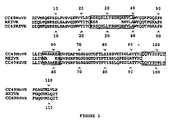
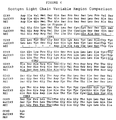
- a humanized antibody or humanized antibody fragment thereof which specifically binds TAG-72, characterized in that said humanized antibody has: humanized heavy chain variable regions having the amino acid sequence of Figure 1 or 3 or having the amino acid sequence of the humanized heavy chain variable region of the humanized CC49 antibody expressed by ATCC CRL-12209; and humanized light chain variable regions having the amino acid sequence of Figure 2 or 4 or having the amino acid sequence of the humanized light chain variable region of the humanized CC49 antibody expressed by ATCC CRL-12209.
- nucleic acid sequence characterized in that the above human antibody or humanized antibody fragment may be expressed from the nucleic acid sequence.
- a vector characterized in that the above humanized antibody or humanized antibody fragment may be expressed from the vector.
- composition suitable for the treatment or in vivo or in vitro detection of cancer characterized in that it comprises, respectively, a therapeutically effective or a diagnostically effective amount of the above humanized antibody or humanized antibody fragment.
- a therapeutic composition comprising the above humanized antibody or humanized antibody fragment, directly or indirectly associated with or linked to an effector moiety having therapeutic activity, which effector moiety is a radionuclide, therapeutic enzyme, anti-cancer drug, cytokine, cytoxin, or anti-proliferative agent.
- composition for the detection of cancer comprising the above humanized antibody or humanized antibody fragment directly or indirectly, associated with or linked to a detectable label.
- a seventh aspect of the invention there is provided a method of in vitro immunodetection of TAG-72-expressing cancer cells characterized in that the method is performed by contacting the cancer cells with a composition according to the sixth aspect of the invention.
- a commercial package characterized in that it contains a composition according to the sixth aspect of the invention as active ingredient together with instructions for use thereof to treat or detect cancer wherein the composition is reconstituted prior to said use.
- Antibody - This refers to single chain, two-chain, and multi-chain proteins and glycoproteins belonging to the classes of polyclonal, monoclonal, chimeric, and hetero immunoglobulins (monoclonal antibodies being preferred); it also includes synthetic and genetically engineered variants of these immunoglobulins.
- Antibody fragment includes Fab, Fab', F(ab') 2 , and Fv fragments, as well as any portion of an antibody having specificity toward a desired target epitope or epitopes.
- Humanized antibody - This will refer to an antibody derived from a non-human antibody, typically murine, that retains or substantially retains the antigen-binding properties of the parent antibody but which is less immunogenic in humans. This may be achieved by various methods including (a) grafting only the non-human CDRs onto human framework and constant regions with or without retention of critical framework residues, or (b) transplanting the entire non-human variable domains, but "cloaking" them with a human-like section by replacement of surface residues. Such methods as are useful in practicing the present invention include those disclosed in Jones et al., Morrison et al., Proc. NatL Acad. Sci. USA, 81:6851 -6855 (1984); Morrison and Oi, Adv.
- CDR Complementarity Determining Region
- Framework Region - refers to amino acid sequences interposed between CDRs. These portions of the antibody serve to hold the CDRs in an appropriate orientation for antigen binding.
- the framework regions for the light chain variable region may be selected from the group consisting of human lambda light chain FRs and huma kappa subgroup I, II, and III light chain FRs, whether the amino acid sequences of these FRs remain in their fully human native form or instead contain modifications to their amino acid sequences which are necessary to retain or increase binding affinity and/or binding specificity.
- Constant Region The portion of the antibody molecule which confers effector functions.
- murine constant regions are substituted with human constant regions.
- the constant regions of the subject chimeric or humanized antibodies are derived from human immunoglobulins.
- the heavy chain constant region can be selected from any of the five isotypes: alpha, delta, epsilon, gamma or mu. Further, heavy chains of various subclasses (such as the IgG subclasses of heavy chains) are responsible for different effector functions and thus, by choosing the desired heavy chain constant region chimeric antibodies with desired effector function can be produced.
- Preferred constant regions are gamma 1 (IgG1), gamma 3 (IgG3) and gamma 4 (IgG4). More preferred is a constant region of the gamma 1 (IgG1) isotype.
- the light chain constant region can be of the kappa or lambda type, preferably of the kappa type.
- Chimeric antibody - This is an antibody containing sequences derived from two different antibodies, which typically are of different species. Most typically chimeric antibodies comprise human and murine antibody fragments, generally human constant and murine variable regions.
- Immunogenicity A measure of the ability of a targeting protein or therapeutic moiety to elicit an immune response (humoral or cellular) when administered to a recipient.
- the present invention is concerned with the immunogenicity of the subject humanized antibodies or fragments thereof.
- Humanized antibody of reduced immunogenicity This refers to a humanized antibody exhibiting reduced immunogenicity relative to the parent antibody.
- Humanized antibody substantially retaining the binding properties of the parent antibody -
- the humanized antibody will exhibit the same or substantially the same antigen-binding affinity and avidity as the parent antibody, e.g. , CC49.
- the affinity of the antibody will at least about 10% of that of the parent antibody. More preferably, the affinity will be at least about 25%, i . e . at least two-fold less than the affinity of the parent antibody. Most preferably the affinity will be at least about 50% that of the parent antibody.
- Methods for assaying antigen-binding affinity are well known in the art and include half-maximal binding assays, competition assays, and Scatchard analysis. Suitable antigen binding assays are described in this application.
- the present invention is directed to humanized antibodies which specifically bind TAG-72, a pancarcinoma antigen expressed by various human cancers, in particular human colon carcinoma.
- humanized antibodies will be derived from antibodies having good binding affinity to TAG-72, e.g. : B72.3 (Thor et al., Cancer Res., 46:31 18-3127 (1986); Johnson et al., Cancer Res., 46:850-857 (1986)), deposited as ATCC No. HB 8108; CC49 (ATCC No. HB 9459); CC83 (ATCC No. HB 9453); CC46 (ATCC No. HB 9452); CC92 (ATCC No.
- HB 9454 CC30 (ATCC No. HB 9457); CC11 (ATCC No. 9455); and CC15 (ATCC No. HB 9460); or chimerized forms thereof (see, e.g., EPO 0,365,997 to Mezes et al., The Dow Chemical Company).
- humanized antibodies will be derived from CC49, which has been reported to target human colon carcinoma xenografts efficiently and also to reduce the growth of the xenograft with good efficacy.
- humanized antibodies afford potential advantages over murine and also chimeric antibodies, e.g. , reduced immunogenicity in humans. This is advantageous because it should reduce and potentially eliminate the eliciting of a HAMA response when such humanized antibodies are administered in vivo, e.g., for treatment of cancer or for diagnosis of cancer, e . g ., for tumor imaging.
- the humanized antibodies of the present invention which specifically bind TAG-72 will possess a binding affinity for TAG-72 of at least about 10% and more preferably at least about 25% and most preferably at least about 50% that of the TAG-72 antigen binding affinity of the parent murine antibody, e.g. , B72.3, CC49, CC46, CC30,CC11, CC15, CC83, or another parent antibody.
- the parent murine antibody e.g. , B72.3, CC49, CC46, CC30,CC11, CC15, CC83, or another parent antibody.
- the humanized antibodies of the present invention will possess a binding affinity for TAG-72 of at least about 10% and more preferably at least about 25% and most preferably at least about 50% that of the TAG-72 antigen binding affinity of either CC49 or a chimeric CC49 antibody.
- the humanized antibodies of the present invention will bind the same epitope as CC49.
- Such antibodies can be identified based on their ability to compete with CC49 for binding to TAG-72 or to TAG-72-expressing cancer cells.
- the subject humanized antibodies are produced by obtaining nucleic acid sequences encoding the variable heavy and variable light sequences of an antibody which binds TAG-72, preferably CC49, identifying the CDRs in said variable heavy and variable light sequences, and grafting such CDR nucleic acid sequences onto human framework nucleic acid sequences.
- the selected human framework will be one that is expected to be suitable for in vivo administration, i . e ., does not exhibit immunogenicity. This can be determined, e.g., by prior experience with in vivo usage of such antibodies and by studies of amino acid sequence similarities. In the latter approach, the amino acid sequences of the framework regions of the antibody to be humanized, e.g. , CC49, will be compared to those of known human framework regions, and human framework regions used for CDR grafting will be selected which comprise a size and sequence most similar to that of the parent antibody, e.g. , a murine antibody which binds TAG-72. Numerous human framework regions have been isolated and their sequences reported in the literature.
- the FRs of REI and NEWM antibodies have been identified as having amino acid sequences which are likely to allow the CDRs of CC49 to retain a significant degree of antigen binding affinity.
- the selected human framework regions will preferably be those that are expected to be suitable for in vivo administration, i . e ., not immunogenic. Based on their amino acid sequences, REI and NEWM human framework regions are expected to be substantially non-immunogenic.
- the amino acid sequences encoding CDRs are then identified (deduced based on the nucleic acid sequences and the genetic code and by comparison to previous antibody sequences) and the corresponding nucleic acid sequences are grafted onto selected human FRs. This may be accomplished by use of appropriate primers and linkers. Methods for selecting suitable primers and linkers to provide for ligation of desired nucleic acid sequences is well within the purview of the ordinary artisan and include those disclosed in U.S. Patent No. 4,816,397 to Boss et al. and U.S. Patent No. 5,225,539 to Winter et al.
- variable heavy and variable light sequences will then be expressed to produce a humanized Fv or humanized antibody which binds TAG-72.
- humanized variable heavy and variable light sequences will be expressed as a fusion protein with human constant domain sequences, so that an intact antibody which binds TAG-72 is obtained.
- this is not necessary as the variable heavy and light sequences can also be expressed in the absence of constant sequences to produce a humanized Fv which binds TAG-72.
- humanized variable region(s) fusion of human constant sequences to the humanized variable region(s) is potentially desirable because the resultant humanized antibody which binds TAG-72 will then possess human effector functions such as complement-dependent cytotoxicity (CDC) and antibody-dependent cellular cytotoxicity (ADCC) activity. Such activity has been found in chimeric antibodies, including CC49.
- the humanized anti-TAG-72 antibodies of the present invention can also support such effector function activity with the added advantage of a greatly decreased risk of a HAMA response.
- DNA sequences which encode the subject humanized V L and V H sequences are synthesized, and then expressed in vector systems suitable for expression of recombinant antibodies. This may be effected in any vector system which provides for the subject humanized V L and V H sequences to be expressed as a fusion protein with human constant domain sequences and to associate to produce functional (antigen binding) antibodies.
- Expression vectors and host cells suitable for expression of recombinant antibodies and humanized antibodies in particular, are well known in the art.
- vectors suitable for expression of recombinant antibodies are commercially available.
- the vector may, e.g., be a bare nucleic acid segment, a carrier-associated nucleic acid segment, a nucleoprotein, a plasmid, a virus, a viroid, or a transposable element.
- Host cells known to be capable of expressing functional immunoglobulins include, e.g. : mammalian cells such as Chinese Hamster Ovary (CHO) cells; COS cells; myeloma cells, such as NSO and SP2/0 cells; bacteria such as Escherichia coli; yeast cells such as Saccharomyces cerevisiae; and other host cells.
- mammalian cells such as Chinese Hamster Ovary (CHO) cells; COS cells; myeloma cells, such as NSO and SP2/0 cells; bacteria such as Escherichia coli; yeast cells such as Saccharomyces cerevisiae; and other host cells.
- CHO cells are used by many researchers given their ability to effectively express and secrete immunoglobulins.
- NSO cells are one of the preferred types of host cells useful in the present invention.
- recombinant expression of humanized antibodies is effected by one of two general methods.
- the host cells are transfected with a single vector which provides for the expression of both heavy and light variable sequences optionally fused to selected constant regions.
- the second method host cells are transfected with two vectors, each of which encodes a different variable chain ( i . e . a variable heavy chain or variable light chain); each variable chain-encoding vector may optionally provide for the expression of the variable chain fused to a selected constant region.
- Human constant domain sequences are well known in the art, and have been reported in the literature.
- Preferred human constant sequences include the kappa and lambda constant light sequences.
- Preferred human heavy constant sequences include human gamma 1, human gamma 2, human gamma 3, human gamma 4, and mutated versions thereof which provide for altered effect or function, e.g. , enhanced in vivo half-life or reduced Fc receptor binding.
- the antigen binding affinity of the resulting humanized antibody will be assayed by known methods, e.g. , Scatchard analysis.
- the antigen-binding affinity of the humanized antibody will be at least 25% of that of the parent antibody, e.g. , CC49, i . e . a minimum of two-fold less than that of native or chimeric CC49.
- the affinity of the humanized antibody will be at least about 50% of that of the parent antibody, e.g. , CC49.
- humanized antibodies produced by grafting CDRs (from an antibody which binds TAG-72) onto selected human framework regions may provide humanized antibodies having the desired affinity to TAG-72.
- those framework residues of the parent (e.g. , murine) antibody which maintain or affect combining-site structures will be retained. These residues may be identified by X-ray crystallography of the parent antibody or Fab fragment, thereby identifying the three-dimensional structure of the antigen-binding site.
- framework residues involved in antigen binding may potentially be identified based on previously reported humanized murine antibody sequences. Thus, it may be beneficial to retain such framework residues or others from the parent murine antibody to optimize TAG-72 binding. Preferably, such methodology will confer a "human-like" character to the resultant humanized antibody thus rendering it less immunogenic while retaining the interior and contacting residues which affect antigen-binding.
- the present invention further embraces variants and equivalents which are substantially homologous to the humanized antibodies and antibody fragments set forth herein. These may contain, e.g. , conservative substitution mutations, i . e . the substitution of one or more amino acids by similar amino acids.
- conservative substitution refers to the substitution of an amino acid with another within the same general class, e.g. , one acidic amino acid with another acidic amino acid, one basic amino acid with another basic amino acid. or one neutral amino acid by another neutral amino acid. What is intended by a conservative amino acid substitution is well known in the art.
- substantially homologous is used in regard to the similarity of a subject amino acid sequence (of an oligo- or poly-peptide or protein) to a related, reference amino acid sequence. This phrase is defined as at least about 75% Correspondence" -- i . e . the state of identical amino acid residues being situated in parallel -- between the subject and reference sequences when those sequences are in "alignment.” i.e. when a minimal number of "null" bases have been inserted in the subject and/or reference sequences so as to maximize the number of existing bases in correspondence between the sequences.
- null bases are not part of the subject and reference sequences: also, the minimal number of "null” bases inserted in the subject sequence may differ from the minimal number inserted in the reference sequence.
- a reference sequence is considered “related" to a subject sequence where both amino acid sequences make up proteins or portions of proteins which are either ⁇ TAG-72 antibodies or antibody fragments with ⁇ TAG-72 binding affinity.
- Each of the proteins comprising these ⁇ TAG-72 antibodies or antibody fragments may independently be antibodies or antibody fragments or hi- or multi-functional proteins, e . g ., such as fusion proteins, bi- and multi-specific antibodies, single chain antibodies, and the like.
- the present invention is further directed to nucleic acid sequences from such humanized antibodies may be expressed, as well as expression vectors which provide for the production of such humanized antibodies in transformed host cells.
- such humanized antibodies and corresponding nucleic acid sequences will be derived from CC49.
- the humanized heavy chains will have the amino acid sequences set forth in Figure 1 or 3 and the humanized light chains will have the amino acid sequences set forth in Figure 2 or 4.
- the invention further contemplates other modifications of these humanized variable heavy and light sequences, e.g. , sequences which further comprise one or more conservative amino acid substitutions or sequences which retain one or more additional murine framework residues which affect (enhance) antigen binding, which are alternatives to or supplements for those already shown in these Figures.
- the subject humanized antibodies because they specifically bind TAG-72, a pancarcinoma antigen expressed on many different cancer cell types (e.g. , colon carcinoma, breast carcinoma, ovarian carcinoma, prostate carcinoma), and further because they are expected to be significantly non-immunogenic in humans, should be suitable for use as therapeutics for the treatment or prevention of cancers characterized by TAG-72 expression, and as diagnostic agents, e . g ., for use in tumor imaging or in the Radioimmunoguided Surgery System (RIGS®). See Hinkle et al, Antibody, Immunoconjugates and Radiopharmaceuticals, 4(3):339-358 (1991).
- an effective dosage will be in the range of about 0.05 to 100 milligrams per kilogram body weight per day.
- the antibodies of the invention may be administered to a mammal in accordance with the aforementioned methods of treatment in an amount sufficient to produce such effect to a therapeutic, prophylactic, or diagnostic effect.
- Such antibodies of the invention can be administered to such mammal in a conventional dosage form prepared by combining the antibody of the invention with a conventional pharmaceutically acceptable carrier or vehicle, diluent, and/or excipient according to known techniques to form a suspension, injectable solution, or other formulation.
- a conventional pharmaceutically acceptable carrier or diluent is dictated by the amount of active ingredient with which it is to be combined, the route of administration and other well-known variables.
- compositions may include, e.g. , a suitable solvent, preservatives such as benzyl alcohol if desired, and a buffer.
- Useful solvent may include, e.g., water, aqueous alcohols, glycols, and phsophonate and carbonate esters. Such aqueous solutions contain no more than 50% by volume of organic solvent.
- Suspension-type formulations may include a liquid suspending medium as a carrier, e.g. , aqueous polyvinylpyrrolidone, inert oils such as vegetable oils or highly refined mineral oils, or aqueous cellulose ethers such as aqueous carboxymethylcellulose.
- a thickener such as gelatin or an alginate may also be present, one or more natural or synthetic surfactants or antifoam agents may be used, and one or more suspending agents such as sorbitol or another sugar may be employed therein.
- Such formations may contain one or more adjuvants.
- the route of administration of the antibody (or fragment thereof) of the invention may be oral, parenteral, by inhalation or topical.
- parenteral as used herein includes intravenous, intramuscular, subcutaneous, rectal, vaginal or intraperitoneal administration.
- the subcutaneous, intravenous and intramuscular forms of parenteral administration are generally preferred.
- the daily parenteral and oral dosage regimens for employing humanized antibodies of the invention prophylactically or therapeutically will generally be in the range of about 0.005 to 100, but preferably about 0.5 to 10, milligrams per kilogram body weight per day.
- the antibody of the invention may also be administered by inhalation.
- inhalation is meant intranasal and oral inhalation administration.
- Appropriate dosage forms for such administration such as an aerosol formulation or a metered dose inhaler, may be prepared by conventional techniques.
- the preferred dosage amount of a compound of the invention to be employed is generally within the range of about 0.1 to 1000 milligrams, preferably about 10 to 100 milligrams/kilogram body weight.
- the antibody of the invention may also be administered topically.
- topical administration is meant non-systemic administration. This includes the administration of a humanized antibody (or humanized antibody fragment) formulation of the invention externally to the epidermis or to the buccal cavity, and instillation of such an antibody into the ear, eye, or nose, and wherever it does not significantly enter the bloodstream.
- systemic administration is meant oral, intravenous, intraperitoneal, subcutaneous, and intramuscular administration.
- the amount of an antibody required for therapeutic, prophylactic, or diagnostic effect will, of course, vary with the antibody chosen, the nature and severity of the condition being treated and the animal undergoing treatment, and is ultimately at the discretion of the physician.
- a suitable topical dose of an antibody of the invention will generally be within the range of about 1 to 100 milligrams per kilogram body weight daily.
- the active ingredient may comprise, for topical administration, from 0.001% to 10% w/w, e.g., from 1% to 2% by weight of the formulation, although it may comprise as much as 10% w/w but preferably not in excess of 5% w/w and more preferably from 0.1% to 1% w/w of the formulation.
- the topical formulations of the present invention comprise an active ingredient together with one or more acceptable carrier(s) therefor and optionally any other therapeutic ingredients(s).
- the carrier(s) must be "acceptable" in the sense of being compatible with the other ingredients of the formulation and not deleterious to the recipient thereof.
- Formulations suitable for topical administration include liquid or semi-liquid preparations suitable for penetration through the skin to the site of where treatment is required, such as liniments, lotions, creams, ointments or pastes, and drops suitable for administration to the eye, ear, or nose.
- Drops according to the present invention may comprise sterile aqueous or oily solutions or suspensions and may be prepared by dissolving the active ingredient in a suitable aqueous solution of a bactericidal and/or fungicidal agent and/or any other suitable preservative, and preferably including a surface active agent. The resulting solution may then be clarified and sterilized by filtration and transferred to the container by an aseptic technique.
- bactericidal and fungicidal agents suitable for inclusion in the drops are phenylmercuric nitrate or acetate (0.002%), benzalkonium chloride (0.01 %) and chlorhexidine acetate (0.01 %).
- Suitable solvents for the preparation of an oily solution include glycerol, diluted alcohol and propylene glycol.
- Lotions according to the present invention include those suitable for application to the skin or eye.
- An eye lotion may comprise a sterile aqueous solution optionally containing a bactericide and may be prepared by methods similar to those for the preparation of drops.
- Lotions or liniments for application to the skin may also include an agent to hasten drying and to cool the skin, such as an alcohol or acetone, and/or a moisturizer such as glycerol or an oil such as castor oil or arachis oil.
- Creams, ointments or pastes according to the present invention are semi-solid formulations of the active ingredient for external application. They may be made by mixing the active ingredient in finely-divided or powdered form, alone or in solution or suspension in an aqueous or non-aqueous fluid, with the aid of suitable machinery, with a greasy or non-greasy basis.
- the basis may comprise hydrocarbons such as hard, soft or liquid paraffin, glycerol, beeswax, a metallic soap; a mucilage; an oil of natural origin such as almond, corn, arachis, castor or olive oil; wool fat or its derivatives, or a fatty acid such as stearic or oleic acid together with an alcohol such as propylene glycol or macrogels.
- the formulation may incorporate any suitable surface active agent such as an anionic, cationic or non-ionic surface active such as sorbitan esters or polyoxyethylene derivatives thereof.
- Suspending agents such as natural gums, cellulose derivatives or inorganic materials such as silicaceous silicas, and other ingredients such as lanolin, may also be included.
- Kits according to the present invention include frozen or lyophilized humanized antibodies or humanized antibody fragments to be reconstituted, respectively, by thawing (optionally followed by further dilution) or by suspension in a (preferably buffered) liquid vehicle.
- the kits may also include buffer and/or excipient solutions (in liquid or frozen form) -- or buffer and/or excipient powder preparations to be reconstituted with water -- for the purpose of mixing with the humanized antibodies or humanized antibody fragments to produce a formulation suitable for administration.
- kits containing the humanized antibodies or humanized antibody fragments are frozen, lyophilized, pre-diluted, or pre-mixed at such a concentration that the addition of a predetermined amount of heat, of water, or of a solution provided in the kit will result in a formulation of sufficient concentration and pH as to be effective for in vivo or in vitro use in the treatment or diagnosis of cancer.
- a kit will also comprise instructions for reconstituting and using the humanized antibody or humanized antibody fragment composition to treat or detect cancer.
- the kit may also comprise two or more component parts for the reconstituted active composition.
- a second component part - in addition to the humanized antibodies or humanized antibody fragments -- may be bifunctional chelant, bifunctional chelate, or a therapeutic agent such as a radionuclide, which when mixed with the humanized antibodies or humanized antibody fragments forms a conjugated system therewith.
- a therapeutic agent such as a radionuclide
- the optimal quantity and spacing of individual dosages of a humanized antibody or humanized antibody fragment of the invention will be determined by the nature and extent of the condition being treated, the form, route and site of administration, and the particular animal being treated, and that such optima can be determined by conventional techniques. It will also be appreciated by one of skill in the art that the optimal course of treatment, i.e. , the number of doses of an antibody or fragment thereof of the invention given per day for a defined number of days, can be ascertained by those skilled in the art using conventional course of treatment determination tests.
- the subject humanized antibodies may also be administered in combination with other anti-cancer agents, e . g ., other antibodies or drugs.
- the subject humanized antibodies or fragments may be directly or indirectly attached to effector having therapeutic activity.
- Suitable effector moieties include by way of example cytokines (IL-2, TNF, interferons, colony stimulating factors, IL-1, etc.), cytotoxins (Pseudomonas exotoxin, ricin, abrin, etc.), radionuclides, such as 90 Y, 131 I, 99m Tc, 111 In, 125 I, among others, drugs (methotrexate, daunorubicin, doxorubicin, etc.), immunomodulators, therapeutic enzymes (e.g.
- the subject humanized antibodies or fragments specific to TAG-72 may be used as immunodiagnostic agents both in vivo and in vitro .
- a particularly preferred usage is for in vivo imaging of cancer cell lesions which express TAG-72.
- the subject antibodies are preferred because they should elicit no significant HAMA or allergic response. Thus, they may be used repeatedly to monitor the disease status of a patient.
- Radioimmunoguided System® This technique, also known as the RIGS® System involves the intravenous administration of a radiolabeled monoclonal antibody or its fragment prior to surgery. After allowing for tumor uptake and blood clearance of radioactivity, the patient is taken to the operating room where surgical exploration is effected with the aid of a hand-held gamma activity probe, e . g ., Neoprobe®1000. This helps the surgeon identify the tumor metastases and improve the complications of excision.
- the RIGS® system is advantageous because it allows for the detection of tumors not otherwise detectable by visual inspection and/or palpation. See, O'Dwyer et al , Arch.
- the subject humanized antibodies or humanized antibody fragments thereof radiolabeled with radionuclides which are suitable for in vivo administration e.g., iodine radionuclides such as 131 I and 125 I; 111 In and 99m Tc are also suitable radiolabels.
- the subject humanized antibodies may be used alone or in combination with other antibodies. Also, the subject humanized antibodies may be prepared in the form of a diagnostically effective composition. Generally, this will entail the incorporation of diagnostically acceptable carriers and excipients, and labels which provide for detection. Suitable labels include diagnostic radionuclides, enzymes, etc. Methods for using antibodies for tumor imaging are well known in the art.
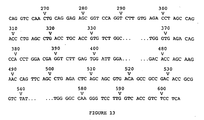
- the source of the NEWM framework regions for producing the initial humanized CC49 VH was an M13 construct bearing -- between the M13 Bam H I and Hind III sites -- a DNA segment having the nucleotide sequence shown in figure 13.
- the source of REI framework regions for producing the initial humanized CC49 VL was an M13 construct bearing --between the M13 Bam H I and Hin d III sites -- a DNA segment encoding the REI amino acid sequence of Figure 2.
- M13 DNA When overlap-extension procedures were used to introduce mutations into a given DNA sequence, double stranded M13 DNA was utilized. In contrast, when extension-ligation procedures were used instead, the oligonucleotides were designed to anneal to only one of the two DNA strands. In this latter procedure, the M13 DNA was first treated to substitute uridine for every thymidine base in the DNA, to produce uridinylated DNA. This was accomplished by transfecting the M13 plasmid DNA into competent cells lacking dUTPase and uracil glycosylase, normally RZ1 032 cells (though CJ236 cells available from Bio-Rad of Hercules, CA, are also suitable) by combining the following ingredients. 1 ⁇ L of M13 plasmid DNA 4 mL of LB broth 40 ⁇ L of competent RZ1032 cells.
- ssDNA single-stranded plasmid DNA
- oligonucleotide primers were used throughout the process of preparing the humanized CC49 VHs and VLs exemplified below. and These primers are complementary to regions of the plasmid M13 which are external both to the (NEWM or REI) target framework sequences and to the Bam H I site -to- Hin d III site section of M13.
- antibodies having a chimeric heavy chain i . e . a heavy chain having a murine CC49 VH region and a human IgG1 constant region
- a chimeric light chain i . e . a light chain having a murine CC49 VL and a human ⁇ constant region
- the source of these chimeric chains was the ATCC-deposited cell line HB9884 (Budapest) which expresses a chimeric CC49 antibody having both chains.
- the heavy chain of this antibody was termed "MuVH” and the light chain thereof was termed "MuVL.”
- the annealing step for non-overlap extension-ligations involved performing one annealing in which all mutation-carrying oligonucleotides and one primer oligonucleotide were annealed to a single stranded DNA template in which all thymidine bases had been replaced with uridine bases.
- the mutating oligonucleotides were first phosphorylated according to the above oligonucleotide phosphorylation protocol. In a final volume of 20 ⁇ L, the following ingredients were combined:
- extension-ligation was performed as follows. In a final volume of 30 ⁇ L, the following ingredients were combined:
- Reactions were initiated with the addition of the DNA polymerase and then treated with about 15 cycles of: (1) 94°C for 30 sec., (2) 50°C for 30 sec., and (3) 30-60 seconds at either 75°C (for Vent DNA polymerase) or 72°C (for Thermalase). Reactions were brought to completion with 5 minutes at a constant temperature of either 75°C For Vent DNA polymerase) or 72°C (for Thermalase).
- Reactions were initiated with the addition of the DNA polymerase and then treated with about 15 cycles of: (1) 94°C for 30 sec., (2) 50°C for 30 sec., and (3) 30-60 seconds at either 75°C (for Vent DNA polymerase) or 72°C (for Thermalase). Reactions were brought to completion with 5 minutes at a constant temperature of either 75°C (for Vent DNA polymerase) or 72°C (for Thermalase).
- Humanized antibodies were expressed in pSV vectors grown in NSO cells.
- the humanized variable region constructs which were produced in the plasmid, M13, were digested with 10U each of Hin d III and Bam H I (both from BRL, i . e . Gibco BRL) for 1 hour at 37°C in a final volume of 100 ⁇ L with Tris-EDTA buffer.
- the resulting DNA fragments were then run on a low melting point agarose gel, the band containing the humanized construct DNA was cut out, and the DNA was purified using an ELUTIP 'd' column with 20 ⁇ L Tris-EDTA buffer.
- Humanized CC49 VL constructs were inserted into pSVhyg vectors bearing a human ⁇ light chain constant domain; the pSVhyg vector used in the "aLys-17" shown in Figure 5.
- Each humanized variable region construct was inserted adjacent to the respective constant region, i . e . so as to replace either the HuVHLYS or the HuVLLys segment illustrated in Figure 5.
- the resulting vectors were transfected into NSO cells as follows. About 3 ⁇ g of the VH vector, or about 6 ⁇ g of the VL vector, produced by the pSV-insertion procedures, was then linearized by digestion with 10 U Pvu I (Gibco BRL). The digested DNA was then precipitated with ethanol and redissolved in 50 ⁇ L of water. NSO cells were collected by centrifugation and resuspended in 0.5mL Dulbecco's Modified Eagle's Medium (DMEM) and then transferred to a Gene Pulser cuvette (Bio-Rad). The DNA from both one VH and one VL construct was gently mixed with the cells by pipetting and the cuvette was left on ice for 5 minutes.
- DMEM Dulbecco's Modified Eagle's Medium
- the cuvette was inserted between the electrodes of the Bio-Rad Gene Pulser and a single pulse of 170V at 960 ⁇ F was applied.
- the contents of the cuvette were then transferred to a flask containing 20mL DMEM and the cells were allowed to rest for 1-2 days at 37°C. Cells were again harvested by centrifugation and resuspended in 36mL selective DMEM. 1.5mL aliquots of this resuspension were placed in each well of a 24-well plate and incubated at 37°C for 4 days, at which time the medium in each well was replaced with 1.5mL of fresh selective DMEM.
- the concentration of IgG secreted from transfected cells was measured using an enzyme-linked immunosorbent assay (ELISA) procedure which is set forth as follows.
- ELISA enzyme-linked immunosorbent assay
- Polyvinyl chloride (PVC) microtiter plates (Dynatech Laboratories, Chantilly, VA, catalog # 001-010-2101) were coated with goat anti-human IgG (10mg/mL, GAHIG, Southern Biotechnology Associates, Inc., Birmingham, AL, catalog # 2010-01 ) diluted with Milli-Q® water and placed on the plates using 50mL/well. Plates were air-dried overnight at ambient temperature or at 37°C for 3 hours. Prior to use, non-specific binding was blocked the addition of 0.2 mL/well of 1% (w/v) bovine serum albumin (Sigma, St. Louis, MO catalog # A7888) in phosphate buffered saline (Sigma.
- PVC plates were coated with 50 ⁇ L/well TAG-72 (Dow Chemical, lot #040191), diluted 1:300 in Milli-Q water. Plates were air-dried overnight at ambient temperature or at 37°C for 3 hours. Prior to use, non-specific binding was blocked the addition of 0.2 mL/well of 1% (w/v) bovine serum albumin (Sigma, St. Louis, MO catalog # A7888) in phosphate buffered saline (Sigma, catalog # 1000-3) (PBS/BSA). Plates were incubated for 1-2 hours at 37°C and the blocking solution removed prior to sample addition. All incubations were carried out in a humidified container.
- Two-fold serial dilutions (starting concentration range of 1.0 ⁇ g/ml - 10 ⁇ g/ml) of the samples to be tested in the PBS/BSA solution were added to triplicate wells of the TAG-coated plate (50 ⁇ L/well). The plate was incubated overnight at 4°C or 1-2 hours at 37°C. The plate was washed 3-times with 0.025% Tween-20 (v/v, Sigma) using an automatic plate washer. 50 ⁇ L/well of 1:1000 dilution of a goat anti-human IgG conjugated to Horseradish Peroxidase (Southern Biotechnology Associates Inc.) was added and incubated at 37°C for 1.5 hours.
- the wells were washed 3 times with 0.025% Tween-20 (v/v, Sigma) using an automatic plate washer and 50 ⁇ L/well OPD substrate buffer added. The color was developed for 4 minutes, stopped with 12.5 ⁇ L 12.5% H 2 SO 4 and the absorbance at 492 nm read.
- Two-fold dilutions of purified Hu-CC49 were prepared in PBS/BSA over a range of 1.0 ⁇ g/ml - 0.003 ⁇ g/ml and samples (20 ⁇ L/well) were applied in triplicate to TAG coated PVC prepared and blocked as described supra. Plates were incubated overnight at 4°C. Following this incubation, samples were transferred from the plate to the corresponding wells on the GAHIG-coated trap plate. The original TAG plate was washed 3-times with 0.025% Tween-20 (v/v, Sigma, catalog # P1379) using an automatic plate washer.
- An 125 I-labeled goat anti-human IgG probe (ICN Biomedicals, Inc., catalog # 68088) was diluted to 75,000 cpm/25 ⁇ L in PBS/BSA and added (25 ⁇ L/well) to all wells. This TAG plate was incubated for 1 hour at 37°C.
- humanized CC49 Mabs (CC49 HuVH/HuVK) using the V L and V H frameworks of human Mabs REI and NEWM. respectively.
- the CDRs for murine CC49 were grafted onto human frameworks according to known methods as discussed supra .
- human frameworks were selected from antibodies which, based on previous studies, were predicted to be suitable, i . e . which should not adversely affect antigen binding and not exhibit significant immunogenicity in humans.
- the human frameworks selected for the variable heavy and variable light chains, respectively were NEWM and REI.
- certain murine framework residues were also retained which, based on previous studies, might allow retention of antigen binding properties. Specifically, residues Y27, T30, A72, F95, and T97 of the murine heavy chain were initially retained. Concurrently, an alternate version of the humanized VH was produced which retained, in addition, the murine framework residue A24.
- NEWM-grafted humanized CC49 VHS was accomplished according to the annealing and extension-ligation protocols described above, using a single-stranded M13 DNA template bearing, between the Hind III and BamH I sites thereof, a DNA segment having the nucleotide sequence shown in Figure 13.
- Primer 11 was used in conjunction with a set of mutating oligonucleotides. These mutating oligonucleotides were designed and synthesized with the following sequences: and
- Codons which were designed into the oligonucleotides in order to retain murine FR amino acids are shown in bold-face type.
- amplifying PCR was performed using the standard PCR protocol with Vent DNA polymerase.
- the use of two versions of mutating oligonucleotide 1 resulted in the formation of two initial humanized V H s. These were named “CC49 NMVH,” also called “HuVH,” (for constructs incorporating oligonucleotide 1a) and “HuVHA” (for constructs incorporating oligonucleotide 1b).
- HuVK humanized light chain functions as well as the MuVK chimeric light chain
- further work was directed to making alternate mutated versions of the HuVH humanized heavy chain.
- a first variant of HuVH was made by replacing the lysine residue shown at position 76 of the CC49 NMVH in Figure 1 with the murine FR residue, serine. This was achieved by the Vent DNA polymerase PCR overlap extension protocol described above, using two primer-and-mutating oligonucleotide pairs -- oligonucleotides 10 and 4, and oligonucleotides 11 and 5.
- a second variant of HUVH was made by replacing the threonine residue shown at position 74 of the CC49 NMVH in Figure 1 with the murine FR residue, lysine. This was achieved by the Vent DNA polymerase PCR overlap extension protocol described above, using two primer-and-mutating oligonucleotide pairs -- oligonucleotides 10 and 6, and oligonucleotides 11 and 7. Each pair was used in conjunction with one of the strands of a dsDNA template -- situated between the Hin d III and Bam H I sites of plasmid M13 ⁇ and having the nucleotide sequence shown in Figure 14 (the upper strand was used with pair 11 & 7). Mutating oligonucleotides 6 and 7 were designed and synthesized with the following sequences.
- the lysine residue codons are shown in bold-face type.
- the resulting humanized CC49 VH was named "HuVHK.”
- HUVHS and HUVHK which were situated in M13 vectors, were grown and expressed in TG1 cells.
- the polypeptide expression products of these constructs were sequenced and the amino acid sequences of these constructs are presented in Figure 1.
- the affinity constant of the final humanized CC49 antibody, CC49 HuVH/HuVK, of Example 1 were measured according to the ELISA assay protocol set forth above.
- the ATCC (Budapest) HB 9884 chimeric CC49 antibody was used as an internal control.
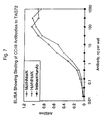
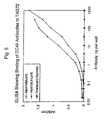
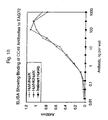
- This ELISA assay was performed repeatedly using purified samples of humanized and chimeric CC49 monoclonal antibodies in order to substantiate the accuracy of the values obtained and to account for inherent assay-to-assay variability. Typical results from such an analysis are shown in Figure 12. A summary of the results obtained during these analyses is shown in Table 1.
- a murine plasmacytoma cell line which produces this humanized CC49 antibody was deposited with the American Type Culture Collection (12301 Parklawn Drive, Rockville, Maryland 20852, on October 16. 1996) and this cell line was accorded accession number ATCC CRL-12209. This deposit was made in accordance with the Budapest Treaty. This deposited cell line will be made irrevocably available, without restriction, upon issuance of a patent to this application or any other application claiming priority to this application under 35 U.S.C. ⁇ 120.
- the humanized antibodies disclosed in Examples 1-3 exhibit antigen-binding characteristics, i . e . TAG-72 affinities comparable to the parent monoclonal antibody, nCC49 (murine antibody), and to chimeric antibodies derived from nCC49, e.g. , cCC49.
- these antibodies possess properties which will render them well suited for usage as in vivo diagnostics or therapeutics, e.g. , improved serum clearance, metabolic properties, and little or no immunogenicity in humans.
- the subject humanized antibodies are highly significant since because these properties will enable the subject humanized antibodies to be administered repeatedly, in large dosages, and over a prolonged period of time without significant adverse effects, e.g. , a HAMA response or non-specific cytotoxicity. This is important for cancer treatment as well as for cancer diagnosis as it enables these antibodies to be used over prolonged time periods.
- the clearance properties of the subject human antibodies will enable these antibodies to effectively target desired target sites, e.g. , TAG-72 expressing carcinomas (because of the effects of serum clearance on targeting efficiency). Therefore, the humanized antibodies of the present invention comprise a substantial improvement in relation to previously disclosed antibodies specific to TAG-72.
Landscapes
- Health & Medical Sciences (AREA)
- Life Sciences & Earth Sciences (AREA)
- Chemical & Material Sciences (AREA)
- Immunology (AREA)
- Engineering & Computer Science (AREA)
- General Health & Medical Sciences (AREA)
- Medicinal Chemistry (AREA)
- Molecular Biology (AREA)
- Cell Biology (AREA)
- Organic Chemistry (AREA)
- Public Health (AREA)
- Hematology (AREA)
- Urology & Nephrology (AREA)
- Biomedical Technology (AREA)
- Veterinary Medicine (AREA)
- Pharmacology & Pharmacy (AREA)
- Biochemistry (AREA)
- Animal Behavior & Ethology (AREA)
- Food Science & Technology (AREA)
- Physics & Mathematics (AREA)
- Chemical Kinetics & Catalysis (AREA)
- General Chemical & Material Sciences (AREA)
- Nuclear Medicine, Radiotherapy & Molecular Imaging (AREA)
- Biophysics (AREA)
- Biotechnology (AREA)
- Proteomics, Peptides & Aminoacids (AREA)
- Microbiology (AREA)
- Genetics & Genomics (AREA)
- Bioinformatics & Cheminformatics (AREA)
- Analytical Chemistry (AREA)
- Epidemiology (AREA)
- General Physics & Mathematics (AREA)
- Pathology (AREA)
- Peptides Or Proteins (AREA)
- Medicines Containing Antibodies Or Antigens For Use As Internal Diagnostic Agents (AREA)
- Preparation Of Compounds By Using Micro-Organisms (AREA)
- Measuring Or Testing Involving Enzymes Or Micro-Organisms (AREA)
- Medicinal Preparation (AREA)
- Medicines That Contain Protein Lipid Enzymes And Other Medicines (AREA)
Claims (21)
- Humanisierter Antikörper oder humansiertes Antikörperfragment davon, welcher bzw. welches spezifisch TAG-72 bindet, dadurch gekennzeichnet, dass der humanisierte Antikörper aufweist: humanisierte variable schwere Kette-Regionen mit der Aminosäuresequenz von Figur 1 oder 3 oder mit der Aminosäuresequenz der humanisierten variablen schwere Kette-Region des humanisierten CC49-Antikörpers, exprimiert durch ATCC CRL 12209; und humanisierte variable leichte Kette-Regionen mit der Aminosäuresequenz von Figur 2 oder 4 oder mit der Aminosäuresequenz der humanisierten variablen leichte Kette-Region des humanisierten CC49-Antikörpers, exprimiert durch ATCC CRL 12209.
- Humanisierter Antikörper oder humanisiertes Antikörperfragment nach Anspruch 1, worin der humanisierte Antikörper identisch ist mit dem humanisierten CC49-Antikörper, exprimiert durch ATCC CRL-12209.
- Humanisierter Antikörper oder humanisiertes Antikörperfragment nach Anspruch 2, worin der humanisierte Antikörper durch ATCC CRL-12209 exprimiert wird.
- Humanisiertes Antikörperfragment nach einem der Ansprüche 1 bis 3, worin das humanisierte Antikörperfragment eine humanisierte variable schwere Kette-Sequenz der Figur 1 oder 3 oder eine humanisierte leichte Kette-Sequenz der Figur 2 oder 4 aufweist oder sowohl die humanisierte variable schwere Kette-Sequenz als auch die humanisierte variable leichte Kette-Sequenz aufweist.
- Nukleinsäuresequenz, dadurch gekennzeichnet, dass ein humaner Antikörper oder ein humanisiertes Antikörperfragment nach einem der Ansprüche 1 bis 3 exprimiert werden kann von der Nukleinsäuresequenz.
- Vektor, dadurch gekennzeichnet, dass ein humanisierter Antikörper oder humanisiertes Antikörperfragment nach einem der Ansprüche 1 bis 3 von dem Vektor exprimiert werden kann.
- Vektor nach Anspruch 6, worin der Vektor ein bloßes Nukleinsäuresegment, ein Träger-assoziiertes Nukleinsäuresegment, ein Nukleoprotein, ein Plasmid, ein Virus, ein Viroid oder ein transpositionierbares Element ist.
- Zusammensetzung, die geeignet ist zur Behandlung oder zum in vivo- oder in vitro-Nachweis von Krebs, dadurch gekennzeichnet, dass sie jeweils umfasst, eine therapeutisch wirksame Menge oder diagnostisch wirksame Menge eines humanisierten Antikörpers oder humanisierten Antikörperfragments nach einem der Ansprüche 1 bis 4.
- Therapeutische Zusammensetzung, umfassend einen humanisierten Antikörper oder ein humanisiertes Antikörperfragment nach einem der Ansprüche 1 bis 3, direkt oder indirekt assoziiert mit oder verknüpft mit einem Effektorrest mit therapeutischer Aktivität, wobei der Effektorrest ein Radionuklid, therapeutisches Enzym, Antikrebwirkstoff, Cytokin, Cytoxin oder Antiproliferationsmittel Mittel ist.
- Zusammensetzung nach Anspruch 9 zur Behandlung von Krebs.
- Zusammensetzung nach Anspruch 10, worin der Krebs ein TAG-72-exprimierender Krebs ist.
- Zusammensetzung zum Nachweis von Krebs, umfassend einen humanisierten Antikörper oder ein humanisiertes Antikörperfragment nach einem der Ansprüche 1 bis 3, direkt oder indirekt assoziiert mit oder gebunden an eine nachweisbare Markierung.
- Zusammensetzung nach Anspruch 12, worin die nachweisbare Markierung ein Radionuklid oder ein Enzym ist.
- Verfahren des in vitro-Immunachweises von TAG-72-exprimierenden Krebszellen, dadurch gekennzeichnet, dass das Verfahren durchgeführt wird durch Inkontaktbringen der Krebszellen mit einer Zusammensetzung nach Anspruch 12 oder Anspruch 13.
- Verfahren nach Anspruch 14, worin die humanisierten Antikörper oder humanisierten Antikörperfragmente der Zusammensetzung an einen festen Träger gebunden sind.
- Zusammensetzung nach Anspruch 12 oder Anspruch 13, worin der Krebs ein TAG-72-exprimierender Krebs ist.
- Zusammensetzung nach Anspruch 16, worin das Krebsnachweismittel durch in vivo-Tumordarstellung nachweisbar ist.
- Zusammensetzung nach Anspruch 16, worin die nachweisbare Markierung ein Radionuklid ist, worin das Krebsnachweismittel durch eine Radionuklidaktivitätssonde nachweisbar ist.
- Zusammensetzung nach Anspruch 18, worin das Radionuklid 125I oder 131I ist.
- Kommerzielle Verpackungseinheit, dadurch gekennzeichnet, dass sie eine Zusammensetzung nach einem der Ansprüche 12, 13, 16, 17, 18 oder 19 als aktiven Bestandteil zusammen mit Anleitungen zur Verwendung davon enthält, zur Behandlung oder zum Nachweis von Krebs, worin die Zusammensetzung vor der Verwendung rekonstituiert wird.
- Verwendung eines humanisierten Antikörpers oder humanisierten Antikörperfragments nach einem der Ansprüche 1 bis 3 bei der Herstellung einer therapeutischen Zusammensetzung für die Behandlung von Krebs.
Applications Claiming Priority (1)
| Application Number | Priority Date | Filing Date | Title |
|---|---|---|---|
| PCT/US1998/003679 WO1999043816A1 (en) | 1998-02-25 | 1998-02-25 | High affinity humanized anti-tag-72 monoclonal antibodies |
Publications (2)
| Publication Number | Publication Date |
|---|---|
| EP1056860A1 EP1056860A1 (de) | 2000-12-06 |
| EP1056860B1 true EP1056860B1 (de) | 2005-02-09 |
Family
ID=22266462
Family Applications (1)
| Application Number | Title | Priority Date | Filing Date |
|---|---|---|---|
| EP98910057A Expired - Lifetime EP1056860B1 (de) | 1998-02-25 | 1998-02-25 | Humanisierte monoklonale antikörper mit hoher affinität gegen tag-72 |
Country Status (9)
| Country | Link |
|---|---|
| EP (1) | EP1056860B1 (de) |
| JP (1) | JP4080692B2 (de) |
| AT (1) | ATE288960T1 (de) |
| AU (1) | AU758358B2 (de) |
| CA (1) | CA2321932A1 (de) |
| DE (1) | DE69829001T2 (de) |
| IL (1) | IL138021A0 (de) |
| NO (1) | NO20004250L (de) |
| WO (1) | WO1999043816A1 (de) |
Families Citing this family (8)
| Publication number | Priority date | Publication date | Assignee | Title |
|---|---|---|---|---|
| JP4803879B2 (ja) * | 1998-10-31 | 2011-10-26 | アメリカ合衆国 | ヒト化抗−癌腫モノクローナル抗体cc49 |
| US6818749B1 (en) | 1998-10-31 | 2004-11-16 | The United States Of America As Represented By The Department Of Health And Human Services | Variants of humanized anti carcinoma monoclonal antibody cc49 |
| WO2002096948A2 (en) | 2001-01-29 | 2002-12-05 | Idec Pharmaceuticals Corporation | Engineered tetravalent antibodies and methods of use |
| EP1532162B1 (de) | 2002-06-28 | 2013-08-07 | THE GOVERNMENT OF THE UNITED STATES OF AMERICA, as represented by THE SECRETARY, DEPARTMENT OF HEALTH AND HUMAN SERVICES | Humanisierter anti-tag-72 cc49 zur diagnose und therapie humaner tumore |
| US7589181B2 (en) | 2003-08-29 | 2009-09-15 | The United States Of America As Represented By The Secretary Of The Department Of Health And Human Services | Minimally immunogenic variants of SDR-grafted humanized antibody CC49 and their use |
| KR100620554B1 (ko) | 2004-06-05 | 2006-09-06 | 한국생명공학연구원 | Tag-72에 대한 인간화 항체 |
| WO2006116076A2 (en) * | 2005-04-28 | 2006-11-02 | Genencor International, Inc. | Tab molecules |
| ES2564823T3 (es) | 2005-05-27 | 2016-03-29 | Ospedale San Raffaele S.R.L. | Vector génico que comprende miARN |
Family Cites Families (1)
| Publication number | Priority date | Publication date | Assignee | Title |
|---|---|---|---|---|
| IE64966B1 (en) * | 1988-10-19 | 1995-09-20 | Dow Chemical Co | A novel family of high affinity modified antibodies for cancer treatment |
-
1998
- 1998-02-25 IL IL13802198A patent/IL138021A0/xx unknown
- 1998-02-25 AU AU64393/98A patent/AU758358B2/en not_active Ceased
- 1998-02-25 JP JP2000533556A patent/JP4080692B2/ja not_active Expired - Lifetime
- 1998-02-25 AT AT98910057T patent/ATE288960T1/de not_active IP Right Cessation
- 1998-02-25 DE DE69829001T patent/DE69829001T2/de not_active Expired - Lifetime
- 1998-02-25 CA CA002321932A patent/CA2321932A1/en not_active Abandoned
- 1998-02-25 EP EP98910057A patent/EP1056860B1/de not_active Expired - Lifetime
- 1998-02-25 WO PCT/US1998/003679 patent/WO1999043816A1/en not_active Ceased
-
2000
- 2000-08-24 NO NO20004250A patent/NO20004250L/no not_active Application Discontinuation
Also Published As
| Publication number | Publication date |
|---|---|
| IL138021A0 (en) | 2001-10-31 |
| DE69829001D1 (de) | 2005-03-17 |
| NO20004250L (no) | 2000-10-24 |
| NO20004250D0 (no) | 2000-08-24 |
| AU758358B2 (en) | 2003-03-20 |
| CA2321932A1 (en) | 1999-09-02 |
| DE69829001T2 (de) | 2006-03-23 |
| EP1056860A1 (de) | 2000-12-06 |
| JP2002504371A (ja) | 2002-02-12 |
| ATE288960T1 (de) | 2005-02-15 |
| WO1999043816A1 (en) | 1999-09-02 |
| AU6439398A (en) | 1999-09-15 |
| JP4080692B2 (ja) | 2008-04-23 |
Similar Documents
| Publication | Publication Date | Title |
|---|---|---|
| US6333405B1 (en) | High affinity humanized anti-CEA monoclonal antibodies | |
| EP1736163B1 (de) | CDR-ausgetauschte Typ III Anti-CEA humanisierte monoklonale Mausantikörper | |
| US6753420B2 (en) | High affinity humanized anti-Tag-72 monoclonal antibodies | |
| AU758358B2 (en) | High affinity humanized anti-TAG-72 monoclonal antibodies | |
| US6495137B1 (en) | Humanized anti-tag-72 monoclonal antibodies using human subgroup 4 kappa light chains | |
| AU752494B2 (en) | High affinity humanized ANTI-CEA monoclonal antibodies | |
| MXPA00008390A (en) | High affinity humanized anti-tag-72 monoclonal antibodies | |
| MXPA00008391A (en) | High affinity humanized anti-cea monoclonal antibodies |
Legal Events
| Date | Code | Title | Description |
|---|---|---|---|
| PUAI | Public reference made under article 153(3) epc to a published international application that has entered the european phase |
Free format text: ORIGINAL CODE: 0009012 |
|
| 17P | Request for examination filed |
Effective date: 20000925 |
|
| AK | Designated contracting states |
Kind code of ref document: A1 Designated state(s): AT BE CH DE DK ES FI FR GB GR IE IT LI LU MC NL PT SE |
|
| 17Q | First examination report despatched |
Effective date: 20010620 |
|
| GRAP | Despatch of communication of intention to grant a patent |
Free format text: ORIGINAL CODE: EPIDOSNIGR1 |
|
| GRAS | Grant fee paid |
Free format text: ORIGINAL CODE: EPIDOSNIGR3 |
|
| GRAA | (expected) grant |
Free format text: ORIGINAL CODE: 0009210 |
|
| AK | Designated contracting states |
Kind code of ref document: B1 Designated state(s): AT BE CH DE DK ES FI FR GB GR IE IT LI LU MC NL PT SE |
|
| PG25 | Lapsed in a contracting state [announced via postgrant information from national office to epo] |
Ref country code: NL Free format text: LAPSE BECAUSE OF FAILURE TO SUBMIT A TRANSLATION OF THE DESCRIPTION OR TO PAY THE FEE WITHIN THE PRESCRIBED TIME-LIMIT Effective date: 20050209 Ref country code: LI Free format text: LAPSE BECAUSE OF FAILURE TO SUBMIT A TRANSLATION OF THE DESCRIPTION OR TO PAY THE FEE WITHIN THE PRESCRIBED TIME-LIMIT Effective date: 20050209 Ref country code: FI Free format text: LAPSE BECAUSE OF FAILURE TO SUBMIT A TRANSLATION OF THE DESCRIPTION OR TO PAY THE FEE WITHIN THE PRESCRIBED TIME-LIMIT Effective date: 20050209 Ref country code: CH Free format text: LAPSE BECAUSE OF FAILURE TO SUBMIT A TRANSLATION OF THE DESCRIPTION OR TO PAY THE FEE WITHIN THE PRESCRIBED TIME-LIMIT Effective date: 20050209 Ref country code: BE Free format text: LAPSE BECAUSE OF FAILURE TO SUBMIT A TRANSLATION OF THE DESCRIPTION OR TO PAY THE FEE WITHIN THE PRESCRIBED TIME-LIMIT Effective date: 20050209 Ref country code: AT Free format text: LAPSE BECAUSE OF FAILURE TO SUBMIT A TRANSLATION OF THE DESCRIPTION OR TO PAY THE FEE WITHIN THE PRESCRIBED TIME-LIMIT Effective date: 20050209 |
|
| REG | Reference to a national code |
Ref country code: GB Ref legal event code: FG4D |
|
| REG | Reference to a national code |
Ref country code: CH Ref legal event code: EP |
|
| PG25 | Lapsed in a contracting state [announced via postgrant information from national office to epo] |
Ref country code: LU Free format text: LAPSE BECAUSE OF NON-PAYMENT OF DUE FEES Effective date: 20050225 Ref country code: IE Free format text: LAPSE BECAUSE OF NON-PAYMENT OF DUE FEES Effective date: 20050225 |
|
| PG25 | Lapsed in a contracting state [announced via postgrant information from national office to epo] |
Ref country code: MC Free format text: LAPSE BECAUSE OF NON-PAYMENT OF DUE FEES Effective date: 20050228 |
|
| REG | Reference to a national code |
Ref country code: IE Ref legal event code: FG4D |
|
| REF | Corresponds to: |
Ref document number: 69829001 Country of ref document: DE Date of ref document: 20050317 Kind code of ref document: P |
|
| PG25 | Lapsed in a contracting state [announced via postgrant information from national office to epo] |
Ref country code: SE Free format text: LAPSE BECAUSE OF FAILURE TO SUBMIT A TRANSLATION OF THE DESCRIPTION OR TO PAY THE FEE WITHIN THE PRESCRIBED TIME-LIMIT Effective date: 20050509 Ref country code: GR Free format text: LAPSE BECAUSE OF FAILURE TO SUBMIT A TRANSLATION OF THE DESCRIPTION OR TO PAY THE FEE WITHIN THE PRESCRIBED TIME-LIMIT Effective date: 20050509 Ref country code: DK Free format text: LAPSE BECAUSE OF FAILURE TO SUBMIT A TRANSLATION OF THE DESCRIPTION OR TO PAY THE FEE WITHIN THE PRESCRIBED TIME-LIMIT Effective date: 20050509 |
|
| PG25 | Lapsed in a contracting state [announced via postgrant information from national office to epo] |
Ref country code: ES Free format text: LAPSE BECAUSE OF FAILURE TO SUBMIT A TRANSLATION OF THE DESCRIPTION OR TO PAY THE FEE WITHIN THE PRESCRIBED TIME-LIMIT Effective date: 20050520 |
|
| NLV1 | Nl: lapsed or annulled due to failure to fulfill the requirements of art. 29p and 29m of the patents act | ||
| REG | Reference to a national code |
Ref country code: CH Ref legal event code: PL |
|
| ET | Fr: translation filed | ||
| REG | Reference to a national code |
Ref country code: IE Ref legal event code: MM4A |
|
| PLBE | No opposition filed within time limit |
Free format text: ORIGINAL CODE: 0009261 |
|
| STAA | Information on the status of an ep patent application or granted ep patent |
Free format text: STATUS: NO OPPOSITION FILED WITHIN TIME LIMIT |
|
| PGFP | Annual fee paid to national office [announced via postgrant information from national office to epo] |
Ref country code: FR Payment date: 20051222 Year of fee payment: 9 |
|
| 26N | No opposition filed |
Effective date: 20051110 |
|
| REG | Reference to a national code |
Ref country code: GB Ref legal event code: 732E |
|
| REG | Reference to a national code |
Ref country code: FR Ref legal event code: TP |
|
| REG | Reference to a national code |
Ref country code: FR Ref legal event code: ST Effective date: 20071030 |
|
| PG25 | Lapsed in a contracting state [announced via postgrant information from national office to epo] |
Ref country code: PT Free format text: LAPSE BECAUSE OF NON-PAYMENT OF DUE FEES Effective date: 20050709 |
|
| PG25 | Lapsed in a contracting state [announced via postgrant information from national office to epo] |
Ref country code: FR Free format text: LAPSE BECAUSE OF NON-PAYMENT OF DUE FEES Effective date: 20070228 |
|
| PG25 | Lapsed in a contracting state [announced via postgrant information from national office to epo] |
Ref country code: IT Free format text: LAPSE BECAUSE OF NON-PAYMENT OF DUE FEES Effective date: 20080225 |
|
| PGFP | Annual fee paid to national office [announced via postgrant information from national office to epo] |
Ref country code: DE Payment date: 20170227 Year of fee payment: 20 |
|
| PGFP | Annual fee paid to national office [announced via postgrant information from national office to epo] |
Ref country code: GB Payment date: 20170227 Year of fee payment: 20 |
|
| PGFP | Annual fee paid to national office [announced via postgrant information from national office to epo] |
Ref country code: IT Payment date: 20170223 Year of fee payment: 20 |
|
| REG | Reference to a national code |
Ref country code: DE Ref legal event code: R071 Ref document number: 69829001 Country of ref document: DE |
|
| REG | Reference to a national code |
Ref country code: GB Ref legal event code: PE20 Expiry date: 20180224 |
|
| PG25 | Lapsed in a contracting state [announced via postgrant information from national office to epo] |
Ref country code: GB Free format text: LAPSE BECAUSE OF EXPIRATION OF PROTECTION Effective date: 20180224 |