EP1059311A2 - Olefinpolymerisationkatalysatorsysteme von gemischten Übergangsmetallen - Google Patents
Olefinpolymerisationkatalysatorsysteme von gemischten Übergangsmetallen Download PDFInfo
- Publication number
- EP1059311A2 EP1059311A2 EP00120235A EP00120235A EP1059311A2 EP 1059311 A2 EP1059311 A2 EP 1059311A2 EP 00120235 A EP00120235 A EP 00120235A EP 00120235 A EP00120235 A EP 00120235A EP 1059311 A2 EP1059311 A2 EP 1059311A2
- Authority
- EP
- European Patent Office
- Prior art keywords
- transition metal
- catalyst system
- molecular weight
- group
- catalyst
- Prior art date
- Legal status (The legal status is an assumption and is not a legal conclusion. Google has not performed a legal analysis and makes no representation as to the accuracy of the status listed.)
- Withdrawn
Links
Images

Classifications
-
- C—CHEMISTRY; METALLURGY
- C08—ORGANIC MACROMOLECULAR COMPOUNDS; THEIR PREPARATION OR CHEMICAL WORKING-UP; COMPOSITIONS BASED THEREON
- C08F—MACROMOLECULAR COMPOUNDS OBTAINED BY REACTIONS ONLY INVOLVING CARBON-TO-CARBON UNSATURATED BONDS
- C08F10/00—Homopolymers and copolymers of unsaturated aliphatic hydrocarbons having only one carbon-to-carbon double bond
- C08F10/02—Ethene
-
- C—CHEMISTRY; METALLURGY
- C08—ORGANIC MACROMOLECULAR COMPOUNDS; THEIR PREPARATION OR CHEMICAL WORKING-UP; COMPOSITIONS BASED THEREON
- C08F—MACROMOLECULAR COMPOUNDS OBTAINED BY REACTIONS ONLY INVOLVING CARBON-TO-CARBON UNSATURATED BONDS
- C08F10/00—Homopolymers and copolymers of unsaturated aliphatic hydrocarbons having only one carbon-to-carbon double bond
-
- C—CHEMISTRY; METALLURGY
- C08—ORGANIC MACROMOLECULAR COMPOUNDS; THEIR PREPARATION OR CHEMICAL WORKING-UP; COMPOSITIONS BASED THEREON
- C08F—MACROMOLECULAR COMPOUNDS OBTAINED BY REACTIONS ONLY INVOLVING CARBON-TO-CARBON UNSATURATED BONDS
- C08F110/00—Homopolymers of unsaturated aliphatic hydrocarbons having only one carbon-to-carbon double bond
- C08F110/04—Monomers containing three or four carbon atoms
- C08F110/06—Propene
-
- C—CHEMISTRY; METALLURGY
- C08—ORGANIC MACROMOLECULAR COMPOUNDS; THEIR PREPARATION OR CHEMICAL WORKING-UP; COMPOSITIONS BASED THEREON
- C08F—MACROMOLECULAR COMPOUNDS OBTAINED BY REACTIONS ONLY INVOLVING CARBON-TO-CARBON UNSATURATED BONDS
- C08F2410/00—Features related to the catalyst preparation, the catalyst use or to the deactivation of the catalyst
- C08F2410/04—Dual catalyst, i.e. use of two different catalysts, where none of the catalysts is a metallocene
-
- C—CHEMISTRY; METALLURGY
- C08—ORGANIC MACROMOLECULAR COMPOUNDS; THEIR PREPARATION OR CHEMICAL WORKING-UP; COMPOSITIONS BASED THEREON
- C08F—MACROMOLECULAR COMPOUNDS OBTAINED BY REACTIONS ONLY INVOLVING CARBON-TO-CARBON UNSATURATED BONDS
- C08F4/00—Polymerisation catalysts
- C08F4/42—Metals; Metal hydrides; Metallo-organic compounds; Use thereof as catalyst precursors
- C08F4/44—Metals; Metal hydrides; Metallo-organic compounds; Use thereof as catalyst precursors selected from light metals, zinc, cadmium, mercury, copper, silver, gold, boron, gallium, indium, thallium, rare earths or actinides
- C08F4/60—Metals; Metal hydrides; Metallo-organic compounds; Use thereof as catalyst precursors selected from light metals, zinc, cadmium, mercury, copper, silver, gold, boron, gallium, indium, thallium, rare earths or actinides together with refractory metals, iron group metals, platinum group metals, manganese, rhenium technetium or compounds thereof
- C08F4/62—Refractory metals or compounds thereof
- C08F4/64—Titanium, zirconium, hafnium or compounds thereof
- C08F4/659—Component covered by group C08F4/64 containing a transition metal-carbon bond
- C08F4/65908—Component covered by group C08F4/64 containing a transition metal-carbon bond in combination with an ionising compound other than alumoxane, e.g. (C6F5)4B-X+
-
- C—CHEMISTRY; METALLURGY
- C08—ORGANIC MACROMOLECULAR COMPOUNDS; THEIR PREPARATION OR CHEMICAL WORKING-UP; COMPOSITIONS BASED THEREON
- C08F—MACROMOLECULAR COMPOUNDS OBTAINED BY REACTIONS ONLY INVOLVING CARBON-TO-CARBON UNSATURATED BONDS
- C08F4/00—Polymerisation catalysts
- C08F4/42—Metals; Metal hydrides; Metallo-organic compounds; Use thereof as catalyst precursors
- C08F4/44—Metals; Metal hydrides; Metallo-organic compounds; Use thereof as catalyst precursors selected from light metals, zinc, cadmium, mercury, copper, silver, gold, boron, gallium, indium, thallium, rare earths or actinides
- C08F4/60—Metals; Metal hydrides; Metallo-organic compounds; Use thereof as catalyst precursors selected from light metals, zinc, cadmium, mercury, copper, silver, gold, boron, gallium, indium, thallium, rare earths or actinides together with refractory metals, iron group metals, platinum group metals, manganese, rhenium technetium or compounds thereof
- C08F4/62—Refractory metals or compounds thereof
- C08F4/64—Titanium, zirconium, hafnium or compounds thereof
- C08F4/659—Component covered by group C08F4/64 containing a transition metal-carbon bond
- C08F4/65912—Component covered by group C08F4/64 containing a transition metal-carbon bond in combination with an organoaluminium compound
-
- C—CHEMISTRY; METALLURGY
- C08—ORGANIC MACROMOLECULAR COMPOUNDS; THEIR PREPARATION OR CHEMICAL WORKING-UP; COMPOSITIONS BASED THEREON
- C08F—MACROMOLECULAR COMPOUNDS OBTAINED BY REACTIONS ONLY INVOLVING CARBON-TO-CARBON UNSATURATED BONDS
- C08F4/00—Polymerisation catalysts
- C08F4/42—Metals; Metal hydrides; Metallo-organic compounds; Use thereof as catalyst precursors
- C08F4/44—Metals; Metal hydrides; Metallo-organic compounds; Use thereof as catalyst precursors selected from light metals, zinc, cadmium, mercury, copper, silver, gold, boron, gallium, indium, thallium, rare earths or actinides
- C08F4/60—Metals; Metal hydrides; Metallo-organic compounds; Use thereof as catalyst precursors selected from light metals, zinc, cadmium, mercury, copper, silver, gold, boron, gallium, indium, thallium, rare earths or actinides together with refractory metals, iron group metals, platinum group metals, manganese, rhenium technetium or compounds thereof
- C08F4/62—Refractory metals or compounds thereof
- C08F4/64—Titanium, zirconium, hafnium or compounds thereof
- C08F4/659—Component covered by group C08F4/64 containing a transition metal-carbon bond
- C08F4/65916—Component covered by group C08F4/64 containing a transition metal-carbon bond supported on a carrier, e.g. silica, MgCl2, polymer
-
- C—CHEMISTRY; METALLURGY
- C08—ORGANIC MACROMOLECULAR COMPOUNDS; THEIR PREPARATION OR CHEMICAL WORKING-UP; COMPOSITIONS BASED THEREON
- C08F—MACROMOLECULAR COMPOUNDS OBTAINED BY REACTIONS ONLY INVOLVING CARBON-TO-CARBON UNSATURATED BONDS
- C08F4/00—Polymerisation catalysts
- C08F4/42—Metals; Metal hydrides; Metallo-organic compounds; Use thereof as catalyst precursors
- C08F4/44—Metals; Metal hydrides; Metallo-organic compounds; Use thereof as catalyst precursors selected from light metals, zinc, cadmium, mercury, copper, silver, gold, boron, gallium, indium, thallium, rare earths or actinides
- C08F4/60—Metals; Metal hydrides; Metallo-organic compounds; Use thereof as catalyst precursors selected from light metals, zinc, cadmium, mercury, copper, silver, gold, boron, gallium, indium, thallium, rare earths or actinides together with refractory metals, iron group metals, platinum group metals, manganese, rhenium technetium or compounds thereof
- C08F4/62—Refractory metals or compounds thereof
- C08F4/64—Titanium, zirconium, hafnium or compounds thereof
- C08F4/659—Component covered by group C08F4/64 containing a transition metal-carbon bond
- C08F4/6592—Component covered by group C08F4/64 containing a transition metal-carbon bond containing at least one cyclopentadienyl ring, condensed or not, e.g. an indenyl or a fluorenyl ring
-
- C—CHEMISTRY; METALLURGY
- C08—ORGANIC MACROMOLECULAR COMPOUNDS; THEIR PREPARATION OR CHEMICAL WORKING-UP; COMPOSITIONS BASED THEREON
- C08F—MACROMOLECULAR COMPOUNDS OBTAINED BY REACTIONS ONLY INVOLVING CARBON-TO-CARBON UNSATURATED BONDS
- C08F4/00—Polymerisation catalysts
- C08F4/42—Metals; Metal hydrides; Metallo-organic compounds; Use thereof as catalyst precursors
- C08F4/44—Metals; Metal hydrides; Metallo-organic compounds; Use thereof as catalyst precursors selected from light metals, zinc, cadmium, mercury, copper, silver, gold, boron, gallium, indium, thallium, rare earths or actinides
- C08F4/60—Metals; Metal hydrides; Metallo-organic compounds; Use thereof as catalyst precursors selected from light metals, zinc, cadmium, mercury, copper, silver, gold, boron, gallium, indium, thallium, rare earths or actinides together with refractory metals, iron group metals, platinum group metals, manganese, rhenium technetium or compounds thereof
- C08F4/62—Refractory metals or compounds thereof
- C08F4/64—Titanium, zirconium, hafnium or compounds thereof
- C08F4/659—Component covered by group C08F4/64 containing a transition metal-carbon bond
- C08F4/6592—Component covered by group C08F4/64 containing a transition metal-carbon bond containing at least one cyclopentadienyl ring, condensed or not, e.g. an indenyl or a fluorenyl ring
- C08F4/65922—Component covered by group C08F4/64 containing a transition metal-carbon bond containing at least one cyclopentadienyl ring, condensed or not, e.g. an indenyl or a fluorenyl ring containing at least two cyclopentadienyl rings, fused or not
- C08F4/65925—Component covered by group C08F4/64 containing a transition metal-carbon bond containing at least one cyclopentadienyl ring, condensed or not, e.g. an indenyl or a fluorenyl ring containing at least two cyclopentadienyl rings, fused or not two cyclopentadienyl rings being mutually non-bridged
-
- C—CHEMISTRY; METALLURGY
- C08—ORGANIC MACROMOLECULAR COMPOUNDS; THEIR PREPARATION OR CHEMICAL WORKING-UP; COMPOSITIONS BASED THEREON
- C08F—MACROMOLECULAR COMPOUNDS OBTAINED BY REACTIONS ONLY INVOLVING CARBON-TO-CARBON UNSATURATED BONDS
- C08F4/00—Polymerisation catalysts
- C08F4/42—Metals; Metal hydrides; Metallo-organic compounds; Use thereof as catalyst precursors
- C08F4/44—Metals; Metal hydrides; Metallo-organic compounds; Use thereof as catalyst precursors selected from light metals, zinc, cadmium, mercury, copper, silver, gold, boron, gallium, indium, thallium, rare earths or actinides
- C08F4/60—Metals; Metal hydrides; Metallo-organic compounds; Use thereof as catalyst precursors selected from light metals, zinc, cadmium, mercury, copper, silver, gold, boron, gallium, indium, thallium, rare earths or actinides together with refractory metals, iron group metals, platinum group metals, manganese, rhenium technetium or compounds thereof
- C08F4/62—Refractory metals or compounds thereof
- C08F4/64—Titanium, zirconium, hafnium or compounds thereof
- C08F4/659—Component covered by group C08F4/64 containing a transition metal-carbon bond
- C08F4/6592—Component covered by group C08F4/64 containing a transition metal-carbon bond containing at least one cyclopentadienyl ring, condensed or not, e.g. an indenyl or a fluorenyl ring
- C08F4/65922—Component covered by group C08F4/64 containing a transition metal-carbon bond containing at least one cyclopentadienyl ring, condensed or not, e.g. an indenyl or a fluorenyl ring containing at least two cyclopentadienyl rings, fused or not
- C08F4/65927—Component covered by group C08F4/64 containing a transition metal-carbon bond containing at least one cyclopentadienyl ring, condensed or not, e.g. an indenyl or a fluorenyl ring containing at least two cyclopentadienyl rings, fused or not two cyclopentadienyl rings being mutually bridged
Definitions
- This invention relates to mixed transition metal catalyst systems comprising late transition metal catalyst compounds and metallocene compounds and polymerization of olefins using them.
- transition metal catalysts for olefin polymers by coordination polymerization are well-known, typically those are the traditional Ziegler-type catalysts based on Group 4 and 5 of the Periodic Table (IUPAC new notation) and the newer metallocene catalysts based on Group 4 - 6 metals.
- specific late transition metal catalysts suitable for olefin polymerization had not offered the same levels of activity or molecular weight capability for olefin polymerization during the development of these catalyst systems and additional work was published addressing this lack.
- the reporters describe the use of Ni and Pd complexes for the solution homopolymerization of ethylene, propylene, and 1-hexene.
- the catalyst precursors are square-planar, M 2+ , d 8 , 16 electron complexes incorporating substituted, bidentate diimine ligands.
- the active coordination sites are occupied by either methyl or bromide ligands.
- Methyl ligand complexes were activated with H + (OEt 2 ) 2 [B(3,5-(CF 3 ) 2 C 6 H 3 ) 4 ] - and bromide ligand complexes were activated with methylalumoxane (MAO) or diethylaluminumchloride as cocatalysts.
- MAO methylalumoxane
- European patent publication EP-A2-0 454 231 describes Group VIIIb metal catalysts said to be suitable for the polymerization of ethylene, a-olefins, diolefins, functionalized olefins, and alkynes.
- the described catalyst precursors are Group VIIIb metal (Groups 8, 9, 10, IUPAC new nomenclature) compounds which are subsequently activated by compounds including discrete borate anions. Ethylene homopolymerization in solutions of methylene chloride, toluene and diethyl ether are illustrated.
- the new late transition metal catalysts exhibit characteristics different from those of transition metal metallocene catalysts or traditional Ziegler-Natta catalysts when used in olefin polymerization, the effects of mixing those catalysts for determining useful benefits are of great interest.
- the invention encompasses a mixed transition metal olefin polymerization catalyst system suitable for the polymerization of olefin monomers comprising one late transition metal catalyst system and at least one different catalyst system selected from the group consisting of late transition metal catalyst systems, transition metal metallocene catalyst systems or traditional Ziegler catalyst systems.
- Preferred embodiments include a mix of at least two late transition metal catalyst system comprising a Group 9, 10, or 11 metal complex stabilized by a bidentate ligand structure, and at least one late transition metal catalyst system, as described, and at least one transition metal metallocene catalyst system comprising a Group 4 metal complex stabilized by at least one ancillary cyclopentadienyl ligand, or at least one late transition metal catalyst system, as described, and at least one Ziegler-Natta catalyst system selected from the group consisting of homogeneous vanadium catalysts and heterogeneous TiCl 3 /MgCl 2 donor catalyst systems.
- the polymerization process for olefin monomers comprises contacting one or more olefins with these catalyst systems under polymerization conditions.
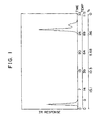
- FIGS. 1-2 are compositional distribution (CD)traces by Temperature Rising Elution Fractionation ("TREE") as described in U.S. patent 5,008,204 of polymer samples P2-2 to P2-3, respectively.
- TEE Temperature Rising Elution Fractionation
- the late transition metal catalyst systems of this invention can be derived from the late transition metal compounds of formula: LMX r wherein M is a Group 9, 10, or 11 metal, preferably a d 6 , d 8 or d 10 metal, most preferably d 8 ; L is a bidentate ligand that stabilizes a square planar geometry and charge balances the oxidation state of MX r ; each X is, independently, a hydride radical, a hydrocarbyl radical, a substituted hydrocarbyl radical, a halocarbyl radical, a substituted halocarbyl radical, and hydrocarbyl- and halocarbyl-substituted organometalloid radicals; or two X's are joined and bound to the metal atom to form a metallacycle ring containing from about 3 to about 20 carbon atoms; or one or more X can be a neutral hydrocarbyl containing donor ligand, e.g., an olefin,
- one or more X may additionally be independently selected from the group consisting of a halogen, alkoxide, aryloxide, amide, phosphide or other univalent anionic ligand; two such X's joined to form an anionic chelating ligand; or, one or more neutral non-hydrocarbyl atom containing donor ligand, e.g., phosphine, amine, nitrile or CO ligand.
- a halogen alkoxide, aryloxide, amide, phosphide or other univalent anionic ligand
- two such X's joined to form an anionic chelating ligand or, one or more neutral non-hydrocarbyl atom containing donor ligand, e.g., phosphine, amine, nitrile or CO ligand.
- the bidentate ligand, L is defined by the following formula: wherein A is a bridging group containing a Group 13-15 element; each E is independently a Group 15 or 16 element bonded to M; each R is independently a C 1 -C 30 containing radical or diradical group which is a hydrocarbyl, substituted-hydrocarbyl, halocarbyl, substituted-halocarbyl, hydrocarbyl-substituted organometalloid, halocarbyl-substituted organometalloid, m and n are independently 1 or 2 depending on the valency of E; and p is the charge on the bidentate ligand such that the oxidation state of MX r is satisfied.
- the bridging group, A is defined by the following formulae: wherein G is a Group 14 element especially C, Si, and Ge; Q is a Group 13 element especially B and Al; and R' are independently hydride radicals, C 1 -C 30 hydrocarbyl radicals, substituted hydrocarbyl radicals, halocarbyl radicals, substituted halocarbyl radicals, and hydrocarbyl- and halocarbyl-substituted organometalloid radicals, and optionally two or more adjacent R' may form one or more C 4 to C 40 rings to give a saturated or unsaturated cyclic or polycyclic ring.
- each R is independently a bulky C 1 -C 30 containing radical group which is a hydrocarbyl, substituted-hydrocarbyl, halocarbyl, substituted-halocarbyl, substituted organometalloid, hydrocarbyl-substituted organometalloid, or halocarbyl-substituted organometalloid.
- Bulky radical groups include phenyls, substituted phenyls, alkyls and substituted alkyls, especially those bonded to E through a tertiary carbon atom, and alicyclic and polyalicyclic containing hydrocarbyls, especially those bonded to E through a tertiary carbon and the like.
- substituted is as defined or refers to C 1 -C 30 containing radicals which are to be essentially hydrocarbyl, but may include one or more non-hydrocarbyl atoms (such as Si, Ge, O, S, N, P, halogen, etc.) in place of one or more carbon atoms.
- non-hydrocarbyl atoms such as Si, Ge, O, S, N, P, halogen, etc.
- M is a group 10 metal
- E is a group 15 element especially nitrogen with m and n being one and p being zero
- the bridge is as drawn in A-1
- R is a substituted phenyl group preferably substituted in at least the 2 and 6 positions with R' groups.
- R' in the 2 and 6 positions is preferably a C 3 -C 30 hydrocarbyl group preferably with a secondary or tertiary carbon atom bonded to the phenyl group.
- R in the 2 and 6 positions are preferably a C 1 -C 2 hydrocarbyl group or a C 3 -C 10 hydrocarbyl group with a primary carbon atom bonded to the phenyl group.
- R in the 2 and 6 positions is hydride.
- transition metal metallocene catalyst systems comprising a Group 4 metal complex stabilized by at least one ancillary cyclopentadienyl ligand according to this invention are those known in the art as metallocene catalysts.
- the term includes those compounds containing a single cyclopentadienyl ligand or a substituted derivative thereof ("monocyclopentadienyl metallocenes"), and those containing two cyclopentadienyl ligands or substituted and unsubstituted derivatives thereof ("biscyclopentadienyl metallocenes").
- Either class may be unbridged or may be bridged, e.g., between the two cyclopentadienyl ligands on, or between the single cyclopentadienyl ligand and a heteroatom ligand on, the same transition metal center.
- Precursor compounds for and the catalyst systems themselves are well-known in the art.
- metallocene compounds of this invention are those described as mono- or bis-substituted Group 4, 5, 6, 9, or 10 transition metal compounds wherein the cyclopentadienyl substituents may be themselves substituted with one or more groups and may be bridged to each other, or may be bridged through a heteroatom to the transition metal.
- the biscyclopentadienyl (or substituted biscyclopentadienyl, such as indenyl or substituted indenyl) rings will be bridged and will be lower alkyl-substituted (C 1 -C 6 ) in the 2 position and will additionally comprise alkyl, cycloalkyl, aryl, alkylaryl and or arylalkyl substituents, the latter as either of fused or pendant ring structures including multi-ring structures, for example, those of U.S. patents 5,278,264 and 5,304,614.
- Such substituents should each have essentially hydrocarbyl characteristics and will typically contain up to 30 carbon atoms but may be hetero-atom containing with not more than 1-3 non-hydrogen/carbon atoms, e.g., N, S, O, P, Si or Ge.
- Metallocene compounds suitable for the preparation of linear polyethylene or ethylene-containing copolymers are essentially any of those known in the art, see WO-A-92/00333 and U.S. patents 5,001,205, 5,057,475, 5,198,401, 5,304,614, 5,308,816 and 5,324,800 for specific listings. Selection of metallocene compounds for use to make isotactic or syndiotactic polypropylene blends, and their syntheses, are well-known in the art, specific reference may be made to both patent literature and academic, see for example Journal of Organmetallic Chemistry 369 , 359-370 (1989).
- those catalysts are stereorigid asymmetric, chiral or bridged chiral metallocenes. See, for example, U.S. patent 4,892,851, U.S. patent 5,017,714, U.S. patent 5,296,434, U.S.
- the monocyclopentadienyl metallocene catalyst components are those additionally comprising a Group 15 or 16 heteroatom covalently bound both to the Group 4 transition metal center and, through a bridging group, to a ring carbon of the cyclopentadienyl group-containing ligand.
- Such catalysts are well-known in the art, see, e.g., background U.S. patents 5,055,438, 5,096,867, 5,264,505, 5,408,017, 5,504,169 and WO 92/00333. See also, U.S.
- Non-limiting representative metallocene compounds include mono-cyclopentadienyl compounds such as pentamethylcyclopentadienyltitanium tri(isopropoxide), pentamethylcyclopentadienyltribenzyl titanium, dimethylsilyltetramethylcyclopentadienyl-tert-butylamido titanium dichloride, pentamethylcyclopentadienyl titanium trimethyl, dimethylsilyltetramethylcyclopentadienyl-tert-butylamido zirconium dimethyl, dimethylsilyltetramethylcyclopentadienyl-cyclododecylamido hafnium dihydride, dimethylsilyltetramethylcyclopentadienyl-dodecylamido titanium dimethyl, unbridged biscyclopentadienyl compounds such as bis(1,3-butyl, methylcyclopentadienyl) zirconium dimethyl, pen
- Z-N systems typically comprise a Group 4, 5 or 6 transition metal halide or oxyhalide, a Ziegler cocatalyst and optional donor molecules. These catalyst systems are well known and can be used in accordance with the invention.
- the description of U.S. patent 4,701,432 and 4,987,200 contain suitable description of the catalyst compounds useful in this invention. Both are incorporated by reference for purposes of U.S. patent practice. In particular, see column 5 line 27 to column 6 line 5 of 4,701,432 and column 27 line 22 to column 28 line 17 of 4,987,200.
- the preferred catalysts according to this invention for elastomeric polymers are those of 4,987,200.
- the traditionally known catalyst systems suitable for each will be suitable in accordance with this invention.
- any ratio of catalysts systems to another can be used.
- the preferred ratio based on moles of transition metal is 200:1 to 1:1.
- transition metal means two different members of the class of catalysts of the invention.
- the preferred ratio between any two is as described.
- it is well known in the art it is important to choose the ratio to account for differences in polymerization activities of the selected systems under the selected conditions. For example, the presence of ⁇ -olefins will depress the activity of the late transition metal catalyst system relative to the metallocene system. Thus, if only a minor portion of one polymer component is desired, a ratio of greater than 200:1 may be preferable.
- cocatalysts or activators are used interchangeably and are defined to be any compound or component which can activate the late transition metal compounds, the metallocene compounds, and the Z-N catalyst or any independently if they are to be independently activated.
- the late transition metal compound, metallocene compounds, and Z-N catalyst according to the invention may be activated for polymerization catalysis in any manner sufficient to allow coordination polymerization. This can be achieved, for example, when each has one ligand which can be abstracted and another ligand that is capable of insertion of the olefinically unsaturated monomers or will be similarly abstractable for replacement with a ligand that is capable of insertion.
- the traditional activators of metallocene polymerization art are suitable activators; those typically include Lewis acids such as alumoxane compounds, and ionizing, anion pre-cursor compounds that abstract one ligand so as to ionize the transition metal center into a cation and provide a counterbalancing, compatible, noncoordinating anion. Additionally, traditional organometallic compound Ziegler cocatalysts may be utilized for the late transition metal catalysts and for the traditional Ziegler catalysts themselves.
- the late transition metal compound may be activated with an alumoxane, Ziegler cocatalyst, "noncoordinating anion" precursor compounds and halide salts of the Group 13-16 metals each of which is described more fully below.
- the transition metal metallocene compounds are preferably activated with an alumoxane or "noncoordinating anion" precursor compounds. While most Ziegler cocatalysts are tolerated by most transition metal metallocene compounds, they are typically poor activators. Halide salts of the Group 13-16 metals should not be used with transition metal metallocene compounds.
- Traditional Ziegler-Natta catalysts are preferably activated by Ziegler cocatalysts.
- the presence of alumoxanes or "noncoordinating anion" precursor compounds should not present any problems, however the presence of halide salts of the Group 13-16 metals is not recommended.
- any combination of activators listed above may be used.
- the preferred activator system is either "noncoordinating anion" precursor compounds or alumoxanes or a combination thereof, with alumoxanes being more highly preferred.
- the most highly preferred activator is a Ziegler-cocatalyst.
- Ziegler cocatalysts will typically be organometallic compounds of a metal of Groups 1, 2, 12 or 13 of the Periodic table of elements.
- organoaluminum compounds selected from the group consisting of aluminum alkyl, aluminum alkyl halide and aluminum halide. These can be represented by the formulae : Al(R 1 ) s X' 3-s , wherein R 1 is independently a hydride or C 1 to C 10 hydrocarbyl including aliphatic, alicyclic or aromatic hydrocarbon radical, X' is a halogen and s is an integer from 0 to 3; and, Al 2 R 1 3 X' 3 which are hydrocarbylaluminum sesquihalides.
- Examples include triethylaluminum, triisobutylaluminum, diethylaluminum chloride, Al 2 Et 3 Cl 3 and Al 2 (i-Bu) 3 Cl 3 . As is generally recognized in the art these Ziegler cocatalyst compounds will not effectively activate the metallocene compounds.
- the preferred molar ratio of late transition metal compound to Ziegler cocatalyst is from about 1:1000 to 1:1, more preferably from about 1:200 to 1:1 and most preferably from about 1:100 to 1:1, although higher or lower ratios may also be used.
- the preferred molar ratio of Ziegler-Natta catalyst (based on moles of transition metal atom) to Ziegler cocatalyst is preferably from about 1:10000 to 1:10, more preferably from about 1:5000 to 1:10 and most preferably from about 1:2000 to 1:10 although higher or lower ratios may also be used.
- the preferred molar ratios for the total transition metal compound to Ziegler cocatalyst is preferably from about 1:10000 to 1:1, more preferably from about 1: 5000 to 1:1 and most preferably from about 1:2000 to 1:1, although higher or lower ratios may also be used.
- Total transition metal compound is measured as the total number of moles of transition metal atoms present in the mixed catalyst system.
- Alkylalumoxanes and modified alkylalumoxanes are suitable as catalyst activators for all types of catalyst systems of the invention.
- the alumoxane component useful as catalyst activator typically is an oligomeric aluminum compound represented by the general formula (R 2 -Al-O) n , which is a cyclic compound, or R 2 (R 2 -Al-O) n AlR 2 2 , which is a linear compound.
- R 2 is independently a C 1 to C 10 hydrocarbyl radical, for example, methyl, ethyl, propyl, butyl or pentyl and "n" is an integer from 1 to about 100.
- R 2 may also be, independently, halogen, including fluorine, chlorine and iodine, and other non-hydrocarbyl monovalent ligands such as amide, alkoxide and the like, provided that not more than 25 mol% of R 2 are non-hydrocarbyl as described here. Most preferably, R 2 is methyl and "n" is at least 4.
- Alumoxanes can be prepared by various procedures known in the art. For example, an aluminum alkyl may be treated with water dissolved in an inert organic solvent, or it may be contacted with a hydrated salt, such as hydrated copper sulfate suspended in an inert organic solvent, to yield an alumoxane.
- the preferred total transition metal compound to activator molar ratio is from 1:10000 to 10:1, more preferably from about 1:5000 to 10:1, even more preferably from about 1:1000 to 1:1.
- noncoordinating anion as used for the ionizing, anion pre-cursor compounds
- noncoordinating anion pre-cusors is recognized to mean an anion which either does not coordinate to said transition metal cation or which is only weakly coordinated to said cation thereby remaining sufficiently labile to be displaced by a neutral Lewis base.
- “Compatible” noncoordinating anions are those which are not degraded to neutrality when the initially formed complex between the transition-metal catalyst compounds and the ionizing, anion pre-cursor compounds decomposes. Further, the anion will not transfer an anionic substituent or fragment to the cation so as to cause it to form a neutral four coordinate metal compound and a neutral by-product from the anion.
- Noncoordinating anions useful in accordance with this invention are those which are compatible, stabilize the late transition metal cation or the transition metal metallocene catalyst in the sense of balancing its ionic charge, yet retain sufficient lability to permit displacement by an olefinically unsaturated monomer during polymerization. Additionally, the anions useful in this invention will be of sufficient molecular size to partially inhibit or help to prevent neutralization of the late-transition-metal cation by Lewis bases other than the polymerizable monomers that may be present in the polymerization process.
- Noncoordinating anion precursors suitable in accordance with this invention are hydrated salts comprising the alkali metal or alkaline earth metal cations and a non-coordinating anion as described above.
- the hydrated salts can be prepared by reaction of the metal cation-non-coordinating anion salt with water, for example, by hydrolysis of the commercially available or readily synthesized LiB(pfp) 4 which yields [Li•xH 2 0] [B(pfp) 4 ], where (pfp) is pentafluorophenyl or perfluorophenyl.
- Any metal or metalloid capable of forming a coordination complex which preferably is resistant to degradation by water (or other Bronsted or Lewis Acids), may be used or contained in the anion.
- Suitable metals include, but are not limited to, aluminum, gold, platinum and the like.
- Suitable metalloids include, but are not limited to, boron, phosphorus, silicon and the like.
- An additional method of making the ionic catalysts uses noncoordinating anion precursors which are initially neutral Lewis acids but form the cation and anion upon ionizing reaction with the late transition metal compounds or the transition metal metallocene catalyst compounds, for example tris(pentafluorophenyl) boron acts to abstract a hydrocarbyl, hydride or silyl ligand to yield a transition metal cation and stabilizing non-coordinating anion; see EP-A-0 427 697 and EP-A-0 520 732 which are directed to metallocene catalyst systems.
- Ionic catalysts for coordination polymerization can also be prepared by oxidation of the metal centers of transition metal compounds by anionic precursors containing metallic oxidizing groups along with the anion groups, see EP-A-0 495 375.
- anionic precursors containing metallic oxidizing groups along with the anion groups see EP-A-0 495 375.
- the description of non-coordinating anions and precursors thereto of these documents are similarly incorporated by reference for purposes of U.S. patent practice.
- the total transition metal to activator molar ratio may be any ratio, but preferably from about 10:1 to 1:10; more preferably from about 5:1 to 1:5; even more preferably from about 2:1 to 1:2; and most preferably from about 1.2:1 to 1:1.2 with the ratio of about 1:1 being the most preferred. Similar ratios may be used for other noncoordinating anion pre-cusor compounds.
- the late transition metal catalyst compounds of this invention may also be activated with ionizing anion precursors including the halide salts of Group 13 -16 metals or metalloids, preferably the fluoride and oxyfluoride salts, e.g., those providing the following anions: BF 4 - , PF 6 - , SbF 6 - , TeOF 6 - and AsF 6 - .
- ionizing anion precursors including the halide salts of Group 13 -16 metals or metalloids, preferably the fluoride and oxyfluoride salts, e.g., those providing the following anions: BF 4 - , PF 6 - , SbF 6 - , TeOF 6 - and AsF 6 - .
- activators would preferably be avoided if the mixed catalyst systems are jointly activated in situ since the metallocene compounds are sensitive to anions of insufficient bulk to provide compatibility.
- the preferred total transition metal compound to activator molar ratio is preferably from 10:1 to 1:10, more preferably from about 5:1 to 1:5, even more preferably from 2:1 to 1:2, and even more preferably from 1.2:1 to 1:12 with 1:1 being most preferred. Higher or lower ratios may also be used.
- the late transition metal catalyst system components of this invention can additionally be prepared by combining in any order the bidentate ligand L, or a known precursor to it, with a suitable late transition metal complex, and an activator compound.
- oxidizing or reducing agents may be used additionally to achieve the preferred d 6 , d 8 or d 10 metal compounds. All reactants may be added in any order, or even essentially simultaneously.
- This activated catalyst may then be combined with a separately activated metallocene complex, or with a metallocene compound that is to be subsequently activated.
- the total catalyst system can additionally comprise one or more scavenging compounds.
- scavenging compounds is meant to include those compounds effective for removing polar impurities from the reaction environment. Impurities can be inadvertently introduced with any of the polymerization reaction components, particularly with solvent, monomer and catalyst feed, and adversely affect catalyst activity and stability. Impurities can result in decreased, variable or even elimination of catalytic activity.
- the polar impurities, or catalyst poisons include water, oxygen, metal impurities, etc.
- the late transition metal catalysts of the present invention can be less sensitive to impurities than the metallocene catalyst systems, reduction or elimination of poisons is a desirable objective, especially when using these mixed catalysts.
- steps are taken to avoid addition of such impurities into the reaction vessel, for example by chemical treatment or careful separation techniques after or during the synthesis or preparation of the various components.
- Some minor amounts of scavenging compound can still normally be used in the polymerization process itself but will be minimized to avoid decreased activities of the metallocene components.
- the scavenging compound will be an organometallic compound such as the Group 13 organometallic compounds of U.S. patents 5,153,157, 5,241,025 and WO-A-91/09882, WO-A-94/03506, WO-A-93/14132, and that of WO 95/07941.
- organometallic compounds include triethyl aluminum, triethyl borane, triisobutyl aluminum, methylalumoxane, isobutyl aluminoxane, and n-octyl aluminum.
- scavenging compounds having bulky or C 8 -C 20 linear hydrocarbyl substituents covalently bound to the metal or metalloid center being preferred to minimize adverse interaction with the active catalyst.
- alumoxane or Ziegler cocatalyst is used as activator, any excess over the amount of transition metal compound present will act as scavenger compounds and additional scavenging compounds may not be necessary.
- the amount of scavenging agent to be used with transition metal cation-non-coordinating anion pairs is minimized during polymerization reactions to that amount effective to enhance activity.
- Chain transfer agents suitable for lowering the molecular weight of the polymer produced from the transition metal metallocene or Ziegler-Natta catalyst systems includes compounds such as hydrogen and silanes of the formula H 4-x SiR* x , where x is 1, 2 or 3 and R is independently a C 1 to C 20 hydrocarbyl or hydrocarbyloxy radical such as but not limited to methyl, ethyl, propyl, butyl, pentyl, hexyl, heptyl, nonyl, decyl, dodecyl, phenyl, methoxy, ethoxy, propoxy, phenoxy, and the like.
- alcohols such as ethanol, isopropanol or phenol
- boranes such as catechol borane
- the chain transfer agents described do not effectively lower the molecular weight of the polymer produced from the late transition metal catalyst system.
- Immobilized catalyst systems of the invention will be useful in heterogeneous polymerization processes such as bulk, slurry and gas phase polymerization. They may be prepared by any effective method of supporting other coordination catalyst systems, effective meaning that the catalyst so prepared can be used for preparing polymer in the selected heterogeneous polymerization process. Preferred methods include those referred to in copending U.S. provisional application 60/020095, filed 17 June 1996, in copending U.S. application 08/466,547, filed 6 June 1995, and in its counterpart WO 96/00245, and in copending U.S. application serial no. 08/474,948, filed 6/7/95, published as WO 96/04319.
- the activated catalyst may also be supported in accordance with WO 91/0882 and WO 94/03506, particularly when using ionizing activators providing electronically stabilizing non-coordinating anions. All documents are incorporated for purposes of U.S. patent practice.
- U.S. Patent No. 4,937,217 generally describes a mixture of trimethylaluminum and triethylaluminum added to an undehydrated silica to which a metallocene catalyst component is then added.
- EP-308177-B1 generally describes adding a wet monomer to a reactor containing a metallocene, trialkylaluminum and undehydrated silica.
- U.S. Patent Nos. 4,912,075, 4,935,397 and 4,937,301 generally relate to adding trimethylaluminum to an undehydrated silica and then adding a metallocene to form a dry supported catalyst system.
- 4,808,561, 4,897,455 and 4,701,432 describe techniques to form a supported catalyst where the inert carrier, typically silica, is calcined and contacted with a metallocene(s) and an activator/cocatalyst component.
- U.S. Patent No. 5,238,892 describes forming a dry supported catalyst system by mixing a metallocene with an alkyl aluminum and then adding undehydrated silica.
- U.S. Patent No. 5,240,894 generally pertains to forming a supported metallocene/alumoxane catalyst system by forming a metallocene/alumoxane reaction solution, adding a porous carrier, and evaporating the resulting slurry to remove residual solvent from the carrier. All documents are likewise incorporated for purposes of U.S. patent practice.
- polymeric carriers will also be suitable in accordance with the invention, see for example the descriptions in WO 95/15815 and U.S. patent 5,427,991.
- the catalyst complexes of this invention may be either adsorbed or absorbed, on the polymeric supports, particularly if made up of porous particles, or may be chemically bound through functional groups covalently bound to or in the polymer chains.
- the preferred total transition metal compound to activator molar ratio is from 1:500 to 10:1, more preferably from about 1:200 to 10:1, even more preferably from about 1:120 to 1:1.
- Suitable solid particle supports are typically comprised of polymeric or refractory oxide materials, each being preferably porous. Any support material, preferably a porous support material, such as for example, talc, inorganic oxides like silica, alumina, inorganic chlorides, for example magnesium chloride and resinous support materials such as polystyrene polyolefin or polymeric compounds or any other organic support material and the like that has an average particle size greater than 10 ⁇ m.
- the preferred support materials are inorganic oxide materials, which include those from the Periodic Table of Elements of Groups 2, 3, 4, 5, 13 or 14 metal or metalloid oxides.
- the catalyst support materials include silica, alumina, silica-alumina, and mixtures thereof. Other inorganic oxides that may be employed either alone or in combination with the silica, alumina or silica-alumina are magnesia, titania, zirconia, and the like.
- the mixed catalyst system is employed in liquid phase (solution, slurry, suspension, bulk phase or combinations thereof), in high pressure liquid or supercritical fluid phase, or in gas phase.
- liquid processes may be employed in singular, parallel or series reactors.
- the liquid processes comprise contacting olefinically unsaturated monomers with the above described catalyst system in a suitable diluent or solvent and allowing said monomers to react for a sufficient time to produce the invention copolymers.
- Hydrocarbyl solvents are suitable, both aliphatic and aromatic, hexane and toluene are preferred.
- Bulk and slurry processes are typically done by contacting the catalysts with olefinically unsaturated monomers in liquid monomer or inert diluent, the catalyst system typically being supported.
- Gas phase processes similarly use a supported catalyst and are conducted in any manner known to be suitable for ethylene homopolymers or copolymers prepared by coordination polymerization. Illustrative examples may be found in U.S. patents 4,543,399, 4,588,790, 5,028,670, 5,352,749, 5,382,638, 5,405,922, 5,422,999, 5,436,304, 5,453,471, and 5,463,999, and International applications WO 94/28032, WO 95/07942 and WO 96/00245.
- the processes are conducted at temperatures of from about -100 °C to 150 °C, preferably from about 40 °C to 120°C, at pressures up to about 7000 kPa, typically from about 690 kPa to 2415 kPa. Continuous processes using fluidized beds and recycle streams as the fluidizing medium are preferred.
- Slurry polymerization processes in which the immobilized catalyst systems of this invention may be used are typically described as those in which the polymerization medium can be either a liquid monomer, like propylene, or a hydrocarbon solvent or diluent, advantageously aliphatic paraffin such as propane, isobutane, hexane, heptane, cyclohexane, etc. or an aromatic one such as toluene.
- the polymerization temperatures may be those considered low, e.g., less than 50 °C, preferably 0 - 30 °C, or may be in a higher range, such as up to about 120 °C, preferably from 50 °C up to about 80 °C, or at any ranges between the end points indicated.
- Pressures can vary from about 100 to about 700 psia (0.76-4.8 MPa) Additional description is given in U.S. patents 5,274,056 and 4,182,810 and WO 94/21962 which are incorporated by reference for purposes of U.S. patent practice.
- the polymerization reaction temperature for solution, bulk or supercritical polymerization processes can vary from about -50 °C to about 250 °C.
- the reaction temperature conditions will be from -20 °C to 220 °C, more preferably below 200 °C.
- the presure can vary from about 1 mm Hg (0.1333 kPa) to 2500 bar (2.5 x 10 5 kPa), preferably from 0.1 bar to 1600 bar, most preferably from 1.0 to 500 bar.
- lower molecular weight copolymers e.g., M n ⁇ 10,000, are sought it will be suitable to conduct the reaction processes at temperatures above about 0 °C and pressures under 500 bar.
- catalyst compounds and components of this invention may be used with series or parallel reactors employing one or more such catalyst systems or components to prepare polymer blends comprising one or more of these invention copolymers or blends of them with other polymers and copolymers with properties associated with such blends, for example, broadened polydispersity for improved processing polymer compositions and improved impact strength polymer blend compositions.
- unsaturated monomers that is olefinically or ethylenically unsaturated monomers
- polymer products having molecular weights (weight-average or M w ) from about 500 to about 3x10 6 .
- M w molecular weights
- the polymer products will have an M w of from about 1000 to about 1.0x10 6 .
- Suitable unsaturated monomers will include ethylene, C 3 -C 20 ⁇ -olefins, C 4 -C 20 gem-substituted olefins, C 8 -C 20 aromatic substituted ⁇ -olefins, C 4 -C 20 cyclic olefins, C 4 -C 20 non-conjugated diolefins, or C 20 -C 1000 , and above, vinyl and vinylidene-terminated macromers.
- the polymer products will be any of polyethylene homopolymers, ethylene copolymers, particularly polyethylene plastomers and elastomers.
- ethylenically unsaturated polar monomers will additionally be polymerizable or copolymerizable.
- the preferred polar monomers include C 4 -C 20 olefins containing functional groupings such as esters, carboxylates, nitriles, amines, amides, alcohols, halides carboxylic acids and the like. More preferably vinyl esters, halides and nitriles. Also, the masked monomers of U.S. patent 4,987,200 are suitable.
- CDBI composition Distribution Breadth Index
- a measure of composition distribution is the "Composition Distribution Breadth Index” (“CDBI”).
- CDBI is defined as the weight percent of the copolymer molecules having a comonomer content within 50% (that is, 25% on each side) of the median total molar comonomer content.
- the CDBI of a copolymer is readily determined utilizing well known techniques for isolating individual fractions of a sample of the copolymer. One such technique is Temperature Rising Elution Fraction (TREF), as described in Wild, et al., J. Poly. Sci., Poly. Phys. Ed. , vol. 20, p. 441 (1982) and U.S. Patent No. 5,008,204, which are incorporated herein by reference.
- TREF Temperature Rising Elution Fraction
- a solubility distribution curve is first generated for the copolymer. This may be accomplished using data acquired from the TREF technique described above. This solubility distribution curve is a plot of the weight fraction of the copolymer that is solubilized as a function of temperature. This is converted to a weight fraction versus composition distribution curve. For the purpose of simplifying the correlation of composition with elution temperature the weight fractions are assumed to have a Mn ⁇ 15,000, where Mn is the number average molecular weight fraction. Low weight fractions generally represent a trivial portion of the polymer of the present invention. The remainder of this description and the appended claims maintain this convention of assuming all weight fractions have a Mn ⁇ 15,000 in the CDBI measurement.
- the CDBI is determined by establishing what weight percent of the sample has a comonomer content within 25% of each side of the median comonomer content. Further details of determining the CDBI of a copolymer are known to those skilled in the art. See, for example, PCT Patent Application WO 93/03093, published February 18, 1993.
- the polymers of the present invention in one embodiment have CDBI's generally in the range of greater than 50% to 99%, preferably in the range of 50% to 85%, and more preferably 55% to 80%, even more preferably greater than 60%, still even more preferably greater than 65%. Obviously, higher or lower CDBI's may be obtained using other catalyst systems with changes in the operating conditions of the process employed.
- the above definition is unambiguous for monodisperse polymers. When applied to polydisperse whole polymers, branched and linear materials with the same viscosity-average molecular weight should be compared, to account for different polydispersities. This latter complication can be avoided in the GPC-VIS method since the intrinsic viscosity and the molecular weight are measured at individual elution volumes, which arguably contain narrowly-dispersed polymer.
- the exponent k is expected to vary between 0.5 and 1.5 depending on the type of branching structure present in the material.
- a value of k 0.7 has been recently used in the literature for LDPE. This value was also used in studies of model copolymers. Different values of k have been used in the literature by a variety of authors.
- branching ⁇ Since the above assumptions are untested for the polymers considered here, the reported values for the amount and frequency of long-chain branching ⁇ hereafter referred to as branching ⁇ should be regarded as estimates and not as a direct and accurate determination of the true values. Nevertheless, the values can be profitably used to rank different materials relative to each other.
- a primary advantage of the mixed catalysts of this invention is that blends can be produced in a single reactor without the difficulties and expense associated with an added physical blending step after production of the polymer in the reactor or reactors. It is well known in the literature that high molecular weight polymers and polymers with widely different viscosities are difficult to mechanically blend. These problems are avoided if the polymer chains are mixed on a molecular level during the polymerization process using mixed catalysts.
- the mixed catalysts of this invention offer novel opportunities to control the molecular weight distribution and composition distributions of polymer blends.
- the ability to select the proper reactor conditions requires an identification and understanding of the behavior of late transition metal catalysts in the presence of other transition metal catalysts.
- surprising synergies exist between the catalyst components of the catalyst mixtures of this invention which lead to unexpected responses to catalyst reactor conditions and to novel and useful polymer products.
- late transition metal catalysts show dramatic changes in the branch contents of their polymers as the reactor temperature changes (see examples P1-3 through P1-5).
- metallocene or Ziegler-Natta catalysts show much smaller changes in branch content (since branch content relies on comonomer incorporation) as the reactor temperature changes.
- branch contents in polymers made from late transition metal catalysts are much more dependent on ethylene pressure or concentration (see examples P4-1 through P5-5) than transition metal metallocene or Ziegler-Natta catalysts.
- Examples P2-1 and P2-2 illustrate the unpredictable behavior of mixed catalyst systems.
- TREF reveals only 6%.
- catalyst S-7 uses different ratios of TM-4 to TM-5 (94% TM-4) and a much smaller ratio of calculated to observed values of Ni derived polymer (46% to 29%) results.
- Examples P2-4 and P2-6 reveal similar unpredictability when different ratios of TM-4 and TM-6 are used (S-8, S-9). Large differences in the observed ratios of polymer components are also seen when comparing ethylene/hexene copolymerizations to ethylene homopolymerizations (cf., P2-2 vs. P2-3, P2-4 vs. P2-5, P2-6 vs. P2-7) for different catalyst pairs. The data illustrate that the polymer composition from mixed catalysts cannot be simply predicted from the behavior of the individual components.
- the presence of the Ni catalyst not only increased the M w capability of the metallocene in a surprising way, but also the presence of ethyl branching in the polymer product suggests that the oligomers generated by the Ni catalyst were incorporated by the metallocene.
- Other low M w late transition metal catalysts can be selected (eg. at least one R on E is phenyl or meta- and/or para-substituted phenyl) in order to enhance this synergistic effect.
- Examples M2 and M3 provide evidence that this effect also occurs for vinyl or vinylidene terminated macromers that are produced by the late transition metal catalyst.
- the polymer produced by pure metallocene TM-8 was characterized with 0.24 long chain branches per molecule with a g' value of 0.96 relative to pure linear polyethylene.
- this same metallocene was run with Ni catalyst TM-7 with two different catalyst ratios.
- the mixed catalyst systems produced blends with increased long chain branching (0.65 and 0.72 long chain branches per molecule) and decreased g' values (0.89 and 0.88 relative to pure linear polyethylene) in comparison to the polymer produced by metallocene TM-8 alone.
- the increased long chain branching of these polymers and blends will give them improved processing and rheological properties.
- Example M9 demonstrates that the enhanced M w capability induced by mixed catalysts can result from mixing two different late transition metal catalysts (the low M w /oligomer-producing catalyst TM-7 and the high M w catalyst TM-11) and that the effect also works for propylene polymerizations.
- the late transition metal catalyst TM-2 is mixed with a traditional Ziegler-Natta catalyst S-12.
- the properties of the polymers made from the catalyst systems alone were determined in comparative Examples C7 and C8.
- the mixture gives two M w peaks in its GPC data corresponding to 10,700 (compared with 13,000 in Example C7) and 191,000 (compared with 86,000 in Example C8). Surprisingly, the M w of one catalyst's polymer went down in the mixture while the M w of the other catalyst's polymer went up.
- the polymer blends made using the mixed catalysts of this invention can have advantageous properties over single polymer components.
- U.S. patents 5,382,630 and 5,382,631 teach that a blend of a high molecular weight, high comonomer content ethylene/ ⁇ -olefin copolymer with a low molecular weight low comonomer content ethylene/ ⁇ -olefin copolymer is superior in many properties to a single component ethylene/ ⁇ -olefin copolymer whose molecular weight and comonomer content are equal to the average values of the blend.
- Using mixed late transition metal and metallocene or Ziegler-Natta catalysts we can obtain this distribution of polymer chains in a single reactor.
- Catalysts and conditions can be chosen so that the metallocene or Ziegler-Natta catalyst makes low molecular weight chains containing few branches while the late transition metal catalyst makes high molecular weight branched polymers which behave like they have high comonomer concentrations.
- transition metal catalyst components and reactor conditions could be chosen to give a blend of polymer products having similar molecular weights but differing compositions.
- the metallocene or Ziegler-Natta catalyst would make chains containing few comonomers while the late transition metal catalyst would make branched chains.
- the molecular weight distribution would be narrow but the composition distribution would be broad.
- This type of polymer product is produced by catalyst mixtures S-8 and S-9 in examples P2-4 through P2-7. In all four examples, the molecular weight distribution of the resulting polymer is fairly narrow (2.31 - 4.19) while the composition distributions are clearly broad.
- U.S. patents 5,281,679 and 5,359,015 show that improved melt processing and flow characteristics are observed for broadened molecular weight distribution polymer blends produced in the reactor by using a mixture of catalysts that produce a range of polymer molecular weights.
- Examples M2 through M5 produce this type of blend.
- TM-7 is a late transition metal catalyst which produces relatively low molecular weights.
- TM-7 is mixed with either a metallocene or another late transition metal catalyst which have a range of molecular weight capabilities independently. The resulting molecular weight distributions are very broad: 35.3, 12.2, 103, and 25.3.
- propylene and ⁇ -olefin feeds could be polymerized by a mixed catalyst system into highly desireable polymer blends.
- a mixed catalyst system could be chosen such that a single reactor polymerization of an ⁇ -olefin would produce a mixture of high MW, stereoregular polyolefin, such as isotactic polypropylene (from the metallocene or Ziegler-Natta catalyst component), and an atactic polymer (from the late transition metal catalyst component) resembling an ethylene/ ⁇ -olefin copolymer.
- the product could be a thermoplastic olefin (TPO: 6-13 mol % polymer from the late metal catalyst), an impact copolymer (ICP: 13-30 mol % polymer from the late metal catalyst), or a thermoplastic elastomer (TPE: 30-60 mol % polymer from the late transition metal catalyst).
- TPO thermoplastic olefin
- ICP impact copolymer
- TPE thermoplastic elastomer
- M7 and M8 isotactic polypropylene is produced by the Toho Ziegler-Natta catalyst (S-12) and metallocene (TM-8) catalysts, respectively, while the late transition metal catalyst (TM-2) makes polymers resembling ethylene/propylene copolymers with 36 and 65 mol % equivalent ethylene concentrations, respectively.
- the broadened molecular weight distribution polymer products are produced from the mixed catalyst system comprising a late transition metal catalyst system and either a transition metal metallocene catalyst system or a different late transition metal catalyst system.
- the broadened molecular weight distribution polymer produced from the mixed transition metal catalyst system of this invention preferably has the weight average molecular weight of the polymer fraction produced from the late transition metal catalyst system from about 0.5 to 2.2 times greater than the weight average molecular weight of the polymer fraction produced from the different catalyst system, even more preferably from about 0.5 to 2 times greater and most preferably from about 0.5 to 1.75 times greater.
- Bimodal polymer products are produced from the mixed catalyst system comprising a late transition metal catalyst system and either a transition metal metallocene catalyst system or a different late transition metal catalyst system.
- the bimodal polymer produced from the mixed transition metal catalyst system of this invention preferably has the weight average molecular weight of the polymer fraction produced from the late transition metal catalyst system from about 1.5 to 25 times greater than the weight average molecular weight of the polymer fraction produced from the different catalyst system, even more preferably from about 1.5 to 15 times greater and most preferably from about 1.5 to 10 times greater.
- Polymodal molecular weight distribution polymers may be produced by using a mixed catalyst system comprising a late transition metal catalyst system and either a Ziegler-Natta catalyst system; or by using a mixed catalyst system comprising a late transition metal catalyst system and a mixture of more than one different catalyst system; or by using a mixed catalyst system comprising a late transition metal catalyst system and transition metal metallocene catalyst system or a different late transition metal catalyst system and by varying the profile of the reactor (e.g. varying temperature, ethylene concentration, chain transfer concentration and the like) or by using series reactors; or combinations thereof.
- a mixed catalyst system comprising a late transition metal catalyst system and either a Ziegler-Natta catalyst system
- a mixed catalyst system comprising a late transition metal catalyst system and a mixture of more than one different catalyst system
- a mixed catalyst system comprising a late transition metal catalyst system and transition metal metallocene catalyst system or a different late transition metal catalyst system and by varying the profile of the reactor (e.g. varying temperature, ethylene
- the molar ratio of the polymer fractions produced from the mixed transition metal catalyst system may also vary.
- the molar ratio of the polymer fraction produced from the late transition metal catalyst to the polymer produced from the different catalyst system is preferably from about 99:1 to 1:99, more preferably from about 90:10 to 1:99, even more preferably from about 25:75 to 1:99, and most preferably from about 10:90 to 1:99.
- the most preferred molar ratios of the polymer fraction produced from the late transition metal catalysts system to the polymer produced for the different catalyst system is preferably from about 3:97 to 18:82, and more preferably from 6:94 to 13:87 for the formation of thermoplastic olefins; preferably from about 10:90 to 35:65, and more preferably from 13:87 to 30:70 for the formation of impact copolymers; and preferably from about 25:75 to 65:35, and more preferably from 30:70 to 60:40 for the formation of thermoplastic elastomers.
- the composition distribution breadth index of the polymer may be narrow with the preferred composition distribution breadth index being from about 70% to 100%, more preferably from about 80% to 100% and most preferably between 85% and 100% with values above 80% being most preferred.
- the composition distribution breadth index of the polymer may be orthogonally broad, meaning that the higher molecular weight polymer fraction will have a higher branching content and the lower molecular weight polymer fraction will have a lower branching content.
- These polymers preferably have composition distribution breadth index from about 25% to 85%, more preferably from about 40% to 85%, and most preferably from about 50% to 85%.
- the polymer molecular weight distribution produced from the mixed catalyst system is narrow and the composition distribution breadth index is broad.
- the preferred molecular weight distributions is from about 1.5 to 4.5, more preferably from about 2.0 to 3.5 and most preferably from about 2.0 to 3.0.
- the polymer composition distribution breadth index is preferably from about 25% to 85%, more preferably from about 40% to 85%, and most preferably from about 50% to 85%.
- the preferred olefin composition is from about C 4 to C 30 , more preferably from about C 4 to C 20 and most preferably from C 4 to C 10 .
- the amount of comonomer incorporation can be from about 90 mole % to 1 mole %, with from about 50 mole % to 1 mole % being more preferred, and from about 30 mole % to 1 mole % being most preferred.
- the preferred olefin composition of the macromer is from about C 30 to C 1000 , more preferably from about C 50 to C 800 and most preferably from C 100 to C 500 Depending on the ratio of the two catalyst systems used, the amount of macromer incorporation can be from about 100 branches/1000C to 0.005 branches/1000C, with from about 10 branches/1000C to 0.01 branches/1000C being more preferred, and from about 3 branches/1000C to 0.01 branches/1000C being most preferred. Additionally, it is most preferred that the polymer produced has a g' of 0.95 or less with respect to linear polyethylene.
- An aluminoxane such as methylalumoxane or modified alumoxane, or other suitable activator such as Al(CH 3 ) 3 , Al(CH 2 CH 3 ) 2 Cl, B(C 6 F 5 ) 3 , [C 6 H 5 NMe 2 H] + [B(C 6 F 5 ) 4 ] - , [(C 6 H 5 ) 3 C] + [B(C 6 F 5 ) 4 ] - .
- [H] + [BF 4 ] - , [H] + [PF 6 ] - , [Ag] + [BF 4 ] - , [Ag] + [PF 6 ] - , or [Ag] + [B(C 6 F 5 ) 4 ] - is combined with one or more transition metal complexes in an appropriate solvent to form a precursor solution.
- a suitable support preferably porous, is charged to a vessel and the precursor solution is added with stirring.
- the mixture may be mixed by hand with a spatula, by a rotating stirrer with wire loops such as a Kitchen Aid dough mixer, by metal blades rotating at high speed such as in a Wehring blender, by a helical ribbon bladed mixer, by shaking, tumbling, fluidized bed mixing, by paddle or propeller blades on a rotating stir shaft, or other appropriate means.
- the total amount of solvent used to form the precursor suspension or solution may be less than the pore volume of the support as in impregnation to incipient wetness, or greater than the pore volume of the support such that a slurry is formed, or an amount in between such that a solution-finely divided support mixture is neither free flowing nor a slurry.
- Solution may be added to support or vice versa as appropriate to the mixing method. If desired the liquids may be removed by purging with an inert gas or under vacuum.
- aluminoxane or suitable activator was combined with the transition metal complexes in toluene to form a precursor solution.
- the solution was charged to a vessel and the porous support added all at once and the mixture stirred by hand with a spatula.
- the total volume of the precursor solution was greater than the pore volume of the support, but not enough to reach the point of gelation or form a slurry, about 100%- 200% pore volume.
- the solvent was removed in vacuo (press. ⁇ 200 mTorr) and ambient temperature overnight, about 12 - 16 hr. Supported Catalyst Preparation Data.
- Example Method TM used TM mg MAO g Tol. g SiO 2 g P.V. soln.
- the aluminoxane used was 30 wt% methyl aluminoxane supplied in toluene by Albemarle.
- cocatalyst (0.200 mL 25 wt% triethylaluminum in heptane) was injected into the reactor with comonomer if noted and the mixture heated to operating temperature with stirring. Stirring was stopped and the catalyst flushed into the reactor by the hexane backed with ethylene or nitrogen pressure. Stirring was immediately restarted while the reactor reached its regulated operating pressure corrected for solvent vapor pressure.
- the reactor was vented and the contents slowly poured into a beaker with 1 L of stirred acetone under air and filtered. Alternately the solvent could be removed under vacuum or by an impinging nitrogen stream. The separated polymer samples were then dried over night in a vacuum drying oven at about 50 °C.
- Figures 1 and 2 contain CD traces of the single component polymers produced in examples P2-2, and P2-3 of Table V. Polymerizations P2-1 through P2-7 utilized mixed catalysts.
- the CD traces of the polymer clearly demonstrate that two distinct polymer components were produced, the high temperature eluting component assignable to the metallocene and the low temperature peak to the late transition metal catalyst as shown in Figs. 1 and 2.
- Increasing the amount of comonomer reduced the elution temperature of the metallocene derived peak consistent with increased branch content.
- the area of the high temperature peak increased indicating increased activity of the metallocene relative to the late transition metal complex. Decreasing the relative loading of the metallocene resulted in a more equal distribution under the same conditions.
- Polymerizations were performed as in Method 2 with the following exceptions. No triethylaluminum was used. Instead 10 wt% methyl aluminoxane in toluene from Witco was introduced into the reactor as both scavenger and activator. The transition metal compounds were introduced into the reactor as solutions in toluene although other solvents such as difluorobenzene and methylene chloride could be used.
- Method 4 Semi Batch Solution/Suspension Polymerizations in Toluene.
- Method 5 Semi Batch Solution/Suspension Polymerizations of Brookhart.
- Method 6 Semi Batch MAO Activated Solution/Suspension Polymerizations in Toluene with Polymerization Modifiers.
- NCA Semi Batch Noncoordinating Anion
- Method 8 Semi Batch Noncoordinating Anion (NCA) Activated Solution/Suspension Polymerizations in Toluene with Polymerization Modifiers and Scavenger.
- NCA Noncoordinating Anion
- trimethoxy silane and isopropanol reduced the molecular weight of the resulting polymers, additionally isopropanol did not reduce polymerization activity. Also, the addition of triisobutylaluminum substantially increased polymer yield. See Tables XI and XII. Polymerization Method 1 Process Conditions.
- the polymerization run was performed in a 1-liter autoclave reactor equipped with a paddle stirrer, an external water jacket for temperature control, a regulated supply of dry nitrogen, ethylene, in addition to direct feed of propylene, 1-butene and hexane, and a septum inlet for introduction of other solvents or comonomers, transition metal compound and activator/cocatalysts.
- the reactor was dried and degassed thoroughly prior to use.
- the transition metal compounds used included vanadium oxide trichloride (TM-10), Toho 133, a classical Ziegler Natta polypropylene catalyst used with cyclohexylmethyldimethoxy- silane as an external donor (S-12), dimethylsilyl-bis(tetrahydroindenyl)zirconium dichloride (TM-8), dimethylsilyl(tetramethylcyclopentadienyl)(cyclododecylamido- titanium dichloride (TM-9), and the following Group 10 catalysts:
- a typical mixed catalyst run consisted of adding 400 ml of solvent or bulk monomer followed by activator and the reactor was equilibrated to the desired temperature. The transition metal compounds were then added. The non-supported metallocene compounds were added as a toluene solution. The Group 10 compounds were typically added as a methylene chloride solution. The supported catalysts were pushed into the reactor through a catalyst addition tube using high pressure nitrogen and/or about 10 ml of hexane. If ethylene was used, it was continuously fed at the differential pressure indicated. The polymerization reaction was limited to the indicated times. The reaction was ceased by rapidly cooling and venting the system. In some cases isopropyl alcohol was also added to the polymer sample.
- Examples M1 to M6 and C1 to C5 are polymerization reactions using ethylene as the only added monomer feed.
- Examples M7 to M9 and C6 to C9 are polymerization reactions using propylene as the only added monomer feed.
- This example used a Group 10 catalyst (TM-7) to produce low molecular weight polymers/oligomers and a metallocene catalyst (TM-8) to produce higher molecular weight polymer.
- Standard polymerization conditions included the use of 400 ml of toluene as the solvent, 10 wt.% alumoxane as the activator, and 65 psid of ethylene continuously fed into the reactor. Due to the lower amount of TM-7 used, the molecular weight distribution of the polymer produced is relatively narrow, however, a low molecular weight tail is present. Only a small amount of ethyl branching was detected (0.2 mol%) via 13 C NMR.
- This example used a Group 10 catalyst (TM-7) to produce low molecular weight polymers/oligomers and a metallocene catalyst (TM-8) to produce higher molecular weight polymer.
- Standard polymerization conditions included the use of 400 ml of toluene as the solvent, 10 wt.% alumoxane as the activator, and 65 psid of ethylene continuously fed into the reactor.
- the product produced in this example has a bimodal molecular weight distribution.
- GPC viscometry indicates long chain branching in the higher molecular weight fraction at a level of 0.2 branches/1000C or 0.65 branches/molecule.
- the average g' with respect to linear polyethylene was calculated at 0.89.
- the 13 C NMR data indicated various lengths of short chain branching with the predominate branching being methyl. Total short chain branching was measured at 43.7 SCB/1000C.
- This example used a Group 10 catalyst (TM-7) to produce low molecular weight polymers/oligomers and a metallocene catalyst (TM-8) to produce higher molecular weight polymer.
- Standard polymerization conditions included the use of 400 ml of toluene as the solvent, 10 wt.% alumoxane as the activator, and 65 psid of ethylene continuously fed into the reactor.
- the product produced in this example has a bimodal molecular weight distribution.
- GPC viscometry indicates long chain branching in the higher molecular weight fraction at a level of 0.25 branches/1000C or 0.72 branches/molecule.
- the average g' with respect to linear polyethylene was calculated at 0.88.
- the 13 C NMR data indicated various lengths of short chain branching with the predominate branching being methyl. Total short chain branching was measured at 39.5 SCB/1000C.
- This example used a Group 10 catalyst (TM-7) to produce low molecular weight polymers/oligomers and a metallocene catalyst (TM-9) to produce higher molecular weight polymer.
- Standard polymerization conditions included the use of 400 ml of hexane as the solvent, 10 wt.% alumoxane as the activator, and 65 psid of ethylene continuously fed into the reactor.
- the product produced in this example has a bimodal molecular weight distribution.
- the 13 C NMR data indicated various lengths of short chain branching. Total short chain branching was measured at 18.2 SCB/1000C.
- This example used a Group 10 catalyst (TM-7) to produce low molecular weight polymers/oligomers and a Group 10 catalyst (TM-2) to produce higher molecular weight polymer.
- Standard polymerization conditions included the use of 400 ml of hexane as the solvent, 10 wt.% alumoxane as the activator, and 65 psid of ethylene continuously fed into the reactor.
- the product produced in this example had a bimodal molecular weight distribution.
- the 13 C NMR data indicated various lengths of short chain branching with the predominate branching being methyl. Total short chain branching was measured at 102 SCB/1000C.
- This example used a Group 10 catalyst (TM-2) to produce a high molecular weight polymer and a Group 5 catalyst (TM-10) to also produce a high molecular weight polymer.
- Standard polymerization conditions included the use of 400 ml of hexane as the solvent, 15 wt.% aluminum sesquichloride in hexane as the activator, and 65 psid of ethylene continuously fed into the reactor.
- the molecular weight distribution of the polymer produced was narrow and there was no indication of short chain branching as measured by 13 C NMR. The lack of bimodality and branching may be due to the low level of TM-2 used as compared to TM-10.
- This example is a comparison run using the metallocene catalyst (TM-8) alone.
- This metallocene was previously used in examples M1, M2 and M3, however, the reaction temperatures differed for the latter two.
- Standard polymerization conditions included the use of 400 ml of toluene as the solvent, 10 wt.% alumoxane as the activator, and 65 psid of ethylene continuously fed into the reactor.
- the polymer produced had a relatively narrow molecular weight distribution. There was no indication of short chain branching as measured by 13 C NMR. GPC viscometry indicates long chain branching at a level of 0.05 branches/1000C or 0.235 branches/molecule. The average g' with respect to linear polyethylene was calculated at 0.96.
- This example is a comparison run using the metallocene catalyst (TM-9) alone.
- This metallocene was previously used in example M4.
- Standard polymerization conditions included the use of 400 ml of toluene as the solvent, 10 wt.% alumoxane as the activator, and 65 psid of ethylene continuously fed into the reactor.
- the polymer produced had a relatively narrow molecular weight distribution. There was no indication of short chain branching as measured by 13 C NMR.
- This example is a comparison run using the Group 10 catalyst (TM-2) alone.
- This Group 10 compound was previously used in examples M5 and M6, however, only M6 uses the same activator as in this example.
- Standard polymerization conditions included the use of 400 ml of hexane as the solvent, 15 wt.% aluminum sesquichloride in hexane as the activator, and 65 psid of ethylene continuously fed into the reactor.
- This example is a comparison run using the Group 5 catalyst (TM-10) alone.
- This Group 5 compound was previously used in example M6.
- Standard polymerization conditions included the use of 400 ml of hexane as the solvent, 15 wt.% aluminum sesquichloride in hexane as the activator, and 65 psid of ethylene continuously fed into the reactor.
- the polymer produced had a relatively narrow molecular weight distribution.
- the 13 C NMR data indicated various lengths of short chain branching with the predominate branching being methyl. Total short chain branching was measured at 82.7 SCB/1000C.
- This example is a comparison run using the Group 10 catalyst (TM-7) alone.
- This Group 10 compound was previously used in examples M1 through M5.
- This particular example utilized a 100 ml reactor, with 40 ml of toluene as the solvent, 170 mg of solid MAO (prepared from Albemarle 30 wt.% MAO that had been dried to a solid), and 65 psid of ethylene continuously fed into the reactor.
- the product isolated was an oily liquid that by 1 H NMR showed a mixture of vinyl, vinylidene, vinylene and trisubstituted endgroups.
- This example used a Group 10 catalyst (TM-2) to produce a high molecular weight amorphous propylene based polymer and a classical Ziegler Natta propylene catalyst used with cyclohexylmethyldimethoxysilane as an external donor (S-X), to produce high molecular weight isotactic polypropylene polymer.
- Standard polymerization conditions included the use of 400 ml of propylene both as monomer and as the solvent, 25 wt.% TEAL in heptane as the activator and 28 mg of cyclohexylmethyldimethoxysilane as an external donor. Ethylene was not used. The material produced did not appear to be completely homogeneous.
- This example used a Group 10 catalyst (TM-2) to produce a high molecular weight amorphous propylene based polymer and a metallocene catalyst (TM-8) to produce high molecular weight isotactic polypropylene polymer.
- Standard polymerization conditions included the use of 400 ml of propylene both as monomer and as the solvent and 10 wt.% MAO as the activator. Ethylene was not used.
- the 13 C NMR data indicated various lengths of short chain branching with the predominate branching being methyl.
- Total short chain branching was measured at 157.5 SCB/1000C (149.1% methyl, 2.5% ethyl, 0% propyl, 2.1% butyl, 1.5% pentyl and 2.4% branches greater than six in length).
- This example used a Group 10 catalyst (TM-7) to produce low molecular weight polymers/oligomers and a Group 10 catalyst (TM-11) to produce a moderate molecular weight amorphous propylene based polymer.
- Standard polymerization conditions included the use of 400 ml of propylene both as monomer and as the solvent and 10 wt.% MAO as the activator. Ethylene was not used.
- the product produced in this example largely resembles a polymer produced solely with the high molecular weight amorphous propylene based polymer of comparative example C9, however, there is a substantial increase in polymer molecular weight.
- This example is a comparison run using the Group 10 catalyst (TM-2) alone.
- This Group 10 compound was previously used in example M8.
- Standard polymerization conditions included the use of 400 ml of propylene both as monomer and as the solvent and 10 wt.% MAO as the activator . Ethylene was not used.
- This example is a comparison run using the Group 10 catalyst (TM-2) alone.
- This Group 10 compound was previously used in example M7.
- Standard polymerization conditions included the use of 400 ml of propylene both as monomer and as the solvent and 25 wt.% TEAL in heptane as the activator . Ethylene was not used.
- This example is a comparison run using a classical Ziegler Natta propylene catalyst used with cyclohexylmethyldimethoxysilane as an external donor (S-X), to produce high molecular weight isotactic polypropylene polymer.
- Standard polymerization conditions included the use of 400 ml of propylene both as monomer and as the solvent, 25 wt.% TEAL in heptane as the activator and 28 mg of cyclohexylmethyldimethoxysilane as an external donor. Ethylene was not used.
- the tacticity via 13 C NMR was measured at 85% m dyads.
- the polymer produced has a broad molecular weight distribution, but not as broad and bimodal in appearance as in Example M7.
- This example is a comparison run using the Group 10 catalyst (TM-11) alone.
- This Group 10 compound was previously used in example M9.
- Standard polymerization conditions included the use of 400 ml of propylene both as monomer and as the solvent and 10 wt.% MAO as the activator . Ethylene was not used.
Landscapes
- Chemical & Material Sciences (AREA)
- Health & Medical Sciences (AREA)
- Chemical Kinetics & Catalysis (AREA)
- Medicinal Chemistry (AREA)
- Polymers & Plastics (AREA)
- Organic Chemistry (AREA)
- Transition And Organic Metals Composition Catalysts For Addition Polymerization (AREA)
Applications Claiming Priority (3)
| Application Number | Priority Date | Filing Date | Title |
|---|---|---|---|
| US1962696P | 1996-06-17 | 1996-06-17 | |
| US19626P | 1996-06-17 | ||
| EP97928992A EP0906343B1 (de) | 1996-06-17 | 1997-06-17 | Olefinpolymerisationkatalysatorsysteme von gemischten übergangsmetalen |
Related Parent Applications (1)
| Application Number | Title | Priority Date | Filing Date |
|---|---|---|---|
| EP97928992A Division EP0906343B1 (de) | 1996-06-17 | 1997-06-17 | Olefinpolymerisationkatalysatorsysteme von gemischten übergangsmetalen |
Publications (2)
| Publication Number | Publication Date |
|---|---|
| EP1059311A2 true EP1059311A2 (de) | 2000-12-13 |
| EP1059311A3 EP1059311A3 (de) | 2003-11-26 |
Family
ID=26148696
Family Applications (1)
| Application Number | Title | Priority Date | Filing Date |
|---|---|---|---|
| EP00120235A Withdrawn EP1059311A3 (de) | 1996-06-17 | 1997-06-17 | Olefinpolymerisationkatalysatorsysteme von gemischten Übergangsmetallen |
Country Status (1)
| Country | Link |
|---|---|
| EP (1) | EP1059311A3 (de) |
Cited By (4)
| Publication number | Priority date | Publication date | Assignee | Title |
|---|---|---|---|---|
| WO2005090425A1 (en) * | 2004-03-17 | 2005-09-29 | Dow Global Technologies Inc. | Catalyst composition comprising shuttling agent for ethylene copolymer formation |
| EP1650230A1 (de) * | 2004-10-21 | 2006-04-26 | Total Petrochemicals Research Feluy | Polyolefine hergestellt durch Ziegler -Natta und Metallocene Katalysator in einem einzigen Reaktor |
| WO2007035493A3 (en) * | 2005-09-15 | 2007-05-10 | Dow Global Technologies Inc | Control of polymer architecture and molecular weight distribution via multi-centered shuttling agent |
| WO2020131442A1 (en) * | 2018-12-19 | 2020-06-25 | Chevron Phillips Chemical Company Lp | Ethylene homopolymers with a reverse short chain branch distribution |
Family Cites Families (5)
| Publication number | Priority date | Publication date | Assignee | Title |
|---|---|---|---|---|
| BE578156A (de) * | 1958-04-29 | |||
| GB1030932A (en) * | 1963-10-30 | 1966-05-25 | Mitsui Chemical Ind Co Ltd | Method for polymerizing conjugated diolefines |
| US4886861A (en) * | 1985-04-23 | 1989-12-12 | E. I. Dupont De Nemours And Company | Molecular weight control in free radical polymerizations |
| EP0454231A3 (en) * | 1990-04-20 | 1992-01-15 | The University Of North Carolina At Chapel Hill | Late transition metal catalysts for olefin polymerization |
| WO1997038024A1 (en) * | 1996-04-09 | 1997-10-16 | Mitsui Chemicals, Inc. | Olefin polymerization catalyst, olefin polymerization method, olefin polymer compositions, and thermoformed articles |
-
1997
- 1997-06-17 EP EP00120235A patent/EP1059311A3/de not_active Withdrawn
Cited By (9)
| Publication number | Priority date | Publication date | Assignee | Title |
|---|---|---|---|---|
| WO2005090425A1 (en) * | 2004-03-17 | 2005-09-29 | Dow Global Technologies Inc. | Catalyst composition comprising shuttling agent for ethylene copolymer formation |
| AU2005224258B2 (en) * | 2004-03-17 | 2010-09-02 | Dow Global Technologies Inc. | Catalyst composition comprising shuttling agent for ethylene copolymer formation |
| EP1650230A1 (de) * | 2004-10-21 | 2006-04-26 | Total Petrochemicals Research Feluy | Polyolefine hergestellt durch Ziegler -Natta und Metallocene Katalysator in einem einzigen Reaktor |
| WO2007035493A3 (en) * | 2005-09-15 | 2007-05-10 | Dow Global Technologies Inc | Control of polymer architecture and molecular weight distribution via multi-centered shuttling agent |
| CN101331164B (zh) * | 2005-09-15 | 2011-03-23 | 陶氏环球技术公司 | 经由多中心穿梭剂控制聚合物结构和分子量分布 |
| US7947787B2 (en) | 2005-09-15 | 2011-05-24 | Dow Global Technologies Llc | Control of polymer architecture and molecular weight distribution via multi-centered shuttling agent |
| EP2392601A3 (de) * | 2005-09-15 | 2012-04-04 | Dow Global Technologies LLC | Steuerung der Polymerarchitektur und der Molekulargewichtsverteilung mittels multizentriertem Transportwirkstoff |
| WO2020131442A1 (en) * | 2018-12-19 | 2020-06-25 | Chevron Phillips Chemical Company Lp | Ethylene homopolymers with a reverse short chain branch distribution |
| US10961331B2 (en) | 2018-12-19 | 2021-03-30 | Chevron Phillips Chemical Company Lp | Ethylene homopolymers with a reverse short chain branch distribution |
Also Published As
| Publication number | Publication date |
|---|---|
| EP1059311A3 (de) | 2003-11-26 |
Similar Documents
| Publication | Publication Date | Title |
|---|---|---|
| EP0906343B1 (de) | Olefinpolymerisationkatalysatorsysteme von gemischten übergangsmetalen | |
| AU721921B2 (en) | Supported late transition metal catalyst systems | |
| CA2321712C (en) | Tridentate ligand-containing metal catalyst complexes for olefin polymerization | |
| US5851945A (en) | Olefin polymerization catalyst compositions comprising group 5 transition metal compounds stabilized in their highest metal oxidation state | |
| AU5095499A (en) | Aluminum-based lewis acid cocatalysts for olefin polymerization | |
| EP1922341B1 (de) | Katalysatorsystem zur polymerisation von olefinen | |
| EP3789412A1 (de) | Katalysatorzusammensetzung und -verfahren zur herstellung eines polyolefins damit | |
| EP1037932B1 (de) | Olefin-polymerisationskatalysatorzusammensetzung, die übergangsmetallverbindungen in niedriger oxidationsstufe enthält | |
| KR100486991B1 (ko) | 올레핀중합용혼합전이금속촉매시스템 | |
| EP1040132B1 (de) | Verfahren zur polymerisation von olefinen mit geträgerten ziegler-natta katalysatorsystemen | |
| US7084223B2 (en) | Supported late transition metal catalyst systems | |
| US20030208011A1 (en) | Alumoxane-enhanced, supported Ziegler-Natta catalysts, methods of making same, processes of using same and polymers produced therefrom | |
| US6908973B2 (en) | Single-site catalysts for olefin polymerization | |
| CA2171019C (en) | Improved in situ blends of bimodal molecular weight distribution | |
| KR101496383B1 (ko) | 에틸렌/알파-올레핀 공중합체의 합성용 촉매 조성물 및 에틸렌/알파-올레핀 공중합체의 제조 방법 | |
| MXPA00010706A (de) |
Legal Events
| Date | Code | Title | Description |
|---|---|---|---|
| PUAI | Public reference made under article 153(3) epc to a published international application that has entered the european phase |
Free format text: ORIGINAL CODE: 0009012 |
|
| 17P | Request for examination filed |
Effective date: 20000926 |
|
| AC | Divisional application: reference to earlier application |
Ref document number: 906343 Country of ref document: EP |
|
| AK | Designated contracting states |
Kind code of ref document: A2 Designated state(s): BE DE ES FR GB IT NL SE |
|
| RIN1 | Information on inventor provided before grant (corrected) |
Inventor name: SQUIRE, KEVIN RICHARD Inventor name: SHAFFER, TIMOTHY DANIEL Inventor name: GINDELBERGER, DAVID EDWARD Inventor name: MATSUNAGA, PHILLIP T. Inventor name: VAUGHAN, GEORGE ALAN Inventor name: CANICH, JO ANN MARIE |
|
| RIN1 | Information on inventor provided before grant (corrected) |
Inventor name: SQUIRE, KEVIN RICHARD Inventor name: SHAFFER, TIMOTHY DANIEL Inventor name: GINDELBERGER, DAVID EDWARD Inventor name: MATSUNAGA, PHILLIP T. Inventor name: VAUGHAN, GEORGE ALAN Inventor name: CANICH, JO ANN MARIE |
|
| RAP1 | Party data changed (applicant data changed or rights of an application transferred) |
Owner name: EXXONMOBIL CHEMICAL PATENTS INC. |
|
| PUAL | Search report despatched |
Free format text: ORIGINAL CODE: 0009013 |
|
| AK | Designated contracting states |
Kind code of ref document: A3 Designated state(s): BE DE ES FR GB IT NL SE |
|
| AKX | Designation fees paid |
Designated state(s): BE DE ES FR GB IT NL SE |
|
| 17Q | First examination report despatched |
Effective date: 20080701 |
|
| STAA | Information on the status of an ep patent application or granted ep patent |
Free format text: STATUS: THE APPLICATION IS DEEMED TO BE WITHDRAWN |
|
| 18D | Application deemed to be withdrawn |
Effective date: 20120612 |