EP1059583A2 - Verfahren und Gerät zur Fernausführung von einer Anwendung über das Internet - Google Patents
Verfahren und Gerät zur Fernausführung von einer Anwendung über das Internet Download PDFInfo
- Publication number
- EP1059583A2 EP1059583A2 EP00304869A EP00304869A EP1059583A2 EP 1059583 A2 EP1059583 A2 EP 1059583A2 EP 00304869 A EP00304869 A EP 00304869A EP 00304869 A EP00304869 A EP 00304869A EP 1059583 A2 EP1059583 A2 EP 1059583A2
- Authority
- EP
- European Patent Office
- Prior art keywords
- request
- destination device
- input
- input data
- data
- Prior art date
- Legal status (The legal status is an assumption and is not a legal conclusion. Google has not performed a legal analysis and makes no representation as to the accuracy of the status listed.)
- Ceased
Links
- 238000000034 method Methods 0.000 title claims description 28
- 230000005540 biological transmission Effects 0.000 claims abstract description 24
- 230000000977 initiatory effect Effects 0.000 claims description 8
- 230000007246 mechanism Effects 0.000 claims description 7
- 230000004044 response Effects 0.000 claims description 6
- 238000004590 computer program Methods 0.000 claims 5
- 238000004891 communication Methods 0.000 description 11
- 239000003999 initiator Substances 0.000 description 9
- 238000010586 diagram Methods 0.000 description 7
- 230000003287 optical effect Effects 0.000 description 5
- 230000008569 process Effects 0.000 description 5
- 238000012546 transfer Methods 0.000 description 4
- 238000007639 printing Methods 0.000 description 3
- 230000003068 static effect Effects 0.000 description 3
- 230000008901 benefit Effects 0.000 description 2
- 239000003795 chemical substances by application Substances 0.000 description 2
- 238000005516 engineering process Methods 0.000 description 2
- 238000012545 processing Methods 0.000 description 2
- RYGMFSIKBFXOCR-UHFFFAOYSA-N Copper Chemical compound [Cu] RYGMFSIKBFXOCR-UHFFFAOYSA-N 0.000 description 1
- 230000008878 coupling Effects 0.000 description 1
- 238000010168 coupling process Methods 0.000 description 1
- 238000005859 coupling reaction Methods 0.000 description 1
- 238000011161 development Methods 0.000 description 1
- 239000000835 fiber Substances 0.000 description 1
- 230000006870 function Effects 0.000 description 1
- 238000012986 modification Methods 0.000 description 1
- 230000004048 modification Effects 0.000 description 1
- 230000002093 peripheral effect Effects 0.000 description 1
- 230000011664 signaling Effects 0.000 description 1
- 238000012360 testing method Methods 0.000 description 1
- 238000013024 troubleshooting Methods 0.000 description 1
- 239000002699 waste material Substances 0.000 description 1
Images


Classifications
-
- H—ELECTRICITY
- H04—ELECTRIC COMMUNICATION TECHNIQUE
- H04L—TRANSMISSION OF DIGITAL INFORMATION, e.g. TELEGRAPHIC COMMUNICATION
- H04L41/00—Arrangements for maintenance, administration or management of data switching networks, e.g. of packet switching networks
- H04L41/22—Arrangements for maintenance, administration or management of data switching networks, e.g. of packet switching networks comprising specially adapted graphical user interfaces [GUI]
-
- H—ELECTRICITY
- H04—ELECTRIC COMMUNICATION TECHNIQUE
- H04L—TRANSMISSION OF DIGITAL INFORMATION, e.g. TELEGRAPHIC COMMUNICATION
- H04L67/00—Network arrangements or protocols for supporting network services or applications
- H04L67/01—Protocols
-
- H—ELECTRICITY
- H04—ELECTRIC COMMUNICATION TECHNIQUE
- H04L—TRANSMISSION OF DIGITAL INFORMATION, e.g. TELEGRAPHIC COMMUNICATION
- H04L67/00—Network arrangements or protocols for supporting network services or applications
- H04L67/01—Protocols
- H04L67/133—Protocols for remote procedure calls [RPC]
-
- H—ELECTRICITY
- H04—ELECTRIC COMMUNICATION TECHNIQUE
- H04N—PICTORIAL COMMUNICATION, e.g. TELEVISION
- H04N1/00—Scanning, transmission or reproduction of documents or the like, e.g. facsimile transmission; Details thereof
- H04N1/00127—Connection or combination of a still picture apparatus with another apparatus, e.g. for storage, processing or transmission of still picture signals or of information associated with a still picture
- H04N1/00204—Connection or combination of a still picture apparatus with another apparatus, e.g. for storage, processing or transmission of still picture signals or of information associated with a still picture with a digital computer or a digital computer system, e.g. an internet server
- H04N1/00209—Transmitting or receiving image data, e.g. facsimile data, via a computer, e.g. using e-mail, a computer network, the internet, I-fax
-
- H—ELECTRICITY
- H04—ELECTRIC COMMUNICATION TECHNIQUE
- H04L—TRANSMISSION OF DIGITAL INFORMATION, e.g. TELEGRAPHIC COMMUNICATION
- H04L41/00—Arrangements for maintenance, administration or management of data switching networks, e.g. of packet switching networks
- H04L41/02—Standardisation; Integration
- H04L41/0246—Exchanging or transporting network management information using the Internet; Embedding network management web servers in network elements; Web-services-based protocols
- H04L41/0253—Exchanging or transporting network management information using the Internet; Embedding network management web servers in network elements; Web-services-based protocols using browsers or web-pages for accessing management information
-
- H—ELECTRICITY
- H04—ELECTRIC COMMUNICATION TECHNIQUE
- H04N—PICTORIAL COMMUNICATION, e.g. TELEVISION
- H04N1/00—Scanning, transmission or reproduction of documents or the like, e.g. facsimile transmission; Details thereof
- H04N1/32—Circuits or arrangements for control or supervision between transmitter and receiver or between image input and image output device, e.g. between a still-image camera and its memory or between a still-image camera and a printer device
- H04N1/32101—Display, printing, storage or transmission of additional information, e.g. ID code, date and time or title
- H04N1/32106—Display, printing, storage or transmission of additional information, e.g. ID code, date and time or title separate from the image data, e.g. in a different computer file
- H04N1/32122—Display, printing, storage or transmission of additional information, e.g. ID code, date and time or title separate from the image data, e.g. in a different computer file in a separate device, e.g. in a memory or on a display separate from image data
-
- H—ELECTRICITY
- H04—ELECTRIC COMMUNICATION TECHNIQUE
- H04N—PICTORIAL COMMUNICATION, e.g. TELEVISION
- H04N2201/00—Indexing scheme relating to scanning, transmission or reproduction of documents or the like, and to details thereof
- H04N2201/0008—Connection or combination of a still picture apparatus with another apparatus
- H04N2201/0015—Control of image communication with the connected apparatus, e.g. signalling capability
-
- H—ELECTRICITY
- H04—ELECTRIC COMMUNICATION TECHNIQUE
- H04N—PICTORIAL COMMUNICATION, e.g. TELEVISION
- H04N2201/00—Indexing scheme relating to scanning, transmission or reproduction of documents or the like, and to details thereof
- H04N2201/0008—Connection or combination of a still picture apparatus with another apparatus
- H04N2201/0065—Converting image data to a format usable by the connected apparatus or vice versa
- H04N2201/0068—Converting from still picture data
-
- H—ELECTRICITY
- H04—ELECTRIC COMMUNICATION TECHNIQUE
- H04N—PICTORIAL COMMUNICATION, e.g. TELEVISION
- H04N2201/00—Indexing scheme relating to scanning, transmission or reproduction of documents or the like, and to details thereof
- H04N2201/0008—Connection or combination of a still picture apparatus with another apparatus
- H04N2201/0074—Arrangements for the control of a still picture apparatus by the connected apparatus
-
- H—ELECTRICITY
- H04—ELECTRIC COMMUNICATION TECHNIQUE
- H04N—PICTORIAL COMMUNICATION, e.g. TELEVISION
- H04N2201/00—Indexing scheme relating to scanning, transmission or reproduction of documents or the like, and to details thereof
- H04N2201/0077—Types of the still picture apparatus
- H04N2201/0081—Image reader
-
- H—ELECTRICITY
- H04—ELECTRIC COMMUNICATION TECHNIQUE
- H04N—PICTORIAL COMMUNICATION, e.g. TELEVISION
- H04N2201/00—Indexing scheme relating to scanning, transmission or reproduction of documents or the like, and to details thereof
- H04N2201/0077—Types of the still picture apparatus
- H04N2201/0082—Image hardcopy reproducer
-
- H—ELECTRICITY
- H04—ELECTRIC COMMUNICATION TECHNIQUE
- H04N—PICTORIAL COMMUNICATION, e.g. TELEVISION
- H04N2201/00—Indexing scheme relating to scanning, transmission or reproduction of documents or the like, and to details thereof
- H04N2201/0077—Types of the still picture apparatus
- H04N2201/0084—Digital still camera
-
- H—ELECTRICITY
- H04—ELECTRIC COMMUNICATION TECHNIQUE
- H04N—PICTORIAL COMMUNICATION, e.g. TELEVISION
- H04N2201/00—Indexing scheme relating to scanning, transmission or reproduction of documents or the like, and to details thereof
- H04N2201/0077—Types of the still picture apparatus
- H04N2201/0093—Facsimile machine
-
- H—ELECTRICITY
- H04—ELECTRIC COMMUNICATION TECHNIQUE
- H04N—PICTORIAL COMMUNICATION, e.g. TELEVISION
- H04N2201/00—Indexing scheme relating to scanning, transmission or reproduction of documents or the like, and to details thereof
- H04N2201/32—Circuits or arrangements for control or supervision between transmitter and receiver or between image input and image output device, e.g. between a still-image camera and its memory or between a still-image camera and a printer device
- H04N2201/3201—Display, printing, storage or transmission of additional information, e.g. ID code, date and time or title
- H04N2201/3212—Display, printing, storage or transmission of additional information, e.g. ID code, date and time or title of data relating to a job, e.g. communication, capture or filing of an image
- H04N2201/3219—Display, printing, storage or transmission of additional information, e.g. ID code, date and time or title of data relating to a job, e.g. communication, capture or filing of an image of a job status, e.g. successful execution
-
- H—ELECTRICITY
- H04—ELECTRIC COMMUNICATION TECHNIQUE
- H04N—PICTORIAL COMMUNICATION, e.g. TELEVISION
- H04N2201/00—Indexing scheme relating to scanning, transmission or reproduction of documents or the like, and to details thereof
- H04N2201/32—Circuits or arrangements for control or supervision between transmitter and receiver or between image input and image output device, e.g. between a still-image camera and its memory or between a still-image camera and a printer device
- H04N2201/3201—Display, printing, storage or transmission of additional information, e.g. ID code, date and time or title
- H04N2201/3278—Transmission
Definitions
- the invention of the present application relates generally to methods and apparatus for controlling execution of a remote application over the Internet and, in particular, receiving data from an input device over a computer network.
- networks such as LANs, WANs, and the Internet
- networks have revolutionized the field of computing and, in particular, inputting and outputting to other devices.
- Early computer workstations included a personal computer electrically connected to input and output devices, such as printers, scanners, fax machines, and cameras.
- clients multiple computer workstations or personal computers (collectively called "clients") to share input or output devices.
- TCP/IP Transmission Control Protocol/Internet Protocol
- IP Internet protocol
- SMB Server Message Block
- FIG. 1 shows a conventional printing system including multiple clients and a shared printing device.
- Clients 105, 110, and 115 are connected via network 118 to a shared server 120 and printer 135. Any of clients 105, 110, and 115 may use printer 135 via server 120.
- client 105 wants to print, for example, it sends, or "pushes," a print job consisting of print commands and print data over network 118 to server 120.
- Server 120 stores the print job to a disk, queue, or "spool,” 125 in server 120.
- print controller 130 reads the stored file from spool 125 and transmits the file to printer 135.
- Print controller 130 also sends commands to printer 135.
- printer 135 processes the received file.
- Conventional scanners also operate using "push" technology.
- a document is scanned and an image file is created.
- the image file may be stored in memory on the scanner or sent to another remote device.
- the image file may be transmitted across a network using any conventional protocol or, for example, by attaching the image file to an electronic mail message.
- the image file is transmitted to, or "pushed,” to any remote devices.
- This conventional "push” technology has some limitations.
- clients transmit command information as well as a digital copy of the image file across the network to the destination.
- the receiving device must therefore have sufficient disk space in the spool to store the image files when they are received.
- a print server requires large amounts of costly disk space, and may delay accepting new jobs if the disk's spool has reached its maximum storage capacity.
- the client may waste time querying the server and waiting for it to have sufficient space to receive the job.
- the client may be inoperable for other tasks until the server can process the job, which can be a significant period of time if the output file is very large.
- scanned image flies may be lost or may exceed the file storage limit of the destination device.
- FIG. 2 illustrates a conventional scanner 210 that transmits scanned images to clients 230, 240, and 250, each operating on a different platform.
- Client 230 may be an Apple Macintosh using the MacOS7 operating system
- client 240 may be a PC using the UNIX operating system
- client 250 may be a PC operating the Windows 957 operating system.
- a scanner that transmits scan jobs to clients on different platforms requires multiple protocol stacks to interpret and output the print request. For example, as shown in Fig.
- scanner 210 must contain TCP/IP 214, SMB 216, and PAP (Printer Access Protocol) 212 protocol stacks to communicate with the various clients 230, 240, and 250 on the network.
- PAP Printer Access Protocol
- an input device receives input data and information identifying a destination address.
- the input device initiates transmission of the input data by notifying the destination device that data is ready for transmission.
- the input device receives a request from the destination device and transmits the input data to a location based on the request.
- a computer-readable medium consistent with the present invention contains instructions for outputting data in a network corresponding to tasks executable by a computer and performed by the input device.
- Another method for remotely executing an application over a network consistent with this invention comprises the following operations, performed by the destination device.
- the destination device receives a notification from an input device.
- the destination device transmits to the input device a request to get the input data.
- the destination device retrieves data from the input device and stores the input data to a location based on the request.
- a computer-readable medium consistent with the present invention contains instructions for remotely executing an application over a network corresponding to tasks executable by a computer and performed by the input device.
- a network scanner consistent with the present invention comprises an input mechanism for converting image data to a digital representation.
- the network scanner also comprises a controller for sending notifications to and receiving requests from a destination device.
- the destination device retrieves the data from the input device based on the request.
- An apparatus for controlling data in a network consistent with the present invention comprises a memory having program instructions and a processor configured to receive input data and information identifying a destination address.
- the apparatus initiates transmission of the input data by notifying the destination device that data is ready for transmission, receives a request from the destination device ,and transmits the input data to a location based on the request from the destination device.
- Systems and methods consistent with the present invention operate in a network environment that has an input device acting as an initiator of a transaction and a destination device.
- transmission of a data file is initiated by an input device, such as a scanner.
- the input device notifies a destination device that new data is ready to be received. If the destination device accepts the data, the destination device gets, or "pulls," the data from the input device.
- HTTP Web transfer protocol
- the HTTP protocol operates well over many different physical links and is a popular protocol for transferring various types of information between devices on a network.
- Implementation of the HTTP protocol reduces the need for the server to contain multiple protocol stacks for translating requests from initiators on different platforms. Reducing the number of protocol stacks in the server reduces complexity of the device thereby reducing development, testing, and troubleshooting time.
- the systems will comprise an input device, such as a scanner, and a destination device, such as a client, connected via a network.
- the input device may be a "thin” device attached to the network, server, or client.
- a "thin” device is one that contains an input mechanism, such as a scan converter, but performs most operations and stores most data on a remote location.
- FIG. 3 is a block diagram that illustrates one system consistent with the present invention.
- the system comprises a client 305 and an input device 350 capable of communicating with one another through network 300.
- Network 300 may be a LAN, WAN, or Internet comprising multiple LANs and WANs.
- Network 300 uses electric, electromagnetic, radio frequency, and optical signals to carry digital data streams.
- the signals that carry digital data through network 300 to and from client 305 and input device 350 are exemplary forms of carrier waves.
- Client 305 and input device 350 can send messages and receive data, including program code, through the network 300.
- client 305 might transmit a request to download program code from input device 350, or input device 350 may transmit a request to download program code from client 305 or another network resource through network 300.
- One such downloaded application may be an input driver program, as described herein.
- client 305 may obtain application code in the form of a carrier wave.
- the application code may be encoded and transmitted as packets on a carrier wave.
- client 305 and input device 350 contain controllers 308 and 360, respectively, similar to controller 405 as shown in Fig. 4.
- Controller 405 contains a processor 406, RAM 404, ROM 408, storage device 409, and communication interface 410 capable of communicating via bus 402.
- Processor 406 is a conventional microprocessor unit.
- RAM 404 can be a static or dynamic storage device, and stores information, temporary variables, and instructions to be executed by processor 406.
- a storage device 409, such as a magnetic disk or optical disk, is provided and coupled to bus 402 for storing information and instructions.
- Controller 405 also includes a communication interface 410 coupled to bus 402.
- Communication interface 410 provides a two-way data communication coupling to a network.
- communication interface 410 may be an ISDN card, cable modem, or a modem to provide a data communication connection to a corresponding type of telephone line.
- communication interface 410 may be a LAN card that provides a data communication connection to a compatible LAN.
- Wireless links may also be implemented.
- communication interface 410 sends and receives electrical, electromagnetic or optical signals that carry digital data streams representing various types of information.
- processor 406 executes one or more sequences of instructions in ROM 408. Executing the sequences of instructions in memory ROM 408 causes processor 406 to perform the method for controlling access to an input device described below.
- hard-wired circuitry may be used in place of or in combination with software instructions. Systems and methods consistent with the present invention are not limited to any specific combination of hardware circuitry and software.
- Non-volatile media includes, for example, optical or magnetic disks, such as ROM 408.
- Volatile media includes dynamic memory, such as RAM 404.
- Transmission media includes coaxial cables, copper wire, and fiber optics, including bus 402. Transmission media can also take the form of acoustic or light waves, such as those generated during radio-wave and infra-red data communications.
- Computer-readable media include a floppy disk, a flexible disk, hard disk, magnetic tape, or any other magnetic medium, a CD-ROM, any other optical medium, punch cards, papertape, any other physical medium with patterns of holes, a RAM, PROM, and EPROM, a FLASH-EPROM, any other memory chip or cartridge, a carrier wave as described above, or any other medium from which a computer can read data.
- the instructions may initially be carried on magnetic disk of a remote computer.
- the remote computer can load the instructions into its dynamic memory and send the instructions over a telephone line using a modem.
- a modem local to controller 405 can receive the data on the telephone line and use an infrared transmitter to convert the data to an infrared signal.
- An infrared detector coupled to bus 402 can receive the data carried in that signal and place the data on bus 402.
- Bus 402 carries the data to ROM 408, from which processor 406 retrieves and executes the instructions.
- the instructions received by processor 406 may also be stored on storage device 409 either before or after execution by processor 406.
- client 305 may be a conventional PC containing controller 308.
- client 305 and input device 350 may contain attached peripherals, such as displays, user input devices, and devices for cursor control.
- client 305 is shown coupled via standard bus to display 312, input device 314, and cursor control 316.
- Input device 350 is shown coupled via standard bus to display 313, input device 315, and cursor control 317.
- Displays 312 and 313 may be any conventional display device used for displaying information to a user, such as a CRT, LCD, LED, or custom display device.
- user input devices 314 and 315 are devices, such as a keyboard, that includes alphanumeric and other keys for communicating information and command selections to client 305.
- cursor control 316 and 317 such as a mouse, a trackball or cursor direction keys for communicating direction information and command selections to client 305 and for controlling cursor movement on displays 312 or 313.
- Input device 350 may be an input device, such as a scanner, camera, or fax machine. As shown in Fig. 3, input device 350 can include a controller 360 and an input mechanism 370. Controller 360 may be similar to controller 405 in Fig. 4, or may contain a smaller RAM, ROM, or storage device, or a processor with different capabilities. Input mechanism 370 receives data such as, for example, by scanning or recording a document or receiving an image. If input device 350 is a scanner, for example, input mechanism 370 may be a scan converter that converts printed information to digital data such as, for example, art Epson Scanner model ES-8000C. If input device 350 is a camera, for example, input mechanism 370 may be an Epson Photo PC 700.
- Controller 360 may be similar to controller 405 in Fig. 4, or may contain a smaller RAM, ROM, or storage device, or a processor with different capabilities.
- Input mechanism 370 receives data such as, for example, by scanning or recording a document or receiving an image. If input device 350
- Fig. 5 illustrates steps of a method consistent with the present invention.
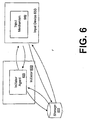
- Fig. 6 shows a data flow diagram illustrating the flow of data consistent with the method of Fig. 5. The steps of the method of Fig. 5 are described in more detail below with reference to the system depicted in Fig. 3 and the data flow diagram of Fig. 6.
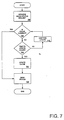
- Fig. 7 illustrates one embodiment of the method of Fig. 5 in which the input device is a scanner.
- Fig. 5 illustrates a method of executing remotely an application to control an input device, such as a scanner, camera, or fax. The steps of the method are illustrated with reference to the systems depicted in Fig. 3 and the data flow diagram of Fig. 6.
- the method begins with the initiation of transmission at an input device (step 505). Initiation may occur, for example, by putting a document on a scanner, turning on a camera, or receiving a signal indicating an incoming fax. Receipt of input data therefore generally begins with the input device 650 of Fig. 6. Input device 650 will convert the received images to digital data and may also store the data to a location in input device 650, or another accessible storage location, such as storage 622. Input device 650 may also accept a list of addresses to which the device would like to transfer the input data (step 510). For example, input device 650 may be a fax machine that accepts a document, converts it to digital data, and allows the user to input various network addresses that would like to receive the faxed information.
- Input device 650 notifies the server that input device 650 has data to transmit by, for example, sending an HTTP request to one or more of the destination addresses, such as client 600 (step 515). If there is no response from the destination device) the destination may be turned off or otherwise unavailable to receive the input data (step 528). The process may revert to error handling or terminate. If the destination device is turned on, but not functioning, the destination device may return a message that it is unavailable. If the destination device is turned off the request may be returned to input device 650 signaling that the destination device is unavailable.
- client 600 is a destination device. If client 600 is available, client 600 receives the HTTP request.
- the request contains such information as image characteristics, file size, and other information about the data. Other information may include, for example, image resolution, image size, and image format (e.g. .jpg, .gif, or compressed).
- Input device 650 and client 600 may exchange a series of queries for information about the data and the capability of the destination device.
- the process may revert to error handling (step 528).
- the request may be rejected if for example, input device 650 wants to send data in a resolution, size, or format that client 600 cannot handle.
- the destination system may get the data from the input device by, for example, initiating an image viewer or using an HTTP "GET" command (step 530). If client 600 is capable of handling the request, but not immediately processing the request, client 600 may wait for some period of time before responding to the request. When client 600 is ready to get the data from input device 650, client agent 625 sends a GET command. In response, input device 650 sends another request to client 600.
- the request may contain, for example, a URL of the location of the data to be retrieved or the network address of input device 650. Client agent 625 of client 600 responds to the request by initiating an HTTP GET command using the information contained in the request.
- the GET request may also include information about the requirements such as the input device, input format type, and other special requirements.
- a user may invoke a browser or custom HTTP client to submit the same information, as in the GET command, or initiate an image viewer that retrieves the data during execution.
- the amount of data that the destination device receives with any one request may depend on the capabilities of the input device for which the job is destined. If, for example, the input device is a serial device, a GET request may obtain only a small block of data. If the input device is a page-oriented device, such as a scanner, the GET request may bring back data one page at a time. Additionally, there are instances where the GET request may copy and bring back the entire input file. If the input device needs to input multiple copies of a large file, for example, the input process may be quicker if the destination client retrieves a copy of the entire input file rather than make multiple requests one page at a time.
- Client 600 receives the data and displayed the image (step 540). If the data needs to be converted, client 600 may convert the data to an appropriate format.
- a client may query an input device for status of the request or an input device may query the destination device for status of the transmission.
- Fig. 7 illustrates the steps of an initiator requesting status and a recipient receiving status reports.
- an initiator makes a status request (step 705) including, for example, job identifier, information contained in the request, or information identifying the location of the destination or input devices.
- a status request may be made in the form of a GET request to a remote device.
- the GET request may also be followed by header information that asks the input device to send only that data that has been modified since the last status request.
- status information may be stored in a status information cache on the input device, the client, or on the network. Frequently contacting an input device for status may interrupt or slow data transfer, particularly if status is checked very frequently.
- Use of a status cache can control interruptions to input devices and improve performance.
- the cache is updated during idle states or when there is an error at the input device that prevents data transfer.
- Another advantage of caching status information is that a system administrator can define the rules for updating the status cache and the frequency of status queries to the input device.
- the recipient may check to see if the status cache contains current status information (step 710). The recipient may, for example, compare the time on the request to see if the cache has been updated since the last status request. If the cache is current, the recipient may send the status information from the cache (step 735).
- the recipient determines whether it is an appropriate time to update the status cache. If not, the recipient may wait for an update (step 715) or send the information that is in the cache (step 735). If, however, the recipient has not queried the initiator in a long time, or if the recipient detects that the initiator is inactive, the recipient may update the cache by querying the initiator for status (step 730).
- the recipient then formats a reply containing the status of the recipient device and transmits the information to the initiator (step 735).
- methods and apparatus consistent with the present invention operate in a network environment having a destination device and an input device.
- transmission of a data file is initiated by an input device, such as a scanner.
- the input device notifies a destination device that new data is ready to be received. If the destination device wants to accept the data, the destination device gets, or "pulls," the data from the input device.
Landscapes
- Engineering & Computer Science (AREA)
- Signal Processing (AREA)
- Computer Networks & Wireless Communication (AREA)
- General Engineering & Computer Science (AREA)
- Human Computer Interaction (AREA)
- Computing Systems (AREA)
- Multimedia (AREA)
- Information Transfer Between Computers (AREA)
- Facsimiles In General (AREA)
- Computer And Data Communications (AREA)
- Data Exchanges In Wide-Area Networks (AREA)
Applications Claiming Priority (2)
| Application Number | Priority Date | Filing Date | Title |
|---|---|---|---|
| US09/329,182 US6988123B2 (en) | 1998-11-06 | 1999-06-10 | Methods and apparatus for remote execution of an application over the internet |
| US329182 | 1999-06-10 |
Publications (2)
| Publication Number | Publication Date |
|---|---|
| EP1059583A2 true EP1059583A2 (de) | 2000-12-13 |
| EP1059583A3 EP1059583A3 (de) | 2003-01-22 |
Family
ID=23284243
Family Applications (1)
| Application Number | Title | Priority Date | Filing Date |
|---|---|---|---|
| EP00304869A Ceased EP1059583A3 (de) | 1999-06-10 | 2000-06-08 | Verfahren und Gerät zur Fernausführung von einer Anwendung über das Internet |
Country Status (3)
| Country | Link |
|---|---|
| US (1) | US6988123B2 (de) |
| EP (1) | EP1059583A3 (de) |
| JP (1) | JP2001043163A (de) |
Families Citing this family (15)
| Publication number | Priority date | Publication date | Assignee | Title |
|---|---|---|---|---|
| FI109951B (fi) * | 1999-12-29 | 2002-10-31 | Valtion Teknillinen | Ohjain ja sen ohjausmenetelmä |
| US7644119B1 (en) * | 2000-02-04 | 2010-01-05 | Canon Kabushiki Kaisha | Computer network scanning |
| US20030048303A1 (en) * | 2001-08-31 | 2003-03-13 | Mesa Christopher A. | Destination direction for push scanning to at least one of multiple destinations |
| US7506048B1 (en) * | 2002-06-05 | 2009-03-17 | Ricoh Co. Ltd. | Method and system for monitoring network connected devices and displaying device status |
| JP2004336487A (ja) * | 2003-05-08 | 2004-11-25 | Ricoh Co Ltd | ファクシミリ装置、プログラム及び記憶媒体 |
| JP2004336453A (ja) * | 2003-05-08 | 2004-11-25 | Ricoh Co Ltd | 複写機、画像処理システム、プログラム及び記憶媒体 |
| US8984118B2 (en) * | 2003-06-30 | 2015-03-17 | Comverse, Ltd. | Automatic messaging client launcher for a communication device |
| EP1829355B1 (de) * | 2004-12-22 | 2017-06-28 | Ricoh Company, Ltd. | Zustandsänderungsbenachrichtigung in ein system zur bereitstellung von bildverarbeitungsdiensten |
| DE602006013128D1 (de) | 2005-06-15 | 2010-05-06 | Solarflare Comm Inc | Empfangen von daten gemäss eines datentransferprotokolls von daten, die ein beliebiges einer mehrzahl von empgangsgeräten gerichtet sind |
| US8010555B2 (en) * | 2006-06-30 | 2011-08-30 | Aperio Technologies, Inc. | System and method for managing images over a network |
| US9762701B1 (en) * | 2009-04-10 | 2017-09-12 | Open Invention Network Llc | System and method for cached streaming application isolation |
| US8218763B2 (en) * | 2009-04-22 | 2012-07-10 | International Business Machines Corporation | Method for ensuring the validity of recovered electronic documents from remote storage |
| JP2012253514A (ja) * | 2011-06-01 | 2012-12-20 | Canon Inc | 画像入力システム、サーバ装置、サーバ装置の制御方法、及び制御プログラム |
| JP6031275B2 (ja) * | 2012-06-28 | 2016-11-24 | キヤノン株式会社 | 画像処理装置及びその制御方法とプログラム |
| FR3025380B1 (fr) * | 2014-08-29 | 2016-12-09 | Sagemcom Documents Sas | Procede de determination d'instants de communication dans un mode de communication synchrone |
Citations (3)
| Publication number | Priority date | Publication date | Assignee | Title |
|---|---|---|---|---|
| EP0835011A1 (de) * | 1996-04-04 | 1998-04-08 | Matsushita Graphic Communication Systems, Inc. | Faksimileübertragungsverfahren und vorrichtung |
| EP0860985A2 (de) * | 1997-02-19 | 1998-08-26 | Canon Kabushiki Kaisha | Datenübertragungsvorrichtung und -verfahren |
| WO1998056163A1 (en) * | 1997-06-02 | 1998-12-10 | Matsushita Graphic Communication Systems, Inc. | Internet facsimile device |
Family Cites Families (28)
| Publication number | Priority date | Publication date | Assignee | Title |
|---|---|---|---|---|
| DE69024753T2 (de) | 1989-10-31 | 1996-05-30 | Hewlett Packard Co | Tragbarer, Ressourcen teilender Datei-Server, der gemeinsame Routines benutzt |
| JP3092135B2 (ja) * | 1990-03-13 | 2000-09-25 | 株式会社日立製作所 | アプリケーシヨン実行制御方法 |
| JPH05292240A (ja) | 1991-09-04 | 1993-11-05 | Canon Inc | スキャナプリンタサーバー及びスキャナプリンタサーバーシステム |
| US5933580A (en) | 1991-09-04 | 1999-08-03 | Canon Kabushiki Kaisha | Scanner printer server |
| US5307490A (en) | 1992-08-28 | 1994-04-26 | Tandem Computers, Inc. | Method and system for implementing remote procedure calls in a distributed computer system |
| JP3332443B2 (ja) * | 1993-01-18 | 2002-10-07 | キヤノン株式会社 | 情報処理装置および情報処理方法 |
| JP3792733B2 (ja) * | 1993-01-18 | 2006-07-05 | キヤノン株式会社 | サーバー装置および制御方法 |
| US5566278A (en) | 1993-08-24 | 1996-10-15 | Taligent, Inc. | Object oriented printing system |
| US5513126A (en) * | 1993-10-04 | 1996-04-30 | Xerox Corporation | Network having selectively accessible recipient prioritized communication channel profiles |
| US5535222A (en) | 1993-12-23 | 1996-07-09 | At&T Corp. | Method and apparatus for controlling a plurality of systems via a boundary-scan port during testing |
| US5862321A (en) * | 1994-06-27 | 1999-01-19 | Xerox Corporation | System and method for accessing and distributing electronic documents |
| US5642501A (en) | 1994-07-26 | 1997-06-24 | Novell, Inc. | Computer method and apparatus for asynchronous ordered operations |
| US5687320A (en) * | 1995-04-27 | 1997-11-11 | Hewlett-Packard Company | Indirect method for network peripheral automated detection |
| US5701451A (en) | 1995-06-07 | 1997-12-23 | International Business Machines Corporation | Method for fulfilling requests of a web browser |
| US5666486A (en) | 1995-06-23 | 1997-09-09 | Data General Corporation | Multiprocessor cluster membership manager framework |
| JP3847882B2 (ja) * | 1996-02-09 | 2006-11-22 | キヤノン株式会社 | 通信装置およびその処理方法 |
| US6185611B1 (en) * | 1998-03-20 | 2001-02-06 | Sun Microsystem, Inc. | Dynamic lookup service in a distributed system |
| US5911044A (en) * | 1996-11-08 | 1999-06-08 | Ricoh Company, Ltd. | Network image scanning system which transmits image information from a scanner over a network to a client computer |
| DE69729169T2 (de) | 1996-12-27 | 2005-06-09 | Canon K.K. | Drucksystem |
| JPH10275063A (ja) | 1997-03-28 | 1998-10-13 | Nec Corp | 低負荷通信プリンタ |
| EP0872792A3 (de) | 1997-04-17 | 2000-04-26 | Adobe Systems, Inc. | Netzwerkkommunikation mit Druckersystem |
| US6184996B1 (en) | 1997-06-18 | 2001-02-06 | Hewlett-Packard Company | Network printer with remote print queue control procedure |
| US6421069B1 (en) * | 1997-07-31 | 2002-07-16 | Sony Corporation | Method and apparatus for including self-describing information within devices |
| US6128279A (en) | 1997-10-06 | 2000-10-03 | Web Balance, Inc. | System for balancing loads among network servers |
| US6437875B1 (en) * | 1997-10-27 | 2002-08-20 | Canon Kabushiki Kaisha | Method of processing data in various applications |
| US6249794B1 (en) * | 1997-12-23 | 2001-06-19 | Adobe Systems Incorporated | Providing descriptions of documents through document description files |
| US6219151B1 (en) * | 1998-08-24 | 2001-04-17 | Hitachi Koki Imaging Solutions, Inc. | Network printing system |
| US6636891B1 (en) * | 1998-11-06 | 2003-10-21 | Seiko Epson Corporation | Methods and apparatus for controlling an input or output device over the internet |
-
1999
- 1999-06-10 US US09/329,182 patent/US6988123B2/en not_active Expired - Fee Related
-
2000
- 2000-06-08 EP EP00304869A patent/EP1059583A3/de not_active Ceased
- 2000-06-09 JP JP2000173556A patent/JP2001043163A/ja active Pending
Patent Citations (3)
| Publication number | Priority date | Publication date | Assignee | Title |
|---|---|---|---|---|
| EP0835011A1 (de) * | 1996-04-04 | 1998-04-08 | Matsushita Graphic Communication Systems, Inc. | Faksimileübertragungsverfahren und vorrichtung |
| EP0860985A2 (de) * | 1997-02-19 | 1998-08-26 | Canon Kabushiki Kaisha | Datenübertragungsvorrichtung und -verfahren |
| WO1998056163A1 (en) * | 1997-06-02 | 1998-12-10 | Matsushita Graphic Communication Systems, Inc. | Internet facsimile device |
Also Published As
| Publication number | Publication date |
|---|---|
| EP1059583A3 (de) | 2003-01-22 |
| US20030055866A1 (en) | 2003-03-20 |
| US6988123B2 (en) | 2006-01-17 |
| JP2001043163A (ja) | 2001-02-16 |
Similar Documents
| Publication | Publication Date | Title |
|---|---|---|
| US6636891B1 (en) | Methods and apparatus for controlling an input or output device over the internet | |
| US6542252B2 (en) | Virtual printer | |
| US9232087B2 (en) | Image processing apparatus for receiving a request relating to image processing from an external source and executing the received request | |
| US8176143B2 (en) | Web service providing apparatus | |
| US8405846B2 (en) | System and method for maintaining a device job history | |
| US6988123B2 (en) | Methods and apparatus for remote execution of an application over the internet | |
| US6535295B1 (en) | Virtual printer with asynchronous job and device status | |
| US5920404A (en) | Method and system for dynamic control of a messaging environment from a facsimile processor | |
| US20100073707A1 (en) | Systems and methods for facilitating virtual cloud printing | |
| US20030090694A1 (en) | Just-in-time printer discovery and driver installation system and method | |
| US20030137693A1 (en) | Service providing system | |
| JP2004129248A (ja) | 画像形成装置およびスキャンデータ処理方法 | |
| JPH10233860A (ja) | データ通信装置及びその方法 | |
| US7457839B2 (en) | Selective rejection of access to parameters of an option application detachable from an embedded apparatus including web server function | |
| EP4174631B1 (de) | Cloud-druckverfahren und cloud-drucksystem | |
| US20050206947A1 (en) | Image output system, client terminal device, image output device, and image output method | |
| JP2009255390A (ja) | 画像形成装置、機能連携制御方法、及び機能連携制御プログラム | |
| JP2001043055A (ja) | プリンタ、プリンタの制御方法およびプリントシステム並びに記録媒体 | |
| GB2390449A (en) | An arrangement in which an unconfigured peripheral sends a request over a network for configuration information | |
| CN116048432A (zh) | 云打印方法、云打印系统 | |
| KR20010011078A (ko) | 네트워크 프린터의 인쇄방법 | |
| JP5046818B2 (ja) | 画像形成装置、画像形成装置内のデータ処理方法、及びデータ処理プログラム | |
| JP4429138B2 (ja) | 暗示アドレス発見を使用して画像形成ジョブを監視するシステム及び方法 | |
| US20060132846A1 (en) | Host computer to multi-function machine faxing through direct access of modem | |
| JP2025005667A (ja) | 通信システムおよび画像形成装置 |
Legal Events
| Date | Code | Title | Description |
|---|---|---|---|
| PUAI | Public reference made under article 153(3) epc to a published international application that has entered the european phase |
Free format text: ORIGINAL CODE: 0009012 |
|
| AK | Designated contracting states |
Kind code of ref document: A2 Designated state(s): AT BE CH CY DE DK ES FI FR GB GR IE IT LI LU MC NL PT SE |
|
| AX | Request for extension of the european patent |
Free format text: AL;LT;LV;MK;RO;SI |
|
| PUAL | Search report despatched |
Free format text: ORIGINAL CODE: 0009013 |
|
| AK | Designated contracting states |
Kind code of ref document: A3 Designated state(s): AT BE CH CY DE DK ES FI FR GB GR IE IT LI LU MC NL PT SE |
|
| AX | Request for extension of the european patent |
Free format text: AL;LT;LV;MK;RO;SI |
|
| 17P | Request for examination filed |
Effective date: 20030708 |
|
| AKX | Designation fees paid |
Designated state(s): AT BE CH CY DE DK ES FI FR GB GR IE IT LI LU MC NL PT SE |
|
| 17Q | First examination report despatched |
Effective date: 20050512 |
|
| STAA | Information on the status of an ep patent application or granted ep patent |
Free format text: STATUS: THE APPLICATION HAS BEEN REFUSED |
|
| 18R | Application refused |
Effective date: 20080221 |