EP1061462A1 - Speichern und auslesen von Visitenkarten-Informationen - Google Patents
Speichern und auslesen von Visitenkarten-Informationen Download PDFInfo
- Publication number
- EP1061462A1 EP1061462A1 EP99306868A EP99306868A EP1061462A1 EP 1061462 A1 EP1061462 A1 EP 1061462A1 EP 99306868 A EP99306868 A EP 99306868A EP 99306868 A EP99306868 A EP 99306868A EP 1061462 A1 EP1061462 A1 EP 1061462A1
- Authority
- EP
- European Patent Office
- Prior art keywords
- card information
- card
- database
- applicant
- code
- Prior art date
- Legal status (The legal status is an assumption and is not a legal conclusion. Google has not performed a legal analysis and makes no representation as to the accuracy of the status listed.)
- Withdrawn
Links
Images





Classifications
-
- G—PHYSICS
- G06—COMPUTING OR CALCULATING; COUNTING
- G06F—ELECTRIC DIGITAL DATA PROCESSING
- G06F16/00—Information retrieval; Database structures therefor; File system structures therefor
Definitions
- the present invention relates to generating a database of name card information and to retrieving information from that database.
- a name card such as a business card, contains information about its owner. For example, it may contain the owner's name, address, and telephone number.
- One problem with such cards is that they become obsolete if any of the information on them changes.
- new name cards had to be printed and distributed manually each time their information changed. This can be a daunting task, especially if a large number of cards are involved.
- the present invention takes advantage of new technologies like the World Wide Web ("Web") to facilitate distribution of name cards.
- a database of name card information is maintained at a Web site.
- the card information includes text/images to be printed on the name card, a card identifier, a classification, and a password.
- the card identifier is a unique number that enables the owner and others to locate the card information in the database.
- the classification defines a level of access to the card information. For example, the card may be classified as "public,” in which case anyone with access to the Web site may have access to the card information. Alternatively, the classification may be "private", in which case only the owner or selected individuals may have access to the card information.
- the password is a character string assigned to the name card, which allows the owner to update and delete the card information.
- a user accesses the Web site (or telephone system) and enters a request for a name card.
- This request typically includes a card identifier and/or other information that may be on the name card, such as a name, address, or telephone number.
- Code at the Web site searches through the database for card information that includes the information entered by the user. Once this information is located, it is retrieved and output to the user. Alternatively, the information can be used to generate and send a message to the owner of the name card.
- the invention eliminates the need to distribute name cards manually each time the owner's information changes. Another benefit is that a person with an outdated name card can easily obtain an up-to-date name card without having to contact the owner. This is particularly advantageous in a business context, where movement between jobs often makes it difficult to keep track of colleagues.
- the invention also facilitates communication with a name card owner.
- a database of name card information is generated by registering an applicant for a name card, receiving card information from the applicant which includes a classification that defines a level of access to the card information, assigning the card information a card identifier (e.g., selected by the user), and assigning the card information a password.
- the card information is stored in the database in association with the card identifier and the password.
- a request is received to update the card information.
- the request includes a password and a card identifier.
- the card information is then located in the database using the received card identifier.
- the password in the request is verified against the password assigned to the card information, and the card information is updated by substituting new card information for corresponding card information in the database.
- the database stores card information for plural name cards.
- a request for a name card is received, which includes a card identifier.
- Card information is located in the database using the received card identifier. It is determined whether to output the located card information based on a classification of the located card information.
- the database stores card information for plural name cards.
- a request for a name card is received, which includes card information.
- the database is searched for card information that corresponds to the card information in the request. Card information that is located by the searching is retrieved from the database. The retrieved card information is then output.
- the request for a name card includes a classification
- the database is searched for card information that has the classification included in the request.
- the card information is output from the database over a network to a computer system, or over telephone lines to a telephone.
- the computer system prints the card information and/or presents a display of the card information which includes a hyperlink corresponding to at least one item of the card information.
- the card information includes one or more of the following: a family name of the applicant, a first name of the applicant, a business and/or home address of the applicant, a company/organization name of the applicant, a title of the applicant, a logo, a business and/or home telephone number of the applicant, a facsimile number (or beeper number, pager number, cellular telephone number) of the applicant, an electronic mail address of the applicant, the card identifier, the classification of the card information, and a language of a name card.
- Card template information is displayed. An input is received from the applicant selecting card template information and containing a card identifier. Card information that corresponds to the card identifier-is retrieved from the database. A name card is then generated based on the selected card template information and the card information.
- the card information is received from the applicant over a network.
- the classification is "private" or "public”.
- a request is received to delete the card information.
- the request includes the card identifier and the password. It is determined if the password is valid, and the card information associated with the card identifier is deleted from the database if the password is valid.
- the invention features a name card management system that includes first and second devices.
- the first device stores a Web browser.
- the second device maintains a Web site that is accessible via the Web browser and stores a database that includes card information for plural name cards.
- the second device also includes a memory which stores code to access the database via the Web site, code to register an applicant for a name card at the first device via the Web site, code to receive card information from the applicant via the Web site, code to assign the card information a password and a card identifier, code to store the card information in the database in association with the card identifier and the password, code to update the card information in the database via the Web site, code to search the database for the card information using the card identifier and/or the password, code to retrieve the card information from the database located by the searching code; and code to output the card information retrieved by the retrieving code.
- the invention features a computer program stored on a computer-readable medium to send a message based on information selected from a database.
- Code in the computer program receives a card identifier and information identifying a selected communication medium. It then searches the database for card information corresponding to the card identifier and the selected communication medium. A message is sent, via the selected communication medium, using the card information.
- Fig. 1 shows a network which includes a name card information database.
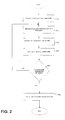
- Fig. 2 shows a process for generating name card information for the database.
- Fig. 3 shows a process for updating the name card information in the database.
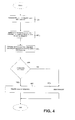
- Fig. 4 shows a process for deleting the name card information from the database.
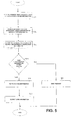
- Fig. 5 shows a process for searching the database.
- Fig. 6 shows a process for sending a message using name card information in the database.
- Fig. 7 shows a name card.
- Fig. 8 shows a name card record in the database.
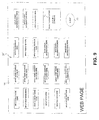
- Fig. 9 shows a Web page for inputting name card information.
- Fig. 10 shows a Web page for displaying a name card.
- Fig. 1 shows a network 1, on which an embodiment of the invention is implemented.
- Network 1 may be any kind of network, such as the Internet or a local area network. Included on network 1 are host 2 and central computer 4.
- Host 2 is a personal computer ("PC") or similar device that is capable of communicating over network 1. Included in host 2 are the following: network connection 5 for interfacing to network 1, display screen 6 for displaying information to a user, keyboard 7 for inputting text and commands, mouse 9 for positioning a cursor on display screen 6 and inputting user commands, and drive 10 for accessing data stored on a computer-readable storage medium such as a computer diskette, a CD-ROM, or a DVD.
- Printer 11 is connected to host 2 for printing text and images output from host 2
- modem 12 is connected to host 2 for communicating over telephone lines 14.
- View 15 shows the architecture of host 2. Included in host 2 are keyboard interface 16, mouse interface 17, display interface 19, drive interface 20, RAM 21, processor 22, printer interface 24, modem interface 25, and memory 26.
- Memory 26 stores an operating system 27, such as Microsoft® Windows98®; a Web browser 29, such as Netscape® Navigator®, for accessing Web sites; a printer driver 30 for controlling printer 11; software 31 for communicating with modem 12; and network communication software 32.
- Network communication software 32 includes code for a TCP/IP ("Transmission Control Protocol/Internet Protocol”) protocol stack used in communicating over network 1.
- TCP/IP Transmission Control Protocol/Internet Protocol
- Central computer 4 may be a PC, a mainframe computer, or any other device that is capable of communicating with host 2 over network 1.
- Computer 4 includes a network interface 34 for exchanging network communications and a telephone line interface 35 for exchanging telephone line communications.
- Computer 4 also includes an internal modem 36, RAM 37, memory 39 which stores database 40 and code 41, and processor 42 for executing code 41 out of RAM 37 (see view 44). Included in code 41 is network communication software 45 (same as above); Web server 46 for maintaining a Web site at computer 4 and for outputting Web pages over network 1; and name card manager 47 for executing the processes of Figs. 2 to 6 to generate, update, search through, retrieve, and delete information from database 40, and to send messages using that information.
- code 41 includes network communication software 45 (same as above); Web server 46 for maintaining a Web site at computer 4 and for outputting Web pages over network 1; and name card manager 47 for executing the processes of Figs. 2 to 6 to generate, update, search through, retrieve, and delete information from database 40, and to send messages using that information.
- Database 40 stores name card information 49, such as text and images to be printed on "sustainable" name cards.
- Fig. 7 shows an example of a name card 50
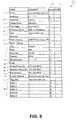
- Fig. 8 shows a name card record 51 (in database 40) which includes information for that name card.
- record 51 includes a family name (surname) of the name card's owner 52, his first name 53, home address 54, business address 55, company/ organization name 56, title 57 (at the company), company logo 58, business telephone number 59, home telephone number 60, facsimile number 61, company Web site URL 62 ("uniform resource locator"), electronic mail address 63, a language of the resulting name card such as English, French, Mandarin Chinese, or Japanese (card 50 is in English ⁇ "E" 64 ⁇ ), and "other" rows 65 for other information.
- name card information 49 such as text and images to be printed on "sustainable" name cards.
- Fig. 7 shows an example of a name card 50
- Fig. 8 shows a name card record 51 (in database
- Flag column 66 determines whether information is to be printed out on a name card. A "1" indicates that the information is to be printed. A “0" indicates that the information is not to be printed. These values may be changed as described below. Notes column 67 may be used to provide information pertaining to each entry in 51.
- Card identifier 70 is a unique character sequence, for example a number, that identifies the card information in record 51. Card identifier 70 is available to the public via computer 4's Web site and is printed out on the name card.
- Password 69 is also a character string that is unique to record 51; however, password 69 is generally not available to the public. Rather, it is maintained in secrecy by the name card's owner and is used to change or delete record 51 (see Figs. 3 and 4).
- Classification 71 indicates the level of access to the name card associated with record 51.
- name cards may be "private", in which case only the owner (or at least someone with access to the password) may have access, or "public", in which case anyone with the card identifier may have access. Additional classification levels may also be provided. Numbers 13 in record 51 correspond to the various classification levels.
- Fig. 2 shows a process for generating database 40.
- name card manager 47 registers (201) an applicant for a name card from host 2. This may be done by providing a Web page to host 2. An example of such a Web page is shown in Fig. 9.
- Web page 74 is a form with fields 75 to enter name card information and to select a classification 71. Clicking-on SUBMIT button 77 causes selected information to be transmitted to computer 4's Web site.
- manager 47 receives the information in (202). Manager 47 assigns (203) a unique card identifier and password to the name card information and organizes the information, card identifier, and password into a record such as that shown in Fig. 8. In the record, fields of page 74 that were left blank are assigned "0"; others "1".
- the applicant is also given the opportunity to select the layout of the card. For example, the applicant may select from various card templates (not shown) on Web page 74. Alternatively, the applicant may be prompted to select a layout after manager 47 constructs the record. If no layout is selected, a default layout will be provided. In any event, whichever layout is used is stored in association with record 51 in database 40.
- manager 47 outputs a Web page 79 (Fig. 10) to host 2.
- Web page 79 presents (204) a display of name card 50 as it will look when it is printed.
- the displayed name card may include hyperlinks for appropriate card information, such as a Web site and electronic mail address. If, after viewing the displayed card, the applicant determines (205) that it is acceptable, the applicant may hit a CONFIRM button 80, in which case a confirmation message is sent to manager 47. Manager 47 then stores (206) the record in database 40. If the card is not acceptable to the applicant, manager 47 repeats (201) to (205).
- the applicant may wish to update his name card.
- This process is shown in Fig. 3.
- the applicant retrieves Web page 74 (Fig. 9), enters the necessary information, including the identifier and the password of the card to be updated, and clicks on SUBMIT button 77. Since the record exists, the information entered into Web page 74 constitutes a request to update the record.
- Manager 47 receives (301) this request and searches (302) database 40 to locate the record based on the input card identifier. Once the record has been located, manager 47 retrieves the password therefrom and determines (303) if the retrieved password matches the input password.
- manager 47 substitutes (305) the new card information from the request for corresponding card information in the database. A confirmation process similar to that of Fig. 2 may then be executed. If the password has not been verified in (304), manager 47 denies (306) the request to update the record.
- denial may mean may simply ignoring the request or sending a message to the applicant indicating a denial.
- manager 47 receives a request to delete a record.
- This request will include both a card identifier to identify the record to be deleted and a password to confirm that the requestor has the authority to delete the record.
- the request may be issued via a DELETE RECORD button (not shown) on Web page 74 or by any other means.
- manager 47 searches (402) database 40 to locate card information (a record) that includes the card identifier in the request. Manager 47 retrieves the password from the located record and determines (403) if the retrieved password matches the input password. If so (404), manager 47 deletes (405) the record. If not (404), manager 47 denies (406) the request.
- Figs. 2 to 4 describe a name card owner/applicant accessing a name card in database 40. Others, however, may also access name cards in database 40.
- manager 47 receives 501 a request for a name card.
- the request can be entered from Web page 74 (Fig. 9) or by other means. It may include a card identifier and/or other card information, such as a name, address or classification.
- manager 47 searches (502) through database 40 using the card information in the request. Specifically, manager 47 searches through the fields of records stored in database 40 for information that matches the information in the request. Searching for information such as classification will cause records for all cards that include that information to be retrieved.
- manager 47 locates (503) the matching record or records, it retrieves the classification information therefrom in order to determine whether the requestor has access to the name card(s) represented by those records. If the requestor does not have access (504) (for example, if the classification indicates "private” and a password is not provided in the request), the request is denied (505). If the requestor does have access (504) (for example, the classification indicates "public"), manager 47 retrieves (506) the card information from record 51 and the layout (template) information associated therewith.
- Manager 47 then outputs (507) the card information.
- a Web page (see Fig 10) may be constructed, which presents a display of the card, and sent to host 2. From there, the card may be printed on printer 11.
- Manager 47 may also send a message using card information retrieved from database 40.
- Fig. 6 shows a process for doing this.
- manager 47 receives (601) a request to send a message.
- the request may be input via a Web page (not shown), and includes a card identifier and a medium of communication to/over which the message is to be sent. Examples of communication media include a telephone, a facsimile machine, a beeper, a cellular telephone, electronic mail, and a pager.
- manager 47 searches database 40 for card information corresponding to the card identifier in the request. The searching here is performed in the same manner as described above. If no corresponding record is found 603, the request is denied in (604). If a corresponding record is found (603), manager 47 searches (605) the record for card information that corresponds to the selected communication medium. For example, if the selected communication medium is electronic mail, manager 47 searches the card information for an electronic mail address. Similarly, if the selected communication medium is a telephone, manager 47 searches the record for a telephone number.
- an appropriate message is generated in (607) (otherwise the request is denied (604)). For example, an electronic mail may be generated which provides the electronic mail address of the requestor. Similarly, a voice message may be generated which provides the telephone number of the requestor. The content of the message may be specified in the request.
- Manager 47 then sends (608) the message.
- the medium over which the message is sent (for example, network 1 or telephone lines 14) depends upon the communication media indicated the request. For example, if a facsimile machine or a beeper is indicated in the request, manager 47 sends the message over telephone lines 14. Alternatively, if electronic mail is indicated in the request, manager 47 sends the request over network 1.
- Figs 2 to 6 may be implemented using a telephone as the input/output medium.
- a touchtone telephone may be used to access computer 4 via telephone lines 14.
- manager 47 will generate speech prompts instructing the user to select/input the required information.
- manager 47 instead of displaying the name card as in Web page 79, for example, manager 47 will simply recite its contents to the user over the telephone. Otherwise, the functionality of the system is essentially the same as described above.
- the invention is not limited to the specific hardware and software configurations set forth above, or to the communications media specified.
- the host 2 and computer 4 could exchange information via wireless media.
- the invention is not limited to managing the specific information set forth above, and could even be used outside the context of name cards to manage other types of related information.
- passwords and card identifiers are assigned by a name card manager.
- applicants or users can choose the card identifier, preferably one easily remembered.
Landscapes
- Engineering & Computer Science (AREA)
- Theoretical Computer Science (AREA)
- Data Mining & Analysis (AREA)
- Databases & Information Systems (AREA)
- Physics & Mathematics (AREA)
- General Engineering & Computer Science (AREA)
- General Physics & Mathematics (AREA)
- Storage Device Security (AREA)
- Information Transfer Between Computers (AREA)
Applications Claiming Priority (2)
| Application Number | Priority Date | Filing Date | Title |
|---|---|---|---|
| US33558599A | 1999-06-18 | 1999-06-18 | |
| US335585 | 1999-06-18 |
Publications (1)
| Publication Number | Publication Date |
|---|---|
| EP1061462A1 true EP1061462A1 (de) | 2000-12-20 |
Family
ID=23312385
Family Applications (1)
| Application Number | Title | Priority Date | Filing Date |
|---|---|---|---|
| EP99306868A Withdrawn EP1061462A1 (de) | 1999-06-18 | 1999-08-27 | Speichern und auslesen von Visitenkarten-Informationen |
Country Status (1)
| Country | Link |
|---|---|
| EP (1) | EP1061462A1 (de) |
Cited By (5)
| Publication number | Priority date | Publication date | Assignee | Title |
|---|---|---|---|---|
| WO2002075588A1 (en) * | 2001-03-21 | 2002-09-26 | Inter China Network Software Company Limited | System and method of personal and business web cards |
| DE102015002925A1 (de) | 2015-03-06 | 2016-09-08 | Bernd Werner | Datenverarbeitungsverfahren und Strukturierung der Datenbasis für im Internet verteilte Ressourcen ohne zentrales Management |
| CN108881592A (zh) * | 2018-06-06 | 2018-11-23 | 张彬 | 通信号码解析方法、装置及用户终端 |
| CN110096510A (zh) * | 2019-04-09 | 2019-08-06 | 上海车轮互联网服务有限公司 | 教练信息处理方法及装置 |
| CN110858198A (zh) * | 2018-08-23 | 2020-03-03 | 林开成 | 撷取联系人信息的系统、非暂时性计算机可读介质和方法 |
Citations (2)
| Publication number | Priority date | Publication date | Assignee | Title |
|---|---|---|---|---|
| US5600827A (en) * | 1993-05-18 | 1997-02-04 | Seiko Epson Corporation | Data management, display, and retrival system for a hierarchical collection |
| WO1997036233A1 (en) * | 1996-03-22 | 1997-10-02 | Athena Telecom Lab, Inc. | Method for providing information, method for preparing initial information, and device and recording medium used therefor |
-
1999
- 1999-08-27 EP EP99306868A patent/EP1061462A1/de not_active Withdrawn
Patent Citations (2)
| Publication number | Priority date | Publication date | Assignee | Title |
|---|---|---|---|---|
| US5600827A (en) * | 1993-05-18 | 1997-02-04 | Seiko Epson Corporation | Data management, display, and retrival system for a hierarchical collection |
| WO1997036233A1 (en) * | 1996-03-22 | 1997-10-02 | Athena Telecom Lab, Inc. | Method for providing information, method for preparing initial information, and device and recording medium used therefor |
Cited By (7)
| Publication number | Priority date | Publication date | Assignee | Title |
|---|---|---|---|---|
| WO2002075588A1 (en) * | 2001-03-21 | 2002-09-26 | Inter China Network Software Company Limited | System and method of personal and business web cards |
| DE102015002925A1 (de) | 2015-03-06 | 2016-09-08 | Bernd Werner | Datenverarbeitungsverfahren und Strukturierung der Datenbasis für im Internet verteilte Ressourcen ohne zentrales Management |
| CN108881592A (zh) * | 2018-06-06 | 2018-11-23 | 张彬 | 通信号码解析方法、装置及用户终端 |
| CN108881592B (zh) * | 2018-06-06 | 2020-07-10 | 长沙炫笔记通信科技有限公司 | 通信号码解析方法、装置及用户终端 |
| CN110858198A (zh) * | 2018-08-23 | 2020-03-03 | 林开成 | 撷取联系人信息的系统、非暂时性计算机可读介质和方法 |
| CN110858198B (zh) * | 2018-08-23 | 2023-08-29 | 林开成 | 撷取联系人信息的系统、非暂时性计算机可读介质和方法 |
| CN110096510A (zh) * | 2019-04-09 | 2019-08-06 | 上海车轮互联网服务有限公司 | 教练信息处理方法及装置 |
Similar Documents
| Publication | Publication Date | Title |
|---|---|---|
| KR100473086B1 (ko) | 네트워크상의 정보 액세스 방법 및 시스템 | |
| US6778988B2 (en) | Method and apparatus for delivering a web page to a client device based on printed publications and publisher controlled links | |
| JP4036333B2 (ja) | 送信側メールサーバ、受信側メールサーバ、電子メールシステム、署名データ管理方法、およびプログラム | |
| US6212522B1 (en) | Searching and conditionally serving bookmark sets based on keywords | |
| RU2245577C2 (ru) | Электронная доска объявлений и почтовый сервер | |
| US20020047868A1 (en) | Electronic bulletin board and bulletin board system | |
| US20060112081A1 (en) | Storing searches in an e-mail folder | |
| US20130018859A1 (en) | Contact Management System and Method | |
| US20080080017A1 (en) | System, apparatus and method for document management | |
| WO2000057298A2 (en) | Apparatus and method for providing a business card web page | |
| WO2002075588A1 (en) | System and method of personal and business web cards | |
| US20040030567A1 (en) | Information processing apparatus and information processing program | |
| WO2002023343A1 (en) | Web browser for limiting access to content on the internet | |
| JP2002032611A (ja) | 手続管理システム | |
| WO2002084521A1 (en) | Global network and privacy control of web card systems and method thereof | |
| JPH10187542A (ja) | 文書セキュリティ管理システムおよび方法 | |
| US20020157014A1 (en) | Privacy control system for personal information card system and method thereof | |
| US8203735B2 (en) | Content managing system | |
| JP2002073619A (ja) | 電子文書掲示システム | |
| US20050086194A1 (en) | Information reference apparatus, information reference system, information reference method, information reference program and computer readable information recording medium | |
| JP2000348052A (ja) | サイトマップ提供システム、装置及び方法、並びに記録媒体 | |
| JP2007183954A (ja) | ログコンテントに基づく洗練方法 | |
| KR100336115B1 (ko) | 하부 도메인 서비스 방법 및 그 시스템 | |
| JP2001014351A (ja) | 名刺情報の蓄積及び取り出し方法 | |
| US20040181751A1 (en) | Reference material integration with courses in learning management systems (LMS) |
Legal Events
| Date | Code | Title | Description |
|---|---|---|---|
| PUAI | Public reference made under article 153(3) epc to a published international application that has entered the european phase |
Free format text: ORIGINAL CODE: 0009012 |
|
| 17P | Request for examination filed |
Effective date: 19990916 |
|
| AK | Designated contracting states |
Kind code of ref document: A1 Designated state(s): DE FR GB |
|
| AX | Request for extension of the european patent |
Free format text: AL;LT;LV;MK;RO;SI |
|
| 17Q | First examination report despatched |
Effective date: 20010528 |
|
| AKX | Designation fees paid |
Free format text: DE FR GB |
|
| STAA | Information on the status of an ep patent application or granted ep patent |
Free format text: STATUS: THE APPLICATION IS DEEMED TO BE WITHDRAWN |
|
| 18D | Application deemed to be withdrawn |
Effective date: 20011009 |