EP1063002A2 - Katalysator und Verfahren zur Entfernung von Organohalogenverbindungen - Google Patents
Katalysator und Verfahren zur Entfernung von Organohalogenverbindungen Download PDFInfo
- Publication number
- EP1063002A2 EP1063002A2 EP00112959A EP00112959A EP1063002A2 EP 1063002 A2 EP1063002 A2 EP 1063002A2 EP 00112959 A EP00112959 A EP 00112959A EP 00112959 A EP00112959 A EP 00112959A EP 1063002 A2 EP1063002 A2 EP 1063002A2
- Authority
- EP
- European Patent Office
- Prior art keywords
- catalyst
- range
- pores
- group
- oxide
- Prior art date
- Legal status (The legal status is an assumption and is not a legal conclusion. Google has not performed a legal analysis and makes no representation as to the accuracy of the status listed.)
- Granted
Links
Images


Classifications
-
- B—PERFORMING OPERATIONS; TRANSPORTING
- B01—PHYSICAL OR CHEMICAL PROCESSES OR APPARATUS IN GENERAL
- B01J—CHEMICAL OR PHYSICAL PROCESSES, e.g. CATALYSIS OR COLLOID CHEMISTRY; THEIR RELEVANT APPARATUS
- B01J23/00—Catalysts comprising metals or metal oxides or hydroxides, not provided for in group B01J21/00
- B01J23/38—Catalysts comprising metals or metal oxides or hydroxides, not provided for in group B01J21/00 of noble metals
- B01J23/54—Catalysts comprising metals or metal oxides or hydroxides, not provided for in group B01J21/00 of noble metals combined with metals, oxides or hydroxides provided for in groups B01J23/02 - B01J23/36
- B01J23/56—Platinum group metals
- B01J23/64—Platinum group metals with arsenic, antimony, bismuth, vanadium, niobium, tantalum, polonium, chromium, molybdenum, tungsten, manganese, technetium or rhenium
-
- B—PERFORMING OPERATIONS; TRANSPORTING
- B01—PHYSICAL OR CHEMICAL PROCESSES OR APPARATUS IN GENERAL
- B01J—CHEMICAL OR PHYSICAL PROCESSES, e.g. CATALYSIS OR COLLOID CHEMISTRY; THEIR RELEVANT APPARATUS
- B01J21/00—Catalysts comprising the elements, oxides, or hydroxides of magnesium, boron, aluminium, carbon, silicon, titanium, zirconium, or hafnium
- B01J21/06—Silicon, titanium, zirconium or hafnium; Oxides or hydroxides thereof
- B01J21/063—Titanium; Oxides or hydroxides thereof
-
- B—PERFORMING OPERATIONS; TRANSPORTING
- B01—PHYSICAL OR CHEMICAL PROCESSES OR APPARATUS IN GENERAL
- B01D—SEPARATION
- B01D53/00—Separation of gases or vapours; Recovering vapours of volatile solvents from gases; Chemical or biological purification of waste gases, e.g. engine exhaust gases, smoke, fumes, flue gases, aerosols
- B01D53/34—Chemical or biological purification of waste gases
- B01D53/74—General processes for purification of waste gases; Apparatus or devices specially adapted therefor
- B01D53/86—Catalytic processes
- B01D53/8659—Removing halogens or halogen compounds
- B01D53/8662—Organic halogen compounds
-
- B—PERFORMING OPERATIONS; TRANSPORTING
- B01—PHYSICAL OR CHEMICAL PROCESSES OR APPARATUS IN GENERAL
- B01J—CHEMICAL OR PHYSICAL PROCESSES, e.g. CATALYSIS OR COLLOID CHEMISTRY; THEIR RELEVANT APPARATUS
- B01J21/00—Catalysts comprising the elements, oxides, or hydroxides of magnesium, boron, aluminium, carbon, silicon, titanium, zirconium, or hafnium
- B01J21/06—Silicon, titanium, zirconium or hafnium; Oxides or hydroxides thereof
-
- B—PERFORMING OPERATIONS; TRANSPORTING
- B01—PHYSICAL OR CHEMICAL PROCESSES OR APPARATUS IN GENERAL
- B01J—CHEMICAL OR PHYSICAL PROCESSES, e.g. CATALYSIS OR COLLOID CHEMISTRY; THEIR RELEVANT APPARATUS
- B01J23/00—Catalysts comprising metals or metal oxides or hydroxides, not provided for in group B01J21/00
- B01J23/16—Catalysts comprising metals or metal oxides or hydroxides, not provided for in group B01J21/00 of arsenic, antimony, bismuth, vanadium, niobium, tantalum, polonium, chromium, molybdenum, tungsten, manganese, technetium or rhenium
- B01J23/20—Vanadium, niobium or tantalum
- B01J23/22—Vanadium
-
- B—PERFORMING OPERATIONS; TRANSPORTING
- B01—PHYSICAL OR CHEMICAL PROCESSES OR APPARATUS IN GENERAL
- B01J—CHEMICAL OR PHYSICAL PROCESSES, e.g. CATALYSIS OR COLLOID CHEMISTRY; THEIR RELEVANT APPARATUS
- B01J23/00—Catalysts comprising metals or metal oxides or hydroxides, not provided for in group B01J21/00
- B01J23/16—Catalysts comprising metals or metal oxides or hydroxides, not provided for in group B01J21/00 of arsenic, antimony, bismuth, vanadium, niobium, tantalum, polonium, chromium, molybdenum, tungsten, manganese, technetium or rhenium
- B01J23/24—Chromium, molybdenum or tungsten
- B01J23/28—Molybdenum
-
- B—PERFORMING OPERATIONS; TRANSPORTING
- B01—PHYSICAL OR CHEMICAL PROCESSES OR APPARATUS IN GENERAL
- B01J—CHEMICAL OR PHYSICAL PROCESSES, e.g. CATALYSIS OR COLLOID CHEMISTRY; THEIR RELEVANT APPARATUS
- B01J35/00—Catalysts, in general, characterised by their form or physical properties
- B01J35/60—Catalysts, in general, characterised by their form or physical properties characterised by their surface properties or porosity
- B01J35/61—Surface area
- B01J35/613—10-100 m2/g
-
- B—PERFORMING OPERATIONS; TRANSPORTING
- B01—PHYSICAL OR CHEMICAL PROCESSES OR APPARATUS IN GENERAL
- B01J—CHEMICAL OR PHYSICAL PROCESSES, e.g. CATALYSIS OR COLLOID CHEMISTRY; THEIR RELEVANT APPARATUS
- B01J35/00—Catalysts, in general, characterised by their form or physical properties
- B01J35/60—Catalysts, in general, characterised by their form or physical properties characterised by their surface properties or porosity
- B01J35/63—Pore volume
- B01J35/633—Pore volume less than 0.5 ml/g
-
- B—PERFORMING OPERATIONS; TRANSPORTING
- B01—PHYSICAL OR CHEMICAL PROCESSES OR APPARATUS IN GENERAL
- B01J—CHEMICAL OR PHYSICAL PROCESSES, e.g. CATALYSIS OR COLLOID CHEMISTRY; THEIR RELEVANT APPARATUS
- B01J35/00—Catalysts, in general, characterised by their form or physical properties
- B01J35/60—Catalysts, in general, characterised by their form or physical properties characterised by their surface properties or porosity
- B01J35/66—Pore distribution
-
- B—PERFORMING OPERATIONS; TRANSPORTING
- B01—PHYSICAL OR CHEMICAL PROCESSES OR APPARATUS IN GENERAL
- B01J—CHEMICAL OR PHYSICAL PROCESSES, e.g. CATALYSIS OR COLLOID CHEMISTRY; THEIR RELEVANT APPARATUS
- B01J35/00—Catalysts, in general, characterised by their form or physical properties
- B01J35/60—Catalysts, in general, characterised by their form or physical properties characterised by their surface properties or porosity
- B01J35/66—Pore distribution
- B01J35/69—Pore distribution bimodal
-
- B—PERFORMING OPERATIONS; TRANSPORTING
- B01—PHYSICAL OR CHEMICAL PROCESSES OR APPARATUS IN GENERAL
- B01J—CHEMICAL OR PHYSICAL PROCESSES, e.g. CATALYSIS OR COLLOID CHEMISTRY; THEIR RELEVANT APPARATUS
- B01J37/00—Processes, in general, for preparing catalysts; Processes, in general, for activation of catalysts
- B01J37/0009—Use of binding agents; Moulding; Pressing; Powdering; Granulating; Addition of materials ameliorating the mechanical properties of the product catalyst
- B01J37/0018—Addition of a binding agent or of material, later completely removed among others as result of heat treatment, leaching or washing,(e.g. forming of pores; protective layer, desintegrating by heat)
-
- B—PERFORMING OPERATIONS; TRANSPORTING
- B01—PHYSICAL OR CHEMICAL PROCESSES OR APPARATUS IN GENERAL
- B01J—CHEMICAL OR PHYSICAL PROCESSES, e.g. CATALYSIS OR COLLOID CHEMISTRY; THEIR RELEVANT APPARATUS
- B01J35/00—Catalysts, in general, characterised by their form or physical properties
- B01J35/50—Catalysts, in general, characterised by their form or physical properties characterised by their shape or configuration
- B01J35/56—Foraminous structures having flow-through passages or channels, e.g. grids or three-dimensional [3D] monoliths
- B01J35/57—Honeycombs
Definitions
- the present invention relates to a catalyst and a process for removing organohalogen compounds such as dioxins.
- Exhaust gases from incineration facilities for disposing of industrial wastes and city wastes contain trace amounts of poisonous organohalogen compounds such as dioxins, PCB and chlorophenols. Particularly, the dioxins are extremely poisonous even in very small quantities and have a serious influence on human bodies. Therefore, a technology for removing the dioxins is desired to be developed as quickly as possible.
- the organohalogen compounds are chemically extremely stable.
- the dioxins are substances so difficult to decompose that they are said to semipermanently remain in the world of nature.
- their contents in the exhaust gases are very small, it is difficult to efficiently remove them with conventional catalysts for disposing of exhaust gases.
- the present applicant verified that a catalyst comprising titanium oxide was fundamentally effective, and then the applicant found that decomposition reactions of organohalogen compounds could be promoted by well diffusing dilute components of exhaust gases by improving physical properties, specifically, pore diameter distribution, and further, pore volume, of the above catalyst.
- the present applicant developed the undermentioned two kinds of catalysts to file a patent application thereof (Japanese Patent Application No. 09-358146).
- An object of the present invention is to provide: a catalyst which has more excellent removability upon organohalogen compounds and is suitable for removing the organohalogen compounds from exhaust gases; and a process for removing organohalogen compounds with this catalyst.
- the present inventors sought for a new catalytic component to achieve the above object. As a result, they completed the present invention, relating to a catalyst for removing organohalogen compounds and a usage of this catalyst, by finding that an oxide of at least one metal selected from the group consisting of manganese, cobalt, nickel, zinc, zirconium, niobium, molybdenum, tin, tantalum, lanthanum and cerium was effective.
- a first catalyst for removing organohalogen compounds comprises titanium oxide (TiO 2 ) and vanadium oxide as catalytic components, and has pores that includes a group of pores having a pore diameter distribution peak in the range of 0.01 to 0.05 ⁇ m and another group of pores having a pore diameter distribution peak in the range of 0.1 to 0.8 ⁇ m, and this catalyst is characterized by further comprising an oxide of at least one metal selected from the group consisting of manganese, cobalt, nickel, zinc, zirconium, niobium, molybdenum, tin, tantalum, lanthanum and cerium as another catalytic component.
- a second catalyst for removing organohalogen compounds (hereinafter referred to simply as "second catalyst"), according to the present invention, is characterized by comprising titanium oxide (TiO 2 ), a titanium-silicon composite oxide (TiO 2 -SiO 2 ), vanadium oxide and an oxide of at least one metal selected from the group consisting of manganese, cobalt, nickel, zinc, zirconium, niobium, molybdenum, tin, tantalum, lanthanum and cerium as catalytic components.
- a process for removing organohalogen compounds comprises the step of bringing an exhaust gas into contact with either one or both of the above catalysts according to the present invention, wherein the exhaust gas contains organohalogen compounds.
- the first and second catalysts both comprise titanium oxide (TiO 2 ) as a main component of the catalytic components.
- the second catalyst further comprises a titanium-silicon composite oxide (TiO 2 -SiO 2 , hereinafter referred to as "Ti-Si composite oxide") as a second main component of the catalytic components.
- the titanium oxide itself has a high decomposing activity upon organohalogen compounds.
- the Ti-Si composite oxide also has a high decomposing activity upon organohalogen compounds, and further, is excellent also in the adsorbency upon the organohalogen compounds because the Ti-Si composite oxide is amorphous and therefore has a large specific surface area and further exhibits peculiar solid acidity. It is considered that close mixing of these two kinds of oxides exhibiting properties different from each other makes synergistic effects from interaction between these oxides, with the result that a catalyst having excellent decomposability upon organohalogen compounds is formed.
- the content of the Ti-Si composite oxide in the second catalyst is preferably in the range of 0.01 to 7 times by weight, more preferably 0.05 to 3 times by weight, of the titanium oxide.
- the content of the Ti-Si composite oxide in the second catalyst is either more or less than the above-mentioned ranges, individual properties of the titanium oxide and the Ti-Si composite oxide are merely obtained, and further, the ability to dispose of exhaust gases is deteriorated because no aimed catalytic physical property is obtained.
- both inorganic and organic compounds as well as titanium oxide can be used if they produce titanium oxide by calcining.
- the usable compound include: inorganic titanium compounds such as titanium tetrachloride and titanium sulfate; and organic titanium compounds such as titanium oxalate and tetraisopropyl titanate.
- the titanium source used for the preparation of the above Ti-Si composite oxide any of the above-mentioned inorganic and organic compounds can be used.
- the silicon source can fitly be selected from the group consisting of: inorganosilicon compounds such as colloidal silica, water glass, fine particle silicon, and silicon tetrachloride; and organosilicon compounds such as tetraethyl silicate.
- the above Ti-Si composite oxide for example, can be prepared by any one of the following processes (a) to (d):
- the process (a) is particularly preferred. More specifically, the silicon source and aqueous ammonia are placed into a vessel such that the molar ratio therebetween will be a predetermined value, and then an acidic aqueous solution or sol which is a titanium source (acidic aqueous solution or sol having a concentration of 1 to 100 g/liter (the titanium source is calculated as TiO 2 )) is dropwise added into the vessel which is maintained in the range of 10 to 100°C, and the resultant mixture is maintained in the pH range of 2 to 10 for from 10 minutes up to 3 hours so as to produce a coprecipitate of titanium and silicon, and this coprecipitate is filtered off, and then sufficiently washed, and then dried in the range of 80 to 140°C for from 10 minutes up to 3 hours, and then calcined in the range of 300 to 700°C for 1 to 10 hours, with the result that the aimed Ti-Si composite oxide can be obtained.
- an acidic aqueous solution or sol which is a titanium source acidic
- the first and second catalysts both comprise vanadium oxide as a first subcomponent of the catalytic components preferably in the ratio of 0.1 to 25 weight %, more preferably 1 to 15 weight %, of the aforementioned main component (the titanium oxide in the case of the first catalyst, and the total of the titanium oxide and the Ti-Si composite oxide in the case of the second catalyst), and further comprise an oxide of at least one metal selected from the group consisting of manganese, cobalt, nickel, zinc, zirconium, niobium, molybdenum, tin, tantalum, lanthanum and cerium (hereinafter referred to simply as "metal oxide”) as a second subcomponent of the catalytic components preferably in the ratio of 0.1 to 25 weight %, more preferably 1 to 15 weight %, of the aforementioned main component.
- metal oxide manganese, cobalt, nickel, zinc, zirconium, niobium, molybdenum, tin, tantalum, lan
- the source of the vanadium oxide or metal oxide not only these oxides themselves, but also both inorganic and organic compounds can be used if they produce the above oxides by calcining.
- the usable compound include hydroxides, ammonium salts, oxalates, halides, sulfates, and nitrates containing each metal element of the above oxides.
- the first catalyst comprises the above-mentioned catalytic components, and has pores that includes a group of pores having a pore diameter distribution peak in the range of 0.01 to 0.05 ⁇ m (this group of pores might hereinafter be referred to as "first group of pores”) and another group of pores having a pore diameter distribution peak in the range of 0.1 to 0.8 ⁇ m (this group of pores might hereinafter be referred to as "second group of pores").
- the second catalyst comprises the above-mentioned catalytic components, and preferably has pores that includes a group of pores having a pore diameter distribution peak in the range of 0.01 to 0.05 ⁇ m (this group of pores might hereinafter be referred to as "first group of pores”) and another group of pores having a pore diameter distribution peak in the range of 0.8 to 4 ⁇ m (this group of pores might hereinafter be referred to as "third group of pores").
- the pores of the catalyst according to the present invention have two pore diameter distribution peaks which are substantially independent of each other, and further, the pore diameter distribution of each group of pores having each of the above peaks is narrow and substantially uniform.
- the pore diameter distribution is permitted not to be substantially uniform, but to have a shoulder at the foot of its peak.
- a catalyst having pores with a substantially uniform pore diameter distribution is particularly favorably used.
- the catalyst according to the present invention has a total pore volume in the range of 0.2 to 0.6 cc/g as measured by a mercury injection method.
- the pore volume of the first group of pores is in the range of 10 to 70 % of the total pore volume, and that of the second group of pores is in the range of 10 to 70 % of the total pore volume.
- the pore volume of the first group of pores is in the range of 20 to 80 % of the total pore volume, and that of the third group of pores is in the range of 5 to 70 % of the total pore volume.
- the catalyst according to the present invention has an average particle diameter preferably in the range of 0.001 to 100 ⁇ m, more preferably in the range 0.01 to 100 ⁇ m.
- the catalyst according to the present invention has a specific surface area preferably in the range of 30 to 250 m 2 /g, more preferably 40 to 200 m 2 /g, as measured by the BET method.
- a catalyst which is preferably used among the first catalysts comprises titanium oxide, vanadium oxide, and the metal oxide as catalytic components, and has a total pore volume in the range of 0.2 to 0.6 cc/g as measured by a mercury injection method, and further has pores that includes a group of pores having a pore diameter distribution peak in the range of 0.01 to 0.05 ⁇ m and another group of pores having a pore diameter distribution peak in the range of 0.1 to 0.8 ⁇ m, wherein the group of pores having a pore diameter distribution peak in the range of 0.01 to 0.05 ⁇ m accounts for 10 to 70 % of the total pore volume, and wherein the other group of pores having a pore diameter distribution peak in the range of 0.1 to 0.8 ⁇ m accounts for 10 to 70 % of the total pore volume.
- a catalyst which is preferably used among the second catalysts comprises titanium oxide, the Ti-Si composite oxide, vanadium oxide, and the metal oxide as catalytic components, and has a total pore volume in the range of 0.2 to 0.6 cc/g as measured by a mercury injection method, and further has pores that includes a group of pores having a pore diameter distribution peak in the range of 0.01 to 0.05 ⁇ m and another group of pores having a pore diameter distribution peak in the range of 0.8 to 4 ⁇ m, wherein the group of pores having a pore diameter distribution peak in the range of 0.01 to 0.05 ⁇ m accounts for 20 to 80 % of the total pore volume, and wherein the other group of pores having a pore diameter distribution peak in the range of 0.8 to 4 ⁇ m accounts for 5 to 70 % of the total pore volume.
- first and second catalysts those which have a specific surface area in the range of 30 to 250 m 2 /g as measured by the BET method are more preferable, and further, those which have an average particle diameter in the range of 0.001 to 100 ⁇ m are more preferable.
- the shape of the catalyst according to the present invention is not especially limited, but may be any desired shape selected from shapes of such as plates, wavy plates, nets, honeycombs, columns, and cylinders.
- the catalyst may be used in the form carried on a carrier which has a desired shape selected from shapes of such as plates, wavy plates, nets, honeycombs, columns, and cylinders, and comprises such as alumina, silica, cordierite, titania, and stainless metal.
- the catalyst according to the present invention can be prepared by any process. An example thereof is shown below, but the preparation process for the catalyst according to the present invention is not limited thereto.
- Examples of the preparation process for the catalyst according to the present invention include a process which comprises the step of adding salts of the first and second subcomponents of the aforementioned catalytic components, or solutions of these salts, to a powder of the main component of the aforementioned catalytic components in any order.
- the preparation process may be a process which comprises the steps of beforehand mixing salts of the first and second subcomponents or solutions of these salts together, and then adding the resultant mixture to the powder of the main component, or may be a process which comprises the step of impregnating a molded structure of the main component with the solutions of the salts of the first and second subcomponents or with a mixture of these solutions, thereby getting the above solutions or mixture thereof carried on the molded structure.
- preparation process for the catalyst according to the present invention include: a process which comprises the step of getting the second subcomponent of the catalytic components carried on a mixture of the main component and the first subcomponent of the catalytic components; and a process which comprises the step of getting the first subcomponent of the catalytic components carried on a mixture of the main component and the second subcomponent of the catalytic components.
- this mixing may be carried out by conventional mixing methods.
- a powder of the titanium oxide and a powder of the Ti-Si composite oxide can be placed into a mixing machine, such as a kneader, to mix them together by stirring.
- each of the above preparation processes preferably further comprises the step of: (1) controlling the grinding method such that a powder of the catalyst can have an appropriate particle diameter; or (2) controlling the amounts of molding assistants, such as starch, and water, which are added in the kneading step, and further controlling the degree of kneading; or (3), in the kneading step, adding a resin which decomposes or volatilizes in the catalyst-calcining step.
- the catalyst may be prepared by fitly combining these steps.
- a preferable step among the above steps is a step, such as steps (2) and (3) above, in which: a compound which decomposes or volatilizes in the calcining step such as molding assistants and resins (this compound is referred to as "easily decomposable compound” in the present invention) is added when preparing the catalyst, thereby allowing a predetermined amount of easily decomposable compound to be present in a not yet calcined catalyst precursor including as an essential component either one or both of titanium oxide and a substance which is formable into titanium oxide by calcining, and then this easily decomposable compound is removed by calcining in the subsequent calcining step.
- a compound which decomposes or volatilizes in the calcining step such as molding assistants and resins
- Examples of the resin to be added in the kneading step in step (3) above include acetal resins, acrylic resins, methacrylic resins, phenol resins, benzoguanamine resins, and unsaturated polyester resins.
- the average particle diameter of the easily decomposable compound such as resins above is preferably in the range of 5 to 1,000 ⁇ m, and the amount of the easily decomposable compound as added is preferably in the range of 0.1 to 30 wt % of the aforementioned catalyst precursor.
- the average particle diameter or the amount of the easily decomposable compound as added exceeds the above range, the physical properties as specified in the present invention cannot be obtained.
- the amount of the easily decomposable compound as added is too large, the mechanical strength of the resultant catalyst is low. When the catalyst is calcined, this easily decomposable compound thermally decomposes and vaporizes to leave pores behind.
- the thermal decomposition temperature of the easily decomposable compound is preferably in the range of 100 to 700 °C, and the calorific value of the easily decomposable compound during decomposition thereof is preferably not larger than 50 kcal/g.
- the thermal decomposition temperature of the easily decomposable compound is higher than 700 °C, the easily decomposable compound might remain unflamed after calcining the catalyst.
- the calorific value of the easily decomposable compound during decomposition thereof is larger than 50 kcal/g, great heat is generated in the catalyst-calcining step, and the resultant specific surface area of the catalyst is small, and further, such as sintering of active components is caused.
- the catalyst according to the present invention is used for removing organohalogen compounds.
- this catalyst is also preferably used for disposing of exhaust gases, containing organohalogen compounds, from incineration facilities for disposing of industrial wastes and city wastes.
- This catalyst is particularly useful for disposing of exhaust gases containing at least one member (what is called dioxin) selected from the group consisting of polyhalogenated dibenzodioxins, polyhalogenated dibenzofurans and polyhalogenated biphenyls as organohalogen compounds among the above exhaust gases containing organohalogen compounds.
- this catalyst is brought into contact with the exhaust gases to decompose and thereby remove the organohalogen compounds which are contained in the exhaust gases.
- the conditions in this step are not especially limited, but this step can be carried out under conditions which are conventionally used for this type of reaction. Specifically, the conditions may fitly be determined in consideration of such as the type and properties of the exhaust gases and the required decomposition ratio of the organohalogen compounds.
- the space velocity of the exhaust gases is usually in the range of 100 to 100,000 Hr -1 , preferably 200 to 50,000 Hr -1 (STP).
- a space velocity slower than 100 Hr -1 is so inefficient as to need too large a disposing apparatus.
- a space velocity faster than 100,000 Hr -1 reduces the decomposition efficiency.
- its temperature is preferably in the range of 130 to 450°C. In the case where the exhaust gas temperature is lower than 130°C, the decomposition efficiency is low. In the case where the exhaust gas temperature is higher than 450°C, there occur problems of such as sintering of active components.
- the use of the present invention catalyst for removing organohalogen compounds further can simultaneously remove organohalogen compounds and nitrogen oxides by adding reductants such as ammonia into exhaust gases.
- the catalyst according to the present invention has excellent removability upon organohalogen compounds and is favorably used for removing the organohalogen compounds by disposing of various exhaust gases containing the organohalogen compounds.
- the catalyst according to the present invention further has excellent removability upon nitrogen oxides (NOx) (denitrifiability). Therefore, the catalyst according to the present invention is useful as a catalyst for simultaneously removing organohalogen compounds and nitrogen oxides from exhaust gases.
- NOx nitrogen oxides
- Organohalogen compounds can effectively be removed by the present invention process for removing organohalogen compounds, because the above catalyst is used in this process.
- the first group of pores is a group of pores having a pore diameter distribution peak within the range of 0.01 to 0.05 ⁇ m
- the second group of pores is a group of pores having a pore diameter distribution peak within the range of 0.1 to 0.8 ⁇ m
- the first group of pores is a group of pores having a pore diameter distribution peak within the range of 0.01 to 0.05 ⁇ m
- the third group of pores is a group of pores having a pore diameter distribution peak within the range of 0.8 to 4 ⁇ m.
- a solution of 1.47 kg of ammonium metavanadate and 1.8 kg of oxalic acid in 5 liters of water and a solution of 2.1 kg of ammonium paramolybdate and 0.8 kg of monoethanolamine in 3 liters of water were added to 20 kg of a commercially available titanium oxide powder (DT-51 (trade name), produced by Millennium Inorganic Chemicals Limited). Then, 1 kg of phenol resin (Bellpearl (trade name), produced by Kanebo Co.) and 0.5 kg of starch (as a molding assistant) were further added to and mixed with the resulting mixture.
- DT-51 commercially available titanium oxide powder
- phenol resin Bellpearl (trade name), produced by Kanebo Co.
- starch as a molding assistant
- the resulting mixture was kneaded with a kneader and then molded into a honeycomb form having an external form size of 80 mm square, an opening size of 4.0 mm, a wall thickness of 1.0 mm and a length of 500 mm with an extrusion molding machine. Thereafter, the resultant form was dried at 80 °C and then calcined at 450 °C for 5 hours under air atmosphere to obtain catalyst A.
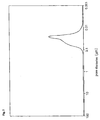
- the pore diameter distribution of catalyst A was measured with a mercury injection type porosimeter, with the result that the total pore volume of catalyst A was 0.40 cc/g, and that the pore volume of the first group of pores and that of the second group of pores were 34 % and 57 %, respectively, of the total pore volume.
- the specific surface area of catalyst A measured by the BET method was 73 m 2 /g.
- the pore diameter distribution of catalyst A is shown in Fig. 1.
- An organohalogen compound-removing activity test was carried out with catalyst A under the following conditions. Chlorotoluene (CT) was used as the organohalogen compound.
- CT decomposition ratio (%) [(CT concentration at inlet of reactor) - (CT concentration at outlet of reactor)] ⁇ (CT concentration at inlet of reactor) ⁇ 100
- DXN-removing ratio [(DXN concentration at inlet of reactor) - (DXN concentration at outlet of reactor)] ⁇ (DXN concentration at inlet of reactor) ⁇ 100
- Honeycomb-form catalyst B having an external form size of 80 mm square, an opening size of 4.0 mm, a wall thickness of 1.0 mm and a length of 500 mm was prepared in the same manner as in Example 1 except that: the titanium oxide powder was further ground with an air grinder, and the phenol resin was not added in the kneading step, and a deaerating layer was provided before the molding machine to remove air from the kneaded product.
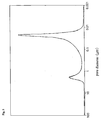
- the pore diameter distribution of catalyst B was measured with a mercury injection type porosimeter, with the result that only the first group of pores having a pore diameter distribution peak in the range of 0.01 to 0.05 ⁇ m was found, and that the second group of pores having a pore diameter distribution peak in the range of 0.1 to 0.8 ⁇ m was absent.
- the total pore volume of catalyst B was 0.24 cc/g, and its specific surface area measured by the BET method was 68 m 2 /g.
- the pore diameter distribution of catalyst B is shown in Fig. 2.
- Snowtex-20 sica sol with an SiO 2 content of about 20 wt %, produced by Nissan Chemical Industries, Ltd.
- the resultant product was calcined at 500 °C, and then ground with a hammer mill, and then classified with a classifier to obtain a powder having an average particle diameter of 10 ⁇ m.
- a solution of 1.43 kg of ammonium metavanadate, 1.7 kg of oxalic acid, and 0.4 kg of monoethanolamine in 5 liters of water and a solution of 1.36 kg of ammonium paramolybdate and 0.5 kg of monoethanolamine in 3 liters of water were added to 10 kg of the above Ti-Si composite oxide and 10 kg of a commercially available titanium oxide powder (DT-51 (trade name), produced by Millennium Inorganic Chemicals Limited). Then, 1 kg of phenol resin (Bellpearl (trade name), produced by Kanebo Co.) and 0.5 kg of starch (as a molding assistant) were further added to and mixed with the resulting mixture.
- DT-51 commercially available titanium oxide powder
- the resulting mixture was well kneaded with a kneader while adding a moderate amount of water thereto.
- the kneaded product was molded into a honeycomb form having an external form size of 80 mm square, an opening size of 4.0 mm, a wall thickness of 1.0 mm and a length of 500 mm with an extrusion molding machine. Thereafter, the resultant form was dried at 80 °C and then calcined at 450 °C for 5 hours under air atmosphere to obtain catalyst C.
- the pore diameter distribution of catalyst C was measured with a mercury injection type porosimeter, with the result that the total pore volume of catalyst C was 0.38 cc/g, and that the pore volume of the first group of pores and that of the third group of pores were 57 % and 23 %, respectively, of the total pore volume.
- the specific surface area of catalyst C measured by the BET method was 84 m 2 /g.
- the pore diameter distribution of catalyst C is shown in Fig. 3.
- An organohalogen compound-removing activity test was carried out with catalyst C under the following conditions. Chlorotoluene (CT) was used as the organohalogen compound.
- the CT decomposition ratio was determined from the CT decomposition ratio calculation equation as set forth in Example 1.
- the relationship between the gas temperature and the CT decomposition ratio is shown in Table 2.
- catalyst C was brought into contact with a refuse incinerator exhaust gas containing DXN of about 0.5 ng-TEQ/Nm 3 to measure the removability upon DXN.
- the gas temperature was 200 °C, and the space velocity (STP) was 2,000 Hr -1 .
- the DXN-removing ratio was determined in accordance with the DXN-removing ratio calculation equation as set forth in Example 1 and, as a result, was found 99 %.
- Honeycomb-form catalyst D having an external form size of 80 mm square, an opening size of 4.0 mm, a wall thickness of 1.0 mm and a length of 500 mm was prepared in the same manner as in Example 2 except that: the titanium oxide powder and the Ti-Si composite oxide were further ground with an air grinder, and the phenol resin was not added in the kneading step, and a deaerating layer was provided before the molding machine to remove air from the kneaded product.
- the pore diameter distribution of catalyst D was measured with a mercury injection type porosimeter, with the result that only the first group of pores having a pore diameter distribution peak in the range of 0.01 to 0.05 ⁇ m was found, and that the third group of pores having a pore diameter distribution peak in the range of 0.8 to 4 ⁇ m was absent.
- the total pore volume of catalyst D was 0.30 cc/g, and the ratio of the pore volume of the first group of pores to the total pore volume was 85 %, and the specific surface area of catalyst D measured by the BET method was 78 m 2 /g.
- the pore diameter distribution of catalyst D is shown in Fig. 4.
- Honeycomb-form catalyst E was prepared in the same manner as in Example 3 except that only the Ti-Si composite oxide was used as the titanium source.
- the pore diameter distribution of catalyst E was measured with a mercury injection type porosimeter, with the result that only the first group of pores having a pore diameter distribution peak in the range of 0.01 to 0.05 ⁇ m was found, and that the third group of pores having a pore diameter distribution peak in the range of 0.8 to 4 ⁇ m was absent.
- the total pore volume of catalyst E was 0.35 cc/g, and the ratio of the pore volume of the first group of pores to the total pore volume was 68 %, and the specific surface area of catalyst E measured by the BET method was 92 m 2 /g.
- Example 2 An organohalogen compound-removing activity test was carried out with catalyst E in the same manner as in Example 2. The relationship between the gas temperature and the CT decomposition ratio is shown in Table 2. Space velocity 2,500 Hr -1 Example 2 Example 3 Comparative Example 2 Catalyst C D E Gas temperature (°C) 160 91 % 65 % 51 % 180 98.5 % 85 % 73 % 200 99.3 % 96.2 % 89 %
Landscapes
- Chemical & Material Sciences (AREA)
- Engineering & Computer Science (AREA)
- Chemical Kinetics & Catalysis (AREA)
- Materials Engineering (AREA)
- Organic Chemistry (AREA)
- Environmental & Geological Engineering (AREA)
- Health & Medical Sciences (AREA)
- Biomedical Technology (AREA)
- Analytical Chemistry (AREA)
- General Chemical & Material Sciences (AREA)
- Oil, Petroleum & Natural Gas (AREA)
- Exhaust Gas Treatment By Means Of Catalyst (AREA)
- Catalysts (AREA)
Applications Claiming Priority (4)
| Application Number | Priority Date | Filing Date | Title |
|---|---|---|---|
| JP18093399 | 1999-06-25 | ||
| JP18093399 | 1999-06-25 | ||
| JP2000099593A JP3648125B2 (ja) | 1999-06-25 | 2000-03-31 | 有機ハロゲン化合物の除去用触媒および有機ハロゲン化合物の除去方法 |
| JP2000099593 | 2000-03-31 |
Publications (3)
| Publication Number | Publication Date |
|---|---|
| EP1063002A2 true EP1063002A2 (de) | 2000-12-27 |
| EP1063002A3 EP1063002A3 (de) | 2001-09-05 |
| EP1063002B1 EP1063002B1 (de) | 2004-10-06 |
Family
ID=26500285
Family Applications (1)
| Application Number | Title | Priority Date | Filing Date |
|---|---|---|---|
| EP00112959A Expired - Lifetime EP1063002B1 (de) | 1999-06-25 | 2000-06-20 | Verfahren zur Entfernung von Organohalogenverbindungen |
Country Status (6)
| Country | Link |
|---|---|
| US (1) | US6855304B2 (de) |
| EP (1) | EP1063002B1 (de) |
| JP (1) | JP3648125B2 (de) |
| KR (1) | KR100418225B1 (de) |
| DE (1) | DE60014506T2 (de) |
| TW (1) | TWI266647B (de) |
Cited By (12)
| Publication number | Priority date | Publication date | Assignee | Title |
|---|---|---|---|---|
| EP1533027A3 (de) * | 2003-11-12 | 2005-08-03 | Sachtleben Chemie GmbH | Verfahren zur Herstellung eines hochtemperaturstabilen, TiO2-haltigen Katalysators oder Katalysatorträgers |
| WO2005092504A1 (en) * | 2004-03-12 | 2005-10-06 | Cormetech, Inc. | Catalyst systems |
| US7658898B2 (en) | 2006-08-01 | 2010-02-09 | Cormetech, Inc. | Compositions and methods for treating exhaust gases |
| US7776786B2 (en) | 2004-05-04 | 2010-08-17 | Cormetech, Inc. | Catalyst systems advantageous for high particulate matter environments |
| DE102011051334A1 (de) | 2010-06-29 | 2011-12-29 | Sachtleben Chemie Gmbh | Alkaliarmes Katalysatormaterial und Verfahren zu dessen Herstellung |
| WO2012135387A1 (en) * | 2011-03-28 | 2012-10-04 | Cormetech, Inc. | Catalyst compositions and applications thereof |
| WO2012171656A1 (de) * | 2011-06-17 | 2012-12-20 | BLüCHER GMBH | Poröse materialien auf basis von metallischen mischoxiden sowie deren herstellung und verwendung |
| WO2012171655A1 (de) * | 2011-06-17 | 2012-12-20 | BLüCHER GMBH | Poröse materialien auf basis von oxiden des titans und/oder des vanadiums sowie deren herstellung und verwendung |
| US8758460B2 (en) | 1999-02-08 | 2014-06-24 | Johnson Matthey Public Limited Company | Catalyst composition |
| CN103962124A (zh) * | 2013-02-04 | 2014-08-06 | 上海达源环境科技工程有限公司 | 一种烟气脱硝催化剂 |
| EP1563002B2 (de) † | 2002-10-25 | 2017-12-13 | Evonik Degussa GmbH | Absorbierende polymergebilde mit verbesserter retentionskapazität und permeabilität |
| US10792647B2 (en) | 2009-04-21 | 2020-10-06 | Johnson Matthey Public Limited Company | Base metal catalysts for the oxidation of carbon monoxide and volatile organic compounds |
Families Citing this family (12)
| Publication number | Priority date | Publication date | Assignee | Title |
|---|---|---|---|---|
| JP4909473B2 (ja) * | 2001-08-31 | 2012-04-04 | 三井造船株式会社 | 排ガス処理触媒 |
| US7150861B2 (en) | 2001-09-28 | 2006-12-19 | Nippon Shokubai Co., Ltd. | Catalyst for purification of exhaust gases and process for purification of exhaust gases |
| JP4317345B2 (ja) | 2002-02-26 | 2009-08-19 | 株式会社日本触媒 | 低濃度co含有排ガス処理方法 |
| KR100490835B1 (ko) * | 2002-09-18 | 2005-05-19 | 주식회사 엘지화학 | 전이금속이 담지된 염소계 유기화합물의 산화분해 반응용촉매와 이의 제조방법 및 이를 이용한 염소계유기화합물의 제거방법 |
| US7264784B2 (en) * | 2003-10-22 | 2007-09-04 | Nippon Shokubai Co., Ltd. | Method for treating exhaust gas |
| CN101151096B (zh) * | 2005-06-09 | 2014-05-07 | 株式会社日本触媒 | 钛氧化物、废气处理用催化剂及废气净化方法 |
| JP2007296514A (ja) * | 2006-04-07 | 2007-11-15 | Ngk Insulators Ltd | 触媒体とその製造方法 |
| JP5063604B2 (ja) * | 2007-03-30 | 2012-10-31 | イビデン株式会社 | ハニカムフィルタ |
| US20100194265A1 (en) * | 2007-07-09 | 2010-08-05 | Katholieke Universiteit Leuven | Light-emitting materials for electroluminescent devices |
| JP6671163B2 (ja) * | 2015-01-09 | 2020-03-25 | 日揮触媒化成株式会社 | 排ガス処理ハニカム触媒およびその製造方法 |
| EP3434368B9 (de) * | 2016-03-24 | 2022-12-07 | Cataler Corporation | Abgasreinigungsvorrichtung |
| CN112473657B (zh) * | 2020-12-07 | 2022-02-22 | 北京建筑材料科学研究总院有限公司 | 一种协同脱除烟气中二噁英和汞的低钒催化剂及其制备方法和应用 |
Family Cites Families (29)
| Publication number | Priority date | Publication date | Assignee | Title |
|---|---|---|---|---|
| US4102822A (en) | 1976-07-26 | 1978-07-25 | Chevron Research Company | Hydrocarbon hydroconversion catalyst and the method for its preparation |
| US4520124A (en) | 1981-03-19 | 1985-05-28 | Sakai Chemical Industry Co., Ltd. | Method for producing a catalytic structure for the reduction of nitrogen oxides |
| FR2528721B1 (fr) | 1982-06-17 | 1986-02-28 | Pro Catalyse Ste Fse Prod Cata | Catalyseur supporte presentant une resistance accrue aux poisons et son utilisation en particulier pour l'hydrotraitement de fractions petrolieres contenant des metaux |
| DE3623492A1 (de) | 1986-07-11 | 1988-01-21 | Hagenmaier Hans Paul | Verfahren zum abbau von halogenierten aromaten |
| ATE76325T1 (de) * | 1986-07-25 | 1992-06-15 | Mitsubishi Petrochemical Co | Katalysatoren und ihr gebrauch zur entfernung von stickoxiden in abgasen. |
| CA1310005C (en) * | 1986-09-13 | 1992-11-10 | Hiroaki Rikimaru | Catalyst and a method for denitrizing nitrogen oxides contained in waste gases |
| JP2653799B2 (ja) | 1987-11-16 | 1997-09-17 | バブコツク日立株式会社 | 窒素酸化物の除去方法および該方法に用いる触媒 |
| US5137855A (en) | 1988-06-09 | 1992-08-11 | W. R. Grace & Co.-Conn. | Catalysts for selective catalytic reduction denox technology |
| US5176897A (en) | 1989-05-01 | 1993-01-05 | Allied-Signal Inc. | Catalytic destruction of organohalogen compounds |
| JP2730987B2 (ja) * | 1989-08-09 | 1998-03-25 | 株式会社日本触媒 | 窒素酸化物除去用触媒および該触媒を用いた窒素酸化物の除去方法 |
| EP0447537B2 (de) | 1989-10-06 | 2000-08-09 | Basf Aktiengesellschaft | Verfahren zur verringerung der emission von organischen produkten unvollständiger verbrennung |
| US5430230A (en) * | 1991-04-30 | 1995-07-04 | Nippon Shokubai Co., Ltd. | Method for disposing of organohalogen compounds by oxidative decomposition |
| JP2916259B2 (ja) | 1991-04-30 | 1999-07-05 | 株式会社日本触媒 | 有機ハロゲン化合物の酸化分解処理方法 |
| JP2609393B2 (ja) * | 1992-03-04 | 1997-05-14 | 東京都 | 排ガス処理方法 |
| US5460792A (en) * | 1992-12-23 | 1995-10-24 | Rohm And Haas Company | Removal and destruction of halogenated organic and hydrocarbon compounds with porous carbonaceous materials |
| US5658546A (en) * | 1993-07-30 | 1997-08-19 | Nippon Shokubai Co., Ltd. | Denitration catalyst |
| JP3496964B2 (ja) | 1993-12-13 | 2004-02-16 | バブコック日立株式会社 | 排ガス中の窒素酸化物のアンモニア還元用触媒およびその製造方法 |
| JP3589529B2 (ja) * | 1995-08-08 | 2004-11-17 | 株式会社荏原製作所 | 燃焼排ガスの処理方法及び装置 |
| JP3252669B2 (ja) * | 1995-09-07 | 2002-02-04 | 株式会社日本触媒 | 排ガスの処理装置 |
| DE19545042A1 (de) | 1995-12-02 | 1997-06-05 | Studiengesellschaft Kohle Mbh | Amorphe mikroporöse Mischoxidkatalysatoren mit kontrollierter Oberflächenpolarität für die selektive heterogene Katalyse Adsorption und Stofftrennung |
| EP0793995B1 (de) * | 1996-03-05 | 2001-10-04 | Hitachi, Ltd. | Verfahren zur Behandlung von Gasen die Organohalogenzusammensetzungen enthalten |
| JP3312870B2 (ja) * | 1996-12-27 | 2002-08-12 | 株式会社日本触媒 | 有機ハロゲン化合物除去用触媒、その調製方法および有機ハロゲン化合物の除去方法 |
| TW386042B (en) * | 1996-12-27 | 2000-04-01 | Nippon Catalytic Chemical Ind | Catalyst for removing organic halogen compounds, preparation method thereforand method for removing organic halogen compounds |
| JP3337634B2 (ja) | 1996-12-27 | 2002-10-21 | 株式会社日本触媒 | 脱硝触媒、その調製方法、および脱硝方法 |
| JPH10323570A (ja) | 1997-05-26 | 1998-12-08 | Babcock Hitachi Kk | 排煙脱硝触媒およびその製造方法 |
| JP2000042409A (ja) | 1998-05-28 | 2000-02-15 | Catalysts & Chem Ind Co Ltd | 塩素化有機化合物分解用触媒および燃焼排ガスの処理方法 |
| JP3212577B2 (ja) | 1998-06-19 | 2001-09-25 | 三菱重工業株式会社 | 排ガス処理用触媒、排ガス処理方法及び処理装置 |
| JP2000024498A (ja) | 1998-07-09 | 2000-01-25 | Mitsubishi Heavy Ind Ltd | 排ガス処理用触媒、排ガス処理方法及び処理装置 |
| JP2000061305A (ja) | 1998-08-21 | 2000-02-29 | Babcock Hitachi Kk | 排ガス処理用触媒及び排ガス処理用方法 |
-
2000
- 2000-03-31 JP JP2000099593A patent/JP3648125B2/ja not_active Expired - Fee Related
- 2000-06-20 DE DE60014506T patent/DE60014506T2/de not_active Expired - Lifetime
- 2000-06-20 TW TW089112111A patent/TWI266647B/zh active
- 2000-06-20 EP EP00112959A patent/EP1063002B1/de not_active Expired - Lifetime
- 2000-06-23 KR KR10-2000-0034764A patent/KR100418225B1/ko not_active Expired - Fee Related
-
2002
- 2002-09-24 US US10/253,027 patent/US6855304B2/en not_active Expired - Fee Related
Cited By (17)
| Publication number | Priority date | Publication date | Assignee | Title |
|---|---|---|---|---|
| US8758460B2 (en) | 1999-02-08 | 2014-06-24 | Johnson Matthey Public Limited Company | Catalyst composition |
| EP1563002B2 (de) † | 2002-10-25 | 2017-12-13 | Evonik Degussa GmbH | Absorbierende polymergebilde mit verbesserter retentionskapazität und permeabilität |
| EP1533027A3 (de) * | 2003-11-12 | 2005-08-03 | Sachtleben Chemie GmbH | Verfahren zur Herstellung eines hochtemperaturstabilen, TiO2-haltigen Katalysators oder Katalysatorträgers |
| US7807605B2 (en) * | 2003-11-12 | 2010-10-05 | Sachtleben Chemie Gmbh | Process for the preparation of a TiO2-containing catalyst or catalyst support which is stable to high temperatures |
| US7807110B2 (en) | 2004-03-12 | 2010-10-05 | Cormetech Inc. | Catalyst systems |
| WO2005092504A1 (en) * | 2004-03-12 | 2005-10-06 | Cormetech, Inc. | Catalyst systems |
| US7776786B2 (en) | 2004-05-04 | 2010-08-17 | Cormetech, Inc. | Catalyst systems advantageous for high particulate matter environments |
| US7658898B2 (en) | 2006-08-01 | 2010-02-09 | Cormetech, Inc. | Compositions and methods for treating exhaust gases |
| US10792647B2 (en) | 2009-04-21 | 2020-10-06 | Johnson Matthey Public Limited Company | Base metal catalysts for the oxidation of carbon monoxide and volatile organic compounds |
| DE102011051334A1 (de) | 2010-06-29 | 2011-12-29 | Sachtleben Chemie Gmbh | Alkaliarmes Katalysatormaterial und Verfahren zu dessen Herstellung |
| WO2012062295A2 (de) | 2010-06-29 | 2012-05-18 | Sachtleben Chemie Gmbh | Alkaliarmes katalysatormaterial und verfahren zu dessen herstellung |
| WO2012135387A1 (en) * | 2011-03-28 | 2012-10-04 | Cormetech, Inc. | Catalyst compositions and applications thereof |
| CN103561864A (zh) * | 2011-03-28 | 2014-02-05 | 康明公司 | 催化剂组合物及其应用 |
| WO2012171656A1 (de) * | 2011-06-17 | 2012-12-20 | BLüCHER GMBH | Poröse materialien auf basis von metallischen mischoxiden sowie deren herstellung und verwendung |
| WO2012171655A1 (de) * | 2011-06-17 | 2012-12-20 | BLüCHER GMBH | Poröse materialien auf basis von oxiden des titans und/oder des vanadiums sowie deren herstellung und verwendung |
| EP3662995A1 (de) * | 2011-06-17 | 2020-06-10 | Blücher GmbH | Poröse materialien auf basis von oxiden des titans und/oder des vanadiums sowie deren herstellung und verwendung |
| CN103962124A (zh) * | 2013-02-04 | 2014-08-06 | 上海达源环境科技工程有限公司 | 一种烟气脱硝催化剂 |
Also Published As
| Publication number | Publication date |
|---|---|
| JP3648125B2 (ja) | 2005-05-18 |
| US20030059359A1 (en) | 2003-03-27 |
| EP1063002A3 (de) | 2001-09-05 |
| DE60014506D1 (de) | 2004-11-11 |
| DE60014506T2 (de) | 2005-12-15 |
| JP2001062292A (ja) | 2001-03-13 |
| KR20010066868A (ko) | 2001-07-11 |
| US6855304B2 (en) | 2005-02-15 |
| KR100418225B1 (ko) | 2004-02-11 |
| EP1063002B1 (de) | 2004-10-06 |
| TWI266647B (en) | 2006-11-21 |
Similar Documents
| Publication | Publication Date | Title |
|---|---|---|
| EP1063002B1 (de) | Verfahren zur Entfernung von Organohalogenverbindungen | |
| EP0850676B1 (de) | Verwendung eines Katalysator zur Entfernung von organischen Chlorverbindungen und Verfahren zur Entfernung von organischen Chlorverbindungen | |
| US7264784B2 (en) | Method for treating exhaust gas | |
| EP1138379B1 (de) | Titan, Molybdän und Vanadium enthaltender Abgasreinigungskatalysator, Verfahren zu seiner Herstellung, und dessen Verwendung | |
| US6716404B2 (en) | Process for the purification of exhaust gases | |
| JP3312870B2 (ja) | 有機ハロゲン化合物除去用触媒、その調製方法および有機ハロゲン化合物の除去方法 | |
| JP3893014B2 (ja) | 排ガス処理用触媒、その製造方法および排ガス処理方法 | |
| JP3749078B2 (ja) | 脱硝触媒および脱硝方法 | |
| JP3785310B2 (ja) | 有機ハロゲン化合物分解触媒、その製造方法、および用途 | |
| JP2006320803A (ja) | 排ガス処理触媒および排ガス処理方法 | |
| JP2006116537A (ja) | 排ガスの処理方法 | |
| JP2001187320A (ja) | 排ガスの処理方法 | |
| JP3893020B2 (ja) | 有機ハロゲン化合物の除去用触媒およびこれを用いた排ガスの処理方法 | |
| JP4283092B2 (ja) | 排ガス処理用触媒および排ガス処理方法 | |
| JP2002102696A (ja) | 脱硝触媒およびこれを用いた排ガスの処理方法 | |
| JP2003047845A (ja) | 排ガス処理触媒とその製造方法 | |
| JP2003200046A (ja) | 排ガス処理用触媒、および排ガス処理方法 | |
| JP2003112046A (ja) | 排ガス処理用触媒、および排ガス処理方法 | |
| JP2005125212A (ja) | 排ガス処理方法 | |
| JPH11319557A (ja) | 排ガス処理用触媒及びその製造方法、排ガス処理方法及び処理装置 | |
| JP2002136873A (ja) | コプラナーpcb類の分解触媒および処理方法 | |
| JP2008264604A (ja) | 排ガス処理用触媒、当該触媒の製造方法及び当該触媒を用いた排ガス中の有機ハロゲン化合物の処理方法 |
Legal Events
| Date | Code | Title | Description |
|---|---|---|---|
| PUAI | Public reference made under article 153(3) epc to a published international application that has entered the european phase |
Free format text: ORIGINAL CODE: 0009012 |
|
| AK | Designated contracting states |
Kind code of ref document: A2 Designated state(s): AT BE CH CY DE DK ES FI FR GB GR IE IT LI LU MC NL PT SE Kind code of ref document: A2 Designated state(s): DE FR GB |
|
| AX | Request for extension of the european patent |
Free format text: AL;LT;LV;MK;RO;SI |
|
| PUAL | Search report despatched |
Free format text: ORIGINAL CODE: 0009013 |
|
| AK | Designated contracting states |
Kind code of ref document: A3 Designated state(s): AT BE CH CY DE DK ES FI FR GB GR IE IT LI LU MC NL PT SE |
|
| AX | Request for extension of the european patent |
Free format text: AL;LT;LV;MK;RO;SI |
|
| 17P | Request for examination filed |
Effective date: 20020207 |
|
| AKX | Designation fees paid |
Free format text: DE FR GB |
|
| 17Q | First examination report despatched |
Effective date: 20020523 |
|
| GRAP | Despatch of communication of intention to grant a patent |
Free format text: ORIGINAL CODE: EPIDOSNIGR1 |
|
| RTI1 | Title (correction) |
Free format text: PROCESS FOR REMOVING ORGANOHALOGEN COMPOUNDS |
|
| GRAS | Grant fee paid |
Free format text: ORIGINAL CODE: EPIDOSNIGR3 |
|
| GRAA | (expected) grant |
Free format text: ORIGINAL CODE: 0009210 |
|
| RIN1 | Information on inventor provided before grant (corrected) |
Inventor name: MORITA, ATSUSHI Inventor name: MASAKI, SHINYUKI Inventor name: KUGAI, JYUNICHIRO Inventor name: SUGISHIMA, NOBORU |
|
| AK | Designated contracting states |
Kind code of ref document: B1 Designated state(s): DE FR GB |
|
| REG | Reference to a national code |
Ref country code: GB Ref legal event code: FG4D |
|
| REF | Corresponds to: |
Ref document number: 60014506 Country of ref document: DE Date of ref document: 20041111 Kind code of ref document: P |
|
| ET | Fr: translation filed | ||
| PLBE | No opposition filed within time limit |
Free format text: ORIGINAL CODE: 0009261 |
|
| STAA | Information on the status of an ep patent application or granted ep patent |
Free format text: STATUS: NO OPPOSITION FILED WITHIN TIME LIMIT |
|
| 26N | No opposition filed |
Effective date: 20050707 |
|
| PGFP | Annual fee paid to national office [announced via postgrant information from national office to epo] |
Ref country code: FR Payment date: 20080617 Year of fee payment: 9 |
|
| PGFP | Annual fee paid to national office [announced via postgrant information from national office to epo] |
Ref country code: GB Payment date: 20080625 Year of fee payment: 9 |
|
| GBPC | Gb: european patent ceased through non-payment of renewal fee |
Effective date: 20090620 |
|
| REG | Reference to a national code |
Ref country code: FR Ref legal event code: ST Effective date: 20100226 |
|
| PG25 | Lapsed in a contracting state [announced via postgrant information from national office to epo] |
Ref country code: FR Free format text: LAPSE BECAUSE OF NON-PAYMENT OF DUE FEES Effective date: 20090630 |
|
| PG25 | Lapsed in a contracting state [announced via postgrant information from national office to epo] |
Ref country code: GB Free format text: LAPSE BECAUSE OF NON-PAYMENT OF DUE FEES Effective date: 20090620 |
|
| PGFP | Annual fee paid to national office [announced via postgrant information from national office to epo] |
Ref country code: DE Payment date: 20100616 Year of fee payment: 11 |
|
| REG | Reference to a national code |
Ref country code: DE Ref legal event code: R119 Ref document number: 60014506 Country of ref document: DE Effective date: 20120103 |
|
| PG25 | Lapsed in a contracting state [announced via postgrant information from national office to epo] |
Ref country code: DE Free format text: LAPSE BECAUSE OF NON-PAYMENT OF DUE FEES Effective date: 20120103 |