EP1063635A2 - Procédé et dispositif pour améliorer la précision de la reconnaissance de la parole utilisant des contraintes d'événements - Google Patents
Procédé et dispositif pour améliorer la précision de la reconnaissance de la parole utilisant des contraintes d'événements Download PDFInfo
- Publication number
- EP1063635A2 EP1063635A2 EP00304415A EP00304415A EP1063635A2 EP 1063635 A2 EP1063635 A2 EP 1063635A2 EP 00304415 A EP00304415 A EP 00304415A EP 00304415 A EP00304415 A EP 00304415A EP 1063635 A2 EP1063635 A2 EP 1063635A2
- Authority
- EP
- European Patent Office
- Prior art keywords
- command
- events
- states
- probable
- acoustic
- Prior art date
- Legal status (The legal status is an assumption and is not a legal conclusion. Google has not performed a legal analysis and makes no representation as to the accuracy of the status listed.)
- Granted
Links
Images

Classifications
-
- G—PHYSICS
- G10—MUSICAL INSTRUMENTS; ACOUSTICS
- G10L—SPEECH ANALYSIS TECHNIQUES OR SPEECH SYNTHESIS; SPEECH RECOGNITION; SPEECH OR VOICE PROCESSING TECHNIQUES; SPEECH OR AUDIO CODING OR DECODING
- G10L15/00—Speech recognition
- G10L15/22—Procedures used during a speech recognition process, e.g. man-machine dialogue
-
- G—PHYSICS
- G10—MUSICAL INSTRUMENTS; ACOUSTICS
- G10L—SPEECH ANALYSIS TECHNIQUES OR SPEECH SYNTHESIS; SPEECH RECOGNITION; SPEECH OR VOICE PROCESSING TECHNIQUES; SPEECH OR AUDIO CODING OR DECODING
- G10L15/00—Speech recognition
- G10L15/08—Speech classification or search
- G10L15/18—Speech classification or search using natural language modelling
- G10L15/183—Speech classification or search using natural language modelling using context dependencies, e.g. language models
-
- G—PHYSICS
- G10—MUSICAL INSTRUMENTS; ACOUSTICS
- G10L—SPEECH ANALYSIS TECHNIQUES OR SPEECH SYNTHESIS; SPEECH RECOGNITION; SPEECH OR VOICE PROCESSING TECHNIQUES; SPEECH OR AUDIO CODING OR DECODING
- G10L15/00—Speech recognition
- G10L15/22—Procedures used during a speech recognition process, e.g. man-machine dialogue
- G10L2015/226—Procedures used during a speech recognition process, e.g. man-machine dialogue using non-speech characteristics
- G10L2015/228—Procedures used during a speech recognition process, e.g. man-machine dialogue using non-speech characteristics of application context
Definitions
- This invention relates to the field of speech recognition computer applications, and more specifically, to a system for improving the command recognition accuracy of a speech recognition system.
- Speech recognition is the process by which acoustic signals, received via a microphone, are converted into words by a computer. Once recognized, the words may be used in a variety of computer software applications for purposes such as document preparation, data entry and command and control. Speech recognition is generally a difficult problem due to the wide variety of pronunciations, accents and speech characteristics of individual speakers. Consequently, sets of constraints are used to make decisions about the words a user spoke.
- Typical speech dictation recognition systems use two sets of constraints, namely, an acoustic model and a language model.
- the acoustic model considers the sounds that make up the words and the language model considers the grammatical context in which the words are used.
- These models are often used to help reduce the search space of possible words and to resolve ambiguities as between similar sounding words.
- Such models tend to be statistically-based systems and can be provided in a variety of forms.
- the simplest language model for example, can be specified as a finite state network, where the permissible words following each word are given explicitly.
- more sophisticated language models have also been developed which are specified in terms of a context-specified grammar.
- a set of commands is formulated for specific tasks and functions.
- Each command is typically one or two words or a short phase representing a common expression for performing a given operation.
- Typical speech command recognition systems can have a large number of such commands. So that the speaker does not have to memorize the precise phrasing of the commands, sophisticated systems also recognize alternate expressions having the same meaning as a known command.
- language models as used for dictation recognition, are employed to constrain the spoken commands syntactically.
- a method for recognizing a spoken command comprising the steps of: monitoring at least one of said events and states; receiving a processed command corresponding to said spoken command; analyzing said processed command according to at least one acoustic model to identify a probable acoustic match; analyzing said processed command according to at least one of said events and states to identify a probable context match; and providing a recognized command based on said probable acoustic and context matches.
- a system for recognizing a spoken command comprising: means for monitoring at least one of system events and states; means for receiving a processed command corresponding to said spoken command; means for analyzing said processed command according to at least one acoustic model so as to identify a probable acoustic match and according to at least one of said events and states so as to identify a probable context match; and means for providing a recognized command based on said probable acoustic and context matches.
- the context in which a spoken command is executed can be utilized as a surrogate for the language models used for dictation recognition.
- event-based data structures indicative of the context in which the command is given, are used as constraints in the recognition process.
- the present invention provides a system for improving command recognition accuracy of speech recognition systems.
- the present invention operates in a computer system for speech recognition operating at various states and running a program to perform various events.
- the method and system is performed by monitoring the events and states and receiving a processed command corresponding to a spoken command.
- the processed command is analyzed according to one or more acoustic models to identify a probable acoustic match.
- the command is analyzed according to at least one of the events and states to identify a probable context match. Based upon the probable acoustic and context matches, the system provides a recognized command.
- the present invention provides the object and advantage of accurately recognizing spoken system and application control commands.
- the present invention provides accurate speech command recognition even if the spoken command is only a single word.
- the states and events can include system control activity, active applications, prior commands and an event queue.
- the present invention provides an additional object and advantage in that the one or more context constraining parameters exist on, or can be performed by, the computer system without the need for the speech recognition system to supply additional data and utilize storage space or computer memory.
- the analysis of the system states and events to identify the probable context match can be accomplished using a statistical modeling technique. And, past events and states can be used to modify the statistical model.
- the present invention affords the further object and advantage of providing a statistical model tailored to the command choices of a given speaker or set of speakers using the system.
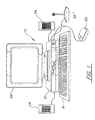
- the computer system 10 is preferably comprised of a computer 12 having a central processing unit 14 (Fig. 2), at least one memory device 16 and related electronic circuitry (not shown).
- the computer system 10 also includes user input devices, a keyboard 18 and a pointing device 20, a microphone 22, audio loud speakers 24, and a video display 26, all of which are operatively connected to the computer 10 via suitable interface circuitry.
- the pointing device 20 and loud speakers 24 may be a part of the computer system 10, but are not required for the operation of the invention.
- the computer system 10 can be satisfied by any one of many high speed multi-media personal computers commercially available from manufacturers such as International Business Machines Corporation, Compaq, Hewlett Packard, or Apple Computers.
- the memory devices 16 preferably include an electronic random access memory module and a bulk storage device, such as a magnetic disk drive.
- the central processing unit 14 may be any suitable processing chip, such as any of the Pentium family microprocessing chips commercially available from Intel Corporation.
- Fig. 2 which illustrates a typical architecture for a computer system 10 having a speech recognition system
- the system includes an operating system 28 and a speech recognition system 30.
- the speech recognition system 30 includes a speech recognition engine application 32 and a voice navigation application 34.
- a speech text processor application 36 may also be included.
- the speech recognition engine 32, voice navigator 34 and text processor 36 are shown as separate application programs. It should be noted, however, that the invention is not limited in this regard, and these applications could be implemented as a single, more complex application. Also, the system 30 may be modified to operate without the text processor application 36, if the speech recognition system 30 is to be used solely for command and control.
- the operating system 28 is one of the Windows family of operating systems, such as Windows NT, Windows '95 or Windows '98, which are available from Microsoft Corporation of Redmond, Washington.
- the present invention is not limited in this regard, however, as it may also be used with any other type of computer operating system.
- an analog audio signal containing speech commands is received by the microphone 22 and processed within the computer 12 by conventional audio circuitry, having an analog to digital convertor, which produces a digitized form of the signal.
- the operating system 28 transfers the digital command signal to the speech recognition system 30, where the command is recognized by the speech recognition engine 32 (as described below).
- the recognized command is then sent as a text phrase to an application, such as the voice navigator application 34, to perform the control function.
- the speech recognition engine 32 receives a digital speech command signal from the operating system 28.
- the digital signal is subsequently transformed in representation block 38 into a useful set of data by sampling the digital signal at some fixed rate, typically every 10-20 milliseconds.
- Block 38 produces a new representation of the audio signal, which can then be used in subsequent stages of the speech command recognition process to determine the probability that the portion of an analyzed wave form corresponds to a particular phonetic event. This process is intended to emphasize perceptually important speaker independent features of the digitized speech command signal received from the operating system 28.
- the processed speech command signal is used to identify, from the entire set of control commands, a subset of probable commands corresponding to the digitized speech command (as described in detail below). This subset of probable commands is searched at block 42 to obtain the recognized command. Once the command is recognized, it is used to execute the corresponding system or application function.
- classification block 40 is performed by acoustic modeling block 44, context modeling block 46 and statistical analysis block 48.
- known algorithms process the speech command signal to adapt speaker-independent acoustic models, contained in memory 16, to the acoustic signal of the current speaker and identify one or more probable matching commands.
- additional algorithms process the command signal according to the current state of the computer system as well as context events occurring prior to or contemporaneously with the spoken command.
- the system states and events are preferably statistically analyzed, using known statistical modeling techniques, to identify one or more probable commands matching the context in which the command was given.
- Block 46 may be executed independent of the acoustic modeling 44 or performed following the acoustic modeling to further constrain the probable acoustic matches.
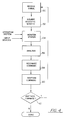
- the process for recognizing spoken commands begins at step 50 where the speech recognition engine 32 obtains the digitized command signal from the operating system 28.
- the speech recognition engine 32 acquires acoustic models from memory 16.
- computer system 10 is monitored to discern the current state of the system as well as system or application events executed prior to or contemporaneously with the spoken command.
- the state and event data may be logged in the random access memory or in a history file stored in the bulk storage device, and called up during the command recognition process.
- the system state and events may be checked once, or sampled at a fixed rate, during the recognition process without saving to memory. Either way, the states and events themselves supply the data for the context analysis, and therefore, the speech recognition system of the present invention does not require storing large context data files.
- the speech recognition engine 32 acquires data pertaining to system activity, active applications, prior commands, and an event queue.
- these data structures include activities such as: user inputs from voice or a mouse, stylus or keyboard; operation of drop-down menus or buttons; the activation of applications or applets within an application; prior commands; and idle events, i.e., when no activity is logged in an event queue for a prescribed time period.
- activities such as: user inputs from voice or a mouse, stylus or keyboard; operation of drop-down menus or buttons; the activation of applications or applets within an application; prior commands; and idle events, i.e., when no activity is logged in an event queue for a prescribed time period.
- These system state and events, the prior commands in particular, can be tracked and used by the speaker or the system to create new or truncated speech commands based on the frequency in which certain command combinations are used.
- This data may also be used on an on-going basis to update the statistical model, so that it can be adapted to
- the audio signal is acoustically modeled and the context data is statistically analyzed to identify respective probable acoustic and context matches, as described above. Based on these matches, at step 58, a command is "recognized" which corresponds to the spoken command.
- the speech recognition engine 32 communicates with the operating system 28 or an application, such as the voice navigator 34, to perform the recognized command. The system then checks for an additional command signal at step 62. If there is an additional command, the speech recognition engine 32 receives the signal and the above process is repeated, otherwise, the routine is halted.
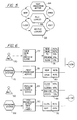
- the present invention may be performed using the sample finite network of states and events illustrated in Fig. 5.
- the network begins at state 64 with the computer system having a text processor application active.
- a set of events includes the commands: "new" and "open". Performing one of these events causes the system to be at a "file loaded” state 66, at which, the events "close” or “exit” may be performed to place the system at a "no file loaded” state 68.
- a speaker utters a "new" file command which is received via the microphone 22.
- an acoustic model is acquired, which in this case is a finite set of words.
- the spoken command is acoustically modeled and recognition values or weights are assigned to each command in the acoustic model set. The highest weighted word, here "new" at 50%, is identified as the most probable acoustic match.
- the computer operating system 28 is monitored for current and prior system states and events, at block 76. In this case, as shown in block 78, this includes only the "text processor active" state.
- the spoken command is statistically analyzed, here according to a finite set of commands weighted according to the statistical probability of their corresponding events occurring at the given state.
- the highest weighted command, "new" at 60%, is identified as the most probable context match.
- both models match the spoken command to the "new" command, which the speech recognition selects as the spoken command.
- the "new" file command is then executed and the system moves to the "file loaded” state 66.
- the speaker utters a "close” file command which is received via the microphone 22, at block 82.
- the acoustic models contain terms other than commands, such as "clothes" in this example.
- another acoustic model is acquired, which again is a finite set of commands.
- the spoken command is acoustically modeled and recognition values or weights are assigned to each command in the acoustic model set to identify a probable acoustic match.
- the computer operating system 28 is monitored for the current and prior system states and events, at block 88, which now includes the states of "text processor active” and “file loaded” as well as the "new" file event, as shown in block 90.
- the spoken command is statistically analyzed, again according to a finite set of weighted commands and a probable context match is identified.
- two words: "close” and “clothes” are equally likely to be the spoken command.
- the matching command is "close”.
- the system recognizes and executes the file "close” command.
- the acoustic match and the context match can each be weighted to establish which one governs.
Landscapes
- Engineering & Computer Science (AREA)
- Acoustics & Sound (AREA)
- Health & Medical Sciences (AREA)
- Audiology, Speech & Language Pathology (AREA)
- Human Computer Interaction (AREA)
- Physics & Mathematics (AREA)
- Computational Linguistics (AREA)
- Multimedia (AREA)
- User Interface Of Digital Computer (AREA)
- Traffic Control Systems (AREA)
- Telephonic Communication Services (AREA)
- Information Retrieval, Db Structures And Fs Structures Therefor (AREA)
- Measurement Of Mechanical Vibrations Or Ultrasonic Waves (AREA)
- Machine Translation (AREA)
- Navigation (AREA)
Applications Claiming Priority (2)
| Application Number | Priority Date | Filing Date | Title |
|---|---|---|---|
| US09/321,918 US6345254B1 (en) | 1999-05-29 | 1999-05-29 | Method and apparatus for improving speech command recognition accuracy using event-based constraints |
| US321918 | 1999-05-29 |
Publications (3)
| Publication Number | Publication Date |
|---|---|
| EP1063635A2 true EP1063635A2 (fr) | 2000-12-27 |
| EP1063635A3 EP1063635A3 (fr) | 2003-02-05 |
| EP1063635B1 EP1063635B1 (fr) | 2005-10-26 |
Family
ID=23252615
Family Applications (1)
| Application Number | Title | Priority Date | Filing Date |
|---|---|---|---|
| EP00304415A Expired - Lifetime EP1063635B1 (fr) | 1999-05-29 | 2000-05-24 | Procédé et dispositif pour améliorer la précision de la reconnaissance de la parole utilisant des contraintes d'événements |
Country Status (6)
| Country | Link |
|---|---|
| US (1) | US6345254B1 (fr) |
| EP (1) | EP1063635B1 (fr) |
| AT (1) | ATE308097T1 (fr) |
| CA (1) | CA2303718A1 (fr) |
| DE (1) | DE60023398T2 (fr) |
| ES (1) | ES2248018T3 (fr) |
Cited By (2)
| Publication number | Priority date | Publication date | Assignee | Title |
|---|---|---|---|---|
| WO2004049308A1 (fr) * | 2002-11-22 | 2004-06-10 | Koninklijke Philips Electronics N.V. | Dispositif et procede de reconnaissance vocale |
| US10311865B2 (en) | 2013-10-14 | 2019-06-04 | The Penn State Research Foundation | System and method for automated speech recognition |
Families Citing this family (16)
| Publication number | Priority date | Publication date | Assignee | Title |
|---|---|---|---|---|
| US8239197B2 (en) | 2002-03-28 | 2012-08-07 | Intellisist, Inc. | Efficient conversion of voice messages into text |
| WO2003084196A1 (fr) | 2002-03-28 | 2003-10-09 | Martin Dunsmuir | Instruction en boucle fermee et systeme de reponse pour communications automatiques entre systemes informatiques a interaction via un canal de communication audio |
| US20030195751A1 (en) * | 2002-04-10 | 2003-10-16 | Mitsubishi Electric Research Laboratories, Inc. | Distributed automatic speech recognition with persistent user parameters |
| JP3724461B2 (ja) * | 2002-07-25 | 2005-12-07 | 株式会社デンソー | 音声制御装置 |
| US7392183B2 (en) * | 2002-12-27 | 2008-06-24 | Intel Corporation | Schedule event context for speech recognition |
| US7555533B2 (en) * | 2003-10-15 | 2009-06-30 | Harman Becker Automotive Systems Gmbh | System for communicating information from a server via a mobile communication device |
| DE602004010054T2 (de) * | 2004-01-19 | 2008-03-06 | Harman Becker Automotive Systems Gmbh | Betätigung eines Sprachdialogsystems |
| EP1560200B8 (fr) * | 2004-01-29 | 2009-08-05 | Harman Becker Automotive Systems GmbH | Methode et système d'interface par dialogue vocal |
| ATE400871T1 (de) * | 2004-01-29 | 2008-07-15 | Harman Becker Automotive Sys | Multimodale dateneingabe |
| EP1562180B1 (fr) * | 2004-02-06 | 2015-04-01 | Nuance Communications, Inc. | Procédé et dispositif de système de dialogue vocal pour controler un appareil électronique |
| US8165886B1 (en) * | 2007-10-04 | 2012-04-24 | Great Northern Research LLC | Speech interface system and method for control and interaction with applications on a computing system |
| US8595642B1 (en) | 2007-10-04 | 2013-11-26 | Great Northern Research, LLC | Multiple shell multi faceted graphical user interface |
| US9570086B1 (en) | 2011-11-18 | 2017-02-14 | Google Inc. | Intelligently canceling user input |
| US9530409B2 (en) | 2013-01-23 | 2016-12-27 | Blackberry Limited | Event-triggered hands-free multitasking for media playback |
| US10310923B1 (en) | 2014-08-28 | 2019-06-04 | Seagate Technology Llc | Probabilistic aging command sorting |
| US10831403B2 (en) | 2017-05-19 | 2020-11-10 | Seagate Technology Llc | Probabalistic command aging and selection |
Family Cites Families (5)
| Publication number | Priority date | Publication date | Assignee | Title |
|---|---|---|---|---|
| US5027406A (en) * | 1988-12-06 | 1991-06-25 | Dragon Systems, Inc. | Method for interactive speech recognition and training |
| US5390279A (en) * | 1992-12-31 | 1995-02-14 | Apple Computer, Inc. | Partitioning speech rules by context for speech recognition |
| CA2115210C (fr) * | 1993-04-21 | 1997-09-23 | Joseph C. Andreshak | Ordinateur interactif reconnaissant les instructions vocales |
| US5465317A (en) * | 1993-05-18 | 1995-11-07 | International Business Machines Corporation | Speech recognition system with improved rejection of words and sounds not in the system vocabulary |
| US5867817A (en) * | 1996-08-19 | 1999-02-02 | Virtual Vision, Inc. | Speech recognition manager |
-
1999
- 1999-05-29 US US09/321,918 patent/US6345254B1/en not_active Expired - Lifetime
-
2000
- 2000-04-05 CA CA002303718A patent/CA2303718A1/fr not_active Abandoned
- 2000-05-24 ES ES00304415T patent/ES2248018T3/es not_active Expired - Lifetime
- 2000-05-24 DE DE60023398T patent/DE60023398T2/de not_active Expired - Lifetime
- 2000-05-24 EP EP00304415A patent/EP1063635B1/fr not_active Expired - Lifetime
- 2000-05-24 AT AT00304415T patent/ATE308097T1/de not_active IP Right Cessation
Cited By (2)
| Publication number | Priority date | Publication date | Assignee | Title |
|---|---|---|---|---|
| WO2004049308A1 (fr) * | 2002-11-22 | 2004-06-10 | Koninklijke Philips Electronics N.V. | Dispositif et procede de reconnaissance vocale |
| US10311865B2 (en) | 2013-10-14 | 2019-06-04 | The Penn State Research Foundation | System and method for automated speech recognition |
Also Published As
| Publication number | Publication date |
|---|---|
| ATE308097T1 (de) | 2005-11-15 |
| EP1063635A3 (fr) | 2003-02-05 |
| DE60023398T2 (de) | 2006-07-06 |
| EP1063635B1 (fr) | 2005-10-26 |
| US6345254B1 (en) | 2002-02-05 |
| ES2248018T3 (es) | 2006-03-16 |
| CA2303718A1 (fr) | 2000-11-29 |
| DE60023398D1 (de) | 2005-12-01 |
Similar Documents
| Publication | Publication Date | Title |
|---|---|---|
| US6308157B1 (en) | Method and apparatus for providing an event-based “What-Can-I-Say?” window | |
| US6345254B1 (en) | Method and apparatus for improving speech command recognition accuracy using event-based constraints | |
| US6327566B1 (en) | Method and apparatus for correcting misinterpreted voice commands in a speech recognition system | |
| US6374214B1 (en) | Method and apparatus for excluding text phrases during re-dictation in a speech recognition system | |
| US6871179B1 (en) | Method and apparatus for executing voice commands having dictation as a parameter | |
| US6839667B2 (en) | Method of speech recognition by presenting N-best word candidates | |
| US7769588B2 (en) | Spoken man-machine interface with speaker identification | |
| KR100800367B1 (ko) | 음성 인식 시스템의 작동 방법, 컴퓨터 시스템 및 프로그램을 갖춘 컴퓨터 판독 가능 저장 매체 | |
| US7228275B1 (en) | Speech recognition system having multiple speech recognizers | |
| EP1380153B1 (fr) | Systeme de reponse vocale | |
| US6754627B2 (en) | Detecting speech recognition errors in an embedded speech recognition system | |
| EP0621531B1 (fr) | Système d'ordinateur interactif reconnaissant des commandes parlées | |
| US6185530B1 (en) | Apparatus and methods for identifying potential acoustic confusibility among words in a speech recognition system | |
| US20020188446A1 (en) | Method and apparatus for distribution-based language model adaptation | |
| KR20010078746A (ko) | 다층 네트워크를 이용한 신호 분류를 위한 방법 및 장치 | |
| US6745165B2 (en) | Method and apparatus for recognizing from here to here voice command structures in a finite grammar speech recognition system | |
| EP1525577B1 (fr) | Procede de reconnaissance vocale automatique | |
| US6253177B1 (en) | Method and system for automatically determining whether to update a language model based upon user amendments to dictated text | |
| EP1385147A2 (fr) | Méthode de reconnaissance de parole avec interpolation dépendante du temps et avec classes de valeurs dynamiques cachées | |
| US6591236B2 (en) | Method and system for determining available and alternative speech commands | |
| US6963834B2 (en) | Method of speech recognition using empirically determined word candidates | |
| US20040143435A1 (en) | Method of speech recognition using hidden trajectory hidden markov models | |
| US6345249B1 (en) | Automatic analysis of a speech dictated document | |
| EP1374228B1 (fr) | Procede et systeme de processeur pour traiter un signal audio | |
| US20010016814A1 (en) | Method and device for recognizing predefined keywords in spoken language |
Legal Events
| Date | Code | Title | Description |
|---|---|---|---|
| PUAI | Public reference made under article 153(3) epc to a published international application that has entered the european phase |
Free format text: ORIGINAL CODE: 0009012 |
|
| AK | Designated contracting states |
Kind code of ref document: A2 Designated state(s): AT BE CH CY DE DK ES FI FR GB GR IE IT LI LU MC NL PT SE |
|
| AX | Request for extension of the european patent |
Free format text: AL;LT;LV;MK;RO;SI |
|
| PUAL | Search report despatched |
Free format text: ORIGINAL CODE: 0009013 |
|
| AK | Designated contracting states |
Designated state(s): AT BE CH CY DE DK ES FI FR GB GR IE IT LI LU MC NL PT SE |
|
| AX | Request for extension of the european patent |
Extension state: AL LT LV MK RO SI |
|
| 17P | Request for examination filed |
Effective date: 20030322 |
|
| AKX | Designation fees paid |
Designated state(s): AT BE CH CY DE DK ES FI FR GB GR IE IT LI LU MC NL PT SE |
|
| 17Q | First examination report despatched |
Effective date: 20040329 |
|
| GRAP | Despatch of communication of intention to grant a patent |
Free format text: ORIGINAL CODE: EPIDOSNIGR1 |
|
| GRAS | Grant fee paid |
Free format text: ORIGINAL CODE: EPIDOSNIGR3 |
|
| GRAA | (expected) grant |
Free format text: ORIGINAL CODE: 0009210 |
|
| AK | Designated contracting states |
Kind code of ref document: B1 Designated state(s): AT BE CH CY DE DK ES FI FR GB GR IE IT LI LU MC NL PT SE |
|
| PG25 | Lapsed in a contracting state [announced via postgrant information from national office to epo] |
Ref country code: AT Free format text: LAPSE BECAUSE OF FAILURE TO SUBMIT A TRANSLATION OF THE DESCRIPTION OR TO PAY THE FEE WITHIN THE PRESCRIBED TIME-LIMIT Effective date: 20051026 Ref country code: FI Free format text: LAPSE BECAUSE OF FAILURE TO SUBMIT A TRANSLATION OF THE DESCRIPTION OR TO PAY THE FEE WITHIN THE PRESCRIBED TIME-LIMIT Effective date: 20051026 |
|
| REG | Reference to a national code |
Ref country code: GB Ref legal event code: FG4D |
|
| REG | Reference to a national code |
Ref country code: CH Ref legal event code: EP Ref country code: CH Ref legal event code: NV Representative=s name: INTERNATIONAL BUSINESS MACHINES CORPORATION |
|
| REG | Reference to a national code |
Ref country code: SE Ref legal event code: TRGR |
|
| REG | Reference to a national code |
Ref country code: IE Ref legal event code: FG4D |
|
| REF | Corresponds to: |
Ref document number: 60023398 Country of ref document: DE Date of ref document: 20051201 Kind code of ref document: P |
|
| PG25 | Lapsed in a contracting state [announced via postgrant information from national office to epo] |
Ref country code: DK Free format text: LAPSE BECAUSE OF FAILURE TO SUBMIT A TRANSLATION OF THE DESCRIPTION OR TO PAY THE FEE WITHIN THE PRESCRIBED TIME-LIMIT Effective date: 20060126 Ref country code: GR Free format text: LAPSE BECAUSE OF FAILURE TO SUBMIT A TRANSLATION OF THE DESCRIPTION OR TO PAY THE FEE WITHIN THE PRESCRIBED TIME-LIMIT Effective date: 20060126 |
|
| REG | Reference to a national code |
Ref country code: ES Ref legal event code: FG2A Ref document number: 2248018 Country of ref document: ES Kind code of ref document: T3 |
|
| PG25 | Lapsed in a contracting state [announced via postgrant information from national office to epo] |
Ref country code: PT Free format text: LAPSE BECAUSE OF FAILURE TO SUBMIT A TRANSLATION OF THE DESCRIPTION OR TO PAY THE FEE WITHIN THE PRESCRIBED TIME-LIMIT Effective date: 20060327 |
|
| ET | Fr: translation filed | ||
| PGFP | Annual fee paid to national office [announced via postgrant information from national office to epo] |
Ref country code: IE Payment date: 20060516 Year of fee payment: 7 |
|
| PG25 | Lapsed in a contracting state [announced via postgrant information from national office to epo] |
Ref country code: MC Free format text: LAPSE BECAUSE OF NON-PAYMENT OF DUE FEES Effective date: 20060531 |
|
| PGFP | Annual fee paid to national office [announced via postgrant information from national office to epo] |
Ref country code: IT Payment date: 20060531 Year of fee payment: 7 |
|
| PLBE | No opposition filed within time limit |
Free format text: ORIGINAL CODE: 0009261 |
|
| STAA | Information on the status of an ep patent application or granted ep patent |
Free format text: STATUS: NO OPPOSITION FILED WITHIN TIME LIMIT |
|
| 26N | No opposition filed |
Effective date: 20060727 |
|
| REG | Reference to a national code |
Ref country code: IE Ref legal event code: MM4A |
|
| REG | Reference to a national code |
Ref country code: GB Ref legal event code: 746 Effective date: 20080416 |
|
| PG25 | Lapsed in a contracting state [announced via postgrant information from national office to epo] |
Ref country code: IE Free format text: LAPSE BECAUSE OF NON-PAYMENT OF DUE FEES Effective date: 20070524 |
|
| PG25 | Lapsed in a contracting state [announced via postgrant information from national office to epo] |
Ref country code: LU Free format text: LAPSE BECAUSE OF NON-PAYMENT OF DUE FEES Effective date: 20060524 |
|
| PG25 | Lapsed in a contracting state [announced via postgrant information from national office to epo] |
Ref country code: CY Free format text: LAPSE BECAUSE OF FAILURE TO SUBMIT A TRANSLATION OF THE DESCRIPTION OR TO PAY THE FEE WITHIN THE PRESCRIBED TIME-LIMIT Effective date: 20051026 |
|
| PG25 | Lapsed in a contracting state [announced via postgrant information from national office to epo] |
Ref country code: IT Free format text: LAPSE BECAUSE OF NON-PAYMENT OF DUE FEES Effective date: 20070524 |
|
| NLS | Nl: assignments of ep-patents |
Owner name: NUANCE COMMUNICATIONS, INC. Effective date: 20090723 |
|
| REG | Reference to a national code |
Ref country code: ES Ref legal event code: PC2A |
|
| REG | Reference to a national code |
Ref country code: FR Ref legal event code: TP |
|
| REG | Reference to a national code |
Ref country code: CH Ref legal event code: PUE Owner name: UANCE COMMUNICATIONS, INC Free format text: INTERNATIONAL BUSINESS MACHINES CORPORATION#NEW ORCHARD ROAD#ARMONK, N.Y. 10504 (US) -TRANSFER TO- NUANCE COMMUNICATIONS, INC#ONE WAYSIDE ROAD#BURLINGTON, MA 01803 (US) Ref country code: CH Ref legal event code: NV Representative=s name: VOSSIUS & PARTNER |
|
| REG | Reference to a national code |
Ref country code: GB Ref legal event code: 732E Free format text: REGISTERED BETWEEN 20100617 AND 20100623 |
|
| REG | Reference to a national code |
Ref country code: GB Ref legal event code: S47 Free format text: CANCELLATION OF ENTRY; APPLICATION BY FILING PATENTS FORM 15 WITHIN 4 WEEKS FROM THE DATE OF PUBLICATION OF THIS JOURNAL NUANCE COMMUNICATIONS, INC METHOD AND APPARATUS FOR IMPROVING SPEECH COMMAND RECOGNITION ACCURACY USING EVENT-BASED CONSTRAINTS |
|
| REG | Reference to a national code |
Ref country code: GB Ref legal event code: S47 Free format text: ENTRY CANCELLED; NOTICE IS HEREBY GIVEN THAT THE ENTRY ON THE REGISTER 'LICENCES OF RIGHT' UPON THE UNDER MENTIONED PATENT WAS CANCELLED ON 9 FEBRUARY 2011METHOD AND APPARATUS FOR IMPROVING SPEECH COMMAND RECOGNITION ACCURACY USING EVENT-BASED CONSTRAINTS |
|
| REG | Reference to a national code |
Ref country code: FR Ref legal event code: PLFP Year of fee payment: 17 |
|
| PGFP | Annual fee paid to national office [announced via postgrant information from national office to epo] |
Ref country code: BE Payment date: 20160324 Year of fee payment: 17 |
|
| PGFP | Annual fee paid to national office [announced via postgrant information from national office to epo] |
Ref country code: NL Payment date: 20160510 Year of fee payment: 17 |
|
| REG | Reference to a national code |
Ref country code: CH Ref legal event code: PFA Owner name: NUANCE COMMUNICATIONS, INC, US Free format text: FORMER OWNER: NUANCE COMMUNICATIONS, INC, US |
|
| PGFP | Annual fee paid to national office [announced via postgrant information from national office to epo] |
Ref country code: CH Payment date: 20160511 Year of fee payment: 17 Ref country code: ES Payment date: 20160412 Year of fee payment: 17 |
|
| PGFP | Annual fee paid to national office [announced via postgrant information from national office to epo] |
Ref country code: SE Payment date: 20160511 Year of fee payment: 17 Ref country code: FR Payment date: 20160412 Year of fee payment: 17 |
|
| REG | Reference to a national code |
Ref country code: CH Ref legal event code: PL |
|
| REG | Reference to a national code |
Ref country code: SE Ref legal event code: EUG |
|
| REG | Reference to a national code |
Ref country code: NL Ref legal event code: MM Effective date: 20170601 |
|
| PG25 | Lapsed in a contracting state [announced via postgrant information from national office to epo] |
Ref country code: LI Free format text: LAPSE BECAUSE OF NON-PAYMENT OF DUE FEES Effective date: 20170531 Ref country code: CH Free format text: LAPSE BECAUSE OF NON-PAYMENT OF DUE FEES Effective date: 20170531 Ref country code: SE Free format text: LAPSE BECAUSE OF NON-PAYMENT OF DUE FEES Effective date: 20170525 |
|
| REG | Reference to a national code |
Ref country code: FR Ref legal event code: ST Effective date: 20180131 |
|
| PG25 | Lapsed in a contracting state [announced via postgrant information from national office to epo] |
Ref country code: NL Free format text: LAPSE BECAUSE OF NON-PAYMENT OF DUE FEES Effective date: 20170601 |
|
| REG | Reference to a national code |
Ref country code: BE Ref legal event code: MM Effective date: 20170531 |
|
| PG25 | Lapsed in a contracting state [announced via postgrant information from national office to epo] |
Ref country code: FR Free format text: LAPSE BECAUSE OF NON-PAYMENT OF DUE FEES Effective date: 20170531 |
|
| REG | Reference to a national code |
Ref country code: ES Ref legal event code: FD2A Effective date: 20180703 |
|
| PG25 | Lapsed in a contracting state [announced via postgrant information from national office to epo] |
Ref country code: ES Free format text: LAPSE BECAUSE OF NON-PAYMENT OF DUE FEES Effective date: 20170525 |
|
| PG25 | Lapsed in a contracting state [announced via postgrant information from national office to epo] |
Ref country code: BE Free format text: LAPSE BECAUSE OF NON-PAYMENT OF DUE FEES Effective date: 20170531 |
|
| PGFP | Annual fee paid to national office [announced via postgrant information from national office to epo] |
Ref country code: DE Payment date: 20190731 Year of fee payment: 20 Ref country code: GB Payment date: 20190529 Year of fee payment: 20 |
|
| REG | Reference to a national code |
Ref country code: DE Ref legal event code: R071 Ref document number: 60023398 Country of ref document: DE |
|
| REG | Reference to a national code |
Ref country code: GB Ref legal event code: PE20 Expiry date: 20200523 |
|
| PG25 | Lapsed in a contracting state [announced via postgrant information from national office to epo] |
Ref country code: GB Free format text: LAPSE BECAUSE OF EXPIRATION OF PROTECTION Effective date: 20200523 |