EP1063860B1 - Méthode et système d'accès multiple dans un système de radiocommunications - Google Patents
Méthode et système d'accès multiple dans un système de radiocommunications Download PDFInfo
- Publication number
- EP1063860B1 EP1063860B1 EP99500108A EP99500108A EP1063860B1 EP 1063860 B1 EP1063860 B1 EP 1063860B1 EP 99500108 A EP99500108 A EP 99500108A EP 99500108 A EP99500108 A EP 99500108A EP 1063860 B1 EP1063860 B1 EP 1063860B1
- Authority
- EP
- European Patent Office
- Prior art keywords
- signalling
- virtual
- fixed unit
- multiframe
- identities
- Prior art date
- Legal status (The legal status is an assumption and is not a legal conclusion. Google has not performed a legal analysis and makes no representation as to the accuracy of the status listed.)
- Expired - Lifetime
Links
- 238000000034 method Methods 0.000 title claims abstract description 25
- 230000011664 signaling Effects 0.000 claims abstract description 79
- 230000005540 biological transmission Effects 0.000 claims abstract description 11
- 238000010586 diagram Methods 0.000 description 3
- 238000004458 analytical method Methods 0.000 description 1
- 238000012512 characterization method Methods 0.000 description 1
- 125000004122 cyclic group Chemical group 0.000 description 1
- 230000007423 decrease Effects 0.000 description 1
- 230000001934 delay Effects 0.000 description 1
Images
Classifications
-
- H—ELECTRICITY
- H04—ELECTRIC COMMUNICATION TECHNIQUE
- H04W—WIRELESS COMMUNICATION NETWORKS
- H04W74/00—Wireless channel access
- H04W74/002—Transmission of channel access control information
- H04W74/006—Transmission of channel access control information in the downlink, i.e. towards the terminal
Definitions
- the present invention relates to a method for allocating the radio and signalling resources, in general, of a multiple access radiocommunication system, which comprises a set of fixed units such that each of them has an coverage area or cell associated with it. Within each cell are located a plurality of remote units, which employ time division multiple access (TDMA) techniques for communicating with their fixed unit.
- TDMA time division multiple access
- the multiple access method is of special, but not exclusive, application in a point-to-multipoint radiocommunication system, so that the allocation of the different time slots that constitute a frame, in the uplink direction of the communication, is carried out in a dynamic mode as a function of the traffic requirements of each of the remote units that constitute the radiocommunication system.
- a radiocommunication system is divided into a plurality of cells, and each cell comprises a fixed unit normally connected by means of a cable network to a telephone transport network such as a public switched telephone network (PSTN).
- PSTN public switched telephone network
- Each fixed unit has associated a coverage area inside which it establishes communications via radio with those remote units located within its coverage area, by using time division multiple access (TDMA) techniques, that is, the frequency band is divided into time slots which are assigned to the sending and receiving of signals. Consequently, a number of communications can be transmitted simultaneously in a single frequency band.
- TDMA time division multiple access
- each remote unit transmits, in the uplink direction of the communication, in addition to the data bursts corresponding to the communications already established, signalling information relative to both the communications that are already established and to the new ones arising in the remote units.
- a commonly employed method consists in the cyclic allocation of usage times for these signalling slots in an inflexible manner as a function of the identity of each remote unit, in the form of a signalling multiframe.
- each remote unit must wait for its signalling time to appear for sending a limited message, limited in length because the signalling channel is shared among all the remote units in an inflexible manner regardless of whether they require to signal or not.
- a remote unit has no message to send, it has to occupy the allocated time, for example, with a stuffing message.
- a remote unit if a remote unit has several messages to send, it must wait for successive turns in order to transmit the information in question, even although there are time slots in the same frame which are filled with stuffing information, that is there is an inflexible turn or order.
- a fixed unit will be able to communicate simultaneously with as many remote units as there are time slots for signalling in the signalling multiframe in the uplink direction of the communication.
- the present invention presents a method, system, fixed unit and remote unit as defined in the appended claims.
- the proposed multiple access method for a radiocommunication system overcomes the problems above indicated.
- the radiocommunication system has its coverage area divided into a plurality of cells, so that within each cell there is at least one fixed unit that communicates with a plurality of remote units located inside the cell.
- the access method avoids forming a signalling multiframe working with a fixed turn for transmitting.
- the fixed unit broadcasts over a pilot channel the occupancy of virtual identities for signalling and that form the signalling multiframe, so that when a remote unit wishes to transmit information in the uplink direction, it selects one of the virtual identities received.
- the fixed unit comprises a first controller means that establishes the number of virtual identities and broadcast their occupancy.
- the signalling multiframe is only used by those remote units that have messages to send. This method makes allocation of the signalling multiframe more flexible, reducing signalling delays.
- the number of remote units that can communicate simultaneously with a fixed unit is a function of the number of time slots into which the signalling multiframe is divided, it not being possible to increase these indefinitely without increasing, in turn, the signalling delay.
- the method proposed it is possible to increase the number of remote units since the multiframe time slots are distributed among those units which have to transmit signalling to the fixed unit.
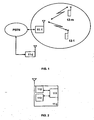
- Figure 1 shows a preferred embodiment of the point-to-multipoint radiocommunication system, which comprises a set of fixed units 11-1 to 11-n such that each one has associated with it a cell or coverage area of the radiocommunication system.
- TDM/TDMA time division multiple access
- PSTN public switched telephone network
- a carrier frequency is divided into time slots that are grouped into frames, there being frames for both transmission directions.
- time slots reserved for signalling between the fixed unit 11-j and the remote units 12-1 to 12-m, which form a signalling multiframe.
- a remote unit 12-i When a remote unit 12-i wishes to transmit information relative to a communication, it inserts its data bursts into an allocated time slot of the frame.
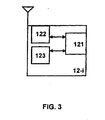
- the time slot allocation is carried out by a first controller means 111 belonging to the fixed unit 11-j (see figure 2).
- the first controller means 111 incorporates an algorithm that determines a first predetermined number of virtual identities for signalling and implements it on the basis of the traffic conditions of the radiocommunication system.
- the virtual identities proposed form the signalling multiframe and are independent of the true identities of each remote unit 12-i, which shall be used for other purposes (management).
- the virtual identities created are supplied to a first radio transmitter 112 of the fixed unit 11-j to be broadcast over a pilot channel, being received in the remote unit 12-i by means of a second radio receiver 123.
- the remote unit 12-i selects one of the virtual identities available, independently of its true identity, by employing a second controller means 121 (see figure 3).
- the second controller means 121 receives from the second radio receiver 123 the proposed identities and makes the selection of one of them on the basis of traffic requirements and on the nature of the information to be transmitted, be this voice, data, video, television or other digital signal.
- the duration of traffic bursts is therefore variable.
- the virtual identity selected shall indicate the order of transmission within the signalling multiframe.
- the remote unit 12-i shall start to transmit, by means of a second radio transmitter 122, signalling messages in the time slot allocated within an uplink frame.
- the number of virtual identities conditions the duration of the signalling multiframe, there being a maximum duration permitted.
- a first radio receiver 113 of the fixed unit 11-j receives the signalling message and feeds it to the first controller means 111, which analyses it and records the virtual identity occupied.
- the signalling multiframe is dynamic; that is, it is organised as a function of the number of virtual identities proposed at any given moment.
- the first controller means 111 increases the number of proposed virtual identities within the signalling multiframe. Consequently, the duration of the signalling multiframe increases and the spacing between bursts corresponding to a given communication also increases. As the signalling processes are gradually concluded, the first controller means 111 reduces the number of virtual identities proposed within the signalling multiframe.
- the first controller means 111 During system start-up, and while a given traffic situation exists, the first controller means 111, by default, establishes a reduced number of virtual identities for selection by the remote units 12-1 to 12-m. For example, if the virtual identities 1 to 4 are put into play, a four time slots multiframe is obtained.
- the multiframe duration (time between consecutive bursts transmitted from the same remote unit 12-i), gradually increases as virtual identities are added in order to permit signalling from more remote units 12-1 to 12-m, and, in addition, the duration of the burst from each of the remote units 12-1 to 12-m diminishes.
- the fixed unit 11-j puts the released virtual identities into play again, to be assigned to new calls and thereby avoid having to introduce more virtual identities than those necessary, which would lengthen the duration of the multiframe needlessly.
- the fixed unit 11-j transmits, over the broadcast channel, the virtual identities that are presently occupied, with an input acknowledgement message.
- the remote unit 12-i that detects this acknowledgement message shall continue to use its virtual identity and the corresponding time slot, while the rest shall interpret this as a warning of virtual identity and time slot occupancy.
- another remote unit 12-k wishes to initiate a call set-up process, it shall select another virtual identity available. If two remote units 12-i and 12-k coincide in the use of the same virtual identity, and consequently of the same time slot, the fixed unit 11-j detects this collision and broadcasts a "not confirmed" message for the right to employ said virtual identity and time slot.
Landscapes
- Engineering & Computer Science (AREA)
- Computer Networks & Wireless Communication (AREA)
- Signal Processing (AREA)
- Mobile Radio Communication Systems (AREA)
- Time-Division Multiplex Systems (AREA)
- Radio Relay Systems (AREA)
Claims (19)
- Procédé d'accès multiple dans un système de radiocommunications AMRT dans lequel une multitrame de signalisation est utilisée, dans les deux sens de transmission, pour échanger des messages de signalisation entre au moins une unité fixe (11-j) et un ensemble d'unités distantes (12-1 à 12-m) situées dans la zone de couverture associée à ladite unité fixe (11-j) ; caractérisé par les étapes suivantes :- établissement, par un premier moyen de contrôleur (111) dans ladite unité fixe (11-j), du nombre de tranches de temps en lequel diviser ladite multitrame de signalisation ;- association, par ledit premier moyen de contrôleur (111), d'une identité virtuelle à chacune desdites tranches de temps ;- transmission, par ladite unité fixe (11-j), de l'occupation desdites tranches de temps en utilisant lesdites identités virtuelles sur un canal de diffusion ;- sélection par une unité distante (12-1 à 12-m) de l'une des identités virtuelles disponibles ; et- utilisation, par ladite unité distante (12-1 à 12-m), de la tranche de temps correspondant à ladite identité virtuelle sélectionnée.
- Procédé d'accès multiple selon la revendication 1, caractérisé en ce que lesdites identités virtuelles sont indépendantes des véritables identités desdites unités distantes (12-1 à 12-m) et sont diffusées par un premier émetteur radio (112), inclus dans ladite unité fixe (11-j), sur un canal pilote dans le sens de transmission aval.
- Procédé d'accès multiple selon la revendication 2, caractérisé en ce que ledit canal pilote est reçu au moyen d'un deuxième récepteur radio (123), inclus dans une unité distante (12-i), passé à un deuxième moyen de contrôleur (121) pour enregistrer le nombre prédéterminé d'identités virtuelles de signalisation.
- Procédé d'accès multiple selon la revendication 3, caractérisé en ce qu'une identité virtuelle est sélectionnée par ledit deuxième moyen de contrôleur (121) quand ladite unité distante (12-i) désire transmettre un message de signalisation par l'intermédiaire d'un deuxième émetteur radio (122), à quelle fin il insère le message de signalisation dans la tranche de temps correspondant à l'identité virtuelle sélectionnée et est reçu dans un premier récepteur radio (113), inclus dans ladite unité fixe (11-j).
- Procédé d'accès multiple selon la revendication 4, caractérisé en ce que ladite multitrame de signalisation reçue dans ledit premier récepteur radio (113) est fournie audit premier moyen de contrôleur (111) afin que ladite identité virtuelle sélectionnée soit repérée comme étant occupée et après cela diffusée au moyen dudit canal pilote.
- Procédé d'accès multiple selon l'une quelconque des revendications 1 à 4, caractérisé en ce que ladite multitrame de signalisation est formée par un nombre de tranches de temps qui correspond à un nombre maximum d'identités virtuelles de signalisation qui est fonction de la durée maximum admissible de ladite multitrame de signalisation.
- Procédé d'accès multiple selon la revendication 6, caractérisé en ce que le nombre d'identités virtuelles de signalisation générées par ledit premier moyen de contrôleur (111) est fonction du niveau d'occupation de ladite multitrame de signalisation.
- Système d'accès multiple dans un système de radiocommunications AMRT dans lequel une multitrame de signalisation est utilisée, dans les deux sens de transmission, pour échanger des messages de signalisation entre au moins une unité fixe (11-j) et un ensemble d'unités distantes (12-1 à 12-m) situées dans la zone de couverture associée à ladite unité fixe (11-j), caractérisé en ce que :- l'unité fixe (11-j) comprend un premier moyen de contrôleur (111) adapté pour établir un nombre de tranches de temps en lequel diviser ladite multitrame de signalisation ; et pour associer une identité virtuelle à chacune desdites tranches de temps ;- l'unité fixe (11-j) est adaptée pour transmettre l'occupation desdites tranches de temps en utilisant lesdites identités virtuelles sur le canal de diffusion ;- une unité distante (12-1 à 12-m) est adaptée pour sélectionner l'une des identités virtuelles disponibles ; et utiliser la tranche de temps correspondant à ladite identité virtuelle sélectionnée.
- Système d'accès multiple selon la revendication 8, caractérisé en ce que ladite unité fixe (11-j) comprend un premier émetteur radio (112) pour diffuser lesdites identités virtuelles sur un canal pilote dans le sens aval de la transmission, de telle sorte que lesdites identités virtuelles soient indépendantes des véritables identités desdites unités distantes (12-1 à 12-m).
- Système d'accès multiple selon la revendication 9, caractérisé en ce que ladite unité distante (12-i) comprend un deuxième récepteur radio (123) pour recevoir ledit canal pilote, qui est fourni à un deuxième moyen de contrôleur (121) pour enregistrer le nombre prédéterminé d'identités virtuelles de signalisation.
- Système d'accès multiple selon la revendication 10, caractérisé en ce que ledit deuxième moyen de contrôleur (121) est adapté pour sélectionner une identité virtuelle quand ladite unité distante (12-i) désire transmettre un message de signalisation de façon à insérer le message de signalisation à l'intérieur de la tranche de temps correspondant à l'identité virtuelle sélectionnée, de façon à ce qu'il soit transmis par un deuxième émetteur radio (122) de telle sorte qu'un premier récepteur radio (113), inclus dans ladite unité fixe (11-j), reçoive ledit message de signalisation.
- Système d'accès multiple selon la revendication 11, caractérisé en ce que ledit premier récepteur radio (113) est adapté pour fournir audit premier moyen de contrôleur (111) ladite multitrame de signalisation, afin que ladite identité virtuelle sélectionnée soit repérée comme étant occupée et diffusée après cela sur ledit canal pilote.
- Système d'accès multiple selon l'une quelconque des revendications 8 à 12, caractérisé en ce que ledit premier moyen de contrôleur (111) est adapté pour générer un nombre d'identités virtuelles de signalisation en fonction du niveau d'occupation de ladite multitrame de signalisation, de telle sorte qu'il existe un nombre maximum d'identités virtuelles de signalisation qui est fonction de la durée maximum admissible de ladite multitrame de signalisation.
- Unité fixe destinée à être utilisée dans un système de radiocommunications AMRT dans lequel une multitrame de signalisation est utilisée, dans les deux sens de transmission, pour échanger des messages de signalisation entre au moins ladite unité fixe (11-j) et un ensemble d'unités distantes (12-1 à 12-m) situées dans la zone de couverture associée à ladite unité fixe (11-j), caractérisée en ce que :- l'unité fixe (11-j) comprend un premier moyen de contrôleur (111) adapté pour établir un nombre de tranches de temps en lequel diviser ladite multitrame de signalisation ; et pour associer une identité virtuelle à chacune desdites tranches de temps ; et en ce que- l'unité fixe (11-j) est adaptée pour transmettre l'occupation desdites tranches de temps en utilisant lesdites identités virtuelles sur le canal de diffusion.
- Unité fixe selon la revendication 14, caractérisée en ce que ladite unité fixe (11-j) comprend un premier émetteur radio (112) pour diffuser lesdites identités virtuelles sur un canal pilote dans le sens aval de la transmission, lesdites identités virtuelles étant indépendantes des véritables identités desdites unités distantes (12-1 à 12-m).
- Unité fixe selon la revendication 14, caractérisée en ce qu'elle comprend un premier récepteur radio (113) pour recevoir des messages de signalisation et passer lesdits messages au premier moyen de contrôleur (111), ce dernier étant adapté pour analyser les messages de signalisation reçus et enregistrer une identité virtuelle occupée.
- Unité distante destinée à être utilisée dans un système de radiocommunications AMRT dans lequel une multitrame de signalisation est utilisée, dans les deux sens de transmission, pour échanger des messages de signalisation entre une unité fixe (11-j) et un ensemble d'unités distantes (12-1 à 12-m) situées dans la zone de couverture associée à l'unité fixe (11-j) ; caractérisée en ce que l'unité distante (12-1 à 12-m) est adaptée pour :- recevoir sur un canal diffusé depuis l'unité fixe (11-j) l'occupation d'un nombre de tranches de temps, en lequel ladite multitrame de signalisation doit être divisée, en utilisant des identités virtuelles associées à chaque tranche de temps ;- sélectionner une identité virtuelle disponible indicative d'une tranche de temps disponible pour ladite multitrame de signalisation ; et- utiliser la tranche de temps correspondant à ladite identité virtuelle sélectionnée pour la transmission amont de messages de signalisation.
- Unité distante selon la revendication 17, dans laquelle ladite unité distante (12-i) comprend un deuxième récepteur radio (123) pour recevoir un canal pilote diffusé depuis l'unité fixe (11-j) contenant des identités virtuelles, lesdites identités virtuelles étant indépendantes de la véritable identité desdites unités distantes (12-1 à 12-m) ; et pour fournir ledit canal pilote à un deuxième moyen de contrôleur (121) pour enregistrer le nombre prédéterminé d'identités virtuelles de signalisation.
- Unité distante selon la revendication 18, caractérisée en ce que ledit deuxième moyen de contrôleur (121) est adapté pour sélectionner une identité virtuelle pour transmettre un message de signalisation en utilisant une tranche de temps correspondant à l'identité virtuelle sélectionnée.
Priority Applications (4)
| Application Number | Priority Date | Filing Date | Title |
|---|---|---|---|
| EP99500108A EP1063860B1 (fr) | 1999-06-25 | 1999-06-25 | Méthode et système d'accès multiple dans un système de radiocommunications |
| DE69935424T DE69935424T2 (de) | 1999-06-25 | 1999-06-25 | Verfahren und System mit Mehrfachzugang in einem Radiokommunikationssystem |
| AT99500108T ATE356513T1 (de) | 1999-06-25 | 1999-06-25 | Verfahren und system mit mehrfachzugang in einem radiokommunikationssystem |
| US09/598,896 US7301932B1 (en) | 1999-06-25 | 2000-06-22 | Method and system for multiple access in a radiocommunication system |
Applications Claiming Priority (1)
| Application Number | Priority Date | Filing Date | Title |
|---|---|---|---|
| EP99500108A EP1063860B1 (fr) | 1999-06-25 | 1999-06-25 | Méthode et système d'accès multiple dans un système de radiocommunications |
Publications (2)
| Publication Number | Publication Date |
|---|---|
| EP1063860A1 EP1063860A1 (fr) | 2000-12-27 |
| EP1063860B1 true EP1063860B1 (fr) | 2007-03-07 |
Family
ID=8242505
Family Applications (1)
| Application Number | Title | Priority Date | Filing Date |
|---|---|---|---|
| EP99500108A Expired - Lifetime EP1063860B1 (fr) | 1999-06-25 | 1999-06-25 | Méthode et système d'accès multiple dans un système de radiocommunications |
Country Status (4)
| Country | Link |
|---|---|
| US (1) | US7301932B1 (fr) |
| EP (1) | EP1063860B1 (fr) |
| AT (1) | ATE356513T1 (fr) |
| DE (1) | DE69935424T2 (fr) |
Families Citing this family (1)
| Publication number | Priority date | Publication date | Assignee | Title |
|---|---|---|---|---|
| US20060211395A1 (en) * | 2005-03-15 | 2006-09-21 | Intel Corporation | Apparatus and method of detecting pilot carriers received on a fading channel |
Family Cites Families (15)
| Publication number | Priority date | Publication date | Assignee | Title |
|---|---|---|---|---|
| DE3246742C1 (de) * | 1982-12-17 | 1984-07-05 | Philips Kommunikations Industrie AG, 8500 Nürnberg | Verfahren zur Verteilung der Verkehrsmenge auf verschiedene Organisationskanaele eines Funkuebertragungssystems |
| FI98426C (fi) * | 1994-05-03 | 1997-06-10 | Nokia Mobile Phones Ltd | Järjestelmä pakettidatan siirtämiseksi digitaalisen aikajakomonikäyttöön TDMA perustuvan solukkojärjestelmän ilmarajapinnassa |
| US5563883A (en) * | 1994-07-18 | 1996-10-08 | Cheng; Alexander L. | Dynamic channel management and signalling method and apparatus |
| FI96558C (fi) * | 1994-09-27 | 1996-07-10 | Nokia Telecommunications Oy | Menetelmä datasiirtoa varten TDMA-matkaviestinjärjestelmässä sekä menetelmän toteuttava matkaviestinjärjestelmä |
| DE69433872T2 (de) * | 1994-10-26 | 2005-07-14 | International Business Machines Corp. | Mediumzugriffssteuerungsschema für drahtlose lokale Netze mit verschachtelten Zeitmultiplexrahmen variabler Länge |
| US5598417A (en) * | 1995-04-28 | 1997-01-28 | Motorola, Inc. | Dynamic control of a data channel in a TDM wireless communication system |
| US5881059A (en) * | 1995-11-16 | 1999-03-09 | Alcatel Usa, Inc. | System and method for a multi-host subscriber loop |
| US5959999A (en) * | 1996-09-20 | 1999-09-28 | Linkabit Wireless, Inc. | Providing control-function data in communication-data channel of a full-mesh satellite communication network by dynamic time-slot assignment in TDMA-frame communication channel |
| US6259724B1 (en) * | 1996-10-18 | 2001-07-10 | Telefonaktiebolaget L M Ericsson (Publ) | Random access in a mobile telecommunications system |
| US6163533A (en) * | 1997-04-30 | 2000-12-19 | Telefonaktiebolaget Lm Ericsson (Publ) | Random access in a mobile telecommunications system |
| JP3075217B2 (ja) * | 1997-06-30 | 2000-08-14 | 日本電気株式会社 | 移動通信システムのキャリアセンス方法 |
| FI110351B (fi) * | 1997-11-11 | 2002-12-31 | Nokia Corp | Menetelmä radiosignaalin lähetyksen aikavälien tahdistamiseksi sekä menetelmän mukainen radiopuhelinverkko, tukiasema-alajärjestelmä ja matkaviestin |
| US6363079B1 (en) * | 1997-12-31 | 2002-03-26 | At&T Corp. | Multifunction interface facility connecting wideband multiple access subscriber loops with various networks |
| RU2179372C2 (ru) * | 1998-04-14 | 2002-02-10 | Самсунг Электроникс Ко., Лтд. | Способ передачи данных в подвижной системе связи |
| JP3450196B2 (ja) * | 1998-09-09 | 2003-09-22 | 三菱電機株式会社 | Tdma無線通信方式 |
-
1999
- 1999-06-25 EP EP99500108A patent/EP1063860B1/fr not_active Expired - Lifetime
- 1999-06-25 DE DE69935424T patent/DE69935424T2/de not_active Expired - Lifetime
- 1999-06-25 AT AT99500108T patent/ATE356513T1/de not_active IP Right Cessation
-
2000
- 2000-06-22 US US09/598,896 patent/US7301932B1/en not_active Expired - Fee Related
Also Published As
| Publication number | Publication date |
|---|---|
| ATE356513T1 (de) | 2007-03-15 |
| DE69935424T2 (de) | 2007-12-13 |
| DE69935424D1 (de) | 2007-04-19 |
| US7301932B1 (en) | 2007-11-27 |
| EP1063860A1 (fr) | 2000-12-27 |
Similar Documents
| Publication | Publication Date | Title |
|---|---|---|
| EP0444592B1 (fr) | Système de communication en multiplex pluridirectionnel | |
| JP3450196B2 (ja) | Tdma無線通信方式 | |
| CA2135950C (fr) | Methode d'acces multiple | |
| US4868811A (en) | Multiple access communication system | |
| EP1555771B1 (fr) | Méthode et dispositif pour attribuer des intervalles de temps dans un système TDD | |
| EP1062821B1 (fr) | Procede d'indication variable de programmation de blocs par un drapeau d'etat de liaison montante dans un systeme de communication de donnees par paquets | |
| US5465253A (en) | Method and apparatus for demand-assigned reduced-rate out-of-band signaling channel | |
| US4731783A (en) | Method and system for time division multiple access satellite telecommunications | |
| US4972506A (en) | Method of transmitting data information in a mobile, cellular radio communication system | |
| EP0781495B1 (fr) | Transmission de messages de commande en telephonie numerique | |
| CN1215513A (zh) | 用于随机接入时分多址卫星无线电话通信中的系统及方法 | |
| US6925072B1 (en) | System and method for transmitting control information between a control unit and at least one sub-unit | |
| US20040023649A1 (en) | Method for conducting data communications with subscriber stations, and radio communications network for implementing said method | |
| KR101502922B1 (ko) | 통신시스템에서 트래픽 채널을 할당하기 위한 방법 및 장치 | |
| EP0781496A1 (fr) | Procede et appareil de selection d'un canal radioelectrique | |
| GB2301749A (en) | Allocation of signalling and traffic slots in TDM communication system | |
| EP1063860B1 (fr) | Méthode et système d'accès multiple dans un système de radiocommunications | |
| JP2002505817A (ja) | 共通のデータ媒体でデータ伝送するための方法 | |
| US6708035B1 (en) | System for transmitting asymmetric data in a radiocommunications system | |
| JPS5833731B2 (ja) | 移動通信の制御信号中継方式 | |
| EP1065898B1 (fr) | Procédé et système pour la transmission de données dans un système de radiocommunication | |
| EP1107619A2 (fr) | Système d'interrogations multiples pour GPRS | |
| JPH01220926A (ja) | 多方向接続型ディジタル加入者無線方式 |
Legal Events
| Date | Code | Title | Description |
|---|---|---|---|
| PUAI | Public reference made under article 153(3) epc to a published international application that has entered the european phase |
Free format text: ORIGINAL CODE: 0009012 |
|
| AK | Designated contracting states |
Kind code of ref document: A1 Designated state(s): AT BE CH CY DE DK ES FI FR GB GR IE IT LI LU MC NL PT SE |
|
| AX | Request for extension of the european patent |
Free format text: AL;LT;LV;MK;RO;SI |
|
| AKX | Designation fees paid | ||
| 17P | Request for examination filed |
Effective date: 20010608 |
|
| RBV | Designated contracting states (corrected) |
Designated state(s): AT BE CH CY DE DK ES LI |
|
| 17Q | First examination report despatched |
Effective date: 20040514 |
|
| GRAP | Despatch of communication of intention to grant a patent |
Free format text: ORIGINAL CODE: EPIDOSNIGR1 |
|
| GRAS | Grant fee paid |
Free format text: ORIGINAL CODE: EPIDOSNIGR3 |
|
| GRAA | (expected) grant |
Free format text: ORIGINAL CODE: 0009210 |
|
| AK | Designated contracting states |
Kind code of ref document: B1 Designated state(s): AT BE CH CY DE DK ES FI FR GB GR IE IT LI LU MC NL PT SE |
|
| PG25 | Lapsed in a contracting state [announced via postgrant information from national office to epo] |
Ref country code: NL Free format text: LAPSE BECAUSE OF FAILURE TO SUBMIT A TRANSLATION OF THE DESCRIPTION OR TO PAY THE FEE WITHIN THE PRESCRIBED TIME-LIMIT Effective date: 20070307 Ref country code: LI Free format text: LAPSE BECAUSE OF FAILURE TO SUBMIT A TRANSLATION OF THE DESCRIPTION OR TO PAY THE FEE WITHIN THE PRESCRIBED TIME-LIMIT Effective date: 20070307 Ref country code: FI Free format text: LAPSE BECAUSE OF FAILURE TO SUBMIT A TRANSLATION OF THE DESCRIPTION OR TO PAY THE FEE WITHIN THE PRESCRIBED TIME-LIMIT Effective date: 20070307 Ref country code: CH Free format text: LAPSE BECAUSE OF FAILURE TO SUBMIT A TRANSLATION OF THE DESCRIPTION OR TO PAY THE FEE WITHIN THE PRESCRIBED TIME-LIMIT Effective date: 20070307 Ref country code: BE Free format text: LAPSE BECAUSE OF FAILURE TO SUBMIT A TRANSLATION OF THE DESCRIPTION OR TO PAY THE FEE WITHIN THE PRESCRIBED TIME-LIMIT Effective date: 20070307 Ref country code: AT Free format text: LAPSE BECAUSE OF FAILURE TO SUBMIT A TRANSLATION OF THE DESCRIPTION OR TO PAY THE FEE WITHIN THE PRESCRIBED TIME-LIMIT Effective date: 20070307 |
|
| REG | Reference to a national code |
Ref country code: GB Ref legal event code: FG4D |
|
| REG | Reference to a national code |
Ref country code: CH Ref legal event code: EP |
|
| REF | Corresponds to: |
Ref document number: 69935424 Country of ref document: DE Date of ref document: 20070419 Kind code of ref document: P |
|
| RAP2 | Party data changed (patent owner data changed or rights of a patent transferred) |
Owner name: ALCATEL LUCENT |
|
| RBV | Designated contracting states (corrected) |
Designated state(s): AT BE CH CY DE DK ES FI FR GB GR IE IT LI LU MC NL PT SE |
|
| REG | Reference to a national code |
Ref country code: IE Ref legal event code: FG4D |
|
| PG25 | Lapsed in a contracting state [announced via postgrant information from national office to epo] |
Ref country code: SE Free format text: LAPSE BECAUSE OF FAILURE TO SUBMIT A TRANSLATION OF THE DESCRIPTION OR TO PAY THE FEE WITHIN THE PRESCRIBED TIME-LIMIT Effective date: 20070607 |
|
| PG25 | Lapsed in a contracting state [announced via postgrant information from national office to epo] |
Ref country code: ES Free format text: LAPSE BECAUSE OF FAILURE TO SUBMIT A TRANSLATION OF THE DESCRIPTION OR TO PAY THE FEE WITHIN THE PRESCRIBED TIME-LIMIT Effective date: 20070618 |
|
| NLT2 | Nl: modifications (of names), taken from the european patent patent bulletin |
Owner name: ALCATEL LUCENT Effective date: 20070502 |
|
| REG | Reference to a national code |
Ref country code: FR Ref legal event code: CD |
|
| PG25 | Lapsed in a contracting state [announced via postgrant information from national office to epo] |
Ref country code: PT Free format text: LAPSE BECAUSE OF FAILURE TO SUBMIT A TRANSLATION OF THE DESCRIPTION OR TO PAY THE FEE WITHIN THE PRESCRIBED TIME-LIMIT Effective date: 20070807 |
|
| NLV1 | Nl: lapsed or annulled due to failure to fulfill the requirements of art. 29p and 29m of the patents act | ||
| ET | Fr: translation filed | ||
| REG | Reference to a national code |
Ref country code: CH Ref legal event code: PL |
|
| PLBE | No opposition filed within time limit |
Free format text: ORIGINAL CODE: 0009261 |
|
| STAA | Information on the status of an ep patent application or granted ep patent |
Free format text: STATUS: NO OPPOSITION FILED WITHIN TIME LIMIT |
|
| PG25 | Lapsed in a contracting state [announced via postgrant information from national office to epo] |
Ref country code: MC Free format text: LAPSE BECAUSE OF NON-PAYMENT OF DUE FEES Effective date: 20070630 |
|
| 26N | No opposition filed |
Effective date: 20071210 |
|
| PG25 | Lapsed in a contracting state [announced via postgrant information from national office to epo] |
Ref country code: IT Free format text: LAPSE BECAUSE OF FAILURE TO SUBMIT A TRANSLATION OF THE DESCRIPTION OR TO PAY THE FEE WITHIN THE PRESCRIBED TIME-LIMIT Effective date: 20070307 Ref country code: GR Free format text: LAPSE BECAUSE OF FAILURE TO SUBMIT A TRANSLATION OF THE DESCRIPTION OR TO PAY THE FEE WITHIN THE PRESCRIBED TIME-LIMIT Effective date: 20070608 |
|
| PG25 | Lapsed in a contracting state [announced via postgrant information from national office to epo] |
Ref country code: CY Free format text: LAPSE BECAUSE OF FAILURE TO SUBMIT A TRANSLATION OF THE DESCRIPTION OR TO PAY THE FEE WITHIN THE PRESCRIBED TIME-LIMIT Effective date: 20070307 |
|
| PG25 | Lapsed in a contracting state [announced via postgrant information from national office to epo] |
Ref country code: LU Free format text: LAPSE BECAUSE OF NON-PAYMENT OF DUE FEES Effective date: 20070625 Ref country code: DK Free format text: LAPSE BECAUSE OF FAILURE TO SUBMIT A TRANSLATION OF THE DESCRIPTION OR TO PAY THE FEE WITHIN THE PRESCRIBED TIME-LIMIT Effective date: 20070607 |
|
| PG25 | Lapsed in a contracting state [announced via postgrant information from national office to epo] |
Ref country code: IE Free format text: LAPSE BECAUSE OF NON-PAYMENT OF DUE FEES Effective date: 20070307 |
|
| PGFP | Annual fee paid to national office [announced via postgrant information from national office to epo] |
Ref country code: GB Payment date: 20140618 Year of fee payment: 16 |
|
| REG | Reference to a national code |
Ref country code: FR Ref legal event code: GC Effective date: 20140717 |
|
| PGFP | Annual fee paid to national office [announced via postgrant information from national office to epo] |
Ref country code: DE Payment date: 20140619 Year of fee payment: 16 |
|
| PGFP | Annual fee paid to national office [announced via postgrant information from national office to epo] |
Ref country code: FR Payment date: 20140619 Year of fee payment: 16 |
|
| REG | Reference to a national code |
Ref country code: FR Ref legal event code: RG Effective date: 20141016 |
|
| REG | Reference to a national code |
Ref country code: FR Ref legal event code: CA Effective date: 20150521 |
|
| REG | Reference to a national code |
Ref country code: FR Ref legal event code: CA Effective date: 20150521 |
|
| REG | Reference to a national code |
Ref country code: DE Ref legal event code: R119 Ref document number: 69935424 Country of ref document: DE |
|
| GBPC | Gb: european patent ceased through non-payment of renewal fee |
Effective date: 20150625 |
|
| REG | Reference to a national code |
Ref country code: FR Ref legal event code: ST Effective date: 20160229 |
|
| PG25 | Lapsed in a contracting state [announced via postgrant information from national office to epo] |
Ref country code: GB Free format text: LAPSE BECAUSE OF NON-PAYMENT OF DUE FEES Effective date: 20150625 Ref country code: DE Free format text: LAPSE BECAUSE OF NON-PAYMENT OF DUE FEES Effective date: 20160101 |
|
| PG25 | Lapsed in a contracting state [announced via postgrant information from national office to epo] |
Ref country code: FR Free format text: LAPSE BECAUSE OF NON-PAYMENT OF DUE FEES Effective date: 20150630 |