EP1064982A1 - Verfahren zum Entfernen von Metallen aus Reststoffen - Google Patents
Verfahren zum Entfernen von Metallen aus Reststoffen Download PDFInfo
- Publication number
- EP1064982A1 EP1064982A1 EP00810490A EP00810490A EP1064982A1 EP 1064982 A1 EP1064982 A1 EP 1064982A1 EP 00810490 A EP00810490 A EP 00810490A EP 00810490 A EP00810490 A EP 00810490A EP 1064982 A1 EP1064982 A1 EP 1064982A1
- Authority
- EP
- European Patent Office
- Prior art keywords
- particles
- granulate
- gas
- granules
- hci
- Prior art date
- Legal status (The legal status is an assumption and is not a legal conclusion. Google has not performed a legal analysis and makes no representation as to the accuracy of the status listed.)
- Granted
Links
- 238000000034 method Methods 0.000 title claims abstract description 30
- 229910052751 metal Inorganic materials 0.000 title claims abstract description 17
- 239000002184 metal Substances 0.000 title claims abstract description 17
- 150000002739 metals Chemical class 0.000 title claims abstract description 13
- 239000000463 material Substances 0.000 title claims description 7
- 239000008187 granular material Substances 0.000 claims abstract description 58
- 239000002245 particle Substances 0.000 claims abstract description 57
- 238000001704 evaporation Methods 0.000 claims abstract description 14
- 239000011148 porous material Substances 0.000 claims abstract description 12
- 239000000571 coke Substances 0.000 claims abstract description 10
- OKTJSMMVPCPJKN-UHFFFAOYSA-N Carbon Chemical compound [C] OKTJSMMVPCPJKN-UHFFFAOYSA-N 0.000 claims abstract description 8
- 229910052799 carbon Inorganic materials 0.000 claims abstract description 8
- 230000015572 biosynthetic process Effects 0.000 claims abstract description 5
- 239000007789 gas Substances 0.000 claims description 44
- 238000007669 thermal treatment Methods 0.000 claims description 15
- UGFAIRIUMAVXCW-UHFFFAOYSA-N Carbon monoxide Chemical compound [O+]#[C-] UGFAIRIUMAVXCW-UHFFFAOYSA-N 0.000 claims description 11
- 239000003546 flue gas Substances 0.000 claims description 11
- 229910001510 metal chloride Inorganic materials 0.000 claims description 10
- 230000001590 oxidative effect Effects 0.000 claims description 10
- 238000002485 combustion reaction Methods 0.000 claims description 8
- 230000002829 reductive effect Effects 0.000 claims description 8
- 230000003647 oxidation Effects 0.000 claims description 7
- 238000007254 oxidation reaction Methods 0.000 claims description 7
- 238000009826 distribution Methods 0.000 claims description 6
- 150000002736 metal compounds Chemical class 0.000 claims description 6
- 239000007787 solid Substances 0.000 claims description 6
- 239000000126 substance Substances 0.000 claims description 6
- XLYOFNOQVPJJNP-UHFFFAOYSA-N water Substances O XLYOFNOQVPJJNP-UHFFFAOYSA-N 0.000 claims description 6
- 230000005494 condensation Effects 0.000 claims description 3
- 239000003245 coal Substances 0.000 claims description 2
- 238000009833 condensation Methods 0.000 claims description 2
- 238000002844 melting Methods 0.000 claims description 2
- 230000008018 melting Effects 0.000 claims description 2
- 238000002360 preparation method Methods 0.000 claims description 2
- 238000000926 separation method Methods 0.000 claims description 2
- 239000010801 sewage sludge Substances 0.000 claims description 2
- 239000002699 waste material Substances 0.000 claims description 2
- 238000002156 mixing Methods 0.000 claims 1
- 239000000203 mixture Substances 0.000 claims 1
- VEXZGXHMUGYJMC-UHFFFAOYSA-N Hydrochloric acid Chemical compound Cl VEXZGXHMUGYJMC-UHFFFAOYSA-N 0.000 abstract description 8
- 150000001805 chlorine compounds Chemical class 0.000 abstract 2
- 150000001875 compounds Chemical class 0.000 abstract 2
- 238000010438 heat treatment Methods 0.000 abstract 2
- 239000002923 metal particle Substances 0.000 abstract 2
- 239000000654 additive Substances 0.000 abstract 1
- 230000000996 additive effect Effects 0.000 abstract 1
- 239000011701 zinc Substances 0.000 description 14
- 230000008020 evaporation Effects 0.000 description 10
- 229910001385 heavy metal Inorganic materials 0.000 description 10
- PXHVJJICTQNCMI-UHFFFAOYSA-N Nickel Chemical compound [Ni] PXHVJJICTQNCMI-UHFFFAOYSA-N 0.000 description 9
- 239000000047 product Substances 0.000 description 8
- 238000004140 cleaning Methods 0.000 description 5
- 239000000843 powder Substances 0.000 description 5
- 239000011651 chromium Substances 0.000 description 4
- 239000010949 copper Substances 0.000 description 4
- 238000010586 diagram Methods 0.000 description 4
- 239000002956 ash Substances 0.000 description 3
- 229910002091 carbon monoxide Inorganic materials 0.000 description 3
- 238000002474 experimental method Methods 0.000 description 3
- 238000005259 measurement Methods 0.000 description 3
- 238000012360 testing method Methods 0.000 description 3
- 229910052793 cadmium Inorganic materials 0.000 description 2
- 239000000460 chlorine Substances 0.000 description 2
- 230000000694 effects Effects 0.000 description 2
- 238000000605 extraction Methods 0.000 description 2
- 229910052759 nickel Inorganic materials 0.000 description 2
- 229910052760 oxygen Inorganic materials 0.000 description 2
- 238000012545 processing Methods 0.000 description 2
- 238000012546 transfer Methods 0.000 description 2
- 229910052725 zinc Inorganic materials 0.000 description 2
- ZAMOUSCENKQFHK-UHFFFAOYSA-N Chlorine atom Chemical compound [Cl] ZAMOUSCENKQFHK-UHFFFAOYSA-N 0.000 description 1
- VYZAMTAEIAYCRO-UHFFFAOYSA-N Chromium Chemical compound [Cr] VYZAMTAEIAYCRO-UHFFFAOYSA-N 0.000 description 1
- RYGMFSIKBFXOCR-UHFFFAOYSA-N Copper Chemical compound [Cu] RYGMFSIKBFXOCR-UHFFFAOYSA-N 0.000 description 1
- 235000002918 Fraxinus excelsior Nutrition 0.000 description 1
- HCHKCACWOHOZIP-UHFFFAOYSA-N Zinc Chemical compound [Zn] HCHKCACWOHOZIP-UHFFFAOYSA-N 0.000 description 1
- BDOSMKKIYDKNTQ-UHFFFAOYSA-N cadmium atom Chemical compound [Cd] BDOSMKKIYDKNTQ-UHFFFAOYSA-N 0.000 description 1
- 239000011575 calcium Substances 0.000 description 1
- -1 calcium aluminum silicates Chemical class 0.000 description 1
- 229910052729 chemical element Inorganic materials 0.000 description 1
- 238000006243 chemical reaction Methods 0.000 description 1
- 229910052801 chlorine Inorganic materials 0.000 description 1
- NEHMKBQYUWJMIP-UHFFFAOYSA-N chloromethane Chemical compound ClC NEHMKBQYUWJMIP-UHFFFAOYSA-N 0.000 description 1
- 229910052804 chromium Inorganic materials 0.000 description 1
- 239000010849 combustible waste Substances 0.000 description 1
- 229910052802 copper Inorganic materials 0.000 description 1
- 230000001419 dependent effect Effects 0.000 description 1
- 230000006866 deterioration Effects 0.000 description 1
- 238000011161 development Methods 0.000 description 1
- 230000018109 developmental process Effects 0.000 description 1
- 239000010881 fly ash Substances 0.000 description 1
- 229910052739 hydrogen Inorganic materials 0.000 description 1
- 229910052745 lead Inorganic materials 0.000 description 1
- 239000011159 matrix material Substances 0.000 description 1
- 238000001465 metallisation Methods 0.000 description 1
- 239000012264 purified product Substances 0.000 description 1
- 239000002893 slag Substances 0.000 description 1
- 150000004763 sulfides Chemical class 0.000 description 1
- 150000003464 sulfur compounds Chemical class 0.000 description 1
- 238000004056 waste incineration Methods 0.000 description 1
Images


Classifications
-
- B—PERFORMING OPERATIONS; TRANSPORTING
- B01—PHYSICAL OR CHEMICAL PROCESSES OR APPARATUS IN GENERAL
- B01D—SEPARATION
- B01D53/00—Separation of gases or vapours; Recovering vapours of volatile solvents from gases; Chemical or biological purification of waste gases, e.g. engine exhaust gases, smoke, fumes, flue gases, aerosols
- B01D53/34—Chemical or biological purification of waste gases
- B01D53/46—Removing components of defined structure
- B01D53/64—Heavy metals or compounds thereof, e.g. mercury
-
- F—MECHANICAL ENGINEERING; LIGHTING; HEATING; WEAPONS; BLASTING
- F23—COMBUSTION APPARATUS; COMBUSTION PROCESSES
- F23G—CREMATION FURNACES; CONSUMING WASTE PRODUCTS BY COMBUSTION
- F23G2203/00—Furnace arrangements
- F23G2203/20—Rotary drum furnace
-
- F—MECHANICAL ENGINEERING; LIGHTING; HEATING; WEAPONS; BLASTING
- F23—COMBUSTION APPARATUS; COMBUSTION PROCESSES
- F23G—CREMATION FURNACES; CONSUMING WASTE PRODUCTS BY COMBUSTION
- F23G2203/00—Furnace arrangements
- F23G2203/50—Fluidised bed furnace
-
- F—MECHANICAL ENGINEERING; LIGHTING; HEATING; WEAPONS; BLASTING
- F23—COMBUSTION APPARATUS; COMBUSTION PROCESSES
- F23G—CREMATION FURNACES; CONSUMING WASTE PRODUCTS BY COMBUSTION
- F23G2209/00—Specific waste
- F23G2209/30—Solid combustion residues, e.g. bottom or flyash
Definitions
- the invention relates to a method for removing metals from Residual materials according to the preamble of claim 1 and an attachment to Performing the procedure.
- a residue from the combustion and / or from the process is included a second gas stream - using the flue gas as the source of Hydrochloric acid HCI - treated according to the following substeps a) to e): a) the second gas stream is fed HCI, which directly or indirectly the flue gas cleaning has been obtained; b) the gas is on a for the treatment temperature required for the following step is heated; c) the gas is brought into contact with the residue, producing metal chlorides and already existing and newly formed metal chlorides, among others volatile components are extracted into the gas phase; d) the gas becomes cooled and a condensate that forms, which contains metal chlorides, is removed from the gas; e) finally the gas of the Flue gas cleaning supplied.
- the following chemical elements are removed: cadmium Cd, copper Cu, zinc Zn, lead Pb, nickel Ni and chromium Cr.
- the method is intended for removing metals from solid residues from a combustion or metal-containing residues from other origins.
- the residues are in the form of small particles or have been comminuted into them. They are formed into a granulate, which preferably consists of porous granulate particles.
- a gas stream containing HCI and H 2 O.
- evaporating metals and / or metal compounds, in particular metal chlorides can be transported away from the granulate to be treated.
- Maximum values are specified for the temperature of the thermal treatment in such a way that the pores of the granulate do not collapse due to the melting of the residue.
- flammable particles of a similar or finer size distribution are added to the particles of the residual material. These flammable particles preferably contain a high proportion of carbon C.
- the dependent claims 2 to 9 relate to advantageous developments of the inventive method.
- the subject of claim 10 is a Plant for carrying out this procedure.
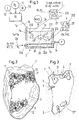
- FIG. 1 solid residues, which are in a powder form with powder particles 11, as a starting product P 0 together with a second powder composed of combustible particles 12 and a small amount 13 of water W in a granulating device 10 to form a granulate reshaped, whereby granulate particles 1 are formed.
- the starting product P 0 and / or the second powder can also already contain water, the particles 11 and 12 being present, for example, in a slip form.
- the combustible particles 12 have a similar or finer size distribution than the powder particles 11 of the starting product P 0 .
- the combustible particles 12 contain a high proportion of carbon C. It is advantageous to use a powdered coke or other combustible substances such as coal, sewage sludge or combustible waste.
- particles are formed whose C content is up to 20% by weight, preferably 5 to 10% by weight.
- the starting product P 0 and the combustible particles 12 are homogenized in a mechanical mixer. This mixer is advantageously designed in such a way that the granulate particles can be produced at the same time. If the granulate contains a relatively large amount of water, it is partially dried. The granulate 1a is formed.
- the granulate 1a which has a temperature TA (usually below 100 ° C), is fed to a fluidized bed reactor 2 for thermal treatment, whose fluidized bed 21 has an operating temperature TB of preferably around 900 ° C, but the values of TB also in a wider range from 800 - 1000 ° C.
- the thermal treatment can take place in a fluidized bed reactor also carried out in a rotary tube reactor become.
- an oxidative gas 2a which contains O 2 , H 2 O, HCl, CO 2 , N 2 and other substances X such as sulfur compounds.
- the gas 2a is fed through a nozzle 22a into a distribution space 22 of the reactor 2. After distribution over a nozzle bottom 22b, the gas 2a forms a gas stream 2b in the reactor 2 which passes through the fluidized bed 21.
- a volume element 210 in the entrance area of the fluidized bed 21 is shown in FIG. 1 shown enlarged: particle 1 with a particle 1 surrounding it Gas space 21 ', the particles 1 being fluidized, by arrows indicated state.
- a second volume element 212 in Exit area is also shown.
- Ein Granulate stream 1b which leads from the entrance to the exit area, is from the Gas stream 2b crossed.
- a granulate particle 1 enters the fluidized bed 21, its temperature increases from TA to TB.
- the carbon C contained in particle 1 reacts partly with H 2 O endothermically to the reducing substances CO and H 2 and partly with O 2 to CO and CO 2 and H 2 O, this oxidation taking place exothermically and to a further temperature increase of the particle 1 leads.
- the reactor 2 is designed and designed in such a way that there is an input zone having reductive conditions. The intensity of the oxidation and the duration of the reductive conditions can be controlled by the carbon content and the 02 content of the gas.
- the granulate stream 1b is further exposed to the oxidative gas stream 2b, after the carbon of the granulate particles 1 has completely reacted. This will result in reductive conditions after a distance a further stretch of the through path 211 - in particular in the Volume element 212 - oxidative conditions between the Granules 1 and in their pores.
- In and on the particles 1 are among the initially reductive and subsequently oxidative conditions a variety of chemical Reactions taking place.
- metal chlorides MeCl from HCI and heavy metals to be extracted are with the gas stream 2c discharged from the fluidized bed 21.
- the treated one Granulate stream 1c leaves the reactor 2 as purified product P.
- Evaporation of the metals as metal chlorides can also be used as Evaporate sulfides (especially Pb) or metallic (especially Zn).
- the carbon-containing particles embedded in the granulate result in three main effects: 1. It is one by the oxidation of these particles Given heat source for the fluidized bed 21. 2. There will be mass transfer between the granulate pores and the gas space 21 'improved, namely by Enlargement of the pores and formation of oxidation products, one cause convective gas flow in the environment 21 'and thus the Promote the transport of metal chlorides from the pores. 3. Reduction of oxidic heavy metal compounds and therefore an effective one Evaporation of volatile metallic heavy metals, for example Zn.
- FIG. 2 shows a porous granule particle 1, which is composed of particles 11 of the residual material P 0 to be treated and combustible particles 12. Pores 1 'are visible in an exposed cross section, the outline of which is shown with the contiguous contour line 3. 3 shows the corresponding cross section in which the combustible particles 12 have disappeared as a result of the oxidation. A double arrow 4 indicates a mass transfer between the pore interiors 1 "and the environment 21".
- a filter ash was used as the starting product P 0 , which is largely composed of the following heavy metals and other main components: Pb (8.2 g / kg), Cd (0.54 g / kg), Cr (0.77 g / kg), Cu (2.1 g / kg), Ni (0.24 g / kg), Zn (37.2 g / kg) and Cl (79.8 g / kg), Al (38.4 g / kg), Ca (146 g / kg), K (61.7 g / kg), C (8.8 g / kg), Na (96.6 g / kg), S (47.1 g / kg) and Si (35.3 g / kg). From this filter ash and from powdered coke (10% by weight) a granulate was produced, the particles of which had a diameter of around 600-800 ⁇ m.
- the aim of the thermal treatment is that as little of the heavy metals as possible be contained in the treated product P.
- the table in FIG. 7 shows the test results for relative residual fractions (A%) using an oxidative gas (3% O 2 + 10% HCl) at 900 ° C. and with a granulate containing 10% by weight coke after various treatment times t (10-240 minutes).
- the substances listed in the table are again the heavy metals already mentioned.
- Comparisons with other test results (granules without coke and / or reductive instead of oxidative gas), which are not reproduced here, show that, overall, an advantageous method is given with the selected parameters. Better results can be achieved for some of the metals under other test conditions. However, such improvements are associated with deteriorations in other metals, which cannot be compensated for by the one-sided improvement.
- the gas of the gas stream 2c or a part of it can after the Metal deposition in the device 30 and after a not shown Concentration step via a line 95 in the Processing device 20 are returned.
- the gas for thermal Treatment in this example is combustion as flue gas taken.
- additional HCI must be added to the gas become.
- the HCI can be made from the flue gas of the same combustion be won.
Landscapes
- Engineering & Computer Science (AREA)
- Chemical & Material Sciences (AREA)
- Health & Medical Sciences (AREA)
- Biomedical Technology (AREA)
- Environmental & Geological Engineering (AREA)
- Analytical Chemistry (AREA)
- General Chemical & Material Sciences (AREA)
- Oil, Petroleum & Natural Gas (AREA)
- Chemical Kinetics & Catalysis (AREA)
- Manufacture And Refinement Of Metals (AREA)
Abstract
Description
- Fig. 1
- eine schematische Darstellung des erfindungsgemässen Verfahrens,
- Fig. 2
- ein Granulatpartikel mit einer sichtbar gemachten Querschnittsfläche,
- Fig. 3
- die Kontur der Querschnittsfläche der Fig. 2 nach einer oxidativen Entfernung von Kokspartikeln,
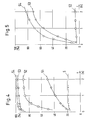
- Fig. 4, 5
- Abdampfungsdiagramme für Zn und Ni, zur Veranschaulichung des Einflusses von HCI,
- Fig. 6
- Abdampfungsdiagramme für Zn, zur Veranschaulichung des Einflusses von in die Granulatpartikel eingelagertem Koks,
- Fig. 7
- eine Tabelle mit Messresultaten und
- Fig. 8
- eine schematische Darstellung einer Anlage zur Durchführung des erfindungsgemässen Verfahrens.
- die Granuliereinrichtung 10 zum Bilden der Granulatpartikel 1 aus festen, partikelförmigen Reststoffen 11, brennbaren Partikeln 12 und einer kleinen Menge an Wasser,
- einen Reaktor 2 für eine thermische Behandlung, in dem bei erhöhter Temperatur TB der Granulatstrom 1b mit dem Gasstrom 2b kontaktierbar ist,
- eine Aufbereitungseinrichtung 20, in der das Gas für die thermische Behandlung aufbereitbar ist,
- eine Abscheidungseinrichtung 30, in der aus dem Granulatstrom 1b abgedampfte Metalle und/oder Metallverbindungen aus dem Verfahren abtrennbar sind, insbesondere durch Kondensation abtrennbar sind, und
- Mittel 92, 93 zum Fördern und/oder Führen des Gasstroms 2a bzw. 2c und Mittel 91, 94 zum Fördern und/oder Führen des Granulatstroms 1a bzw. 1 c.
Claims (10)
- Verfahren zum Entfernen von Metallen aus festen Reststoffen (P0) einer Verbrennung oder aus metallhaltigen Reststoffen anderer Herkunft, wobei die Reststoffe, die als kleine Partikel (11) vorliegen oder zu solchen zerkleinert sind, in ein Granulat (1a) umgeformt werden, das vorzugsweise aus porösen Granulatpartikeln (1) besteht, dieses Granulat bei einer thermischen Behandlung einem HCI und H2O enthaltenden Gasstrom (2b) ausgesetzt wird, mittels dem sich abdampfende Metalle und/oder Metallverbindungen, insbesondere Metallchloride, aus dem zu behandelnden Granulat wegtransportieren lassen, und wobei für die Temperatur der thermischen Behandlung Höchstwerte vorgegeben werden, bei denen Poren (1') des Granulats nicht aufgrund eines Aufschmelzens des Reststoffs kollabieren, dadurch gekennzeichnet, dass bei der Granulatbildung (10) zusätzlich zu den Partikeln (11) des Reststoffs brennbare Partikel (12) von einer ähnlichen oder feineren Grössenverteilung zugemischt werden, wobei die brennbaren Partikel vorzugsweise einen hohen Anteil an Kohlenstoff C enthalten.
- Verfahren nach Anspruch 1, dadurch gekennzeichnet, dass für die brennbaren Partikel (12) ein Stoff oder Stoffgemisch verwendet wird, dessen C-Gehalt, d. h. Anteil an C, relativ hoch ist, wobei die brennbaren Partikel insbesondere aus Koks oder Kohle gewonnen sind, oder dass ein brennbarer Abfall oder Klärschlamm verwendet wird, dessen C-Gehalt geringer ist, beispielsweise rund 25 Gew-% beträgt.
- Verfahren nach Anspruch 1 oder 2, dadurch gekennzeichnet, dass bei der Granulatbildung (10) Partikel (1) gebildet werden, deren C-Gehalt bis zu 20 Gew-%, vorzugsweise 5 bis 10 Gew-%, beträgt und dass für das Zumischen Mischeinrichtungen zur Erzeugung einer weitgehend homogenen Verteilung verwendet werden.
- Verfahren nach einem der Ansprüche 1 bis 3, dadurch gekennzeichnet, dass die thermische Behandlung in einem Wirbelschichtreaktor (2) oder Drehrohrreaktor durchgeführt wird, wobei für die Temperatur im Reaktor ein Wert im Bereich von 800 - 1000°C, vorzugsweise von rund 900°C, vorgesehen ist.
- Verfahren nach einem der Ansprüche 1 bis 4, dadurch gekennzeichnet, dass für die thermische Behandlung ein oxidatives Gas (2a) verwendet wird, wobei die Granulatpartikel (1) dem Gasstrom (2b) so lange ausgesetzt werden, dass für den individuellen Verfahrensdurchlauf eines Granulatpartikels während eines abschliessenden Teils des Durchlaufs sich oxidative Bedingungen auch in Partikelporen (1") einstellen.
- Verfahren nach Anspruch 5, dadurch gekennzeichnet, dass die Intensität der Oxidation und die Zeitdauer für reduktive Bedingungen durch den C-Gehalt der Granulatpartikel (1) sowie durch den O2-Gehalt des Gases (2a) kontrolliert werden.
- Verfahren nach einem der Ansprüche 4 bis 6, dadurch gekennzeichnet, dass der Reaktor (2) derart gestaltet und ausgelegt ist, dass sich eine Eingangszone ausbildet, in der sich das zugeführte Granulat (1a) in einer Umgebung mit reduktiven Bedingungen befindet.
- Verfahren nach einem der Ansprüche 1 bis 7, dadurch gekennzeichnet, dass für die HCI-Konzentration des Gases (2a) ein Wert vorgegeben wird, der im Bereich von 1 bis 20 Vol-% liegt, wobei dieser Wert vorzugsweise 10 Vol-% beträgt.
- Verfahren nach einem der Ansprüche 1 bis 8, dadurch gekennzeichnet, dass das Gas (2a) als Rauchgas einer Verbrennung entnommen wird, in das in der Regel HCI zugespeist wird, wobei dieses HCI aus Rauchgas der gleichen Verbrennung gewonnen sein kann.
- Anlage (100) zur Durchführung des Verfahrens gemäss einem der Ansprüche 1 bis 8, folgende Komponenten umfassend:eine Granuliereinrichtung (10) zum Bilden eines Granulats (1a) aus festen, partikelförmigen Reststoffen (11), brennbaren Partikeln (12) und einer kleinen Menge an Wasser,ein Reaktor (2), in dem bei erhöhter Temperatur (TB) ein aus dem Granulat gebildeter Granulatstrom (1b) mit einem Gasstrom (2b) kontaktierbar ist,eine Aufbereitungseinrichtung (20), in der ein Gas (2a) für den Gasstrom (2b) aufbereitbar ist, wobei eine vorgegebene Konzentration an HCI einstellbar ist,eine Abscheidungseinrichtung (30), in der aus dem Granulat abgedampfte Metalle und/oder Metallverbindungen aus dem Verfahren abtrennbar sind, insbesondere durch Kondensation abtrennbar sind, undMittel (91, 94) zum Fördern und/oder Führen von Gasen und Mittel (92, 93) zum Fördern und/oder Führen von Granulat.
Priority Applications (1)
| Application Number | Priority Date | Filing Date | Title |
|---|---|---|---|
| EP20000810490 EP1064982B1 (de) | 1999-07-02 | 2000-06-06 | Verfahren zum Entfernen von Metallen aus Reststoffen |
Applications Claiming Priority (3)
| Application Number | Priority Date | Filing Date | Title |
|---|---|---|---|
| EP99810578 | 1999-07-02 | ||
| EP99810578 | 1999-07-02 | ||
| EP20000810490 EP1064982B1 (de) | 1999-07-02 | 2000-06-06 | Verfahren zum Entfernen von Metallen aus Reststoffen |
Publications (2)
| Publication Number | Publication Date |
|---|---|
| EP1064982A1 true EP1064982A1 (de) | 2001-01-03 |
| EP1064982B1 EP1064982B1 (de) | 2004-12-22 |
Family
ID=26073909
Family Applications (1)
| Application Number | Title | Priority Date | Filing Date |
|---|---|---|---|
| EP20000810490 Expired - Lifetime EP1064982B1 (de) | 1999-07-02 | 2000-06-06 | Verfahren zum Entfernen von Metallen aus Reststoffen |
Country Status (1)
| Country | Link |
|---|---|
| EP (1) | EP1064982B1 (de) |
Cited By (7)
| Publication number | Priority date | Publication date | Assignee | Title |
|---|---|---|---|---|
| AT504885B1 (de) * | 2007-05-21 | 2008-09-15 | Univ Wien Tech | Verfahren zur herstellung eines zuschlagstoffs für die herstellung von baumaterialien |
| WO2019043261A1 (en) * | 2017-09-04 | 2019-03-07 | Ferro Duo Gmbh | PROCESS FOR PURIFYING WASTE OR INDUSTRIAL BY-PRODUCTS COMPRISING CHLORINE |
| WO2023146906A1 (en) * | 2022-01-25 | 2023-08-03 | Ionobell, Inc. | Silica material and method of manufacture and silicon derived therefrom |
| US11905421B2 (en) | 2021-05-25 | 2024-02-20 | Ionobell, Inc. | Silicon material and method of manufacture |
| US12040439B2 (en) | 2021-10-12 | 2024-07-16 | Ionobell, Inc. | Silicon battery and method for assembly |
| US12057568B2 (en) | 2022-07-08 | 2024-08-06 | Ionobell, Inc. | Electrode slurry and method of manufacture |
| US12291457B2 (en) | 2021-12-13 | 2025-05-06 | Ionobell, Inc. | Porous silicon material and method of manufacture |
Citations (5)
| Publication number | Priority date | Publication date | Assignee | Title |
|---|---|---|---|---|
| EP0249131A2 (de) * | 1986-06-10 | 1987-12-16 | Jeffery Thompson | Verfahren zur Pyrorekombination von Abfallstoffe enthaltenden Mischungen |
| US5245120A (en) * | 1991-12-27 | 1993-09-14 | Physical Sciences, Inc. | Process for treating metal-contaminated materials |
| JPH06174383A (ja) * | 1992-05-08 | 1994-06-24 | Techno Toriito:Kk | 電気炉ダスト類の処理法 |
| EP0628341A1 (de) * | 1993-06-10 | 1994-12-14 | Beco Engineering Company | Entfernung von Schwermetallen aus Rauchgasen von Verbrennungsanlagen |
| EP0940166A1 (de) * | 1998-03-02 | 1999-09-08 | CT Umwelttechnik AG | Behandlung von Reststoff und Rauchgas |
-
2000
- 2000-06-06 EP EP20000810490 patent/EP1064982B1/de not_active Expired - Lifetime
Patent Citations (5)
| Publication number | Priority date | Publication date | Assignee | Title |
|---|---|---|---|---|
| EP0249131A2 (de) * | 1986-06-10 | 1987-12-16 | Jeffery Thompson | Verfahren zur Pyrorekombination von Abfallstoffe enthaltenden Mischungen |
| US5245120A (en) * | 1991-12-27 | 1993-09-14 | Physical Sciences, Inc. | Process for treating metal-contaminated materials |
| JPH06174383A (ja) * | 1992-05-08 | 1994-06-24 | Techno Toriito:Kk | 電気炉ダスト類の処理法 |
| EP0628341A1 (de) * | 1993-06-10 | 1994-12-14 | Beco Engineering Company | Entfernung von Schwermetallen aus Rauchgasen von Verbrennungsanlagen |
| EP0940166A1 (de) * | 1998-03-02 | 1999-09-08 | CT Umwelttechnik AG | Behandlung von Reststoff und Rauchgas |
Non-Patent Citations (1)
| Title |
|---|
| PATENT ABSTRACTS OF JAPAN vol. 018, no. 514 (M - 1680) 28 September 1994 (1994-09-28) * |
Cited By (8)
| Publication number | Priority date | Publication date | Assignee | Title |
|---|---|---|---|---|
| AT504885B1 (de) * | 2007-05-21 | 2008-09-15 | Univ Wien Tech | Verfahren zur herstellung eines zuschlagstoffs für die herstellung von baumaterialien |
| WO2019043261A1 (en) * | 2017-09-04 | 2019-03-07 | Ferro Duo Gmbh | PROCESS FOR PURIFYING WASTE OR INDUSTRIAL BY-PRODUCTS COMPRISING CHLORINE |
| US11938527B2 (en) | 2017-09-04 | 2024-03-26 | Amateq Holding Gmbh | Process for the purification of waste materials or industrial by-products comprising chlorine |
| US11905421B2 (en) | 2021-05-25 | 2024-02-20 | Ionobell, Inc. | Silicon material and method of manufacture |
| US12040439B2 (en) | 2021-10-12 | 2024-07-16 | Ionobell, Inc. | Silicon battery and method for assembly |
| US12291457B2 (en) | 2021-12-13 | 2025-05-06 | Ionobell, Inc. | Porous silicon material and method of manufacture |
| WO2023146906A1 (en) * | 2022-01-25 | 2023-08-03 | Ionobell, Inc. | Silica material and method of manufacture and silicon derived therefrom |
| US12057568B2 (en) | 2022-07-08 | 2024-08-06 | Ionobell, Inc. | Electrode slurry and method of manufacture |
Also Published As
| Publication number | Publication date |
|---|---|
| EP1064982B1 (de) | 2004-12-22 |
Similar Documents
| Publication | Publication Date | Title |
|---|---|---|
| EP0208871B1 (de) | Verfahren zur Herstellung auslaugfester Agglomerate | |
| EP2016203B1 (de) | Thermisches verfahren zur abtrennung von schwermetallen aus asche in agglomerierter form | |
| DE3018319A1 (de) | Verfahren zur entfernung von quecksilber aus abgasen | |
| WO2012119739A2 (de) | Aufbereiten von müllverbrennungsasche | |
| DE69916725T2 (de) | Vorrichtung zur herstellung von zement | |
| DE69916536T2 (de) | Verfahren zur Rückgewinnung von Phosphor aus organischen Schlämmen | |
| DE68920689T2 (de) | Verfahren zum unlöslichmachen schwerer metalle in flugasche aus einem müllverbrenner. | |
| EP1064982B1 (de) | Verfahren zum Entfernen von Metallen aus Reststoffen | |
| DE3517533A1 (de) | Verfahren und vorrichtung zum beseitigen von siliciumstaub | |
| WO2001054800A1 (de) | Verfahren zur aufbereitung von metallhaltigen sekundärrohstoffen in brennbarem verbund | |
| DE69016539T2 (de) | Verfahren zur Entfernung aus der Verbrennung von Abfall anfallenden Dioxin. | |
| DE2615195B2 (de) | Verfahren zur Beseitigung von Abwasser, das Ammoniumionen, Sulfationen und organische Stoffe enthält | |
| DE3206689A1 (de) | Verfahren zur herstellung eines kohlenwasserstoffoel enthaltenden kohlegranulats | |
| DE2118850C3 (de) | Verfahren zur Verwertung von Abfallprodukten | |
| DE102011013033A1 (de) | Aufbereiten von Müllverbrennungsasche | |
| DE10213790A1 (de) | Verfahren zur Behandlung von Verbrennungsrückständen einer Verbrennungsanlage | |
| EP0241635B1 (de) | Verfahren und Vorrichtung zur Schlackenaufbereitung | |
| DE4109044C2 (de) | Verfahren zur gemeinsamen Entsorgung von Reststoffen aus der Müllverbrennung | |
| DE3728487C2 (de) | Verfahren zur pyrolytischen Behandlung von Abfall- oder Schadstoffen | |
| DE3700608A1 (de) | Verfahren und vorrichtung zur schlackenaufbereitung | |
| DE4135368A1 (de) | Verfahren zur aufbereitung von filterstaeuben, insbesondere aus abfallverbrennungsanlagen | |
| DE2830005A1 (de) | Verfahren zur herstellung von agglomeraten von feinen schwefelteilchen in einer fluessigen suspension | |
| DE2624484A1 (de) | Verfahren zur aufbereitung und vernichtung von bei der nassreinigung der heizflaechen von dampferzeugern und bei der rauchgasreinigung anfallenden schlammfuehrenden reinigungsabwaessern und von daraus abgezogenem schlamm | |
| DE3935953C2 (de) | ||
| DE102017101628A1 (de) | Verfahren zum Herstellen eines Bindemittels für die Konditionierung von Schlämmen, wasserhaltigen Böden sowie für die Neutralisation von Säuren |
Legal Events
| Date | Code | Title | Description |
|---|---|---|---|
| PUAI | Public reference made under article 153(3) epc to a published international application that has entered the european phase |
Free format text: ORIGINAL CODE: 0009012 |
|
| AK | Designated contracting states |
Kind code of ref document: A1 Designated state(s): AT BE CH CY DE DK ES FI FR GB GR IE IT LI LU MC NL PT SE |
|
| AX | Request for extension of the european patent |
Free format text: AL;LT;LV;MK;RO;SI |
|
| 17P | Request for examination filed |
Effective date: 20010607 |
|
| AKX | Designation fees paid |
Free format text: AT BE CH CY DE DK ES FI FR GB GR IE IT LI LU MC NL PT SE |
|
| 17Q | First examination report despatched |
Effective date: 20021126 |
|
| RAP1 | Party data changed (applicant data changed or rights of an application transferred) |
Owner name: CTU - CONZEPTE TECHNIK UMWELT AG |
|
| GRAP | Despatch of communication of intention to grant a patent |
Free format text: ORIGINAL CODE: EPIDOSNIGR1 |
|
| GRAS | Grant fee paid |
Free format text: ORIGINAL CODE: EPIDOSNIGR3 |
|
| GRAA | (expected) grant |
Free format text: ORIGINAL CODE: 0009210 |
|
| AK | Designated contracting states |
Kind code of ref document: B1 Designated state(s): AT BE CH CY DE DK ES FI FR GB GR IE IT LI LU MC NL PT SE |
|
| PG25 | Lapsed in a contracting state [announced via postgrant information from national office to epo] |
Ref country code: IT Free format text: LAPSE BECAUSE OF FAILURE TO SUBMIT A TRANSLATION OF THE DESCRIPTION OR TO PAY THE FEE WITHIN THE PRESCRIBED TIME-LIMIT;WARNING: LAPSES OF ITALIAN PATENTS WITH EFFECTIVE DATE BEFORE 2007 MAY HAVE OCCURRED AT ANY TIME BEFORE 2007. THE CORRECT EFFECTIVE DATE MAY BE DIFFERENT FROM THE ONE RECORDED. Effective date: 20041222 Ref country code: FI Free format text: LAPSE BECAUSE OF FAILURE TO SUBMIT A TRANSLATION OF THE DESCRIPTION OR TO PAY THE FEE WITHIN THE PRESCRIBED TIME-LIMIT Effective date: 20041222 Ref country code: GB Free format text: LAPSE BECAUSE OF FAILURE TO SUBMIT A TRANSLATION OF THE DESCRIPTION OR TO PAY THE FEE WITHIN THE PRESCRIBED TIME-LIMIT Effective date: 20041222 Ref country code: IE Free format text: LAPSE BECAUSE OF FAILURE TO SUBMIT A TRANSLATION OF THE DESCRIPTION OR TO PAY THE FEE WITHIN THE PRESCRIBED TIME-LIMIT Effective date: 20041222 |
|
| REG | Reference to a national code |
Ref country code: GB Ref legal event code: FG4D Free format text: NOT ENGLISH |
|
| REG | Reference to a national code |
Ref country code: CH Ref legal event code: EP Ref country code: CH Ref legal event code: NV Representative=s name: SULZER MANAGEMENT AG |
|
| REG | Reference to a national code |
Ref country code: IE Ref legal event code: FG4D Free format text: GERMAN |
|
| REF | Corresponds to: |
Ref document number: 50008995 Country of ref document: DE Date of ref document: 20050127 Kind code of ref document: P |
|
| PG25 | Lapsed in a contracting state [announced via postgrant information from national office to epo] |
Ref country code: DK Free format text: LAPSE BECAUSE OF FAILURE TO SUBMIT A TRANSLATION OF THE DESCRIPTION OR TO PAY THE FEE WITHIN THE PRESCRIBED TIME-LIMIT Effective date: 20050322 Ref country code: GR Free format text: LAPSE BECAUSE OF FAILURE TO SUBMIT A TRANSLATION OF THE DESCRIPTION OR TO PAY THE FEE WITHIN THE PRESCRIBED TIME-LIMIT Effective date: 20050322 |
|
| PG25 | Lapsed in a contracting state [announced via postgrant information from national office to epo] |
Ref country code: ES Free format text: LAPSE BECAUSE OF FAILURE TO SUBMIT A TRANSLATION OF THE DESCRIPTION OR TO PAY THE FEE WITHIN THE PRESCRIBED TIME-LIMIT Effective date: 20050402 |
|
| REG | Reference to a national code |
Ref country code: SE Ref legal event code: TRGR |
|
| PG25 | Lapsed in a contracting state [announced via postgrant information from national office to epo] |
Ref country code: CY Free format text: LAPSE BECAUSE OF FAILURE TO SUBMIT A TRANSLATION OF THE DESCRIPTION OR TO PAY THE FEE WITHIN THE PRESCRIBED TIME-LIMIT Effective date: 20050606 Ref country code: LU Free format text: LAPSE BECAUSE OF NON-PAYMENT OF DUE FEES Effective date: 20050606 Ref country code: AT Free format text: LAPSE BECAUSE OF NON-PAYMENT OF DUE FEES Effective date: 20050606 |
|
| PG25 | Lapsed in a contracting state [announced via postgrant information from national office to epo] |
Ref country code: MC Free format text: LAPSE BECAUSE OF NON-PAYMENT OF DUE FEES Effective date: 20050630 Ref country code: BE Free format text: LAPSE BECAUSE OF NON-PAYMENT OF DUE FEES Effective date: 20050630 |
|
| GBV | Gb: ep patent (uk) treated as always having been void in accordance with gb section 77(7)/1977 [no translation filed] |
Effective date: 20041222 |
|
| REG | Reference to a national code |
Ref country code: IE Ref legal event code: FD4D |
|
| PLBE | No opposition filed within time limit |
Free format text: ORIGINAL CODE: 0009261 |
|
| STAA | Information on the status of an ep patent application or granted ep patent |
Free format text: STATUS: NO OPPOSITION FILED WITHIN TIME LIMIT |
|
| ET | Fr: translation filed | ||
| 26N | No opposition filed |
Effective date: 20050923 |
|
| BERE | Be: lapsed |
Owner name: CONZEPTE TECHNIK UMWELT A.G. *CTU Effective date: 20050630 |
|
| PG25 | Lapsed in a contracting state [announced via postgrant information from national office to epo] |
Ref country code: PT Free format text: LAPSE BECAUSE OF NON-PAYMENT OF DUE FEES Effective date: 20050522 |
|
| PGFP | Annual fee paid to national office [announced via postgrant information from national office to epo] |
Ref country code: FR Payment date: 20100706 Year of fee payment: 11 |
|
| PGFP | Annual fee paid to national office [announced via postgrant information from national office to epo] |
Ref country code: NL Payment date: 20100614 Year of fee payment: 11 Ref country code: CH Payment date: 20100623 Year of fee payment: 11 |
|
| PGFP | Annual fee paid to national office [announced via postgrant information from national office to epo] |
Ref country code: SE Payment date: 20100614 Year of fee payment: 11 Ref country code: DE Payment date: 20100625 Year of fee payment: 11 |
|
| REG | Reference to a national code |
Ref country code: NL Ref legal event code: V1 Effective date: 20120101 |
|
| REG | Reference to a national code |
Ref country code: CH Ref legal event code: PL |
|
| REG | Reference to a national code |
Ref country code: SE Ref legal event code: EUG |
|
| REG | Reference to a national code |
Ref country code: FR Ref legal event code: ST Effective date: 20120229 |
|
| REG | Reference to a national code |
Ref country code: DE Ref legal event code: R119 Ref document number: 50008995 Country of ref document: DE Effective date: 20120103 |
|
| PG25 | Lapsed in a contracting state [announced via postgrant information from national office to epo] |
Ref country code: CH Free format text: LAPSE BECAUSE OF NON-PAYMENT OF DUE FEES Effective date: 20110630 Ref country code: DE Free format text: LAPSE BECAUSE OF NON-PAYMENT OF DUE FEES Effective date: 20120103 Ref country code: LI Free format text: LAPSE BECAUSE OF NON-PAYMENT OF DUE FEES Effective date: 20110630 Ref country code: FR Free format text: LAPSE BECAUSE OF NON-PAYMENT OF DUE FEES Effective date: 20110630 |
|
| PG25 | Lapsed in a contracting state [announced via postgrant information from national office to epo] |
Ref country code: NL Free format text: LAPSE BECAUSE OF NON-PAYMENT OF DUE FEES Effective date: 20120101 |
|
| PG25 | Lapsed in a contracting state [announced via postgrant information from national office to epo] |
Ref country code: SE Free format text: LAPSE BECAUSE OF NON-PAYMENT OF DUE FEES Effective date: 20110607 |