EP1065839A2 - Système et dispositif pour la communication bi-directionnelle parmi une pluralité de terminaux de radiocommunication, ainsi que méthode pour la transmission de paquets de données entre ces terminaux de radiocommunication - Google Patents
Système et dispositif pour la communication bi-directionnelle parmi une pluralité de terminaux de radiocommunication, ainsi que méthode pour la transmission de paquets de données entre ces terminaux de radiocommunication Download PDFInfo
- Publication number
- EP1065839A2 EP1065839A2 EP00112900A EP00112900A EP1065839A2 EP 1065839 A2 EP1065839 A2 EP 1065839A2 EP 00112900 A EP00112900 A EP 00112900A EP 00112900 A EP00112900 A EP 00112900A EP 1065839 A2 EP1065839 A2 EP 1065839A2
- Authority
- EP
- European Patent Office
- Prior art keywords
- radio communication
- packet
- communication apparatus
- transmission
- broadcast transmission
- Prior art date
- Legal status (The legal status is an assumption and is not a legal conclusion. Google has not performed a legal analysis and makes no representation as to the accuracy of the status listed.)
- Withdrawn
Links
Images


Classifications
-
- H—ELECTRICITY
- H04—ELECTRIC COMMUNICATION TECHNIQUE
- H04W—WIRELESS COMMUNICATION NETWORKS
- H04W72/00—Local resource management
- H04W72/30—Resource management for broadcast services
Definitions
- the present invention relates to a radio communication system designed for broadcast transmission, in particular, in a radio network constituted by a plurality of radio terminals, and a radio communication apparatus and broadcast transmission method used in the radio communication system.
- broadcast transmission or broadcast communication In a communication network constituted by a plurality of communication terminal units, transmission of identical data to target terminal units at once through the respective terminal units is referred to as broadcast transmission or broadcast communication.
- each terminal unit participating in broadcast communication detects the existence of other terminal units existing around each terminal unit, stores the detected information as terminal information, and performs broadcast communication on the basis of the terminal information.
- a given terminal unit periodically (e.g., at two-second intervals) sends an existence notification packet to notify other terminal units of its existence.
- an existence notification packet the address of the given terminal unit that transmits the packet and the addresses of all other terminal units whose existence is detected and stored in the given terminal unit are written.
- Every terminal unit in the network repeatedly transmits such an existence notification packet. This allows each terminal to know other terminal units with which it can directly communicate and terminal units that can relay communication with terminal units with which it cannot directly communicate.
- the terminal information obtained from this existence notification packet is stored in each terminal, so that broadcast transmission data is sent in a predetermined order on the basis of the terminal information.
- the information of neighboring terminal units is stored in each terminal unit in advance, and data transmitted from a transmitting terminal unit are sequentially sent to the next terminal units, thereby executing broadcast communication.
- each terminal unit must periodically transmit/receive an existence notification packet to notify other terminals of its existence and comprehend the existence of other terminal units. For this reason, a battery-driven terminal unit greatly consumes power, resulting in a decrease in the maximum communicative time of the terminal unit.
- the present invention has been made in consideration of the above points, and has as its object to provide a radio communication system, radio communication apparatus, and broadcast transmission method, which can perform broadcast transmission only when a communication route to a target radio communication apparatus is established, without periodically exchanging pieces of information of neighboring terminals, and impose no limitation on the number of terminals to which data is broadcast.
- a radio communication apparatus comprising:
- a radio communication system comprising:
- a radio communication system comprising:
- first data to which the identification information of a radio communication apparatus as a final transmission target is added is transmitted first.
- response data is returned from the target radio communication apparatus, it is determined that a communication route has been established, and second data containing transmission data is broadcast.
- each radio communication apparatus Upon receiving the second data, each radio communication apparatus retransmits the second data if identification information unique to the transmission data contained in the second data coincides with the identification information of the transmission data stored at the time of the reception of the response data. This operation is repeated.
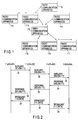
- FIG. 1 is a block diagram showing an example of the arrangement of radio network constituted by a plurality of radio communication apparatuses according to an embodiment of the present invention.
- radio communication apparatuses 11a to 11h Assume that eight radio communication apparatuses 11a to 11h exist. Assume that each of these radio communication apparatuses 11a to 11h has a limited communication area, and can directly communicate with only neighboring radio communication apparatuses.
- a radio communication apparatus for example, a portable personal computer having a radio communication function is available.
- the radio communication apparatus 11a and radio communication apparatuses 11b to 11h can communicate with each other by radio in predetermined areas.
- Each of these radio communication apparatuses has a broadcast transmission function of transmitting identical data to other radio communication apparatuses at once.
- radio communication apparatuses with which communication can be performed Owing to the characteristics of radio communications, when viewed from a given radio communication apparatus, there are radio communication apparatuses with which communication can be performed and radio communication apparatuses with which communication cannot be performed depending on the limitation based on the maximum distances that radio waves can reach, the influences of obstacles, and the like.
- the arrows indicate that direct radio communication can perform between the corresponding radio communication apparatuses, whereas direct radio communication cannot be performed between the radio communication apparatuses having no arrows written therebetween.
- the radio communication apparatus 11a can perform direct radio communication with only the radio communication apparatus 11b.
- the radio communication apparatus 11b can mutually perform direct radio communication with the radio communication apparatuses 11a, 11c, and 11h but cannot perform direct radio communication with the radio communication apparatus 11d.
- Radio communication apparatuses can arbitrarily join and leave the radio network. Therefore, the number of terminals constituting the radio network changes over time. In addition, since each radio communication apparatus can arbitrarily move, the number of radio communication apparatuses with which a given radio communication apparatus can perform direct radio communication changes over time.
- the radio communication apparatus 11a is to perform broadcast transmission to the remaining radio communication apparatuses 11b to 11h existing in the radio network.
- the radio communication apparatus 11a can perform direct radio communication with only the radio communication apparatus 11b. For this reason, data broadcast from the radio communication apparatus 11a can be received by only the radio communication apparatus 11b, but cannot be received by the radio communication apparatuses 11c to 11h.
- the radio communication apparatus 11b Upon receiving the broadcast transmission data sent from the radio communication apparatus 11a, the radio communication apparatus 11b retransmits the broadcast transmission data. The retransmitted broadcast transmission data is then received by the radio communication apparatuses 11c and 11h which can perform direct radio communication with the radio communication apparatus 11b.
- the radio communication apparatuses 11c and 11h retransmit the received broadcast transmission data. By repeating such operation, broadcast transmission can be performed with respect to target radio communication apparatuses or all radio communication apparatuses in the radio network.
- a given radio communication apparatus when a given radio communication apparatus starts such broadcast transmission, it transmits an auxiliary message packet consisting of a transmission source ID (identification information) indicating the apparatus itself, a target ID indicating a target radio communication apparatus, and a broadcast transmission data ID indicating data to be broadcast.
- a transmission source ID identification information
- a target ID indicating a target radio communication apparatus
- a broadcast transmission data ID indicating data to be broadcast.
- a broadcast transmission data packet containing actual data is transmitted.
- each radio communication apparatus Upon receiving this broadcast transmission data packet, each radio communication apparatus retransmits the broadcast transmission data packet if the broadcast transmission data ID contained in the received packet coincides with the broadcast transmission data ID stored at the time of the reception of the above response message packet. By repeating this operation, the data is broadcast to the target radio communication apparatus.
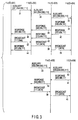
- broadcast transmission is performed according to procedures like those shown in FIG. 2.
- FIG. 2 is a sequence diagram showing procedures for performing broadcast transmission when one target radio communication apparatus is designated.
- the radio communication apparatus 11a is the transmission source of broadcast transmission data
- the broadcast transmission data is sequentially transmitted from the radio communication apparatus 11a to the radio communication apparatus 11b, from the radio communication apparatus 11b to the radio communication apparatus 11c, and from the radio communication apparatus 11c to the radio communication apparatus 11d.
- one radio communication apparatus 11d is set as a final transmission target.
- the ID (Identification Information) assigned to the radio communication apparatus 11a is "001"; the ID assigned to the radio communication apparatus 11b, “002”; the ID assigned to the radio communication apparatus 11c, "003", and the ID assigned to the radio communication apparatus 11d, "004".
- This broadcast transmission data ID is an ID uniquely assigned to each data to be broadcast, and no other data has the same ID.
- the radio communication apparatus 11a In starting broadcast transmission, the radio communication apparatus 11a as a transmission source transmits an auxiliary message packet (procedure 21).
- FIG. 5 shows the structure of the auxiliary message packet.
- the auxiliary message packet consists of a packet type indicating that this packet is an auxiliary message packet, a transmission source ID indicating the ID of the communication apparatus as the transmission source of the auxiliary message packet, a target ID indicating the ID of the target communication apparatus as the final transmission destination, and a broadcast transmission data ID assigned to the broadcast transmission data.
- the transmission source ID of the auxiliary message packet is "001"
- the target ID, "004" that indicates the radio communication apparatus 11d as the final transmission destination
- the broadcast transmission data ID "111”.
- the radio communication apparatus 11b receives the auxiliary message packet transmitted from the radio communication apparatus 11a.
- the radio communication apparatus 11b stores the transmission source ID and broadcast transmission data ID contained in the received auxiliary message packet.
- the radio communication apparatus 11b checks whether the target ID of the received auxiliary message packet coincides with the self-ID.
- the radio communication apparatus 11b determines that this auxiliary message packet is not addressed to the apparatus itself, and transmits the packet to another radio communication apparatus (procedure 22).
- the transmission source of the auxiliary message packet is the radio communication apparatus 11b
- the transmission source ID is replaced with "002" which is the ID of the radio communication apparatus 11b.
- the target ID and broadcast transmission data ID remain "004" and "111", respectively.
- the radio communication apparatus 11c receives the auxiliary message packet transmitted from the radio communication apparatus 11b in procedure 22.
- the radio communication apparatus 11c stores the transmission source ID and broadcast transmission data ID contained in the received auxiliary message packet.
- the radio communication apparatus 11c performs no operation.
- the radio communication apparatus 11c checks whether the target ID of the received auxiliary message packet coincides with the self-ID.
- the radio communication apparatus 11c determines that the packet is not addressed to the apparatus itself, and transmits the auxiliary message packet to another radio communication apparatus (procedure 23).
- the transmission source of the auxiliary message packet is the radio communication apparatus 11c
- the transmission source ID is replaced with "003", which is the ID of the radio communication apparatus 11c.
- the target ID and broadcast transmission data ID remain "004" and "111", respectively.
- the radio communication apparatus 11d then receives the auxiliary message packet transmitted from the radio communication apparatus 11c in procedure 23.
- the radio communication apparatus 11d stores the transmission source ID and broadcast transmission data ID contained in the received auxiliary message packet.
- the radio communication apparatus 11d performs no operation.
- the radio communication apparatus 11d checks whether the target ID of the received auxiliary message packet coincides with the self-ID.
- the target destination is the radio communication apparatus 11d
- the target ID coincides with the self-ID.
- the radio communication apparatus 11d therefore determines that the auxiliary message packet is addressed to it, and returns a response to the auxiliary message packet.
- the radio communication apparatus 11d Upon receiving the auxiliary message packet from the radio communication apparatus 11c in procedure 23 and confirming that the target ID contained in the packet coincides with the self-ID, the radio communication apparatus 11d transmits a response message packet (procedure 24).
- FIG. 6 shows the structure of a response message packet.
- each response message packet consists of a packet type indicating that this packet is a response message packet, a response destination ID indicating a communication apparatus as the response destination of the response message packet, a target ID indicating the ID of a target communication apparatus as a final transmission destination, and a broadcast transmission data ID assigned to the broadcast transmission data.
- the response ID is "003", which is the ID of the radio communication apparatus 11c.
- the target ID is "004", which is the self-ID, and the broadcast transmission data ID is "111".
- the radio communication apparatus 11c receives the response message packet transmitted from the radio communication apparatus 11d.
- the radio communication apparatus 11c stores a combination of the target ID and broadcast transmission data ID contained in the received response message packet.
- the radio communication apparatus 11c performs no operation.
- the radio communication apparatus 11c checks whether the response destination ID of the received response message packet coincides with the self-ID.
- the radio communication apparatus 11c determines that it has received a response message packet to be retransmitted, and retransmits the response message packet (procedure 25).
- the response destination ID of the response message packet is replaced with the ID "002" of the radio communication apparatus 11b, which has been stored at the time of the reception of the auxiliary message packet in procedure 22.
- the target ID and broadcast transmission data ID remain "004" and "111", respectively.
- the radio communication apparatus 11b then receives the response message packet transmitted from the radio communication apparatus 11c in procedure 25.
- the radio communication apparatus 11b stores a combination of the target ID and broadcast transmission data ID contained in the received response message packet.
- the radio communication apparatus 11b performs no operation.
- the radio communication apparatus 11b checks whether the response destination ID of the received response message packet coincides with the self-ID.
- the radio communication apparatus 11b determines that it has received a response message packet to be retransmitted, and retransmits the response message packet (procedure 26).
- the response destination ID of the response message packet is replaced with the ID "001" of the radio communication apparatus 11a, which has been stored at the time of the reception of the auxiliary message packet in procedure 21.
- the target ID and broadcast transmission data ID remain "004" and "111", respectively.
- the radio communication apparatus 11a as the transmission source of the broadcast transmission data receives the response message packet transmitted from the radio communication apparatus 11b in procedure 26.
- the radio communication apparatus 11a stores the broadcast transmission data ID contained in the received response message packet.
- the radio communication apparatus 11c performs no operation.
- the radio communication apparatus 11a checks whether the response destination ID of the received response message packet coincides with the self-ID.
- the radio communication apparatus 11a determines that a radio communication route to the target transmission destination (i.e., the radio communication apparatus 11a ⁇ 11b ⁇ 11c ⁇ 11d) has been established. With this operation, the radio communication apparatus 11a transmits the broadcast transmission data packet containing the actual data.
- the radio communication apparatus 11a When the radio communication apparatus 11a receives a response message packet from the radio communication apparatus 11b and determines that the response destination ID contained in the response message packet coincides with the self-ID and the target ID is "004", which indicates the radio communication apparatus 11d, the radio communication apparatus 11a determines that a radio communication route to the target destination has been established, and transmits the broadcast transmission data packet (procedure 27).
- FIG. 7 shows the structure of a broadcast transmission data packet.
- each broadcast transmission data packet consists of a packet type indicating that this packet is a broadcast transmission data packet, a broadcast transmission data ID assigned to the broadcast transmission data, and broadcast transmission data which is the actual data contents.
- the radio communication apparatus 11a determines that a radio communication route to the radio communication apparatus 11d has not been established, and stops broadcast transmission. This saves unnecessary data transmission.
- the radio communication apparatus 11b then receives the broadcast transmission data packet transmitted from the radio communication apparatus 11a in procedure 27.
- the radio communication apparatus 11b checks whether the broadcast transmission data ID contained in the received broadcast transmission data packet coincides with the broadcast transmission data ID stored at the time of the reception of the response message packet in procedure 25, and the broadcast transmission data packet having this broadcast transmission data is received for the first time.
- the radio communication apparatus 11b performs no operation.
- the radio communication apparatus 11b determines that it has received a broadcast transmission data packet to be retransmitted, and retransmits the broadcast transmission data packet (procedure 28).
- the broadcast transmission data packet to be transmitted has the same contents as those of the broadcast transmission data packet received in procedure 27.
- the radio communication apparatus 11c receives the broadcast transmission data packet transmitted from the radio communication apparatus 11b in procedure 28.
- the radio communication apparatus 11c checks whether the broadcast transmission data ID contained in the received broadcast transmission data packet coincides with the broadcast transmission data ID stored at the time of the reception of the response message packet in procedure 24, and the broadcast transmission data packet having this broadcast transmission data is received for the first time.
- the radio communication apparatus 11c performs no operation.
- the radio communication apparatus 11c determines that it has received a broadcast transmission data packet to be retransmitted, and retransmits the broadcast transmission data packet (procedure 29), In this case as well, the broadcast transmission data packet to be transmitted has the same contents as those of the broadcast transmission data packet received in procedure 28.
- the radio communication apparatus 11d then receives the broadcast transmission data packet transmitted from the radio communication apparatus 11c in procedure 29.
- the radio communication apparatus 11d checks whether the broadcast transmission data ID contained in the received broadcast transmission data packet coincides with the broadcast transmission data ID stored at the time of the reception of the response message packet in procedure 24.
- the radio communication apparatus 11d has recognized itself as the target communication apparatus of the broadcast transmission data packet from the auxiliary message packet received in procedure 23.
- the radio communication apparatus 11d therefore determines that it has received a broadcast transmission data packet addressed to the apparatus itself, receives the data, and terminates the communication processing.
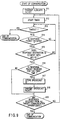
- FIG. 3 is a sequence diagram showing the procedures for performing broadcast transmission when two radio communication apparatuses are set as target communication apparatuses.
- the two radio communication apparatuses 11d and 11f are set as final transmission targets.
- the radio communication apparatus 11a is the transmission source of broadcast transmission data, and the broadcast transmission data is sequentially transmitted from the radio communication apparatus 11a to the radio communication apparatus 11b, from the radio communication apparatus 11b to the radio communication apparatus 11c, from the radio communication apparatus 11c to the radio communication apparatuses 11d and 11e, and from the radio communication apparatus 11e to the radio communication apparatus 11f.
- the ID assigned to the radio communication apparatus 11a is "001"; the ID assigned to the radio communication apparatus 11b, “002”; the ID assigned to the radio communication apparatus 11c, “003", the ID assigned to the radio communication apparatus 11d, "004"; the ID assigned to the radio communication apparatus 11e, "005", and the ID assigned to the radio communication apparatus 11f, "006".
- an ID indicating the broadcast transmission data is "111".
- the radio communication apparatus 11a which is to perform broadcast transmission, transmits an auxiliary message packet (procedure 31).
- the transmission source ID of the auxiliary message packet in FIG. 5 is "001”
- the target IDs are "004" and "006", which are the IDs of the radio communication apparatuses 11d and 11f, respectively.
- the broadcast transmission data ID is "111”.
- the radio communication apparatus 11d receives the auxiliary message packet to store the transmission source ID and broadcast transmission data ID contained in the auxiliary message packet in advance.
- the radio communication apparatus 11d performs no operation.
- the radio communication apparatus 11d checks whether the target ID of the received auxiliary message packet coincides with the self-ID.
- the radio communication apparatus 11d determines that the auxiliary message packet is addressed to the apparatus itself, and returns a response to the auxiliary message packet.
- the radio communication apparatus 11d Upon receiving the auxiliary message packet transmitted from the radio communication apparatus 11c in procedure 33, the radio communication apparatus 11d confirms that one of the target IDs contained in the auxiliary message packet coincides with the self-ID, and transmits a response message packet in response to the auxiliary message packet (procedure 34).
- the transmission destination of the response message packet is the transmission source ID contained in the auxiliary message packet received in procedure 33
- the response destination ID of the response message packet in FIG. 6 is set to "003", which is the ID of the radio communication apparatus 11c
- the target ID is set to "004", which is the self-ID.
- the broadcast transmission data ID is "111".
- the radio communication apparatus 11a as the transmission source of the broadcast transmission data receives the response message packet to store the broadcast transmission data ID contained in the response message packet in advance.
- the radio communication apparatus 11a performs no operation.
- the radio communication apparatus 11a checks whether the response destination ID of the received response message packet coincides with the self-ID.
- the radio communication apparatus 11a determines that a radio communication route to the target transmission destination (i.e., the radio communication apparatus 11a ⁇ 11b ⁇ 11c ⁇ 11d) has been established.
- the radio communication apparatus 11a transmits the broadcast transmission data packet containing the actual data.
- the radio communication apparatus 11a Upon receiving the response message packet from the radio communication apparatus 11b and confirming that the response destination ID contained in the response message packet coincides with the self-ID and the target ID is "004", which indicates the radio communication apparatus 11d, the radio communication apparatus 11a determines that a radio communication route has been established, and transmits the broadcast transmission data packet (procedure 37).
- the broadcast transmission data ID of the broadcast transmission data packet shown in FIG. 7 is "111".
- the radio communication apparatus 11d Upon receiving the broadcast transmission data packet transmitted from the radio communication apparatus 11c in procedure 39, the radio communication apparatus 11d checks whether the broadcast transmission data ID contained in the broadcast transmission data packet coincides with the broadcast transmission data ID stored at the time of the reception of the response message packet in procedure 34.
- the radio communication apparatus 11d has recognized itself as the target communication apparatus of the broadcast transmission data packet from the auxiliary message packet received in procedure 33.
- the radio communication apparatus 11d therefore determines that it has received a broadcast transmission data packet addressed to the apparatus itself, receives the data, and terminates the communication processing.
- procedure 33 the auxiliary message packet transmitted from the radio communication apparatus 11c in procedure 33 is received by the radio communication apparatus 11e with which direct radio communication can be performed, in addition to the radio communication apparatus 11d.
- the radio communication apparatus 11e Upon receiving the auxiliary message packet transmitted from the radio communication apparatus 11c in procedure 33, the radio communication apparatus 11e stores the transmission source ID and broadcast transmission data ID contained in the auxiliary message packet in advance.
- the radio communication apparatus 11e performs no operation.
- the radio communication apparatus 11e checks whether the target ID of the received auxiliary message packet coincides with the self-ID.
- the radio communication apparatus 11e determines that the auxiliary message packet is not addressed to the apparatus itself, and transmits the packet to another radio communication apparatus (procedure 40).
- the transmission source of the auxiliary message packet is the radio communication apparatus 11e
- the transmission source ID is replaced with "005", which is the ID of the radio communication apparatus 11e.
- the target IDs and broadcast transmission data ID remain "004", "006", and "111", respectively.
- the radio communication apparatus 11f receives the auxiliary message packet transmitted from the radio communication apparatus 11e in procedure 40.
- the radio communication apparatus 11f stores the transmission source ID and broadcast transmission data ID contained in the auxiliary message packet in advance.
- the radio communication apparatus 11f checks whether one of the target IDs of the received auxiliary message packet coincides with the self-ID.
- the radio communication apparatus 11f determines that the auxiliary message packet is addressed to the apparatus itself, and returns a response to the auxiliary message packet.
- the radio communication apparatus 11f Upon receiving the auxiliary message packet from the radio communication apparatus 11e, and confirming that one of the target IDs contained in the auxiliary message packet coincides wit the self-ID, the radio communication apparatus 11f transmits a response message packet in response to the auxiliary message packet (procedure 41).
- the transmission source of the response message packet is the transmission source ID contained in the auxiliary message packet received in procedure 40
- the response destination ID of the response message packet shown in FIG. 6 is set to "005", which is the ID of the radio communication apparatus 11e
- the target ID is set to "006", which is the self-ID.
- the broadcast transmission data ID is "111".
- the radio communication apparatus 11a as the transmission source of the broadcast transmission data receives the response message packet to store the broadcast transmission data ID contained in the response message packet in advance.
- the radio communication apparatus 11a determines that a radio communication route to the target transmission destination (i.e., the radio communication apparatus 11a ⁇ 11b ⁇ 11c ⁇ 11d ⁇ 11e ⁇ 11f) has been established.
- the broadcast transmission data packet transmitted from the radio communication apparatus 11c is received by the radio communication apparatus 11e, with this direct radio communication, in addition to the radio communication apparatus 11d.
- the radio communication apparatus 11e Upon receiving the broadcast transmission data packet transmitted from the radio communication apparatus 11c in procedure 39, the radio communication apparatus 11e checks whether the broadcast transmission data ID contained in the broadcast transmission data packet coincides with the broadcast transmission data ID stored at the time of the reception of the response message packet in procedure 41, and the broadcast transmission data packet having this broadcast transmission data is received for the first time.
- the radio communication apparatus 11b performs no operation.
- the radio communication apparatus 11e determines that it has received a broadcast transmission data packet to be retransmitted, and retransmits the broadcast transmission data packet (procedure 45).
- the broadcast transmission data packet to be transmitted has the same contents as those of the broadcast transmission data packet received in procedure 39.
- the radio communication apparatus 11f receives the broadcast transmission data packet transmitted from the radio communication apparatus 11e in procedure 45.
- the radio communication apparatus 11f checks whether the broadcast transmission data ID contained in the received broadcast transmission data packet coincides with the broadcast transmission data ID stored at the time of the reception of the response message packet in procedure 41.
- the two broadcast transmission data IDs are "111" and coincide with each other, and the radio communication apparatus 11f has recognized itself as the target communication apparatus of the broadcast transmission data packet from the auxiliary message packet received in procedure 40.
- the radio communication apparatus 11f therefore determines that it has received a broadcast transmission data packet addressed to the apparatus itself, receives the data, and terminates the communication processing.
- broadcast transmission can be performed with respect to all radio communication apparatuses in the radio network without specifying any radio communication apparatus as a target. Procedures for performing broadcast transmission with respect to all radio communication apparatuses in the radio network will be described below.
- FIG. 4 is a sequence diagram showing procedures for performing broadcast transmission with respect to all radio communication apparatuses in the radio network.
- the radio communication apparatus 11a is the transmission source of broadcast transmission data
- the broadcast transmission data is sequentially broadcast from the radio communication apparatus 11a to the radio communication apparatus 11b, from the radio communication apparatus 11b to the radio communication apparatus 11c, and from the radio communication apparatus 11c to the radio communication apparatus 11d.
- the ID (Identification Information) assigned to the radio communication apparatus 11a is "001"; the ID assigned to the radio communication apparatus 11b, “002”; the ID assigned to the radio communication apparatus 11c, “003”; and the ID assigned to the radio communication apparatus 11d, "004". Assume also that the ID assigned to the broadcast transmission data is "111".
- the radio communication apparatus 11a transmits an auxiliary message packet first (procedure 51).
- the transmission source ID of the auxiliary message packet shown in FIG. 5 is "001".
- an ID common to all the radio communication apparatuses is designated. Assume that "000" is the ID that indicates all the radio communication apparatuses.
- the broadcast transmission data ID is "111".
- the radio communication apparatus 11b then receives the auxiliary message packet transmitted from the radio communication apparatus 11a in procedure 51.
- the radio communication apparatus 11b stores the transmission source ID and broadcast transmission data ID contained in the received auxiliary message packet.
- the radio communication apparatus 11b checks whether the target ID of the received auxiliary message packet coincides with the self-ID.
- the target ID "000" indicates all the radio communication apparatuses and, hence each radio communication apparatus transmits the auxiliary message packet and a response message packet upon reception of the auxiliary message packet containing the target ID "000".
- the radio communication apparatus 11b upon receiving the auxiliary message packet containing the target ID "000" from the radio communication apparatus 11a, the radio communication apparatus 11b transmits the auxiliary message packet first (procedure 52).
- the transmission source of the auxiliary message packet is the radio communication apparatus 11b
- the transmission source ID is replaced with "002", which is the ID of the radio communication apparatus 11b.
- the target ID and broadcast transmission data ID remain "000” and "111", respectively.
- the radio communication apparatus 11b transmits the response message packet (procedure 55).
- the response destination of the response message packet shown in FIG. 6 is the transmission source ID "001" contained in the auxiliary message packet received in procedure 51, and the target ID is "002", which is the self-ID.
- the broadcast transmission data ID remains "111".
- the radio communication apparatus 11c then receives the auxiliary message packet transmitted form the radio communication apparatus 11b in procedure 52.
- the radio communication apparatus 11c performs the same processing as that performed by the radio communication apparatus 11b that has received the auxiliary message packet in procedure 51, and transmits the auxiliary message packet in procedure 53, and a response message packet in procedure 56.
- the transmission source ID of the auxiliary message packet is "003", which is the self-ID, and the target ID and broadcast transmission data ID remain "001" and "111", respectively.
- the response destination ID of the response message packet is "002", which indicates the radio communication apparatus 11b as the transmission source of the auxiliary message packet in procedure 52.
- the target ID is "003", which is the self-ID, and the broadcast transmission data ID remains "111".
- the radio communication apparatus 11d receives the auxiliary message packet transmitted from the radio communication apparatus 11c in procedure 53.
- the radio communication apparatus 11d performs the same processing as that performed by the radio communication apparatus 11b that has received the auxiliary message packet in procedure 51, and transmits the auxiliary message packet in procedure 54, and a response message packet in procedure 57.
- the transmission source ID of the auxiliary message packet is "004", which is the self-ID, and the target ID and broadcast transmission data ID remain "000” and "111", respectively.
- the response destination ID of the response message packet is "003", which indicates the radio communication apparatus 11c as the transmission source of the auxiliary message packet in procedure 53, the target ID is "004", which is the self-ID, and the broadcast transmission data ID remains "111".
- the radio communication apparatus 11a as the transmission source of the broadcast transmission data receives the response message packet transmitted from the radio communication apparatus 11b in procedure 55 to store the broadcast transmission data ID contained in the response message packet in advance.
- the radio communication apparatus 11a performs no operation.
- the radio communication apparatus 11a checks whether the response destination ID of the received response message packet coincides with the self-ID.
- the radio communication apparatus 11a determines that a transmission request for broadcast transmission data is received, and transmits the broadcast transmission data packet having the broadcast transmission data ID "111" (procedure 58).
- the radio communication apparatus 11b then receives the broadcast transmission data transmitted from the radio communication apparatus 11a in procedure 58.
- the radio communication apparatus 11b checks whether the broadcast transmission data ID contained in the received broadcast transmission data packet coincides with the broadcast transmission data ID stored at the time of the reception of the response message packet in procedure 56, and the broadcast transmission data packet having this broadcast transmission data is received for the first time.
- the radio communication apparatus 11b performs no operation.
- the radio communication apparatus 11b determines that it has received a broadcast transmission data packet to be retransmitted, and retransmits the broadcast transmission data packet (procedure 59).
- the broadcast transmission data packet to be transmitted has the same contents as those of the broadcast transmission data packet received in procedure 58.
- each apparatus receives the broadcast transmission data packet having the broadcast transmission data ID "111" in procedure 59 or 60, and checks whether the broadcast transmission data ID contained in the received broadcast transmission data packet coincides with the broadcast transmission data ID stored at the time of reception of the response message packet, and the broadcast transmission data packet having this broadcast transmission data is received for the first time.
- each apparatus determines that it has received a broadcast transmission data packet to be retransmitted, and retransmits the broadcast transmission data packet.
- the radio communication apparatus 11b receives the response message packet transmitted from the radio communication apparatus 11c in procedure 56.
- the radio communication apparatus 11b transmits a response message packet whose response destination ID is set to the transmission source ID "001" of the auxiliary message packet received in procedure 51 (procedure 61).
- the radio communication apparatus 11c receives the response message packet transmitted from the radio communication apparatus 11d in procedure 57.
- the radio communication apparatus 11c transmits a response message packet whose response destination ID is set to the transmission source ID "002" of the auxiliary message packet received in procedure 52 (procedure 62).
- the radio communication apparatus 11b receives the response message packet transmitted from the radio communication apparatus 11c in procedure 62.
- the radio communication apparatus 11b transmits a response message packet whose response destination ID is set to the transmission source ID "001" of the auxiliary message packet received in procedure 51 (procedure 63).
- the radio communication apparatus 11a receives response message packets in procedures 61 and 63, since the apparatus has already received a response message packet in procedure 55, it transmits no broadcast transmission data packet.
- the radio communication apparatus 11d since the radio communication apparatus 11d serves as a terminating terminal, no response message packet is returned to the radio communication apparatus 11d, and the apparatus 11d does not retransmit the broadcast transmission data received in procedure 60. If, however, the radio communication apparatus 11d receives a response message packet from another radio communication apparatus, the apparatus 11d retransmits the received broadcast transmission data packet in procedure 60.
- Broadcast transmission between four radio communication apparatuses has been described above. By repeating the above procedures between the respective radio communication apparatuses, broadcast transmission can be performed without imposing any limitation on the number of radio communication apparatuses.
- FIGS. 2 to 4 show the cases wherein broadcast transmission is started from the radio communication apparatus 11a serving as a transmission source, any radio communication apparatus in the radio network can serve as an apparatus that starts broadcast transmission.
- broadcast transmission can be started only when a communication route to target terminals has been established.
- broadcast transmission can be performed to all terminals in a radio network without imposing any limitation on the number of terminals to which data can be broadcast.
- FIG. 8 is a block diagram showing the arrangement of a radio communication apparatus according to the present invention.
- the arrangement of a radio communication apparatus 11 in FIG. 8 is the same as that of each of the radio communication apparatuses 11a to 11f in FIG. 1.
- This radio communication apparatus 11 is, for example, a portable PC having a radio communication function and includes a radio section 12, information processing section 13, memory 14, timer 15, and antenna 16.
- the radio section 12 transmits/receives data packets by radio to/from other radio communication apparatuses through the antenna 16 mounted on this apparatus.
- the information processing section 13 is formed by a microprocessor for controlling the overall apparatus, and performs various processes in accordance with the programs stored in the memory 14. In this case, the information processing section 13 executes a series of operations associated with broadcast transmission through the radio section 12.
- the memory 14 is a ROM, RAM, or the like and stores various kinds of information including programs for operating this apparatus.
- This memory 14 is also used as a memory for storing various kinds of ID information and actual data contained in the above auxiliary message packet (see FIG. 5), response message packet (see FIG. 6), and broadcast transmission data packet (se FIG. 7).
- the timer 15 is used to set various process times in the information processing section 13.
- each radio communication apparatus according to the present invention will be described next assuming that in the radio network shown in FIG. 1, the radio communication apparatus 11a serves as a transmission source, and the radio communication apparatus 11d serves as a transmission destination.
- the radio communication apparatus 11a serves as a transmission source
- the radio communication apparatus 11d serves as a transmission destination.
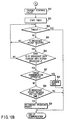
- FIG. 9 is a flow chart showing the processing performed by the radio communication apparatus as the transmission source which starts broadcast transmission.
- auxiliary packet stands for an auxiliary message packet; "response packet”, a response message packet; "broadcast packet”, a broadcast transmission data packet; and "broadcast ID”, a broadcast transmission data ID.
- the radio communication apparatus 11a transmits an auxiliary message packet first (step A11).
- the information processing section 13 in FIG. 8 generates an auxiliary message packet consisting of a transmission source ID, target ID, and broadcast transmission data ID, and transmits it through the radio section 12.
- the transmission source ID is "001", which is the self-ID
- the target ID is "004", which is the ID of the radio communication apparatus 11d
- the broadcast transmission data ID is "111”.
- the radio communication apparatus 11a Upon transmission of the auxiliary message packet, the radio communication apparatus 11a starts the timer 15 (step A12).
- a predetermined period of time is set.
- the radio communication apparatus 11a monitors whether a response message packet is returned in this period of time (steps A13 and A14).
- the radio communication apparatus 11a determines that there is no other radio communication apparatus near the radio communication apparatus 11a, with which communication can be performed, and terminates the communication processing.
- the radio communication apparatus 11a checks whether the response destination ID contained in the response message packet coincides with the self-ID "001" (step A15).
- the radio communication apparatus 11a determines that the received packet is not a response to the auxiliary message packet transmitted by the apparatus itself. The flow then returns to step A13 to wait for a response message packet addressed to the apparatus 11a within the time set in the timer 15.
- the radio communication apparatus 11a determines that the received packet is a response message packet corresponding to the auxiliary message packet transmitted by the apparatus 11a (YES in step A15).
- the radio communication apparatus 11a compares the broadcast transmission data ID of the response message packet with the broadcast transmission data ID stored in the memory 14 to check whether the response message packet having the ID "111" of the data to be transmitted by the apparatus 11a is received for the first time (step A16).
- the radio communication apparatus 11a stores the broadcast transmission data ID of the received response message packet in the memory 14 first (step A17), and then transmits a broadcast transmission data packet containing the broadcast transmission data ID "111" and actual data (step A18). If this packet is not received for the first time (NO in step A16), since the packet has already been processed, no operation is performed.
- the radio communication apparatus 11a checks whether response message packets are returned from all the target communication apparatuses (only the radio communication apparatus 11d in this case) designated by the auxiliary message packet (step A19).
- step A19 If response message packets from all the target communication apparatuses are returned (YES in step A19), the communication is terminated. If there is any target communication apparatus that has returned no response message packet (NO in step A19), the flow returns to step A12 to start the timer 15 again and wait for a response message packet.
- FIGS. 10A and 10B are flow charts showing the processing performed by a radio communication apparatus that receives and retransmits broadcast transmission data.
- auxiliary packet stands for an auxiliary message packet; "response packet”, a response message packet; "broadcast packet”, a broadcast transmission data packet; and "broadcast ID”, a broadcast transmission data ID.
- the radio communication apparatus 11a As a transmission source, and the radio communication apparatus 11b with which direct communication can be performed.
- the radio communication apparatus 11b Upon receiving an auxiliary message packet transmitted from the radio communication apparatus 11a (step B11), the radio communication apparatus 11b checks whether the received auxiliary message packet is a packet that is received for the first time (step B12).
- the radio communication apparatus 11b upon receiving the auxiliary message packet transmitted from the radio communication apparatus 11a through the radio section 12 in FIG. 8, the radio communication apparatus 11b compares the broadcast transmission data ID contained in the auxiliary message packet with the broadcast transmission data ID stored in the memory 14 to check whether the two IDS coincide with each other, thereby checking whether the packet is received for the first time.
- step B12 If the packet is not received for the first time, i.e., an auxiliary message packet containing the same broadcast transmission data ID has previously been received (NO in step B12), it is determined that there is no need to retransmit the packet, and the communication is terminated.
- the radio communication apparatus 11b determines that the auxiliary message packet must be retransmitted, and stores the transmission source ID and broadcast transmission data ID contained in the received auxiliary message packet in the memory 14 (step B13).
- the radio communication apparatus 11b compares the target ID contained in the received auxiliary message packet with the self-ID to check whether they coincide with each other. In this case, since the target destination is the radio communication apparatus 11d, the two IDs do not coincide with each other. The flow therefore advances to step B15.
- step B22 compare the target ID contained in the auxiliary message packet with the self-ID.
- step B15 the radio communication apparatus 11b generates a new auxiliary message packet in which the transmission source ID is set to the self-ID "002", and the target ID and broadcast transmission data ID are respectively set to the IDs "004" and "111" contained in the received auxiliary message packet, and transmits the new packet (step B15).
- the radio communication apparatus 11b After the transmission of the auxiliary message packet, the radio communication apparatus 11b starts the timer 15 (step B16) to monitor whether a response is received within a predetermined period of time (steps B17 and B18).
- the radio communication apparatus 11b determines that there is no other radio communication apparatus near the radio communication apparatus 11b, with which communication can be performed, and terminates the communication.
- the radio communication apparatus 11b checks whether the response destination ID contained in the response message packet coincides with the self-ID "002" (step B19).
- the radio communication apparatus 11b determines that this packet is not a response to the auxiliary message packet transmitted from the apparatus itself. The flow then returns to step B17 to wait for a response message packet addressed to the apparatus 11b within the time set in the timer 15 again.
- the radio communication apparatus 11b determines that the received packet is a response message packet corresponding to the auxiliary message packet transmitted from the apparatus 11b (YES in step B19).
- the radio communication apparatus 11b compares the target ID contained in the received response message packet with each ID stored in the memory 14 to check whether the response message packet having a combination of the target ID and the broadcast transmission data ID is received for the first time (step B20). If this packet is received for the first time, a combination of the target ID and broadcast transmission data ID contained in the response message packet is stored in the memory 14 (step B21). The flow then advances to step B22.
- step B22 the radio communication apparatus 11b generates a new response message packet in which the response destination ID is set to the transmission source ID stored in the memory 14 in step B13, and the target ID and broadcast transmission data ID are set to the respective IDs contained in the response message packet received in step B18, and transmits this packet.
- the radio communication apparatus 11b After the transmission of the response message packet, the radio communication apparatus 11b starts the timer 15 (step B23), and monitors whether a broadcast transmission data packet is received within a predetermined period of time (steps B24 and B25).
- the radio communication apparatus 11b determines that data cannot be received owing to a communication state or the like, and terminates the communication.
- the radio communication apparatus 11b checks whether the broadcast transmission data ID contained in the broadcast transmission data packet coincides with the self-ID "002" (step B26).
- the radio communication apparatus 11b determines that the broadcast transmission data packet is not addressed to the apparatus itself. The flow then returns to step B24 to wait for a broadcast transmission data packet addressed to the apparatus 11b within the time set in the timer 15 again.
- the apparatus 11b Upon receiving a broadcast transmission data packet addressed to the radio communication apparatus 11b (YES in step B26), the apparatus 11b checks on the basis of the target ID contained in the broadcast transmission data packet whether the apparatus itself is a target communication apparatus (step B27).
- the radio communication apparatus 11b If the radio communication apparatus 11b is a target communication apparatus, it indicates that the broadcast transmission data packet is successfully received. In this case, therefore, the radio communication apparatus 11b acquires the actual data contained in the packet (step B30), and terminates the communication.
- the radio communication apparatus 11d when the radio communication apparatus 11d receives the broadcast transmission data packet, the broadcast transmission is completed. If it is determined on the basis of the target ID contained in the broadcast transmission data packet that the apparatus is not a target communication apparatus, the flow advances to step B28.
- step B28 the radio communication apparatus 11b compares the broadcast transmission data ID contained in the received broadcast transmission data packet with the broadcast transmission data ID stored in the memory 14 in step B21 to check whether the broadcast transmission data packet having this broadcast transmission data ID is received for the first time.
- the radio communication apparatus 11b terminates the communication without retransmitting any broadcast transmission data packet.
- the radio communication apparatus 11b retransmits the broadcast transmission data packet having the same broadcast transmission data ID and broadcast transmission data as those of the broadcast transmission data packet received in step B25 (step B29), and terminates the communication.
- each radio communication apparatus in the radio network repeatedly executes the above processing, thereby performing broadcast transmission to all target radio communication apparatuses or all radio communication apparatuses in the radio network.
- an auxiliary message packet is transmitted.
- a response to this packet is received, it is determined that a communication route to a target destination has been established.
- a broadcast transmission data packet containing actual data is then transmitted.
- Each radio communication apparatus repeatedly retransmits the broadcast transmission data packet while comparing the broadcast transmission data ID contained in the broadcast transmission data packet with the broadcast transmission data ID stored at the time of the reception of a response message packet, thereby implementing broadcast transmission.
- Broadcast transmission can therefore be performed, without periodically exchanging pieces of information of neighboring terminals as in the prior art, only when a communication route to a target radio communication apparatus has been established at the start of broadcast transmission.
- no limitation is imposed on the number of terminals to which data is broadcast.
- the techniques described in the above embodiment may be stored, as programs that can be executed by a computer having a radio communication function, in a recording medium such as a magnetic disk (floppy disk, hard disk, or the like), optical disk (CD-ROM, DVD, or the like), or semiconductor memory and applied to various devices.
- a recording medium such as a magnetic disk (floppy disk, hard disk, or the like), optical disk (CD-ROM, DVD, or the like), or semiconductor memory and applied to various devices.
- programs may be transmitted through a communication medium to be applied to various devices.
- a computer that implements this apparatus loads the programs recorded on a recording medium, and the operation of the computer is controlled by the loaded programs, thereby executing the above processing.
- an auxiliary message packet is transmitted first, and then it is determined upon reception of a response from a target destination that a communication route has been established. Thereafter, actual data is transmitted. Without periodically exchanging pieces of information of neighboring terminals, therefore, broadcast transmission can be performed only when a communication route is established.
- the maximum communicative time of a battery-driven terminal can therefore be prolonged by suppressing power consumption.
- broadcast transmission can be performed without limiting the number of terminals to which data can be broadcast.
Landscapes
- Engineering & Computer Science (AREA)
- Computer Networks & Wireless Communication (AREA)
- Signal Processing (AREA)
- Mobile Radio Communication Systems (AREA)
- Data Exchanges In Wide-Area Networks (AREA)
- Small-Scale Networks (AREA)
Applications Claiming Priority (2)
| Application Number | Priority Date | Filing Date | Title |
|---|---|---|---|
| JP18585199 | 1999-06-30 | ||
| JP18585199A JP2001016264A (ja) | 1999-06-30 | 1999-06-30 | 無線通信システム、無線通信装置及び同報送信方法 |
Publications (2)
| Publication Number | Publication Date |
|---|---|
| EP1065839A2 true EP1065839A2 (fr) | 2001-01-03 |
| EP1065839A3 EP1065839A3 (fr) | 2002-10-09 |
Family
ID=16177999
Family Applications (1)
| Application Number | Title | Priority Date | Filing Date |
|---|---|---|---|
| EP00112900A Withdrawn EP1065839A3 (fr) | 1999-06-30 | 2000-06-19 | Système et dispositif pour la communication bi-directionnelle parmi une pluralité de terminaux de radiocommunication, ainsi que méthode pour la transmission de paquets de données entre ces terminaux de radiocommunication |
Country Status (2)
| Country | Link |
|---|---|
| EP (1) | EP1065839A3 (fr) |
| JP (1) | JP2001016264A (fr) |
Cited By (3)
| Publication number | Priority date | Publication date | Assignee | Title |
|---|---|---|---|---|
| US8699525B2 (en) | 2004-09-10 | 2014-04-15 | Interdigital Technology Corporation | Method for sending an acknowledgement to an ingress mesh point in a mesh network and a medium access control frame format |
| CN108184232A (zh) * | 2018-01-23 | 2018-06-19 | 珠海派诺科技股份有限公司 | Lora无线通信中继方法、设备和系统 |
| CN112787674A (zh) * | 2020-12-31 | 2021-05-11 | 上海移为通信技术股份有限公司 | 数据传输方法、系统、网络设备和存储介质 |
Families Citing this family (4)
| Publication number | Priority date | Publication date | Assignee | Title |
|---|---|---|---|---|
| KR100645431B1 (ko) | 2004-02-13 | 2006-11-15 | 삼성전자주식회사 | 무선네트워크에서 브로드캐스트 방법 및 그 방법을사용하는 통신장치 |
| EP1564937B1 (fr) * | 2004-02-13 | 2012-12-12 | Samsung Electronics Co., Ltd. | Procédé de diffusion dans un réseau WPAN |
| JP5504603B2 (ja) * | 2008-10-16 | 2014-05-28 | 富士通株式会社 | 無線装置及び無線装置において使用されるプログラム |
| JP5952416B2 (ja) * | 2012-09-27 | 2016-07-13 | 京セラ株式会社 | 管理方法、制御装置及び通信処理デバイス |
Family Cites Families (1)
| Publication number | Priority date | Publication date | Assignee | Title |
|---|---|---|---|---|
| US5740363A (en) * | 1996-11-26 | 1998-04-14 | Texas Instruments Incorporated | Method and apparatus for low power communications between mobile computing devices |
-
1999
- 1999-06-30 JP JP18585199A patent/JP2001016264A/ja active Pending
-
2000
- 2000-06-19 EP EP00112900A patent/EP1065839A3/fr not_active Withdrawn
Cited By (7)
| Publication number | Priority date | Publication date | Assignee | Title |
|---|---|---|---|---|
| US8699525B2 (en) | 2004-09-10 | 2014-04-15 | Interdigital Technology Corporation | Method for sending an acknowledgement to an ingress mesh point in a mesh network and a medium access control frame format |
| US9019993B2 (en) | 2004-09-10 | 2015-04-28 | Interdigital Technology Corporation | Method for sending an acknowledgement to an ingress mesh point in a mesh network and a medium access control frame format |
| US9660911B2 (en) | 2004-09-10 | 2017-05-23 | Interdigital Technology Corporation | Method for sending an acknowledgement to an ingress mesh point in a mesh network and a medium access control frame format |
| CN108184232A (zh) * | 2018-01-23 | 2018-06-19 | 珠海派诺科技股份有限公司 | Lora无线通信中继方法、设备和系统 |
| CN108184232B (zh) * | 2018-01-23 | 2021-03-02 | 珠海派诺科技股份有限公司 | Lora无线通信中继方法、设备和系统 |
| CN112787674A (zh) * | 2020-12-31 | 2021-05-11 | 上海移为通信技术股份有限公司 | 数据传输方法、系统、网络设备和存储介质 |
| CN112787674B (zh) * | 2020-12-31 | 2022-04-12 | 上海移为通信技术股份有限公司 | 数据传输方法、系统、网络设备和存储介质 |
Also Published As
| Publication number | Publication date |
|---|---|
| JP2001016264A (ja) | 2001-01-19 |
| EP1065839A3 (fr) | 2002-10-09 |
Similar Documents
| Publication | Publication Date | Title |
|---|---|---|
| KR101356256B1 (ko) | 무선 통신 네트워크에서의 피어-투-피어 디바이스를 위한 발견 채널 및 발견 비콘 | |
| US6091951A (en) | Seamless roaming among multiple networks | |
| US7715334B2 (en) | Method to sustain TCP connection | |
| US10778322B2 (en) | Methods and systems for dynamically configuring mode of operation for a prose enabled user equipment | |
| US20050169219A1 (en) | Method and system for peer-to-peer wireless communication over unlicensed communication spectrum | |
| US8619707B2 (en) | Method of managing allocated address in low power wireless personal area network | |
| JPH098808A (ja) | 無線通信システム | |
| CN100527691C (zh) | 无线通信系统,无线通信终端和在无线通信系统中加入的方法 | |
| JP2009033490A (ja) | 情報通信端末、無線通信装置および無線通信ネットワーク | |
| JP2007013649A (ja) | 共有情報更新方法 | |
| US7912489B2 (en) | Wireless base station and wireless terminal | |
| EP1065839A2 (fr) | Système et dispositif pour la communication bi-directionnelle parmi une pluralité de terminaux de radiocommunication, ainsi que méthode pour la transmission de paquets de données entre ces terminaux de radiocommunication | |
| KR20120036886A (ko) | 무선 네트워크에서의 피어 투 피어 협상 | |
| CN111726761B (zh) | 物联网数据传输方法及装置 | |
| CN111818193B (zh) | 资产管理方法及系统、网络设备、可读存储介质 | |
| US9788356B2 (en) | Terminal device, and frame sending and receiving methods | |
| JP3190790B2 (ja) | 通信制御装置 | |
| JPH10173653A (ja) | 通信方式および通信装置 | |
| EP1235386A1 (fr) | Appareil de radiocommunication et procede de radiocommunication | |
| US7929505B2 (en) | Apparatus and method for transmitting/receiving data in a wireless local area network mesh communication system | |
| JP2002064503A (ja) | 無線パケット中継方法 | |
| JPH11355315A (ja) | 無線通信ネットワークシステム | |
| CN115315015B (zh) | 一种用于光伏电站的通信方法 | |
| US20230388901A1 (en) | Communication device, base station, control method, and computer-readable storage medium | |
| US20070097748A1 (en) | Managing wireless communication with limited channels |
Legal Events
| Date | Code | Title | Description |
|---|---|---|---|
| PUAI | Public reference made under article 153(3) epc to a published international application that has entered the european phase |
Free format text: ORIGINAL CODE: 0009012 |
|
| 17P | Request for examination filed |
Effective date: 20000619 |
|
| AK | Designated contracting states |
Kind code of ref document: A2 Designated state(s): AT BE CH CY DE DK ES FI FR GB GR IE IT LI LU MC NL PT SE |
|
| AX | Request for extension of the european patent |
Free format text: AL;LT;LV;MK;RO;SI |
|
| PUAL | Search report despatched |
Free format text: ORIGINAL CODE: 0009013 |
|
| AK | Designated contracting states |
Kind code of ref document: A3 Designated state(s): AT BE CH CY DE DK ES FI FR GB GR IE IT LI LU MC NL PT SE |
|
| AX | Request for extension of the european patent |
Free format text: AL;LT;LV;MK;RO;SI |
|
| RIC1 | Information provided on ipc code assigned before grant |
Free format text: 7H 04L 12/56 A, 7H 04B 7/24 B, 7H 04Q 7/28 B, 7H 04L 12/28 B |
|
| AKX | Designation fees paid |
Designated state(s): DE FI FR GB SE |
|
| 17Q | First examination report despatched |
Effective date: 20031028 |
|
| STAA | Information on the status of an ep patent application or granted ep patent |
Free format text: STATUS: THE APPLICATION IS DEEMED TO BE WITHDRAWN |
|
| 18D | Application deemed to be withdrawn |
Effective date: 20040309 |