EP1067745A2 - Verfahren, Vorrichtungen und Computerprogrammprodukte zur Erfassung von Sicherheitsattributen verschiedener Niveaus in einem Datenstrom - Google Patents
Verfahren, Vorrichtungen und Computerprogrammprodukte zur Erfassung von Sicherheitsattributen verschiedener Niveaus in einem DatenstromInfo
- Publication number
- EP1067745A2 EP1067745A2 EP99123115A EP99123115A EP1067745A2 EP 1067745 A2 EP1067745 A2 EP 1067745A2 EP 99123115 A EP99123115 A EP 99123115A EP 99123115 A EP99123115 A EP 99123115A EP 1067745 A2 EP1067745 A2 EP 1067745A2
- Authority
- EP
- European Patent Office
- Prior art keywords
- security
- port
- attribute
- pointer
- computer readable
- Prior art date
- Legal status (The legal status is an assumption and is not a legal conclusion. Google has not performed a legal analysis and makes no representation as to the accuracy of the status listed.)
- Withdrawn
Links
Images



Classifications
-
- H—ELECTRICITY
- H04—ELECTRIC COMMUNICATION TECHNIQUE
- H04L—TRANSMISSION OF DIGITAL INFORMATION, e.g. TELEGRAPHIC COMMUNICATION
- H04L63/00—Network architectures or network communication protocols for network security
- H04L63/10—Network architectures or network communication protocols for network security for controlling access to devices or network resources
- H04L63/105—Multiple levels of security
-
- G—PHYSICS
- G06—COMPUTING OR CALCULATING; COUNTING
- G06F—ELECTRIC DIGITAL DATA PROCESSING
- G06F21/00—Security arrangements for protecting computers, components thereof, programs or data against unauthorised activity
-
- G—PHYSICS
- G06—COMPUTING OR CALCULATING; COUNTING
- G06F—ELECTRIC DIGITAL DATA PROCESSING
- G06F9/00—Arrangements for program control, e.g. control units
- G06F9/06—Arrangements for program control, e.g. control units using stored programs, i.e. using an internal store of processing equipment to receive or retain programs
- G06F9/46—Multiprogramming arrangements
- G06F9/54—Interprogram communication
- G06F9/544—Buffers; Shared memory; Pipes
-
- G—PHYSICS
- G06—COMPUTING OR CALCULATING; COUNTING
- G06F—ELECTRIC DIGITAL DATA PROCESSING
- G06F12/00—Accessing, addressing or allocating within memory systems or architectures
- G06F12/14—Protection against unauthorised use of memory or access to memory
- G06F12/1458—Protection against unauthorised use of memory or access to memory by checking the subject access rights
- G06F12/1491—Protection against unauthorised use of memory or access to memory by checking the subject access rights in a hierarchical protection system, e.g. privilege levels, memory rings
-
- G—PHYSICS
- G06—COMPUTING OR CALCULATING; COUNTING
- G06F—ELECTRIC DIGITAL DATA PROCESSING
- G06F2211/00—Indexing scheme relating to details of data-processing equipment not covered by groups G06F3/00 - G06F13/00
- G06F2211/009—Trust
-
- G—PHYSICS
- G06—COMPUTING OR CALCULATING; COUNTING
- G06F—ELECTRIC DIGITAL DATA PROCESSING
- G06F2221/00—Indexing scheme relating to security arrangements for protecting computers, components thereof, programs or data against unauthorised activity
- G06F2221/21—Indexing scheme relating to G06F21/00 and subgroups addressing additional information or applications relating to security arrangements for protecting computers, components thereof, programs or data against unauthorised activity
- G06F2221/2113—Multi-level security, e.g. mandatory access control
Definitions
- the present invention relates to multilevel port attribute passing methods, apparatuses, and computer program products operable in computer systems, and more particularly, to multilevel port attribute passing systems operable in operating systems utilizing multilevel multiple security levels in which security attributes are passed in a stream.
- Secure computer systems restrict information from unauthorized disclosure. Government secrecy systems ensure that users access only permitted information in accordance with predetermined security clearances. Other secure environments protect selected private information including payroll data and other sensitive company data including internal memoranda and competitive strategy documents.
- a security policy To establish computer security for government or company systems, a security policy is adopted.
- the security policy establishes rules for managing, protecting and distributing sensitive information.
- a security policy is typically stated in terms of subject and objects.
- Subjects are active within a selected system and include users, processes, and programs, for example.
- Objects are the recipients of subject action, such as files, directories, devices, sockets, and windows.
- a security policy may set rules to determine whether a subject user has access to a particular object such as a file.
- One well-known security system developed by David Bell and Leonard LaPadula in 1973 describes a multilevel secure computer system having access rules depending upon the security clearances of messaging processes.
- Security systems based upon access rules rely upon reference monitors which enforce authorized access relationships between subjects and objects of a system.
- a security kernel concept developed by Roger Shell in 1972 implements the reference monitor notion that all system activity is supervised in accordance with the system's security policy. The kernel accordingly mediates.
- a "trusted system” has sufficient hardware and software integrity to allow its use to simultaneously process a range of sensitive unclassified or classified information for a diverse set of users without violating access privileges.
- Networks require that the security mechanism of a trusted system be able to control communication with the trusted systems.
- a network administrator typically had tight control over system connections with other systems.
- systems often cannot identify or trust the entire network.
- a user sensitivity label specifies the sensitivity level, or level of trust, associated with that user.
- a file's sensitivity label similarly specifies the level of trust that a user must have to be able to access the particular file.
- Mandatory access controls use sensitivity labels to determine who can access what information in a system.
- labeling and mandatory access control implement a multilevel security policy -- a policy for handling multiple information classifications at a number of different security levels within a single computer system.
- a sensitivity label generally includes a classification and a set of categories or compartments.
- the classification system is typically hierarchical, including in a military security model, for example, multiple distinct levels, such as top secret, secret, confidential and classified. In a company environment, other classifications may be followed including labels such as company confidential, or company private.
- the subject's sensitivity level must dominate the object's sensitivity level.
- a subject's sensitivity label dominates the object's sensitivity label if the subject's classification is equal to or exceeds the classification of the object.
- the object's sensitivity level in order to write an object, must dominate the subject's sensitivity level.
- the subject's sensitivity level In order for a subject to write to an object, the subject's sensitivity level must be equal to or less than the sensitivity level of the object or file. Consequently, in a current mandatory access system, in order for a subject to freely read and write to and from an object, both the subject and the object must have the same classification label. This is the fundamental rule by which an access control system works, and by which two-way communication may take place between trusted computer systems.
- a covert channel is an information path that is not ordinarily used for communication in a system and thus is not protected by the system's normal security mechanisms. Thus, there is a secret way to communicate information to another person or program in violation of security protocol.
- the covert channels convey information by changes in data attributes or by changes in system performance or timing. By monitoring attribute changes for stored data and system timing, confidential information may be inferred.
- Data characteristics such as message length, frequency, and destination may be protected from analysis of data traffic by an intruder or from a user having a lower classification on the same system, with techniques such as covert channel analysis, padding messages to disguise their actual characteristics, or by sending noise or spurious messages.
- Another technical problem relates to the transmission of security attributes, which are currently transmitted in binary form and not as part of the data stream to which the security attributes relate.
- This binary transmission of the security attributes is cumbersome and non-integrated with the transmission of the associated data, creating additional work and specialized code to synchronize and associate the data transmitted with the separately provided security data. Accordingly, it is desirable to integrate the transmission of data and the related security attributes, to reduce programming costs and the likelihood of errors.
- a security attribute system comprises a pointer structure to a stream attribute structure in turn pointing to a transmission structure identifying security credentials based upon data received or data transmitted.
- security information from received data is entered into a credentials structure.
- an attribute structure is established to point to the credentials structure.
- a pointer is established to identify the attribute structure.
- multilevel trusted systems associate multiple point endpoints with a single identifier code indication or name.
- Use of a single identification to associate multiple port endpoints enables provision of a security check which halts inter-endpoint communication when the endpoints are further associated with a common identifier code indication. This is beneficial because security breaches caused by interlevel communication are diminished.
- use privileges for third-party communication at a selected network level are affirmatively granted at multiple specified levels. This is beneficial as it permits direct and unmodified application operation at desired multiple levels, permitting multilevel trusted system operation without applications software modification.
- a computer system comprises a machine-readable program storage device embodying a program of instructions executable by the machine to perform method steps in a multilevel trusted system for establishing a multilevel port to enable multiple, substantially concurrent resource accessing.
- a computer system comprises an operating system kernel supporting a multilevel access control security mechanism for creating an object access packet comprising an internet protocol (IP) header including a destination socket having a machine address and a unique port identifier, a port identifier comprising a port number specifying a resource or object, and a sensitivity label for an access control security protocol.
- IP internet protocol
- a plurality of processes are created on a destination system for a single selected port number at a selected unique sensitivity label, permitting resource and object access by multiple users in a multilevel access control system to a selected port according to a selected security policy.
- machine readable code opens multiple instances of a selected application, both instances having the same port address and a separate sensitivity label.
- multiple network endpoints having the same port number but separate security classification labels are established, permitting contemporaneous process port access according to a common port number while still adhering to the system security policy. As many ports may be open with the same port number as there are different security classifications used by the system access control security protocol.
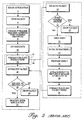
- FIG. 2 is a flow diagram of a prior art system employing access control security mechanisms.
- Third party applications require a license verification from a remote third party computer system.
- license verification may be an object in a process operating on the same system as the process in which the application is running.
- the kernel on the first system accordingly creates 6 a socket, and constructs 8 a communications packet, including an appropriate header, a machine address, a port number, and a protocol identifier, attaches 10 a data and a sensitivity label continuing the clearance of the process under which the application is running, and transmits 12 through socket a data packet over a selected electronic communications medium.
- IP header typically contains source system information for the system originating communication and information regarding the destination system. This information includes machine numbers of the source and the destination computers, the port numbers or addresses identifying applicable applications and services provided, and the protocol (e.g., TCP/IP, or UDP/IP) by which the two computers will communicate. Port numbers or addresses identify application or subject running on a client computer, and the application object or resource to be accessed on a destination machine such as a license verification program on a remote machine 13 or server.
- IP internet protocol
- an IP header and data are electronically communicated 14 from the source system, through a socket endpoint for receipt 8 by a destination server.
- the destination kernel determines whether a requested port is available 20. If the port is available (i.e., not yet opened), the requested port opens 22 at a clearance level associated with the sensitivity label of the incoming communication. If the requested port number is in use, the request is dropped 32, possibly with a negative acknowledgment (NACK) being returned to the source server.
- NACK negative acknowledgment
- the destination system opens 22 a port and prepares 16 a reply 16 and an IP header for the reply.
- An IP sensitivity label for the process under which the object application is running is additionally attached 28 to the reply. Under mandatory access control, the sensitivity label must contain the same security classification of the request of the originating system.
- the reply packet is further sent 26 to the originating server, where the packet is trapped 29 by the source kernel and inspected 30 pursuant to the security protocol for that system. If the reply packet is not provided at the same security level as the original request, the packet is dropped 32. Otherwise, the packet is passed-on 34 to the requesting application.
- Figure 3 shows a multilevel trusted system according to the prior art, including first through fourth instances of the same selected application 40 running concurrently.
- the application instances of a running application are respective processes 42a - 42d.
- Each of processes 42a - 42d is assigned a particular security classification, and each process handles communication between application 40 and kernel 44.
- the assigned security classification may be a predetermined clearance level based upon the identity of a user or a user category, or a type of application, for example.
- Kernel 44 controls input output functions, memory, processes, and operational aspects of running application 40.
- Kernel 44 mediates relationships 46 between processes of application 40 and selected resources 48, such as objects, services, and external application connecting to the processes of application 40.
- Kernel 44 includes a security process 50 ensuring that each process of application 40 communicates only with resources having a security classification consistent with a predetermined security policy.
- security process 50 ensures that processes 42a - 42d only communicate with resources 48 at the same security classification as the corresponding process of application 40. All MA objects are accordingly labeled with a security label which is used for communications packets traveling between the application process and the resource with which it has message traffic.
- FIG. 4 shows a multiuser, multilevel source trusted computer system 50 according to the present invention, which is networked to a second computer system 54 through a communication network 55, such as the internet.
- Source trusted computer system 50 includes a network including a plurality of user workstations 56a-56, a server 58, and a gateway server 60, which may be employed as a firewall to prevent unauthorized access to source trusted computer system 50.
- the gateway server 60 includes a memory 61 for storing a kernel (not shown).
- the second computer system 54 includes a memory 62 for storing a kernel. For incoming messages, a security inspection is performed on incoming packets by the kernel (not shown) of gateway server 60.
- a received packet is passed into source trusted computer system 50 only after it has been determined that the packet has satisfied the security protocols of the source trusted computer system 50.
- the kernel of source trusted computer system 50 ensures that the sensitivity label of an incoming communications packet is the same as or higher than the sensitivity label of the destination process or port destination of computer system 54 to which the packet is addressed. If the packet security classification is not the same as or higher than the security classification destination port, then the packet is discarded from further processing.
- Message packets are sent through a modem 64 or a network interface card (not shown) over a selected transmission medium 62 formed of a copper wire, a fiber optic link, a microwave line, or a radio broadcast transmission link.
- the selected link with destination computer system 54 may be directly through a LAN connection, a direct phone link, or indirectly such as through the Internet.
- the message packet is intercepted by the server kernel (not shown). Should the destination server employ an OSI interface, the message packet is preferably analyzed at the lowest software level of the OSI stack, ensuring that the kernel examines the subelements of each message packet.
- each workstation 86 couples through a modem 64 to the Internet 55, and includes a kernel that performs security.
- FIG. 5 is a flow diagram of a method for establishing multilevel ports according to the present invention in which a requesting application runs on a first data processing node 45 (i.e., Machine One).
- a second data processing node 86 i.e., Machine Two
- Machine One runs 68 a selected application, which establishes its own security level consistent with the security clearance of the user.
- the local machine kernel opens 70 a socket to the other resource or object for which a message carrying a service request can be made.
- the socket identifies the destination machine, a port number corresponding to the application program being run, and the local process security level.
- a port identifier is created by first requesting 72 an applicable security level for the associated port number opened by the kernel. The kernel further checks to see if the requested port is available 74 at that security level. If that port number and security level combination is currently in use (e.g., by another user), the kernel waits 76 for a predetermined time before again polling to determine if the particular security level is available for the port number. On the other hand, if the particular port number and security classification combination is available, the kernel combines the security level and port number to create 78 a port identifier. Then, the applicable IP header for a message packet is created 80 by inserting the port number and security label combination into the protocol spaces of the IP header normally reserved for just the port number. The message packet is completed by attaching 82 application specific data and information into predetermined regions of IP header to create a complete datagram. The completed datagram packet is then formatted 84 for electronic communication and sent to the destination server 86.
- the operating system kernel 86 of data processing node 86 intercepts 88 the packet from Machine One and examines 90 the subelements of the packet to extract the port identifier. Once the port number and security label have been extracted, the kernel determines whether the requested port at the specified security level is in open status, and if so, whether it is presently available 92 for access. If the port is unavailable in that the combined port number and sensitivity label is in use by another application, then the operation terminates 93. If the port is available, applicable data from the message packet is transferred 94 to the applications portion of the applicable operating system stack of data processing node 86 for application processing. After data is provided to the application, an applicable reply is prepared 96 as appropriate, and an applicable IP header is attached 98 to the reply message which is prepared. The reply message is formatted 100 for packet transmission over an electronic network, and sent to first data processing node 45.
- the kernel of first data processing node 45 intercepts 102 the applicable reply packet and examines the packet to verify 104 that the reply message has been provided at the same security level as the applicable application process is running in data processing node 44. If the security levels of the local process and the remote message received are the same, the reply is passed 106 to the application for processing. If the reply is at a security level inconsistent with the security level of an applicable local application, the reply packet is terminated and, if applicable, a negative acknowledgment is sent 108 to the second data processing node 86.
- the reply packet may have a lower security level if the reply packet is to be read by the application. Any access controls may be used for receipt of message packets so long as the control is consistent with the system's security policy.
- Figure 6 shows a method according to the present invention to determine whether a requested port is available for communication between data processing nodes.
- an incoming packet 86i is shown intercepted 110 by a destination system's operating system.
- Security examination is performed at the data link and network levels of the kernel interface operating system interface 66.
- the IP header element 112 of packet 86i' is examined and the port number and the security label subelement 114 are identified.
- the kernel checks to determine if the requested port number is already open 116. If not, the requested port is opened 118 at the security level indicated by the security label. Activities for opening a port at a particular security level are logged 122 to provide a journal or history of the activity and to provide a database or security levels which are presently open for particular port numbers.
- a mandatory access control protocol precludes opening another port at the same number and security level being opened. Consequently, a packet is either buffered 128 and checked periodically until a pre-defined time-out 130 occurs, causing packet process termination or the packet is terminated 108 immediately, or until the port becomes unused 124, 125. If an open port is set to a correct security level but not currently in use 126, then the port activity is logged and a decision is made 120 whether or not to pass the packet. If all other security criteria is met, the packet is forwarded for application processing.
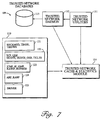
- FIG. 7 is a block diagram of trusted network components 109 used in connection with an embodiment of the present invention for operation with the kernel.
- the trusted network components 109 includes a first set 110 of multiple trusted network components, trusted network utilities 111, a trusted network daemon 112, a plurality of trusted network databases 113, and a trusted network cache and statistics module 114 for operation with the kernel 115.
- the first set 110 of multiple trusted network components includes a plurality of multiple trusted network components including sockmod, timod, and tirdwr elements 121; TCP, UDP, ticots, ticots_ord, and ticlts elements 122 for supporting the indicated protocols; ICMP, IP, IGMP, RAWIP, and bufmod elements 123; arp, and rarp elements 124; and a driver 125.
- the first 110 of trusted network components is provided to the trusted network cache and statistics module 114 for trusted network operation.
- the trusted network daemon 112 operates on the plurality of trusted network databases 113 and the trusted network cache and statistics module 114.
- the trusted network utilities 111 operate with the trusted network daemon 112 and the trusted network cache and statistics module 114.
- the trust network components 109 are responsible for propagating security attributes across the network and to make these security attributes available for distributed applications according to the present invention.
- the trusted network databases 113 according to the present invention are configured by an administrator to enable each machine on the network and each network interface on a local machine to operate within a range of sensitivity levels.
- the trusted network utilities 111 according to the present invention send control and configuration information to the kernel 115 and retrieve kernel statistics from the trusted network. When the kernel 115 needs information from the trusted network databases 113, it does not directly read the trusted network databases 113 according to the present invention. Instead, the trusted network cache and statistics module 114 maintains a kernel cache of database information.
- the trusted network cache and statistics module 114 is loaded with initial database information at boot time.
- the trusted network daemon 112 is notified and it interacts with the trusted network cache and statistics module 114 to update the kernel cache.
- each byte of network data is associated with security attributes including a sensitivity label, an information label, flags indicating effective ones of restricted operations permissible for a process, a session clearance, a kernel process ID, and an effective user ID.
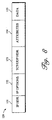
- FIG 8 is a diagram of the packet format 129 used in a trusted Solaris system according to one embodiment of the present invention.
- the packet format 129 includes an internet protocol (IP) header 131, IP options 132, a TCP/UDP header 133, security attributes 134, and user data 135.
- IP internet protocol
- the attributes according to one embodiment of the present invention are either an attribute header and a list of attributes, or a null attribute header.
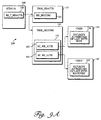
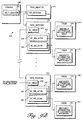
- FIG. 9A is a diagram of a system 139 for endpoint security for operation according to one embodiment of the present invention.
- the TCP i.e., transport control protocol
- security attribute stream linking system 139 includes a stream head structure 140, a stream attribute structure 141, a security attribute transmission structure 143, and first and second credentials structures respectively 144 and 145.
- the stream head structure 140 (stdata) includes a pointer 150 (sd_t_hdattr) which points to the stream attribute structure 142 (tsol_hdattr).
- the stream attribute structure 141 in turn includes a pointer 151 (hd_seccom) which points to the security attribute transmission structure 143.
- the security attribute transmission structure 143 includes a linking pointer structure 153 including first and second pointers 163 and 164 (respectively sc_wr_attr and sc_rd_attr).
- the first pointer 163 points to first credentials structure 144
- the second pointer 164 points to the second credentials structure 145.
- the first credentials structure 144 includes the security attributes 154 of the last byte of information sent
- the second credentials structure 145 includes the security attributes 155 of the last byte of information received.
- Streams is a collection of system cells, kernel resources, and kernel utility routines that can create, use and dismantle a stream.
- a stream is full duplex data transferred in a pathed information communications process between a kernel driver and a user process.
- a stream includes the kernel stream end driver as well as the user side stream head.
- FIG. 9B is a diagram of a UDP system for endpoint security for operation according to one embodiment of the present invention.
- the UDP security attribute stream linking system 239 includes a stream head structure 140, a stream attribute structure 141, and a plurality of linked security attribute transmission structures 143, 243, etc., each having pointers to associated first and second credentials structures respectively 144 and 145.
- the stream head structure 140 (stdata) includes a pointer 150 (sd_t_hdattr) which points to the stream attribute structure 141 (tsol_hdattr).
- the stream attribute structure 141 in turn includes a pointer 151 (hd_seccom) which points to a security attribute transmission structure 143.
- the security attribute transmission structure 143 includes a linking pointer structure 153 including first and second pointers 163 and 164 (respectively sc_wr_attr and sc_rd_attr).
- the first pointer 163 points to first credentials structure 144
- the second pointer 164 points to the second credentials structure 145.
- the first credentials structure 144 includes the security attributes 154 of the last byte of information sent
- the second credentials structure 145 includes the security attributes 155 of the last byte of information received.
- Linking pointer 152 points to the second security attribute structure 243 which has pointers associated with first and second associated credentials structures 144 and 145 and according to one embodiment of the present invention another linking pointer 152 to yet another security attribute structure which in turn has its own first and second associated credentials structures 144 and 145.
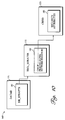
- FIG 10 is an association diagram illustrating a stream data security attribute linkage system 169 for security attributes of selected data having an intervening stream attribute structure according to the present invention.
- data security attribute linkage system 169 includes a stream data block structure 171, a stream attribute structure 172, and a credential data structure 173.
- the stream data block structure 171 includes a pointer 181 (db_strattr) which points to stream attribute structure 172.
- the stream attribute structure 172 includes information 182 including a credentials pointer (Credp), a process identifier (PID), and a network session ID.
- the credentials pointer (Credp) points to the credentials structure 173 which includes security attributes 183. Accordingly, security attributes are associated with network data in a stream according to the present invention.
- the security attributes 183 are stored in the credentials structure 173.
- the stream head sets the stream data block structure 171 to point to the stream attribute structure 172, which in turn points to the credentials structure 173 holding the security attributes 183 for the outgoing data.
- the security attributes 183 are accessible to remote network modules which desire to perform accreditation checks on the received data.
- the security attributes from the received packet are copied into a credentials structure 173.
- a stream attribute structure 172 is set up to point to the credentials structure 173, making available the security attributes 183 as the data flows upstream, and enabling retrieval of the security attributes by trusted applications to examine the attributes of data received.
Landscapes
- Engineering & Computer Science (AREA)
- Theoretical Computer Science (AREA)
- Software Systems (AREA)
- Computer Security & Cryptography (AREA)
- General Engineering & Computer Science (AREA)
- Computer Hardware Design (AREA)
- General Physics & Mathematics (AREA)
- Physics & Mathematics (AREA)
- Computing Systems (AREA)
- Computer Networks & Wireless Communication (AREA)
- Signal Processing (AREA)
- Data Exchanges In Wide-Area Networks (AREA)
- Computer And Data Communications (AREA)
Applications Claiming Priority (2)
| Application Number | Priority Date | Filing Date | Title |
|---|---|---|---|
| US09/203,010 US6292900B1 (en) | 1996-12-18 | 1998-11-30 | Multilevel security attribute passing methods, apparatuses, and computer program products in a stream |
| US203010 | 1998-11-30 |
Publications (2)
| Publication Number | Publication Date |
|---|---|
| EP1067745A2 true EP1067745A2 (de) | 2001-01-10 |
| EP1067745A3 EP1067745A3 (de) | 2004-05-12 |
Family
ID=22752084
Family Applications (1)
| Application Number | Title | Priority Date | Filing Date |
|---|---|---|---|
| EP99123115A Withdrawn EP1067745A3 (de) | 1998-11-30 | 1999-11-18 | Verfahren, Vorrichtungen und Computerprogrammprodukte zur Erfassung von Sicherheitsattributen verschiedener Niveaus in einem Datenstrom |
Country Status (3)
| Country | Link |
|---|---|
| US (1) | US6292900B1 (de) |
| EP (1) | EP1067745A3 (de) |
| JP (1) | JP2000174807A (de) |
Cited By (11)
| Publication number | Priority date | Publication date | Assignee | Title |
|---|---|---|---|---|
| WO2005046178A2 (en) | 2003-10-29 | 2005-05-19 | Cisco Technology, Inc. | Method and apparatus for providing network security using security labeling |
| WO2006057772A1 (en) * | 2004-11-23 | 2006-06-01 | Cisco Technology, Inc. | Method and system for including network security information in a frame |
| US7530112B2 (en) | 2003-09-10 | 2009-05-05 | Cisco Technology, Inc. | Method and apparatus for providing network security using role-based access control |
| US7669244B2 (en) | 2004-10-21 | 2010-02-23 | Cisco Technology, Inc. | Method and system for generating user group permission lists |
| US7827402B2 (en) | 2004-12-01 | 2010-11-02 | Cisco Technology, Inc. | Method and apparatus for ingress filtering using security group information |
| US7840708B2 (en) | 2007-08-13 | 2010-11-23 | Cisco Technology, Inc. | Method and system for the assignment of security group information using a proxy |
| US7877796B2 (en) | 2004-11-16 | 2011-01-25 | Cisco Technology, Inc. | Method and apparatus for best effort propagation of security group information |
| US7877601B2 (en) | 2004-11-23 | 2011-01-25 | Cisco Technology, Inc. | Method and system for including security information with a packet |
| EP2044722A4 (de) * | 2006-07-06 | 2012-03-07 | Michael D Stovsky | Datenklassifizierungssystem |
| EP2054820A4 (de) * | 2006-08-25 | 2012-03-07 | Wayne M Serra | Elektronisches datenklassifizierungssystem |
| WO2014053697A1 (en) * | 2012-10-01 | 2014-04-10 | Nokia Corporation | Method and apparatus for providing privacy policy for data stream |
Families Citing this family (118)
| Publication number | Priority date | Publication date | Assignee | Title |
|---|---|---|---|---|
| AUPP660298A0 (en) * | 1998-10-20 | 1998-11-12 | Canon Kabushiki Kaisha | Apparatus and method for preventing disclosure of protected information |
| US6158010A (en) | 1998-10-28 | 2000-12-05 | Crosslogix, Inc. | System and method for maintaining security in a distributed computer network |
| US7673323B1 (en) * | 1998-10-28 | 2010-03-02 | Bea Systems, Inc. | System and method for maintaining security in a distributed computer network |
| JP4083925B2 (ja) * | 1999-06-24 | 2008-04-30 | 株式会社日立製作所 | 情報処理装置、カード部材および情報処理システム |
| US6711686B1 (en) * | 1999-06-29 | 2004-03-23 | Dell Usa L.P. | Security management tool for managing security attributes in computer systems |
| US7062780B2 (en) * | 1999-10-14 | 2006-06-13 | Hewlett-Packard Development Company, L.P. | Granular access control of inter-process communications in a compartment mode workstation labeled environment |
| US8074256B2 (en) * | 2000-01-07 | 2011-12-06 | Mcafee, Inc. | Pdstudio design system and method |
| US6779120B1 (en) * | 2000-01-07 | 2004-08-17 | Securify, Inc. | Declarative language for specifying a security policy |
| US7284124B1 (en) * | 2000-06-05 | 2007-10-16 | Microsoft Corporation | Trust level based platform access regulation application |
| GB0020441D0 (en) * | 2000-08-18 | 2000-10-04 | Hewlett Packard Co | Performance of a service on a computing platform |
| GB2376763B (en) | 2001-06-19 | 2004-12-15 | Hewlett Packard Co | Demonstrating integrity of a compartment of a compartmented operating system |
| KR100413921B1 (ko) * | 2000-11-29 | 2004-01-07 | 백철화 | 팝이메일과 채팅의 동시 수행 방법 |
| US7254237B1 (en) | 2001-01-12 | 2007-08-07 | Slt Logic, Llc | System and method for establishing a secure connection |
| US7334031B2 (en) * | 2001-01-12 | 2008-02-19 | Siemens Medical Solutions Health Services Corporation | System and user interface supporting processing and activity management for concurrently operating applications |
| US7103666B2 (en) * | 2001-01-12 | 2006-09-05 | Siemens Medical Solutions Health Services Corporation | System and user interface supporting concurrent application operation and interoperability |
| US7043752B2 (en) * | 2001-01-12 | 2006-05-09 | Siemens Medical Solutions Health Services Corporation | System and user interface supporting concurrent application initiation and interoperability |
| GB0102516D0 (en) * | 2001-01-31 | 2001-03-21 | Hewlett Packard Co | Trusted gateway system |
| GB0102518D0 (en) * | 2001-01-31 | 2001-03-21 | Hewlett Packard Co | Trusted operating system |
| GB2372345A (en) * | 2001-02-17 | 2002-08-21 | Hewlett Packard Co | Secure email handling using a compartmented operating system |
| GB2372593B (en) * | 2001-02-23 | 2005-05-18 | Hewlett Packard Co | Electronic communication |
| GB2372595A (en) | 2001-02-23 | 2002-08-28 | Hewlett Packard Co | Method of and apparatus for ascertaining the status of a data processing environment. |
| GB2372592B (en) | 2001-02-23 | 2005-03-30 | Hewlett Packard Co | Information system |
| JP3764345B2 (ja) * | 2001-03-19 | 2006-04-05 | 株式会社エヌ・ティ・ティ・ドコモ | 移動通信端末装置及びサーバ装置 |
| GB2373604B (en) * | 2001-03-23 | 2004-10-27 | Ibm | A method and system for controlling use of software programs |
| US20030217333A1 (en) * | 2001-04-16 | 2003-11-20 | Greg Smith | System and method for rules-based web scenarios and campaigns |
| US20030041050A1 (en) * | 2001-04-16 | 2003-02-27 | Greg Smith | System and method for web-based marketing and campaign management |
| US7499948B2 (en) | 2001-04-16 | 2009-03-03 | Bea Systems, Inc. | System and method for web-based personalization and ecommerce management |
| US7392546B2 (en) | 2001-06-11 | 2008-06-24 | Bea Systems, Inc. | System and method for server security and entitlement processing |
| US7100207B1 (en) | 2001-06-14 | 2006-08-29 | International Business Machines Corporation | Method and system for providing access to computer resources that utilize distinct protocols for receiving security information and providing access based on received security information |
| GB2376765B (en) * | 2001-06-19 | 2004-12-29 | Hewlett Packard Co | Multiple trusted computing environments with verifiable environment identities |
| GB2376764B (en) * | 2001-06-19 | 2004-12-29 | Hewlett Packard Co | Multiple trusted computing environments |
| GB2376761A (en) * | 2001-06-19 | 2002-12-24 | Hewlett Packard Co | An arrangement in which a process is run on a host operating system but may be switched to a guest system if it poses a security risk |
| GB2378013A (en) * | 2001-07-27 | 2003-01-29 | Hewlett Packard Co | Trusted computer platform audit system |
| US7093298B2 (en) * | 2001-08-30 | 2006-08-15 | International Business Machines Corporation | Apparatus and method for security object enhancement and management |
| US7451477B2 (en) * | 2001-10-24 | 2008-11-11 | Bea Systems, Inc. | System and method for rule-based entitlements |
| FR2832583B1 (fr) * | 2001-11-16 | 2004-02-27 | Cit Alcatel | Procede d'acces a une application interne d'un terminal de radiocommunication et terminal mettant en oeuvre ce procede |
| GB2382419B (en) * | 2001-11-22 | 2005-12-14 | Hewlett Packard Co | Apparatus and method for creating a trusted environment |
| US7350226B2 (en) | 2001-12-13 | 2008-03-25 | Bea Systems, Inc. | System and method for analyzing security policies in a distributed computer network |
| US6934706B1 (en) | 2002-03-22 | 2005-08-23 | International Business Machines Corporation | Centralized mapping of security credentials for database access operations |
| US20040010598A1 (en) * | 2002-05-01 | 2004-01-15 | Bea Systems, Inc. | Portal setup wizard |
| WO2003093964A1 (en) | 2002-05-01 | 2003-11-13 | Bea Systems, Inc. | Enterprise application platform |
| US7725560B2 (en) * | 2002-05-01 | 2010-05-25 | Bea Systems Inc. | Web service-enabled portlet wizard |
| US7519984B2 (en) * | 2002-06-27 | 2009-04-14 | International Business Machines Corporation | Method and apparatus for handling files containing confidential or sensitive information |
| CA2496165C (en) * | 2002-08-19 | 2014-07-15 | Research In Motion Limited | System and method for secure control of resources of wireless mobile communication devices |
| US20070027910A1 (en) * | 2002-09-12 | 2007-02-01 | Buss Duane F | Enforcing security on attributes of objects |
| AU2003298616A1 (en) * | 2002-11-06 | 2004-06-03 | International Business Machines Corporation | Confidential data sharing and anonymous entity resolution |
| US7359982B1 (en) | 2002-12-26 | 2008-04-15 | International Business Machines Corporation | System and method for facilitating access to content information |
| US7349949B1 (en) | 2002-12-26 | 2008-03-25 | International Business Machines Corporation | System and method for facilitating development of a customizable portlet |
| US7386619B1 (en) * | 2003-01-06 | 2008-06-10 | Slt Logic, Llc | System and method for allocating communications to processors in a multiprocessor system |
| US7653930B2 (en) | 2003-02-14 | 2010-01-26 | Bea Systems, Inc. | Method for role and resource policy management optimization |
| US7591000B2 (en) | 2003-02-14 | 2009-09-15 | Oracle International Corporation | System and method for hierarchical role-based entitlements |
| US8831966B2 (en) | 2003-02-14 | 2014-09-09 | Oracle International Corporation | Method for delegated administration |
| US7293286B2 (en) | 2003-02-20 | 2007-11-06 | Bea Systems, Inc. | Federated management of content repositories |
| US7483904B2 (en) * | 2003-02-20 | 2009-01-27 | Bea Systems, Inc. | Virtual repository content model |
| US20040167880A1 (en) * | 2003-02-20 | 2004-08-26 | Bea Systems, Inc. | System and method for searching a virtual repository content |
| US20040167871A1 (en) * | 2003-02-20 | 2004-08-26 | Bea Systems, Inc. | Content mining for virtual content repositories |
| US7840614B2 (en) * | 2003-02-20 | 2010-11-23 | Bea Systems, Inc. | Virtual content repository application program interface |
| US7562298B2 (en) * | 2003-02-20 | 2009-07-14 | Bea Systems, Inc. | Virtual content repository browser |
| US7415478B2 (en) | 2003-02-20 | 2008-08-19 | Bea Systems, Inc. | Virtual repository complex content model |
| US7810036B2 (en) | 2003-02-28 | 2010-10-05 | Bea Systems, Inc. | Systems and methods for personalizing a portal |
| US7558790B1 (en) | 2003-03-18 | 2009-07-07 | Troux Technologies | Method and system for querying an applied data model |
| US7318097B2 (en) * | 2003-06-17 | 2008-01-08 | International Business Machines Corporation | Security checking program for communication between networks |
| US8862866B2 (en) | 2003-07-07 | 2014-10-14 | Certicom Corp. | Method and apparatus for providing an adaptable security level in an electronic communication |
| US8245279B2 (en) * | 2003-08-19 | 2012-08-14 | Certicom Corp. | Method and apparatus for synchronizing an adaptable security level in an electronic communication |
| US20050262362A1 (en) * | 2003-10-10 | 2005-11-24 | Bea Systems, Inc. | Distributed security system policies |
| US20050097352A1 (en) * | 2003-10-10 | 2005-05-05 | Bea Systems, Inc. | Embeddable security service module |
| US20050081055A1 (en) | 2003-10-10 | 2005-04-14 | Bea Systems, Inc. | Dynamically configurable distributed security system |
| US20050097353A1 (en) * | 2003-10-10 | 2005-05-05 | Bea Systems, Inc. | Policy analysis tool |
| US7644432B2 (en) | 2003-10-10 | 2010-01-05 | Bea Systems, Inc. | Policy inheritance through nested groups |
| US7461140B2 (en) * | 2003-12-19 | 2008-12-02 | Lsi Corporation | Method and apparatus for identifying IPsec security policy in iSCSI |
| US7774601B2 (en) * | 2004-04-06 | 2010-08-10 | Bea Systems, Inc. | Method for delegated administration |
| US20050251512A1 (en) * | 2004-04-13 | 2005-11-10 | Bea Systems, Inc. | System and method for searching a virtual content repository |
| US20060041558A1 (en) * | 2004-04-13 | 2006-02-23 | Mccauley Rodney | System and method for content versioning |
| US7475091B2 (en) | 2004-04-13 | 2009-01-06 | Bea Systems, Inc. | System and method for viewing a virtual content repository |
| US20050251503A1 (en) * | 2004-04-13 | 2005-11-10 | Bea Systems, Inc. | System and method for content and schema versioning |
| US7580953B2 (en) * | 2004-04-13 | 2009-08-25 | Bea Systems, Inc. | System and method for schema lifecycles in a virtual content repository that integrates a plurality of content repositories |
| US7657925B2 (en) * | 2004-10-14 | 2010-02-02 | Oracle International Corporation | Method and system for managing security policies for databases in a distributed system |
| US7805765B2 (en) * | 2004-12-28 | 2010-09-28 | Lenovo (Singapore) Pte Ltd. | Execution validation using header containing validation data |
| US7752667B2 (en) * | 2004-12-28 | 2010-07-06 | Lenovo (Singapore) Pte Ltd. | Rapid virus scan using file signature created during file write |
| US8086615B2 (en) * | 2005-03-28 | 2011-12-27 | Oracle International Corporation | Security data redaction |
| US20060224628A1 (en) * | 2005-03-29 | 2006-10-05 | Bea Systems, Inc. | Modeling for data services |
| US8234223B1 (en) | 2005-04-28 | 2012-07-31 | Troux Technologies, Inc. | Method and system for calculating cost of an asset using a data model |
| US7748027B2 (en) * | 2005-05-11 | 2010-06-29 | Bea Systems, Inc. | System and method for dynamic data redaction |
| US7953734B2 (en) * | 2005-09-26 | 2011-05-31 | Oracle International Corporation | System and method for providing SPI extensions for content management system |
| US7917537B2 (en) | 2005-09-26 | 2011-03-29 | Oracle International Corporation | System and method for providing link property types for content management |
| US7818344B2 (en) | 2005-09-26 | 2010-10-19 | Bea Systems, Inc. | System and method for providing nested types for content management |
| US7752205B2 (en) | 2005-09-26 | 2010-07-06 | Bea Systems, Inc. | Method and system for interacting with a virtual content repository |
| US7483893B2 (en) | 2005-09-26 | 2009-01-27 | Bae Systems, Inc. | System and method for lightweight loading for managing content |
| US7512792B2 (en) * | 2005-12-15 | 2009-03-31 | International Business Machines Corporation | Reference monitor method for enforcing information flow policies |
| US7647630B2 (en) * | 2005-12-15 | 2010-01-12 | International Business Machines Corporation | Associating security information with information objects in a data processing system |
| US20070143601A1 (en) * | 2005-12-15 | 2007-06-21 | Arroyo Diana J | System and method for authorizing information flows |
| US7885975B2 (en) * | 2006-02-23 | 2011-02-08 | Oracle America, Inc. | Mechanism for implementing file access control using labeled containers |
| US7882227B2 (en) * | 2006-02-23 | 2011-02-01 | Oracle America, Inc. | Mechanism for implementing file access control across a network using labeled containers |
| EP2005636B1 (de) | 2006-04-13 | 2015-10-21 | Certicom Corp. | Verfahren und vorrichtung zur bereitstellung eines einstellbaren sicherheitsniveaus in einer elektronischen kommunikation |
| US8214877B1 (en) * | 2006-05-22 | 2012-07-03 | Troux Technologies | System and method for the implementation of policies |
| US8020213B2 (en) * | 2006-08-01 | 2011-09-13 | International Business Machines Corporation | Access control method and a system for privacy protection |
| US8463852B2 (en) | 2006-10-06 | 2013-06-11 | Oracle International Corporation | Groupware portlets for integrating a portal with groupware systems |
| US8204831B2 (en) | 2006-11-13 | 2012-06-19 | International Business Machines Corporation | Post-anonymous fuzzy comparisons without the use of pre-anonymization variants |
| US8027956B1 (en) | 2007-10-30 | 2011-09-27 | Troux Technologies | System and method for planning or monitoring system transformations |
| US8756656B1 (en) * | 2008-09-30 | 2014-06-17 | Symantec Corporation | Systems and methods for creating and synchronizing security metadata within synchronized-data networks |
| EP2270710B1 (de) * | 2009-06-30 | 2015-12-23 | Axis AB | Verfahren zu Beschränkung des Zugriffs auf Mediendaten, die von einer Kamera erstellt wurden |
| US8468607B2 (en) * | 2009-10-07 | 2013-06-18 | International Business Machines Corporation | Associating multiple security domains to application servers |
| JP4886063B2 (ja) * | 2009-12-04 | 2012-02-29 | 株式会社エヌ・ティ・ティ・ドコモ | 状態報知装置、状態報知方法及びプログラム |
| JP5822078B2 (ja) | 2010-06-25 | 2015-11-24 | 日本電気株式会社 | 機密情報漏洩防止システム、機密情報漏洩防止方法及び機密情報漏洩防止プログラム |
| US8635592B1 (en) | 2011-02-08 | 2014-01-21 | Troux Technologies, Inc. | Method and system for tailoring software functionality |
| HK1200043A1 (en) | 2011-12-01 | 2015-07-31 | 日本电气方案创新株式会社 | Sensitive information leakage prevention system, sensitive information leakage prevention method, and computer-readable recording medium |
| US9280581B1 (en) | 2013-03-12 | 2016-03-08 | Troux Technologies, Inc. | Method and system for determination of data completeness for analytic data calculations |
| US10742690B2 (en) | 2017-11-21 | 2020-08-11 | Juniper Networks, Inc. | Scalable policy management for virtual networks |
| US11558353B2 (en) | 2018-02-06 | 2023-01-17 | Nokia Technologies Oy | Method, apparatus, and computer readable medium for providing security service for data center |
| US10778724B1 (en) * | 2018-06-29 | 2020-09-15 | Juniper Networks, Inc. | Scalable port range management for security policies |
| US10742557B1 (en) | 2018-06-29 | 2020-08-11 | Juniper Networks, Inc. | Extending scalable policy management to supporting network devices |
| US11216309B2 (en) | 2019-06-18 | 2022-01-04 | Juniper Networks, Inc. | Using multidimensional metadata tag sets to determine resource allocation in a distributed computing environment |
| US11216411B2 (en) | 2019-08-06 | 2022-01-04 | Micro Focus Llc | Transforming data associated with a file based on file system attributes |
| US11354455B2 (en) * | 2019-09-11 | 2022-06-07 | International Business Machines Corporation | Maintenance of access for security enablement on a host system |
| US11308243B2 (en) | 2019-09-11 | 2022-04-19 | International Business Machines Corporation | Maintenance of access for security enablement in a storage device |
| CN113746945B (zh) * | 2020-05-30 | 2023-09-12 | 华为技术有限公司 | 反向地址解析方法及电子设备 |
| US12021740B2 (en) | 2021-05-28 | 2024-06-25 | Juniper Networks, Inc. | Policy enforcement for bare metal servers by top of rack switches |
| US12430460B2 (en) | 2023-09-11 | 2025-09-30 | International Business Machines Corporation | Sensitive stored procedure identification in real-time and without data exposure |
Family Cites Families (6)
| Publication number | Priority date | Publication date | Assignee | Title |
|---|---|---|---|---|
| US5075884A (en) * | 1987-12-23 | 1991-12-24 | Loral Aerospace Corp. | Multilevel secure workstation |
| US5204961A (en) * | 1990-06-25 | 1993-04-20 | Digital Equipment Corporation | Computer network operating with multilevel hierarchical security with selectable common trust realms and corresponding security protocols |
| US5577209A (en) * | 1991-07-11 | 1996-11-19 | Itt Corporation | Apparatus and method for providing multi-level security for communication among computers and terminals on a network |
| US5572673A (en) * | 1993-12-01 | 1996-11-05 | Sybase, Inc. | Secure multi-level system for executing stored procedures |
| US5692124A (en) * | 1996-08-30 | 1997-11-25 | Itt Industries, Inc. | Support of limited write downs through trustworthy predictions in multilevel security of computer network communications |
| US5845068A (en) * | 1996-12-18 | 1998-12-01 | Sun Microsystems, Inc. | Multilevel security port methods, apparatuses, and computer program products |
-
1998
- 1998-11-30 US US09/203,010 patent/US6292900B1/en not_active Expired - Lifetime
-
1999
- 1999-11-18 EP EP99123115A patent/EP1067745A3/de not_active Withdrawn
- 1999-11-30 JP JP11339146A patent/JP2000174807A/ja active Pending
Cited By (30)
| Publication number | Priority date | Publication date | Assignee | Title |
|---|---|---|---|---|
| US9237158B2 (en) | 2003-09-10 | 2016-01-12 | Cisco Technology, Inc. | Method and apparatus for providing network security using role-based access control |
| US9860254B2 (en) | 2003-09-10 | 2018-01-02 | Cisco Technology, Inc. | Method and apparatus for providing network security using role-based access control |
| US8661556B2 (en) | 2003-09-10 | 2014-02-25 | Cisco Technology, Inc. | Method and apparatus for providing network security using role-based access control |
| US7530112B2 (en) | 2003-09-10 | 2009-05-05 | Cisco Technology, Inc. | Method and apparatus for providing network security using role-based access control |
| US7954163B2 (en) | 2003-09-10 | 2011-05-31 | Cisco Technology, Inc. | Method and apparatus for providing network security using role-based access control |
| US8539571B2 (en) | 2003-10-29 | 2013-09-17 | Cisco Technology, Inc. | Method and apparatus for providing network security using security labeling |
| CN1864390B (zh) * | 2003-10-29 | 2010-10-27 | 思科技术公司 | 用于利用安全性标记提供网络安全性的方法和装置 |
| WO2005046178A2 (en) | 2003-10-29 | 2005-05-19 | Cisco Technology, Inc. | Method and apparatus for providing network security using security labeling |
| US7836490B2 (en) | 2003-10-29 | 2010-11-16 | Cisco Technology, Inc. | Method and apparatus for providing network security using security labeling |
| WO2005046178A3 (en) * | 2003-10-29 | 2005-12-15 | Cisco Tech Ind | Method and apparatus for providing network security using security labeling |
| US7669244B2 (en) | 2004-10-21 | 2010-02-23 | Cisco Technology, Inc. | Method and system for generating user group permission lists |
| US8302157B2 (en) | 2004-10-21 | 2012-10-30 | Cisco Technology, Inc. | Method and system for generating user group identifiers |
| US10193861B2 (en) | 2004-11-16 | 2019-01-29 | Cisco Technology, Inc. | Method and apparatus for best effort propagation of security group information |
| US7877796B2 (en) | 2004-11-16 | 2011-01-25 | Cisco Technology, Inc. | Method and apparatus for best effort propagation of security group information |
| US8621596B2 (en) | 2004-11-16 | 2013-12-31 | Cisco Technology, Inc. | Method and apparatus for best effort propagation of security group information |
| US9407604B2 (en) | 2004-11-16 | 2016-08-02 | Cisco Technology Inc. | Method and apparatus for best effort propagation of security group information |
| US7721323B2 (en) | 2004-11-23 | 2010-05-18 | Cisco Technology, Inc. | Method and system for including network security information in a frame |
| US9461979B2 (en) | 2004-11-23 | 2016-10-04 | Cisco Technology, Inc. | Method and system for including network security information in a frame |
| US7886145B2 (en) | 2004-11-23 | 2011-02-08 | Cisco Technology, Inc. | Method and system for including security information with a packet |
| US8555056B2 (en) | 2004-11-23 | 2013-10-08 | Cisco Technology, Inc. | Method and system for including security information with a packet |
| US8561140B2 (en) | 2004-11-23 | 2013-10-15 | Cisco Technology, Inc. | Method and system for including network security information in a frame |
| US7877601B2 (en) | 2004-11-23 | 2011-01-25 | Cisco Technology, Inc. | Method and system for including security information with a packet |
| WO2006057772A1 (en) * | 2004-11-23 | 2006-06-01 | Cisco Technology, Inc. | Method and system for including network security information in a frame |
| US7827402B2 (en) | 2004-12-01 | 2010-11-02 | Cisco Technology, Inc. | Method and apparatus for ingress filtering using security group information |
| US8301882B2 (en) | 2004-12-01 | 2012-10-30 | Cisco Technology, Inc. | Method and apparatus for ingress filtering using security group information |
| EP2044722A4 (de) * | 2006-07-06 | 2012-03-07 | Michael D Stovsky | Datenklassifizierungssystem |
| EP2054820A4 (de) * | 2006-08-25 | 2012-03-07 | Wayne M Serra | Elektronisches datenklassifizierungssystem |
| US8713201B2 (en) | 2007-08-13 | 2014-04-29 | Cisco Technology, Inc. | Method and system for the assignment of security group information using a proxy |
| US7840708B2 (en) | 2007-08-13 | 2010-11-23 | Cisco Technology, Inc. | Method and system for the assignment of security group information using a proxy |
| WO2014053697A1 (en) * | 2012-10-01 | 2014-04-10 | Nokia Corporation | Method and apparatus for providing privacy policy for data stream |
Also Published As
| Publication number | Publication date |
|---|---|
| US6292900B1 (en) | 2001-09-18 |
| EP1067745A3 (de) | 2004-05-12 |
| JP2000174807A (ja) | 2000-06-23 |
Similar Documents
| Publication | Publication Date | Title |
|---|---|---|
| US6292900B1 (en) | Multilevel security attribute passing methods, apparatuses, and computer program products in a stream | |
| US5845068A (en) | Multilevel security port methods, apparatuses, and computer program products | |
| US5764890A (en) | Method and system for adding a secure network server to an existing computer network | |
| US7900240B2 (en) | Multilayer access control security system | |
| US6981143B2 (en) | System and method for providing connection orientation based access authentication | |
| DE69130657T2 (de) | Verteiltes, mehrstufiges Rechnersicherheitssystem und Verfahren | |
| KR100414238B1 (ko) | 안전네트워크프로토콜시스템및방법 | |
| US6584508B1 (en) | Advanced data guard having independently wrapped components | |
| US6219786B1 (en) | Method and system for monitoring and controlling network access | |
| EP1305687B1 (de) | Gefilterte kommunikation von anwendung zu anwendung | |
| US6717943B1 (en) | System and method for routing and processing data packets | |
| US20030110373A1 (en) | Traffic manager for distributed computing environments | |
| US20090119745A1 (en) | System and method for preventing private information from leaking out through access context analysis in personal mobile terminal | |
| KR20020001190A (ko) | 네트워크망에서 내부자원의 보호기능이 강화된 보안장치및 그 운용방법 | |
| JP2002505459A (ja) | メソッド毎のセキュリティ要件の指定 | |
| JP4630896B2 (ja) | アクセス制御方法、アクセス制御システムおよびパケット通信装置 | |
| US7047564B2 (en) | Reverse firewall packet transmission control system | |
| CN112019330A (zh) | 一种基于联盟链的内网安全审计数据的存储方法及系统 | |
| Schear et al. | Glavlit: Preventing exfiltration at wire speed | |
| Housley | Security label framework for the internet | |
| CN121000435A (zh) | 基于身份标签的tcp连接控制方法及装置 | |
| Anderson et al. | The DASH network communication architecture | |
| CN119484650A (zh) | 一种具有统一规范的边缘自动化系统 | |
| Housley | RFC1457: Security Label Framework for the Internet | |
| Slabihoud et al. | ISA Server 2004 EE Common Criteria Evaluation |
Legal Events
| Date | Code | Title | Description |
|---|---|---|---|
| PUAI | Public reference made under article 153(3) epc to a published international application that has entered the european phase |
Free format text: ORIGINAL CODE: 0009012 |
|
| AK | Designated contracting states |
Kind code of ref document: A2 Designated state(s): AT BE CH CY DE DK ES FI FR GB GR IE IT LI LU MC NL PT SE |
|
| AX | Request for extension of the european patent |
Free format text: AL;LT;LV;MK;RO;SI |
|
| PUAL | Search report despatched |
Free format text: ORIGINAL CODE: 0009013 |
|
| AK | Designated contracting states |
Kind code of ref document: A3 Designated state(s): AT BE CH CY DE DK ES FI FR GB GR IE IT LI LU MC NL PT SE |
|
| AX | Request for extension of the european patent |
Extension state: AL LT LV MK RO SI |
|
| AKX | Designation fees paid | ||
| REG | Reference to a national code |
Ref country code: DE Ref legal event code: 8566 |
|
| STAA | Information on the status of an ep patent application or granted ep patent |
Free format text: STATUS: THE APPLICATION IS DEEMED TO BE WITHDRAWN |
|
| 18D | Application deemed to be withdrawn |
Effective date: 20041113 |