EP1068366B1 - Matiere a base d'acier et procede de fabrication correspondant - Google Patents
Matiere a base d'acier et procede de fabrication correspondant Download PDFInfo
- Publication number
- EP1068366B1 EP1068366B1 EP99910899A EP99910899A EP1068366B1 EP 1068366 B1 EP1068366 B1 EP 1068366B1 EP 99910899 A EP99910899 A EP 99910899A EP 99910899 A EP99910899 A EP 99910899A EP 1068366 B1 EP1068366 B1 EP 1068366B1
- Authority
- EP
- European Patent Office
- Prior art keywords
- contents
- steel material
- material according
- hand
- vanadium
- Prior art date
- Legal status (The legal status is an assumption and is not a legal conclusion. Google has not performed a legal analysis and makes no representation as to the accuracy of the status listed.)
- Expired - Lifetime
Links
- 229910000831 Steel Inorganic materials 0.000 title claims abstract description 112
- 239000010959 steel Substances 0.000 title claims abstract description 112
- 239000000463 material Substances 0.000 title claims abstract description 64
- 238000004519 manufacturing process Methods 0.000 title claims abstract description 20
- 238000000034 method Methods 0.000 title claims description 13
- IJGRMHOSHXDMSA-UHFFFAOYSA-N Atomic nitrogen Chemical compound N#N IJGRMHOSHXDMSA-UHFFFAOYSA-N 0.000 claims abstract description 54
- 239000010955 niobium Substances 0.000 claims abstract description 51
- 229910052720 vanadium Inorganic materials 0.000 claims abstract description 45
- LEONUFNNVUYDNQ-UHFFFAOYSA-N vanadium atom Chemical compound [V] LEONUFNNVUYDNQ-UHFFFAOYSA-N 0.000 claims abstract description 43
- 229910052799 carbon Inorganic materials 0.000 claims abstract description 39
- OKTJSMMVPCPJKN-UHFFFAOYSA-N Carbon Chemical compound [C] OKTJSMMVPCPJKN-UHFFFAOYSA-N 0.000 claims abstract description 37
- 239000011651 chromium Substances 0.000 claims abstract description 33
- 229910052758 niobium Inorganic materials 0.000 claims abstract description 31
- GUCVJGMIXFAOAE-UHFFFAOYSA-N niobium atom Chemical compound [Nb] GUCVJGMIXFAOAE-UHFFFAOYSA-N 0.000 claims abstract description 29
- 229910052757 nitrogen Inorganic materials 0.000 claims abstract description 28
- 239000000203 mixture Substances 0.000 claims abstract description 21
- 229910045601 alloy Inorganic materials 0.000 claims abstract description 20
- 239000000956 alloy Substances 0.000 claims abstract description 20
- 239000000155 melt Substances 0.000 claims abstract description 19
- 239000011572 manganese Substances 0.000 claims abstract description 18
- VYZAMTAEIAYCRO-UHFFFAOYSA-N Chromium Chemical compound [Cr] VYZAMTAEIAYCRO-UHFFFAOYSA-N 0.000 claims abstract description 17
- 229910052804 chromium Inorganic materials 0.000 claims abstract description 17
- ZOKXTWBITQBERF-UHFFFAOYSA-N Molybdenum Chemical compound [Mo] ZOKXTWBITQBERF-UHFFFAOYSA-N 0.000 claims abstract description 12
- 229910052750 molybdenum Inorganic materials 0.000 claims abstract description 12
- 239000011733 molybdenum Substances 0.000 claims abstract description 12
- 239000000843 powder Substances 0.000 claims abstract description 9
- 238000005266 casting Methods 0.000 claims abstract description 8
- 239000000126 substance Substances 0.000 claims abstract description 8
- PWHULOQIROXLJO-UHFFFAOYSA-N Manganese Chemical compound [Mn] PWHULOQIROXLJO-UHFFFAOYSA-N 0.000 claims abstract description 3
- 229910052748 manganese Inorganic materials 0.000 claims abstract description 3
- 239000010703 silicon Substances 0.000 claims abstract description 3
- 229910052710 silicon Inorganic materials 0.000 claims abstract description 3
- PXHVJJICTQNCMI-UHFFFAOYSA-N Nickel Chemical compound [Ni] PXHVJJICTQNCMI-UHFFFAOYSA-N 0.000 claims abstract 4
- 229910052759 nickel Inorganic materials 0.000 claims abstract 2
- 239000002245 particle Substances 0.000 claims description 28
- XEEYBQQBJWHFJM-UHFFFAOYSA-N Iron Chemical compound [Fe] XEEYBQQBJWHFJM-UHFFFAOYSA-N 0.000 claims description 19
- 238000005496 tempering Methods 0.000 claims description 17
- 238000001816 cooling Methods 0.000 claims description 12
- 239000012535 impurity Substances 0.000 claims description 11
- 238000010438 heat treatment Methods 0.000 claims description 9
- 229910052742 iron Inorganic materials 0.000 claims description 9
- 239000011159 matrix material Substances 0.000 claims description 8
- 229910000734 martensite Inorganic materials 0.000 claims description 7
- 230000008569 process Effects 0.000 claims description 6
- 238000007711 solidification Methods 0.000 claims description 5
- 230000008023 solidification Effects 0.000 claims description 5
- 101100129500 Caenorhabditis elegans max-2 gene Proteins 0.000 claims description 4
- 229910001566 austenite Inorganic materials 0.000 description 11
- 150000001247 metal acetylides Chemical class 0.000 description 11
- 241000765309 Vanadis Species 0.000 description 6
- 238000001556 precipitation Methods 0.000 description 6
- 230000015572 biosynthetic process Effects 0.000 description 5
- 239000000919 ceramic Substances 0.000 description 4
- WFKWXMTUELFFGS-UHFFFAOYSA-N tungsten Chemical compound [W] WFKWXMTUELFFGS-UHFFFAOYSA-N 0.000 description 4
- 229910052721 tungsten Inorganic materials 0.000 description 4
- 239000010937 tungsten Substances 0.000 description 4
- 229910000851 Alloy steel Inorganic materials 0.000 description 3
- 239000011449 brick Substances 0.000 description 3
- 238000010586 diagram Methods 0.000 description 3
- 238000009826 distribution Methods 0.000 description 3
- 238000002474 experimental method Methods 0.000 description 3
- 239000007791 liquid phase Substances 0.000 description 3
- 239000012071 phase Substances 0.000 description 3
- 238000010587 phase diagram Methods 0.000 description 3
- 239000000047 product Substances 0.000 description 3
- 238000005204 segregation Methods 0.000 description 3
- 241000446313 Lamella Species 0.000 description 2
- 238000005275 alloying Methods 0.000 description 2
- 238000000137 annealing Methods 0.000 description 2
- 239000006104 solid solution Substances 0.000 description 2
- 230000009466 transformation Effects 0.000 description 2
- 229910000997 High-speed steel Inorganic materials 0.000 description 1
- 241000566150 Pandion haliaetus Species 0.000 description 1
- 230000008859 change Effects 0.000 description 1
- 238000000641 cold extrusion Methods 0.000 description 1
- 239000002826 coolant Substances 0.000 description 1
- 230000003247 decreasing effect Effects 0.000 description 1
- 230000000694 effects Effects 0.000 description 1
- 230000005496 eutectics Effects 0.000 description 1
- 239000012467 final product Substances 0.000 description 1
- 238000005242 forging Methods 0.000 description 1
- 238000009863 impact test Methods 0.000 description 1
- 230000003993 interaction Effects 0.000 description 1
- 238000003754 machining Methods 0.000 description 1
- 229910052751 metal Inorganic materials 0.000 description 1
- 239000002184 metal Substances 0.000 description 1
- 238000005065 mining Methods 0.000 description 1
- 238000003825 pressing Methods 0.000 description 1
- 239000012925 reference material Substances 0.000 description 1
- 238000007670 refining Methods 0.000 description 1
- 238000005096 rolling process Methods 0.000 description 1
- 238000007493 shaping process Methods 0.000 description 1
- 230000007704 transition Effects 0.000 description 1
- 229910052902 vermiculite Inorganic materials 0.000 description 1
- 235000019354 vermiculite Nutrition 0.000 description 1
- 239000010455 vermiculite Substances 0.000 description 1
Images



Classifications
-
- C—CHEMISTRY; METALLURGY
- C22—METALLURGY; FERROUS OR NON-FERROUS ALLOYS; TREATMENT OF ALLOYS OR NON-FERROUS METALS
- C22C—ALLOYS
- C22C38/00—Ferrous alloys, e.g. steel alloys
- C22C38/18—Ferrous alloys, e.g. steel alloys containing chromium
- C22C38/22—Ferrous alloys, e.g. steel alloys containing chromium with molybdenum or tungsten
-
- C—CHEMISTRY; METALLURGY
- C21—METALLURGY OF IRON
- C21D—MODIFYING THE PHYSICAL STRUCTURE OF FERROUS METALS; GENERAL DEVICES FOR HEAT TREATMENT OF FERROUS OR NON-FERROUS METALS OR ALLOYS; MAKING METAL MALLEABLE, e.g. BY DECARBURISATION OR TEMPERING
- C21D6/00—Heat treatment of ferrous alloys
- C21D6/002—Heat treatment of ferrous alloys containing Cr
-
- C—CHEMISTRY; METALLURGY
- C22—METALLURGY; FERROUS OR NON-FERROUS ALLOYS; TREATMENT OF ALLOYS OR NON-FERROUS METALS
- C22C—ALLOYS
- C22C38/00—Ferrous alloys, e.g. steel alloys
- C22C38/18—Ferrous alloys, e.g. steel alloys containing chromium
- C22C38/24—Ferrous alloys, e.g. steel alloys containing chromium with vanadium
-
- C—CHEMISTRY; METALLURGY
- C22—METALLURGY; FERROUS OR NON-FERROUS ALLOYS; TREATMENT OF ALLOYS OR NON-FERROUS METALS
- C22C—ALLOYS
- C22C38/00—Ferrous alloys, e.g. steel alloys
- C22C38/18—Ferrous alloys, e.g. steel alloys containing chromium
- C22C38/26—Ferrous alloys, e.g. steel alloys containing chromium with niobium or tantalum
-
- C—CHEMISTRY; METALLURGY
- C22—METALLURGY; FERROUS OR NON-FERROUS ALLOYS; TREATMENT OF ALLOYS OR NON-FERROUS METALS
- C22C—ALLOYS
- C22C38/00—Ferrous alloys, e.g. steel alloys
- C22C38/18—Ferrous alloys, e.g. steel alloys containing chromium
- C22C38/36—Ferrous alloys, e.g. steel alloys containing chromium with more than 1.7% by weight of carbon
-
- C—CHEMISTRY; METALLURGY
- C21—METALLURGY OF IRON
- C21D—MODIFYING THE PHYSICAL STRUCTURE OF FERROUS METALS; GENERAL DEVICES FOR HEAT TREATMENT OF FERROUS OR NON-FERROUS METALS OR ALLOYS; MAKING METAL MALLEABLE, e.g. BY DECARBURISATION OR TEMPERING
- C21D1/00—General methods or devices for heat treatment, e.g. annealing, hardening, quenching or tempering
- C21D1/18—Hardening; Quenching with or without subsequent tempering
-
- C—CHEMISTRY; METALLURGY
- C21—METALLURGY OF IRON
- C21D—MODIFYING THE PHYSICAL STRUCTURE OF FERROUS METALS; GENERAL DEVICES FOR HEAT TREATMENT OF FERROUS OR NON-FERROUS METALS OR ALLOYS; MAKING METAL MALLEABLE, e.g. BY DECARBURISATION OR TEMPERING
- C21D2211/00—Microstructure comprising significant phases
- C21D2211/003—Cementite
-
- C—CHEMISTRY; METALLURGY
- C21—METALLURGY OF IRON
- C21D—MODIFYING THE PHYSICAL STRUCTURE OF FERROUS METALS; GENERAL DEVICES FOR HEAT TREATMENT OF FERROUS OR NON-FERROUS METALS OR ALLOYS; MAKING METAL MALLEABLE, e.g. BY DECARBURISATION OR TEMPERING
- C21D2211/00—Microstructure comprising significant phases
- C21D2211/008—Martensite
Definitions
- the invention relates to a new steel material which is manufactured in a non-powder metallurgical way, comprising manufacturing of ingots or castings from a melt.
- the steel material consists of an alloy, which besides iron and carbon, contains chromium, vanadium, and molybdenum as its substantial alloying elements in amounts which are chosen and balanced in such a way that the steel after hardening and tempering has a hardness and a microstructure which makes the material suitable in the first place for cold work tools but also for other applications where high requirements are raised on wear resistance and comparatively good toughness, such as materials for shaping or working ceramic masses, e.g. for tools to be used in the brick-making industry.
- the invention also relates to the use of the steel material and to a method for the manufacturing of the material, including the method for the heat treatment of the material.
- the conventional ingot manufacturing can be completed through some subsequent melt-metallurgical process-step, such as e.g. electro-slag-refining (ESR) or, as an alternative process, the building up of ingots of molten metal drops which are caused to solidify, such as according to the process which is known by the name of Osprey.
- ESR electro-slag-refining
- the field of use of the material of the invention may include anything from wear parts, e.g. within mining industry, to tools within the field of conventional cold work for the manufacturing of tools for blanking and forming, cold extrusion tooling, powder pressing, deep drawing etc, and tools or machine components for forming or working of ceramic masses, e.g. in the brick making industry.
- wear parts e.g. within mining industry
- tools within the field of conventional cold work for the manufacturing of tools for blanking and forming, cold extrusion tooling, powder pressing, deep drawing etc
- tools or machine components for forming or working of ceramic masses, e.g. in the brick making industry.
- the steel shall be possible to hardened the steel from austenitising temperatures below 1200°C, preferably from temperatures between 900 and 1150°C, typically from 950 to 1100°C and the steel shall have a good hardenability; a good dimensional stability on heat treatments; and attain a hardness of 55-66 HRC, preferably 60-66 HRC, through secondary hardening.
- An acceptable cutability and an acceptable grindability are other desirable features.
- Fig. 1 illustrates a typical constitutional diagram of an alloy having vanadium, carbon, and molybdenum contents according to the invention and varying chromium contents.
- the diagram shows the phases in a state of equilibrium at different temperatures.
- the alloy will solidify through a primary precipitation of hard particles of MX-type in molten phase, where M is V and/or Nb, but preferably V, and X is C and/or N, but preferably C.
- the remaining, residual melt has a comparatively low content of alloying elements and will solidify to form austenite and MX ( ⁇ + MX region in the phase diagram).
- the ⁇ + MX + M 7 C 3 -region is passed rather quickly, in which region a smaller amount of carbides of M 7 C 3 -type can be precipitated, where M substantially is chromium.
- its micro-structure at the temperature 1100°C in the state of equilibrium consists of austenite in molten phase, and hard particles of MX-type precipitated in the liquid phase, said M being V and/or Nb, but preferably V, and X is C and N, and also, possibly, a smaller amount of secondarily precipitated hard particles, normally max 2%, preferably max 1 vol-%, in the first place M 7 C 3 -carbides, in which M substantially is Cr.
- the material is heated to the ⁇ + MX-region of the phase diagram, wherein any existing M 7 C 3 -carbides, are dissolved and there is again achieved a structure consisting of austenite and hard particles of MX-type distributed in the austenite.
- the austenite is transformed to martensite.
- the ⁇ + MX + M 7 C 3 -region is passed comparatively quickly, which suppresses the formation of M 7 C 3 -carbides.
- the steel material of the invention therefor it is also typical for the steel material of the invention that it at room temperature has a microstructure consisting of a matrix which substantially consists of martensite and in this matrix 10-40 vol-%, and at some preferred embodiments of the invention, e.g. steels for cold work tools, more particularly 10-25 vol-%, and at some other preferred embodiments of the invention, such as for tools or machine components for the working of ceramic masses, e.g. within the brick-making industry, most conveniently 20-40 vol-% of said primary hard particles of MX-type which are precipitated in liquid phase, said hard particles typically having a rounded shape. Further, there may exist secondarily precipitated hard particles of sub-microscopic size.
- the material of the invention has a hardness between 55 and 66 HRC, the said microstructure and hardness being obtainable by heating the material to a temperature between 900 and 1150°C, through-heating the material at said temperature for a period of time of 15 min - 2h, cooling the material to room temperature and tempering it one or several times at a temperature of 150-650°C.
- Vanadium, carbon, and nitrogen shall exist in a sufficient amount in order that the material shall be able to contain 10-40 vol-%, and at some preferred embodiments of the invention, e.g. steels for hot worked tools, more particularly 10-25 vol-%, and at some other preferred embodiments of the invention, such as for tools or machine components for working ceramic masses, e.g. in the brick manufacturing industry, more particularly 20-40 vol-% hard particles of MX-type, and the matrix also contain 0.6-0.8% carbon in solid solution, wherein the fact that some carbon and nitrogen can be bound in the form of said, secondarily precipitated hard particles, in the first place M 7 C 3 -carbides, also shall be considered.
- nitrogen normally does not contribute to any substantial degree to the formation of said primary or secondary precipitations, since nitrogen shall not exist in the steel above impurity level or as an accessory element from the manufacture of the steel, i.e. max 0.3%, normally max 0.1%.
- Vanadium can partly be replaced by niobium up to max 2% niobium, but this opportunity is preferably not utilised.
- the said hard particles to the great part consist of MC-carbides, more particularly substantially V 4 C 3 -carbides.
- the said hard particles are comparatively large and it is estimated that at least 50 vol-% of the hard particles exist as finally dispersed, discrete particles in the matrix, having sizes between 3 and 20 ⁇ m. Typically, they have a more or less rounded shape.
- the vanadium content shall be at least 6.5% and max 15% and preferably max 13%. According to one aspect of the invention, the vanadium content is max 11%. According to another aspect of the invention, the vanadium content preferably shall be at least 7.5% at the same time as the maximum vanadium content amounts to 9%. According to still another aspect of the invention, the preferably chosen vanadium content, however, shall lie between 6.5 and 7.5%. When it is here referred to vanadium, it shall be recognised that vanadium completely or partly can be replaced by twice the amount of niobium up to max 2% niobium.
- the carbon content shall be adapted to the content of vanadium and any existing niobium in order that there shall be obtained 10-40 vol-%, and according to some, above mentioned aspects of the invention, more particularly 10-25 vol-% or 20-40 vol-% of said primarily precipitated hard particles of MX-type, and also 0.6-0.8, preferably 0.64-0.675% carbon in the tempered martensite, wherein also the fact shall be considered that secondary precipitation of in the first place MC-carbides and M 7 C 3 -carbides can occur to some extent, said secondary precipitation also consuming some carbon.
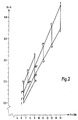
- the conditions that apply for the relations between vanadium and niobium on one side and carbon on the other side are visualised in Fig.
- the contents of vanadium, niobium, carbon+nitrogen shall be adapted to each other such that the said co-ordinates will lie within the range of the area defined by the corner-points A, B", E, F, B', B, C, D, A.
- the contents of vanadium, niobium, carbon+nitrogen shall be adapted to each other such that the said co-ordinates will lie within the range of the area defined by the corner-points A, B, C, D, A.
- the contents of vanadium, niobium, carbon+nitrogen shall be adapted to each other such that the said co-ordinates will lie within the range of the area defined by the comer-points A, B', C', D, A in the co-ordinate system in Fig. 2.
- the co-ordinates shall lie within the range of the area defined by the corner-points A, B", C", D, A.
- the co-ordinates shall lie within the range of the area defined by the corner-points A, B", C"', D', A.
- the co-ordinates preferably may lie within the range of the area defined by the comer-points A, B', C', C", C'", D', A.
- the co-ordinates preferably may lie within the range of the area defined by the comer-points B", B', C', C", B".
- the co-ordinates lie within the range of the area defined by the corner-points D', C"', C", D, D'.
- the above mentioned second through fifth aspects, and said preferred embodiments particularly concern the use of the steel for cold work tools.
- the contents of vanadium, niobium and carbon+nitrogen may be adapted to each other such that the co-ordinates of said points will lie within the range of the area defined by the corner-points E, F, B', B", E in the co-ordinate system in Fig. 2.
- the co-ordinates more particularly may lie within the range of the area defined by the corner-points E, F, F', E', E.
- the co-ordinates should lie within the range of the area defined by the corner-points E', F', F", E", E', and according to still another aspect within the range of the area defined by the corner-points E", F", B', B", E".
- Chromium shall exist in a amount of at least 5.6 %, preferably at least 6 %, suitably at least 6.5 %, in order that the steel shall get a good hardenability, i.e. an ability to be through-hardened also in case of thick steel objects.
- the upper limit of possible content of chromium is determined by the risk of formation of non-desired M 7 C 3 carbides because of segregation during the solidification of the melt.
- the chromium content therefore must not exceed 8.5 % and should preferably be less than 8 %, suitably max 7.5 %.
- An amount of 7 % is a typical chromium content, which is comparatively low in view of the desired hardenability.
- the steel alloy also shall contain at least 1.7 % molybdenum, preferably 1.7-3 % molybenum, suitably 2.1-2.8 molybdenum.
- the steel contains 2.3 % molybdenum. Molybdenum in principle completely or partly may be replaced by the double amount of tungsten. Preferably, however, the steel does not contain tungsten more than at impurity level.
- Silicon and manganese may exist in amounts which are normal for tool steels. Each of them therefore exists in the steel in amounts between 0.1 and 2 %, preferably in amounts between 0.2 and 1.0 %.
- the balance is iron and impurities and accessory elements in normal amounts, wherein the term accessory elements means harmless elements which normally are added in connection with the manufacture of the steel and which may exist as residual elements.
- composition is: 2.7 C, 0.5-1.0 Si, 0.5-1.0 Mn, 7.0 Cr, 8.0 V, 2.3 Mo, balance iron and unavoidable impurities.
- preferred composition is: 2.45 C, 0.5-1.0 Si, 0.5-1.0 Mn, 7.5 Cr, 8.0 V, 2.3 Mo, balance iron and unavoidable impurities.
- compositions of the steel of the invention are particularly suited for cold work steels.
- a conceive, preferred composition for the use of the steel for tools and machine parts for working cheramic masses is: 3.5 C, 0.5-1.0 Si, 0.5-1.0 Mn, 7.0 Cr, 12.0 V, 2.3 Mo, balance iron and unavoidable impurities.
- composition for said use is: 3.9 C, 0.5-1.0 Si, 0.5-1.0 Mn, 7.0 Cr, 14.0 V, 2.3 Mo, balance iron and unavoidable impurities.
- composition for said use is: 3.0 C, 0.5-1.0 Si, 0.5-1.0 Mn, 7.0 Cr, 10.0 V, 2.3 Mo, balance iron and unavoidable impurities.
- a melt having the characteristic; chemical composition of the invention there is first produced a melt having the characteristic; chemical composition of the invention.
- This melt is cast to ingots or castings, wherein the melt is caused to solidify so slowly that there is precipitated in the melt during the solidification process 10-40 vol.-%, preferably, depending on the intended use of the steel, 10-25 vol.-% or 20-40 vol.-% of hard particles of MX type, where M is vanadium and/or niobium, preferably vanadium, and X is carbon and nitrogen, preferably essentially carbon, at least 50 vol.-% of said hard particles having sizes between 3 and 20 ⁇ m, and that the material, in connection with the heat treatment of the steel material, possibly after hot working and/or machining to desired product shape, is heated to a temperature within the temperature range of 900-1150°C, where the micro-structure of the steel alloy at equilibrium consists of austenite and hard particles of said MX type, that the material is maintained at this temperature for a period of time of 15 min
- the hardness of the investigated alloys in their soft annealed state is shown in Table 5. Hardness of the tested alloys in soft annealed state Alloy Steel No. Hardness (HB) 2 237 3 249 5 275 6 277 7 295 8 311 9 319 11 240 12 275
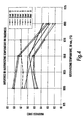
- Fig. 4 The hardness after austenitising between 1000 and 1100°C/30 min/air cooling to 20°C is shown in Fig. 4.
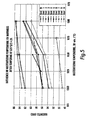
- Fig. 5 the hardness versus austenitising between 1000 and 1100°C/30 min/air cooling to 20°C followed by tempering 525°C/2 x 2 h is visualised.
- Fig. 6 shows tempering curves after austenitising at 1050°C for the examined alloys.
- steel No. 10 is included as a reference.
- Those alloys which do not contain molybdenum and/or tungsten have a tempering resistance similar to that of steel No. 10 (AISI D2) while the other alloys have a tempering resistance which is similar to that of the high speed steels.
- the hardness varies between 60 and 66 HRC after austenitising between 1050 and 1100°C and tempering at 500-550°C.
- Ms, Ac 1 and Ac 3 are shown in Table 7 for some of the examined alloys. Transition temperatures Alloy Steel No. Ms (°C) Ac 1 (°C) Ac 3 (°C) 2 180 800 860 7 150 780 900 10 180 810 880 11 220 795 835 12 245 860 920
- the impact energy was measured at room temperature for the steels which are given in Table 8.
- the toughness decreased with increased carbide content and vanadium content but was maintained to a point representing an alloy content corresponding to that of steels Nos. 5 and 7, which contain about 9 % V, at the same level as the toughness of steel No. 10, AISI D2. This indicates that steels of the invention in the content range of 6-9 % V obtain a better toughness than the ledeburitic steel No. 10, Table 8.
- the abrasive wear resistance was evaluated through wear resistance tests made against Slip Naxos-disc, SGB46HVX, see Table 9. Generally the wear resistance increased with larger and more carbides, higher hardness and by addition of V/Nb for the formation of the harder MC carbides. In the table, low values represent high wear resistance and vice versa. Results from wear tests Alloy Steel No. Hardness (HRC) G number SGB46HVX 2 56.5 3.5 3 56.5 1 5 58.5 0.5 7 65.5 0.9 11 58 0.3 12 62 2 13 60.0 3.8
Landscapes
- Chemical & Material Sciences (AREA)
- Engineering & Computer Science (AREA)
- Materials Engineering (AREA)
- Mechanical Engineering (AREA)
- Metallurgy (AREA)
- Organic Chemistry (AREA)
- Physics & Mathematics (AREA)
- Thermal Sciences (AREA)
- Crystallography & Structural Chemistry (AREA)
- Powder Metallurgy (AREA)
- Treatment Of Steel In Its Molten State (AREA)
- Heat Treatment Of Steel (AREA)
- Continuous Casting (AREA)
- Carbon Steel Or Casting Steel Manufacturing (AREA)
Claims (27)
- Acier qui est fabriqué d'une manière différente de la métallurgie des poudres, comprenant la fabrication de lingots ou de pièces coulées à partir d'une masse fondue, caractérisé en ce que l'acier est constitué de la composition chimique suivante en % en poids :
- carbone :
- 2,0 - 4,3 %
- silicium :
- 0,1 - 2,0 %
- manganèse :
- 0,1 - 2,0 %
- chrome :
- 5,6 - 8,5 %
- nickel :
- maximum 1,0 %
- molybdène :
- 1,7 - 3 %, Mo pouvant être complètement ou partiellement remplacé par une quantité double de W
- niobium :
- maximum 2,0 %
- vanadium :
- 6,5 - 15 %, V pouvant être partiellement remplacé par une quantité double de Nb jusqu'à 2 % de Nb au maximum
- azote :
- maximum 0,3 %,
- A :
- 9/3,1
- B" :
- 9/2,85
- E :
- 15/4,3
- F :
- 15/3,75
- B' :
- 9/2,65
- B :
- 9/2,5
- C :
- 6,5/2,0
- D :
- 6,5/2,45,
- Matériau à base d'acier selon la revendication 1, caractérisé en ce que les teneurs en carbone + azote, d'une part, et en vanadium et en niobium éventuellement présent, d'autre part, sont équilibrées entre elles de façon à ce que les teneurs en lesdits éléments soient comprises dans l'aire A,B,C,D,A dans le système de coordonnées sur la figure 2, dans lequel les coordonnées V + 2 Nb/C + N pour lesdits points sont :
- A :
- 9/3,1
- B :
- 9/2,5
- C :
- 6,5/2,0
- D :
- 6,5/2,45
- Matériau à base d'acier selon la revendication 2, caractérisé en ce que les teneurs en carbone + azote, d'une part, et en vanadium et en niobium éventuellement présent, d'autre part, sont équilibrées entre elles de façon à ce que les teneurs en lesdits éléments soient comprises dans l'aire A,B',C',D',A dans le système de coordonnées sur la figure 2, dans lequel les coordonnées V + 2 Nb/C + N pour lesdits points sont :
- A :
- 9/3,1
- B' :
- 9/2,65
- C' :
- 6,5/2,1
- D :
- 6,5/2,45.
- Matériau à base d'acier selon la revendication 2, caractérisé en ce que les teneurs en carbone + azote, d'une part, et en vanadium et en niobium éventuellement présent, d'autre part, sont équilibrées entre elles de façon à ce que les teneurs en lesdits éléments soient comprises dans l'aire A,B",C",D,A dans le système de coordonnées sur la figure 2, dans lequel les coordonnées V + 2 Nb/C + N pour lesdits points sont :
- A :
- 9/3,1
- B" :
- 9/2,85
- C" :
- 6,5/2,25
- D :
- 6,5/2,45.
- Matériau à base d'acier selon la revendication 2, caractérisé en ce que les teneurs en carbone + azote, d'une part, et en vanadium et en niobium éventuellement présent, d'autre part, sont équilibrées entre elles de façon à ce que les teneurs en lesdits éléments soient comprises dans l'aire A,B",C"',D',A dans le système de coordonnées sur la figure 2, dans lequel les coordonnées V + 2Nb/C + N pour lesdits points sont :
- A :
- 9/3,1
- B" :
- 9/2,85
- C"' :
- 7,5/2,5
- D' :
- 7,5/2,7.
- Matériau à base d'acier selon la revendication 2, caractérisé en ce que les teneurs en carbone + azote, d'une part, et en vanadium et en niobium éventuellement présent, d'autre part, sont équilibrées entre elles de façon à ce que les teneurs en lesdits éléments soient comprises dans l'aire A,B',C',C", C"',D',A dans le système de coordonnées sur la figure 2, dans lequel les coordonnées V + 2 Nb/C + N pour lesdits points sont :
- A :
- 9/3,1
- B' :
- 9/2,65
- C" :
- 6,5/2,1
- C" :
- 6,5/2,25
- C"' :
- 7,5/2,5
- D' :
- 7,5/2,7.
- Matériau à base d'acier selon la revendication 2, caractérisé en ce que les teneurs en carbone + azote, d'une part, et en vanadium et en niobium éventuellement présent, d'autre part, sont équilibrées entre elles de façon à ce que les teneurs en lesdits éléments soient comprises dans l'aire B",B',C',C",B" dans le système de coordonnées sur la figure 2, dans lequel les coordonnées V + 2 Nb/C + N pour lesdits points sont :
- B" :
- 9/2,85
- B' :
- 9/2,65
- C' :
- 6,5/2,1
- C" :
- 6,5/2,25.
- Matériau à base d'acier selon la revendication 2, caractérisé en ce que les teneurs en carbone + azote, d'une part, et en vanadium et en niobium éventuellement présent, d'autre part, sont équilibrées entre elles de façon à ce que les teneurs en lesdits éléments soient comprises dans l'aire D',C"',C",D,D' dans le système de coordonnées sur la figure 2, dans lequel les coordonnées V + 2 Nb/C + N pour lesdits points sont :
- D' :
- 7,5/2,7
- C"' :
- 7,5/2,5
- C" :
- 6,5/2,25
- D :
- 6,5/2,45.
- Matériau à base d'acier selon la revendication 2, caractérisé en ce que les teneurs en carbone + azote, d'une part, et en vanadium et en niobium éventuellement présent, d'autre part, sont équilibrées entre elles de façon à ce que les teneurs en lesdits éléments soient comprises dans l'aire B",E,F,B',B" dans le système de coordonnées sur la figure 2, dans lequel les coordonnées V + 2 Nb/C + N pour lesdits points sont :
- B" :
- 9/2,85
- E :
- 15/4,3
- F :
- 15/3,75
- B' :
- 9/2,65.
- Matériau à base d'acier selon la revendication 9, caractérisé en ce que les teneurs en carbone + azote, d'une part, et en vanadium et en niobium éventuellement présent, d'autre part, sont équilibrées entre elles de façon à ce que les teneurs en lesdits éléments soient comprises dans l'aire B",E",F",B',B" dans le système de coordonnées sur la figure 2, dans lequel les coordonnées V + 2 Nb/C + N pour lesdits points sont :
- B" :
- 9/2,85
- E" :
- 11/3,35
- F" :
- 11/3,05
- B' :
- 9/2,65.
- Matériau à base d'acier selon la revendication 9, caractérisé en ce que les teneurs en carbone + azote, d'une part, et en vanadium et en niobium éventuellement présent, d'autre part, sont équilibrées entre elles de façon à ce que les teneurs en lesdits éléments soient comprises dans l'aire E",E',F',F",E" dans le système de coordonnées sur la figure 2, dans lequel les coordonnées V + 2 Nb/C + N pour lesdits points sont :
- E' :
- 13/3,83
- F' :
- 13/3,4
- F" :
- 11/3,05.
- Matériau à base d'acier selon la revendication 9, caractérisé en ce que les teneurs en carbone + azote, d'une part, et en vanadium et en niobium éventuellement présent, d'autre part, sont équilibrées entre elles de façon à ce que les teneurs en lesdits éléments soient comprises dans l'aire E',E,F,F',E' dans le système de coordonnées sur la figure 2, dans lequel les coordonnées V + 2 Nb/C + N pour lesdits points sont :
- E' :
- 13/3,83
- E :
- 15/4,3
- F :
- 15/4,0
- F' :
- 13/3,4.
- Matériau à base d'acier selon l'une quelconque des revendications 1 à 12, caractérisé en ce que l'acier contient au moins 6 % de chrome, de préférence au moins 6,5 % de chrome.
- Matériau à base d'acier selon la revendication 13, caractérisé en ce que l'acier contient moins de 8 % de chrome, de préférence au plus 7,5 % de chrome.
- Matériau à base d'acier selon l'une quelconque des revendications 1 à 13, caractérisé en ce que l'acier contient de 2,1 à 2,8 % de molybdène.
- Matériau à base d'acier selon l'une quelconque des revendications 1 à 8 ou 13 à 15, caractérisé en ce qu'il contient, en % en poids : 2,55 de C, 0,5-1,0 de Si, 0,2-1,0 de Mn, 7,0 de Cr, 8,0 de V, 2,3 de Mo.
- Matériau à base d'acier selon l'une quelconque des revendications 1 à 8 ou 13 à 15, caractérisé en ce qu'il contient, en % en poids : 2,7 de C, 0,5-1,0 de Si, 0,2-1,0 de Mn, 7,0 de Cr, 8,0 de V, 2,3 de Mo.
- Matériau à base d'acier selon l'une quelconque des revendications 1 à 8 ou 13 à 15, caractérisé en ce qu'il contient, en % en poids : 2,45 de C, 0,5-1,0 de Si, 0,2-1,0 de Mn, 7,0 de Cr, 7,0 de V, 2,3 de Mo.
- Matériau à base d'acier selon la revendication 1 ou l'une quelconque des revendications 9 à 12, caractérisé en ce qu'il contient, en % en poids : 3,0 de C, 0,5-1,0 de Si. 0,2-1,0 de Mn, 7,0 de Cr, 10 de V, 2,3 de Mo.
- Matériau à base d'acier selon la revendication 1 ou l'une quelconque des revendications 9 à 12, caractérisé en ce qu'il contient, en % en poids : 3,5 de C, 0,5-1,0 de Si, 0,2-1,0 de Mn, 7,0 de Cr, 12 de V, 2,3 de Mo.
- Matériau à base d'acier selon la revendication 1 ou l'une quelconque des revendications 9 à 12, caractérisé en ce qu'il contient, en % en poids : 3,9 de C, 0,5-1,0 de Si, 0,2-1,0 de Mn, 7,0 de Cr, 14 de V, 2,3 de Mo.
- Matériau à base d'acier selon l'une quelconque des revendications 1 à 21, caractérisé en ce qu'au moins 50 % en volume desdites particules dures de type MX ont une taille comprise entre 3 et 20 µm, de préférence une taille comprise entre 5 et 20 µm.
- Procédé de fabrication d'un matériau à base d'acier, caractérisé en ce qu'on produit d'abord une masse fondue d'un alliage ayant une composition chimique selon l'une quelconque des revendications 1 à 21, en ce qu'on coule ladite masse fondue en lingots ou en pièces coulées, dans lequel on oblige la masse fondue à se solidifier tellement lentement que 10 à 40 % en volume de particules dures de type MX précipitent dans la masse fondue pendant l'opération de solidification, M étant du vanadium et/ou du niobium, de préférence du vanadium, et X étant du carbone ou de l'azote, de préférence essentiellement du carbone, au moins 50 % en volume desdites particules dures ayant une taille comprise entre 3 et 20 µm, de préférence une taille comprise entre 5 et 20 µm.
- Procédé selon la revendication 23 pour la fabrication d'un matériau à base d'acier, caractérisé en ce qu'on produit d'abord une masse fondue d'un alliage ayant une composition chimique selon l'une quelconque des revendications 1 à 8 ou 13 à 18, en ce qu'on coule cette masse fondue en lingots ou en pièces coulées, dans lequel on oblige la masse fondue à se solidifier tellement lentement que 10 à 25 % en volume de particules dures de type MX précipitent pendant l'opération de solidification.
- Procédé selon la revendication 23 pour la fabrication d'un matériau à base d'acier, caractérisé en ce qu'on produit d'abord une masse fondue d'un alliage ayant une composition chimique selon la revendication 1 ou l'une quelconque des revendications 9 à 12 ou 19 à 21, en ce qu'on coule cette masse fondue en lingots ou en pièces coulées, dans lequel on oblige la masse fondue à se solidifier tellement lentement que 20 à 40 % en volume de particules dures de type MX précipitent dans la masse fondue pendant l'opération de solidification.
- Utilisation d'un matériau à base d'acier selon l'une quelconque des revendications 1 à 25 pour la fabrication d'outils d'usinage à froid.
- Utilisation d'un matériau à base d'acier selon l'une quelconque des revendications 1 à 25 pour des pièces d'usure, c'est-à-dire des produits qui sont soumis à une forte usure par abrasion.
Applications Claiming Priority (3)
| Application Number | Priority Date | Filing Date | Title |
|---|---|---|---|
| SE9800954 | 1998-03-23 | ||
| SE9800954A SE511700C2 (sv) | 1998-03-23 | 1998-03-23 | Stålmaterial för kallarbetsverktyg framställt på icke pulvermetallurgiskt sätt samt detta sätt |
| PCT/SE1999/000295 WO1999049093A1 (fr) | 1998-03-23 | 1999-03-02 | Matiere a base d'acier et procede de fabrication correspondant |
Publications (2)
| Publication Number | Publication Date |
|---|---|
| EP1068366A1 EP1068366A1 (fr) | 2001-01-17 |
| EP1068366B1 true EP1068366B1 (fr) | 2002-09-04 |
Family
ID=20410641
Family Applications (1)
| Application Number | Title | Priority Date | Filing Date |
|---|---|---|---|
| EP99910899A Expired - Lifetime EP1068366B1 (fr) | 1998-03-23 | 1999-03-02 | Matiere a base d'acier et procede de fabrication correspondant |
Country Status (14)
| Country | Link |
|---|---|
| US (1) | US6348109B1 (fr) |
| EP (1) | EP1068366B1 (fr) |
| JP (1) | JP4361686B2 (fr) |
| KR (1) | KR100562759B1 (fr) |
| CN (1) | CN1097640C (fr) |
| AT (1) | ATE223511T1 (fr) |
| AU (1) | AU739458B2 (fr) |
| BR (1) | BR9908986A (fr) |
| CA (1) | CA2324603C (fr) |
| DE (1) | DE69902767T2 (fr) |
| DK (1) | DK1068366T3 (fr) |
| ES (1) | ES2182497T3 (fr) |
| SE (1) | SE511700C2 (fr) |
| WO (1) | WO1999049093A1 (fr) |
Families Citing this family (16)
| Publication number | Priority date | Publication date | Assignee | Title |
|---|---|---|---|---|
| SE516934C2 (sv) * | 1999-10-05 | 2002-03-26 | Uddeholm Tooling Ab | Stålmaterial, dess användning och tillverkning |
| AT410448B (de) * | 2001-04-11 | 2003-04-25 | Boehler Edelstahl | Kaltarbeitsstahllegierung zur pulvermetallurgischen herstellung von teilen |
| SE518958C2 (sv) * | 2001-04-25 | 2002-12-10 | Uddeholm Tooling Ab | Föremål av stål |
| KR100903714B1 (ko) * | 2001-04-25 | 2009-06-19 | 우데홀름툴링악티에보라그 | 강철 제품 |
| CN1300445C (zh) * | 2003-12-26 | 2007-02-14 | 东方汽轮机厂 | 一种汽轮机高温叶片及其热处理工艺 |
| DE102004010894A1 (de) * | 2004-03-06 | 2005-09-22 | Voith Paper Patent Gmbh | Verfahren und Vorrichtung zum Behandeln einer Bahn aus Papier oder Karton |
| JP2005291350A (ja) * | 2004-03-31 | 2005-10-20 | Jatco Ltd | ベルト式無段変速機用板状エレメント |
| IT1391656B1 (it) * | 2008-11-07 | 2012-01-17 | Polimeri Europa Spa | Lame per granulatore ad alta resistenza all'usura e relativo metodo di affilatura |
| SE535090C2 (sv) * | 2010-03-17 | 2012-04-10 | Uddeholms Ab | Förfarande för framställning av en slitplatta för en bandsågsbladstyrning, en sådan slitplatta, samt användning av ett stålmaterial för tillverkning av slitplattan |
| CN102660714B (zh) * | 2012-06-05 | 2013-12-18 | 河南理工大学 | 一种高碳高钒耐磨钢 |
| CN103805829A (zh) * | 2012-11-15 | 2014-05-21 | 攀钢集团钛业有限责任公司 | 耐磨铸造件及其制备方法以及反击锤式破碎机 |
| CN103589960A (zh) * | 2013-11-04 | 2014-02-19 | 虞伟财 | 一种电锯锯条用工具钢 |
| CN104911459A (zh) * | 2015-05-05 | 2015-09-16 | 柳州金特新型耐磨材料股份有限公司 | 一种挖掘机用耐磨钢主刀板的制备方法 |
| SE539646C2 (en) * | 2015-12-22 | 2017-10-24 | Uddeholms Ab | Hot work tool steel |
| US20220033942A1 (en) * | 2018-09-28 | 2022-02-03 | Corning Incorporated | Alloyed metals with an increased austenite transformation temperature and articles including the same |
| US12031202B2 (en) | 2022-06-07 | 2024-07-09 | Steer Engineering Private Limited | High carbon martensitic stainless steel |
Family Cites Families (7)
| Publication number | Priority date | Publication date | Assignee | Title |
|---|---|---|---|---|
| JPS5964748A (ja) * | 1982-09-29 | 1984-04-12 | Hitachi Metals Ltd | 高耐摩高靭性冷間工具鋼 |
| US4721153A (en) * | 1986-09-12 | 1988-01-26 | Hitachi Metals, Inc. | High-chromium compound roll |
| SE457356C (sv) * | 1986-12-30 | 1990-01-15 | Uddeholm Tooling Ab | Verktygsstaal avsett foer kallbearbetning |
| JPS6431951A (en) * | 1987-07-29 | 1989-02-02 | Daido Steel Co Ltd | Cold tool steel for casting |
| US5225007A (en) * | 1990-02-28 | 1993-07-06 | Hitachi Metals Ltd. | Method for wear-resistant compound roll manufacture |
| EP0562114B1 (fr) * | 1991-09-12 | 1998-11-04 | Kawasaki Steel Corporation | Materiau pour la couche exterieure d'un cylindre de laminage et cylindre composite fabrique par coulee par centrifugation |
| TW341602B (en) * | 1996-03-15 | 1998-10-01 | Kawasaki Steel Co | Outer layer material for centrifugally cast roll |
-
1998
- 1998-03-23 SE SE9800954A patent/SE511700C2/sv not_active IP Right Cessation
-
1999
- 1999-03-02 CN CN99804307A patent/CN1097640C/zh not_active Expired - Fee Related
- 1999-03-02 BR BR9908986-6A patent/BR9908986A/pt not_active IP Right Cessation
- 1999-03-02 JP JP2000538049A patent/JP4361686B2/ja not_active Expired - Fee Related
- 1999-03-02 ES ES99910899T patent/ES2182497T3/es not_active Expired - Lifetime
- 1999-03-02 CA CA002324603A patent/CA2324603C/fr not_active Expired - Fee Related
- 1999-03-02 KR KR1020007010568A patent/KR100562759B1/ko not_active Expired - Fee Related
- 1999-03-02 AU AU29660/99A patent/AU739458B2/en not_active Ceased
- 1999-03-02 WO PCT/SE1999/000295 patent/WO1999049093A1/fr not_active Ceased
- 1999-03-02 EP EP99910899A patent/EP1068366B1/fr not_active Expired - Lifetime
- 1999-03-02 DK DK99910899T patent/DK1068366T3/da active
- 1999-03-02 AT AT99910899T patent/ATE223511T1/de active
- 1999-03-02 DE DE69902767T patent/DE69902767T2/de not_active Expired - Lifetime
- 1999-03-02 US US09/646,573 patent/US6348109B1/en not_active Expired - Lifetime
Also Published As
| Publication number | Publication date |
|---|---|
| AU739458B2 (en) | 2001-10-11 |
| ES2182497T3 (es) | 2003-03-01 |
| HK1033965A1 (en) | 2001-10-05 |
| EP1068366A1 (fr) | 2001-01-17 |
| SE9800954L (sv) | 1999-09-24 |
| SE511700C2 (sv) | 1999-11-08 |
| KR20010052220A (ko) | 2001-06-25 |
| CN1294636A (zh) | 2001-05-09 |
| AU2966099A (en) | 1999-10-18 |
| JP4361686B2 (ja) | 2009-11-11 |
| CA2324603A1 (fr) | 1999-09-30 |
| DK1068366T3 (da) | 2002-10-28 |
| CN1097640C (zh) | 2003-01-01 |
| DE69902767D1 (de) | 2002-10-10 |
| BR9908986A (pt) | 2000-12-12 |
| SE9800954D0 (sv) | 1998-03-23 |
| WO1999049093A1 (fr) | 1999-09-30 |
| ATE223511T1 (de) | 2002-09-15 |
| US6348109B1 (en) | 2002-02-19 |
| JP2002507663A (ja) | 2002-03-12 |
| DE69902767T2 (de) | 2003-07-24 |
| KR100562759B1 (ko) | 2006-03-23 |
| CA2324603C (fr) | 2008-05-06 |
Similar Documents
| Publication | Publication Date | Title |
|---|---|---|
| EP1068366B1 (fr) | Matiere a base d'acier et procede de fabrication correspondant | |
| AU2003241253B2 (en) | Cold work steel and cold work tool | |
| CA2966145A1 (fr) | Alliage resistant a l'usure | |
| EP1024917B1 (fr) | Acier et outil trempe constitue dudit acier, fabriques par un procede de metallurgie des poudres et utilisation dudit acier pour des outils | |
| US10450621B2 (en) | Low alloy high performance steel | |
| JPH06322482A (ja) | 高靭性高速度鋼部材およびその製造方法 | |
| JP4056468B2 (ja) | 冷間加工用鋼材 | |
| EP0903420A2 (fr) | Aciers rapides exempts de cobalt | |
| CA2381236C (fr) | Materiau en acier, son utilisation et sa production | |
| EP1194604B1 (fr) | Outil d'ecrouissage en acier, son utilisation et sa fabrication | |
| EP1381702B1 (fr) | Article en acier | |
| HK1033965B (en) | Steel material and method for its manufacturing | |
| CA1086991A (fr) | Acier inoxydable resistant a l'abrasion | |
| EP4426872A1 (fr) | Alliage résistant à l'usure | |
| JPH08120333A (ja) | 工具鋼及びその製造方法 |
Legal Events
| Date | Code | Title | Description |
|---|---|---|---|
| PUAI | Public reference made under article 153(3) epc to a published international application that has entered the european phase |
Free format text: ORIGINAL CODE: 0009012 |
|
| 17P | Request for examination filed |
Effective date: 20000905 |
|
| AK | Designated contracting states |
Kind code of ref document: A1 Designated state(s): AT BE CH DE DK ES FI FR GB GR IE IT LI LU NL PT |
|
| GRAG | Despatch of communication of intention to grant |
Free format text: ORIGINAL CODE: EPIDOS AGRA |
|
| 17Q | First examination report despatched |
Effective date: 20020117 |
|
| GRAG | Despatch of communication of intention to grant |
Free format text: ORIGINAL CODE: EPIDOS AGRA |
|
| GRAH | Despatch of communication of intention to grant a patent |
Free format text: ORIGINAL CODE: EPIDOS IGRA |
|
| GRAH | Despatch of communication of intention to grant a patent |
Free format text: ORIGINAL CODE: EPIDOS IGRA |
|
| GRAA | (expected) grant |
Free format text: ORIGINAL CODE: 0009210 |
|
| AK | Designated contracting states |
Kind code of ref document: B1 Designated state(s): AT BE CH DE DK ES FI FR GB GR IE IT LI LU NL PT |
|
| PG25 | Lapsed in a contracting state [announced via postgrant information from national office to epo] |
Ref country code: LI Free format text: LAPSE BECAUSE OF FAILURE TO SUBMIT A TRANSLATION OF THE DESCRIPTION OR TO PAY THE FEE WITHIN THE PRESCRIBED TIME-LIMIT Effective date: 20020904 Ref country code: GR Free format text: LAPSE BECAUSE OF FAILURE TO SUBMIT A TRANSLATION OF THE DESCRIPTION OR TO PAY THE FEE WITHIN THE PRESCRIBED TIME-LIMIT Effective date: 20020904 Ref country code: FI Free format text: LAPSE BECAUSE OF FAILURE TO SUBMIT A TRANSLATION OF THE DESCRIPTION OR TO PAY THE FEE WITHIN THE PRESCRIBED TIME-LIMIT Effective date: 20020904 Ref country code: CH Free format text: LAPSE BECAUSE OF FAILURE TO SUBMIT A TRANSLATION OF THE DESCRIPTION OR TO PAY THE FEE WITHIN THE PRESCRIBED TIME-LIMIT Effective date: 20020904 |
|
| REF | Corresponds to: |
Ref document number: 223511 Country of ref document: AT Date of ref document: 20020915 Kind code of ref document: T |
|
| REG | Reference to a national code |
Ref country code: GB Ref legal event code: FG4D |
|
| REG | Reference to a national code |
Ref country code: CH Ref legal event code: EP |
|
| REG | Reference to a national code |
Ref country code: IE Ref legal event code: FG4D |
|
| REF | Corresponds to: |
Ref document number: 69902767 Country of ref document: DE Date of ref document: 20021010 |
|
| REG | Reference to a national code |
Ref country code: DK Ref legal event code: T3 |
|
| PG25 | Lapsed in a contracting state [announced via postgrant information from national office to epo] |
Ref country code: PT Free format text: LAPSE BECAUSE OF FAILURE TO SUBMIT A TRANSLATION OF THE DESCRIPTION OR TO PAY THE FEE WITHIN THE PRESCRIBED TIME-LIMIT Effective date: 20021213 |
|
| ET | Fr: translation filed | ||
| REG | Reference to a national code |
Ref country code: ES Ref legal event code: FG2A Ref document number: 2182497 Country of ref document: ES Kind code of ref document: T3 |
|
| PG25 | Lapsed in a contracting state [announced via postgrant information from national office to epo] |
Ref country code: LU Free format text: LAPSE BECAUSE OF NON-PAYMENT OF DUE FEES Effective date: 20030302 |
|
| PG25 | Lapsed in a contracting state [announced via postgrant information from national office to epo] |
Ref country code: IE Free format text: LAPSE BECAUSE OF NON-PAYMENT OF DUE FEES Effective date: 20030303 |
|
| REG | Reference to a national code |
Ref country code: CH Ref legal event code: PL |
|
| PLBE | No opposition filed within time limit |
Free format text: ORIGINAL CODE: 0009261 |
|
| STAA | Information on the status of an ep patent application or granted ep patent |
Free format text: STATUS: NO OPPOSITION FILED WITHIN TIME LIMIT |
|
| 26N | No opposition filed |
Effective date: 20030605 |
|
| REG | Reference to a national code |
Ref country code: IE Ref legal event code: MM4A |
|
| REG | Reference to a national code |
Ref country code: NL Ref legal event code: TD Effective date: 20100913 |
|
| REG | Reference to a national code |
Ref country code: FR Ref legal event code: CD |
|
| REG | Reference to a national code |
Ref country code: ES Ref legal event code: PC2A Owner name: UDDEHOLMS AKTIEBOLAG Effective date: 20110309 |
|
| REG | Reference to a national code |
Ref country code: DE Ref legal event code: R082 Ref document number: 69902767 Country of ref document: DE Representative=s name: MEHLER ACHLER PATENTANWAELTE PARTNERSCHAFT MBB, DE Ref country code: DE Ref legal event code: R082 Ref document number: 69902767 Country of ref document: DE Representative=s name: MEHLER ACHLER PATENTANWAELTE, DE |
|
| REG | Reference to a national code |
Ref country code: FR Ref legal event code: PLFP Year of fee payment: 18 |
|
| REG | Reference to a national code |
Ref country code: FR Ref legal event code: PLFP Year of fee payment: 19 |
|
| PGFP | Annual fee paid to national office [announced via postgrant information from national office to epo] |
Ref country code: NL Payment date: 20170315 Year of fee payment: 19 Ref country code: FR Payment date: 20170314 Year of fee payment: 19 Ref country code: DE Payment date: 20170320 Year of fee payment: 19 |
|
| PGFP | Annual fee paid to national office [announced via postgrant information from national office to epo] |
Ref country code: AT Payment date: 20170327 Year of fee payment: 19 Ref country code: BE Payment date: 20170315 Year of fee payment: 19 Ref country code: GB Payment date: 20170322 Year of fee payment: 19 |
|
| PGFP | Annual fee paid to national office [announced via postgrant information from national office to epo] |
Ref country code: IT Payment date: 20170321 Year of fee payment: 19 |
|
| PGFP | Annual fee paid to national office [announced via postgrant information from national office to epo] |
Ref country code: ES Payment date: 20170328 Year of fee payment: 19 |
|
| PGFP | Annual fee paid to national office [announced via postgrant information from national office to epo] |
Ref country code: DK Payment date: 20180319 Year of fee payment: 20 |
|
| REG | Reference to a national code |
Ref country code: DE Ref legal event code: R119 Ref document number: 69902767 Country of ref document: DE |
|
| REG | Reference to a national code |
Ref country code: NL Ref legal event code: MM Effective date: 20180401 |
|
| REG | Reference to a national code |
Ref country code: AT Ref legal event code: MM01 Ref document number: 223511 Country of ref document: AT Kind code of ref document: T Effective date: 20180302 |
|
| GBPC | Gb: european patent ceased through non-payment of renewal fee |
Effective date: 20180302 |
|
| REG | Reference to a national code |
Ref country code: BE Ref legal event code: MM Effective date: 20180331 |
|
| PG25 | Lapsed in a contracting state [announced via postgrant information from national office to epo] |
Ref country code: NL Free format text: LAPSE BECAUSE OF NON-PAYMENT OF DUE FEES Effective date: 20180401 |
|
| PG25 | Lapsed in a contracting state [announced via postgrant information from national office to epo] |
Ref country code: AT Free format text: LAPSE BECAUSE OF NON-PAYMENT OF DUE FEES Effective date: 20180302 Ref country code: DE Free format text: LAPSE BECAUSE OF NON-PAYMENT OF DUE FEES Effective date: 20181002 |
|
| PG25 | Lapsed in a contracting state [announced via postgrant information from national office to epo] |
Ref country code: BE Free format text: LAPSE BECAUSE OF NON-PAYMENT OF DUE FEES Effective date: 20180331 Ref country code: IT Free format text: LAPSE BECAUSE OF NON-PAYMENT OF DUE FEES Effective date: 20180302 Ref country code: GB Free format text: LAPSE BECAUSE OF NON-PAYMENT OF DUE FEES Effective date: 20180302 |
|
| REG | Reference to a national code |
Ref country code: DK Ref legal event code: EUP Effective date: 20190302 |
|
| PG25 | Lapsed in a contracting state [announced via postgrant information from national office to epo] |
Ref country code: FR Free format text: LAPSE BECAUSE OF NON-PAYMENT OF DUE FEES Effective date: 20180331 |
|
| REG | Reference to a national code |
Ref country code: ES Ref legal event code: FD2A Effective date: 20190904 |
|
| PG25 | Lapsed in a contracting state [announced via postgrant information from national office to epo] |
Ref country code: ES Free format text: LAPSE BECAUSE OF NON-PAYMENT OF DUE FEES Effective date: 20180303 |