EP1069724A1 - Makro-Diversity-Übertragung in einem Mobilfunksystem - Google Patents
Makro-Diversity-Übertragung in einem Mobilfunksystem Download PDFInfo
- Publication number
- EP1069724A1 EP1069724A1 EP99440181A EP99440181A EP1069724A1 EP 1069724 A1 EP1069724 A1 EP 1069724A1 EP 99440181 A EP99440181 A EP 99440181A EP 99440181 A EP99440181 A EP 99440181A EP 1069724 A1 EP1069724 A1 EP 1069724A1
- Authority
- EP
- European Patent Office
- Prior art keywords
- data
- data blocks
- diversity
- test
- tbn
- Prior art date
- Legal status (The legal status is an assumption and is not a legal conclusion. Google has not performed a legal analysis and makes no representation as to the accuracy of the status listed.)
- Granted
Links
- 230000005540 biological transmission Effects 0.000 title abstract description 10
- 238000010295 mobile communication Methods 0.000 title 1
- 238000000034 method Methods 0.000 claims abstract description 35
- 238000012360 testing method Methods 0.000 claims description 90
- 101150021084 CID2 gene Proteins 0.000 claims description 14
- 239000000945 filler Substances 0.000 claims description 4
- 238000011156 evaluation Methods 0.000 claims description 3
- 101000898299 Acinetobacter lwoffii Catechol 1,2-dioxygenase 1 Proteins 0.000 claims 4
- 102100034770 Cyclin-dependent kinase inhibitor 3 Human genes 0.000 claims 4
- 101000945639 Homo sapiens Cyclin-dependent kinase inhibitor 3 Proteins 0.000 claims 4
- 101100011863 Arabidopsis thaliana ERD15 gene Proteins 0.000 description 11
- 101100191082 Saccharomyces cerevisiae (strain ATCC 204508 / S288c) GLC7 gene Proteins 0.000 description 11
- 101100274406 Schizosaccharomyces pombe (strain 972 / ATCC 24843) cid1 gene Proteins 0.000 description 11
- 238000012545 processing Methods 0.000 description 9
- 101100274418 Arabidopsis thaliana CID4 gene Proteins 0.000 description 4
- 238000012937 correction Methods 0.000 description 2
- 230000003111 delayed effect Effects 0.000 description 2
- 206010002953 Aphonia Diseases 0.000 description 1
- 230000001427 coherent effect Effects 0.000 description 1
- 230000008520 organization Effects 0.000 description 1
- 230000001360 synchronised effect Effects 0.000 description 1
- 238000012546 transfer Methods 0.000 description 1
Images


Classifications
-
- H—ELECTRICITY
- H04—ELECTRIC COMMUNICATION TECHNIQUE
- H04B—TRANSMISSION
- H04B7/00—Radio transmission systems, i.e. using radiation field
- H04B7/02—Diversity systems; Multi-antenna system, i.e. transmission or reception using multiple antennas
- H04B7/022—Site diversity; Macro-diversity
-
- H—ELECTRICITY
- H04—ELECTRIC COMMUNICATION TECHNIQUE
- H04L—TRANSMISSION OF DIGITAL INFORMATION, e.g. TELEGRAPHIC COMMUNICATION
- H04L1/00—Arrangements for detecting or preventing errors in the information received
- H04L1/02—Arrangements for detecting or preventing errors in the information received by diversity reception
- H04L1/06—Arrangements for detecting or preventing errors in the information received by diversity reception using space diversity
Definitions
- the invention relates to a method for transmitting data blocks from at least two are in the macro diversity state Fixed radio stations via at least two diversity connections to one central station according to the preamble of claim 1.
- the invention also relates to a data frame, a mobile radio system, a central station and a radio station, which is used to carry out the Are suitable, according to one of the preambles of sibling claims.
- the data blocks are inserted into a data frame, with each data block being preceded by a check field assigned to it, the so-called "checksum indicator".
- the content of the test field indicates whether the subsequent data block is error-free or not.
- the radio stations transmit the data blocks in parallel via various diversity connections to the central station, which then evaluates the test fields for each diversity connection and which replaces such a data block that was not transmitted correctly on a diversity connection with a corresponding data block that was transmitted without error on another diversity connection.
- the aforementioned 3 GPP document describes a method for transmitting data blocks from at least two radio base stations in the macro diversity state via at least two diversity connections to a central station, in which the data blocks of each of the base stations together with test fields within Data frames are sent to the central station, each of the data blocks being assigned to one of the test fields, in which the central station evaluates the test fields for each of the diversity connections in order to identify the data blocks that were transmitted without errors and in which of the central station, the data blocks which have not been transmitted correctly over one of the diversity connections are replaced by the data blocks which have been transmitted correctly on one of the other diversity connections.
- a mobile radio system, a central station and a base station for carrying out the method are also known from the 3 GPP document mentioned.
- the invention is based on the knowledge that when using the conventional structure of the data frame and when performing the known method of each data frame in its entire length, i.e. from the first to the last bit must be read out to the individual To find test fields. Readouts are particularly difficult the arrangement of the test fields, which leads to the beginning of a each data block by one bit, namely by the length of the preceding test field, is pushed back. So that's it The data blocks are not read out by byte-oriented addressing possible and the computing speed when processing the data is delayed.
- the invention has the task of to improve the process mentioned at the beginning and a restructured To propose data frames to evaluate the test fields and the Accelerate access to the data blocks.
- a Implementation of the improved method of suitable mobile radio system, a central station and a base station are proposed.
- the task is solved by a process with the characteristics of Claim 1 and by a data frame, a mobile radio system, a central station and a radio base station with the features according to one of the secondary claims.
- each data frame is lined up directly, with each data block one by the Number eight contains divisible number of bits and that the test fields written together in a dedicated test block become.
- a data frame with a new structure used which are characterized by a direct sequence of Distinguishes data blocks, each a whole or a multiple of one Bytes. This creates a byte-oriented structure that allows quick access to individual data blocks.
- test fields in each case contain at least one bit and all bits of the test fields are contiguous be written into the test block, the test block if necessary is filled with filler bits, so that the test block is also one by the number Contains eight divisible number of bits. This means that the test block can also be used as a The whole can be addressed and read out quickly.
- a test word is formed for the bits of the test fields and first for one of the Diversity links the check word with a first reference word is compared to at least one error-free on this diversity connection to recognize transferred data block, and if subsequently for another of the diversity connections, the corresponding check word with a second reference word is compared to see if the corresponding data block on this diversity connection is error-free was transferred.
- a logical AND combination of the test word with the first reference word first result is calculated if by a logical OR operation this first result with the negated first Reference word a first intermediate value is calculated and if by Negation of this first intermediate value calculates the second reference word becomes.
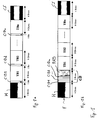
- the data frame begins with a header field H, e.g. has a length of four bytes and in that information about the structure of the data frame is entered. Among other things, this information gives the number of in the data frame contained data blocks TB1 to TBn and the length of these data blocks on.
- the data frame ends with a control field CS, in one so-called "checksum" is entered. This control panel also has the length of four bytes.
- a test field CID1 to CIDn arranged in the one Bit is entered before each is the Data blocks TB1 to TBn a test field CID1 to CIDn arranged in the one Bit is entered.
- the bit in the test field (e.g. CID1) indicates whether the subsequent data block (TB1) contains user data received without errors or Not.
- the test fields CID1 to CIDn therefore have the task of Flag that is set to logic zero or logic one.
- the data frame is received by a central station and there evaluated the error-free data blocks from the data frame read out.
- the arrangement of the Check fields which leads to the beginning of each data block one bit at a time, namely by the length of the preceding test field is pushed behind. This means, for example, that the first Data block TB1 does not directly adjoin the end of header field H, but only a bit later.
- the subsequent data block TB2 is due to the preceding test field CID2 additionally by one bit moved behind. If the first data block TB1 has a length of e.g.
- the second data block TB2 only begins at the point which is 10 bytes plus 2 bits behind the end of the header field H. Therefore is the reading of the data blocks by byte-oriented addressing not possible and the computing speed when processing the Data is being delayed. Based on this knowledge, a new one is now being created Data frame suggested:
- This Data frame contains an additional test block CB, which is immediately attached the header field H connects and on which the data blocks TB1 to TBn connect directly in a row.
- the added test block CB are all test fields CID1 to CIDn in a coherent form registered.
- the test block CB contains some filler bits PAD that ensure that the length of the test block is a number of bits which is divisible by eight. That means that the test block CB has one byte-oriented length, in this example exactly 2 bytes. So this can Test block as a whole can be addressed and read very easily.
- the direct sequence of the data blocks TB1 to TBn is also here given a byte-oriented structure that is very fast and targeted access to individual data blocks allowed.
- Fig. Structure shown in 1 b will be a significant increase in Processing speed in digital signal processing in Receiver of the central station reached.
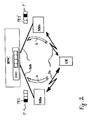
- Fig. 2 shows schematically the structure of a mobile radio system in which data frames such as that shown in FIG. 1b are transmitted.
- the Mobile radio system is to carry out the described later Executed method according to the invention and contains a central station RNC, to which several base stations are connected, of which in 2, two radio base stations NBa and NBb are shown as examples.
- These two base stations are in the macro diversity state, i.e. they receive radio signals from a mobile station UE and at the same time derive the useful data contained in the radio signals in the form of the in Fig. 1b shown data frame structure to the central station RNC.
- the central station RNC in turn is now trying to get one of the Base stations received data blocks incorrectly corresponding received correctly from the other base station To replace data blocks.
- Parallel transmission means a packet data transmission from the same user data over different transmission links. Since it is is a packet data transmission, the Transmission paths are not synchronized with each other.
- FIG. 2 shows the transmission of a structure constructed according to the invention Data frame F from the first base station NBa to the central station RNC and the parallel transmission of a corresponding one Data frame F 'from the second base station NBb to the central RNC station shown.
- the one sent by the first radio base station NBa Data frame F contains an incorrect data block TB1, which after the The inventive method described later in the central RNC station is recognized and by a corresponding error-free Data block TB1 'is replaced, which in the other of the second Radio base station NBb transmitted data frame F 'is included.
- the central one The RCN station replaces the faulty data block TB1 with the fault-free one Data block TB1 ', which contains the same user data as the data block TB1.
- the second base station NBb transmits incorrect data blocks (e.g. the third data block) by appropriate ones data blocks sent by the first base station are replaced. Therefore become parallel via the two macro diversity connections a and b transmit the same user data within the data frames F and F ', errors occurring are mutually compensated. Because of the The inventive method described below can do this Compensation can be carried out very quickly:
- FIG. 3 shows the flow chart for a method according to the invention 100 for transferring data blocks of at least two in the Macro-diversity status of radio base stations to a central station Station.
- the method includes steps 110 through 130, of which the Step 110 is divided into two substeps 111 and 112 and step 120 is divided into substeps 121 to 127. It is now the example Transfer of data blocks from the first radio fixed station to the central station described in detail. For this purpose, the following also applies to the other figures 1b and 2:
- Step 110 NBa first the data frame to be sent is compiled and sent (Step 110).
- a first sub-step 111 the ones to be sent Data blocks TB1 to TBn are lined up directly in the Data frame F inserted.
- a test block CB is placed in front of the sending data blocks inserted into the data frame F.
- the test block CB contains the test fields CID1 to CIDn assigned to the data blocks as well as a number of fill bits PAD. So that has to be sent Data frame F the structure shown in Fig. 1b and is now in one Sub-step Sub-step 112 from the radio base station NBa to the central station RNC broadcast.
- the data frame F is removed from the central one Receive station and further processed in substeps 121 to 127.
- This data processing is also explained in more detail below with reference to FIG. 4 described.
- the test fields, the each contain exactly 1 bit are entered in the test block CB together with 12 filler bits, so that the test block has exactly 2 bytes.
- the index a means that these test fields and the data blocks assigned to them by the first radio base station NBa to be transmitted to the central station.
- the counter set to zero by one increased, which in turn should indicate that the first on the first Diversity connection a transmitted data can be evaluated.
- the four test fields CID1 to CID4 are read and buffered as a check word CWa.
- the first reference word M1 corresponds to a mask which is used to determine which bits set to logic zero or logic one within the test word CWa are.
- a first result R1 results from the AND linkage, which in the Sub-step 124 is buffered.
- PR1 "0111”
- This second result R2 is also stored in the user data memory.
- FIG. 4 illustrate, according to the method according to the invention initially all via one of the diversity connections data blocks received without errors and saved and then only those not there free of errors blocks of data received by those on the other diversity link corresponding error-free data blocks replaced.
- inventive arrangement of the test fields CID1 to CIDn as well as the direct stringing together of the data blocks in the data frame (see Fig. 1b) a very fast addressing of the data blocks and thus very quick access to the individual data blocks.
- Words Due to the byte-oriented data frame structure, individual incorrectly transmitted data blocks are recognized very quickly and very quickly replaced by corresponding error-free received individual data blocks become.
- a time counter provided that the procedure after a predetermined time of for example, 10 ms.
- the time counter starts with substep 121 in Fig. 3.
- the predetermined time expires, the run of the in 3 loop broken and the method jumps to step 130. This avoids the fact that the the loop shown in Fig. 3 is unnecessarily serviced.
- Individual faulty and irreplaceable data blocks can be corrected by an end-to-end error correction method in the receiver of the central station. If the user data transmitted within the data blocks is voice data, such a correction method can generally be carried out without a noticeable loss of voice quality. In this case, a certain frequency of failure of data blocks can even be accepted, which corresponds to a specifiable frame error rate of, for example, 10 -3 . The same applies to the transmission of image data or fax data.
- every data frame also contains two or more test blocks, each of which is a group of Data blocks are assigned. This can be particularly long Data frames are formed. The arrangement of the or Test blocks can be varied within the data frame.
Landscapes
- Engineering & Computer Science (AREA)
- Computer Networks & Wireless Communication (AREA)
- Signal Processing (AREA)
- Mobile Radio Communication Systems (AREA)
- Detection And Prevention Of Errors In Transmission (AREA)
- Radio Transmission System (AREA)
Abstract
Description
- Fig. 1a,
- die den herkömmlichen Aufbau eines Datenrahmens zeigt;
- Fig. 1b,
- die den erfindungsgemäßen Aufbau eines Datenrahmens zeigt;
- Fig. 2,
- die schematisch den Aufbau eine erfindungsgemäßen Mobilfunksystems zeigt;
- Fig. 3,
- die ein Ablaufdiagramm für ein erfindungsgemäßes Verfahren zeigt und
- Fig. 4;
- die eine schematische Darstellung der Bearbeitung von Prüfwörtern nach diesem Verfahren wiedergibt.
Claims (10)
- Verfahren (100) zum Übertragen von Datenblöcken (TB1, TB2, ... TBn) von mindestens zwei sich im Makro-Diversity-Zustand befindenen Funkfeststationen (NBa; NBb) über mindestens zwei Diversity-Verbindungen (a; b) an eine zentrale Station (RNC), bei dem von den Funkfeststationen (NBa; NBb) die Datenblöcke (TB1, TB2, ... TBn) zusammen mit Prüffeldern (CID1, CID2, ... CIDn) innerhalb von Datenrahmen (F; F') an die zentrale Station (RNC) gesendet werden, wobei jedem (TB1) der Datenblöcke eines (CDI1) der Prüffelder zugeordnet wird, bei dem von der zentralen Station (RNC) die Prüffelder für jede der Diversity-Verbindungen (a; b) auswertet werden, um diejengen Datenblöcke zu erkennen, die fehlerfrei übertragen wurden, und bei dem von der zentralen Station (RNC) die über eine (a) der Diversity-Verbindungen nicht fehlerfrei übertragenen Datenblöcke (TB1) durch die auf einer der anderen Diversity-Verbindung (b) fehlerfrei übertragenen Datenblöcke (TB1') ersetzt werden,
dadurch gekennzeichnet, daß
in jedem Datenrahmen (F) die Datenblöcke (TB1, TB2, ... TBn) direkt aneinander gereiht werden (Schritt 111), wobei jeder Datenblock (TB1) eine durch die Zahl Acht teilbare Anzahl von Bits enthält, und daß jeder Datenrahmen (F) einen Prüfblock (CB) enthält, in den die Prüffelder (CID1, CID2, ... CIDn) eingefügt werden. - Verfahren (100) nach Anspruch 1, dadurch gekennzeichnet, daß die Prüffelder (CID1, CID2, ... CIDn) jeweils mindestens ein Bit enthalten, daß alle Bits der Prüffelder (CID1, CID2, ... CIDn) zusammenhängend in den Prüfblock (CB) geschrieben werden und daß gegebenenfalls der Prüfblock (CB) mit Füllbits (PAD) aufgefüllt wird (Schritt 112), so daß auch der Prüfblock (CB) eine durch die Zahl Acht teilbare Anzahl von Bits enthält.
- Verfahren (100) nach Anspruch 2, dadurch gekennzeichnet, daß für jeden Datenrahmen (F) aus den Bits der Prüffelder ein Prüfwort (CWa; CWb) gebildet wird (Schritt 123), daß zunächst für eine (a) der Diversity-Verbindungen das Prüfwort (CWa) mit einem ersten Referenzwort (M1) verglichen wird (Schritt 124), um zumindest einen nicht fehlerfrei auf dieser Diversity-Verbindung (a) übertragenen Datenblock (TB1) zu erkennen, und daß anschließend für eine andere (b) der Diversity-Verbindungen das entsprechende Prüfwort (CWb) mit einem zweiten Referenzwort (M2) verglichen wird, um zu erkennen, ob der entsprechende Datenblock (TB1') auf dieser Diversity-Verbindung (b) fehlerfrei übertragen wurde.
- Verfahren (100) nach Anspruch 3, dadurch gekennzeichnet, daß durch eine logische UND-Verknüpfung des Prüfworts (CWa) mit dem ersten Referenzwort (M1) ein erstes Ergebnis (R1) berechnet wird (Schritt 124), daß durch eine logische ODER-Verknüpfung dieses ersten Ergebnisses (R1) mit dem negierten ersten Referenzwort ein erster Zwischenwert (PR1) berechnet wird und daß durch Negation dieses ersten Zwischenwertes das zweite Referenzwort (M2) berechnet wird (Schritt 126).
- Verfahren nach Anspruch 1, dadurch gekennzeichnet, daß dann, wenn zumindest ein fehlerhaft übertragener Datenblock nicht durch einen entsprechenden fehlerfrei übertragenen Datenblock ersetzt werden kann, das Verfahren nach Ablauf einer vorgebaren Zeitdauer abgebrochen wird.
- Datenrahmen (F) zum Übertragen von Datenblöcken (TB1, TB2, ... TBn) von einer ersten Funkfeststation (NBa), die sich zusammen mit mindestens einer zweiten Funkfeststation (NBb) im Makro-Diversity-Zustand befindet, über eine Diversity-Verbindung (a) an eine zentrale Station (RNC), bei dem jedem (TB1) der Datenblöcke ein Prüffeld (CID1) zugeordnet ist, damit die zentrale Station (RNC) die Prüffelder auswertet, um diejengen Datenblöcke (TB2, ... TBn) zu erkennen, die fehlerfrei übertragen wurden, und um nicht fehlerfrei übertragene Datenblöcke (TB1) zu erkennen und diese durch die auf einer anderen Diversity-Verbindung (b) fehlerfrei übertragenen Datenblöcke (TB1') zu ersetzen,
dadurch gekennzeichnet, daß
in dem Datenrahmen (F) die Datenblöcke (TB1, TB2, ... TBn) direkt aneinander gereiht sind, wobei jeder Datenblock (TB1) eine durch die Zahl Acht teilbare Anzahl von Bits enthält, und daß der Datenrahmen (F) einen Prüfblock (CB) enthält, in den die Prüffelder (CID1, CID2, ... CIDn) eingefügt werden. - Mobilfunksystem mit einer zentralen Station (RNC) und mit mindestens zwei sich im Makro-Diversity-Zustand befindenen Funkfeststationen (NBa; NBb), die über mindestens zwei Diversity-Verbindungen (a; b) Datenblöcke (TB1, TB2, ... TBn) zusammen mit Prüffeldern (CID1, CID2, ... CIDn) innerhalb von Datenrahmen (F; F') an die zentrale Station (RNC) senden, wobei jedem (TB1) der Datenblöcke eines (CDI1) der Prüffelder zugeordnet ist, mit einem in der zentralen Station (RNC) angeordneten Empfänger, der die Datenblöcke (TB1, TB2, ... TBn) zusammen mit den Prüffeldern (CID1, CID2, ... CIDn) empfängt und der ein Diversity-Empfangsteil (DHO) enthält, das die Prüffelder für jede der Diversity-Verbindungen (a; b) auswertet, um diejengen Datenblöcke zu erkennen, die fehlerfrei übertragen wurden, und das die über eine (a) der Diversity-Verbindungen nicht fehlerfrei übertragenen Datenblöcke (TB1) durch die auf einer der anderen Diversity-Verbindung (b) fehlerfrei übertragenen Datenblöcke (TB1') ersetzt,
dadurch gekennzeichnet, daß
in jeder (NBa) der Funkfeststationen ein Sender angeordnet ist, der in jedem Datenrahmen (F) die Datenblöcke (TB1, TB2, ... TBn) direkt aneinander reiht, wobei jeder Datenblock (TB1) eine durch die Zahl Acht teilbare Anzahl von Bits enthält, und daß jeder Datenrahmen (F) einen Prüfblock (CB) enthält, in den der Sender die Prüffelder (CID1, CID2, ... CIDn) einfügt. - Zentrale Station (RNC), die mit mindestens zwei sich im Makro-Diversity-Zustand befindenen Funkfeststationen (NBa; NBb) über mindestens zwei Diversity-Verbindungen (a; b) verbunden ist und die einen Empfänger enthält, der Datenblöcke (TB1, TB2, ... TBn) zusammen mit Prüffeldern (CID1, CID2, ... CIDn) innerhalb von Datenrahmen (F; F') empfängt, die von den Funkfeststationen (NBa; NBb) an die zentrale Station (RNC) gesendet werden, wobei jedem (TB1) der Datenblöcke eines (CDI1) der Prüffelder zugeordnet ist, mit einem Empfänger angeordneten Diversity-Empfangsteil (DHO), das die Prüffelder für jede der Diversity-Verbindungen (a; b) auswertet, um diejengen Datenblöcke zu erkennen, die fehlerfrei übertragen wurden, und das die über eine (a) der Diversity-Verbindungen nicht fehlerfrei übertragenen Datenblöcke (TB1) durch die auf einer der anderen Diversity-Verbindung (b) fehlerfrei übertragenen Datenblöcke (TB1') ersetzt,
dadurch gekennzeichnet, daß
in jedem Datenrahmen (F) die Datenblöcke (TB1, TB2, ... TBn) direkt aneinander gereiht sind, wobei jeder Datenblock (TB1) eine durch die Zahl Acht teilbare Anzahl von Bits enthält, daß die Prüffelder (CID1, CID2, ... CIDn) in einen Prüfblock (CB) eingefügt sind, und daß das Diversity-Empfangsteil (DHO) eine Auswerteeinheit, die zunächst den Prüfblock (CB) auswertet, und einen von der Auswerteeinheit gesteuerten Datenspeicher enthält, der anschließend die fehlerfrei übertragenen Datenblöcke (TB1, TB2', ... TBn) speichert. - Funkfeststation (NB1), die sich zusammen mit mindestens einer weiteren Funkfeststation (NB2) im Makro-Diversity-Zustand befindet, in dem die Funkfeststationen Datenblöcke (TB1, TB2, ... TBn) zusammen mit Prüffeldern (CID1, CID2, ... CIDn) innerhalb von Datenrahmen (F; F') an die zentrale Station (RNC) senden, mit einem Sender, der jedem (TB1) der Datenblöcke eines (CDI1) der Prüffelder zugeordnet, damit die zentrale Station (RNC) die Prüffelder für jede der Diversity-Verbindungen (a; b) auswertet, um diejengen Datenblöcke zu erkennen, die fehlerfrei übertragen wurden und um die über eine (a) der Diversity-Verbindungen nicht fehlerfrei übertragenen Datenblöcke (TB1) durch die auf einer der anderen Diversity-Verbindung (b) fehlerfrei übertragenen Datenblöcke (TB1') zu ersetzen,
dadurch gekennzeichnet, daß
der Sender der Funkfeststation (NB1) in jedem Datenrahmen (F) die Datenblöcke (TB1, TB2, ... TBn) direkt aneinander reiht, wobei jeder Datenblock (TB1) eine durch die Zahl Acht teilbare Anzahl von Bits enthält, und daß der Sender die Prüffelder (CID1, CID2, ... CIDn) in einen Prüfblock (CB) einfügt. - Funkfeststation (NB1) nach Anspruch 9, dadurch gekennzeichnet, daß die Funkfeststation (NB1) einen Funkempfänger, der Nutzdaten von einer Mobilstation (UE) empfängt und auf Fehler prüft, und eine rechnergesteuerte Einheit enthält, die mit dem Empfänger und dem Sender verbunden ist und die die Nutzdaten in die Datenblöcke (TB1, TB2, ... TBn) schreibt, wobei die rechnergesteuerte Einheit solche der Datenblöcke (TB1), in die fehlerhafte Nutzdaten geschrieben werden, durch Einträge in die entsprechenden Prüffelder (CID1) markiert.
Priority Applications (10)
| Application Number | Priority Date | Filing Date | Title |
|---|---|---|---|
| ES99440181T ES2168840T3 (es) | 1999-07-05 | 1999-07-05 | Transmision en macrodiversidad en un sistema de telefonia movil. |
| DE59900771T DE59900771D1 (de) | 1999-07-05 | 1999-07-05 | Makro-Diversity-Übertragung in einem Mobilfunksystem |
| AT99440181T ATE212491T1 (de) | 1999-07-05 | 1999-07-05 | Makro-diversity-übertragung in einem mobilfunksystem |
| EP99440181A EP1069724B1 (de) | 1999-07-05 | 1999-07-05 | Makro-Diversity-Übertragung in einem Mobilfunksystem |
| US09/398,760 US6484287B1 (en) | 1999-07-05 | 1999-09-17 | Macrodiversity transmission in a mobile radio system |
| AU61548/00A AU6154800A (en) | 1999-07-05 | 2000-07-04 | Macrodiversity transmission in a mobile radio system |
| JP2001508102A JP4226819B2 (ja) | 1999-07-05 | 2000-07-04 | 移動無線システムにおけるマクロダイバーシティ伝送 |
| KR1020017002829A KR100679584B1 (ko) | 1999-07-05 | 2000-07-04 | 이동 무선 시스템의 매크로다이버시티 송신 |
| PCT/EP2000/006267 WO2001003358A1 (en) | 1999-07-05 | 2000-07-04 | Macrodiversity transmission in a mobile radio system |
| CN008013233A CN1132363C (zh) | 1999-07-05 | 2000-07-04 | 数据块发送方法及实现该方法的中心站、基站和无线电系统 |
Applications Claiming Priority (1)
| Application Number | Priority Date | Filing Date | Title |
|---|---|---|---|
| EP99440181A EP1069724B1 (de) | 1999-07-05 | 1999-07-05 | Makro-Diversity-Übertragung in einem Mobilfunksystem |
Publications (2)
| Publication Number | Publication Date |
|---|---|
| EP1069724A1 true EP1069724A1 (de) | 2001-01-17 |
| EP1069724B1 EP1069724B1 (de) | 2002-01-23 |
Family
ID=8242352
Family Applications (1)
| Application Number | Title | Priority Date | Filing Date |
|---|---|---|---|
| EP99440181A Expired - Lifetime EP1069724B1 (de) | 1999-07-05 | 1999-07-05 | Makro-Diversity-Übertragung in einem Mobilfunksystem |
Country Status (10)
| Country | Link |
|---|---|
| US (1) | US6484287B1 (de) |
| EP (1) | EP1069724B1 (de) |
| JP (1) | JP4226819B2 (de) |
| KR (1) | KR100679584B1 (de) |
| CN (1) | CN1132363C (de) |
| AT (1) | ATE212491T1 (de) |
| AU (1) | AU6154800A (de) |
| DE (1) | DE59900771D1 (de) |
| ES (1) | ES2168840T3 (de) |
| WO (1) | WO2001003358A1 (de) |
Families Citing this family (10)
| Publication number | Priority date | Publication date | Assignee | Title |
|---|---|---|---|---|
| US7433683B2 (en) | 2000-12-28 | 2008-10-07 | Northstar Acquisitions, Llc | System for fast macrodiversity switching in mobile wireless networks |
| US6874113B2 (en) * | 2001-09-17 | 2005-03-29 | Interdigital Technology Corporation | Radio resource control-service data unit reception |
| JP2003234696A (ja) * | 2002-02-06 | 2003-08-22 | Mitsubishi Electric Corp | 送信電力補正方法、移動通信システムおよび移動局 |
| GB2399719A (en) * | 2003-03-18 | 2004-09-22 | Nokia Corp | Transmission of data with forward error correction information |
| US6904985B2 (en) * | 2003-05-21 | 2005-06-14 | Deere & Company | Transmission control device for vehicles and steering assembly for vehicles |
| CN101790235B (zh) * | 2004-03-12 | 2012-05-23 | 三星电子株式会社 | 宽带无线通信系统中减小突发分配信息大小的方法和装置 |
| GB0415451D0 (en) | 2004-07-09 | 2004-08-11 | Nokia Corp | Communication system |
| JP4634157B2 (ja) * | 2005-01-17 | 2011-02-16 | 株式会社日立製作所 | ストレージシステム |
| CN104184539B (zh) * | 2013-05-23 | 2018-10-19 | 中兴通讯股份有限公司 | 一种无线链路数据再纠错的方法及装置 |
| JP2019041182A (ja) * | 2017-08-23 | 2019-03-14 | 株式会社東芝 | 無線通信装置および無線通信方法 |
Citations (5)
| Publication number | Priority date | Publication date | Assignee | Title |
|---|---|---|---|---|
| US5539749A (en) * | 1993-09-13 | 1996-07-23 | Siemens Aktiengesellschaft | Method for merging data streams |
| EP0777395A1 (de) * | 1995-12-01 | 1997-06-04 | Nokia Mobile Phones Ltd. | Anwendung des Kopffeldes einer ATM-Zelle in Verbindung mit einer radiobasierten ATM-Datenübertragung |
| US5809090A (en) * | 1996-03-04 | 1998-09-15 | Glenayre Electronics, Inc. | Digital diversity receiver system |
| GB2324446A (en) * | 1996-04-19 | 1998-10-21 | Motorola Inc | Diversity voting for mobile comms. |
| EP0876045A1 (de) * | 1997-04-28 | 1998-11-04 | Nortel Networks Corporation | Verbesserten Abrechungsschema für Telekommunikationsnetz |
Family Cites Families (3)
| Publication number | Priority date | Publication date | Assignee | Title |
|---|---|---|---|---|
| US5266922A (en) * | 1991-03-21 | 1993-11-30 | Sony Electronics, Inc. | Mobile communication apparatus |
| US5729681A (en) * | 1995-10-10 | 1998-03-17 | Intel Corporation | Method of communicating data from a host to a network controller |
| US6047001A (en) * | 1997-12-18 | 2000-04-04 | Advanced Micro Devices, Inc. | Apparatus and method in a network interface device for storing a data frame and corresponding tracking information in a buffer memory |
-
1999
- 1999-07-05 DE DE59900771T patent/DE59900771D1/de not_active Expired - Lifetime
- 1999-07-05 EP EP99440181A patent/EP1069724B1/de not_active Expired - Lifetime
- 1999-07-05 AT AT99440181T patent/ATE212491T1/de not_active IP Right Cessation
- 1999-07-05 ES ES99440181T patent/ES2168840T3/es not_active Expired - Lifetime
- 1999-09-17 US US09/398,760 patent/US6484287B1/en not_active Expired - Lifetime
-
2000
- 2000-07-04 AU AU61548/00A patent/AU6154800A/en not_active Abandoned
- 2000-07-04 JP JP2001508102A patent/JP4226819B2/ja not_active Expired - Fee Related
- 2000-07-04 CN CN008013233A patent/CN1132363C/zh not_active Expired - Lifetime
- 2000-07-04 KR KR1020017002829A patent/KR100679584B1/ko not_active Expired - Fee Related
- 2000-07-04 WO PCT/EP2000/006267 patent/WO2001003358A1/en not_active Ceased
Patent Citations (5)
| Publication number | Priority date | Publication date | Assignee | Title |
|---|---|---|---|---|
| US5539749A (en) * | 1993-09-13 | 1996-07-23 | Siemens Aktiengesellschaft | Method for merging data streams |
| EP0777395A1 (de) * | 1995-12-01 | 1997-06-04 | Nokia Mobile Phones Ltd. | Anwendung des Kopffeldes einer ATM-Zelle in Verbindung mit einer radiobasierten ATM-Datenübertragung |
| US5809090A (en) * | 1996-03-04 | 1998-09-15 | Glenayre Electronics, Inc. | Digital diversity receiver system |
| GB2324446A (en) * | 1996-04-19 | 1998-10-21 | Motorola Inc | Diversity voting for mobile comms. |
| EP0876045A1 (de) * | 1997-04-28 | 1998-11-04 | Nortel Networks Corporation | Verbesserten Abrechungsschema für Telekommunikationsnetz |
Non-Patent Citations (1)
| Title |
|---|
| FABIO LONGONI: "TS 25.247 : UTRAN Iur/lub User plane protocol for DCH data streams, v.0.4.2", TSG-RAN WG3, 20 September 1999 (1999-09-20) - 24 September 1999 (1999-09-24), Sophia Antipolis, France, XP002120580, Retrieved from the Internet <URL:ftp://ftp.3gpp.org/TSG_RAN/WG3_Iu/TSGR3_07/Docs/Pdfs/r3-99c37.pdf> [retrieved on 19991026] * |
Also Published As
| Publication number | Publication date |
|---|---|
| ES2168840T3 (es) | 2002-06-16 |
| KR20010073117A (ko) | 2001-07-31 |
| CN1132363C (zh) | 2003-12-24 |
| US6484287B1 (en) | 2002-11-19 |
| ATE212491T1 (de) | 2002-02-15 |
| AU6154800A (en) | 2001-01-22 |
| JP2003503947A (ja) | 2003-01-28 |
| JP4226819B2 (ja) | 2009-02-18 |
| EP1069724B1 (de) | 2002-01-23 |
| DE59900771D1 (de) | 2002-03-14 |
| WO2001003358A1 (en) | 2001-01-11 |
| CN1317186A (zh) | 2001-10-10 |
| KR100679584B1 (ko) | 2007-02-07 |
Similar Documents
| Publication | Publication Date | Title |
|---|---|---|
| DE69228108T2 (de) | Verfahren und Vorrichtung zum Empfang von Informationssignalen | |
| DE69931862T2 (de) | Vorwärtsfehlerkorrektur für hochratige optische Übertragungssysteme | |
| DE69014660T2 (de) | Integriertes Nachrichtensystem für HDLC-Datenpakete mit variabler Länge und Sprach-/Videopakete mit fester Länge. | |
| EP1252787B1 (de) | Verfahren zum betreiben eines mobilfunknetzes | |
| DE3127321A1 (de) | Schleifenuebertragungssystem mit verbesserter bypassweg-anordnung | |
| EP0381011A2 (de) | Übertragungsnetz mit schaltbaren Netzknoten | |
| DE69102201T2 (de) | Verfahren zum Übertragen von verschiedenen Befehlen für Auswahl von Sender-Antenne in einem zeitmultiplexen Funkübertragungssystem. | |
| WO1999017577A1 (de) | Optimierung von nachbarkanal-messberichten | |
| EP1069724B1 (de) | Makro-Diversity-Übertragung in einem Mobilfunksystem | |
| DE19715262A1 (de) | Lokales Netzwerk zur Rekonfigurierung bei Leitungsbrüchen oder Knotenausfall | |
| DE69923298T2 (de) | Behandlung von paketdatenverlusten in basisstationen zwischen einem pakketvermittlungsnetzwerk und einem cdma makrodiversitynetzwerk | |
| DE10324745A1 (de) | Verfahren und Testgerät zum Ermitteln einer Fehlerrate | |
| EP0374303A1 (de) | Verfahren zur individuellen Überwachung von Übertragungsabschnitten einer Nachrichtenübertragungsstrecke und Vorrichtung zur Durchführung des Verfahrens | |
| DE102018218720A1 (de) | Teilnehmerstation für ein serielles Bussystem und Verfahren zum Senden einer Nachricht in einem seriellen Bussystem | |
| DE60108792T2 (de) | Übertragungswiederholungsverfahren und -gerät für funkverbindungen | |
| DE10140114A1 (de) | Vorrichtung und Verfahren zur Qualitätsprüfung von über einen Funkkanal übertragenen Datenpaketen | |
| DE60315630T2 (de) | Verfahren und Zugangsmultiplexer zum Einrichten eines Pfades, der eine bestimmte QoS-Klasse hat | |
| EP2388937B1 (de) | Verfahren zur Übertragung eines digitalen Signals im inversen Multiplex, insbesondere über ein Optical Transport Network und Empfangseinrichtung für ein System zur Realisierung des Verfahrens | |
| DE4243266C2 (de) | Verfahren zum Betrieb einer Kommunikationsschaltvorrichtung | |
| DE60218176T2 (de) | Übertragungsverfahren in einem kommunikationssystem | |
| EP1511215B1 (de) | Verfahren und Vorrichtung zur Datenübertragung gemä einem Hybrid-ARQ-Verfahren | |
| DE3787058T2 (de) | Übertragungssystem mit Vorwärts-Fehlerkorrektur. | |
| EP1248406A1 (de) | Verfahren zum Betreiben eines funkbasierten Telekommunikations-systems | |
| DE69935812T2 (de) | Verfahren zur Erzeugung von Datenkommunikationsrahmen | |
| DE19755372A1 (de) | Verfahren zur Bestimmung des Bereiches einer Datenfehlerkorrektur |
Legal Events
| Date | Code | Title | Description |
|---|---|---|---|
| PUAI | Public reference made under article 153(3) epc to a published international application that has entered the european phase |
Free format text: ORIGINAL CODE: 0009012 |
|
| 17P | Request for examination filed |
Effective date: 20000804 |
|
| AK | Designated contracting states |
Kind code of ref document: A1 Designated state(s): AT BE CH CY DE DK ES FI FR GB GR IE IT LI LU MC NL PT SE |
|
| AX | Request for extension of the european patent |
Free format text: AL;LT;LV;MK;RO;SI |
|
| GRAG | Despatch of communication of intention to grant |
Free format text: ORIGINAL CODE: EPIDOS AGRA |
|
| GRAG | Despatch of communication of intention to grant |
Free format text: ORIGINAL CODE: EPIDOS AGRA |
|
| GRAG | Despatch of communication of intention to grant |
Free format text: ORIGINAL CODE: EPIDOS AGRA |
|
| GRAH | Despatch of communication of intention to grant a patent |
Free format text: ORIGINAL CODE: EPIDOS IGRA |
|
| AKX | Designation fees paid |
Free format text: AT BE CH CY DE DK ES FI FR GB GR IE IT LI LU MC NL PT SE |
|
| GRAH | Despatch of communication of intention to grant a patent |
Free format text: ORIGINAL CODE: EPIDOS IGRA |
|
| GRAA | (expected) grant |
Free format text: ORIGINAL CODE: 0009210 |
|
| REG | Reference to a national code |
Ref country code: GB Ref legal event code: IF02 |
|
| AK | Designated contracting states |
Kind code of ref document: B1 Designated state(s): AT BE CH CY DE DK ES FI FR GB GR IE IT LI LU MC NL PT SE |
|
| PG25 | Lapsed in a contracting state [announced via postgrant information from national office to epo] |
Ref country code: NL Free format text: LAPSE BECAUSE OF FAILURE TO SUBMIT A TRANSLATION OF THE DESCRIPTION OR TO PAY THE FEE WITHIN THE PRESCRIBED TIME-LIMIT Effective date: 20020123 Ref country code: IE Free format text: LAPSE BECAUSE OF FAILURE TO SUBMIT A TRANSLATION OF THE DESCRIPTION OR TO PAY THE FEE WITHIN THE PRESCRIBED TIME-LIMIT Effective date: 20020123 Ref country code: GR Free format text: LAPSE BECAUSE OF FAILURE TO SUBMIT A TRANSLATION OF THE DESCRIPTION OR TO PAY THE FEE WITHIN THE PRESCRIBED TIME-LIMIT Effective date: 20020123 Ref country code: FI Free format text: LAPSE BECAUSE OF FAILURE TO SUBMIT A TRANSLATION OF THE DESCRIPTION OR TO PAY THE FEE WITHIN THE PRESCRIBED TIME-LIMIT Effective date: 20020123 |
|
| REF | Corresponds to: |
Ref document number: 212491 Country of ref document: AT Date of ref document: 20020215 Kind code of ref document: T |
|
| REG | Reference to a national code |
Ref country code: CH Ref legal event code: EP |
|
| GBT | Gb: translation of ep patent filed (gb section 77(6)(a)/1977) |
Effective date: 20020123 |
|
| REG | Reference to a national code |
Ref country code: IE Ref legal event code: FG4D Free format text: GERMAN |
|
| REF | Corresponds to: |
Ref document number: 59900771 Country of ref document: DE Date of ref document: 20020314 |
|
| PG25 | Lapsed in a contracting state [announced via postgrant information from national office to epo] |
Ref country code: SE Free format text: LAPSE BECAUSE OF FAILURE TO SUBMIT A TRANSLATION OF THE DESCRIPTION OR TO PAY THE FEE WITHIN THE PRESCRIBED TIME-LIMIT Effective date: 20020423 Ref country code: PT Free format text: LAPSE BECAUSE OF FAILURE TO SUBMIT A TRANSLATION OF THE DESCRIPTION OR TO PAY THE FEE WITHIN THE PRESCRIBED TIME-LIMIT Effective date: 20020423 Ref country code: DK Free format text: LAPSE BECAUSE OF FAILURE TO SUBMIT A TRANSLATION OF THE DESCRIPTION OR TO PAY THE FEE WITHIN THE PRESCRIBED TIME-LIMIT Effective date: 20020423 |
|
| REG | Reference to a national code |
Ref country code: ES Ref legal event code: FG2A Ref document number: 2168840 Country of ref document: ES Kind code of ref document: T3 |
|
| NLV1 | Nl: lapsed or annulled due to failure to fulfill the requirements of art. 29p and 29m of the patents act | ||
| PG25 | Lapsed in a contracting state [announced via postgrant information from national office to epo] |
Ref country code: LU Free format text: LAPSE BECAUSE OF NON-PAYMENT OF DUE FEES Effective date: 20020705 Ref country code: AT Free format text: LAPSE BECAUSE OF NON-PAYMENT OF DUE FEES Effective date: 20020705 |
|
| ET | Fr: translation filed | ||
| PG25 | Lapsed in a contracting state [announced via postgrant information from national office to epo] |
Ref country code: CY Free format text: LAPSE BECAUSE OF FAILURE TO SUBMIT A TRANSLATION OF THE DESCRIPTION OR TO PAY THE FEE WITHIN THE PRESCRIBED TIME-LIMIT Effective date: 20020731 Ref country code: BE Free format text: LAPSE BECAUSE OF NON-PAYMENT OF DUE FEES Effective date: 20020731 |
|
| REG | Reference to a national code |
Ref country code: IE Ref legal event code: FD4D |
|
| PLBE | No opposition filed within time limit |
Free format text: ORIGINAL CODE: 0009261 |
|
| STAA | Information on the status of an ep patent application or granted ep patent |
Free format text: STATUS: NO OPPOSITION FILED WITHIN TIME LIMIT |
|
| 26N | No opposition filed | ||
| BERE | Be: lapsed |
Owner name: *ALCATEL Effective date: 20020731 |
|
| PG25 | Lapsed in a contracting state [announced via postgrant information from national office to epo] |
Ref country code: MC Free format text: LAPSE BECAUSE OF NON-PAYMENT OF DUE FEES Effective date: 20030201 |
|
| PG25 | Lapsed in a contracting state [announced via postgrant information from national office to epo] |
Ref country code: LI Free format text: LAPSE BECAUSE OF NON-PAYMENT OF DUE FEES Effective date: 20030731 Ref country code: CH Free format text: LAPSE BECAUSE OF NON-PAYMENT OF DUE FEES Effective date: 20030731 |
|
| REG | Reference to a national code |
Ref country code: CH Ref legal event code: PL |
|
| REG | Reference to a national code |
Ref country code: GB Ref legal event code: 732E Free format text: REGISTERED BETWEEN 20131114 AND 20131120 |
|
| REG | Reference to a national code |
Ref country code: FR Ref legal event code: GC Effective date: 20140717 |
|
| REG | Reference to a national code |
Ref country code: FR Ref legal event code: PLFP Year of fee payment: 17 |
|
| REG | Reference to a national code |
Ref country code: FR Ref legal event code: PLFP Year of fee payment: 18 |
|
| REG | Reference to a national code |
Ref country code: FR Ref legal event code: PLFP Year of fee payment: 19 |
|
| REG | Reference to a national code |
Ref country code: FR Ref legal event code: PLFP Year of fee payment: 20 |
|
| PGFP | Annual fee paid to national office [announced via postgrant information from national office to epo] |
Ref country code: IT Payment date: 20180724 Year of fee payment: 20 Ref country code: ES Payment date: 20180829 Year of fee payment: 20 Ref country code: FR Payment date: 20180725 Year of fee payment: 20 Ref country code: DE Payment date: 20180723 Year of fee payment: 20 |
|
| PGFP | Annual fee paid to national office [announced via postgrant information from national office to epo] |
Ref country code: GB Payment date: 20180719 Year of fee payment: 20 |
|
| REG | Reference to a national code |
Ref country code: DE Ref legal event code: R082 Ref document number: 59900771 Country of ref document: DE Representative=s name: LOUIS, POEHLAU, LOHRENTZ, DE Ref country code: DE Ref legal event code: R081 Ref document number: 59900771 Country of ref document: DE Owner name: NOKIA TECHNOLOGIES OY, FI Free format text: FORMER OWNER: ALCATEL LUCENT, PARIS, FR |
|
| REG | Reference to a national code |
Ref country code: DE Ref legal event code: R071 Ref document number: 59900771 Country of ref document: DE |
|
| REG | Reference to a national code |
Ref country code: GB Ref legal event code: PE20 Expiry date: 20190704 |
|
| PG25 | Lapsed in a contracting state [announced via postgrant information from national office to epo] |
Ref country code: GB Free format text: LAPSE BECAUSE OF EXPIRATION OF PROTECTION Effective date: 20190704 |
|
| REG | Reference to a national code |
Ref country code: GB Ref legal event code: 732E Free format text: REGISTERED BETWEEN 20200402 AND 20200408 |
|
| REG | Reference to a national code |
Ref country code: ES Ref legal event code: FD2A Effective date: 20201110 |
|
| PG25 | Lapsed in a contracting state [announced via postgrant information from national office to epo] |
Ref country code: ES Free format text: LAPSE BECAUSE OF EXPIRATION OF PROTECTION Effective date: 20190706 |