EP1072247A2 - Kosmetische und dermatologische Zubereitungen auf der Grundlage von O/W-Emulsionen - Google Patents
Kosmetische und dermatologische Zubereitungen auf der Grundlage von O/W-Emulsionen Download PDFInfo
- Publication number
- EP1072247A2 EP1072247A2 EP00114108A EP00114108A EP1072247A2 EP 1072247 A2 EP1072247 A2 EP 1072247A2 EP 00114108 A EP00114108 A EP 00114108A EP 00114108 A EP00114108 A EP 00114108A EP 1072247 A2 EP1072247 A2 EP 1072247A2
- Authority
- EP
- European Patent Office
- Prior art keywords
- weight
- preparations
- total weight
- cosmetic
- gew
- Prior art date
- Legal status (The legal status is an assumption and is not a legal conclusion. Google has not performed a legal analysis and makes no representation as to the accuracy of the status listed.)
- Granted
Links
Classifications
-
- A—HUMAN NECESSITIES
- A61—MEDICAL OR VETERINARY SCIENCE; HYGIENE
- A61K—PREPARATIONS FOR MEDICAL, DENTAL OR TOILETRY PURPOSES
- A61K8/00—Cosmetics or similar toiletry preparations
- A61K8/18—Cosmetics or similar toiletry preparations characterised by the composition
- A61K8/30—Cosmetics or similar toiletry preparations characterised by the composition containing organic compounds
- A61K8/33—Cosmetics or similar toiletry preparations characterised by the composition containing organic compounds containing oxygen
- A61K8/36—Carboxylic acids; Salts or anhydrides thereof
- A61K8/361—Carboxylic acids having more than seven carbon atoms in an unbroken chain; Salts or anhydrides thereof
-
- A—HUMAN NECESSITIES
- A61—MEDICAL OR VETERINARY SCIENCE; HYGIENE
- A61K—PREPARATIONS FOR MEDICAL, DENTAL OR TOILETRY PURPOSES
- A61K8/00—Cosmetics or similar toiletry preparations
- A61K8/02—Cosmetics or similar toiletry preparations characterised by special physical form
- A61K8/04—Dispersions; Emulsions
- A61K8/06—Emulsions
-
- A—HUMAN NECESSITIES
- A61—MEDICAL OR VETERINARY SCIENCE; HYGIENE
- A61K—PREPARATIONS FOR MEDICAL, DENTAL OR TOILETRY PURPOSES
- A61K8/00—Cosmetics or similar toiletry preparations
- A61K8/02—Cosmetics or similar toiletry preparations characterised by special physical form
- A61K8/04—Dispersions; Emulsions
- A61K8/06—Emulsions
- A61K8/062—Oil-in-water emulsions
-
- A—HUMAN NECESSITIES
- A61—MEDICAL OR VETERINARY SCIENCE; HYGIENE
- A61K—PREPARATIONS FOR MEDICAL, DENTAL OR TOILETRY PURPOSES
- A61K8/00—Cosmetics or similar toiletry preparations
- A61K8/18—Cosmetics or similar toiletry preparations characterised by the composition
- A61K8/30—Cosmetics or similar toiletry preparations characterised by the composition containing organic compounds
- A61K8/33—Cosmetics or similar toiletry preparations characterised by the composition containing organic compounds containing oxygen
- A61K8/37—Esters of carboxylic acids
- A61K8/375—Esters of carboxylic acids the alcohol moiety containing more than one hydroxy group
-
- A—HUMAN NECESSITIES
- A61—MEDICAL OR VETERINARY SCIENCE; HYGIENE
- A61K—PREPARATIONS FOR MEDICAL, DENTAL OR TOILETRY PURPOSES
- A61K8/00—Cosmetics or similar toiletry preparations
- A61K8/18—Cosmetics or similar toiletry preparations characterised by the composition
- A61K8/30—Cosmetics or similar toiletry preparations characterised by the composition containing organic compounds
- A61K8/33—Cosmetics or similar toiletry preparations characterised by the composition containing organic compounds containing oxygen
- A61K8/39—Derivatives containing from 2 to 10 oxyalkylene groups
-
- A—HUMAN NECESSITIES
- A61—MEDICAL OR VETERINARY SCIENCE; HYGIENE
- A61K—PREPARATIONS FOR MEDICAL, DENTAL OR TOILETRY PURPOSES
- A61K8/00—Cosmetics or similar toiletry preparations
- A61K8/18—Cosmetics or similar toiletry preparations characterised by the composition
- A61K8/72—Cosmetics or similar toiletry preparations characterised by the composition containing organic macromolecular compounds
- A61K8/81—Cosmetics or similar toiletry preparations characterised by the composition containing organic macromolecular compounds obtained by reactions involving only carbon-to-carbon unsaturated bonds
- A61K8/8105—Compositions of homopolymers or copolymers of unsaturated aliphatic hydrocarbons having only one carbon-to-carbon double bond; Compositions of derivatives of such polymers
- A61K8/8111—Homopolymers or copolymers of aliphatic olefines, e.g. polyethylene, polyisobutene; Compositions of derivatives of such polymers
-
- A—HUMAN NECESSITIES
- A61—MEDICAL OR VETERINARY SCIENCE; HYGIENE
- A61K—PREPARATIONS FOR MEDICAL, DENTAL OR TOILETRY PURPOSES
- A61K8/00—Cosmetics or similar toiletry preparations
- A61K8/18—Cosmetics or similar toiletry preparations characterised by the composition
- A61K8/72—Cosmetics or similar toiletry preparations characterised by the composition containing organic macromolecular compounds
- A61K8/84—Cosmetics or similar toiletry preparations characterised by the composition containing organic macromolecular compounds obtained by reactions otherwise than those involving only carbon-carbon unsaturated bonds
- A61K8/86—Polyethers
-
- A—HUMAN NECESSITIES
- A61—MEDICAL OR VETERINARY SCIENCE; HYGIENE
- A61K—PREPARATIONS FOR MEDICAL, DENTAL OR TOILETRY PURPOSES
- A61K8/00—Cosmetics or similar toiletry preparations
- A61K8/18—Cosmetics or similar toiletry preparations characterised by the composition
- A61K8/72—Cosmetics or similar toiletry preparations characterised by the composition containing organic macromolecular compounds
- A61K8/84—Cosmetics or similar toiletry preparations characterised by the composition containing organic macromolecular compounds obtained by reactions otherwise than those involving only carbon-carbon unsaturated bonds
- A61K8/89—Polysiloxanes
- A61K8/891—Polysiloxanes saturated, e.g. dimethicone, phenyl trimethicone, C24-C28 methicone or stearyl dimethicone
-
- A—HUMAN NECESSITIES
- A61—MEDICAL OR VETERINARY SCIENCE; HYGIENE
- A61Q—SPECIFIC USE OF COSMETICS OR SIMILAR TOILETRY PREPARATIONS
- A61Q17/00—Barrier preparations; Preparations brought into direct contact with the skin for affording protection against external influences, e.g. sunlight, X-rays or other harmful rays, corrosive materials, bacteria or insect stings
- A61Q17/04—Topical preparations for affording protection against sunlight or other radiation; Topical sun tanning preparations
-
- A—HUMAN NECESSITIES
- A61—MEDICAL OR VETERINARY SCIENCE; HYGIENE
- A61Q—SPECIFIC USE OF COSMETICS OR SIMILAR TOILETRY PREPARATIONS
- A61Q19/00—Preparations for care of the skin
Definitions
- the present invention relates to cosmetic and dermatological emulsions, in particular skin care cosmetic and dermatological emulsions.
- the present invention relates to an application which it allows the stability of electrolyte-containing preparations, especially emulsions, preferred to increase O / W emulsions.
- the skin is the largest human organ. Among its many functions (for example for heat regulation and as a sensory organ) is the barrier function that prevents drying out the skin (and thus ultimately the entire organism), which probably prevents most important. At the same time, the skin acts as a protective device against penetration and the absorption of substances coming from outside. This barrier function is brought about by the epidermis, which as the outermost layer is the actual protective cover against the Environment forms. At around a tenth of the total thickness, it is also the thinnest Layer of skin.
- the epidermis is a stratified tissue in which the outer layer, the horny layer (stratum corneum), is the important part for the barrier function.
- the skin model of Elias PM Elias, Structure and Function of the Stratum Corneum Permeability Barrier, Drug Dev. Res. 13 , 1988, 97-105 ), which is recognized by experts today , describes the horny layer as a two-component system, similar to a brick wall ( Brick-mortar model).
- the horny cells corneocytes
- the complex lipid membrane in the intercellular spaces corresponds to the mortar.
- This system essentially represents a physical barrier against hydrophilic substances, but due to its narrow and multilayer structure it is equally difficult for lipophilic substances to pass through.
- the present invention relates to cosmetic or pharmaceutical preparations with reduced stickiness, process for their manufacture and the use of active ingredients to reduce the feeling of stickiness cosmetic preparations.
- the epidermal lipids In addition to their barrier effect against external chemical and physical influences the epidermal lipids also help to keep the horny layer together Influence on skin smoothness. In contrast to the sebum lipids, which are not closed Form film on the skin, the epidermal lipids are all over Horny layer distributed.
- cosmetics usually contain, in addition to balanced lipid blends and Water, water-binding substances.
- Emulsifiers or surfactants are desirable.
- the liquid crystalline organization of the intercellular lipids of the stratum corneum and thus improve the barrier properties of the horny layer. It is particularly advantageous when their molecular components are naturally occurring in the epidermis Substances exist.
- Cosmetic skin care primarily means that the natural function the skin as a barrier against environmental influences (e.g. dirt, chemicals, microorganisms) and against the loss of the body's own substances (e.g. water, natural Fats, electrolytes) is strengthened or restored.
- environmental influences e.g. dirt, chemicals, microorganisms
- loss of the body's own substances e.g. water, natural Fats, electrolytes
- the aim of skin care is also to reduce the fat and fat caused by daily washing Compensate for skin water loss. This is especially important when the natural Regeneration capacity is not sufficient.
- skin care products are said to exist Protect environmental influences, especially from the sun and wind, and skin aging delay.
- Medical topical compositions typically contain one or more Medicines in effective concentration. For the sake of simplicity, it becomes clean Differentiation between cosmetic and medical application and corresponding Products on the legal provisions of the Federal Republic of Germany referenced (e.g. cosmetics regulation, food and drug law).
- Common cosmetic dosage forms are emulsions. This means in generally a heterogeneous system of two with each other not or only to a limited extent miscible liquids, commonly referred to as phases. The one is in the form of droplets (disperse or inner phase) while the other Liquid forms a continuous (coherent or internal phase).
- Rarer dosage forms are multiple emulsions, i.e. those which are dispersed in the droplets (or discontinuous) phase, in turn, droplets of another dispersed Phase included, e.g. B. W / O / W emulsions and O / W / O emulsions.
- emulsifiers In order to guarantee the metastability of emulsions, they are usually surface-active Substances, i.e. emulsifiers, necessary. In itself, the use is the usual one cosmetic emulsifiers completely harmless. Nevertheless, emulsifiers, like any chemical substance, in some cases allergic or hypersensitive cause user-based reactions. So it is known that at some particularly sensitive people certain light dermatoses by certain Emulsifiers and simultaneous exposure to sunlight are triggered.
- emulsifier-free preparations which, for example, in Oil droplets dispersed in an aqueous phase, similar to an O / W emulsion.
- a prerequisite for this can be that the continuous aqueous phase is the dispersed Phase stabilizing gel structure and other circumstances more.
- Such Systems are sometimes called hydrodispersions or oleodispersions, each after which is the disperse and which is the continuous phase.
- an object of the present invention was cosmetic or dermatological Preparations with excellent skin care properties are available too put.
- a disadvantage of O / W emulsions in particular is often their lack of stability towards them higher electrolyte concentrations, which manifests itself in phase separation. This can occasionally cause problems with W / O emulsions, but occurs there not nearly as much in the foreground as with O / W systems. This can be done often remedy to a certain extent by suitable choice of the emulsifier system, however, other disadvantages then occur just as often.
- the concentrations of all components of a cosmetic or dermatological preparation in such units as weight%, mol% and the like specified. Because of their more or less pronounced dissociation in Cations and anions, often in several dissociation stages, sometimes appear more expedient for the description of the present invention and its technical Background to start from the ionic strength of a given electrolyte in its solution.
- the physical unit of ionic strength is that of a concentration (mol / l).
- Another object of the present invention was therefore to find solutions to cosmetics or dermatological emulsions, in particular O / W emulsions, which compared to increased electrolyte concentrations - or increased ionic strengths - are stable.
- a further object of the present invention was to make preparations available places that significantly improve the condition of the skin, especially the skin roughness Reduce.
- the preparations according to the invention can be formulated both flowable and creamy, have very good cosmetic properties, especially what the stickiness concerns, and have a very good skin tolerance and skin care performance on.
- weight ratios between the (1), (2) and (3) components of approximately 1: 4: 2.
- weight ratios between the (4), (5) and (6) components of approximately 1: 1: 1.
- the interfacial tension is the force on an imaginary, in the interface line of length of one meter between two phases acts.
- the physical The unit for this interfacial tension is calculated classically according to the Relationship force / length and is usually expressed in mN / m (millinewtons divided by meters) reproduced. It has a positive sign when it tries to cross the interface to zoom out. In the opposite case, it has a negative sign.
- lipids are considered, their interfacial tension against water is less than 30 mN / m.
- Polar oils for example those from the group of lecithins and fatty acid triglycerides, namely the triglycerol esters saturated and / or unsaturated, branched and / or unbranched alkane carboxylic acids with a chain length of 8 to 24, in particular 12 to 18 carbon atoms.
- the fatty acid triglycerides can be advantageous, for example can be selected from the group of synthetic, semi-synthetic and natural Oils such as B. olive oil, sunflower oil, soybean oil, peanut oil, rapeseed oil, almond oil, palm oil, coconut oil, castor oil, wheat germ oil, grape seed oil, safflower oil, evening primrose oil, macadamia nut oil and the like.
- polar oil components can be selected from the group of esters saturated and / or unsaturated, branched and / or unbranched alkane carboxylic acids a chain length of 3 to 30 carbon atoms and saturated and / or unsaturated, branched and / or unbranched alcohols with a chain length of 3 to 30 carbon atoms and from the group of esters from aromatic carboxylic acids and saturated and / or unsaturated, branched and / or unbranched alcohols of a chain length from 3 to 30 carbon atoms.
- ester oils can then advantageously be chosen from the group of isopropyl myristate, isopropyl palmitate, isopropyl stearate, isopropyl oleate, n-butyl stearate, n-hexyl laurate, n-decyl oleate, isooctyl stearate, isononyl stearate, isononyl isononanoate, 2-ethylhexyl palmitate, 2-ethylhexyl laurate, 2-hexyldecyl stearate, 2-octyldodecyl palmitate, Oleyl oleate, Oleylerucat, Erucyloleat, Erucylerucat as well as synthetic, semi-synthetic and natural mixtures of such esters, such as. B. Jojoba oil.
- the components of the oil phase can advantageously be selected from the group the dialkyl ether, the group of saturated or unsaturated, branched or unbranched Alcohols.
- Nonpolar oils are, for example, those which are selected from the group of branched and unbranched hydrocarbons and waxes, in particular petroleum jelly (petrolatum), paraffin oil, squalane and squalene, polyolefins and hydrogenated polyisobutenes.
- polyolefins polydecenes are the preferred substances.
- Table 1 below lists lipids which are advantageous according to the invention as individual substances or as a mixture with one another. The relevant interfacial tensions against water are given in the last column. However, it is also advantageous to use mixtures of higher and lower polar and the like, provided that it is ensured that the total polarity of the oil phase is in the range claimed.
- silicone oil or oils of the preparations according to the invention from the group of cyclic and / or linear silicones, which in the context of the present disclosure also as Silicone oils ".
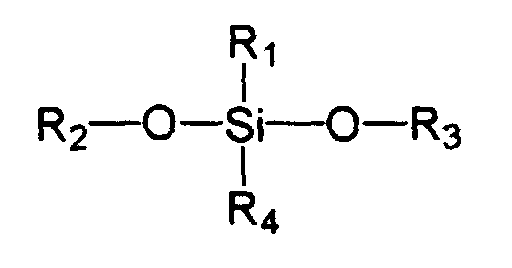
- silicones or silicone oils can be present as monomers, which are generally characterized by structural elements, as follows:
- Linear silicones with several siloxy units which can advantageously be used according to the invention are generally characterized by structural elements as follows: wherein the silicon atoms can be substituted with the same or different alkyl radicals and / or aryl radicals, which are generally represented here by the radicals R 1 - R 4 (to say that the number of different radicals is not necessarily limited to up to 4). m can assume values from 2 - 200,000.
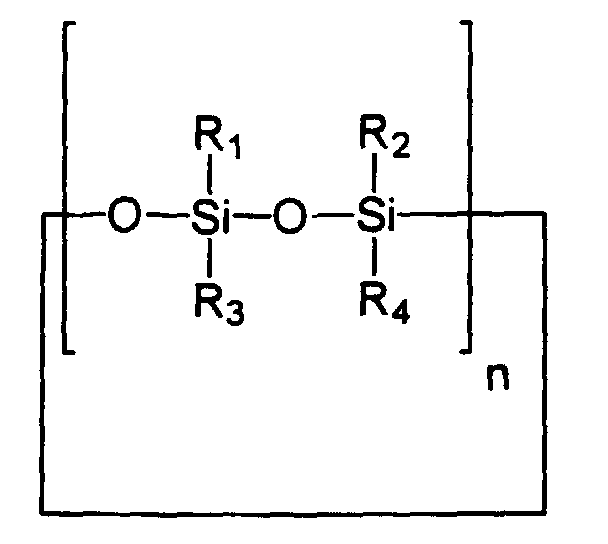
- Cyclic silicones to be used advantageously according to the invention are generally characterized by structural elements as follows wherein the silicon atoms can be substituted with the same or different alkyl radicals and / or aryl radicals, which are generally represented here by the radicals R 1 - R 4 (to say that the number of different radicals is not necessarily limited to up to 4).
- n can have values from 3/2 to 20. Broken values for n take into account that there may be odd numbers of siloxyl groups in the cycle.
- Phenyltrimethicone is advantageously chosen as the silicone oil.
- Other silicone oils for example Dimethicone, phenyldimethicone, cyclomethicone (octamethylcyclotetrasiloxane) for example hexamethylcyclotrisiloxane, polydimethylsiloxane, poly (methylphenylsiloxane), Cetyl dimethicone, behen oxide dimethicone are advantageous in the sense of the present Use invention.
- silicone oils of a constitution similar to that described above
- compounds whose organic side chains derivatized for example are polyethoxylated and / or polypropoxylated.
- These include, for example Polysiloxane-polyalkyl-polyether copolymers such as the cetyl-dimethicone copolyol, the (cetyl-dimethicone copolyol (and) polyglyceryl-4-isostearate (and) hexyl laurate)
- the silicone oil or oils can also be selected particularly advantageously from the group of silicones of the general structure based on the total weight of the preparation, where n can take numbers between 5 and 50. It is advantageous to choose the average value n in from the range of 12-16.
- a particularly advantageous representative of such silicone oils has been found to be the AK 10 silicone oil from Wacker-Chemie GmbH, whose average value for n is around 14.
- Preparations preferred according to the invention advantageously contain a proportion of at least 5% by weight, preferably at least 10% by weight, of one or more silicone oils.
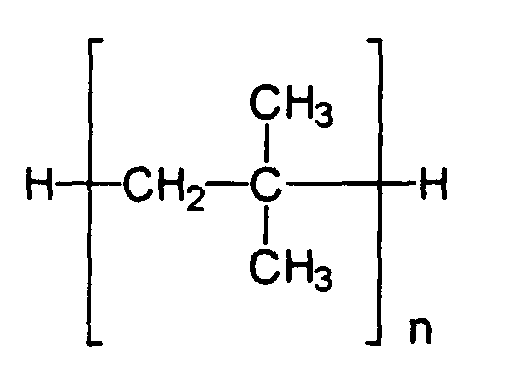
- n usually takes values from 3 to 15. According to the invention, the range of n from 3-12, in particular 6-7, is preferred.
- the total amount of hydrogenated polylsobutenes used according to the invention in the Cosmetic or dermatological preparations according to the invention is advantageous selected from the range of 4-8% by weight, based on the total weight of the Preparations.
- the molar mass maxima of the hydrogenated polyisobutenes used according to the invention is advantageously between 250 and 600 g / mol, particularly preferably around 400 g / mol, corresponding to a value for n of approximately 6.
- the oil phase of the emulsions for the purposes of the present invention is according to the invention preferably predominantly from components of the type listed under point (4), although it is possible to accept up to 50 without major disadvantages % By weight, preferably up to 40% by weight, of the total weight of the oil components to choose from the group of other oil components.
- esters of saturated and / or unsaturated, branched and / or unbranched alkane carboxylic acids with a chain length of 3 to 30 carbon atoms and saturated and / or unsaturated, branched and / or unbranched Alcohols with a chain length of 3 to 30 carbon atoms from the group of the esters from aromatic Carboxylic acids and saturated and / or unsaturated, branched and / or unbranched alcohols with a chain length of 3 to 30 carbon atoms.
- ester oils can then advantageously be selected from the group of isopropyl myristate, isopropyl palmitate, Isopropyl stearate, isopropyl oleate, n-butyl stearate, n-hexyl laurate, n-decyl oleate, isooctyl stearate, Isononyl stearate, isononyl isononanoate, 2-ethylhexyl palmitate, 2-ethylhexyl laurate, 2-hexyldecyl stearate, 2-octyldodecyl palmitate, oleyl oleate, olerlerucate, erucyl oleate, Erucylerucat as well as synthetic, semi-synthetic and natural mixtures of such Esters, e.g. B. Jojoba oil.
- the oil phase can advantageously be selected from the group of the branched ones and unbranched hydrocarbons and waxes, the dialkyl ethers, the group of saturated or unsaturated, branched or unbranched alcohols, and the Fatty acid triglycerides, especially the triglycerol esters of saturated and / or unsaturated, branched and / or unbranched alkane carboxylic acids with a chain length of 8 to 24, especially 12 - 18 carbon atoms.
- the fatty acid triglycerides can be advantageous, for example can be selected from the group of synthetic, semi-synthetic and natural Oils, e.g. B. olive oil, sunflower oil, soybean oil, peanut oil, rapeseed oil, almond oil, palm oil, Coconut oil, palm kernel oil and the like, provided that those required in the main claim Conditions are met.
- Fat and / or wax components to be used advantageously according to the invention from the group of vegetable waxes, animal waxes, mineral waxes and petrochemical waxes can be selected.
- Are cheap according to the invention for example Candelilla wax, carnauba wax, Japanese wax, esparto grass wax, cork wax, Guaruma wax, rice germ oil wax, sugar cane wax, berry wax, Ouricury wax, Montan wax, jojoba wax, shea butter, beeswax, shellac wax, walnut, Lanolin (wool wax), pretzel fat, ceresin, ozokerite (earth wax), paraffin waxes and Micro waxes, provided the conditions specified in the main claim are met.
- fat and / or wax components are chemically modified waxes and synthetic waxes, such as those under the trade names Syncrowax HRC (glyceryl tribehenate), Syncrowax HGLC (C 16-36 fatty acid triglyceride ) and Syncrowax AW 1C (C 18-36 fatty acid) available from CRODA GmbH as well as montan ester waxes, sasol waxes, hydrogenated jojoba waxes, synthetic or modified beeswaxes (e.g.
- the fat and / or wax components can be used both individually and also be present in a mixture.
- any mixtures of such oil and wax components are also advantageous To use the sense of the present invention. It can also be advantageous if necessary be waxes, for example cetyl palmitate, as the sole lipid component of the oil phase to be used provided the conditions required in the main claim are met.
- the oil phase is advantageously selected from the group 2-ethylhexyl isostearate, octyldodecanol, isotridecylisononanoate, isoeicosane, 2-ethylhexyl cocoate, C 12-15 alkyl benzoate, caprylic capric acid triglyceride, dicaprylyl ether if the conditions are met in the main claim.
- hydrocarbons paraffin oil, cycloparaffin, squalane, squalene, hydrogenated Polyisobutene or polydecene is advantageous for the purposes of the present invention use if the conditions specified in the main claim are met.
- hydrogenated polyisobutene with a molar mass maximum between 250 and 600 g / mol, particularly preferably around 400 g / mol, advantageous according to the invention.
- O / W emulsions according to the invention can advantageously with the aid of the usual O / W emulsifiers, if desired with the help of W / O emulsifiers or others Co-emulsifiers are produced.
- O / W emulsions according to the present invention contain one or more Emulsifiers, if desired advantageously selected from the group of the following Substances that generally act as W / O emulsifiers:
- O / W emulsions according to the present invention optionally contain one or more emulsifiers, particularly advantageously selected from the group of following substances, which generally act as O / W emulsifiers:
- Emulsions according to the invention in the sense of the present invention for. B. in the form of a Skin protection cream, a skin lotion, a cosmetic milk, for example in the form a sunscreen cream or sunscreen milk are beneficial and included e.g. B. fats, oils, waxes and / or other fat bodies, as well as water and one or several emulsifiers, as are customary for such a type of formulation be used.
- Underneath include, for example, consistency agents, fillers, perfume, dyes, emulsifiers, additional active ingredients such as vitamins or proteins, light stabilizers, stabilizers, Insect repellents, alcohol, water, salts, antimicrobial, proteolytic or keratolytic effective substances etc.
- Contain medical topical compositions in the sense of the present invention usually one or more drugs in effective concentration.
- drugs in effective concentration.
- Cosmetic or topical dermatological compositions can accordingly used in the sense of the present invention, depending on its structure, for example are used as skin protection cream, cleansing milk, sun protection lotion, nutrient cream, Day or night cream, etc. It may be possible and advantageous that Compositions according to the invention as the basis for pharmaceutical formulations to use.
- Those cosmetic and dermatological preparations which are in the Form of a sunscreen. These preferably contain in addition to the Active ingredient used according to the invention additionally at least one UVA filter substance and / or at least one UVB filter substance and / or at least one inorganic Pigment.
- Preparations according to the invention can advantageously contain substances which contain UV radiation absorb in the UVB range, the total amount of filter substances z. B. 0.1% by weight to 30% by weight, preferably 0.5 to 10% by weight, in particular 1 to 6 % By weight, based on the total weight of the preparations.
- UVB filters mentioned, which can be used according to the invention, should of course not be limiting.
- UVA filters in preparations according to the invention, which are usually used in cosmetic and / or dermatological preparations are included.
- Such filter substances are preferably derivatives of dibenzoylmethane, especially 1- (4'-tert-butylphenyl) -3- (4'-methoxyphenyl) propane-1,3-dione and 1-phenyl-3- (4'-isopropylphenyl) propane-1,3-dione.
- preparations, which contain these combinations are the subject of the invention. It can the same amounts of UVA filter substances are used as for UVB filter substances were called.
- Cosmetic and / or dermatological preparations in the sense of the present invention can also contain inorganic pigments that are commonly used in cosmetics to protect the skin from UV rays. It is about to oxides of titanium, zinc, iron, zirconium, silicon, manganese, aluminum, cerium and mixtures thereof, as well as modifications in which the oxides are the active agents are. It is particularly preferred to use pigments based on titanium dioxide. The amounts given for the above combinations can be used.
- the cosmetic and dermatological preparations according to the invention can Contain cosmetic active ingredients, hoofs and / or additives, as they are usually in such Preparations are used, e.g. B. antioxidants, preservatives, Bactericides, perfumes, substances to prevent foaming, dyes, pigments, which have a coloring effect, thickeners, surface-active substances, Emulsifiers, softening, moisturizing and / or moisturizing substances, fats, Oils, waxes or other common components of a cosmetic or dermatological Formulation such as alcohols, polyols, polymers, foam stabilizers, electrolytes, organic solvents or silicone derivatives.
- cosmetic active ingredients e.g. B. antioxidants, preservatives, Bactericides, perfumes, substances to prevent foaming, dyes, pigments, which have a coloring effect, thickeners, surface-active substances, Emulsifiers, softening, moisturizing and / or moisturizing substances, fats, Oils, waxes or
- anti-inflammatory agents in particular batyl alcohol ( ⁇ -octadecylglyceryl ether), Selachyl alcohol ( ⁇ -9-octadecenylglyceryl ether), chimyl alcohol ( ⁇ -hexadecylglyceryl ether), Bisabolol and / or panthenol.
- antioxidants are also advantageous to use the preparations customary for the purposes of the present invention. According to the invention can be used as favorable antioxidants all suitable or customary for cosmetic and / or dermatological applications Antioxidants are used.
- the antioxidants are advantageously selected from the group consisting of amino acids (e.g. glycine, histidine, tyrosine, tryptophan) and their derivatives, imidazoles (e.g. urocanic acid) and their derivatives, peptides such as D, L-carnosine, D- Carnosine L-carnosine and its derivatives (e.g. anserine), carotenoids, carotenes (e.g. ⁇ -carotene, ⁇ -carotene, ⁇ -lycopene) and their derivatives, chlorogenic acid and its derivatives, lipoic acid and its derivatives (e.g. B.
- amino acids e.g. glycine, histidine, tyrosine, tryptophan
- imidazoles e.g. urocanic acid
- peptides such as D, L-carnosine, D- Carnosine L-carnosine and its derivatives (e.g. anserine)
- thiols e.g. thioredoxin, glutathione, cysteine, cystine, cystamine and their glycosyl, N-acetyl, methyl, ethyl, propyl, amyl, butyl, and lauryl, palmitoyl, oleyl, ⁇ -linoleyl, cholesteryl and glyceryl esters
- salts dilauryl thiodipropionate, distearyl thio dipropionate, thiodipropionic acid and their derivatives (esters, ethers, peptides, lipids, nucleotides, nucleosides and salts) and sulfoximine compounds (e.g.
- Buthioninsulfoximine Homocysteinsulfoximin, Buthioninsu lfone, penta-, hexa-, heptathioninsulfoximine
- very low contractual dosages e.g. B. pmol to ⁇ mol / kg
- metal chelators e.g. ⁇ -hydroxy fatty acids, palmitic acid, phytic acid, lactoferrin
- ⁇ -hydroxy acids e.g. citric acid, lactic acid, malic acid
- humic acid bile acid, Bile extracts, bilirubin, biliverdin, EDTA, EGTA and their derivatives, unsaturated fatty acids and their derivatives (e.g.
- ⁇ -linolenic acid linoleic acid, oleic acid
- folic acid and their derivatives furfurylidene sorbitol and its derivatives
- ubiquinone and ubiquinol and their derivatives vitamin C and derivatives (e.g. ascorbyl palmitate, Mg ascorbyl phosphate, ascorbyl acetate), tocopherols and derivatives (e.g.
- vitamin E acetate
- vitamin A and derivatives vitamin A palmitate
- zinc and its derivatives e.g. ZnO, ZnSO 4
- stilbenes and their derivatives for example stilbene oxide, trans-stilbene oxide
- derivatives suitable according to the invention salts, esters, ethers, sugars, nucleotides, nucleosides, peptides and lipids
- the amount of antioxidants (one or more compounds) in the preparations is preferably 0.001 to 30% by weight, particularly preferably 0.05 to 20% by weight, in particular 1 - 10 wt .-%, based on the total weight of the preparation.
- vitamin E and / or its derivatives are the antioxidant (s) advantageous, the respective concentrations of which range from 0.001-10% by weight, based on the total weight of the formulation.
- Preparations according to the present invention can also be used as a basis for cosmetic or dermatological deodorants or antiperspirants. All active ingredients common for deodorants or antiperspirants can be advantageous are used, for example odor maskers like the common perfume ingredients, Odor absorbers, for example those in DE-P 40 09 347 layered silicates, of which in particular montmorillonite, kaolinite, llite, beidellite, nontronite, saponite, hectorite, bentonite, smectite, further for example Zinc salts of ricinoleic acid.
- Odor absorbers for example those in DE-P 40 09 347 layered silicates, of which in particular montmorillonite, kaolinite, llite, beidellite, nontronite, saponite, hectorite, bentonite, smectite, further for example Zinc salts of ricinoleic acid.
- Germ inhibitors are also suitable in the preparations according to the invention to be incorporated.
- advantageous substances are 2,4,4'-trichloro-2'-hydroxydiphenyl ether (Irgasan), 1,6-di- (4-chlorophenylbiguanido) hexane (chlorhexidine), 3,4,4'-trichlorocarbanilide, quaternary ammonium compounds, clove oil, mint oil, thyme oil, Triethyl citrate, farnesol (3,7,11-trimethyl-2,6,10-dodecatri ⁇ n-1-ol) and the in the patent publications DE-37 40 186, DE-39 38 140, DE-42 04 321, DE-42 29 707, DE-43 09 372, DE-44 11 664, DE-195 41 967, DE-195 43 695, DE-195 43 696, DE-195 47 160, DE-196 02 108, DE-196 02 110, DE-196 02 111, DE-196 31 003, DE
- the amount of such active substances (one or more compounds) in the preparations according to the invention is preferably 0.001 to 30% by weight, particularly preferably 0.05-20% by weight, in particular 1-10% by weight, based on the total weight of the Preparation.
- the water phase of the cosmetic preparations in the sense of the present invention can also have a gel character, in addition to an effective content of the invention substances used and solvents usually used for this, preferably water, still further organic thickeners, e.g. B. gum arabic, Xanthan gum, sodium alginate, starch and starch derivatives (e.g. distarch phosphate), Cellulose, cellulose derivatives, preferably methyl cellulose, hydroxymethyl cellulose, Hydroxyethyl cellulose, hydroxypropyl cellulose, hydroxypropyl methyl cellulose or inorganic thickeners, e.g. B. aluminum silicates such as organic modified or unmodified hectorite, bentonite, or the like, or a Mixture of polyethylene glycol and polyethylene glycol stearate or distearate.
- organic thickeners e.g. B. gum arabic, Xanthan gum, sodium alginate, starch and starch derivatives (e.g. distarch phosphat
- the thickener is in the gel e.g. B. in an amount between 0.1 and 30 wt .-%, preferably between 0.5 and 15% by weight.
- compositions according to the invention can also be advantageous to prepare preparations according to the invention with a surface or surface activity
- Add agents for example cationic emulsifiers such as in particular quaternary surfactants.
- Quaternary surfactants contain at least one N atom that has 4 alkyl or aryl groups is covalently linked. Regardless of the pH value, this leads to a positive Charge.
- Alkyl betaine, alkyl amidopropyl betaine and alkyl amidopropyl hydroxysulfain are advantageous.
- the cationic surfactants used according to the invention can also are preferably selected from the group of quaternary ammonium compounds, in particular benzyltrialkylammonium chlorides or bromides, such as, for example, benzyldimethylstearylammonium chloride, further alkyltrialkylammonium salts, for example for example cetyltrimethylammonium chloride or bromide, alkyldimethylhydroxyethylammonium chloride or bromides, dialkyldimethylammonium chlorides or bromides, alkylamidethyltrimethylammonium ether sulfates, Alkylpyridinium salts, for example lauryl or Cetylpyrimidinium chloride, imidazoline derivatives and compounds with cationic Character such as amine oxides, for example alkyldimethylamine oxides or alkylaminoethyldimethylamine oxides. Cetyltrimethylammonium salts are particularly advantageous.
- cationic polymers e.g. Jaguar® C 162 [hydroxypropyl guar hydroxypropyltrimonium Chlorides] or modified magnesium aluminum silicates (e.g. Quaternium-18 hectorite, which e.g. B. under the trade name Bentone® 38 is available from Rheox, or stearalkonium hectorite, which, for. B. under the trade name Softisan® Gel is available from Hüls AG).
- cationic polymers e.g. Jaguar® C 162 [hydroxypropyl guar hydroxypropyltrimonium Chlorides]
- modified magnesium aluminum silicates e.g. Quaternium-18 hectorite, which e.g. B. under the trade name Bentone® 38 is available from Rheox, or stearalkonium hectorite, which, for. B. under the trade name Softisan® Gel is available from Hüls AG).
- Preparations according to the invention can advantageously also contain oil thickeners, to improve the tactile properties of the emulsion and the stick consistency.
- Oil thickeners for the purposes of the present invention are, for example other solids, such as B. hydrophobic silicon oxides of the type Aerosil®, which are available from Degussa AG.
- Aerosil® types are Aerosil® OX50, Aerosil® 130, Aerosil® 150, Aerosil® 200, Aerosil® 300, Aerosil® 380, Aerosil® MOX 80, Aerosil® MOX 170, Aerosil® COK 84, Aerosil® R 202, Aerosil® R 805, Aerosil® R 812, Aerosil® R 972, Aerosil® R 974 and / or Aerosil® R976.
- So-called metal soaps i.e. the salts of higher fatty acids are also exceptions
- the alkali salts advantageous oil thickeners for the purposes of the present invention, such as aluminum stearate, zinc stearate and / or magnesium stearate.
- amphoteric or zwitterionic preparations Add surfactants (e.g. cocoamidopropyl betaine) and moisturizers (e.g. betaine).
- Amphoteric surfactants to be used advantageously are, for example, acyl / dialkylethylenediamine, for example sodium acylamphoacetate, disodium acylamphodipropionate, Disodium alkyl amphodiacetate, sodium acyl amphohydroxypropyl sulfonate, disodium acyl amphodiacetate and sodium acyl amphopropionate, N-alkyl amino acids, for example Aminopropylalkylglutamide, alkylaminopropionic acid, sodium alkylimidodipropionate and Lauroamphocarboxyglycinate.
- the amount of surfactants (one or more compounds) in the preparations according to the invention is preferably 0.001 to 30 % By weight, particularly preferably 0.05-20% by weight, in particular 1-10% by weight on the total weight of the preparation.
- Preparations according to the invention can also contain active ingredients (one or more compounds) which are selected from the group: acetylsalicylic acid, atropine, azulene, hydrocortisone and its derivatives, for. B. hydrocortisone-17-valerate, vitamins, e.g. B.
- vitamin F unsaturated fatty acids
- ⁇ -linolenic acid oleic acid, eicosapentaenoic acid, docosahexaenoic acid and their derivatives
- chloramphenicol caffeine, prostaglandins, thymol, camphor
- extracts or other products of plant and animal origin e.g. B. evening primrose oil, borage oil or currant oil, fish oils, cod liver oil but also ceramides and ceramide-like compounds and so on.
- active substances from the group of refatting substances, for example Purcellin oil, Eucent® and Neocerit®.
- the amount of such active substances (one or more compounds) in the preparations according to the invention is preferably 0.001 to 30% by weight, particularly preferably 0.05-20% by weight, in particular 1-10% by weight, based on the total weight of the Preparation.
Landscapes
- Health & Medical Sciences (AREA)
- Life Sciences & Earth Sciences (AREA)
- Veterinary Medicine (AREA)
- Animal Behavior & Ethology (AREA)
- General Health & Medical Sciences (AREA)
- Public Health (AREA)
- Birds (AREA)
- Epidemiology (AREA)
- Emergency Medicine (AREA)
- Chemical & Material Sciences (AREA)
- Dermatology (AREA)
- Dispersion Chemistry (AREA)
- Oil, Petroleum & Natural Gas (AREA)
- Cosmetics (AREA)
- Medicinal Preparation (AREA)
Abstract
wobei die Summe aus (1), (2) und (3) maximal 12 Gew.-% beträgt,
wobei die Summe aus (4), (5) und (6) maximal 25 Gew.-% beträgt,
Description
wobei die Summe aus (1), (2) und (3) maximal 12 Gew.-% beträgt,
wobei die Summe aus (4), (5) und (6) maximal 25 Gew.-% beträgt,
- besser als feuchtigkeitsspendende Zubereitungen wirken,
- besser die Hautglättung fördern,
- sich durch bessere Pflegewirkung auszeichnen,
- besser als Vehikel für kosmetische und medizinisch-dermatologische Wirkstoffe dienen
- höhere Stabilität gegenüber Zerfall in Öl- und Wasserphasen aufweisen und
- sich durch bessere Bioverträglichkeit auszeichnen würden
- sich durch besseres Hautgefühl und durch höhere kosmetische Eleganz auszeichnen würden
- trotz einer hoch reichhaltig-geschmeidigen Sensorik gleichzeitig mattierende Effekte auf der Haut aufweist und als Make-up-Grundlage geeignet ist

| Handelsname | INCl-Bezeichnung | (mN/m) |
| Isofol® 14 T | Butyl Decanol + Hexyl Decanol + Hexyl Octanol + Butyl Octanol | 27,6 |
| Isofol® 16 | Hexyl Decanol | 24,3 |
| Eutanol® G | Octyldodecanol | 24,8 |
| Cetiol® OE | Dicaprylyl Ether | 22,1 |
| Miglyol® 812 | Caprylic/Capric Triglyceride | 21,3 |
| Cegesoft® C24 | Octyl Palmitate | 23,1 |
| Isopropylstearat | Isopropyl Stearate | 21,9 |
| Estol® 1540 EHC | Octyl Octanoate | 30,0 |
| Finsolv® TN | C12-15 Alkyl Benzoate | 21,8 |
| Cetiol® SN | Cetearyl Isononanoate | 28,6 |
| Dermofeel® BGC | Butylene Glycol Caprylate/Caprate | 21,5 |
| Trivent® OCG | Tricaprylin | 20,2 |
| MOD | Octyldodecyl Myristate | 22,1 |
| Cosmacol® ETI | Di-C12-13Alkyl Tartrate | 29,4 |
| Miglyol® 829 | Caprylic/Capric Diglyceryl Succinate | 29,5 |
| Prisorine® 2036 | Octyl Isostearate | 29,7 |
| Tegosoft® SH | Stearyl Heptanoate | 28,7 |
| Abil® Wax 9840 | Cetyl Dimethicone | 25,1 |
| Cetiol® LC | Coco-Caprylate/Caprate | 24,8 |
| IPP | Isopropyl Palmitate | 22,5 |
| Luvitol® EHO | Cetearyl Octanoate | 28,6 |
| Cetiol® 868 | Octyl Stearate | 28,4 |


- Wasser oder wäßrige Lösungen
- wäßrige ethanolische Lösungen
- natürliche Öle und/oder chemisch modifizierte natürliche Öle und/oder synthetische Öle;
- Fette, Wachse und andere natürliche und synthetische Fettkörper, vorzugsweise Ester von Fettsäuren mit Alkoholen niedriger C-Zahl, z. B. mit Isopropanol, Propylenglykol oder Glycerin, oder Ester von Fettalkoholen mit Alkansäuren niedriger C-Zahl oder mit Fettsäuren;
- Alkohole, Diole oder Polyole niedriger C-Zahl, sowie deren Ether, vorzugsweise Ethanol, Isopropanol, Propylenglykol, Glycerin, Ethylenglykol, Ethylenglykolmonoethyl- oder -monobutylether, Propylenglykolmonomethyl, -monoethyl- oder - monobutylether, Diethylenglykolmonomethyl- oder -monoethylether und analoge Produkte.
- 3-Benzylidencampher und dessen Derivate, z. B. 3-(4-Methylbenzyliden)campher,
- 4-Aminobenzoësäure-Derivate, vorzugsweise 4-(Dimethylamino)-benzoësäure(2-ethylhexyl)ester, 4-(Dimethylamino)benzoësäureamylester;
- Ester der Zimtsäure, vorzugsweise 4-Methoxyzimtsäure(2-ethylhexyl)ester, 4-Methoxyzimtsäureisopentylester;
- Ester der Salicylsäure, vorzugsweise Salicylsäure(2-ethylhexyl)ester, Salicylsäure(4-isopropylbenzyl)ester, Salicylsäurehomomenthylester;
- Derivate des Benzophenons, vorzugsweise 2-Hydroxy-4-methoxybenzophenon, 2-Hydroxy-4-methoxy-4'-methylbenzophenon, 2,2'-Dihydroxy-4-methoxybenzophenon;
- Ester der Benzalmalonsäure, vorzugsweise 4-Methoxybenzalmalonsäuredi(2-ethylhexyl)ester;
- 2,4,6-Trianilino-(p-carbo-2'-ethyl-1'-hexyloxy)-1,3,5-triazin
- 2-Phenylbenzimidazol-5-sulfonsäure und deren Salze, z. B. Natrium-, Kalium- oder Triethanolammonium-Salze,
- Sulfonsäure-Derivate von Benzophenonen, vorzugsweise 2-Hydroxy-4-methoxybenzophenon-5-sulfonsäure und ihre Salze;
- Sulfonsäure-Derivate des 3-Benzylidencamphers, wie z. B. 4-(2-Oxo-3-bornylidenmethyl)benzolsulfonsäure, 2-Methyl-5-(2-oxo-3-bornylidenmethyl)sulfonsäure und ihre Salze.
| Beispiel 1 | |
| Gew.-% | |
| Stearinsäure/Palmitinsäure | 2,00 |
| PEG-40-Stearat | 2,00 |
| Glycerylstearat | 2,00 |
| Cetylstearylalkohol | 3,00 |
| Hydriertes Polyisobuten | 7,00 |
| Petrolatum | 4,00 |
| Cyclomethicon | 9,00 |
| Glyceryllanolat | 2,00 |
| Glycerin | 4,00 |
| Parfüm, Konservierungsmittel, Farbstoffe, Antioxidantien etc. | q.s. |
| Wasser | ad 100,00 |
| pH-Wert eingestellt auf | 6,5 |
| Beispiel 2 | |
| Gew.-% | |
| Stearinsäure/Palmitinsäure | 1,20 |
| PEG-40-Stearat | 2,00 |
| Glycerylstearat | 4,00 |
| Cetylstearylalkohol | 3,00 |
| Hydriertes Polyisobuten | 10,00 |
| Cyclomethicon | 10,00 |
| Glyceryllanolat | 2,00 |
| Glycerin | 4,00 |
| Parfüm, Konservierungsmittel, Farbstoffe, Antioxidantien etc. | q.s. |
| Wasser | ad 100,00 |
| pH-Wert eingestellt auf | 6,5 |
| Beispiel 3 | |
| Gew.-% | |
| Stearinsäure/Palmitinsäure | 1,20 |
| PEG-40-Stearat | 2,00 |
| Glycerylstearat | 6,00 |
| Cetylstearylalkohol | 2,50 |
| Hydriertes Polyisobuten | 8,00 |
| Petrolatum | 2,00 |
| Cyclomethicon | 9,00 |
| Glyceryllanolat | 2,00 |
| Glycerin | 4,00 |
| Parfüm, Konservierungsmittel, Farbstoffe, Antioxidantien etc. | q.s. |
| Wasser | ad 100,00 |
| pH-Wert eingestellt auf | 6,5 |
| Beispiel 4 | |
| Gew.-% | |
| Stearinsäure/Palmitinsäure | 1,20 |
| PEG-100-Stearat | 1,20 |
| Glycerylstearat | 3,60 |
| Cetylstearylalkohol | 3,00 |
| Hydriertes Polyisobuten | 9,00 |
| Petrolatum | 2,00 |
| Cyclomethicon | 7,00 |
| Dimethicon | 3,00 |
| Glyceryllanolat | 2,00 |
| Glycerin | 4,00 |
| Parfüm, Konservierungsmittel, Farbstoffe, Antioxidantien etc. | q.s. |
| Wasser | ad 100,00 |
| pH-Wert eingestellt auf | 7,0 |
| Beispiel 5 | |
| Gew.-% | |
| Stearinsäure/Palmitinsäure | 1,20 |
| PEG-20-Stearat | 1,20 |
| Glycerylstearat | 3,60 |
| Cetylstearylalkohol | 3,00 |
| Hydriertes Polyisobuten | 9,00 |
| Petrolatum | 2,00 |
| Cyclomethicon | 5,00 |
| Dimethicon | 5,00 |
| Glyceryllanolat | 5,00 |
| Glycerin | 10,00 |
| Parfüm, Konservierungsmittel, Farbstoffe, Antioxidantien etc. | q.s. |
| Wasser | ad 100,00 |
| pH-Wert eingestellt auf | 6,5 |
| Beispiel 6 | |
| Gew.-% | |
| Stearinsäure/Palmitinsäure | 1,20 |
| PEG-40-Stearat | 1,20 |
| Glyceryl Stearate | 3,60 |
| Cetylstearylalkohol | 3,00 |
| Hydriertes Polyisobuten | 8,00 |
| Paraffinum Liquidum | 5,00 |
| Petrolatum | 2,00 |
| Cyclomethicon | 10,00 |
| Glyceryllanolat | 2,00 |
| Glycerin | 10,00 |
| Parfüm, Konservierungsmittel, Farbstoffe, Antioxidantien etc. | q.s. |
| Wasser | ad 100,00 |
| pH-Wert eingestellt auf | 7,0 |
| Beispiel 7 | |
| Gew.-% | |
| Stearinsäure/Palmitinsäure | 1,20 |
| PEG-40-Stearat | 1,20 |
| Glyceryl-Stearat | 3,60 |
| Cetylstearylalkohol | 3,00 |
| Hydriertes Polyisobuten | 8,00 |
| Polydecene | 6,00 |
| Petrolatum | 4,00 |
| Cyclomethicon | 10,00 |
| Glyceryllanolat | 2,00 |
| Glycerin | 5,00 |
| Parfüm, Konservierungsmittel, Farbstoffe, Antioxidantien etc. | q.s. |
| Wasser | ad 100,00 |
| pH-Wert eingestellt auf | 7,0 |
| Beispiel 8 | |
| Gew.-% | |
| Stearinsäure/Palmitinsäure | 1,20 |
| PEG-40-Stearat | 2,00 |
| Glycerylstearat | 4,00 |
| Cetearylalkohol | 3,00 |
| Hydriertes Polyisobuten | 9,00 |
| Polydecen | 5,00 |
| Caprylsäure/Caprinsäuretriglyceride | 5,00 |
| Petrolatum | 1,00 |
| Cyclomethicon | 4,00 |
| Glyceryllanolat | 2,00 |
| Glycerin | 3,00 |
| Parfüm, Konservierungsmittel, Farbstoffe, Antioxidantien etc. | q.s. |
| Wasser | ad 100,00 |
| pH-Wert eingestellt auf | 6,0 |
| Beispiel 9 | |
| Gew.-% | |
| Stearinsäure/Palmitinsäure | 1,20 |
| PEG-40-Stearat | 2,00 |
| Glycerylstearat | 4,00 |
| Cetylstearylalkohol | 3,00 |
| Hydriertes Polyisobuten | 12,00 |
| Polydecen | 4,00 |
| Cyclomethicon | 5,00 |
| Glyceryllanolat | 2,00 |
| Glycerin | 3,00 |
| Octylmethoxycinnamat | 3,00 |
| Benzophenon-3 | 2,00 |
| Octylsalicylat | 1,00 |
| Parfüm, Konservierungsmittel, NaOH, Farbstoffe, Antioxidantien etc. | q.s. |
| Wasser | ad 100,00 |
| pH-Wert eingestellt auf | 7,0 |
| Beispiel 10 | |
| Gew.-% | |
| Stearinsäure/Palmitinsäure | 1,00 |
| PEG-100-Stearat | 2,00 |
| Glycerylstearat | 4,00 |
| Cetylstearylalkohol | 3,00 |
| Hydriertes Polyisobuten | 9,00 |
| Octyldodecanol | 3,50 |
| Dimethicon | 10,00 |
| Myristylmyristat | 4,00 |
| Glycerin | 3,00 |
| Parfüm, Konservierungsmittel, Farbstoffe, Antioxidantien etc. | q.s. |
| Wasser | ad 100,00 |
| pH-Wert eingestellt auf | 7,0 |
| Beispiel 11 | |
| Gew.-% | |
| Stearinsäure/Palmitinsäure | 1,00 |
| PEG-100-Stearat | 2,00 |
| Glycerylstearat | 4,00 |
| Cetylstearylalkohol | 3,00 |
| Hydriertes Polyisobuten | 0,50 |
| Dimethicon | 5,00 |
| Cyclomethicon | 15,00 |
| Myristylmyristat | 4,00 |
| Glycerin | 3,00 |
| Parfüm, Konservierungsmittel, Farbstoffe, Antioxidantien etc. | q.s. |
| Wasser | ad 100,00 |
| pH-Wert eingestellt auf | 7,0 |
Claims (11)
- Kosmetische und dermatologische Zubereitungen in Form von O/W-Emulsionen, enthaltend(1) 0,1 bis zu 5 Gew.-%, bezogen auf das Gesamtgewicht der Zubereitungen, einer oder mehrerer C14-C22-Fettsäuren,(2) 0,2 bis zu 10 Gew.-%, bezogen auf das Gesamtgewicht der Zubereitungen, eines oder mehrerer Mono- und/oder Diglyceride von Fettsäuren,(3) 0,1 bis zu 5 Gew.-%, bezogen auf das Gesamtgewicht der Zubereitungen, eines oder mehrerer ethoxylierter Fettsäureester,
wobei die Summe aus (1), (2) und (3) maximal 12 Gew.-% beträgt,(4) 0,5 bis 10 Gew.-%, bezogen auf das Gesamtgewicht der Zubereitungen, an hydriertem Polyisobuten mit einem Molekulargewicht von 100 bis 4000 g/mol,(5) 0,5 bis 10 Gew.-%, bezogen auf das Gesamtgewicht der Zubereitungen, eines oder mehrerer unpolarer Lipide,(6) 0,5 - 10 Gew.-%, bezogen auf das Gesamtgewicht der Zubereitungen, an einem oder mehreren Siliconölen,
wobei die Summe aus (4), (5) und (6) maximal 25 Gew.-% beträgt,(7) 0,5 - 7,5 Gew.-%, bezogen auf das Gesamtgewicht der Zubereitungen, eines oder mehrerer Fettalkohole(8) 0,5 - 7,5 Gew.-%, bezogen auf das Gesamtgewicht der Zubereitungen, eines oder mehrerer lipophiler Konsistenzgeber eines Schmelz- oder Tropfpunktes ≥ 30 °C,(9) wobei die gesamte Lipidphase bis zu 40 Gew.-% polare Lipide enthalten kann, bezogen auf das Gesamtgewicht der Lipidphase. - Kosmetische und dermatologische Zubereitungen nach Anspruch 1, enthaltend(1) 0,5 bis zu 1,0 Gew.-%, bezogen auf das Gesamtgewicht der Zubereitungen, einer oder mehrerer C14-C22-Fettsäuren.
- Kosmetische und dermatologische Zubereitungen nach Anspruch 1, enthaltend(2) 2,5 bis zu 3,0 Gew.-%, bezogen auf das Gesamtgewicht der Zubereitungen, eines oder mehrerer Mono- und/oder Diglyceride von Fettsäuren.
- Kosmetische und dermatologische Zubereitungen nach Anspruch 1, enthaltend(3) 1,0 bis zu 1,5 Gew.-%, bezogen auf das Gesamtgewicht der Zubereitungen, eines oder mehrerer ethoxylierter Fettsäureester.
- Kosmetische und dermatologische Zubereitungen nach Anspruch 1, enthaltend(2) bis zu 10 Gew.-%, bezogen auf das Gesamtgewicht der Zubereitungen, an Glycerylstearat.
- Kosmetische und dermatologische Zubereitungen nach Anspruch 1, enthaltend(3) bis zu 5 Gew.-%, bezogen auf das Gesamtgewicht der Zubereitungen, eines oder mehrerer ethoxylierter Fettsäureester gewählt aus der Gruppe der PEG-20- bis PEG-100-Stearate.
- Kosmetische und dermatologische Zubereitungen nach Anspruch 1, enthaltend(5) 0,5 bis 10 Gew.-%, bezogen auf das Gesamtgewicht der Zubereitungen, eines oder mehrerer unpolarer Lipide, gewählt aus der Gruppe Mineralöl und/oder Mineralwachse ( u.a. Vaseline)
- Kosmetische und dermatologische Zubereitungen nach Anspruch 1, enthaltend(6) 5 - 8 Gew.-%, bezogen auf das Gesamtgewicht der Zubereitungen, an einem oder mehreren Siliconölen, besonders bevorzugt Cylomethicone
- Kosmetische und dermatologische Zubereitungen nach Anspruch 1, enthaltend(7) 2,0 - 3,0 Gew.-%, bezogen auf das Gesamtgewicht der Zubereitungen, eines oder mehrerer Fettalkohole.
- Kosmetische und dermatologische Zubereitungen nach Anspruch 1, enthaltend(8) 1,5-2,5 Gew.-%, bezogen auf das Gesamtgewicht der Zubereitungen, eines oder mehrerer lipophiler Konsistenzgeber eines Schmelz- oder Tropfpunktes ≥ 30 °C
- Kosmetische und dermatologische Zubereitungen nach Anspruch 1, in denen Gewichtsverhältnisse zwischen den unter (4), (5) und (6) genannten Bestandteile von ungefähr 1:1:1 gewählt wurden.
Applications Claiming Priority (2)
| Application Number | Priority Date | Filing Date | Title |
|---|---|---|---|
| DE19934946 | 1999-07-26 | ||
| DE19934946A DE19934946A1 (de) | 1999-07-26 | 1999-07-26 | Kosmetische und dermatologische Zubereitungen auf der Grundlage von O/W-Emulsionen |
Publications (3)
| Publication Number | Publication Date |
|---|---|
| EP1072247A2 true EP1072247A2 (de) | 2001-01-31 |
| EP1072247A3 EP1072247A3 (de) | 2004-01-14 |
| EP1072247B1 EP1072247B1 (de) | 2006-06-28 |
Family
ID=7916039
Family Applications (1)
| Application Number | Title | Priority Date | Filing Date |
|---|---|---|---|
| EP00114108A Expired - Lifetime EP1072247B1 (de) | 1999-07-26 | 2000-07-10 | Kosmetische und dermatologische Zubereitungen auf der Grundlage von O/W-Emulsionen |
Country Status (3)
| Country | Link |
|---|---|
| EP (1) | EP1072247B1 (de) |
| AT (1) | ATE331498T1 (de) |
| DE (2) | DE19934946A1 (de) |
Cited By (5)
| Publication number | Priority date | Publication date | Assignee | Title |
|---|---|---|---|---|
| EP1250915A1 (de) * | 2001-04-19 | 2002-10-23 | Beiersdorf Aktiengesellschaft | Kosmetische und dermatologische Zubereitungen, enthaltend erhöhte Elektrolytkonzentrationen |
| WO2002074264A3 (de) * | 2001-03-15 | 2002-12-27 | Beiersdorf Ag | Selbstschäumende oder schaumförmige zubereitungen mit organischen hydrokolloiden und partikulären hydrophoben und/oder hydrophobisierten und/oder ölabsorbierenden festkörpersubstanzen |
| CN106999411A (zh) * | 2014-12-23 | 2017-08-01 | 莱雅公司 | 脂肪酸酯用于皮肤去油光的用途和包含这种酯的组合物 |
| WO2021018565A1 (en) * | 2019-08-01 | 2021-02-04 | Beiersdorf Ag | Skin care oil in water emulsion |
| US12329845B2 (en) | 2018-10-03 | 2025-06-17 | Colgate-Palmolive Company | Emulsion-based personal care compositions and methods for the same |
Families Citing this family (18)
| Publication number | Priority date | Publication date | Assignee | Title |
|---|---|---|---|---|
| DE10063340A1 (de) * | 2000-12-19 | 2002-08-29 | Beiersdorf Ag | Selbstschäumende oder schaumförmige Zubereitungen |
| DE10063341A1 (de) * | 2000-12-19 | 2002-06-20 | Beiersdorf Ag | Selbstschäumende oder schaumförmige Zubereitungen |
| DE10063342A1 (de) * | 2000-12-19 | 2002-06-20 | Beiersdorf Ag | Selbstschäumende oder schaumförmige Zubereitungen |
| DE10113051A1 (de) * | 2001-03-15 | 2002-09-19 | Beiersdorf Ag | Selbstschäumende oder schaumförmige Zubereitungen mit anorganischen Gelbildnern und partikulären hydrophoben und/oder hydrophobisierten und/oder ölabsorbierenden Festkörpersubstanzen |
| DE10113048A1 (de) * | 2001-03-15 | 2002-09-19 | Beiersdorf Ag | Selbstschäumende oder schaumförmige Zubereitungen mit partikulären hydrophoben und/oder hydrophobisierten und/oder ölabsorbierenden Festkörpersubstanzen |
| DE10113047A1 (de) * | 2001-03-15 | 2002-09-26 | Beiersdorf Ag | Selbstschäumende oder schaumförmige Zubereitungen mit anorganischen Gelbildnern |
| DE10113053A1 (de) * | 2001-03-15 | 2002-09-19 | Beiersdorf Ag | Selbstschäumende oder schaumförmige Zubereitungen mit anorganischen Gelbildnern und organischen Hydrololloiden |
| DE10113054A1 (de) * | 2001-03-15 | 2002-09-26 | Beiersdorf Ag | Selbstschäumende oder schaumförmige Zubereitungen mit anorganischen Gelbildnern, organischen Hydrokolloiden und partikulären hydrophoben und/oder hydrophobisierten und/oder ölabsorbierenden Festkörpersubstanzen |
| DE10113050A1 (de) * | 2001-03-15 | 2002-09-19 | Beiersdorf Ag | Selbstschäumende oder schaumförmige Zubereitungen organischen Hydrokolloiden |
| DE10134786A1 (de) * | 2001-07-17 | 2003-02-06 | Beiersdorf Ag | Schäumbare Zubereitungen |
| DE10134597A1 (de) * | 2001-07-17 | 2003-02-06 | Beiersdorf Ag | Schäumbare Zubereitungen |
| DE10134729A1 (de) * | 2001-07-17 | 2003-02-06 | Beiersdorf Ag | Schäumbare Zubereitungen |
| DE10138495B4 (de) * | 2001-08-04 | 2004-11-11 | Beiersdorf Ag | Nachschäumende Zubereitungen und deren Verwendung |
| DE10148264B4 (de) * | 2001-09-28 | 2004-12-02 | Beiersdorf Ag | Kosmetische und/oder dermatologische Zubereitungen und deren Verwendung |
| DE10152304A1 (de) * | 2001-10-26 | 2003-05-08 | Beiersdorf Ag | Glycerin enthaltende kosmetische und dermatologische Zubereitungen auf der Grundlage von O/W-Emulsionen |
| DE10155956A1 (de) * | 2001-11-09 | 2003-05-22 | Beiersdorf Ag | Selbstschäumende, schaumförmige, nachschäumende oder schäumbare kosmetische oder dermatologische Zubereitungen |
| DE10336218A1 (de) * | 2003-08-07 | 2005-03-03 | Beiersdorf Ag | Dünnflüssige O/W-Emulsionen |
| DE102005024211A1 (de) * | 2005-05-23 | 2006-11-30 | Beiersdorf Ag | Elektrolytstabile Stearatemulsion |
Family Cites Families (5)
| Publication number | Priority date | Publication date | Assignee | Title |
|---|---|---|---|---|
| FR2509988B1 (fr) * | 1981-07-23 | 1986-05-30 | Oreal | Melange d'huiles vegetales a base d'huile de jojoba comme agent de stabilisation a l'oxydation et compositions cosmetiques le contenant |
| FR2709982B1 (fr) * | 1993-09-15 | 1995-12-08 | Oreal | Emulsions acides stables de type huile-dans-eau et compositions les contenant. |
| FR2715845B1 (fr) * | 1994-02-04 | 1996-03-29 | Oreal | Composition cosmétique et/ou dermatologique contenant du vinaigre. |
| PT710477E (pt) * | 1994-11-05 | 2002-02-28 | Nestle Sa | Composicao lipidica para produtos cosmeticos |
| FR2775897B1 (fr) * | 1998-03-13 | 2000-06-30 | Oreal | Utilisation d'amidon comme actif destine au traitement et/ou a la prevention de l'apparition des signes du vieillissement dans une composition cosmetique ou dermatologique |
-
1999
- 1999-07-26 DE DE19934946A patent/DE19934946A1/de not_active Withdrawn
-
2000
- 2000-07-10 AT AT00114108T patent/ATE331498T1/de not_active IP Right Cessation
- 2000-07-10 EP EP00114108A patent/EP1072247B1/de not_active Expired - Lifetime
- 2000-07-10 DE DE50013081T patent/DE50013081D1/de not_active Expired - Fee Related
Cited By (5)
| Publication number | Priority date | Publication date | Assignee | Title |
|---|---|---|---|---|
| WO2002074264A3 (de) * | 2001-03-15 | 2002-12-27 | Beiersdorf Ag | Selbstschäumende oder schaumförmige zubereitungen mit organischen hydrokolloiden und partikulären hydrophoben und/oder hydrophobisierten und/oder ölabsorbierenden festkörpersubstanzen |
| EP1250915A1 (de) * | 2001-04-19 | 2002-10-23 | Beiersdorf Aktiengesellschaft | Kosmetische und dermatologische Zubereitungen, enthaltend erhöhte Elektrolytkonzentrationen |
| CN106999411A (zh) * | 2014-12-23 | 2017-08-01 | 莱雅公司 | 脂肪酸酯用于皮肤去油光的用途和包含这种酯的组合物 |
| US12329845B2 (en) | 2018-10-03 | 2025-06-17 | Colgate-Palmolive Company | Emulsion-based personal care compositions and methods for the same |
| WO2021018565A1 (en) * | 2019-08-01 | 2021-02-04 | Beiersdorf Ag | Skin care oil in water emulsion |
Also Published As
| Publication number | Publication date |
|---|---|
| ATE331498T1 (de) | 2006-07-15 |
| DE19934946A1 (de) | 2001-02-01 |
| EP1072247A3 (de) | 2004-01-14 |
| EP1072247B1 (de) | 2006-06-28 |
| DE50013081D1 (de) | 2006-08-10 |
Similar Documents
| Publication | Publication Date | Title |
|---|---|---|
| EP1072249B1 (de) | Kosmetische und dermatologische Zubereitungen auf der Grundlage von O/W-Emulsionen | |
| EP1072246B1 (de) | Kosmetische und dermatologische Zubereitungen auf der Grundlage von O/W-Emulsionen | |
| EP1072248A2 (de) | Kosmetische und dermatologische Zubereitungen auf der Grundlage von O/W-Emulsionen | |
| EP1072247B1 (de) | Kosmetische und dermatologische Zubereitungen auf der Grundlage von O/W-Emulsionen | |
| EP1355614B1 (de) | Lipidarme kosmetische und dermatologische zubereitungen in form von o/w-emulsionen mit einem gehalt an fettsäuren | |
| DE19924277A1 (de) | Zubereitungen von Emulsionstyp W/O mit erhöhtem Wassergehalt mit einem Gehalt an mittelpolaren Lipiden und Siliconemulgatoren und gegebenenfalls kationischen Polymeren | |
| EP0904051A1 (de) | Kosmetische oder pharmazeutische zubereitungen mit vermindertem klebrigkeitsgefühl | |
| EP0965331A2 (de) | Zubereitungen vom Emulsionstyp W/O mit erhöhtem Wassergehalt enthaltend ferner ein oder mehrere Alkylmethiconcopolyole und/oder Alkyl-Dimethiconcopolyole | |
| EP1361856B1 (de) | Gelemulsionen in form von o/w-emulsionen mit einem gehalt an hydrokolloiden | |
| DE10152304A1 (de) | Glycerin enthaltende kosmetische und dermatologische Zubereitungen auf der Grundlage von O/W-Emulsionen | |
| EP0998913A1 (de) | Kosmetische und dermatologische Zubereitungen in Form von W/O-Emulsionen mit einem Gehalt an niedermolekularen Siliconen | |
| EP1086687A2 (de) | Zubereitungen vom Emulsionstyp Wasser-in-Öl mit einem Gehalt an einem oder mehreren Siliconölen sowie einem oder mehreren kationischen Polymeren | |
| DE10063659A1 (de) | Verfahren zur Herstellung von versprühbaren O/W-Emulsionen | |
| EP1106170A1 (de) | Kosmetische und dermatologische Lichtschutzformulierungen in Form von O/W-Makroemulsionen oder O/W-Mikroemulsionen, mit einem Gehalt an Sheabutter | |
| EP0995431B1 (de) | Kosmetische und dermatologische Zubereitungen in Form von O/W-Emulsionen mit einem Gehalt an niedermolekularen Siliconen | |
| DE10107628A1 (de) | Kosmetische und dermatologische Zubereitungen in Form von W/O-Emulsionen mit einem Gehalt an Siliconölen und Talkum | |
| DE10217628A1 (de) | Hexandiol enthaltende kosmetische und dermatologische Zubereitungen | |
| DE19920839A1 (de) | Fließfähige Zubereitungen von Emulsionstyp W/O mit erhöhtem Wassergehalt mit einem Gehalt an mittelpolaren Lipiden | |
| DE19920840A1 (de) | Zubereitungen vom Emulsionstyp W/O mit erhöhtem Wassergehalt mit einem Gehalt an mittelpolaren Lipiden | |
| EP1250915A1 (de) | Kosmetische und dermatologische Zubereitungen, enthaltend erhöhte Elektrolytkonzentrationen | |
| DE19943425A1 (de) | Kosmetische und dermatologische Zubereitungen mit einem Gehalt an siliconmodifizierten sulfonierten Kammpolymeren | |
| EP1082955A2 (de) | Kosmetische und dermatologische Zubereitungen mit einem Gehalt an sulfonierten Kammpolymeren |
Legal Events
| Date | Code | Title | Description |
|---|---|---|---|
| PUAI | Public reference made under article 153(3) epc to a published international application that has entered the european phase |
Free format text: ORIGINAL CODE: 0009012 |
|
| AK | Designated contracting states |
Kind code of ref document: A2 Designated state(s): AT BE CH CY DE DK ES FI FR GB GR IE IT LI LU MC NL PT SE |
|
| AX | Request for extension of the european patent |
Free format text: AL;LT;LV;MK;RO;SI |
|
| PUAL | Search report despatched |
Free format text: ORIGINAL CODE: 0009013 |
|
| AK | Designated contracting states |
Kind code of ref document: A3 Designated state(s): AT BE CH CY DE DK ES FI FR GB GR IE IT LI LU MC NL PT SE |
|
| AX | Request for extension of the european patent |
Extension state: AL LT LV MK RO SI |
|
| 17P | Request for examination filed |
Effective date: 20040714 |
|
| AKX | Designation fees paid |
Designated state(s): AT BE CH CY DE DK ES FI FR GB GR IE IT LI LU MC NL PT SE |
|
| GRAP | Despatch of communication of intention to grant a patent |
Free format text: ORIGINAL CODE: EPIDOSNIGR1 |
|
| RIC1 | Information provided on ipc code assigned before grant |
Ipc: A61K 8/36 00000000ALI20051128BHEP Ipc: A61K 8/891 00000000ALI20051128BHEP Ipc: A61K 8/34 00000000ALI20051128BHEP Ipc: A61Q 19/00 00000000ALI20051128BHEP Ipc: A61K 8/04 00000000AFI20051128BHEP Ipc: A61K 8/37 00000000ALI20051128BHEP Ipc: A61K 8/89 00000000ALI20051128BHEP |
|
| GRAS | Grant fee paid |
Free format text: ORIGINAL CODE: EPIDOSNIGR3 |
|
| GRAA | (expected) grant |
Free format text: ORIGINAL CODE: 0009210 |
|
| AK | Designated contracting states |
Kind code of ref document: B1 Designated state(s): AT BE CH CY DE DK ES FI FR GB GR IE IT LI LU MC NL PT SE |
|
| PG25 | Lapsed in a contracting state [announced via postgrant information from national office to epo] |
Ref country code: IT Free format text: LAPSE BECAUSE OF FAILURE TO SUBMIT A TRANSLATION OF THE DESCRIPTION OR TO PAY THE FEE WITHIN THE PRESCRIBED TIME-LIMIT;WARNING: LAPSES OF ITALIAN PATENTS WITH EFFECTIVE DATE BEFORE 2007 MAY HAVE OCCURRED AT ANY TIME BEFORE 2007. THE CORRECT EFFECTIVE DATE MAY BE DIFFERENT FROM THE ONE RECORDED. Effective date: 20060628 Ref country code: IE Free format text: LAPSE BECAUSE OF FAILURE TO SUBMIT A TRANSLATION OF THE DESCRIPTION OR TO PAY THE FEE WITHIN THE PRESCRIBED TIME-LIMIT Effective date: 20060628 Ref country code: FI Free format text: LAPSE BECAUSE OF FAILURE TO SUBMIT A TRANSLATION OF THE DESCRIPTION OR TO PAY THE FEE WITHIN THE PRESCRIBED TIME-LIMIT Effective date: 20060628 Ref country code: NL Free format text: LAPSE BECAUSE OF FAILURE TO SUBMIT A TRANSLATION OF THE DESCRIPTION OR TO PAY THE FEE WITHIN THE PRESCRIBED TIME-LIMIT Effective date: 20060628 Ref country code: GB Free format text: LAPSE BECAUSE OF FAILURE TO SUBMIT A TRANSLATION OF THE DESCRIPTION OR TO PAY THE FEE WITHIN THE PRESCRIBED TIME-LIMIT Effective date: 20060628 |
|
| REG | Reference to a national code |
Ref country code: GB Ref legal event code: FG4D Free format text: NOT ENGLISH |
|
| REG | Reference to a national code |
Ref country code: CH Ref legal event code: EP |
|
| PG25 | Lapsed in a contracting state [announced via postgrant information from national office to epo] |
Ref country code: LI Free format text: LAPSE BECAUSE OF NON-PAYMENT OF DUE FEES Effective date: 20060731 Ref country code: MC Free format text: LAPSE BECAUSE OF NON-PAYMENT OF DUE FEES Effective date: 20060731 Ref country code: BE Free format text: LAPSE BECAUSE OF NON-PAYMENT OF DUE FEES Effective date: 20060731 Ref country code: CH Free format text: LAPSE BECAUSE OF NON-PAYMENT OF DUE FEES Effective date: 20060731 |
|
| REG | Reference to a national code |
Ref country code: IE Ref legal event code: FG4D Free format text: LANGUAGE OF EP DOCUMENT: GERMAN |
|
| REF | Corresponds to: |
Ref document number: 50013081 Country of ref document: DE Date of ref document: 20060810 Kind code of ref document: P |
|
| PG25 | Lapsed in a contracting state [announced via postgrant information from national office to epo] |
Ref country code: DK Free format text: LAPSE BECAUSE OF FAILURE TO SUBMIT A TRANSLATION OF THE DESCRIPTION OR TO PAY THE FEE WITHIN THE PRESCRIBED TIME-LIMIT Effective date: 20060928 Ref country code: SE Free format text: LAPSE BECAUSE OF FAILURE TO SUBMIT A TRANSLATION OF THE DESCRIPTION OR TO PAY THE FEE WITHIN THE PRESCRIBED TIME-LIMIT Effective date: 20060928 |
|
| PG25 | Lapsed in a contracting state [announced via postgrant information from national office to epo] |
Ref country code: ES Free format text: LAPSE BECAUSE OF FAILURE TO SUBMIT A TRANSLATION OF THE DESCRIPTION OR TO PAY THE FEE WITHIN THE PRESCRIBED TIME-LIMIT Effective date: 20061009 |
|
| PG25 | Lapsed in a contracting state [announced via postgrant information from national office to epo] |
Ref country code: PT Free format text: LAPSE BECAUSE OF FAILURE TO SUBMIT A TRANSLATION OF THE DESCRIPTION OR TO PAY THE FEE WITHIN THE PRESCRIBED TIME-LIMIT Effective date: 20061128 |
|
| NLV1 | Nl: lapsed or annulled due to failure to fulfill the requirements of art. 29p and 29m of the patents act | ||
| GBV | Gb: ep patent (uk) treated as always having been void in accordance with gb section 77(7)/1977 [no translation filed] |
Effective date: 20060628 |
|
| REG | Reference to a national code |
Ref country code: CH Ref legal event code: PL |
|
| PLBE | No opposition filed within time limit |
Free format text: ORIGINAL CODE: 0009261 |
|
| STAA | Information on the status of an ep patent application or granted ep patent |
Free format text: STATUS: NO OPPOSITION FILED WITHIN TIME LIMIT |
|
| EN | Fr: translation not filed | ||
| 26N | No opposition filed |
Effective date: 20070329 |
|
| PG25 | Lapsed in a contracting state [announced via postgrant information from national office to epo] |
Ref country code: AT Free format text: LAPSE BECAUSE OF NON-PAYMENT OF DUE FEES Effective date: 20060710 |
|
| BERE | Be: lapsed |
Owner name: BEIERSDORF A.G. Effective date: 20060731 |
|
| PG25 | Lapsed in a contracting state [announced via postgrant information from national office to epo] |
Ref country code: FR Free format text: LAPSE BECAUSE OF FAILURE TO SUBMIT A TRANSLATION OF THE DESCRIPTION OR TO PAY THE FEE WITHIN THE PRESCRIBED TIME-LIMIT Effective date: 20070511 Ref country code: GR Free format text: LAPSE BECAUSE OF FAILURE TO SUBMIT A TRANSLATION OF THE DESCRIPTION OR TO PAY THE FEE WITHIN THE PRESCRIBED TIME-LIMIT Effective date: 20060929 |
|
| PG25 | Lapsed in a contracting state [announced via postgrant information from national office to epo] |
Ref country code: LU Free format text: LAPSE BECAUSE OF NON-PAYMENT OF DUE FEES Effective date: 20060710 |
|
| PG25 | Lapsed in a contracting state [announced via postgrant information from national office to epo] |
Ref country code: FR Free format text: LAPSE BECAUSE OF FAILURE TO SUBMIT A TRANSLATION OF THE DESCRIPTION OR TO PAY THE FEE WITHIN THE PRESCRIBED TIME-LIMIT Effective date: 20060731 |
|
| PG25 | Lapsed in a contracting state [announced via postgrant information from national office to epo] |
Ref country code: FR Free format text: LAPSE BECAUSE OF FAILURE TO SUBMIT A TRANSLATION OF THE DESCRIPTION OR TO PAY THE FEE WITHIN THE PRESCRIBED TIME-LIMIT Effective date: 20060628 Ref country code: CY Free format text: LAPSE BECAUSE OF FAILURE TO SUBMIT A TRANSLATION OF THE DESCRIPTION OR TO PAY THE FEE WITHIN THE PRESCRIBED TIME-LIMIT Effective date: 20060628 |
|
| PGFP | Annual fee paid to national office [announced via postgrant information from national office to epo] |
Ref country code: DE Payment date: 20090731 Year of fee payment: 10 |
|
| PG25 | Lapsed in a contracting state [announced via postgrant information from national office to epo] |
Ref country code: DE Free format text: LAPSE BECAUSE OF NON-PAYMENT OF DUE FEES Effective date: 20110201 |
|
| REG | Reference to a national code |
Ref country code: DE Ref legal event code: R119 Ref document number: 50013081 Country of ref document: DE Effective date: 20110201 |