EP1075795B1 - Procédé de production de xylitol de haute pureté - Google Patents
Procédé de production de xylitol de haute pureté Download PDFInfo
- Publication number
- EP1075795B1 EP1075795B1 EP00116331A EP00116331A EP1075795B1 EP 1075795 B1 EP1075795 B1 EP 1075795B1 EP 00116331 A EP00116331 A EP 00116331A EP 00116331 A EP00116331 A EP 00116331A EP 1075795 B1 EP1075795 B1 EP 1075795B1
- Authority
- EP
- European Patent Office
- Prior art keywords
- xylitol
- exchange resin
- high purity
- producing
- solution
- Prior art date
- Legal status (The legal status is an assumption and is not a legal conclusion. Google has not performed a legal analysis and makes no representation as to the accuracy of the status listed.)
- Expired - Lifetime
Links
- HEBKCHPVOIAQTA-UHFFFAOYSA-N meso ribitol Natural products OCC(O)C(O)C(O)CO HEBKCHPVOIAQTA-UHFFFAOYSA-N 0.000 title claims description 182
- TVXBFESIOXBWNM-UHFFFAOYSA-N Xylitol Natural products OCCC(O)C(O)C(O)CCO TVXBFESIOXBWNM-UHFFFAOYSA-N 0.000 title claims description 155
- 239000000811 xylitol Substances 0.000 title claims description 155
- 235000010447 xylitol Nutrition 0.000 title claims description 155
- HEBKCHPVOIAQTA-SCDXWVJYSA-N xylitol Chemical compound OC[C@H](O)[C@@H](O)[C@H](O)CO HEBKCHPVOIAQTA-SCDXWVJYSA-N 0.000 title claims description 155
- 229960002675 xylitol Drugs 0.000 title claims description 155
- 238000000034 method Methods 0.000 title claims description 45
- 238000011033 desalting Methods 0.000 claims description 38
- NWUYHJFMYQTDRP-UHFFFAOYSA-N 1,2-bis(ethenyl)benzene;1-ethenyl-2-ethylbenzene;styrene Chemical compound C=CC1=CC=CC=C1.CCC1=CC=CC=C1C=C.C=CC1=CC=CC=C1C=C NWUYHJFMYQTDRP-UHFFFAOYSA-N 0.000 claims description 32
- HEBKCHPVOIAQTA-QWWZWVQMSA-N D-arabinitol Chemical compound OC[C@@H](O)C(O)[C@H](O)CO HEBKCHPVOIAQTA-QWWZWVQMSA-N 0.000 claims description 28
- 244000005700 microbiome Species 0.000 claims description 27
- 239000003729 cation exchange resin Substances 0.000 claims description 26
- HEBKCHPVOIAQTA-NGQZWQHPSA-N D-Arabitol Natural products OC[C@H](O)C(O)[C@H](O)CO HEBKCHPVOIAQTA-NGQZWQHPSA-N 0.000 claims description 25
- 239000007787 solid Substances 0.000 claims description 22
- 239000000126 substance Substances 0.000 claims description 22
- 238000012258 culturing Methods 0.000 claims description 17
- 239000001963 growth medium Substances 0.000 claims description 16
- 150000005846 sugar alcohols Chemical class 0.000 claims description 16
- 230000002378 acidificating effect Effects 0.000 claims description 13
- WQZGKKKJIJFFOK-GASJEMHNSA-N Glucose Natural products OC[C@H]1OC(O)[C@H](O)[C@@H](O)[C@@H]1O WQZGKKKJIJFFOK-GASJEMHNSA-N 0.000 claims description 12
- WQZGKKKJIJFFOK-VFUOTHLCSA-N beta-D-glucose Chemical compound OC[C@H]1O[C@@H](O)[C@H](O)[C@@H](O)[C@@H]1O WQZGKKKJIJFFOK-VFUOTHLCSA-N 0.000 claims description 12
- 235000000346 sugar Nutrition 0.000 claims description 12
- 239000003957 anion exchange resin Substances 0.000 claims description 9
- 239000008103 glucose Substances 0.000 claims description 9
- 238000001032 ion-exclusion chromatography Methods 0.000 claims description 9
- 238000004587 chromatography analysis Methods 0.000 claims description 8
- ZAQJHHRNXZUBTE-WUJLRWPWSA-N D-xylulose Chemical compound OC[C@@H](O)[C@H](O)C(=O)CO ZAQJHHRNXZUBTE-WUJLRWPWSA-N 0.000 claims description 5
- 239000007858 starting material Substances 0.000 claims description 3
- 239000000243 solution Substances 0.000 description 41
- SRBFZHDQGSBBOR-IOVATXLUSA-N D-xylopyranose Chemical compound O[C@@H]1COC(O)[C@H](O)[C@H]1O SRBFZHDQGSBBOR-IOVATXLUSA-N 0.000 description 24
- 238000000855 fermentation Methods 0.000 description 17
- 230000004151 fermentation Effects 0.000 description 17
- PYMYPHUHKUWMLA-UHFFFAOYSA-N arabinose Natural products OCC(O)C(O)C(O)C=O PYMYPHUHKUWMLA-UHFFFAOYSA-N 0.000 description 12
- SRBFZHDQGSBBOR-UHFFFAOYSA-N beta-D-Pyranose-Lyxose Natural products OC1COC(O)C(O)C1O SRBFZHDQGSBBOR-UHFFFAOYSA-N 0.000 description 12
- KRKNYBCHXYNGOX-UHFFFAOYSA-N citric acid Chemical compound OC(=O)CC(O)(C(O)=O)CC(O)=O KRKNYBCHXYNGOX-UHFFFAOYSA-N 0.000 description 12
- 238000006911 enzymatic reaction Methods 0.000 description 12
- 150000007524 organic acids Chemical class 0.000 description 12
- 235000005985 organic acids Nutrition 0.000 description 12
- 238000000926 separation method Methods 0.000 description 10
- QTBSBXVTEAMEQO-UHFFFAOYSA-N Acetic acid Chemical compound CC(O)=O QTBSBXVTEAMEQO-UHFFFAOYSA-N 0.000 description 9
- LFQSCWFLJHTTHZ-UHFFFAOYSA-N Ethanol Chemical compound CCO LFQSCWFLJHTTHZ-UHFFFAOYSA-N 0.000 description 9
- 239000000306 component Substances 0.000 description 9
- 239000011347 resin Substances 0.000 description 9
- 229920005989 resin Polymers 0.000 description 9
- RGHNJXZEOKUKBD-SQOUGZDYSA-N D-gluconic acid Chemical compound OC[C@@H](O)[C@@H](O)[C@H](O)[C@@H](O)C(O)=O RGHNJXZEOKUKBD-SQOUGZDYSA-N 0.000 description 8
- 239000012535 impurity Substances 0.000 description 8
- 239000003456 ion exchange resin Substances 0.000 description 8
- 229920003303 ion-exchange polymer Polymers 0.000 description 8
- XLYOFNOQVPJJNP-UHFFFAOYSA-N water Substances O XLYOFNOQVPJJNP-UHFFFAOYSA-N 0.000 description 8
- 239000013078 crystal Substances 0.000 description 7
- 238000004519 manufacturing process Methods 0.000 description 7
- WEVYAHXRMPXWCK-UHFFFAOYSA-N Acetonitrile Chemical compound CC#N WEVYAHXRMPXWCK-UHFFFAOYSA-N 0.000 description 6
- RGHNJXZEOKUKBD-UHFFFAOYSA-N D-gluconic acid Natural products OCC(O)C(O)C(O)C(O)C(O)=O RGHNJXZEOKUKBD-UHFFFAOYSA-N 0.000 description 6
- PEDCQBHIVMGVHV-UHFFFAOYSA-N Glycerine Chemical compound OCC(O)CO PEDCQBHIVMGVHV-UHFFFAOYSA-N 0.000 description 6
- 239000000174 gluconic acid Substances 0.000 description 6
- 235000012208 gluconic acid Nutrition 0.000 description 6
- 238000013375 chromatographic separation Methods 0.000 description 5
- 238000002425 crystallisation Methods 0.000 description 5
- 230000008025 crystallization Effects 0.000 description 5
- 239000000706 filtrate Substances 0.000 description 5
- 239000002994 raw material Substances 0.000 description 5
- 150000008163 sugars Chemical class 0.000 description 5
- VTYYLEPIZMXCLO-UHFFFAOYSA-L Calcium carbonate Chemical compound [Ca+2].[O-]C([O-])=O VTYYLEPIZMXCLO-UHFFFAOYSA-L 0.000 description 4
- 235000015165 citric acid Nutrition 0.000 description 4
- 239000003792 electrolyte Substances 0.000 description 4
- 230000007717 exclusion Effects 0.000 description 4
- 230000007062 hydrolysis Effects 0.000 description 4
- 238000006460 hydrolysis reaction Methods 0.000 description 4
- 239000010808 liquid waste Substances 0.000 description 4
- 230000000813 microbial effect Effects 0.000 description 4
- 239000003960 organic solvent Substances 0.000 description 4
- 229920001221 xylan Polymers 0.000 description 4
- 150000004823 xylans Chemical class 0.000 description 4
- OKTJSMMVPCPJKN-UHFFFAOYSA-N Carbon Chemical compound [C] OKTJSMMVPCPJKN-UHFFFAOYSA-N 0.000 description 3
- 241000196324 Embryophyta Species 0.000 description 3
- KFZMGEQAYNKOFK-UHFFFAOYSA-N Isopropanol Chemical compound CC(C)O KFZMGEQAYNKOFK-UHFFFAOYSA-N 0.000 description 3
- OKKJLVBELUTLKV-UHFFFAOYSA-N Methanol Chemical compound OC OKKJLVBELUTLKV-UHFFFAOYSA-N 0.000 description 3
- 239000006227 byproduct Substances 0.000 description 3
- 229910052799 carbon Inorganic materials 0.000 description 3
- 238000005119 centrifugation Methods 0.000 description 3
- 238000006243 chemical reaction Methods 0.000 description 3
- 239000008367 deionised water Substances 0.000 description 3
- 229910021641 deionized water Inorganic materials 0.000 description 3
- 238000001914 filtration Methods 0.000 description 3
- 238000010438 heat treatment Methods 0.000 description 3
- 238000004128 high performance liquid chromatography Methods 0.000 description 3
- 239000000463 material Substances 0.000 description 3
- 239000002609 medium Substances 0.000 description 3
- 239000000203 mixture Substances 0.000 description 3
- -1 organic acids Chemical class 0.000 description 3
- 238000000746 purification Methods 0.000 description 3
- 150000003839 salts Chemical class 0.000 description 3
- VZCYOOQTPOCHFL-OWOJBTEDSA-N Fumaric acid Chemical compound OC(=O)\C=C\C(O)=O VZCYOOQTPOCHFL-OWOJBTEDSA-N 0.000 description 2
- 241000589232 Gluconobacter oxydans Species 0.000 description 2
- CSNNHWWHGAXBCP-UHFFFAOYSA-L Magnesium sulfate Chemical compound [Mg+2].[O-][S+2]([O-])([O-])[O-] CSNNHWWHGAXBCP-UHFFFAOYSA-L 0.000 description 2
- NBIIXXVUZAFLBC-UHFFFAOYSA-N Phosphoric acid Chemical compound OP(O)(O)=O NBIIXXVUZAFLBC-UHFFFAOYSA-N 0.000 description 2
- 239000002585 base Substances 0.000 description 2
- 230000015572 biosynthetic process Effects 0.000 description 2
- 229910000019 calcium carbonate Inorganic materials 0.000 description 2
- 229940041514 candida albicans extract Drugs 0.000 description 2
- 239000003054 catalyst Substances 0.000 description 2
- 239000000356 contaminant Substances 0.000 description 2
- 239000003480 eluent Substances 0.000 description 2
- 238000004255 ion exchange chromatography Methods 0.000 description 2
- 150000002500 ions Chemical class 0.000 description 2
- 239000007788 liquid Substances 0.000 description 2
- 239000012528 membrane Substances 0.000 description 2
- 150000002972 pentoses Chemical class 0.000 description 2
- 239000012138 yeast extract Substances 0.000 description 2
- BJEPYKJPYRNKOW-REOHCLBHSA-N (S)-malic acid Chemical compound OC(=O)[C@@H](O)CC(O)=O BJEPYKJPYRNKOW-REOHCLBHSA-N 0.000 description 1
- VHUUQVKOLVNVRT-UHFFFAOYSA-N Ammonium hydroxide Chemical compound [NH4+].[OH-] VHUUQVKOLVNVRT-UHFFFAOYSA-N 0.000 description 1
- 235000011299 Brassica oleracea var botrytis Nutrition 0.000 description 1
- 240000003259 Brassica oleracea var. botrytis Species 0.000 description 1
- 241000595495 Debaryomyces hansenii var. hansenii Species 0.000 description 1
- 235000016623 Fragaria vesca Nutrition 0.000 description 1
- 240000009088 Fragaria x ananassa Species 0.000 description 1
- 235000011363 Fragaria x ananassa Nutrition 0.000 description 1
- 239000007836 KH2PO4 Substances 0.000 description 1
- 240000008415 Lactuca sativa Species 0.000 description 1
- 235000003228 Lactuca sativa Nutrition 0.000 description 1
- 239000001888 Peptone Substances 0.000 description 1
- 108010080698 Peptones Proteins 0.000 description 1
- 240000004808 Saccharomyces cerevisiae Species 0.000 description 1
- 244000061456 Solanum tuberosum Species 0.000 description 1
- 235000002595 Solanum tuberosum Nutrition 0.000 description 1
- 244000300264 Spinacia oleracea Species 0.000 description 1
- 235000009337 Spinacia oleracea Nutrition 0.000 description 1
- 229930006000 Sucrose Natural products 0.000 description 1
- CZMRCDWAGMRECN-UGDNZRGBSA-N Sucrose Chemical compound O[C@H]1[C@H](O)[C@@H](CO)O[C@@]1(CO)O[C@@H]1[C@H](O)[C@@H](O)[C@H](O)[C@@H](CO)O1 CZMRCDWAGMRECN-UGDNZRGBSA-N 0.000 description 1
- 235000011054 acetic acid Nutrition 0.000 description 1
- 239000002253 acid Substances 0.000 description 1
- 239000003513 alkali Substances 0.000 description 1
- BJEPYKJPYRNKOW-UHFFFAOYSA-N alpha-hydroxysuccinic acid Natural products OC(=O)C(O)CC(O)=O BJEPYKJPYRNKOW-UHFFFAOYSA-N 0.000 description 1
- 229910000147 aluminium phosphate Inorganic materials 0.000 description 1
- QGZKDVFQNNGYKY-UHFFFAOYSA-N ammonia Natural products N QGZKDVFQNNGYKY-UHFFFAOYSA-N 0.000 description 1
- 239000007864 aqueous solution Substances 0.000 description 1
- 239000000872 buffer Substances 0.000 description 1
- 229910001424 calcium ion Inorganic materials 0.000 description 1
- 239000012141 concentrate Substances 0.000 description 1
- 238000007796 conventional method Methods 0.000 description 1
- 238000001816 cooling Methods 0.000 description 1
- 208000002925 dental caries Diseases 0.000 description 1
- 238000001514 detection method Methods 0.000 description 1
- 239000008121 dextrose Substances 0.000 description 1
- 238000010790 dilution Methods 0.000 description 1
- 239000012895 dilution Substances 0.000 description 1
- 239000000284 extract Substances 0.000 description 1
- 235000003599 food sweetener Nutrition 0.000 description 1
- 235000012055 fruits and vegetables Nutrition 0.000 description 1
- 239000001530 fumaric acid Substances 0.000 description 1
- 235000011087 fumaric acid Nutrition 0.000 description 1
- 150000002402 hexoses Chemical class 0.000 description 1
- 238000005984 hydrogenation reaction Methods 0.000 description 1
- 239000000413 hydrolysate Substances 0.000 description 1
- 238000011534 incubation Methods 0.000 description 1
- 238000005342 ion exchange Methods 0.000 description 1
- 229910052943 magnesium sulfate Inorganic materials 0.000 description 1
- 239000001630 malic acid Substances 0.000 description 1
- 235000011090 malic acid Nutrition 0.000 description 1
- 235000013372 meat Nutrition 0.000 description 1
- 239000012533 medium component Substances 0.000 description 1
- 229910052751 metal Inorganic materials 0.000 description 1
- 239000002184 metal Substances 0.000 description 1
- VAOCPAMSLUNLGC-UHFFFAOYSA-N metronidazole Chemical compound CC1=NC=C([N+]([O-])=O)N1CCO VAOCPAMSLUNLGC-UHFFFAOYSA-N 0.000 description 1
- 238000013048 microbiological method Methods 0.000 description 1
- 229910000402 monopotassium phosphate Inorganic materials 0.000 description 1
- 235000019319 peptone Nutrition 0.000 description 1
- 239000008363 phosphate buffer Substances 0.000 description 1
- GNSKLFRGEWLPPA-UHFFFAOYSA-M potassium dihydrogen phosphate Chemical compound [K+].OP(O)([O-])=O GNSKLFRGEWLPPA-UHFFFAOYSA-M 0.000 description 1
- 239000000047 product Substances 0.000 description 1
- 238000004445 quantitative analysis Methods 0.000 description 1
- 239000012266 salt solution Substances 0.000 description 1
- AJPJDKMHJJGVTQ-UHFFFAOYSA-M sodium dihydrogen phosphate Chemical compound [Na+].OP(O)([O-])=O AJPJDKMHJJGVTQ-UHFFFAOYSA-M 0.000 description 1
- 229910000162 sodium phosphate Inorganic materials 0.000 description 1
- 230000001954 sterilising effect Effects 0.000 description 1
- 238000004659 sterilization and disinfection Methods 0.000 description 1
- 239000005720 sucrose Substances 0.000 description 1
- 239000003765 sweetening agent Substances 0.000 description 1
- VZCYOOQTPOCHFL-UHFFFAOYSA-N trans-butenedioic acid Natural products OC(=O)C=CC(O)=O VZCYOOQTPOCHFL-UHFFFAOYSA-N 0.000 description 1
- 239000002699 waste material Substances 0.000 description 1
Images
Classifications
-
- C—CHEMISTRY; METALLURGY
- C12—BIOCHEMISTRY; BEER; SPIRITS; WINE; VINEGAR; MICROBIOLOGY; ENZYMOLOGY; MUTATION OR GENETIC ENGINEERING
- C12P—FERMENTATION OR ENZYME-USING PROCESSES TO SYNTHESISE A DESIRED CHEMICAL COMPOUND OR COMPOSITION OR TO SEPARATE OPTICAL ISOMERS FROM A RACEMIC MIXTURE
- C12P19/00—Preparation of compounds containing saccharide radicals
-
- C—CHEMISTRY; METALLURGY
- C13—SUGAR INDUSTRY
- C13B—PRODUCTION OF SUCROSE; APPARATUS SPECIALLY ADAPTED THEREFOR
- C13B20/00—Purification of sugar juices
- C13B20/14—Purification of sugar juices using ion-exchange materials
- C13B20/148—Purification of sugar juices using ion-exchange materials for fractionating, adsorption or ion exclusion processes combined with elution or desorption of a sugar fraction
-
- C—CHEMISTRY; METALLURGY
- C07—ORGANIC CHEMISTRY
- C07C—ACYCLIC OR CARBOCYCLIC COMPOUNDS
- C07C29/00—Preparation of compounds having hydroxy or O-metal groups bound to a carbon atom not belonging to a six-membered aromatic ring
- C07C29/74—Separation; Purification; Use of additives, e.g. for stabilisation
- C07C29/76—Separation; Purification; Use of additives, e.g. for stabilisation by physical treatment
-
- C—CHEMISTRY; METALLURGY
- C12—BIOCHEMISTRY; BEER; SPIRITS; WINE; VINEGAR; MICROBIOLOGY; ENZYMOLOGY; MUTATION OR GENETIC ENGINEERING
- C12P—FERMENTATION OR ENZYME-USING PROCESSES TO SYNTHESISE A DESIRED CHEMICAL COMPOUND OR COMPOSITION OR TO SEPARATE OPTICAL ISOMERS FROM A RACEMIC MIXTURE
- C12P7/00—Preparation of oxygen-containing organic compounds
- C12P7/02—Preparation of oxygen-containing organic compounds containing a hydroxy group
- C12P7/04—Preparation of oxygen-containing organic compounds containing a hydroxy group acyclic
- C12P7/18—Preparation of oxygen-containing organic compounds containing a hydroxy group acyclic polyhydric
Definitions
- the present invention relates to a method of producing xylitol, particularly to a process for producing a highly pure xylitol product by which xylitol can be obtained by separating it in high purity from a culture broth of a xylitol-producing microorganism (e.g., a xylitol enzymatic reaction broth or a xylitol fermentation broth) by ingeniously utilizing ion-exchange resins.
- a xylitol-producing microorganism e.g., a xylitol enzymatic reaction broth or a xylitol fermentation broth
- Xylitol is widely present also in nature, and is a naturally occurring sweetener contained also in fruits and vegetables such as strawberry, cauliflower, lettuce, and spinach. Xylitol has a property of a lower calorific value though it exhibits a sweetness level comparable to sucrose. In addition, it has an excellent property, i.e., an anti-dental caries property.
- Xylitol is, as disclosed in U. S. Patent No. 4,008,825, produced mainly by reduction of xylose which is, in turn, obtainable through hydrolysis of xylan contained in plant materials.
- this method since the content of xylan in plant materials is low, there exist problems that the yield of xylose resulting from such hydrolysis is low and, in addition, that many impurities such as other pentoses and hexsoses accompany the xylose. Furthermore, generation of plenty of liquid wastes during the hydrolysis and much cost of treating the liquid wastes for conserving the environment are other problems.
- Xylose thus obtained is then converted to xylitol through reduction in the presence of a catalyst.
- the above-mentioned impurities such as other pentoses and hexoses accompanying the xylose are reduced concurrently with the xylose, and converted into sugar alcohols having a structure resembling xylitol. Therefore, as disclosed in Japanese Patent Application Laid-Open ( Kokai ) No. 2690/1980, Japanese Patent Publication ( Kokoku ) Nos. 15054/1986, and 35169/1983, and the like, it is necessary to separate the contaminant many kinds of sugar alcohols from the aimed-at xylitol.
- PCT International Publication WO94/0325 discloses a method for producing xylitol from glucose, using a yeast.
- a method for producing xylitol from glucose, using a microorganism can eliminate relatively severe conditions and danger accompanying hydrolysis of xylan contained in plant materials and hydrogenation of xylose using a metal catalyst, while enabling to produce xylitol under mild conditions. As a result, it leads to reduction of the cost for production.
- Xylitol formed by microorganisms may be accompanied with organic acids (for example, citric acid, acetic acid, gluconic acid, fumaric acid and malic acid) as by-products, and sugars and sugar alcohols (for example, glucose, D-arabitol, and glycerol) as by-products. It is also accompanied with some medium components and components derived from the microorganisms.
- organic acids for example, citric acid, acetic acid, gluconic acid, fumaric acid and malic acid
- sugars and sugar alcohols for example, glucose, D-arabitol, and glycerol
- xylitol having a high purity when the culture broth of a xylitol-producing microorganism (a xylitol enzymatic reaction broth or a xylitol fermentation broth) is, as it is, concentrated to crystallize the xylitol.
- a xylitol-producing microorganism a xylitol enzymatic reaction broth or a xylitol fermentation broth
- the aforementioned WO94/0325 refers indeed to purification of xylitol obtained by fermentation, but there are disclosed no concrete procedures for purifying the xylitol.
- any procedures for purification of xylitol are not known for methods of producing xylitol, starting with glucose with the use of a microorganism.
- xylitol can be easily obtained in a commercially inexpensive way.
- An object of the present invention is to provide a means for obtaining highly pure xylitol in a commercially effective way from a xylitol solution (a culture broth of a xylitol-producing microorganism, e.g., a xylitol enzymatic reaction broth, or a xylitol fermentation broth), in the method for producing xylitol by using a xylitol-producing microorganism.
- a xylitol solution a culture broth of a xylitol-producing microorganism, e.g., a xylitol enzymatic reaction broth, or a xylitol fermentation broth
- highly pure xylitol can be obtained from a culture broth of a xylitol-producing microorganism such as a xylitol enzymatic reaction broth or a xylitol fermentation broth, by utilizing ion exchange resins ingeniously, and have accomplished the present invention based on such findings.
- a xylitol-producing microorganism such as a xylitol enzymatic reaction broth or a xylitol fermentation broth
- the present invention relates to a process for producing xylitol of high purity which comprises the steps of (1) removing the solid matter from a culture broth obtained by culturing a xylitol-producing microorganism in an aqueous culture medium, (2) desalting the resulting solid matter-removed culture broth by removing the ionic substances therefrom by means of a cation-exchange resin and an anion-exchange resin, (3) subjecting the resulting desalted solution to the chromatography using a strongly acidic cation-exchange resin to separate the xylitol from the other sugar alcohol (s) and sugar(s), and (4) obtaining the xylitol by separating it at a high purity from the resulting xylitol solution (fraction), and to a similar process but wherein the desalting carried out twice by adding the ion-exclusion step between Steps (1) and (2) of the above-mentioned process, i.e., a process for producing xylit
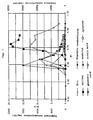
- Fig. 1 shows an ion-exclusion chromatogram by using a cation-exchange resin, "UBK-550" (Step (2a) in Example 3).
- a xylitol enzymatic reaction broth or a xylitol fermentation broth to be treated according to the present invention can be obtained, for example, by culturing a xylitol-producing microorganism, Gluconobacter oxydans ATCC 621, in a culture medium containing D-arabitol to convert the D-arabitol contained in the medium into xylitol (enzymatic reaction).
- D-Arabitol can be, in turn, formed from glucose fermentatively by a known microbiological method as described in, for example, Can. J. Microbiol., 31 (1985), 467-471.
- the D-arabitol thus formed can be used, after being separated from the fermentation broth or in the form of such resulting fermentation broth without separation, as a culture medium for a xylitol-producing microorganism (medium for enzymatic reaction).
- xylitol is finally produced by enzymatic reaction or fermentation with a xylitol-producing microorganism.
- the culture broth of a xylitol-producing microorganism (a xylitol enzymatic reaction broth or a xylitol fermentation broth) thus obtained contains microbial cells and other insoluble components (solid matter), the solid matter is first removed by suitable means such as centrifugation (Step(1)).
- the resulting solid matter-removed culture broth thus obtained contains, as impurities, unreacted starting raw materials (unmetabolized starting raw materials), intermediary sugars and sugar alcohols, by-products such as organic acids, and inorganic salts added as culture medium components.
- impurities unreacted starting raw materials (unmetabolized starting raw materials), intermediary sugars and sugar alcohols, by-products such as organic acids, and inorganic salts added as culture medium components.
- the removal of ionic substances including organic acids is first carried out, i.e., desalting is first conducted.
- concentration of such broth followed by addition of xylitol seed crystals may not result in crystallization of xylitol or, even if it crystallizes out, the yields are remarkably lowered.
- Such ionic substances can be removed from a xylitol solution, e.g., by passing it through a cation-exchange resin such as "SK-1B” manufactured by Mitsubishi Chemical Corporation, and through an anion-exchange resin such as "WA30" manufactured by the same company(Step(2)).
- a cation-exchange resin such as "SK-1B” manufactured by Mitsubishi Chemical Corporation
- an anion-exchange resin such as "WA30" manufactured by the same company(Step(2)).
- the resulting desalted solution contains, though most of the total solid or solid content is xylitol, nonionic impurities such as unreacted starting raw materials or unmetabolized starting raw materials, and intermediary sugars and sugar alcohols in small amounts. Therefore, these impurities are separated by chromatography using a strongly acidic cation-exchange resin (Step(3)).
- a strongly acidic cation-exchange resin for example, "UBK-555” manufactured by Mitsubishi Chemical Corporation can be used, preferably in the Ca-form.
- a xylitol solution to be subjected to such chromatographic separation should have a solid content concentration of 10 to 100 g/dl, preferably 30 to 50 g/dl (when the concentration of a given xylitol solution to be treated is out of the range, the concentration is adjusted so as to get to within the range by dilution or concentration), and is loaded in an amount of 5 to 20%, preferably 5 to 10%, based on the quantity of the resin.
- Such chromatographic separation fraction ates a xylitol solution into a xylitol fraction and a fraction of sugars and other sugar alcohols.
- the fraction of sugars and other sugar alcohols may be, if desired, returned to a step for conversion thereof into xylitol with a microorganism, whereby they are converted into xylitol.
- the chromatographic separation is conducted after the desalting is carried out, in order to prevent the Ca ions of the strongly acidic cation-exchange resin for the chromatography from being eliminated by the action of the ionic impurities, i.e., organic acids and inorganic salts.
- the desired xylitol can be obtained at a high purity by separating it from the xylitol solution fractionated by the chromatographic separation (Step(4)).
- xylitol of high purity by separating it from the above-mentioned xylitol fraction can be effected, e.g., by crystallizing by concentration, this being per se a conventional procedure.
- Such crystallization can be effected by concentrating a xylitol solution until the solid content concentration get to within a range of 35 to 85 g/10 g-water, followed by adding seed crystals and gradual cooling.
- the xylitol can be obtained at high purity by separation by means of subjecting the resulting precipitated xylitol crystals to an appropriate solid-liquid separation such as filtering, centrifuging or the like.
- Such obtaining by separation can be also effected by crystallizing by organic solvent addition, this being per se a conventional procedure.
- a lower alcohol miscible at least with water such as methanol, ethanol, isopropyl alcohol or the like
- the xylitol soluble sparingly in such alcohol crystallizes out therefrom.
- the xylitol can also be obtained at high purity by separation by means of subjecting the resulting precipitated xylitol crystals to an appropriate solid-liquid separation such as filtering, centrifuging or the like, as in the case of the crystallizing by concentration described above.
- the crystallizing by concentration and the crystallizing by organic solvent addition can be carried out in combination.
- the above-mentioned xylitol fraction is first concentrated to some extent, and then added with such organic solvent, whereby the xylitol is crystallized out.
- the desalting step is conducted once or in one step (one-step desalting process).
- Such embodiment may be also conducted with adding a desalting step effected by ion exclusion as a pre-step prior to the above desalting step (two-step desalting process).
- the xylitol solution obtained by removal of the solid matter from a culture broth of a xylitol-producing microorganism still contains such impurities as organic acids and inorganic salts.
- Removal of organic acids is usually effected by means of ion exchange procedures using an ion-exchange resin.
- Such procedures require such amount of the resin that the organic acids can be thoroughly adsorbed, and the organic acids are adsorbed onto the resin for their removal.
- the organic acids adsorbed have to be eluted using plenty of an acid or an alkali, so that a large amount of liquid wastes results, and thus costs for raw materials and treatment of the liquid wastes are generated.
- the resin in as little amounts as possible, and if such organic acids can be removed by easier procedures, it is possible to reduce the amount of the resin to be used, which, in turn, enables to lower the cost for xylitol production and therefore, to obtain commercially xylitol more easily and more inexpensively.
- Step (2a) desalting by means of the ion-exclusion chromatography
- Step(2b) desalting by means of the ion-exclusion chromatography
- electrolytes having the counter ions of the ion-exchange resin are excluded in accordance with the Donnan exclusion and thereby inhibited from entering into the ion-exchange resin.
- nonelectrolytes can enter into the ion-exchange resin without exclusion by the resin.
- ion-exclusion procedure The procedure of recovering a nonelectrolyte-containing fraction is called as ion-exclusion procedure or ion-exclusion chromatography, wherein, that phenomenon being utilized, a solution containing both of electrolytes and nonelectrolytes is charged on a column of an ion-exchange resin, a fraction containing electrolytes excluded by the resin is first eluted, and then a fraction containing nonelectrolytes eluted later from the column is collected.
- Desalting in accordance with the ion-exclusion chromatography employs a strongly acidic cation-exchange resin, for example, "UBK-550" manufactured by Mitsubishi Chemical Corporation, preferably in the Na-form or NH 3 -form.
- a xylitol solution to be subjected to the ion-exclusion chromatography should have a concentration of the total solid or solid content of 10 to 100 g/dl, preferably 25 to 70 g/dl, and is loaded in an amount of 5 to 20%, preferably 5 to 10%, based on the quantity of the resin. Thereby, about 80% of the organic acids, i.e., most ' of the ionic substances can be removed from the xylitol solution.
- the remaining ionic substances are removed according to the desalting of the afore-explained one-step desalting process.
- the xylitol solution after subjected to the desalting in accordance with such ion-exclusion chromatography (Step(2a)) is passed through a cation-exchange resin, e.g., "SK-1B” manufactured by Mitsubishi Chemical Corporation, and an anion-exchange resin, e.g., "WA30", whereby such remaining ionic substances are remove from the xylitol solution (Step(2b)).
- the two-step desalting process is the same as the one-step desalting process except that the desalting step (Step (2)) of the latter process are replaced with the two desalting steps, i.e., a first desalting step by the ion-exclusion procedure (Step (2a)) as has been described above, and a second desalting step by means of a cation-exchange resin and an anion-exchange resin (Step (2b)), and therefore, will not need any further explanation.
- Step(1) Formation of xylitol by culturing a xylitol-producing microorganism, and removal of the solid matter from the culture broth of the xylitol-producing microorganism (Step(1)):
- reaction solution the solution as the base culture medium
- the above microbial cells collected and washed were added thereto in an amount of about 10%(w/v) in terms of wet weight.
- calcium carbonate was further added in an amount of 2%(w/v). Culturing was conducted with shaking at 30°C.
- glucose was added in an amount of 1%(w/v) at the beginning of the culturing, and after 6 hours from the beginning of the culturing, ethanol was added in an amount of 5%(w/v). After 24 hours from the beginning of the culturing, xylitol had been formed in an amount of 4.9 g per one dl of the culture broth (98% yield based on the D-arabitol).
- the culturing was terminated, and the resulting culture broth (xylitol enzymatic reaction broth) was subjected to centrifugation to remove the microbial cells and the other insoluble components (solid matter), followed by filtering with a 0.2 ⁇ m membrane filter.
- the resulting filtrate amounted to 260 ml, which contained xylitol at a concentration of 4.5 g/dl, acetic acid at a concentration of 3.4 g/dl, gluconic acid at a concentration of 1.77 g/dl, and phosphoric acid at a concentration of 0.10 g/dl.
- a portion (200 ml) was taken out of the xylitol solution obtained in the previous step (1).
- the portion was passed first through a column packed with 200 ml of "SK-1BL” (H-form), a cation-exchange resin manufactured by Mitsubishi Chemical Corporation, and then through a column packed with 250 ml of "MARATHON A2MxBD” (OH-form) manufactured by the same company, to desalt it.
- the desalted solution recovered amounted to 510 ml, which contained xylitol at a concentration of 1.43 g/dl, and gluconic acid at a concentration of 0.03 g/dl.
- a xylitol solution containing the components at the following concentrations That is, the xylitol at a concentration of 34.5 g/dl, the D-arabitol at a concentration of 0.5 g/dl, and the D-xylulose at a concentration of 0.7 g/dl.
- a solution containing xylitol at a concentration of 7.5 g/dl and D-arabitol at a concentration of 0.09 g/dl was prepared as in the step (3).
- a 1,720 ml portion was taken out of the solution and added with active carbon to decolorize it.
- the filtrate was concentrated until the xylitol got to 45 g per 10 g of water in concentration.
- the concentrate was added with seed crystals of xylitol, and was gradually cooled from 60°C to 25°C over a period of about 3.5 hours while controlling the temperature. It was then stirred overnight to complete crystallization of the xylitol.
- the crystals were separated, washed with a small amount of water, and dried, to give crystalline xylitol in an amount of 80.1 g in a 99.1% purity.
- the crystals contained 0.9% of moisture, but no other contaminants were confirmed, and therefore they were found to be highly pure crystalline xylitol.
- Example 2 With the exception that the base culture medium at the step (1) in Example 1 was replaced with 1,000 ml of the resulting D-arabitol fermentation broth, similar procedures were carried out as described in the example, whereby highly pure crystalline xylitol was finally obtained in an amount of 15.8 g.
- Step (1) Formation of xylitol by culturing a xylitol-producing microorganism, and removal of the solid matter from the culture broth of the xylitol-producing microorganism (Step (1)):
- Example 1 The same operation was conducted as in the step (1) of Example 1, whereby the insoluble components (solid matter) was removed, and the remainder was then passed through a membrane filter to obtain a filtrate (the one having a similar composition to the filtrate at the step (1) in Example 1).
- the xylitol, the arabitol, and the organic acids were separated to recover an aqueous xylitol solution in an amount of 580 ml and containing 6.9 g/dl of xylitol, 0.08 g/dl of D-arabitol, 0.06 g/dl of citric acid, and 0.64 g/dl of gluconic acid.
- a second-step desalting was carried out, according to a conventional method, using a cation-exchange resin and an anion-exchange resin as described in the step (2) of Example 1.
- a xylitol solution having the same composition as that at the step (3) of Example 1, i.e., a xylitol solution containing 34.5 g/dl of xylitol, 0.5 g/dl of D-arabitol, and 0.7 g/dl of D-xylulose was obtained by repeating the steps (1) to (2b).
- a fermentation broth (1,050 ml) of D-arabitol obtained by a fermentation of D-arabitol similar to that of Example 2 was treated as described in Example 2 to obtain 17.4 g of highly pure crystalline xylitol.
Landscapes
- Chemical & Material Sciences (AREA)
- Organic Chemistry (AREA)
- Life Sciences & Earth Sciences (AREA)
- Engineering & Computer Science (AREA)
- Zoology (AREA)
- Wood Science & Technology (AREA)
- Biochemistry (AREA)
- Microbiology (AREA)
- General Chemical & Material Sciences (AREA)
- Chemical Kinetics & Catalysis (AREA)
- Biotechnology (AREA)
- Health & Medical Sciences (AREA)
- Bioinformatics & Cheminformatics (AREA)
- General Engineering & Computer Science (AREA)
- General Health & Medical Sciences (AREA)
- Genetics & Genomics (AREA)
- Preparation Of Compounds By Using Micro-Organisms (AREA)
Claims (7)
- Procédé pour la production de xylitol très pur, qui comprend les étapes consistant à (1) enlever la matière solide d'un bouillon de culture obtenu en cultivant un microorganisme producteur de xylitol dans un milieu de culture aqueux, (2) dessaler le bouillon de culture débarrassé des madères solides ainsi obtenu, en enlevant les substances ioniques qu'il contient au moyen d'une résine échangeuse de cations et d'une résine échangeuse d'anions, (3) soumettre la solution dessalée ainsi obtenue à une chromatographie en utilisant une résine échangeuse de cations fortement acide pour séparer le xylitol du ou des autres alcools glucidiques et sucres et (4) obtenir le xylitol en le séparant sous une forme très pure de la solution (fraction) de xylitol obtenue.
- Procédé pour la production de xylitol très pur selon la revendication 1, dans lequel ladite résine échangeuse de cations très acide de l'étape (3) est sous forme Ca.
- Procédé pour la production de xylitol très pur selon la revendication 1 ou 2, dans lequel ledit bouillon de culture de l'étape (1) est un bouillon de culture obtenu en fin de culture d'un microorganisme producteur de xylitol, à partir de D-arabitol, de D-xylulose ou de glucose comme matière première.
- Procédé pour la production de xylitol très pur, qui comprend les étapes consistant à (1) enlever la matière solide d'un milieu de culture obtenu en cultivant un microorganisme producteur de xylitol dans un milieu de culture aqueux, (2a) dessaler le milieu de culture débarrassé des matières solides ainsi obtenu, en enlevant la majeure partie des substances ioniques qu'il contient au moyen de la chromatographie d'exclusion d'ions en utilisant une résine échangeuse de cations fortement acide, (2b) dessaler la solution résultant de la chromatographie d'exclusion d'ions (solution partiellement dessalée) en enlevant les substances ioniques résiduelles qu'elle contient au moyen d'une résine échangeuse de cations et d'une résine échangeuse d'anions, (3) soumettre la solution dessalée ainsi obtenue à une chromatographie en utilisant une résine échangeuse de cations fortement acide pour séparer le xylitol du ou des autres alcools glucidiques et sucres et (4) obtenir le xylitol en le séparant sous une forme très pure de la solution (fraction) de xylitol obtenue.
- Procédé pour la production de xylitol très pur selon la revendication 4, dans lequel ladite résine échangeuse de cations très acide de l'étape (3) est sous forme Ca.
- Procédé pour la production de xylitol très pur selon la revendication 4 ou 5, dans lequel ladite résine échangeuse de cations très acide de l'étape (2a) est sous forme Na ou NH3.
- Procédé pour la production de xylitol très pur selon l'une quelconque des revendications 4 à 6, dans lequel ledit bouillon de culture de l'étape (1) est un bouillon de culture obtenu en fin de culture d'un microorganisme producteur de xylitol, à partir du D-arabitol, du D-xylulose ou du glucose comme matière première.
Applications Claiming Priority (4)
| Application Number | Priority Date | Filing Date | Title |
|---|---|---|---|
| JP22671299 | 1999-08-10 | ||
| JP11226713A JP2001046090A (ja) | 1999-08-10 | 1999-08-10 | キシリトールの製造法 |
| JP22671299A JP2001046089A (ja) | 1999-08-10 | 1999-08-10 | キシリトールの製法 |
| JP22671399 | 1999-08-10 |
Publications (3)
| Publication Number | Publication Date |
|---|---|
| EP1075795A2 EP1075795A2 (fr) | 2001-02-14 |
| EP1075795A3 EP1075795A3 (fr) | 2001-05-23 |
| EP1075795B1 true EP1075795B1 (fr) | 2003-04-09 |
Family
ID=26527315
Family Applications (1)
| Application Number | Title | Priority Date | Filing Date |
|---|---|---|---|
| EP00116331A Expired - Lifetime EP1075795B1 (fr) | 1999-08-10 | 2000-07-27 | Procédé de production de xylitol de haute pureté |
Country Status (7)
| Country | Link |
|---|---|
| US (1) | US6538133B1 (fr) |
| EP (1) | EP1075795B1 (fr) |
| KR (1) | KR20010049918A (fr) |
| CN (1) | CN1283700A (fr) |
| BR (1) | BR0003392A (fr) |
| DE (1) | DE60002020T2 (fr) |
| PE (1) | PE20010618A1 (fr) |
Families Citing this family (10)
| Publication number | Priority date | Publication date | Assignee | Title |
|---|---|---|---|---|
| US7812153B2 (en) * | 2004-03-11 | 2010-10-12 | Rayonier Products And Financial Services Company | Process for manufacturing high purity xylose |
| ATE550313T1 (de) * | 2004-03-26 | 2012-04-15 | Purdue Research Foundation | Verfahren zur herstellung von xylitol |
| DE102007034621A1 (de) * | 2007-07-25 | 2009-01-29 | Lanxess Deutschland Gmbh | Polyolreinigung |
| US7449313B2 (en) * | 2007-11-03 | 2008-11-11 | Rush Stephen L | Systems and processes for cellulosic ethanol production |
| AU2013391384A1 (en) * | 2013-05-28 | 2015-12-24 | Dow Global Technologies Llc | Removing impurities from sugar solutions |
| DK2957640T3 (en) * | 2014-06-18 | 2018-06-25 | Roquette Freres | Preparation of xylitol from glucose by a recombinant strain |
| JP6774494B2 (ja) | 2016-02-19 | 2020-10-21 | インターコンチネンタル グレート ブランズ エルエルシー | バイオマス源から複数の有用なストリームを形成するためのプロセス |
| CN110382684A (zh) | 2016-12-21 | 2019-10-25 | 创新生物科学公司 | 产生木糖醇的梅奇酵母种 |
| CN109259051A (zh) * | 2018-09-21 | 2019-01-25 | 安阳市豫鑫木糖醇科技有限公司 | 一种用二氧化碳气体去除木糖醇溶液中胶体的方法 |
| CN113004121B (zh) * | 2021-03-23 | 2022-07-05 | 浙江迪萧科技有限公司 | 一种糖醇的高纯度高收率的提取纯化方法 |
Family Cites Families (9)
| Publication number | Priority date | Publication date | Assignee | Title |
|---|---|---|---|---|
| ZA737731B (en) * | 1972-10-10 | 1974-09-25 | Suomen Sokeri Oy | Aqueous crystallization of xylitol |
| US4008285A (en) * | 1974-04-22 | 1977-02-15 | Melaja Asko J | Process for making xylitol |
| ZA90254B (en) * | 1989-01-17 | 1990-11-28 | Cultor Oy | Method for the production of xylitol |
| FR2652589B1 (fr) * | 1989-10-04 | 1995-02-17 | Roquette Freres | Procede de fabrication de xylitol et de produits riches en xylitol. |
| US5084104A (en) * | 1989-12-05 | 1992-01-28 | Cultor, Ltd. | Method for recovering xylose |
| JP3194160B2 (ja) * | 1992-05-08 | 2001-07-30 | 株式会社林原生物化学研究所 | L−タガトースの製造方法 |
| FI97625C (fi) * | 1995-03-01 | 1997-01-27 | Xyrofin Oy | Menetelmä ksyloosin kiteyttämiseksi vesiliuoksista |
| GB9514538D0 (en) * | 1995-07-15 | 1995-09-13 | Cerestar Holding Bv | Process for the production of xylitol |
| FI962609A7 (fi) * | 1996-06-24 | 1997-12-25 | Xyrofin Oy | Menetelmä ksylitolin valmistamiseksi |
-
2000
- 2000-07-27 EP EP00116331A patent/EP1075795B1/fr not_active Expired - Lifetime
- 2000-07-27 DE DE2000602020 patent/DE60002020T2/de not_active Expired - Fee Related
- 2000-07-28 KR KR1020000043657A patent/KR20010049918A/ko not_active Withdrawn
- 2000-07-31 CN CN00122143A patent/CN1283700A/zh active Pending
- 2000-08-02 US US09/631,351 patent/US6538133B1/en not_active Expired - Fee Related
- 2000-08-04 PE PE2000000784A patent/PE20010618A1/es not_active Application Discontinuation
- 2000-08-08 BR BR0003392A patent/BR0003392A/pt not_active Application Discontinuation
Also Published As
| Publication number | Publication date |
|---|---|
| DE60002020D1 (de) | 2003-05-15 |
| KR20010049918A (ko) | 2001-06-15 |
| CN1283700A (zh) | 2001-02-14 |
| EP1075795A2 (fr) | 2001-02-14 |
| DE60002020T2 (de) | 2004-02-12 |
| EP1075795A3 (fr) | 2001-05-23 |
| US6538133B1 (en) | 2003-03-25 |
| BR0003392A (pt) | 2001-06-05 |
| PE20010618A1 (es) | 2001-05-31 |
Similar Documents
| Publication | Publication Date | Title |
|---|---|---|
| JP2947609B2 (ja) | キシロース含有混合物からのキシリトールの製造方法 | |
| EP0411780B1 (fr) | Procédé en continu pour la récupération de bétaine | |
| US5620877A (en) | Method of fermenting sugars resulting from strong acid hydrolysis | |
| EP0832276B1 (fr) | Procede d'hydrolyse au moyen d'un acide fort | |
| EP2118294B1 (fr) | Procédé de production de xylitol au moyen d'un hydrolysat contenant du xylose et de l'arabinose préparés à partir d'un sous-produit d'une biomasse de fruits tropicaux | |
| EP0393147B1 (fr) | Procede de production d'ethanol, de glycerol et d'acide succinique | |
| US5597714A (en) | Strong acid hydrolysis of cellulosic and hemicellulosic materials | |
| KR0164430B1 (ko) | 크실리톨 및 크실리톨-함유 생성물의 제조방법 | |
| US5782982A (en) | Method of removing silica or silicates from solids resulting from the strong acid hydrolysis of cellulosic and hemicellulosic materials | |
| KR100660270B1 (ko) | 미생물 배양 배지로부터의 에리쓰리톨의 제조 및 회수 공정 | |
| CA1246556A (fr) | Production du sirop de fructose | |
| KR0157304B1 (ko) | 크실로오스의 새로운 제조방법 | |
| CA2801258C (fr) | Procede de fabrication de tagatose | |
| US6538133B1 (en) | Process for producing xylitol of high purity | |
| DE60208562T2 (de) | Verfahren zur herstellung von tagatose | |
| WO1997008332A1 (fr) | Processus de production d'acide citrique et de sels de citrate monovalent | |
| US4758283A (en) | Process for preparing L-rhamnose | |
| US6221634B1 (en) | Method for producing xylitol or D-xylulose in bacteria | |
| EP1026254B1 (fr) | Procede de preparation de xylitol | |
| JP2001046090A (ja) | キシリトールの製造法 | |
| JP2001046089A (ja) | キシリトールの製法 | |
| US4927757A (en) | Production of substantially pure fructose | |
| JP3965223B2 (ja) | エリスリトールの精製方法 | |
| GB2406855A (en) | Production of xylitol from a carbon source other than xylose and xylulose | |
| HU210627B (en) | Process for manufacturing glycerol and betaine |
Legal Events
| Date | Code | Title | Description |
|---|---|---|---|
| PUAI | Public reference made under article 153(3) epc to a published international application that has entered the european phase |
Free format text: ORIGINAL CODE: 0009012 |
|
| AK | Designated contracting states |
Kind code of ref document: A2 Designated state(s): DE FI FR GB |
|
| AX | Request for extension of the european patent |
Free format text: AL;LT;LV;MK;RO;SI |
|
| PUAL | Search report despatched |
Free format text: ORIGINAL CODE: 0009013 |
|
| AK | Designated contracting states |
Kind code of ref document: A3 Designated state(s): AT BE CH CY DE DK ES FI FR GB GR IE IT LI LU MC NL PT SE |
|
| AX | Request for extension of the european patent |
Free format text: AL;LT;LV;MK;RO;SI |
|
| 17P | Request for examination filed |
Effective date: 20010809 |
|
| AKX | Designation fees paid |
Free format text: DE FI FR GB |
|
| GRAG | Despatch of communication of intention to grant |
Free format text: ORIGINAL CODE: EPIDOS AGRA |
|
| 17Q | First examination report despatched |
Effective date: 20020325 |
|
| GRAG | Despatch of communication of intention to grant |
Free format text: ORIGINAL CODE: EPIDOS AGRA |
|
| GRAG | Despatch of communication of intention to grant |
Free format text: ORIGINAL CODE: EPIDOS AGRA |
|
| GRAH | Despatch of communication of intention to grant a patent |
Free format text: ORIGINAL CODE: EPIDOS IGRA |
|
| GRAH | Despatch of communication of intention to grant a patent |
Free format text: ORIGINAL CODE: EPIDOS IGRA |
|
| GRAA | (expected) grant |
Free format text: ORIGINAL CODE: 0009210 |
|
| RIN1 | Information on inventor provided before grant (corrected) |
Inventor name: NAGASHIMA, KAZUTAKA,C/O AMINOSCIENCE LABORATORIES Inventor name: AOKI, YUUICHI,C/O AMINOSCIENCE LABORATORIES Inventor name: ONO, ERIKO,C/O AMINOSCIENCE LABORATORIES |
|
| AK | Designated contracting states |
Designated state(s): DE FI FR GB |
|
| REG | Reference to a national code |
Ref country code: GB Ref legal event code: FG4D |
|
| PGFP | Annual fee paid to national office [announced via postgrant information from national office to epo] |
Ref country code: FR Payment date: 20030711 Year of fee payment: 4 |
|
| PGFP | Annual fee paid to national office [announced via postgrant information from national office to epo] |
Ref country code: DE Payment date: 20030807 Year of fee payment: 4 |
|
| ET | Fr: translation filed | ||
| PLBE | No opposition filed within time limit |
Free format text: ORIGINAL CODE: 0009261 |
|
| STAA | Information on the status of an ep patent application or granted ep patent |
Free format text: STATUS: NO OPPOSITION FILED WITHIN TIME LIMIT |
|
| 26N | No opposition filed |
Effective date: 20040112 |
|
| PG25 | Lapsed in a contracting state [announced via postgrant information from national office to epo] |
Ref country code: GB Free format text: LAPSE BECAUSE OF NON-PAYMENT OF DUE FEES Effective date: 20040727 |
|
| PG25 | Lapsed in a contracting state [announced via postgrant information from national office to epo] |
Ref country code: DE Free format text: LAPSE BECAUSE OF NON-PAYMENT OF DUE FEES Effective date: 20050201 |
|
| GBPC | Gb: european patent ceased through non-payment of renewal fee |
Effective date: 20040727 |
|
| PG25 | Lapsed in a contracting state [announced via postgrant information from national office to epo] |
Ref country code: FR Free format text: LAPSE BECAUSE OF NON-PAYMENT OF DUE FEES Effective date: 20050429 |
|
| REG | Reference to a national code |
Ref country code: FR Ref legal event code: ST |
|
| PGFP | Annual fee paid to national office [announced via postgrant information from national office to epo] |
Ref country code: FI Payment date: 20090716 Year of fee payment: 10 |
|
| PG25 | Lapsed in a contracting state [announced via postgrant information from national office to epo] |
Ref country code: FI Free format text: LAPSE BECAUSE OF NON-PAYMENT OF DUE FEES Effective date: 20100727 |