EP1076239A2 - Beschichtung mit quervernetzten hydrophilen Polymeren - Google Patents
Beschichtung mit quervernetzten hydrophilen Polymeren Download PDFInfo
- Publication number
- EP1076239A2 EP1076239A2 EP00116757A EP00116757A EP1076239A2 EP 1076239 A2 EP1076239 A2 EP 1076239A2 EP 00116757 A EP00116757 A EP 00116757A EP 00116757 A EP00116757 A EP 00116757A EP 1076239 A2 EP1076239 A2 EP 1076239A2
- Authority
- EP
- European Patent Office
- Prior art keywords
- capillaries
- capillary
- cross
- pva
- polymer
- Prior art date
- Legal status (The legal status is an assumption and is not a legal conclusion. Google has not performed a legal analysis and makes no representation as to the accuracy of the status listed.)
- Granted
Links
Images


Classifications
-
- G—PHYSICS
- G01—MEASURING; TESTING
- G01N—INVESTIGATING OR ANALYSING MATERIALS BY DETERMINING THEIR CHEMICAL OR PHYSICAL PROPERTIES
- G01N27/00—Investigating or analysing materials by the use of electric, electrochemical, or magnetic means
- G01N27/26—Investigating or analysing materials by the use of electric, electrochemical, or magnetic means by investigating electrochemical variables; by using electrolysis or electrophoresis
- G01N27/416—Systems
- G01N27/447—Systems using electrophoresis
- G01N27/44704—Details; Accessories
- G01N27/44752—Controlling the zeta potential, e.g. by wall coatings
Definitions
- the invention relates to a method for permanent coating the inner surface of columns, capillaries and microchannel systems hydroxylic polymers.
- the inner coating is done by treatment the surface to be covered with the solution of a cross-linking Reagent and the solution of the polymer, resulting in immobilization of the Polymer leads to the capillary surface.
- the procedure described is particularly suitable for coating fused silica (FS) capillaries and Systems with microfluidic structures for capillary electrophoresis with a highly hydrophilic polymer like polyvinyl alcohol.
- FS fused silica
- Another item the columns and capillaries thus produced, and their application in capillary electrophoresis and related techniques.
- a suitable inner coating of capillaries for the CE should follow Properties include: i) a constant EOF over a wide range pH range, ii) long-term stability against different electrolytes, iii) the adsorptivity of the coating to a variety of analytes should be as small as possible.
- FS capillaries can be easily removed with cationic polymers such as Polybren® or polyvinylamine [M. Chiari, L. Ceriotti, G. Crini, and M. Morcellet; J. Chromatogr. A 836 (1999) 81] because they are strongly adsorbed on the oppositely charged FS surfaces. Because of the reversed anodic EOF, these capillaries are particularly suitable for the accelerated analysis of very mobile anions.
- cationic polymers such as Polybren® or polyvinylamine [M. Chiari, L. Ceriotti, G. Crini, and M. Morcellet; J. Chromatogr. A 836 (1999) 81] because they are strongly adsorbed on the oppositely charged FS surfaces. Because of the reversed anodic EOF, these capillaries are particularly suitable for the accelerated analysis of very mobile anions.
- hydrophilic non-ionic inner capillary coatings such as polyacrylamide or polyethylene glycol coatings has been shown to be particularly suitable as these coatings significantly reduce both the EOF and the adsorption of basic compounds and especially of proteins on the capillary wall suppress.
- Various methods have been developed to hydrophilic molecules, mostly after previous silanization, chemically to bind to the FS capillary surface (S. Hjerten; J. Chromatogr. 347 (1985) 191; G.M. Bruin, J.P. Chang; R.H. Kuhlmann, K. Zegers, J.C. Kraak and H. Poppe; J. Chromatogr. 471 (1989) 429; K.A. Cobb, V. Dolnik and M. Novotny; Anal. Chem. 62 (1990) 2478; A. Malik, Z. Zhao and M.L. Lee; J. Microcol. Sep 5, (1993) 119).
- the aim of the invention was a fast and reliable method for covering capillaries with hydroxylic polymers, preferably with polyvinyl alcohol, and their use in electromigrative separation processes.
- This objective of permanent polymer coating of a capillary, preferably with polyvinyl alcohol, is achieved by the dissolved polymer chemically cross-linked during the coating process and on the capillary wall is immobilized.
- This is a solved bi- or multifunctional Reagent, preferably a dialdehyde, e.g. Glutaraldehyde, in the Capillary transferred.
- grafting the polymer solution is preferred a polyhydroxy compound, e.g. Polyvinyl alcohol, e.g. B. with the help of a gas under pressure, such as nitrogen or others laboratory gases, e.g. B. helium, argon, hydrogen, or with the help of a Mercury plug pushed through the capillary.
- the between the Polymer solution and the reaction occurring in the crosslinker enables one good wetting of the capillary wall with the polymer solution and immobilized at the same time the resulting polymer layer on the capillary wall.
- the so Very stable polymer coatings are produced immediately after drying usable by further flushing with gas and show the following properties in capillary electrophoresis: suppressed EOF both in acid and as well in the alkaline pH range, very high separation efficiencies for adsorptive analytes such as basic proteins, long-term stability when used aqueous and non-aqueous electrolytes, resistance to strongly acidic and alkaline rinsing solutions, such as dilute HCL or NaOH solutions.
- the coating process takes a few minutes to dry the capillaries takes place in a stream of nitrogen for several hours.
- the drying time can be significantly shortened by increasing the temperature, so that the Capillaries can be available in less than an hour.
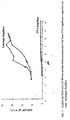
- Fig. 1 shows the separation efficiencies of basic proteins that can be achieved in CE separations for different capillaries produced in succession. If glutaraldehyde is used as a crosslinker, very high separation efficiencies (N> 400,000) for the strongly basic protein cytochrome C can be obtained in over 80% of the capillaries produced. However, if the coating is carried out without the crosslinking agent, separation efficiencies N greater than 400,000 are obtained only in 20% of the capillaries produced. In 30% percent of the capillaries produced in this way (No. 1, 5, 12, 15), no signal can be obtained for the strongly adsorptive protein; it was irreversibly adsorbed as on unoccupied capillaries.
- a PVA solution 450 ⁇ L solution of a 5% aqueous PVA solution with 50 ul of a 1: 1 with H 2 O diluted HCl mixed
- PVA MW about 90 000 99 +% hydrolyzed, Aldrich
- Both drops of liquid were then transported further through the column at 0.5 MPa. After 1-2 minutes they had left the column and the resulting layer was predried for 10 minutes in a stream of nitrogen.
- the capillary was then installed in a heatable oven (gas chromatograph) for accelerated drying and connected to the injector.
- a mixture of the following proteins was analyzed several times in a capillary of the effective length: 40.5 cm, the total length 54 cm and an inner diameter of 50 ⁇ m, produced by the process described above: cytochrome C, lysozyme trypsinogen and a -chymotripsinogen.
- the separation was carried out in an aqueous phosphate buffer with a concentration of 40 mmol L -1 at pH 3 and a voltage of 20 kV.
- Fig. 2 the first and the 91st separation obtained are plotted on top of each other. It can be seen that very good, reproducible separations are obtained with these capillaries.
- capillaries Two capillaries were covered with PVA analogously to Example 1, but without subsequent thermal treatment. There were 2 freshly coated capillaries dried for different lengths in a stream of nitrogen and the obtained Then capillaries for use in capillary electrophoresis analogous to Example 1 tested.
- the test mixture consisted of basic proteins: (1) Cytochrome C, (2) lysozyme, (3) trypsin, (4) trypsinogen and (5) a - Chymotripsinogen.
- the electropherograms obtained and the comparison with a separation that is obtained in an unused capillary Fig. 3 shown.
- PVA capillaries can also be operated with electrolytes that are very contain high proportions of organic solvents, this is especially for Coupling of the CE with a mass spectrometer (MS) necessary.
- MS mass spectrometer
- Analyte concentration 1 mg / ml, voltage: 15 kV, detection: UV 200 nm, electrolytes: A, B: 40 mML -1 Na phosphate, C: 45% methanol, 10% water, 45% acetonitrile, 20 mmol L -1 Ammonium acetate.
- the dependency was determined using a capillary produced analogously to Example 1 the electroosmotic flow from the pH of an aqueous electrolyte certainly.
- Na phosphate buffers were applied to the corresponding pH values titrated; the electroosmotic flow came from the migration period of the neutral marker DMSO.
- the ones obtained for a PVA capillary Results are in Fig. 5 with the corresponding results for compared an unused capillary.
- the EOF is suppressed over a wide pH range and, in contrast to unused capillaries, is almost independent of the pH.
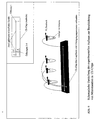
- the chip was included in a holder Seals placed and all 4 openings, each with an allocation device connected gastight via capillaries. This is shown schematically in Figure 6 shown. With the help of the occupancy equipment liquids can and gases through the microfluidic structures of the chip by means of pressure be moved.
- the channels in the chip were first completely filled with water.
- a glutaraldehyde solution 200 .mu.L of a 50% aqueous solution mixed with 300 .mu.l of a 1:10 dilute conc. HCl
- 0.5 MPa nitrogen was then passed through a fused silica capillary (inside diameter 50 .mu.m, length 30 cm) into the opening 1 of the microchip was pressed while the capillaries at openings 2, 3 and 4 were depressurized (see Figure 6).
- a PVA solution (450 ⁇ L strength of a 3% aqueous PVA solution with 50 ul of a 1: 1 mixed with H 2 O diluted HCl) (PVA: MW about 90 000 99 + hydrolysed%, Aldrich) with 0.5 MPa for 10 seconds by means of the capillary in opening 1 of the chip. Both drops of liquid were then transported further through the channels of the chip at 0.5 MPa. After 1-2 minutes they had left the chip's microfluidic channels via openings 2, 3 and 4. Then openings 2, 3 and 4 were pressurized with 0.5 MPa nitrogen pressure while relaxing at opening 1 in order to purge the channels with gas. The resulting layer on the surfaces of the channels was predried in a stream of nitrogen for 15 minutes.
- the chip was installed together with the holder and the capillaries in a heatable oven (gas chromatograph) for accelerated drying and the capillary was connected to the injector at opening 1. While purging the channels in a nitrogen stream (0.15-0.20 MPa), the furnace was heated from 40 ° C to 80 ° C at 6 ° C / min. heated up. After cooling and removing the chip, it was ready for use.
- CE chips with microchannels coated in this way were distinguished by a suppressed electroosmotic flow in both of the crossed channels.
- Example 5 After 1-2 minutes he had left the main channel of the chip through the capillary at opening 3. Then the openings 2, 3, 4 were pressurized with 0.5 MPa nitrogen pressure while relaxing at opening 1 in order to purge the channels with gas. The resulting layer on the surfaces were then dried as in Example 5.
Landscapes
- Health & Medical Sciences (AREA)
- Life Sciences & Earth Sciences (AREA)
- Molecular Biology (AREA)
- Chemical & Material Sciences (AREA)
- Biochemistry (AREA)
- Immunology (AREA)
- Physics & Mathematics (AREA)
- Analytical Chemistry (AREA)
- Chemical Kinetics & Catalysis (AREA)
- General Health & Medical Sciences (AREA)
- General Physics & Mathematics (AREA)
- Electrochemistry (AREA)
- Pathology (AREA)
- Application Of Or Painting With Fluid Materials (AREA)
- Apparatus Associated With Microorganisms And Enzymes (AREA)
- Solid-Sorbent Or Filter-Aiding Compositions (AREA)
- Processes Of Treating Macromolecular Substances (AREA)
- Materials For Medical Uses (AREA)
- Treatment Of Liquids With Adsorbents In General (AREA)
Abstract
Description
- Aufgrund der aziden Silanolgruppen des FS-materials ist ein vom pH-Wert des Elektrolyten abhängiger elektroosmotischer Fluß (EOF) in Richtung zur Kathode wirksam. Der Betrag des EOF kann in unbelegten FS-Kapillaren jedoch stark schwanken und verschlechtert dadurch maßgeblich die Präzision und Reproduzierbarkeit von Analysen in der Kapillarelektrophorese.
- Die FS-Oberflächen verhalten sich sehr adsorptiv gegenüber vielen Verbindungen. Insbesondere basische Verbindungen und große Biopolymere, wie Proteine werden aus wäßrigen Lösungen stark adsorbiert. Dies verschlechtert die Qualität und Auflösung einer kapillarelektrophoretische Trennung solcher Verbindungen erheblich bzw. kann diese sogar unmöglich werden lassen.
- Zur Manipulation des elektroosmotischen Flusses: Durch Beschichtung der Oberfläche kann sowohl der Betrag, als auch die Richtung des EOF verändert werden. Dadurch kann eine CE-Trennung bezüglich Auflösung und Analysenzeit optimiert werden. Die Konstanz des EOF ist in beschichteten Kapillaren zumeist größer als in unbehandelten FS-Kapillaren mit der Folge verbesserter Reproduzierbarkeit und Wiederholbarkeit von CE-Analysen.
- Zur Unterdrückung der Wechselwirkungen zwischen Analyt und Wand werden Beschichtungen eingesetzt, die gegenüber den zu untersuchenden Verbindungen eine geringe Adsorptivität aufweisen. Dadurch werden höhere Trenneffizienzen adsorptiver Verbindungen, wie z.B. Proteine, und damit eine bessere Auflösung in kapillarelektrophoretischen Trennungen erreicht.
Wird die Beschichtung jedoch ohne den Vernetzer durchgeführt, werden nur in 20 % der hergestellten Kapillaren Trenneffizienzen N größer 400.000 erhalten. Bei 30% Prozent der so hergestellten Kapillaren (Nr. 1, 5, 12, 15) kann für das stark adsorptive Protein kein Signal erhalten werden, es wurde wie an unbelegten Kapillaren irreversibel adsorbiert.
Unser Verfahren zur Herstellung polymerbeschichteter Kapillaren zeichnet sich durch folgende Eigenschaften aus:
- Da das Verfahren auf chemischer Vernetzung des Polymers beruht,
eine chemische Bindung des Polymers an die Kapillarwand nicht erforderlich
ist, kann es auf unterschiedlichste Kapillarmaterialien angewandt
werden, wie z. B. Glas, fused silica", unterschiedliche Kunststoffe, wie Teflon, PEEK, Polyacrylate, und ist auch für unterschiedlich strukturierte Kanäle, wie z. B. klassische runde Kapillaren, (recht)-eckige Kanäle/Kapillaren und Mikrokanäle in mikrofluidischen Systemen (wie z.B. in CE-Chips) anwendbar.

- Das Verfahren ist einfach durchzuführen.
- Das Verfahren ist sehr schnell.
- Die erhaltenen Kapillaren lassen sich wiederholbar mit sehr hoher Qualität herstellen (geringer Ausschuß).
- Sie sind wiederholt für Trennungen einsetzbar.
- Sie erlauben CE-Trennungen stark adsorptiver Verbindungen wie Proteine sowohl in sauren, als auch neutralen und alkalischen Elektrolyten.
- Der Elektroosmotische Fluß ist über einen weiten pH-Bereich, mindestens von pH 2 bis pH 10, stark reduziert und von hoher Konstanz.
- Die chemisch immobilisierten PVA-Beschichtungen erweisen sich als stabil unter den Bedingungen der CE.
- Die Kapillaren sind insbesondere für folgende Anwendungen geeignet: CE-Trennungen basischer und azider Verbindungen, Kapillargelelektrophorese, isoelektrische Fokussierung, CE-Trennungen mit sehr geringen Ionenstärken des Elektrolyten und CE-Trennungen mit organischen Lösungsmitteln als Elektrolyte, wie zur Kopplung von Kapillarelektrophorese mit der Massenspektrometrie.
- Die erfindungsgemäß hergestellten Kapillaren und mikrofluidischen Systeme können u. a. zur Dosierung von zu analysierenden Proben z. B. in der Massenspektrometrie und für mikrosynthetische Verfahren in der Chemie eingesetzt werden.
Zur alleinigen Belegung des Hauptkanals (Kanal zwischen Öffnung 1 und 3, siehe Abb. 6) in dem die elektrophoretische Trennung stattfindet, während der kürzere Kanal für die Probenaufgabe unbelegt bleibt (Kanal zwischen Öffnung 2 und 4, siehe Abb. 6), wurde der Chip analog zu Beispiel 5 mit 4 Belegungsapparaturen verbunden und die Kanäle wurden vollständig mit Wasser gefüllt. Danach wurde eine Glutaraldehydlösung (200 µL einer 50%igen wäßrigen Lösung mit 300 µl einer 1:10 verdünnten konz. HCl gemischt) mit 0,5 MPa Stickstoff über eine fused silica Kapillare (Innendurchmesser 50 µm, Länge 30 cm), in die Öffnung 1 des Mikrochips gedrückt, während über die Kapillaren an Öffnung 2 und 4 Wasser mit einem Druck von 0,1 MPa zugeführt wurde, (siehe Abbildung 6). Nachdem die Glutaraldehydlösung an der Kapillare an Öffnung 3 austrat, wurde eine PVA-Lösung analog zu Beispiel 5, mit 0,5 MPa für 10 Sekunden über die Kapillare in Öffnung 1 des Chips gedrückt, während über Öffnung 2 und 4 wiederum mit Wasser gespült wurde. Der PVA-Flüssigkeitspfropfen wurde anschließend mit 0,5 MPa im Stickstoffstrom weiter durch den Hauptkanal des Chips transportiert. Nach 1-2 Minuten hatte er den Hauptkanal des Chips über die Kapillare an Öffnung 3 verlassen. Danach wurden die Öffnungen 2, 3, 4 mit 0,5 MPa Stickstoffdruck beaufschlagt während an Öffnung 1 entspannt wurde um die Kanäle mit Gas zu spülen. Die entstandene Schicht an den Oberflächen wurden danach wie in Beispiel 5 getrocknet.
Claims (17)
- Verfahren zur Belegung der inneren Oberfläche von Kapillaren oder Röhren mit einer hydrophilen Polymerschicht, dadurch gekennzeichnet, daß ein gelöstes hydroxylisches Polymer durch chemische Vernetzung mit einem quervernetzenden Reagenz an der Kapillarwand immobilisiert wird.
- Verfahren nach Anspruch 1, wobei die eine Kapillare teilweise oder vollständig füllende Lösung des quervernetzenden Reagenzes mit einem Pfropfen des gelösten Polymers aus der Kapillare verdrängt wird.
- Verfahren nach Anspruch 2, wobei Reagenzlösung und Polymerlösung mittels Überdruck durch ein inertes Gas aus der Kapillare verdrängt werden.
- Verfahren nach Anspruch 1-3, wobei die entstandene hydrophile Polymerschicht im Gasstrom getrocknet wird.
- Verfahren nach Anspruch 4, wobei die Kapillare zum beschleunigten Trocknen im Gasstrom erhitzt wird.
- Verfahren nach Anspruch 3-5, wobei als Gas Stickstoff, Helium, Argon oder Wasserstoff eingesetzt wird.
- Verfahren nach Anspruch 1-6 wobei als quervernetzendes Reagenz eine Verbindung mit ein oder mehreren Carbonylgruppen in Form von Ketonen oder Aldehyden eingesetzt werden.
- Verfahren nach Anspruch 7, wobei als quervernetzendes Reagenz ein Dialdehyd eingesetzt wird.
- Verfahren nach Anspruch 8, wobei als Dialdehyd Glutaraldehyd eingesetzt wird.
- Verfahren nach Ansprüchen 1-9, wobei als Polymer eine Polyhydroxyverbindung eingesetzt wird.
- Verfahren nach Anspruch 10, wobei als Polyhydroxyverbindung Polyvinylalkohol eingesetzt wird.
- Verfahren nach Ansprüchen 1-11, wobei die Kapillaren oder Röhren Bestandteile mikrofluidischer Strukturen sind.
- Kapillaren, deren innere Oberflächen nach einem Verfahren der Ansprüche 1-12 mit einer hydrophilen Polymerschicht belegt sind.
- Kapillaren nach Anspruch 13, die mit Polyvinylalkohol beschichtet sind.
- Systeme mit mikrofluidischen Strukturen, dadurch gekennzeichnet, daß einzelne oder alle darin enthaltenen Mikrokanäle oder Kapillaren gemäß einem Verfahren nach Anspruch 1-12 mit einer hydrophilen Polymerschicht belegt sind.
- Anwendung der Kapillaren oder Systeme gemäß Ansprüchen 13 bis 15 in elektromigrativen Trennverfahren und anderen Techniken unter Verwendung mikrofluidischer Systeme.
- Anwendung der Kapillaren oder Systeme gemäß Ansprüchen 13-15 zur Dosierung flüssiger Proben z.B. für die chemische Analyse oder für mikrosynthetische Verfahren in der Chemie.
Applications Claiming Priority (2)
| Application Number | Priority Date | Filing Date | Title |
|---|---|---|---|
| DE19938002 | 1999-08-11 | ||
| DE19938002A DE19938002A1 (de) | 1999-08-11 | 1999-08-11 | Beschichtung mit quervernetzten hydrophilen Polymeren |
Publications (3)
| Publication Number | Publication Date |
|---|---|
| EP1076239A2 true EP1076239A2 (de) | 2001-02-14 |
| EP1076239A3 EP1076239A3 (de) | 2001-05-30 |
| EP1076239B1 EP1076239B1 (de) | 2003-09-24 |
Family
ID=7918021
Family Applications (1)
| Application Number | Title | Priority Date | Filing Date |
|---|---|---|---|
| EP00116757A Expired - Lifetime EP1076239B1 (de) | 1999-08-11 | 2000-08-03 | Verfahren zur Beschichtung von Kapillaren mit quervernetzten hydrophilen Polymeren |
Country Status (6)
| Country | Link |
|---|---|
| US (1) | US6596238B1 (de) |
| EP (1) | EP1076239B1 (de) |
| JP (1) | JP2001124737A (de) |
| AT (1) | ATE250762T1 (de) |
| CA (1) | CA2315479A1 (de) |
| DE (2) | DE19938002A1 (de) |
Cited By (3)
| Publication number | Priority date | Publication date | Assignee | Title |
|---|---|---|---|---|
| WO2001047637A1 (en) * | 1999-12-23 | 2001-07-05 | Gyros Ab | Microfluidic surfaces |
| WO2005075079A1 (de) * | 2004-02-04 | 2005-08-18 | Studiengesellschaft Kohle Mbh | Mikrofluidische chips mit immanenten hydrophilen oberflächen |
| EP1548429A4 (de) * | 2002-09-05 | 2009-06-17 | Katayanagi Inst | Verfahren zum trennen von substanzen |
Families Citing this family (26)
| Publication number | Priority date | Publication date | Assignee | Title |
|---|---|---|---|---|
| US6911132B2 (en) | 2002-09-24 | 2005-06-28 | Duke University | Apparatus for manipulating droplets by electrowetting-based techniques |
| US7329545B2 (en) | 2002-09-24 | 2008-02-12 | Duke University | Methods for sampling a liquid flow |
| JP4521754B2 (ja) * | 2004-03-31 | 2010-08-11 | 富山県 | キャピラリーチューブ及びその製造方法 |
| DK1859330T3 (da) * | 2005-01-28 | 2012-10-15 | Univ Duke | Apparater og fremgangsmåder til håndtering af små dråber på et trykt kredsløbskort |
| CN101237934B (zh) * | 2005-05-21 | 2012-12-19 | 先进液体逻辑公司 | 用亲水性聚合物助剂减弱生物分子的吸附 |
| WO2006135782A2 (en) | 2005-06-10 | 2006-12-21 | Applera Corporation | Method and system for multiplex genetic analysis |
| US8637317B2 (en) * | 2006-04-18 | 2014-01-28 | Advanced Liquid Logic, Inc. | Method of washing beads |
| US8613889B2 (en) * | 2006-04-13 | 2013-12-24 | Advanced Liquid Logic, Inc. | Droplet-based washing |
| US9476856B2 (en) | 2006-04-13 | 2016-10-25 | Advanced Liquid Logic, Inc. | Droplet-based affinity assays |
| US20140193807A1 (en) | 2006-04-18 | 2014-07-10 | Advanced Liquid Logic, Inc. | Bead manipulation techniques |
| US8492168B2 (en) * | 2006-04-18 | 2013-07-23 | Advanced Liquid Logic Inc. | Droplet-based affinity assays |
| US10078078B2 (en) | 2006-04-18 | 2018-09-18 | Advanced Liquid Logic, Inc. | Bead incubation and washing on a droplet actuator |
| US8980198B2 (en) | 2006-04-18 | 2015-03-17 | Advanced Liquid Logic, Inc. | Filler fluids for droplet operations |
| US8658111B2 (en) | 2006-04-18 | 2014-02-25 | Advanced Liquid Logic, Inc. | Droplet actuators, modified fluids and methods |
| WO2007123908A2 (en) * | 2006-04-18 | 2007-11-01 | Advanced Liquid Logic, Inc. | Droplet-based multiwell operations |
| US8716015B2 (en) | 2006-04-18 | 2014-05-06 | Advanced Liquid Logic, Inc. | Manipulation of cells on a droplet actuator |
| US8637324B2 (en) | 2006-04-18 | 2014-01-28 | Advanced Liquid Logic, Inc. | Bead incubation and washing on a droplet actuator |
| US7901947B2 (en) | 2006-04-18 | 2011-03-08 | Advanced Liquid Logic, Inc. | Droplet-based particle sorting |
| US8809068B2 (en) | 2006-04-18 | 2014-08-19 | Advanced Liquid Logic, Inc. | Manipulation of beads in droplets and methods for manipulating droplets |
| US7439014B2 (en) | 2006-04-18 | 2008-10-21 | Advanced Liquid Logic, Inc. | Droplet-based surface modification and washing |
| US8389297B2 (en) * | 2006-04-18 | 2013-03-05 | Duke University | Droplet-based affinity assay device and system |
| EP2102647B1 (de) * | 2007-01-12 | 2016-05-25 | Board of Regents, The University of Texas System | Kapillar mit einem porösen spitzenteil zur kopplung von low-flow-trennungsverfahren |
| ES2423930T3 (es) | 2007-02-09 | 2013-09-25 | Advanced Liquid Logic, Inc. | Dispositivos actuadores de gotitas y métodos que emplean perlas magnéticas |
| US8268246B2 (en) | 2007-08-09 | 2012-09-18 | Advanced Liquid Logic Inc | PCB droplet actuator fabrication |
| EP2328681B1 (de) | 2008-07-15 | 2014-11-26 | L3 Technology Limited | Assay-testkarte |
| US9513253B2 (en) | 2011-07-11 | 2016-12-06 | Advanced Liquid Logic, Inc. | Droplet actuators and techniques for droplet-based enzymatic assays |
Family Cites Families (10)
| Publication number | Priority date | Publication date | Assignee | Title |
|---|---|---|---|---|
| CA1254337A (en) * | 1984-06-25 | 1989-05-16 | Burton B. Sandiford | Gel and process for retarding fluid flow |
| US4680201A (en) * | 1985-10-30 | 1987-07-14 | Stellan Hjerten | Coating for electrophoresis tube |
| US4865707A (en) * | 1986-10-21 | 1989-09-12 | Northeastern University | Capillary gel electrophoresis columns |
| US5221447A (en) * | 1991-12-06 | 1993-06-22 | Bio-Rad Laboratories, Inc. | Hydrophilic polymer coating of high pH stability for silica surfaces for suppression of electroendomosis and solute adsorption |
| DE4230403A1 (de) * | 1992-09-11 | 1994-03-17 | Studiengesellschaft Kohle Mbh | Desaktivierung der inneren Oberfläche von Kapillaren |
| US5322608A (en) * | 1992-12-23 | 1994-06-21 | Northeastern University | Siloxandediol coating for capillary electrophoresis and for general surface modification |
| US5605613A (en) * | 1994-01-25 | 1997-02-25 | Beckman Instruments, Inc. | Polyvinylalcohol coated capillary electrophoresis columns |
| WO1996023220A1 (en) * | 1995-01-27 | 1996-08-01 | Northeastern University | Polyvinyl alcohol (pva) based covalently bonded stable hydrophilic coating for capillary electrophoresis |
| US5792331A (en) * | 1996-12-19 | 1998-08-11 | Dionex Corporation | Preformed polymer coating process and product |
| KR100217311B1 (ko) * | 1997-10-20 | 1999-09-01 | 이서봉 | 소수성 지지막 위에 박막의 친수성 도포층을 갖는 복합막의제조방법 |
-
1999
- 1999-08-11 DE DE19938002A patent/DE19938002A1/de not_active Withdrawn
-
2000
- 2000-08-03 AT AT00116757T patent/ATE250762T1/de not_active IP Right Cessation
- 2000-08-03 DE DE50003808T patent/DE50003808D1/de not_active Expired - Lifetime
- 2000-08-03 EP EP00116757A patent/EP1076239B1/de not_active Expired - Lifetime
- 2000-08-09 US US09/634,770 patent/US6596238B1/en not_active Expired - Lifetime
- 2000-08-10 CA CA002315479A patent/CA2315479A1/en not_active Abandoned
- 2000-08-11 JP JP2000244379A patent/JP2001124737A/ja active Pending
Cited By (4)
| Publication number | Priority date | Publication date | Assignee | Title |
|---|---|---|---|---|
| WO2001047637A1 (en) * | 1999-12-23 | 2001-07-05 | Gyros Ab | Microfluidic surfaces |
| US7955575B2 (en) | 1999-12-23 | 2011-06-07 | Gyros Patent Ab | Microfluidic surfaces |
| EP1548429A4 (de) * | 2002-09-05 | 2009-06-17 | Katayanagi Inst | Verfahren zum trennen von substanzen |
| WO2005075079A1 (de) * | 2004-02-04 | 2005-08-18 | Studiengesellschaft Kohle Mbh | Mikrofluidische chips mit immanenten hydrophilen oberflächen |
Also Published As
| Publication number | Publication date |
|---|---|
| DE50003808D1 (de) | 2003-10-30 |
| ATE250762T1 (de) | 2003-10-15 |
| US6596238B1 (en) | 2003-07-22 |
| DE19938002A1 (de) | 2001-02-15 |
| JP2001124737A (ja) | 2001-05-11 |
| EP1076239A3 (de) | 2001-05-30 |
| EP1076239B1 (de) | 2003-09-24 |
| CA2315479A1 (en) | 2001-02-11 |
Similar Documents
| Publication | Publication Date | Title |
|---|---|---|
| EP1076239B1 (de) | Verfahren zur Beschichtung von Kapillaren mit quervernetzten hydrophilen Polymeren | |
| DE69520042T2 (de) | Porösesverbundmembran und verfahren | |
| EP2235514B1 (de) | Gassensor mit mikroporöser elektrolytschicht | |
| Shen et al. | High‐resolution capillary isoelectric focusing of proteins using highly hydrophilic‐substituted cellulose‐coated capillaries | |
| DE69633962T2 (de) | Verfahren zum Bilden einer kovalent gebundenen hydrophilen Schicht auf Basis von Polyvinyl-Alkohol für die Kapillarelektrophorese | |
| DE69012912T2 (de) | Membran mit einer hydrophilen Oberfläche. | |
| EP2252410B1 (de) | Oberflächenmodifikation | |
| DE69508852T2 (de) | Beschichtete kapillarsäulen und elektroforetische trennungsmethoden zu deren gebrauch | |
| DE69124897T2 (de) | Vorrichtung zur Gewinnung von durch Kapillarelektrophorese getrennten Proben auf einer Membran | |
| DE19645070A1 (de) | Integriertes planares Flüssigkeitshandhabungssystem für eine Matrix-unterstützte Laser-Desorptions-/Ionisations-Laufzeit-Massenspektroskopie | |
| EP0787290A1 (de) | Analytselektiver sensor | |
| DE69409626T2 (de) | Kapillar aus Kunststoff für Kapillarelektroforese und Verfahren zu dessen Herstellung | |
| EP3729067B1 (de) | Referenzelektrode zur potentiometrischen messung von ionenkonzentrationen | |
| DE19959264A1 (de) | Templat-geprägte Kompositmaterialien mit hoher Bindungsspezifität und Selektivität, Verfahren zu ihrer Herstellung und ihre Verwendung | |
| EP2453229B1 (de) | Sauerstoffsensor mit mikroporöser Elektrolytschicht und teiloffener Deckmembran | |
| Harnisch et al. | Electrochemically modulated liquid chromatography: an electrochemical strategy for manipulating chromatographic retention | |
| DE10322701B4 (de) | Probenträger unter Verwendung eines porösen, Metalloxidpartikel umfassenden Films, Verfahren zur Herstellung eines Probenträgers, Verwendung des Probenträgers sowie Verfahren zum selektiven Nachweis von phosphorylierten/sulfatierten Biopolymeren, insbesondere Peptiden/Proteinen | |
| DE69312407T2 (de) | Desaktivierung der inneren Oberflächen von Kapillaren | |
| CN107014888A (zh) | 利用分子印迹膜电喷雾电离质谱分析待测样本中痕量物质的方法 | |
| EP0546032A1 (de) | Immobilisierung von organischen makromolekülen oder biopolymeren in einer polymermembran. | |
| EP3752552B1 (de) | Behältnis zur verwahrung einer körperflüssigkeit | |
| Wang et al. | Monoliths with immobilized zirconium ions for selective enrichment of phosphopeptides | |
| EP1807699B1 (de) | Strukturierte copolymere träger für die spektrometrie oder spektroskopie | |
| AT397661B (de) | Äussere membranschicht einer enzymelektrode | |
| US9481778B2 (en) | Initiator-tightened compositions |
Legal Events
| Date | Code | Title | Description |
|---|---|---|---|
| PUAI | Public reference made under article 153(3) epc to a published international application that has entered the european phase |
Free format text: ORIGINAL CODE: 0009012 |
|
| AK | Designated contracting states |
Kind code of ref document: A2 Designated state(s): AT BE CH CY DE DK ES FI FR GB GR IE IT LI LU MC NL PT SE |
|
| AX | Request for extension of the european patent |
Free format text: AL;LT;LV;MK;RO;SI |
|
| PUAL | Search report despatched |
Free format text: ORIGINAL CODE: 0009013 |
|
| 17P | Request for examination filed |
Effective date: 20010303 |
|
| AK | Designated contracting states |
Kind code of ref document: A3 Designated state(s): AT BE CH CY DE DK ES FI FR GB GR IE IT LI LU MC NL PT SE |
|
| AX | Request for extension of the european patent |
Free format text: AL;LT;LV;MK;RO;SI |
|
| 17Q | First examination report despatched |
Effective date: 20011121 |
|
| AKX | Designation fees paid |
Free format text: AT BE CH CY DE DK ES FI FR GB GR IE IT LI LU MC NL PT SE |
|
| GRAH | Despatch of communication of intention to grant a patent |
Free format text: ORIGINAL CODE: EPIDOS IGRA |
|
| RTI1 | Title (correction) |
Free format text: PROCESS FOR THE COATING OF CAPILLARIES WITH CROSS-LINKED HYDROPHILIC POLYMERS |
|
| GRAS | Grant fee paid |
Free format text: ORIGINAL CODE: EPIDOSNIGR3 |
|
| GRAA | (expected) grant |
Free format text: ORIGINAL CODE: 0009210 |
|
| AK | Designated contracting states |
Kind code of ref document: B1 Designated state(s): AT BE CH CY DE DK ES FI FR GB GR IE IT LI LU MC NL PT SE |
|
| PG25 | Lapsed in a contracting state [announced via postgrant information from national office to epo] |
Ref country code: IT Free format text: LAPSE BECAUSE OF FAILURE TO SUBMIT A TRANSLATION OF THE DESCRIPTION OR TO PAY THE FEE WITHIN THE PRESCRIBED TIME-LIMIT;WARNING: LAPSES OF ITALIAN PATENTS WITH EFFECTIVE DATE BEFORE 2007 MAY HAVE OCCURRED AT ANY TIME BEFORE 2007. THE CORRECT EFFECTIVE DATE MAY BE DIFFERENT FROM THE ONE RECORDED. Effective date: 20030924 Ref country code: FI Free format text: LAPSE BECAUSE OF FAILURE TO SUBMIT A TRANSLATION OF THE DESCRIPTION OR TO PAY THE FEE WITHIN THE PRESCRIBED TIME-LIMIT Effective date: 20030924 Ref country code: IE Free format text: LAPSE BECAUSE OF FAILURE TO SUBMIT A TRANSLATION OF THE DESCRIPTION OR TO PAY THE FEE WITHIN THE PRESCRIBED TIME-LIMIT Effective date: 20030924 Ref country code: CY Free format text: LAPSE BECAUSE OF FAILURE TO SUBMIT A TRANSLATION OF THE DESCRIPTION OR TO PAY THE FEE WITHIN THE PRESCRIBED TIME-LIMIT Effective date: 20030924 |
|
| REG | Reference to a national code |
Ref country code: GB Ref legal event code: FG4D Free format text: NOT ENGLISH |
|
| REG | Reference to a national code |
Ref country code: CH Ref legal event code: NV Representative=s name: A. BRAUN, BRAUN, HERITIER, ESCHMANN AG PATENTANWAE Ref country code: CH Ref legal event code: EP |
|
| REG | Reference to a national code |
Ref country code: SE Ref legal event code: TRGR |
|
| REG | Reference to a national code |
Ref country code: IE Ref legal event code: FG4D Free format text: GERMAN |
|
| REF | Corresponds to: |
Ref document number: 50003808 Country of ref document: DE Date of ref document: 20031030 Kind code of ref document: P |
|
| PG25 | Lapsed in a contracting state [announced via postgrant information from national office to epo] |
Ref country code: GR Free format text: LAPSE BECAUSE OF FAILURE TO SUBMIT A TRANSLATION OF THE DESCRIPTION OR TO PAY THE FEE WITHIN THE PRESCRIBED TIME-LIMIT Effective date: 20031224 Ref country code: DK Free format text: LAPSE BECAUSE OF FAILURE TO SUBMIT A TRANSLATION OF THE DESCRIPTION OR TO PAY THE FEE WITHIN THE PRESCRIBED TIME-LIMIT Effective date: 20031224 |
|
| GBT | Gb: translation of ep patent filed (gb section 77(6)(a)/1977) |
Effective date: 20031209 |
|
| PG25 | Lapsed in a contracting state [announced via postgrant information from national office to epo] |
Ref country code: ES Free format text: LAPSE BECAUSE OF FAILURE TO SUBMIT A TRANSLATION OF THE DESCRIPTION OR TO PAY THE FEE WITHIN THE PRESCRIBED TIME-LIMIT Effective date: 20040104 |
|
| REG | Reference to a national code |
Ref country code: IE Ref legal event code: FD4D |
|
| ET | Fr: translation filed | ||
| PLBE | No opposition filed within time limit |
Free format text: ORIGINAL CODE: 0009261 |
|
| STAA | Information on the status of an ep patent application or granted ep patent |
Free format text: STATUS: NO OPPOSITION FILED WITHIN TIME LIMIT |
|
| PG25 | Lapsed in a contracting state [announced via postgrant information from national office to epo] |
Ref country code: LU Free format text: LAPSE BECAUSE OF NON-PAYMENT OF DUE FEES Effective date: 20040803 |
|
| PG25 | Lapsed in a contracting state [announced via postgrant information from national office to epo] |
Ref country code: MC Free format text: LAPSE BECAUSE OF NON-PAYMENT OF DUE FEES Effective date: 20040831 |
|
| 26N | No opposition filed |
Effective date: 20040625 |
|
| PGFP | Annual fee paid to national office [announced via postgrant information from national office to epo] |
Ref country code: SE Payment date: 20050811 Year of fee payment: 6 |
|
| PGFP | Annual fee paid to national office [announced via postgrant information from national office to epo] |
Ref country code: CH Payment date: 20050812 Year of fee payment: 6 Ref country code: NL Payment date: 20050812 Year of fee payment: 6 |
|
| PGFP | Annual fee paid to national office [announced via postgrant information from national office to epo] |
Ref country code: AT Payment date: 20050816 Year of fee payment: 6 |
|
| PGFP | Annual fee paid to national office [announced via postgrant information from national office to epo] |
Ref country code: BE Payment date: 20050914 Year of fee payment: 6 |
|
| PG25 | Lapsed in a contracting state [announced via postgrant information from national office to epo] |
Ref country code: AT Free format text: LAPSE BECAUSE OF NON-PAYMENT OF DUE FEES Effective date: 20060803 |
|
| PG25 | Lapsed in a contracting state [announced via postgrant information from national office to epo] |
Ref country code: SE Free format text: LAPSE BECAUSE OF NON-PAYMENT OF DUE FEES Effective date: 20060804 |
|
| PGFP | Annual fee paid to national office [announced via postgrant information from national office to epo] |
Ref country code: FR Payment date: 20060817 Year of fee payment: 7 |
|
| PG25 | Lapsed in a contracting state [announced via postgrant information from national office to epo] |
Ref country code: LI Free format text: LAPSE BECAUSE OF NON-PAYMENT OF DUE FEES Effective date: 20060831 Ref country code: CH Free format text: LAPSE BECAUSE OF NON-PAYMENT OF DUE FEES Effective date: 20060831 Ref country code: BE Free format text: LAPSE BECAUSE OF NON-PAYMENT OF DUE FEES Effective date: 20060831 |
|
| REG | Reference to a national code |
Ref country code: GB Ref legal event code: 732E |
|
| REG | Reference to a national code |
Ref country code: FR Ref legal event code: TP |
|
| PG25 | Lapsed in a contracting state [announced via postgrant information from national office to epo] |
Ref country code: NL Free format text: LAPSE BECAUSE OF NON-PAYMENT OF DUE FEES Effective date: 20070301 |
|
| REG | Reference to a national code |
Ref country code: CH Ref legal event code: PL |
|
| EUG | Se: european patent has lapsed | ||
| NLV4 | Nl: lapsed or anulled due to non-payment of the annual fee |
Effective date: 20070301 |
|
| BERE | Be: lapsed |
Owner name: STUDIENG.- *KOHLE M.B.H. Effective date: 20060831 |
|
| PG25 | Lapsed in a contracting state [announced via postgrant information from national office to epo] |
Ref country code: PT Free format text: LAPSE BECAUSE OF NON-PAYMENT OF DUE FEES Effective date: 20040224 |
|
| PGFP | Annual fee paid to national office [announced via postgrant information from national office to epo] |
Ref country code: GB Payment date: 20070830 Year of fee payment: 8 |
|
| REG | Reference to a national code |
Ref country code: FR Ref legal event code: ST Effective date: 20080430 |
|
| PG25 | Lapsed in a contracting state [announced via postgrant information from national office to epo] |
Ref country code: FR Free format text: LAPSE BECAUSE OF NON-PAYMENT OF DUE FEES Effective date: 20070831 |
|
| GBPC | Gb: european patent ceased through non-payment of renewal fee |
Effective date: 20080803 |
|
| PG25 | Lapsed in a contracting state [announced via postgrant information from national office to epo] |
Ref country code: GB Free format text: LAPSE BECAUSE OF NON-PAYMENT OF DUE FEES Effective date: 20080803 |
|
| PGFP | Annual fee paid to national office [announced via postgrant information from national office to epo] |
Ref country code: DE Payment date: 20160726 Year of fee payment: 17 |
|
| REG | Reference to a national code |
Ref country code: DE Ref legal event code: R119 Ref document number: 50003808 Country of ref document: DE |
|
| PG25 | Lapsed in a contracting state [announced via postgrant information from national office to epo] |
Ref country code: DE Free format text: LAPSE BECAUSE OF NON-PAYMENT OF DUE FEES Effective date: 20180301 |