EP1077239B1 - Augmentaton de la vivacité de la couleur et de la netteté des bords par sous-impression pour des encres à base de colorants en utilisant la technique basée sur des vésicules - Google Patents
Augmentaton de la vivacité de la couleur et de la netteté des bords par sous-impression pour des encres à base de colorants en utilisant la technique basée sur des vésicules Download PDFInfo
- Publication number
- EP1077239B1 EP1077239B1 EP00306541A EP00306541A EP1077239B1 EP 1077239 B1 EP1077239 B1 EP 1077239B1 EP 00306541 A EP00306541 A EP 00306541A EP 00306541 A EP00306541 A EP 00306541A EP 1077239 B1 EP1077239 B1 EP 1077239B1
- Authority
- EP
- European Patent Office
- Prior art keywords
- ink
- dye
- vesicles
- fixer
- color
- Prior art date
- Legal status (The legal status is an assumption and is not a legal conclusion. Google has not performed a legal analysis and makes no representation as to the accuracy of the status listed.)
- Expired - Lifetime
Links
Images

Classifications
-
- C—CHEMISTRY; METALLURGY
- C09—DYES; PAINTS; POLISHES; NATURAL RESINS; ADHESIVES; COMPOSITIONS NOT OTHERWISE PROVIDED FOR; APPLICATIONS OF MATERIALS NOT OTHERWISE PROVIDED FOR
- C09D—COATING COMPOSITIONS, e.g. PAINTS, VARNISHES OR LACQUERS; FILLING PASTES; CHEMICAL PAINT OR INK REMOVERS; INKS; CORRECTING FLUIDS; WOODSTAINS; PASTES OR SOLIDS FOR COLOURING OR PRINTING; USE OF MATERIALS THEREFOR
- C09D11/00—Inks
- C09D11/30—Inkjet printing inks
-
- C—CHEMISTRY; METALLURGY
- C09—DYES; PAINTS; POLISHES; NATURAL RESINS; ADHESIVES; COMPOSITIONS NOT OTHERWISE PROVIDED FOR; APPLICATIONS OF MATERIALS NOT OTHERWISE PROVIDED FOR
- C09D—COATING COMPOSITIONS, e.g. PAINTS, VARNISHES OR LACQUERS; FILLING PASTES; CHEMICAL PAINT OR INK REMOVERS; INKS; CORRECTING FLUIDS; WOODSTAINS; PASTES OR SOLIDS FOR COLOURING OR PRINTING; USE OF MATERIALS THEREFOR
- C09D11/00—Inks
- C09D11/30—Inkjet printing inks
- C09D11/40—Ink-sets specially adapted for multi-colour inkjet printing
-
- C—CHEMISTRY; METALLURGY
- C09—DYES; PAINTS; POLISHES; NATURAL RESINS; ADHESIVES; COMPOSITIONS NOT OTHERWISE PROVIDED FOR; APPLICATIONS OF MATERIALS NOT OTHERWISE PROVIDED FOR
- C09D—COATING COMPOSITIONS, e.g. PAINTS, VARNISHES OR LACQUERS; FILLING PASTES; CHEMICAL PAINT OR INK REMOVERS; INKS; CORRECTING FLUIDS; WOODSTAINS; PASTES OR SOLIDS FOR COLOURING OR PRINTING; USE OF MATERIALS THEREFOR
- C09D11/00—Inks
- C09D11/54—Inks based on two liquids, one liquid being the ink, the other liquid being a reaction solution, a fixer or a treatment solution for the ink
Definitions
- the present invention is directed to ink-jet inks, and, more particularly, to ink-jet ink compositions for increasing chroma and edge acuity, as well as improving color-to-color bleed, waterfastness, optical density of composite black, and decreasing strikethrough.
- inks can be dye- or pigment-based.
- dye-based inks the colorant is present in a molecular-dispersed state.
- pigment-based inks the solid colorant is suspended in the ink vehicle.
- dye-based inks provide vivid saturated colors. Because vivid colors can be achieved with a relatively low ink volume, the drying is relatively short, and the printouts show a low smudge, cockle and curl.
- pigmented inks are characterized by duller colors, but have a better edge acuity, strikethrough, and waterfastness.
- underprinting helps to stratify the colorant to the surface of the paper, reduces wicking, and improves color performance.
- Underprinting is defined as applying a transparent fluid on substrate prior the ink deposition.
- U.S. Patent 5,624,484 "Liquid Composition and Ink Set, and Image-Forming Process and Apparatus Using the Same", issued to K. Takahashi et al on April 29, 1997, and U.S.
- Patent 5,640,187 "Ink Jet Recording Method and Ink Jet Recording Apparatus Therefor", issued to A. Kashiwazaki et al on June 17, 1997, both assigned to Canon;
- U.S. Patent 5,723,179 “Method and Composition for Obtaining Waterfast Images From Ink Jet Inks”, issued to R.W. Wong et al on March 3, 1998, and assigned to Xerox Corp.;
- the underlying idea in underprinting is to bind the dyes with oppositely charged species.
- anionic dyes can be bound by a cationic polymer
- cationic dyes can be bound by an anionic polymer.
- the clear underprinting fluid will be referred below as a fixing fluid, or fixer.
- underprinting can increase the chroma (or, for black, optical density) of pigmented dispersions, such as carbon black-based inks.
- pigmented dispersions such as carbon black-based inks.
- black inks in Hewlett-Packard's DeskJet 890C printer are underprinted with a composite black, resulting in a considerable boost in the optical density.
- the edge acuity of underprinted pigmented inks is normally improved.
- underprinting decreased the optical density of the images (although underprinting made them waterfast).
- underprinting improves the edge acuity and bleed, but decreases the color vividness (see Examples, below).
- the decrease in chroma comes, among other things, from the plain increase in the volume of liquid poured on the paper. As a result of the higher liquid volume, the complex of the dye with the underprinting fixer penetrates deeper into the paper and the chroma is somewhat lost.
- Patent 5,565,022 "Fast-Drying, Bleed-Free Ink-Jet Ink Compositions", issued on October 15, 1996, and assigned to the same assignee as the present application, it is suggested to incorporate a dye into a mixture of an organic solvent, surfactant, and water, so that the dye and water-insoluble solvent are solubilized by the surfactant.
- U.S. Patent 5,643,357 "Liquid Crystalline Ink Compositions", issued to M.P.
- vesicle-forming surfactants including phospholipids, dioctadecylammonium bromide, diacylglycerides and their ethoxylated derivatives.
- U.S. Patent No. 5,633,109, Ink Compositions with Liposomes Containing Photochromic Compounds discloses an ink composition which comprises an aqueous liquid vehicle, a photochromic material, and a vesicle-forming lipid.
- the ink compositions are photochromic; that is, the inks have two different states, each having a different absorption spectrum, and can be switched from one state to the other by suitable exposure of the printed ink to radiation of the appropriate wavelength.
- EP-A-0532185 discloses the alleviation of color bleed using ink-jet inks comprising zwitterionic surfactants or ionic or non-ionic amphiphiles.
- the inks comprise a vehicle and a cationic dye, a low viscosity, high boiling point solvent, and one or two amphiphiles at concentrations above their critical micelle concentration (cmc).
- chroma is increased, color-to-color bleed is reduced, and edge acuity, waterfastness, and strikethrough of dye-based inks are improved by employing underprinting in combination with vesicles.
- underprinting in combination with vesicles.
- the present invention includes a two-part color-printing system, that is, the inks and the fixer.
- the inks of the present invention are dye-based, and contain a plurality of vesicles.
- the dyes of the present invention are water-soluble and are distributed between the interior and exterior of the vesicles. This makes these vesicle inks different from those known in the prior art, where the oil-soluble dyes were incorporated into the surfactant bilayer.
- the vesicles can be neutral, zwitterionic, or carry the charge of the same sign as the dye molecules.
- the vesicle-forming surfactant must be overall neutral or anionic, whereas for cationic dyes, the surfactant must be overall neutral or cationic.
- the mixture of several vesicle-forming surfactants, including the surfactants of the opposite charge, is also possible, provided that the overall vesicle charge remains of the same sign as that of the dyes.
- the vesicle charge can be controlled by adding a polyelectrolyte, also called herein a polymeric binder, so that the polymer is bound to the surface of the vesicles by some physical or chemical mechanism.
- a polyelectrolyte also called herein a polymeric binder
- the polymer must be anionic, and for cationic dyes, it must be cationic.
- the color inks of the present invention are underprinted by a clear fixer that contains a polymer, or a salt of a polyvalent ion, with the charge that is opposite to the net charge of the vesicles.
- a clear fixer that contains a polymer, or a salt of a polyvalent ion, with the charge that is opposite to the net charge of the vesicles.
- a dye-based ink-jet ink printing system comprising cyan, yellow, and magenta inks, each ink contained in a separate ink pen.
- Each ink contains at least one water-soluble dye and vesicles.
- the vesicles are present in an amount sufficient to contain a substantial fraction of dye molecules within the vesicles.
- the vesicles are formed from a surfactant having a first electrical polarity.
- the printing system further comprises an additional pen containing a fixer having a second polarity, opposite to the first polarity.
- an ink-jet printer that includes the dye-based ink-jet ink printing system is configured to print the fixer on a print medium, followed by printing at least one ink on the fixer.
- a method for improving chroma, color-to-color bleed, and edge acuity in a dye-based ink-jet ink comprises:
- the color as preceived by humans, can be fully characterized by the set of three numerical values.
- One of the ways to present the color data is the Lightness-Chroma-Hue (L*C*h) cylindrical coordinate system.
- the hue values are measured in degrees and take on the values in the range from 0 to 360°.
- the hue angle h characterizes the color type, for example, red (h ⁇ 30°), yellow (h ⁇ 90°), or blue (h ⁇ 270°).
- the lightness L* characterizes how bright is the color, that is, rates the color in terms of being light versus dark. L* values can vary from 0 (perfect black) to about 100.
- chroma measures how saturated is the color, that is, distinguishes vivid colors from the dull ones. The chroma values vary from 0 (white) to about 80 (highly saturated colors).
- Edge acuity is a measure of ruggedness of the edges of images.
- the edge acuity is typically low, because the ink tends to wick along the paper fibers.
- the edge acuity factor is evaluated as a ratio of the actual length of a ragged edge to the shortest distance joining two points on the edge. Accordingly, the larger is this ratio, the worse is the edge acuity.
- the color-to-color bleed factor is similar to the edge acuity, with the difference that it characterizes the ruggedness of the line separating two adjacent color areas.
- Strikethrough is defined as the penetration of the ink on the backside of the paper. This effect is undesirable and needs to be reduced, in particular, if one needs to print on both sides of the paper.
- Cockle and curl are irreversible deformations of paper after printing. These fects tend to increase with the total volume of inks deposited per unit area.
- Color efficiency is determined as the ratio of the chroma of a color to the ink volume deposited.
- Underprinting is defined as applying a transparent fluid on substrate prior the ink deposition.
- This transparent fluid called fixer, can be deposited by using a separate printhead, or in some other way.
- Smudge is defined as smearing the printouts by hand, or by adjacent paper sheets after printing.
- Surfactants are molecules composed of two molecular blocks: hydrophobic and hydrophilic joined together by a chemical bond.
- the hydrophobic block represents one or several alkyl chains. Because of this, the block is often called an alkyl tail.
- the hydrophilic block also called the polar head, is either an ionic group, or a highly polar non-ionic group.
- surfactants tend to aggregate in order to reduce the highly unfavorable contact between the alkyl tails and water.
- surfactants produce a variety of structures, such as small spherical aggregates (spherical micelles), rods (rodlike micelles, hexagonal phase), or planar sheets (lamellar phase).
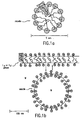
- a micelle is schematically depicted in FIG. 1a. As can be seen, micelles typically have an oil core, due to the aggregation of the hydrophobic portions. The micelles are on the order of 5 nm in diameter.
- Vesicles or liposomes are another type of surfactant aggregate. They have a peculiar structure, resembling the one of a living cell, with the water (W) pool inside, and water medium outside (FIG. 1b).
- the walls of vesicles are made of surfactant bilayers: two or another even number of monolayers connected back-to back.
- the size of vesicles varies from as low as 20 nm (x10 molecular size) to macroscopic size (several mm), but are typically on the order of about 100 nm.
- the thickness of the vesicle wall varies from about 2 nm (one bilayer) to a few tens of nm (several bilayers).
- vesicles Although the shape of vesicles is often spherical, it can be made different. Some vesicles have the shape of disks, some others of infinite tubes or spirals. The shape of vesicles is not spherical, when their composition inside and outside is different. One of the most well known examples of a non-spherical vesicle is the red blood cell.
- Vesicles are not thermodynamically stable, but rather form metastable systems. Their equilibrium counterpart is the lamellar phase (L ⁇ or L ⁇ ). In this phase, surfactant bilayers are stacked together in planar sheets. Normally, lamellar phases are viscous and birefringent. The transition from the vesicle dispersion to lamellar phase has a large activation energy and is very slow for many surfactants. In many cases, vesicles form spontaneously on dispersing surfactants in water. In some other cases, vesicles form on mechanical agitation, or more drastic mechanical mixing procedures, such as sonication, or high-pressure homogenization.
- Surfactant bilayers can exist in two states: fluid or solid.
- the solid bilayers transform into a liquid state above a certain temperature, called chain melting, or gel transition temperature T g .
- Chain Melting Points of Some Phosphatidylcholines Phospholipid (acyl chain length:double bonds) T g , °C Dilauroyl phosphatidylcholine (12:0) -1.8 Dimyristoyl phosphatidylcholine (14:0) 23 Dipalmitoyl phosphatidylcholine (16:0) 41 Distearoyl phosphatidylcholine (18:0) 55 Dioleyl phosphatidylcholine (18:1) -22
- a surfactant In order for a surfactant to form vesicles, it must have a specific molecular geometry. In primitive terms, it must have the shape of a "cylinder”, as opposed to a “wedge-shape”, which favors another class of surfactant aggregates, micelles (discussed briefly above), see J. Israelachvili, Intermolecular and Surface Forces , Academic Press, San Diego, pp. 378-382 (1992). Many surfactants having two alkyl tails per molecule, as well as some single-tail surfactants tend to form vesicles. In surfactant science, one often uses the hydrophilic-lipophilic balance (HLB) number to characterize the surfactant properties.
- HLB hydrophilic-lipophilic balance
- vesicle-forming surfactants have the HLB value of about 6 to 14, as opposed to about 20 for micelle-forming surfactants.
- HLB value about 6 to 14
- vesicles are formed over the region of two-phase co-existence of lamellar phase with water.
- Vesicles can be formed by anionic, cationic, zwitterionic and non-ionic surfactants.
- the most common class of vesicle-forming surfactants is natural phospholipids, briefly described below.
- Natural phospholipids are the main components of the living cell walls and can be found both in animals and plants. They contain two acyl groups esterified by glycerol, the third hydroxyl group of glycerol being esterified by phosphoric acid. One of the remaining two hydroxyls of the phosphoric acid molecule is modified by various substituents, while the third one remains intact, and, normally, dissociated. The chemical structure of most common phospholipids is shown below. For lysophospholipids, one of the acyl chains (R 1 COO or R 2 COO) is replaced by OH.
- phospholipids are phosphatidylcholine and phosphatidylethanolamine, which are zwitterionic (i.e., have both a cation and anion in their structure, overall neutral).
- Natural phospholipids of different origin are usually weakly anionic because of the presence of lysophospholipids, and other anionic lipids. Cationic natural lipids are virtually non-existent.
- Phospholipid Approximate content in egg yolk phospholipid X (see the chemical formula above) Phosphatidylcholine 73% (CH 2 ) 2 N + (CH 3 ) 3 Phosphatidylethanolamine 11% (CH 2 ) 2 N + H 3 Lysophosphatidylcholine 2% (CH 2 ) 2 N + (CH 3 ) 3 Phosphatidylserine minor CH 2 CH(COO - Na + )N + H 3 Phosphatidic acid minor 2Na + Phosphatidylglycerol minor CH 2 CH(OH)CH 2 OH + Na + Acyl Groups R 1 COO, R 2 COO of Common Phospholipids Acyl group (carbon number : number of double bonds) Content in phospholipids of egg yolk 16:0 (palmitoyl) 34% 18:1 (oleyl) 31% 18:2 (linoleyl) 18% 18:
- the fatty acids are either saturated or unsaturated, with 1 to 6 double bonds. Normally, one of the chains is saturated, while the other is not, although in some living tissues, both chains are saturated.
- lipids form a lamellar phase at room temperature and, therefore, readily form vesicles.
- phospholipids are surfactants themselves and tend to adsorb at the air-water interface. However, their rate of adsorption is extremely slow; therefore, they do not act as paper penetrants when present in inks. However, some lipid decomposition products such as lysophospholipids adsorb much quicker and can affect spreading of inks on paper.
- phospholipids are egg yolk and soya beans. Phospholipids can be also extracted from krill, bovine liver, and brain.
- Vesicles are routinely prepared in large volumes by high-pressure homogenizers (also called microfluidizers), produced, for example, by Avestin (Ottawa, Canada), APV Rannie (St. Paul, MN), and Niro Saavi (Parma, Italy).
- high-pressure homogenizers also called microfluidizers
- Avestin Ottawa, Canada
- APV Rannie St. Paul, MN
- Niro Saavi Parma, Italy.
- a liquid jet of a swollen lipid dispersion is directed into a metal wall at a high pressure ( ⁇ 10,000 psi), where lamellar sheets break into vesicles.
- a high pressure ⁇ 10,000 psi
- Vesicle size can be measured by electron microscopy, light scattering, size exclusion chromatography, and ultracentrifuge. The entrapment of solutes inside can be measured by dialysis followed by solvent extraction. Dark field optical microscopy techniques allow one to visualize single surfactant bilayers. Giant macroscopic (several mm) vesicles can be visualized and manipulated, e.g., by pipette aspiration. This allows one to measure the bending and stretching elasticity moduli of the membranes.
- pigmented inks tend to provide good edge acuity, smudge-, smear-, light- and waterfastness, which are counterbalanced by low chroma and longer drying time.
- the pattern is completely opposite for the dyes, which have a good chroma, but worse edge acuity and permanence.
- vesicles in ink-jet inks enables one to integrate the dye-based "solution” ink technology and the pigment-based dispersion ink technology into one, which combines the advantages of the both.
- the "solution” technology and “dispersion” technology of underprinting are combined by using the advantages of each of them in a single setup.
- At least a portion of the dye molecules is placed inside vesicles. These vesicles are then trapped by a fixing agent (e.g., an opposite charged polymer), as shown schematically in FIG. 2.
- a fixing agent e.g., an opposite charged polymer
- Binding of vesicles to the fixer occurs quicker, because the dye molecules are already “pre-packed” within large “bags” (vesicles).
- the speed of binding is important, because it must occur prior to the ink penetration into the paper.
- the dyes do not precipitate from the solution in a crystalline form, but form a soft gel that is adsorbed by the paper and provides a very uniform coverage.
- the dye precipitation at the surface is highly undesirable, because it creates a very patchy area fill.
- the dye molecules are actually distributed between the interior of the vesicles and the exterior thereof. At least about 5% of the dye molecules are within the interior of the vesicles, as defined by the bi-layer walls.
- the printing system of the current invention consists of two parts: the color inks and the fixer. Their composition is in detail discussed below.
- the inks of the present invention contain the following components:
- Water-soluble dyes may be used in various salt forms, including sodium, potassium, lithium, ammonium, tetraethyleneamine and tetramethylammonium salts. Mixtures of the dyes can also be used.
- Cyan dyes can be selected from the following list: Acid Blue 9, Direct Blue 199, Basic Blue 33, Projet Turquoise HA, Projet Turquoise H7G, Acid Blue 185.
- Magenta dyes can be selected from the following list: Reactive Red 180, Acid Red 52, Procion Red H8B, Procion Red3-BNA, Projet Red PX6B, Magenta 377.
- Yellow dyes can be selected from the following list: Acid Yellow 23, Direct Yellow 4, Projet Yellow 3RNA, Reactive Yellow 37, Direct Yellow 132, Acid Yellow 17, Acid Yellow 79, Direct Yellow 50, Ilford Y104 dye.
- Black dyes can be selected from the following list: Food Black 2, Pacified Reactive Black 31, Zeneca Colours 286 dye, Zeneca Colours 287 dye.
- the concentration of the dye in the inks must be in the range from 0.1 to 10%, more preferably, from 1 to 5%. Both cationic and anionic dyes can be used, but it must be kept in mind that the dyes must not have a charge opposite to that of the vesicle-forming surfactant and the polymer binder, because it causes the dye precipitation and makes the ink processing more difficult.
- surfactant that forms vesicles in the inks and that has an appropriate charge can be used.
- the surfactant must either have the same charge as the dye(s), or be overall neutral or zwitterionic.
- acceptable surfactants can be selected from the following groups:
- Humectants can be selected from the group consisting of polyols such as ethanediol; propanediols (1,2-propanediol, 1,3-propanediol, 2-ethyl-2-(hydroxymethyl)-1,3-propanediol, ethylhydroxypropanediol (EHPD); butanediols (e.g., 1,3-butanediol, 1,4-butanediol); pentanediols (e.g., 1,5-pentanediol); hexanediols (e.g., 1,6-hexanediol, 2,5-hexanediol); octanediols (e.g., 1,2-octanediol, 1,8-octanediol), decanediols (e.g
- the humectants can include glycol mono-and polyethers, as well as thioglycol ethers, commonly employed in ink-jet compositions, such as polyethylene glycols (diethylene glycol, triethylene glycol, tetraethylene glycol), polypropylene glycols (e.g., dipropylene glycol, tripropylene glycol, tetrapropylene glycol), polymeric glycols (e.g., PEG 200, PEG 300, PEG 400, PPG 400) and thioglycol.
- polyethylene glycols diethylene glycol, triethylene glycol, tetraethylene glycol
- polypropylene glycols e.g., dipropylene glycol, tripropylene glycol, tetrapropylene glycol
- polymeric glycols e.g., PEG 200, PEG 300, PEG 400, PPG 400
- co-solvents can include the usual solvents used in ink-jet inks, such as 2-pyrrolidone, bis-hydroxyethylsulfone, and thiodiglycol.
- the total amount of co-solvents and humectants in the inks must be 1 to 50 wt%, preferably, 5 to 30 wt%.
- binders one can use polyelectrolytes having the same ionic charge as the vesicle forming surfactant and the dyes.
- anionic dyes one can use random or block copolymers of acrylic acid or methacrylic acid, styrene, and acrylate ethers, such as methyl acrylate, butyl acrylate, hexyl acrylate, methyl methacrylate, butyl methacrylate, and hexylmethacrylate.
- the polymer can be a hydrolyzed copolymer of styrene and maleic acid anhydride SMA H1000, as produced by Elf Atochem, France.
- the molecular weight (weight average) of the binder must be from 1,000 to 100,000, preferably from 1,000 to 10,000.
- the acid must be partially transformed into the salt form by adding an alkali, such as NaOH, KOH, LiOH, or ammonia.
- the total amount of the polymer binder in the inks must be 0.1 to 10 wt%, preferably, 1 to 3 wt%.
- spreading agents In order to provide a uniform area fill coverage by the inks, one needs to incorporate spreading agents in the inks.
- the spreading agents must be compatible with the dye-vesicle-binder system, that is, it must either have the same charge or be non-ionic. Also, the spreading agent must not interfere with the vesicle forming surfactant and must be preferably separated from the vesicles. This means that fluorocarbon and silicon spreading agents are preferred as the spreading agents, although hydrocarbon surfactants can be also used.
- Typical loading of the spreading agent into the inks must be 0.01 to 10 wt%, preferably, 0.1 to 1 wt%.
- the preferable pH of the inks is close to neutral, from 6 to 9 pH units.
- the preferable pH buffer agents are tetramethyl ammonium hydroxide, Trizma base (Sigma), 2-N-morpholinoethanesulfonic acid (MES, Sigma), or mixture of monobasic and dibasic sodium phosphates.
- microbial agents include, but not limited to NUOSEPT (Nudex, Inc.), UCARCIDE (Union Carbide), VANCIDE (RT Vanderuilt Co), and PROXEL (ICI America).
- NUOSEPT Nudex, Inc.
- UCARCIDE Union Carbide
- VANCIDE RT Vanderuilt Co
- PROXEL PROXEL
- Antioxidants such as ascorbic acid and tocopherols can be added to the ink formulation to increase the chemical stability of the inks.
- Similar, chelating agents such as ethylene diamine tetraacetic acid disodium salt (EDTA), can be added to complex impurities of polyvalent metals that promote oxidation.
- the amount of these additives must be 0.01 to 1 wt%, preferably 0.1 to 0.3 wt%.
- the second component of the printing system is the clear fixing fluid, or fixer. It must contain the following components:
- the following cationic polymers can be used: polyethyleneimine, polyallylamine, polyvinylpyrrolidone, and other polyamines, quaternized by an acid to the salt form.
- polyethyleneimine is preferred because of its intrinsically branched structure.
- the molecular weight (weight average) must be within 500 to 100,000 range, preferably, from 500 to 50,000. Higher molecular weight polymers improve the waterfastness, but increase the ink viscosity.
- salts of calcium, magnesium, barium, and aluminum can be used as, e.g., chloride and nitrate forms.
- the fixer that is, 2-pyrrolidone, polyols, and polyol ethers.
- the fixer It is important for the fixer to be reasonably penetrating into the paper. Because of this, the fixer must contain spreading agents. Many surfactants of a non-ionic type with a short and branched alkyl tails can be used for this purpose, such as Tergitol 15S7, Tergitol 15S5 (Union Carbide), or Surfynol 465 (Air Products). It has been found that it is beneficial to have a second fluorinated surfactant in the mixture with the hydrocarbon surfactant. The best effect has been seen with polyethoxylated fluorinated alcohols, such as Fluorad FC 170C (3M), Fluorad FC 170 (3M), or Zonyl FSN (DuPont de Nemours).
- the surfactants must be present in the system in the amount of 0.01 to 10 wt%, preferably 0.1 to 2 wt%.
- an acid In order to transform the polyamine polymers into the quaternized form, an acid must be added to the system.
- Preferable acids are organic acids such as citric acid, succinic acid, and acetic acid, or inorganic acids, such as hydrochloric acid.
- the preferable pH value is between 3 and 6.
- the amines can be quaternized by alkyl substituents, for example, a permethylated polyethylene imine can be used, as supplied by Polysciences, Warrrington, PA.
- the inks and the fixer of this invention must be placed in separate pens and deposited on paper on the same pass.
- the fixer must be printed first, followed by the color pens, normally in the C-M-Y order.
- the fixer pen can be also used for overcoating the inks to improve their water- and smudgefastness.
- the printing can be conducted in several passes, so that the inks and the fixer (F) are deposited in the multilayered fashion, that is, F-CMY-F-CMY-F-CMY, etc.
- Ink preparation included the following stages.
- Fixers were prepared by direct mixing of the components. Preferably, polyethylene imine, succinic acid, and water are mixed first, and then all the other components are added.
- Example 2 Ink and Fixer Compositions .
- Some typical ink compositions are shown in Tables IV-X.
- the fixer compositions are shown in Tables XI-XIIa.
- the amounts of dyes in the in the compositions are shown in terms of optical densities at characteristic wavelengths at 1:10,000 dilution.
- LEG-1 Lipo Chemicals, Inc., Paterson, NJ
- 1,5-pentanediol Tricon Colors, Inc, Elmwood Park, NJ
- 2-pyrrolidone Aldrich
- Tergitol 15S7 Union Carbide
- Fluorad FC170C 3M
- Example 3 Typical Physical Properties of the Inks and the Fixer.
- Tables XIII and XIV show the physical properties of Inks #1, Fixer #1, and Fixer #2.
- the viscosity was measured by a Brookfield viscometer at 60 rpm.
- the surface tension was measured by a K10ST Kruss Tensiometer by the plate method.
- the particle size was measured by a Nicomp particle size analyzer (Particle Sizing Systems, Inc., Santa Barbara, Calif., USA) at 90° scattering angle and ⁇ 1:10000 dilution by water in vesicle mode.
- the measurement of particle size of magenta inks by dynamic light scattering was not possible because of the dye fluorescence. It can be expected that the size is similar to cyan because the ink vehicles of magenta and cyan are identical.
- the printing was conducted with a HP 2000c Hewlett Packard printer.
- the fixer was filled in the black pen (Hewlett Packard part # HPC4800A), and the color inks were filled into the color pens (Hewlett Packard part # HPC4801A HPC4802A and HPC4803A). Rectangular blocks with the size 2.5 x 3 cm or 1.5 x 1.5 cm were printed.
- the ink volume per 1/600 inch pixel was 8 pL for primary colors (cyan, magenta and yellow), and 16 pL for binary colors (red, green, and blue).
- the volume of the fixer deposited was equal to the volume of inks.
- the fixer and the inks were deposited on the same pass, and the fixer was always deposited first.
- the color measurements were made with a Minolta CM-503 C spectrophotometer at 2° and D65 (day light) conditions.
- the set of three values that is, lightness, L*, chroma, C*, and hue, h, were generated.
- the vividness of the color was compared in terms of the chroma values C*.
- the typical hue angles for the primary colors studied were 90- 100, 344 - 355, and 235-245 degrees for yellow, magenta, and cyan, respectively.
- the hue angles were 25 - 35°, 145 - 155°, and 285 - 295° for red, green, and blue, respectively.
- Table XV compares the chroma values of the ink set #2 for primary and binary colors with those of the commercial HP-2000c ink. One can see that these inks, being underprinted, produce more vivid colors than the commercial HP-2000c ink. Also, one can see that underprinting substantially improves the color vividness of the ink set #2, while it does not improve it for the default HP-2000c ink. The particular advantage is seen in red color. Chroma Values of Ink Set #2 on Champion Data Copy Paper.
- Example 7 Comparison of Chromas C* of Various Inks on Hewlett Packard Premium Photopaper .
- Table XVI compares the chroma values of the ink set #2 for primary and binary colors with those of the commercial HP-2000c ink. One can see that these inks, being underprinted, produce more vivid colors than the commercial HP-2000c ink. Also, one can see that underprinting substantially improves the color vividness of the ink set #2, while it does not improve it for the default HP-2000c ink. The particular advantage is seen in red color. Chroma Values of Ink #2 on Hewlett-Packard Premium Photopaper.
- Example 8 Chromas C* of Ink Set #1 on Champion Data Copy Paper .
- Table XVII compares the chroma values of the ink set #1 for primary and binary colors with those of the commercial HP-2000c ink. One can see that these inks, being underprinted, produce more vivid colors than the commercial HP-2000c ink, except for the green. The particular advantage is seen in red color.
- FIG. 3a shows the color space diagram in a* b* coordinates for ink set #1 underprinted by fixer #1 with the default HP-2000c ink on Champion Data Copy paper. Chroma Values of Ink Set #1 on Champion Data Copy Paper.
- Example 9 Chromas C* of Ink Set #1 on Hewlett Packard Premium Photopaper .
- Table XVIII compares the chroma values of the ink set #1 for primary and binary colors with those of the commercial HP-2000c ink. One can see that these inks, being underprinted, produce more vivid colors than the commercial HP-2000c ink, except for the green and blue. The particular advantage is seen in yellow red color.
- FIG. 3b shows the color space diagram in a* b* coordinates for ink set #1 underprinted by fixer #1 with the default HP-2000c ink on Hewlett Packard Premium Photopaper. Chroma Values of Ink Set #1 on HP Premium Photopaper.
- Ink set #2A had the same composition as ink set #2, but did not contain the vesicle-forming surfactant and the binder.
- Table XVIX below that underprinting of these inks does not improve the color vividness, except for 2 to 3 chroma units increase in cyan and magenta. For red and blue, the chroma actually decreases.
- Ink set #1a had the same composition as ink set #1, but did not contain the vesicle-forming surfactant and the binder.
- Ink set #1b did not contain vesicles, but contained the binder.
- Ink set #1c did not contain the binder but contained vesicles. From Table XX, one can see that both the binder and vesicles separately have a beneficial effect on the color vividness, but the effect is magnified when both are present. Effects of Vesicles and Binder on Color Vividness in Underprinting Setup.
- Ink set #3 and ink set #4 contained a vesicle-forming mixture of anionic and cationic surfactants, sodium perfluorononanoate, and dodecyltrimethyl ammonium bromide.
- the ratio of the vesicle forming surfactants was adjusted in such a way so the vesicles would be overall anionic. It can be seen in Table XXI below that underprinting improves somewhat the color vividness of all colors, except cyan and yellow. Effect of Underprinting on Color Vividness of Vesicle Containing Color Ink Set # 3 and Ink Set #4.
- Example 13 the effect of underprinting of color vividness of vesicle inks containing polyalkyl phosphates is evaluated.
- the vesicle-forming surfactant, Zelec NK (Stepan, Norrthfield, IL) is the mixture of mono- and diphosphates of fatty alcohols of proprietary composition. Table XXII below shows that the color vividness is improved for magenta, red and blue. Effect of Underprinting on Color Vividness of Vesicle-Containing Color Ink Set # 5. Colors Ink #5, Underprinted by Fixer #1 Ink #5, No Underprint Cyan C* 47 47 Magenta C* 66 64 Yellow C* 81 84 Red C* 58 55 Green C* 56 58 Blue C* 44 41
- Color ink set #1 was modified so that FC-99 surfactant was replaced with 1% of ammonium perfluorooctanoate (Fluka).
- the ink was underprinted with the Fixer #3.
- the resulting color vividness is shown in Table XXIII, below. Effect of Underprinting by Fixer #3 on Color Vividness of Vesicle-Containing Modified Color Ink Set # 1.
- Example 15 Color Variability of Ink Set #1 Among Different Types of Office Paper .
- the color vividness of ink set #1 was compared over different types of office paper. Overall, 20 different types of paper were studied, including higher-end products, such as Gilbert Bond (Mead), Champion Data Copy (Champion), and Hewlett Packard Bright White paper, and lower end products, such Honshu New Yamayri paper.
- the results are shown in Table XXIV, which compares color vividness of ink set #1 underprinted by fixer #1 with the default HP-2000c ink over the whole paper set.
- the color vividness of ink set #1 is better than that of the default HP-000c inks in all colors, except for the green.
- the paper-to-paper variability of the color vividness is less for ink set #1. Chroma Variability over 20 types of Office Paper.
- Vesicle-containing dye-based black was prepared, as described in Table IX above.
- Table XXV below shows the optical density of the black inks on Gilbert Bond paper.
- Optical densities (OD) were measured with an RD918 Macbeth spectrophotometer. Note that the optical density of 1.24 is reached at a rather low ink volume, 8 pL per 1/600 inch pixel.
- the true black ink of HP-2000c printer requires about 4 times as much of the ink coverage. Accordingly, the drying time was faster and the smudge was lower for the vesicle-containing dye-based black ink.
- Example 17 Composite Black of Ink Set #1 Color Ink Set .
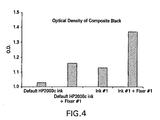
- vesicle inks of the present invention provide a good composite black, which is superior to composite blacks known in art as shown in Table XXVI and FIG. 4. This advantage allows one to have a better half-toning on photographic images without the use of true black. Also, one potentially can print a high quality black text as a composite black.
- Composite Black Optical Density on Champion Data Copy Paper Ink set Ink Set #1, Fixer #1 Ink Set #1, No Fixer Default HP-2000 Color Ink, Fixer #1 Default HP-2000 Color Ink, No Fixer Optical density of composite black (OD) 1.37 1.13 1.16 1.03
- Example 20 Bleed. Edge Acuity. and Area Fill Uniformity .
- vesicle inks underprinted according to the present invention is the excellent area fill uniformity.
- inks of prior art such as commercial HP-2000c inks show a substantial penetration into the paper.
- paper fibers can be seen through the color blocks and the image contains a large number of white spots.
- the inks of the present invention provide a very uniform area fill and paper fibers cannot be seen through. This has a particular advantage for the color text quality and for the quality of images and diagrams.
- the vesicle-containing inks of the present invention are expected to find use in ink-jet printers.
Landscapes
- Chemical & Material Sciences (AREA)
- Life Sciences & Earth Sciences (AREA)
- Engineering & Computer Science (AREA)
- Materials Engineering (AREA)
- Wood Science & Technology (AREA)
- Organic Chemistry (AREA)
- Chemical Kinetics & Catalysis (AREA)
- Inks, Pencil-Leads, Or Crayons (AREA)
- Ink Jet Recording Methods And Recording Media Thereof (AREA)
- Ink Jet (AREA)
Claims (13)
- Encre aqueuse à base de teinte, contenant au moins une teinte soluble dans l'eau ayant une charge d'un premier signe et des vésicules formées à partir d'au moins un agent tensioactif, lesdites vésicules comprenant une paroi bicouche ayant deux ou un nombre pair de monocouches reliées dos à dos pour former une paroi définissant un intérieur et un extérieur de celles-ci, ladite teinte soluble dans l'eau étant principalement distribuée entre ledit intérieur et ledit extérieur desdites vésicules.
- Encre aqueuse à base de teinte selon la revendication 1, dans laquelle au moins 5 % de ladite teinte soluble dans l'eau est piégée dans ledit intérieur des vésicules.
- Encre aqueuse à base de teinte selon la revendication 1, dans laquelle ladite teinte a une couleur de cyan, de jaune, de magenta ou de noir.
- Encre aqueuse à base de teinte selon la revendication 1, dans laquelle lesdites vésicules soit ne portent aucune charge, soit portent une charge nette dudit premier signe sous forme de molécules de ladite teinte.
- Encre aqueuse à base de teinte selon la revendication 1, dans laquelle ladite encre contient de plus au moins l'un parmi(a) un liant polymère, portant une charge nette dudit premier signe sous forme de molécules de ladite teinte ;(b) des humidifiants et des co-solvants, choisis dans le groupe constitué par les polyols, les polyol éthers et la 2-pyrrolidone ;(c) un agent d'étalement qui soit est non ionique, soit porte une charge nette dudit premier signe sous forme de molécules de ladite teinte ; et(d) au moins l'un parmi un biocide, un agent chélatant et un antioxydant.
- Encre aqueuse à base de teinte selon la revendication 1, dans laquelle ledit agent tensioactif formant vésicules est choisi dans le groupe constitué par :(a) des phospholipides et un mélange de phospholipides ;(b) un monoalkylphosphate ou un polyalkylphosphate, ou un mélange de ceux-ci ; et(c) un mélange d'un agent tensioactif anionique et d'agents tensioactifs cationiques, portant une charge nette dudit premier signe sous forme de molécules de ladite teinte.
- Encre aqueuse à base de teinte selon la revendication 1, dans laquelle lesdites vésicules sont présentes en une quantité variant d'environ 1 à 10 % en poids, tout en maintenant la viscosité de ladite encre à une valeur de pas plus d'environ 4 cp.
- Système d'encre pour impression par jet d'encre, constitué essentiellement par (a) ladite encre aqueuse à base de teinte à vésicules selon la revendication 1, comprenant au moins une teinte cyan, magenta ou jaune, et (b) un fluide fixateur clair, qui est déposé sur du papier avant les encres de couleur, ledit fluide fixateur contenant un polymère ou un ion polyvalent ou les deux, et ayant une charge électrique opposée à ladite charge desdites teintes.
- Système d'encre pour impression par jet d'encre selon la revendication 8, (a) dans lequel ledit polymère est un polymère cationique, choisi parmi la polyéthylèneimine, la polyvinylpyrrolidone et la polyallylamine, ou une autre amine polymère sous une forme quaternisée par acide, ou (b) dans lequel ledit ion polyvalent est Ca2+, MG2+, Al3+ ou Ba2+.
- Système d'encre pour impression par jet d'encre selon la revendication 8, dans lequel ledit fluide fixateur contient de plus au moins l'un parmi :(a) des humidifiants et des co-solvants, choisis dans le groupe constitué par les polyols, les polyol éthers et la 2-pyrrolidone ; et(b) des agents tensioactifs d'étalement.
- Méthode pour améliorer la saturation de couleur, le ressuage couleur à couleur et l'acuité de bord dans une encre pour jet d'encre à base de teinte, ladite méthode comprenant les étapes consistant à :fournir ledit ensemble d'encres comprenant lesdites encres cyan, jaune et magenta selon la revendication 8, chaque encre étant contenue dans un stylo séparé et contenant au moins une teinte soluble dans l'eau et des vésicules, lesdites vésicules étant présentes en une quantité suffisante pour contenir une fraction substantielle des molécules de teinte à l'intérieur desdites vésicules, lesdites vésicules formées à partir dudit agent tensioactif ayant un premier signe de charge ;fournir un stylo additionnel contenant ledit fluide fixateur clair selon la revendication 8 ayant un second signe de charge, opposé audit premier signe de charge ;imprimer ledit fixateur sur un support d'impression ; etimprimer au moins une desdites encres sur ledit fixateur.
- Méthode selon la revendication 11, dans laquelle lesdites vésicules sont négativement chargées et ledit fixateur comprend un polymère cationique.
- Méthode selon la revendication 11, dans laquelle ledit fixateur et ladite au moins une encre sont imprimés à la même passe.
Applications Claiming Priority (2)
| Application Number | Priority Date | Filing Date | Title |
|---|---|---|---|
| US376272 | 1999-08-17 | ||
| US09/376,272 US6261350B1 (en) | 1999-08-17 | 1999-08-17 | Increasing chroma and edge acuity of dye-based inks by underprinting using vesicle technique |
Publications (2)
| Publication Number | Publication Date |
|---|---|
| EP1077239A1 EP1077239A1 (fr) | 2001-02-21 |
| EP1077239B1 true EP1077239B1 (fr) | 2005-12-14 |
Family
ID=23484334
Family Applications (1)
| Application Number | Title | Priority Date | Filing Date |
|---|---|---|---|
| EP00306541A Expired - Lifetime EP1077239B1 (fr) | 1999-08-17 | 2000-08-01 | Augmentaton de la vivacité de la couleur et de la netteté des bords par sous-impression pour des encres à base de colorants en utilisant la technique basée sur des vésicules |
Country Status (4)
| Country | Link |
|---|---|
| US (1) | US6261350B1 (fr) |
| EP (1) | EP1077239B1 (fr) |
| JP (1) | JP4401013B2 (fr) |
| DE (1) | DE60024734T2 (fr) |
Families Citing this family (46)
| Publication number | Priority date | Publication date | Assignee | Title |
|---|---|---|---|---|
| US6244687B1 (en) * | 1999-03-22 | 2001-06-12 | Hewlett-Packard Company | Mixing overprinting and underprinting of inks in an inkjet printer to speed up the dry time of black ink without undesirable hue shifts |
| EP1048699B1 (fr) * | 1999-04-27 | 2011-07-20 | Canon Kabushiki Kaisha | Assortiment d'encres, procédé d'impression, encre, article imprimé, appareil d'impression, cartouche d'encre, unité d'enregistrement, et procédé de préparation de films composites polymères |
| US6630017B2 (en) * | 2000-03-31 | 2003-10-07 | Hewlett-Packard Development Company, L.P. | Inkset for graphic art ink jet image printers |
| DE10041982B4 (de) * | 2000-08-26 | 2008-09-04 | J. S. Staedtler Gmbh & Co. Kg | Verwendung vom Tintensätzen auf wässriger Basis |
| US6461418B1 (en) * | 2000-09-28 | 2002-10-08 | Hewlett-Packard Company | Aqueous ink jet inks for use with commercial offset media and offset ink |
| US6740689B1 (en) * | 2000-10-30 | 2004-05-25 | Hewlett-Packard Development Company, L.P. | Ink and underprinting fluid combinations with improved inkjet print image color and stability |
| US6500246B2 (en) * | 2001-01-05 | 2002-12-31 | Everlight Usa, Inc. | Ink-jet ink composition |
| US6780912B2 (en) * | 2001-02-26 | 2004-08-24 | Hewlett-Packard Development Company L.P. | Addition of metal ions to improve lightfastness of inkjet inks |
| US6508549B1 (en) * | 2001-05-03 | 2003-01-21 | Eastman Kodak Company | Ink jet ink set |
| US6513923B1 (en) * | 2001-05-03 | 2003-02-04 | Eastman Kodak Company | Ink jet printing method |
| US6536886B1 (en) | 2001-10-29 | 2003-03-25 | Hewlett-Packard Company | Reservoir integration for multi-part inkjet printing system, and method |
| US6682589B2 (en) * | 2001-10-30 | 2004-01-27 | Hewlett-Packard Development Company, L.P. | Lightfast ink-jet dye set having color gamut of silver halide prints |
| US20030105186A1 (en) * | 2001-11-29 | 2003-06-05 | Suthar Ajay Kanubhai | Humectant set which improves maintenance of pigment or dyepigment blend inks |
| JP2003276300A (ja) * | 2002-03-22 | 2003-09-30 | Ricoh Co Ltd | インクジェット記録方法及びインクセットと記録装置 |
| US20040024083A1 (en) * | 2002-07-30 | 2004-02-05 | Lee Melissa D. | Fluid set for ink-jet printers |
| US7129284B2 (en) * | 2002-12-03 | 2006-10-31 | Hewlett-Packard Development Company, L.P. | Fluorosurfactant packages for use in inkjet printing and methods of controlling puddling in inkjet pens |
| US20040166124A1 (en) * | 2003-02-25 | 2004-08-26 | Dunfield John Stephen | Fluid-jet pens configured for making modulated release bioactive agents |
| US7674328B2 (en) | 2003-03-25 | 2010-03-09 | Hewlett-Packard Development Company, L.P. | Dye-based ink |
| JP2004307819A (ja) * | 2003-03-25 | 2004-11-04 | Fuji Photo Film Co Ltd | インクジェット記録用インクセット |
| US6991676B2 (en) * | 2003-07-18 | 2006-01-31 | Hewlett-Packard Development Company, L.P. | Dye sets and ink sets for ink-jet ink imaging |
| US7417079B2 (en) * | 2003-07-28 | 2008-08-26 | Hewlett-Packard Development Company, L.P. | Use of styrene-maleic anhydride copolymer to control black-to-color bleed |
| US7192472B2 (en) * | 2003-09-18 | 2007-03-20 | E. I. Du Pont De Nemours And Company | Inkjet ink composition |
| US7621631B2 (en) * | 2004-02-04 | 2009-11-24 | Hewlett-Packard Development Company, L.P. | Enhancing color space of reactive ink using heat |
| US7163577B2 (en) * | 2004-03-01 | 2007-01-16 | Hewlett-Packard Development Company, L.P. | Black pigmented ink-jet inks with improved frequency response |
| JP4856885B2 (ja) * | 2004-03-16 | 2012-01-18 | キヤノン株式会社 | 液体組成物、液体組成物とインクのセット及び画像記録方法 |
| US20050206705A1 (en) * | 2004-03-16 | 2005-09-22 | Zeying Ma | Ink-jet imaging on offset media |
| US7951233B2 (en) * | 2004-10-25 | 2011-05-31 | Hewlett-Packard Development Company, L.P. | Reactive color inks |
| JP2006193461A (ja) * | 2005-01-13 | 2006-07-27 | Pola Chem Ind Inc | 毛髪用の洗浄料 |
| JP2006232933A (ja) * | 2005-02-23 | 2006-09-07 | Brother Ind Ltd | インクジェット記録用水性インクセット及びインクジェット記録方法 |
| US20060187284A1 (en) * | 2005-02-24 | 2006-08-24 | Rehman Zia U | Ink-jet ink compositions for use in off-axis printers |
| US20070076073A1 (en) * | 2005-10-03 | 2007-04-05 | Hornby John C | Inkjet inks and ink sets |
| US20070139476A1 (en) * | 2005-12-15 | 2007-06-21 | Schwartz Nathaniel R | Curable inkjet ink |
| US7572326B2 (en) * | 2007-04-18 | 2009-08-11 | Hewlett-Packard Development Company, L.P. | Fixer fluid and inkjet ink sets including the same |
| JP5868565B2 (ja) * | 2007-05-29 | 2016-02-24 | ブラザー工業株式会社 | インクジェット記録用インクセット及びテトラコンポジットブラック画像の作成方法 |
| JP5489473B2 (ja) * | 2008-02-13 | 2014-05-14 | 富士フイルム株式会社 | インクジェット記録液およびインクジェット記録方法 |
| JP5376810B2 (ja) * | 2008-02-13 | 2013-12-25 | 富士フイルム株式会社 | インク組成物、インクセット、及び画像形成方法 |
| JP4772883B2 (ja) * | 2008-03-19 | 2011-09-14 | 富士フイルム株式会社 | インクジェット記録液 |
| US20120097903A1 (en) * | 2008-12-19 | 2012-04-26 | Vorbeck Materials Corp. | Inks and coatings containing multi-chain lipids |
| JP5018908B2 (ja) | 2010-01-29 | 2012-09-05 | ブラザー工業株式会社 | 水性画質向上液 |
| US20130176368A1 (en) * | 2011-07-12 | 2013-07-11 | E I Du Pont De Nemours And Company | Ink-jet inks having improved corrosion resistance |
| CN109135424A (zh) * | 2012-09-14 | 2019-01-04 | 惠普发展公司,有限责任合伙企业 | 定影剂流体 |
| JP6844302B2 (ja) * | 2017-02-22 | 2021-03-17 | セイコーエプソン株式会社 | インクジェット記録方法およびインクジェット記録装置の制御方法 |
| AU2018387258B2 (en) * | 2017-12-19 | 2024-06-06 | Advanced Extracellular Vesicle Applications S.R.L. | Method and stationary phase for isolating extracellular vesicles from biological material |
| JP7326716B2 (ja) * | 2018-09-28 | 2023-08-16 | 日本ゼオン株式会社 | 無機中空粒子およびその製造方法 |
| JP7516927B2 (ja) * | 2020-07-06 | 2024-07-17 | コニカミノルタ株式会社 | インクジェット記録液セットおよび当該インクジェット記録液セットを用いる画像形成方法 |
| JP7746735B2 (ja) * | 2021-08-25 | 2025-10-01 | セイコーエプソン株式会社 | インクジェットインク組成物、記録方法、および記録物 |
Family Cites Families (15)
| Publication number | Priority date | Publication date | Assignee | Title |
|---|---|---|---|---|
| US4783220A (en) | 1986-12-18 | 1988-11-08 | Xerox Corporation | Vesicle ink compositions |
| US5106416A (en) | 1991-08-28 | 1992-04-21 | Hewlett-Packard Company | Bleed alleviation using zwitterionic surfactants and cationic dyes |
| US5226957A (en) | 1992-03-17 | 1993-07-13 | Hewlett-Packard Company | Solubilization of water-insoluble dyes via microemulsions for bleedless, non-threading, high print quality inks for thermal ink-jet printers |
| EP0587164B1 (fr) | 1992-09-10 | 1998-12-23 | Canon Kabushiki Kaisha | Méthode et appareil pour l'enregistrement par jet d'encre |
| JPH0881611A (ja) | 1994-07-11 | 1996-03-26 | Canon Inc | 液体組成物、インクセット及びこれを用いた画像形成方法と装置 |
| US5492559A (en) | 1994-10-19 | 1996-02-20 | Xerox Corporation | Liquid crystalline microemulsion ink compositions |
| US5746818A (en) | 1995-08-31 | 1998-05-05 | Seiko Epson Corporation | Pigment ink composition capable of forming image having no significant bleeding or feathering |
| US5565022A (en) | 1995-09-14 | 1996-10-15 | Hewlett-Packard Company | Fast drying, bleed-free ink-jet ink compositions |
| US5633109A (en) | 1995-12-05 | 1997-05-27 | Xerox Corporation | Ink compositions with liposomes containing photochromic compounds |
| US5626654A (en) | 1995-12-05 | 1997-05-06 | Xerox Corporation | Ink compositions containing liposomes |
| US5643357A (en) | 1995-12-08 | 1997-07-01 | Xerox Corporation | Liquid crystalline ink compositions |
| US5723179A (en) | 1997-01-13 | 1998-03-03 | Xerox Corporation | Method and composition for obtaining waterfast images from ink jet inks |
| US5788749A (en) | 1997-02-14 | 1998-08-04 | Xerox Corporation | Pigmented ink compositions containing liposomes |
| US5911816A (en) | 1997-05-29 | 1999-06-15 | Hewlett-Packard Company | Liposomal ink compositions with water-insoluble dyes and pigments |
| US5772743A (en) | 1997-10-30 | 1998-06-30 | Xerox Corporation | Ink compositions for thermal ink jet printing |
-
1999
- 1999-08-17 US US09/376,272 patent/US6261350B1/en not_active Expired - Lifetime
-
2000
- 2000-08-01 EP EP00306541A patent/EP1077239B1/fr not_active Expired - Lifetime
- 2000-08-01 DE DE60024734T patent/DE60024734T2/de not_active Expired - Lifetime
- 2000-08-17 JP JP2000247224A patent/JP4401013B2/ja not_active Expired - Fee Related
Also Published As
| Publication number | Publication date |
|---|---|
| US6261350B1 (en) | 2001-07-17 |
| JP4401013B2 (ja) | 2010-01-20 |
| EP1077239A1 (fr) | 2001-02-21 |
| DE60024734T2 (de) | 2006-08-24 |
| JP2001123099A (ja) | 2001-05-08 |
| DE60024734D1 (de) | 2006-01-19 |
Similar Documents
| Publication | Publication Date | Title |
|---|---|---|
| EP1077239B1 (fr) | Augmentaton de la vivacité de la couleur et de la netteté des bords par sous-impression pour des encres à base de colorants en utilisant la technique basée sur des vésicules | |
| JP3908811B2 (ja) | リポソーム含有インク組成物の製造方法 | |
| EP0881270B1 (fr) | Compositions d'encres liposomales contenant des pigments | |
| EP0633142B1 (fr) | Procédé de diminution du dégorgement et d'amélioration de couleurs en éléments imprimés | |
| JP4475690B2 (ja) | 着色剤とインク組成物とインク組成物の製造方法 | |
| JP4472036B2 (ja) | インクジェットインク | |
| US6342094B1 (en) | Miniemulsion techniques for ink jet inks | |
| US5746817A (en) | Ink jet ink composition | |
| US5788749A (en) | Pigmented ink compositions containing liposomes | |
| KR19990083297A (ko) | 개선된프린트특성을위한잉크세트 | |
| EP1122288B1 (fr) | Usage de cryoprotecteurs dans des compositions d'encre pour impression par jet d'encre présentant une bonne stabilité au gel-dégel | |
| DE60308437T2 (de) | Wässrige Tinte für den Tintenstrahldruck | |
| US7192472B2 (en) | Inkjet ink composition | |
| JP4474820B2 (ja) | インクジェット用顔料インクとそれを用いたインクジェットカートリッジ及びインクジェット画像記録方法 | |
| JP3972637B2 (ja) | インクジェット用顔料インクとそれを用いたインクジェットカートリッジ及びインクジェット画像記録方法 | |
| EP1048704B1 (fr) | Utilisation des agents tensioactifs pour l amélioration des images par jet d encre | |
| JP4045779B2 (ja) | インクジェット用カラーインクセットとそれを用いたインクジェットカートリッジ及びインクジェット画像記録方法 | |
| JP3969056B2 (ja) | インクジェット用顔料インクとそれを用いたインクジェットカートリッジ、インクジェット画像記録方法及びインクジェット記録画像 | |
| JP4106916B2 (ja) | インクジェット用カラーインクセットとそれを用いたインクジェットカートリッジ及びインクジェット画像記録方法 | |
| JP2001254034A (ja) | インク組成物、その製造方法及び画像記録方法 |
Legal Events
| Date | Code | Title | Description |
|---|---|---|---|
| PUAI | Public reference made under article 153(3) epc to a published international application that has entered the european phase |
Free format text: ORIGINAL CODE: 0009012 |
|
| AK | Designated contracting states |
Kind code of ref document: A1 Designated state(s): DE FR GB |
|
| AX | Request for extension of the european patent |
Free format text: AL;LT;LV;MK;RO;SI |
|
| RAP1 | Party data changed (applicant data changed or rights of an application transferred) |
Owner name: HEWLETT-PACKARD COMPANY, A DELAWARE CORPORATION |
|
| 17P | Request for examination filed |
Effective date: 20010727 |
|
| AKX | Designation fees paid |
Free format text: DE FR GB |
|
| 17Q | First examination report despatched |
Effective date: 20040810 |
|
| GRAP | Despatch of communication of intention to grant a patent |
Free format text: ORIGINAL CODE: EPIDOSNIGR1 |
|
| GRAS | Grant fee paid |
Free format text: ORIGINAL CODE: EPIDOSNIGR3 |
|
| GRAA | (expected) grant |
Free format text: ORIGINAL CODE: 0009210 |
|
| AK | Designated contracting states |
Kind code of ref document: B1 Designated state(s): DE FR GB |
|
| REG | Reference to a national code |
Ref country code: GB Ref legal event code: FG4D |
|
| REF | Corresponds to: |
Ref document number: 60024734 Country of ref document: DE Date of ref document: 20060119 Kind code of ref document: P |
|
| ET | Fr: translation filed | ||
| PLBE | No opposition filed within time limit |
Free format text: ORIGINAL CODE: 0009261 |
|
| 26N | No opposition filed |
Effective date: 20060915 |
|
| PGFP | Annual fee paid to national office [announced via postgrant information from national office to epo] |
Ref country code: FR Payment date: 20110830 Year of fee payment: 12 |
|
| REG | Reference to a national code |
Ref country code: GB Ref legal event code: 732E Free format text: REGISTERED BETWEEN 20120329 AND 20120404 |
|
| REG | Reference to a national code |
Ref country code: FR Ref legal event code: ST Effective date: 20130430 |
|
| PG25 | Lapsed in a contracting state [announced via postgrant information from national office to epo] |
Ref country code: FR Free format text: LAPSE BECAUSE OF NON-PAYMENT OF DUE FEES Effective date: 20120831 |
|
| PGFP | Annual fee paid to national office [announced via postgrant information from national office to epo] |
Ref country code: DE Payment date: 20150722 Year of fee payment: 16 Ref country code: GB Payment date: 20150724 Year of fee payment: 16 |
|
| REG | Reference to a national code |
Ref country code: DE Ref legal event code: R119 Ref document number: 60024734 Country of ref document: DE |
|
| GBPC | Gb: european patent ceased through non-payment of renewal fee |
Effective date: 20160801 |
|
| PG25 | Lapsed in a contracting state [announced via postgrant information from national office to epo] |
Ref country code: DE Free format text: LAPSE BECAUSE OF NON-PAYMENT OF DUE FEES Effective date: 20170301 Ref country code: GB Free format text: LAPSE BECAUSE OF NON-PAYMENT OF DUE FEES Effective date: 20160801 |