EP1077697B1 - Verfahren und testen verwendbar bei der behandlung von alkoholabhängigkeit oder -missbrauch - Google Patents
Verfahren und testen verwendbar bei der behandlung von alkoholabhängigkeit oder -missbrauch Download PDFInfo
- Publication number
- EP1077697B1 EP1077697B1 EP99921892A EP99921892A EP1077697B1 EP 1077697 B1 EP1077697 B1 EP 1077697B1 EP 99921892 A EP99921892 A EP 99921892A EP 99921892 A EP99921892 A EP 99921892A EP 1077697 B1 EP1077697 B1 EP 1077697B1
- Authority
- EP
- European Patent Office
- Prior art keywords
- aldehyde
- daidzin
- daidzein
- alcohol
- compounds
- Prior art date
- Legal status (The legal status is an assumption and is not a legal conclusion. Google has not performed a legal analysis and makes no representation as to the accuracy of the status listed.)
- Expired - Lifetime
Links
Images


Classifications
-
- A—HUMAN NECESSITIES
- A61—MEDICAL OR VETERINARY SCIENCE; HYGIENE
- A61K—PREPARATIONS FOR MEDICAL, DENTAL OR TOILETRY PURPOSES
- A61K31/00—Medicinal preparations containing organic active ingredients
- A61K31/70—Carbohydrates; Sugars; Derivatives thereof
- A61K31/7042—Compounds having saccharide radicals and heterocyclic rings
- A61K31/7048—Compounds having saccharide radicals and heterocyclic rings having oxygen as a ring hetero atom, e.g. leucoglucosan, hesperidin, erythromycin, nystatin, digitoxin or digoxin
-
- A—HUMAN NECESSITIES
- A61—MEDICAL OR VETERINARY SCIENCE; HYGIENE
- A61K—PREPARATIONS FOR MEDICAL, DENTAL OR TOILETRY PURPOSES
- A61K31/00—Medicinal preparations containing organic active ingredients
- A61K31/33—Heterocyclic compounds
- A61K31/335—Heterocyclic compounds having oxygen as the only ring hetero atom, e.g. fungichromin
- A61K31/35—Heterocyclic compounds having oxygen as the only ring hetero atom, e.g. fungichromin having six-membered rings with one oxygen as the only ring hetero atom
- A61K31/352—Heterocyclic compounds having oxygen as the only ring hetero atom, e.g. fungichromin having six-membered rings with one oxygen as the only ring hetero atom condensed with carbocyclic rings, e.g. methantheline
-
- A—HUMAN NECESSITIES
- A61—MEDICAL OR VETERINARY SCIENCE; HYGIENE
- A61P—SPECIFIC THERAPEUTIC ACTIVITY OF CHEMICAL COMPOUNDS OR MEDICINAL PREPARATIONS
- A61P25/00—Drugs for disorders of the nervous system
- A61P25/30—Drugs for disorders of the nervous system for treating abuse or dependence
- A61P25/32—Alcohol-abuse
-
- C—CHEMISTRY; METALLURGY
- C12—BIOCHEMISTRY; BEER; SPIRITS; WINE; VINEGAR; MICROBIOLOGY; ENZYMOLOGY; MUTATION OR GENETIC ENGINEERING
- C12Q—MEASURING OR TESTING PROCESSES INVOLVING ENZYMES, NUCLEIC ACIDS OR MICROORGANISMS; COMPOSITIONS OR TEST PAPERS THEREFOR; PROCESSES OF PREPARING SUCH COMPOSITIONS; CONDITION-RESPONSIVE CONTROL IN MICROBIOLOGICAL OR ENZYMOLOGICAL PROCESSES
- C12Q1/00—Measuring or testing processes involving enzymes, nucleic acids or microorganisms; Compositions therefor; Processes of preparing such compositions
- C12Q1/26—Measuring or testing processes involving enzymes, nucleic acids or microorganisms; Compositions therefor; Processes of preparing such compositions involving oxidoreductase
-
- C—CHEMISTRY; METALLURGY
- C12—BIOCHEMISTRY; BEER; SPIRITS; WINE; VINEGAR; MICROBIOLOGY; ENZYMOLOGY; MUTATION OR GENETIC ENGINEERING
- C12Q—MEASURING OR TESTING PROCESSES INVOLVING ENZYMES, NUCLEIC ACIDS OR MICROORGANISMS; COMPOSITIONS OR TEST PAPERS THEREFOR; PROCESSES OF PREPARING SUCH COMPOSITIONS; CONDITION-RESPONSIVE CONTROL IN MICROBIOLOGICAL OR ENZYMOLOGICAL PROCESSES
- C12Q1/00—Measuring or testing processes involving enzymes, nucleic acids or microorganisms; Compositions therefor; Processes of preparing such compositions
- C12Q1/26—Measuring or testing processes involving enzymes, nucleic acids or microorganisms; Compositions therefor; Processes of preparing such compositions involving oxidoreductase
- C12Q1/32—Measuring or testing processes involving enzymes, nucleic acids or microorganisms; Compositions therefor; Processes of preparing such compositions involving oxidoreductase involving dehydrogenase
Definitions
- Embodiments of the present invention also relate to novel assay systems useful in initial screening of compounds having an antidipsotropic effect. Such compounds are useful in therapeutic methods of reducing alcohol consumption as a treatment for alcohol dependence or alcohol abuse.
- Alcohol abuse and alcohol dependence are serious public health problems of modem society.
- Alcohol dependence and abuse are very expensive: in economic and medical terms, it will cost the U.S. well over $200 billion in 1991 with no prospect of falling or leveling off.
- the social and psychological damages inflicted on individuals as a consequence of alcohol abuse e.g., children bom with fetal alcohol syndrome (FAS) and victims of alcohol-related accidental death, homicide, suicide, etc., are immense.
- FAS fetal alcohol syndrome
- Daidzin is the major active principle in extracts of Radix puerariae, a traditional Chinese medication that suppresses the ethanol intake of Syrian golden hamsters. See Keung, W.M. and Vallee, B.L. (1993) Proc. Natl. Acad. Sci. USA 90 ,10008-10012 and Keung, W.M., Klyosov, A.A., and Vallee, B.L. (1997) Proc, Natl. Acad. Sci. USA 94 , 1675-1679 each hereby incorporated by reference in its entirety for all purposes. It is the first isoflavone recognized to have this effect and to be useful in therapeutic methods of reducing alcohol consumption. See U.S. Patent No.
- Daidzin is also a potent and selective inhibitor of human mitochondrial aldehyde dehydrogenase (ALDH-2 also known as ALDH-I) which is an enzyme involved in the major enzymatic pathway responsible for ethanol metabolism in humans.
- ALDH-2 also known as ALDH-I
- ALDH-I human mitochondrial aldehyde dehydrogenase
- the ethanol intake suppressive activity ("antidipsotropic activity") of daidzin has also been confirmed in Wistar rats, Fawn hooded rats, and the genetically bred P rats under various experimental conditions, including two-lever choice (ethanol/starch), two-bottle free-clioice (ethanol/water), limited access, and ethanol deprived paradigms.
- two-lever choice ethanol/starch
- two-bottle free-clioice ethanol/water
- limited access and ethanol deprived paradigms.
- biogenic amines such as serotonin and dopamine
- ADH enzyme aldehyde dehydrogenase
- ALDH-2 is somehow involved in the oxidation of aldehydes that derive from biologically active monoamines such as serotonin and dopamine in mammalian brain tissue via the action of monoamine oxidase.
- ALDH-2 as the principal enzyme that catalyzes the oxidation of dopamine derived 3,4-dihydroxyphenylacetaldehyde (DOPAL) in rat liver.
- DOPAL dopamine derived 3,4-dihydroxyphenylacetaldehyde
- DOPAL dopamine derived 3,4-dihydroxyphenylacetaldehyde
- 5-HIAL sciotonin-derived 5-hydroxyindole-3-acetaldehyde
- isoflavone based compounds such as daidzin or daidzin analogs are capable of interacting with the enzyme systems of neurotransmitters or how such compounds would even come in contact with such enzyme systems given the nature and structure of the isoflavone based compounds.
- the art provides no guidance as to whether isoflavone based compounds are chemically capable of interacting with the neurotransmitter enzyme systems, such as where crossing of the blood-brain barrier may be necessary or are capable of having any effect on neurotransmitter enzyme systems, especially in a manner to reduce alcohol consumption or otherwise affect the concentration or efficacy of substrates within the enzyme system that regulate ethanol drinking behavior.
- the present invention relates to a method for identifying compounds effective in reducing alcohol consumption as defined in any one al claims 1-6.
- Embodiments of the present invention are based on the discovery that the enzyme systems of certain biologically active monoamines, such as serotonin (5-HT) and dopamine (DA) in mammalian tissue, can be inhibited using daidzin or analogous compounds and that the inhibition alters the concentration of substrates that regulate ethanol drinking behavior. More particularly, embodiments of the present invention are directed to inhibiting the oxidation of aldehydes that derive from neurotransmitters such as serotonin and dopamine via monoamine oxidase (MAO).
- MAO monoamine oxidase
- daidzin and daidzin analogs are effective in increasing the concentration of aldehydes formed during the catabolism of certain neurotransmitters and that the increase in aldehyde concentration attributable to the neurotransmitter enzyme systems is effective in reducing alcohol consumption.
- the compounds derived from daidzein are named as ethers of the 7-hydroxyl group of the aglycone daidzein; they resemble daidzin in that there is no free hydroxyl at the 7-postion, but differ in that the daidzin glucosidic group is an acetat rather than an ether.
- the compounds can be routinely prepared by methods well known in the art such as reaction of daidzein with various ⁇ -halo fatty acids, such as bromo or iodo, or with ethyl iodide.
- the analogs of daidzin can be used in methods to inhibit the enzyme systems of serotonin and dopamine in a manner to increase concentrations of aldehydes present in the enzyme system or inhibit the formation of corresponding acids present in the enzyme system.
- Such daidzin analogs are potent and have similar significant.in vivo effects on alcohol consumption in animal models.
- the daidzin and daidzin analogs are useful in methods of reducing alcohol consumption by inhibiting the enzyme systems of certain monoamines, such es serotonin and dopamine in a manner to increase aldehyde concentrations resulting from the catabolism of the neurotransmitters. It has been discovered that compounds which raise aldehyde concentrations within the serotonin or dopamine enzyme systems are also effective as antidipsotropic agents, i.e. agents which reduce alcohol consumption.
- Embodiments of the present invention relate to inhibitors of aldehyde dehydrogenase present in the enzyme system in humans that is responsible for conversion of aldehyde to carboxylic acid in the metabolic pathways for the neurotransmitters serotonin or dopamine.
- Embodiments of the present invention are further related to synthetic inhibitory compounds having an isoflavone structure and analogous to daidzin.
- daidzin and daidzin analogs of formula I have been unexpectedly found to be direct, potent yet selective and reversible inhibitors of ALDH-2 which catalyzes the conversion of aldehyde to carboxylic acid in the following enzyme systems for serotonin and dopamine.
- ALDH-2 is shown to be involved in the oxidation of aldehydes that derive from biologically active monoamines such as serotonin (5-HT) and dopamine (DA) in mammalian tissue via the action of monoamine oxidase (MAO).
- These aldehydes are either oxidized to their corresponding acid metabolites by an NAD-dependent ALDH present within the mitochondrial matrix or reduced to their corresponding alcohols by the cytosolic enzymes NADH-dependent ADH and/or NADPH-dependent aldehyde reductase.
- daidzin and structural analogs of daidzin represented by formula I potently inhibit the formation of 5-hydroxyindole-3-acetic acid (5-HlAA) and 3,4-dihydroxyphetrylacetic acid (DOPAC) from their respective amines in isolated hamster liver mitochondria. Inhibition is concentration dependent and is accompanied by a concomitant accumulation of 5-hydroxyindole-3-acetaldehyde (5-HIAL) and 3,4-dihydrozyphenyl-acetaldehyde (DOPAL). Daidzin analogs that suppress hamster ethanol intake also inhibit 5-HIAA and DOPAC formation.
- daidzin and its active analogs at concentrations that significantly inhibit 5-HIAA formation, have little or no effect an mitochondria-catalyzed 5-HT depletion-
- the antidipsotropic action of daidzin is not mediated by monoamines such as 5-HT (or DA), but rather by its reactive intermediates 5-HIAL (or DOPAL), which accumulate in the presence of daidzin.
- Daidzin and structurally related compounds were either commercially available or prepared according to standard techniques. See U.S. Patent No. 5,624,910.
- Daidzin analogs also include compounds wherein the glucose of the daidzin is replaced with a different sugar moiety.
- the glucose (GlcO) moiety of daidzin may be replaced by alkoxy or acyloxy groups at the 7-position bearing various chain lengths, for example, up to 11 or more, comprising any of straight chain alkyl, peptidic, polyether, etc. backbones, and the backbones may be substituted with various neutral (e.g., hydroxyl, sugar, etc.) or charged (e.g., carboxylate, phosphate, phosphonate, sulfate, sulfonate, etc.) moieties. Additionally suitable moieties (e.g., carboxylate, hydroxyl, etc.) may be esterified.
- 7- ⁇ -carboxyalkyl ethers of daidzein were prepared as follows. Daidzein (10 mmoles) was suspended in 40 ml of acetone, 10 ml of 2 N KOH was added, followed by 10 mmoles of solid ⁇ -bromohexanoic acid, ⁇ -bromoheptanoic acid, ⁇ -bromoundecanoic acid or ethyl iodide. The mixture was stirred under reflux for 3 days. The potassium salt of the 7-( ⁇ -carboxyalkyl) ether of daidzein was recovered by filtration, washed with acetone and dried; yield, 20-35%.
- 7-O-substituted daidzein derivatives namely, 7-O-(6-bromohexyl)-daidzein, 7-O-(triethyl-6-aminohexyl)-daidzein, 7-O-(triethyl-6-aminoethyl)-daidzein, 7-O-(6-aminohexyl)-daidzein, 7-O-daidzein-6-bromoheptanoate, 7-O-daidzein-2-chloroacetate, 7-O-daidzein-2-bromoacetate, and 7-O-daidzein-3-dimethylaniinopropionate, were synthesized as follows.
- 7-O-(6-bromohexyl)-daidzein was prepared by refluxing 1.25 g daidzein, 12.2 g 1,6-dibromohexane, and 2.5 ml 11.2 % KOH in 25 ml acetone ovemight.
- the reaction mixture was extracted into petroleum ether from water, dried and crystallized from chloroform.
- 7-O-(triethyl-6-aminohexyl)-daidzein was prepared by refluxing 3 mmol 7-O-(6-bromohexyl)-daidzein with 4 ml triethylamine in 10 ml dimethylformamide (DMF) for 8 hours. The reaction mixture was evaporated to dryness and the product was extracted with water.
- DMF dimethylformamide
- 7-O-(triethyl-6-aminoethyl)-daidzein was synthesized by refluxing 10 g daidzein, 20 ml 2 N KOH, and 8.5 ml 1,2-dibromoethane in 200 ml acetone for 12 hours. The reaction mixture was dried, redissolved in 150 ml chloroform, and filtered to remove daidzein. Solvent was evaporated and the product, 7-O-(2-bromoethyl)-daidzein, was recrystallized from hexane.
- 7-O-(2-bromoethyl)-daidzein was then refluxed with 4 ml triethylamine in 10 ml DMF for 8 hours.
- the reaction mixture was evaporated to dryness and product was extracted with water.
- 7-O-(6-aminohexyl)-daidzein was made by saturating a mixture of 50 mg 7-O-(6-bromohexyl)-daidzein, 5 ml DMF, and 15 ml ethanol with gaseous ammonia for 24 hours.
- the reaction mixture was evaporated and the final product was recrystallized from water.
- the 7-O-daidzein esters of 6-bromoheptanoic acid (7-O-daidzein-6-bromoheptanoate), chloroacetic acid (7-O-daidzein-2-chloroacetate), bromoacetic acid (7-O-daidzein-2-bromoacetate), and 3-dimethylaminopropionic acid (7-O-daidzein-3-dimethylaminopropionate) were prepared by adding the respective acids (10 mmol) and dicyclohexylcarbodiimide (10 mmol) to a solution of daidzein (10 mmol) in 20 ml acetone. The solution was stirred overnight at 0°C. Solvents in the resulting mixtures were evaporated and final products were crystallized from chloroform.
- kinetic parameters K m , and V max for cytosolic ALDHs have been determined from Lineweaver-Bunk plots derived from duplicate determinations of initial velocities whereas those for the mitochondrial isozymes were determined from progress kinetic curves in accordance with the teachings of Rashkovetsky, L. G., Maret, W. & Klyosov, A. A. (1994) Biochim. Biophys. Acta 1205, 301-307 hereby incorporated by reference in its entirety.
- the 7-O-daidzein esters of short chain acids e.g. 2-chloroacetic acid, -2-bromoacetic acid, and 3-dimethylaminopropionic acid, (compounds # 16, #17, and #18, respectively) are less potent inhibitors relative to daidzin.
- the long chain 7-O-( ⁇ -carboxyalkyl)- derivatives of daidzein are the most potent inhibitors of ALDH-2 (compounds #3 to #6).
- puerarin, chrysin and 7,8-dihydsoxyflavone do not exert any significant effect on ethanol intake whereas the two 7-O-( ⁇ -carboxyalkyl)-daidzeins are somewhat better than daidzin (about 70% suppression).
- a method of screening compounds for antidipsotropic activity is provided.
- a test compound is selected, for example, based upon the teachings herein with respect to the structure of daidzin or daidzin analogs known to have antidipsotropic activity.
- any compound can be selected for assay according to the teachings of the present invention, as the purpose of the assay is to identify or screen compounds having antidipsotropic activity.
- the present invention is therefore not limited to compounds structurally analogous to daidzin.
- a mitochondrial or other preparation including serotonin, monoamine oxidase and aldehyde dehydrogenase is then provided under conditions sufficient for the monoamine oxidase to convert serotonin to 5-hydioxyindole-3-acetaldehyde and for the aldehyde dehydrogenase to convert the 5-hydroxyindole-3-acetaldehyde to 5-hydroxyindole-3-acetic acid. It is to be understood that assays based upon the enzyme system for dopamine are also useful in the practice of the present invention.
- a mitochondrial or other preparation including dopamine, monoamine oxidase and aldehyde dehydrogenase can be provided under conditions sufficient for the monoamine oxidase to convert dopamine to 3,4-dihydroxyphenyl-3-acetaldehyde and for the aldehyde dehydrogenase to convert the 3,4-dihydroxyphenyl-3-acetaldehyde to 3,4-dihydroxyphenylacetic acid.
- the following discussion will only reference a serotonin-based assay.
- the 5-hydroxyindole-3-acetaldehyde can then be measured outside of the presence of a test compound.
- the 5-hydroxyindole-3-acetic acid formed can also be measured.
- Individual assays can be conducted with known compounds having antidipsotropic activity, including daidzin and daidzin analogs to obtain additional measurements of the amounts of 5-hydroxyindole-3-acetaldehyde produced in the presence of each known compound thereby creating a database of values corresponding to known antidipsotropic compounds where the compound's ability to suppress or reduce ethanol consumption has previously been determined. A comparison can then be made between the compound's ability to reduce ethanol intake (i.e.
- antidipsotropic activity can be described as a function of the amount of 5-hydroxyindole-3-acetaldehyde produced by a mitochondrial preparation including the compound.
- An additional mitochondrial preparation is then contacted with the test compound and the 5-hydroxyindole-3-acetaldehyde is then measured.
- 5-hydroxyindole-3-acetic acid can also be measured.
- the amount of 5-hydroxyindole-3-acetaldehyde is then compared with the database including the amounts of 5-hydroxyindole-3-acetaldehyde formed in the presence of known compounds having antidipsotropic activity to determine the antidipsotropic potency of the test compound.
- compounds having the effect of increasing the amount of 5-hydroxyindole-3-acetaldehyde relative to an assay where no compound is present are predicted to have antidipsotropic activity.
- daidzin and daidzin analogs were tested to determine their effects on hamster ethanol intake and the aldehyde intermediate accumulation during mitochondria-catalyzed monoamine metabolism using 5-HT and DA as the substrates.
- Hamster liver mitochondrial preparations were obtained by the well-known method of Johnson & Lardy (see John, D. & Lardy, H. (1967) Meth. Enzymol. 10 , 94).
- the integrity of these mitochondrial preparations evaluated by measuring their latent glutamate dehydrogenase activity according to the methods of Beaufay, H., and Bendall, D.S., Baudhuin. P. & deDuve, C. (1959) J. Cell Biol. 73 , 623-628 before and after the metabolic study, were over 97% and 93%, respectively.
- 5-HT and DA metabolism in the mitochondrial preparations were assayed by monitoring the formation of their respective metabolites 5-HIAL, 5-HIAA and DOPAL, DOPAC, and the depletion of DA and 5-HT, in a 0.5 ml standard pH 7.4 assay medium containing 10 mM Tris-HCl, 0.3 M mannitol, 2.5 mM MgCl 2 , 10 mM K 2 HPO 4 , 10 mM KCl, 10 ⁇ M of substrate, 0, 0.09, 0.3, 0.9, 3, or 9 ⁇ M of daidzin or its structural analogs, and 40 ⁇ g (protein) of freshly prepared mitochondrial preparations.
- Reactions were initiated by the addition of mitochondria and allowed to proceed in a 37°C shaking water bath for 30 min. Reactions were terminated by the addition of 0.05 ml each of ice-cold 1 M HClO 4 and 10 mM EDTA. The samples were kept on ice for 1 hour followed by centrifugation (12,000 rpm) in a microcentrifuge (Microspin 248, Sorvall) for 15 min DA, 5-HT, and their major metabolites in the supernatant were analyzed directly by HPLC.
- the HPLC system used in this study consisted of a BAS Sample Sentinel Autosompler with refrigerated (4°C) sample compartment, PM80 solvent delivery system, and a LC-26 on-line degasser.
- the detector is a LC-4C amperometric controller with a CC-5 cross-flow thin-layer (0.005*) electrochemical cell composed of glassy carbon and silver/silver chloride reference electrode (Bioanlytical Systems, Inc., West Lafayette, IN).
- the potential and sensitivity were set at 650 mV and 20 nA full scale, respectively.
- Column temperature was maintained with a Waters Temperature Control Module (Waters, Milford, MA).
- DA and 5-HT were analyzed on a BAS phase II ODS-3, 3 ⁇ m, 3.2x100 mm column.
- the column was developed at 40°C at 1 ml/min in a mobile phase that contained 1.23% monochloroacetic acid (Sigma), 0.02% sodium 1-octyl sulfate (Lancaster, Windham, NH), 0.025% EDTA-Na 2 , and 5% acetonitrile (v/v), pH 3.
- the retention times for DA and 5 HT were 7.7 and 20.6 min, respectively.
- DOPAL, DOPAC, 5-HIAL and 5-HIAA were analyzed on a Beckman ultrasphere ODS-5, 5 ⁇ , 4.6 x 250 mm column.
- the column was developed at 30°C at 1 ml/min in a mobile phase containing 3% methanol (v/v), 2.5% acetonitrile (v/v), 0.1 % TFA, 50 mM NaCl, and 0.2 mM EDTA.
- the retention times for these metabolites were 8.6,14.3,14.6 and 19.9 min, respectively.
- Data were collected and analyzed with a Nelson data collection system (Perkin-Elmer) or a Waters 740 Data Module. The effect of a test compound on 5-HLAL or DOPAL accumulation measured at five different concentrations were averaged and presented as % of control.
- daidzin daidzin, daidzein, 7,8-dihydroxyflavone, genestein, 5,7-dihydroxyflavone, biochanin A and the following derivatives of daidzin: carboxydecyl, carboxynonyl, carboxypentyl, carboxyhexyl, bromobutyl, 1,3-dioxaneethyl, dihydroxypropyl, aminobutyl, bromohexyl, diacetyl, aminohexyl, allyl, ethyl and bromopropyl.
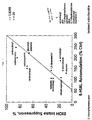
- Fig. 1 The results of ethanol intake suppression plotted as a function of 5-HLAL accumulation are presented in Fig. 1.
- 11 of them suppressed hamster ethanol intake with long chain 7- ⁇ -carboxyalkyl-derivatives and daidzin being most active (>60 suppression) followed by daidzein, 2-(1,3-dioxan-2-yl)ethyl-, 7- ⁇ -bromobutyl-daidzein derivatives (-30% suppression).
- FIG. 1 clearly demonstrates a positive correlation between ethanol intake suppression and 5-HIAL accumulation.
- Fig. 2 correlation was also observed when the mitochondrial MAO/ALDH pathway was assayed with DA as the substrate: the higher the DOPAL accumulation, the greater the ethanol intake suppression.
- an assay based upon the enzyme systems of serotonin or dopamine is described.
- Candidate compounds were screened for their antidipsotropic properties by determining their ability to interfere, inhibit or otherwise interact with the enzyme systems of serotonin or dopamine in a manner to alter the amount of aldehyde present in the enzyme system.
- the candidate compounds screened according to the assay of the present invention were those identified in the preceding Example.
- the 5-HLAL accumulation, % control was determined for each compound and then normalized to the 5-HIAL accumulation, % control of daidzin to produce an antidipsotropic index (5-HIAL) of the present invention.
- a similar antidipsotropic index can be created based upon the DOPAL accumulation, % control indicated in Fig.
- the antidipsotropic index for each compound was then plotted as a function of ethanol suppression previously determined for each compound.
- the results shown in Fig. 3 indicate a direct linear correlation between the antidipsotropic index and ethanol intake suppression, i.e., the greater the antidipsotropic index for the compound, the greater the ethanol intake suppression capability of the compound, providing for the first time a mechanistic basis and reliable index based upon aldehyde intermediates of monoamine metabolism useful as a rapid in vitro assay that could eventually be automated for high throughput drug screening by conventional means known to those skilled in the in vitro assay art.
- the aldehyde intermediates accumulated during the mitochondria-catalyzed monoamine metabolism described in Example VI can be measured be a biolurainescent assay using bacterial luciferase.
- the bioluminescent assay is simple and can easily be automated for high throughput drug screening.
- Bacterial luciferase catalyzes the oxidation of FMNH 2 and a long chain aldehyde (e.g., n-decylaldehyde), a reaction which also results in light emission.
- Bacterial luciferase is used to determine substrate/binding activity with 5-HIAL or DOPAL.
- the mitochondrial assay described in Example VI is modified by using a long chain primary amine, instead of 5-HT or DA, as the substrate, to accommodate the substrate requirement of bacterial luciferase.
- Monoamine oxidase has been shown to catalyze the conversion of long chain primary amines (e.g.; n-decylamine) to their corresponding aldehydes (n-decylaldehyde).
Landscapes
- Health & Medical Sciences (AREA)
- Chemical & Material Sciences (AREA)
- Life Sciences & Earth Sciences (AREA)
- Organic Chemistry (AREA)
- General Health & Medical Sciences (AREA)
- Engineering & Computer Science (AREA)
- Zoology (AREA)
- Proteomics, Peptides & Aminoacids (AREA)
- Wood Science & Technology (AREA)
- Molecular Biology (AREA)
- Public Health (AREA)
- Medicinal Chemistry (AREA)
- Pharmacology & Pharmacy (AREA)
- Animal Behavior & Ethology (AREA)
- Bioinformatics & Cheminformatics (AREA)
- Veterinary Medicine (AREA)
- Biotechnology (AREA)
- Microbiology (AREA)
- Biochemistry (AREA)
- Genetics & Genomics (AREA)
- General Engineering & Computer Science (AREA)
- Epidemiology (AREA)
- Analytical Chemistry (AREA)
- Biophysics (AREA)
- Physics & Mathematics (AREA)
- Immunology (AREA)
- Addiction (AREA)
- Psychiatry (AREA)
- Nuclear Medicine, Radiotherapy & Molecular Imaging (AREA)
- General Chemical & Material Sciences (AREA)
- Chemical Kinetics & Catalysis (AREA)
- Neurosurgery (AREA)
- Neurology (AREA)
- Biomedical Technology (AREA)
- Pharmaceuticals Containing Other Organic And Inorganic Compounds (AREA)
Claims (6)
- Verfahren zum Identifizieren von Verbindungen, die beim Vermindern eines Alkoholkonsums wirksam sind, umfassend ein Auswählen einer Testverbindung,
Etablieren eines Enzymsystems, einschließlich eines Monoaminoxidase-Substrats,
Ermöglichen einer katalytischen oxidativen Desaminierung eines Monoaminoxidase-Substrats in einen Aldehyd,
Ermöglichen eines Katabolismus eines Aldehyds in eine Carbonsäure durch ALDH-2,
Messen einer ersten Konzentration an Aldehyd,
In-Kontakt-Bringen der Testverbindung mit dem Enzymsystem,
Messen einer zweiten Konzentration an Aldehyd,
Vergleichen der ersten Konzentration mit der zweiten Konzentration. - Verfahren nach Anspruch 1, wobei das Monoaminoxidase-Substrat Serotonin oder Dopamin ist.
- Verfahren nach Anspruch 1, wobei der Aldehyd 5-Hydroxyindol-3-acetaldehyd oder 3,4-Dihydroxyphenyl-3-acetaldehyd ist.
- Verfahren zum Identifizieren von Verbindungen, die beim Vermindern eines Alkoholkonsums wirksam sind, umfassend ein Auswählen einer Testverbindung,
Etablieren eines Enzymsystems, einschließlich eines Monoaminoxidase-Substrats,
Ermöglichen einer katalytischen oxidativen Desaminierung eines Monoaminoxidase-Substrats in einen Aldehyd,
Ermöglichen eines Katabolismus eines Aldehyds in eine Carbonsäure durch ALDH-2,
In-Kontakt-Bringen der Testverbindung mit dem Enzymsystem,
Messen einer Konzentration an Aldehyd und
Vergleichen der Konzentration an Aldehyd mit Konzentrationen an Aldehyd, die durch Verbindungen erzeugt werden, die eine bekannte antidipsotrope Aktivität aufweisen. - Verfahren nach Anspruch 4, wobei das Monoarninoxidase-Substrat Serotonin oder Dopamin ist.
- Verfahren nach Anspruch 4, wobei der Aldehyd 5-Hydroxyindol-3-acetaldehyd oder 3,4-Dihydroxyphenylacetaldehyd ist.
Priority Applications (1)
| Application Number | Priority Date | Filing Date | Title |
|---|---|---|---|
| EP05076179A EP1645272A3 (de) | 1998-05-12 | 1999-05-12 | Daidzin-derivate zur Behandlung von Alkoholabhaengigkeit oder -Missbrauch |
Applications Claiming Priority (3)
| Application Number | Priority Date | Filing Date | Title |
|---|---|---|---|
| US8514898P | 1998-05-12 | 1998-05-12 | |
| US85148P | 1998-05-12 | ||
| PCT/US1999/010339 WO1999058124A1 (en) | 1998-05-12 | 1999-05-12 | Methods and assays useful in the treatment of alcohol dependence or alcohol abuse |
Related Child Applications (1)
| Application Number | Title | Priority Date | Filing Date |
|---|---|---|---|
| EP05076179A Division EP1645272A3 (de) | 1998-05-12 | 1999-05-12 | Daidzin-derivate zur Behandlung von Alkoholabhaengigkeit oder -Missbrauch |
Publications (2)
| Publication Number | Publication Date |
|---|---|
| EP1077697A1 EP1077697A1 (de) | 2001-02-28 |
| EP1077697B1 true EP1077697B1 (de) | 2006-07-19 |
Family
ID=22189761
Family Applications (1)
| Application Number | Title | Priority Date | Filing Date |
|---|---|---|---|
| EP99921892A Expired - Lifetime EP1077697B1 (de) | 1998-05-12 | 1999-05-12 | Verfahren und testen verwendbar bei der behandlung von alkoholabhängigkeit oder -missbrauch |
Country Status (6)
| Country | Link |
|---|---|
| US (2) | US6121010A (de) |
| EP (1) | EP1077697B1 (de) |
| AU (1) | AU3899199A (de) |
| CA (1) | CA2334830A1 (de) |
| DE (1) | DE69932427T2 (de) |
| WO (1) | WO1999058124A1 (de) |
Families Citing this family (25)
| Publication number | Priority date | Publication date | Assignee | Title |
|---|---|---|---|---|
| US6261565B1 (en) * | 1996-03-13 | 2001-07-17 | Archer Daniels Midland Company | Method of preparing and using isoflavones |
| US6391310B1 (en) * | 1996-03-13 | 2002-05-21 | Archer Daniels Midland Company | Method of preparing and using isoflavones for the treatment of neurological symptoms |
| US6465436B2 (en) | 2000-06-01 | 2002-10-15 | Mclean Hospital | Method for treating alcohol intoxication and alcohol abuse |
| WO2002002091A2 (en) | 2000-06-30 | 2002-01-10 | Cardiff & Vale National Health Service Trust | Methods and compositions for the treatment of alcoholism and alcohol dependence |
| DK1441708T3 (da) | 2001-11-05 | 2009-07-06 | Krele Pharmaceuticals Llc | Sammensætninger og fremgangsmåder til forögelse af föjelighed med terapier ved anvendelse af aldehyddehydrogenase-inhibitorer og behandling af alkoholisme |
| US6703216B2 (en) | 2002-03-14 | 2004-03-09 | The Regents Of The University Of California | Methods, compositions and apparatuses for detection of gamma-hydroxybutyric acid (GHB) |
| AU2003247844B2 (en) | 2002-06-27 | 2009-01-22 | The Endowment For Research In Human Biology, Inc. | Compounds useful for the inhibition of ALDH |
| EP2345412A1 (de) * | 2005-12-02 | 2011-07-20 | The Johns Hopkins University | Verwendung von hochdosierten Oxazaphosphorinmedikamenten zur Behandlung von Immunstörungen |
| CA2653056A1 (en) | 2006-07-27 | 2008-01-31 | Cv Therapeutics, Inc. | Aldh-2 inhibitors in the treatment of addiction |
| US20080207610A1 (en) * | 2006-07-27 | 2008-08-28 | Jeff Zablocki | Aldh-2 inhibitors in the treatment of addiction |
| US8158810B2 (en) * | 2006-07-27 | 2012-04-17 | Gilead Sciences, Inc. | ALDH-2 inhibitors in the treatment of addiction |
| WO2008034076A2 (en) | 2006-09-15 | 2008-03-20 | The Johns Hopkins University | Cyclophosphamide in combination with immune therapeutics |
| WO2008034071A2 (en) | 2006-09-15 | 2008-03-20 | The Johns Hopkins University | Method of identifying patients suitable for high-dose cyclophosphamide treatment |
| WO2008034074A2 (en) | 2006-09-15 | 2008-03-20 | The Johns Hopkins University | Cyclosphosphamide in combination with anti-idiotypic vaccines |
| EP2129665A1 (de) | 2007-04-05 | 2009-12-09 | CV Therapeutics Inc. | Chinazolinonderivate als aldh-2-inhibitoren |
| US20090124672A1 (en) * | 2007-11-06 | 2009-05-14 | Ivan Diamond | Aldh-2 inhibitors in the treatment of psychiatric disorders |
| WO2009067699A2 (en) * | 2007-11-21 | 2009-05-28 | Accentia Biopharmaceuticals, Inc. | Methods for providing a system of care for an oxazaphosphorine drug regimen |
| US9026372B2 (en) * | 2007-11-21 | 2015-05-05 | Accentia Biopharmaceuticals, Inc. | Methods for providing a system of care for a high-dose oxazaphosphorine drug regimen |
| WO2009094028A1 (en) * | 2008-01-24 | 2009-07-30 | Cv Therapeutics, Inc. | Aldh-2 inhibitors in the treatment of addiction |
| US20130165511A1 (en) | 2010-09-01 | 2013-06-27 | TONIX Pharmaceuticals Holding Corp | Treatment for cocaine addiction |
| TWI567061B (zh) | 2011-07-01 | 2017-01-21 | 吉李德科學股份有限公司 | 用於治療成癮之化合物 |
| AR087700A1 (es) | 2011-08-30 | 2014-04-09 | Gilead Sciences Inc | Inhibidores de aldh-2 en el tratamiento de adicciones |
| CN103145673B (zh) | 2011-12-06 | 2015-05-20 | 安徽贝克生物制药有限公司 | 黄豆苷元衍生物及其药学上可接受的盐 |
| EP4540228A1 (de) | 2022-06-14 | 2025-04-23 | Amygdala Neurosciences, Inc. | Aldh-2-hemmerverbindungen und verfahren zur verwendung |
| AU2023295214A1 (en) | 2022-06-14 | 2025-03-06 | Amygdala Neurosciences, Inc. | Aldh-2 inhibitor compounds and methods of use |
Family Cites Families (2)
| Publication number | Priority date | Publication date | Assignee | Title |
|---|---|---|---|---|
| US5204369A (en) * | 1991-07-01 | 1993-04-20 | The Endowment For Research In Human Biology | Method for the inhibition of aldh-i useful in the treatment of alcohol dependence or alcohol abuse |
| AU2003247844B2 (en) * | 2002-06-27 | 2009-01-22 | The Endowment For Research In Human Biology, Inc. | Compounds useful for the inhibition of ALDH |
-
1999
- 1999-05-12 WO PCT/US1999/010339 patent/WO1999058124A1/en not_active Ceased
- 1999-05-12 AU AU38991/99A patent/AU3899199A/en not_active Abandoned
- 1999-05-12 CA CA002334830A patent/CA2334830A1/en not_active Abandoned
- 1999-05-12 EP EP99921892A patent/EP1077697B1/de not_active Expired - Lifetime
- 1999-05-12 US US09/310,614 patent/US6121010A/en not_active Expired - Lifetime
- 1999-05-12 DE DE69932427T patent/DE69932427T2/de not_active Expired - Lifetime
-
2007
- 2007-07-31 US US11/831,795 patent/US20070270332A1/en not_active Abandoned
Also Published As
| Publication number | Publication date |
|---|---|
| EP1077697A1 (de) | 2001-02-28 |
| AU3899199A (en) | 1999-11-29 |
| DE69932427T2 (de) | 2007-02-22 |
| CA2334830A1 (en) | 1999-11-18 |
| WO1999058124A1 (en) | 1999-11-18 |
| DE69932427D1 (de) | 2006-08-31 |
| US6121010A (en) | 2000-09-19 |
| US20070270332A1 (en) | 2007-11-22 |
Similar Documents
| Publication | Publication Date | Title |
|---|---|---|
| US20070270332A1 (en) | Methods and assays useful in the treatment of alcohol dependence or alcohol abuse | |
| el Mouelhi et al. | Species-dependent enantioselective glucuronidation of three 2-arylpropionic acids. Naproxen, ibuprofen, and benoxaprofen. | |
| Rooke et al. | The mitochondrial monoamine oxidase− aldehyde dehydrogenase pathway: a potential site of action of daidzin | |
| Hipolito et al. | Brain metabolism of ethanol and alcoholism: an update | |
| US5886028A (en) | Method for the inhibition of ALDH-I useful in the treatment of alcohol dependence or alcohol abuse | |
| Relling et al. | Human cytochrome P450 metabolism of teniposide and etoposide. | |
| Otsuka et al. | A detoxication route for acetaldehyde: metabolism of diacetyl, acetoin, and 2, 3-butanediol in liver homogenate and perfused liver of rats | |
| Sokolove | Interactions of adriamycin aglycones with mitochondria may mediate adriamycin cardiotoxicity | |
| US20140378522A1 (en) | Unifying mechanism and methods to prevent cancer and neurodegenerative diseases | |
| Kotake et al. | MPP+ analogs acting on mitochondria and inducing neuro-degeneration | |
| US5196533A (en) | Cyclization of 5 amino-pyrimidines to quinoid 6,6 disubstituted dihydropteridines | |
| US6255497B1 (en) | Method for the inhibition of ALDH-I useful in the treatment of alcohol dependence or alcohol abuse | |
| INAGAKI et al. | Inhibition of aldose reductases from rat and bovine lenses by hydantoin derivatives | |
| EP0752872B1 (de) | Nadh-oxidase als zielmolekül in diagnose und therapie | |
| IL92622A (en) | Pharmaceutical composition containing an inhibitor of the enzymatic conversion of protoporphyrinogen to protoporphyrin ix for use in the treatment or detection of tumors | |
| Fu et al. | Lipid peroxidation in rats intoxicated with 3-nitropropionic acid | |
| Teare et al. | Lipid peroxidation in rats chronically fed ethanol. | |
| SK287607B6 (sk) | Spôsob stanovenia zlúčenín vhodných na inhibíciu aktivity aspoň jednej karboanhydrázy a použitie uvedených zlúčenín ako liečiva na liečbu a/alebo prevenciu obezity | |
| Beedham et al. | Role of aldehyde oxidase in biogenic amine metabolism | |
| Azuma et al. | Calcium overload-induced myocardial damage caused by isoproterenol and by adriamycin: possible role of taurine in its prevention | |
| Stewart et al. | GlutathioneS-Transferase-Catalyzed Conjugation of Bioactivated Aflatoxin B1in Rabbit Lung and Liver | |
| EP1645272A2 (de) | Daidzin-derivate zur Behandlung von Alkoholabhaengigkeit oder -Missbrauch | |
| Udenfriend | Biochemistry of serotonin and other indoleamines | |
| Sausen et al. | Elevated 8-hydroxydeoxyguanosine in hepatic DNA of rats following exposure to peroxisome proliferators: relationship to mitochondrial alterations | |
| SUZUKI | Lipid peroxidation and generations of oxygen radicals induced by cephaloridine in renal cortical microsomes of rats |
Legal Events
| Date | Code | Title | Description |
|---|---|---|---|
| PUAI | Public reference made under article 153(3) epc to a published international application that has entered the european phase |
Free format text: ORIGINAL CODE: 0009012 |
|
| 17P | Request for examination filed |
Effective date: 20001212 |
|
| AK | Designated contracting states |
Kind code of ref document: A1 Designated state(s): CH DE FI FR GB IT LI |
|
| 17Q | First examination report despatched |
Effective date: 20031124 |
|
| GRAP | Despatch of communication of intention to grant a patent |
Free format text: ORIGINAL CODE: EPIDOSNIGR1 |
|
| RIC1 | Information provided on ipc code assigned before grant |
Ipc: G01N 33/15 19800101ALI20051124BHEP Ipc: A61P 25/32 00000000ALI20051124BHEP Ipc: A61K 31/35 19850101AFI20051124BHEP |
|
| GRAS | Grant fee paid |
Free format text: ORIGINAL CODE: EPIDOSNIGR3 |
|
| GRAA | (expected) grant |
Free format text: ORIGINAL CODE: 0009210 |
|
| AK | Designated contracting states |
Kind code of ref document: B1 Designated state(s): CH DE FI FR GB IT LI |
|
| PG25 | Lapsed in a contracting state [announced via postgrant information from national office to epo] |
Ref country code: IT Free format text: LAPSE BECAUSE OF FAILURE TO SUBMIT A TRANSLATION OF THE DESCRIPTION OR TO PAY THE FEE WITHIN THE PRESCRIBED TIME-LIMIT;WARNING: LAPSES OF ITALIAN PATENTS WITH EFFECTIVE DATE BEFORE 2007 MAY HAVE OCCURRED AT ANY TIME BEFORE 2007. THE CORRECT EFFECTIVE DATE MAY BE DIFFERENT FROM THE ONE RECORDED. Effective date: 20060719 Ref country code: FI Free format text: LAPSE BECAUSE OF FAILURE TO SUBMIT A TRANSLATION OF THE DESCRIPTION OR TO PAY THE FEE WITHIN THE PRESCRIBED TIME-LIMIT Effective date: 20060719 |
|
| REG | Reference to a national code |
Ref country code: GB Ref legal event code: FG4D |
|
| REG | Reference to a national code |
Ref country code: CH Ref legal event code: EP |
|
| REF | Corresponds to: |
Ref document number: 69932427 Country of ref document: DE Date of ref document: 20060831 Kind code of ref document: P |
|
| REG | Reference to a national code |
Ref country code: CH Ref legal event code: NV Representative=s name: A. BRAUN, BRAUN, HERITIER, ESCHMANN AG PATENTANWAE |
|
| ET | Fr: translation filed | ||
| PLBE | No opposition filed within time limit |
Free format text: ORIGINAL CODE: 0009261 |
|
| STAA | Information on the status of an ep patent application or granted ep patent |
Free format text: STATUS: NO OPPOSITION FILED WITHIN TIME LIMIT |
|
| 26N | No opposition filed |
Effective date: 20070420 |
|
| REG | Reference to a national code |
Ref country code: CH Ref legal event code: PFA Owner name: THE ENDOWMENT FOR RESEARCH IN HUMAN BIOLOGY, INC. Free format text: THE ENDOWMENT FOR RESEARCH IN HUMAN BIOLOGY, INC.#SEELEY G. MUDD BUILDING, ROOM 105, 250 LONGWOOD AVENUE#BOSTON, MA 02115 (US) -TRANSFER TO- THE ENDOWMENT FOR RESEARCH IN HUMAN BIOLOGY, INC.#SEELEY G. MUDD BUILDING, ROOM 105, 250 LONGWOOD AVENUE#BOSTON, MA 02115 (US) |
|
| REG | Reference to a national code |
Ref country code: CH Ref legal event code: PCAR Free format text: NEW ADDRESS: HOLBEINSTRASSE 36-38, 4051 BASEL (CH) |
|
| REG | Reference to a national code |
Ref country code: FR Ref legal event code: PLFP Year of fee payment: 18 |
|
| REG | Reference to a national code |
Ref country code: FR Ref legal event code: PLFP Year of fee payment: 19 |
|
| REG | Reference to a national code |
Ref country code: FR Ref legal event code: PLFP Year of fee payment: 20 |
|
| PGFP | Annual fee paid to national office [announced via postgrant information from national office to epo] |
Ref country code: DE Payment date: 20180529 Year of fee payment: 20 Ref country code: CH Payment date: 20180601 Year of fee payment: 20 |
|
| PGFP | Annual fee paid to national office [announced via postgrant information from national office to epo] |
Ref country code: IT Payment date: 20180522 Year of fee payment: 20 Ref country code: FR Payment date: 20180525 Year of fee payment: 20 |
|
| PGFP | Annual fee paid to national office [announced via postgrant information from national office to epo] |
Ref country code: GB Payment date: 20180529 Year of fee payment: 20 |
|
| REG | Reference to a national code |
Ref country code: DE Ref legal event code: R071 Ref document number: 69932427 Country of ref document: DE |
|
| REG | Reference to a national code |
Ref country code: CH Ref legal event code: PL |
|
| REG | Reference to a national code |
Ref country code: GB Ref legal event code: PE20 Expiry date: 20190511 |
|
| PG25 | Lapsed in a contracting state [announced via postgrant information from national office to epo] |
Ref country code: GB Free format text: LAPSE BECAUSE OF EXPIRATION OF PROTECTION Effective date: 20190511 |