EP1080192B1 - Oligonucleotides antisens pour le traitement de cellules proliferantes - Google Patents
Oligonucleotides antisens pour le traitement de cellules proliferantes Download PDFInfo
- Publication number
- EP1080192B1 EP1080192B1 EP99926337A EP99926337A EP1080192B1 EP 1080192 B1 EP1080192 B1 EP 1080192B1 EP 99926337 A EP99926337 A EP 99926337A EP 99926337 A EP99926337 A EP 99926337A EP 1080192 B1 EP1080192 B1 EP 1080192B1
- Authority
- EP
- European Patent Office
- Prior art keywords
- oligoribo
- oligodeoxyribonucleotide
- protein
- proliferating cells
- mrna
- Prior art date
- Legal status (The legal status is an assumption and is not a legal conclusion. Google has not performed a legal analysis and makes no representation as to the accuracy of the status listed.)
- Expired - Lifetime
Links
- 230000002062 proliferating effect Effects 0.000 title claims description 10
- 239000000074 antisense oligonucleotide Substances 0.000 title description 9
- 238000012230 antisense oligonucleotides Methods 0.000 title description 9
- 108020000948 Antisense Oligonucleotides Proteins 0.000 title description 6
- 102000004169 proteins and genes Human genes 0.000 claims abstract description 15
- 108090000623 proteins and genes Proteins 0.000 claims abstract description 15
- 108020004999 messenger RNA Proteins 0.000 claims abstract description 11
- 230000022131 cell cycle Effects 0.000 claims abstract description 4
- 108091034117 Oligonucleotide Proteins 0.000 claims description 53
- 229940124276 oligodeoxyribonucleotide Drugs 0.000 claims description 21
- 239000002773 nucleotide Substances 0.000 claims description 13
- 125000003729 nucleotide group Chemical group 0.000 claims description 13
- 206010028980 Neoplasm Diseases 0.000 claims description 9
- 239000003814 drug Substances 0.000 claims description 8
- 230000000295 complement effect Effects 0.000 claims description 6
- 125000002467 phosphate group Chemical group [H]OP(=O)(O[H])O[*] 0.000 claims description 6
- 150000003839 salts Chemical class 0.000 claims description 6
- 231100000433 cytotoxic Toxicity 0.000 claims description 5
- 230000001472 cytotoxic effect Effects 0.000 claims description 5
- 230000002147 killing effect Effects 0.000 claims description 5
- 208000023275 Autoimmune disease Diseases 0.000 claims description 4
- 206010020751 Hypersensitivity Diseases 0.000 claims description 4
- 206010061218 Inflammation Diseases 0.000 claims description 4
- 208000025747 Rheumatic disease Diseases 0.000 claims description 4
- 230000007815 allergy Effects 0.000 claims description 4
- 230000037396 body weight Effects 0.000 claims description 4
- 238000006243 chemical reaction Methods 0.000 claims description 4
- 230000004054 inflammatory process Effects 0.000 claims description 4
- 238000000034 method Methods 0.000 claims description 4
- 239000000654 additive Substances 0.000 claims description 3
- -1 methylene(methylimino) Chemical class 0.000 claims description 3
- 239000000126 substance Substances 0.000 claims description 3
- 206010025323 Lymphomas Diseases 0.000 claims description 2
- ZRALSGWEFCBTJO-UHFFFAOYSA-N guanidine group Chemical group NC(=N)N ZRALSGWEFCBTJO-UHFFFAOYSA-N 0.000 claims description 2
- YACKEPLHDIMKIO-UHFFFAOYSA-N methylphosphonic acid Chemical compound CP(O)(O)=O YACKEPLHDIMKIO-UHFFFAOYSA-N 0.000 claims description 2
- PTMHPRAIXMAOOB-UHFFFAOYSA-L phosphoramidate Chemical compound NP([O-])([O-])=O PTMHPRAIXMAOOB-UHFFFAOYSA-L 0.000 claims description 2
- 125000005642 phosphothioate group Chemical group 0.000 claims description 2
- 239000012050 conventional carrier Substances 0.000 claims 2
- 238000002054 transplantation Methods 0.000 claims 2
- 230000004663 cell proliferation Effects 0.000 abstract description 5
- 230000001575 pathological effect Effects 0.000 abstract 1
- 210000004027 cell Anatomy 0.000 description 35
- JLCPHMBAVCMARE-UHFFFAOYSA-N [3-[[3-[[3-[[3-[[3-[[3-[[3-[[3-[[3-[[3-[[3-[[5-(2-amino-6-oxo-1H-purin-9-yl)-3-[[3-[[3-[[3-[[3-[[3-[[5-(2-amino-6-oxo-1H-purin-9-yl)-3-[[5-(2-amino-6-oxo-1H-purin-9-yl)-3-hydroxyoxolan-2-yl]methoxy-hydroxyphosphoryl]oxyoxolan-2-yl]methoxy-hydroxyphosphoryl]oxy-5-(5-methyl-2,4-dioxopyrimidin-1-yl)oxolan-2-yl]methoxy-hydroxyphosphoryl]oxy-5-(6-aminopurin-9-yl)oxolan-2-yl]methoxy-hydroxyphosphoryl]oxy-5-(6-aminopurin-9-yl)oxolan-2-yl]methoxy-hydroxyphosphoryl]oxy-5-(6-aminopurin-9-yl)oxolan-2-yl]methoxy-hydroxyphosphoryl]oxy-5-(6-aminopurin-9-yl)oxolan-2-yl]methoxy-hydroxyphosphoryl]oxyoxolan-2-yl]methoxy-hydroxyphosphoryl]oxy-5-(5-methyl-2,4-dioxopyrimidin-1-yl)oxolan-2-yl]methoxy-hydroxyphosphoryl]oxy-5-(4-amino-2-oxopyrimidin-1-yl)oxolan-2-yl]methoxy-hydroxyphosphoryl]oxy-5-(5-methyl-2,4-dioxopyrimidin-1-yl)oxolan-2-yl]methoxy-hydroxyphosphoryl]oxy-5-(5-methyl-2,4-dioxopyrimidin-1-yl)oxolan-2-yl]methoxy-hydroxyphosphoryl]oxy-5-(6-aminopurin-9-yl)oxolan-2-yl]methoxy-hydroxyphosphoryl]oxy-5-(6-aminopurin-9-yl)oxolan-2-yl]methoxy-hydroxyphosphoryl]oxy-5-(4-amino-2-oxopyrimidin-1-yl)oxolan-2-yl]methoxy-hydroxyphosphoryl]oxy-5-(4-amino-2-oxopyrimidin-1-yl)oxolan-2-yl]methoxy-hydroxyphosphoryl]oxy-5-(4-amino-2-oxopyrimidin-1-yl)oxolan-2-yl]methoxy-hydroxyphosphoryl]oxy-5-(6-aminopurin-9-yl)oxolan-2-yl]methoxy-hydroxyphosphoryl]oxy-5-(4-amino-2-oxopyrimidin-1-yl)oxolan-2-yl]methyl [5-(6-aminopurin-9-yl)-2-(hydroxymethyl)oxolan-3-yl] hydrogen phosphate Polymers Cc1cn(C2CC(OP(O)(=O)OCC3OC(CC3OP(O)(=O)OCC3OC(CC3O)n3cnc4c3nc(N)[nH]c4=O)n3cnc4c3nc(N)[nH]c4=O)C(COP(O)(=O)OC3CC(OC3COP(O)(=O)OC3CC(OC3COP(O)(=O)OC3CC(OC3COP(O)(=O)OC3CC(OC3COP(O)(=O)OC3CC(OC3COP(O)(=O)OC3CC(OC3COP(O)(=O)OC3CC(OC3COP(O)(=O)OC3CC(OC3COP(O)(=O)OC3CC(OC3COP(O)(=O)OC3CC(OC3COP(O)(=O)OC3CC(OC3COP(O)(=O)OC3CC(OC3COP(O)(=O)OC3CC(OC3COP(O)(=O)OC3CC(OC3COP(O)(=O)OC3CC(OC3COP(O)(=O)OC3CC(OC3COP(O)(=O)OC3CC(OC3CO)n3cnc4c(N)ncnc34)n3ccc(N)nc3=O)n3cnc4c(N)ncnc34)n3ccc(N)nc3=O)n3ccc(N)nc3=O)n3ccc(N)nc3=O)n3cnc4c(N)ncnc34)n3cnc4c(N)ncnc34)n3cc(C)c(=O)[nH]c3=O)n3cc(C)c(=O)[nH]c3=O)n3ccc(N)nc3=O)n3cc(C)c(=O)[nH]c3=O)n3cnc4c3nc(N)[nH]c4=O)n3cnc4c(N)ncnc34)n3cnc4c(N)ncnc34)n3cnc4c(N)ncnc34)n3cnc4c(N)ncnc34)O2)c(=O)[nH]c1=O JLCPHMBAVCMARE-UHFFFAOYSA-N 0.000 description 30
- 238000002347 injection Methods 0.000 description 17
- 239000007924 injection Substances 0.000 description 17
- 230000000694 effects Effects 0.000 description 9
- 239000002904 solvent Substances 0.000 description 6
- 210000002236 cellular spheroid Anatomy 0.000 description 4
- 239000002299 complementary DNA Substances 0.000 description 4
- 201000010099 disease Diseases 0.000 description 4
- 208000037265 diseases, disorders, signs and symptoms Diseases 0.000 description 4
- 238000000520 microinjection Methods 0.000 description 4
- 230000004048 modification Effects 0.000 description 4
- 238000012986 modification Methods 0.000 description 4
- 239000002953 phosphate buffered saline Substances 0.000 description 4
- XJMOSONTPMZWPB-UHFFFAOYSA-M propidium iodide Chemical compound [I-].[I-].C12=CC(N)=CC=C2C2=CC=C(N)C=C2[N+](CCC[N+](C)(CC)CC)=C1C1=CC=CC=C1 XJMOSONTPMZWPB-UHFFFAOYSA-M 0.000 description 4
- 238000012360 testing method Methods 0.000 description 4
- 210000004881 tumor cell Anatomy 0.000 description 4
- FWMNVWWHGCHHJJ-SKKKGAJSSA-N 4-amino-1-[(2r)-6-amino-2-[[(2r)-2-[[(2r)-2-[[(2r)-2-amino-3-phenylpropanoyl]amino]-3-phenylpropanoyl]amino]-4-methylpentanoyl]amino]hexanoyl]piperidine-4-carboxylic acid Chemical compound C([C@H](C(=O)N[C@H](CC(C)C)C(=O)N[C@H](CCCCN)C(=O)N1CCC(N)(CC1)C(O)=O)NC(=O)[C@H](N)CC=1C=CC=CC=1)C1=CC=CC=C1 FWMNVWWHGCHHJJ-SKKKGAJSSA-N 0.000 description 3
- 150000001413 amino acids Chemical class 0.000 description 3
- DZBUGLKDJFMEHC-UHFFFAOYSA-N benzoquinolinylidene Natural products C1=CC=CC2=CC3=CC=CC=C3N=C21 DZBUGLKDJFMEHC-UHFFFAOYSA-N 0.000 description 3
- 230000015572 biosynthetic process Effects 0.000 description 3
- 201000011510 cancer Diseases 0.000 description 3
- 230000010261 cell growth Effects 0.000 description 3
- 239000006059 cover glass Substances 0.000 description 3
- 230000012010 growth Effects 0.000 description 3
- 239000001963 growth medium Substances 0.000 description 3
- 238000011534 incubation Methods 0.000 description 3
- 150000007523 nucleic acids Chemical group 0.000 description 3
- 238000011160 research Methods 0.000 description 3
- 206010005003 Bladder cancer Diseases 0.000 description 2
- 208000008839 Kidney Neoplasms Diseases 0.000 description 2
- 206010038389 Renal cancer Diseases 0.000 description 2
- 108091081021 Sense strand Proteins 0.000 description 2
- 208000007097 Urinary Bladder Neoplasms Diseases 0.000 description 2
- 125000000641 acridinyl group Chemical group C1(=CC=CC2=NC3=CC=CC=C3C=C12)* 0.000 description 2
- 239000012072 active phase Substances 0.000 description 2
- 230000000692 anti-sense effect Effects 0.000 description 2
- 230000008901 benefit Effects 0.000 description 2
- 230000015556 catabolic process Effects 0.000 description 2
- 230000030833 cell death Effects 0.000 description 2
- 230000034994 death Effects 0.000 description 2
- 230000007123 defense Effects 0.000 description 2
- 238000006731 degradation reaction Methods 0.000 description 2
- LOKCTEFSRHRXRJ-UHFFFAOYSA-I dipotassium trisodium dihydrogen phosphate hydrogen phosphate dichloride Chemical compound P(=O)(O)(O)[O-].[K+].P(=O)(O)([O-])[O-].[Na+].[Na+].[Cl-].[K+].[Cl-].[Na+] LOKCTEFSRHRXRJ-UHFFFAOYSA-I 0.000 description 2
- 229940079593 drug Drugs 0.000 description 2
- 230000003834 intracellular effect Effects 0.000 description 2
- 201000010982 kidney cancer Diseases 0.000 description 2
- 108020004707 nucleic acids Proteins 0.000 description 2
- 102000039446 nucleic acids Human genes 0.000 description 2
- 229940046166 oligodeoxynucleotide Drugs 0.000 description 2
- 125000006853 reporter group Chemical group 0.000 description 2
- 230000037390 scarring Effects 0.000 description 2
- 239000000243 solution Substances 0.000 description 2
- 238000003786 synthesis reaction Methods 0.000 description 2
- 238000002560 therapeutic procedure Methods 0.000 description 2
- HSINOMROUCMIEA-FGVHQWLLSA-N (2s,4r)-4-[(3r,5s,6r,7r,8s,9s,10s,13r,14s,17r)-6-ethyl-3,7-dihydroxy-10,13-dimethyl-2,3,4,5,6,7,8,9,11,12,14,15,16,17-tetradecahydro-1h-cyclopenta[a]phenanthren-17-yl]-2-methylpentanoic acid Chemical compound C([C@@]12C)C[C@@H](O)C[C@H]1[C@@H](CC)[C@@H](O)[C@@H]1[C@@H]2CC[C@]2(C)[C@@H]([C@H](C)C[C@H](C)C(O)=O)CC[C@H]21 HSINOMROUCMIEA-FGVHQWLLSA-N 0.000 description 1
- 108091032973 (ribonucleotides)n+m Proteins 0.000 description 1
- TZMSYXZUNZXBOL-UHFFFAOYSA-N 10H-phenoxazine Chemical compound C1=CC=C2NC3=CC=CC=C3OC2=C1 TZMSYXZUNZXBOL-UHFFFAOYSA-N 0.000 description 1
- VEPOHXYIFQMVHW-XOZOLZJESA-N 2,3-dihydroxybutanedioic acid (2S,3S)-3,4-dimethyl-2-phenylmorpholine Chemical compound OC(C(O)C(O)=O)C(O)=O.C[C@H]1[C@@H](OCCN1C)c1ccccc1 VEPOHXYIFQMVHW-XOZOLZJESA-N 0.000 description 1
- 108091027075 5S-rRNA precursor Proteins 0.000 description 1
- QNNARSZPGNJZIX-UHFFFAOYSA-N 6-amino-5-prop-1-ynyl-1h-pyrimidin-2-one Chemical compound CC#CC1=CNC(=O)N=C1N QNNARSZPGNJZIX-UHFFFAOYSA-N 0.000 description 1
- 101001084702 Arabidopsis thaliana Histone H2B.10 Proteins 0.000 description 1
- 206010006187 Breast cancer Diseases 0.000 description 1
- 208000026310 Breast neoplasm Diseases 0.000 description 1
- RTKZXVBYTNMTER-UHFFFAOYSA-N C12=CC=CN=C2C2=CC=CC=C2C2=C1NC=C2 Chemical compound C12=CC=CN=C2C2=CC=CC=C2C2=C1NC=C2 RTKZXVBYTNMTER-UHFFFAOYSA-N 0.000 description 1
- 108020004414 DNA Proteins 0.000 description 1
- KCXVZYZYPLLWCC-UHFFFAOYSA-N EDTA Chemical compound OC(=O)CN(CC(O)=O)CCN(CC(O)=O)CC(O)=O KCXVZYZYPLLWCC-UHFFFAOYSA-N 0.000 description 1
- 241000792859 Enema Species 0.000 description 1
- 108060002716 Exonuclease Proteins 0.000 description 1
- 102000016359 Fibronectins Human genes 0.000 description 1
- 108010067306 Fibronectins Proteins 0.000 description 1
- 102000007999 Nuclear Proteins Human genes 0.000 description 1
- 108010089610 Nuclear Proteins Proteins 0.000 description 1
- 108091093037 Peptide nucleic acid Proteins 0.000 description 1
- PCNDJXKNXGMECE-UHFFFAOYSA-N Phenazine Natural products C1=CC=CC2=NC3=CC=CC=C3N=C21 PCNDJXKNXGMECE-UHFFFAOYSA-N 0.000 description 1
- NBIIXXVUZAFLBC-UHFFFAOYSA-N Phosphoric acid Chemical group OP(O)(O)=O NBIIXXVUZAFLBC-UHFFFAOYSA-N 0.000 description 1
- 239000012980 RPMI-1640 medium Substances 0.000 description 1
- 206010039491 Sarcoma Diseases 0.000 description 1
- 208000024313 Testicular Neoplasms Diseases 0.000 description 1
- 102000004142 Trypsin Human genes 0.000 description 1
- 108090000631 Trypsin Proteins 0.000 description 1
- JXLYSJRDGCGARV-WWYNWVTFSA-N Vinblastine Natural products O=C(O[C@H]1[C@](O)(C(=O)OC)[C@@H]2N(C)c3c(cc(c(OC)c3)[C@]3(C(=O)OC)c4[nH]c5c(c4CCN4C[C@](O)(CC)C[C@H](C3)C4)cccc5)[C@@]32[C@H]2[C@@]1(CC)C=CCN2CC3)C JXLYSJRDGCGARV-WWYNWVTFSA-N 0.000 description 1
- DGEZNRSVGBDHLK-UHFFFAOYSA-N [1,10]phenanthroline Chemical compound C1=CN=C2C3=NC=CC=C3C=CC2=C1 DGEZNRSVGBDHLK-UHFFFAOYSA-N 0.000 description 1
- 125000000217 alkyl group Chemical group 0.000 description 1
- 125000003275 alpha amino acid group Chemical group 0.000 description 1
- 230000000840 anti-viral effect Effects 0.000 description 1
- 238000013459 approach Methods 0.000 description 1
- 239000007864 aqueous solution Substances 0.000 description 1
- 239000003613 bile acid Substances 0.000 description 1
- 201000001531 bladder carcinoma Diseases 0.000 description 1
- 125000004432 carbon atom Chemical group C* 0.000 description 1
- 239000000969 carrier Substances 0.000 description 1
- 238000004113 cell culture Methods 0.000 description 1
- 230000005779 cell damage Effects 0.000 description 1
- 208000037887 cell injury Diseases 0.000 description 1
- 210000000170 cell membrane Anatomy 0.000 description 1
- 230000001413 cellular effect Effects 0.000 description 1
- 230000033077 cellular process Effects 0.000 description 1
- 230000008859 change Effects 0.000 description 1
- 229940044683 chemotherapy drug Drugs 0.000 description 1
- HVYWMOMLDIMFJA-DPAQBDIFSA-N cholesterol group Chemical group [C@@H]1(CC[C@H]2[C@@H]3CC=C4C[C@@H](O)CC[C@]4(C)[C@H]3CC[C@]12C)[C@H](C)CCCC(C)C HVYWMOMLDIMFJA-DPAQBDIFSA-N 0.000 description 1
- DQLATGHUWYMOKM-UHFFFAOYSA-L cisplatin Chemical compound N[Pt](N)(Cl)Cl DQLATGHUWYMOKM-UHFFFAOYSA-L 0.000 description 1
- 229960004316 cisplatin Drugs 0.000 description 1
- 238000003776 cleavage reaction Methods 0.000 description 1
- 238000004040 coloring Methods 0.000 description 1
- 230000000052 comparative effect Effects 0.000 description 1
- 150000001875 compounds Chemical class 0.000 description 1
- 238000011254 conventional chemotherapy Methods 0.000 description 1
- 238000001816 cooling Methods 0.000 description 1
- 210000000805 cytoplasm Anatomy 0.000 description 1
- OPTASPLRGRRNAP-UHFFFAOYSA-N cytosine Chemical class NC=1C=CNC(=O)N=1 OPTASPLRGRRNAP-UHFFFAOYSA-N 0.000 description 1
- 230000001086 cytosolic effect Effects 0.000 description 1
- 239000000824 cytostatic agent Substances 0.000 description 1
- 230000001085 cytostatic effect Effects 0.000 description 1
- 230000007402 cytotoxic response Effects 0.000 description 1
- 125000001295 dansyl group Chemical group [H]C1=C([H])C(N(C([H])([H])[H])C([H])([H])[H])=C2C([H])=C([H])C([H])=C(C2=C1[H])S(*)(=O)=O 0.000 description 1
- OPGYRRGJRBEUFK-UHFFFAOYSA-L disodium;diacetate Chemical compound [Na+].[Na+].CC([O-])=O.CC([O-])=O OPGYRRGJRBEUFK-UHFFFAOYSA-L 0.000 description 1
- 238000004090 dissolution Methods 0.000 description 1
- 239000000975 dye Substances 0.000 description 1
- 239000000839 emulsion Substances 0.000 description 1
- 239000007920 enema Substances 0.000 description 1
- 229940095399 enema Drugs 0.000 description 1
- 125000004185 ester group Chemical group 0.000 description 1
- 102000013165 exonuclease Human genes 0.000 description 1
- 239000012530 fluid Substances 0.000 description 1
- GNBHRKFJIUUOQI-UHFFFAOYSA-N fluorescein Chemical compound O1C(=O)C2=CC=CC=C2C21C1=CC=C(O)C=C1OC1=CC(O)=CC=C21 GNBHRKFJIUUOQI-UHFFFAOYSA-N 0.000 description 1
- 239000007850 fluorescent dye Substances 0.000 description 1
- 206010017758 gastric cancer Diseases 0.000 description 1
- 208000010749 gastric carcinoma Diseases 0.000 description 1
- 150000002402 hexoses Chemical class 0.000 description 1
- 238000007654 immersion Methods 0.000 description 1
- 238000000338 in vitro Methods 0.000 description 1
- 238000001727 in vivo Methods 0.000 description 1
- 230000002401 inhibitory effect Effects 0.000 description 1
- 230000016507 interphase Effects 0.000 description 1
- 238000007913 intrathecal administration Methods 0.000 description 1
- 230000002427 irreversible effect Effects 0.000 description 1
- 230000004446 light reflex Effects 0.000 description 1
- 239000002502 liposome Substances 0.000 description 1
- 239000007788 liquid Substances 0.000 description 1
- 238000004519 manufacturing process Methods 0.000 description 1
- 239000002609 medium Substances 0.000 description 1
- 201000001441 melanoma Diseases 0.000 description 1
- 239000012528 membrane Substances 0.000 description 1
- 102000006240 membrane receptors Human genes 0.000 description 1
- 108020004084 membrane receptors Proteins 0.000 description 1
- 230000011278 mitosis Effects 0.000 description 1
- 239000013642 negative control Substances 0.000 description 1
- 230000001293 nucleolytic effect Effects 0.000 description 1
- 239000002777 nucleoside Substances 0.000 description 1
- 125000003835 nucleoside group Chemical group 0.000 description 1
- 125000004430 oxygen atom Chemical group O* 0.000 description 1
- 230000036961 partial effect Effects 0.000 description 1
- 230000035699 permeability Effects 0.000 description 1
- 239000012071 phase Substances 0.000 description 1
- 150000004032 porphyrins Chemical class 0.000 description 1
- 239000000843 powder Substances 0.000 description 1
- 102000004196 processed proteins & peptides Human genes 0.000 description 1
- 108090000765 processed proteins & peptides Proteins 0.000 description 1
- 230000035755 proliferation Effects 0.000 description 1
- 230000010837 receptor-mediated endocytosis Effects 0.000 description 1
- 102000005962 receptors Human genes 0.000 description 1
- 108020003175 receptors Proteins 0.000 description 1
- 230000009467 reduction Effects 0.000 description 1
- 230000000284 resting effect Effects 0.000 description 1
- 238000012552 review Methods 0.000 description 1
- 125000000548 ribosyl group Chemical group C1([C@H](O)[C@H](O)[C@H](O1)CO)* 0.000 description 1
- 230000007017 scission Effects 0.000 description 1
- 239000007787 solid Substances 0.000 description 1
- 239000007790 solid phase Substances 0.000 description 1
- 238000010186 staining Methods 0.000 description 1
- 201000000498 stomach carcinoma Diseases 0.000 description 1
- 238000007920 subcutaneous administration Methods 0.000 description 1
- 229910052717 sulfur Inorganic materials 0.000 description 1
- 125000004434 sulfur atom Chemical group 0.000 description 1
- 230000001629 suppression Effects 0.000 description 1
- 230000004083 survival effect Effects 0.000 description 1
- 230000009885 systemic effect Effects 0.000 description 1
- RYYWUUFWQRZTIU-UHFFFAOYSA-K thiophosphate Chemical compound [O-]P([O-])([O-])=S RYYWUUFWQRZTIU-UHFFFAOYSA-K 0.000 description 1
- 230000000699 topical effect Effects 0.000 description 1
- 230000001960 triggered effect Effects 0.000 description 1
- 239000012588 trypsin Substances 0.000 description 1
- 201000005112 urinary bladder cancer Diseases 0.000 description 1
- 208000010570 urinary bladder carcinoma Diseases 0.000 description 1
- 229960003048 vinblastine Drugs 0.000 description 1
- JXLYSJRDGCGARV-XQKSVPLYSA-N vincaleukoblastine Chemical compound C([C@@H](C[C@]1(C(=O)OC)C=2C(=CC3=C([C@]45[C@H]([C@@]([C@H](OC(C)=O)[C@]6(CC)C=CCN([C@H]56)CC4)(O)C(=O)OC)N3C)C=2)OC)C[C@@](C2)(O)CC)N2CCC2=C1NC1=CC=CC=C21 JXLYSJRDGCGARV-XQKSVPLYSA-N 0.000 description 1
Images





Classifications
-
- C—CHEMISTRY; METALLURGY
- C12—BIOCHEMISTRY; BEER; SPIRITS; WINE; VINEGAR; MICROBIOLOGY; ENZYMOLOGY; MUTATION OR GENETIC ENGINEERING
- C12N—MICROORGANISMS OR ENZYMES; COMPOSITIONS THEREOF; PROPAGATING, PRESERVING, OR MAINTAINING MICROORGANISMS; MUTATION OR GENETIC ENGINEERING; CULTURE MEDIA
- C12N15/00—Mutation or genetic engineering; DNA or RNA concerning genetic engineering, vectors, e.g. plasmids, or their isolation, preparation or purification; Use of hosts therefor
- C12N15/09—Recombinant DNA-technology
- C12N15/11—DNA or RNA fragments; Modified forms thereof; Non-coding nucleic acids having a biological activity
- C12N15/113—Non-coding nucleic acids modulating the expression of genes, e.g. antisense oligonucleotides; Antisense DNA or RNA; Triplex- forming oligonucleotides; Catalytic nucleic acids, e.g. ribozymes; Nucleic acids used in co-suppression or gene silencing
-
- A—HUMAN NECESSITIES
- A61—MEDICAL OR VETERINARY SCIENCE; HYGIENE
- A61K—PREPARATIONS FOR MEDICAL, DENTAL OR TOILETRY PURPOSES
- A61K38/00—Medicinal preparations containing peptides
-
- C—CHEMISTRY; METALLURGY
- C12—BIOCHEMISTRY; BEER; SPIRITS; WINE; VINEGAR; MICROBIOLOGY; ENZYMOLOGY; MUTATION OR GENETIC ENGINEERING
- C12N—MICROORGANISMS OR ENZYMES; COMPOSITIONS THEREOF; PROPAGATING, PRESERVING, OR MAINTAINING MICROORGANISMS; MUTATION OR GENETIC ENGINEERING; CULTURE MEDIA
- C12N2310/00—Structure or type of the nucleic acid
- C12N2310/30—Chemical structure
- C12N2310/31—Chemical structure of the backbone
- C12N2310/315—Phosphorothioates
Definitions
- the invention relates to oligoribo- and oligodeoxyribonucleotides, which are suitable for the therapy of disease states which are associated with accompanied by increased cell proliferation.
- Antisense oligonucleotides are nucleic acid fragments their sequence complementary to the coding or "sense" strand the DNA or a messenger RNA (mRNA) and the are thus able to specifically target these complementary sequences to bind (hybridize). This makes it a selective one Influencing cellular processes possible. Antisense oligonucleotides have as tools in research as well as potential Means of antiviral and tumor therapy found interest (E. Uhlmann, A. Peyman, Chemical Reviews, 90 (1990) 544-584; S. Agrawal, TIBTECH 10 (1992) 152-158) and some have already reached the stage of clinical research (M.D. Matteucci, R.W. Wagner, Nature 384 (196) 20-22).
- Ki-67 is a cellular protein that is produced in all active phases of the cell cycle (G 1 , S, G 2 and mitosis) but not during the resting phase (G 0 ).
- the resting or G 0 phase describes the state in which the dividing activity of the cell rests, ie the cells have left the active phases of the cell cycle and do not divide.
- Ki-67 is a human, nuclear protein, the expression of which is strictly associated with cell proliferation. Specific antibodies against the Ki-67 protein are used in histopathology to determine the proportion of growing cells in human tumors (J. Gerdes, Seminars in Cancer Biology 1 (1990) 199-206).
- Ki-67 Protein antisense 2'-deoxyoligonucleotide the proliferation of human IM-9 cells can be inhibited depending on the concentration (C. Schlueter et al., The Journal of Cell Biology, 123 (1993) 513-522).
- the complete nucleotide sequence of the Ki 67 protein cDNA and the deduced amino acid sequence are known (Schlueter et al., Op. Cit.).
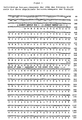
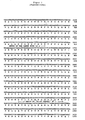
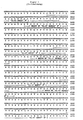
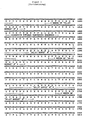
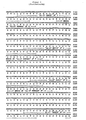
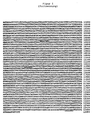
- Figure 1 (SEQ ID NO 1) shows the sense strand the Ki-67 cDNA.
- the object of the present invention is to provide Antisense oligonucleotides that are used to treat disease states are suitable for those with increased cell proliferation accompanied.
- diseases states are tumors, Allergies, autoimmune diseases, scarring, inflammation and rheumatic diseases as well as the suppression of defense reactions in transplants.
- This task was accomplished by oligoribo- or oligodeoxyribonucleotides as well as their physiologically tolerable salts dissolved in are able to with the mRNA coding for the protein Ki-67 hybridize.
- oligoribo- or Oligodeoxyribonucleotides are a cytotoxic and not only inhibitory Effect on proliferating cells such as Have tumor cells and cause cell death. This finding is surprising in that the Ki-67 protein in non-proliferating Cells undetectable and therefore for survival of the cells is obviously not required.
- Oligonucleotides at 37 ° C. and at physiological are preferred Hybridize salt concentration with Ki-67 mRNA.
- Oligoribo- and oligodeoxyribonucleotides are particularly preferred and in particular oligodeoxyribonucleotides, the sequence of which of the nucleotide sequence shown in Figure 1 (SEQ ID NO: 1) sense strand of the Ki-67 cDNA is complementary, i.e. at a chain length of 10 bases at most 0 to 4, preferably 0 up to 2 and very particularly preferably no mismatches having.
- the oligonucleotides according to the invention preferably have one Chain length from 12 to 66 nucleotides, particularly preferably 17 to 46 and very particularly preferably 22 to 46 nucleotides.
- sequence (SEQ ID NO: 3) is very particularly preferred:
- Unmodified oligonucleotides and especially unmodified Oligoribonucleotides are highly nucleolytic degradation subject and therefore have only a low stability and biological half-life.
- the Bases, sugar and / or phosphate residues of the invention Oligonucleotides preferably modified.
- Oligonucleotides in which one or more are preferred Phosphate groups through phosphorothioate, methylphosphonate, phosphoramidate, Methylene (methylimino) - (MMI) and / or guanidine groups are exchanged.
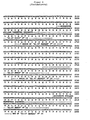
- the structure of these groups is in figure 2 shown.
- Thiolated oligonucleotides are particularly preferred, i.e.
- Oligonucleotides with phosphate groups Phosphothioate groups are exchanged. It can be a or modified several of the phosphate groups of the oligonucleotide his. In the case of a partial modification, preference is given to terminal Modified groups, all oligonucleotides Phosphate groups are modified, but are most preferred.
- Preferred sugar modifications include replacing one or several ribose residues of the oligonucleotide by hexose (FIG 2) or by amino acids (peptide nucleic acid, PNA, FIG 2).
- Base modifications include the use of 5-propynyl uracyl, 5-propynyl cytosine and tricyclic cytosine analogues phenoxazine.
- oligonucleotides according to the invention by terminal 3'-3 'and / or 5'-5' internucleotide linkages protected against degradation by exo-nucleases (H. Seliger et al., Nucleosides & Nucleotides 10 (1-3), 469-477 (1991)).
- oligonucleotides according to the invention can additionally be substituted by groups which promote intracellular uptake, which serve as reporter groups in vivo or in vitro , and / or groups which, when the oligoribonucleotide hybridizes, attack the target RNA with binding or cleavage.
- lipophilic residues such as alkyl residues, for example with 1 to 18 carbon atoms, cholesteryl or thiocholesteryl groups (E. Uhlmann, A. Peyman, op. Cit.) Or conjugates, the natural Take advantage of carrier systems, e.g. Bile acid or peptides for the corresponding receptor (e.g. receptor-mediated endocytosis).
- carrier systems e.g. Bile acid or peptides for the corresponding receptor (e.g. receptor-mediated endocytosis).
- reporter groups are fluorescent groups (e.g. Acridinyl, dansyl, fluorescinyl groups) or chemiluminescent Groups such as Acridine ester groups.
- Conjugate partners include acridine, psolar, Chloroethylaminoaryl, phenanthredine, azidophenacyl, azidoproflavin, Phenazine, phenanthroline / Cu, porphyrin / Fe, benzo [e] pyridoindole, EDTA / Fe (Mergny et al., Science 256 (1992) 1681).
- oligonucleotides according to the invention are shown in a manner known per se (see e.g. E. Uhlmann, A. Peyman, supra).
- the synthesis on solid phase with the aid is preferred of an automatic synthesizer.
- the invention Oligonucleotides with usual carriers, auxiliaries and / or additives combined.
- the oligonucleotides are suitable systemic, local, subcutaneous, intrathecal and topical application and for application by enema.
- suitable solvents preferably aqueous solutions, in the form of liposomes, as an emulsion or in solid form, for example as powder or in microencapsulated Form.
- the amount of oligonucleotides in the drugs depends on the drug according to the desired application and is preferably set so that an application of 0.001 to 100 mg oligonucleotide per kg body weight, preferably 0.001 to 10 mg / kg body weight, achieved particularly preferably 0.01 to 3 mg / kg body weight becomes. Treatment is preferably repeated Application over a period of one day to 6 weeks, in a dose of preferably 0.01 to 3 mg / kg per day.
- the oligonucleotides according to the invention are suitable for treatment of disease states associated with increased cell proliferation go hand in hand, especially for the treatment of benign and malignant tumors, such as testicular tumors, lymphomas, gastric carcinomas, Bladder cancer, breast cancer, bronchial cancer, sarcoma, Kidney cancer, melanoma, autoimmune diseases, scarring, Inflammation, allergies, rheumatic diseases and Defense reactions during transplants.
- benign and malignant tumors such as testicular tumors, lymphomas, gastric carcinomas, Bladder cancer, breast cancer, bronchial cancer, sarcoma, Kidney cancer, melanoma, autoimmune diseases, scarring, Inflammation, allergies, rheumatic diseases and Defense reactions during transplants.
- a particular advantage of the oligonucleotides according to the invention is in the fact that they allow the treatment of tumors that are resistant to conventional chemotherapy drugs. Such Resistance occurs with non-specific cytostatics such as Vinblastine or cisplatin either secondary, i.e. to multiple application, or in certain tumors such as For example, primary renal cancer already exists.
- non-specific cytostatics such as Vinblastine or cisplatin either secondary, i.e. to multiple application, or in certain tumors such as For example, primary renal cancer already exists.
- the inventive Oligonucleotides not only inhibit cell growth, but also have a cytotoxic effect; i.e. lead to the death of the treated tumor cells.
- the cytotoxic Effect generally occurs after a treatment period of about 5 to 12 days.
- For the complete killing of all proliferating Cells can take a treatment time of several weeks may be required, with the treatment time from periods of Non-treatment can be interrupted.
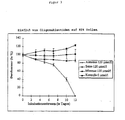
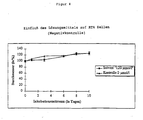
- oligonucleotides according to the invention on bladder carcinoma cells became apparent of the RT4 cell line on multicell spheroids examined and with appropriate sense and missense strands compared as a control.
- oligonucleotides were, unless otherwise stated, in thiolated form, i.e. an oxygen atom of the Phosphoric acid residues were replaced by a sulfur atom.
- the oligonucleotides were added to the medium immediately after the time required for the formation of the spheroids.
- the negative controls served on the one hand a sample to which no oligonucleotides were added (control), and on the other hand the missense and sense oligonucleotide samples.
- the diameter of the multicellular spheroids was then measured at two-day intervals. Three identical approaches were examined per test and the mean value was then formed. The results are shown graphically in FIG. 3.
- FITC-FDA fluorescein-labeled disodium acetate
- PI Propidium Iodide
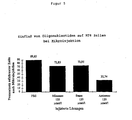
- RT4 cells were sown on special cover glasses (CELLocate® cover glasses, from Eppendorf). With these coverslips, a grid etched in the middle makes it easier to find the injected cells.
- cover glasses were placed in petri dishes with a diameter of 3.5 cm and wetted with 1 ⁇ l of fibronectin each, which ensures better cell attachment. 1.5 ⁇ 10 5 cells, which had previously been dissolved using trypsin, were then sown per dish in 2.5 ml of supplemented RPMI 1640 medium and cultured at 37 ° C. overnight in the incubator.
- the microinjection was carried out with the aid of the 5246 and the Micromanipulator 5171 (company Eppendorf) under light microscope Control carried out (inverted microscope type Leitz DMIL, company Leica).
- the microinjection capillaries were used With the help of Mikroloader® pipette tips (Eppendorf) with each 2.0 ⁇ l oligonucleotide solution (concentration 120 ⁇ mol / l) filled. The concentration was adjusted with sterile filtered phosphate buffered saline (phosphate buffered saline, PBS). To ensure the permeability of the filled capillary check, the clean function of the transector was under microscopic control. With open capillary after immersion in the culture medium, an even outflow of injection fluid. The injection pressure was empirically set at 130 hPa and after the first Injections corrected so that the injection becomes clear The cell grew in size without destroying it. The injection time was between 0.3 and 0.5 seconds.
- the effect of the oligonucleotides was analogous to Example 1 the human bladder tumor cell line J82 was examined.
- the thiolated Antisense oligonucleotide resulted in a concentration of 120 ⁇ mol / l after 11 days for a decrease in the spheroid diameter by 20%, while the spheroidal diameter of the control in same period increased by about 30% (Fig. 6).
Landscapes
- Health & Medical Sciences (AREA)
- Life Sciences & Earth Sciences (AREA)
- Engineering & Computer Science (AREA)
- Genetics & Genomics (AREA)
- Biomedical Technology (AREA)
- Chemical & Material Sciences (AREA)
- Organic Chemistry (AREA)
- Molecular Biology (AREA)
- Biotechnology (AREA)
- General Engineering & Computer Science (AREA)
- Zoology (AREA)
- Bioinformatics & Cheminformatics (AREA)
- Wood Science & Technology (AREA)
- Microbiology (AREA)
- Plant Pathology (AREA)
- Biophysics (AREA)
- Biochemistry (AREA)
- General Health & Medical Sciences (AREA)
- Physics & Mathematics (AREA)
- Pharmaceuticals Containing Other Organic And Inorganic Compounds (AREA)
- Medicines That Contain Protein Lipid Enzymes And Other Medicines (AREA)
- Saccharide Compounds (AREA)
- Medicines Containing Material From Animals Or Micro-Organisms (AREA)
Claims (15)
- Utilisation d'un oligoribo- ou d'un oligodésoxyribonucléotide, qui est à même de s'hybrider à l'ARNm qui code pour la protéine Ki-67, ou d'un sel physiologiquement compatible de celui-ci, pour préparer un médicament destiné à la destruction de cellules proliférantes.
- Utilisation selon la revendication 1, caractérisée en ce que la séquence nucléotidique de l'oligoribo- ou de l'oligodésoxyribonucléotide est complémentaire de la séquence SEQ ID NO 1.
- Utilisation selon la revendication 2, caractérisée en ce que la séquence nucléotidique de l'oligoribo- ou de l'oligodésoxyribonucléotide est complémentaire du segment allant de la position 197 à la position 9962 de la séquence SEQ ID NO 1.
- Utilisation selon l'une des revendications 1 à 3, caractérisée en ce que l'oligoribo- ou l'oligodésoxyribo- nucléotide comprend de 12 à 66 nucléotides.
- Utilisation selon les revendications 1 à 4, caractérisée en ce que l'oligoribo- ou l'oligodésoxyribo- nucléotide comprend de 17 à 46 nucléotides.
- Utilisation selon l'une des revendications 1 à 5, caractérisée en ce que l'oligoribo- ou l'oligodésoxyribo- nucléotide comprend la séquence (5'-ACC AGG CGT CTC GTG GGC CAC AT).
- Utilisation selon l'une des revendications 1 à 6, caractérisée en ce qu'un ou plusieurs groupes phosphate de l'oligoribo- ou de l'oligodésoxyribonucléotide sont remplacés par un ou des groupes phosphothioate, méthylphosphonate, phosphoramidate, méthylène (méthylimino) et/ou guanidine.
- Utilisation selon l'une des revendications 1 à 7, caractérisée en ce que l'oligoribo- ou l'oligodésoxyribo- nucléotide comprend une liaison 3'-3'- et/ou 5'-5'-internucléotidique terminale.
- Médicament pour détruire des cellules proliférantes, caractérisé en ce qu'il contient un oligoribo- et/ou un oligodésoxyribonucléotide qui est à même de s'hybrider avec l'ARNm qui code pour la protéine associée au cycle cellulaire Ki-67, ou un sel physiologiquement compatible de celui-ci, outre des supports, adjuvants et/ou additifs usuels, la quantité de l'oligonucléotide étant ajustée de façon à parvenir à l'administration de 0,001 à 100 mg/kg de poids corporel.
- Utilisation d'un oligoribo- ou d'un oligodésoxyribonucléotide selon l'une des revendications 1 à 8 pour fabriquer un médicament destiné à détruire des cellules proliférantes lors du traitement de tumeurs, de lymphomes, de maladies auto-immunes, de cicatrisation, d'inflammations, d'allergies, de maladies rhumatismales, de réactions de défense après des transplantations.
- Procédé de fabrication d'un médicament selon la revendication 9 pour détruire des cellules proliférantes, caractérisé par l'utilisation d'oligoribo- ou d'oligodésoxyribonucléotides qui sont à même de s'hybrider avec l'ARNm qui code pour la protéine Ki-67, ou d'un sel physiologiquement compatible.
- Procédé selon la revendication 11 pour fabriquer un médicament destiné au traitement de tumeurs, de maladies auto-immunes, de cicatrisation, d'inflammations, d'allergies, de maladies rhumatismales ou de réactions de défense après des transplantations.
- Procédé selon la revendication 11 ou 12, qui comprend la combinaison d'un oligoribo- ou d'un oligodésoxyribonucléotide qui est à même de s'hybrider avec l'ARNm qui code pour la protéine Ki-67, avec des supports, adjuvants et/ou additifs usuels.
- Oligoribo- ou oligodésoxyribonucléotide, ou sel physiologiquement compatible de celui-ci, caractérisé en ce qu'il est à même de s'hybrider avec l'ARNm qui code pour la protéine Ki-67, qu'il comporte de 22 à 46 nucléotides, et qu'il a un effet cytotoxique sur les cellules proliférantes.
- Oligoribo- ou oligodésoxyribonucléotide selon la revendication 14, caractérisé en ce qu'il comporte la séquence (5'-ACC AGG CGT CTC GTG GGC CAC AT).
Priority Applications (1)
| Application Number | Priority Date | Filing Date | Title |
|---|---|---|---|
| DK99926337T DK1080192T3 (da) | 1998-05-22 | 1999-05-20 | Antisense-oligonucleotider til behandling af prolifererende celler |
Applications Claiming Priority (3)
| Application Number | Priority Date | Filing Date | Title |
|---|---|---|---|
| DE19822954 | 1998-05-22 | ||
| DE19822954A DE19822954A1 (de) | 1998-05-22 | 1998-05-22 | Antisense-Oligonukleotide zur Behandlung von proliferierenden Zellen |
| PCT/EP1999/003451 WO1999061607A2 (fr) | 1998-05-22 | 1999-05-20 | Oligonucleotides antisens pour le traitement de cellules proliferantes |
Publications (2)
| Publication Number | Publication Date |
|---|---|
| EP1080192A2 EP1080192A2 (fr) | 2001-03-07 |
| EP1080192B1 true EP1080192B1 (fr) | 2004-07-28 |
Family
ID=7868624
Family Applications (1)
| Application Number | Title | Priority Date | Filing Date |
|---|---|---|---|
| EP99926337A Expired - Lifetime EP1080192B1 (fr) | 1998-05-22 | 1999-05-20 | Oligonucleotides antisens pour le traitement de cellules proliferantes |
Country Status (8)
| Country | Link |
|---|---|
| EP (1) | EP1080192B1 (fr) |
| AT (1) | ATE272112T1 (fr) |
| AU (1) | AU4363699A (fr) |
| DE (2) | DE19822954A1 (fr) |
| DK (1) | DK1080192T3 (fr) |
| ES (1) | ES2226393T3 (fr) |
| PT (1) | PT1080192E (fr) |
| WO (1) | WO1999061607A2 (fr) |
Families Citing this family (1)
| Publication number | Priority date | Publication date | Assignee | Title |
|---|---|---|---|---|
| DE19955576B4 (de) | 1999-11-18 | 2008-02-28 | Faustus Forschungs Cie. Translational Cancer Research Gmbh | Transferverbindungen, ihre Herstellung und ihre Verwendung |
-
1998
- 1998-05-22 DE DE19822954A patent/DE19822954A1/de not_active Ceased
-
1999
- 1999-05-20 EP EP99926337A patent/EP1080192B1/fr not_active Expired - Lifetime
- 1999-05-20 PT PT99926337T patent/PT1080192E/pt unknown
- 1999-05-20 DK DK99926337T patent/DK1080192T3/da active
- 1999-05-20 AT AT99926337T patent/ATE272112T1/de not_active IP Right Cessation
- 1999-05-20 DE DE59910072T patent/DE59910072D1/de not_active Expired - Fee Related
- 1999-05-20 WO PCT/EP1999/003451 patent/WO1999061607A2/fr not_active Ceased
- 1999-05-20 AU AU43636/99A patent/AU4363699A/en not_active Abandoned
- 1999-05-20 ES ES99926337T patent/ES2226393T3/es not_active Expired - Lifetime
Also Published As
| Publication number | Publication date |
|---|---|
| ES2226393T3 (es) | 2005-03-16 |
| DE19822954A1 (de) | 1999-11-25 |
| AU4363699A (en) | 1999-12-13 |
| EP1080192A2 (fr) | 2001-03-07 |
| DK1080192T3 (da) | 2004-11-29 |
| DE59910072D1 (de) | 2004-09-02 |
| WO1999061607A3 (fr) | 2000-03-23 |
| WO1999061607A2 (fr) | 1999-12-02 |
| ATE272112T1 (de) | 2004-08-15 |
| PT1080192E (pt) | 2004-11-30 |
Similar Documents
| Publication | Publication Date | Title |
|---|---|---|
| DE69028694T2 (de) | Verfahren und zubereitungen zur krebsbehandlung mit oligonukleotiden | |
| DE69432315T2 (de) | ANTISENSE NUKLEINSÄUREN ZUR VORBEUGUNG UND BEHANDLUNG VON BESCHWERDEN IN WELCHEN DIE EXPRIMIERUNG VON C-erbB-2 EINE ROLLE SPIELT | |
| DE69233117T2 (de) | In sich geschlossende "sens-" und "antisense"-oligonukleotide und deren verwendungen | |
| DE69429087T2 (de) | Modulation der proliferation von glatten muskelzellen durch antisense inhibition von c-myc | |
| EP1223980B1 (fr) | Utilisation d'inhibiteurs csf-1 | |
| DE69231739T2 (de) | Aus alternden zellen abgeleitete hemmer der dns-synthese | |
| EP1313768B1 (fr) | Oligonucleotides antisens contre vr1 | |
| DE69432375T2 (de) | Antisense Oligonukleotide zur Behandlung von immunsuppressiven Wirkungen von TGF-beta2 | |
| EP0653439B1 (fr) | Oligonucléotides stabilisés et leur utilisation | |
| DE69620906T2 (de) | Antisense-oligonukleotidmodulation der raf-genexpression | |
| EP0726274A2 (fr) | Oligonucléotides stabilisés par des radicaux G-gap | |
| WO2003035083A1 (fr) | Medicament destine a traiter une fibrose par interference d'arn | |
| WO2003035876A1 (fr) | Utilisation d'un acide ribonucleique a double brin pour traiter une infection a virus a arn a simple brin positif | |
| DE10133858A1 (de) | Synthetische doppelsträngige Oligonucleotide zur gezielten Hemmung der Genexpression | |
| DE19935303A1 (de) | Oligonukleotide zur Inhibierung der Expression von humanem eg5 | |
| DE60038220T2 (de) | Chimerische antisense-oligonukleotide und zelltransfektions-zusammensetzungen davon | |
| EP1204430B1 (fr) | Conjugats et procedes permettant de les preparer, et leur utilisation pour transporter des molecules par l'intermediaire de membranes biologiques | |
| WO2003106681A2 (fr) | Oligonucleotides antisens contre pim1 | |
| EP1030914A2 (fr) | Oligonucleotides antisens contre la tenascine pour le traitement du vitiligo | |
| DE69534197T2 (de) | Doppelsträngiges oligonukleotid und karzinostatisches mittel das dieses als aktiven inhaltsstoff enthält | |
| EP1080192B1 (fr) | Oligonucleotides antisens pour le traitement de cellules proliferantes | |
| EP1259263B1 (fr) | Complexation d'arn, notamment de ribozymes, avec des polyethylenimines pour sa stabilisation et son introduction cellulaire | |
| DE10141443B4 (de) | Verwendung von molekularbiologisch hergestellten, nicht-viralen Wirkstoffen zur Behandlung der Akne | |
| DE10133915A1 (de) | Neue Oligoribonucleotid-Derivate zur gezielten Hemmung der Genexpression | |
| EP2281044B1 (fr) | Oligonucléotides destinés à inhiber et à détecter des protéines argonautes humaines |
Legal Events
| Date | Code | Title | Description |
|---|---|---|---|
| PUAI | Public reference made under article 153(3) epc to a published international application that has entered the european phase |
Free format text: ORIGINAL CODE: 0009012 |
|
| 17P | Request for examination filed |
Effective date: 20001222 |
|
| AK | Designated contracting states |
Kind code of ref document: A2 Designated state(s): AT BE CH CY DE DK ES FI FR GB GR IE IT LI LU MC NL PT SE |
|
| RIN1 | Information on inventor provided before grant (corrected) |
Inventor name: AEHRCHEN-DEINERT, IRINA Inventor name: BOEHLE, ANDREAS Inventor name: GERDES, JOHANNES Inventor name: FLAD, HANS-DIETER |
|
| RAP1 | Party data changed (applicant data changed or rights of an application transferred) |
Owner name: FAUSTUS FORSCHUNGS CIE. TRANSLATIONAL CANCER RESEA |
|
| 17Q | First examination report despatched |
Effective date: 20020206 |
|
| GRAP | Despatch of communication of intention to grant a patent |
Free format text: ORIGINAL CODE: EPIDOSNIGR1 |
|
| GRAP | Despatch of communication of intention to grant a patent |
Free format text: ORIGINAL CODE: EPIDOSNIGR1 |
|
| RIN1 | Information on inventor provided before grant (corrected) |
Inventor name: AEHRCHEN-DEINERT, IRINA Inventor name: BOEHLE, ANDREAS Inventor name: GERDES, JOHANNES Inventor name: FLAD, HANS-DIETER |
|
| GRAS | Grant fee paid |
Free format text: ORIGINAL CODE: EPIDOSNIGR3 |
|
| GRAA | (expected) grant |
Free format text: ORIGINAL CODE: 0009210 |
|
| AK | Designated contracting states |
Kind code of ref document: B1 Designated state(s): AT BE CH CY DE DK ES FI FR GB GR IE IT LI LU MC NL PT SE |
|
| REG | Reference to a national code |
Ref country code: GB Ref legal event code: FG4D Free format text: NOT ENGLISH |
|
| REG | Reference to a national code |
Ref country code: CH Ref legal event code: EP |
|
| GBT | Gb: translation of ep patent filed (gb section 77(6)(a)/1977) |
Effective date: 20040728 |
|
| REG | Reference to a national code |
Ref country code: IE Ref legal event code: FG4D Free format text: GERMAN |
|
| REF | Corresponds to: |
Ref document number: 59910072 Country of ref document: DE Date of ref document: 20040902 Kind code of ref document: P |
|
| REG | Reference to a national code |
Ref country code: CH Ref legal event code: NV Representative=s name: R. A. EGLI & CO. PATENTANWAELTE |
|
| REG | Reference to a national code |
Ref country code: SE Ref legal event code: TRGR |
|
| REG | Reference to a national code |
Ref country code: GR Ref legal event code: EP Ref document number: 20040403255 Country of ref document: GR |
|
| REG | Reference to a national code |
Ref country code: DK Ref legal event code: T3 |
|
| REG | Reference to a national code |
Ref country code: PT Ref legal event code: SC4A Free format text: AVAILABILITY OF NATIONAL TRANSLATION Effective date: 20040929 |
|
| ET | Fr: translation filed | ||
| REG | Reference to a national code |
Ref country code: ES Ref legal event code: FG2A Ref document number: 2226393 Country of ref document: ES Kind code of ref document: T3 |
|
| PG25 | Lapsed in a contracting state [announced via postgrant information from national office to epo] |
Ref country code: CY Free format text: LAPSE BECAUSE OF FAILURE TO SUBMIT A TRANSLATION OF THE DESCRIPTION OR TO PAY THE FEE WITHIN THE PRESCRIBED TIME-LIMIT Effective date: 20050520 |
|
| PG25 | Lapsed in a contracting state [announced via postgrant information from national office to epo] |
Ref country code: MC Free format text: LAPSE BECAUSE OF NON-PAYMENT OF DUE FEES Effective date: 20050531 |
|
| PLBE | No opposition filed within time limit |
Free format text: ORIGINAL CODE: 0009261 |
|
| STAA | Information on the status of an ep patent application or granted ep patent |
Free format text: STATUS: NO OPPOSITION FILED WITHIN TIME LIMIT |
|
| 26N | No opposition filed |
Effective date: 20050429 |
|
| PGFP | Annual fee paid to national office [announced via postgrant information from national office to epo] |
Ref country code: PT Payment date: 20060512 Year of fee payment: 8 |
|
| PGFP | Annual fee paid to national office [announced via postgrant information from national office to epo] |
Ref country code: IE Payment date: 20060519 Year of fee payment: 8 Ref country code: FR Payment date: 20060519 Year of fee payment: 8 |
|
| PGFP | Annual fee paid to national office [announced via postgrant information from national office to epo] |
Ref country code: NL Payment date: 20060523 Year of fee payment: 8 Ref country code: LU Payment date: 20060523 Year of fee payment: 8 Ref country code: GB Payment date: 20060523 Year of fee payment: 8 Ref country code: ES Payment date: 20060523 Year of fee payment: 8 Ref country code: DK Payment date: 20060523 Year of fee payment: 8 Ref country code: CH Payment date: 20060523 Year of fee payment: 8 Ref country code: BE Payment date: 20060523 Year of fee payment: 8 |
|
| PGFP | Annual fee paid to national office [announced via postgrant information from national office to epo] |
Ref country code: SE Payment date: 20060528 Year of fee payment: 8 |
|
| PGFP | Annual fee paid to national office [announced via postgrant information from national office to epo] |
Ref country code: GR Payment date: 20060530 Year of fee payment: 8 Ref country code: AT Payment date: 20060530 Year of fee payment: 8 |
|
| PGFP | Annual fee paid to national office [announced via postgrant information from national office to epo] |
Ref country code: IT Payment date: 20060531 Year of fee payment: 8 Ref country code: FI Payment date: 20060531 Year of fee payment: 8 |
|
| PGFP | Annual fee paid to national office [announced via postgrant information from national office to epo] |
Ref country code: DE Payment date: 20060630 Year of fee payment: 8 |
|
| REG | Reference to a national code |
Ref country code: PT Ref legal event code: MM4A Free format text: LAPSE DUE TO NON-PAYMENT OF FEES Effective date: 20071120 |
|
| BERE | Be: lapsed |
Owner name: *FAUSTUS FORSCHUNGS CIE. TRANSLATIONAL CANCER RESE Effective date: 20070531 |
|
| EUG | Se: european patent has lapsed | ||
| REG | Reference to a national code |
Ref country code: CH Ref legal event code: PL |
|
| REG | Reference to a national code |
Ref country code: DK Ref legal event code: EBP |
|
| GBPC | Gb: european patent ceased through non-payment of renewal fee |
Effective date: 20070520 |
|
| PG25 | Lapsed in a contracting state [announced via postgrant information from national office to epo] |
Ref country code: PT Free format text: LAPSE BECAUSE OF NON-PAYMENT OF DUE FEES Effective date: 20071120 Ref country code: NL Free format text: LAPSE BECAUSE OF NON-PAYMENT OF DUE FEES Effective date: 20071201 Ref country code: FI Free format text: LAPSE BECAUSE OF NON-PAYMENT OF DUE FEES Effective date: 20070520 |
|
| NLV4 | Nl: lapsed or anulled due to non-payment of the annual fee |
Effective date: 20071201 |
|
| REG | Reference to a national code |
Ref country code: IE Ref legal event code: MM4A |
|
| PG25 | Lapsed in a contracting state [announced via postgrant information from national office to epo] |
Ref country code: CH Free format text: LAPSE BECAUSE OF NON-PAYMENT OF DUE FEES Effective date: 20070531 Ref country code: LI Free format text: LAPSE BECAUSE OF NON-PAYMENT OF DUE FEES Effective date: 20070531 Ref country code: AT Free format text: LAPSE BECAUSE OF NON-PAYMENT OF DUE FEES Effective date: 20070520 |
|
| REG | Reference to a national code |
Ref country code: FR Ref legal event code: ST Effective date: 20080131 |
|
| PG25 | Lapsed in a contracting state [announced via postgrant information from national office to epo] |
Ref country code: BE Free format text: LAPSE BECAUSE OF NON-PAYMENT OF DUE FEES Effective date: 20070531 |
|
| PG25 | Lapsed in a contracting state [announced via postgrant information from national office to epo] |
Ref country code: DK Free format text: LAPSE BECAUSE OF NON-PAYMENT OF DUE FEES Effective date: 20070531 Ref country code: DE Free format text: LAPSE BECAUSE OF NON-PAYMENT OF DUE FEES Effective date: 20071201 |
|
| PG25 | Lapsed in a contracting state [announced via postgrant information from national office to epo] |
Ref country code: IE Free format text: LAPSE BECAUSE OF NON-PAYMENT OF DUE FEES Effective date: 20070521 Ref country code: GB Free format text: LAPSE BECAUSE OF NON-PAYMENT OF DUE FEES Effective date: 20070520 |
|
| PG25 | Lapsed in a contracting state [announced via postgrant information from national office to epo] |
Ref country code: SE Free format text: LAPSE BECAUSE OF NON-PAYMENT OF DUE FEES Effective date: 20070521 |
|
| PG25 | Lapsed in a contracting state [announced via postgrant information from national office to epo] |
Ref country code: FR Free format text: LAPSE BECAUSE OF NON-PAYMENT OF DUE FEES Effective date: 20070531 |
|
| REG | Reference to a national code |
Ref country code: ES Ref legal event code: FD2A Effective date: 20070521 |
|
| PG25 | Lapsed in a contracting state [announced via postgrant information from national office to epo] |
Ref country code: GR Free format text: LAPSE BECAUSE OF NON-PAYMENT OF DUE FEES Effective date: 20071204 Ref country code: ES Free format text: LAPSE BECAUSE OF NON-PAYMENT OF DUE FEES Effective date: 20070521 |
|
| PG25 | Lapsed in a contracting state [announced via postgrant information from national office to epo] |
Ref country code: LU Free format text: LAPSE BECAUSE OF NON-PAYMENT OF DUE FEES Effective date: 20070520 |
|
| PG25 | Lapsed in a contracting state [announced via postgrant information from national office to epo] |
Ref country code: IT Free format text: LAPSE BECAUSE OF NON-PAYMENT OF DUE FEES Effective date: 20070520 |