EP1081914A2 - Enregistrement unique dans un réseau qui contient plusieurs ressources à accès limité controllées séparement - Google Patents
Enregistrement unique dans un réseau qui contient plusieurs ressources à accès limité controllées séparement Download PDFInfo
- Publication number
- EP1081914A2 EP1081914A2 EP00303400A EP00303400A EP1081914A2 EP 1081914 A2 EP1081914 A2 EP 1081914A2 EP 00303400 A EP00303400 A EP 00303400A EP 00303400 A EP00303400 A EP 00303400A EP 1081914 A2 EP1081914 A2 EP 1081914A2
- Authority
- EP
- European Patent Office
- Prior art keywords
- server
- client
- authentication information
- module
- master
- Prior art date
- Legal status (The legal status is an assumption and is not a legal conclusion. Google has not performed a legal analysis and makes no representation as to the accuracy of the status listed.)
- Granted
Links
Images

Classifications
-
- H—ELECTRICITY
- H04—ELECTRIC COMMUNICATION TECHNIQUE
- H04L—TRANSMISSION OF DIGITAL INFORMATION, e.g. TELEGRAPHIC COMMUNICATION
- H04L63/00—Network architectures or network communication protocols for network security
- H04L63/08—Network architectures or network communication protocols for network security for authentication of entities
- H04L63/0815—Network architectures or network communication protocols for network security for authentication of entities providing single-sign-on or federations
-
- H—ELECTRICITY
- H04—ELECTRIC COMMUNICATION TECHNIQUE
- H04L—TRANSMISSION OF DIGITAL INFORMATION, e.g. TELEGRAPHIC COMMUNICATION
- H04L63/00—Network architectures or network communication protocols for network security
- H04L63/08—Network architectures or network communication protocols for network security for authentication of entities
- H04L63/083—Network architectures or network communication protocols for network security for authentication of entities using passwords
Definitions
- the present invention relates to networked computer systems, and more specifically to user authentication in a network system that includes multiple separately-controlled restricted access resources.
- the World Wide Web includes a network of servers on the Internet, each of which is associated with one or more HTML (Hypertext Markup Language) pages.
- HTML pages associated with a server provide information and hypertext links to other documents on that and (usually) other servers.
- Servers communicate with clients by using the Hypertext Transfer Protocol (HTTP).
- HTTP Hypertext Transfer Protocol
- the servers listen for requests from clients for their HTML pages, and are therefore often referred to as "listeners”.
- a browser Users of the World Wide Web use a client program, referred to as a browser, to request, decode and display information from listeners.
- a client program referred to as a browser
- the browser When the user of a browser selects a link on an HTML page, the browser that is displaying the page sends a request over the Internet to the listener associated with the Universal Resource Locator (URL) specified in the link.
- the listener In response to the request, the listener transmits the requested information to the browser that issued the request.
- the browser receives the information, presents the received information to the user, and awaits the next user request.
- URL Universal Resource Locator
- servers on the Internet can be accessed by a multitude of unidentifiable clients, several protection schemes have been developed to protect against unauthorized access to restricted information.
- One approach used to prevent unauthorized access to restricted information is to require clients to provide certain authorization information before they can have access to information on a particular server.
- This authorization information typically consists of such items as a userid/password combination, a particular IP address, specific domain name or other information that can identify a particular user and/or machine attempting to access information.
- the userid/password combination is often favored because it is not tied to a particular machine or service provider. Thus, as long as users can remember their userids and passwords, they can gain access to restricted sites from any machine connected to the Internet.
- the authorization information consists of a userid/password combination
- the user provides the userid/password combination to the web server, in some manner, before the web server will deliver the restricted information to the user.
- the server determines whether the user is in fact authorized to access the restricted information. If the server determines that the user is authorized to access the restricted information, then the restricted information is sent to the user. Otherwise, the user is not allowed to access the restricted information.
- authorization information is frequently required to access the restricted resources of numerous on-line service providers.
- Each separately-controlled web server requests a user to provide authorization information (e.g. a userid/password combination) before allowing access to its products or services.
- authorization information e.g. a userid/password combination
- a user is subscribed with two separately-controlled on-line services, such as a news provider and a financial services provider, each service provider will request a userid/password combination before allowing the user access to its services.
- users use the same password for all of their service providers. Again, this approach jeopardizes security because an employee of one service provider may try to use a user's password for unauthorized access to restricted resources controlled by another service provider. For example, a user may use the password "mypass" to access a site for reading sporting news, and also to access a separately-controlled site for managing the user's bank account. An employee of the provider of the sporting news site knows the user's password for the sporting news site, and may attempt to access the user's bank account using the same password. Because the user uses the same password for both services, the sporting news employee can break in to the user's bank account.
- a method and system are provided for authenticating users in a client-server system in a way that allows a user to sign-on to numerous servers using a different password for each server, while still only having to remember a single master password.
- a client generates a first set of site-specific authentication information for a first server based on master authentication information stored at the client and data associated with the first server. The client then supplies the first site-specific authentication information to the first server to access restricted resources controlled by the first server. The client generates a second set of second site-specific authentication information for a second server based on the same master authentication information. However, to generate the site-specific authentication information for the second server, the master resource information is combined with data associated with the second server. The client supplies the second site-specific authentication information to the second server to access restricted resources controlled by the second server.
- Both the first and the second site-specific authentication information are different from the master authentication information, and the first site-specific authentication information is different from the second site-specific authentication information.
- the administrators of the various servers do not have information that would allow them to access the user's account at the other servers.
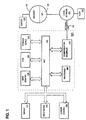
- FIG. 1 is a block diagram that illustrates a computer system 100 upon which an embodiment of the invention may be implemented.
- Computer system 100 includes a bus 102 or other communication mechanism for communicating information, and a processor 104 coupled with bus 102 for processing information.
- Computer system 100 also includes a main memory 106, such as a random access memory (RAM) or other dynamic storage device, coupled to bus 102 for storing information and instructions to be executed by processor 104.
- Main memory 106 also may be used for storing temporary variables or other intermediate information during execution of instructions to be executed by processor 104.
- Computer system 100 further includes a read only memory (ROM) 108 or other static storage device coupled to bus 102 for storing static information and instructions for processor 104.
- ROM read only memory
- a storage device 110 such as a magnetic disk or optical disk, is provided and coupled to bus 102 for storing information and instructions.
- Computer system 100 may be coupled via bus 102 to a display 112, such as a cathode ray tube (CRT), for displaying information to a computer user.
- a display 112 such as a cathode ray tube (CRT)
- An input device 114 is coupled to bus 102 for communicating information and command selections to processor 104.
- cursor control 116 is Another type of user input device
- cursor control 116 such as a mouse, a trackball, or cursor direction keys for communicating direction information and command selections to processor 104 and for controlling cursor movement on display 112.
- This input device typically has two degrees of freedom in two axes, a first axis (e.g., x) and a second axis (e.g., y), that allows the device to specify positions in a plane.
- the invention is related to the use of computer system 100 for signing on to restricted services using the techniques described hereafter.
- a single sign-on mechanism is provided in response to processor 104 executing one or more sequences of one or more instructions contained in main memory 106. Such instructions may be read into main memory 106 from another computer-readable medium, such as storage device 110. Execution of the sequences of instructions contained in main memory 106 causes processor 104 to perform the process steps described herein.
- hard-wired circuitry may be used in place of or in combination with software instructions to implement the invention. Thus, embodiments of the invention are not limited to any specific combination of hardware circuitry and software.
- Non-volatile media includes, for example, optical or magnedc disks, such as storage device 110.
- Volatile media includes dynamic memory, such as main memory 106.
- Transmission media includes coaxial cables, copper wire and fiber optics, including the wires that comprise bus 102. Transmission media can also take the form of acoustic or light waves, such as those generated during radio-wave and infra-red data communications.
- Computer-readable media include, for example, a floppy disk, a flexible disk, hard disk, magnetic tape, or any other magnetic medium, a CD-ROM, any other optical medium, punchcards, papertape, any other physical medium with patterns of holes, a RAM, a PROM, and EPROM, a FLASH-EPROM, any other memory chip or cartridge, a carrier wave as described hereinafter, or any other medium from which a computer can read.
- Various forms of computer readable media may be involved in carrying one or more sequences of one or more instructions to processor 104 for execution.
- the instructions may initially be carried on a magnetic disk of a remote computer.
- the remote computer can load the instructions into its dynamic memory and send the instructions over a telephone line using a modem.
- a modem local to computer system 100 can receive the data on the telephone line and use an infra-red transmitter to convert the data to an infra-red signal.
- An infra-red detector can receive the data carried in the infra-red signal and appropriate circuitry can place the data on bus 102.
- Bus 102 carries the data to main memory 106, from which processor 104 retrieves and executes the instructions.
- the instructions received by main memory 106 may optionally be stored on storage device 110 either before or after execution by processor 104.
- Computer system 100 also includes a communication interface 118 coupled to bus 102.
- Communication interface 118 provides a two-way data communication coupling to a network link 120 that is connected to a local network 122.
- communication interface 118 may be an integrated services digital network (ISDN) card or a modem to provide a data communication connection to a corresponding type of telephone line.
- ISDN integrated services digital network
- communication interface 118 may be a local area network (LAN) card to provide a data communication connection to a compatible LAN.
- LAN local area network
- Wireless links may also be implemented.
- communication interface 118 sends and receives electrical, electromagnetic or optical signals that carry digital data streams representing various types of information.
- Network link 120 typically provides data communication through one or more networks to other data devices.
- network link 120 may provide a connection through local network 122 to a host computer 124 or to data equipment operated by an Internet Service Provider (ISP) 126.
- ISP 126 in turn provides data communication services through the world wide packet data communication network now commonly referred to as the "Internet” 128.
- Internet 128 uses electrical, electromagnetic or optical signals that carry digital data streams.
- the signals through the various networks and the signals on network link 120 and through communication interface 118, which carry the digital data to and from computer system 100, are exemplary forms of carrier waves transporting the information.
- Computer system 100 can send messages and receive data, including program code, through the network(s), network link 120 and communication interface 118.
- a server 130 might transmit a requested code for an application program through Internet 128, ISP 126, local network 122 and communication interface 118.
- ISP 126 ISP 126
- local network 122 ISP 126
- communication interface 118 ISP 126
- one such downloaded application provides for a single sign-on mechanism as described herein.
- the received code may be executed by processor 104 as it is received, and/or stored in storage device 110, or other non-volatile storage for later execution. In this manner, computer system 100 may obtain application code in the form of a carrier wave.
- a single sign-on mechanism is provided which allows a user to provide different passwords to different sites while still only having to remember a single "master" password.
- the user enters the master password into a client-side module that is responsible for providing passwords to restricted sites.
- the client-side module When a restricted site requests a password, the client-side module generates a site-specific password that is derived from (1) the master password and (2) site-specific information.
- the techniques used to derive the site-specific password are such that the master password cannot be determined based on the site-specific password.
- the client-side module After deriving the site-specific password, the client-side module provides the site-specific password to the restricted site to authenticate the user at the restricted site. This process may be repeated at any number or restricted sites, where each site is provided a different site-specific password.
- the site-specific passwords that are supplied to different sites are different because they are derived, in part, from different site-specific information. Because different site-specific passwords are provided to different restricted sites, the administrators of any given restricted site will not know or be able to infer a user's password at other restricted sites.
- the authentication process is performed at each restricted site by the client-side module in a manner that is transparent to the user.
- the client-side module may itself be sent to the client from a server. If a client-side module thus transmitted detects the existence of a similar client-side module at the client, then the newly-arrived client-side module causes the first-arrived client-side module to send a site-specific password to a server based on the master password already entered by the user in the first-arrived client module. On the other hand, if the client-side module does not detect the existence of a similar client-side module, then the client-side module requests the master password from the user, and sends a site-specific password to a server based on the master password and site-specific information.
- FIG. 2 is a flow chart that illustrates steps for signing on to restricted sites according to an embodiment of the invention.
- the sign-on techniques will be described herein in the context of the World Wide Web.
- a browser executing on a client requests information from web servers in response to input from a user.
- the requests typically include Universal Resource Locators (URLs), which identify the resources that the user desires to access.
- URLs Universal Resource Locators
- the present invention is not restricted to any particular environment. Rather, it may be employed in any environment in which a user must be authenticated by more than one mechanism, module, server or system.
- the invention is particularly valuable when the mechanisms, modules, servers or systems with which the user must be authenticated are not controlled by the same source.
- a user sends a request to access a restricted web site.
- This step may be accomplished, for example, by the user requesting delivery to the client (i.e. a browser) of a " log on" page for the restricted site.
- the user may issue such a request by selecting a hyperlink that resides on a previously retrieved web page, by typing the URL of the restricted web site into a text box on the browser, or by using any one of various other site selection mechanisms.
- the web server that controls the restricted web site sends a sign-on module to the browser that requested access to the web site.
- the sign-on module is an active content component, such as a JAVA applet, an ActiveX control, or a browser "plug-in".
- the sign-on module is a JAVA applet that is embedded in the log-on page, and that is transmitted to the browser in the form of JAVA byte code.
- a JAVA virtual machine in the browser executes the JAVA byte code upon receiving it.
- the remaining steps 204, 206, 208, 210, 212 and 214 are performed by the sign-on applet as it executes within the JAVA virtual machine on the client.
- the sign-on applet determines whether there is another instance of the sign-on applet already running on the client. If another instance of the sign-on applet is not already running on the client, then control passes to step 208 where the sign-on applet requests the master password from the user. If, on the other hand, another instance of the sign-on applet is already running on the client, then the user would have already entered the master password into the previously-existing sign-on applet, and control passes to step 206. At step 206, the newly-arrived sign-on applet obtains the master password from the previously-existing sign-on applet.
- the sign-on applet obtains site-specific data.
- the site-specific data may be any data that specifically identifies the site to which the user is seeking access.
- site-specific data may be the URL of the web site that the user is attempting to access.
- the site-specific data may the IP address of the site the user is attempting to access, or a combination of the URL and the IP address of the site.
- Various other forms of site-specific data may be used. Consequently, the present invention is not limited to any particular type of site-specific data.
- the site-specific data is encoded in the CodeBase of the applet.
- the site-specific data may be obtained in step 210 by extracting the CodeBase of the applet.
- the applet derives a site-specific password based on the master password and the site-specific data.
- the combining operation used to combine PW and CB prior to applying the hash function H[] is a simple binary concatenation operation
- the hash function H[] is the Secure Hash Function SHA-1 described in Federal Information Processing Standards Publication 180-1 issued by the National Institute of Standards and Technology.
- various hash functions and combining operations may alternatively be used by the applet, and the present invention is not limited to any particular type of hash function or combining operation.
- H[] may alternatively be the MD5 hash function which is described in detail in B. Schneier, " Applied Cryptography” (New York: John Wiley & Sons, Inc., 2d ed. 1996), at pp. 429-431 and pp. 436-441.
- the site-specific password generated at step 212 is transmitted to the web server that controls the restricted access web site.
- the process of submitting the password may be accomplished, for example, by the applet (1) constructing a new URL that encodes the site-specific password, and (2) causing the browser to navigate to the new URL.
- the web server that controls the restricted access web site will then compare the site-specific password against its user base, and determine whether the user is allowed to access the restricted site. Assuming that the user has permission to access the restricted access web site, the web server will respond by supplying a restricted resource. For example, if the restricted resource is a web page, the web server will respond by sending the restricted web page to the browser.
- step 206 in which the user is prompted for the master password, will not be repeated when the user attempts to access subsequent restricted web sites.
- the sign-on process executed for those subsequent servers will be transparent to the user.
- the sign-on module is a JAVA applet that is sent to the browser every time the user attempts to log on to a restricted site.
- the sign-on module has two components: a "resident" component and a "transitory” component. The resident component of the sign-on module remains in the browser even after the user navigates to a different web site than the site that transmitted the sign-on module.
- the transitory component is a small log-in window that prompts the user for a username and password.
- the transitory component When the user enters a master username/password combination into the log-in window, the transitory component generates the site-specific password based on the master username/password and site-specific data encoded in the CodeBase of the sign-on module. After generating the site-specific password, the sign-on module sends the site-specific password to the web server. In addition, the transitory component sends a copy of the master username/password combination to the resident component of the sign-on module. The resident component of the sign-on module stores the username/password in the client's memory.
- the web server that controls the new site transmits another instance of the sign-on module to the user's browser.
- the second sign-on module differs from the first sign-on module in that its CodeBase encodes site-specific site for the second restricted site.
- the second sign-on module Upon detecting the existence of the resident component of a previously delivered instance of the sign-on module, the second sign-on module does not present the user with a log-on window. Rather, the second sign-on module retrieves the master username/password from the pre-existing resident component. The second sign-on module then proceeds to generate a site-specific password for the second site, and transparently sign the user on to the second site.
- the sign-on modules are "signed", according to one embodiment of the invention. That is, they encode a signature that identifies the source (i.e. developer) of the sign-on module. If the sign-on module delivered to the user's browser is not from a source trusted by the user, then the user can prevent the sign-on module from executing, or may simply refuse to supply the master username/password information. Similarly, a pre-existing resident component of the sign-on module will not deliver the master username/password information to a subsequently arriving sign-on module unless the subsequently arriving sign-on module's signature identifies a trusted source. According to one embodiment, the sign-on modules used by various separately-controlled restricted sites will be from the same source, and those sign-on modules will only trust other sign-on modules from the same source.
- the sign-on modules used by various separately-controlled restricted sites may be from different sources, may implement different hash functions, and may be implemented using different forms of active content. However, they may be configured to supply the master authentication information to each other upon the sign-on module that is storing the master authentication information verifying that the sign-on module that requires the master authentication information is from a trusted source.
Landscapes
- Engineering & Computer Science (AREA)
- Computer Hardware Design (AREA)
- Computer Security & Cryptography (AREA)
- Computing Systems (AREA)
- General Engineering & Computer Science (AREA)
- Computer Networks & Wireless Communication (AREA)
- Signal Processing (AREA)
- Computer And Data Communications (AREA)
- Information Transfer Between Computers (AREA)
- Storage Device Security (AREA)
Applications Claiming Priority (2)
| Application Number | Priority Date | Filing Date | Title |
|---|---|---|---|
| US301642 | 1999-04-28 | ||
| US09/301,642 US6629246B1 (en) | 1999-04-28 | 1999-04-28 | Single sign-on for a network system that includes multiple separately-controlled restricted access resources |
Publications (3)
| Publication Number | Publication Date |
|---|---|
| EP1081914A2 true EP1081914A2 (fr) | 2001-03-07 |
| EP1081914A3 EP1081914A3 (fr) | 2002-01-16 |
| EP1081914B1 EP1081914B1 (fr) | 2006-05-17 |
Family
ID=23164250
Family Applications (1)
| Application Number | Title | Priority Date | Filing Date |
|---|---|---|---|
| EP00303400A Expired - Lifetime EP1081914B1 (fr) | 1999-04-28 | 2000-04-20 | Enregistrement unique dans un réseau qui contient plusieurs ressources à accès limité controllées séparement |
Country Status (5)
| Country | Link |
|---|---|
| US (1) | US6629246B1 (fr) |
| EP (1) | EP1081914B1 (fr) |
| JP (1) | JP4639297B2 (fr) |
| DE (1) | DE60027971T2 (fr) |
| IL (1) | IL135802A0 (fr) |
Cited By (7)
| Publication number | Priority date | Publication date | Assignee | Title |
|---|---|---|---|---|
| GB2396037B (en) * | 2001-05-29 | 2005-08-24 | Xenobit Corp | Method and system for logging into and providing access to a computer system via a communications network |
| US7228417B2 (en) | 2002-02-26 | 2007-06-05 | America Online, Inc. | Simple secure login with multiple-authentication providers |
| US7793342B1 (en) * | 2002-10-15 | 2010-09-07 | Novell, Inc. | Single sign-on with basic authentication for a transparent proxy |
| US8839385B1 (en) * | 2008-08-18 | 2014-09-16 | United Services Automobile Association (Usaa) | Systems and methods for implementing device-specific passwords |
| EP2953312A1 (fr) * | 2014-06-02 | 2015-12-09 | Alcatel Lucent | Système permettant de gérer des mots de passe pour un service d'authentification |
| EP2874074A4 (fr) * | 2012-07-12 | 2016-03-09 | Tencent Tech Shenzhen Co Ltd | Procédé de mise en oeuvre de saut inter-domaine, navigateur et serveur de nom de domaine |
| EP3391316A1 (fr) * | 2015-12-18 | 2018-10-24 | Orange | Procédé de sécurisation d'une transaction depuis un terminal mobile |
Families Citing this family (71)
| Publication number | Priority date | Publication date | Assignee | Title |
|---|---|---|---|---|
| JP2001022702A (ja) * | 1999-07-12 | 2001-01-26 | Fujitsu Ltd | 認証制御装置、認証制御システムおよび認証制御方法並びに記録媒体 |
| WO2001067304A1 (fr) * | 2000-03-07 | 2001-09-13 | Hotlens.Com Inc. | Navigation web cote serveur, systeme a lentilles multiples, procede, et appareil |
| US20010047477A1 (en) * | 2000-03-20 | 2001-11-29 | Hiang-Swee Chiang | Transparent user and session management for web applications |
| US7150038B1 (en) * | 2000-04-06 | 2006-12-12 | Oracle International Corp. | Facilitating single sign-on by using authenticated code to access a password store |
| US6801946B1 (en) * | 2000-06-15 | 2004-10-05 | International Business Machines Corporation | Open architecture global sign-on apparatus and method therefor |
| US7010582B1 (en) * | 2000-06-26 | 2006-03-07 | Entrust Limited | Systems and methods providing interactions between multiple servers and an end use device |
| US6934848B1 (en) * | 2000-07-19 | 2005-08-23 | International Business Machines Corporation | Technique for handling subsequent user identification and password requests within a certificate-based host session |
| US6976164B1 (en) * | 2000-07-19 | 2005-12-13 | International Business Machines Corporation | Technique for handling subsequent user identification and password requests with identity change within a certificate-based host session |
| US8020199B2 (en) * | 2001-02-14 | 2011-09-13 | 5th Fleet, L.L.C. | Single sign-on system, method, and access device |
| US7350229B1 (en) * | 2001-03-07 | 2008-03-25 | Netegrity, Inc. | Authentication and authorization mapping for a computer network |
| US20060288212A1 (en) * | 2001-03-20 | 2006-12-21 | Gutenberg Printing Llc | Transparent user and session management for web applications |
| US7743404B1 (en) * | 2001-10-03 | 2010-06-22 | Trepp, LLC | Method and system for single signon for multiple remote sites of a computer network |
| JP4780915B2 (ja) * | 2001-11-01 | 2011-09-28 | ヤフー! インコーポレイテッド | インターネットブラウザを用いてオンライン・ショッピングを簡便化する方法およびシステム |
| US7412720B1 (en) * | 2001-11-02 | 2008-08-12 | Bea Systems, Inc. | Delegated authentication using a generic application-layer network protocol |
| US7246230B2 (en) * | 2002-01-29 | 2007-07-17 | Bea Systems, Inc. | Single sign-on over the internet using public-key cryptography |
| US20030182551A1 (en) * | 2002-03-25 | 2003-09-25 | Frantz Christopher J. | Method for a single sign-on |
| US7500262B1 (en) | 2002-04-29 | 2009-03-03 | Aol Llc | Implementing single sign-on across a heterogeneous collection of client/server and web-based applications |
| US8032931B2 (en) * | 2002-10-30 | 2011-10-04 | Brocade Communications Systems, Inc. | Fabric manager multiple device login |
| US8695019B2 (en) * | 2003-02-14 | 2014-04-08 | Actividentity (Australia) Pty Ltd | System and method for delivering external data to a process running on a virtual machine |
| JP4881538B2 (ja) * | 2003-06-10 | 2012-02-22 | 株式会社日立製作所 | コンテンツ送信装置およびコンテンツ送信方法 |
| US7283831B2 (en) * | 2003-07-24 | 2007-10-16 | Lucent Technologies Inc. | Single sign-on service for communication network messaging |
| US7290278B2 (en) | 2003-10-02 | 2007-10-30 | Aol Llc, A Delaware Limited Liability Company | Identity based service system |
| US20050144482A1 (en) * | 2003-12-17 | 2005-06-30 | David Anuszewski | Internet protocol compatible access authentication system |
| JP4982031B2 (ja) * | 2004-01-16 | 2012-07-25 | 株式会社日立製作所 | コンテンツ送信装置、コンテンツ受信装置およびコンテンツ送信方法、コンテンツ受信方法 |
| US7490242B2 (en) * | 2004-02-09 | 2009-02-10 | International Business Machines Corporation | Secure management of authentication information |
| US20050204174A1 (en) * | 2004-03-11 | 2005-09-15 | International Business Machines Corporation | Password protection mechanism |
| US20050240671A1 (en) * | 2004-04-23 | 2005-10-27 | Loraine Beyer | IP-based front-end web server |
| CN102355466B (zh) | 2004-04-30 | 2016-01-20 | 黑莓有限公司 | 处理数据传输的系统和方法 |
| US20060075224A1 (en) * | 2004-09-24 | 2006-04-06 | David Tao | System for activating multiple applications for concurrent operation |
| US7941671B2 (en) * | 2004-10-14 | 2011-05-10 | Oracle International Corporation | Method and apparatus for accommodating multiple verifier types with limited storage space |
| US7478123B2 (en) * | 2004-12-29 | 2009-01-13 | International Business Machines Corporation | Effortless registration with content providers and methods thereof |
| US20060185004A1 (en) * | 2005-02-11 | 2006-08-17 | Samsung Electronics Co., Ltd. | Method and system for single sign-on in a network |
| US20060206926A1 (en) * | 2005-03-14 | 2006-09-14 | Agfa Inc. | Single login systems and methods |
| TWI296477B (en) * | 2005-03-23 | 2008-05-01 | Quanta Comp Inc | Single logon method on a server system and a server system with single logon functionality |
| US8078740B2 (en) | 2005-06-03 | 2011-12-13 | Microsoft Corporation | Running internet applications with low rights |
| US8245270B2 (en) * | 2005-09-01 | 2012-08-14 | Microsoft Corporation | Resource based dynamic security authorization |
| US20070074038A1 (en) * | 2005-09-29 | 2007-03-29 | International Business Machines Corporation | Method, apparatus and program storage device for providing a secure password manager |
| US20070165582A1 (en) * | 2006-01-18 | 2007-07-19 | Puneet Batta | System and method for authenticating a wireless computing device |
| US20070226783A1 (en) * | 2006-03-16 | 2007-09-27 | Rabbit's Foot Security, Inc. (A California Corporation) | User-administered single sign-on with automatic password management for web server authentication |
| US8185737B2 (en) | 2006-06-23 | 2012-05-22 | Microsoft Corporation | Communication across domains |
| US10019570B2 (en) | 2007-06-14 | 2018-07-10 | Microsoft Technology Licensing, Llc | Protection and communication abstractions for web browsers |
| US8189756B2 (en) * | 2008-01-02 | 2012-05-29 | International Business Machines Corporation | Telephone menu selection |
| US8621561B2 (en) * | 2008-01-04 | 2013-12-31 | Microsoft Corporation | Selective authorization based on authentication input attributes |
| US20090320125A1 (en) * | 2008-05-08 | 2009-12-24 | Eastman Chemical Company | Systems, methods, and computer readable media for computer security |
| US10146926B2 (en) * | 2008-07-18 | 2018-12-04 | Microsoft Technology Licensing, Llc | Differentiated authentication for compartmentalized computing resources |
| US8910256B2 (en) * | 2008-08-08 | 2014-12-09 | Microsoft Corporation | Form filling with digital identities, and automatic password generation |
| US20100064353A1 (en) * | 2008-09-09 | 2010-03-11 | Facetime Communications, Inc. | User Mapping Mechanisms |
| US8484338B2 (en) * | 2008-10-02 | 2013-07-09 | Actiance, Inc. | Application detection architecture and techniques |
| US20100174758A1 (en) * | 2009-01-05 | 2010-07-08 | International Business Machines Corporation | Automatic management of single sign on passwords |
| US8789152B2 (en) * | 2009-12-11 | 2014-07-22 | International Business Machines Corporation | Method for managing authentication procedures for a user |
| JP5471632B2 (ja) * | 2010-03-11 | 2014-04-16 | 富士ゼロックス株式会社 | 情報入力支援装置及びプログラム |
| US20110239282A1 (en) * | 2010-03-26 | 2011-09-29 | Nokia Corporation | Method and Apparatus for Authentication and Promotion of Services |
| US20110239281A1 (en) * | 2010-03-26 | 2011-09-29 | Nokia Corporation | Method and apparatus for authentication of services |
| WO2011149558A2 (fr) | 2010-05-28 | 2011-12-01 | Abelow Daniel H | Réalité alternée |
| KR101459255B1 (ko) * | 2011-03-14 | 2014-11-07 | 퀄컴 인코포레이티드 | 하이브리드 네트워킹 마스터 패스프레이즈 |
| US11444936B2 (en) | 2011-07-29 | 2022-09-13 | Amazon Technologies, Inc. | Managing security credentials |
| US10362019B2 (en) | 2011-07-29 | 2019-07-23 | Amazon Technologies, Inc. | Managing security credentials |
| US9497220B2 (en) | 2011-10-17 | 2016-11-15 | Blackberry Limited | Dynamically generating perimeters |
| US9161226B2 (en) | 2011-10-17 | 2015-10-13 | Blackberry Limited | Associating services to perimeters |
| US9613219B2 (en) | 2011-11-10 | 2017-04-04 | Blackberry Limited | Managing cross perimeter access |
| US8799227B2 (en) | 2011-11-11 | 2014-08-05 | Blackberry Limited | Presenting metadata from multiple perimeters |
| US8863250B2 (en) | 2012-02-01 | 2014-10-14 | Amazon Technologies, Inc. | Logout from multiple network sites |
| CA2861384C (fr) * | 2012-02-01 | 2017-10-31 | Amazon Technologies, Inc. | Gestion de comptes pour plusieurs sites de reseau |
| CN103297408B (zh) * | 2012-03-02 | 2016-04-06 | 腾讯科技(深圳)有限公司 | 登录方法和装置以及终端、网络服务器 |
| US9369466B2 (en) | 2012-06-21 | 2016-06-14 | Blackberry Limited | Managing use of network resources |
| US20140280698A1 (en) * | 2013-03-13 | 2014-09-18 | Qnx Software Systems Limited | Processing a Link on a Device |
| US10475018B1 (en) | 2013-11-29 | 2019-11-12 | Amazon Technologies, Inc. | Updating account data for multiple account providers |
| WO2020027791A1 (fr) * | 2018-07-31 | 2020-02-06 | Hewlett-Packard Development Company, L.P. | Mises à jour de mots de passe |
| EP3879422B1 (fr) | 2020-03-09 | 2025-09-03 | Carrier Corporation | Génération d'informations d'identification et d'authentification de réseau pour les commandes de systèmes d'automatisation de bâtiments |
| WO2022140502A1 (fr) * | 2020-12-23 | 2022-06-30 | Schlumberger Technology Corporation | Partage sécurisé de données à travers des suites d'applications isolées |
| JP7316714B1 (ja) | 2023-02-13 | 2023-07-28 | 株式会社フレアリンク | 認証情報生成装置、認証情報生成方法、認証情報生成プログラム、及び認証情報生成システム |
Family Cites Families (8)
| Publication number | Priority date | Publication date | Assignee | Title |
|---|---|---|---|---|
| US5537544A (en) * | 1992-09-17 | 1996-07-16 | Kabushiki Kaisha Toshiba | Portable computer system having password control means for holding one or more passwords such that the passwords are unreadable by direct access from a main processor |
| GB2281645A (en) * | 1993-09-03 | 1995-03-08 | Ibm | Control of access to a networked system |
| US5761309A (en) * | 1994-08-30 | 1998-06-02 | Kokusai Denshin Denwa Co., Ltd. | Authentication system |
| US5719941A (en) * | 1996-01-12 | 1998-02-17 | Microsoft Corporation | Method for changing passwords on a remote computer |
| US5684950A (en) | 1996-09-23 | 1997-11-04 | Lockheed Martin Corporation | Method and system for authenticating users to multiple computer servers via a single sign-on |
| US6209104B1 (en) * | 1996-12-10 | 2001-03-27 | Reza Jalili | Secure data entry and visual authentication system and method |
| JPH1125051A (ja) * | 1997-07-09 | 1999-01-29 | Hitachi Ltd | 情報システム |
| US6308273B1 (en) * | 1998-06-12 | 2001-10-23 | Microsoft Corporation | Method and system of security location discrimination |
-
1999
- 1999-04-28 US US09/301,642 patent/US6629246B1/en not_active Expired - Lifetime
-
2000
- 2000-04-20 DE DE60027971T patent/DE60027971T2/de not_active Expired - Lifetime
- 2000-04-20 EP EP00303400A patent/EP1081914B1/fr not_active Expired - Lifetime
- 2000-04-24 IL IL13580200A patent/IL135802A0/xx not_active IP Right Cessation
- 2000-04-24 JP JP2000121905A patent/JP4639297B2/ja not_active Expired - Lifetime
Cited By (10)
| Publication number | Priority date | Publication date | Assignee | Title |
|---|---|---|---|---|
| GB2396037B (en) * | 2001-05-29 | 2005-08-24 | Xenobit Corp | Method and system for logging into and providing access to a computer system via a communications network |
| US7228417B2 (en) | 2002-02-26 | 2007-06-05 | America Online, Inc. | Simple secure login with multiple-authentication providers |
| US7765584B2 (en) | 2002-02-26 | 2010-07-27 | Aol Inc. | Simple, secure login with multiple authentication providers |
| US8196189B2 (en) | 2002-02-26 | 2012-06-05 | Aol Llc | Simple, secure login with multiple authentication providers |
| US7793342B1 (en) * | 2002-10-15 | 2010-09-07 | Novell, Inc. | Single sign-on with basic authentication for a transparent proxy |
| US8839385B1 (en) * | 2008-08-18 | 2014-09-16 | United Services Automobile Association (Usaa) | Systems and methods for implementing device-specific passwords |
| EP2874074A4 (fr) * | 2012-07-12 | 2016-03-09 | Tencent Tech Shenzhen Co Ltd | Procédé de mise en oeuvre de saut inter-domaine, navigateur et serveur de nom de domaine |
| US9686344B2 (en) | 2012-07-12 | 2017-06-20 | Tencent Technology (Shenzhen) Company Limited | Method for implementing cross-domain jump, browser, and domain name server |
| EP2953312A1 (fr) * | 2014-06-02 | 2015-12-09 | Alcatel Lucent | Système permettant de gérer des mots de passe pour un service d'authentification |
| EP3391316A1 (fr) * | 2015-12-18 | 2018-10-24 | Orange | Procédé de sécurisation d'une transaction depuis un terminal mobile |
Also Published As
| Publication number | Publication date |
|---|---|
| DE60027971D1 (de) | 2006-06-22 |
| DE60027971T2 (de) | 2007-01-04 |
| US6629246B1 (en) | 2003-09-30 |
| JP2000347994A (ja) | 2000-12-15 |
| JP4639297B2 (ja) | 2011-02-23 |
| IL135802A0 (en) | 2001-05-20 |
| EP1081914A3 (fr) | 2002-01-16 |
| EP1081914B1 (fr) | 2006-05-17 |
Similar Documents
| Publication | Publication Date | Title |
|---|---|---|
| US6629246B1 (en) | Single sign-on for a network system that includes multiple separately-controlled restricted access resources | |
| US5586260A (en) | Method and apparatus for authenticating a client to a server in computer systems which support different security mechanisms | |
| US7296077B2 (en) | Method and system for web-based switch-user operation | |
| KR100800339B1 (ko) | 제휴 환경에서 사용자에 의해 결정된 인증 및 단일 사인온을 위한 방법 및 시스템 | |
| US6049877A (en) | Systems, methods and computer program products for authorizing common gateway interface application requests | |
| JP4864289B2 (ja) | ネットワークユーザ認証システムおよび方法 | |
| EP1216533B1 (fr) | Commande d'acces a plusieurs domaines | |
| KR100856674B1 (ko) | 클라이언트 서버 환경에서 클라이언트를 인증하는 시스템및 방법 | |
| US6763468B2 (en) | Method and apparatus for authenticating users | |
| KR100268095B1 (ko) | 데이터통신시스템 | |
| US7774612B1 (en) | Method and system for single signon for multiple remote sites of a computer network | |
| US7178166B1 (en) | Vulnerability assessment and authentication of a computer by a local scanner | |
| US7043455B1 (en) | Method and apparatus for securing session information of users in a web application server environment | |
| CN114329387B (zh) | 单点登录控制方法、系统、电子设备及计算机可读介质 | |
| US20030065956A1 (en) | Challenge-response data communication protocol | |
| CN113411324B (zh) | 基于cas与第三方服务器实现登录认证的方法和系统 | |
| US20020112162A1 (en) | Authentication and verification of Web page content | |
| US20030163691A1 (en) | System and method for authenticating sessions and other transactions | |
| US20040088260A1 (en) | Secure user authentication | |
| US20060129816A1 (en) | Method and system for secure binding register name identifier profile | |
| JP2007200316A (ja) | ネットワーク通信システムおよびネットワーク・サーバとクライアント・デバイスの間に、コンピュータネットワークを通じてセキュアな通信リンクを確立する方法 | |
| US20040088576A1 (en) | Secure resource access |
Legal Events
| Date | Code | Title | Description |
|---|---|---|---|
| PUAI | Public reference made under article 153(3) epc to a published international application that has entered the european phase |
Free format text: ORIGINAL CODE: 0009012 |
|
| AK | Designated contracting states |
Kind code of ref document: A2 Designated state(s): AT BE CH CY DE DK ES FI FR GB GR IE IT LI LU MC NL PT SE Kind code of ref document: A2 Designated state(s): DE FR GB SE |
|
| AX | Request for extension of the european patent |
Free format text: AL;LT;LV;MK;RO;SI |
|
| PUAL | Search report despatched |
Free format text: ORIGINAL CODE: 0009013 |
|
| AK | Designated contracting states |
Kind code of ref document: A3 Designated state(s): AT BE CH CY DE DK ES FI FR GB GR IE IT LI LU MC NL PT SE |
|
| AX | Request for extension of the european patent |
Free format text: AL;LT;LV;MK;RO;SI |
|
| 17P | Request for examination filed |
Effective date: 20020626 |
|
| AKX | Designation fees paid |
Free format text: DE FR GB SE |
|
| 17Q | First examination report despatched |
Effective date: 20050110 |
|
| GRAP | Despatch of communication of intention to grant a patent |
Free format text: ORIGINAL CODE: EPIDOSNIGR1 |
|
| RBV | Designated contracting states (corrected) |
Designated state(s): DE FR GB SE |
|
| GRAS | Grant fee paid |
Free format text: ORIGINAL CODE: EPIDOSNIGR3 |
|
| GRAA | (expected) grant |
Free format text: ORIGINAL CODE: 0009210 |
|
| AK | Designated contracting states |
Kind code of ref document: B1 Designated state(s): DE FR GB SE |
|
| REG | Reference to a national code |
Ref country code: GB Ref legal event code: FG4D |
|
| REF | Corresponds to: |
Ref document number: 60027971 Country of ref document: DE Date of ref document: 20060622 Kind code of ref document: P |
|
| PG25 | Lapsed in a contracting state [announced via postgrant information from national office to epo] |
Ref country code: SE Free format text: LAPSE BECAUSE OF FAILURE TO SUBMIT A TRANSLATION OF THE DESCRIPTION OR TO PAY THE FEE WITHIN THE PRESCRIBED TIME-LIMIT Effective date: 20060817 |
|
| ET | Fr: translation filed | ||
| PLBE | No opposition filed within time limit |
Free format text: ORIGINAL CODE: 0009261 |
|
| STAA | Information on the status of an ep patent application or granted ep patent |
Free format text: STATUS: NO OPPOSITION FILED WITHIN TIME LIMIT |
|
| 26N | No opposition filed |
Effective date: 20070220 |
|
| PGFP | Annual fee paid to national office [announced via postgrant information from national office to epo] |
Ref country code: FR Payment date: 20080312 Year of fee payment: 9 |
|
| REG | Reference to a national code |
Ref country code: FR Ref legal event code: ST Effective date: 20091231 |
|
| PG25 | Lapsed in a contracting state [announced via postgrant information from national office to epo] |
Ref country code: FR Free format text: LAPSE BECAUSE OF NON-PAYMENT OF DUE FEES Effective date: 20091222 |
|
| PGFP | Annual fee paid to national office [announced via postgrant information from national office to epo] |
Ref country code: DE Payment date: 20190410 Year of fee payment: 20 |
|
| PGFP | Annual fee paid to national office [announced via postgrant information from national office to epo] |
Ref country code: GB Payment date: 20190417 Year of fee payment: 20 |
|
| REG | Reference to a national code |
Ref country code: DE Ref legal event code: R071 Ref document number: 60027971 Country of ref document: DE |
|
| REG | Reference to a national code |
Ref country code: GB Ref legal event code: PE20 Expiry date: 20200419 |
|
| PG25 | Lapsed in a contracting state [announced via postgrant information from national office to epo] |
Ref country code: GB Free format text: LAPSE BECAUSE OF EXPIRATION OF PROTECTION Effective date: 20200419 |