EP1083227A1 - Mittels Antibiotika induzierbares/reprimierbares genetisches Konstrukt für die Gentherapie oder Genimmunisierung - Google Patents
Mittels Antibiotika induzierbares/reprimierbares genetisches Konstrukt für die Gentherapie oder Genimmunisierung Download PDFInfo
- Publication number
- EP1083227A1 EP1083227A1 EP00870183A EP00870183A EP1083227A1 EP 1083227 A1 EP1083227 A1 EP 1083227A1 EP 00870183 A EP00870183 A EP 00870183A EP 00870183 A EP00870183 A EP 00870183A EP 1083227 A1 EP1083227 A1 EP 1083227A1
- Authority
- EP
- European Patent Office
- Prior art keywords
- gene
- vector
- genetic
- genetic construct
- antibiotic
- Prior art date
- Legal status (The legal status is an assumption and is not a legal conclusion. Google has not performed a legal analysis and makes no representation as to the accuracy of the status listed.)
- Withdrawn
Links
- 108090000623 proteins and genes Proteins 0.000 title claims abstract description 65
- 230000002068 genetic effect Effects 0.000 title claims abstract description 39
- 230000003115 biocidal effect Effects 0.000 title claims abstract description 26
- 230000001939 inductive effect Effects 0.000 title claims abstract description 12
- 238000002649 immunization Methods 0.000 title claims description 9
- 230000003053 immunization Effects 0.000 title claims description 9
- 238000001415 gene therapy Methods 0.000 title description 7
- 238000013518 transcription Methods 0.000 claims abstract description 32
- 230000035897 transcription Effects 0.000 claims abstract description 32
- 108091023040 Transcription factor Proteins 0.000 claims abstract description 15
- 102000040945 Transcription factor Human genes 0.000 claims abstract description 15
- 239000012190 activator Substances 0.000 claims abstract description 13
- 102000004169 proteins and genes Human genes 0.000 claims abstract description 10
- 230000002441 reversible effect Effects 0.000 claims abstract description 8
- 239000003242 anti bacterial agent Substances 0.000 claims abstract description 6
- 239000004098 Tetracycline Substances 0.000 claims description 56
- 229960002180 tetracycline Drugs 0.000 claims description 56
- 229930101283 tetracycline Natural products 0.000 claims description 56
- 235000019364 tetracycline Nutrition 0.000 claims description 56
- 150000003522 tetracyclines Chemical class 0.000 claims description 56
- 239000013598 vector Substances 0.000 claims description 33
- 239000013612 plasmid Substances 0.000 claims description 22
- 230000003612 virological effect Effects 0.000 claims description 22
- 239000013607 AAV vector Substances 0.000 claims description 21
- 238000000034 method Methods 0.000 claims description 18
- 241000700605 Viruses Species 0.000 claims description 17
- 102000034615 Glial cell line-derived neurotrophic factor Human genes 0.000 claims description 16
- 108091010837 Glial cell line-derived neurotrophic factor Proteins 0.000 claims description 16
- 108010025020 Nerve Growth Factor Proteins 0.000 claims description 11
- 102000007072 Nerve Growth Factors Human genes 0.000 claims description 11
- 239000003900 neurotrophic factor Substances 0.000 claims description 11
- 230000003584 silencer Effects 0.000 claims description 8
- 238000001890 transfection Methods 0.000 claims description 8
- 230000008488 polyadenylation Effects 0.000 claims description 7
- 230000010354 integration Effects 0.000 claims description 6
- 239000000203 mixture Substances 0.000 claims description 6
- 230000004083 survival effect Effects 0.000 claims description 6
- 241000701161 unidentified adenovirus Species 0.000 claims description 6
- 108010005939 Ciliary Neurotrophic Factor Proteins 0.000 claims description 5
- 102100031614 Ciliary neurotrophic factor Human genes 0.000 claims description 5
- 108091028043 Nucleic acid sequence Proteins 0.000 claims description 5
- 241000125945 Protoparvovirus Species 0.000 claims description 5
- 241000702421 Dependoparvovirus Species 0.000 claims description 4
- 208000023105 Huntington disease Diseases 0.000 claims description 4
- 208000018737 Parkinson disease Diseases 0.000 claims description 4
- 230000001413 cellular effect Effects 0.000 claims description 4
- NOESYZHRGYRDHS-UHFFFAOYSA-N insulin Chemical compound N1C(=O)C(NC(=O)C(CCC(N)=O)NC(=O)C(CCC(O)=O)NC(=O)C(C(C)C)NC(=O)C(NC(=O)CN)C(C)CC)CSSCC(C(NC(CO)C(=O)NC(CC(C)C)C(=O)NC(CC=2C=CC(O)=CC=2)C(=O)NC(CCC(N)=O)C(=O)NC(CC(C)C)C(=O)NC(CCC(O)=O)C(=O)NC(CC(N)=O)C(=O)NC(CC=2C=CC(O)=CC=2)C(=O)NC(CSSCC(NC(=O)C(C(C)C)NC(=O)C(CC(C)C)NC(=O)C(CC=2C=CC(O)=CC=2)NC(=O)C(CC(C)C)NC(=O)C(C)NC(=O)C(CCC(O)=O)NC(=O)C(C(C)C)NC(=O)C(CC(C)C)NC(=O)C(CC=2NC=NC=2)NC(=O)C(CO)NC(=O)CNC2=O)C(=O)NCC(=O)NC(CCC(O)=O)C(=O)NC(CCCNC(N)=N)C(=O)NCC(=O)NC(CC=3C=CC=CC=3)C(=O)NC(CC=3C=CC=CC=3)C(=O)NC(CC=3C=CC(O)=CC=3)C(=O)NC(C(C)O)C(=O)N3C(CCC3)C(=O)NC(CCCCN)C(=O)NC(C)C(O)=O)C(=O)NC(CC(N)=O)C(O)=O)=O)NC(=O)C(C(C)CC)NC(=O)C(CO)NC(=O)C(C(C)O)NC(=O)C1CSSCC2NC(=O)C(CC(C)C)NC(=O)C(NC(=O)C(CCC(N)=O)NC(=O)C(CC(N)=O)NC(=O)C(NC(=O)C(N)CC=1C=CC=CC=1)C(C)C)CC1=CN=CN1 NOESYZHRGYRDHS-UHFFFAOYSA-N 0.000 claims description 4
- 230000010076 replication Effects 0.000 claims description 4
- 102000004219 Brain-derived neurotrophic factor Human genes 0.000 claims description 3
- 108090000715 Brain-derived neurotrophic factor Proteins 0.000 claims description 3
- 102000003978 Tissue Plasminogen Activator Human genes 0.000 claims description 3
- 108090000373 Tissue Plasminogen Activator Proteins 0.000 claims description 3
- 239000000427 antigen Substances 0.000 claims description 3
- 108091007433 antigens Proteins 0.000 claims description 3
- 102000036639 antigens Human genes 0.000 claims description 3
- 125000002091 cationic group Chemical group 0.000 claims description 3
- 238000012239 gene modification Methods 0.000 claims description 3
- 230000005017 genetic modification Effects 0.000 claims description 3
- 235000013617 genetically modified food Nutrition 0.000 claims description 3
- 230000004770 neurodegeneration Effects 0.000 claims description 3
- 208000015122 neurodegenerative disease Diseases 0.000 claims description 3
- 229960000187 tissue plasminogen activator Drugs 0.000 claims description 3
- 229960005486 vaccine Drugs 0.000 claims description 3
- 208000024827 Alzheimer disease Diseases 0.000 claims description 2
- 102000015081 Blood Coagulation Factors Human genes 0.000 claims description 2
- 108010039209 Blood Coagulation Factors Proteins 0.000 claims description 2
- 102000004190 Enzymes Human genes 0.000 claims description 2
- 108090000790 Enzymes Proteins 0.000 claims description 2
- 102000004877 Insulin Human genes 0.000 claims description 2
- 108090001061 Insulin Proteins 0.000 claims description 2
- 108010063738 Interleukins Proteins 0.000 claims description 2
- 102000015696 Interleukins Human genes 0.000 claims description 2
- 108020004684 Internal Ribosome Entry Sites Proteins 0.000 claims description 2
- 206010028980 Neoplasm Diseases 0.000 claims description 2
- 108060008682 Tumor Necrosis Factor Proteins 0.000 claims description 2
- 239000003114 blood coagulation factor Substances 0.000 claims description 2
- 238000002659 cell therapy Methods 0.000 claims description 2
- 238000001784 detoxification Methods 0.000 claims description 2
- 239000003102 growth factor Substances 0.000 claims description 2
- 229940125396 insulin Drugs 0.000 claims description 2
- 238000004519 manufacturing process Methods 0.000 claims description 2
- 230000001225 therapeutic effect Effects 0.000 claims description 2
- 102000003390 tumor necrosis factor Human genes 0.000 claims description 2
- IQFYYKKMVGJFEH-XLPZGREQSA-N Thymidine Chemical compound O=C1NC(=O)C(C)=CN1[C@@H]1O[C@H](CO)[C@@H](O)C1 IQFYYKKMVGJFEH-XLPZGREQSA-N 0.000 claims 2
- 239000008194 pharmaceutical composition Substances 0.000 claims 2
- DWRXFEITVBNRMK-UHFFFAOYSA-N Beta-D-1-Arabinofuranosylthymine Natural products O=C1NC(=O)C(C)=CN1C1C(O)C(O)C(CO)O1 DWRXFEITVBNRMK-UHFFFAOYSA-N 0.000 claims 1
- IQFYYKKMVGJFEH-UHFFFAOYSA-N beta-L-thymidine Natural products O=C1NC(=O)C(C)=CN1C1OC(CO)C(O)C1 IQFYYKKMVGJFEH-UHFFFAOYSA-N 0.000 claims 1
- -1 calcitonyn Chemical compound 0.000 claims 1
- 239000003814 drug Substances 0.000 claims 1
- 239000003937 drug carrier Substances 0.000 claims 1
- 230000000799 fusogenic effect Effects 0.000 claims 1
- 230000002265 prevention Effects 0.000 claims 1
- 102000004196 processed proteins & peptides Human genes 0.000 claims 1
- 108090000765 processed proteins & peptides Proteins 0.000 claims 1
- 229940104230 thymidine Drugs 0.000 claims 1
- 230000002457 bidirectional effect Effects 0.000 abstract description 6
- 210000004027 cell Anatomy 0.000 description 49
- 210000001519 tissue Anatomy 0.000 description 30
- 230000014509 gene expression Effects 0.000 description 20
- 210000001259 mesencephalon Anatomy 0.000 description 20
- 208000015181 infectious disease Diseases 0.000 description 19
- 239000012634 fragment Substances 0.000 description 18
- 108700019146 Transgenes Proteins 0.000 description 13
- 239000002609 medium Substances 0.000 description 12
- 241000700159 Rattus Species 0.000 description 11
- 210000004556 brain Anatomy 0.000 description 11
- 108010048367 enhanced green fluorescent protein Proteins 0.000 description 11
- 238000002474 experimental method Methods 0.000 description 11
- 238000002347 injection Methods 0.000 description 11
- 239000007924 injection Substances 0.000 description 11
- 210000002569 neuron Anatomy 0.000 description 11
- 238000002054 transplantation Methods 0.000 description 11
- 238000012546 transfer Methods 0.000 description 10
- 102000003951 Erythropoietin Human genes 0.000 description 9
- 108090000394 Erythropoietin Proteins 0.000 description 9
- 229940105423 erythropoietin Drugs 0.000 description 9
- 210000001161 mammalian embryo Anatomy 0.000 description 9
- OXCMYAYHXIHQOA-UHFFFAOYSA-N potassium;[2-butyl-5-chloro-3-[[4-[2-(1,2,4-triaza-3-azanidacyclopenta-1,4-dien-5-yl)phenyl]phenyl]methyl]imidazol-4-yl]methanol Chemical compound [K+].CCCCC1=NC(Cl)=C(CO)N1CC1=CC=C(C=2C(=CC=CC=2)C2=N[N-]N=N2)C=C1 OXCMYAYHXIHQOA-UHFFFAOYSA-N 0.000 description 9
- 230000000694 effects Effects 0.000 description 8
- 239000000725 suspension Substances 0.000 description 8
- 102000004142 Trypsin Human genes 0.000 description 7
- 108090000631 Trypsin Proteins 0.000 description 7
- 239000012588 trypsin Substances 0.000 description 7
- 108020004414 DNA Proteins 0.000 description 6
- 238000012413 Fluorescence activated cell sorting analysis Methods 0.000 description 6
- 210000001744 T-lymphocyte Anatomy 0.000 description 6
- 210000002257 embryonic structure Anatomy 0.000 description 5
- SGKRLCUYIXIAHR-AKNGSSGZSA-N (4s,4ar,5s,5ar,6r,12ar)-4-(dimethylamino)-1,5,10,11,12a-pentahydroxy-6-methyl-3,12-dioxo-4a,5,5a,6-tetrahydro-4h-tetracene-2-carboxamide Chemical compound C1=CC=C2[C@H](C)[C@@H]([C@H](O)[C@@H]3[C@](C(O)=C(C(N)=O)C(=O)[C@H]3N(C)C)(O)C3=O)C3=C(O)C2=C1O SGKRLCUYIXIAHR-AKNGSSGZSA-N 0.000 description 4
- 238000002965 ELISA Methods 0.000 description 4
- 239000012981 Hank's balanced salt solution Substances 0.000 description 4
- KDXKERNSBIXSRK-YFKPBYRVSA-N L-lysine Chemical compound NCCCC[C@H](N)C(O)=O KDXKERNSBIXSRK-YFKPBYRVSA-N 0.000 description 4
- 108091061960 Naked DNA Proteins 0.000 description 4
- 229930040373 Paraformaldehyde Natural products 0.000 description 4
- 101100068253 Rattus norvegicus Gdnf gene Proteins 0.000 description 4
- FAPWRFPIFSIZLT-UHFFFAOYSA-M Sodium chloride Chemical compound [Na+].[Cl-] FAPWRFPIFSIZLT-UHFFFAOYSA-M 0.000 description 4
- 230000033228 biological regulation Effects 0.000 description 4
- 239000002299 complementary DNA Substances 0.000 description 4
- 238000000799 fluorescence microscopy Methods 0.000 description 4
- 239000005090 green fluorescent protein Substances 0.000 description 4
- 230000001404 mediated effect Effects 0.000 description 4
- 210000003205 muscle Anatomy 0.000 description 4
- 229920002866 paraformaldehyde Polymers 0.000 description 4
- 238000002360 preparation method Methods 0.000 description 4
- 239000012679 serum free medium Substances 0.000 description 4
- 230000005030 transcription termination Effects 0.000 description 4
- 239000013603 viral vector Substances 0.000 description 4
- CURLTUGMZLYLDI-UHFFFAOYSA-N Carbon dioxide Chemical compound O=C=O CURLTUGMZLYLDI-UHFFFAOYSA-N 0.000 description 3
- 108010043121 Green Fluorescent Proteins Proteins 0.000 description 3
- 108700008625 Reporter Genes Proteins 0.000 description 3
- 108700005077 Viral Genes Proteins 0.000 description 3
- 230000004913 activation Effects 0.000 description 3
- 230000027455 binding Effects 0.000 description 3
- 210000005013 brain tissue Anatomy 0.000 description 3
- 239000006285 cell suspension Substances 0.000 description 3
- 238000010790 dilution Methods 0.000 description 3
- 239000012895 dilution Substances 0.000 description 3
- 210000004002 dopaminergic cell Anatomy 0.000 description 3
- 210000005064 dopaminergic neuron Anatomy 0.000 description 3
- 230000003291 dopaminomimetic effect Effects 0.000 description 3
- 239000013604 expression vector Substances 0.000 description 3
- 238000001476 gene delivery Methods 0.000 description 3
- 230000007774 longterm Effects 0.000 description 3
- 102000039446 nucleic acids Human genes 0.000 description 3
- 108020004707 nucleic acids Proteins 0.000 description 3
- 150000007523 nucleic acids Chemical class 0.000 description 3
- 230000001177 retroviral effect Effects 0.000 description 3
- 210000002966 serum Anatomy 0.000 description 3
- 101150024821 tetO gene Proteins 0.000 description 3
- 230000036266 weeks of gestation Effects 0.000 description 3
- 229920000936 Agarose Polymers 0.000 description 2
- 102000053602 DNA Human genes 0.000 description 2
- 102100033295 Glial cell line-derived neurotrophic factor Human genes 0.000 description 2
- WZUVPPKBWHMQCE-UHFFFAOYSA-N Haematoxylin Chemical compound C12=CC(O)=C(O)C=C2CC2(O)C1C1=CC=C(O)C(O)=C1OC2 WZUVPPKBWHMQCE-UHFFFAOYSA-N 0.000 description 2
- HTTJABKRGRZYRN-UHFFFAOYSA-N Heparin Chemical compound OC1C(NC(=O)C)C(O)OC(COS(O)(=O)=O)C1OC1C(OS(O)(=O)=O)C(O)C(OC2C(C(OS(O)(=O)=O)C(OC3C(C(O)C(O)C(O3)C(O)=O)OS(O)(=O)=O)C(CO)O2)NS(O)(=O)=O)C(C(O)=O)O1 HTTJABKRGRZYRN-UHFFFAOYSA-N 0.000 description 2
- 101000997829 Homo sapiens Glial cell line-derived neurotrophic factor Proteins 0.000 description 2
- 102000008109 Mixed Function Oxygenases Human genes 0.000 description 2
- 108010074633 Mixed Function Oxygenases Proteins 0.000 description 2
- 108700026244 Open Reading Frames Proteins 0.000 description 2
- 241000700584 Simplexvirus Species 0.000 description 2
- 108020004682 Single-Stranded DNA Proteins 0.000 description 2
- UIIMBOGNXHQVGW-UHFFFAOYSA-M Sodium bicarbonate Chemical compound [Na+].OC([O-])=O UIIMBOGNXHQVGW-UHFFFAOYSA-M 0.000 description 2
- VREFGVBLTWBCJP-UHFFFAOYSA-N alprazolam Chemical compound C12=CC(Cl)=CC=C2N2C(C)=NN=C2CN=C1C1=CC=CC=C1 VREFGVBLTWBCJP-UHFFFAOYSA-N 0.000 description 2
- 238000004458 analytical method Methods 0.000 description 2
- 229960001714 calcium phosphate Drugs 0.000 description 2
- 229910000389 calcium phosphate Inorganic materials 0.000 description 2
- 239000001506 calcium phosphate Substances 0.000 description 2
- 235000011010 calcium phosphates Nutrition 0.000 description 2
- 210000000234 capsid Anatomy 0.000 description 2
- 210000003169 central nervous system Anatomy 0.000 description 2
- 238000000975 co-precipitation Methods 0.000 description 2
- 230000001276 controlling effect Effects 0.000 description 2
- 230000009089 cytolysis Effects 0.000 description 2
- 230000002950 deficient Effects 0.000 description 2
- VYFYYTLLBUKUHU-UHFFFAOYSA-N dopamine Chemical compound NCCC1=CC=C(O)C(O)=C1 VYFYYTLLBUKUHU-UHFFFAOYSA-N 0.000 description 2
- 229960003722 doxycycline Drugs 0.000 description 2
- 239000003623 enhancer Substances 0.000 description 2
- 239000012737 fresh medium Substances 0.000 description 2
- 239000001963 growth medium Substances 0.000 description 2
- 229960002897 heparin Drugs 0.000 description 2
- 229920000669 heparin Polymers 0.000 description 2
- 238000003365 immunocytochemistry Methods 0.000 description 2
- 238000010166 immunofluorescence Methods 0.000 description 2
- 238000010348 incorporation Methods 0.000 description 2
- NBQNWMBBSKPBAY-UHFFFAOYSA-N iodixanol Chemical compound IC=1C(C(=O)NCC(O)CO)=C(I)C(C(=O)NCC(O)CO)=C(I)C=1N(C(=O)C)CC(O)CN(C(C)=O)C1=C(I)C(C(=O)NCC(O)CO)=C(I)C(C(=O)NCC(O)CO)=C1I NBQNWMBBSKPBAY-UHFFFAOYSA-N 0.000 description 2
- 229960004359 iodixanol Drugs 0.000 description 2
- QWTDNUCVQCZILF-UHFFFAOYSA-N isopentane Chemical compound CCC(C)C QWTDNUCVQCZILF-UHFFFAOYSA-N 0.000 description 2
- 239000000463 material Substances 0.000 description 2
- 238000012737 microarray-based gene expression Methods 0.000 description 2
- 238000012243 multiplex automated genomic engineering Methods 0.000 description 2
- 210000001577 neostriatum Anatomy 0.000 description 2
- 230000001537 neural effect Effects 0.000 description 2
- 239000002773 nucleotide Substances 0.000 description 2
- 125000003729 nucleotide group Chemical group 0.000 description 2
- 230000003076 paracrine Effects 0.000 description 2
- 239000002245 particle Substances 0.000 description 2
- 230000008569 process Effects 0.000 description 2
- 238000000746 purification Methods 0.000 description 2
- 230000009467 reduction Effects 0.000 description 2
- 230000001105 regulatory effect Effects 0.000 description 2
- 239000011780 sodium chloride Substances 0.000 description 2
- 238000002798 spectrophotometry method Methods 0.000 description 2
- 238000007619 statistical method Methods 0.000 description 2
- UCSJYZPVAKXKNQ-HZYVHMACSA-N streptomycin Chemical compound CN[C@H]1[C@H](O)[C@@H](O)[C@H](CO)O[C@H]1O[C@@H]1[C@](C=O)(O)[C@H](C)O[C@H]1O[C@@H]1[C@@H](NC(N)=N)[C@H](O)[C@@H](NC(N)=N)[C@H](O)[C@H]1O UCSJYZPVAKXKNQ-HZYVHMACSA-N 0.000 description 2
- 230000002459 sustained effect Effects 0.000 description 2
- 238000002560 therapeutic procedure Methods 0.000 description 2
- 238000004448 titration Methods 0.000 description 2
- 230000002463 transducing effect Effects 0.000 description 2
- QORWJWZARLRLPR-UHFFFAOYSA-H tricalcium bis(phosphate) Chemical compound [Ca+2].[Ca+2].[Ca+2].[O-]P([O-])([O-])=O.[O-]P([O-])([O-])=O QORWJWZARLRLPR-UHFFFAOYSA-H 0.000 description 2
- 241001430294 unidentified retrovirus Species 0.000 description 2
- 230000035899 viability Effects 0.000 description 2
- SGKRLCUYIXIAHR-NLJUDYQYSA-N (4r,4ar,5s,5ar,6r,12ar)-4-(dimethylamino)-1,5,10,11,12a-pentahydroxy-6-methyl-3,12-dioxo-4a,5,5a,6-tetrahydro-4h-tetracene-2-carboxamide Chemical compound C1=CC=C2[C@H](C)[C@@H]([C@H](O)[C@@H]3[C@](C(O)=C(C(N)=O)C(=O)[C@@H]3N(C)C)(O)C3=O)C3=C(O)C2=C1O SGKRLCUYIXIAHR-NLJUDYQYSA-N 0.000 description 1
- JKMHFZQWWAIEOD-UHFFFAOYSA-N 2-[4-(2-hydroxyethyl)piperazin-1-yl]ethanesulfonic acid Chemical compound OCC[NH+]1CCN(CCS([O-])(=O)=O)CC1 JKMHFZQWWAIEOD-UHFFFAOYSA-N 0.000 description 1
- 241001634120 Adeno-associated virus - 5 Species 0.000 description 1
- 108090000565 Capsid Proteins Proteins 0.000 description 1
- 241000282693 Cercopithecidae Species 0.000 description 1
- 102100023321 Ceruloplasmin Human genes 0.000 description 1
- 102100026735 Coagulation factor VIII Human genes 0.000 description 1
- 108091026890 Coding region Proteins 0.000 description 1
- 208000003322 Coinfection Diseases 0.000 description 1
- ZAQJHHRNXZUBTE-NQXXGFSBSA-N D-ribulose Chemical compound OC[C@@H](O)[C@@H](O)C(=O)CO ZAQJHHRNXZUBTE-NQXXGFSBSA-N 0.000 description 1
- 230000004568 DNA-binding Effects 0.000 description 1
- 239000006144 Dulbecco’s modified Eagle's medium Substances 0.000 description 1
- 241000283074 Equus asinus Species 0.000 description 1
- 108010023321 Factor VII Proteins 0.000 description 1
- 108010010803 Gelatin Proteins 0.000 description 1
- 108700028146 Genetic Enhancer Elements Proteins 0.000 description 1
- 108700007698 Genetic Terminator Regions Proteins 0.000 description 1
- WQZGKKKJIJFFOK-GASJEMHNSA-N Glucose Natural products OC[C@H]1OC(O)[C@H](O)[C@@H](O)[C@@H]1O WQZGKKKJIJFFOK-GASJEMHNSA-N 0.000 description 1
- 102000004144 Green Fluorescent Proteins Human genes 0.000 description 1
- 108010068250 Herpes Simplex Virus Protein Vmw65 Proteins 0.000 description 1
- 241000282412 Homo Species 0.000 description 1
- 101000911390 Homo sapiens Coagulation factor VIII Proteins 0.000 description 1
- 241000701109 Human adenovirus 2 Species 0.000 description 1
- 241000701024 Human betaherpesvirus 5 Species 0.000 description 1
- 102000014150 Interferons Human genes 0.000 description 1
- 108010050904 Interferons Proteins 0.000 description 1
- 108010002350 Interleukin-2 Proteins 0.000 description 1
- 108090001005 Interleukin-6 Proteins 0.000 description 1
- ZDXPYRJPNDTMRX-VKHMYHEASA-N L-glutamine Chemical compound OC(=O)[C@@H](N)CCC(N)=O ZDXPYRJPNDTMRX-VKHMYHEASA-N 0.000 description 1
- 241000283973 Oryctolagus cuniculus Species 0.000 description 1
- 108091081548 Palindromic sequence Proteins 0.000 description 1
- 208000027089 Parkinsonian disease Diseases 0.000 description 1
- 206010034010 Parkinsonism Diseases 0.000 description 1
- 229930182555 Penicillin Natural products 0.000 description 1
- JGSARLDLIJGVTE-MBNYWOFBSA-N Penicillin G Chemical compound N([C@H]1[C@H]2SC([C@@H](N2C1=O)C(O)=O)(C)C)C(=O)CC1=CC=CC=C1 JGSARLDLIJGVTE-MBNYWOFBSA-N 0.000 description 1
- 102000001253 Protein Kinase Human genes 0.000 description 1
- 108020005091 Replication Origin Proteins 0.000 description 1
- 108010034634 Repressor Proteins Proteins 0.000 description 1
- 102000009661 Repressor Proteins Human genes 0.000 description 1
- 241000283984 Rodentia Species 0.000 description 1
- 108010090804 Streptavidin Proteins 0.000 description 1
- 229930006000 Sucrose Natural products 0.000 description 1
- CZMRCDWAGMRECN-UGDNZRGBSA-N Sucrose Chemical compound O[C@H]1[C@H](O)[C@@H](CO)O[C@@]1(CO)O[C@@H]1[C@H](O)[C@@H](O)[C@H](O)[C@@H](CO)O1 CZMRCDWAGMRECN-UGDNZRGBSA-N 0.000 description 1
- 102000019197 Superoxide Dismutase Human genes 0.000 description 1
- 108010012715 Superoxide dismutase Proteins 0.000 description 1
- 239000007983 Tris buffer Substances 0.000 description 1
- 229920004890 Triton X-100 Polymers 0.000 description 1
- 230000006978 adaptation Effects 0.000 description 1
- 230000001464 adherent effect Effects 0.000 description 1
- 230000002424 anti-apoptotic effect Effects 0.000 description 1
- 230000001640 apoptogenic effect Effects 0.000 description 1
- 238000013459 approach Methods 0.000 description 1
- 230000003305 autocrine Effects 0.000 description 1
- 230000008003 autocrine effect Effects 0.000 description 1
- 230000001580 bacterial effect Effects 0.000 description 1
- 229960002685 biotin Drugs 0.000 description 1
- 239000011616 biotin Substances 0.000 description 1
- 210000004369 blood Anatomy 0.000 description 1
- 239000008280 blood Substances 0.000 description 1
- 210000001218 blood-brain barrier Anatomy 0.000 description 1
- AIYUHDOJVYHVIT-UHFFFAOYSA-M caesium chloride Chemical compound [Cl-].[Cs+] AIYUHDOJVYHVIT-UHFFFAOYSA-M 0.000 description 1
- 235000011089 carbon dioxide Nutrition 0.000 description 1
- 230000002490 cerebral effect Effects 0.000 description 1
- 229940098124 cesium chloride Drugs 0.000 description 1
- 239000003636 conditioned culture medium Substances 0.000 description 1
- 238000010276 construction Methods 0.000 description 1
- 238000011109 contamination Methods 0.000 description 1
- 238000012937 correction Methods 0.000 description 1
- 238000011161 development Methods 0.000 description 1
- 230000004069 differentiation Effects 0.000 description 1
- AFABGHUZZDYHJO-UHFFFAOYSA-N dimethyl butane Natural products CCCC(C)C AFABGHUZZDYHJO-UHFFFAOYSA-N 0.000 description 1
- 201000010099 disease Diseases 0.000 description 1
- 208000037265 diseases, disorders, signs and symptoms Diseases 0.000 description 1
- 238000010494 dissociation reaction Methods 0.000 description 1
- 230000005593 dissociations Effects 0.000 description 1
- 229960003638 dopamine Drugs 0.000 description 1
- 239000012636 effector Substances 0.000 description 1
- 230000001037 epileptic effect Effects 0.000 description 1
- 210000003527 eukaryotic cell Anatomy 0.000 description 1
- 239000000284 extract Substances 0.000 description 1
- 239000000835 fiber Substances 0.000 description 1
- 239000012530 fluid Substances 0.000 description 1
- GNBHRKFJIUUOQI-UHFFFAOYSA-N fluorescein Chemical compound O1C(=O)C2=CC=CC=C2C21C1=CC=C(O)C=C1OC1=CC(O)=CC=C21 GNBHRKFJIUUOQI-UHFFFAOYSA-N 0.000 description 1
- MHMNJMPURVTYEJ-UHFFFAOYSA-N fluorescein-5-isothiocyanate Chemical compound O1C(=O)C2=CC(N=C=S)=CC=C2C21C1=CC=C(O)C=C1OC1=CC(O)=CC=C21 MHMNJMPURVTYEJ-UHFFFAOYSA-N 0.000 description 1
- 230000004927 fusion Effects 0.000 description 1
- 229920000159 gelatin Polymers 0.000 description 1
- 239000008273 gelatin Substances 0.000 description 1
- 235000019322 gelatine Nutrition 0.000 description 1
- 235000011852 gelatine desserts Nutrition 0.000 description 1
- 238000012252 genetic analysis Methods 0.000 description 1
- 239000008103 glucose Substances 0.000 description 1
- ZDXPYRJPNDTMRX-UHFFFAOYSA-N glutamine Natural products OC(=O)C(N)CCC(N)=O ZDXPYRJPNDTMRX-UHFFFAOYSA-N 0.000 description 1
- 238000003306 harvesting Methods 0.000 description 1
- 238000003364 immunohistochemistry Methods 0.000 description 1
- 230000001771 impaired effect Effects 0.000 description 1
- 238000002513 implantation Methods 0.000 description 1
- 230000006872 improvement Effects 0.000 description 1
- 238000001727 in vivo Methods 0.000 description 1
- 230000006698 induction Effects 0.000 description 1
- 238000001802 infusion Methods 0.000 description 1
- 238000003780 insertion Methods 0.000 description 1
- 230000037431 insertion Effects 0.000 description 1
- 229940047124 interferons Drugs 0.000 description 1
- 229940047122 interleukins Drugs 0.000 description 1
- 239000007788 liquid Substances 0.000 description 1
- 210000004185 liver Anatomy 0.000 description 1
- 210000002540 macrophage Anatomy 0.000 description 1
- 108020004999 messenger RNA Proteins 0.000 description 1
- 230000007659 motor function Effects 0.000 description 1
- 230000007658 neurological function Effects 0.000 description 1
- 230000006576 neuronal survival Effects 0.000 description 1
- 210000000056 organ Anatomy 0.000 description 1
- 230000003204 osmotic effect Effects 0.000 description 1
- 230000002018 overexpression Effects 0.000 description 1
- 229940049954 penicillin Drugs 0.000 description 1
- 230000003389 potentiating effect Effects 0.000 description 1
- 108060006633 protein kinase Proteins 0.000 description 1
- 210000002637 putamen Anatomy 0.000 description 1
- 238000004445 quantitative analysis Methods 0.000 description 1
- 238000011160 research Methods 0.000 description 1
- 230000004044 response Effects 0.000 description 1
- 108091008146 restriction endonucleases Proteins 0.000 description 1
- 230000000717 retained effect Effects 0.000 description 1
- 230000007441 retrograde transport Effects 0.000 description 1
- 238000003757 reverse transcription PCR Methods 0.000 description 1
- 210000003497 sciatic nerve Anatomy 0.000 description 1
- 229910000030 sodium bicarbonate Inorganic materials 0.000 description 1
- 239000000243 solution Substances 0.000 description 1
- 238000001179 sorption measurement Methods 0.000 description 1
- 210000000130 stem cell Anatomy 0.000 description 1
- 229960005322 streptomycin Drugs 0.000 description 1
- 210000003523 substantia nigra Anatomy 0.000 description 1
- 239000005720 sucrose Substances 0.000 description 1
- 238000001356 surgical procedure Methods 0.000 description 1
- 208000024891 symptom Diseases 0.000 description 1
- 238000012360 testing method Methods 0.000 description 1
- MPLHNVLQVRSVEE-UHFFFAOYSA-N texas red Chemical compound [O-]S(=O)(=O)C1=CC(S(Cl)(=O)=O)=CC=C1C(C1=CC=2CCCN3CCCC(C=23)=C1O1)=C2C1=C(CCC1)C3=[N+]1CCCC3=C2 MPLHNVLQVRSVEE-UHFFFAOYSA-N 0.000 description 1
- 238000010361 transduction Methods 0.000 description 1
- 230000026683 transduction Effects 0.000 description 1
- 230000009466 transformation Effects 0.000 description 1
- 230000010474 transient expression Effects 0.000 description 1
- 238000003146 transient transfection Methods 0.000 description 1
- LENZDBCJOHFCAS-UHFFFAOYSA-N tris Chemical compound OCC(N)(CO)CO LENZDBCJOHFCAS-UHFFFAOYSA-N 0.000 description 1
- 230000001228 trophic effect Effects 0.000 description 1
- 238000005406 washing Methods 0.000 description 1
Images


Classifications
-
- C—CHEMISTRY; METALLURGY
- C12—BIOCHEMISTRY; BEER; SPIRITS; WINE; VINEGAR; MICROBIOLOGY; ENZYMOLOGY; MUTATION OR GENETIC ENGINEERING
- C12N—MICROORGANISMS OR ENZYMES; COMPOSITIONS THEREOF; PROPAGATING, PRESERVING, OR MAINTAINING MICROORGANISMS; MUTATION OR GENETIC ENGINEERING; CULTURE MEDIA
- C12N15/00—Mutation or genetic engineering; DNA or RNA concerning genetic engineering, vectors, e.g. plasmids, or their isolation, preparation or purification; Use of hosts therefor
- C12N15/09—Recombinant DNA-technology
- C12N15/63—Introduction of foreign genetic material using vectors; Vectors; Use of hosts therefor; Regulation of expression
- C12N15/79—Vectors or expression systems specially adapted for eukaryotic hosts
- C12N15/85—Vectors or expression systems specially adapted for eukaryotic hosts for animal cells
- C12N15/86—Viral vectors
-
- A—HUMAN NECESSITIES
- A61—MEDICAL OR VETERINARY SCIENCE; HYGIENE
- A61K—PREPARATIONS FOR MEDICAL, DENTAL OR TOILETRY PURPOSES
- A61K38/00—Medicinal preparations containing peptides
- A61K38/16—Peptides having more than 20 amino acids; Gastrins; Somatostatins; Melanotropins; Derivatives thereof
- A61K38/17—Peptides having more than 20 amino acids; Gastrins; Somatostatins; Melanotropins; Derivatives thereof from animals; from humans
- A61K38/18—Growth factors; Growth regulators
- A61K38/185—Nerve growth factor [NGF]; Brain derived neurotrophic factor [BDNF]; Ciliary neurotrophic factor [CNTF]; Glial derived neurotrophic factor [GDNF]; Neurotrophins, e.g. NT-3
-
- C—CHEMISTRY; METALLURGY
- C07—ORGANIC CHEMISTRY
- C07K—PEPTIDES
- C07K14/00—Peptides having more than 20 amino acids; Gastrins; Somatostatins; Melanotropins; Derivatives thereof
- C07K14/435—Peptides having more than 20 amino acids; Gastrins; Somatostatins; Melanotropins; Derivatives thereof from animals; from humans
- C07K14/475—Growth factors; Growth regulators
-
- C—CHEMISTRY; METALLURGY
- C12—BIOCHEMISTRY; BEER; SPIRITS; WINE; VINEGAR; MICROBIOLOGY; ENZYMOLOGY; MUTATION OR GENETIC ENGINEERING
- C12N—MICROORGANISMS OR ENZYMES; COMPOSITIONS THEREOF; PROPAGATING, PRESERVING, OR MAINTAINING MICROORGANISMS; MUTATION OR GENETIC ENGINEERING; CULTURE MEDIA
- C12N15/00—Mutation or genetic engineering; DNA or RNA concerning genetic engineering, vectors, e.g. plasmids, or their isolation, preparation or purification; Use of hosts therefor
- C12N15/09—Recombinant DNA-technology
- C12N15/63—Introduction of foreign genetic material using vectors; Vectors; Use of hosts therefor; Regulation of expression
- C12N15/635—Externally inducible repressor mediated regulation of gene expression, e.g. tetR inducible by tetracyline
-
- A—HUMAN NECESSITIES
- A61—MEDICAL OR VETERINARY SCIENCE; HYGIENE
- A61K—PREPARATIONS FOR MEDICAL, DENTAL OR TOILETRY PURPOSES
- A61K39/00—Medicinal preparations containing antigens or antibodies
-
- A—HUMAN NECESSITIES
- A61—MEDICAL OR VETERINARY SCIENCE; HYGIENE
- A61K—PREPARATIONS FOR MEDICAL, DENTAL OR TOILETRY PURPOSES
- A61K48/00—Medicinal preparations containing genetic material which is inserted into cells of the living body to treat genetic diseases; Gene therapy
-
- C—CHEMISTRY; METALLURGY
- C12—BIOCHEMISTRY; BEER; SPIRITS; WINE; VINEGAR; MICROBIOLOGY; ENZYMOLOGY; MUTATION OR GENETIC ENGINEERING
- C12N—MICROORGANISMS OR ENZYMES; COMPOSITIONS THEREOF; PROPAGATING, PRESERVING, OR MAINTAINING MICROORGANISMS; MUTATION OR GENETIC ENGINEERING; CULTURE MEDIA
- C12N2750/00—MICROORGANISMS OR ENZYMES; COMPOSITIONS THEREOF; PROPAGATING, PRESERVING, OR MAINTAINING MICROORGANISMS; MUTATION OR GENETIC ENGINEERING; CULTURE MEDIA ssDNA viruses
- C12N2750/00011—Details
- C12N2750/14011—Parvoviridae
- C12N2750/14111—Dependovirus, e.g. adenoassociated viruses
- C12N2750/14141—Use of virus, viral particle or viral elements as a vector
- C12N2750/14143—Use of virus, viral particle or viral elements as a vector viral genome or elements thereof as genetic vector
-
- C—CHEMISTRY; METALLURGY
- C12—BIOCHEMISTRY; BEER; SPIRITS; WINE; VINEGAR; MICROBIOLOGY; ENZYMOLOGY; MUTATION OR GENETIC ENGINEERING
- C12N—MICROORGANISMS OR ENZYMES; COMPOSITIONS THEREOF; PROPAGATING, PRESERVING, OR MAINTAINING MICROORGANISMS; MUTATION OR GENETIC ENGINEERING; CULTURE MEDIA
- C12N2830/00—Vector systems having a special element relevant for transcription
- C12N2830/001—Vector systems having a special element relevant for transcription controllable enhancer/promoter combination
- C12N2830/002—Vector systems having a special element relevant for transcription controllable enhancer/promoter combination inducible enhancer/promoter combination, e.g. hypoxia, iron, transcription factor
- C12N2830/003—Vector systems having a special element relevant for transcription controllable enhancer/promoter combination inducible enhancer/promoter combination, e.g. hypoxia, iron, transcription factor tet inducible
-
- C—CHEMISTRY; METALLURGY
- C12—BIOCHEMISTRY; BEER; SPIRITS; WINE; VINEGAR; MICROBIOLOGY; ENZYMOLOGY; MUTATION OR GENETIC ENGINEERING
- C12N—MICROORGANISMS OR ENZYMES; COMPOSITIONS THEREOF; PROPAGATING, PRESERVING, OR MAINTAINING MICROORGANISMS; MUTATION OR GENETIC ENGINEERING; CULTURE MEDIA
- C12N2830/00—Vector systems having a special element relevant for transcription
- C12N2830/20—Vector systems having a special element relevant for transcription transcription of more than one cistron
- C12N2830/205—Vector systems having a special element relevant for transcription transcription of more than one cistron bidirectional
-
- C—CHEMISTRY; METALLURGY
- C12—BIOCHEMISTRY; BEER; SPIRITS; WINE; VINEGAR; MICROBIOLOGY; ENZYMOLOGY; MUTATION OR GENETIC ENGINEERING
- C12N—MICROORGANISMS OR ENZYMES; COMPOSITIONS THEREOF; PROPAGATING, PRESERVING, OR MAINTAINING MICROORGANISMS; MUTATION OR GENETIC ENGINEERING; CULTURE MEDIA
- C12N2840/00—Vectors comprising a special translation-regulating system
- C12N2840/20—Vectors comprising a special translation-regulating system translation of more than one cistron
-
- C—CHEMISTRY; METALLURGY
- C12—BIOCHEMISTRY; BEER; SPIRITS; WINE; VINEGAR; MICROBIOLOGY; ENZYMOLOGY; MUTATION OR GENETIC ENGINEERING
- C12N—MICROORGANISMS OR ENZYMES; COMPOSITIONS THEREOF; PROPAGATING, PRESERVING, OR MAINTAINING MICROORGANISMS; MUTATION OR GENETIC ENGINEERING; CULTURE MEDIA
- C12N2840/00—Vectors comprising a special translation-regulating system
- C12N2840/20—Vectors comprising a special translation-regulating system translation of more than one cistron
- C12N2840/203—Vectors comprising a special translation-regulating system translation of more than one cistron having an IRES
Definitions
- the present invention is in the field of biotechnology and is related to a new antibiotic inducible / repressible genetic construct or system for improving particle the control of gene therapy or gene immunization.
- a system or genetic construct adapted for all types of gene therapy and gene immunization based upon the use of naked DNA or DNA incorporated into various vectors (such as plasmids, adeno-associated viruses, autonomous parvoviruses, retroviruses or adenoviruses or a combination thereof).
- plasmid, virus, cationic visicules, are used in gene therapy or gene immunization (vaccine).
- adeno-associated viruses which are human defective parvoviruses whose genomes are made of single stranded DNA molecules.
- Six or five different serotypes have been cloned in prokaryotic plasmids and could be used to derive vectors.
- Glial cell line-Derived Neurotrophic Factor a neurotrophic factor for dopaminergic neurons
- GDNF Glial cell line-Derived Neurotrophic Factor
- the international patent application PCT/US96/05814 describes a method of using neurotrophic factors to enhance neuronal survival and promote functional integration of grafted neurons using osmotic pumps implanted in the brain. This technique is difficult to implement in the clinics, in particular because of the risk of bacterial contamination.
- Improving the survival of the grafted tissue by transfer of genes coding for neurotrophic factors would reduce the amount of tissue needed per patient and make the transplantation therapy available to a greater number of patients.
- Stable genetic modification of the graft cells by the means of viral vectors expressing trophic factors could be used to enhance the survival of the grafted tissue.
- Adeno-associated virus is a human defective parvovirus whose genome is a single stranded DNA molecule. Five different serotypes have been cloned in prokaryotic plasmids and could be used to derive vectors.
- helper virus usually adenovirus or herpes simplex virus.
- ITRs inverted terminal repeats
- AAV type 2 has been cloned in a pBR322 plasmid allowing the genetic analysis of the virus as well as the development of vectors for gene transfer (Samulski et al. 1982).
- the non-coding ITRs are the only elements required in cis for replication and encapsidation of the viral genome (McLaughlin et al., 1987). Accordingly, the vectors derived from AAV only retain the ITRs ; the internal coding region is replaced by the desired transgene(s) and regulatory elements (Samulski et al. 1989).
- a plasmid containing the ITRs flanking the transgene expression cassette is transfected into producer cells in which AAV rep and cap genes as well as necessary helper virus genes are provided either by transfection or by infection.
- AAV vectors transduce various types of neurons in the adult rat (Mc Cown et al., 1997, Klein et al., 1998) and monkey (During et al., 1998) as well rodent and human neurons in culture (Du et al., 1996). Human brain slices from epileptic patients could also be transduced by AAV vectors (Freese et al., 1997). AAV vectors were shown to integrate in neurons (Wu et al., 1998).
- the international PCT/US95/04587 describes gene delivery to adult CNS using AAV vectors.
- controllable gene expression is a prerequisite for safe gene therapy or gene immunization in many protocols: for example, erythropoietin level is critical for the treatment of ⁇ -thallassemia.
- PCT/US94/06734 describes a prokaryotic tetracycline system to produce a genetic switch for achieving control of eukaryotic gene expression.
- tetracycline is an effector that induces prokaryotic gene expression by binding to a tetracycline repressor protein.
- the tetracycline repressor In the absence of tetracycline, the tetracycline repressor binds to a tetracycline operator sequence, which is linked to a promoter and represses transcription. In the presence of tetracycline, the tetracylin repressor binds tetracycline, which binding displaces the repressor from the tetracycline operator sequence , so repression is relieved and transcription can begin.
- This tetracycline-controlled activator system is constructed by fusing a tetracycline repressor to a transcription activation domain from a protein that activates transcription in eukaryotic cells.
- the tetracycline-controlled activator binds the tetracycline operator sequence which is linked to a promoter and activates transcription.
- the tetracycline-controlled activator binds tetracycline, which binding displaces the activator from the tetracycline operator sequence so activation is ended and transcription is silenced. This is a tetracycline-repressible system.
- the tetracycline-transactivator is mutated in such a way that it binds the tetracycline operator sequence only when tetracycline binds to the mutant tetracycline transactivator (rtTA). Consequently, in the absence of tetracycline, transcription does not occur. In the presence of tetracycline, transcription can begin. This is a tetracycline-inducible system.
- a first expression vector encodes the tetracycline-controlled activator.
- a second expression vector encodes the desired transgene under the control of the tetracycline operator sequence linked to a promoter.
- the probability of transfecting a single cell with two plasmid DNAs is significantly lower than for transfecting that cell with one plasmid DNA. Furthermore, it is important for regulation of expression that the two constructs are present in the optimal ratio.
- the US 5891718 patent describes a self-accelerating plasmidic system inducible by tetracycline and its analogs, using 2 genes (tTA or rtTA and the gene of interest) expressed from the same tetracycline-inducible / repressible promoter and separated by an "Internal Ribosome Entry Site” (IRES).
- IRES Internal Ribosome Entry Site
- This one-plasmid system inducible by tetracylin was shown to be suitable for transient expression in muscle.
- naked DNA is not effective in gene transfer in other organs, for example in the brain.
- naked DNA does not seem to be effective for long-term gene expression.
- AAV vectors are effective in long-term gene delivery and expression, in particular in the brain, muscle and liver.
- a self-accelerating system is based on low level background expression of the tetracycline transactivator and concomitantly of transgene resulting from the basal activity of the minimal CMV promotor (which is part of the tetracycline-responsive element). Therefore, this system is by essence leaky.
- Bohl et al. describe a AAV vector expressing erythropoietin (EPO) under a tet-repressible promoter. After injection in the muscle, in the presence of tet EPO is expressed, in the absence of tet EPO is expressed at reduced level but still significantly higher than the background level.
- the reverse tetracycline transactivator (rtTA) is under the control of a constitutive retroviral promoter and EPO is under the control of tetracycline operator (tetO) sequences linked to a minimal CMV promoter (miniCMV).
- miniCMV minimal CMV promoter
- the present invention aims to provide a new inducible / repressible genetic construct and a vector comprising it, which do not present the drawbacks of the state of the art and which improve the control of the expression of gene(s) of interest, especially in the field of gene therapy and gene immunization.
- a preferred aim of the invention is to provide a single self-accelerating AAV viral vector that contains all the elements necessary for a tight regulation on a single construct smaller than 4.7 kb which can be encapsidated using plasmids expressing capsids from AAV-2 or AAV5 and required adenoviral genes.
- a further aim of the invention is to provide strong transcription termination insulating the ITRs from the transgenes and consequently avoiding tet-independent transcription.
- the present invention is related to an antibiotic inducible / repressible genetic construct (or system) for improving the control of gene therapy and gene immunization and which (by the administration of said antibiotic 5 to a patient) induces the transcription and the expression of one (or more) gene(s) of interest incorporated in said genetic construct by a transfected cell or tissue.
- said genetic construct 1, controlling the transcription of the gene of interest 2 by said cell 3 comprises a bi-directional antibiotic controlled activator-responsive promoter / operator sequence 4 located between (and controlling the transcription of) the gene of interest 2 (or an insertion site for said gene of interest 2) and a cistron 6, encoding a reverse antibiotic controlled transactivator 7.
- the bi-directional antibiotic controller activator responsive promoter / operator sequence 4 is advantageously activated by the transactivator factor 7, encoded by the reverse antibiotic controlled transactivator nucleotide sequence 6 in the presence of said antibiotic 5 (see figure 6).
- the antibiotic elements used according to the invention is the tetracycline or its analogue (such as doxycyclin) and the reverse antibiotic controller activator is a reverse tetracycline controlled transactivator (rtTA), whose sequence has been described by Goossen et al., Science, Vol. 278, p. 1766-1769 (1995) and preferably obtained from the Clontech Laboratories catalogue.
- rtTA reverse tetracycline controlled transactivator
- the bi-directional antibiotic controller activator responsive promoter / operator sequence 4 comprises, located between two mini CMV-promoter, an antibiotic responsive element, preferably a tetracycline responsive element (TRE), consisting of 7 copies of the 42 base pairs of the tetracycline operator sequence, such as the one described by Baron U. et al., Nucleic acid research, Vol. 17, p. 3605-3606 (1995).
- an antibiotic responsive element preferably a tetracycline responsive element (TRE), consisting of 7 copies of the 42 base pairs of the tetracycline operator sequence, such as the one described by Baron U. et al., Nucleic acid research, Vol. 17, p. 3605-3606 (1995).
- TRE tetracycline responsive element
- the genetic construct 1 further comprises (preferably bi-directional) terminator sequences such as (SV40 poly-A) poly-adenylation sequences 12 at its both extremities.
- terminator sequences such as (SV40 poly-A) poly-adenylation sequences 12 at its both extremities.
- the gene construct 1 further comprises downstream the antibiotic controlled transactivator sequence 6, another cistron comprising one (or more) gene(s) of interest 2 (or integration site of one (or more) gene(s) of interest 2) and an internal ribosone entry site (IRES) 9 positioned between said gene of interest 2 or integration site of gene of interest and the second nucleotide sequence 6, encoding the reverse antibiotic controlled transactivator 7.
- another cistron comprising one (or more) gene(s) of interest 2 (or integration site of one (or more) gene(s) of interest 2) and an internal ribosone entry site (IRES) 9 positioned between said gene of interest 2 or integration site of gene of interest and the second nucleotide sequence 6, encoding the reverse antibiotic controlled transactivator 7.
- a site of integration of a gene of interest 2 a specific genetic sequence (such as polylinker or a genetic sequence comprising a unique restriction enzyme site) allowing the incorporation of a (foreigner) gene of interest 2 incorporation in the genetic construct 1 according to the invention.
- a vector 10 comprising the genetic construct 1 according to the invention.
- said vector is selected from the group consisting of plasmids, viruses, cationic vesicles or a mixture thereof.
- the vector 10 comprises the genetic construct 1, disposed between two terminal encapsidation, integration and replication viral genetic sequences 11, preferably between two adeno-associated viral (AAV) or adeno-viral ITR-sequences, two retro-virus LTR-sequences or two palindromic sequences of an autonomous parvovirus.
- AAV adeno-associated viral
- ITR-sequences preferably between two retro-virus LTR-sequences, two palindromic sequences of an autonomous parvovirus.
- the vector 10 according to the invention comprises also between the genetic construct 1 and said terminal sequence 11, two SV40 bi-directional poly-adenylation (Poly-A) sequences 12.
- Poly-A poly-adenylation
- nucleic acid construct 1 or the vector 10 according to the invention comprises advantageously a sequence encoding an antibiotic silencer sequence 13 located between the viral terminal sequences 10 and the (bi-directional) SV40 poly-adenylation sequences 12.
- the genes of interest 2 are advantageously therapeutic genes, preferably selected from the group consisting of anti-apoptotic sequences (such as bel-2), sequences encoding neurotrophic factors, preferably GDNF, BDNF, NT4 or CNTF, genetic sequences encoding protein such as erythropoietin (EPO), a human growth factor, a tissue granylocyte macrophage colony stimulator factor (GM-CSF), tissue plasminogen activator (tPA), coagulation factors (FVIII, FIX), insulin, calcitonyn, thimidine kinase, interleukins (IL-2, IL-6,...), interferons ( ⁇ , ⁇ , ⁇ ), tumor necrosis factor, genes encoding enzymes involving the detoxification of free radicals (such as superoxide dismutase or the genetic sequence described in the document PCT/BE98/00124, incorporated herein by reference), genetic sequences encoding enzymes involving the detoxification of free
- Another aspect of the present invention is related to a cell (including stem cells) and/or tissue (preferably a mesencephalic tissue or a striatal tissue) transformed by the genetic construct or the vector according to the invention, preferably a cell which could be used also as a cellular vector or a vaccine for genetic and/or cellular therapy and immunization.
- said genetic therapy using the nucleic acid construct or vector according to the invention allows a transformation of cells obtained from foetal-nervous tissues which are thereafter used for the treatment of neurodigenerative diseases, especially for the treatment of Parkinson disease, Alzheimer or Huntington disease.
- Another aspect of the present invention is related also to a method for improving the survival of graft of foetal-nervous tissue by inducing a genetic modification in the cell(s) of said tissue with a viral vector (preferably a AAV-vector, more preferably the vector according to the invention) encoding a neurotrophic factor for improving the treatment of neuro-degenerative diseases, especially Parkinson disease (using for example GDNF) and Huntington disease (using for example CNTF).
- a viral vector preferably a AAV-vector, more preferably the vector according to the invention
- a neurotrophic factor for improving the treatment of neuro-degenerative diseases, especially Parkinson disease (using for example GDNF) and Huntington disease (using for example CNTF).
- said neurotrophic factor is the one described above.
- the inventors have discovered that it is possible to obtain an early and sustained gene transfer into human foetal-nervous tissues by using an AAV-vector, preferably the vector according to the invention.
- tissue fragments rather than dissociated cells are incubated in a viral suspension.
- AAV vectors expressing the gfp reporter gene transduce human foetal brain tissue with a high efficiency at least for 3 days (the earliest time point tested) to 6 weeks (the latest time point tested).
- an AAV vector carrying the gene coding for GDNF under the control of an inducible promoter could be used to transduce human foetal brain tissue prior to transplantation in order to be able to control the amount of GDNF delivered by the grafted tissue.
- a similar strategy could be used for the treatment of other neurodegenerative disease, such as e.g. Huntington's disease, using grafts of striatal tissue and an appropriate neurotrophic factor, for example CNTF.
- other neurodegenerative disease such as e.g. Huntington's disease
- grafts of striatal tissue and an appropriate neurotrophic factor for example CNTF.
- AAV vectors do not express any viral gene and present a minimal risk of immune rejection. Antibodies against AAV capsid have been detected after injection of recombinant virus, however, without concomitant reduction in the number of transduced cells (Lo et al. 1999 ). In the strategy proposed here, foetal tissue is infected ex vivo before transplantation. Washing the tissue to eliminate the excess of virus which did not enter the cells reduces the risk of raising antibodies against capsid proteins by the transplanted host.
- the inventors have prepared a genetic construct comprising a bi-directional promoter which drives the transcription of tTA and a gene of interest (GFP or GDNF).
- This construct is advantageous, because it is small and can be easily encapsidated by using plasmid expressing AAV rep and cap genes and required adenoviral genes.
- the construct according to the invention comprises a bi-directional transcription terminal signal (poly-A) located at its both ends (of tTA and of the gene of interest) which provide strong transcription termination insulating the ITRS from transgene and consequently, avoid tet-independent transcription.
- poly-A bi-directional transcription terminal signal
- tTS transcription silencer sequence
- the tTS sequence consists of a fusion between the procaryotic tetracycline repressor and the silencer domain of the kid-1 eucaryotic transcription factor (Witzgall et al., PNAS 91, p: 4514-4518 (1994)).
- the tetracylin transactivator in the absence of tetracycline, does not bind to the tetracycline operator sequence, whereas, the tetracycline silencer binds to the tetracycline operator sequence and blocks transcription.
- the tetracycline transactivator binds to the tetracycline operator sequence and activates transcription whereas the tetracycline silencer detaches from the tetracycline operator sequence.
- Example 1 infection of human foetal mesencephalon with AAV-CMV-EGFP.
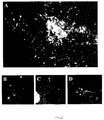
- An AAV vector expressing the EGFP gene under the control of the CMV promoter can transfer and express the transgene as early as 3 days and at least until 6 weeks after infection of human foetal mesencephalon. (see fig. 1).
- large fragments are put in organotypic culture and a small volume of a concentrated purified viral stock is injected using a Hamilton syringe.
- Infected fragments of mesencephalon were dissociated by trypsin and cultured on squared poly-L-lysin (Sigma)-coated slides (6.25 cm2). (3 slides for one mesencephalon). The cultures were maintained in organotypic medium for 3 days, allowing specific attachment of neurons, for 4 days before fixation with 4% paraformaldehyde.
- the AAV vector plasmid pTR-EGFP expressing the EGFP reporter gene (Clonetech) under the control of the CMV promoter, has been described elsewhere (Tenenbaum et al., 1999).
- Recombinant rAAV-CMV-EGFP virus was obtained as previously described (Tenenbaum et al., 1999). Briefly 293/T cells were co-transfected with pTR-EGFP and pIM45, a plasmid expressing AAV viral genes, cells were infected with adenovirus-2 24 hours post-transfection and harvested 54 hours post-infection. Cesium-chloride purified rAAV-EGFP viral suspension was prepared as previously described.
- Recombinant rAAV-EGFPand rAAV-CMV-rGDNF virus were obtained as follows. 293/T cells were co-transfected with pTR-CMV-EGFP or pTR-CMV-rGDNF and pDG, a plasmid expressing AAV viral genes and required adenovirus genes and harvested 52 hours post-transfection.
- the rAAV viral preparation was purified by iodixanol gradient followed by heparin agarose column according to Zolotukhin et al. (1999, Gene Ther. 6)
- Fifty-thousand 293/T cells per well were seeded in 24 wells plates, 1 day before infection. Cells were infected with dilutions of the rAAV-EGFP preparations in 1 ml of serum-free medium containing 10 5 pfu of wild-type adenovirus. The number of green fluorescent cells expressing the EGFP gene was evaluated 2 days after infection by FACS analysis of 10 4 cells.
- the percentage of fluorescent cells was used to calculate the titer of the rAAV-EGFP viral preparation (expressed in transducing units per ml) as follows: 5 104 X percentage of fluorescent cells 100X dilution of rAAV
- Sections were sequentially incubated in: i) THST (50mM Tris, 0.5 M NaCl, 0.5% triton X100 pH7.6) for 30 min.; ii) polyclonal rabbit anti-gfp (Clonetech) diluted 1:250 in THST overnight at 4°C; iii) donkey anti rabbit-biotin (Amersham) 1:200 in TBS, 1 hour at room temperature; iv) streptavidin coupled with fluorescein, 1:100 in TBS. Sections were mounted on gelatin-coated slides, dehydrated and mounted using Vectashield mounting fluid for fluorescence (NTL laboratories). Sections were photographed using a Zeiss Axiophot 2 microscope equipped with a U.V. lamp and an FITC filter.
- AAV-mediated gene transfer in human foetal mesencephalon in human foetal mesencephalon.
- Figure 1A & D shows that numerous cells with a neuronal morphology appeared. The transduced area covered approximately one third of the sample. A smaller area of transduced cells also appeared in the middle of the sample (Fig. 1D), possibly corresponding to the injection that was performed perpendicularly to the slice.
- the cultures were fixed and labeled using anti-gfp polyclonal antibodies or anti-tyrosine hydroxylase polyclonal antibodies (fig.2) or counterstained with hematoxylin to evaluate the total number of cells in the culture.
- Example 2 infection of rat foetal mesencephalon with AAV-CMV-EGFP.
- an AAV vector expressing the EGFP gene under the control of the CMV promoter can transfer and express the transgene as early as 4 days and at least until 3 weeks after infection of rat foetal mesencephalon.
- a total of approx.100 rat embryos were used either non-infected , infected with AAV-CMV- Egfp or with AAV-CMV-rGDNF.
- the transduced cells were detected i) by native fluorescence ii) by FACS analysis of dissociated cells iii) by immunocytochemistry .
- small fragments (12 per mesencephalon) are incubated in a viral suspension as described in example 1.
- the AAV vector plasmid expresses the rat GDNF cDNA and expresses the rat GDNF under the control of the CMV promoter.
- the cDNA coding for rat GDNF was obtained by RT-PCR using mRNA from lesioned sciatic nerve and the following primers: and
- the PCR fragment was digested by HindIII and XbaI cloned in pTR-EGFP. The resulting clones were sequenced and one clone with a sequence corresponding to rat GDNF cDNA (described in%) was retained. GDNF expressed by this plasmid after transfection of 293/T cells was measured by ELISA.
- Recombinant rAAV-EGFP and rAAV-GDNF virus was obtained as follows. 293/T cells were co-transfected with pTR-EGFP and pDG and harvested 52 hours post-infection. The viral suspension were purified by iodixanol gradient followed by heparin agarose column purification as described by Zolotukhin et al. (1999).
- Fifty-thousand 293/T cells per well were seeded in 24 wells plates, 1 day before infection. Cells were infected with dilutions of the rAAV-EGFP preparations in 1 ml of serum-free medium containing 10 5 pfu of wild-type adenovirus. The number of green fluorescent cells expressing the EGFP gene was evaluated 2 days after infection by FACS analysis of 10 4 cells.
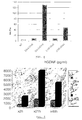
- Rat embryonic mesencephalons were infected either with rAAV-CMV-EGFP or with rAAV-CMV-GDNF and put in organotypic culture. After 3 weeks, the cultures were fixed and immunohistochemistry for dopamine was performed. The density of dopaminergic fibers was higher (A2D) and the dopaminergic cell bodies were larger C2D when the tissue was infected with rAAV-CMV-GDNF than with rAAV-CMV-EGFP.
- Rat embryonic mesencephalons were infected either with Raav-cmv-egfp or with rAAV-CMV-GDNF. 7 days after infection, the cultures were fixed and incubated with hoechst to detect apoptotic nuclei and labeled using anti-tyrosine hydroxylase polyclonal antibodies followed by a secondary antibody coupled with texas red.
- Embryo fragments were infected with rAAV-CMV-EGFP, dissociated with trypsin and transplanted in the striatum of adult rats. Three weeks and 3 months after transplantation, the rats were sacrificed and frozen brain section were submitted to gfp immunohistichemistry. Three weeks after transplantation, the grafts were clearly visible in the striatum and GFP-positive cells could be detected in the grafts.
- Example 3 Doxycylin-inducible expression of gfp or GDNF mediated by an AAV vector.
- the minimal CMV promoter is the core immediate early promoter of the human cytomegalovirus, in which the enhancer sites have been deleted.
- the bidirectional promoter consists of 2 minimal CMV promoters linked by tetracycline operator sites and is located in the middle of the vector. Starting from the middle, the right open reading frame directs the transcription of the tTA tetracycline activator consisting in the tetracycline repressor DNA-binding domain fused to the transcription activation domain of the herpes simplex virus VP16 protein.
- the left open reading frame directs the transcription of the gfp gene. Transcription of both cassettes ends at the SV40 bidirectional transcription termination signal.
- PTR-tTS-tetON-tTA-EGFP plasmid contains in addition to the 2 cassettes directing the transcription of tTA and EGFP from the bidirectional tetO-miniCMV promoter, the sequence coding for the tetracycline silencer (tTS) under the control of the left ITR. Transcription of the tTS gene ends at the left SV40 bidirectional transcription termination signal which also serves for termination of transcription of the EGFP gene.
- PTR-tetON-tTA-hGDNF is derived from PTR-tetON-tTA-EGFP.
- EGFP was replaced by the hGDNF cDNA (gene bank accession n° L19062: nt1-151 and L19063: ntl-485.
- PTR-tetON-tTA-EGFP was transfected into 293T cells using the calcium-phosphate co-precipitation method.
- DMEM culture medium containing doxycycline (1 ⁇ g/ ml) or not was added to the cells.
- Fourty-eight hours after transfection i) the cells were harvested and FACS analyzed or ii) the cells were lyzed and protein extracts were prepared for fluorimetric measure of gfp protein content.
- Figure 4 shows the data obtained for 2 different pTR-tetONtTA-hGDNF plasmidic clones after transient transfection into 293T cells.
- the fluorescence intensity was respectively 29.8 fold (C4) and 12.3 fold higher in the presence than in the absence of doxycyclin.
- PTR-tetON-tTA-hGDNF was transfected into 293T cells using the calcium-phosphate co-precipitation method. Fourty-eight hours after transfection, the culture medium was replaced by fresh medium and the conditioned medium harvested 2 hrs, 21hrs or 48 hrs after and analysed by ELISA (see fig.5).
- Figure 7 shows the concentration of GDNF released by the transfected cells in the presence or in the absence of doxycyline. The hGDNF concentration was respectively 5-fold (2hrs), 5-fold (21 hrs) and 4-fold (48 hrs) higher in the presence than in the absence of doxycycline.
Landscapes
- Health & Medical Sciences (AREA)
- Life Sciences & Earth Sciences (AREA)
- Genetics & Genomics (AREA)
- Chemical & Material Sciences (AREA)
- Engineering & Computer Science (AREA)
- Organic Chemistry (AREA)
- Zoology (AREA)
- Biomedical Technology (AREA)
- Bioinformatics & Cheminformatics (AREA)
- General Engineering & Computer Science (AREA)
- Wood Science & Technology (AREA)
- Molecular Biology (AREA)
- General Health & Medical Sciences (AREA)
- Biotechnology (AREA)
- Biophysics (AREA)
- Biochemistry (AREA)
- Gastroenterology & Hepatology (AREA)
- Physics & Mathematics (AREA)
- Microbiology (AREA)
- Plant Pathology (AREA)
- Medicinal Chemistry (AREA)
- Proteomics, Peptides & Aminoacids (AREA)
- Epidemiology (AREA)
- Animal Behavior & Ethology (AREA)
- Pharmacology & Pharmacy (AREA)
- Virology (AREA)
- Immunology (AREA)
- Veterinary Medicine (AREA)
- Public Health (AREA)
- Psychology (AREA)
- Neurosurgery (AREA)
- Neurology (AREA)
- Toxicology (AREA)
- Medicines That Contain Protein Lipid Enzymes And Other Medicines (AREA)
- Medicines Containing Material From Animals Or Micro-Organisms (AREA)
Applications Claiming Priority (2)
| Application Number | Priority Date | Filing Date | Title |
|---|---|---|---|
| US15048499P | 1999-08-24 | 1999-08-24 | |
| US150484P | 1999-08-24 |
Publications (1)
| Publication Number | Publication Date |
|---|---|
| EP1083227A1 true EP1083227A1 (de) | 2001-03-14 |
Family
ID=22534740
Family Applications (1)
| Application Number | Title | Priority Date | Filing Date |
|---|---|---|---|
| EP00870183A Withdrawn EP1083227A1 (de) | 1999-08-24 | 2000-08-24 | Mittels Antibiotika induzierbares/reprimierbares genetisches Konstrukt für die Gentherapie oder Genimmunisierung |
Country Status (1)
| Country | Link |
|---|---|
| EP (1) | EP1083227A1 (de) |
Cited By (3)
| Publication number | Priority date | Publication date | Assignee | Title |
|---|---|---|---|---|
| WO2003087294A3 (de) * | 2002-04-15 | 2003-12-24 | Universitaetsklinikum Hamburg | Rekombinante virale vektoren zur tetracyclinregulierbaren genexpression |
| US6995011B2 (en) | 2001-07-05 | 2006-02-07 | Asahi Kasei Kabushiki Kaisha | Vector for reversible gene integration |
| CN107466324A (zh) * | 2015-04-14 | 2017-12-12 | 扬森疫苗与预防公司 | 具有双向启动子的表达两种转基因的重组腺病毒 |
Citations (3)
| Publication number | Priority date | Publication date | Assignee | Title |
|---|---|---|---|---|
| WO1995028493A1 (en) * | 1994-04-13 | 1995-10-26 | The Rockefeller University | Aav-mediated delivery of dna to cells of the nervous system |
| WO1996033731A1 (en) * | 1995-04-26 | 1996-10-31 | Regeneron Pharmaceuticals, Inc. | Methods of using neurotrophic factors to enhance neuronal grafts |
| WO1997035992A1 (en) * | 1996-03-27 | 1997-10-02 | Vical Incorporated | Tetracycline inducible/repressible systems |
-
2000
- 2000-08-24 EP EP00870183A patent/EP1083227A1/de not_active Withdrawn
Patent Citations (3)
| Publication number | Priority date | Publication date | Assignee | Title |
|---|---|---|---|---|
| WO1995028493A1 (en) * | 1994-04-13 | 1995-10-26 | The Rockefeller University | Aav-mediated delivery of dna to cells of the nervous system |
| WO1996033731A1 (en) * | 1995-04-26 | 1996-10-31 | Regeneron Pharmaceuticals, Inc. | Methods of using neurotrophic factors to enhance neuronal grafts |
| WO1997035992A1 (en) * | 1996-03-27 | 1997-10-02 | Vical Incorporated | Tetracycline inducible/repressible systems |
Non-Patent Citations (6)
| Title |
|---|
| A-MOHAMMADI S ET AL: "Efficient transgene regulation from a single tetracycline-controlled positive feedback regulatory system.", GENE THERAPY, vol. 5, no. 1, January 1998 (1998-01-01), pages 76 - 84, XP000891454, ISSN: 0969-7128 * |
| BARON U ET AL: "CO-REGULATION OF TWO GENE ACTIVITIES BY TETRACYCLINE VIA A BIDIRECTIONAL PROMOTER", NUCLEIC ACIDS RESEARCH,GB,OXFORD UNIVERSITY PRESS, SURREY, vol. 23, no. 17, 11 September 1995 (1995-09-11), pages 3605 - 3606, XP000775822, ISSN: 0305-1048 * |
| GOSSEN M ET AL: "TRANSCRIPTIONAL ACTIVATION BY TETRACYCLINES IN MAMMALIAN CELLS", SCIENCE,US,AMERICAN ASSOCIATION FOR THE ADVANCEMENT OF SCIENCE,, vol. 268, 23 June 1995 (1995-06-23), pages 1766 - 1769, XP000606285, ISSN: 0036-8075 * |
| KLEIN R L ET AL: "Recombinant adeno -associated virus ( AAV ) vectors for brain-derived neurotrophic factor (BDNF) and growth-associated protein ( GAP - 43 ) gene delivery", SOCIETY FOR NEUROSCIENCE ABSTRACTS,US,SOCIETY FOR NEUROSCIENCE, vol. 22, no. 1/03, 16 November 1996 (1996-11-16), pages 316, XP002088580, ISSN: 0190-5295 * |
| ROSENBLAD C ET AL: "Glial cell line-derived neurotrophic factor increases survival, growth and function of intrastriatal fetal nigral dopaminergic grafts.", NEUROSCIENCE, vol. 75, no. 4, 1996, pages 979 - 985, XP000973011, ISSN: 0306-4522 * |
| TENENBAUM L ET AL: "AAV-mediated transduction of human fetal brain tissue.", SOCIETY FOR NEUROSCIENCE ABSTRACTS, vol. 25, no. 1-2, 1999, 29th Annual Meeting of the Society for Neuroscience, Part 1;Miami Beach, Florida, USA; October 23-28, 1999, pages 212, XP000973044, ISSN: 0190-5295 * |
Cited By (4)
| Publication number | Priority date | Publication date | Assignee | Title |
|---|---|---|---|---|
| US6995011B2 (en) | 2001-07-05 | 2006-02-07 | Asahi Kasei Kabushiki Kaisha | Vector for reversible gene integration |
| WO2003087294A3 (de) * | 2002-04-15 | 2003-12-24 | Universitaetsklinikum Hamburg | Rekombinante virale vektoren zur tetracyclinregulierbaren genexpression |
| CN107466324A (zh) * | 2015-04-14 | 2017-12-12 | 扬森疫苗与预防公司 | 具有双向启动子的表达两种转基因的重组腺病毒 |
| CN107466324B (zh) * | 2015-04-14 | 2022-01-14 | 扬森疫苗与预防公司 | 具有双向启动子的表达两种转基因的重组腺病毒 |
Similar Documents
| Publication | Publication Date | Title |
|---|---|---|
| EP4349852A1 (de) | Rekombinantes adeno-assoziiertes virus mit veränderlichem kapsid und anwendung davon | |
| US6780639B1 (en) | Antibiotic inducible/repressible genetic construct for gene therapy or gene immunization | |
| US7662627B2 (en) | Adeno-associated virus materials and methods | |
| US5780447A (en) | Recombinant adeno-associated viral vectors | |
| US6632427B1 (en) | Adenoviral-vector-mediated gene transfer into medullary motor neurons | |
| EP1311699B1 (de) | Adeno-assoziierte virus-vermittelte übertragung von angiogenesefaktoren | |
| US20020045264A1 (en) | Production of chimeric capsid vectors | |
| EP1923466A2 (de) | Vektoren rekombinanter AAV-Genome | |
| US20040087028A1 (en) | Ecdysone-inducible adeno-associated virus expression vectors | |
| JP2003516147A (ja) | 霊長類における高レベルの遺伝子発現方法 | |
| JPH09509051A (ja) | 組換えアデノ関連性ウイルス(aav)の調製方法およびそれらの使用 | |
| US20070249554A1 (en) | Methods for therapy of neurodegenerative disease of the brain | |
| EP4230733A1 (de) | Mini-gde zur behandlund der glycogenspeicherkrankheit iii | |
| Prasad et al. | Adeno-associated virus vector mediated gene transfer to pancreatic beta cells | |
| EP1083227A1 (de) | Mittels Antibiotika induzierbares/reprimierbares genetisches Konstrukt für die Gentherapie oder Genimmunisierung | |
| WO1997039629A1 (en) | Viral vectors including polynucleotides encoding neurotrophic factors and uses therefor | |
| CA3141020A1 (en) | Optimized gene therapy targeting retinal cells | |
| US6552003B2 (en) | Muscle reinnervation and motor axon sprouting by administering DNA sequences encoding NT-3 and CNTF | |
| KR20250068800A (ko) | 원추형 광수용체에서 유전자의 특이적 발현을 위한 프로모터 | |
| HK40097433A (en) | Mini-gde for the treatment of glycogen storage disease iii | |
| Peel | Development and use of novel vectors for in vivo and ex vivo adeno-associated virus gene transfer to the adult rat spinal cord | |
| WO1999053959A2 (en) | Use of viral vectors for treatment of the injured peripheral and central nervous system | |
| Lau | Growth factor rescue of photoreceptor degeneration in animal models of retinitis pigmentosa | |
| AU2928202A (en) | Adenoviral-vector-mediated gene transfer into medullary motor neurons |
Legal Events
| Date | Code | Title | Description |
|---|---|---|---|
| PUAI | Public reference made under article 153(3) epc to a published international application that has entered the european phase |
Free format text: ORIGINAL CODE: 0009012 |
|
| AK | Designated contracting states |
Kind code of ref document: A1 Designated state(s): AT BE CH CY DE DK ES FI FR GB GR IE IT LI LU MC NL PT SE |
|
| AX | Request for extension of the european patent |
Free format text: AL;LT;LV;MK;RO;SI |
|
| 17P | Request for examination filed |
Effective date: 20010911 |
|
| AKX | Designation fees paid |
Free format text: AT BE CH CY DE DK ES FI FR GB GR IE IT LI LU MC NL PT SE |
|
| RIN1 | Information on inventor provided before grant (corrected) |
Inventor name: TENENBAUM, LILIANE Inventor name: VELU, THIERRY Inventor name: PESCHANSKI, MARC Inventor name: CHTARTO, ABDELWAHED Inventor name: LEVIVIER, MARC Inventor name: BROTCHI, JACQUES |
|
| RIN1 | Information on inventor provided before grant (corrected) |
Inventor name: PESCHANSKI, MARC Inventor name: BROTCHI, JACQUES Inventor name: CHTARTO, ABDELWAHED Inventor name: TENENBAUM, LILIANE Inventor name: VELU, THIERRY Inventor name: LEVIVIER, MARC |
|
| RIN1 | Information on inventor provided before grant (corrected) |
Inventor name: CHTARTO, ABDELWAHED Inventor name: VELU, THIERRY Inventor name: LEVIVIER, MARC Inventor name: TENENBAUM, LILIANE Inventor name: PESCHANSKI, MARC Inventor name: BROTCHI, JACQUES |
|
| 17Q | First examination report despatched |
Effective date: 20061103 |
|
| GRAP | Despatch of communication of intention to grant a patent |
Free format text: ORIGINAL CODE: EPIDOSNIGR1 |
|
| STAA | Information on the status of an ep patent application or granted ep patent |
Free format text: STATUS: THE APPLICATION IS DEEMED TO BE WITHDRAWN |
|
| 18D | Application deemed to be withdrawn |
Effective date: 20101223 |