EP1083474A2 - Endgerät und Aufzeichnungsverfahren - Google Patents
Endgerät und Aufzeichnungsverfahren Download PDFInfo
- Publication number
- EP1083474A2 EP1083474A2 EP00307722A EP00307722A EP1083474A2 EP 1083474 A2 EP1083474 A2 EP 1083474A2 EP 00307722 A EP00307722 A EP 00307722A EP 00307722 A EP00307722 A EP 00307722A EP 1083474 A2 EP1083474 A2 EP 1083474A2
- Authority
- EP
- European Patent Office
- Prior art keywords
- memory card
- contents
- recorded
- recording
- terminal apparatus
- Prior art date
- Legal status (The legal status is an assumption and is not a legal conclusion. Google has not performed a legal analysis and makes no representation as to the accuracy of the status listed.)
- Granted
Links
Images




Classifications
-
- G—PHYSICS
- G06—COMPUTING OR CALCULATING; COUNTING
- G06F—ELECTRIC DIGITAL DATA PROCESSING
- G06F1/00—Details not covered by groups G06F3/00 - G06F13/00 and G06F21/00
-
- G—PHYSICS
- G11—INFORMATION STORAGE
- G11B—INFORMATION STORAGE BASED ON RELATIVE MOVEMENT BETWEEN RECORD CARRIER AND TRANSDUCER
- G11B20/00—Signal processing not specific to the method of recording or reproducing; Circuits therefor
- G11B20/00086—Circuits for prevention of unauthorised reproduction or copying, e.g. piracy
- G11B20/0021—Circuits for prevention of unauthorised reproduction or copying, e.g. piracy involving encryption or decryption of contents recorded on or reproduced from a record carrier
-
- G—PHYSICS
- G11—INFORMATION STORAGE
- G11B—INFORMATION STORAGE BASED ON RELATIVE MOVEMENT BETWEEN RECORD CARRIER AND TRANSDUCER
- G11B20/00—Signal processing not specific to the method of recording or reproducing; Circuits therefor
- G11B20/00086—Circuits for prevention of unauthorised reproduction or copying, e.g. piracy
-
- G—PHYSICS
- G11—INFORMATION STORAGE
- G11C—STATIC STORES
- G11C7/00—Arrangements for writing information into, or reading information out from, a digital store
- G11C7/16—Storage of analogue signals in digital stores using an arrangement comprising analogue/digital [A/D] converters, digital memories and digital/analogue [D/A] converters
-
- G—PHYSICS
- G11—INFORMATION STORAGE
- G11C—STATIC STORES
- G11C2207/00—Indexing scheme relating to arrangements for writing information into, or reading information out from, a digital store
- G11C2207/16—Solid state audio
Definitions
- the present invention relates to a terminal apparatus capable of accommodating a copyright-compliant memory card and a copyright-noncompliant memory card which may be inserted together, as well as to a recording method for use with that terminal apparatus.
- Another practice becoming popular today involves connecting a portable terminal apparatus incorporating a nonvolatile memory such as a flash memory to the PC via an IEEE (The Institute of Electrical and Electronic Engineers) 1394-compatible cable or an interface such as RS (Recommended Standard)-232C or USB (Universal Standard Bus). Compressed digital data such as pieces of music and images are transferred or copied from the hard disc drive of the PC to the flash memory.
- the portable terminal apparatus accommodating such a nonvolatile memory is then carried around by users to enjoy recorded music or other contents illustratively in outdoor situations.
- copyright-compliant memory cards which include a signal processing circuit for authorization and encryption (with decryption and modulation) in a nonvolatile memory.
- the currently proposed copyright-compliant memory cards are substantially identical in shape to existing copyright-noncompliant memory cards. In terms of appearance, it is difficult to distinguish the two types of memory cards.
- the dictation recording portable terminal apparatus replaces tape media used conventionally on tape recorders with a memory card.
- the music recording portable terminal apparatus substitutes a memory card for such conventional storage media as optical discs including MD (mini-disc) and CD-R employed by recorders for dubbing music.
- the proposed copyright-compliant memory card and conventional copyright-noncompliant memory card are substantially the same in shape and thus indistinguishable from each other in appearance. This can lead to some inconveniences, such as users inadvertently inserting a copyright-noncompliant memory card preparatory to recording copyright-protected contents, or loading a copyright-compliant memory card for recording copyright-unprotected contents.
- While getting copyright-protected contents recorded the user may come to realize that a copyright-noncompliant memory card has been inadvertently inserted. In that case, the user may supplement (or replace) the wrong card with a copyright-compliant memory card. However, the initial portion of the contents thought to have been recorded is already lost. If the user has duly completed a charging process to purchase copyright-protected contents, a failure to record the contents to an inadvertently inserted wrong memory card means the user must pay the charges again for another recording.
- the user may come to realize that a copyright-compliant memory card has been inadvertently inserted. In that case, the user may supplement (or replace) the wrong card with a copyright-noncompliant memory card. Again, the initial portion of the contents thought to have been recorded is already lost.
- the present invention has been made in view of the above circumstances and provides a terminal apparatus and a recording method, the apparatus being capable of accommodating a copyright-compliant and a copyright-noncompliant memory card in a correctly usable manner even though they are difficult to distinguish in appearance.
- a terminal apparatus comprising: an insertion hole into which to insert a first memory card for recording copyright-protected contents and a second memory card for recording copyright-unprotected contents, the first and the second memory card being substantially the same in shape; a judging element for judging whether a memory card inserted into the insertion hole is either the first memory card or the second memory card; a recording element which, if the judging element judges that the first memory card is inserted preparatory to recording copyright-unprotected contents, then records the copyright-unprotected contents to the first memory card; and a controlling element which, if the second memory card is inserted into the insertion hole after the recording element has recorded the copyright-unprotected contents to the first memory card, then transfers the recorded copyright-unprotected contents from the first memory card to the inserted second memory card.
- a terminal apparatus comprising: an insertion hole into which to insert a first memory card for recording copyright-protected contents and a second memory card for recording copyright-unprotected contents, the first and the second memory card being substantially the same in shape; a judging element for judging whether a memory card inserted into the insertion hole is either the first memory card or the second memory card; a recording element which, if the judging element judges that the second memory card is inserted preparatory to recording copyright-protected contents, then records the copyright-protected contents to the second memory card; and a controlling element which, if the first memory card is inserted into the insertion hole after the recording element has recorded the copyright-protected contents to the second memory card, then transfers the recorded copyright-protected contents from the second memory card to the inserted first memory card.
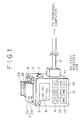
- FIG. 1 shows an outside view of a portable terminal apparatus embodying the invention.
- the portable terminal apparatus in Fig. 1 has slots 1 (1a, 1b) capable of accommodating a plurality of memory cards. It is possible to insert into the slots 1 a copyright-compliant memory card 2a and a copyright-noncompliant memory card 2b which are substantially identical in appearance and shape.
- the slots 1a and 1b are not dedicated respectively to accepting the copyright-compliant memory card 2a and copyright-noncompliant memory card 2b. That is, the slots 1a and 1b may accommodate two copyright-compliant memory cards 2a or two copyright-noncompliant memory cards 2b.
- the multiple slots for simultaneously accommodating the multiple memory cards concurrently inserted make it easy to copy or relocate data from one memory card to another.
- the portable terminal apparatus has two recording modes: dictation recording mode and music recording mode.
- the dictation recording mode permits recording of audio signals such as those of conference proceedings picked up illustratively by a built-in microphone 3.
- the portable terminal apparatus is connected to a PC (personal computer), not shown, via an RS (Recommended Standard)-232C cable, an IEEE 1394 cable, or a USB (Universal Standard Bus) cable 4.
- RS Recommended Standard
- IEEE 1394 IEEE 1394
- USB Universal Standard Bus
- the portable terminal apparatus of this invention is used for two purposes: as a recorder recording copyright-protected data sent from the personal computer or like sources, and as a recorder recording copyright-unprotected data entered illustratively through the microphone 3.
- the portable terminal apparatus comprises a microphone terminal 5 to which an external microphone may be connected. Besides the built-in microphone 3, an additionally connected external microphone provides means for inputting copyright-unprotected data.
- a line input terminal 6 that admits not only music data sent from the connected personal computer for recording but also audio data from such as a CD in an external CD player or like equipment, the latter audio data being made up of an unencrypted audio output signal.
- the line input terminal 6 provides means for inputting copyright-protected data which is not sent from the personal computer.
- the portable terminal apparatus includes an output stream, not to be described hereunder in detail, of reproduced data (dictations, music) from the apparatus.
- the output stream may comprise a headphone terminal (HP) shown in Fig. 1, a line output terminal, and/or a built-in speaker.
- a user interface of this portable terminal apparatus comprises a display unit 8 and various controls.
- the display unit 8 is constituted illustratively by a liquid crystal display (LCD) that shows a track name of the currently reproduced piece of music or file, titles of recorded pieces of music or of files, an elapsed time (playing time), and other information.
- LCD liquid crystal display
- a jog dial 7 is provided for such operations by users as setting the dictation recording mode or music recording mode, entering characters to name recorded pieces of music or files, and selecting any one of the recorded pieces of music or files. These operations are accomplished by simply rotating the dial.
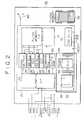
- Fig. 2 is a block diagram of the copyright-compliant memory card 2a.
- the memory card 2a is a single-chip IC constituted by a control block 21 and a flash memory 22.
- a bidirectional serial interface (i.e., memory interface 11) between the portable terminal apparatus and the memory card 2a is composed of 10 lines.
- the interface lines include four principal lines: a clock line SCK for sending clock signals during data transmission, a status line SBS for sending status information, a data line DIO for transmitting data, and an interrupt line INT.
- a clock line SCK for sending clock signals during data transmission
- a status line SBS for sending status information
- a data line DIO for transmitting data
- an interrupt line INT Two ground lines GND and two power lines VCC are provided for power supply purposes. The remaining two lines (indicated as "Reserv") are reserved.
- the clock line SCK is designed to send clock signals in synchronism with data.
- the status line SBS is intended to transmit a signal indicating the status of the memory card 2a.
- the data line DIO is used to input and output commands and encrypted audio data.
- the interrupt line INT is a signal line over which the memory card 2a transmits to the portable terminal apparatus an interrupt signal requesting an interruption of the CPU in the terminal apparatus.
- the interrupt signal is generated when the memory card 2a is inserted. With this embodiment, however, the interrupt signal is actually sent over the data line DIO while the interrupt line INT is grounded and not used.
- a serial/parallel and parallel/serial conversion interface block 23 (which may be abbreviated to S/P, P/S, I/F block) in the control block 21 provides an interface between the memory interface of the portable terminal apparatus on the one hand and the control block 21 of the memory card on the other hand.
- the portable terminal apparatus and the memory card are connected by means of the multiple lines described above.
- the serial/parallel and parallel/serial conversion interface block 23 converts serial data received from the portable terminal apparatus into parallel data and feeds the converted parallel data to the control block 21.
- the interface block 23 also converts parallel data from the control block 21 into serial data and transfers the converted serial data to the portable terminal apparatus.
- the serial/parallel and parallel/serial conversion interface block 23 separates what is received into two groups: commands and data for ordinary access to the flash memory 22 on the one hand, and commands and data required for encryption on the other hand.
- a command arrives first followed by data in a format in which signals are sent over the data line DIO.
- the serial/parallel and parallel/serial conversion interface block 23 checks a code of a given command to determine whether the command and the ensuing data are needed for ordinary access or for encryption.
- any command needed for ordinary access is set to a command register 24 and the accompanying data are set to a page buffer 25 and to a write register 26.
- An error correcting code generating circuit 27 is provided in association with the write register 26. The error correcting code generating circuit 27 generates a redundant error correcting code with respect to the data held temporarily in the page buffer 25.
- Output data from the command register 24, page buffer 25, write register 26, and error correcting code generating circuit 27 are supplied to a flash memory interface/sequencer 31 (which may be abbreviated to a memory I/F, sequencer).
- the flash memory interface/sequencer 31 provides an interface between the control block 21 and the flash memory 22, thus controlling data exchanges therebetween. Data are written to the flash memory 22 through this memory interface/sequencer 31.
- data retrieved from the flash memory 22 are sent through the flash memory interface/sequencer 31 to the page buffer 25, to a read register 28, and to an error correcting circuit 29. Any error in the data placed in the page buffer 25 is corrected by the error correcting circuit 29. Error-corrected output data from the page buffer 25 as well as output data from the read register 28 are fed to the serial/parallel and parallel/serial conversion interface block 23. From there, the data are sent through the above-mentioned serial interface to the CPU of the portable terminal apparatus.
- a configuration ROM 30 is provided to accommodate information such as version information about the memory card 2a and various items of attribute information.
- the memory card 2a is equipped with a switch 40 that may be operated by the user as needed to prevent inadvertent erasure.
- the switch 40 When the switch 40 is set to the erase inhibit position, the flash memory 22 is protected against erasure even if a command is sent from the portable terminal apparatus requesting erasure of data in the flash memory 22.
- An oscillator 41 generates clock pulses providing a timing reference for processing by the memory card 2a.
- the memory card 2a includes a security block 32 that implements a copyright protection function.
- a security IC (an encryption device 60, to be described later) in the portable terminal apparatus and the security block 32 in the memory card 2a encrypt contents (i.e., audio data compressed as per ATRAC (Adaptive TRansform Acoustic Coding) 3, called ATRAC3 data hereunder) to be written to the flash memory 22 as a measure of copyright protection.
- contents i.e., audio data compressed as per ATRAC (Adaptive TRansform Acoustic Coding) 3, called ATRAC3 data hereunder
- the security block 32 includes a buffer memory 33, a DES (Data Encryption Standard) encryption circuit 34 and a nonvolatile memory 35.
- DES Data Encryption Standard
- the security block 32 of the memory card 2a has a plurality of authorization keys and a storage key that is unique to the memory card in question.
- the nonvolatile memory 35 accommodates keys needed for encryption and is thus rendered unreadable from the outside.
- the storage key is held in the nonvolatile memory 35.
- the security block 32 also has a randomize circuit which permits authorization of the dedicated portable terminal apparatus (i.e., a terminal apparatus sharing a predetermined data format or the like within the system) sharing a session key with the card.
- the dedicated portable terminal apparatus i.e., a terminal apparatus sharing a predetermined data format or the like within the system
- a content key for encrypting ATRAC3 data is encrypted by use of the session key and is transferred between the portable terminal apparatus and the memory card 2a.
- the security block in the portable terminal apparatus has its own storage key.
- the content key is again encrypted using that storage key.
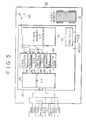
- Fig. 3 is a block diagram of the copyright-noncompliant memory card 2b having no encryption function.
- the memory card 2b is shown having no security block 32 connected to a serial/parallel and parallel/serial conversion interface block 23.
- the remaining structural features are the same as those of the memory card 2a.
- the memory cards 2a and 2b are identical in shape and size.
- the portable terminal apparatus in this example comprises an encryption device 60 and an authorization circuit 53, to be described later, and has a function for implementing security provisions regarding copyrights. Using that function, the portable terminal apparatus performs mutual authorization and key exchanges with the inserted memory card.
- the apparatus judges the inserted memory card to be copyright-noncompliant.
- the portable terminal apparatus determines whether the inserted card is a copyright-compliant memory card 2a or a copyright-noncompliant memory card 2b.
- the apparatus transmits a key to the inserted card for authorization. If the inserted memory card is the memory card 2b, the portable terminal apparatus fails to receive a normal response to the transmitted key from the card. That is, if the portable terminal apparatus does not obtain the normal response within a predetermined period of time following the key transmission, the terminal apparatus judges that the inserted memory card is a copyright-noncompliant card 2b.
- Another method for determining the card type involves having security-compliance/noncompliance identification information stored in a suitable memory card area (i.e., boot area).
- a suitable memory card area i.e., boot area.
- the terminal apparatus retrieves security-compliance/noncompliance identification information from data initially read from the boot area of the memory card.
- the portable terminal apparatus determines the type of the inserted memory card (as 2a or 2b).
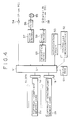
- Fig. 4 is a block diagram showing key components of the potable terminal apparatus embodying the invention. This block diagram omits an output stream constituted by circuits in the portable terminal apparatus for allowing reproduced data from memory cards to be output via headphones or transmitted to an external device connected to the terminal apparatus. Instead, the diagram depicts solely a recording stream made up of components for recording data to memory cards.
- the portable terminal apparatus comprises an interface circuit 51, a controller 52, an authorization circuit 53, a connector 54, a microphone 55, an A/D converter 56, an ADPCM (Adaptive Differential Pulse Code Modulation) encoder 57, a line input terminal 58, an ATRAC encoder 59, an encryption device 60, and a cache RAM 61.
- ADPCM Adaptive Differential Pulse Code Modulation
- the interface circuit 51 provides interface processing between memory cards inserted in the slots 1a and 1b on the one hand, and the circuits of the terminal apparatus on the other hand.
- the controller 52 is constituted by a microcomputer and provides overall controls.
- the authorization circuit 53 performs an authorization process on memory cards as part of the copyright protection function.
- the encryption device 60 encrypts data as another part of the copyright protection function.
- the cache RAM 61 holds data temporarily as they are being handled in any one of various processes.
- the cache RAM 61 is used as a temporary buffer in moving data between the copyright-compliant memory card 2a and the copyright-noncompliant memory card 2b, as will be described later.
- the ADPCM (Adapted Pulse Code Modulation) encoder 59 compresses supplied data through ADPCM for conversion to an ADPCM signal.
- the ATRAC (Adaptive Transform Acoustic Coding) encoder 59 compresses supplied data through ATRAC for conversion to an ATRAC signal.
- the connector 54 is connected with the cable 4 shown in Fig. 1, whereby the portable terminal apparatus is connected to a personal computer. Through the connector 54, the portable terminal apparatus receives recorded data from the personal computer.
- the received data may illustratively be audio data that have been ATRAC-encoded and encrypted.
- compressed and encrypted music data may be downloaded over the Internet and received through the connector 54.
- the microphone 55 corresponds to the microphone 3 shown in Fig. 1. As such, the microphone 55 provides an audio signal (analog audio signal) picked up as an external audio signal.
- the line input terminal 58 corresponds to the line input terminal 6 depicted in Fig. 1.
- a digital audio signal is input through this terminal from an external device (such as a CD player, an MD player, digital broadcast tuner, etc.).
- the digital audio signal is typically made of data with a quantized bit count of 16 bits and sampled at 44.1 kHz.
- Either the copyright-compliant memory card 2a or the copyright-noncompliant memory card 2b is selectively inserted into the slot 1a or 1b of this portable terminal apparatus.
- an authorization process takes place between the inserted memory card and the authorization circuit 53 through the interface circuit 51.
- the controller 52 judges the inserted memory card to be either the copyright-compliant memory card 2a or the copyright-noncompliant memory card 2b.
- an analog audio signal entered through the microphone 55 (or from a microphone connected to the microphone input terminal 5 in Fig. 1) is converted by the A/D converter 56 into a digital audio signal. After the conversion, the digital audio signal is fed to the ADPCM encoder 59.
- the ADPCM encoder 59 converts the received signal to an ADPCM signal, and sends the ADPCM signal as recording data to the inserted memory card via the interface circuit 51. Specific recording steps will be described later.
- the connector 54 may be connected with an RS-232C cable, an IEEE 1394 cable or a USB cable coming from a personal computer. Over the connected cable, the connector 54 may receive an encrypted and compressed audio signal from the personal computer. The data thus received are fed as recording data to the inserted memory card through the interface circuit 51. Specific recording steps will be described later.
- the line input terminal 58 may be connected with a data reproducing apparatus such as a CD player in order to receive a digital audio signal therefrom.
- the digital audio signal thus supplied is converted by the ATRAC encoder 59 into an ATRAC signal which in turn is encrypted by the encryption device 60.
- the encrypted signal is fed as recording data to the inserted memory card via the interface circuit 51. Specific recording steps will be described later.
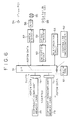
- FIGs. 5 and 6 A first operation example of this invention will now be described by referring to Figs. 5 and 6. This example applies where the copyright-compliant memory card 2a is inserted with the dictation recording mode in effect.
- Figs. 4 and 5 those blocks with their equivalent or corresponding counterparts already shown in Fig. 4 are given the same reference numerals, and thick broken lines indicate flows of data.
- Fig. 5 shows a case where the copyright-compliant memory card 2a is inserted into the slot 1a.
- an analog audio signal entered from the microphone 55 is converted by the A/D converter 56 to a digital audio signal.
- the digital audio signal is further converted by the ADPCM encoder 59 into an ADPCM signal that is recorded to the inserted memory card via the interface circuit 51.
- the data to be recorded are dictated audio data (constituting a dictation file) that are not subject to copyright protection.
- the data should normally be recorded to the copyright-noncompliant memory card 2b. Since only the copyright-noncompliant memory card 2b is currently inserted, the data are recorded to the memory card 2a for the moment.
- the apparatus waits until the copyright-noncompliant memory card 2b is inserted into the vacant slot 1b as shown in Fig. 6.
- the recorded ADPCM data are retrieved from the existing copyright-compliant memory card 2a as depicted in Fig. 6.
- the retrieved data are written temporarily to the cache RAM 61 via the interface circuit 51.
- the ADPCM data are read out in suitable increments and copied to the newly inserted copyright-noncompliant memory card 2b.
- the ADPCM data i.e., dictation file
- the copyright-compliant memory card 2a may be erased if so desired. If the data are erased, this completes relocation of the recorded data from one memory card to another.
- the copyright-compliant memory card 2a additionally equipped with the security block 32 as shown in Fig. 2 is sold at a higher price than the copyright-noncompliant memory card 2b.
- the expensive copyright-compliant memory card 2a can be used anew for other applications.
- a copyright-compliant memory card 2a inadvertently inserted by the user in the dictation recording mode is arranged to accommodate temporarily the recorded data making up a dictation file.
- the dictation file is relocated from the copyright-compliant memory card 2a to a newly inserted copyright-noncompliant memory card 2b.
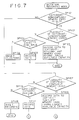
- Figs. 7 through 9 are flowcharts of steps performed by the controller 52 in the first operation example (in dictation recording mode).
- step SP101 the controller 52 checks to see if a copyright-noncompliant memory card 2b has been inserted into one of the slots 1a and 1b.
- step SP101 If in step SP101 the copyright-noncompliant memory card 2b is found inserted in one of the slots, step SP102 is reached. In step SP102, a check is made to see if a plurality of copyright-noncompliant memory cards 2b have been inserted into the slots.
- step SP103 the controller 52 starts recording a dictation file to one of the memory cards 2b which has the larger available capacity. The processing is terminated in response to a recording stop operation.
- step SP104 the controller 52 checks the available capacity of the memory card 2b. If the memory capacity is judged to be sufficient, the controller 52 goes to step SP105 and starts recording the dictation file. The processing is terminated in response to a recording stop operation.
- step SP104 If in step SP104 the available memory capacity is not judged to be sufficient, step SP106 is reached in which recording of the dictation file is inhibited. The processing is then terminated.
- the steps above apply when the user has correctly inserted the copyright-noncompliant memory card or cards 2b in the dictation recording mode.
- the dictation file is recorded in keeping with the available capacity of the inserted memory card(s) 2b.
- step SP101 the controller 52 may judge that a copyright-compliant memory card 2a alone is inserted in one of the slots 1a and 1b instead of a copyright-noncompliant memory card 2b. Following that judgment, the controller 52 goes to step SP107 to determine whether a plurality of copyright-compliant memory cards 2a are inserted into the slots 1a and 1b.
- step SP108 the controller 52 starts recording the dictation file to one of the memory cards 2a which has the larger available capacity.
- step SP109 in Fig. 9 is reached by way of exit 2 ⁇ in Fig. 7.
- the controller 52 waits until the other memory card not selected in step SP108, i.e., the copyright-compliant memory card 2a judged to have the smaller available capacity and not used for recording, is replaced by a new copyright-noncompliant memory card 2b with a sufficient available capacity.
- the controller 52 In the wait state, the controller 52 counts the elapsed time using an internal timer. A time-out is monitored in step SP110.
- step SP111 a check is made to see if an eject instruction is issued illustratively by the user's operation in order to eject the copyright-compliant memory card 2a to which the data have been recorded.
- step SP113 a check is made to see if the replacement detected in step SP109 has resulted in the insertion of a copyright-noncompliant memory card 2b. If the memory card 2b is judged to have been inserted, steps SP114 and SP115 are reached in which the dictation file recorded to the copyright-compliant memory card 2a in step SP108 is relocated from there to the newly inserted copyright-noncompliant memory card 2b.
- step SP114 the dictation file is copied to the copyright-noncompliant memory card 2b as shown in reference to Fig. 6.
- step SP115 the dictation file is erased from the copyright-compliant memory card 2a. This completes relocation of the dictation file from the memory card 2a to the memory card 2b, and the processing is terminated.
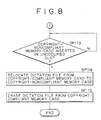
- step SP110 It may instead happen that a time-out is recognized in step SP110 without detection of the data-unrecorded copyright-compliant memory card 2a and the copyright-noncompliant memory card 2b being switched in step SP109, or that an eject instruction is detected in step SP111 to get the data-recorded copyright-compliant memory card 2a ejected. In such cases, the dictation file cannot be relocated as depicted in Fig. 8.
- Step SP112 is then reached in which the dictation file is erased anyway from the data-recorded copyright-compliant memory card 2a.
- the erasure brings the processing to an end.
- step SP116 is reached in which the memory card 2a is checked for its available capacity. If the memory card 2a is judged to have a sufficient available capacity, step SP117 is reached. In step SP117, the controller 52 starts recording the dictation file to the copyright-compliant memory card 2a. If in step SP116 the available capacity of the memory card 2a is judged to be insufficient, step SP118 is reached in which recording of the dictation file is inhibited, and the processing is terminated.
- step SP117 the processing of the controller 52 proceeds from step SP117 to step SP113 in Fig. 8 by way of exit 1 ⁇ in Fig. 7.
- step SP113 the controller 52 checks to see if (i.e., waits until) a copyright-noncompliant memory card 2b is inserted into the unoccupied slot.
- steps SP114 and SP115 are reached in which the dictation file recorded to the copyright-compliant memory card 2a in step SP117 is relocated from there to the newly inserted copyright-noncompliant memory card 2b.
- step SP114 the dictation file is copied to the copyright-noncompliant memory card 2b as shown in reference to Fig. 6.
- step SP115 the dictation file is erased from the copyright-compliant memory card 2a. This completes relocation of the dictation file from the memory card 2a to the memory card 2b, and the processing is terminated.
- the steps above are carried out in the dictation recording mode basically to record to the copyright-noncompliant memory card 2b the dictation file composed of audio signals picked up by the microphone 55 or the like. If a copyright-compliant memory card 2a alone is found inserted, the dictation file is recorded temporarily to that memory card 2a. Later, the recorded dictation file is relocated to a newly inserted copyright-noncompliant memory card 2b.
- the desired dictation file can still be recorded despite the user's loading of the wrong type of memory card.
- the situation can be subsequently brought to normal when the dictation file is relocated to a copyright-noncompliant memory card 2b.
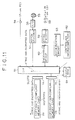
- FIGs. 10 and 11 A second operation example (music recording mode) of this invention will now be described by referring to Figs. 10 and 11.
- This example applies where the copyright-noncompliant memory card 2b is inserted with the music recording mode in effect.
- Figs. 10 and 11 those blocks with their equivalent or corresponding counterparts already shown in Fig. 4 are given the same reference numerals.
- the connector 54 receives a digital audio signal (constituting a music file) which, coming illustratively from a personal computer, has been compressed and encrypted.
- the received signal is recorded to the inserted memory card via the interface circuit 51.
- a music file is subject to copyright protection and should normally be recorded to the copyright-compliant memory card 2a.
- Fig. 10 In the case of Fig. 10, however, only a copyright-noncompliant memory card 2b has been inserted, so that the music file is recorded to that memory card 2b for the moment.
- data need not be encrypted when recorded to the copyright-noncompliant memory card 2b.
- the music file is encrypted and recorded as ATRAC data.
- the controller 52 waits until a copyright-compliant memory card 2a is inserted into the vacant slot 1a as shown in Fig. 11.
- the recorded ATRAC data are retrieved from the copyright-noncompliant memory card 2b as shown in Fig. 11.
- the retrieved ATRAC data are written temporarily to the cache RAM 61 via the interface circuit 51.
- the ATRAC data are read out in suitable increments and copied to the newly inserted copyright-compliant memory card 2a.
- the ATRAC data i.e., music file
- the copyright-noncompliant memory card 2b may be erased if so desired. If the data are erased, this completes relocation of the recorded data from one memory card to another.
- a copyright-noncompliant memory card 2b inadvertently inserted by the user in the music recording mode is arranged to accommodate temporarily the recorded music file. After the recording, the music file is relocated to a newly inserted copyright-compliant memory card 2a.
- the music file subject to copyright protection is stored, although temporarily, to the copyright-noncompliant memory card 2b. This does not mean, however, that copyrights have been infringed on.
- the copyright-noncompliant memory card 2b has no provisions for copyright protection and thus does not normally require data to be encrypted before recording.
- the copyright-noncompliant memory card 2b is arranged to record the music file following encryption. Since the copyright-noncompliant memory card 2b does not have a decryption circuit or an authorization circuit comprising the security block 32 (see Fig. 2), the encrypted data will not be decrypted.
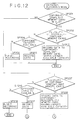
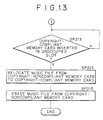
- Figs. 12 through 14 are flowcharts of steps carried out by the controller 52 in the second operation example (music recording mode).
- step SP201 the controller 52 checks to see if a copyright-compliant memory card 2a has been inserted into one of the slots 1a and 1b.
- step SP201 If in step SP201 the copyright-compliant memory card 2a is found inserted in one of the slots, step SP202 is reached. In step SP202, a check is made to see if a plurality of copyright-compliant memory cards 2a have been inserted into the slots.
- step SP203 the controller 52 starts recording a music file to one of the memory cards 2a which has the larger available capacity. The processing is terminated in response to a recording stop operation.
- step SP204 the controller 52 checks the available capacity of the memory card 2a. If the memory capacity is judged to be sufficient, the controller 52 goes to step SP205 and starts recording the music file. The processing is terminated in response to a recording stop operation.
- step SP204 If in step SP204 the available memory capacity is not judged to be sufficient, step SP206 is reached in which recording of the music file is inhibited. The processing is then terminated.
- the steps above apply when the user has correctly inserted the copyright-compliant memory card or cards 2a.
- the music file is recorded in keeping with the available capacity of the inserted memory card(s) 2a.
- step SP201 the controller 52 may judge that a copyright-noncompliant memory card 2b alone is inserted in one of the slots 1a and 1b instead of a copyright-compliant memory card 2a. Following that judgment, the controller 52 goes to step SP207 to determine whether a plurality of copyright-noncompliant memory cards 2b are inserted into the slots 1a and 1b.
- step SP208 the controller 52 starts recording the music file to one of the memory cards 2b which has the larger available capacity.
- step SP209 in Fig. 14 is reached by way of exit 4 ⁇ in Fig. 12.
- the controller 52 waits until the other memory card not selected in step SP208, i.e., the copyright-noncompliant memory card 2b judged to have the smaller available capacity and not used for recording, is replaced by a new copyright-compliant memory card 2a with a sufficient available capacity.
- the controller 52 In the wait state, the controller 52 counts the elapsed time using the internal timer. A time-out is monitored in step SP210.
- step SP211 a check is made to see if an eject instruction is issued illustratively by the user's operation in order to eject the copyright-noncompliant memory card 2b to which the data have been recorded.
- step SP213 a check is made to see if the replacement detected in step SP209 has resulted in the insertion of a copyright-compliant memory card 2a. If the memory card 2a is judged to have been inserted, steps SP214 and SP215 are reached in which the music file recorded to the copyright-noncompliant memory card 2b in step SP208 is relocated from there to the newly inserted copyright-compliant memory card 2a.
- step SP214 the music file is copied to the copyright-compliant memory card 2a as shown in reference to Fig. 11.
- step SP215 the music file is erased from the copyright-noncompliant memory card 2b. This completes relocation of the music file from the memory card 2b to the memory card 2a, and the processing is terminated.
- step SP210 It may instead happen that a time-out is recognized in step SP210 without detection of the data-unrecorded copyright-noncompliant memory card 2b and the copyright-compliant memory card 2a being switched in step SP209, or that an eject instruction is detected in step SP211 to get the data-recorded copyright-noncompliant memory card 2b ejected. In such cases, the music file cannot be relocated as indicated in Fig. 13.
- Step SP212 is then reached in which the music file is erased anyway from the data-recorded copyright-noncompliant memory card 2b.
- the erasure brings the processing to an end.
- step SP216 is reached in which the memory card 2b is checked for its available capacity. If the memory card 2b is judged to have a sufficient available capacity, step SP217 is reached. In step SP217, the controller 52 starts recording the music file to the copyright-noncompliant memory card 2b. If in step SP216 the available capacity of the memory card 2b is judged to be insufficient, step SP218 is reached in which recording of the music file is inhibited, and the processing is terminated.
- step SP217 the processing of the controller 52 proceeds from step SP217 to step SP213 in Fig. 13 by way of exit 3 ⁇ in Fig. 12.
- step SP213 the controller 52 checks to see if (i.e., waits until) a copyright-compliant memory card 2a is inserted into the unoccupied slot.
- steps SP214 and SP215 are reached in which the music file recorded to the copyright-noncompliant memory card 2b in step SP217 is relocated from there to the newly inserted copyright-compliant memory card 2a.
- step SP214 the music file is copied to the copyright-compliant memory card 2a as shown in reference to Fig. 11.
- step SP215 the music file is erased from the copyright-noncompliant memory card 2b. This completes relocation of the music file from the memory card 2b to the memory card 2a, and the processing is terminated.
- the steps above are carried out in the music recording mode basically to record to the copyright-compliant memory card 2a the music file composed of audio signals coming from a personal computer or like sources. If a copyright-noncompliant memory card 2b alone is found inserted, the music file is recorded temporarily to that memory card 2b. Later, the recorded music file is relocated to a newly inserted copyright-compliant memory card 2a.
- the desired music file can still be recorded despite the user's loading of the wrong type of memory card.
- the situation can be subsequently brought to normal when the music file is relocated to a copyright-compliant memory card 2a.
- a copyright-noncompliant memory card 2b is inadvertently inserted preparatory to recording as a music file the digital signal coming from a CD player or like equipment following encryption, the admitted data are recorded temporarily to the inserted memory card 2b so that the music file will be relocated to a subsequently inserted copyright-compliant memory card 2a. Recording of the music file is thus guaranteed regardless of the type of memory card adopted for the moment. Because the copyright-compliant memory card 2a can be inserted (or can replace the memory card 2b) later in an unhurried fashion, there is no lopping of an initial portion of the music file due to a hasty switching of the improper memory card.
- the copyright-protected music file placed temporarily in the copyright-noncompliant memory card 2b is erased in step SP212 or SP215 as described above. There will be no music file left in the subsequently ejected copyright-noncompliant memory card 2b. In the manner described, the embodiments or operation examples of this invention will not undermine but uphold established functions or provisions for copyright protection.
- a modified terminal apparatus may have a single slot and incorporate an internal nonvolatile memory having approximately the same capacity as that of a memory card to be inserted into that slot.
- the single slot may selectively accommodate either a copyright-compliant memory card or a copyright-noncompliant memory card. This modification works as follows:
- a copyright-compliant memory card is inserted into the single slot in the dictation recording mode, dictated contents are recorded temporarily to the inserted copyright-compliant memory card.
- the recorded contents are moved from the copyright-compliant memory card to the internal nonvolatile memory.
- the copyright-compliant memory card is released from the single slot and replaced by a copyright-noncompliant memory card inserted anew into the slot.
- the recorded dictations are then relocated from the internal nonvolatile memory to the newly inserted copyright-noncompliant memory card.
- music contents are recorded temporarily to the inserted copyright-noncompliant memory card.
- the recorded contents are moved from the copyright-noncompliant memory card to the internal nonvolatile memory. Thereafter, the copyright-noncompliant memory card is released from the single slot and replaced by a copyright-compliant memory card inserted anew into the slot. The recorded music is then relocated from the internal nonvolatile memory to the newly inserted copyright-compliant memory card.
- This invention applies not only to Memory Stick (trademark) which is a copyright-compliant/noncompliant memory card proposed by this applicant, but also to memory card recording and reproducing apparatuses for use with such diverse flash memories as: Secured Multi Media Card (trademark of Infineon Technologies AG, Germany), a copyright-compliant/noncompliant memory card proposed by San disk and Hitachi Ltd.; SD Card (trademark of Infineon Technologies AG, Germany) proposed by San disk, Toshiba and Matsushita; and Compact Flash Memory Card (trademark) proposed by San disk.
- the inventive apparatus allows a plurality of memory cards to be inserted at the same time so that data can be copied or relocated easily from one memory card to another.
- a copyright-compliant memory card if a copyright-compliant memory card is inserted and if copyright-unprotected data (i.e., data not requiring copyright protection) are to be recorded, the data are written anyway to the inserted memory card so that the recorded data will later be relocated or copied to a copyright-noncompliant memory card.
- copyright-noncompliant memory card if a copyright-noncompliant memory card is inserted and if copyright-protected data (i.e., data requiring copyright protection) are to be recorded, the data are written anyway to the inserted memory card so that the recorded data will later be relocated or copied to a copyright-compliant memory card.
Landscapes
- Engineering & Computer Science (AREA)
- Computer Security & Cryptography (AREA)
- Signal Processing (AREA)
- Theoretical Computer Science (AREA)
- Physics & Mathematics (AREA)
- General Engineering & Computer Science (AREA)
- General Physics & Mathematics (AREA)
- Storage Device Security (AREA)
- Credit Cards Or The Like (AREA)
Applications Claiming Priority (2)
| Application Number | Priority Date | Filing Date | Title |
|---|---|---|---|
| JP25710799A JP4352523B2 (ja) | 1999-09-10 | 1999-09-10 | 携帯端末 |
| JP25710799 | 1999-09-10 |
Publications (3)
| Publication Number | Publication Date |
|---|---|
| EP1083474A2 true EP1083474A2 (de) | 2001-03-14 |
| EP1083474A3 EP1083474A3 (de) | 2004-09-15 |
| EP1083474B1 EP1083474B1 (de) | 2008-05-21 |
Family
ID=17301839
Family Applications (1)
| Application Number | Title | Priority Date | Filing Date |
|---|---|---|---|
| EP00307722A Expired - Lifetime EP1083474B1 (de) | 1999-09-10 | 2000-09-07 | Endgerät und Aufzeichnungsverfahren |
Country Status (8)
| Country | Link |
|---|---|
| US (1) | US7209642B1 (de) |
| EP (1) | EP1083474B1 (de) |
| JP (1) | JP4352523B2 (de) |
| KR (1) | KR100734154B1 (de) |
| CN (1) | CN1155003C (de) |
| DE (1) | DE60038928D1 (de) |
| MY (1) | MY134769A (de) |
| SG (1) | SG96566A1 (de) |
Cited By (4)
| Publication number | Priority date | Publication date | Assignee | Title |
|---|---|---|---|---|
| KR20030016769A (ko) * | 2001-08-21 | 2003-03-03 | 김문근 | 차량용 플래시 메모리 카드 오디오 녹음기/재생기 |
| EP1633074A1 (de) * | 2004-09-03 | 2006-03-08 | Atmel Nantes Sa | Integrierte Schaltung mit kodiertem Sicherungsignal, Sicherungsverfahren, Vorrichtung und mittels eines entsprechenden dynamischen Schlüssels kodiertes Sicherungsignal |
| EP1403769A4 (de) * | 2001-06-18 | 2007-08-15 | Sony Corp | Datentransfersystem, datentransfervorrichtung, datenaufzeichnungsvorrichtung, datentransferverfahren |
| US7418735B2 (en) * | 2000-04-04 | 2008-08-26 | Sony Corporation | Transmitter, signal transmitting method, and data distributing system for transferring a content signal or processing copyright protection on a content signal |
Families Citing this family (6)
| Publication number | Priority date | Publication date | Assignee | Title |
|---|---|---|---|---|
| JP3778009B2 (ja) | 2001-06-13 | 2006-05-24 | ソニー株式会社 | データ転送システム、データ転送装置、データ記録装置、データ管理方法 |
| US7596227B2 (en) * | 2004-06-08 | 2009-09-29 | Dartdevices Interop Corporation | System method and model for maintaining device integrity and security among intermittently connected interoperating devices |
| EP1637957A1 (de) * | 2004-09-21 | 2006-03-22 | Deutsche Thomson-Brandt Gmbh | Verfahren und Einrichtung für den Zugriff auf geschützte Daten |
| US8639946B2 (en) * | 2005-06-24 | 2014-01-28 | Sigmatel, Inc. | System and method of using a protected non-volatile memory |
| JP2007265300A (ja) * | 2006-03-29 | 2007-10-11 | Brother Ind Ltd | 通信システム及びそれに使用する周辺装置 |
| US8060662B2 (en) * | 2007-12-17 | 2011-11-15 | Ricoh Company, Ltd. | Recording control apparatus, recording control method, and computer program product |
Family Cites Families (14)
| Publication number | Priority date | Publication date | Assignee | Title |
|---|---|---|---|---|
| JPS5515506A (en) * | 1978-07-17 | 1980-02-02 | Nippon Abionikusu Kk | Card reader |
| JPH01296361A (ja) * | 1988-05-25 | 1989-11-29 | Mitsubishi Electric Corp | メモリカード |
| JP2921879B2 (ja) * | 1989-09-29 | 1999-07-19 | 株式会社東芝 | 画像データ処理装置 |
| JPH0480884A (ja) * | 1990-07-24 | 1992-03-13 | Hitachi Ltd | 電子ファイル装置 |
| US5590306A (en) * | 1992-09-08 | 1996-12-31 | Fuji Photo Film Co., Ltd. | Memory card management system for writing data with usage and recording codes made significant |
| US5613135A (en) * | 1992-09-17 | 1997-03-18 | Kabushiki Kaisha Toshiba | Portable computer having dedicated register group and peripheral controller bus between system bus and peripheral controller |
| JPH0855021A (ja) * | 1994-08-10 | 1996-02-27 | Fujitsu Ltd | 鍵認証方式 |
| KR0128980Y1 (ko) * | 1995-09-30 | 1998-12-15 | 김광호 | 다수의 아이씨 카드를 장착한 재생장치 |
| JPH10302030A (ja) * | 1997-02-28 | 1998-11-13 | Toshiba Corp | 接続装置、および情報処理装置 |
| EP0970411B1 (de) * | 1997-03-27 | 2002-05-15 | BRITISH TELECOMMUNICATIONS public limited company | Datenkopierschutz |
| JP3098736B2 (ja) * | 1998-04-15 | 2000-10-16 | 日本放送協会 | 映像再生制御装置および記憶媒体 |
| US6279114B1 (en) * | 1998-11-04 | 2001-08-21 | Sandisk Corporation | Voltage negotiation in a single host multiple cards system |
| US6343280B2 (en) * | 1998-12-15 | 2002-01-29 | Jonathan Clark | Distributed execution software license server |
| US6542694B2 (en) * | 1998-12-16 | 2003-04-01 | Kabushiki Kaisha Toshiba | Optical disc for storing moving pictures with text information and apparatus using the disc |
-
1999
- 1999-09-10 JP JP25710799A patent/JP4352523B2/ja not_active Expired - Fee Related
-
2000
- 2000-09-05 MY MYPI20004094A patent/MY134769A/en unknown
- 2000-09-05 SG SG200005083A patent/SG96566A1/en unknown
- 2000-09-07 DE DE60038928T patent/DE60038928D1/de not_active Expired - Lifetime
- 2000-09-07 EP EP00307722A patent/EP1083474B1/de not_active Expired - Lifetime
- 2000-09-08 US US09/658,141 patent/US7209642B1/en not_active Expired - Lifetime
- 2000-09-09 KR KR1020000053739A patent/KR100734154B1/ko not_active Expired - Fee Related
- 2000-09-10 CN CNB001285793A patent/CN1155003C/zh not_active Expired - Fee Related
Non-Patent Citations (2)
| Title |
|---|
| "SDMI portable device specification" 8 July 1999 (1999-07-08), SECURE DIGITAL MUSIC INITIATIVE , LOS ANGELES , XP002289704 * the whole document * * |
| ANONYMOUS: 9 July 1999 (1999-07-09), TOSHIBA , TOKYO , XP002289703 Retrieved from the Internet: URL:www.toshiba.co.jp> * page 3 * * |
Cited By (7)
| Publication number | Priority date | Publication date | Assignee | Title |
|---|---|---|---|---|
| US7418735B2 (en) * | 2000-04-04 | 2008-08-26 | Sony Corporation | Transmitter, signal transmitting method, and data distributing system for transferring a content signal or processing copyright protection on a content signal |
| EP1403769A4 (de) * | 2001-06-18 | 2007-08-15 | Sony Corp | Datentransfersystem, datentransfervorrichtung, datenaufzeichnungsvorrichtung, datentransferverfahren |
| AU2002306383B2 (en) * | 2001-06-18 | 2008-06-05 | Sony Corporation | Data transfer system, data transfer apparatus, data recording apparatus, data transfer method |
| US7437770B2 (en) | 2001-06-18 | 2008-10-14 | Sony Corporation | Data transfer system, data transfer apparatus, data recording apparatus, data transfer method |
| KR20030016769A (ko) * | 2001-08-21 | 2003-03-03 | 김문근 | 차량용 플래시 메모리 카드 오디오 녹음기/재생기 |
| EP1633074A1 (de) * | 2004-09-03 | 2006-03-08 | Atmel Nantes Sa | Integrierte Schaltung mit kodiertem Sicherungsignal, Sicherungsverfahren, Vorrichtung und mittels eines entsprechenden dynamischen Schlüssels kodiertes Sicherungsignal |
| FR2875082A1 (fr) * | 2004-09-03 | 2006-03-10 | Atmel Nantes Sa Sa | Circuit integre a signal de securisation code, procede de securisation, dispositif et signal de securisation code au moyen d'une cle dynamique correspondants |
Also Published As
| Publication number | Publication date |
|---|---|
| DE60038928D1 (de) | 2008-07-03 |
| JP2001084339A (ja) | 2001-03-30 |
| MY134769A (en) | 2007-12-31 |
| EP1083474B1 (de) | 2008-05-21 |
| EP1083474A3 (de) | 2004-09-15 |
| KR100734154B1 (ko) | 2007-07-03 |
| KR20010067171A (ko) | 2001-07-12 |
| CN1298183A (zh) | 2001-06-06 |
| CN1155003C (zh) | 2004-06-23 |
| JP4352523B2 (ja) | 2009-10-28 |
| US7209642B1 (en) | 2007-04-24 |
| SG96566A1 (en) | 2003-06-16 |
Similar Documents
| Publication | Publication Date | Title |
|---|---|---|
| JP4470242B2 (ja) | 半導体メモリカード | |
| EP1313108B1 (de) | Speicher und Datenverarbeitungseinheiten und Datenverarbeitungsverfahren | |
| KR100839034B1 (ko) | 휴대용 저장 장치 및 비디오 신호를 기록 및 재생하는 방법 | |
| KR20000029105A (ko) | 디지털 저작물인 콘텐트를 처리하는 저작물 보호시스템 | |
| WO2002007161A1 (en) | Method and apparatus for recording and/or reproducing data and record medium | |
| KR20010083073A (ko) | 반도체 메모리 카드 및 데이터 판독장치 | |
| US7752460B2 (en) | General-purpose computer and copyright management method for use therein | |
| EP1083474B1 (de) | Endgerät und Aufzeichnungsverfahren | |
| KR20020044079A (ko) | 데이터 전송 시스템, 데이터 전송 장치, 데이터 기록장치, 데이터 전송 방법, 및 기록 매체 | |
| JP4025941B2 (ja) | 情報信号の複製制御システムおよび情報出力装置 | |
| US20050005142A1 (en) | Digital rights management | |
| US6983281B1 (en) | Terminal apparatus | |
| JP2002108717A (ja) | コンテンツ再生制限機構付きディスクシステムおよび媒体 | |
| JP3882460B2 (ja) | メモリ装置、データ処理装置、データ処理システムおよびデータ処理方法 | |
| JP2004063016A (ja) | 情報記録方法および情報記録再生装置 | |
| KR100797379B1 (ko) | 단말 장치 | |
| JP4393928B2 (ja) | 記録装置、再生装置、記録方法、およびプログラム | |
| JP4103928B2 (ja) | 電子機器およびデータ処理方法 | |
| GB2396231A (en) | Inhibiting recording/reproduction of copyright contents to non-copyright memory card. | |
| JP2001060172A (ja) | 携帯端末 | |
| JP2001016325A (ja) | 携帯電話機 | |
| CN101246561A (zh) | 半导体存储卡 | |
| KR20060061512A (ko) | 플레이어 세트 및 플레이어 세트의 사용방법 |
Legal Events
| Date | Code | Title | Description |
|---|---|---|---|
| PUAI | Public reference made under article 153(3) epc to a published international application that has entered the european phase |
Free format text: ORIGINAL CODE: 0009012 |
|
| AK | Designated contracting states |
Kind code of ref document: A2 Designated state(s): AT BE CH CY DE DK ES FI FR GB GR IE IT LI LU MC NL PT SE |
|
| AX | Request for extension of the european patent |
Free format text: AL;LT;LV;MK;RO;SI |
|
| PUAL | Search report despatched |
Free format text: ORIGINAL CODE: 0009013 |
|
| AK | Designated contracting states |
Kind code of ref document: A3 Designated state(s): AT BE CH CY DE DK ES FI FR GB GR IE IT LI LU MC NL PT SE |
|
| AX | Request for extension of the european patent |
Extension state: AL LT LV MK RO SI |
|
| 17P | Request for examination filed |
Effective date: 20041027 |
|
| 17Q | First examination report despatched |
Effective date: 20041123 |
|
| AKX | Designation fees paid |
Designated state(s): DE FR GB |
|
| GRAP | Despatch of communication of intention to grant a patent |
Free format text: ORIGINAL CODE: EPIDOSNIGR1 |
|
| RIN1 | Information on inventor provided before grant (corrected) |
Inventor name: UTSUMI, YOSHIMASAC/O SONY CORPORATION |
|
| GRAS | Grant fee paid |
Free format text: ORIGINAL CODE: EPIDOSNIGR3 |
|
| GRAA | (expected) grant |
Free format text: ORIGINAL CODE: 0009210 |
|
| AK | Designated contracting states |
Kind code of ref document: B1 Designated state(s): DE FR GB |
|
| REG | Reference to a national code |
Ref country code: GB Ref legal event code: FG4D |
|
| REF | Corresponds to: |
Ref document number: 60038928 Country of ref document: DE Date of ref document: 20080703 Kind code of ref document: P |
|
| PLBE | No opposition filed within time limit |
Free format text: ORIGINAL CODE: 0009261 |
|
| STAA | Information on the status of an ep patent application or granted ep patent |
Free format text: STATUS: NO OPPOSITION FILED WITHIN TIME LIMIT |
|
| 26N | No opposition filed |
Effective date: 20090224 |
|
| REG | Reference to a national code |
Ref country code: GB Ref legal event code: 746 Effective date: 20091130 |
|
| PGFP | Annual fee paid to national office [announced via postgrant information from national office to epo] |
Ref country code: DE Payment date: 20140922 Year of fee payment: 15 |
|
| PGFP | Annual fee paid to national office [announced via postgrant information from national office to epo] |
Ref country code: FR Payment date: 20140919 Year of fee payment: 15 Ref country code: GB Payment date: 20140919 Year of fee payment: 15 |
|
| REG | Reference to a national code |
Ref country code: DE Ref legal event code: R119 Ref document number: 60038928 Country of ref document: DE |
|
| GBPC | Gb: european patent ceased through non-payment of renewal fee |
Effective date: 20150907 |
|
| REG | Reference to a national code |
Ref country code: FR Ref legal event code: ST Effective date: 20160531 |
|
| PG25 | Lapsed in a contracting state [announced via postgrant information from national office to epo] |
Ref country code: DE Free format text: LAPSE BECAUSE OF NON-PAYMENT OF DUE FEES Effective date: 20160401 Ref country code: GB Free format text: LAPSE BECAUSE OF NON-PAYMENT OF DUE FEES Effective date: 20150907 |
|
| PG25 | Lapsed in a contracting state [announced via postgrant information from national office to epo] |
Ref country code: FR Free format text: LAPSE BECAUSE OF NON-PAYMENT OF DUE FEES Effective date: 20150930 |