EP1083484B1 - Terminaison d'un groupe de fils d'exécution apparentés par modification du compteur de programme d'échelons de pile selectionnés - Google Patents
Terminaison d'un groupe de fils d'exécution apparentés par modification du compteur de programme d'échelons de pile selectionnés Download PDFInfo
- Publication number
- EP1083484B1 EP1083484B1 EP00307482A EP00307482A EP1083484B1 EP 1083484 B1 EP1083484 B1 EP 1083484B1 EP 00307482 A EP00307482 A EP 00307482A EP 00307482 A EP00307482 A EP 00307482A EP 1083484 B1 EP1083484 B1 EP 1083484B1
- Authority
- EP
- European Patent Office
- Prior art keywords
- frames
- thread
- code
- recited
- threads
- Prior art date
- Legal status (The legal status is an assumption and is not a legal conclusion. Google has not performed a legal analysis and makes no representation as to the accuracy of the status listed.)
- Expired - Lifetime
Links
Images




Classifications
-
- G—PHYSICS
- G06—COMPUTING OR CALCULATING; COUNTING
- G06F—ELECTRIC DIGITAL DATA PROCESSING
- G06F9/00—Arrangements for program control, e.g. control units
- G06F9/06—Arrangements for program control, e.g. control units using stored programs, i.e. using an internal store of processing equipment to receive or retain programs
- G06F9/46—Multiprogramming arrangements
- G06F9/48—Program initiating; Program switching, e.g. by interrupt
- G06F9/4806—Task transfer initiation or dispatching
- G06F9/4843—Task transfer initiation or dispatching by program, e.g. task dispatcher, supervisor, operating system
Definitions
- the invention relates generally to software applications and, more particularly, to methods and apparatus for aborting threads in an object-based system.
- a thread may be thought of as a "sketch pad" of storage resources, and is essentially a single sequential flow of control within a computer program.
- a thread or a "thread of control” is a sequence of central processing unit (CPU) instructions or programming language statements that may be independently executed.
- CPU central processing unit
- Each thread has its own execution stack on which method activations reside.
- an activation is "pushed" on the execution stack of the thread.
- the activation is "popped” from the execution stack. Since an activation of one method may activate another method, an execution stack operates in a first-in-last-out manner.
- LINDHOLM T., YELLIN. F.: "The Java Virtual Machine Specification” 1997, ADDISON-WESLEY, USA describes the general implementation of the Java Virtual Machine and the Java language. In particular, it describes threads, each having their own stack on which frames are pushed from which frames are popped, and exception throwing and handling to abort the execution of a method or thread.
- threads generally self terminate, one may also wish to forcefully terminate a thread while it is executing. For example, one may wish to terminate a thread whose currently executing code is currently mounting a "denial of service attack."
- a denial of service attack uses all or most of the local host's resources (e . g ., processor and/or memory resources).
- code associated with a particular thread may initiate an infinite loop, which functions to open an infinite number of windows. In this example, the code continues to open windows until so many resources are consumed that the particular application that is executing the code (or the entire computer system) crashes or freezes up.
- a denial of service attack is generally associated with untrusted code that originates from an unknown source.
- downloaded computer programs may include methods from an unknown programming source.
- the downloaded program may include untrusted code that was maliciously or unintentionally designed to mount a denial of service attack.
- Thread.destroy works by deallocating the stack associated with the misbehaving thread. In other words, the thread's stack is removed from the scheduler, which schedules threads for execution.
- thread.destroy does not clean up the internal data structures that the misbehaving thread may have inconsistently altered. That is, the misbehaving thread may be writing to an internal data structure when it is killed and may only partially fill the internal data structure. For example, the misbehaving thread may initiate a print function by setting a print flag, but not yet write to the print buffer before the misbehaving thread is killed. In this example, a thread.destroy may cause garbage to be printed since the thread was killed before it could write valid print data to the print buffer.
- Thread.stop Another solution “thread.stop” is currently available as a resource within the JavaTM II Standard Development Kit. Thread.stop throws an exception so that a currently executing method may "catch" the exception and execute any implemented clean up code.
- trusted code is generally designed to perform clean up routines ( e . g ., within a "finally” block)
- untrusted code cannot be trusted to perform such clean up processes. In other words, the untrusted code's may continue to misbehave when an exception is thrown.
- an untrusted code's "finally” routine may also mount a denial of service attack. Additionally, thread.stop does not provide any mechanisms for cleaning up any inconsistent data structures.
- thread stacks associated with the misbehaving code are modified so that the thread aborts automatically after modification.
- a thread is generally deemed to be associated with the misbehaving code if the thread's stack has a program counter within a method associated with the misbehaving code (or the thread is executing methods associated with the misbehaving code).
- Frames within a stack that is associated with misbehaving code can be divided into two groups: trusted frames and untrusted frames. Trusted frames may be allowed to terminate on their own, while untrusted frames are modified to terminate without executing any remaining untrusted code. In other words, frames that reference untrusted code are not allowed to execute.
- a method for aborting a plurality of threads related to misbehaving code that mounts a denial of service attack, each thread corresponding to a thread stack that has at least one frame referencing a code portion comprising: stopping a plurality of related threads that share a same resource or a same object as a thread associated with the misbehaving code; modifying a first set of frames of the thread stacks of the related threads by modifying a program counter in each frame in the first set of frames so that the frames in the first set of frames are automatically popped from their thread stacks during execution, thereby inhibiting execution of the modified frames' referenced code portions; and restarting the plurality of related threads to allow a second set of frames of the thread stacks to execute their referenced code portions.
- the first set of frames are modified by moving references from the code portions to a break instruction.
- the second set of frames continue to reference the code portions that they were referencing at the same time as the related threads are stopped.
- any exception handling of the first set of frames is also inhibited.
- a lock on a synchronized block is broken when a particular one of the first set of frames is in the synchronized block.
- a request is initiated indicating that the call be aborted.
- permutation when a particular one of the related threads is not schedulable, the particular thread is made schedulable again.
- a computer system operable to abort a plurality of threads related to misbehaving code that mounts a denial of service attack, each thread corresponding to a thread stack that has at least one frame referencing a code portion comprising: a memory; and a processor coupled to the memory, wherein at least one of the memory and the processor are adapted to provide: stopping a plurality of related threads that share a same resource or a same object as a thread associated with the misbehaving code; modifying a first set of frames of the thread stacks of the related threads by modifying a program counter in each frame in the first set of frames so that the frames in the first set of frames are automatically popped from their thread stacks during execution of the modified frames' referenced code portions; and restarting the plurality of related threads to allow a second set of frames of the thread stacks to execute their referenced code portions.
- untrusted code is inhibited from continuing to misbehave through its exception handling code.
- trusted code is allowed to perform exception handling (e . g ., clean up routines) prior to aborting the associated thread.
- exception handling e . g ., clean up routines
- the likelihood of internal data structures being left in an inconsistent state is minimized.
- all of the threads that share a same resource that is associated with the offending code are aborted.
- other threads that are associated with the inconsistent shared resource are prohibited from accessing the inconsistent resource when they too are aborted.
- the description also generally describes a method for aborting a thread that has an associated thread stack with a plurality of frames that are associated with either trusted or untrusted code.
- a frame within the thread stack of the thread to be aborted is selected.
- the selected frame from the thread stack of the thread to be aborted is modified when the selected frame is associated with untrusted code. The modification causes the thread to terminate without executing untrusted code.
- the selected frame is associated with trusted code, the selected frame is allowed to execute the trusted code.
- the invention pertains to methods and apparatus for aborting threads.
- the frames of a thread stack that are associated with misbehaving code are popped from the thread stack. Popping the frames of a thread stack aborts the associated misbehaving thread. Processes for popping a misbehaving thread stack's frames are described below in reference to Figures 1A and 1B. Frames are popped on all thread stacks of all threads that are associated with the misbehaving code. Threads are generally deemed to be associated with the misbehaving code when the threads share a same object or the same resources as the thread that is associated with the misbehaving code.
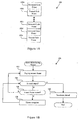
- Figure 1A is a diagrammatic representation of a thread stack 100.
- Each executing thread typically corresponds to a single thread stack.
- Each thread stack includes a plurality of stack frames 102.
- Each stack frame 102 of a particular thread stack corresponds to an individual method of the individual thread that is associated with the particular thread stack.
- a thread frame typically includes an operations stack (not shown) for storing a plurality of parameters that are used by the associated method. For example, these parameters may include constant and/or variable values.
- a corresponding frame is added to the top of the associated thread stack.
- other methods of the same thread e . g ., spawned by the previous method
- they are also added to the top of the thread stack above the previous stack frame.
- activated methods are layered on top of each other within the thread stack.
- the last method to be activated is finished or deactivated, its corresponding stack frame is popped from the top of the frame.
- the previously activated method may then complete its execution. This method is then deactivated and popped from the thread stack.
- each stack frame 102 may be defined as either a trusted code frame (e.g., 102e) or an untrusted code frame (e.g., 102d).
- Trusted code generally includes any code that originates from a known source or was designed by a known programmer. In other words, the trusted code's design source is known and/or the trusted code has been thoroughly tested before being implemented on the local client. Trusted code is unlikely to mount a denial of service attack. For instance, trusted code may include any system methods that are shipped with the virtual machine.
- Untrusted code generally includes any code that has an unknown source and/or designer. Since one cannot easily ascertain how the untrusted code is written or functions, the untrusted code's resource utilization is also unknown. Over subscription of local resources by the untrusted code may result in a denial of service attack. For example, any code that is downloaded onto a local host from a remote site that is not affiliated with the local host is typically untrusted code. Specifically, when a web page is accessed, applet code associated with an accessed page that is downloaded to the local host will usually fall into the untrusted category. If the downloaded code originates from an unreliable source, such as a hacker or incompetent programmer, the code is untrusted code. That is, the untrusted code may have been specifically or unintentionally designed to mount a denial of service attack against a local host or particular application program.
- the present invention provides mechanisms for aborting a thread so that untrusted methods are simply popped from the thread stack so as to inhibit untrusted methods from executing. Trusted methods are also popped from the stack by throwing an exception during execution of such a trusted method. In contrast to what happens after an untrusted code frame is popped, after the trusted method is popped, exception handling methods that are associated with the popped method are then allowed to execute. For example, an exception handling method finishes writing to internal data structures so that they are not left in inconsistent states. Exception code that is associated with untrusted code, on the other hand, is not allowed to execute since the exception code cannot be trusted to not cause further damage ( e . g ., by spawning other misbehaving threads). Thus, an exception is not thrown during execution of untrusted code.
- Figure 1B is a flowchart illustrating a process 150 of aborting a misbehaving thread in accordance with one embodiment of the present invention.
- the top frame is popped in operation 152.
- the first frame is popped since it is associated with the currently misbehaving code.
- the untrusted code frame 102a of Figure 1A is popped from the top of the thread stack.
- the bottom frame of the thread stack may be popped, depending on how the thread stack is configured.
- the frame may be popped by any suitable mechanism. For example, the local operating system and virtual machine typically provide this function.
- the stack is empty in operation 154. In other words, it is determined whether the thread has been completely aborted by unwinding its entire thread stack ( e . g ., by popping each method frame). If the stack is not empty, it is then determined whether the next frame is trusted in operation 156. In the example of Figure 1A, the next frame is trusted code frame 102b. In this illustration, an exception is then thrown in operation 158. As described above, throwing an exception will likely result in the trusted method's exception handling code "catching" the exception and performing any necessary clean up routine so that data structures are not left in inconsistent states. After the exception handling code or clean up code of the trusted code is executed, the trusted code frame is also popped. It is then determined again whether the stack is empty in operation 154. If the stack is not empty, it is then determined again whether the next frame is trusted in operation 156.
- the thread terminates in operation 160.
- a misbehaving thread works well in certain cases ( e . g ., where there is only a single misbehaving thread that does not leave any shared objects in an inconsistent state), in certain applications it is preferable to kill all threads that are related to the misbehaving code.
- an applet may be associated with multiple threads that are each designed to mount a denial of service attack.
- other associated threads may fill in for the aborted thread and mount another denial of service attack.
- several threads may share the same resource ( e . g ., the same object).
- killing a single thread may leave a shared object in an inconsistent state for the other threads that use that same object.
- all threads that use the same resource or object as the misbehaving thread may be aborted ( e . g ., via the procedure of Figure 1B).
- FIG. 2A is a diagrammatic representation of a thread stack 250 referencing untrusted, as well as trusted code.
- Figure 2B is a diagrammatic representation of the same thread stack after it has been modified to terminate. As shown, the thread stack 250 includes frames 202 through 212.
- each frame references a method that may be classified as untrusted or trusted.
- each of the trusted frames has a program counter variable that references a portion of trusted code within one or more trusted classes.
- the program counter of each frame generally references code that will be executed next ( e . g ., when the frame again is at the topmost frame position).
- the program counters of frames 204 and 208 reference code within a trusted class 214.
- the trusted frames reference system classes.
- each of the untrusted frames has a program counter that references code within a set of untrusted classes 216.
- the program counters of frames 202, 206, 210, and 212 point to trusted classes 216.
- the untrusted frames reference user classes.
- the thread stacks associated with the misbehaving code may be modified in any suitable manner such that the threads quickly terminate.
- Figure 2B illustrates one such modification.
- the program counters for the untrusted thread frames are changed so that they reference a break instruction 202. Specifically, frames 202, 206, 210, and 212 reference break instruction 202.
- the program counters for the untrusted frames are moved from the untrusted code 216 to break instruction 202.
- exception handling is inhibited for the untrusted frames.
- the program counters for the trusted frames continue to reference code within the trusted classes 214 and exception handling is allowed to proceed.
- the trusted frames reference the same code as when the thread was stopped.
- the break instruction is executed and the untrusted frame is popped from the stack when the untrusted frame reaches the top of the stack.
- execution of the break instruction includes throwing an exception. Since exception handling is disabled for the untrusted frame, the untrusted frame is immediately popped in response to the thrown exception.
- the trusted frame 204 is at the top of the stack. Since the trusted frame's program counter still references its original method code, the trusted frame's method executes normally. In sum, the untrusted methods are short circuited, while the trusted methods are allowed to finish.
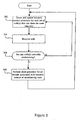
- FIG. 3 is a flowchart illustrating a process 300 for aborting associated threads in accordance with one embodiment of the present invention.
- a resource context structure is created and updated for each set of codes that can share the same objects in operation 302.
- the resource context structure generally provides a mechanism for referencing the codes from one or more computer programs that can share the same resource or object. Said in another way, the resource context references methods that were loaded by a same set of classloaders are associated with such resource context. Thus, the code of a currently executing thread will be associated with a particular resource context structure. '
- code is then received in operation 304.
- applets that are associated with an accessed world wide web page are downloaded from a remote server to the local client, and one or more code sets ( e . g ., methods) are executed. It is then determined whether there are any codes that are currently misbehaving in operation 306. This determination may be performed in any suitable manner. For examples, any executing code that is approaching the limits of a particular resource may be identified as misbehaving.
- the particular web browser may have a maximum window number of 50. In other words, the web browser does not handle more than 50 windows ( e . g ., it crashes when more than 50 are open).
- the associated code of the method may be identified as misbehaving when it opens more than 25 windows.
- an abort procedure is then performed for all threads associated with the resource context of the misbehaving code in operation 308.
- the associated threads may be aborted in any suitable manner. One mechanism for aborting associated threads is described below with reference Figures 4, 5A, and 5B. After the abort procedure is performed or if there is no misbehaving code, the process 300 is repeated.
- FIG. 4 is a flowchart illustrating the procedure 308 of aborting threads belonging to misbehaving code in accordance with one embodiment of the present invention.
- all threads are stopped in operation 402.
- a Java TM virtual machine is typically configured to stop all threads when an appropriate request is made.
- currently implemented garbage collection schemes include a technique for freezing all threads of the system prior to performing garbage collection.
- One of these thread freezing techniques available within current garbage collection may also be included in the present invention to stop all threads.
- the untrusted frames of the thread stacks that belong to misbehaving code are then modified in operation 404.
- the thread stacks are modified so that they will abort when the threads are restarted.
- all threads are then restarted in operation 406.
- Each thread then executes and aborts in due course in operation 408 and the abort procedure ends.
- Figures 5A through 5B are a flowchart illustrating the procedure 404 for modifying the related thread stacks in accordance with one embodiment of the present invention. That is, frames of the thread stacks that belong to misbehaving code may be modified by implementing the procedure 404 of figures 5A through 5B.
- a resource context associated with the misbehaving code is identified in operation 502.
- a set of related threads executing code associated with the identified resource context is then identified in operation 504.
- Mechanisms for associating a resource context with a thread and then identifying which resource context is associated with a thread are described in the above referenced U.S. Patent Application No. 09/394,118 by William F. Foote. For example, each thread may be assessed to determine which resource context it is pointing to. The threads that point to the identified resource context are deemed to be associated with the misbehaving code.
- the resource context may contain references to associated threads so that a particular resource's related threads may be quickly determined from the resource context itself.
- a first thread is then obtained from the set of identified related threads in operation 506.
- a first frame of the current thread is then obtained in operation 508. It is then determined whether the current frame's program counter references a method loaded by the class loaders owned by the identified resource context in operation 510.
- a method belongs to a class, and each class is loaded by a class loader.
- each class loader is associated with a resource context and owned by such resource context.
- a frame is only modified when its method belongs to the identified resource context. If the frame is not loaded by a class loader belonging to the identified resource context, a next frame of the current thread is then obtained in operation 508. However, if this is true, the current frame's program counter is then changed to point to a break instruction in operation 512.
- the current frame is marked as having an exception handler in operation 514. For example, in addition to the program counter, the current frame contains a pointer to an exception handling block ( e . g ., a finally block). If the current frame does not have an exception handler, the next operation 516 is skipped. However, if there is an exception handler, the exception handler of the current frame is ignored in operation 516. For example, the pointer to the exception handling code is moved to the break instruction. This is to prevent, for example, a denial of service attack from being launched within exception handling code. The procedure 404 then proceeds to operation 518 illustrated in figure 5B.
- a synchronized statement is generally defined as a block of code. While that code is executing, a lock is held on the object provided as an argument to the synchronized block.
- the following code represents a synchronized block: Normally, the synchronized block's lock is released ( e . g ., by the virtual machine) after execution of the synchronized code.
- the program counter is forcibly moved from the synchronized block to a break instruction, the lock is left unbroken.
- the lock is broken in operation 520 when it is determined that the current frame is in a synchronized block.
- the mechanism used to break a lock depends on the type of lock being used.
- the current frame will typically have a data structure that identifies the type of lock that is being held. Thus, an appropriate command can then be issued to acquire and release the identified lock.
- an appropriate command can then be issued to acquire and release the identified lock.
- One example is "mutex_unlock.” Otherwise, if the current frame is not in a synchronized statement, the breaking operation 520 is skipped.
- a blocking system call For example, system code is performing a native call, such as outputting a character to a serial port or a network operation.
- a blocking call (e . g ., a network operation) may not complete for a significant amount of time ( e . g ., 30 seconds). This extra time required for a blocking system call is, of course, undesirable during an abort procedure. That is, the abort procedure preferably stops all offending threads in a reasonable amount of time. In fact, a denial of service attack may even include utilizing blocking system calls to tie up resources.
- a request is then sent to the system library to abort the call in operation 524.
- the abort request depends on the particular type of blocking system call.
- Each type of blocking system call includes a simple mechanism for aborting it.
- a timeout variable utilized by the blocking call may be set to a relatively small value (e . g ., 0 or 1 second) or an abort flag utilized by the blocking call may be set to indicate that the call should abort. If the current frame is not in a blocking system call, the request is not sent and operation 524 is skipped.
- the thread is determined that the thread is not schedulable when it is waiting on a synchronized block and the call to such block is associated with the identified resource context ( i . e ., the misbehaving code). If it is determined that the thread is not schedulable, the thread is made schedulable again in operation 530 ( e . g ., unsuspended). For example, the current thread is simply taken off the wait queue associated with the synchronized block for which it is waiting (or the thread is added to the thread scheduling queue).
- the modified frame program counters now point to break instructions. Any suitable break code may be implemented that causes the frame to terminate.
- the break may include throwing an exception (similar to the breakpoint bytecode number 0xca described in the Java TM Virtual Machine Specification , 2 nd edition, ISBN 0-201-43294-3).
- the untrusted frames are automatically unwound from the stack without execution of exception handling, while the trusted frames execute their original exception handling methods.
- the related threads substantially immediately terminate.
- FIG. 6 illustrates a typical, general-purpose computer system suitable for implementing the present invention.
- the computer system 1030 includes any number of processors 1032 (also referred to as central processing units, or CPUs) that are coupled to memory devices including primary storage devices 1034 (typically a read only memory, or ROM) and primary storage devices 1036 (typically a random access memory, or RAM).
- processors 1032 also referred to as central processing units, or CPUs
- memory devices typically a read only memory, or ROM
- primary storage devices 1036 typically a random access memory, or RAM.
- the computer system may take any suitable form.
- the computer system may be integrated with a navigational system or television set top box.
- Computer system 1030 or, more specifically, CPUs 1032, may be arranged to support a virtual machine, as will be appreciated by those skilled in the art.
- ROM acts to transfer data and instructions uni-directionally to the CPUs 1032
- RAM is used typically to transfer data and instructions in a bi-directional manner.
- CPUs 1032 may generally include any number of processors.
- Both primary storage devices 1034, 1036 may include any suitable computer-readable media.
- a secondary storage medium 1038 which is typically a mass memory device, is also coupled bi-directionally to CPUs 1032 and provides additional data storage capacity.
- the mass memory device 1038 is a computer-readable medium that may be used to store programs including computer code, data, and the like.
- mass memory device 1038 is a storage medium such as a hard disk or a tape which generally slower than primary storage devices 1034, 1036.
- Mass memory storage device 938 may take the form of a magnetic or paper tape reader or some other well-known device. It will be appreciated that the information retained within the mass memory device 1038, may, in appropriate cases, be incorporated in standard fashion as part of RAM 1036 as virtual memory.
- a specific primary storage device 1034 such as a CD-ROM may also pass data uni-directionally to the CPUs 1032.
- CPUs 1032 are also coupled to one or more input/output devices 1040 that may include, but are not limited to, devices such as video monitors, track balls, mice, keyboards, microphones, touch-sensitive displays, transducer card readers, magnetic or paper tape readers, tablets, styluses, voice or handwriting recognizers, or other well-known input devices such as, of course, other computers.
- CPUs 1032 optionally may be coupled to a computer or telecommunications network, e.g., an Internet network or an intranet network, using a network connection as shown generally at 1012. With such a network connection, it is contemplated that the CPUs 1032 might receive information from the network, or might output information to the network in the course of performing the above-described mechanisms for aborting threads.
- Such information which is often represented as a sequence of instructions to be executed using CPUs 1032, may be received from and outputted to the network, for example, in the form of a computer data signal embodied in a carrier wave.
- the above-described devices and materials will be familiar to those of skill in the computer hardware and software arts.
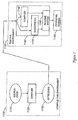
- FIG. 7 is a diagrammatic representation of a virtual machine which is supported by computer system 1030 of Figure 6, and is suitable for implementing the present invention.
- a computer program e . g ., a computer program written in the JavaTM programming language
- source code 1110 is provided to a compiler 1120 within compile-time environment 1105.
- Compiler 1120 translates source code 1110 into byte codes 1130.
- source code 1110 is translated into byte codes 1130 at the time source code 1110 is created by a software developer.
- Byte codes 1130 may generally be reproduced, downloaded, or otherwise distributed through a network, e . g ., network 1012 of Figure 6, or stored on a storage device such as primary storage 1034 of Figure 6.
- byte codes 1130 are platform independent. That is, byte codes 1130 may be executed on substantially any computer system that is running on a suitable virtual machine 1140.
- Byte codes 1130 are provided to a runtime environment 1135 which includes virtual machine 1140.
- Runtime environment 1135 may generally be executed using a processor or processors such as CPUs 1032 of Figure 6.
- Virtual machine 1140 includes a compiler 1142, an interpreter 1144, and a runtime system 1146.
- Byte codes 1130 may be provided either to compiler 1142 or interpreter 1144.
- interpreter 1144 When byte codes 1130 are provided to compiler 1142, methods contained in byte codes 1130 are compiled into machine instructions. In one embodiment, compiler 1142 is a just-in-time compile which delays the compilation of methods contained in byte codes 1130 until the methods are about to be executed.
- interpreter 1144 When byte codes 1130 are provided to interpreter 1144, byte codes 1130 are read into interpreter 1144 one byte code at a time. Interpreter 1144 then performs the operation defined by each byte code as each byte code is read into interpreter 1144. That is, interpreter 1144 "interprets" byte codes 1130, as will be appreciated by those skilled in the art. In general, interpreter 1144 processes byte codes 1130 and performs operations associated with byte codes 1130 substantially continuously.
- runtime system 1146 may obtain the method from runtime environment 1135 in the form of a sequence of byte codes 1130, which may be directly executed by interpreter 1144. If, on the other hand, the method which is invoked is a compiled method which has not been compiled, runtime system 1146 also obtains the method from runtime environment 1135 in the form of a sequence of byte codes 1130, then may go on to activate compiler 1142. Compiler 1142 then generates machine instructions from byte codes 1130, and the resulting machine-language instructions may be executed directly by CPUs 1032. In general, the machine-language instructions are discarded when virtual machine 1140 terminates.
- the operation of virtual machines or, more particularly, JavaTM virtual machines is described in more detail in The Java TM Virtual Machine Specification by Tim Lindholm and Frank Yellin (ISBN 0-201-63452-X).
- the break instruction when the threads are restarted, the break instruction (referenced by an untrusted frame) may be implemented or executed by the interpreter in a suitable way.
- the interpreter when the interpreter encounters the break instruction, it throws a runtime exception. This exception results in the corresponding frame being popped from the thread stack. The exception also causes the trusted frames to execute any exception handling.
- the techniques for killing threads in accordance with the present invention are particularly suitable for implementation with respect to a Java TM based environment, the techniques may generally be applied in any suitable object-based environment.
- the techniques are suitable for use in platform-independent object-based environments. It should be appreciated that the methods may also be implemented in some distributed object-oriented systems.
Landscapes
- Engineering & Computer Science (AREA)
- Software Systems (AREA)
- Theoretical Computer Science (AREA)
- Physics & Mathematics (AREA)
- General Engineering & Computer Science (AREA)
- General Physics & Mathematics (AREA)
- Storage Device Security (AREA)
- Devices For Executing Special Programs (AREA)
- Debugging And Monitoring (AREA)
Claims (34)
- Procédé pour abandonner une pluralité de fils apparentés à un code de mauvaise conduite, qui met en oeuvre une attaque de déni de service, chaque fil correspondant à une pile de fils (100) ayant au moins une trame (102a-102e) référençant une partie de code, le procédé comprenant :l'arrêt (402) d'une pluralité de fils apparentés qui partagent une même ressource ou un même objet en tant que fil associé au code de mauvaise conduite ;la modification (404) d'un premier ensemble de trames de piles de fils des fils apparentés en modifiant un compteur de programme (512) dans chaque trame dans le premier ensemble de trames, de sorte que les trames dans le premier ensemble de trames soient automatiquement sorties de leurs piles de fils durant l'exécution, inhibant ainsi l'exécution des parties de code référencées des trames modifiées ; etle redémarrage (406) de la pluralité de fils apparentés pour permettre à un second ensemble de trames des piles de fils d'exécuter leurs parties de code référencées.
- Procédé selon la revendication 1, dans lequel les parties de code référencées par le premier ensemble de trames sont non sécurisées (216) et les parties de code référencées par le second ensemble de trames sont sécurisées (214).
- Procédé selon l'une quelconque des revendications 1 et 2, dans lequel le premier ensemble de trames est modifié en déplaçant les références des parties de code vers une instruction de rupture (202).
- Procédé selon la revendication 3, dans lequel le second ensemble de trames continue de référencer les parties de code (214) qu'il était en train de référencer lorsque les fils apparentés ont été arrêtés.
- Procédé selon l'une quelconque des revendications 3 et 4, comprenant en outre l'inhibition de tout traitement d'exception (516) du premier ensemble de trames.
- Procédé selon la revendication 5, dans lequel l'exécution de l'instruction de rupture inclut le lancement d'une exception (518).
- Procédé selon l'une quelconque des revendications 5 et 6, dans lequel le traitement d'exception est inhibé en déplaçant les références d'un code de traitement d'exception vers une instruction de rupture (512).
- Procédé selon l'une quelconque des revendications 1 à 7, dans lequel les fils apparentés ont été chargés par un même ensemble de chargeurs de classe.
- Procédé selon l'une quelconque des revendications 1 à 8, dans lequel chaque fil apparenté est abandonné immédiatement après le redémarrage.
- Procédé selon l'une quelconque des revendications 1 à 8, dans lequel le redémarrage inclut l'abandon immédiat des fils apparentés par le déroulement du premier ensemble de trames et du second ensemble de trames à partir des piles de fils (408).
- Procédé selon l'une quelconque des revendications 1 à 10, comprenant en outre l'identification des fils apparentés comme étant associés au code de mauvaise conduite.
- Procédé selon la revendication 11, dans lequel les fils apparentés sont associés au même contexte de ressource (502) qui est associé au code de mauvaise conduite.
- Procédé selon la revendication 12, dans lequel les fils apparentés sont identifiés en déterminant quels fils référencent le même contexte de ressource qui est associé au code de mauvaise conduite (504).
- Procédé selon l'une quelconque des revendications 1 à 13, comprenant en outre la rupture d'un verrouillage sur un bloc synchronisé lorsqu'une trame particulière du premier ensemble de trames est dans le bloc synchronisé (520).
- Procédé selon l'une quelconque des revendications 1 à 14, lorsqu'une trame particulière du premier ensemble de trames est dans un appel de blocage, le procédé comprend en outre la demande que l'appel soit abandonné (524).
- Procédé selon la revendication 15, dans lequel la demande est accomplie en réglant une variable de dépassement de temps imparti pour l'appel de blocage sur 0 ou 1 seconde.
- Procédé selon la revendication 15, dans lequel la demande est réalisée en réglant une variable d'abandon pour l'appel de blocage pour indiquer que l'appel doit être abandonné.
- Procédé selon l'une quelconque des revendications 1 à 17, lorsqu'un fil particulier des fils apparentés n'est pas programmable, le procédé comprend en outre l'action consistant à rendre le fil particulier programmable (530).
- Procédé selon la revendication 18, dans lequel le fil particulier est rendu programmable en déplaçant le fil particulier à partir d'un file d'attente.
- Procédé selon la revendication 18, dans lequel le fil particulier est rendu programmable en ajoutant le fil particulier à une file de fils programmables.
- Procédé selon l'une quelconque des revendications 18 à 20, dans lequel le fil particulier n'est pas programmable lorsque le fil particulier attend un blocage synchronisé verrouillé, et un appel vers un tel bloc synchronisé est associé au code de mauvaise conduite.
- Support lisible par ordinateur contenant des instructions pour abandonner une pluralité de fils apparentés à un code de mauvaise conduite qui met en oeuvre une attaque de déni de service, chaque fil correspondant à une pile de fils (100) ayant au moins une trame (102a-102e) référençant une partie de code, le support lisible par ordinateur comprenant :un code informatique pour arrêter (402) une pluralité de fils apparentés qui partagent une même ressource ou un même objet en tant que fil associé au code de mauvaise conduite ;un code informatique pour modifier (404) un premier ensemble de trames des piles de fils des fils apparentés en modifiant le compteur de programme (512) dans chaque trame dans le premier ensemble de trames, de sorte que les trames dans le premier ensemble de trames soient automatiquement sorties de leurs piles de fils durant l'exécution, inhibant ainsi l'exécution des parties de code référencées des trames modifiées ; etun code informatique pour redémarrer (406) la pluralité de fils apparentés pour permettre à un second ensemble de trames des piles de fils d'exécuter leurs parties de code référencées,
- Support lisible par ordinateur selon la revendication 22, dans lequel les parties de code référencées par le premier ensemble de trames sont non sécurisées (216) et les parties de code référencées par le second ensemble de trames sont sécurisées (214).
- Support lisible par ordinateur selon la revendication 22 ou 23, dans lequel le premier ensemble de trames est modifié en déplaçant les références à partir des parties de code vers une instruction de rupture (202).
- Support lisible par ordinateur selon la revendication 24, dans lequel le second ensemble de trames continue de référencer les parties de code (214) qu'il était en train de référencer lorsque les fils apparentés ont été arrêtés.
- Support lisible par ordinateur selon la revendication 24 ou 25, comprenant en outre l'inhibition de tout traitement d'exception (516) du premier ensemble de trames.
- Support lisible par ordinateur selon la revendication 26, dans lequel l'exécution de l'instruction de rupture inclut le lancement d'une exception (518).
- Support lisible par ordinateur selon l'une quelconque des revendications 22 à 27, dans lequel chaque fil apparenté est immédiatement abandonné après le redémarrage.
- Support lisible par ordinateur selon l'une quelconque des revendications 22 à 27, dans lequel le code informatique permettant le redémarrage inclut un code informatique pour abandonner les fils apparentés immédiatement après le déroulement du premier ensemble de trames en du second ensemble de trames à partir des piles de fils (408).
- Support lisible par ordinateur selon l'une quelconque des revendications 22 à 29, comprenant en outre la rupture d'un verrouillage sur un bloc synchronisé lorsqu'une trame particulière du premier ensemble de trames est dans le bloc synchronisé (520).
- Support lisible par ordinateur selon l'une quelconque des revendications 22 à 30, lorsqu'une trame particulière du premier ensemble de trames est dans un appel de blocage, le procédé comprend en outre la demande que l'appel soit abandonné (524).
- Support lisible par ordinateur selon l'une quelconque des revendications 22 à 31, lorsqu'un fil particulier des fils apparentés n'est pas programmable, le procédé comprend en outre l'action consistant à rendre le fil particulier programmable (530).
- Support lisible par ordinateur selon la revendication 32, dans lequel le fil particulier n'est pas programmable lorsque le fil particulier attend un bloc synchronisé verrouillé et un appel d'un tel bloc synchronisé est associé au code de mauvaise conduite.
- Système informatique pour abandonner une pluralité de fils apparentés à un code de mauvaise conduite qui met en oeuvre une attaque de déni de service, chaque fil correspondant à une pile de fils ayant au moins une trame référençant une partie de code, comprenant:une mémoire (1034) ; etun processeur (1032) couplé à la mémoire (1034),dans lequel au moins la mémoire (1034) ou le processeur (1032) est adapté à fournir :l'arrêt (402) de la pluralité de fils apparentés qui partagent une même ressource ou un même objet en tant que fil associé au code de mauvaise conduite ;la modification (404) d'un premier ensemble de trames des piles de fils des fils apparentés en modifiant un compteur de programme (512) dans chaque trame dans le premier ensemble de trames, de sorte que les trames dans le premier ensemble de trames soient automatiquement sorties de leurs piles de fils durant l'exécution, inhibant ainsi l'exécution des parties de code référencées des trames modifiées ;
etle redémarrage (406) de la pluralité de fils apparentés pour permettre au second ensemble de trames des piles de fils d'exécuter leurs parties de code référencées.
Applications Claiming Priority (6)
| Application Number | Priority Date | Filing Date | Title |
|---|---|---|---|
| US394121 | 1999-09-10 | ||
| US09/394,121 US6742123B1 (en) | 1999-09-10 | 1999-09-10 | Apparatus and methods for preventing denial of service attacks |
| US16822299P | 1999-11-30 | 1999-11-30 | |
| US168222P | 1999-11-30 | ||
| US53625300A | 2000-03-27 | 2000-03-27 | |
| US536253 | 2000-03-27 |
Publications (3)
| Publication Number | Publication Date |
|---|---|
| EP1083484A2 EP1083484A2 (fr) | 2001-03-14 |
| EP1083484A3 EP1083484A3 (fr) | 2004-02-25 |
| EP1083484B1 true EP1083484B1 (fr) | 2007-01-03 |
Family
ID=27389501
Family Applications (1)
| Application Number | Title | Priority Date | Filing Date |
|---|---|---|---|
| EP00307482A Expired - Lifetime EP1083484B1 (fr) | 1999-09-10 | 2000-08-31 | Terminaison d'un groupe de fils d'exécution apparentés par modification du compteur de programme d'échelons de pile selectionnés |
Country Status (3)
| Country | Link |
|---|---|
| EP (1) | EP1083484B1 (fr) |
| JP (1) | JP2001125800A (fr) |
| DE (1) | DE60032692T2 (fr) |
Families Citing this family (5)
| Publication number | Priority date | Publication date | Assignee | Title |
|---|---|---|---|---|
| US6742123B1 (en) * | 1999-09-10 | 2004-05-25 | Sun Microsystems, Inc. | Apparatus and methods for preventing denial of service attacks |
| FR2863074B1 (fr) * | 2003-11-28 | 2006-02-24 | Trusted Logic | Procede permettant l'interrupton sure d'applications dans un systeme informatique distribue comportant un moteur d'execution logiciel. |
| SE0303522D0 (sv) * | 2003-12-22 | 2003-12-22 | Abb Ab | Control system of an industrial robot |
| US7487380B2 (en) * | 2004-10-14 | 2009-02-03 | Microsoft Corporation | Execution recovery escalation policy |
| JP2006146678A (ja) | 2004-11-22 | 2006-06-08 | Hitachi Ltd | 情報処理装置におけるプログラム制御方法、情報処理装置、及びプログラム |
Family Cites Families (4)
| Publication number | Priority date | Publication date | Assignee | Title |
|---|---|---|---|---|
| JPH06242957A (ja) * | 1993-02-16 | 1994-09-02 | Fujitsu Ltd | プログラム実行制御装置 |
| US5784613A (en) * | 1995-09-12 | 1998-07-21 | International Busines Machines Corporation | Exception support mechanism for a threads-based operating system |
| JPH1165881A (ja) * | 1997-08-12 | 1999-03-09 | Fujitsu Ltd | Cpuの拡張割込み制御方式及びそのcpuで使用するデバッガ |
| US6742123B1 (en) * | 1999-09-10 | 2004-05-25 | Sun Microsystems, Inc. | Apparatus and methods for preventing denial of service attacks |
-
2000
- 2000-08-31 EP EP00307482A patent/EP1083484B1/fr not_active Expired - Lifetime
- 2000-08-31 DE DE60032692T patent/DE60032692T2/de not_active Expired - Fee Related
- 2000-09-08 JP JP2000273571A patent/JP2001125800A/ja active Pending
Also Published As
| Publication number | Publication date |
|---|---|
| DE60032692T2 (de) | 2007-10-11 |
| DE60032692D1 (de) | 2007-02-15 |
| JP2001125800A (ja) | 2001-05-11 |
| EP1083484A3 (fr) | 2004-02-25 |
| EP1083484A2 (fr) | 2001-03-14 |
Similar Documents
| Publication | Publication Date | Title |
|---|---|---|
| EP1087295B1 (fr) | Appareil et méthode pour la prévention d'attaques en refus de service | |
| US7086053B2 (en) | Method and apparatus for enabling threads to reach a consistent state without explicit thread suspension | |
| US7191441B2 (en) | Method and apparatus for suspending a software virtual machine | |
| EP0689693B1 (fr) | Systeme d'exploitation oriente objets | |
| US7962707B2 (en) | Apparatus and method for deterministic garbage collection of a heap memory | |
| EP0700538B1 (fr) | Systeme hote oriente objets | |
| US8245239B2 (en) | Deterministic runtime execution environment and method | |
| US6351778B1 (en) | Object-oriented operating system | |
| US5519867A (en) | Object-oriented multitasking system | |
| US6823509B2 (en) | Virtual machine with reinitialization | |
| US5473777A (en) | Wrapper for enabling an object otented application to maintain virtual memory using procedural function calls | |
| US5404529A (en) | Object-oriented interprocess communication system interface for a procedural operating system | |
| US7945911B1 (en) | Barrier synchronization method and apparatus for work-stealing threads | |
| US6996590B2 (en) | Method and system for the garbage collection of shared data | |
| EP1626337A1 (fr) | Système et procédé assurant un flux exceptionnel de commande dans un code protégé au moyen de couches de mémoire | |
| JPH05216692A (ja) | プログラム実行を管理する方法およびシステム | |
| US7134123B1 (en) | Virtual machine with reset operation | |
| US6487652B1 (en) | Method and apparatus for speculatively locking objects in an object-based system | |
| US7827373B2 (en) | System and method for managing a short-term heap memory | |
| EP1083484B1 (fr) | Terminaison d'un groupe de fils d'exécution apparentés par modification du compteur de programme d'échelons de pile selectionnés | |
| US6752836B1 (en) | Method and apparatus for high-concurrency client locking with java in a data processing system | |
| EP1221085A2 (fr) | Procede et systeme permettant l'injection dynamique de logiques d'execution dans un systeme d'exploitation a fenetres |
Legal Events
| Date | Code | Title | Description |
|---|---|---|---|
| PUAI | Public reference made under article 153(3) epc to a published international application that has entered the european phase |
Free format text: ORIGINAL CODE: 0009012 |
|
| AK | Designated contracting states |
Kind code of ref document: A2 Designated state(s): AT BE CH CY DE DK ES FI FR GB GR IE IT LI LU MC NL PT SE |
|
| AX | Request for extension of the european patent |
Free format text: AL;LT;LV;MK;RO;SI |
|
| PUAL | Search report despatched |
Free format text: ORIGINAL CODE: 0009013 |
|
| AK | Designated contracting states |
Kind code of ref document: A3 Designated state(s): AT BE CH CY DE DK ES FI FR GB GR IE IT LI LU MC NL PT SE |
|
| AX | Request for extension of the european patent |
Extension state: AL LT LV MK RO SI |
|
| 17P | Request for examination filed |
Effective date: 20040420 |
|
| 17Q | First examination report despatched |
Effective date: 20040906 |
|
| AKX | Designation fees paid |
Designated state(s): DE FR GB |
|
| RIC1 | Information provided on ipc code assigned before grant |
Ipc: G06F 9/46 20060101AFI20060330BHEP |
|
| GRAP | Despatch of communication of intention to grant a patent |
Free format text: ORIGINAL CODE: EPIDOSNIGR1 |
|
| GRAS | Grant fee paid |
Free format text: ORIGINAL CODE: EPIDOSNIGR3 |
|
| GRAA | (expected) grant |
Free format text: ORIGINAL CODE: 0009210 |
|
| AK | Designated contracting states |
Kind code of ref document: B1 Designated state(s): DE FR GB |
|
| REG | Reference to a national code |
Ref country code: GB Ref legal event code: FG4D |
|
| REF | Corresponds to: |
Ref document number: 60032692 Country of ref document: DE Date of ref document: 20070215 Kind code of ref document: P |
|
| ET | Fr: translation filed | ||
| PLBE | No opposition filed within time limit |
Free format text: ORIGINAL CODE: 0009261 |
|
| STAA | Information on the status of an ep patent application or granted ep patent |
Free format text: STATUS: NO OPPOSITION FILED WITHIN TIME LIMIT |
|
| 26N | No opposition filed |
Effective date: 20071005 |
|
| PGFP | Annual fee paid to national office [announced via postgrant information from national office to epo] |
Ref country code: GB Payment date: 20070829 Year of fee payment: 8 |
|
| REG | Reference to a national code |
Ref country code: FR Ref legal event code: ST Effective date: 20080430 |
|
| PG25 | Lapsed in a contracting state [announced via postgrant information from national office to epo] |
Ref country code: DE Free format text: LAPSE BECAUSE OF NON-PAYMENT OF DUE FEES Effective date: 20080301 |
|
| PG25 | Lapsed in a contracting state [announced via postgrant information from national office to epo] |
Ref country code: FR Free format text: LAPSE BECAUSE OF NON-PAYMENT OF DUE FEES Effective date: 20070831 |
|
| GBPC | Gb: european patent ceased through non-payment of renewal fee |
Effective date: 20080831 |
|
| PG25 | Lapsed in a contracting state [announced via postgrant information from national office to epo] |
Ref country code: GB Free format text: LAPSE BECAUSE OF NON-PAYMENT OF DUE FEES Effective date: 20080831 |