EP1083568A2 - Bildidentifikationsgerät und Bildidentifikationsverfahren - Google Patents
Bildidentifikationsgerät und Bildidentifikationsverfahren Download PDFInfo
- Publication number
- EP1083568A2 EP1083568A2 EP00307667A EP00307667A EP1083568A2 EP 1083568 A2 EP1083568 A2 EP 1083568A2 EP 00307667 A EP00307667 A EP 00307667A EP 00307667 A EP00307667 A EP 00307667A EP 1083568 A2 EP1083568 A2 EP 1083568A2
- Authority
- EP
- European Patent Office
- Prior art keywords
- source
- semantic
- metadata
- desired feature
- source content
- Prior art date
- Legal status (The legal status is an assumption and is not a legal conclusion. Google has not performed a legal analysis and makes no representation as to the accuracy of the status listed.)
- Ceased
Links
Images


Classifications
-
- G—PHYSICS
- G11—INFORMATION STORAGE
- G11B—INFORMATION STORAGE BASED ON RELATIVE MOVEMENT BETWEEN RECORD CARRIER AND TRANSDUCER
- G11B27/00—Editing; Indexing; Addressing; Timing or synchronising; Monitoring; Measuring tape travel
- G11B27/10—Indexing; Addressing; Timing or synchronising; Measuring tape travel
- G11B27/19—Indexing; Addressing; Timing or synchronising; Measuring tape travel by using information detectable on the record carrier
- G11B27/28—Indexing; Addressing; Timing or synchronising; Measuring tape travel by using information detectable on the record carrier by using information signals recorded by the same method as the main recording
-
- G—PHYSICS
- G06—COMPUTING OR CALCULATING; COUNTING
- G06F—ELECTRIC DIGITAL DATA PROCESSING
- G06F16/00—Information retrieval; Database structures therefor; File system structures therefor
- G06F16/70—Information retrieval; Database structures therefor; File system structures therefor of video data
- G06F16/78—Retrieval characterised by using metadata, e.g. metadata not derived from the content or metadata generated manually
-
- G—PHYSICS
- G11—INFORMATION STORAGE
- G11B—INFORMATION STORAGE BASED ON RELATIVE MOVEMENT BETWEEN RECORD CARRIER AND TRANSDUCER
- G11B27/00—Editing; Indexing; Addressing; Timing or synchronising; Monitoring; Measuring tape travel
- G11B27/02—Editing, e.g. varying the order of information signals recorded on, or reproduced from, record carriers
- G11B27/031—Electronic editing of digitised analogue information signals, e.g. audio or video signals
-
- G—PHYSICS
- G11—INFORMATION STORAGE
- G11B—INFORMATION STORAGE BASED ON RELATIVE MOVEMENT BETWEEN RECORD CARRIER AND TRANSDUCER
- G11B27/00—Editing; Indexing; Addressing; Timing or synchronising; Monitoring; Measuring tape travel
- G11B27/10—Indexing; Addressing; Timing or synchronising; Measuring tape travel
- G11B27/102—Programmed access in sequence to addressed parts of tracks of operating record carriers
- G11B27/105—Programmed access in sequence to addressed parts of tracks of operating record carriers of operating discs
-
- G—PHYSICS
- G11—INFORMATION STORAGE
- G11B—INFORMATION STORAGE BASED ON RELATIVE MOVEMENT BETWEEN RECORD CARRIER AND TRANSDUCER
- G11B27/00—Editing; Indexing; Addressing; Timing or synchronising; Monitoring; Measuring tape travel
- G11B27/10—Indexing; Addressing; Timing or synchronising; Measuring tape travel
- G11B27/11—Indexing; Addressing; Timing or synchronising; Measuring tape travel by using information not detectable on the record carrier
-
- G—PHYSICS
- G11—INFORMATION STORAGE
- G11B—INFORMATION STORAGE BASED ON RELATIVE MOVEMENT BETWEEN RECORD CARRIER AND TRANSDUCER
- G11B2220/00—Record carriers by type
- G11B2220/20—Disc-shaped record carriers
Definitions
- the present invention relates to a system and method for navigating through source content.
- the source content preferably takes the form of video and/or audio material.
- the reviewing of source content is traditionally a labour intensive task.
- the source content will be loaded into a device for reproducing the source content, for example a video recorder or a disk player. and a user will then interact with that device via an editing or archival system, which would typically be a computer-based system.
- the user Prior to editing the source content, or preparing the source content for archival, the user typically has to spend a significant amount of time reviewing the source content to familiarise himself/herself with the material to be edited or archived (including learning what material there is, and where that material is located within the source content), and the time spent performing this initial familiarisation with source content clearly impacts on the efficiency of the editing or archival process.
- this initial familiarisation step and indeed during subsequent steps, the user may wish to move around between particular parts of the source content, and it has been found that significant time is spent in accurately and efficiently finding particular features within the source content.
- the present invention provides a system for navigating through source content to identify a desired feature within the source content, semantic source metadata being associated with portions of the source content, the system comprising: an input interface for receiving a request for the desired feature; a processing unit for generating from the request a search request specifying the desired feature with reference to semantic metadata, and for causing the search request to be processed to identify semantic source metadata indicative of the desired feature; and an output interface for outputting as the desired feature a representation of the portion of the source content associated with the identified semantic source metadata.
- Metadata being data which describes content.
- SMPTE-EBU Society of Motion Picture and Television Engineers - European Broadcast Union
- MPEG-7 Motion Pictures Expert Group, which is an ISO/IEC standards body SG29 ⁇ WG11.
- Metadata can be added automatically at source, for example good shot markers, Rec marks (indicating where recording starts/stops), GPS location, Time and Date, UMID (Unique Material Identifier), Camera settings, focus, zoom, etc.
- metadata can be manually associated with the source content after it has been created, for example Cameraman, Journalist Notes, Style comments, Suggestions, Annotations, Location/Assignment comments, Shot identification such as Intro, Finish, Commentary, Voice Over, etc.
- recognition tools for example face and feature detection tools, speech recognition tools, etc.
- semantic metadata provides contextual/descriptive information about the actual content of the source content, such metadata being referred to herein as "semantic metadata”.
- semantic metadata would be shot identification information, good shot markers, an "interview question” identifier to identify the start of interview questions, and any metadata used to identify face shots, speech, etc.
- the present invention takes advantage of the current proliferation in semantic metadata associated with source content (hereafter referred to as semantic source metadata) to enable more efficient and accurate navigation through source content to locate features of interest to the user.
- semantic source metadata semantic metadata associated with source content
- the system is arranged to receive a request for a desired feature within the source content.
- the desired feature may be couched in absolute terms, for example the request may be for the start of' speech, for the portion of the source content marked as an introduction, etc.
- the request for the desired feature may be couched in relative terms, for example a request for the next face, next transition, etc.
- the processing unit in accordance with the present invention is arranged to generate from the request a search request specifying the desired feature with reference to semantic metadata.
- the search request will typically identity one or more items of semantic metadata which might be used to locate the desired feature requested. For example, if the request was for a particular interview question such as "interview question 2", appropriate semantic metadata would be interview question flags used to identify the beginning of particular interview questions within the source content. Similarly, if the request is for the next face, then appropriate semantic metadata would be metadata identifying a portion of the source content as containing a face.
- the processing unit is arranged to cause the search request to be processed to identify semantic source metadata within the source content indicative of the desired feature. This will typically involve a search through the semantic source metadata to identify semantic source metadata matching that specified in the search request.
- the system of the present invention is arranged to output as the desired feature a representation of the portion of the source content associated with the semantic source metadata identified during processing of the search request.
- the semantic source metadata may be stored on a variety of different storage media, and may be stored with, or separately to, the source content.
- the semantic source metadata is stored in a randomly-accessible storage medium, and the processing unit is arranged to cause the search request to be applied to the semantic source metadata as stored in the randomly-accessible storage medium.
- the source content comprises video material
- at least some of the semantic source metadata identify video features within the source content.
- an iconic representation of the video features may be stored with the associated semantic source metadata, in which event the representation output by the output interface can be arranged to comprise the iconic representation associated with the semantic source metadata identified during processing of the search request.
- the source content comprises audio material
- at least some of the semantic source metadata identify audio features within the source content.
- an iconic representation of the audio features may be stored with the associated semantic source metadata, and the representation output by the output interface as a result of the processing of the search request may comprise the iconic representation associated with the identified semantic source metadata.
- an iconic representation of the audio may be provided by a wave form picture, which to the trained eye provides some information about the content of the audio material.
- the semantic source metadata may be stored with the source content.
- the semantic source metadata is stored separately to the source content, and is associated with the source content via time codes.
- the semantic source metadata is stored with the source content on a storage medium, and when the processing unit causes the search request to be processed to identify semantic source metadata indicative of the desired feature, the output interface is arranged to output the associated portion of the source content as the desired feature.
- the system when applying the search request to the semantic source metadata, the system will automatically scan through both the semantic source metadata and the associated source content, and accordingly will readily be able to output the associated portion of the source content to indicate the result of the search request.
- the source content to be navigated through already contains appropriate semantic source metadata to facilitate effective navigation.
- the system may be connected to appropriate recognition tools to enable generation of relevant semantic source metadata "on the fly".
- the processing unit is arranged to access a predetermined recognition tool to cause the recognition tool to review the source content and to generate semantic source metadata required to process the search request.
- a face recognition tool may be activated to scan through the source content from the current location to generate semantic source metadata for the location in the source content where the next face appears.
- the result of the search is identified at the same time as the semantic source metadata is generated.
- the input interface is connectable to a drawing tool, and the request for the desired feature is entered by a user via the drawing tool. It will be appreciated that the desired features could be identified by defining appropriate gestures to be entered via the drawing tool.
- the input interface is connectable to a jog-shuttle device, and the request for the desired feature is entered by a user via the jog-shuttle device. For example, individual buttons on the jog-shuttle device may be used to identify features such as face, transition, speech, and then the jog-shuttle element can be used to specify relative information, such as "next" or "previous".
- the system for navigating through source content is embodied in an editing system.
- the system could also be used in other environments, for example archiving systems.
- the present invention provides a method of operating a system to navigate through source content to identify a desired feature within the source content, semantic source metadata being associated with portions of the source content, the method comprising the steps of: (a) receiving a request for the desired feature: (b) generating from the request a search request specifying the desired feature with reference to semantic metadata: (c) processing the search request to identify semantic source metadata indicative of the desired feature; and (d) outputting as the desired feature a representation of the portion of the source content associated with the identified semantic source metadata.
- the present invention provides a computer program for operating a system to navigate through source content to identify a desired feature within the source content, semantic source metadata being associated with portions of the source content, the computer program being configured in operation to cause the system to perform the steps of: (a) generating from a request for the desired feature a search request specifying the desired feature with reference to semantic metadata; (b) causing the search request to be processed to identify semantic source metadata indicative of the desired feature; and (c) retrieving a representation of the portion of the source content associated with the identified semantic source metadata to be output as the desired feature.
- FIG. 1 is a block diagram illustrating an editing system 10 in accordance with a preferred embodiment of the present invention.
- the editing system 10 includes a processing unit 45, for example a microprocessor, for receiving source content and applying editing operations to the source content in order to produce an edited content sequence.
- Internal memory 55 for example read only memory (ROM), random access memory (RAM), etc., is provided to store software executed by the processing unit 45, along with data used by the processing unit 45.
- ROM read only memory
- RAM random access memory
- a display driver 65 is provided to enable display signals to be output from the editing system 10 to a connected display device 75. Further, an input/output interface 70 is provided to enable an input mechanism 80, for example a keyboard, mouse, jog-shuttle dial, a drawing tool such as a pen and tablet, etc., to be connected to the editing system 10. Via the display device 75 and the input mechanism 80, a user of the editing system 10 is able to interact with the editing process performed by the editing system 10.
- an input mechanism 80 for example a keyboard, mouse, jog-shuttle dial, a drawing tool such as a pen and tablet, etc.
- the source content edited by the editing system 10 is audio/video (A/V) material, such as may be obtained via a digital camera 20.
- A/V material may also be produced in analogue form, in preferred embodiments of the present invention the editing system operates on digital data, and hence any analogue A/V material would be converted into digital form prior to inputting to the editing system 10.
- A/V material When A/V material is produced by the digital camera 20, it is stored on a suitable medium 30, for example a digital tape, or a digital disk. Digital technology is now at a stage where certain metadata can be associated with the A/V material at the time that A/V material is first generated, and in preferred embodiments such metadata will be stored on a suitable medium 35, which again may be a digital tape or disk. It should be noted that the metadata may, but need not, be located on the same physical storage medium as the A/V material to which it relates.
- additional metadata may be added if desired, for example via the manual addition of metadata.
- Metadata There are many types of metadata which may be associated with source content, Table 1 below providing some examples of types of metadata: Business information: Cameraman, Journalist, Assignment number, Copyright. Transition marking: Automated identification and categorisation of cut, dissolve, fade. Equipment specification: Camera Serial Number, Lens Parameters, Technical Features. Shot Composition marking: Zoom and wide angle marking. Material identification: Unique Material Identifiers (UMID) Noise marking: High background noise (probably high power low frequency noise) or low noise (i.e. silence portions). Location markers: GPS, Timezone, Fixed location (e.g. Speaker's microphone in UK Parliament, or Goal end camera) Tempo/Beat marking: Rhythm, period sound events. User defined marking: Good shot markers, production comments. Colour/Contrast change: could be caused by camera flash, lighting effects.
- UID Unique Material Identifiers
- Noise marking High background noise (probably high power low frequency noise) or low noise (i.e. silence portions).
- Location markers GPS, Timezone, Fixed location (e.g. Speaker's microphone in UK Parliament,
- External motion Global camera motion through zoom or panning.
- Pitch/Volume modulation This is the case for long term audio events such as music or speech dialogues.
- Internal motion Object trajectory, such as in sports, or human motion (i.e. a cohesive object such as a person with a "relatively” slowly changing motion)
- Audio Pattern/Discontinuity Such as rhythm, tempo, pace.
- an input A/V store 40 for example a digital tape or disk player, or a server, along with any associated metadata (hereafter referred to as source metadata).
- a user is able to navigate through the source A/V material using appropriate commands entered via the input mechanism 80. Accordingly, a user is able to input a command specifying a request for a particular desired feature. This may for example be a request for the start of speech within the A/V material, a request for the portion of the source A/V material marked as being an introductory portion, a request for the next face, next transition, etc. It will be appreciated that there are a number of ways in which these commands may be entered.
- the input mechanism 80 may take the form of a drawing tool, and the editing system 10 may include recognition routines to recognise predefined gestures entered via the drawing tool as commands for particular desired features.
- the input mechanism 80 may consist of a jog-shuttle device, with individual buttons on the jog-shuttle device being programmed to indicate desired features such as face, transition, speech. In this instance, the jog-shuttle element can then be used to specify relative information, such as "next" or "previous".
- the request for a desired feature as input via the input mechanism 80 is passed from the I/O interface 70 to the processing unit 45.
- the processing unit generates from the request a search request specifying the desired feature with reference to semantic metadata.
- the processing unit may reference data stored in the memory 55, or in an external storage medium such as a database, which for each of a predetermined number of desired features, will identify one or more items of semantic metadata which might be used to locate that desired feature. Accordingly, in this embodiment, the user will be able to navigate based on any of a predetermined number of desired features, such as next face, next transition, etc, and the processing unit 45 will be able to retrieve from storage appropriate semantic metadata to be used to search for that desired feature.
- the search request is applied to the semantic source metadata associated with the source A/V material in order to identify semantic source metadata indicative of the desired feature. If the original request was couched in relative terms, for example a request for the next face, next transition, etc. then clearly the search will need to begin from the current location within the source A/V material.
- the input A/V store and/or the processing unit 45 will typically have a record of the current location within the source A/V material, and accordingly from that information will be able to determine the corresponding semantic source metadata from which to begin the search.
- the semantic source metadata may be recorded with the source A/V material, such that the search is performed directly on the storage medium containing the source A/V material.
- the semantic source metadata may be stored on a physically separate storage medium to the source A/V material, and the search may then be performed on the semantic source metadata without at the same time causing the input A/V store to traverse through the source A/V material.
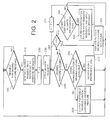
- Figure 2 illustrates the process used in preferred embodiments to navigate through source content, and as can be seen from Figure 2 the above-described steps of receiving a request for a desired feature, generating a search request specifying the desired feature with reference to semantic metadata, and applying the search request, are illustrated by steps 200, 210 and 230, respectively, in Figure 2.
- a parameter T is set equal to zero. In the example illustrated in Figure 2, it is chosen to set this parameter equal to zero after the search request has been generated, and prior to application of the search request, but it will be appreciated that the setting of that parameter to zero can take place at any appropriate point prior to the process moving to step 240.
- step 240 it is determined whether the desired feature has been located as a result of applying the search request. This will be the case if the application of the search request has resulted in any semantic source metadata being found matching the semantic metadata specified in the search request. Accordingly, taking the example of a request for the next face, if starting at the current location, and scanning through the semantic source metadata from that point forward, a match of the semantic source metadata with the semantic metadata specified by the search request is found (for example because a next face identifier is located), then that semantic source metadata will be returned as the result of the search request, and will indicate that a desired feature has been located.
- semantic source metadata is stored separately, or with, the source A/V material, there will be a direct correlation between a particular item of semantic source metadata and a particular portion of the source A/V material. If the semantic source metadata is stored with the source A/V material, it will be appreciated that this correspondence will be indicated by the location of' the semantic source metadata within the source material. If the semantic source metadata is stored separately from the source material, then appropriate information will be stored with the semantic source metadata to identify which portion of the source material it relates to. For example, time codes may be associated with the semantic source metadata to indicate particular points within the source A/V material.
- step 250 it is determined whether an iconic representation of the desired feature is available.
- the semantic source metadata is stored separately from the source A/V material, for example in a randomly-accessible storage medium.
- the iconic representation will preferably provide an image indicative of that portion of the video material, whilst for audio features, the iconic representation may take the form of a waveform image indicative of the audio content.
- an iconic representation is available, then that iconic representation is retrieved and output to the display device 75 as the result of the user's request. The process then returns to step 200 to await a further request from the user. If the user decides, based on the iconic representation provided, to review the source material directly, then the input A/V store can be instructed to cue up that portion of the source material containing the desired feature, that portion then being output to the user.
- step 250 If at step 250, an iconic representation is not available, then the process proceeds to step 260, where the source A/V material is scanned to find the portion of the source content associated with the semantic source metadata identified as a result of the search, and that portion of the source content is output to the display device 75 as the desired feature. Again, the process then returns to step 200 to await a further request from the user.
- step 240 If at step 240, a desired feature is not located, i.e. the application of the search request does not result in the identification of any semantic source metadata meeting the search criteria, then the process proceeds to step 280, where it is determined whether the parameter T equals zero. If T does equal zero, then this indicates that the process is in a first iteration, and accordingly the process proceeds to step 290, where in preferred embodiments a user is prompted to indicate whether he wishes to activate a predetermined recognition tool.
- the editing system is able to be connected to a number of recognition processes 60, which might take the form of one or more plug-in recognition tools.
- recognition tools can be used in the preferred embodiment to assist in the generation of semantic source metadata "on the fly" as the search request is applied.
- a recognition tool for detecting faces might be used to scan the source A/V material looking for video containing faces. If the search request is seeking to identify the next face, then this recognition tool might be activated to search through the source A/V material from the current location looking for the next portion of video containing a face, and to return as semantic source metadata an indication of the location of the portion within the source A/V material containing the next face. In this instance, it will be apparent that the result of the search is identified at the same time as the semantic source metadata is generated.
- step 300 the recognition tool is used to search through the source A/V material and to generate semantic source metadata when it reaches a point where the desired feature is recognised.
- the output of the recognition tool in effect indicates the result of the search request.
- the recognition tool will either output a signal providing as semantic source metadata an indication of the location of a portion within the source A/V material matching the search criteria, or alternatively will indicate that the desired feature has not been recognised.
- the process then proceeds to step 310, where the parameter T is incremented by 1, and then the process returns to step 240 where it is determined whether the desired feature has been located.
- step 320 an indication is provided to the user that the desired feature has not been found. This indication may take a variety of forms, for example a text message may be displayed on the display device 75.
- the flow diagram of Figure 2 is only intended to provide an example of the way in which the search request might be processed, and it will be appreciated that the exact processing of the search request may be altered as desired.
- the editing system 10 may be arranged to automatically activate a recognition tool in the event that the desired feature is not located, or the system may enable the loop specified by steps 280, 290, 300 and 310 to be executed more than once before determining that the desired feature has not been found.
- FIG. 3 provides a schematic illustration of the way in which the navigation technique of preferred embodiments may be used.
- the sequence 430 illustrates a number of frames of source A/V material relating to a recorded interview.
- the audio representation 435 is provided to indicate that audio is present within the A/V material.
- the user of the editing system has displayed before him on display device 400 a representation of the portion 440 of the A/V material.
- the user uses an input mechanism such as a pen 420 and tablet 410 drawing tool to enter a request for a desired feature, in this instance the next face in the A/V sequence.
- this request may be entered by an appropriate gesture 470 drawn with the pen 420 on the tablet 410.
- the rectangular blocks 500 schematically illustrate a timeline display that may be provided on a typical non-linear editing system, and are not relevant to the present discussion.
- semantic source metadata identifying a next face will not necessarily identify the next different person in the A/V sequence, but may instead identify each different face shot, whether that be a different shot of the same person, or a shot of a different person.
- the next face has identified the next shot of the same person, in this example the next shot representing a closer face shot of the same person.
- the user is presented with the image 480 on the display device 400 representing the desired feature within the A/V sequence. If the user were to repeat the command to find the next face, then as illustrated in Figure 3, a search request would be generated and applied to the source A/V material, resulting in semantic source metadata associated with portion 460 being identified. Accordingly, the user would be presented with a representation 490 of that portion 460 on the display device 400.
Landscapes
- Engineering & Computer Science (AREA)
- Theoretical Computer Science (AREA)
- Multimedia (AREA)
- General Engineering & Computer Science (AREA)
- Databases & Information Systems (AREA)
- Physics & Mathematics (AREA)
- Data Mining & Analysis (AREA)
- General Physics & Mathematics (AREA)
- Library & Information Science (AREA)
- Information Retrieval, Db Structures And Fs Structures Therefor (AREA)
- Television Signal Processing For Recording (AREA)
- Indexing, Searching, Synchronizing, And The Amount Of Synchronization Travel Of Record Carriers (AREA)
- User Interface Of Digital Computer (AREA)
Applications Claiming Priority (2)
| Application Number | Priority Date | Filing Date | Title |
|---|---|---|---|
| GB9921235A GB2354105A (en) | 1999-09-08 | 1999-09-08 | System and method for navigating source content |
| GB9921235 | 1999-09-08 |
Publications (2)
| Publication Number | Publication Date |
|---|---|
| EP1083568A2 true EP1083568A2 (de) | 2001-03-14 |
| EP1083568A3 EP1083568A3 (de) | 2002-03-13 |
Family
ID=10860579
Family Applications (1)
| Application Number | Title | Priority Date | Filing Date |
|---|---|---|---|
| EP00307667A Ceased EP1083568A3 (de) | 1999-09-08 | 2000-09-05 | Bildidentifikationsgerät und Bildidentifikationsverfahren |
Country Status (4)
| Country | Link |
|---|---|
| US (1) | US6799180B1 (de) |
| EP (1) | EP1083568A3 (de) |
| JP (1) | JP4572024B2 (de) |
| GB (1) | GB2354105A (de) |
Cited By (11)
| Publication number | Priority date | Publication date | Assignee | Title |
|---|---|---|---|---|
| EP1102276A1 (de) * | 1999-11-05 | 2001-05-23 | Sony United Kingdom Limited | Aufzeichnungs- und Zugriffsverfahren für Metadaten |
| EP1102271A1 (de) * | 1999-11-05 | 2001-05-23 | Sony United Kingdom Limited | Verfahren und Vorrichtung zur Erzeugung von Audio- und/oder Videosignalen |
| EP1130594A1 (de) * | 2000-03-01 | 2001-09-05 | Sony United Kingdom Limited | Verfahren und Vorrichtung zur Erzeugung von Audio- und/oder Videosignalen |
| WO2001075886A1 (en) * | 2000-04-05 | 2001-10-11 | Sony United Kingdom Limited | Identifying and processing of audio and/or video material |
| WO2001075884A3 (en) * | 2000-04-05 | 2001-12-20 | Sony Uk Ltd | Audio/video reproducing apparatus and method |
| WO2001075885A3 (en) * | 2000-04-05 | 2002-03-14 | Sony Uk Ltd | Identifying, recording and reproducing information |
| EP1326448A3 (de) * | 2001-10-30 | 2003-12-03 | Matsushita Electric Industrial Co., Ltd. | Videodatenübertragungs- und empfangsverfahren sowie Videomonitorsystem |
| GB2409540A (en) * | 2003-12-23 | 2005-06-29 | Ibm | Searching multimedia tracks to generate a multimedia stream |
| EP1536638A4 (de) * | 2002-06-24 | 2005-11-09 | Matsushita Electric Industrial Co Ltd | Metadatenerstellungseinrichtung, erstellungsverfahren dafur und abrufeinrichtung |
| EP2107477A3 (de) * | 2004-01-14 | 2011-08-03 | Mitsubishi Denki Kabushiki Kaisha | Zusammenfassende Wiedergabevorrichtung und zusammenfassendes Wiedergabeverfahren |
| EP1708101B1 (de) * | 2004-01-14 | 2014-06-25 | Mitsubishi Denki Kabushiki Kaisha | Zusammenfassende wiedergabeeinrichtung und zusammenfassende wiedergabemethode |
Families Citing this family (17)
| Publication number | Priority date | Publication date | Assignee | Title |
|---|---|---|---|---|
| US20030033602A1 (en) * | 2001-08-08 | 2003-02-13 | Simon Gibbs | Method and apparatus for automatic tagging and caching of highlights |
| US7091989B2 (en) | 2001-08-10 | 2006-08-15 | Sony Corporation | System and method for data assisted chroma-keying |
| US20030187820A1 (en) | 2002-03-29 | 2003-10-02 | Michael Kohut | Media management system and process |
| JP3637910B2 (ja) * | 2003-04-04 | 2005-04-13 | ソニー株式会社 | データ処理方法およびそのシステム |
| WO2006009663A1 (en) * | 2004-06-22 | 2006-01-26 | Digimarc Corporation | Digital asset management, targeted searching and desktop searching using digital watermarks |
| US8953908B2 (en) | 2004-06-22 | 2015-02-10 | Digimarc Corporation | Metadata management and generation using perceptual features |
| KR100714683B1 (ko) * | 2004-12-24 | 2007-05-04 | 삼성전자주식회사 | 디지털 컨텐츠를 글로벌로 공유하고 거래하는 방법 및시스템 |
| KR100782810B1 (ko) | 2005-01-07 | 2007-12-06 | 삼성전자주식회사 | 확장 검색 기능을 제공하기 위한 메타데이터가 기록된 저장매체를 재생하는 방법 및 장치 |
| US8842977B2 (en) | 2005-01-07 | 2014-09-23 | Samsung Electronics Co., Ltd. | Storage medium storing metadata for providing enhanced search function |
| KR101029073B1 (ko) * | 2005-11-14 | 2011-04-18 | 삼성전자주식회사 | 확장 검색 기능을 제공하기 위한 메타데이터가 기록된 저장매체 및 재생 장치 |
| JP4622611B2 (ja) * | 2005-03-24 | 2011-02-02 | ソニー株式会社 | 信号処理装置 |
| US8788588B2 (en) | 2006-05-03 | 2014-07-22 | Samsung Electronics Co., Ltd. | Method of providing service for user search, and apparatus, server, and system for the same |
| US7996380B2 (en) * | 2006-08-04 | 2011-08-09 | Apple Inc. | Method and apparatus for processing metadata |
| JP5770408B2 (ja) * | 2007-10-24 | 2015-08-26 | 日立マクセル株式会社 | 映像コンテンツ視聴端末 |
| KR101029078B1 (ko) * | 2008-07-30 | 2011-04-18 | 삼성전자주식회사 | 정보저장매체로부터 데이터를 재생하는 방법 |
| US20130094590A1 (en) * | 2011-10-12 | 2013-04-18 | Vixs Systems, Inc. | Video decoding device for extracting embedded metadata and methods for use therewith |
| JP5753999B2 (ja) | 2013-09-12 | 2015-07-22 | メタフロンティア合同会社 | 端末装置、データ処理プログラム、及びデータ管理システム |
Citations (2)
| Publication number | Priority date | Publication date | Assignee | Title |
|---|---|---|---|---|
| EP0719046A2 (de) * | 1994-11-29 | 1996-06-26 | Siemens Corporate Research, Inc. | Verfahren und Gerät zur Videodatenverwaltung |
| US5930783A (en) * | 1997-02-21 | 1999-07-27 | Nec Usa, Inc. | Semantic and cognition based image retrieval |
Family Cites Families (11)
| Publication number | Priority date | Publication date | Assignee | Title |
|---|---|---|---|---|
| JP2639387B2 (ja) * | 1986-09-02 | 1997-08-13 | 和芙 橋本 | 音声認識機能付録音再生装置 |
| KR930005733B1 (ko) * | 1990-12-31 | 1993-06-24 | 삼성전자 주식회사 | 문자로 표시되는 인덱스 서어치 시스템 |
| GB2294355B (en) * | 1992-04-10 | 1996-12-04 | Avid Technology Inc | Digital storage and display of video information |
| US5493677A (en) * | 1994-06-08 | 1996-02-20 | Systems Research & Applications Corporation | Generation, archiving, and retrieval of digital images with evoked suggestion-set captions and natural language interface |
| US5835667A (en) * | 1994-10-14 | 1998-11-10 | Carnegie Mellon University | Method and apparatus for creating a searchable digital video library and a system and method of using such a library |
| GB2305525B (en) * | 1995-09-21 | 1997-08-20 | Ricoh Kk | Document data administrating system and method of administrating document data |
| US6374260B1 (en) * | 1996-05-24 | 2002-04-16 | Magnifi, Inc. | Method and apparatus for uploading, indexing, analyzing, and searching media content |
| US5903892A (en) * | 1996-05-24 | 1999-05-11 | Magnifi, Inc. | Indexing of media content on a network |
| KR100230302B1 (ko) * | 1997-07-02 | 1999-11-15 | 윤종용 | 스냅샷 촬영데이터의 자동탐색/연속전송이 가능한 디지털비디오카메라 및 그에 따른 영상데이터의 기록방법과 탐색/전송방법 |
| US6377995B2 (en) * | 1998-02-19 | 2002-04-23 | At&T Corp. | Indexing multimedia communications |
| US6366296B1 (en) * | 1998-09-11 | 2002-04-02 | Xerox Corporation | Media browser using multimodal analysis |
-
1999
- 1999-09-08 GB GB9921235A patent/GB2354105A/en not_active Withdrawn
-
2000
- 2000-09-05 EP EP00307667A patent/EP1083568A3/de not_active Ceased
- 2000-09-07 US US09/656,972 patent/US6799180B1/en not_active Expired - Lifetime
- 2000-09-08 JP JP2000274129A patent/JP4572024B2/ja not_active Expired - Fee Related
Patent Citations (2)
| Publication number | Priority date | Publication date | Assignee | Title |
|---|---|---|---|---|
| EP0719046A2 (de) * | 1994-11-29 | 1996-06-26 | Siemens Corporate Research, Inc. | Verfahren und Gerät zur Videodatenverwaltung |
| US5930783A (en) * | 1997-02-21 | 1999-07-27 | Nec Usa, Inc. | Semantic and cognition based image retrieval |
Cited By (28)
| Publication number | Priority date | Publication date | Assignee | Title |
|---|---|---|---|---|
| US8331759B2 (en) | 1999-11-05 | 2012-12-11 | Sony United Kingdom Limited | Audio and/or video generation apparatus and method of generating audio and/or video signals |
| EP1102271A1 (de) * | 1999-11-05 | 2001-05-23 | Sony United Kingdom Limited | Verfahren und Vorrichtung zur Erzeugung von Audio- und/oder Videosignalen |
| US10200767B2 (en) | 1999-11-05 | 2019-02-05 | Sony Corporation | Audio and/or video generation apparatus and method of generating audio and/or video signals |
| US10200766B2 (en) | 1999-11-05 | 2019-02-05 | Sony Corporation | Audio and/or video generation apparatus and method of generating audio and/or video signals |
| US9204119B2 (en) | 1999-11-05 | 2015-12-01 | Sony Europe Limited | Audio and/or video generation apparatus and method of generating audio and/or video signals |
| US8842964B2 (en) | 1999-11-05 | 2014-09-23 | Sony United Kingdom Limited | Audio and/or video generation apparatus and method of generating audio and/or video signals |
| EP1102276A1 (de) * | 1999-11-05 | 2001-05-23 | Sony United Kingdom Limited | Aufzeichnungs- und Zugriffsverfahren für Metadaten |
| US8543560B2 (en) | 1999-11-05 | 2013-09-24 | Sony United Kingdom Limited | Audio and/or video generation apparatus and method of generating audio and/or video signals |
| US7289717B1 (en) | 1999-11-05 | 2007-10-30 | Sony United Kingdom Limited | Audio and/or video generation apparatus and method of generating audio and/or video signals |
| EP1130594A1 (de) * | 2000-03-01 | 2001-09-05 | Sony United Kingdom Limited | Verfahren und Vorrichtung zur Erzeugung von Audio- und/oder Videosignalen |
| US8649664B2 (en) | 2000-03-01 | 2014-02-11 | Sony United Kingdom Limited | Audio and/or video generation apparatus and method of generating audio and /or video signals |
| US7123816B2 (en) | 2000-03-01 | 2006-10-17 | Sony United Kingdom Limited | Audio and/or video generation apparatus and method of generating audio and/or video signals |
| US6772125B2 (en) | 2000-04-05 | 2004-08-03 | Sony United Kingdom Limited | Audio/video reproducing apparatus and method |
| US7526178B2 (en) | 2000-04-05 | 2009-04-28 | Sony United Kingdom Limited | Identifying and processing of audio and/or video material |
| US7778516B2 (en) | 2000-04-05 | 2010-08-17 | Sony United Kingdom Limited | Identifying, recording and reproducing information |
| USRE41939E1 (en) | 2000-04-05 | 2010-11-16 | Sony United Kingdom Limited | Audio/video reproducing apparatus and method |
| WO2001075886A1 (en) * | 2000-04-05 | 2001-10-11 | Sony United Kingdom Limited | Identifying and processing of audio and/or video material |
| WO2001075884A3 (en) * | 2000-04-05 | 2001-12-20 | Sony Uk Ltd | Audio/video reproducing apparatus and method |
| WO2001075885A3 (en) * | 2000-04-05 | 2002-03-14 | Sony Uk Ltd | Identifying, recording and reproducing information |
| EP1326448A3 (de) * | 2001-10-30 | 2003-12-03 | Matsushita Electric Industrial Co., Ltd. | Videodatenübertragungs- und empfangsverfahren sowie Videomonitorsystem |
| US7460601B2 (en) | 2001-10-30 | 2008-12-02 | Panasonic Corporation | Video data transmitting/receiving method and video monitor system |
| EP1536638A4 (de) * | 2002-06-24 | 2005-11-09 | Matsushita Electric Industrial Co Ltd | Metadatenerstellungseinrichtung, erstellungsverfahren dafur und abrufeinrichtung |
| US8248899B2 (en) | 2003-12-23 | 2012-08-21 | International Business Machines Corporation | Preparing a multimedia stream by collating tracks |
| GB2409540A (en) * | 2003-12-23 | 2005-06-29 | Ibm | Searching multimedia tracks to generate a multimedia stream |
| US7474595B2 (en) | 2003-12-23 | 2009-01-06 | International Business Machines Corporation | Method for preparing a multimedia stream |
| US7911886B2 (en) | 2003-12-23 | 2011-03-22 | International Business Machines Corporation | Preparing a multimedia stream based on a geographical location parameter and a bounding volume |
| EP1708101B1 (de) * | 2004-01-14 | 2014-06-25 | Mitsubishi Denki Kabushiki Kaisha | Zusammenfassende wiedergabeeinrichtung und zusammenfassende wiedergabemethode |
| EP2107477A3 (de) * | 2004-01-14 | 2011-08-03 | Mitsubishi Denki Kabushiki Kaisha | Zusammenfassende Wiedergabevorrichtung und zusammenfassendes Wiedergabeverfahren |
Also Published As
| Publication number | Publication date |
|---|---|
| EP1083568A3 (de) | 2002-03-13 |
| JP4572024B2 (ja) | 2010-10-27 |
| US6799180B1 (en) | 2004-09-28 |
| JP2001155036A (ja) | 2001-06-08 |
| GB2354105A (en) | 2001-03-14 |
| GB9921235D0 (en) | 1999-11-10 |
Similar Documents
| Publication | Publication Date | Title |
|---|---|---|
| US6799180B1 (en) | Method of processing signals and apparatus for signal processing | |
| US6970639B1 (en) | System and method for editing source content to produce an edited content sequence | |
| JP4794740B2 (ja) | オーディオ/ビデオ信号生成装置、及びオーディオ/ビデオ信号生成方法 | |
| EP1050048B1 (de) | Vorrichtung und verfahren für aufnahme, entwurf und wiedergabe synchronisierter audio- und videodaten unter verwendung von spracherkennung und drehbüchern | |
| JP4250301B2 (ja) | 映像シーケンスを編集する方法及びシステム | |
| JP4591982B2 (ja) | オーディオ信号及び/又はビデオ信号生成装置、及びオーディオ信号及び/又はビデオ信号生成方法 | |
| US7432940B2 (en) | Interactive animation of sprites in a video production | |
| US20110239107A1 (en) | Transcript editor | |
| EP1939878A2 (de) | Identifizierungs-, Aufzeichnungs- und Wiedergabeinformation | |
| JP2003529989A (ja) | オーディオ/ビデオ再生装置及び方法 | |
| JP2003517786A (ja) | ビデオ制作システムおよび方法 | |
| EP0877378A2 (de) | Methode und Gerät zum Nachbearbeiten von Audio- oder audiovisuellen Aufzeichnungen | |
| JP3934780B2 (ja) | 放送番組管理装置、放送番組管理方法、及び放送番組管理処理プログラムを記録した記録媒体 | |
| US20080008442A1 (en) | Editing apparatus, editing method, and program | |
| JPH05290549A (ja) | 映像編集支援装置 | |
| JPH0991928A (ja) | 映像の編集方法 | |
| CN112633087A (zh) | 一种ibc系统的基于画面分析的自动场记方法和装置 | |
| AU2002301447B2 (en) | Interactive Animation of Sprites in a Video Production | |
| JP2001069436A (ja) | 話者情報記録装置および検索装置 | |
| GB2349764A (en) | 2-D Moving image database | |
| JPH06243540A (ja) | ビデオ再生装置および検索装置 | |
| JP2002204423A (ja) | マルチメディアプレーヤーを使って記録媒体を再生し活用する方法と装置 |
Legal Events
| Date | Code | Title | Description |
|---|---|---|---|
| PUAI | Public reference made under article 153(3) epc to a published international application that has entered the european phase |
Free format text: ORIGINAL CODE: 0009012 |
|
| AK | Designated contracting states |
Kind code of ref document: A2 Designated state(s): AT BE CH CY DE DK ES FI FR GB GR IE IT LI LU MC NL PT SE Kind code of ref document: A2 Designated state(s): DE FR GB |
|
| AX | Request for extension of the european patent |
Free format text: AL;LT;LV;MK;RO;SI |
|
| RIN1 | Information on inventor provided before grant (corrected) |
Inventor name: DORRICOTT, MARTIN REX Inventor name: COLLINS, ANDREW Inventor name: MCGRATH, JOHN MARK |
|
| PUAL | Search report despatched |
Free format text: ORIGINAL CODE: 0009013 |
|
| AK | Designated contracting states |
Kind code of ref document: A3 Designated state(s): AT BE CH CY DE DK ES FI FR GB GR IE IT LI LU MC NL PT SE |
|
| AX | Request for extension of the european patent |
Free format text: AL;LT;LV;MK;RO;SI |
|
| RIC1 | Information provided on ipc code assigned before grant |
Free format text: 7G 11B 27/28 A, 7G 11B 27/10 B, 7G 06F 17/30 B, 7G 11B 27/031 B |
|
| 17P | Request for examination filed |
Effective date: 20020816 |
|
| AKX | Designation fees paid |
Free format text: DE FR GB |
|
| 17Q | First examination report despatched |
Effective date: 20021114 |
|
| STAA | Information on the status of an ep patent application or granted ep patent |
Free format text: STATUS: THE APPLICATION HAS BEEN REFUSED |
|
| 18R | Application refused |
Effective date: 20130207 |