EP1083708B1 - Dynamische Burst-Zusammenstellung basiert auf voll/teilweis gemeinsame Mehrfachübertragungsentitäten - Google Patents
Dynamische Burst-Zusammenstellung basiert auf voll/teilweis gemeinsame Mehrfachübertragungsentitäten Download PDFInfo
- Publication number
- EP1083708B1 EP1083708B1 EP00119372A EP00119372A EP1083708B1 EP 1083708 B1 EP1083708 B1 EP 1083708B1 EP 00119372 A EP00119372 A EP 00119372A EP 00119372 A EP00119372 A EP 00119372A EP 1083708 B1 EP1083708 B1 EP 1083708B1
- Authority
- EP
- European Patent Office
- Prior art keywords
- multicast
- tree
- burstification
- class
- burst
- Prior art date
- Legal status (The legal status is an assumption and is not a legal conclusion. Google has not performed a legal analysis and makes no representation as to the accuracy of the status listed.)
- Expired - Lifetime
Links
- 230000003287 optical effect Effects 0.000 claims abstract description 98
- 238000000034 method Methods 0.000 claims abstract description 58
- ZAKOWWREFLAJOT-CEFNRUSXSA-N D-alpha-tocopherylacetate Chemical compound CC(=O)OC1=C(C)C(C)=C2O[C@@](CCC[C@H](C)CCC[C@H](C)CCCC(C)C)(C)CCC2=C1C ZAKOWWREFLAJOT-CEFNRUSXSA-N 0.000 claims 1
- 238000012217 deletion Methods 0.000 description 15
- 238000002347 injection Methods 0.000 description 13
- 239000007924 injection Substances 0.000 description 13
- 230000037430 deletion Effects 0.000 description 12
- 238000005516 engineering process Methods 0.000 description 6
- 238000013459 approach Methods 0.000 description 4
- 239000000872 buffer Substances 0.000 description 3
- 238000007726 management method Methods 0.000 description 3
- 101150005267 Add1 gene Proteins 0.000 description 2
- 238000004891 communication Methods 0.000 description 2
- 238000010586 diagram Methods 0.000 description 2
- 239000000835 fiber Substances 0.000 description 2
- 230000006855 networking Effects 0.000 description 2
- 239000013307 optical fiber Substances 0.000 description 2
- 238000012545 processing Methods 0.000 description 2
- 238000012546 transfer Methods 0.000 description 2
- 230000001174 ascending effect Effects 0.000 description 1
- 230000005540 biological transmission Effects 0.000 description 1
- 238000013461 design Methods 0.000 description 1
- 238000012886 linear function Methods 0.000 description 1
- 239000011159 matrix material Substances 0.000 description 1
- 238000011144 upstream manufacturing Methods 0.000 description 1
Images


Classifications
-
- H—ELECTRICITY
- H04—ELECTRIC COMMUNICATION TECHNIQUE
- H04L—TRANSMISSION OF DIGITAL INFORMATION, e.g. TELEGRAPHIC COMMUNICATION
- H04L45/00—Routing or path finding of packets in data switching networks
-
- H—ELECTRICITY
- H04—ELECTRIC COMMUNICATION TECHNIQUE
- H04L—TRANSMISSION OF DIGITAL INFORMATION, e.g. TELEGRAPHIC COMMUNICATION
- H04L45/00—Routing or path finding of packets in data switching networks
- H04L45/16—Multipoint routing
-
- H—ELECTRICITY
- H04—ELECTRIC COMMUNICATION TECHNIQUE
- H04Q—SELECTING
- H04Q11/00—Selecting arrangements for multiplex systems
- H04Q11/0001—Selecting arrangements for multiplex systems using optical switching
- H04Q11/0062—Network aspects
-
- H—ELECTRICITY
- H04—ELECTRIC COMMUNICATION TECHNIQUE
- H04L—TRANSMISSION OF DIGITAL INFORMATION, e.g. TELEGRAPHIC COMMUNICATION
- H04L12/00—Data switching networks
- H04L12/54—Store-and-forward switching systems
- H04L12/56—Packet switching systems
- H04L12/5601—Transfer mode dependent, e.g. ATM
- H04L2012/5619—Network Node Interface, e.g. tandem connections, transit switching
- H04L2012/562—Routing
-
- H—ELECTRICITY
- H04—ELECTRIC COMMUNICATION TECHNIQUE
- H04L—TRANSMISSION OF DIGITAL INFORMATION, e.g. TELEGRAPHIC COMMUNICATION
- H04L12/00—Data switching networks
- H04L12/54—Store-and-forward switching systems
- H04L12/56—Packet switching systems
- H04L12/5601—Transfer mode dependent, e.g. ATM
- H04L2012/5619—Network Node Interface, e.g. tandem connections, transit switching
- H04L2012/5624—Path aspects, e.g. path bundling
-
- H—ELECTRICITY
- H04—ELECTRIC COMMUNICATION TECHNIQUE
- H04L—TRANSMISSION OF DIGITAL INFORMATION, e.g. TELEGRAPHIC COMMUNICATION
- H04L12/00—Data switching networks
- H04L12/54—Store-and-forward switching systems
- H04L12/56—Packet switching systems
- H04L12/5601—Transfer mode dependent, e.g. ATM
- H04L2012/5638—Services, e.g. multimedia, GOS, QOS
- H04L2012/564—Connection-oriented
- H04L2012/5642—Multicast/broadcast/point-multipoint, e.g. VOD
-
- H—ELECTRICITY
- H04—ELECTRIC COMMUNICATION TECHNIQUE
- H04L—TRANSMISSION OF DIGITAL INFORMATION, e.g. TELEGRAPHIC COMMUNICATION
- H04L12/00—Data switching networks
- H04L12/54—Store-and-forward switching systems
- H04L12/56—Packet switching systems
- H04L12/5601—Transfer mode dependent, e.g. ATM
- H04L2012/5638—Services, e.g. multimedia, GOS, QOS
- H04L2012/5646—Cell characteristics, e.g. loss, delay, jitter, sequence integrity
- H04L2012/5651—Priority, marking, classes
-
- H—ELECTRICITY
- H04—ELECTRIC COMMUNICATION TECHNIQUE
- H04L—TRANSMISSION OF DIGITAL INFORMATION, e.g. TELEGRAPHIC COMMUNICATION
- H04L12/00—Data switching networks
- H04L12/54—Store-and-forward switching systems
- H04L12/56—Packet switching systems
- H04L12/5601—Transfer mode dependent, e.g. ATM
- H04L2012/5678—Traffic aspects, e.g. arbitration, load balancing, smoothing, buffer management
- H04L2012/568—Load balancing, smoothing or shaping
-
- H—ELECTRICITY
- H04—ELECTRIC COMMUNICATION TECHNIQUE
- H04Q—SELECTING
- H04Q11/00—Selecting arrangements for multiplex systems
- H04Q11/0001—Selecting arrangements for multiplex systems using optical switching
- H04Q11/0062—Network aspects
- H04Q11/0066—Provisions for optical burst or packet networks
-
- H—ELECTRICITY
- H04—ELECTRIC COMMUNICATION TECHNIQUE
- H04Q—SELECTING
- H04Q11/00—Selecting arrangements for multiplex systems
- H04Q11/0001—Selecting arrangements for multiplex systems using optical switching
- H04Q11/0062—Network aspects
- H04Q11/0071—Provisions for the electrical-optical layer interface
-
- H—ELECTRICITY
- H04—ELECTRIC COMMUNICATION TECHNIQUE
- H04Q—SELECTING
- H04Q11/00—Selecting arrangements for multiplex systems
- H04Q11/0001—Selecting arrangements for multiplex systems using optical switching
- H04Q11/0062—Network aspects
- H04Q2011/0073—Provisions for forwarding or routing, e.g. lookup tables
Definitions
- the present invention relates generally to optical network systems, and more particularly, a system and method for providing dynamic burstification of multicast traffic based on fully/partially shared multicast entities.
- a unicast data packet is a data packet generated from an application requiring point-to-point communication.
- the unicast data packet is switched through a series of electronic packet switching systems to its destination.
- a multicast data packet is a data packet generated from an application requiring point-to-multipoint or multipoint-to-multipoint communications.
- the multicast data packet is switched through a tree of electronic packet switching systems to multiple destinations.
- optical burst-switched networking attempts to achieve the best combination of optical and electronic switching technologies.
- the data unit to be transferred in the optical burst-switched network is a data burst.
- a data burst, or simply a burst is a collection of one or more data packets which have a set of common attributes.
- An obvious example would be a common egress point in an optical burst-switched network.
- the electronics provide dynamic control of system resources by assigning individual user data bursts to channels on a DWDM fiber.
- Optical technology is used to switch the user data bursts entirely within an optical domain.
- Optical burst switched networks are able to switch both unicast and multicast data bursts.
- limitations of optical component technology has largely limited optical switching to facility management applications.
- optical burst-switched networking systems have performed poorly and generally tend to demonstrate the inefficiency of current optical components.
- one prior art optical burst-switched network utilized ATM switches in the control network which made the design of the control network much more complicated and suboptimal.
- Other prior art optical burst-switched networks used electronic buffers in the optical routers, thus the optical burst-switched network was not purely optical. The electronic buffers did not provide end-to-end transparent optical paths for data bursts. Thus, little has been done to stimulate any serious move toward optical burst-switching.
- European patent application EP 0 941 010 A1 discloses a multicast transmission system.
- the system establishes a first multicast connection tree according to a first QoS request.
- a second QoS request is received that differs from the first QoS level
- the system adds a new tree if the second QoS level is not within a threshold range of the first QoS level, and it adds just a branch inside the existing connection tree if the second QoS level is within said threshold range of the first QoS level.
- the present invention provides a dynamic burstification system and method based on fully/partially shared multicast trees that substantially eliminates or reduces disadvantages and problems associated with previously developed systems and methods used for switching multicast data packets.
- the present invention provides a system and method for collecting multiple multicast data packets into a multicast burst according to some multicast burstification classification criteria, then switching the multicast burst through an optical burst switched network.
- multicast data packets are first assembled into a multicast burst at an electronic ingress edge router according to a plurality of multicast burstification criteria (classes).
- the multicast burst is then switched through the optical burst-switched network to the destined electronic egress edge routers where the burst is disassembled back into multicast data packets and transmitted to its final (multiple) destinations.
- the present invention provides a technical advantage by providing an optimized way to assemble multiple multicast data packets into a single multicast burst according to multiple multicast burstification classes and transmitting the multicast burst through an optical burst switched network.
- the present invention provides a technical advantage by increasing the burst length of multicast traffic, thus providing increased efficiency in the transfer of multicast traffic in optical burst-switched networks.
- the present invention provides another technical advantage by reducing the burst assembly time interval resulting in reduced multicast data packet latency at an electronic ingress edge router.
- the present invention provides another technical advantage by reducing the amount of control traffic and control operations necessary to forward/route multicast bursts to their destinations.
- the present invention provides another technical advantage since it is largely independent of the specifics of the control units of underlying optical burst-switches (e.g. ATM based) or the specifics of the optical switch matrix (e.g. may use electronic or optical buffers).
- optical burst-switches e.g. ATM based
- optical switch matrix e.g. may use electronic or optical buffers.
- FIGUREs Preferred embodiments of the present invention are illustrated in the FIGUREs, like numerals being used to refer to like and corresponding parts of the various drawings.
- FIGURE 1 shows one example of an optical burst-switched (OBS) network 100 according to the present invention.
- the optical burst-switched network 100 includes a plurality of electronic ingress edge routers 105, a plurality of optical core routers 110, a plurality of electronic egress edge routers 115, and a plurality of DWDM links 120.
- a plurality of input subnets 125 and destination subnets 130 shown in FIGURE 1 are located outside the optical burst-switched network 100.
- the optical burst-switched network 100 is able to switch unicast, multicast and broadcast databursts.
- Unicast data packets are assembled into bursts according to their destination electronic egress edge router address 115.
- Multicast data packets are assembled into multicast bursts according to their source address and multicast group address (S, G), or simply by their multicast group address (*, G), depending on the multicast routing protocol used.
- Broadcast data packets are a special case of multicast data packets where the data packets are broadcast to every address in the optical burst-switched network 100.
- multicast bursts are assembled based on two parameters, burst assembly time interval and maximum burst length. Because multicast data packets are usually assembled into multicast bursts within given time intervals (that are constrained by end-to-end delay among others), the average burst length of single group multicast traffic is much smaller than that of unicast traffic, as fewer packets fit the criteria to be assembled together in one burst. For a given multicast burst overhead, this results in very inefficient transfer of multicast traffic in the optical burst-switched network 100. For example, if the multicast burst overhead is 10 Kbits in a 10 Gbps channel, an average multicast burst length of 200 Kbits is required to achieve 95% channel utilization.
- increasing the average burst length for multicast traffic is accomplished by increasing the multicast burst assembly time interval.
- multicast data packets are assembled into bursts, not corresponding to merely one multicast group, but sets of multicast groups.
- a multicast group is a set of senders and receivers. From the optical burst-switched network 100 point of view, a multicast group consists of an electronic ingress edge router and a set of electronic egress edge routers.
- a multicast burstification class can be defined according to one of four scenarios. For the sake of simplicity, only two multicast groups in a multicast burstification class are shown to be associated with multicast trees T 1 and T 2 in describing each of the four scenarios. However, multiple groups within a multicast burstification class could be associated with multiple multicast trees. Although other criteria (e.g. quality of service or security requirements) may determine the burstification classes, these are not taken into account in this description.
- T (C, E, L)
- T represents a multicast tree of a multicast group in the optical burst-switched network 100
- C is the set of optical core routers 110
- E is the set of member electronic ingress and egress edge routers, 105 and 115 respectively
- L is the set of DWDM links 120 that are occupied by a given multicast tree to deliver the multicast bursts.
- FIGURE 2 shows one example of the first multicast burstification class called an "equi-tree in an optical burst-switched network" (ETON) 200.
- the equi-tree in an optical burst-switched network or ETON includes one electronic ingress edge router 105, a plurality of optical core routers 110, a plurality of electronic egress edge routers 115, a plurality of DWDM links 120, a first multicast tree T 1 205 and a second multicast tree T 2 210.
- multicast trees associated with a multicast burstification class share the same links 120, core routers 110, electronic ingress edge router 105, and electronic egress edge routers 115.
- all of the multicast data packets associated with the first multicast tree T 1 205 would be assembled in a multicast burst at the electronic ingress edge router 105 and switched through the optical burst-switched network 100 to the electronic egress edge routers E 4 and E 8 115.
- all of the multicast data packets associated with the second multicast tree T 2 210 would be assembled in a multicast burst at the electronic ingress edge router 105 and switched through the optical burst-switched network 100 to the electronic egress edge routers E 4 and E 8 115.
- the problem with assembling the multicast data packets into two separate bursts at the same electronic ingress edge router 105 and transmitting the two multicast bursts to the same electronic egress edge routers 115 is that the same overhead is used for each multicast burst.
- each multicast burst must be assembled in a given time interval and the volume of the multicast traffic is not very big, it is unlikely that enough multicast data packets will be assembled in a short interval.
- all of the multicast data packets associated with the first and second multicast trees, T 1 205 and T 2 210, can be grouped in a multicast burstification class.
- the multicast packets can then be assembled into a single multicast burst with one set of overhead at the electronic ingress edge router 105 and switched through the optical burst-switched network 100 on either the first multicast tree T 1 205 or the second multicast tree T 2 210.
- the single multicast burst can then be disassembled back into the multicast data packets at the electronic egress edge routers E 4 and E 8 115 and transmitted to the output subnets 130.
- FIGURE 3 shows one example of the second multicast burstification class called equi-coverage in an optical burst-switched network (ECON) 300.
- the ECON includes one electronic ingress edge router 105, a plurality of optical core routers 110, a plurality of electronic egress edge routers 115, a plurality of DWDM links 120, a first multicast tree T 1 305, and a second multicast tree T 2 310.
- the multicast trees associated with a multicast burstification classes share the same electronic ingress edge routers 105 and electronic egress edge routers 115, but do not necessarily share the same DWDM links 120, or optical core routers 110.
- all of the multicast data packets associated with the first multicast tree T 1 305 would be assembled in a multicast burst at the electronic ingress edge router 105 and switched through the optical burst switched network 100 to the electronic egress edge routers E 4 and E 8 115.
- all of the multicast data packets associated with the second multicast tree T 2 310 would be assembled in a multicast burst at the electronic ingress edge router 105 and switched through the optical burst-switched network to the electronic egress edge routers E 4 and E 8 115.
- the problem with assembling the multicast data packets into two separate bursts at the same electronic ingress edge router 105 and transmitting the two multicast bursts to the same electronic egress edge routers 115 is that the same overhead is used for each multicast burst. Since each multicast burst must be assembled in a given time interval and the volume of the multicast traffic can be relatively light so that relatively few multicast data packets will be assembled during short time intervals.
- ECON if a set of multicast data packets that are associated with different multicast trees and share the same electronic ingress edge router 105 and electronic egress edge routers 115 can be assembled together into a single multicast burst with one set of overhead, it is more likely that more multicast data packets can be assembled in the same time interval, thus making multicast data packet switching more efficient.
- FIGURE 3 note that the first multicast tree T 1 305 and the second multicast tree T 2 310 both share the same electronic ingress edge router 105 and electronic egress edge routers 115, thus creating an equi-coverage multicast tree.
- all of the multicast data packets associated with the first and second multicast trees, T 1 305 and T 2 310, can be grouped in a multicast burstification class.
- the multicast data packets can then be assembled into a single multicast burst with one set of overhead at the electronic ingress edge router 105 and switched through the optical burst-switched network 100 on either the first multicast tree T 1 305 or the second multicast tree T 2 310.
- the single multicast burst can then be disassembled back into the multicast data packets at the electronic egress edge routers E 4 and E 8 115 and transmitted to the output subnets 130.
- load balancing can be used to determine which multicast tree to send the single multicast burst on. For example, one load balancing technique may be to alternate the multicast trees T 1 305 and T 2 310 evenly for sending multicast bursts. In another example, the total multicast traffic may be unevenly distributed in an alternating nature among multicast trees. Other load balancing techniques known to those skilled in the art may also be used. The load balancing decisions occur in the electronic ingress edge router 105.
- FIGURE 4 shows an example of the third multicast burstification class called super-coverage in an optical burst-switched network (SCON) 400.
- the SCON 400 or FIGURE 4 includes one electronic ingress edge router 105, a plurality of optical core routers 110, a plurality of electronic egress edge routers 115, a plurality of DWDM links 120, a first multicast tree T 1 405, and a second multicast tree T 2 410.
- the multicast trees associated with a multicast burstification class may not share the same electronic egress edge routers 115, DWDM links 120, or optical core routers 110, however, at least one of the multicast trees (called a super tree) covers the ingress edge router 105 and all the electronic egress edge routers 115 shared by all the multicast trees combined.
- the difference in the number of electronic egress edge routers 115, DWDM links 120, or optical core routers 110 between the super tree and each multicast trees should not be larger than some predetermined threshold value.
- all of the multicast data packets associated with the first multicast tree T 1 405 would be assembled in a multicast burst at the electronic ingress edge router 105 and switched through the optical burst switched network 100 to the electronic egress edge routers E 4 and E 8 115.
- all of the multicast data packets associated with the second multicast tree T 2 410 would be assembled in a multicast burst at the electronic ingress edge router 105 and switched through the optical burst-switched network 100 to the electronic egress edge routers E 3 , E 4 , and E 8 115.
- the multicast bursts switched on the multicast tree T 1 405 would be disassembled at the electronic egress edge routers E 4 and E 8 115 and transmitted to their respective subnets 130.
- the multicast bursts switched on the multicast tree T 2 410 would be disassembled at the electronic egress edge routers E 3 , E 4 and E 8 115 and transmitted to their respective destination subnets 130.
- the problem with assembling the multicast data packets into two separate bursts at the same electronic ingress edge router 105 and transmitting the two multicast bursts to at least some of the same electronic egress edge routers 115 is that the same overhead is used for some of the multicast bursts. Since each multicast burst must be assembled in a given time interval and the volume of the multicast traffic is relatively small, it is unlikely that enough multicast data packets will be assembled in short time intervals.
- the multicast packets can be assembled into a single multicast burst with one set of overhead and transmitted on the super tree to all of the electronic egress edge routers 115. Therefore, it is more likely that more multicast data packets can be assembled in the same time interval, thus making multicast data packet switching more efficient.
- a super tree which covers the electronic ingress edge router 105 and all the electronic egress edge routers 115 covered by all of the multicast trees combined
- the first multicast tree T 1 405 and the second multicast tree T 2 410 do not share the same electronic egress edge routers 115.
- multicast tree T 2 410 covers all the electronic egress edge routers 115 covered by the first and second multicast trees combined (T 1 405 and T 2 410) thus creating a super-coverage multicast tree. Therefore, all of the multicast data packets associated with the first and second multicast trees (T 1 405 and T 2 410) can be assembled into a single multicast burst with one set of overhead at the electronic ingress edge router 105 and switched through the optical burst-switched network 100 on the super tree.
- the super tree is the second multicast tree T 2 410.
- the multicast burst can then be disassembled back into multicast data packets at the electronic egress edge routers E 3 , E 4 and E 8 115 and transmitted to the respective output subnets 130. Note also that the multicast data packets associated with multicast tree T 1 405 are discarded at electronic egress edge router E 3 115.
- a maximum threshold limit can be set on the difference in the number of DWDM links 120, optical core routers 110, and the electronic egress edge routers 115 that are allowed between the super tree and the other multicast trees in the MBC.
- a network administrator can set these maximum threshold limits.
- the electronic ingress edge router 105 compares the super tree to each individual multicast tree to make sure these maximum threshold limits are not violated.
- E jk ⁇ E j s for all k 1 , 2 , ... , R j E j s - R j ⁇ i E j i ⁇ h E C j s - R j ⁇ i C j i +
- h C , h E and h L are the thresholds for the optical core routers C, electronic ingress and egress edge routers E and DWDM links L, respectively.
- Equation one (1) defines the SCON classification and controls the trade-off between burstification efficiency and processing overhead on some edge routers.
- Equations two (2) and three (3) are related to the average performance of multicast burst delivery. Equations two (2) and three (3) control the tradeoff between system level burstification and overall multicast traffic efficiency.
- the Classification Efficiency Ratio is used, which gives the ratio of the accumulated cost of delivering multicast traffic of the individual multicast sessions via their multicast trees to the total cost of delivering multicast traffic of the MBC via the super tree.
- CER Classification Efficiency Ratio
- the cost of delivering a unit traffic volume on super tree T j s is S j s .
- the following inequality can be used to establish SCON class MBC j for an electronic ingress edge router.
- the h R ( ⁇ 1) is a predefined value.
- S jk the sum of DWDM links in tree T jk
- S j s is the sum of DWDM links in the super tree.
- S jk and S j s are the weighted sum of DWDM links in tree T jk and the super tree T j s , respectively.
- DWDM link length can for example be used as the weight in calculating the cost.
- FIGURE 5 shows another example of super-coverage in an optical burst-switched network (SCON) 500 according to the present invention.
- FIGURE 6 shows one example of overlapping-coverage in an optical burst-switched network (OCON) 600 according to the present invention.
- the OCON 600 is an extension of SCON 500.
- the multicast trees of a multicast burstification class may not share all the egress edge routers 115, however, a union tree which covers all of the egress edge routers 115 can be created to deliver the assembled multicast burst.
- the difference between the union tree and multicast trees in terms of the numbers of egress edge routers 115, DWDM links 120, and optical core routers 110 should not be larger than some predetermined threshold value. Equations (1), (2), (3), and (4) used under SCON 500 hold for OCON 600, as well.
- all of the multicast data packets associated with the first multicast tree T 1 405 could be assembled in a multicast burst at the electronic ingress edge router 105 and switched through the optical burst switched network 100 to the electronic egress edge routers E 4 , E 8 and E 9 .
- all of the multicast data packets associated with the second multicast tree T 2 410 could be assembled in a multicast burst at the electronic ingress edge router 105 and switched through the optical burst-switched network to the electronic egress edge routers E 3 , E 4 and E 8 .
- the multicast bursts switched on the multicast tree T 1 405 would then be disassembled at the electronic egress edge routers E 4 , E 8 and E 9 and transmitted to their respective subnets 130.
- the multicast bursts switched on the multicast tree T 2 410 would be disassembled at the electronic egress edge routers E 3 , E 4 and E 8 and transmitted to their respective destination subnets 130.
- the problem with assembling the multicast data packets into two separate bursts at the same electronic ingress edge router 105 and transmitting the two multicast bursts to some of the same electronic egress edge routers 115 is that the same overhead is used for some of the multicast bursts. Since each multicast burst must be assembled in a given time interval and the traffic volume of a single multicast group is not very big, it is unlikely that enough multicast data packets can be assembled in a short interval.
- OCON 600 where none of the multicast trees of a multicast burstification class cover all the ingress and egress edge routers, 105 and 115 respectively, a union tree which covers all of the ingress and egress edge routers, 105 and 115 respectively, can be created to deliver multicast bursts to all of the egress edge routers 105 and 115. Therefore, a single multicast burst with one set of overhead can be assembled and transmitted on the union tree. Thus, it is more likely that more multicast data packets can be assembled in the same time interval, thus making multicast data packet switching more efficient.
- FIGURE 6 note that the first multicast tree T 1 605 and the second multicast tree T 2 610 do not share the same electronic egress edge routers 115, however, the combination of multicast trees T 1 605 and T 2 610 covers all the electronic egress edge routers 115, thus creating an overlapping-coverage multicast tree. Therefore, all of the multicast data packets from the first and second multicast tree can be assembled into a single multicast burst with one set of overhead at the electronic ingress edge router 105 and switched through the optical burst-switched network 100 on the newly formed overlapping-coverage multicast tree.
- the multicast burst can then be disassembled back into the multicast data packets at the electronic egress edge routers E 3 , E 4 and E 8 , and E 9 115 and transmitted to the respective output subnets 130.
- the trade off with OCON in FIGURE 6 is that the electronic egress edge routers E3 and E9 115 will need to discard some of the multicast data packets they receive.
- FIGURE 7 depicts the data structure 700 for the ETON case where the LinkArray is an array of pointers to the corresponding EdgeArray for the MBCs having the same number of links in their trees. This number is represented by the index of the array.
- LinkArray[i] contains a pointer relating all the MBCs having i number of links in their trees. This pointer points to another array of pointers which point to actual MBCs having the same number of edge routers in their trees.
- EdgeArray i [j] likewise, points to a linked list of MBCs which have i number of links and j number of edge routers in their trees.
- Each MBC has a list of multicast trees (MTs) that belong to the MBC.
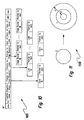
- the data structure 800 for the ECON, SCON, and OCON cases, given in FIGURE 8, contains only one EdgeArray pointing to the lists of MBCs having the same number of edge routers in their representative trees regardless of the set of links.
- FIGURE 9 depicts the data structure 900 of the MBC for all cases.
- the structure has a pointer to a linked list of all the MTs that belong to this MBC. It maintains an information for the representative tree of the MBC by a pointer to a MT. It also maintains current difference between the representative tree and the smallest tree in edge, link, and core counts, respectively. It has pointers to shared edgerouters, links, and core routers respectively. Furthermore, it has two pointers, prev and next, to link the structure to a doubly linked list.
- FIGURE 10 shows the data structure 1000 of the MT for all cases.
- the data structure 1000 has pointers to lists of edge routers, core routers, and links that it utilizes. These lists are in order (e.g. ascending order of IDs).
- the structure keeps track of the numbers of edge routers, core routers and links. This information is used for direct access in the search process for addition and deletion of a MT. Every MT has LinkSet, EdgeSet, and CoreSet values which are all obtained through linear or non-linear functions of Link ID (denoted by f L ( ⁇ )), Edge ID (denoted by f E ( ⁇ )), and Core ID (denoted by f C ( ⁇ )), respectively.
- the MT data structure also contains a pointer to its MBC. This information will ease the deletion of a MT from its MBC.
- the structure maintains two pointers, prev and next, to form a doubly linked list.
- LinkSet, EdgeSet and CoreSet values are to further narrow down the search for a MT. Following are two implementations: (1) all the functions are injection where if a ⁇ b implies f(a) ⁇ f(b) and (2) at least one is non-injection.
- injection functions can greatly simplify the MT search as it provides a unique relationship between a set and its set value. Obtaining an injection function constitutes another problem. Note that some of the content in in the generic data structure for any MT could be empty if the related information is not available in some scenarios.
- Management of the four burstification classes is another task.
- Management of the four burstification classes includes two basic operations: addition and deletion of a multicast group to and from a multicast burstification class.
- the electronic ingress edge routers 105 run a separate algorithm for the addition and deletion of multicast groups to and from a multicast burstification class.
- the multicast tree subject to each of the algorithms is T* .
- the procedure ETON_addition is invoked.
- the procedure directly accesses the list of multicast burstification classes (MBCs) that have the same number of links and edge routers in their representative multicast trees (MTs) and finds the MBC whose representative MT shares exactly the same multicast tree. If the functions are injection functions then the sequential search is done by only comparing the set values. When the correct MBC is located, the MT is added to it, otherwise, a new MBC is created and initialized with the MT.
- MBCs multicast burstification classes
- MTs representative multicast trees
- Insert and Add1 subprocedures are given below.
- the Insert subprocedure inserts a multicast tree into a Multicast Burstification Class.
- the Add1 subprocedure adds the MBC into the lists according to the representative tree's edge router and link counts.
- the procedure ETON_deletion For the deletion of a MT from its MBC, the procedure ETON_deletion, given below, is invoked.
- the procedure directly accesses the MT in the corresponding MBC's MT list and deletes the MT from the list if the MT is not the representative tree of the MBC. If the MT is the representative tree and there are some other member trees in the MBC then another member tree substitutes the representative tree due to the equivalence of the member trees and the representative tree. If there are no other member trees in the MBC, then the MBC is terminated from the system's MBC list.
- the procedure ETON_deletion is listed below.
- Equi-set a function, called Equi-set, in order to check the equivalence of two links and/or edge sets since the function value does not uniquely specify a link and/or edge set.
- the function equi_set is shown below.
- the procedure ECON_addition For the addition of a MT, the procedure ECON_addition, given below, is invoked.
- the procedure directly accesses the list of MBCs that have the same number of edge routers in their MTs and sequentially searches for the MBC whose MTs have exactly the same edge router coverage. If the functions are injection functions then the sequential search is done by only comparing the set values.
- the MT is added to it, otherwise, a new MBC is created and initialized with the MT.
- the deletion procedure is the same as ETON case. Deletion for ECON is exactly the same as the one for ETON case.
- the addition procedure searches for a MBC within the previously mentioned threshold values. It starts the search with the MBC which has the same number of edge routers. It then continues searching in both directions alternatively for distance hE in an incremental manner as shown in FIGURE 11. Therefore, it maintains shared edge routers and all links and core routers. It also keeps track of the current distance from the super tree in terms of edge router count.
- the Remove procedure removes the MBC from its corresponding list.
- the procedure SCON_deletion For the deletion of a MT from its MBC, the procedure SCON_deletion, given below, is invoked.
- the procedure directly accesses to the MT in the corresponding MBC's MT list and deletes the MT from the list if the MT is not the representative tree of the MBC. If the MT is the representative tree then the MBC is terminated from the system's MBC list. If the MBC includes any MT, these are re-accommodated in the system by being modified individually.
- union tree is formed by observing the threshold values. Edge array for direct access is maintained according to the size of the edge router count of the representative tree. All the processes are similar to the SCON case, however, a new representative tree called union tree needs to be formed by merging the MT into the previous representative tree. This merging is done by two approaches. These are Breadth-First-Merge and Incremental-Merge.
- the procedure Breadth-First-Merge assumes that both trees' adjacency lists are available.
- the procedure takes MT1 as the primary tree and adds the edge routers, core routers, and links of the secondary tree MT2 which are different than MT1's.
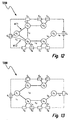
- FIGURE 12 shows an example 1200 of the Breadth-first-merge procedure.
- the procedure Starting from the secondary tree's root E 1 , the procedure maintains a queue, denoted by Q, of pairs each of which has an edge/core router and the corresponding link.
- the procedure dequeues an item (v,l ) from Q and checks if v is included in the primary tree. If it is not included then it is connected to the primary tree with the link.
- the adjacent edge/core routers of v are enqueued in the Q.
- the step by step status of the queue is given below: Q(v, l) ⁇ C 6 , L 1 do not include C 6 , L 1 Q(v,l) ⁇ C 2 , L 2 ; C 5 , L 3 ; E 8 , L 4 do not include C 2 , L 2 Q(v,l) ⁇ C 5 , L 3 ; E 8 , L 4 ; E 2 , L 5 do not include C 5 , L 3 Q(v,l) ⁇ E 8 , L 4 : E 2 , L 5 ; C 9 , L 6 : E 6 , L 7 include E 8 , L 4 Q(v,l) ⁇ E 2 , L 5 ; C 4 , L 6 ; E 6 , L 7 include E 2 , L 5 Q(v,l) ⁇ C 4 , L 6 ; E 6 , L 7 include C 4 , L 6 Q(v,l) ⁇ E 6 , L 7 ; E 5 , L 8 include E 6 , L 7
- the Incremental merge takes the largest multicast tree in terms of number of members as the master tree and adds the members of the other trees to the master in an incremental manner.
- the upstream link of an edge or core router means the link that goes up to the root of the multicast tree from the mentioned edge or core router.
- FIGURE 13 shows the result 1300 of the merger of the two trees in FIGURE 12 after the Breadth-First-Merge procedure has been applied to it.
- An injection function can be used to determine which multicast burstification class a new multicast tree should be added to, subtracted from, or modified. Therefore, instead of having to literally compare the multicast trees, the injection function value for each multicast tree can be compared to determine whether the multicast trees are the same or not.
- f(A) where A is an ordered set and kept in an array (e.g. a[i] accommodates the ith element in the ordered set).
- the maximum difference between the two elements of the set in value is N.
- the injection function is defined as follows:
- Any linear or nonlinear function can be used as non-injection function.
- non-injection function any linear or nonlinear function can be used as non-injection function.
Landscapes
- Engineering & Computer Science (AREA)
- Computer Networks & Wireless Communication (AREA)
- Signal Processing (AREA)
- Data Exchanges In Wide-Area Networks (AREA)
- Devices For Executing Special Programs (AREA)
Claims (32)
- Verfahren zur Vermittlung von Multicast-Datenpaketen durch ein Burst-Vermittlungs-Netzwerk (100), das folgende Schritte umfasst:- Empfang einer Vielzahl von Multicast-Datenpaketen, die zwei oder mehr verschiedenen Multicast-Bäumen (205, 210, 305, 310, 405, 410, 505, 510, 605, 610) zugeordnet sind;- Zusammenstellung eines einzelnen Multicast-Bursts mit einem Satz Kopfinformation aus Multicast-Datenpaketen gemäß einer Burst-Zusammenstellungs-Klasse (200, 300, 400, 600), wobei die Multicast Burst-Zusammenstellungs-Klasse mit mehreren Multicast-Bäumen (205, 210, 305, 310, 405, 410, 505, 510, 605, 610) verbunden ist, welche denselben Burst-Vermittlungs-Netzwerk-Parameter haben; und- Übertragung des Multicast-Bursts über das Burst-Vermittlungs-Netzwerk (100).
- Verfahren gemäß Anspruch 1, wobei der Multicast-Burst in die mehreren Multicast-Datenpakete zerlegt wird.
- Verfahren gemäß einem der obigen Ansprüche 1 oder 2, wobei die zwei oder mehr der verschiedenen Multicast-Bäume (205, 210, 305, 310, 405, 410, 505, 510, 605, 610), die ein oder mehr Parameter gemeinsam nutzen, die Multicast-Bäume (205, 210, 305, 310, 405, 410, 505, 510, 605, 610) umfassen, die denselben Eingangs-Edge-Router (105) und dieselben Ausgangs-Edge-Router (115) gemeinsam nutzen.
- Verfahren gemäß Anspruch 1, wobei die Multicast-Burst-Zusammenstellungs-Klasse mit mehreren Multicast-Bäumen (205, 210, 305, 310, 405, 410, 505, 510, 605, 610) verbunden ist, welche dieselben elektronischen Eingangs-Edge-Router (105), "Dense Wavelength Division Multiplex"-Verbindungen, optische Kern-Router und elektronische Ausgangs-Edge-Router (115) gemeinsam nutzen.
- Verfahren gemäß einem der obigen Ansprüche 1 - 4, wobei die zwei oder mehr der verschiedenen Multicast-Bäume (205, 210, 305, 310, 405, 410, 505, 510, 605, 610), die ein oder mehr Parameter gemeinsam nutzen, mindestens einen Super-Baum enthalten, der alle Eingangs-Edge-Router (105) und alle Ausgangs-Edge-Router (115) in allen der zwei oder mehr Multicast-Bäumen (205, 210, 305, 310, 405, 410, 505, 510, 605, 610) gemeinsam nutzt.
- Verfahren gemäß einem der obigen Ansprüche 1-5, wobei der Schritt der Übertragung des Multicast-Bursts über das Burst-Vermittlungs-Netzwerk (100) folgende Schritte umfasst:- Auswahl eines der zwei oder mehr verschiedenen Multicast-Bäume (205, 210, 305, 310, 405, 410, 505, 510, 605, 610) zur Übertragung eines einzelnen Multicast-Bursts als Reaktion auf ein Lastausgleichs-Verfahren; und- Übertragung des Multicast-Bursts in Übereinstimmung mit dem ausgewählten Multicast-Baum (205, 210, 305, 310, 405, 410, 505, 510, 605, 610).
- Verfahren nach Anspruch 5, wobei die mehreren Multicast-Bäume voll oder teilweise dieselben "Dense Wavelength Division Multiplex"-Verbindungen, optische Kern-Router oder elektronische Ausgangs-Edge-Router (115) gemeinsam nutzen.
- Verfahren nach Anspruch 7, wobei der Unterschied in der Anzahl der elektronischen Ausgangs-Edge-Router (115), der "Dense Wavelength Division Multiplex"-Verbindungen, oder der optischen Kern-Router zwischen dem Super-Baum und jedem Multicast-Baum kleiner ist als ein vorher festgelegter Schwellwert.
- Verfahren nach Anspruch 7, wobei ein Klassifikations-Effizienz-Verhältnis eine Kostenfunktion jedes Baums innerhalb der Multicast-Burst-Zusammenstellungs-Klasse, einer Multicast-Verkehrsmenge jeder Multicast-Gruppe in der Burst-Zusammenstellungs-Klasse und eine Kostenfunktion eines Super-Baums der Multicast-Burst-Zusammenstellungs-Klasse ist.
- Verfahren nach Anspruch 9, wobei ein Klassifikations-Effizienz-Verhältnis, abgekürzt CERj, mit
 - MBCj die j-te Multicast-Burst-Zusammenstellungs-Klasse ist;- Djk die Multicast-Verkehrsmenge der k-ten Multicast-Gruppe in derselben MBCj ist;- Sjk die Kosten des Baums Tjk sind;- Sj s die Kosten des Super-Baums sind;- Rj die Anzahl von Multicast-Bäumen ist; und- hR ein vordefinierter Wert ist.
 - Verfahren nach Anspruch 1, wobei die Multicast-Burst-Zusammenstellungs-Klasse eine Gruppe der mehreren Multicast-Datenpakete enthält, die einem Multicast-Vereinigungs-Baum zugeordnet sind, wobei der Multicast-Vereinigungs-Baum alle elektronischen Ausgangs-Edge-Router abdeckt, die von allen mehreren Multicast-Bäumen abgedeckt werden.
- Verfahren nach Anspruch 11, wobei es sein kann, dass die mehreren Multicast-Bäume nicht alle dieselben "Dense Wavelength Division Multiplex"-Verbindungen, optischen Kern-Router oder elektronischen Ausgangs-Edge-Router enthalten.
- Verfahren nach Anspruch 12, wobei der Unterschied in der Anzahl der elektronischen Ausgangs-Edge-Router, der "Dense Wavelength Division Multiplex"-Verbindungen, oder der optischen Kern-Router zwischen dem Vereinigungs-Baum und jedem Multicast-Baum kleiner ist als ein vorher festgelegter Schwellwert.
- Verfahren nach Anspruch 1, das weiterhin die Hinzufügung eines neuen Multicast-Baums zu einer aus der Vielzahl von Multicast-Burst-Zusammenstellungs-Klassen umfasst, wobei das Verfahren folgendes umfasst:- Suchen nach einer aus der Vielzahl vorhandener Multicast-Burst-Zusammenstellungs-Klassen; und- Bestimmung, ob der neue Multicast-Baum die Definition der vorhandenen Multicast-Burst-Zusammenstellungs-Klasse erfüllt; und- wenn der neue Multicast-Baum die Definition der vorhandenen Multicast-Burst-Zusammenstellungs-Klasse erfüllt, Hinzufügung des neuen Multicast-Baums zur vorhandenen Multicast-Burst-Zusammenstellungs-Klasse; und- andernfalls Erzeugung einer neuen Multicast-Burst-Zusammenstellungs-Klasse und Hinzufügung des neuen Multicast-Baums zur neuen Multicast-Burst-Zusammenstellungs-Klasse.
- Verfahren nach Anspruch 1, das weiterhin das Löschen eines Multicast-Baums aus einer aus der Vielzahl von Multicast-Burst-Zusammenstellungs-Klassen umfasst, wobei das Verfahren folgendes umfasst:- Finden der vorhandenen Multicast-Burst-Zusammenstellungs-Klasse, die den Multicast-Baum enthält, der gelöscht werden muss;- Löschen des Multicast-Baums aus der vorhandenen Multicast-Burst-Zusammenstellungs-Klasse; und- Entfernen der vorhandenen Multicast-Burst-Zusammenstellungs-Klasse, wenn die vorhandene Multicast-Burst-Zusammenstellungs-Klasse nach dem Löschen des Multicast-Baums leer ist.
- Verfahren nach Anspruch 1, das weiterhin das Ändern einer vorhandenen Multicast-Burst-2usammenstellungs-Klasse wegen der Änderung eines vorhandenen Multicast-Baums in der Vielzahl der Multicast-Burst-zusammenstellungs-Klassen umfasst, wobei das Verfahren folgendes umfasst:- Suchen des vorhandenen Multicast-Baums, der geändert wurde, so dass er die Definition der vorhandenen Multicast-Burst-Zusammenstellungs-Klasse nicht mehr erfüllt;- Löschen des Multicast-Baums aus der vorhandenen Multicast-Burst-Zusammenstellungs-Klasse;- Suchen einer neuen vorhandenen Multicast-Burst-Zusammenstellungs-Klasse, zu der der geänderte Multicast-Baum hinzugefügt werden muss;- Hinzufügen des geänderten Multicast-Baums zur neuen vorhandenen Multicast-Burst-Zusammenstellungs-Klasse;- Erzeugen einer neuen Multicast-Burst-Zusaimnenstellungs-Klasse, wenn keine neue vorhandene Multicast-Burstzusammanstellungs-Klasse gefunden wird, zu der der geänderte Multicast-Baum hinzugefügt werden kann; und- Hinzufügen des geänderten Multicast-Baums zu der neu erzeugten Multicast-Burst-Zusammenstellungs-Klasse.
- Verfahren nach Anspruch 1, wobei die Multicast-Burst-Zusammenstellungs-Klasse ein "Equi-Baum in einem optischen Burst-Vermittlungs-Netzwerk", abgekürzt ETON, ist, wobei die Klasse eine Datenstruktur hat, die folgendes umfasst:- ein LinkArray, ein EdgeArray, eine Multicast-Burst-Zusammenstellungs-Klassen-Liste, abgekürzt MBC-Liste, die eine Vielzahl von Multicast-Burst-zusammenstellungs-Klassen, abgekürzt MBCs, enthält, und eine Liste von Multicast-Bäumen, abgekürzt MT-Liste, die eine Vielzahl von Multicast-Bäumen, abgekürzt MTs, enthält, wobei- LinkArray ein Feld von Zeigern auf ein entsprechendes EdgeArray für alle MBCs ist, die dieselbe Anzahl von Verbindungen in ihren Bäumen haben,- EdgeArray ein Feld von Zeigern auf alle MBCs ist, die dieselbe Anzahl von Edge-Routern in ihren repräsentativen Bäumen haben, und- die MBC-Liste eine Liste von Multicast-Bäumen umfasst, abgekürzt MTs, die zu der MBC-Liste gehören.
- Verfahren nach Anspruch 1, wobei die Multicast-Burst-Zusammenstellungs-Klasse eine "Gleich-Abdeckung in einem optischen Burst-Vermittlungs-Netzwerk", abgekürzt ECON, eine "Super-Abdeckung in einem optischen Burst-Vermittlungs-Netzwerk", abgekürzt SCON, und eine "überlappende Abdeckung in einem optischen Burst-Vermittlungs-Netzwerk", abgekürzt OCON, ist, wobei die Klassen eine Datenstruktur haben, die folgendes umfasst:- ein EdgeArray, eine Multiaast-Burst-Zusammenstellungs-Klassen-Liste, abgekürzt als MBC-Liste, die eine Vielzahl von Multicast-Burst-Zusammenstellungs-Klassen, abgekürzt MBCs, enthält, und eine Liste von Multicast-Bäumen, abgekürzt MT-Liste, enthält, wobei EdgeArray auf alle MBCs zeigt, die dieselbe Anzahl von Edge-Routern in ihren repräsentativen Bäumen haben.
- Verfahren nach Anspruch 1, wobei eine Datenstruktur für jede Multicast-Burst-Zusammenstellungs-Klasse folgendes umfasst:- einen Zeiger; und- eine verkettete Liste aller Multicast-Bäume, abgekürzt MTs, die zu der Multicast-Burst-Zusammenstellungs-Klasse, abgekürzt MBC, gehören.
- Verfahren nach Anspruch 1, wobei eine Datenstruktur für die Multicast-Burst-Zusammenstellungs-Klasse folgendes umfasst:- einen Satz von Zeigern, eine Liste von Edge-Routern, einen Kern-Router, einen Satz von Verbindungen, einen LinkSet-Wert, einen EdgeSet-Wert; und einen CoreSet-Wert, wobei die Zeiger auf Listen der Edge-Router, Kern-Router und Verbindungen, die er nutzt, zeigen, wobei weiterhin die LinkSet-, EdgeSet- und CoreSet-Werte dazu dienen, eine Suche nach einem Multicast-Baum, abgekürzt MT, einzugrenzen.
- Verfahren nach irgendeinem der vorherigen Ansprüche 1 - 20, wobei ein neuer Multicast-Baum mit einem vorhandenen Multicast-Baum vereinigt wird und ein Vereinigungs-Baum gebildet wird, das folgende Schritte umfasst:- Führen einer Liste von Edge-/Kern-Routern und entsprechenden Verbindungs-Paaren;- Abrufen eines Eintrags, der einen Edge-/Kern-Router und ein verbindungs-Paar umfasst, aus der Warteschlange;- Überprüfung, ob der Edge- oder Kern-Router aus dem abgerufenen Eintrag in dem vorhandenen Multicast-Baum enthalten ist;- Verbinden des Edge- oder Kern-Routers mit dem vorhandenen Multicast-Baum mit seiner entsprechenden Verbindung, wenn der Edge- oder Kern-Router aus dem Eintrag nicht in dem vorhandenen Multicast-Baum enthalten ist; und- Hinzufügen benachbarter Edge-/Kern-Router des Edge- oder Kern-Routers zu der Warteschlange.
- Verfahren nach Anspruch 21, wobei die Warteschlange mit Edge-/Kenn-Router und entsprechenden Verbindungs-Paaren am Wurzel-Edge-Router des neuen Multicast-Baums beginnt.
- Verfahren nach irgendeinem der vorherigen Ansprüche 1 - 22, wobei ein neuer Multicast-Baum mit einem vorhandenen Multicast-Baum vereinigt wird und ein Vereinigungs-Baum gebildet wird, das folgende Schritte umfasst:- Finden des größten vorhandenen Multicast-Baums auf der Basis der Anzahl von Edge-/Kern-Routern und deren entsprechenden Verbindungen; und- Hinzufügen neuer Edge-/Kern-Router und deren entsprechender Verbindungen zu dem vorhandenen Multicast-Baum auf inkrementelle Weise.
- System zur Vermittlung von mehreren Multicast-Datenpaketen über ein optisches Burst-Vermittlungs-Netzwerk (100), das folgendes umfasst:- einen elektronischen Eingangs-Edge-Router (105), der die mehreren Multicast-Datenpakete in einen Multicast-Burst entsprechend einer Multicast-Burst-Zusammenstellungs-Klasse (200, 300, 400, 600) zusammensetzt und den Multicast-Burst zu dem optischen Burst-Vermittlungs-Netzwerk sendet, wobei die Multicast-Burst-Zusammenstellungs-Klasse mit mehreren Multicast-Bäumen (205, 210, 305, 310, 405, 410, 505, 510, 605, 610) verbunden ist, welche den gleichen Burst-Vermittlungs-Netzwerk-Parameter haben; und- einen elektronischen Ausgangs-Edge-Router (115), der den Multicast-Burst von dem optischen Burst-Vermittlungs-Netzwerk empfängt und den Multicast-Burst in die mehreren Multicast-Datenpakete zerlegt.
- System nach Anspruch 24, wobei die Multicast-Burst-zusammenstellungs-Klasse mit mehreren Multicast-Bäumen verbunden ist, die dieselben elektronischen Eingangs-Edge-Router (105), "Dense-Wavelength Division Multiplexing"-Verbindungen, optischen Kern-Router und elektronischen Ausgangs-Edge-Router (115) gemeinsam nutzen.
- System nach Anspruch 24, wobei die Multicast-Burst-zusammenstellungs-Klasse mit mehreren Multicast-Bäumen verbunden ist, die denselben elektronischen Eingangs-Edge-Router (105) und dieselben elektronischen Ausgangs-Edge-Router (115) gemeinsam nutzen.
- System nach Anspruch 24, wobei die Multicast-Burst-Zusammenstellungs-Klasse mehreren Multicast-Bäume enthält, wobei mindestens einer der mehreren Multicast-Bäume ein Super-Baum (410, 510) ist, der alle elektronischen Eingangs-Edge-Router und die elektronischen Ausgangs-Edge-Router abdeckt, die von allen Multicast-Bäumen gemeinsam genutzt werden.
- System nach Anspruch 27, wobei es sein kann, dass die mehreren Multicast-Bäume nicht alle dieselben "Dense Wavelength Division Multiplex"-Verbindungen, optischen Kern-Router oder elektronischen Ausgangs-Edge-Router gemeinsam nutzen.
- System nach Anspruch 28, wobei der Unterschied in der Anzahl der elektronischen Ausgangs-Edge-Router, der "Dense Wavelength Division Multiplex"-Verbindungen und der optischen Kern-Router zwischen dem Super-Baum und jedem Multicast-Baum kleiner ist als ein vorher festgelegter Schwellwert.
- System nach Anspruch 24, wobei die Multicast-Burst-Zusammenstellungs-Klasse einen Multicast-Vereinigungs-Baum enthält, der alle elektronischen Ausgangs-Edge-Router abdeckt, die von allen mehreren Multicast-Bäumen kombiniert abgedeckt werden.
- System nach Anspruch 30, wobei es sein kann, dass die mehreren Multicast-Bäume nicht "Dense Wavelength Division Multiplex"-Verbindungen, optische Kern-Router oder elektronische Ausgangs-Edge-Router gemeinsam nutzen.
- System nach Anspruch 31, wobei der Unterschied in der Anzahl der elektronischen Ausgangs-Edge-Router, der "Dense Wavelength Division Multiplex"-Verbindungen und der optischen Kern-Router zwischen dem Vereinigungs-Baum und jedem Multicast-Baum kleiner ist als ein vorher festgelegter Schwellwert.
Applications Claiming Priority (2)
| Application Number | Priority Date | Filing Date | Title |
|---|---|---|---|
| US393636 | 1999-09-10 | ||
| US09/393,636 US6661789B1 (en) | 1999-09-10 | 1999-09-10 | Dynamic burstification based on fully/partially shared multicast entities |
Publications (3)
| Publication Number | Publication Date |
|---|---|
| EP1083708A2 EP1083708A2 (de) | 2001-03-14 |
| EP1083708A3 EP1083708A3 (de) | 2004-04-14 |
| EP1083708B1 true EP1083708B1 (de) | 2007-08-08 |
Family
ID=23555600
Family Applications (1)
| Application Number | Title | Priority Date | Filing Date |
|---|---|---|---|
| EP00119372A Expired - Lifetime EP1083708B1 (de) | 1999-09-10 | 2000-09-11 | Dynamische Burst-Zusammenstellung basiert auf voll/teilweis gemeinsame Mehrfachübertragungsentitäten |
Country Status (7)
| Country | Link |
|---|---|
| US (1) | US6661789B1 (de) |
| EP (1) | EP1083708B1 (de) |
| CN (1) | CN100384173C (de) |
| AT (1) | ATE369715T1 (de) |
| AU (1) | AU5659800A (de) |
| CA (1) | CA2317970A1 (de) |
| DE (1) | DE60035836T2 (de) |
Cited By (1)
| Publication number | Priority date | Publication date | Assignee | Title |
|---|---|---|---|---|
| US10952273B2 (en) | 2017-08-10 | 2021-03-16 | At&T Intellectual Property I, L.P. | Detecting and correcting radio link failures based on different usage scenarios |
Families Citing this family (13)
| Publication number | Priority date | Publication date | Assignee | Title |
|---|---|---|---|---|
| US6898205B1 (en) * | 1999-10-26 | 2005-05-24 | Nokia, Inc. | Robust transport of IP traffic over wdm using optical burst switching |
| EP2372935A1 (de) * | 2000-08-15 | 2011-10-05 | Nortel Networks Limited | Optischer Schaltrouter |
| US7009971B2 (en) * | 2001-07-16 | 2006-03-07 | International Business Machines Corporation | Methods and arrangements for multicasting a data stream at different data rates to groups of subscribers |
| US8688853B2 (en) * | 2001-12-21 | 2014-04-01 | Agere Systems Llc | Method and apparatus for maintaining multicast lists in a data network |
| US7257127B1 (en) * | 2002-06-21 | 2007-08-14 | Alcatel Lucent | Method and apparatus for burst scheduling |
| KR100472951B1 (ko) * | 2002-10-30 | 2005-03-10 | 한국전자통신연구원 | 광 버스트 스위칭망을 위한 광 버스트 조립 시뮬레이팅 장치 |
| US7626995B2 (en) | 2004-12-21 | 2009-12-01 | At&T Corp. | Method and apparatus for scalable virtual private network multicasting |
| US8355347B2 (en) * | 2007-12-19 | 2013-01-15 | Cisco Technology, Inc. | Creating multipoint-to-multipoint MPLS trees in an inter-domain environment |
| US8804718B2 (en) * | 2008-04-23 | 2014-08-12 | Cisco Technology, Inc. | Preventing traffic flooding to the root of a multi-point to multi-point label-switched path tree with no receivers |
| US8751630B2 (en) * | 2008-10-28 | 2014-06-10 | Futurewei Technologies, Inc. | Collecting status from a partner management domain |
| US8705403B2 (en) * | 2010-08-31 | 2014-04-22 | Cisco Technology, Inc. | Load balancing multicast traffic |
| CN103558667B (zh) * | 2013-11-19 | 2016-04-13 | 武汉光迅科技股份有限公司 | 一种基于自由空间传输的多播交换光开关 |
| US11018910B2 (en) * | 2017-11-17 | 2021-05-25 | Mediatek Inc. | On PDCCH DMRS mapping and coreset resource allocation |
Family Cites Families (12)
| Publication number | Priority date | Publication date | Assignee | Title |
|---|---|---|---|---|
| US5355371A (en) * | 1982-06-18 | 1994-10-11 | International Business Machines Corp. | Multicast communication tree creation and control method and apparatus |
| US4864559A (en) * | 1988-09-27 | 1989-09-05 | Digital Equipment Corporation | Method of multicast message distribution |
| US5418779A (en) * | 1994-03-16 | 1995-05-23 | The Trustee Of Columbia University Of New York | High-speed switched network architecture |
| US5684961A (en) * | 1995-04-28 | 1997-11-04 | Sun Microsystems, Inc. | System for defining multicast message distribution paths having overlapping virtual connections in ATM networks and assigning identical labels to overlapping portions of the virtual channels |
| US6370142B1 (en) * | 1995-07-12 | 2002-04-09 | Nortel Networks Limited | Method and apparatus for performing per-port IP multicast pruning |
| US5930259A (en) * | 1995-08-25 | 1999-07-27 | Kabushiki Kaisha Toshiba | Packet transmission node device realizing packet transfer scheme and control information transfer scheme using multiple virtual connections |
| US5831975A (en) * | 1996-04-04 | 1998-11-03 | Lucent Technologies Inc. | System and method for hierarchical multicast routing in ATM networks |
| US6353596B1 (en) * | 1996-04-12 | 2002-03-05 | Lucent Technologies Inc. | System and method for multipoint-to-multipoint multicasting |
| US6374303B1 (en) * | 1997-11-17 | 2002-04-16 | Lucent Technologies, Inc. | Explicit route and multicast tree setup using label distribution |
| US6252857B1 (en) * | 1998-03-04 | 2001-06-26 | At&T Corp. | Method and apparatus for provisioned and dynamic quality of service in a communications network |
| US6192417B1 (en) * | 1999-03-30 | 2001-02-20 | International Business Machines Corporation | Multicast cluster servicer for communicating amongst a plurality of nodes without a dedicated local area network |
| US6208647B1 (en) * | 1999-04-14 | 2001-03-27 | Verizon Laboratories Inc. | Multicast extension to data link layer protocols |
-
1999
- 1999-09-10 US US09/393,636 patent/US6661789B1/en not_active Expired - Lifetime
-
2000
- 2000-09-08 CA CA002317970A patent/CA2317970A1/en not_active Abandoned
- 2000-09-08 CN CNB001347314A patent/CN100384173C/zh not_active Expired - Fee Related
- 2000-09-08 AU AU56598/00A patent/AU5659800A/en not_active Abandoned
- 2000-09-11 DE DE60035836T patent/DE60035836T2/de not_active Expired - Lifetime
- 2000-09-11 AT AT00119372T patent/ATE369715T1/de not_active IP Right Cessation
- 2000-09-11 EP EP00119372A patent/EP1083708B1/de not_active Expired - Lifetime
Non-Patent Citations (1)
| Title |
|---|
| None * |
Cited By (1)
| Publication number | Priority date | Publication date | Assignee | Title |
|---|---|---|---|---|
| US10952273B2 (en) | 2017-08-10 | 2021-03-16 | At&T Intellectual Property I, L.P. | Detecting and correcting radio link failures based on different usage scenarios |
Also Published As
| Publication number | Publication date |
|---|---|
| DE60035836D1 (de) | 2007-09-20 |
| CN1305283A (zh) | 2001-07-25 |
| CN100384173C (zh) | 2008-04-23 |
| AU5659800A (en) | 2001-03-15 |
| DE60035836T2 (de) | 2008-09-25 |
| US6661789B1 (en) | 2003-12-09 |
| EP1083708A2 (de) | 2001-03-14 |
| CA2317970A1 (en) | 2001-03-10 |
| ATE369715T1 (de) | 2007-08-15 |
| EP1083708A3 (de) | 2004-04-14 |
Similar Documents
| Publication | Publication Date | Title |
|---|---|---|
| EP1083708B1 (de) | Dynamische Burst-Zusammenstellung basiert auf voll/teilweis gemeinsame Mehrfachübertragungsentitäten | |
| Chlamtac et al. | Scalable WDM access network architecture based on photonic slot routing | |
| Ge et al. | On optical burst switching and self-similar traffic | |
| Yoo et al. | New optical burst-switching protocol for supporting quality of service | |
| EP0752795B1 (de) | Verbindungsreservation in Kommunikationsnetzwerken | |
| Vokkarane et al. | Prioritized routing and burst segmentation for QoS in optical burst-switched networks | |
| US6633569B2 (en) | System and method for routing data cells through an ATM architecture using quality of service data in a service control point | |
| US6417944B1 (en) | Asynchronous transfer mode switch utilizing optical wave division multiplexing | |
| EP0841832A2 (de) | Netzüberwachung mit Promiskuität unter Verwendung von Mehrfachsendung in einer Vermittlungsstelle | |
| CA2247894A1 (en) | A fault tolerant switching system for satellite and terrestrial networks | |
| JPH10135916A (ja) | 波長バイパスリング網および光リング網においてトラヒックの経路を決める方法 | |
| US20020150097A1 (en) | Method and apparatus for secured multicasting | |
| Guo et al. | Scalable high-speed protocols for WDM optical star networks | |
| JP3077659B2 (ja) | パッシブ光ネットワークを介したatmセルの伝送方法、atm通信装置、光加入者装置および光ネットワーク装置 | |
| US6216166B1 (en) | Shared media communications in a virtual connection network | |
| Chlamtac et al. | Scalable WDM network architecture based on photonic slot routing and switched delay lines | |
| US8045539B2 (en) | Virtual group connection scheme for ATM architecture in an access node | |
| Li et al. | A survey of research and standards in high‐speed networks | |
| Sahasrabuddhe et al. | Probability distribution of the receiver busy time in a multicasting local lightwave network | |
| Choi | Performance analysis of a bandwidth guaranteed medium access control protocol for WDM local networks | |
| Decina et al. | Two simple techniques for broadcasting in deflection routing multichannel MANs | |
| Li et al. | Improving the performance of optical burst switching with large control overhead | |
| EP0992174B1 (de) | Verfahren und vorrichtung zur sendung von datenrahmen von mindestens zwei eingängen zu einem ausgang in einem atm-netz | |
| KR100375411B1 (ko) | 에이.티.엠 망에서의 다자간 통신을 위한 다중화정보전달방법 | |
| AU641828B2 (en) | A method of transmitting data on a telecommunications network |
Legal Events
| Date | Code | Title | Description |
|---|---|---|---|
| PUAI | Public reference made under article 153(3) epc to a published international application that has entered the european phase |
Free format text: ORIGINAL CODE: 0009012 |
|
| AK | Designated contracting states |
Kind code of ref document: A2 Designated state(s): AT BE CH CY DE DK ES FI FR GB GR IE IT LI LU MC NL PT SE |
|
| AX | Request for extension of the european patent |
Free format text: AL;LT;LV;MK;RO;SI |
|
| PUAL | Search report despatched |
Free format text: ORIGINAL CODE: 0009013 |
|
| RIC1 | Information provided on ipc code assigned before grant |
Ipc: 7H 04L 12/56 B Ipc: 7H 04Q 11/00 A |
|
| AK | Designated contracting states |
Kind code of ref document: A3 Designated state(s): AT BE CH CY DE DK ES FI FR GB GR IE IT LI LU MC NL PT SE |
|
| AX | Request for extension of the european patent |
Extension state: AL LT LV MK RO SI |
|
| 17P | Request for examination filed |
Effective date: 20041014 |
|
| AKX | Designation fees paid |
Designated state(s): AT BE CH CY DE DK ES FI FR GB GR IE IT LI LU MC NL PT SE |
|
| 17Q | First examination report despatched |
Effective date: 20050303 |
|
| GRAP | Despatch of communication of intention to grant a patent |
Free format text: ORIGINAL CODE: EPIDOSNIGR1 |
|
| RTI1 | Title (correction) |
Free format text: DYNAMIC BURSTIFICATION BASED ON FULLY/PARTIALLY SHARED MULTICAST ENTITIES |
|
| GRAS | Grant fee paid |
Free format text: ORIGINAL CODE: EPIDOSNIGR3 |
|
| GRAA | (expected) grant |
Free format text: ORIGINAL CODE: 0009210 |
|
| AK | Designated contracting states |
Kind code of ref document: B1 Designated state(s): AT BE CH CY DE DK ES FI FR GB GR IE IT LI LU MC NL PT SE |
|
| REG | Reference to a national code |
Ref country code: GB Ref legal event code: FG4D |
|
| REG | Reference to a national code |
Ref country code: CH Ref legal event code: EP |
|
| REG | Reference to a national code |
Ref country code: IE Ref legal event code: FG4D |
|
| REF | Corresponds to: |
Ref document number: 60035836 Country of ref document: DE Date of ref document: 20070920 Kind code of ref document: P |
|
| PG25 | Lapsed in a contracting state [announced via postgrant information from national office to epo] |
Ref country code: NL Free format text: LAPSE BECAUSE OF FAILURE TO SUBMIT A TRANSLATION OF THE DESCRIPTION OR TO PAY THE FEE WITHIN THE PRESCRIBED TIME-LIMIT Effective date: 20070808 Ref country code: ES Free format text: LAPSE BECAUSE OF FAILURE TO SUBMIT A TRANSLATION OF THE DESCRIPTION OR TO PAY THE FEE WITHIN THE PRESCRIBED TIME-LIMIT Effective date: 20071119 Ref country code: FI Free format text: LAPSE BECAUSE OF FAILURE TO SUBMIT A TRANSLATION OF THE DESCRIPTION OR TO PAY THE FEE WITHIN THE PRESCRIBED TIME-LIMIT Effective date: 20070808 |
|
| NLV1 | Nl: lapsed or annulled due to failure to fulfill the requirements of art. 29p and 29m of the patents act | ||
| REG | Reference to a national code |
Ref country code: CH Ref legal event code: PL |
|
| PG25 | Lapsed in a contracting state [announced via postgrant information from national office to epo] |
Ref country code: AT Free format text: LAPSE BECAUSE OF FAILURE TO SUBMIT A TRANSLATION OF THE DESCRIPTION OR TO PAY THE FEE WITHIN THE PRESCRIBED TIME-LIMIT Effective date: 20070808 Ref country code: LI Free format text: LAPSE BECAUSE OF FAILURE TO SUBMIT A TRANSLATION OF THE DESCRIPTION OR TO PAY THE FEE WITHIN THE PRESCRIBED TIME-LIMIT Effective date: 20070808 Ref country code: CH Free format text: LAPSE BECAUSE OF FAILURE TO SUBMIT A TRANSLATION OF THE DESCRIPTION OR TO PAY THE FEE WITHIN THE PRESCRIBED TIME-LIMIT Effective date: 20070808 |
|
| ET | Fr: translation filed | ||
| PG25 | Lapsed in a contracting state [announced via postgrant information from national office to epo] |
Ref country code: BE Free format text: LAPSE BECAUSE OF FAILURE TO SUBMIT A TRANSLATION OF THE DESCRIPTION OR TO PAY THE FEE WITHIN THE PRESCRIBED TIME-LIMIT Effective date: 20070808 |
|
| PG25 | Lapsed in a contracting state [announced via postgrant information from national office to epo] |
Ref country code: DK Free format text: LAPSE BECAUSE OF FAILURE TO SUBMIT A TRANSLATION OF THE DESCRIPTION OR TO PAY THE FEE WITHIN THE PRESCRIBED TIME-LIMIT Effective date: 20070808 Ref country code: GR Free format text: LAPSE BECAUSE OF FAILURE TO SUBMIT A TRANSLATION OF THE DESCRIPTION OR TO PAY THE FEE WITHIN THE PRESCRIBED TIME-LIMIT Effective date: 20071109 Ref country code: MC Free format text: LAPSE BECAUSE OF NON-PAYMENT OF DUE FEES Effective date: 20070930 |
|
| PG25 | Lapsed in a contracting state [announced via postgrant information from national office to epo] |
Ref country code: PT Free format text: LAPSE BECAUSE OF FAILURE TO SUBMIT A TRANSLATION OF THE DESCRIPTION OR TO PAY THE FEE WITHIN THE PRESCRIBED TIME-LIMIT Effective date: 20080108 |
|
| PLBE | No opposition filed within time limit |
Free format text: ORIGINAL CODE: 0009261 |
|
| STAA | Information on the status of an ep patent application or granted ep patent |
Free format text: STATUS: NO OPPOSITION FILED WITHIN TIME LIMIT |
|
| PG25 | Lapsed in a contracting state [announced via postgrant information from national office to epo] |
Ref country code: SE Free format text: LAPSE BECAUSE OF FAILURE TO SUBMIT A TRANSLATION OF THE DESCRIPTION OR TO PAY THE FEE WITHIN THE PRESCRIBED TIME-LIMIT Effective date: 20071108 |
|
| 26N | No opposition filed |
Effective date: 20080509 |
|
| PG25 | Lapsed in a contracting state [announced via postgrant information from national office to epo] |
Ref country code: IE Free format text: LAPSE BECAUSE OF NON-PAYMENT OF DUE FEES Effective date: 20070911 |
|
| PG25 | Lapsed in a contracting state [announced via postgrant information from national office to epo] |
Ref country code: CY Free format text: LAPSE BECAUSE OF FAILURE TO SUBMIT A TRANSLATION OF THE DESCRIPTION OR TO PAY THE FEE WITHIN THE PRESCRIBED TIME-LIMIT Effective date: 20070808 |
|
| PG25 | Lapsed in a contracting state [announced via postgrant information from national office to epo] |
Ref country code: LU Free format text: LAPSE BECAUSE OF NON-PAYMENT OF DUE FEES Effective date: 20070911 |
|
| PG25 | Lapsed in a contracting state [announced via postgrant information from national office to epo] |
Ref country code: IT Free format text: LAPSE BECAUSE OF NON-PAYMENT OF DUE FEES Effective date: 20070930 |
|
| REG | Reference to a national code |
Ref country code: FR Ref legal event code: GC Effective date: 20140717 |
|
| REG | Reference to a national code |
Ref country code: FR Ref legal event code: PLFP Year of fee payment: 16 |
|
| REG | Reference to a national code |
Ref country code: FR Ref legal event code: PLFP Year of fee payment: 17 |
|
| REG | Reference to a national code |
Ref country code: FR Ref legal event code: PLFP Year of fee payment: 18 |
|
| PGFP | Annual fee paid to national office [announced via postgrant information from national office to epo] |
Ref country code: FR Payment date: 20170928 Year of fee payment: 18 Ref country code: GB Payment date: 20170921 Year of fee payment: 18 Ref country code: DE Payment date: 20170928 Year of fee payment: 18 |
|
| REG | Reference to a national code |
Ref country code: DE Ref legal event code: R119 Ref document number: 60035836 Country of ref document: DE |
|
| GBPC | Gb: european patent ceased through non-payment of renewal fee |
Effective date: 20180911 |
|
| PG25 | Lapsed in a contracting state [announced via postgrant information from national office to epo] |
Ref country code: DE Free format text: LAPSE BECAUSE OF NON-PAYMENT OF DUE FEES Effective date: 20190402 |
|
| PG25 | Lapsed in a contracting state [announced via postgrant information from national office to epo] |
Ref country code: FR Free format text: LAPSE BECAUSE OF NON-PAYMENT OF DUE FEES Effective date: 20180930 |
|
| PG25 | Lapsed in a contracting state [announced via postgrant information from national office to epo] |
Ref country code: GB Free format text: LAPSE BECAUSE OF NON-PAYMENT OF DUE FEES Effective date: 20180911 |