EP1084263B1 - Transduction genique des cellules progenitrices hematopoietiques - Google Patents
Transduction genique des cellules progenitrices hematopoietiques Download PDFInfo
- Publication number
- EP1084263B1 EP1084263B1 EP99925991A EP99925991A EP1084263B1 EP 1084263 B1 EP1084263 B1 EP 1084263B1 EP 99925991 A EP99925991 A EP 99925991A EP 99925991 A EP99925991 A EP 99925991A EP 1084263 B1 EP1084263 B1 EP 1084263B1
- Authority
- EP
- European Patent Office
- Prior art keywords
- cells
- human
- hematopoietic progenitor
- transduced
- hematopoietic
- Prior art date
- Legal status (The legal status is an assumption and is not a legal conclusion. Google has not performed a legal analysis and makes no representation as to the accuracy of the status listed.)
- Expired - Lifetime
Links
- 210000003958 hematopoietic stem cell Anatomy 0.000 title claims abstract description 55
- 108090000623 proteins and genes Proteins 0.000 title claims abstract description 41
- 238000010361 transduction Methods 0.000 title abstract description 24
- 230000026683 transduction Effects 0.000 title abstract description 24
- 210000002901 mesenchymal stem cell Anatomy 0.000 claims abstract description 33
- 102000004169 proteins and genes Human genes 0.000 claims abstract description 25
- 238000000034 method Methods 0.000 claims description 19
- 101000980898 Homo sapiens Cell division cycle-associated protein 4 Proteins 0.000 claims description 15
- 102000044493 human CDCA4 Human genes 0.000 claims description 15
- 210000005260 human cell Anatomy 0.000 claims description 14
- 210000000130 stem cell Anatomy 0.000 claims description 10
- 230000000735 allogeneic effect Effects 0.000 claims description 9
- 210000001185 bone marrow Anatomy 0.000 claims description 6
- 238000012258 culturing Methods 0.000 claims description 4
- 238000005194 fractionation Methods 0.000 claims description 4
- 230000001131 transforming effect Effects 0.000 claims description 4
- 108091033319 polynucleotide Proteins 0.000 claims description 3
- 102000040430 polynucleotide Human genes 0.000 claims description 3
- 239000002157 polynucleotide Substances 0.000 claims description 3
- 238000002955 isolation Methods 0.000 claims description 2
- 238000003306 harvesting Methods 0.000 claims 1
- 230000014509 gene expression Effects 0.000 abstract description 17
- 210000004027 cell Anatomy 0.000 description 85
- 108010067306 Fibronectins Proteins 0.000 description 27
- 102000016359 Fibronectins Human genes 0.000 description 27
- 101000958041 Homo sapiens Musculin Proteins 0.000 description 22
- 210000004271 bone marrow stromal cell Anatomy 0.000 description 20
- 102100031573 Hematopoietic progenitor cell antigen CD34 Human genes 0.000 description 14
- 101000777663 Homo sapiens Hematopoietic progenitor cell antigen CD34 Proteins 0.000 description 14
- BPEGJWRSRHCHSN-UHFFFAOYSA-N Temozolomide Chemical compound O=C1N(C)N=NC2=C(C(N)=O)N=CN21 BPEGJWRSRHCHSN-UHFFFAOYSA-N 0.000 description 13
- 229960004964 temozolomide Drugs 0.000 description 13
- 108091003079 Bovine Serum Albumin Proteins 0.000 description 12
- DLGOEMSEDOSKAD-UHFFFAOYSA-N Carmustine Chemical compound ClCCNC(=O)N(N=O)CCCl DLGOEMSEDOSKAD-UHFFFAOYSA-N 0.000 description 12
- 230000001177 retroviral effect Effects 0.000 description 12
- LOKCTEFSRHRXRJ-UHFFFAOYSA-I dipotassium trisodium dihydrogen phosphate hydrogen phosphate dichloride Chemical compound P(=O)(O)(O)[O-].[K+].P(=O)(O)([O-])[O-].[Na+].[Na+].[Cl-].[K+].[Cl-].[Na+] LOKCTEFSRHRXRJ-UHFFFAOYSA-I 0.000 description 11
- 239000002953 phosphate buffered saline Substances 0.000 description 11
- 238000005516 engineering process Methods 0.000 description 10
- 229940098773 bovine serum albumin Drugs 0.000 description 8
- 229920001184 polypeptide Polymers 0.000 description 8
- 102000004196 processed proteins & peptides Human genes 0.000 description 8
- 108090000765 processed proteins & peptides Proteins 0.000 description 8
- 239000006228 supernatant Substances 0.000 description 8
- 241001430294 unidentified retrovirus Species 0.000 description 8
- 102000004127 Cytokines Human genes 0.000 description 7
- 108090000695 Cytokines Proteins 0.000 description 7
- 238000002474 experimental method Methods 0.000 description 7
- 230000003394 haemopoietic effect Effects 0.000 description 7
- 206010059866 Drug resistance Diseases 0.000 description 6
- 230000010261 cell growth Effects 0.000 description 6
- 230000003021 clonogenic effect Effects 0.000 description 6
- 108010002386 Interleukin-3 Proteins 0.000 description 5
- 102000000646 Interleukin-3 Human genes 0.000 description 5
- 238000001727 in vivo Methods 0.000 description 5
- 229940076264 interleukin-3 Drugs 0.000 description 5
- 239000000203 mixture Substances 0.000 description 5
- 239000000047 product Substances 0.000 description 5
- 239000000243 solution Substances 0.000 description 5
- 108010017213 Granulocyte-Macrophage Colony-Stimulating Factor Proteins 0.000 description 4
- 102100039620 Granulocyte-macrophage colony-stimulating factor Human genes 0.000 description 4
- 102000004058 Leukemia inhibitory factor Human genes 0.000 description 4
- 108090000581 Leukemia inhibitory factor Proteins 0.000 description 4
- 239000012091 fetal bovine serum Substances 0.000 description 4
- 239000012634 fragment Substances 0.000 description 4
- 238000000338 in vitro Methods 0.000 description 4
- 238000004519 manufacturing process Methods 0.000 description 4
- 238000012986 modification Methods 0.000 description 4
- 230000004048 modification Effects 0.000 description 4
- 230000001225 therapeutic effect Effects 0.000 description 4
- 238000012546 transfer Methods 0.000 description 4
- 239000013598 vector Substances 0.000 description 4
- 238000012413 Fluorescence activated cell sorting analysis Methods 0.000 description 3
- 108090001005 Interleukin-6 Proteins 0.000 description 3
- 102000018697 Membrane Proteins Human genes 0.000 description 3
- 108010052285 Membrane Proteins Proteins 0.000 description 3
- 108091028043 Nucleic acid sequence Proteins 0.000 description 3
- 241000700605 Viruses Species 0.000 description 3
- 230000001464 adherent effect Effects 0.000 description 3
- 239000013604 expression vector Substances 0.000 description 3
- 238000000684 flow cytometry Methods 0.000 description 3
- 102000046949 human MSC Human genes 0.000 description 3
- 210000004408 hybridoma Anatomy 0.000 description 3
- 208000015181 infectious disease Diseases 0.000 description 3
- 210000002540 macrophage Anatomy 0.000 description 3
- 229920000609 methyl cellulose Polymers 0.000 description 3
- 239000001923 methylcellulose Substances 0.000 description 3
- 210000005087 mononuclear cell Anatomy 0.000 description 3
- 239000002245 particle Substances 0.000 description 3
- 230000002103 transcriptional effect Effects 0.000 description 3
- 230000003612 virological effect Effects 0.000 description 3
- XKRFYHLGVUSROY-UHFFFAOYSA-N Argon Chemical compound [Ar] XKRFYHLGVUSROY-UHFFFAOYSA-N 0.000 description 2
- 241000283707 Capra Species 0.000 description 2
- 241000701022 Cytomegalovirus Species 0.000 description 2
- 108020004414 DNA Proteins 0.000 description 2
- WQZGKKKJIJFFOK-GASJEMHNSA-N Glucose Natural products OC[C@H]1OC(O)[C@H](O)[C@@H](O)[C@@H]1O WQZGKKKJIJFFOK-GASJEMHNSA-N 0.000 description 2
- 101100220044 Homo sapiens CD34 gene Proteins 0.000 description 2
- 208000026350 Inborn Genetic disease Diseases 0.000 description 2
- 102000000589 Interleukin-1 Human genes 0.000 description 2
- 108010002352 Interleukin-1 Proteins 0.000 description 2
- 241000713869 Moloney murine leukemia virus Species 0.000 description 2
- NWIBSHFKIJFRCO-WUDYKRTCSA-N Mytomycin Chemical compound C1N2C(C(C(C)=C(N)C3=O)=O)=C3[C@@H](COC(N)=O)[C@@]2(OC)[C@@H]2[C@H]1N2 NWIBSHFKIJFRCO-WUDYKRTCSA-N 0.000 description 2
- KRWMERLEINMZFT-UHFFFAOYSA-N O6-benzylguanine Chemical compound C=12NC=NC2=NC(N)=NC=1OCC1=CC=CC=C1 KRWMERLEINMZFT-UHFFFAOYSA-N 0.000 description 2
- 102000007056 Recombinant Fusion Proteins Human genes 0.000 description 2
- 108010008281 Recombinant Fusion Proteins Proteins 0.000 description 2
- 241000725643 Respiratory syncytial virus Species 0.000 description 2
- 206010039491 Sarcoma Diseases 0.000 description 2
- 210000001744 T-lymphocyte Anatomy 0.000 description 2
- 102000006601 Thymidine Kinase Human genes 0.000 description 2
- 108020004440 Thymidine kinase Proteins 0.000 description 2
- 239000002543 antimycotic Substances 0.000 description 2
- 210000003719 b-lymphocyte Anatomy 0.000 description 2
- 210000002960 bfu-e Anatomy 0.000 description 2
- 239000003153 chemical reaction reagent Substances 0.000 description 2
- 238000003501 co-culture Methods 0.000 description 2
- 239000003814 drug Substances 0.000 description 2
- 229940079593 drug Drugs 0.000 description 2
- 230000000925 erythroid effect Effects 0.000 description 2
- 108700014844 flt3 ligand Proteins 0.000 description 2
- OVBPIULPVIDEAO-LBPRGKRZSA-N folic acid Chemical compound C=1N=C2NC(N)=NC(=O)C2=NC=1CNC1=CC=C(C(=O)N[C@@H](CCC(O)=O)C(O)=O)C=C1 OVBPIULPVIDEAO-LBPRGKRZSA-N 0.000 description 2
- 238000001415 gene therapy Methods 0.000 description 2
- 208000016361 genetic disease Diseases 0.000 description 2
- 230000002068 genetic effect Effects 0.000 description 2
- 239000008103 glucose Substances 0.000 description 2
- 239000005556 hormone Substances 0.000 description 2
- 229940088597 hormone Drugs 0.000 description 2
- JYGXADMDTFJGBT-VWUMJDOOSA-N hydrocortisone Chemical compound O=C1CC[C@]2(C)[C@H]3[C@@H](O)C[C@](C)([C@@](CC4)(O)C(=O)CO)[C@@H]4[C@@H]3CCC2=C1 JYGXADMDTFJGBT-VWUMJDOOSA-N 0.000 description 2
- 239000003112 inhibitor Substances 0.000 description 2
- ZAHQPTJLOCWVPG-UHFFFAOYSA-N mitoxantrone dihydrochloride Chemical compound Cl.Cl.O=C1C2=C(O)C=CC(O)=C2C(=O)C2=C1C(NCCNCCO)=CC=C2NCCNCCO ZAHQPTJLOCWVPG-UHFFFAOYSA-N 0.000 description 2
- 210000003819 peripheral blood mononuclear cell Anatomy 0.000 description 2
- 239000013600 plasmid vector Substances 0.000 description 2
- 238000002360 preparation method Methods 0.000 description 2
- 230000001566 pro-viral effect Effects 0.000 description 2
- 230000008569 process Effects 0.000 description 2
- 238000003259 recombinant expression Methods 0.000 description 2
- 210000002966 serum Anatomy 0.000 description 2
- 230000004083 survival effect Effects 0.000 description 2
- 210000001519 tissue Anatomy 0.000 description 2
- 230000017423 tissue regeneration Effects 0.000 description 2
- XLYOFNOQVPJJNP-UHFFFAOYSA-N water Chemical compound O XLYOFNOQVPJJNP-UHFFFAOYSA-N 0.000 description 2
- DGVVWUTYPXICAM-UHFFFAOYSA-N β‐Mercaptoethanol Chemical compound OCCS DGVVWUTYPXICAM-UHFFFAOYSA-N 0.000 description 2
- DIGQNXIGRZPYDK-WKSCXVIASA-N (2R)-6-amino-2-[[2-[[(2S)-2-[[2-[[(2R)-2-[[(2S)-2-[[(2R,3S)-2-[[2-[[(2S)-2-[[2-[[(2S)-2-[[(2S)-2-[[(2R)-2-[[(2S,3S)-2-[[(2R)-2-[[(2S)-2-[[(2S)-2-[[(2S)-2-[[2-[[(2S)-2-[[(2R)-2-[[2-[[2-[[2-[(2-amino-1-hydroxyethylidene)amino]-3-carboxy-1-hydroxypropylidene]amino]-1-hydroxy-3-sulfanylpropylidene]amino]-1-hydroxyethylidene]amino]-1-hydroxy-3-sulfanylpropylidene]amino]-1,3-dihydroxypropylidene]amino]-1-hydroxyethylidene]amino]-1-hydroxypropylidene]amino]-1,3-dihydroxypropylidene]amino]-1,3-dihydroxypropylidene]amino]-1-hydroxy-3-sulfanylpropylidene]amino]-1,3-dihydroxybutylidene]amino]-1-hydroxy-3-sulfanylpropylidene]amino]-1-hydroxypropylidene]amino]-1,3-dihydroxypropylidene]amino]-1-hydroxyethylidene]amino]-1,5-dihydroxy-5-iminopentylidene]amino]-1-hydroxy-3-sulfanylpropylidene]amino]-1,3-dihydroxybutylidene]amino]-1-hydroxy-3-sulfanylpropylidene]amino]-1,3-dihydroxypropylidene]amino]-1-hydroxyethylidene]amino]-1-hydroxy-3-sulfanylpropylidene]amino]-1-hydroxyethylidene]amino]hexanoic acid Chemical compound C[C@@H]([C@@H](C(=N[C@@H](CS)C(=N[C@@H](C)C(=N[C@@H](CO)C(=NCC(=N[C@@H](CCC(=N)O)C(=NC(CS)C(=N[C@H]([C@H](C)O)C(=N[C@H](CS)C(=N[C@H](CO)C(=NCC(=N[C@H](CS)C(=NCC(=N[C@H](CCCCN)C(=O)O)O)O)O)O)O)O)O)O)O)O)O)O)O)N=C([C@H](CS)N=C([C@H](CO)N=C([C@H](CO)N=C([C@H](C)N=C(CN=C([C@H](CO)N=C([C@H](CS)N=C(CN=C(C(CS)N=C(C(CC(=O)O)N=C(CN)O)O)O)O)O)O)O)O)O)O)O)O DIGQNXIGRZPYDK-WKSCXVIASA-N 0.000 description 1
- 108091032973 (ribonucleotides)n+m Proteins 0.000 description 1
- 102000007469 Actins Human genes 0.000 description 1
- 108010085238 Actins Proteins 0.000 description 1
- 108010088751 Albumins Proteins 0.000 description 1
- 102000009027 Albumins Human genes 0.000 description 1
- 241000713826 Avian leukosis virus Species 0.000 description 1
- 208000032791 BCR-ABL1 positive chronic myelogenous leukemia Diseases 0.000 description 1
- 206010006187 Breast cancer Diseases 0.000 description 1
- 208000010833 Chronic myeloid leukaemia Diseases 0.000 description 1
- 108091026890 Coding region Proteins 0.000 description 1
- 108010078339 DNA alkyltransferase Proteins 0.000 description 1
- 108010067770 Endopeptidase K Proteins 0.000 description 1
- 102000004190 Enzymes Human genes 0.000 description 1
- 108090000790 Enzymes Proteins 0.000 description 1
- 102000003951 Erythropoietin Human genes 0.000 description 1
- 108090000394 Erythropoietin Proteins 0.000 description 1
- 241000588724 Escherichia coli Species 0.000 description 1
- 108700039887 Essential Genes Proteins 0.000 description 1
- 241000713813 Gibbon ape leukemia virus Species 0.000 description 1
- 108060003393 Granulin Proteins 0.000 description 1
- 102000004269 Granulocyte Colony-Stimulating Factor Human genes 0.000 description 1
- 108010017080 Granulocyte Colony-Stimulating Factor Proteins 0.000 description 1
- 208000009889 Herpes Simplex Diseases 0.000 description 1
- 229920000209 Hexadimethrine bromide Polymers 0.000 description 1
- 101000732617 Homo sapiens Angiotensinogen Proteins 0.000 description 1
- 101000746373 Homo sapiens Granulocyte-macrophage colony-stimulating factor Proteins 0.000 description 1
- 101001033279 Homo sapiens Interleukin-3 Proteins 0.000 description 1
- 101000574227 Homo sapiens Methylated-DNA-protein-cysteine methyltransferase Proteins 0.000 description 1
- 101000629622 Homo sapiens Serine-pyruvate aminotransferase Proteins 0.000 description 1
- 102000002265 Human Growth Hormone Human genes 0.000 description 1
- 108010000521 Human Growth Hormone Proteins 0.000 description 1
- 239000000854 Human Growth Hormone Substances 0.000 description 1
- 241000725303 Human immunodeficiency virus Species 0.000 description 1
- 102100021244 Integral membrane protein GPR180 Human genes 0.000 description 1
- ZDXPYRJPNDTMRX-VKHMYHEASA-N L-glutamine Chemical compound OC(=O)[C@@H](N)CCC(N)=O ZDXPYRJPNDTMRX-VKHMYHEASA-N 0.000 description 1
- 229930182816 L-glutamine Natural products 0.000 description 1
- 241000124008 Mammalia Species 0.000 description 1
- 102000003792 Metallothionein Human genes 0.000 description 1
- 108090000157 Metallothionein Proteins 0.000 description 1
- 101100335081 Mus musculus Flt3 gene Proteins 0.000 description 1
- 208000033761 Myelogenous Chronic BCR-ABL Positive Leukemia Diseases 0.000 description 1
- 241000713883 Myeloproliferative sarcoma virus Species 0.000 description 1
- OVBPIULPVIDEAO-UHFFFAOYSA-N N-Pteroyl-L-glutaminsaeure Natural products C=1N=C2NC(N)=NC(=O)C2=NC=1CNC1=CC=C(C(=O)NC(CCC(O)=O)C(O)=O)C=C1 OVBPIULPVIDEAO-UHFFFAOYSA-N 0.000 description 1
- 229930193140 Neomycin Natural products 0.000 description 1
- 229960005524 O6-benzylguanine Drugs 0.000 description 1
- 238000010222 PCR analysis Methods 0.000 description 1
- 229930040373 Paraformaldehyde Natural products 0.000 description 1
- 208000006735 Periostitis Diseases 0.000 description 1
- 108010004729 Phycoerythrin Proteins 0.000 description 1
- 229920001213 Polysorbate 20 Polymers 0.000 description 1
- 102000007327 Protamines Human genes 0.000 description 1
- 108010007568 Protamines Proteins 0.000 description 1
- 101100379247 Salmo trutta apoa1 gene Proteins 0.000 description 1
- 206010070834 Sensitisation Diseases 0.000 description 1
- 241000713896 Spleen necrosis virus Species 0.000 description 1
- 102000015215 Stem Cell Factor Human genes 0.000 description 1
- 108010039445 Stem Cell Factor Proteins 0.000 description 1
- 108010022394 Threonine synthase Proteins 0.000 description 1
- 239000003242 anti bacterial agent Substances 0.000 description 1
- 230000001857 anti-mycotic effect Effects 0.000 description 1
- 230000000692 anti-sense effect Effects 0.000 description 1
- 238000002617 apheresis Methods 0.000 description 1
- 229910052786 argon Inorganic materials 0.000 description 1
- 230000003190 augmentative effect Effects 0.000 description 1
- 230000001580 bacterial effect Effects 0.000 description 1
- 230000008901 benefit Effects 0.000 description 1
- 230000003115 biocidal effect Effects 0.000 description 1
- 210000004369 blood Anatomy 0.000 description 1
- 239000008280 blood Substances 0.000 description 1
- 210000000601 blood cell Anatomy 0.000 description 1
- 210000000988 bone and bone Anatomy 0.000 description 1
- 238000004113 cell culture Methods 0.000 description 1
- 230000001413 cellular effect Effects 0.000 description 1
- 239000013611 chromosomal DNA Substances 0.000 description 1
- 230000001332 colony forming effect Effects 0.000 description 1
- 210000004443 dendritic cell Anatomy 0.000 description 1
- 230000001419 dependent effect Effects 0.000 description 1
- 210000004207 dermis Anatomy 0.000 description 1
- 238000001784 detoxification Methods 0.000 description 1
- 230000004069 differentiation Effects 0.000 description 1
- 102000004419 dihydrofolate reductase Human genes 0.000 description 1
- 239000012895 dilution Substances 0.000 description 1
- 238000010790 dilution Methods 0.000 description 1
- 201000010099 disease Diseases 0.000 description 1
- 208000037265 diseases, disorders, signs and symptoms Diseases 0.000 description 1
- 239000012153 distilled water Substances 0.000 description 1
- 239000000890 drug combination Substances 0.000 description 1
- 210000002889 endothelial cell Anatomy 0.000 description 1
- 230000003511 endothelial effect Effects 0.000 description 1
- 239000003623 enhancer Substances 0.000 description 1
- 230000002708 enhancing effect Effects 0.000 description 1
- 229940105423 erythropoietin Drugs 0.000 description 1
- 239000012997 ficoll-paque Substances 0.000 description 1
- 239000012467 final product Substances 0.000 description 1
- 229960000304 folic acid Drugs 0.000 description 1
- 235000019152 folic acid Nutrition 0.000 description 1
- 239000011724 folic acid Substances 0.000 description 1
- 108020001507 fusion proteins Proteins 0.000 description 1
- 102000037865 fusion proteins Human genes 0.000 description 1
- 238000012239 gene modification Methods 0.000 description 1
- 230000005017 genetic modification Effects 0.000 description 1
- 235000013617 genetically modified food Nutrition 0.000 description 1
- 102000018146 globin Human genes 0.000 description 1
- 108060003196 globin Proteins 0.000 description 1
- 239000003102 growth factor Substances 0.000 description 1
- BTIJJDXEELBZFS-QDUVMHSLSA-K hemin Chemical compound CC1=C(CCC(O)=O)C(C=C2C(CCC(O)=O)=C(C)\C(N2[Fe](Cl)N23)=C\4)=N\C1=C/C2=C(C)C(C=C)=C3\C=C/1C(C)=C(C=C)C/4=N\1 BTIJJDXEELBZFS-QDUVMHSLSA-K 0.000 description 1
- 229940025294 hemin Drugs 0.000 description 1
- 108091008039 hormone receptors Proteins 0.000 description 1
- 102000049538 human AGT Human genes 0.000 description 1
- 102000057149 human MGMT Human genes 0.000 description 1
- 229960000890 hydrocortisone Drugs 0.000 description 1
- 210000000987 immune system Anatomy 0.000 description 1
- 238000010348 incorporation Methods 0.000 description 1
- 238000011534 incubation Methods 0.000 description 1
- 230000001939 inductive effect Effects 0.000 description 1
- 230000002458 infectious effect Effects 0.000 description 1
- 238000001802 infusion Methods 0.000 description 1
- 238000002347 injection Methods 0.000 description 1
- 239000007924 injection Substances 0.000 description 1
- CDAISMWEOUEBRE-GPIVLXJGSA-N inositol Chemical compound O[C@H]1[C@H](O)[C@@H](O)[C@H](O)[C@H](O)[C@@H]1O CDAISMWEOUEBRE-GPIVLXJGSA-N 0.000 description 1
- 230000003834 intracellular effect Effects 0.000 description 1
- 230000007774 longterm Effects 0.000 description 1
- 238000012423 maintenance Methods 0.000 description 1
- 239000003550 marker Substances 0.000 description 1
- 239000000463 material Substances 0.000 description 1
- 230000001404 mediated effect Effects 0.000 description 1
- 210000003593 megakaryocyte Anatomy 0.000 description 1
- 239000012528 membrane Substances 0.000 description 1
- 108020004999 messenger RNA Proteins 0.000 description 1
- 125000001360 methionine group Chemical group N[C@@H](CCSC)C(=O)* 0.000 description 1
- 229960004857 mitomycin Drugs 0.000 description 1
- 238000002156 mixing Methods 0.000 description 1
- 230000035772 mutation Effects 0.000 description 1
- 229960004927 neomycin Drugs 0.000 description 1
- 230000009871 nonspecific binding Effects 0.000 description 1
- 150000007523 nucleic acids Chemical group 0.000 description 1
- 235000015097 nutrients Nutrition 0.000 description 1
- 238000005457 optimization Methods 0.000 description 1
- 238000012261 overproduction Methods 0.000 description 1
- 238000004806 packaging method and process Methods 0.000 description 1
- 229920002866 paraformaldehyde Polymers 0.000 description 1
- 210000003460 periosteum Anatomy 0.000 description 1
- 239000013612 plasmid Substances 0.000 description 1
- 239000000256 polyoxyethylene sorbitan monolaurate Substances 0.000 description 1
- 235000010486 polyoxyethylene sorbitan monolaurate Nutrition 0.000 description 1
- OXCMYAYHXIHQOA-UHFFFAOYSA-N potassium;[2-butyl-5-chloro-3-[[4-[2-(1,2,4-triaza-3-azanidacyclopenta-1,4-dien-5-yl)phenyl]phenyl]methyl]imidazol-4-yl]methanol Chemical compound [K+].CCCCC1=NC(Cl)=C(CO)N1CC1=CC=C(C=2C(=CC=CC=2)C2=N[N-]N=N2)C=C1 OXCMYAYHXIHQOA-UHFFFAOYSA-N 0.000 description 1
- 239000000843 powder Substances 0.000 description 1
- 229950008679 protamine sulfate Drugs 0.000 description 1
- 230000001105 regulatory effect Effects 0.000 description 1
- 238000007634 remodeling Methods 0.000 description 1
- 238000011160 research Methods 0.000 description 1
- 238000012552 review Methods 0.000 description 1
- CDAISMWEOUEBRE-UHFFFAOYSA-N scyllo-inosotol Natural products OC1C(O)C(O)C(O)C(O)C1O CDAISMWEOUEBRE-UHFFFAOYSA-N 0.000 description 1
- 230000028327 secretion Effects 0.000 description 1
- 230000008313 sensitization Effects 0.000 description 1
- 230000035939 shock Effects 0.000 description 1
- 230000019491 signal transduction Effects 0.000 description 1
- 239000001509 sodium citrate Substances 0.000 description 1
- NLJMYIDDQXHKNR-UHFFFAOYSA-K sodium citrate Chemical compound O.O.[Na+].[Na+].[Na+].[O-]C(=O)CC(O)(CC([O-])=O)C([O-])=O NLJMYIDDQXHKNR-UHFFFAOYSA-K 0.000 description 1
- 229960005322 streptomycin Drugs 0.000 description 1
- 238000007920 subcutaneous administration Methods 0.000 description 1
- 239000000126 substance Substances 0.000 description 1
- 230000025366 tissue development Effects 0.000 description 1
- 230000007838 tissue remodeling Effects 0.000 description 1
- 230000005026 transcription initiation Effects 0.000 description 1
- 230000005030 transcription termination Effects 0.000 description 1
- 230000002463 transducing effect Effects 0.000 description 1
- 230000009466 transformation Effects 0.000 description 1
- 230000032258 transport Effects 0.000 description 1
- 238000011282 treatment Methods 0.000 description 1
- 210000004881 tumor cell Anatomy 0.000 description 1
- 241000701161 unidentified adenovirus Species 0.000 description 1
Images


Classifications
-
- C—CHEMISTRY; METALLURGY
- C12—BIOCHEMISTRY; BEER; SPIRITS; WINE; VINEGAR; MICROBIOLOGY; ENZYMOLOGY; MUTATION OR GENETIC ENGINEERING
- C12N—MICROORGANISMS OR ENZYMES; COMPOSITIONS THEREOF; PROPAGATING, PRESERVING, OR MAINTAINING MICROORGANISMS; MUTATION OR GENETIC ENGINEERING; CULTURE MEDIA
- C12N15/00—Mutation or genetic engineering; DNA or RNA concerning genetic engineering, vectors, e.g. plasmids, or their isolation, preparation or purification; Use of hosts therefor
- C12N15/09—Recombinant DNA-technology
- C12N15/87—Introduction of foreign genetic material using processes not otherwise provided for, e.g. co-transformation
-
- C—CHEMISTRY; METALLURGY
- C12—BIOCHEMISTRY; BEER; SPIRITS; WINE; VINEGAR; MICROBIOLOGY; ENZYMOLOGY; MUTATION OR GENETIC ENGINEERING
- C12N—MICROORGANISMS OR ENZYMES; COMPOSITIONS THEREOF; PROPAGATING, PRESERVING, OR MAINTAINING MICROORGANISMS; MUTATION OR GENETIC ENGINEERING; CULTURE MEDIA
- C12N5/00—Undifferentiated human, animal or plant cells, e.g. cell lines; Tissues; Cultivation or maintenance thereof; Culture media therefor
- C12N5/06—Animal cells or tissues; Human cells or tissues
- C12N5/0602—Vertebrate cells
- C12N5/0634—Cells from the blood or the immune system
- C12N5/0647—Haematopoietic stem cells; Uncommitted or multipotent progenitors
-
- A—HUMAN NECESSITIES
- A61—MEDICAL OR VETERINARY SCIENCE; HYGIENE
- A61K—PREPARATIONS FOR MEDICAL, DENTAL OR TOILETRY PURPOSES
- A61K48/00—Medicinal preparations containing genetic material which is inserted into cells of the living body to treat genetic diseases; Gene therapy
-
- C—CHEMISTRY; METALLURGY
- C12—BIOCHEMISTRY; BEER; SPIRITS; WINE; VINEGAR; MICROBIOLOGY; ENZYMOLOGY; MUTATION OR GENETIC ENGINEERING
- C12N—MICROORGANISMS OR ENZYMES; COMPOSITIONS THEREOF; PROPAGATING, PRESERVING, OR MAINTAINING MICROORGANISMS; MUTATION OR GENETIC ENGINEERING; CULTURE MEDIA
- C12N2501/00—Active agents used in cell culture processes, e.g. differentation
- C12N2501/10—Growth factors
- C12N2501/125—Stem cell factor [SCF], c-kit ligand [KL]
-
- C—CHEMISTRY; METALLURGY
- C12—BIOCHEMISTRY; BEER; SPIRITS; WINE; VINEGAR; MICROBIOLOGY; ENZYMOLOGY; MUTATION OR GENETIC ENGINEERING
- C12N—MICROORGANISMS OR ENZYMES; COMPOSITIONS THEREOF; PROPAGATING, PRESERVING, OR MAINTAINING MICROORGANISMS; MUTATION OR GENETIC ENGINEERING; CULTURE MEDIA
- C12N2501/00—Active agents used in cell culture processes, e.g. differentation
- C12N2501/20—Cytokines; Chemokines
- C12N2501/23—Interleukins [IL]
- C12N2501/2303—Interleukin-3 (IL-3)
-
- C—CHEMISTRY; METALLURGY
- C12—BIOCHEMISTRY; BEER; SPIRITS; WINE; VINEGAR; MICROBIOLOGY; ENZYMOLOGY; MUTATION OR GENETIC ENGINEERING
- C12N—MICROORGANISMS OR ENZYMES; COMPOSITIONS THEREOF; PROPAGATING, PRESERVING, OR MAINTAINING MICROORGANISMS; MUTATION OR GENETIC ENGINEERING; CULTURE MEDIA
- C12N2501/00—Active agents used in cell culture processes, e.g. differentation
- C12N2501/20—Cytokines; Chemokines
- C12N2501/23—Interleukins [IL]
- C12N2501/2306—Interleukin-6 (IL-6)
-
- C—CHEMISTRY; METALLURGY
- C12—BIOCHEMISTRY; BEER; SPIRITS; WINE; VINEGAR; MICROBIOLOGY; ENZYMOLOGY; MUTATION OR GENETIC ENGINEERING
- C12N—MICROORGANISMS OR ENZYMES; COMPOSITIONS THEREOF; PROPAGATING, PRESERVING, OR MAINTAINING MICROORGANISMS; MUTATION OR GENETIC ENGINEERING; CULTURE MEDIA
- C12N2501/00—Active agents used in cell culture processes, e.g. differentation
- C12N2501/20—Cytokines; Chemokines
- C12N2501/23—Interleukins [IL]
- C12N2501/235—Leukemia inhibitory factor [LIF]
-
- C—CHEMISTRY; METALLURGY
- C12—BIOCHEMISTRY; BEER; SPIRITS; WINE; VINEGAR; MICROBIOLOGY; ENZYMOLOGY; MUTATION OR GENETIC ENGINEERING
- C12N—MICROORGANISMS OR ENZYMES; COMPOSITIONS THEREOF; PROPAGATING, PRESERVING, OR MAINTAINING MICROORGANISMS; MUTATION OR GENETIC ENGINEERING; CULTURE MEDIA
- C12N2501/00—Active agents used in cell culture processes, e.g. differentation
- C12N2501/20—Cytokines; Chemokines
- C12N2501/26—Flt-3 ligand (CD135L, flk-2 ligand)
-
- C—CHEMISTRY; METALLURGY
- C12—BIOCHEMISTRY; BEER; SPIRITS; WINE; VINEGAR; MICROBIOLOGY; ENZYMOLOGY; MUTATION OR GENETIC ENGINEERING
- C12N—MICROORGANISMS OR ENZYMES; COMPOSITIONS THEREOF; PROPAGATING, PRESERVING, OR MAINTAINING MICROORGANISMS; MUTATION OR GENETIC ENGINEERING; CULTURE MEDIA
- C12N2501/00—Active agents used in cell culture processes, e.g. differentation
- C12N2501/30—Hormones
- C12N2501/38—Hormones with nuclear receptors
- C12N2501/39—Steroid hormones
-
- C—CHEMISTRY; METALLURGY
- C12—BIOCHEMISTRY; BEER; SPIRITS; WINE; VINEGAR; MICROBIOLOGY; ENZYMOLOGY; MUTATION OR GENETIC ENGINEERING
- C12N—MICROORGANISMS OR ENZYMES; COMPOSITIONS THEREOF; PROPAGATING, PRESERVING, OR MAINTAINING MICROORGANISMS; MUTATION OR GENETIC ENGINEERING; CULTURE MEDIA
- C12N2502/00—Coculture with; Conditioned medium produced by
- C12N2502/13—Coculture with; Conditioned medium produced by connective tissue cells; generic mesenchyme cells, e.g. so-called "embryonic fibroblasts"
- C12N2502/1394—Bone marrow stromal cells; whole marrow
-
- C—CHEMISTRY; METALLURGY
- C12—BIOCHEMISTRY; BEER; SPIRITS; WINE; VINEGAR; MICROBIOLOGY; ENZYMOLOGY; MUTATION OR GENETIC ENGINEERING
- C12N—MICROORGANISMS OR ENZYMES; COMPOSITIONS THEREOF; PROPAGATING, PRESERVING, OR MAINTAINING MICROORGANISMS; MUTATION OR GENETIC ENGINEERING; CULTURE MEDIA
- C12N2510/00—Genetically modified cells
- C12N2510/02—Cells for production
-
- C—CHEMISTRY; METALLURGY
- C12—BIOCHEMISTRY; BEER; SPIRITS; WINE; VINEGAR; MICROBIOLOGY; ENZYMOLOGY; MUTATION OR GENETIC ENGINEERING
- C12N—MICROORGANISMS OR ENZYMES; COMPOSITIONS THEREOF; PROPAGATING, PRESERVING, OR MAINTAINING MICROORGANISMS; MUTATION OR GENETIC ENGINEERING; CULTURE MEDIA
- C12N2799/00—Uses of viruses
- C12N2799/02—Uses of viruses as vector
- C12N2799/021—Uses of viruses as vector for the expression of a heterologous nucleic acid
- C12N2799/027—Uses of viruses as vector for the expression of a heterologous nucleic acid where the vector is derived from a retrovirus
-
- C—CHEMISTRY; METALLURGY
- C12—BIOCHEMISTRY; BEER; SPIRITS; WINE; VINEGAR; MICROBIOLOGY; ENZYMOLOGY; MUTATION OR GENETIC ENGINEERING
- C12N—MICROORGANISMS OR ENZYMES; COMPOSITIONS THEREOF; PROPAGATING, PRESERVING, OR MAINTAINING MICROORGANISMS; MUTATION OR GENETIC ENGINEERING; CULTURE MEDIA
- C12N2799/00—Uses of viruses
- C12N2799/02—Uses of viruses as vector
- C12N2799/06—Uses of viruses as vector in vitro
Definitions
- the present invention relates to the genetic transformation of hematopoietic progenitor cells.
- the present invention is directed to a method for transforming hematopoietic progenitor cells to express a protein comprising the steps of co-culturing human hematopoietic progenitor cells with a population of human cells obtainable by isolation from bone marrow using density gradient fractionation over a 1.073 g/ml Percoll solution, and comprising mesenchymal stem cells; and retrovirally transforming the human hematopoietic progenitor cells with a polynucleotide comprising exogenous genetic material encoding a protein in the presence of the population of human cells, wherein said protein is expressed.
- a population of human cells comprising mesenchymal stem cells can be used to enhance the transduction of human hematopoietic progenitor cells for the expression of exogenous gene products.
- the population of human cells comprising mesenchymal stem cells can be allogeneic or autologous to the hematopoietic progenitor cells.
- the human hematopoietic progenitor cells are CD34+ cells.
- Utilizing the population of human cells comprising mesenchymal stem cells as described herein provides a method of enhancing gene transduction with a reagent that may be derived from alternate sources in that either autologous or allogeneic populations of cells comprising mesenchymal stern cells may be used for the method described herein.
- Mesenchymal stern cells represent a well characterized cell population which can be prepared in a much more reproducible manner than, for example, the heterogeneous Dexter-like stromal culture.
- Dexter stroma in addition to MSCs, contains T and B lymphocytes, macrophages, dendritic cells and endothelial cells.
- the population of human cells comprising mesenchymal stem cells may be used in the absence or presence of exogenous growth factors or cytokines.
- the transduced human hematopoietic progenitor cells in one embodiment are separated from the human mesenchymal stern cells prior to utilization of the transduced hematopoietic stern cells for their intended purpose.
- the transduced hematopoietic stern cells may be used to produce the material of interest, for example, a protein or polypeptide, by in vitro expression of the protein which may be useful for specific therapeutic applications or non-therapeutic applications.
- the genetic material of interest may express, for example, intracellular gene products, signal transduction molecules, cell surface proteins, extracellular gene expression products and hormone receptors.
- the hematopoietic stem cells are transduced ex-vivo for subsequent in vivo use, i.e. transduced with a polynucleotide encoding a therapeutic protein and the cells are for administration to a mammal in need thereof for in vivo expression of a therapeutically effective amount.
- Examples of genetic material for transduction into hematopoietic progenitor cells includes genetic material for the expression of gene products which have a role in hematopoietic cell maintenance, tissue development, remodeling, repair and in vivo production of extracellular gene produds.
- the present invention provides a method of transducing hematopoetic progenitor cells comprising co-culturing the hematopoietic progenitor cells with exogenous genetic material and a population of human cells comprising mesenchymal stem cells.
- the population of human cells comprising mesenchymal stem cells is autologous to the hematopoietic, progenitor cells. In another aspect, the population of human cells comprising mesenchymal stem cells is allogeneic to the hematopoietic progenitor cells.
- the transduced human hematopoietic progenitor cells and the mesenchymal stem cells may be used together.
- the human hematopoietic progenitor cells are separated from the mesenchymal stem cells after the hematopoietic progenitor cells have been transduced.
- One of skill in the art would be able to ascertain which mode of use would be suitable depending on the purpose for the transduced cells.
- Isolated human hematopoietic stem cells have been described, for example, in Tsuksamoto et al., U.S. Patent No. 5,061,620 ( 1991 ) and reviewed in Edgington, Biotechnology, 10:1099-1106 (1992 ) and the references cited therein. These are distinguished from mesenchymal stem cells by their ability to differentiate into myeloid and lymphoid blood cells.
- the hematopoietic progenitor cells can be obtained according to known methods, for example, from peripheral blood mononuclear cells or bone marrow.
- the human hematopoietic progenitor cells are CD34+ cells. These progenitor hematopoietic cells can be isolated, for example, by positive antibody selection.
- Mesenchymal stem cells can be derived from marrow, periosteum, dermis and other tissues of mesodermal origin.
- Mesenchymal stem cells can be isolated and prepared according to methods known in the art. For example, a process for isolating, purifying, and expanding marrow-derived mesenchymal stems cells in culture, i.e. in vitro, is described in U.S. Patent Nos. 5,197,985 and 5,226,914 and PCT Publication No. WO 92/22584 (1992 ) as well as numerous literature references by Caplan and Haynesworth.
- Mesenchymal stern cells may be isolated from other cells by density gradient fractionation, such as by Percoll gradient fractionation.
- Human mesenchymal stem cells also can include a cell surface epitope specifically bound by antibodies from hybridoma cell line SH2, deposited with the ATCC under accession number HB10743; antibodies from hybridoma cell line SH3, deposited with the ATCC under accession number HB10744; or antibodies zoom hybridoma cell line SH4, deposited with the ATCC under accession number HB 10745.
- hMSCs can be distinguished from the more complex cellular microenvironment present for example in the marrow stroma ("Dexter stroma"). MSCs are distinct in morphology from Dexter stroma and also lack surface markers for T and B lymphocytes, macrophages and endothelial calls.
- the culture conditions such as temperature pH and the like, are those previously used with hematopoietic progenitor cells, and will be apparent to the ordinarily skilled artisan.
- the transformed hematopoietic progenitor cells are maintained in a medium that stimulates culture expansion but does not stimulate their differentiation
- the cells may be co-cultured in a medium such as supplemented BGJ b medium or supplemented F-12 Nutrient Mixture.
- a medium such as supplemented BGJ b medium or supplemented F-12 Nutrient Mixture.
- the medium is a human MSC medium which comprises Dulbecco's Modified Eagles Medium Low Glucose (DMEM-LG) (Life Technologies) supplemented preferably with fetal bovine serum.
- DMEM-LG Dulbecco's Modified Eagles Medium Low Glucose
- the composition can also be supplemented with an antibiotic and antimycotic composition.
- the transduction may be effected in the absence of exogenous cytokines.
- the hematopoietic stem cells may be transduced in the presence of one or more cytokines.
- cytokines that may be employed in the present invention include interleukin-1 (IL-1), IL-6, IL-3, stem cell factor (SCF), Flt-3 ligand, leukemia inhibitory factor (LIF), granulocyte-macrophage colony stimulating factor (GM-CSF), c-kit ligand and IL-3-GM-CSF fusion protein.
- the mesenchymal stem cells may be irradiated prior to use in order to minimize or eliminate transduction of the mesenchymal stem cells.
- the transduced hematopoietic progenitor cells may be used alone or together with transduced mesenchymal stem cells.
- the mixture of hematopoietic and mesenchymal stem cells may be separated to obtain a population of cells largely consisting of the transduced hematopoietic stem cells. This may be accomplished by positive and/or negative selection of transduced hematopoietic cells using antibodies to identify hematopoietic cell surface markers or by culturing out adherent mesenchymal stem cells and recovering a substantially homogenous population of transduced hematopoietic cells from the supernatant.
- the hematopoietic stem cells may be genetically modified (transduced or transformed or transfected) by incorporation of genetic material into the cells, for example using recombinant expression vectors.
- recombinant expression vector refers to a transcriptional unit comprising an assembly of (1) a genetic element or elements having a regulatory role in gene expression, for example, promoters or enhancers, (2) a structural or coding sequence which is transcribed into mRNA and translated into protein, and (3) appropriate transcription initiation and termination sequences.
- Structural units intended for use in eukaryotic expression systems preferably include a leader sequence enabling extracellular secretion of translated protein by a host cell.
- recombinant protein may include an N-terminal methionine residue. This residue may or may not be subsequently cleaved from the expressed recombinant protein to provide is final product.
- the human hematopoietic progenitor cells transduced in the presence of human mesenchymal stem cells thus may have stably integrated a recombinant transcriptional unit into chromosomal DNA or carry the recombinant transcriptional unit as a component of a resident plasmid.
- Cells may be engineered by procedures known in the art by use of a retroviral particle containing RNA encoding a polypeptide.
- Retroviruses from which the retroviral plasmid vectors hereinabove mentioned may be derived include, but are not limited to, Moloney Murine Leukemia Virus, spleen necrosis virus, retroviruses such as Rom Sarcoma Virus, Harvey Sarcoma Virus, avian leukosis virus, gibbon ape leukemia virus, human immunodeficiency virus, adenovirus, Myeloproliferative Sarcoma Virus, and mammary tumor virus.
- the retroviral plasmid vector is derived from Moloney Murine Leukemia Virus.
- retroviral mediated gene transfer see McLachlin et al. (1990).
- Suitable promoters which may be employed include, but are not limited to, adenoviral promoters, such as the adenoviral major late promoter, the cytomegalovirus (CMV) promoter, the respiratory syncytial virus (RSV) promoter, inducible promoters, such as the MMT promoter, the metallothionein promoter; heat shock promoters; the albumin promoter; the ApoAI promoter; human globin promoters; viral thymidine kinase promoters, such as the Herpes Simplex thymidine kinase promoter; retroviral LTRs; ITRs; the ⁇ -actin promoter; and human growth hormone promoters.
- adenoviral promoters such as the adenoviral major late promoter, the cytomegalovirus (CMV) promoter, the respiratory syncytial virus (RSV) promoter
- inducible promoters such as the MMT promoter, the metall
- the promoter also may be the native promoter that controls the gene encoding the polypeptide.
- These vectors also make it possible to regulate the production of the polypeptide by the engineered progenitor cells. The selection of a suitable promoter will be apparent to those skilled in the art.
- the producer cell line generates infectious retroviral vector particles which include the nucleic acid sequence(s) encoding the polypeptides. Such retroviral vector particles then may be employed to transduce the hematopoietic stem cells. The transduced hematopoietic stem cells will express the nucleic acid sequence(s) encoding the polypeptide.
- the expression vectors may contain one or more selectable marker genes to provide a phenotypic trait for selection of transformed cells such as dihydrofolate reductase or neomycin resistance.
- the present invention further makes it possible to genetically engineer human hematopoietic progenitor cells in such a manner that they produce, in vitro , polypeptides, hormones and proteins not normally produced in human hematopoietic progenitor cells in biologically significant amounts or produced in small amounts but in situations in which overproduction would lead to a therapeutic benefit. These products would then be secreted into the surrounding media or purified from the cells.
- the human hematopoietic progenitor cells formed in this way can serve as continuous short term or long term production systems of the expressed substance.
- This technology may be used to produce additional copies of essential genes to allow preparation of a composition for augmented expression of certain gene products in vivo.
- genes can be, for example, hormones, matrix proteins, cell membrane proteins, cytokines, adhesion molecules, detoxification enzymes, "rebuilding" proteins important in tissue repair and drug resistance.
- the expression of the exogenous genetic material in vivo is often referred to as "gene therapy.”
- Disease states and procedures for which such treatments have application include genetic disorders and diseases of the blood and immune system.
- Transformed cells may be prepared for delivery prepared using various methods, including for infusion and direct depot injection into periosteal, bone marrow and subcutaneous sites.
- the transduced cells may be used for in vitro production of desired protein(s).
- hMSCs Human mesenchymal stem cells
- Washed cells were resuspended in PBS to a final density of 4 x 10 7 cells/cm 2 , and a 5 ml aliquot was layered over a 1.073 g/ml Percoll solution (Pharmacia, Piscataway, NJ) and centrifuged at 900 x g for 30 minutes.
- Mononuclear cells collecting at the interface were recovered, resuspended in human MSC medium, and plated at a density of 3 x 10 7 cells per 185 cm 2 Nunclon Solo flask (Nunc Inc., Naperville, IL). Homogeneity of the culture was determined by uniform expression of the hMSC specific surface proteins bound by SH2, 3, and 4 antibodies.
- Human MSC medium consisted of Dulbecco's modified Eagles Medium-Low Glucose (DMEM-LG) (Life Technologies) supplemented with 10% fetal bovine serum (FBS) (Biocell Laboratories, Collinso Dominquez, CA) which was screened for its ability to support culture expansion of MSCs, and 1% antibiotic-antimycotic solution (Life Technologies).
- FBS fetal bovine serum
- Mesenchymal stem cell cultures were maintained at 37° C in 5% CO 2 in air, with medium changes after 48 hours and every 3-4 days thereafter.
- the cells were recovered by the addition of a solution containing 0.25% trypsin-EDTA (Life Technologies) and replated at a density of 1x10 6 cells per 185 cm 2 flask as passage 1 cells.
- Dexter stroma was obtained by mixing bone marrow with an equal volume of phosphate buffered saline (PBS) containing 2% bovine serum albumin (BSA) (Life Technologies), 0.6% sodium citrate (Sigma, St. Louis, MO), and 1% penicillin-streptomycin (Life Technologies), and aliquots were layered over Ficoll-Paque (1.077 g/ml) (Pharmacia) and centrifuged at 800 x g for 20 minutes.
- PBS phosphate buffered saline
- BSA bovine serum albumin
- Pharmacia 1% penicillin-streptomycin
- the mononuclear cells that collected at the interface were suspended in medium consisting of MyeloCult H5100 (Stem Cell Technologies, Vancouver, BC, Canada) supplemented with 1 ⁇ M hydrocortisone (Sigma), plated at a density of 60 x 10 6 cells per 185 cm 2 flask, and incubated at 33°C in 5% CO 2 in air with media changes after 10 days and then every 7 days thereafter.
- MyeloCult H5100 is made up of 12.5% FBS, 12.5% horse serum, 0.2 mM i-inositol, 20 mM folic acid, 0.1 mM 2-mercaptoethanol, 2 mM L-glutamine in Alpha MEM.
- Primary cultures were recovered by trypsinization when the cells reached 90% of confluence and replated at a density of 1x10 6 cells per 185 cm 2 flask as passage 1 cells.
- Peripheral blood mononuclear cells were obtained by apheresis from normal donors treated with G-CSF under an Institutional Review Board approved protocol.
- CD34+ cells were isolated by positive selection using the VarioMacs column (Miltenyi Biotec, Inc. Auburn, CA) with a purity of 72% ⁇ 17.
- Flasks containing fibronectin fragment CH-296 (FN) were prepared according to the method described by Hanenberg et al. 1997 with modifications.
- CD34+ cells were transduced with MFG- ⁇ MGMT high titer retroviral supernatant obtained as described in Reese et al. 1996.
- ⁇ MGMT encodes a mutant form of O- 6 alkylguanine DNA alkyltransferase ( ⁇ AGT) and contains a point mutation which renders the protein resistant to the inhibitor O 6 -benzylguanine (BG).
- BG O- 6 alkylguanine DNA alkyltransferase
- BG O 6 -benzylguanine
- CD34+ cells transduced with ⁇ MGMT are resistant to the drug combinations BG and 1,3-bis(2-chloroethyl)-1-nitrosourea (BCNU) ( Reese et al. 1996) and BG and temozolomide (TMZ) ( Reese et al. 1998).
- BCNU 1,3-bis(2-chloroethyl)-1-nitrosourea
- the CD34+ cells were transduced as follows: pMFG-wtMGMT or pMFG- ⁇ MGMT and pSV2neo DNA were cotransfected into the packaging line GP + E86, followed by viral supernatant infection of the amphotropic cell line GP + env Am12 (Markowitz, D. et al. 1988) (Arthur Bank, Columbia University). To increase titer, a supernatant "ping-pong" method was used (Bodine et al. 1990).
- Titer was estimated from supernatants collected after six daily media changes (Allay 1995) by infecting 1 x 10 5 K562 cells (as described below) with limiting dilutions of viral supernatant.
- the human chronic myelogenous leukemia cell line K562 was retrovirally transduced as described by Allay 1995. Briefly, wtMGMT and ⁇ MGMT producers were treated with 10 ⁇ g/ml mitomycin C and replated.
- K562 cells were added in the presence of human interleukin 3 (IL-3) (100 units/ml), human granulocyte-macrophage colony-stimulating factor (GM-CSF) (200 units/ml), and polybrene (8 ⁇ g/ml) and were collected after a 48-hour co-culture.
- IL-3 human interleukin 3
- GM-CSF human granulocyte-macrophage colony-stimulating factor
- polybrene 8 ⁇ g/ml
- CPU colony forming unit
- GM CFU-granulocyte-macrophage
- BFU-E erythroid
- CFU-GEMM CFU-granulocyte erythroid macrophage megakaryocyte
- CD34+ cells (1-5 x10 5 cells/ml) were transduced in the presence of human mesenchymal stem cells (allogeneic or autologous), Dexter stroma or fibronectin fragment CH-296 (FN), described above. Control plates were coated with BSA only. Cultures were supplemented with protamine sulfate (4 ⁇ g/ml), IL-3, IL-6 (both @ 20ng/ml; Systemix, Palo Alto, CA), Flt-3 ligand (100ng/ml; Immunex) and SCF (100ng/ml; Amgen) or LIF (100 ng/ml; Systemix).
- Transduction efficiency PCR was used to detect proviral specific sequences. To obtain genomic DNA for PCR analysis, individual colonies were resuspended in 30 ⁇ l of H 2 O and boiled for 6 minutes. One ⁇ l of proteinase K solution 10 mg/ml was added and the colonies were incubated at 55°C for 2 hours and boiled again for 6 minutes. Six ⁇ l of each preparation was used per PCR reaction. Using sense primer 5'-TGGTACCTCACCCTTACCGAGTC-3' containing sequences of the MFG proviral backbone, and the antisense primer 5'-ACACCTGTCTGGTGAACGACTCT-3' specific to human MGMT ( Reese et al. 1996), transduction efficiency was determined.
- Clonogenic efficiency The mean clonogenic efficiency of total mononuclear cells at the end of the culture was assayed as described in Allay et al. 1996.
- vM5MGMT-transduced CD34 + cells (3 x 10 5 ) were mixed with methylcellulose (Stem Cell Technologies, Vancouver, British Columbia, Canada), 100 ng/ml stem cell factor (Amgen, Thousand Oaks, CA), 100 units/ml IL-3 (Systemix, Palo Alto, CA), 2 units/ml erythropoietin (Amgen, Thousand Oaks, CA), 100 units/ml GM-CSF (Immunex, Seattle, WA) and 0.1 mM hemin (Sigma, St Louis, MO), and plated in triplicate at 37°C and 5% CO 2 .
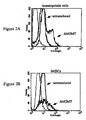
- FACS analysis for AGT expression ⁇ AGT was analyzed by flow cytometry as described in Liu et al. 1998, with modifications. Briefly, after cells were stabilized for 30 minutes using 1% paraformaldehyde, the membranes were permeabilized by incubating in 1% Tween 20 for 30 minutes at 37°C, (and omitted 30 minute incubation in 2% BSA/PBS). Nonspecific binding sites were blocked for 30 minutes at 22°C with 10% normal goat serum. Human AGT antibody mT3.1 (7 ⁇ g/ml) was added, and cells were incubated at 4°C overnight.
- ⁇ AGT Light scatter was used for gating on permeabilized cells.
- IC50 is the determination of CFU survival after exposure to TMZ or BCNU in the presence of the AGT inhibitor BG.
- BG AGT inhibitor
- CFU CFU-GM, BFU-E and CFU-GEMM
- Individual CFU were collected from 10 independent experiments, each from a different donor.
Landscapes
- Health & Medical Sciences (AREA)
- Life Sciences & Earth Sciences (AREA)
- Engineering & Computer Science (AREA)
- Genetics & Genomics (AREA)
- Biomedical Technology (AREA)
- Organic Chemistry (AREA)
- Chemical & Material Sciences (AREA)
- Biotechnology (AREA)
- Zoology (AREA)
- Wood Science & Technology (AREA)
- Bioinformatics & Cheminformatics (AREA)
- General Engineering & Computer Science (AREA)
- Microbiology (AREA)
- Biochemistry (AREA)
- General Health & Medical Sciences (AREA)
- Hematology (AREA)
- Plant Pathology (AREA)
- Molecular Biology (AREA)
- Biophysics (AREA)
- Physics & Mathematics (AREA)
- Developmental Biology & Embryology (AREA)
- Immunology (AREA)
- Cell Biology (AREA)
- Micro-Organisms Or Cultivation Processes Thereof (AREA)
- Medicines Containing Material From Animals Or Micro-Organisms (AREA)
Claims (4)
- Procédé pour la transformation de cellules progénitrices hématopoïétiques pour exprimer une protéine, comprenant les étapes de:co-culture de cellules progénitrices hématopoïétiques humaines avec une population de cellules humaines pouvant être obtenues par isolement à partir de moelle osseuse par utilisation d'un fractionnement selon un gradient de densité sur une solution Percoll de 1,073 g/ml, et comprenant des cellules souches du mésenchyme; ettransformation rétrovirale des cellules progénitrices hématopoïétiques humaines avec un polynucléotide comprenant du matériel génétique exogène codant pour une protéine en présence de la population de cellules humaines, dans lesquelles ladite protéine est exprimée.
- Procédé selon la revendication 1, dans lequel la population de cellules humaines est autologue vis-à-vis des cellules progénitrices hématopoïétiques.
- Procédé selon la revendication 1, dans lequel la population de cellules humaines est allogénique vis-à-vis des cellules progénitrices hématopoïétiques.
- Procédé selon la revendication 1, comprenant en outre l'étape de récolte des cellules progénitrices humaines transduites à partir de la population de cellules humaines.
Priority Applications (1)
| Application Number | Priority Date | Filing Date | Title |
|---|---|---|---|
| EP08018067A EP2019145A1 (fr) | 1998-05-29 | 1999-05-28 | Transduction de gène de cellule souche hématopoïétique |
Applications Claiming Priority (3)
| Application Number | Priority Date | Filing Date | Title |
|---|---|---|---|
| US8728498P | 1998-05-29 | 1998-05-29 | |
| US87284P | 1998-05-29 | ||
| PCT/US1999/011874 WO1999061644A1 (fr) | 1998-05-29 | 1999-05-28 | Transduction genique des cellules progenitrices hematopoietiques |
Related Child Applications (1)
| Application Number | Title | Priority Date | Filing Date |
|---|---|---|---|
| EP08018067A Division EP2019145A1 (fr) | 1998-05-29 | 1999-05-28 | Transduction de gène de cellule souche hématopoïétique |
Publications (2)
| Publication Number | Publication Date |
|---|---|
| EP1084263A1 EP1084263A1 (fr) | 2001-03-21 |
| EP1084263B1 true EP1084263B1 (fr) | 2008-10-29 |
Family
ID=22204258
Family Applications (2)
| Application Number | Title | Priority Date | Filing Date |
|---|---|---|---|
| EP08018067A Withdrawn EP2019145A1 (fr) | 1998-05-29 | 1999-05-28 | Transduction de gène de cellule souche hématopoïétique |
| EP99925991A Expired - Lifetime EP1084263B1 (fr) | 1998-05-29 | 1999-05-28 | Transduction genique des cellules progenitrices hematopoietiques |
Family Applications Before (1)
| Application Number | Title | Priority Date | Filing Date |
|---|---|---|---|
| EP08018067A Withdrawn EP2019145A1 (fr) | 1998-05-29 | 1999-05-28 | Transduction de gène de cellule souche hématopoïétique |
Country Status (8)
| Country | Link |
|---|---|
| US (1) | US8318495B1 (fr) |
| EP (2) | EP2019145A1 (fr) |
| AT (1) | ATE412764T1 (fr) |
| AU (1) | AU4216599A (fr) |
| CA (1) | CA2338344A1 (fr) |
| DE (1) | DE69939825D1 (fr) |
| ES (1) | ES2316187T3 (fr) |
| WO (1) | WO1999061644A1 (fr) |
Citations (2)
| Publication number | Priority date | Publication date | Assignee | Title |
|---|---|---|---|---|
| EP0592521A1 (fr) * | 1991-06-18 | 1994-04-20 | CAPLAN, Arnold I. | Anticorps monoclonaux specifiques contre les cellules mesenchymateuses derivees de la moelle |
| WO1998020731A1 (fr) * | 1996-11-15 | 1998-05-22 | Osiris Therapeutics, Inc. | Compositions mixtes de cellules msc et de precurseurs de megacaryocytes et procede pour isoler les cellules msc associees aux megacaryocytes, en separant les megacaryocytes |
Family Cites Families (10)
| Publication number | Priority date | Publication date | Assignee | Title |
|---|---|---|---|---|
| US5061620A (en) | 1990-03-30 | 1991-10-29 | Systemix, Inc. | Human hematopoietic stem cell |
| US5226914A (en) | 1990-11-16 | 1993-07-13 | Caplan Arnold I | Method for treating connective tissue disorders |
| US5486359A (en) * | 1990-11-16 | 1996-01-23 | Osiris Therapeutics, Inc. | Human mesenchymal stem cells |
| US5197985A (en) | 1990-11-16 | 1993-03-30 | Caplan Arnold I | Method for enhancing the implantation and differentiation of marrow-derived mesenchymal cells |
| AU680406B2 (en) * | 1992-03-04 | 1997-07-31 | Systemix, Inc. | Culturing of hematopoietic stem cells and their genetic engineering |
| US5591625A (en) * | 1993-11-24 | 1997-01-07 | Case Western Reserve University | Transduced mesenchymal stem cells |
| AU3635695A (en) * | 1994-09-19 | 1996-04-09 | Board Of Trustees Of The Leland Stanford Junior University | Methods for genetically modifying hematopoietic stem cells |
| AU4094099A (en) * | 1998-05-22 | 1999-12-13 | Osiris Therapeutics, Inc. | Production of megakaryocytes by co-culturing human mesenchymal stem cells with cd34+ cells |
| US7056738B2 (en) * | 2001-03-23 | 2006-06-06 | Tulane University | Early stage multipotential stem cells in colonies of bone marrow stromal cells |
| US7592174B2 (en) * | 2002-05-31 | 2009-09-22 | The Board Of Trustees Of The Leland Stanford Junior University | Isolation of mesenchymal stem cells |
-
1999
- 1999-05-28 ES ES99925991T patent/ES2316187T3/es not_active Expired - Lifetime
- 1999-05-28 US US09/321,655 patent/US8318495B1/en not_active Expired - Fee Related
- 1999-05-28 EP EP08018067A patent/EP2019145A1/fr not_active Withdrawn
- 1999-05-28 WO PCT/US1999/011874 patent/WO1999061644A1/fr not_active Ceased
- 1999-05-28 CA CA002338344A patent/CA2338344A1/fr not_active Abandoned
- 1999-05-28 AU AU42165/99A patent/AU4216599A/en not_active Abandoned
- 1999-05-28 EP EP99925991A patent/EP1084263B1/fr not_active Expired - Lifetime
- 1999-05-28 AT AT99925991T patent/ATE412764T1/de not_active IP Right Cessation
- 1999-05-28 DE DE69939825T patent/DE69939825D1/de not_active Expired - Lifetime
Patent Citations (2)
| Publication number | Priority date | Publication date | Assignee | Title |
|---|---|---|---|---|
| EP0592521A1 (fr) * | 1991-06-18 | 1994-04-20 | CAPLAN, Arnold I. | Anticorps monoclonaux specifiques contre les cellules mesenchymateuses derivees de la moelle |
| WO1998020731A1 (fr) * | 1996-11-15 | 1998-05-22 | Osiris Therapeutics, Inc. | Compositions mixtes de cellules msc et de precurseurs de megacaryocytes et procede pour isoler les cellules msc associees aux megacaryocytes, en separant les megacaryocytes |
Non-Patent Citations (2)
| Title |
|---|
| LENNON D. ET AL: "Human and animal mesenchymal progenitor cells from bone marrow: Identification of serum for optimal selection and proliferation", IN VITRO CELLULAR AND DEVELOPMENTAL BIOLOGY ANIMAL, vol. 32, 1996, pages 602 - 611 * |
| PITTENGER M. ET AL: "Multilineage potential of adult human mesenchymal stem cells", SCIENCE, vol. 284, 2 April 1999 (1999-04-02), pages 143 - 147, XP000867221 * |
Also Published As
| Publication number | Publication date |
|---|---|
| ATE412764T1 (de) | 2008-11-15 |
| ES2316187T3 (es) | 2009-04-01 |
| DE69939825D1 (de) | 2008-12-11 |
| CA2338344A1 (fr) | 1999-12-02 |
| EP2019145A1 (fr) | 2009-01-28 |
| WO1999061644A1 (fr) | 1999-12-02 |
| AU4216599A (en) | 1999-12-13 |
| US8318495B1 (en) | 2012-11-27 |
| EP1084263A1 (fr) | 2001-03-21 |
Similar Documents
| Publication | Publication Date | Title |
|---|---|---|
| US6030836A (en) | Vitro maintenance of hematopoietic stem cells | |
| US6225119B1 (en) | Production of megakaryocytes by the use of human mesenchymal stem cells | |
| Moore et al. | Stromal support enhances cell-free retroviral vector transduction of human bone marrow long-term culture-initiating cells | |
| US5736387A (en) | Envelope fusion vectors for use in gene delivery | |
| TWI239352B (en) | Gene transfer method with the use of serum-free medium | |
| US6734014B1 (en) | Methods and compositions for transforming dendritic cells and activating T cells | |
| EP1424389A1 (fr) | Procede de preparation de cellules souches hematopoietiques multipotentes | |
| AU730537B2 (en) | Methods and compositions for transforming dendritic cells and activating T cells | |
| CN101490246A (zh) | 自吸脂后脂肪吸取物分离及纯化造血干细胞 | |
| NZ524254A (en) | Expanded and genetically modified populations of human hematopoietic stem cells | |
| US20030044978A1 (en) | Expanded and genetically modified populations of human hematopoietic stem cells | |
| CN1856506A (zh) | 向哺乳动物中移植淋巴造血细胞的方法 | |
| EP1084263B1 (fr) | Transduction genique des cellules progenitrices hematopoietiques | |
| US20060029583A1 (en) | Method for the genetic activation of cells and uses of said cells | |
| Schiedlmeier et al. | Soluble bone marrow stroma factors improve the efficiency of retroviral transfer of the human multidrug resistance 1 gene to human mobilized peripheral blood progenitor cells | |
| Veron et al. | Efficient transduction of monocyte‐and CD34+‐derived Langerhans cells with lentiviral vectors in the absence of phenotypic and functional maturation | |
| Chischportich et al. | Expression of the nlsLacz gene in dendritic cells derived from retrovirally transduced peripheral blood CD34+ cells | |
| Bierhuizen et al. | Efficient detection and selection of immature rhesus monkey and human CD34+ hematopoietic cells expressing the enhanced green fluorescent protein (EGFP) | |
| WO2000075291A2 (fr) | EXPRESSION FORCEE DE BCL-xL | |
| Kang et al. | Production of Recombinant Retroviruses Encoding Human Flt3 Ligand and IL-6 and Establishment of Genetically Modified OP9 Mouse Stromal Cells | |
| Moezzi et al. | Gibbon ape leukemia virus transduction of peripheral blood CD34+-derived dendritic cells | |
| Dando et al. | Efficient gene transfer into primitive hematopoietic progenitors using a bone marrow microenvironment cell line engineered to produce retroviral vectors |
Legal Events
| Date | Code | Title | Description |
|---|---|---|---|
| PUAI | Public reference made under article 153(3) epc to a published international application that has entered the european phase |
Free format text: ORIGINAL CODE: 0009012 |
|
| 17P | Request for examination filed |
Effective date: 20010112 |
|
| AK | Designated contracting states |
Kind code of ref document: A1 Designated state(s): AT BE CH CY DE DK ES FI FR GB GR IE IT LI LU MC NL PT SE |
|
| 17Q | First examination report despatched |
Effective date: 20040130 |
|
| GRAP | Despatch of communication of intention to grant a patent |
Free format text: ORIGINAL CODE: EPIDOSNIGR1 |
|
| GRAS | Grant fee paid |
Free format text: ORIGINAL CODE: EPIDOSNIGR3 |
|
| GRAA | (expected) grant |
Free format text: ORIGINAL CODE: 0009210 |
|
| AK | Designated contracting states |
Kind code of ref document: B1 Designated state(s): AT BE CH CY DE DK ES FI FR GB GR IE IT LI LU MC NL PT SE |
|
| REG | Reference to a national code |
Ref country code: GB Ref legal event code: FG4D |
|
| REG | Reference to a national code |
Ref country code: CH Ref legal event code: EP |
|
| REG | Reference to a national code |
Ref country code: IE Ref legal event code: FG4D |
|
| REF | Corresponds to: |
Ref document number: 69939825 Country of ref document: DE Date of ref document: 20081211 Kind code of ref document: P |
|
| NLV1 | Nl: lapsed or annulled due to failure to fulfill the requirements of art. 29p and 29m of the patents act | ||
| REG | Reference to a national code |
Ref country code: ES Ref legal event code: FG2A Ref document number: 2316187 Country of ref document: ES Kind code of ref document: T3 |
|
| PG25 | Lapsed in a contracting state [announced via postgrant information from national office to epo] |
Ref country code: AT Free format text: LAPSE BECAUSE OF FAILURE TO SUBMIT A TRANSLATION OF THE DESCRIPTION OR TO PAY THE FEE WITHIN THE PRESCRIBED TIME-LIMIT Effective date: 20081029 |
|
| PG25 | Lapsed in a contracting state [announced via postgrant information from national office to epo] |
Ref country code: PT Free format text: LAPSE BECAUSE OF FAILURE TO SUBMIT A TRANSLATION OF THE DESCRIPTION OR TO PAY THE FEE WITHIN THE PRESCRIBED TIME-LIMIT Effective date: 20090330 Ref country code: NL Free format text: LAPSE BECAUSE OF FAILURE TO SUBMIT A TRANSLATION OF THE DESCRIPTION OR TO PAY THE FEE WITHIN THE PRESCRIBED TIME-LIMIT Effective date: 20081029 Ref country code: FI Free format text: LAPSE BECAUSE OF FAILURE TO SUBMIT A TRANSLATION OF THE DESCRIPTION OR TO PAY THE FEE WITHIN THE PRESCRIBED TIME-LIMIT Effective date: 20081029 |
|
| PG25 | Lapsed in a contracting state [announced via postgrant information from national office to epo] |
Ref country code: DK Free format text: LAPSE BECAUSE OF FAILURE TO SUBMIT A TRANSLATION OF THE DESCRIPTION OR TO PAY THE FEE WITHIN THE PRESCRIBED TIME-LIMIT Effective date: 20081029 Ref country code: BE Free format text: LAPSE BECAUSE OF FAILURE TO SUBMIT A TRANSLATION OF THE DESCRIPTION OR TO PAY THE FEE WITHIN THE PRESCRIBED TIME-LIMIT Effective date: 20081029 |
|
| PG25 | Lapsed in a contracting state [announced via postgrant information from national office to epo] |
Ref country code: SE Free format text: LAPSE BECAUSE OF FAILURE TO SUBMIT A TRANSLATION OF THE DESCRIPTION OR TO PAY THE FEE WITHIN THE PRESCRIBED TIME-LIMIT Effective date: 20090129 |
|
| PLBE | No opposition filed within time limit |
Free format text: ORIGINAL CODE: 0009261 |
|
| STAA | Information on the status of an ep patent application or granted ep patent |
Free format text: STATUS: NO OPPOSITION FILED WITHIN TIME LIMIT |
|
| 26N | No opposition filed |
Effective date: 20090730 |
|
| PG25 | Lapsed in a contracting state [announced via postgrant information from national office to epo] |
Ref country code: MC Free format text: LAPSE BECAUSE OF NON-PAYMENT OF DUE FEES Effective date: 20090531 |
|
| REG | Reference to a national code |
Ref country code: CH Ref legal event code: PL |
|
| PG25 | Lapsed in a contracting state [announced via postgrant information from national office to epo] |
Ref country code: LI Free format text: LAPSE BECAUSE OF NON-PAYMENT OF DUE FEES Effective date: 20090531 Ref country code: CH Free format text: LAPSE BECAUSE OF NON-PAYMENT OF DUE FEES Effective date: 20090531 |
|
| PG25 | Lapsed in a contracting state [announced via postgrant information from national office to epo] |
Ref country code: IE Free format text: LAPSE BECAUSE OF NON-PAYMENT OF DUE FEES Effective date: 20090528 |
|
| PG25 | Lapsed in a contracting state [announced via postgrant information from national office to epo] |
Ref country code: GR Free format text: LAPSE BECAUSE OF FAILURE TO SUBMIT A TRANSLATION OF THE DESCRIPTION OR TO PAY THE FEE WITHIN THE PRESCRIBED TIME-LIMIT Effective date: 20090130 |
|
| PG25 | Lapsed in a contracting state [announced via postgrant information from national office to epo] |
Ref country code: LU Free format text: LAPSE BECAUSE OF NON-PAYMENT OF DUE FEES Effective date: 20090528 |
|
| REG | Reference to a national code |
Ref country code: DE Ref legal event code: R079 Ref document number: 69939825 Country of ref document: DE Free format text: PREVIOUS MAIN CLASS: C12N0015870000 Ipc: C12N0015867000 |
|
| PG25 | Lapsed in a contracting state [announced via postgrant information from national office to epo] |
Ref country code: CY Free format text: LAPSE BECAUSE OF FAILURE TO SUBMIT A TRANSLATION OF THE DESCRIPTION OR TO PAY THE FEE WITHIN THE PRESCRIBED TIME-LIMIT Effective date: 20081029 |
|
| REG | Reference to a national code |
Ref country code: DE Ref legal event code: R079 Ref document number: 69939825 Country of ref document: DE Free format text: PREVIOUS MAIN CLASS: C12N0015870000 Ipc: C12N0015867000 Effective date: 20110715 |
|
| REG | Reference to a national code |
Ref country code: FR Ref legal event code: PLFP Year of fee payment: 18 |
|
| REG | Reference to a national code |
Ref country code: FR Ref legal event code: PLFP Year of fee payment: 19 |
|
| PGFP | Annual fee paid to national office [announced via postgrant information from national office to epo] |
Ref country code: GB Payment date: 20170524 Year of fee payment: 19 Ref country code: FR Payment date: 20170413 Year of fee payment: 19 Ref country code: DE Payment date: 20170523 Year of fee payment: 19 |
|
| PGFP | Annual fee paid to national office [announced via postgrant information from national office to epo] |
Ref country code: IT Payment date: 20170522 Year of fee payment: 19 Ref country code: ES Payment date: 20170602 Year of fee payment: 19 |
|
| REG | Reference to a national code |
Ref country code: DE Ref legal event code: R119 Ref document number: 69939825 Country of ref document: DE |
|
| GBPC | Gb: european patent ceased through non-payment of renewal fee |
Effective date: 20180528 |
|
| PG25 | Lapsed in a contracting state [announced via postgrant information from national office to epo] |
Ref country code: GB Free format text: LAPSE BECAUSE OF NON-PAYMENT OF DUE FEES Effective date: 20180528 Ref country code: FR Free format text: LAPSE BECAUSE OF NON-PAYMENT OF DUE FEES Effective date: 20180531 Ref country code: IT Free format text: LAPSE BECAUSE OF NON-PAYMENT OF DUE FEES Effective date: 20180528 Ref country code: DE Free format text: LAPSE BECAUSE OF NON-PAYMENT OF DUE FEES Effective date: 20181201 |
|
| REG | Reference to a national code |
Ref country code: ES Ref legal event code: FD2A Effective date: 20190913 |
|
| PG25 | Lapsed in a contracting state [announced via postgrant information from national office to epo] |
Ref country code: ES Free format text: LAPSE BECAUSE OF NON-PAYMENT OF DUE FEES Effective date: 20180529 |