EP1086377B1 - Procede d'identification de ligands de la sous-unite sigma (70) de l'arn polymerase - Google Patents
Procede d'identification de ligands de la sous-unite sigma (70) de l'arn polymerase Download PDFInfo
- Publication number
- EP1086377B1 EP1086377B1 EP99930078A EP99930078A EP1086377B1 EP 1086377 B1 EP1086377 B1 EP 1086377B1 EP 99930078 A EP99930078 A EP 99930078A EP 99930078 A EP99930078 A EP 99930078A EP 1086377 B1 EP1086377 B1 EP 1086377B1
- Authority
- EP
- European Patent Office
- Prior art keywords
- sigma
- asia
- subunit
- protein
- coli
- Prior art date
- Legal status (The legal status is an assumption and is not a legal conclusion. Google has not performed a legal analysis and makes no representation as to the accuracy of the status listed.)
- Expired - Lifetime
Links
- 238000000034 method Methods 0.000 title claims abstract description 20
- 239000003446 ligand Substances 0.000 title claims abstract description 8
- 108090000951 RNA polymerase sigma 70 Proteins 0.000 title 1
- 108020001507 fusion proteins Proteins 0.000 claims abstract description 26
- 102000037865 fusion proteins Human genes 0.000 claims abstract description 26
- 150000001875 compounds Chemical class 0.000 claims abstract description 11
- 238000012360 testing method Methods 0.000 claims abstract description 10
- 230000001580 bacterial effect Effects 0.000 claims abstract description 6
- 108090000623 proteins and genes Proteins 0.000 claims description 60
- 102000004169 proteins and genes Human genes 0.000 claims description 49
- 241000588724 Escherichia coli Species 0.000 claims description 40
- 230000014509 gene expression Effects 0.000 claims description 27
- 241000293869 Salmonella enterica subsp. enterica serovar Typhimurium Species 0.000 claims description 16
- 240000004808 Saccharomyces cerevisiae Species 0.000 claims description 10
- 235000014680 Saccharomyces cerevisiae Nutrition 0.000 claims description 10
- 239000003112 inhibitor Substances 0.000 claims description 4
- 239000011159 matrix material Substances 0.000 claims description 4
- 239000007787 solid Substances 0.000 claims description 4
- FWMNVWWHGCHHJJ-SKKKGAJSSA-N 4-amino-1-[(2r)-6-amino-2-[[(2r)-2-[[(2r)-2-[[(2r)-2-amino-3-phenylpropanoyl]amino]-3-phenylpropanoyl]amino]-4-methylpentanoyl]amino]hexanoyl]piperidine-4-carboxylic acid Chemical compound C([C@H](C(=O)N[C@H](CC(C)C)C(=O)N[C@H](CCCCN)C(=O)N1CCC(N)(CC1)C(O)=O)NC(=O)[C@H](N)CC=1C=CC=CC=1)C1=CC=CC=C1 FWMNVWWHGCHHJJ-SKKKGAJSSA-N 0.000 claims description 3
- 241000235058 Komagataella pastoris Species 0.000 claims description 3
- 230000003100 immobilizing effect Effects 0.000 claims description 2
- 125000003275 alpha amino acid group Chemical group 0.000 claims 1
- 241000701533 Escherichia virus T4 Species 0.000 abstract description 3
- 235000018102 proteins Nutrition 0.000 description 46
- 102000004163 DNA-directed RNA polymerases Human genes 0.000 description 38
- 108090000626 DNA-directed RNA polymerases Proteins 0.000 description 37
- 108020004414 DNA Proteins 0.000 description 29
- 238000013518 transcription Methods 0.000 description 25
- 230000035897 transcription Effects 0.000 description 25
- 239000013612 plasmid Substances 0.000 description 16
- 102000004190 Enzymes Human genes 0.000 description 14
- 108090000790 Enzymes Proteins 0.000 description 14
- 229940088598 enzyme Drugs 0.000 description 14
- 239000012634 fragment Substances 0.000 description 14
- 210000004027 cell Anatomy 0.000 description 12
- 238000003556 assay Methods 0.000 description 11
- 230000000694 effects Effects 0.000 description 11
- 241000620209 Escherichia coli DH5[alpha] Species 0.000 description 9
- 108091008146 restriction endonucleases Proteins 0.000 description 9
- 101150071045 asiA gene Proteins 0.000 description 8
- 230000001404 mediated effect Effects 0.000 description 8
- 101100217230 Enterobacteria phage T4 asiA gene Proteins 0.000 description 7
- 108010063499 Sigma Factor Proteins 0.000 description 7
- 238000010367 cloning Methods 0.000 description 7
- 230000001419 dependent effect Effects 0.000 description 7
- 239000013600 plasmid vector Substances 0.000 description 7
- 239000000047 product Substances 0.000 description 7
- 150000001413 amino acids Chemical class 0.000 description 6
- 239000000872 buffer Substances 0.000 description 6
- LOKCTEFSRHRXRJ-UHFFFAOYSA-I dipotassium trisodium dihydrogen phosphate hydrogen phosphate dichloride Chemical compound P(=O)(O)(O)[O-].[K+].P(=O)(O)([O-])[O-].[Na+].[Na+].[Cl-].[K+].[Cl-].[Na+] LOKCTEFSRHRXRJ-UHFFFAOYSA-I 0.000 description 6
- RAXXELZNTBOGNW-UHFFFAOYSA-N imidazole Natural products C1=CNC=N1 RAXXELZNTBOGNW-UHFFFAOYSA-N 0.000 description 6
- 230000003993 interaction Effects 0.000 description 6
- 239000002953 phosphate buffered saline Substances 0.000 description 6
- 239000011541 reaction mixture Substances 0.000 description 6
- 231100000419 toxicity Toxicity 0.000 description 6
- 230000001988 toxicity Effects 0.000 description 6
- 108091026890 Coding region Proteins 0.000 description 5
- 241000235070 Saccharomyces Species 0.000 description 5
- 235000001014 amino acid Nutrition 0.000 description 5
- 229940024606 amino acid Drugs 0.000 description 5
- 239000000203 mixture Substances 0.000 description 5
- 230000001105 regulatory effect Effects 0.000 description 5
- QKNYBSVHEMOAJP-UHFFFAOYSA-N 2-amino-2-(hydroxymethyl)propane-1,3-diol;hydron;chloride Chemical compound Cl.OCC(N)(CO)CO QKNYBSVHEMOAJP-UHFFFAOYSA-N 0.000 description 4
- 241001198387 Escherichia coli BL21(DE3) Species 0.000 description 4
- 229930185614 Ripostatin Natural products 0.000 description 4
- FAPWRFPIFSIZLT-UHFFFAOYSA-M Sodium chloride Chemical compound [Na+].[Cl-] FAPWRFPIFSIZLT-UHFFFAOYSA-M 0.000 description 4
- 101150001815 flgM gene Proteins 0.000 description 4
- 230000005764 inhibitory process Effects 0.000 description 4
- 238000000746 purification Methods 0.000 description 4
- 230000002441 reversible effect Effects 0.000 description 4
- 241001515965 unidentified phage Species 0.000 description 4
- 238000005406 washing Methods 0.000 description 4
- 108050007599 Anti-sigma factor Proteins 0.000 description 3
- 108010074860 Factor Xa Proteins 0.000 description 3
- 108010070675 Glutathione transferase Proteins 0.000 description 3
- 102000005720 Glutathione transferase Human genes 0.000 description 3
- 108010025076 Holoenzymes Proteins 0.000 description 3
- 241000187479 Mycobacterium tuberculosis Species 0.000 description 3
- 108091028043 Nucleic acid sequence Proteins 0.000 description 3
- 229920002684 Sepharose Polymers 0.000 description 3
- 238000000338 in vitro Methods 0.000 description 3
- BPHPUYQFMNQIOC-NXRLNHOXSA-N isopropyl beta-D-thiogalactopyranoside Chemical compound CC(C)S[C@@H]1O[C@H](CO)[C@H](O)[C@H](O)[C@H]1O BPHPUYQFMNQIOC-NXRLNHOXSA-N 0.000 description 3
- 229930027917 kanamycin Natural products 0.000 description 3
- 229960000318 kanamycin Drugs 0.000 description 3
- SBUJHOSQTJFQJX-NOAMYHISSA-N kanamycin Chemical compound O[C@@H]1[C@@H](O)[C@H](O)[C@@H](CN)O[C@@H]1O[C@H]1[C@H](O)[C@@H](O[C@@H]2[C@@H]([C@@H](N)[C@H](O)[C@@H](CO)O2)O)[C@H](N)C[C@@H]1N SBUJHOSQTJFQJX-NOAMYHISSA-N 0.000 description 3
- 229930182823 kanamycin A Natural products 0.000 description 3
- 229920000136 polysorbate Polymers 0.000 description 3
- 108090000765 processed proteins & peptides Proteins 0.000 description 3
- 101150074202 rsbW gene Proteins 0.000 description 3
- 239000000243 solution Substances 0.000 description 3
- 101150090680 spoIIAB gene Proteins 0.000 description 3
- 238000010561 standard procedure Methods 0.000 description 3
- 239000006228 supernatant Substances 0.000 description 3
- 239000013598 vector Substances 0.000 description 3
- 229920000936 Agarose Polymers 0.000 description 2
- 235000014469 Bacillus subtilis Nutrition 0.000 description 2
- 241000894006 Bacteria Species 0.000 description 2
- 108020004705 Codon Proteins 0.000 description 2
- 229930189675 Corallopyronin Natural products 0.000 description 2
- 101710198774 Envelope protein US9 Proteins 0.000 description 2
- DHMQDGOQFOQNFH-UHFFFAOYSA-N Glycine Chemical compound NCC(O)=O DHMQDGOQFOQNFH-UHFFFAOYSA-N 0.000 description 2
- PXHVJJICTQNCMI-UHFFFAOYSA-N Nickel Chemical compound [Ni] PXHVJJICTQNCMI-UHFFFAOYSA-N 0.000 description 2
- 244000052616 bacterial pathogen Species 0.000 description 2
- 230000033228 biological regulation Effects 0.000 description 2
- 210000004899 c-terminal region Anatomy 0.000 description 2
- 230000008859 change Effects 0.000 description 2
- 239000012228 culture supernatant Substances 0.000 description 2
- 239000013604 expression vector Substances 0.000 description 2
- 230000004927 fusion Effects 0.000 description 2
- RWSXRVCMGQZWBV-WDSKDSINSA-N glutathione Chemical compound OC(=O)[C@@H](N)CCC(=O)N[C@@H](CS)C(=O)NCC(O)=O RWSXRVCMGQZWBV-WDSKDSINSA-N 0.000 description 2
- 238000011534 incubation Methods 0.000 description 2
- 208000015181 infectious disease Diseases 0.000 description 2
- 230000002401 inhibitory effect Effects 0.000 description 2
- 239000006166 lysate Substances 0.000 description 2
- 238000010369 molecular cloning Methods 0.000 description 2
- 231100000252 nontoxic Toxicity 0.000 description 2
- 230000003000 nontoxic effect Effects 0.000 description 2
- 239000002773 nucleotide Substances 0.000 description 2
- 125000003729 nucleotide group Chemical group 0.000 description 2
- 244000052769 pathogen Species 0.000 description 2
- 230000001717 pathogenic effect Effects 0.000 description 2
- 238000011533 pre-incubation Methods 0.000 description 2
- 239000011780 sodium chloride Substances 0.000 description 2
- 238000002415 sodium dodecyl sulfate polyacrylamide gel electrophoresis Methods 0.000 description 2
- 241000894007 species Species 0.000 description 2
- 231100000331 toxic Toxicity 0.000 description 2
- 108091032973 (ribonucleotides)n+m Proteins 0.000 description 1
- 108010039627 Aprotinin Proteins 0.000 description 1
- DCXYFEDJOCDNAF-UHFFFAOYSA-N Asparagine Natural products OC(=O)C(N)CC(N)=O DCXYFEDJOCDNAF-UHFFFAOYSA-N 0.000 description 1
- 241000020089 Atacta Species 0.000 description 1
- 244000063299 Bacillus subtilis Species 0.000 description 1
- 108700003860 Bacterial Genes Proteins 0.000 description 1
- 108020004513 Bacterial RNA Proteins 0.000 description 1
- 208000035143 Bacterial infection Diseases 0.000 description 1
- 108091003079 Bovine Serum Albumin Proteins 0.000 description 1
- UXVMQQNJUSDDNG-UHFFFAOYSA-L Calcium chloride Chemical compound [Cl-].[Cl-].[Ca+2] UXVMQQNJUSDDNG-UHFFFAOYSA-L 0.000 description 1
- 101100129336 Dictyostelium discoideum malA gene Proteins 0.000 description 1
- 238000002965 ELISA Methods 0.000 description 1
- 108010013369 Enteropeptidase Proteins 0.000 description 1
- 102100029727 Enteropeptidase Human genes 0.000 description 1
- 241000206602 Eukaryota Species 0.000 description 1
- 108010024636 Glutathione Proteins 0.000 description 1
- 239000004471 Glycine Substances 0.000 description 1
- DCXYFEDJOCDNAF-REOHCLBHSA-N L-asparagine Chemical compound OC(=O)[C@@H](N)CC(N)=O DCXYFEDJOCDNAF-REOHCLBHSA-N 0.000 description 1
- ROHFNLRQFUQHCH-YFKPBYRVSA-N L-leucine Chemical compound CC(C)C[C@H](N)C(O)=O ROHFNLRQFUQHCH-YFKPBYRVSA-N 0.000 description 1
- ROHFNLRQFUQHCH-UHFFFAOYSA-N Leucine Natural products CC(C)CC(N)C(O)=O ROHFNLRQFUQHCH-UHFFFAOYSA-N 0.000 description 1
- GDBQQVLCIARPGH-UHFFFAOYSA-N Leupeptin Natural products CC(C)CC(NC(C)=O)C(=O)NC(CC(C)C)C(=O)NC(C=O)CCCN=C(N)N GDBQQVLCIARPGH-UHFFFAOYSA-N 0.000 description 1
- 102000016943 Muramidase Human genes 0.000 description 1
- 108010014251 Muramidase Proteins 0.000 description 1
- 241000187480 Mycobacterium smegmatis Species 0.000 description 1
- 108010062010 N-Acetylmuramoyl-L-alanine Amidase Proteins 0.000 description 1
- 108091034117 Oligonucleotide Proteins 0.000 description 1
- 108700026244 Open Reading Frames Proteins 0.000 description 1
- 241000283973 Oryctolagus cuniculus Species 0.000 description 1
- 108010067902 Peptide Library Proteins 0.000 description 1
- 108010043958 Peptoids Proteins 0.000 description 1
- 229920001213 Polysorbate 20 Polymers 0.000 description 1
- 108020005093 RNA Precursors Proteins 0.000 description 1
- 244000088415 Raphanus sativus Species 0.000 description 1
- 235000006140 Raphanus sativus var sativus Nutrition 0.000 description 1
- 101100190460 Shigella flexneri pic gene Proteins 0.000 description 1
- 241001591005 Siga Species 0.000 description 1
- QAOWNCQODCNURD-UHFFFAOYSA-N Sulfuric acid Chemical compound OS(O)(=O)=O QAOWNCQODCNURD-UHFFFAOYSA-N 0.000 description 1
- 101001086866 Sus scrofa Pulmonary surfactant-associated protein B Proteins 0.000 description 1
- 108091023040 Transcription factor Proteins 0.000 description 1
- 102000040945 Transcription factor Human genes 0.000 description 1
- XSQUKJJJFZCRTK-UHFFFAOYSA-N Urea Chemical compound NC(N)=O XSQUKJJJFZCRTK-UHFFFAOYSA-N 0.000 description 1
- 230000007059 acute toxicity Effects 0.000 description 1
- 231100000403 acute toxicity Toxicity 0.000 description 1
- 210000001132 alveolar macrophage Anatomy 0.000 description 1
- 229960000723 ampicillin Drugs 0.000 description 1
- AVKUERGKIZMTKX-NJBDSQKTSA-N ampicillin Chemical compound C1([C@@H](N)C(=O)N[C@H]2[C@H]3SC([C@@H](N3C2=O)C(O)=O)(C)C)=CC=CC=C1 AVKUERGKIZMTKX-NJBDSQKTSA-N 0.000 description 1
- 238000000137 annealing Methods 0.000 description 1
- 230000000844 anti-bacterial effect Effects 0.000 description 1
- 229960004405 aprotinin Drugs 0.000 description 1
- 229960001230 asparagine Drugs 0.000 description 1
- 235000009582 asparagine Nutrition 0.000 description 1
- 208000022362 bacterial infectious disease Diseases 0.000 description 1
- 239000008280 blood Substances 0.000 description 1
- 210000004369 blood Anatomy 0.000 description 1
- 229940098773 bovine serum albumin Drugs 0.000 description 1
- 239000007853 buffer solution Substances 0.000 description 1
- 239000001110 calcium chloride Substances 0.000 description 1
- 229910001628 calcium chloride Inorganic materials 0.000 description 1
- 244000309466 calf Species 0.000 description 1
- 239000004202 carbamide Substances 0.000 description 1
- 239000006285 cell suspension Substances 0.000 description 1
- 238000005119 centrifugation Methods 0.000 description 1
- 238000012512 characterization method Methods 0.000 description 1
- 238000006243 chemical reaction Methods 0.000 description 1
- 229960005091 chloramphenicol Drugs 0.000 description 1
- WIIZWVCIJKGZOK-RKDXNWHRSA-N chloramphenicol Chemical compound ClC(Cl)C(=O)N[C@H](CO)[C@H](O)C1=CC=C([N+]([O-])=O)C=C1 WIIZWVCIJKGZOK-RKDXNWHRSA-N 0.000 description 1
- 238000003776 cleavage reaction Methods 0.000 description 1
- 239000013599 cloning vector Substances 0.000 description 1
- 230000002860 competitive effect Effects 0.000 description 1
- 230000008876 conformational transition Effects 0.000 description 1
- 238000011161 development Methods 0.000 description 1
- 201000010099 disease Diseases 0.000 description 1
- 208000037265 diseases, disorders, signs and symptoms Diseases 0.000 description 1
- 101150017109 fliA gene Proteins 0.000 description 1
- 229960003180 glutathione Drugs 0.000 description 1
- 101150086151 hrdB gene Proteins 0.000 description 1
- 238000001727 in vivo Methods 0.000 description 1
- 230000000415 inactivating effect Effects 0.000 description 1
- 210000003000 inclusion body Anatomy 0.000 description 1
- 238000010348 incorporation Methods 0.000 description 1
- ZPNFWUPYTFPOJU-LPYSRVMUSA-N iniprol Chemical compound C([C@H]1C(=O)NCC(=O)NCC(=O)N[C@H]2CSSC[C@H]3C(=O)N[C@@H](CCCCN)C(=O)N[C@@H](C)C(=O)N[C@@H](CCCNC(N)=N)C(=O)N[C@H](C(N[C@H](C(=O)N[C@@H](CCCNC(N)=N)C(=O)N[C@@H](CC=4C=CC(O)=CC=4)C(=O)N[C@@H](CC=4C=CC=CC=4)C(=O)N[C@@H](CC=4C=CC(O)=CC=4)C(=O)N[C@@H](CC(N)=O)C(=O)N[C@@H](C)C(=O)N[C@@H](CCCCN)C(=O)N[C@@H](C)C(=O)NCC(=O)N[C@@H](CC(C)C)C(=O)N[C@@H](CSSC[C@H](NC(=O)[C@H](CC(O)=O)NC(=O)[C@H](CCC(O)=O)NC(=O)[C@H](C)NC(=O)[C@H](CO)NC(=O)[C@H](CCCCN)NC(=O)[C@H](CC=4C=CC=CC=4)NC(=O)[C@H](CC(N)=O)NC(=O)[C@H](CC(N)=O)NC(=O)[C@H](CCCNC(N)=N)NC(=O)[C@H](CCCCN)NC(=O)[C@H](C)NC(=O)[C@H](CCCNC(N)=N)NC2=O)C(=O)N[C@@H](CCSC)C(=O)N[C@@H](CCCNC(N)=N)C(=O)N[C@@H]([C@@H](C)O)C(=O)N[C@@H](CSSC[C@H](NC(=O)[C@H](CC=2C=CC=CC=2)NC(=O)[C@H](CC(O)=O)NC(=O)[C@H]2N(CCC2)C(=O)[C@@H](N)CCCNC(N)=N)C(=O)N[C@@H](CC(C)C)C(=O)N[C@@H](CCC(O)=O)C(=O)N2[C@@H](CCC2)C(=O)N2[C@@H](CCC2)C(=O)N[C@@H](CC=2C=CC(O)=CC=2)C(=O)N[C@@H]([C@@H](C)O)C(=O)NCC(=O)N2[C@@H](CCC2)C(=O)N3)C(=O)NCC(=O)NCC(=O)N[C@@H](C)C(O)=O)C(=O)N[C@@H](CCC(N)=O)C(=O)N[C@H](C(=O)N[C@@H](CC=2C=CC=CC=2)C(=O)N[C@H](C(=O)N1)C(C)C)[C@@H](C)O)[C@@H](C)CC)=O)[C@@H](C)CC)C1=CC=C(O)C=C1 ZPNFWUPYTFPOJU-LPYSRVMUSA-N 0.000 description 1
- 238000013383 initial experiment Methods 0.000 description 1
- 238000011031 large-scale manufacturing process Methods 0.000 description 1
- 231100000518 lethal Toxicity 0.000 description 1
- 230000001665 lethal effect Effects 0.000 description 1
- GDBQQVLCIARPGH-ULQDDVLXSA-N leupeptin Chemical compound CC(C)C[C@H](NC(C)=O)C(=O)N[C@@H](CC(C)C)C(=O)N[C@H](C=O)CCCN=C(N)N GDBQQVLCIARPGH-ULQDDVLXSA-N 0.000 description 1
- 108010052968 leupeptin Proteins 0.000 description 1
- 210000004072 lung Anatomy 0.000 description 1
- 230000002934 lysing effect Effects 0.000 description 1
- 229960000274 lysozyme Drugs 0.000 description 1
- 239000004325 lysozyme Substances 0.000 description 1
- 235000010335 lysozyme Nutrition 0.000 description 1
- 239000003550 marker Substances 0.000 description 1
- 239000000463 material Substances 0.000 description 1
- 238000002844 melting Methods 0.000 description 1
- 230000008018 melting Effects 0.000 description 1
- 108020004999 messenger RNA Proteins 0.000 description 1
- 230000003278 mimic effect Effects 0.000 description 1
- 230000035772 mutation Effects 0.000 description 1
- 229910052759 nickel Inorganic materials 0.000 description 1
- 235000015097 nutrients Nutrition 0.000 description 1
- 239000000816 peptidomimetic Substances 0.000 description 1
- 102000013415 peroxidase activity proteins Human genes 0.000 description 1
- 108040007629 peroxidase activity proteins Proteins 0.000 description 1
- 210000000680 phagosome Anatomy 0.000 description 1
- 229940080469 phosphocellulose Drugs 0.000 description 1
- 238000000053 physical method Methods 0.000 description 1
- 238000013492 plasmid preparation Methods 0.000 description 1
- 235000010486 polyoxyethylene sorbitan monolaurate Nutrition 0.000 description 1
- 230000008569 process Effects 0.000 description 1
- 102000004196 processed proteins & peptides Human genes 0.000 description 1
- 244000000070 pulmonary pathogen Species 0.000 description 1
- 238000011002 quantification Methods 0.000 description 1
- 230000007420 reactivation Effects 0.000 description 1
- 230000002829 reductive effect Effects 0.000 description 1
- 238000012552 review Methods 0.000 description 1
- 101150102864 rpoD gene Proteins 0.000 description 1
- 230000007017 scission Effects 0.000 description 1
- 238000012216 screening Methods 0.000 description 1
- 238000007423 screening assay Methods 0.000 description 1
- 238000012163 sequencing technique Methods 0.000 description 1
- 101150117326 sigA gene Proteins 0.000 description 1
- 101150057107 sigB gene Proteins 0.000 description 1
- 239000000126 substance Substances 0.000 description 1
- 239000000758 substrate Substances 0.000 description 1
- 230000008685 targeting Effects 0.000 description 1
- 125000003698 tetramethyl group Chemical group [H]C([H])([H])* 0.000 description 1
- 210000001541 thymus gland Anatomy 0.000 description 1
- 210000001519 tissue Anatomy 0.000 description 1
- 230000002588 toxic effect Effects 0.000 description 1
- 201000008827 tuberculosis Diseases 0.000 description 1
- 230000001018 virulence Effects 0.000 description 1
Images





Classifications
-
- G—PHYSICS
- G01—MEASURING; TESTING
- G01N—INVESTIGATING OR ANALYSING MATERIALS BY DETERMINING THEIR CHEMICAL OR PHYSICAL PROPERTIES
- G01N33/00—Investigating or analysing materials by specific methods not covered by groups G01N1/00 - G01N31/00
- G01N33/48—Biological material, e.g. blood, urine; Haemocytometers
- G01N33/50—Chemical analysis of biological material, e.g. blood, urine; Testing involving biospecific ligand binding methods; Immunological testing
- G01N33/68—Chemical analysis of biological material, e.g. blood, urine; Testing involving biospecific ligand binding methods; Immunological testing involving proteins, peptides or amino acids
- G01N33/6875—Nucleoproteins
-
- G—PHYSICS
- G01—MEASURING; TESTING
- G01N—INVESTIGATING OR ANALYSING MATERIALS BY DETERMINING THEIR CHEMICAL OR PHYSICAL PROPERTIES
- G01N2500/00—Screening for compounds of potential therapeutic value
- G01N2500/20—Screening for compounds of potential therapeutic value cell-free systems
Definitions
- the present invention relates to a method of identifying a ligand, in particular an inhibitor, of a bacterial RNA polymerase sigma subunit.
- RNA polymerase Transcription of genes to the corresponding RNA molecules is a complex process which is catalyzed by DNA dependent RNA polymerase, and involves many different protein factors.
- the core RNA polymerase is composed of ⁇ , ⁇ , and ⁇ ' subunits in the ratio 2:1:1.
- bacteria produce a variety of proteins, known as sigma ( ⁇ ) factors, which interact with RNA polymerase to form an active holoenzyme.
- ⁇ proteins
- Bacterial sigma factors do not have any homology with eukaryotic transcription factors, and are consequently a potential target for antibacterial compounds.
- Mutations in the sigma subunit, effecting its association and ability to confer DNA sequence specificity to the enzyme, are known to be lethal to the cell.
- sigma subunits Characterization of sigma subunits, identified and sequenced from various organisms, allows them to be classified into three groups.
- the Group I sigma has also been referred to the sigma 70 class, or the "house keeping" sigma group (for a review see Lonetto et al. (1992) J. Bacteriol. 174, 3843-3849 ).
- Sigma subunits belonging to this group recognize similar promoter sequences in the cell. These properties are reflected in certain regions of the proteins which are highly conserved between species.
- sigma-dependent transcription Another important feature of sigma-dependent transcription is that the sigma subunit dissociates from the core enzyme during elongation of mRNA. Consequently, molecules which stabilize the interaction of the sigma subunit with the core enzyme would also be capable of inactivating transcription.
- Mycobacterium tuberculosis is a major pulmonary pathogen which is characterized by its very slow growth rate. As a pathogen it gains access to the alveolar macrophages where it multiplies within the phagosome, finally lysing the cells and being disseminated through the blood stream, not only to other areas of the lung, but also to extrapulmonary tissues.
- the pathogen thus multiplies in at least two entirely different environments, involving the utilization of different nutrients and a variety of possible host factors.
- a successful infection would thus involve the coordinated expression of new sets of genes, transcribed by RNA polymerases associating with different sigma factors. This opens the possibility of targeting not only the sigma 70 subunits of M. tuberculosis, but also other sigma subunits specific for the different stages of infection and dissemination.
- Anti-sigma (Asi) proteins are known in the art. Lysates of bacteriophage T 2 ( Khesin et al. (1972) Mol. Gen. Genet 119, 299 ) or phage T 4 ( Bogdanova et al. (1970) Mol. Biol. 4, 435 ; Stevens, A. (1972) Proc. Natl. Acad. Sci. U.S.A. 69, 603 ) have been reported to inhibit transcription of bacterial genes.
- T 4 -dependent anti-sigma 70 activity is borne by a 10 kDa protein ( Stevens, A. In: RNA Polymerase p. 617-627 (Eds. R. Losick & M. Chamberlin) Cold Spring Harbor Laboratory, Cold Spring Harbor, N.Y., 1976 ).
- a 10 kDa protein was shown to co-purify with RNA polymerase from T 4 infected E. coli cells and is detached together with sigma 70 from the core enzyme on phosphocellulose columns.
- a gene called asiA coding for the 10 kDa anti-sigma 70 factor of bacteriophage T 4 , has been identified by Orsini et al. (1993) J. Bacteriol. 175, 85-93 .
- the open reading frame encoded a 90 amino acid protein with the deduced sequence MNKNIDTVRE IITVASILIK FSREDIVENR ANFIAFLNEI GVTHEGRKLN QNSFRKIVSE LTQEDKKTLI DEFNEGFEGV YRYLEMYTNK (SEQ ID NO: 5).
- the asiA -encoded protein (hereafter also referred to as "AsiA”) was overproduced in a phage T 7 expression system and partially purified.
- proteins regulating the sigma subunit of RNA polymerase are known also from other systems.
- An example is the S. typhimurium flagellar regulation system, which is a complex system controlled by a set of over 50 genes grouped into 13 flagellar operons.
- Late operon expression is positively regulated by the fliA gene coding for the sigma factor FliA ( Suzuki et al. (1978) J. Bacteriol. 133, 904 ; Suzuki et al. (1981) J. Bacteriol. 145, 1036 ).
- the late operons are negatively regulated by the flgM gene.
- a 7.8 kDa protein has been identified as the flgM gene product and purified ( Ohnishi et al. (1992) Mol. Microbiol. 6, 3149-3157 ). This FlgM protein was identified as an anti-sigma factor since it was capable to bind the FliA protein and disturbed its ability to form a complex with the RNA polymerase core enzyme.
- the sigma F factor has been shown to be regulated by a 14 kDa anti-sigma factor encoded by the spoIIAB gene ( Duncan & Losick (1993) Proc. Natl. Acad. Sci. U.S.A. 90, 2325-2329 ), while the sigma B factor is regulated by a 16 kDa anti-sigma factor encoded by the rsbW gene ( Benson & Haldenwang (1993) Proc. Natl. Acad. Sci. U.S.A. 90, 2330-2334 ).
- nucleotide sequences of the genes flgM, spoIIAB and rsbW are available in the GenBank data base (Accession Nos.: FLGMST.PRO for flgM, SPOIIAB.PRO for spoIIAB, M34995.PRO for rsbW ). The sequences do not show any gross similarity with the asiA sequence disclosed by Orsini et al.
- WO 96/25170 discloses methods for treating diseases caused by bacterial pathogens by administering the T 4 AsiA protein, which protein is shown to inhibit the RNA polymerase activity of Bacillus subtilis and Mycobacterium smegmatis.
- a method of identifying a ligand of a bacterial sigma 70 subunit which comprises contacting the sigma 70 subunit or a portion thereof comprising the anti-sigma binding region, with a test compound and a GST-AsiA fusion protein produced in a yeast expression system and determining whether the test compound binds competitively with the anti-sigma 70 factor to the sigma 70 subunit or portion thereof.
- the method comprises:
- the invention provides an in vitro method or assay for screening peptide libraries or chemical libraries for compounds (ligands) which mimic the anti-sigma 70 factor and which thereby have the capability of inhibiting the interaction of core RNA polymerase and sigma 70 subunits.
- Such inhibitor compounds are potentially useful in the treatment of bacterial infections.
- RNA polymerase assay such as that disclosed in Orsini et al (supra) , wherein transcription of a DNA template, such as calf thymus DNA, T 4 DNA or poly(dA-dT), is measured by the incorporation of a labeled RNA precursor such as [5- 3 H]UTP
- the sigma 70 subunit or portion thereof is preferably obtained from Escherichia coli (particularly the C-terminal 99 amino acids of the sigma 70 subunit containing the anti-sigma binding region) or Salmonella typhimurium.
- the anti-sigma 70 factor of bacteriophage T 4 will preferably have an amino acid sequence as shown in SEQ ID NO: 1 or SEQ ID NO: 2.
- the fusion protein comprises glutathione-S-transferase (GST-AsiA) as the marker gene protein product.
- standard protocols and “standard procedures”, when used in the context of molecular cloning techniques, are to be understood as protocols and procedures found in an ordinary laboratory manual such as: Current Protocols in Molecular Biology, editors F. Ausubel et al., John Wiley and Sons, Inc. 1994 , or Sambrook, J., Fritsch, E.F. and Maniatis, T., Molecular Cloning: A laboratory manual, 2nd Ed., Cold Spring Harbor Laboratory Press, Cold Spring Harbor, NY 1989 .
- EXAMPLE 1 Cloning, expression and purification of E. coli sigma 70
- PCR primers corresponding to the 5'- and 3'-ends of the coding sequences of E. coli sigma were designed with the 5'-sequence including a site for the restriction enzyme Eco RI and the 3'-sequence including a site for the restriction enzyme Sal I.
- the PCR amplified DNA fragment was restricted with the above mentioned restriction enzymes and cloned into the Eco RI -Sal I sites of the expression vector pTrc99a ( Amann et al. (1988) Gene 69, 301 ), whereafter the ligation mix was transformed into E. coli DH5 ⁇ . Transformants harboring the recombinant plasmid with the expected restriction profile were identified.
- E. coli RNA polymerase core enzyme The activity of the purified sigma 70 protein was confirmed by its ability to support transcription mediated by E. coli RNA polymerase core enzyme.
- E. coli RNA polymerase core and holoenzyme forms were purified following the protocol of Burgess and Jendriask (1975) Biochemistry 14, 4634-4638 . Polymerase activity using T 4 DNA as template was assayed as described by Orsini et al. (1993) J. Bacteriol. 175, 85-93 .
- EXAMPLE 2 Cloning, expression and purification of Salmonella typhimurium sigma 70
- the coding sequence of the sigma 70 of S. typhimurium was amplified using the forward primer shown as SEQ ID NO: 3 and the reverse primer shown as SEQ ID NO: 4.
- the forward primer includes the site for the restriction enzyme Eco RI, while the reverse primer includes the sequence encoding the stop codon and a site for the restriction enzyme Sal I .
- S. typhimurium DNA was used as template and the amplified fragment digested with appropriate enzymes. This fragment was then ligated to Eco RI - Sal I digested pTrc 99A ( Amann et al. (1988) Gene 69, 301 ) and transformed into E. coli DH5 ⁇ to obtain the recombinant plasmid pARC 8118.
- Plasmid DNA of pARC 8118 was digested with Eco RI - Hind III and the released 2.3 kb DNA fragment encompassing the entire coding sequence of S. typhimurium sigma 70 was cloned into the Eco RI - Hind III digested pRSET B ( Kroll et al. (1993) DNA and Cell Biol. 12, 441 ) vector which has not only the T 7 promoter but also sequences encoding a his tag which is now fused at the C-terminus of S. typhimurium sigma 70 .
- the recombinant plasmid encoding the S. typhimurium sigma 70 fused to a His tag was labeled pARC 8133.
- Plasmid DNA of pARC 8133 was then used to transform the expression host E. coli BL21(DE3) and transformants obtained at +37°C.
- Cells harboring pARC 8133 were grown in LB at +37°C till an OD of 0.4 at 600 nm and induced with 1 mM IPTG for 4 hours.
- the cells were pelleted, suspended in buffer and sonicated, according to standard methods.
- the lysed cells were clarified by centrifugation at 45,000 rpm for 60 min at +4°C and the clarified supernatant was loaded directly on Ni-agarose (Pharmacia) and washed with 50 mM imidazole.
- the bound protein was eluted with 200 mM imidazole and dialysed overnight at +4°C against 50 mM Tris-Cl, pH 7.5.
- the eluate was concentrated using Amicon cone filters to 1/10 volume.
- the concentrated protein was cleaved with enterokinase, used at a ratio of 1:50 of the enzyme, at +25°C for 14 hours.
- the cleaved mixture was passed through a Ni 2+ agarose column and the unbound material collected.
- the cleaved protein was analyzed for homogeneity by SDS-PAGE.
- the coding sequence for the asiA gene was amplified from the genomic DNA of bacteriophage T 4 by PCR using the forward primer shown as SEQ ID NO: 5 and the reverse primer designated shown as SEQ ID NO: 6.
- the 5'-primer included the sequence of the restriction enzyme Nco I while the 3'-primer included the sequence for the restriction enzyme Bam HI.
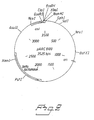
- the coding sequence was amplified by PCR following standard protocols and the amplified fragment ligated to Nco I - Bam HI restricted pBR329 and transformed into competent cells E. coli DH5 ⁇ . Recombinants were selected at +37°C as chloramphenicol sensitive, ampicillin resistant transformants. One of the transformants having the desired restriction pattern was labeled pARC 8100 ( Fig. 2 ).
- the Nco I - Bam HI DNA fragment from pARC 8100 was ligated to pET 8c Km ( Umender K. Sharma et al., J. Bact., 177, 6745 (1996 )) and kanamycin resistant transformants with E. coli DH5 ⁇ were selected at +37°C.
- One of the transformants harboring a plasmid with the expected restriction enzyme profile was labeled pARC 8115 ( Fig. 3 ).
- pARC 8115 plasmid DNA was then used to transform the expression host E. coli BL21(DE3) (Studier et al., supra ) and transformants selected both at +37°C and at +30°C. However, no viable transformants could be obtained at either of the temperatures.
- the leaky expression from the T 7 promoter in pET 8c being much higher than from pET 11d(Km) (Studier et al., supra ), the toxicity of the asiA product could explain the non
- Transformants could however be obtained using E. coli BL21(DE3)/pLysS as host, in which the leaky expression is additionally repressed by the T 7 lysozyme expressed from pLysS.
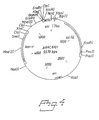
- the Nco I - Bam HI 284 bp DNA fragment was obtained from pARC 8100 and ligated to the Nco I - Bam HI sites of pET 11d Km ( Umender K. Sharma et al., J. Bact., 177, 6745 (1996 )) and transformed into E. coli DH5 ⁇ . Transformants were selected for kanamycin resistance. Plasmid preparations from individual transformants were digested with restriction enzymes and the correct transformant that released the 284 bp fragment after Nco I - Bam HI digest was labeled pARC 8101 ( Fig. 4 ). The transformants were selected at +37°C and appeared normal.
- pARC 8101 DNA was then used to transform the expression host E. coli BL26(DE3).
- BL26 is a lac Iq isogenic strain of BL21 (Studier et al., supra ).
- the transformants obtained at +37°C were morphologically sick and non-viable indicating the acute toxicity of the leaky expression of the asiA gene.
- healthy colonies could be obtained when transformants were selected at +30°C where the leaky expression from the T 7 promoter can be expected to be negligible.
- BL26(DE3)/pLysS colonies were healthy both at +37°C and +30°C, indicating that the tight regulation of expression in this strain made the asiA gene non-toxic to the host.
- Transformants obtained from DH5 ⁇ were also healthy both at +37°C and +30°C, indicating that the gene when transformed into a non-expression host was non-toxic.
- the asiA gene was excised from pARC 8101 as a Xba I - Bam HI DNA fragment to include the sequence for the ribosome binding site and ligated to the low copy vector, Xba I - Bam HI cleaved pWKS129 (Wang & Kushner (1991) Gene 100, 195) and the ligation mix transformed to E. coli DH5 ⁇ .
- Recombinant plasmid harboring the asiA gene was identified by restriction profile and labeled pARC 8114 ( Fig. 5 ).
- This plasmid DNA when transformed into E. coli BL21(DE3) gave viable transformants both at +37°C and +30°C, since the low copy number of the plasmid reduced the level of the AsiA protein expressed through leaky expression.
- the coding sequence for the asiA gene was excised as an Nco I - BamHI fragment from pARC 8100 and ligated to Nco I - BamHI cleaved pARC 0499.
- the plasmid pARC 0499 has a Nco I site in frame with the glutathione-S-transferase encoding sequence, enabling fusion of the N-terminus of asiA sequences.
- the ligation mix was transformed into E. coli DH5 ⁇ and transformants selected at +37°C and +30°C. Viable colonies were obtained at both temperatures indicating the N-terminal fusion reduces the toxicity of the protein.
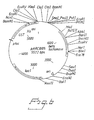
- the recombinant plasmid obtained with the sequences encoding GST-AsiA was labeled pARC 8105 ( Fig. 6 ).
- the GST-AsiA fusion protein was purified as follows: E. coli DH5 ⁇ harboring pARC 8105 was grown in LB till an OD at 600 nm of 0.6 at +37°C followed by the addition of 1 mM IPTG and allowing growth for a further period of 2 hours. The cells were then centrifuged at 5000 rpm for 10 minutes. The pelleted cells were suspended in Buffer A (phosphate buffered saline (PBS) pH 7.5, 5 ⁇ g/ml aprotinin, 5 ⁇ g/ml leupeptin) and sonicated.
- Buffer A phosphate buffered saline (PBS) pH 7.5, 5 ⁇ g/ml aprotinin, 5 ⁇ g/ml leupeptin
- the sonicate was clarified at 45,000 rpm for 10 minutes at +4°C and the supernatant passed through a Glutathione-Sepharose 4B column previously equilibrated with PBS.
- the column was washed with 5 bed volumes of 1 M urea once followed by washing with PBS (10 bed volumes).
- the bound protein was eluted with 10 mM glutathione and the eluate dialysed overnight against buffer containing 50 mM Tris(hydroxymethyl)aminomethane hydrochloride (Tris HCl), pH 7.5.
- Tris HCl Tris(hydroxymethyl)aminomethane hydrochloride
- the concentrated protein was then treated with 1:50 ratio of Factor Xa protease in a buffer containing 50 mM Tris HCl, pH 7.5, 100 mM NaCl, 1 mM CaCl 2 at +25°C for 4 hours.
- the digested eluate was then passed through a Glutathione-Sepharose column and the unbound fraction collected and analyzed for the purity of the AsiA protein by SDS-PAGE.
- the expression and purification of the GST-AsiA fusion protein in E . coli did not allow large scale production because of the inherent toxicity of the fusion protein.
- To obtain large quantities of the AsiA protein the possibility of expressing the GST-AsiA fusion protein in a yeast host was investigated. As the Saccharomyces species do not have a sigma 70 homologue, the AsiA protein was expected not to have toxicity effects on the transcription apparatus of the host and thus for initial experiments a Saccharomyces cerevisiae expression system was chosen.
- the gene encoding the GST-AsiA fusion protein on the plasmid pARC 8105 was amplified using the forward primer shown as SEQ ID NO: 7 and the reverse primer shown as SEQ ID NO: 8.
- the amplified 1.0 kb fragment was restricted with Bgl II and Hind III which are the sites introduced by the primer sequence at the 5'-and 3'-ends of the amplified PCR fragment.
- the Bgl II - Hind III restricted fragment was ligated into the Bgl II- Hind III restricted Saccharomyces cerevisiae cloning vector pSW6 ( Pascall et al. (1991) J. Mol. Endocrinol. 6, 63-70 ).
- the ligation mixture was transformed into the Saccharomyces cerevisiae host CGY1585 and transformants selected on leucine (3 ⁇ g/ml).
- the purified GST-AsiA fusion protein was cleaved with Factor Xa as recommended and the AsiA protein separated.
- the yield of the purified AsiA protein was 500 ⁇ g/l.
- the activity of the GST-AsiA protein, expressed and purified from Saccharomyces, was compared to that obtained from E. coli and found to be identical in its ability to inhibit sigma 70 mediated transcription of T 4 template ( Fig. 8 ).
- AsiA protein purified from GST-AsiA after Factor Xa cleavage also inhibited E. coli sigma 70 dependent transcription.
- the ability to overexpress and purify large quantities of the AsiA protein in Saccharomyces without toxicity problems for the host also indicates that the AsiA protein does not have a corresponding sigma 70 homologue in this species.
- Saccharomyces RNA polymerase is similar to that of higher eukaryotes it also substantiates the fact that the AsiA protein is toxic only to the prokaryotic transcription apparatus.
- Pichia pastoris expression system was chosen.
- the gene encoding GST-AsiA was amplified by PCR from pARC 8105 and cloned into pPIC9K (Invitrogen).
- 1Kb PCR product was cloned as SnaBI-NotI fragment into pPIC9K (pARC 8274). Pichia pastoris transformants of pARC 8274 were selected based on G 418 resistance. Expression studies indicated that GST-AsiA was secreted into the culture supernatant. GST-AsiA purified from the culture supernatant was found to inhibit in vitro transcription as efficiently as that of either E. coli or the Saccharomyces GST-AsiA.
- E. coli RNA polymerase assay was standardized following the protocol of Orsini et al. (J. Bacteriol. 175, 85-93, 1993 ) using T 4 phage DNA as template to quantify sigma 70 dependent transcription.
- E. coli RNA polymerase core enzyme was purified following the protocol of Burgess and Jendriask (1975) Biochemistry 14, 4634-4638 .
- the GST-AsiA fusion protein was purified from S. cerevisiae as described in Section 5.2 and used at different concentrations in the E . coli sigma 70 mediated RNA polymerase transcription assay, using phage T 4 DNA as template.
- the GST-AsiA fusion protein inhibited >80% the sigma 70 mediated transcription when the core enzyme was reconstituted with 2.5 ⁇ g of sigma 70 protein.
- E. coli sigma 70 protein S. typhimurium sigma 70 [ 3 H]UTP (nmol) E. coli RNA polymerase 2.1 2.3 E. coli RNA polymerase + 0.1 ⁇ g AsiA 0.57 0.34 E. coli RNA polymerase + 0.1 ⁇ g AsiA + 4 ⁇ g sigma 70 2.3 3.0 E . coli RNA polymerase + 0.1 ⁇ g AsiA + 4 ⁇ g sigma 70 (AsiA preincubated) 0.68 0.98
- RNA polymerase activity assay was standardized with purified enzyme and phage T 4 DNA as template.
- the RNA polymerase could be >80% inhibited by 0.07 ⁇ g of purified AsiA protein.
- RNA polymerase activity quantified As shown in Table 1, addition of 4 ⁇ g of S . typhimurium sigma 70 could restore the activity of the RNA polymerase.
- the above principles provide a basis for a method of identification of oligonucleotide sequences encoding peptides, which may be either related or unrelated to the AsiA peptide, and which could efficiently bind to sigma 70 subunits from E. coli, S. typhimurium and/or other housekeeping or virulence-associated sigma subunits of bacterial pathogens.
- Truncated sigma 70 (C-terminal 99 amino acids) which has been shown to be the anti-sigma binding region of sigma 70 of E . coli ( Severinova et al., J. Mol. Biol. (1996) 263 (5), pp 637-647 ) was cloned and expressed in a His tag expression vector resulting in a (His) 5 -tagged protein product.
- a solution of the protein product (200 pmoles/ml) in a pH 7.5 buffer comprising Tris HCl (10 mM) and sodium chloride (50 mM) was prepared and 200 ⁇ l of solution were added per well of a nickel-coated microtitre plate, followed by incubation at room temperature for a period of two hours. The microtitre plate was then washed 5 times with the buffer solution and then incubated at 37°C for one hour with a solution of bovine serum albumin (3% w/v) in the above buffer.
Landscapes
- Life Sciences & Earth Sciences (AREA)
- Health & Medical Sciences (AREA)
- Engineering & Computer Science (AREA)
- Molecular Biology (AREA)
- Chemical & Material Sciences (AREA)
- Biomedical Technology (AREA)
- Urology & Nephrology (AREA)
- Hematology (AREA)
- Immunology (AREA)
- Cell Biology (AREA)
- General Health & Medical Sciences (AREA)
- Biotechnology (AREA)
- Proteomics, Peptides & Aminoacids (AREA)
- Food Science & Technology (AREA)
- Medicinal Chemistry (AREA)
- Physics & Mathematics (AREA)
- Analytical Chemistry (AREA)
- Biochemistry (AREA)
- Microbiology (AREA)
- General Physics & Mathematics (AREA)
- Pathology (AREA)
- Peptides Or Proteins (AREA)
- Micro-Organisms Or Cultivation Processes Thereof (AREA)
- Measuring Or Testing Involving Enzymes Or Micro-Organisms (AREA)
- Enzymes And Modification Thereof (AREA)
- Investigating Or Analysing Biological Materials (AREA)
Claims (6)
- Procédé d'identification d'un ligand d'une sous-unité sigma70 bactérienne qui consiste à mettre en contact la sous-unité sigma70 ou une partie de celle-ci comprenant la région de liaison anti-sigma, avec un composé à l'essai et une protéine de fusion GST-AsiA produite dans un système d'expression chez la levure et à déterminer si le composé à l'essai entre en compétition avec le facteur anti-sigma70 pour la liaison à la sous-unité sigma70 ou à une partie de celle-ci.
- Procédé selon la revendication 1, qui consiste à :(i) immobiliser la sous-unité sigma70 ou une partie de celle-ci sur une matrice ou un support solide ;(ii) ajouter le composé à l'essai et la protéine de fusion ;(iii) ajouter un premier anticorps dirigé contre la protéine de fusion ;(iv) ajouter un deuxième anticorps marqué dirigé contre le premier anticorps ; et(v) déterminer la quantité de deuxième anticorps lié au complexe (premier anticorps-protéine de fusion-sous-unité sigma70 ou une partie de celle-ci) formé sur la matrice ou le support solide.
- Procédé selon la revendication 1 ou la revendication 2, selon lequel la sous-unité sigma70 ou une partie de celle-ci est obtenue à partir d'Escherichia coli ou de Salmonella typhimurium.
- Procédé selon l'une quelconque des revendications précédentes, selon lequel la protéine AsiA possède une séquence d'acides aminés telle que représentée par SEQ ID NO : 1 ou SEQ ID NO : 2.
- Procédé selon l'une quelconque des revendications précédentes, selon lequel le ligand est un inhibiteur d'une sous-unité sigma70 bactérienne.
- Procédé selon l'une quelconque des revendications précédentes, selon lequel la protéine de fusion est produite dans un système d'expression chez Saccharomyces cerevisiae ou Pichia pastoris.
Applications Claiming Priority (5)
| Application Number | Priority Date | Filing Date | Title |
|---|---|---|---|
| IN1239CH1998 | 1998-06-09 | ||
| INMA123998 | 1998-06-09 | ||
| SE9802573A SE9802573D0 (sv) | 1998-07-17 | 1998-07-17 | RNA polymerase assay |
| SE9802573 | 1998-07-17 | ||
| PCT/SE1999/000979 WO1999064866A1 (fr) | 1998-06-09 | 1999-06-07 | Procede d'identification de ligands de la sous-unite sigma (70) de l'arn polymerase |
Publications (2)
| Publication Number | Publication Date |
|---|---|
| EP1086377A1 EP1086377A1 (fr) | 2001-03-28 |
| EP1086377B1 true EP1086377B1 (fr) | 2008-02-06 |
Family
ID=38870922
Family Applications (1)
| Application Number | Title | Priority Date | Filing Date |
|---|---|---|---|
| EP99930078A Expired - Lifetime EP1086377B1 (fr) | 1998-06-09 | 1999-06-07 | Procede d'identification de ligands de la sous-unite sigma (70) de l'arn polymerase |
Country Status (9)
| Country | Link |
|---|---|
| EP (1) | EP1086377B1 (fr) |
| JP (1) | JP2002517758A (fr) |
| AT (1) | ATE385573T1 (fr) |
| AU (1) | AU747969B2 (fr) |
| CA (1) | CA2330246A1 (fr) |
| DE (1) | DE69938103T2 (fr) |
| ES (1) | ES2299250T3 (fr) |
| NZ (1) | NZ508182A (fr) |
| WO (1) | WO1999064866A1 (fr) |
Families Citing this family (2)
| Publication number | Priority date | Publication date | Assignee | Title |
|---|---|---|---|---|
| CA2404498A1 (fr) | 2000-03-30 | 2001-10-11 | Wisconsin Alumni Research Foundation | Region de liaison sigma d'arn polymerase et ses utilisations |
| US8058022B2 (en) * | 2009-07-27 | 2011-11-15 | Indian Institute Of Science | Diagnosis and monitoring of mycobacterium tuberculosis infection |
Family Cites Families (2)
| Publication number | Priority date | Publication date | Assignee | Title |
|---|---|---|---|---|
| WO1996025170A1 (fr) * | 1995-02-15 | 1996-08-22 | Research Foundation Of State University Of New York | PROCEDE DE TRAITEMENT DE MALADIES A L'AIDE D'AsiA DIRIGEE CONTRE LES FACTEURS SIGMA |
| EP0832116B1 (fr) * | 1995-05-30 | 2008-09-17 | AstraZeneca AB | Nouvelles molecules d'adn |
-
1999
- 1999-06-07 NZ NZ508182A patent/NZ508182A/en unknown
- 1999-06-07 JP JP2000553810A patent/JP2002517758A/ja active Pending
- 1999-06-07 CA CA002330246A patent/CA2330246A1/fr not_active Abandoned
- 1999-06-07 ES ES99930078T patent/ES2299250T3/es not_active Expired - Lifetime
- 1999-06-07 AT AT99930078T patent/ATE385573T1/de not_active IP Right Cessation
- 1999-06-07 WO PCT/SE1999/000979 patent/WO1999064866A1/fr not_active Ceased
- 1999-06-07 EP EP99930078A patent/EP1086377B1/fr not_active Expired - Lifetime
- 1999-06-07 AU AU46687/99A patent/AU747969B2/en not_active Ceased
- 1999-06-07 DE DE69938103T patent/DE69938103T2/de not_active Expired - Fee Related
Also Published As
| Publication number | Publication date |
|---|---|
| CA2330246A1 (fr) | 1999-12-16 |
| AU747969B2 (en) | 2002-05-30 |
| DE69938103D1 (de) | 2008-03-20 |
| AU4668799A (en) | 1999-12-30 |
| DE69938103T2 (de) | 2009-01-29 |
| WO1999064866A1 (fr) | 1999-12-16 |
| ES2299250T3 (es) | 2008-05-16 |
| EP1086377A1 (fr) | 2001-03-28 |
| NZ508182A (en) | 2002-07-26 |
| ATE385573T1 (de) | 2008-02-15 |
| JP2002517758A (ja) | 2002-06-18 |
Similar Documents
| Publication | Publication Date | Title |
|---|---|---|
| Turgay et al. | Biochemical characterization of a molecular switch involving the heat shock protein ClpC, which controls the activity of ComK, the competence transcription factor of Bacillus subtilis. | |
| Mijakovic et al. | Transmembrane modulator‐dependent bacterial tyrosine kinase activates UDP‐glucose dehydrogenases | |
| Kravanja et al. | The hprK gene of Enterococcus faecalis encodes a novel bifunctional enzyme: the HPr kinase/phosphatase | |
| Schmees et al. | Functional consequences of mutations in the conserved ‘signature sequence’of the ATP‐binding‐cassette protein MalK | |
| Monedero et al. | Mutations lowering the phosphatase activity of HPr kinase/phosphatase switch off carbon metabolism | |
| Karstens et al. | Phosphotransferase protein EIIANtr interacts with SpoT, a key enzyme of the stringent response, in Ralstonia eutropha H16 | |
| Lindner et al. | Regulation of the activity of the Bacillus subtilis antiterminator LicT by multiple PEP‐dependent, enzyme I‐and HPr‐catalysed phosphorylation | |
| Schmalisch et al. | Control of the Bacillus subtilis antiterminator protein GlcT by phosphorylation: elucidation of the phosphorylation chain leading to inactivation of GlcT | |
| Il-Park et al. | D-Alanyl-D-lactate and D-alanyl-D-alanine synthesis by D-alanyl-D-alanine ligase from vancomycin-resistant Leuconostoc mesenteroides effects of A phenylalanine 261 to tyrosine mutation | |
| Reynolds | Control of peptidoglycan synthesis in vancomycin-resistant enterococci: D, D-peptidases and D, D-carboxypeptidases | |
| Morlang et al. | Hera from Thermus thermophilus: the first thermostable DEAD-box helicase with an RNase P protein motif | |
| EP0814163A2 (fr) | Gène biosynthétique des peptidoglycanes, MurD de Streptococcus pneumoniae | |
| Barroga et al. | The proteins encoded by the rbs operon of Escherichia coli: I. Overproduction, purification, characterization, and functional analysis of RbsA | |
| EP1086377B1 (fr) | Procede d'identification de ligands de la sous-unite sigma (70) de l'arn polymerase | |
| JP2002516076A (ja) | 緑膿菌のMurDタンパク質及び遺伝子 | |
| Imriskova et al. | Rapid purification and biochemical characterization of glucose kinase from Streptomyces peucetius var. caesius | |
| JP2001521750A (ja) | 黄色ブドウ球菌のmurdタンパク質およびmurd遺伝子 | |
| US20030003444A1 (en) | Compositions and methods involving an essential Staphylococcus aureus gene and its encoded protein STAAU_R9 | |
| US7271005B2 (en) | Modulation of bacterial membrane permeability | |
| US6706495B2 (en) | Staphylococcal GTPase obg nucleotide sequence encoding Staphylococcal GTP-binding protein | |
| AU2002220422B2 (en) | S.aureus protein STAAU R2, gene encoding it and uses thereof | |
| US5776695A (en) | Biosynthetic gene ddl Streptococcus pneumoniae | |
| US20070212705A1 (en) | Pseudomonas aeruginosa l-d carboxypeptidase a, expression and activity | |
| JP2002338595A (ja) | DnaA蛋白質とATPとの親和性を利用した、病原性細菌の染色体DNA複製開始蛋白質DnaAの精製方法、並びに、DnaA蛋白質とATPとの親和性を利用した、抗菌活性の評価方法および抗菌活性を有する化合物のスクリーニング方法 | |
| Ingham | Characterisation of the enzymatic and RNA-binding properties of the Rhodobacter sphaeroides 2.4. 1. Rho homologue |
Legal Events
| Date | Code | Title | Description |
|---|---|---|---|
| PUAI | Public reference made under article 153(3) epc to a published international application that has entered the european phase |
Free format text: ORIGINAL CODE: 0009012 |
|
| 17P | Request for examination filed |
Effective date: 20010109 |
|
| AK | Designated contracting states |
Kind code of ref document: A1 Designated state(s): AT BE CH CY DE DK ES FI FR GB GR IE IT LI LU MC NL PT SE |
|
| AX | Request for extension of the european patent |
Free format text: LT PAYMENT 20010109;LV PAYMENT 20010109;MK PAYMENT 20010109;RO PAYMENT 20010109;SI PAYMENT 20010109 |
|
| 17Q | First examination report despatched |
Effective date: 20031106 |
|
| GRAP | Despatch of communication of intention to grant a patent |
Free format text: ORIGINAL CODE: EPIDOSNIGR1 |
|
| GRAS | Grant fee paid |
Free format text: ORIGINAL CODE: EPIDOSNIGR3 |
|
| GRAA | (expected) grant |
Free format text: ORIGINAL CODE: 0009210 |
|
| AK | Designated contracting states |
Kind code of ref document: B1 Designated state(s): AT BE CH CY DE DK ES FI FR GB GR IE IT LI LU MC NL PT SE |
|
| AX | Request for extension of the european patent |
Extension state: LT LV MK RO SI |
|
| REG | Reference to a national code |
Ref country code: GB Ref legal event code: FG4D |
|
| REG | Reference to a national code |
Ref country code: CH Ref legal event code: EP |
|
| REG | Reference to a national code |
Ref country code: IE Ref legal event code: FG4D |
|
| REF | Corresponds to: |
Ref document number: 69938103 Country of ref document: DE Date of ref document: 20080320 Kind code of ref document: P |
|
| REG | Reference to a national code |
Ref country code: SE Ref legal event code: TRGR |
|
| REG | Reference to a national code |
Ref country code: ES Ref legal event code: FG2A Ref document number: 2299250 Country of ref document: ES Kind code of ref document: T3 |
|
| PG25 | Lapsed in a contracting state [announced via postgrant information from national office to epo] |
Ref country code: FI Free format text: LAPSE BECAUSE OF FAILURE TO SUBMIT A TRANSLATION OF THE DESCRIPTION OR TO PAY THE FEE WITHIN THE PRESCRIBED TIME-LIMIT Effective date: 20080206 |
|
| PGFP | Annual fee paid to national office [announced via postgrant information from national office to epo] |
Ref country code: ES Payment date: 20080612 Year of fee payment: 10 |
|
| NLV1 | Nl: lapsed or annulled due to failure to fulfill the requirements of art. 29p and 29m of the patents act | ||
| ET | Fr: translation filed | ||
| PG25 | Lapsed in a contracting state [announced via postgrant information from national office to epo] |
Ref country code: AT Free format text: LAPSE BECAUSE OF FAILURE TO SUBMIT A TRANSLATION OF THE DESCRIPTION OR TO PAY THE FEE WITHIN THE PRESCRIBED TIME-LIMIT Effective date: 20080206 |
|
| PG25 | Lapsed in a contracting state [announced via postgrant information from national office to epo] |
Ref country code: BE Free format text: LAPSE BECAUSE OF FAILURE TO SUBMIT A TRANSLATION OF THE DESCRIPTION OR TO PAY THE FEE WITHIN THE PRESCRIBED TIME-LIMIT Effective date: 20080206 |
|
| PG25 | Lapsed in a contracting state [announced via postgrant information from national office to epo] |
Ref country code: PT Free format text: LAPSE BECAUSE OF FAILURE TO SUBMIT A TRANSLATION OF THE DESCRIPTION OR TO PAY THE FEE WITHIN THE PRESCRIBED TIME-LIMIT Effective date: 20080707 Ref country code: NL Free format text: LAPSE BECAUSE OF FAILURE TO SUBMIT A TRANSLATION OF THE DESCRIPTION OR TO PAY THE FEE WITHIN THE PRESCRIBED TIME-LIMIT Effective date: 20080206 Ref country code: DK Free format text: LAPSE BECAUSE OF FAILURE TO SUBMIT A TRANSLATION OF THE DESCRIPTION OR TO PAY THE FEE WITHIN THE PRESCRIBED TIME-LIMIT Effective date: 20080206 |
|
| PGFP | Annual fee paid to national office [announced via postgrant information from national office to epo] |
Ref country code: SE Payment date: 20080609 Year of fee payment: 10 Ref country code: DE Payment date: 20080630 Year of fee payment: 10 |
|
| PGFP | Annual fee paid to national office [announced via postgrant information from national office to epo] |
Ref country code: IT Payment date: 20080628 Year of fee payment: 10 |
|
| PLBE | No opposition filed within time limit |
Free format text: ORIGINAL CODE: 0009261 |
|
| STAA | Information on the status of an ep patent application or granted ep patent |
Free format text: STATUS: NO OPPOSITION FILED WITHIN TIME LIMIT |
|
| PGFP | Annual fee paid to national office [announced via postgrant information from national office to epo] |
Ref country code: GB Payment date: 20080506 Year of fee payment: 10 |
|
| 26N | No opposition filed |
Effective date: 20081107 |
|
| PG25 | Lapsed in a contracting state [announced via postgrant information from national office to epo] |
Ref country code: MC Free format text: LAPSE BECAUSE OF NON-PAYMENT OF DUE FEES Effective date: 20080630 |
|
| PG25 | Lapsed in a contracting state [announced via postgrant information from national office to epo] |
Ref country code: IE Free format text: LAPSE BECAUSE OF NON-PAYMENT OF DUE FEES Effective date: 20080609 |
|
| PG25 | Lapsed in a contracting state [announced via postgrant information from national office to epo] |
Ref country code: CY Free format text: LAPSE BECAUSE OF FAILURE TO SUBMIT A TRANSLATION OF THE DESCRIPTION OR TO PAY THE FEE WITHIN THE PRESCRIBED TIME-LIMIT Effective date: 20080206 |
|
| PGFP | Annual fee paid to national office [announced via postgrant information from national office to epo] |
Ref country code: CH Payment date: 20090430 Year of fee payment: 11 |
|
| GBPC | Gb: european patent ceased through non-payment of renewal fee |
Effective date: 20090607 |
|
| REG | Reference to a national code |
Ref country code: FR Ref legal event code: ST Effective date: 20100226 |
|
| PG25 | Lapsed in a contracting state [announced via postgrant information from national office to epo] |
Ref country code: FR Free format text: LAPSE BECAUSE OF NON-PAYMENT OF DUE FEES Effective date: 20090630 |
|
| PGFP | Annual fee paid to national office [announced via postgrant information from national office to epo] |
Ref country code: FR Payment date: 20080424 Year of fee payment: 10 |
|
| PG25 | Lapsed in a contracting state [announced via postgrant information from national office to epo] |
Ref country code: GB Free format text: LAPSE BECAUSE OF NON-PAYMENT OF DUE FEES Effective date: 20090607 |
|
| PG25 | Lapsed in a contracting state [announced via postgrant information from national office to epo] |
Ref country code: LU Free format text: LAPSE BECAUSE OF NON-PAYMENT OF DUE FEES Effective date: 20080607 Ref country code: DE Free format text: LAPSE BECAUSE OF NON-PAYMENT OF DUE FEES Effective date: 20100101 |
|
| REG | Reference to a national code |
Ref country code: ES Ref legal event code: FD2A Effective date: 20090608 |
|
| PG25 | Lapsed in a contracting state [announced via postgrant information from national office to epo] |
Ref country code: GR Free format text: LAPSE BECAUSE OF FAILURE TO SUBMIT A TRANSLATION OF THE DESCRIPTION OR TO PAY THE FEE WITHIN THE PRESCRIBED TIME-LIMIT Effective date: 20080507 Ref country code: ES Free format text: LAPSE BECAUSE OF NON-PAYMENT OF DUE FEES Effective date: 20090608 |
|
| REG | Reference to a national code |
Ref country code: CH Ref legal event code: PL |
|
| PG25 | Lapsed in a contracting state [announced via postgrant information from national office to epo] |
Ref country code: IT Free format text: LAPSE BECAUSE OF NON-PAYMENT OF DUE FEES Effective date: 20090607 |
|
| PG25 | Lapsed in a contracting state [announced via postgrant information from national office to epo] |
Ref country code: LI Free format text: LAPSE BECAUSE OF NON-PAYMENT OF DUE FEES Effective date: 20100630 Ref country code: CH Free format text: LAPSE BECAUSE OF NON-PAYMENT OF DUE FEES Effective date: 20100630 |
|
| PG25 | Lapsed in a contracting state [announced via postgrant information from national office to epo] |
Ref country code: SE Free format text: LAPSE BECAUSE OF NON-PAYMENT OF DUE FEES Effective date: 20090608 |