EP1087230A1 - Verfahren zum Nachweis von Verbindungen nützlich in Therapie von Knochenfehlern - Google Patents
Verfahren zum Nachweis von Verbindungen nützlich in Therapie von Knochenfehlern Download PDFInfo
- Publication number
- EP1087230A1 EP1087230A1 EP99118847A EP99118847A EP1087230A1 EP 1087230 A1 EP1087230 A1 EP 1087230A1 EP 99118847 A EP99118847 A EP 99118847A EP 99118847 A EP99118847 A EP 99118847A EP 1087230 A1 EP1087230 A1 EP 1087230A1
- Authority
- EP
- European Patent Office
- Prior art keywords
- jnk1
- jun
- activation
- osteoclast
- substrate
- Prior art date
- Legal status (The legal status is an assumption and is not a legal conclusion. Google has not performed a legal analysis and makes no representation as to the accuracy of the status listed.)
- Withdrawn
Links
- 150000001875 compounds Chemical class 0.000 title claims abstract description 60
- 238000000034 method Methods 0.000 title claims abstract description 58
- 208000020084 Bone disease Diseases 0.000 title claims abstract description 10
- 238000002560 therapeutic procedure Methods 0.000 title description 4
- 102100037808 Mitogen-activated protein kinase 8 Human genes 0.000 claims abstract description 119
- 210000002997 osteoclast Anatomy 0.000 claims abstract description 112
- 101000950695 Homo sapiens Mitogen-activated protein kinase 8 Proteins 0.000 claims abstract description 94
- 102100023132 Transcription factor Jun Human genes 0.000 claims abstract description 81
- 101001050288 Homo sapiens Transcription factor Jun Proteins 0.000 claims abstract description 80
- 230000004913 activation Effects 0.000 claims abstract description 59
- 230000004069 differentiation Effects 0.000 claims abstract description 59
- 208000006386 Bone Resorption Diseases 0.000 claims abstract description 16
- 230000005725 N terminal phosphorylation Effects 0.000 claims abstract description 16
- 230000024279 bone resorption Effects 0.000 claims abstract description 16
- 238000011282 treatment Methods 0.000 claims abstract description 14
- 230000015572 biosynthetic process Effects 0.000 claims abstract description 5
- 238000003786 synthesis reaction Methods 0.000 claims abstract description 5
- 230000027455 binding Effects 0.000 claims description 55
- 239000000758 substrate Substances 0.000 claims description 48
- 230000000694 effects Effects 0.000 claims description 47
- 238000009739 binding Methods 0.000 claims description 42
- 230000026731 phosphorylation Effects 0.000 claims description 28
- 238000006366 phosphorylation reaction Methods 0.000 claims description 28
- 108090000623 proteins and genes Proteins 0.000 claims description 28
- 101150101215 Mapk8 gene Proteins 0.000 claims description 21
- 230000014509 gene expression Effects 0.000 claims description 20
- 238000012360 testing method Methods 0.000 claims description 20
- 108700008625 Reporter Genes Proteins 0.000 claims description 17
- 230000001419 dependent effect Effects 0.000 claims description 15
- 230000003993 interaction Effects 0.000 claims description 15
- 239000003112 inhibitor Substances 0.000 claims description 14
- 102000004169 proteins and genes Human genes 0.000 claims description 14
- 230000007423 decrease Effects 0.000 claims description 12
- 239000002243 precursor Substances 0.000 claims description 12
- 208000001132 Osteoporosis Diseases 0.000 claims description 11
- 230000001105 regulatory effect Effects 0.000 claims description 11
- 108091000080 Phosphotransferase Proteins 0.000 claims description 9
- 238000000021 kinase assay Methods 0.000 claims description 9
- 210000000963 osteoblast Anatomy 0.000 claims description 9
- 102000020233 phosphotransferase Human genes 0.000 claims description 9
- ZKHQWZAMYRWXGA-KQYNXXCUSA-J ATP(4-) Chemical compound C1=NC=2C(N)=NC=NC=2N1[C@@H]1O[C@H](COP([O-])(=O)OP([O-])(=O)OP([O-])([O-])=O)[C@@H](O)[C@H]1O ZKHQWZAMYRWXGA-KQYNXXCUSA-J 0.000 claims description 6
- ZKHQWZAMYRWXGA-UHFFFAOYSA-N Adenosine triphosphate Natural products C1=NC=2C(N)=NC=NC=2N1C1OC(COP(O)(=O)OP(O)(=O)OP(O)(O)=O)C(O)C1O ZKHQWZAMYRWXGA-UHFFFAOYSA-N 0.000 claims description 6
- 230000007246 mechanism Effects 0.000 claims description 6
- 238000006243 chemical reaction Methods 0.000 claims description 5
- 210000000242 supportive cell Anatomy 0.000 claims description 5
- 101150089023 FASLG gene Proteins 0.000 claims description 4
- 230000005764 inhibitory process Effects 0.000 claims description 4
- 229910019142 PO4 Inorganic materials 0.000 claims description 3
- 238000010348 incorporation Methods 0.000 claims description 3
- 210000004962 mammalian cell Anatomy 0.000 claims description 3
- 230000001582 osteoblastic effect Effects 0.000 claims description 3
- 239000010452 phosphate Substances 0.000 claims description 3
- 239000013612 plasmid Substances 0.000 claims description 3
- 108091034117 Oligonucleotide Proteins 0.000 claims description 2
- 210000002798 bone marrow cell Anatomy 0.000 claims description 2
- YRQNKMKHABXEJZ-UVQQGXFZSA-N chembl176323 Chemical compound C1C[C@]2(C)[C@@]3(C)CC(N=C4C[C@]5(C)CCC6[C@]7(C)CC[C@@H]([C@]7(CC[C@]6(C)[C@@]5(C)CC4=N4)C)CCCCCCCC)=C4C[C@]3(C)CCC2[C@]2(C)CC[C@H](CCCCCCCC)[C@]21C YRQNKMKHABXEJZ-UVQQGXFZSA-N 0.000 claims description 2
- 210000003958 hematopoietic stem cell Anatomy 0.000 claims description 2
- 238000011534 incubation Methods 0.000 claims description 2
- NBIIXXVUZAFLBC-UHFFFAOYSA-K phosphate Chemical compound [O-]P([O-])([O-])=O NBIIXXVUZAFLBC-UHFFFAOYSA-K 0.000 claims description 2
- 230000010399 physical interaction Effects 0.000 claims description 2
- 210000004989 spleen cell Anatomy 0.000 claims description 2
- 229940122348 JNK1 inhibitor Drugs 0.000 claims 2
- 239000000074 antisense oligonucleotide Substances 0.000 claims 1
- 238000012230 antisense oligonucleotides Methods 0.000 claims 1
- 238000001994 activation Methods 0.000 description 51
- 102000014128 RANK Ligand Human genes 0.000 description 49
- 108010025832 RANK Ligand Proteins 0.000 description 49
- 108010055717 JNK Mitogen-Activated Protein Kinases Proteins 0.000 description 47
- 210000004027 cell Anatomy 0.000 description 41
- 238000003556 assay Methods 0.000 description 28
- 241000699670 Mus sp. Species 0.000 description 24
- 101100397594 Ancylostoma caninum JNK-1 gene Proteins 0.000 description 23
- 102000019145 JUN kinase activity proteins Human genes 0.000 description 20
- 210000000988 bone and bone Anatomy 0.000 description 17
- 101000950669 Homo sapiens Mitogen-activated protein kinase 9 Proteins 0.000 description 12
- 102100037809 Mitogen-activated protein kinase 9 Human genes 0.000 description 12
- 238000002474 experimental method Methods 0.000 description 12
- 235000018102 proteins Nutrition 0.000 description 12
- 230000004044 response Effects 0.000 description 12
- 101000979342 Homo sapiens Nuclear factor NF-kappa-B p105 subunit Proteins 0.000 description 11
- 102100023050 Nuclear factor NF-kappa-B p105 subunit Human genes 0.000 description 11
- 235000004400 serine Nutrition 0.000 description 10
- MTCFGRXMJLQNBG-UHFFFAOYSA-N Serine Natural products OCC(N)C(O)=O MTCFGRXMJLQNBG-UHFFFAOYSA-N 0.000 description 9
- 238000012217 deletion Methods 0.000 description 8
- 230000037430 deletion Effects 0.000 description 8
- 239000000284 extract Substances 0.000 description 8
- 230000000638 stimulation Effects 0.000 description 8
- 102000007568 Proto-Oncogene Proteins c-fos Human genes 0.000 description 7
- 108010071563 Proto-Oncogene Proteins c-fos Proteins 0.000 description 7
- 238000012216 screening Methods 0.000 description 7
- 208000035896 Twin-reversed arterial perfusion sequence Diseases 0.000 description 6
- 230000003247 decreasing effect Effects 0.000 description 6
- 108090000765 processed proteins & peptides Proteins 0.000 description 6
- 108060001084 Luciferase Proteins 0.000 description 5
- 241001465754 Metazoa Species 0.000 description 5
- 102000040945 Transcription factor Human genes 0.000 description 5
- 108091023040 Transcription factor Proteins 0.000 description 5
- 210000001185 bone marrow Anatomy 0.000 description 5
- 230000001054 cortical effect Effects 0.000 description 5
- 210000002950 fibroblast Anatomy 0.000 description 5
- 238000000338 in vitro Methods 0.000 description 5
- 210000000952 spleen Anatomy 0.000 description 5
- 238000010186 staining Methods 0.000 description 5
- 241000283690 Bos taurus Species 0.000 description 4
- 102000004127 Cytokines Human genes 0.000 description 4
- 108090000695 Cytokines Proteins 0.000 description 4
- 101000628949 Homo sapiens Mitogen-activated protein kinase 10 Proteins 0.000 description 4
- 101150021395 JUND gene Proteins 0.000 description 4
- 102000039537 Jun family Human genes 0.000 description 4
- 108091067369 Jun family Proteins 0.000 description 4
- 239000005089 Luciferase Substances 0.000 description 4
- 102100026931 Mitogen-activated protein kinase 10 Human genes 0.000 description 4
- BZQFBWGGLXLEPQ-UHFFFAOYSA-N O-phosphoryl-L-serine Natural products OC(=O)C(N)COP(O)(O)=O BZQFBWGGLXLEPQ-UHFFFAOYSA-N 0.000 description 4
- 230000000903 blocking effect Effects 0.000 description 4
- 230000001413 cellular effect Effects 0.000 description 4
- 229950006137 dexfosfoserine Drugs 0.000 description 4
- 201000010099 disease Diseases 0.000 description 4
- 208000037265 diseases, disorders, signs and symptoms Diseases 0.000 description 4
- 239000012634 fragment Substances 0.000 description 4
- 239000000203 mixture Substances 0.000 description 4
- 230000035772 mutation Effects 0.000 description 4
- BZQFBWGGLXLEPQ-REOHCLBHSA-N phosphoserine Chemical compound OC(=O)[C@@H](N)COP(O)(O)=O BZQFBWGGLXLEPQ-REOHCLBHSA-N 0.000 description 4
- 102000004196 processed proteins & peptides Human genes 0.000 description 4
- 238000011002 quantification Methods 0.000 description 4
- 102000005962 receptors Human genes 0.000 description 4
- 108020003175 receptors Proteins 0.000 description 4
- 230000019491 signal transduction Effects 0.000 description 4
- 239000000126 substance Substances 0.000 description 4
- 108090000994 Catalytic RNA Proteins 0.000 description 3
- 102000053642 Catalytic RNA Human genes 0.000 description 3
- 108090000123 Fos-related antigen 1 Proteins 0.000 description 3
- 102000003817 Fos-related antigen 1 Human genes 0.000 description 3
- 238000004458 analytical method Methods 0.000 description 3
- 239000002299 complementary DNA Substances 0.000 description 3
- 238000007796 conventional method Methods 0.000 description 3
- 239000003814 drug Substances 0.000 description 3
- 229940079593 drug Drugs 0.000 description 3
- 229940000406 drug candidate Drugs 0.000 description 3
- 239000005090 green fluorescent protein Substances 0.000 description 3
- 235000003642 hunger Nutrition 0.000 description 3
- 238000001114 immunoprecipitation Methods 0.000 description 3
- 230000001771 impaired effect Effects 0.000 description 3
- 230000002401 inhibitory effect Effects 0.000 description 3
- 239000003446 ligand Substances 0.000 description 3
- 210000002540 macrophage Anatomy 0.000 description 3
- 108020004999 messenger RNA Proteins 0.000 description 3
- 238000012544 monitoring process Methods 0.000 description 3
- 230000037361 pathway Effects 0.000 description 3
- 239000000816 peptidomimetic Substances 0.000 description 3
- 238000000159 protein binding assay Methods 0.000 description 3
- 230000002285 radioactive effect Effects 0.000 description 3
- 230000002829 reductive effect Effects 0.000 description 3
- 108091092562 ribozyme Proteins 0.000 description 3
- 210000002966 serum Anatomy 0.000 description 3
- 230000037351 starvation Effects 0.000 description 3
- 230000003319 supportive effect Effects 0.000 description 3
- 230000001225 therapeutic effect Effects 0.000 description 3
- 230000036962 time dependent Effects 0.000 description 3
- 230000002103 transcriptional effect Effects 0.000 description 3
- 102000002260 Alkaline Phosphatase Human genes 0.000 description 2
- 108020004774 Alkaline Phosphatase Proteins 0.000 description 2
- 108700028369 Alleles Proteins 0.000 description 2
- 102100023033 Cyclic AMP-dependent transcription factor ATF-2 Human genes 0.000 description 2
- 102000004190 Enzymes Human genes 0.000 description 2
- 108090000790 Enzymes Proteins 0.000 description 2
- 102000039539 Fos family Human genes 0.000 description 2
- 108091067362 Fos family Proteins 0.000 description 2
- 101000974934 Homo sapiens Cyclic AMP-dependent transcription factor ATF-2 Proteins 0.000 description 2
- 101000997829 Homo sapiens Glial cell line-derived neurotrophic factor Proteins 0.000 description 2
- 102000007651 Macrophage Colony-Stimulating Factor Human genes 0.000 description 2
- 108010046938 Macrophage Colony-Stimulating Factor Proteins 0.000 description 2
- 102000008108 Osteoprotegerin Human genes 0.000 description 2
- 108010035042 Osteoprotegerin Proteins 0.000 description 2
- 108010029485 Protein Isoforms Proteins 0.000 description 2
- 102000001708 Protein Isoforms Human genes 0.000 description 2
- 108020004511 Recombinant DNA Proteins 0.000 description 2
- 102100040247 Tumor necrosis factor Human genes 0.000 description 2
- 230000009471 action Effects 0.000 description 2
- 239000012190 activator Substances 0.000 description 2
- 235000001014 amino acid Nutrition 0.000 description 2
- 150000001413 amino acids Chemical class 0.000 description 2
- 230000000692 anti-sense effect Effects 0.000 description 2
- 230000001580 bacterial effect Effects 0.000 description 2
- 239000011324 bead Substances 0.000 description 2
- 238000000423 cell based assay Methods 0.000 description 2
- 230000001627 detrimental effect Effects 0.000 description 2
- 238000005516 engineering process Methods 0.000 description 2
- 229940088598 enzyme Drugs 0.000 description 2
- 239000013604 expression vector Substances 0.000 description 2
- 230000003394 haemopoietic effect Effects 0.000 description 2
- 210000005260 human cell Anatomy 0.000 description 2
- 238000001727 in vivo Methods 0.000 description 2
- 230000006698 induction Effects 0.000 description 2
- 239000004615 ingredient Substances 0.000 description 2
- 101150066555 lacZ gene Proteins 0.000 description 2
- 239000003550 marker Substances 0.000 description 2
- 210000004897 n-terminal region Anatomy 0.000 description 2
- 239000006225 natural substrate Substances 0.000 description 2
- XXUPLYBCNPLTIW-UHFFFAOYSA-N octadec-7-ynoic acid Chemical compound CCCCCCCCCCC#CCCCCCC(O)=O XXUPLYBCNPLTIW-UHFFFAOYSA-N 0.000 description 2
- 150000002894 organic compounds Chemical class 0.000 description 2
- 230000001575 pathological effect Effects 0.000 description 2
- PHEDXBVPIONUQT-RGYGYFBISA-N phorbol 13-acetate 12-myristate Chemical compound C([C@]1(O)C(=O)C(C)=C[C@H]1[C@@]1(O)[C@H](C)[C@H]2OC(=O)CCCCCCCCCCCCC)C(CO)=C[C@H]1[C@H]1[C@]2(OC(C)=O)C1(C)C PHEDXBVPIONUQT-RGYGYFBISA-N 0.000 description 2
- 230000034190 positive regulation of NF-kappaB transcription factor activity Effects 0.000 description 2
- 208000001685 postmenopausal osteoporosis Diseases 0.000 description 2
- 230000003389 potentiating effect Effects 0.000 description 2
- 238000002360 preparation method Methods 0.000 description 2
- 238000000746 purification Methods 0.000 description 2
- MZOFCQQQCNRIBI-VMXHOPILSA-N (3s)-4-[[(2s)-1-[[(2s)-1-[[(1s)-1-carboxy-2-hydroxyethyl]amino]-4-methyl-1-oxopentan-2-yl]amino]-5-(diaminomethylideneamino)-1-oxopentan-2-yl]amino]-3-[[2-[[(2s)-2,6-diaminohexanoyl]amino]acetyl]amino]-4-oxobutanoic acid Chemical compound OC[C@@H](C(O)=O)NC(=O)[C@H](CC(C)C)NC(=O)[C@H](CCCN=C(N)N)NC(=O)[C@H](CC(O)=O)NC(=O)CNC(=O)[C@@H](N)CCCCN MZOFCQQQCNRIBI-VMXHOPILSA-N 0.000 description 1
- GMRQFYUYWCNGIN-ZVUFCXRFSA-N 1,25-dihydroxy vitamin D3 Chemical compound C1([C@@H]2CC[C@@H]([C@]2(CCC1)C)[C@@H](CCCC(C)(C)O)C)=CC=C1C[C@@H](O)C[C@H](O)C1=C GMRQFYUYWCNGIN-ZVUFCXRFSA-N 0.000 description 1
- 108020004491 Antisense DNA Proteins 0.000 description 1
- 108020005544 Antisense RNA Proteins 0.000 description 1
- 229940122361 Bisphosphonate Drugs 0.000 description 1
- 102000055006 Calcitonin Human genes 0.000 description 1
- 108060001064 Calcitonin Proteins 0.000 description 1
- 108010001789 Calcitonin Receptors Proteins 0.000 description 1
- 102100038520 Calcitonin receptor Human genes 0.000 description 1
- 101710167917 Carbonic anhydrase 2 Proteins 0.000 description 1
- 102100024633 Carbonic anhydrase 2 Human genes 0.000 description 1
- 108091035707 Consensus sequence Proteins 0.000 description 1
- 102000005636 Cyclic AMP Response Element-Binding Protein Human genes 0.000 description 1
- 108010045171 Cyclic AMP Response Element-Binding Protein Proteins 0.000 description 1
- 102000053602 DNA Human genes 0.000 description 1
- 102000004594 DNA Polymerase I Human genes 0.000 description 1
- 108010017826 DNA Polymerase I Proteins 0.000 description 1
- 238000000018 DNA microarray Methods 0.000 description 1
- 230000004568 DNA-binding Effects 0.000 description 1
- 108090000331 Firefly luciferases Proteins 0.000 description 1
- 101150096607 Fosl2 gene Proteins 0.000 description 1
- 108700039691 Genetic Promoter Regions Proteins 0.000 description 1
- 108091010837 Glial cell line-derived neurotrophic factor Proteins 0.000 description 1
- 102100033295 Glial cell line-derived neurotrophic factor Human genes 0.000 description 1
- 108010043121 Green Fluorescent Proteins Proteins 0.000 description 1
- 102000004144 Green Fluorescent Proteins Human genes 0.000 description 1
- HTTJABKRGRZYRN-UHFFFAOYSA-N Heparin Chemical compound OC1C(NC(=O)C)C(O)OC(COS(O)(=O)=O)C1OC1C(OS(O)(=O)=O)C(O)C(OC2C(C(OS(O)(=O)=O)C(OC3C(C(O)C(O)C(O3)C(O)=O)OS(O)(=O)=O)C(CO)O2)NS(O)(=O)=O)C(C(O)=O)O1 HTTJABKRGRZYRN-UHFFFAOYSA-N 0.000 description 1
- 108010001336 Horseradish Peroxidase Proteins 0.000 description 1
- 102100022337 Integrin alpha-V Human genes 0.000 description 1
- 101150026829 JUNB gene Proteins 0.000 description 1
- 101150031398 MAPK9 gene Proteins 0.000 description 1
- 108010058398 Macrophage Colony-Stimulating Factor Receptor Proteins 0.000 description 1
- 102100028198 Macrophage colony-stimulating factor 1 receptor Human genes 0.000 description 1
- 101710150918 Macrophage colony-stimulating factor 1 receptor Proteins 0.000 description 1
- 206010027476 Metastases Diseases 0.000 description 1
- 241000699666 Mus <mouse, genus> Species 0.000 description 1
- 241000699660 Mus musculus Species 0.000 description 1
- 102000002673 NFATC Transcription Factors Human genes 0.000 description 1
- 108010018525 NFATC Transcription Factors Proteins 0.000 description 1
- 238000000636 Northern blotting Methods 0.000 description 1
- 108091028043 Nucleic acid sequence Proteins 0.000 description 1
- 206010031285 Osteoporosis postmenopausal Diseases 0.000 description 1
- OAICVXFJPJFONN-UHFFFAOYSA-N Phosphorus Chemical compound [P] OAICVXFJPJFONN-UHFFFAOYSA-N 0.000 description 1
- 102000001253 Protein Kinase Human genes 0.000 description 1
- 108010026552 Proteome Proteins 0.000 description 1
- 238000010240 RT-PCR analysis Methods 0.000 description 1
- 108010038036 Receptor Activator of Nuclear Factor-kappa B Proteins 0.000 description 1
- 102000010498 Receptor Activator of Nuclear Factor-kappa B Human genes 0.000 description 1
- 102000001332 SRC Human genes 0.000 description 1
- 108060006706 SRC Proteins 0.000 description 1
- 102000003714 TNF receptor-associated factor 6 Human genes 0.000 description 1
- 108090000009 TNF receptor-associated factor 6 Proteins 0.000 description 1
- 102000007591 Tartrate-Resistant Acid Phosphatase Human genes 0.000 description 1
- 108010032050 Tartrate-Resistant Acid Phosphatase Proteins 0.000 description 1
- 108060008682 Tumor Necrosis Factor Proteins 0.000 description 1
- 206010054094 Tumour necrosis Diseases 0.000 description 1
- 241000251539 Vertebrata <Metazoa> Species 0.000 description 1
- 108010048673 Vitronectin Receptors Proteins 0.000 description 1
- 238000009825 accumulation Methods 0.000 description 1
- 239000004480 active ingredient Substances 0.000 description 1
- 239000000443 aerosol Substances 0.000 description 1
- 230000032683 aging Effects 0.000 description 1
- 239000003708 ampul Substances 0.000 description 1
- 238000010171 animal model Methods 0.000 description 1
- 239000001961 anticonvulsive agent Substances 0.000 description 1
- 239000003816 antisense DNA Substances 0.000 description 1
- 230000008901 benefit Effects 0.000 description 1
- 150000004663 bisphosphonates Chemical class 0.000 description 1
- BBBFJLBPOGFECG-VJVYQDLKSA-N calcitonin Chemical compound N([C@H](C(=O)N[C@@H](CC(C)C)C(=O)NCC(=O)N[C@@H](CCCCN)C(=O)N[C@@H](CC(C)C)C(=O)N[C@@H](CO)C(=O)N[C@@H](CCC(N)=O)C(=O)N[C@@H](CCC(O)=O)C(=O)N[C@@H](CC(C)C)C(=O)N[C@@H](CC=1NC=NC=1)C(=O)N[C@@H](CCCCN)C(=O)N[C@@H](CC(C)C)C(=O)N[C@@H](CCC(N)=O)C(=O)N[C@@H]([C@@H](C)O)C(=O)N[C@@H](CC=1C=CC(O)=CC=1)C(=O)N1[C@@H](CCC1)C(=O)N[C@@H](CCCNC(N)=N)C(=O)N[C@@H]([C@@H](C)O)C(=O)N[C@@H](CC(N)=O)C(=O)N[C@@H]([C@@H](C)O)C(=O)NCC(=O)N[C@@H](CO)C(=O)NCC(=O)N[C@@H]([C@@H](C)O)C(=O)N1[C@@H](CCC1)C(N)=O)C(C)C)C(=O)[C@@H]1CSSC[C@H](N)C(=O)N[C@@H](CO)C(=O)N[C@@H](CC(N)=O)C(=O)N[C@@H](CC(C)C)C(=O)N[C@@H](CO)C(=O)N[C@@H]([C@@H](C)O)C(=O)N1 BBBFJLBPOGFECG-VJVYQDLKSA-N 0.000 description 1
- 229960004015 calcitonin Drugs 0.000 description 1
- 239000002775 capsule Substances 0.000 description 1
- 239000000969 carrier Substances 0.000 description 1
- 238000004113 cell culture Methods 0.000 description 1
- 230000007248 cellular mechanism Effects 0.000 description 1
- 239000003795 chemical substances by application Substances 0.000 description 1
- 238000003501 co-culture Methods 0.000 description 1
- 230000000295 complement effect Effects 0.000 description 1
- 239000003184 complementary RNA Substances 0.000 description 1
- 210000004748 cultured cell Anatomy 0.000 description 1
- 230000003111 delayed effect Effects 0.000 description 1
- 230000006866 deterioration Effects 0.000 description 1
- 238000011161 development Methods 0.000 description 1
- 230000018109 developmental process Effects 0.000 description 1
- 229960003957 dexamethasone Drugs 0.000 description 1
- UREBDLICKHMUKA-CXSFZGCWSA-N dexamethasone Chemical compound C1CC2=CC(=O)C=C[C@]2(C)[C@]2(F)[C@@H]1[C@@H]1C[C@@H](C)[C@@](C(=O)CO)(O)[C@@]1(C)C[C@@H]2O UREBDLICKHMUKA-CXSFZGCWSA-N 0.000 description 1
- 238000003745 diagnosis Methods 0.000 description 1
- 230000029087 digestion Effects 0.000 description 1
- 239000002552 dosage form Substances 0.000 description 1
- 230000003828 downregulation Effects 0.000 description 1
- 239000012636 effector Substances 0.000 description 1
- 230000002124 endocrine Effects 0.000 description 1
- 230000002255 enzymatic effect Effects 0.000 description 1
- 229940011871 estrogen Drugs 0.000 description 1
- 239000000262 estrogen Substances 0.000 description 1
- 238000009472 formulation Methods 0.000 description 1
- 101150064107 fosB gene Proteins 0.000 description 1
- 108020001507 fusion proteins Proteins 0.000 description 1
- 102000037865 fusion proteins Human genes 0.000 description 1
- 230000002496 gastric effect Effects 0.000 description 1
- 238000001502 gel electrophoresis Methods 0.000 description 1
- 238000012239 gene modification Methods 0.000 description 1
- 230000005017 genetic modification Effects 0.000 description 1
- 235000013617 genetically modified food Nutrition 0.000 description 1
- 239000003862 glucocorticoid Substances 0.000 description 1
- 230000002710 gonadal effect Effects 0.000 description 1
- 239000003102 growth factor Substances 0.000 description 1
- 229960002897 heparin Drugs 0.000 description 1
- 229920000669 heparin Polymers 0.000 description 1
- 238000005734 heterodimerization reaction Methods 0.000 description 1
- 238000012203 high throughput assay Methods 0.000 description 1
- 229940088597 hormone Drugs 0.000 description 1
- 239000005556 hormone Substances 0.000 description 1
- 238000009396 hybridization Methods 0.000 description 1
- 229910052588 hydroxylapatite Inorganic materials 0.000 description 1
- 238000003318 immunodepletion Methods 0.000 description 1
- 230000001939 inductive effect Effects 0.000 description 1
- 208000015181 infectious disease Diseases 0.000 description 1
- 229910052500 inorganic mineral Inorganic materials 0.000 description 1
- 102000006495 integrins Human genes 0.000 description 1
- 108010044426 integrins Proteins 0.000 description 1
- 230000002452 interceptive effect Effects 0.000 description 1
- 230000003834 intracellular effect Effects 0.000 description 1
- 238000011813 knockout mouse model Methods 0.000 description 1
- 238000002372 labelling Methods 0.000 description 1
- 238000011866 long-term treatment Methods 0.000 description 1
- 239000000463 material Substances 0.000 description 1
- 238000005259 measurement Methods 0.000 description 1
- 239000012528 membrane Substances 0.000 description 1
- 230000009401 metastasis Effects 0.000 description 1
- 238000007392 microtiter assay Methods 0.000 description 1
- 239000011707 mineral Substances 0.000 description 1
- 238000000329 molecular dynamics simulation Methods 0.000 description 1
- 230000009456 molecular mechanism Effects 0.000 description 1
- 238000002703 mutagenesis Methods 0.000 description 1
- 231100000350 mutagenesis Toxicity 0.000 description 1
- 102000039446 nucleic acids Human genes 0.000 description 1
- 108020004707 nucleic acids Proteins 0.000 description 1
- 150000007523 nucleic acids Chemical class 0.000 description 1
- 210000000056 organ Anatomy 0.000 description 1
- 230000003204 osmotic effect Effects 0.000 description 1
- 230000011164 ossification Effects 0.000 description 1
- 230000002177 osteoclastogenic effect Effects 0.000 description 1
- 230000000010 osteolytic effect Effects 0.000 description 1
- 208000002865 osteopetrosis Diseases 0.000 description 1
- 238000011633 osteoporosis animal model Methods 0.000 description 1
- 230000001717 pathogenic effect Effects 0.000 description 1
- XYJRXVWERLGGKC-UHFFFAOYSA-D pentacalcium;hydroxide;triphosphate Chemical compound [OH-].[Ca+2].[Ca+2].[Ca+2].[Ca+2].[Ca+2].[O-]P([O-])([O-])=O.[O-]P([O-])([O-])=O.[O-]P([O-])([O-])=O XYJRXVWERLGGKC-UHFFFAOYSA-D 0.000 description 1
- 239000008194 pharmaceutical composition Substances 0.000 description 1
- 239000000546 pharmaceutical excipient Substances 0.000 description 1
- 239000011574 phosphorus Substances 0.000 description 1
- 229910052698 phosphorus Inorganic materials 0.000 description 1
- 230000000865 phosphorylative effect Effects 0.000 description 1
- 230000001124 posttranscriptional effect Effects 0.000 description 1
- 238000002203 pretreatment Methods 0.000 description 1
- 230000008569 process Effects 0.000 description 1
- 230000000750 progressive effect Effects 0.000 description 1
- 108060006633 protein kinase Proteins 0.000 description 1
- 108700015048 receptor decoy activity proteins Proteins 0.000 description 1
- 102000027426 receptor tyrosine kinases Human genes 0.000 description 1
- 108091008598 receptor tyrosine kinases Proteins 0.000 description 1
- 238000011084 recovery Methods 0.000 description 1
- 230000009467 reduction Effects 0.000 description 1
- 230000001359 rheumatologic effect Effects 0.000 description 1
- 238000002821 scintillation proximity assay Methods 0.000 description 1
- 238000007423 screening assay Methods 0.000 description 1
- 238000002805 secondary assay Methods 0.000 description 1
- 230000035945 sensitivity Effects 0.000 description 1
- 150000003355 serines Chemical class 0.000 description 1
- 230000035939 shock Effects 0.000 description 1
- 241000894007 species Species 0.000 description 1
- 239000007921 spray Substances 0.000 description 1
- 238000010561 standard procedure Methods 0.000 description 1
- 230000004936 stimulating effect Effects 0.000 description 1
- 230000035882 stress Effects 0.000 description 1
- 210000002536 stromal cell Anatomy 0.000 description 1
- 230000009885 systemic effect Effects 0.000 description 1
- 229940037128 systemic glucocorticoids Drugs 0.000 description 1
- 239000003826 tablet Substances 0.000 description 1
- 210000001519 tissue Anatomy 0.000 description 1
- 230000001988 toxicity Effects 0.000 description 1
- 231100000419 toxicity Toxicity 0.000 description 1
- 238000001890 transfection Methods 0.000 description 1
- 238000011830 transgenic mouse model Methods 0.000 description 1
- 238000013519 translation Methods 0.000 description 1
- 241001430294 unidentified retrovirus Species 0.000 description 1
- 238000001262 western blot Methods 0.000 description 1
- 238000001086 yeast two-hybrid system Methods 0.000 description 1
Images




Classifications
-
- G—PHYSICS
- G01—MEASURING; TESTING
- G01N—INVESTIGATING OR ANALYSING MATERIALS BY DETERMINING THEIR CHEMICAL OR PHYSICAL PROPERTIES
- G01N33/00—Investigating or analysing materials by specific methods not covered by groups G01N1/00 - G01N31/00
- G01N33/48—Biological material, e.g. blood, urine; Haemocytometers
- G01N33/50—Chemical analysis of biological material, e.g. blood, urine; Testing involving biospecific ligand binding methods; Immunological testing
- G01N33/68—Chemical analysis of biological material, e.g. blood, urine; Testing involving biospecific ligand binding methods; Immunological testing involving proteins, peptides or amino acids
- G01N33/6893—Chemical analysis of biological material, e.g. blood, urine; Testing involving biospecific ligand binding methods; Immunological testing involving proteins, peptides or amino acids related to diseases not provided for elsewhere
-
- A—HUMAN NECESSITIES
- A61—MEDICAL OR VETERINARY SCIENCE; HYGIENE
- A61P—SPECIFIC THERAPEUTIC ACTIVITY OF CHEMICAL COMPOUNDS OR MEDICINAL PREPARATIONS
- A61P19/00—Drugs for skeletal disorders
- A61P19/08—Drugs for skeletal disorders for bone diseases, e.g. rachitism, Paget's disease
-
- A—HUMAN NECESSITIES
- A61—MEDICAL OR VETERINARY SCIENCE; HYGIENE
- A61P—SPECIFIC THERAPEUTIC ACTIVITY OF CHEMICAL COMPOUNDS OR MEDICINAL PREPARATIONS
- A61P19/00—Drugs for skeletal disorders
- A61P19/08—Drugs for skeletal disorders for bone diseases, e.g. rachitism, Paget's disease
- A61P19/10—Drugs for skeletal disorders for bone diseases, e.g. rachitism, Paget's disease for osteoporosis
-
- A—HUMAN NECESSITIES
- A61—MEDICAL OR VETERINARY SCIENCE; HYGIENE
- A61P—SPECIFIC THERAPEUTIC ACTIVITY OF CHEMICAL COMPOUNDS OR MEDICINAL PREPARATIONS
- A61P43/00—Drugs for specific purposes, not provided for in groups A61P1/00-A61P41/00
-
- C—CHEMISTRY; METALLURGY
- C12—BIOCHEMISTRY; BEER; SPIRITS; WINE; VINEGAR; MICROBIOLOGY; ENZYMOLOGY; MUTATION OR GENETIC ENGINEERING
- C12Q—MEASURING OR TESTING PROCESSES INVOLVING ENZYMES, NUCLEIC ACIDS OR MICROORGANISMS; COMPOSITIONS OR TEST PAPERS THEREFOR; PROCESSES OF PREPARING SUCH COMPOSITIONS; CONDITION-RESPONSIVE CONTROL IN MICROBIOLOGICAL OR ENZYMOLOGICAL PROCESSES
- C12Q1/00—Measuring or testing processes involving enzymes, nucleic acids or microorganisms; Compositions therefor; Processes of preparing such compositions
- C12Q1/48—Measuring or testing processes involving enzymes, nucleic acids or microorganisms; Compositions therefor; Processes of preparing such compositions involving transferase
-
- G—PHYSICS
- G01—MEASURING; TESTING
- G01N—INVESTIGATING OR ANALYSING MATERIALS BY DETERMINING THEIR CHEMICAL OR PHYSICAL PROPERTIES
- G01N33/00—Investigating or analysing materials by specific methods not covered by groups G01N1/00 - G01N31/00
- G01N33/48—Biological material, e.g. blood, urine; Haemocytometers
- G01N33/50—Chemical analysis of biological material, e.g. blood, urine; Testing involving biospecific ligand binding methods; Immunological testing
- G01N33/53—Immunoassay; Biospecific binding assay; Materials therefor
- G01N33/573—Immunoassay; Biospecific binding assay; Materials therefor for enzymes or isoenzymes
Definitions
- the present invention relates to the therapy of bone disorders that are caused by increased bone resorption, in particular osteoporosis.
- Bone is an organ subject to permanent remodelling during development and adult life of a vertebrate. This remodelling is the result of combined activities of two main cell lineages: osteoblasts, the bone forming cells and osteoclasts, the bone resorbing cells. These two cell types tightly interact with each other providing signals which control their differentiation and activation.
- Osteoporosis is a systemic disease characterized by low bone mass and microarchitectural deterioration in the entire skeleton with a consequent increase in bone fragility and susceptibility to fracture, especially of bones subjected to major mechanical forces. Osteoporosis develops when the rate of bone resorption exceeds the rate of bone formation resulting in a progressive loss of bone mass. A large number of risk factors for osteoporosis have been identified including aging and loss of gonadal function. In addition, osteoporosis is associated with various endocrine, haematologic, gastrointestinal and rheumatologic diseases, and can be the consequence of therapy with glucocorticoids, heparin, and antiepileptic drugs.
- osteoporosis The major clinical manifestation of osteoporosis are vertebral body fractures, leading to pain in the back and deformity of the spine.
- the diagnosis of osteoporosis is based on reduced bone mass, usually assessed by measuring bone mineral density.
- Most of the drugs used to treat osteoporosis act by decreasing bone resorption, including estrogens, bisphosphonates, and calcitonin.
- osteoclast differentiation To solve the problem underlying the invention, the cellular and molecular mechanisms underlying osteoclast differentiation were studied.
- Osteoclasts are derived from hematopoetic precursors within the monocyte-macrophage lineage and their differentiation is under the control of two cytokines: macrophage stimulating factor (mCSF) and tumor necrosis factor-related activation induced cytokine (TRANCE), both of which are synthesised by osteoblasts and act on osteoclast progenitors (Takahashi et al., 1999).
- mCSF macrophage stimulating factor
- TRANCE tumor necrosis factor-related activation induced cytokine
- the precursor cells progressively express a number of phenotypic markers of the mature osteoclast including tartrate-resistant acid phosphatase, the vitronectin receptor (integrin ⁇ v ⁇ 3 ), the calcitonin receptor, and carbonic anhydrase II (CA II).
- the fos-related-antigen-1 protein, Fra-1 another member of the Fos family of transcription factors (Cohen and Curran, 1988), and a putative target of c-Fos (Braselmann et al., 1992), displays a strong osteoclastogenic activity when overexpressed in vivo or in vitro in osteoclast progenitors (Owen et al., 1999).
- Fos belongs to the group of transcription factors called AP-1 which are formed by heterodimerization of a member of the Fos family (c-Fos, FosB, Fra-1 or Fra-2) and a member of the Jun family (c-Jun, JunB or JunD).
- TPA tetradecanoyl-phorbol acetate
- TRE tetradecanoyl-phorbol acetate
- AP1 binding site Angel and Karin, 1991.
- Jun transcriptional activity can be modulated by various extracellular signals including growth factors, ultraviolet, stress, osmotic shock and imflamatory cytokines leading to the activation of the Jun-N-terminal kinases cascade (Davis, 1994).
- JNKs protein kinases are able to modulate the activation of two of the members of the Jun family, c-Jun and JunD (Gupta et al., 1996) through the phosphorylation of conserved motif, serine 63 and 73 for c-Jun (Gupta et al., 1996).
- the osteoclast differentiating factor has been identified to be TRANCE (Wong, et al., 1997; Darnay et al., 1999), also called osteoprotegerin ligand (OPGL) or receptor activator of NF ⁇ B ligand (RANKL) (Lacey et al., 1998; Yasuda et al., 1998).
- TRANCE mediated-osteoclastogenesis can be blocked by the binding to the extracellular decoy receptor, osteoprotegerin (OPG) (Simonet et al., 1997).
- TRANCE positively acts through the binding to the membrane-bound TNF-related receptor, RANK, leading to a tumor necrosis associated factors (TRAFs) dependent activation of NF ⁇ B or of the Jun N-terminal kinases (JNKs) (Anderson et al., 1997; Darnay et al., 1999; Galibert et al., 1998; Wong et al., 1997).
- TNFs tumor necrosis associated factors
- JNKs Jun N-terminal kinases
- TRAF6 impairs the activation process of the osteoclasts but does not affect their differentiation, resembling to the phenotype previously described for the c- src null allele (Soriano et al., 1991) (Lomaga et al., 1999), and to a lesser extent to some of the natural mutations of the transcription factor microphtalmia.
- mice lacking JNK1 or JNK2 and mice homozygous for a mutated c- jun Allele ( jun AA) that cannot be phosphorylated at serine 63, 73 by the JNKs were generated. These mice are viable and do not develop any obvious osteopetrotic phenotype although two of them, jnk1 -/- and jun AA, have a smaller body size.
- hematopoetic precursors were isolated from both spleen and bone marrow of the mutant mice and osteoclasts were generated in coculture on wild type primary osteoblasts.
- Osteoclasts derived from jnk2 -/- have identical differentiation properties and resorptive activity as wild-type osteoclasts. In contrast, homozygous deletion of jnk1 results in a decrease in bone resorption activity due to a 50% decrease in osteoclast numbers. Similarly, osteoclast differentiation is also affected when hematopoetic precursors were isolated from the jun AA mice, suggesting that c-Jun phosphorylation by JNK1 but not JNK2 is necessary for efficient osteoclastogenesis.
- Immunoprecipitationkinase assays demonstrate that JNK1 but not JNK2 is activated upon TRANCE stimulation of macrophage colony stimulating factor dependent macrophage-osteoclast precursors isolated from wild-type bone marrow and spleen hematopoetic cells, resulting in an induction of AP1 DNA binding activity.
- TRANCE specifically activates JNK1 but not JNK2 in osteoclast progenitors. JNK1 but not JNK2 is required for a fully efficient differentiation of osteoclasts through the phosphorylation of c-Jun. Finally it was demonstrated that TRANCE induce AP1 but not NF ⁇ B binding activity in osteoclast progenitors. It may therefore be concluded that JNK1 activation is involved in mechanisms leading to a pathological increase of osteoclast differentiation such as the postmenopausal osteoporosis, underlining the importance of developing specific JNK-1 inhibitors or cell specific targeted JNKs inhibitors.
- JNK1 activity is induced in the osteoclast lineage upon TRANCE stimulation.
- JNK1 but not JNK2 can modulate osteoclastogenesis efficiency and it can therefore be concluded that JNK1 modulates osteoclast differentiation in response to TRANCE stimulation through phosphorylation of cJun and the induction of AP1 activity.
- the problem underlying the present invention was solved by providing methods for identifying compounds that are useful for the treatment of bone disorders caused by osteoclast differentiation or activation that leads to increased bone resorption, characterized in that the compounds are tested for their ability to inhibit JNK-1 synthesis or JNK1 activation and/or c-Jun N-terminal phosphorylation.
- JNK1 activity in the context of inhibition, will be used as a synonym for "JNK-1 synthesis or JNK1 activation”.
- Methods useful in the invention may be selected from any methods known in the art for screening compounds, e.g. peptides or organic compounds, that interfere with the activity of JNKs. Methods for identifying inhibitors of JNK1 activity that are useful in the present invention are described in WO 99/18193, the disclosure of which is fully incorporated herein by reference. These methods, which refer to JNK3 inhibitors, can be easily adapted for the application on JNK1.
- the methods of the invention are useful to identify JNK1 inhibitors which may act by binding to JNK1, binding to intracellular proteins that bind to JNK1, interfering with the interaction between JNK1 and its substrates, modulating the activity of a JNK1 gene, or modulating the expression a JNK1 gene on the transcriptional or postranscriptional level.
- the methods of the invention are useful to identify compounds that interfere with the phosphoryation of a JNK1 substrate, e.g. c-Jun
- methods are provided that are based on cell free assays.
- the assay is a binding assay.
- the principle of such an assay is to detect the inhibition of the physical interaction of JNK1 with one of its substrates to which it binds, e.g. c-Jun (other known substrates are ATF2 and NF-AT4). Since the JNK binding domains for c-Jun have a high degree of homology and both the JNK binding domain on c-Jun, the ⁇ -domain, and the c-Jun binding domain on JNK1 have been identified and characterized (Kallunki, et al., 1994; Gupta, et al., 1996), the biochemical tools for the assay are easily available.
- c-Jun other known substrates are ATF2 and NF-AT4
- the assay is conducted by incubating the JNK1 binding domain of the substrate, e.g. wildtype c-Jun, and the substrate binding domain on JNK1, one of them being fused to a detectable reporter molecule, e.g. luciferase, and the other one being immobilized on a suitable carrier, e.g. micro titer plates, with the test substance and by determining the effect of the compound on the interaction of the two proteins by measuring the reporter activity.
- a suitable carrier e.g. micro titer plates
- One or both binding partners may carry a tag resulting from the antecedent purification step, e.g. a GST, His or Myc tag, provided binding of the partners is not impaired by the tag.
- the protein may be specifically immobilized on the carrier via that tag.
- a compound is an inhibitor of JNK1/c-Jun interaction
- the reporter signal which results from binding of the two domains to one another, is decreased or abolished.
- larger proteins containing the binding domains may be used, e.g. the full length proteins, or one of the interaction partners as a full-length protein and the other as the binding domain only, preferably the c-Jun N-terminal peptide and the full length JNK.
- JNK1 or alternatively the Jun binding domain of JNK1 is recombinantly produced by conventional methods, by expressing the cDNA encoding JNK1 (Derijard et al., 1994) or the binding domain (Gupta, et al., 1996) in a suitable host.
- the c-Jun N-terminus encompassing approximately the N-terminal 100-200 amino acids, is fused to a reporter molecule, e.g. lacZ or the luciferase, preferably GFP.
- This fusion protein can be obtained by recombinant DNA technology as follows: the DNA sequence encoding the c-Jun N-terminus (Hattori, et al., 1988) is ligated to the reporter gene sequence and inserted into a suitable expression vector, e.g. in a bacterial plasmid, and expressed in the host.
- a suitable expression vector e.g. in a bacterial plasmid
- other known or yet to be identified substrates that bind to JNK1 can be employed, using either the entire protein, or preferably a fragment that comprises or consists of the JNK1 binding domain.
- reporter protein can be fused in an analogous manner to the JNK1 protein substrate, e.g. c-Jun, binding domain, respectively.
- one of the interaction partners may be labeled by any other detectable marker, preferably a marker producing a signal that can be easily measured in a high throughput screen, in which the unlabeled interaction molecule is immobilized, e.g. on a microtiter plate surface or on beads.
- suitable labels are radioactive labels or commercially available fluorescent markers suitable for labeling proteins or peptides.
- the assay may be carried out as a proximity assay using commercially availabe ingredients.
- one of the interaction partners may be conjugated to an enzyme, e.g. alkaline phosphatase or luciferase, which allows for monitoring the interaction by determining the enzymatic activity.
- This assay type may be performed in the high-throughput format using known methods; e.g. those described in WO 99/18193. It is useful for finding drugs the therapeutic effect of which is due to their blocking the interaction of JNK1 with one its substrates, e.g. the wild type c-Jun , e.g. by binding to JNK-1. Furthermore, this assay will identify compounds that block the interaction of the c-Jun N-terminal region with a kinase and thus interfere with c-Jun phosphorylation.
- Molecules that block the interaction between JNK1 and its substrates can also be identified using the yeast two-hybrid method as described in WO 99/18193.
- Examples for compounds whose effect is based on blocking JNK1 activity are peptides or peptidomimetics that compete with the natural substrate for binding to JNK1, e.g. a fragment (Adler et al., 1994) or a mutated version of the natural substrate (e.g. c-Jun having serine 63 and serine 73 mutated, see Example 1).
- An example for a compound the effect of which is based on blocking c-Jun N-terminal phosphorylation is a peptide or peptidomimetic of a JNK which binds but does not phosphorylate the c-Jun N-terminus, e.g. dominant-negative JNK or a fragment thereof.
- This JNK may either be JNK1 or another kinase phosphorylating serine 63 and serine 73 of c-Jun, e.g. JNK2, JNK3.
- JNKs e.g. JNK2 or JNK3
- JNK2 or JNK3 are tested for their interaction with the substrate in the presence or the absence of the compound.
- Specific inhibitors abolish JNK substrate binding to JNK1, but not the binding of other JNKs (Gupta, et al., 1996).
- the method of the invention is based on a cell-free kinase assay that directly determines the modulating effect of the test compound on the phosphorylation of c-Jun (or another JNK1 substrate) by JNK1.
- the principle of such an assay is to inhibit the phosphorylation of the substrate, e.g. the N-terminal phosphorylation of c-Jun, by JNK1.
- the relevant phosphorylation sites in c-Jun have been identified as serine 63 and serine 73 (Derijard, et al ., 1994; Kyriakis et al ., 1994).
- the biochemical tools for the assay are readily available.
- the assay is conducted by incubating recombinant JNK1 (Derijard et al., 1994) and the recombinant JNK1 substrate, e.g. c-Jun, in the presence of adenosine triphosphate (ATP), c-Jun being immobilized on a suitable carrier, e.g. microtiter plates, with the test compound and by determining the effect of the compound on the kinase reaction by measuring the incorporation of phosphate into the substrate.
- a suitable carrier e.g. microtiter plates
- One or both binding partners may carry one or more tags resulting from the antecedent purification steps, e.g. a GST, His or Myc tag, provided the phosphorylation of the substrate is not impaired by the tag.
- the protein may be specifically immobilized on the carrier via that tag. If a compound is an inhibitor of the phosphorylation by JNK1, the reporter signal which results from the phosphorylation of c-Jun is decreased or abolished.
- a region of the substrate that comprises the JNK phosphorylation sites may be used as a substrate.
- JNK1 is recombinantly produced by conventional methods, by expressing the cDNA encoding the kinase in a suitable host.
- a cDNA encoding the full-length substrate or alternatively the region containing the phosphorylation sites, in the case of c-Jun encompassing approximately the N-terminal 100-200 amino acids, is inserted into a suitable expression vector , e.g. in a bacterial plasmid, and expressed in the host.
- the substrate protein is immobilized to a carrier, e.g. on a microtiter plate surface or on beads.
- This assay is particularly suitable for the high-throughput format.
- the kinase reaction is carried out in the presence of synthetic ATP.
- the phosphorylation of the relevant serines 63 and 73 of the immobilized substrate c-Jun is detected by a c-Jun phosphoserine 63-specific or a c-Jun phosphoserine 73-specific antibody that is directly conjugated with a reporter molecule, e.g. alkaline phosphatase or horse radish peroxidase.
- a reporter molecule e.g. alkaline phosphatase or horse radish peroxidase.
- the binding of the c-Jun phosphoserine 63-specific or a c-Jun phosphoserine 73-specific antibody is detected by a species-specific secondary antibody that is conjugated with a reporter.
- this type of assay may be conducted for other JNK1 substrates, e.g. for ATF2, for which antibodies are commercially available.
- the kinase reaction can be carried out in the presence of trace amounts of ⁇ -phosphate ( 32 P or 33 P) radioactive labelled ATP.
- the progression of the kinase reaction is followed by the incorporation of radioactive phosphorus into the substrate, e.g. in a scintillation proximity assay format. This assay is particularly suitable for the high-throughput format.
- the kinase assay is useful for identifying both compounds that block JNK1 activity and compounds that interfere with c-Jun N-terminal phosphoryation.
- compounds that decrease the in vitro phosphorylation of the substrate e.g. the N-terminal part of c-Jun, are drug candidates for the treatment of bone disorders associated with a level of osteoclast differentiation that causes detrimental bone resorption.
- JNK1 To verify the specificity of the substances which have shown an inhibiting effect on phosphorylation by JNK1, additional JNKs, e.g. recombinant JNK2 or JNK3, are tested under the same conditions in the presence or the absence of the test compound. Specific inhibitors inhibit phosphorylation by JNK1, but not of other JNKs (Gupta, et al.,1996).
- the screening methods of the invention are cellular assays.
- a type of cellular assays is useful for identifying compounds that lead to a down regulation of JNK-1 at the transcriptional level or post-transcriptional level.
- Such a screening method is based on mammalian cells, preferably human cells, in which the expression of JNK1 upon incubation with the test compound can be monitored.
- This screening method of the invention is based on a type of assay known in the art for identifying compounds that transcriptionally modulate the expression of a gene of interest. It may designed and carried out according to known methods, e.g. as described in WO 91/01379.
- inhibitors of JNK1 expression that act on the JNK1 regulatory region can be identified using a reporter construct in which sequences including the JNK1 regulatory region are fused to a reporter gene, for example firefly luciferase.
- a reporter construct in which sequences including the JNK1 regulatory region are fused to a reporter gene, for example firefly luciferase.
- Cultured cells, e.g. fibroblasts, transfected with this reporter construct are screened for the reporter activity, e.g. luciferase activity in this high throughput assay.
- the effect of the compound can be confirmed by direct measurement of the endogenous JNK1 protein (by Western blotting) and JNK1 mRNA (by Northern blotting) using methods known in the art (for example, see Ausubel et al., 1994).
- a screening method is provided which is based on mammalian cells, preferably human cells, in which the modulation of c-Jun N-terminal phosphorylation or JNK1-dependent activation of a substrate can be monitored. Also in these assays, compounds will be identified which interfere with JNK1 activity or with c-Jun N-terminal phosphorylation.
- One way of monitoring c-Jun N-terminal phosphorylation or JNK1-dependent substrate activation is determining the expression of a reporter gene under the control of a regulatory element of a c-Jun target gene, e.g. fasL or collagenase I, or a target gene of another JNK1 substrate, which is directly regulated by this mechanism.
- a regulatory element of a c-Jun target gene e.g. fasL or collagenase I
- a target gene of another JNK1 substrate which is directly regulated by this mechanism.
- test cells are used which carry a regulatory element of a c-Jun target gene fused to a reporter gene whose expression can be easily measured.
- the promotor region including the AP1 binding site as described inter alia by (Faris, et al ., 1998; Kasibhatla, 1998; Herdegen, 1998; Nagata, 1997), is known and easily available for the person skilled in the art.
- regulatory sequences of other c-Jun target genes may be employed.
- target genes can be identified by subjecting cells, e.g.
- osteoclasts or osteoclast progenitors derived from junAA mice or jnk1 -/- mice and control mice, to methods known in the art for determining differential gene and protein expression, e.g. differential display RT-PCR analysis (Liang and Pardee,1992;Bauer, et al., 1993), DNA microarray technology (DeRisi, 1997; Schena, 1995; Wodicka, et al., 1997, Ramsay, 1998), subtractive hybridization (Diatchenko, et al. 1996; Hubank and Schatz, 1994), or proteome analysis (Pennington, 1997; Pasquali, et al., 1997).
- differential display RT-PCR analysis Liang and Pardee,1992;Bauer, et al., 1993
- DNA microarray technology DeRisi, 1997; Schena, 1995; Wodicka, et al., 1997, Ramsay, 1998)
- subtractive hybridization Diatchenko, et al.
- the regulatory sequences and the AP1 binding sites or binding sites for JNK1 substrates may be obtained by conventional promotor analysis, which involves mutagenesis of these consensus binding sequences and measuring reporter gene activation depending c-Jun phosphorylation or on JNK1 substrate phoshorylation.
- test cells are selected, i.e. cells which can be easily grown in tissue culture and in which the activation of a reporter gene is dependent on the JNK1 signaling pathway and c-Jun N-terminal phosphorylation, can be measured.
- fibroblasts which have been extensively used to study the JNK signalling pathway, are used as test cells.
- test cells are wild type cells stably transfected, by conventional techniques (Sambrook, et al., 1989), with a recombinant DNA molecule containing the regulatory region of a target gene for c-Jun N-terminal phosphorylation, e.g. fasL, fused to a reporter gene according to known methods.
- a target gene for c-Jun N-terminal phosphorylation e.g. fasL
- Any reporter gene may be used whose expression product is detectable by measuring a signal proportional to its concentration and which can be detected and quantified.
- a reporter gene is employed whose expression can be measured with high sensitivity in an automated assay.
- reporter genes examples include the luciferase gene (De Wet, et al., 1987), the Green Fluorescent Protein GFP (Inouye, and Tsuji, 1994), and the lacZ gene.
- the cells are grown in a suitable medium in microtiter assay plates and induced to activate the JNK pathway, e.g. by UV or TNF- ⁇ , in the presence or absence of the compounds to be tested. Activation of the JNK pathway results in reporter gene activity which is expected to be downregulated by compounds which exhibit the desired effect, i.e. the ability to inhibit c-Jun N-terminal phosphorylation or to inhibit JNK1 acitivity.
- cells e.g. fibroblasts, are used that have been engineered by known methods to express a receptor whose ligand is known to induce osteoclast differentiation, e.g. the receptor for TRANCE, i.e. RANK (Anderson et al., 1997). The engineered cells are incubated in the presence of the receptor ligand.
- fibroblasts optionally engineered to respond toTRANCE, as described above, are used that are derived from jnk1 -/- mice on the one hand and from junAA mice on the other hand.
- a reporter gene is used that is either under control of an AP1 binding site (for the c-Jun phosphorylation) or under control of binding sites of another JNK substrate (for JNK1 inhibitors).
- this assay it can be determined whether a substance acts on the JNK pathway independently of c-Jun phosphorylation or acts on c-Jun phosphorylation independently of JNK1, thus determing the specifity of the substance for c-Jun phosphorylation.
- an assay is employed which is capable of specifically monitoring the effect of a compound on osteoclast differentiation and activation.
- the cellular screening methods of this type can be based on the so-called "co-culture” method in which osteoclast progenitors (hematopoietic cells from bone marrow or spleen cells) are cocultured and induced to differentiate on osteoblastic (mesenchymal) supportive cells (Akatsu et al., 1992).
- the supportive cells can be either wild type osteoblasts isolated from calvaria of new born animals or supportive cells, e.g. cells from the osteoblastic cell line P1-15 or the stromal cell line ST2 .
- a cell line e.g. fibroblasts
- mCSF and TRANCE cytokines necessary for the supportive function
- the differentiation of the osteoclasts is monitored by detecting the expression of osteoclast specific markers according to known methods, e.g. TRAP staining and/or the resorption activity of the cell (Akatsu et al., 1992).
- This method monitors the activity of osteoclasts by assays on ivory or cortical bone slices, or on a commercially available synthetic substrate, e.g. hydroxyapatite coated discs, that allow automatisation of the read-out.
- An alternative screening method directly uses mCSF dependent in culture hematopoietic osteoclast precursors (as described in the Examples) which are stimulated by TRANCE.
- Compounds that decrease or block JNK-1 activation or c-Jun phosphorylation and thus cause a decrease in osteoclast differentiation or function, monitored as described above, are positive drug candidates.
- cell lines responsive to TRANCE (Wong et al., 1997); e.g. monocytic cell lines that have been selected for the expression of RANK or cells engineered to express RANK (Nakagawa et al., 1998) may be used that differentiate to osteoclast like cells in response to TRANCE.
- TRANCE Long et al., 1997
- monocytic cell lines that have been selected for the expression of RANK or cells engineered to express RANK may be used that differentiate to osteoclast like cells in response to TRANCE.
- the advantage of this method is that it can be carried out in a large scale.
- JNK1 activation is involved in mechanisms leading to a pathological increased differentiation of osteoclasts such as occuring in the postmenopausal osteoporosis. It is important to note that the basal level of differentiation of osteoclasts does not seem to be affected in the JNK-1 knock out mouse as in the Jun AA knock-in mice. The only effect of these genetic modifications that is seen, is a decrease of the efficiency of differentiation leading to the conclusion that JNK-1 and c-Jun phosphorylation are involved in pathogenic situation in which high level of differentiation of osteoclast occur.
- osteoporosis post-menopausal and other diseases like Padget disease, osteolytic metastasis, and osteoporosis associated to long term treatment with anti-imflamatory agent of the family of the corticosteroides.
- This observation is of importance because it implies that: blocking the phophorylation of c-Jun and/or the activation, synthesis of JNK-1 or its interaction with c-Jun will lead to a block osteoclast differentiation at a level that is detrimental without affecting the normal level of differentiation and so eliminating a lot of potential side effects.
- the compounds that can be screened by the methods of the invention and can thus useful as drugs for the treatment of bone disorders associated with bone resorption include, but are not limited to, peptides and other organic compounds (e.g., peptidomimetics) that bind to a JNK1 protein or inhibit its activity in any way or which inhibit the N-terminal phosphorylation of c-Jun.
- JNK1 antisense nucleic acid molecules or ribozymes are JNK1 antisense nucleic acid molecules or ribozymes.
- the requirements on antisense RNA or DNA molecules complementary to JNK1 mRNAs such that they inhibit JNK1 translation or ribozymes that catalytically cleave JNK1 mRNAs are well known in the art, they can be synthesized and administered by standard methods, as described in WO 99/18193.
- a test compound has been identified to have an effect in a primary screen which is based on a non-cellular binding assay or in a kinase assay or in a cellular system which does not monitor osteoclast differentiation
- a secondary assay is used to confirm whether the compound has an effect on osteoclast diffentiation or activation.
- Such an assay may be done as described above, e.g. using primary osteoclast progenitors.
- a compound which exhibits this effect will further be tested in animal models which are useful to show that the compound has an in vivo inhibitory effect on bone resorption.
- Osteoporosis animal models are well known in the art, e.g. ovariectomized animals, or cytokines or hormone-treated animals.
- Toxicity and therapeutic efficacy of the compounds identified as drug candidates by the method of the invention or by JNK1 antisense or ribozymes can be determined by standard pharmaceutical procedures, which include conducting cell culture and animal experiments to determine the IC 50 , LD 5 0, the ED 50 .
- the data obtained are used for determining the human dose range, which will also depend on the dosage form (tablets, capsules, aerosol sprays, ampules, etc.) and the administration route (oral, buccal, nasal, paterental or rectal).
- a pharmaceutical composition containing the compound as the active ingredient can be formulated in conventional manner using or more physologically active carriers and excipients. Methods for making such formulations can be found in manuals, e.g. "Remington Pharmaceutical Sciences". Examples for ingredients that are useful for formulating the compounds identified according to the present invention are also found in WO 99/18193.
- mCSF-dependent osteoclast progenitors were generated in vitro and, after serum starvation, treated with 50 ng/ml of soluble TRANCE for 20 minutes. JNKs activation were monitored in immunoprecipitation-kinase assay using GST-cJun as substrate. TRANCE treatment results in 2 to 5 fold activation of JNK (Fig. 1A and 1B). The JNKs activation is time dependent, and reach a maximal between 15 to 20 minute post TRANCE addition (Fig. 1A). JNK activity is immunoprecipitated by a specific antibody directed against JNK-1 isoforms (Fig.
- Jnk2 deletion does not affect osteoclast differentiation and activation.
- TRANCE treatment of osteoclast progenitors does not result in an activation of JNK-2 (Fig. 1) suggesting that JNK-2 does not play a role in osteoclast differentiation.
- the result is confirmed in coculture experiments where osteoclasts were generated by coculture of wild type or jnk2 -/- hematopoetic precursors isolated from spleen or bone marrow on wild type osteoblasts.
- jnk2 -/- hematopoetic precursors have the same differentiation properties as their wild type counterparts (Fig. 2A).
- jnk2 deletion does not affect the resorptive activity of the in vitro generated jnk2 -/- osteoclasts (Fig. 2B), indicating that jnk2 -/- osteoclasts are fully functional and that JNK2 has no role in osteoclast differentiation or activation.
- Example 2 Identical experiments as in Example 2 were conducted to determine whether activation of JNK-1 in response to TRANCE could play a role in osteoclast differentiation and/or activation.
- Targeted deletion of jnk1 results in a drastic reduction of the resorption activity due to a 50 % decreased in osteoclast differentiation efficiency when compared to wild type coculture (Fig. 3).
- the same results were obtained with hematopoetic cells isolated from spleen or bone marrow.
- Fig 3 Osteoclast progenitors derived from jnk1 -/- mice were prepared and treated as described in Example 2. The results demonstrate that the JNK1 null mutation decreases the differentiation capability of osteoclasts (50% of the wild type) (a) resulting in a concomitent decrease of the resorbing activity.
- c-Jun is a potential substrate of the JNKs and was found to be expressed in osteoclasts.
- TRANCE induces AP1 binding activity in osteoclast progenitors
- TRANCE has originaly been characterized as a potent activator of NF ⁇ B, a key regulator of osteoclast differentiation (Kong et al., 1999), it was next determined whether TRANCE stimulation of osteoclast progenitors would lead to a modulation of NF ⁇ B and/or AP1 binding activity.
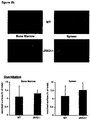
- TRANCE stimulation of mCSF dependent osteoclast progenitors results in a time dependent activation of AP1 binding, but dos not affect NF ⁇ B activation (Fig. 5).
- TRANCE also induces binding on cAMP responsive element (CRE), a target binding site for ATF/CREB family of transcription factors, another JNK dependent transcription factors complex .
- CRE cAMP responsive element
- Jun components of the TRANCE-induced AP1 binding activity were identified by super-shift as cJun and JunD, the two potential JNKs targets of the Jun family (Fig. 6).
- Fig. 6 Jun components of AP1 binding activity induced by TRANCE in osteoclast progenitors were determined by super-shift experiments that demonstrated an increase in the amount of c-Jun and JunD bound to AP1 binding sites after 2 and 4 hours following TRANCE stimulation.
Landscapes
- Health & Medical Sciences (AREA)
- Life Sciences & Earth Sciences (AREA)
- Chemical & Material Sciences (AREA)
- Engineering & Computer Science (AREA)
- Immunology (AREA)
- General Health & Medical Sciences (AREA)
- Organic Chemistry (AREA)
- Medicinal Chemistry (AREA)
- Physical Education & Sports Medicine (AREA)
- Molecular Biology (AREA)
- Hematology (AREA)
- Urology & Nephrology (AREA)
- Bioinformatics & Cheminformatics (AREA)
- Biomedical Technology (AREA)
- Biotechnology (AREA)
- Biochemistry (AREA)
- Veterinary Medicine (AREA)
- Rheumatology (AREA)
- Proteomics, Peptides & Aminoacids (AREA)
- Public Health (AREA)
- Animal Behavior & Ethology (AREA)
- Analytical Chemistry (AREA)
- Pharmacology & Pharmacy (AREA)
- Nuclear Medicine, Radiotherapy & Molecular Imaging (AREA)
- Microbiology (AREA)
- General Chemical & Material Sciences (AREA)
- Chemical Kinetics & Catalysis (AREA)
- Orthopedic Medicine & Surgery (AREA)
- Physics & Mathematics (AREA)
- Food Science & Technology (AREA)
- Cell Biology (AREA)
- General Physics & Mathematics (AREA)
- Pathology (AREA)
- Wood Science & Technology (AREA)
- Zoology (AREA)
- Biophysics (AREA)
- General Engineering & Computer Science (AREA)
- Genetics & Genomics (AREA)
- Measuring Or Testing Involving Enzymes Or Micro-Organisms (AREA)
- Medicines That Contain Protein Lipid Enzymes And Other Medicines (AREA)
Priority Applications (6)
| Application Number | Priority Date | Filing Date | Title |
|---|---|---|---|
| EP99118847A EP1087230A1 (de) | 1999-09-24 | 1999-09-24 | Verfahren zum Nachweis von Verbindungen nützlich in Therapie von Knochenfehlern |
| PCT/EP2000/009326 WO2001022090A1 (en) | 1999-09-24 | 2000-09-25 | Method for identifying compounds useful in the therapy of bone disorders |
| CA002384928A CA2384928A1 (en) | 1999-09-24 | 2000-09-25 | Method for identifying compounds useful in the therapy of bone disorders |
| JP2001525409A JP2003510055A (ja) | 1999-09-24 | 2000-09-25 | 骨疾病の治療に有用な化合物の同定方法 |
| EP00969290A EP1218747A1 (de) | 1999-09-24 | 2000-09-25 | Verfahren zum nachweis von verbindungen nützlich in therapie von knochenfehlern |
| MXPA02002862A MXPA02002862A (es) | 1999-09-24 | 2000-09-25 | Metodo para identificar compuesto utiles en la terapia de desordenes oseos. |
Applications Claiming Priority (1)
| Application Number | Priority Date | Filing Date | Title |
|---|---|---|---|
| EP99118847A EP1087230A1 (de) | 1999-09-24 | 1999-09-24 | Verfahren zum Nachweis von Verbindungen nützlich in Therapie von Knochenfehlern |
Publications (1)
| Publication Number | Publication Date |
|---|---|
| EP1087230A1 true EP1087230A1 (de) | 2001-03-28 |
Family
ID=8239055
Family Applications (2)
| Application Number | Title | Priority Date | Filing Date |
|---|---|---|---|
| EP99118847A Withdrawn EP1087230A1 (de) | 1999-09-24 | 1999-09-24 | Verfahren zum Nachweis von Verbindungen nützlich in Therapie von Knochenfehlern |
| EP00969290A Withdrawn EP1218747A1 (de) | 1999-09-24 | 2000-09-25 | Verfahren zum nachweis von verbindungen nützlich in therapie von knochenfehlern |
Family Applications After (1)
| Application Number | Title | Priority Date | Filing Date |
|---|---|---|---|
| EP00969290A Withdrawn EP1218747A1 (de) | 1999-09-24 | 2000-09-25 | Verfahren zum nachweis von verbindungen nützlich in therapie von knochenfehlern |
Country Status (5)
| Country | Link |
|---|---|
| EP (2) | EP1087230A1 (de) |
| JP (1) | JP2003510055A (de) |
| CA (1) | CA2384928A1 (de) |
| MX (1) | MXPA02002862A (de) |
| WO (1) | WO2001022090A1 (de) |
Cited By (5)
| Publication number | Priority date | Publication date | Assignee | Title |
|---|---|---|---|---|
| US6884598B2 (en) | 2000-09-22 | 2005-04-26 | Immunex Corporation | Screening assays for agonists and antagonists of receptor activator of NF-κB |
| US7160994B2 (en) | 2002-03-28 | 2007-01-09 | Trustees Of The University Of Pennsylvania | Osteoclast-specific genes and proteins and uses thereof |
| EP2275547A3 (de) * | 2004-12-13 | 2011-05-04 | Alethia Biotherapeutics Inc. | Am Prozess der Knochengeweberemodellierung beteiligte Polynukleotid- und Polypeptidsequenzen |
| US8067557B2 (en) | 2002-03-28 | 2011-11-29 | The Trustees Of The University Of Pennsylvania | OCL-2A3 compositions and uses thereof |
| CN102676466A (zh) * | 2011-03-17 | 2012-09-19 | 南京大学 | 一种突变型jnk1序列及其质粒的应用 |
Families Citing this family (1)
| Publication number | Priority date | Publication date | Assignee | Title |
|---|---|---|---|---|
| US7247767B2 (en) | 2004-01-21 | 2007-07-24 | Boehringer Ingelheim International Gmbh | Mouse model for psoriasis and psoriatic arthritis |
Citations (2)
| Publication number | Priority date | Publication date | Assignee | Title |
|---|---|---|---|---|
| WO1998049188A1 (en) * | 1997-04-28 | 1998-11-05 | University Of Massachusetts | Inhibitors of the jnk signal transduction pathway and methods of use |
| WO1999018193A1 (en) * | 1997-10-03 | 1999-04-15 | University Of Massachusetts | Jnk3 modulators and methods of use |
-
1999
- 1999-09-24 EP EP99118847A patent/EP1087230A1/de not_active Withdrawn
-
2000
- 2000-09-25 CA CA002384928A patent/CA2384928A1/en not_active Abandoned
- 2000-09-25 EP EP00969290A patent/EP1218747A1/de not_active Withdrawn
- 2000-09-25 MX MXPA02002862A patent/MXPA02002862A/es unknown
- 2000-09-25 JP JP2001525409A patent/JP2003510055A/ja active Pending
- 2000-09-25 WO PCT/EP2000/009326 patent/WO2001022090A1/en not_active Ceased
Patent Citations (2)
| Publication number | Priority date | Publication date | Assignee | Title |
|---|---|---|---|---|
| WO1998049188A1 (en) * | 1997-04-28 | 1998-11-05 | University Of Massachusetts | Inhibitors of the jnk signal transduction pathway and methods of use |
| WO1999018193A1 (en) * | 1997-10-03 | 1999-04-15 | University Of Massachusetts | Jnk3 modulators and methods of use |
Non-Patent Citations (4)
| Title |
|---|
| BIOLOGICAL ABSTRACTS, 1 January 1900, Philadelphia, PA, US; abstract no. 1999:431065, XP002131543 * |
| CHEMICAL ABSTRACTS, vol. 117, no. 23, 7 December 1992, Columbus, Ohio, US; abstract no. 228899, XP002131544 * |
| J.P. DAVID ET AL.: "c-Jun phosphorylation by JNK1 but not by JNK2 is necessary for efficient osteoclastogenesis in response to TRANCE stimulation.", JOURNAL OF BONE AND MINERAL RESEARCH, vol. 14, no. supplement 1, 1 September 1999 (1999-09-01), St. Louis Missouri USA, pages S149, XP008014472 * |
| N. GOODE ET AL.: "Differential regulation of glycogen synthase kinase-3.beta. by protein kinase C isotypes", JOURNAL OF BIOLOGICAL CHEMISTRY, vol. 267, no. 24, 1992, Rockville MD USA, pages 16878 - 16882, XP000882735 * |
Cited By (8)
| Publication number | Priority date | Publication date | Assignee | Title |
|---|---|---|---|---|
| US6884598B2 (en) | 2000-09-22 | 2005-04-26 | Immunex Corporation | Screening assays for agonists and antagonists of receptor activator of NF-κB |
| US7572594B2 (en) | 2000-09-22 | 2009-08-11 | Immunex Corporation | Screening assays for agonists or antagonists or receptor activator of NF-κB |
| US7160994B2 (en) | 2002-03-28 | 2007-01-09 | Trustees Of The University Of Pennsylvania | Osteoclast-specific genes and proteins and uses thereof |
| US8067557B2 (en) | 2002-03-28 | 2011-11-29 | The Trustees Of The University Of Pennsylvania | OCL-2A3 compositions and uses thereof |
| US8642549B2 (en) | 2002-03-28 | 2014-02-04 | The Trustees Of The University Of Pennsylvania | OCL-2A3 compositions and uses thereof |
| EP2275547A3 (de) * | 2004-12-13 | 2011-05-04 | Alethia Biotherapeutics Inc. | Am Prozess der Knochengeweberemodellierung beteiligte Polynukleotid- und Polypeptidsequenzen |
| US8444975B2 (en) | 2004-12-13 | 2013-05-21 | Alethia Biotherapeutics Inc. | Method for inhibiting bone resorption |
| CN102676466A (zh) * | 2011-03-17 | 2012-09-19 | 南京大学 | 一种突变型jnk1序列及其质粒的应用 |
Also Published As
| Publication number | Publication date |
|---|---|
| WO2001022090A1 (en) | 2001-03-29 |
| WO2001022090A9 (en) | 2001-10-18 |
| MXPA02002862A (es) | 2002-10-23 |
| JP2003510055A (ja) | 2003-03-18 |
| CA2384928A1 (en) | 2001-03-29 |
| EP1218747A1 (de) | 2002-07-03 |
Similar Documents
| Publication | Publication Date | Title |
|---|---|---|
| Watson et al. | Phosphorylation of c-Jun is necessary for apoptosis induced by survival signal withdrawal in cerebellar granule neurons | |
| Cheng et al. | TANK, a co-inducer with TRAF2 of TNF-and CD 40L-mediated NF-kappaB activation. | |
| Zhao et al. | Analysis of p53-regulated gene expression patterns using oligonucleotide arrays | |
| Masquilier et al. | Transcriptional cross-talk: nuclear factors CREM and CREB bind to AP-1 sites and inhibit activation by Jun. | |
| Marié et al. | Differential viral induction of distinct interferon‐α genes by positive feedback through interferon regulatory factor‐7 | |
| Lee et al. | TRAF2 is essential for JNK but not NF-κB activation and regulates lymphocyte proliferation and survival | |
| Nie et al. | Notch‐induced E2A ubiquitination and degradation are controlled by MAP kinase activities | |
| Kim et al. | Jab1/CSN5, a component of the COP9 signalosome, regulates transforming growth factor β signaling by binding to Smad7 and promoting its degradation | |
| Proweller et al. | Notch signaling represses myocardin-induced smooth muscle cell differentiation | |
| DiChiara et al. | Inhibition of E-selectin gene expression by transforming growth factor β in endothelial cells involves coactivator integration of Smad and nuclear factor κB–mediated signals | |
| Coats et al. | A new pathway for mitogen-dependent cdk2 regulation uncovered in p27Kip1-deficient cells | |
| Seth et al. | Cell cycle regulation of the c-Myc transcriptional activation domain | |
| Jobin et al. | TNF receptor-associated factor-2 is involved in both IL-1β and TNF-α signaling cascades leading to NF-κB activation and IL-8 expression in human intestinal epithelial cells | |
| Fretz et al. | 1, 25-Dihydroxyvitamin D3 regulates the expression of low-density lipoprotein receptor-related protein 5 via deoxyribonucleic acid sequence elements located downstream of the start site of transcription | |
| Williams et al. | Characterization of murine BATF: a negative regulator of activator protein‐1 activity in the thymus | |
| US5756669A (en) | P53-binding polypeptides and polynucleotides encoding same | |
| Hay et al. | Activation of NF-κB nuclear transcription factor by flow in human endothelial cells | |
| Pazdernik et al. | Mouse receptor interacting protein 3 does not contain a caspase-recruiting or a death domain but induces apoptosis and activates NF-κB | |
| David et al. | A new method to isolate large numbers of rabbit osteoclasts and osteoclast‐like cells: Application to the characterization of serum response element binding proteins during osteoclast differentiation | |
| Otero et al. | Defective osteoclastogenesis by IKKβ-null precursors is a result of receptor activator of NF-κB ligand (RANKL)-induced JNK-dependent apoptosis and impaired differentiation | |
| Palcy et al. | Role of Activator Protein 1 Transcriptional Activity in the Regulation of Gene Expression by Transforming Growth Factor β1 and Bone Morphogenetic Protein 2 in ROS 17/2.8 Osteoblast‐like Cells | |
| Lin et al. | TRAF2 exerts its antiapoptotic effect by regulating the expression of Krüppel-like factor LKLF | |
| Bakiri et al. | Role of heterodimerization of c-Fos and Fra1 proteins in osteoclast differentiation | |
| EP1087230A1 (de) | Verfahren zum Nachweis von Verbindungen nützlich in Therapie von Knochenfehlern | |
| US5874230A (en) | Assays using TRAF2-associated protein kinase polypeptides |
Legal Events
| Date | Code | Title | Description |
|---|---|---|---|
| PUAI | Public reference made under article 153(3) epc to a published international application that has entered the european phase |
Free format text: ORIGINAL CODE: 0009012 |
|
| AK | Designated contracting states |
Kind code of ref document: A1 Designated state(s): AT BE CH CY DE DK ES FI FR GB GR IE IT LI LU MC NL PT SE |
|
| AX | Request for extension of the european patent |
Free format text: AL;LT;LV;MK;RO;SI |
|
| AKX | Designation fees paid | ||
| REG | Reference to a national code |
Ref country code: DE Ref legal event code: 8566 |
|
| STAA | Information on the status of an ep patent application or granted ep patent |
Free format text: STATUS: THE APPLICATION IS DEEMED TO BE WITHDRAWN |
|
| 18D | Application deemed to be withdrawn |
Effective date: 20010929 |