EP1088098B2 - Fitnesstest und verfahren zur verminderung von hiv-resistenz gegen therapie - Google Patents
Fitnesstest und verfahren zur verminderung von hiv-resistenz gegen therapie Download PDFInfo
- Publication number
- EP1088098B2 EP1088098B2 EP99931861.1A EP99931861A EP1088098B2 EP 1088098 B2 EP1088098 B2 EP 1088098B2 EP 99931861 A EP99931861 A EP 99931861A EP 1088098 B2 EP1088098 B2 EP 1088098B2
- Authority
- EP
- European Patent Office
- Prior art keywords
- hiv
- mutant
- use according
- alkyl
- biochemical
- Prior art date
- Legal status (The legal status is an assumption and is not a legal conclusion. Google has not performed a legal analysis and makes no representation as to the accuracy of the status listed.)
- Expired - Lifetime
Links
- YNQLUTRBYVCPMQ-UHFFFAOYSA-N CCc1ccccc1 Chemical compound CCc1ccccc1 YNQLUTRBYVCPMQ-UHFFFAOYSA-N 0.000 description 1
- CMYBEXDCZATBAY-KPGICGJXSA-N COC1C(CCO2)[C@H]2OC1 Chemical compound COC1C(CCO2)[C@H]2OC1 CMYBEXDCZATBAY-KPGICGJXSA-N 0.000 description 1
Images


Classifications
-
- A—HUMAN NECESSITIES
- A61—MEDICAL OR VETERINARY SCIENCE; HYGIENE
- A61K—PREPARATIONS FOR MEDICAL, DENTAL OR TOILETRY PURPOSES
- A61K31/00—Medicinal preparations containing organic active ingredients
- A61K31/33—Heterocyclic compounds
- A61K31/335—Heterocyclic compounds having oxygen as the only ring hetero atom, e.g. fungichromin
- A61K31/34—Heterocyclic compounds having oxygen as the only ring hetero atom, e.g. fungichromin having five-membered rings with one oxygen as the only ring hetero atom, e.g. isosorbide
-
- A—HUMAN NECESSITIES
- A61—MEDICAL OR VETERINARY SCIENCE; HYGIENE
- A61K—PREPARATIONS FOR MEDICAL, DENTAL OR TOILETRY PURPOSES
- A61K31/00—Medicinal preparations containing organic active ingredients
- A61K31/33—Heterocyclic compounds
- A61K31/335—Heterocyclic compounds having oxygen as the only ring hetero atom, e.g. fungichromin
- A61K31/34—Heterocyclic compounds having oxygen as the only ring hetero atom, e.g. fungichromin having five-membered rings with one oxygen as the only ring hetero atom, e.g. isosorbide
- A61K31/341—Heterocyclic compounds having oxygen as the only ring hetero atom, e.g. fungichromin having five-membered rings with one oxygen as the only ring hetero atom, e.g. isosorbide not condensed with another ring, e.g. ranitidine, furosemide, bufetolol, muscarine
-
- A—HUMAN NECESSITIES
- A61—MEDICAL OR VETERINARY SCIENCE; HYGIENE
- A61K—PREPARATIONS FOR MEDICAL, DENTAL OR TOILETRY PURPOSES
- A61K31/00—Medicinal preparations containing organic active ingredients
- A61K31/33—Heterocyclic compounds
- A61K31/335—Heterocyclic compounds having oxygen as the only ring hetero atom, e.g. fungichromin
- A61K31/34—Heterocyclic compounds having oxygen as the only ring hetero atom, e.g. fungichromin having five-membered rings with one oxygen as the only ring hetero atom, e.g. isosorbide
- A61K31/343—Heterocyclic compounds having oxygen as the only ring hetero atom, e.g. fungichromin having five-membered rings with one oxygen as the only ring hetero atom, e.g. isosorbide condensed with a carbocyclic ring, e.g. coumaran, bufuralol, befunolol, clobenfurol, amiodarone
-
- A—HUMAN NECESSITIES
- A61—MEDICAL OR VETERINARY SCIENCE; HYGIENE
- A61K—PREPARATIONS FOR MEDICAL, DENTAL OR TOILETRY PURPOSES
- A61K31/00—Medicinal preparations containing organic active ingredients
- A61K31/33—Heterocyclic compounds
- A61K31/335—Heterocyclic compounds having oxygen as the only ring hetero atom, e.g. fungichromin
- A61K31/35—Heterocyclic compounds having oxygen as the only ring hetero atom, e.g. fungichromin having six-membered rings with one oxygen as the only ring hetero atom
-
- A—HUMAN NECESSITIES
- A61—MEDICAL OR VETERINARY SCIENCE; HYGIENE
- A61K—PREPARATIONS FOR MEDICAL, DENTAL OR TOILETRY PURPOSES
- A61K31/00—Medicinal preparations containing organic active ingredients
- A61K31/33—Heterocyclic compounds
- A61K31/395—Heterocyclic compounds having nitrogen as a ring hetero atom, e.g. guanethidine or rifamycins
- A61K31/41—Heterocyclic compounds having nitrogen as a ring hetero atom, e.g. guanethidine or rifamycins having five-membered rings with two or more ring hetero atoms, at least one of which being nitrogen, e.g. tetrazole
- A61K31/425—Thiazoles
- A61K31/426—1,3-Thiazoles
-
- A—HUMAN NECESSITIES
- A61—MEDICAL OR VETERINARY SCIENCE; HYGIENE
- A61K—PREPARATIONS FOR MEDICAL, DENTAL OR TOILETRY PURPOSES
- A61K31/00—Medicinal preparations containing organic active ingredients
- A61K31/33—Heterocyclic compounds
- A61K31/395—Heterocyclic compounds having nitrogen as a ring hetero atom, e.g. guanethidine or rifamycins
- A61K31/41—Heterocyclic compounds having nitrogen as a ring hetero atom, e.g. guanethidine or rifamycins having five-membered rings with two or more ring hetero atoms, at least one of which being nitrogen, e.g. tetrazole
- A61K31/425—Thiazoles
- A61K31/427—Thiazoles not condensed and containing further heterocyclic rings
-
- A—HUMAN NECESSITIES
- A61—MEDICAL OR VETERINARY SCIENCE; HYGIENE
- A61K—PREPARATIONS FOR MEDICAL, DENTAL OR TOILETRY PURPOSES
- A61K31/00—Medicinal preparations containing organic active ingredients
- A61K31/33—Heterocyclic compounds
- A61K31/395—Heterocyclic compounds having nitrogen as a ring hetero atom, e.g. guanethidine or rifamycins
- A61K31/435—Heterocyclic compounds having nitrogen as a ring hetero atom, e.g. guanethidine or rifamycins having six-membered rings with one nitrogen as the only ring hetero atom
- A61K31/44—Non condensed pyridines; Hydrogenated derivatives thereof
- A61K31/445—Non condensed piperidines, e.g. piperocaine
- A61K31/4523—Non condensed piperidines, e.g. piperocaine containing further heterocyclic ring systems
-
- A—HUMAN NECESSITIES
- A61—MEDICAL OR VETERINARY SCIENCE; HYGIENE
- A61K—PREPARATIONS FOR MEDICAL, DENTAL OR TOILETRY PURPOSES
- A61K31/00—Medicinal preparations containing organic active ingredients
- A61K31/33—Heterocyclic compounds
- A61K31/395—Heterocyclic compounds having nitrogen as a ring hetero atom, e.g. guanethidine or rifamycins
- A61K31/435—Heterocyclic compounds having nitrogen as a ring hetero atom, e.g. guanethidine or rifamycins having six-membered rings with one nitrogen as the only ring hetero atom
- A61K31/44—Non condensed pyridines; Hydrogenated derivatives thereof
- A61K31/445—Non condensed piperidines, e.g. piperocaine
- A61K31/4523—Non condensed piperidines, e.g. piperocaine containing further heterocyclic ring systems
- A61K31/4525—Non condensed piperidines, e.g. piperocaine containing further heterocyclic ring systems containing a five-membered ring with oxygen as a ring hetero atom
-
- A—HUMAN NECESSITIES
- A61—MEDICAL OR VETERINARY SCIENCE; HYGIENE
- A61K—PREPARATIONS FOR MEDICAL, DENTAL OR TOILETRY PURPOSES
- A61K31/00—Medicinal preparations containing organic active ingredients
- A61K31/33—Heterocyclic compounds
- A61K31/395—Heterocyclic compounds having nitrogen as a ring hetero atom, e.g. guanethidine or rifamycins
- A61K31/435—Heterocyclic compounds having nitrogen as a ring hetero atom, e.g. guanethidine or rifamycins having six-membered rings with one nitrogen as the only ring hetero atom
- A61K31/47—Quinolines; Isoquinolines
-
- A—HUMAN NECESSITIES
- A61—MEDICAL OR VETERINARY SCIENCE; HYGIENE
- A61K—PREPARATIONS FOR MEDICAL, DENTAL OR TOILETRY PURPOSES
- A61K31/00—Medicinal preparations containing organic active ingredients
- A61K31/33—Heterocyclic compounds
- A61K31/395—Heterocyclic compounds having nitrogen as a ring hetero atom, e.g. guanethidine or rifamycins
- A61K31/435—Heterocyclic compounds having nitrogen as a ring hetero atom, e.g. guanethidine or rifamycins having six-membered rings with one nitrogen as the only ring hetero atom
- A61K31/47—Quinolines; Isoquinolines
- A61K31/472—Non-condensed isoquinolines, e.g. papaverine
- A61K31/4725—Non-condensed isoquinolines, e.g. papaverine containing further heterocyclic rings
-
- A—HUMAN NECESSITIES
- A61—MEDICAL OR VETERINARY SCIENCE; HYGIENE
- A61K—PREPARATIONS FOR MEDICAL, DENTAL OR TOILETRY PURPOSES
- A61K31/00—Medicinal preparations containing organic active ingredients
- A61K31/33—Heterocyclic compounds
- A61K31/395—Heterocyclic compounds having nitrogen as a ring hetero atom, e.g. guanethidine or rifamycins
- A61K31/495—Heterocyclic compounds having nitrogen as a ring hetero atom, e.g. guanethidine or rifamycins having six-membered rings with two or more nitrogen atoms as the only ring heteroatoms, e.g. piperazine or tetrazines
- A61K31/496—Non-condensed piperazines containing further heterocyclic rings, e.g. rifampin, thiothixene or sparfloxacin
-
- A—HUMAN NECESSITIES
- A61—MEDICAL OR VETERINARY SCIENCE; HYGIENE
- A61P—SPECIFIC THERAPEUTIC ACTIVITY OF CHEMICAL COMPOUNDS OR MEDICINAL PREPARATIONS
- A61P31/00—Antiinfectives, i.e. antibiotics, antiseptics, chemotherapeutics
-
- A—HUMAN NECESSITIES
- A61—MEDICAL OR VETERINARY SCIENCE; HYGIENE
- A61P—SPECIFIC THERAPEUTIC ACTIVITY OF CHEMICAL COMPOUNDS OR MEDICINAL PREPARATIONS
- A61P31/00—Antiinfectives, i.e. antibiotics, antiseptics, chemotherapeutics
- A61P31/04—Antibacterial agents
-
- A—HUMAN NECESSITIES
- A61—MEDICAL OR VETERINARY SCIENCE; HYGIENE
- A61P—SPECIFIC THERAPEUTIC ACTIVITY OF CHEMICAL COMPOUNDS OR MEDICINAL PREPARATIONS
- A61P31/00—Antiinfectives, i.e. antibiotics, antiseptics, chemotherapeutics
- A61P31/12—Antivirals
-
- A—HUMAN NECESSITIES
- A61—MEDICAL OR VETERINARY SCIENCE; HYGIENE
- A61P—SPECIFIC THERAPEUTIC ACTIVITY OF CHEMICAL COMPOUNDS OR MEDICINAL PREPARATIONS
- A61P31/00—Antiinfectives, i.e. antibiotics, antiseptics, chemotherapeutics
- A61P31/12—Antivirals
- A61P31/14—Antivirals for RNA viruses
-
- A—HUMAN NECESSITIES
- A61—MEDICAL OR VETERINARY SCIENCE; HYGIENE
- A61P—SPECIFIC THERAPEUTIC ACTIVITY OF CHEMICAL COMPOUNDS OR MEDICINAL PREPARATIONS
- A61P31/00—Antiinfectives, i.e. antibiotics, antiseptics, chemotherapeutics
- A61P31/12—Antivirals
- A61P31/14—Antivirals for RNA viruses
- A61P31/18—Antivirals for RNA viruses for HIV
-
- A—HUMAN NECESSITIES
- A61—MEDICAL OR VETERINARY SCIENCE; HYGIENE
- A61P—SPECIFIC THERAPEUTIC ACTIVITY OF CHEMICAL COMPOUNDS OR MEDICINAL PREPARATIONS
- A61P33/00—Antiparasitic agents
- A61P33/02—Antiprotozoals, e.g. for leishmaniasis, trichomoniasis, toxoplasmosis
- A61P33/06—Antimalarials
-
- A—HUMAN NECESSITIES
- A61—MEDICAL OR VETERINARY SCIENCE; HYGIENE
- A61P—SPECIFIC THERAPEUTIC ACTIVITY OF CHEMICAL COMPOUNDS OR MEDICINAL PREPARATIONS
- A61P35/00—Antineoplastic agents
-
- A—HUMAN NECESSITIES
- A61—MEDICAL OR VETERINARY SCIENCE; HYGIENE
- A61P—SPECIFIC THERAPEUTIC ACTIVITY OF CHEMICAL COMPOUNDS OR MEDICINAL PREPARATIONS
- A61P37/00—Drugs for immunological or allergic disorders
- A61P37/02—Immunomodulators
- A61P37/04—Immunostimulants
-
- A—HUMAN NECESSITIES
- A61—MEDICAL OR VETERINARY SCIENCE; HYGIENE
- A61P—SPECIFIC THERAPEUTIC ACTIVITY OF CHEMICAL COMPOUNDS OR MEDICINAL PREPARATIONS
- A61P43/00—Drugs for specific purposes, not provided for in groups A61P1/00-A61P41/00
-
- C—CHEMISTRY; METALLURGY
- C12—BIOCHEMISTRY; BEER; SPIRITS; WINE; VINEGAR; MICROBIOLOGY; ENZYMOLOGY; MUTATION OR GENETIC ENGINEERING
- C12Q—MEASURING OR TESTING PROCESSES INVOLVING ENZYMES, NUCLEIC ACIDS OR MICROORGANISMS; COMPOSITIONS OR TEST PAPERS THEREFOR; PROCESSES OF PREPARING SUCH COMPOSITIONS; CONDITION-RESPONSIVE CONTROL IN MICROBIOLOGICAL OR ENZYMOLOGICAL PROCESSES
- C12Q1/00—Measuring or testing processes involving enzymes, nucleic acids or microorganisms; Compositions therefor; Processes of preparing such compositions
- C12Q1/02—Measuring or testing processes involving enzymes, nucleic acids or microorganisms; Compositions therefor; Processes of preparing such compositions involving viable microorganisms
- C12Q1/025—Measuring or testing processes involving enzymes, nucleic acids or microorganisms; Compositions therefor; Processes of preparing such compositions involving viable microorganisms for testing or evaluating the effect of chemical or biological compounds, e.g. drugs, cosmetics
-
- C—CHEMISTRY; METALLURGY
- C12—BIOCHEMISTRY; BEER; SPIRITS; WINE; VINEGAR; MICROBIOLOGY; ENZYMOLOGY; MUTATION OR GENETIC ENGINEERING
- C12Q—MEASURING OR TESTING PROCESSES INVOLVING ENZYMES, NUCLEIC ACIDS OR MICROORGANISMS; COMPOSITIONS OR TEST PAPERS THEREFOR; PROCESSES OF PREPARING SUCH COMPOSITIONS; CONDITION-RESPONSIVE CONTROL IN MICROBIOLOGICAL OR ENZYMOLOGICAL PROCESSES
- C12Q1/00—Measuring or testing processes involving enzymes, nucleic acids or microorganisms; Compositions therefor; Processes of preparing such compositions
- C12Q1/34—Measuring or testing processes involving enzymes, nucleic acids or microorganisms; Compositions therefor; Processes of preparing such compositions involving hydrolase
- C12Q1/37—Measuring or testing processes involving enzymes, nucleic acids or microorganisms; Compositions therefor; Processes of preparing such compositions involving hydrolase involving peptidase or proteinase
-
- G—PHYSICS
- G01—MEASURING; TESTING
- G01N—INVESTIGATING OR ANALYSING MATERIALS BY DETERMINING THEIR CHEMICAL OR PHYSICAL PROPERTIES
- G01N2333/00—Assays involving biological materials from specific organisms or of a specific nature
- G01N2333/005—Assays involving biological materials from specific organisms or of a specific nature from viruses
- G01N2333/08—RNA viruses
- G01N2333/15—Retroviridae, e.g. bovine leukaemia virus, feline leukaemia virus, feline leukaemia virus, human T-cell leukaemia-lymphoma virus
- G01N2333/155—Lentiviridae, e.g. visna-maedi virus, equine infectious virus, FIV, SIV
- G01N2333/16—HIV-1, HIV-2
-
- G—PHYSICS
- G01—MEASURING; TESTING
- G01N—INVESTIGATING OR ANALYSING MATERIALS BY DETERMINING THEIR CHEMICAL OR PHYSICAL PROPERTIES
- G01N2333/00—Assays involving biological materials from specific organisms or of a specific nature
- G01N2333/81—Protease inhibitors
- G01N2333/8107—Endopeptidase (E.C. 3.4.21-99) inhibitors
- G01N2333/8142—Aspartate protease (E.C. 3.4.23) inhibitors, e.g. HIV protease inhibitors
-
- Y—GENERAL TAGGING OF NEW TECHNOLOGICAL DEVELOPMENTS; GENERAL TAGGING OF CROSS-SECTIONAL TECHNOLOGIES SPANNING OVER SEVERAL SECTIONS OF THE IPC; TECHNICAL SUBJECTS COVERED BY FORMER USPC CROSS-REFERENCE ART COLLECTIONS [XRACs] AND DIGESTS
- Y02—TECHNOLOGIES OR APPLICATIONS FOR MITIGATION OR ADAPTATION AGAINST CLIMATE CHANGE
- Y02A—TECHNOLOGIES FOR ADAPTATION TO CLIMATE CHANGE
- Y02A50/00—TECHNOLOGIES FOR ADAPTATION TO CLIMATE CHANGE in human health protection, e.g. against extreme weather
- Y02A50/30—Against vector-borne diseases, e.g. mosquito-borne, fly-borne, tick-borne or waterborne diseases whose impact is exacerbated by climate change
Definitions
- the present invention relates to the use of a compound in the preparation of a medicament for treating an HIV-infected mammal, in combination with an antiviral agent selected from the group consisting of ritonavir, indinavir, and saquinavir.
- AIDS is a fatal disease, reported cases of which have increased dramatically within the past several years. Estimates of reported cases in the very near future also continue to rise dramatically.
- the AIDS virus was first identified in 1983. It has been known by several names and acronyms. It is the third known T-lymphocyte virus (HTLV-III), and it has the capacity to replicate within cells of the immune system, causing profound cell destruction.
- the AIDS virus is a retrovirus, a virus that uses reverse transcriptase during replication. This particular retrovirus is also known as lymphadenopathy-associated virus (LAV), AIDS-related virus (ARV) and, most recently, as human immunodeficiency virus (HIV).
- LAV lymphadenopathy-associated virus
- ARV AIDS-related virus
- HIV human immunodeficiency virus
- HIV is known to exert a profound cytopathic effect on the CD4+ helper/inducer T-cells, thereby severely compromising the immune system. HIV infection also results in neurological deterioration and, ultimately, in the death of the infected individual.
- anti-retroviral agents such as 3'-azido-2',3'-dideoxythymidine (AZT), 2'3'-dideoxycytidine (ddC), and 2'3'-dideoxyinosine (ddI) are known to inhibit reverse transcriptase.
- antiviral agents that inhibit transactivator protein.
- Nucleoside analogs, such as AZT are currently available for antiviral therapy. Although very useful, the utility of AZT and related compounds is limited by toxicity and insufficient therapeutic indices for fully adequate therapy.
- Retroviral protease inhibitors also have been identified as a class of anti-retroviral agents. Retroviral proteases processes polyprotein precursors into viral structural proteins and replicative enzymes. This processing is essential for the assembly and maturation of fully infectious virions. Accordingly, the design of protease inhibitors remains an important therapeutic goal in the treatment of AIDS.
- HIV protease inhibitors in combination with agents that have different antiretroviral mechanisms (e.g., AZT, ddI and ddT), also has been described.
- agents that have different antiretroviral mechanisms e.g., AZT, ddI and ddT
- synergism against HIV-1 has been observed between certain C 2 symmetric HIV inhibitors and AZT ( Kageyama et al., Antimicrob. Agents Chemother., 36, 926-933 (1992 )).
- inhibitors of protease have been designed using the natural cleavage site of the precursor polyproteins as a starting point. These inhibitors typically are peptide substrate analogs in which the scissile P 1 -P 1 ' amide bond has been replaced by a non-hydrolyzable isostere with tetrahedral geometry ( Moore et al, Perspect. Drug Dis. Design, 1, 85 (1993 ); Tomasselli et al., Int. J. Chem. Biotechnology, 6 (1991 ); Huff, J. Med. Chem., 34, 2305 (1991 ) ; Norbeck et al., Ann. Reports Med.
- active agents contain a non-hydrolyzable, dipeptidic isostere, such as hydroxyethylene (McQuade et al., supra; Meek et al., Nature (London), 343, 90-92 (1990 ); and Vacca et al., J. Med. Chem., 34, 1225-1228 (1991 )) or hydroxyethylamine ( Ghosh et al., Bioorg. Med. Chem. Lett., 8, 687-690 (1998 ); Ghoah et al., J. Med. Chem., 36, 292-295 (1993 )); Rich et al., J. Med.
- C 2 symmetric inhibitors of HIV protease represent another class of potent HIV protease inhibitors, which were created by Erickson et al., on the basis of the three-dimensional symmetry of the enzyme active site (Erickson et al. (1990), supra).
- the usefulness of currently available HIV protease inhibitors in the treatment of AIDS has been limited by relatively short plasma half-life, poor oral bioavailability, and the technical difficulty of scale-up synthesis (Meek et al. (1992), supra).
- HIV protease inhibitors incorporating the 2,5-diamino-3,4-disubstituted-1,6-diphenylhexane isostere are described in Ghosh et al., Bioorg. Med. Chem. Lett., 8, 687-690 (1998 ) and U.S. Patent Nos. 5,728,718 (Randad et al. ). HIV protease inhibitors, which incorporate the hydroxyethylamine isostere, are described in U.S. Patent Nos. 5,502,060 (Thompson et al. ), 5,703,076 (Talley et al. ), and 5,475,027 (Talley et al. ).
- multidrug-resistant HIV strains are typically found in infected patients, who had undergone treatment with a combination of HIV protease inhibitors or a series of different HIV protease inhibitors.
- the number of reported cases of patients infected with multidrug-resistant HIV is rising dramatically.
- the available options for AIDS chemotherapy and/or HIV management is severely limited or is, otherwise, completely nonexistent.
- Drug resistance is unfortunately the most common reason for drug failures generally.
- One of the most dramatic examples of drug failure due to resistance is in HIV therapy. Once HIV resistance is obtained to first-line therapy, the chances of future success are greatly diminished because of the development of multidrug cross resistance.
- Other diseases involving infectious agents (e.g., viruses, bacteria, protozoa, and prions) or other disease-causing cells (e.g., tumor cells) present similar challenges in that drug resistance is a primary cause of drug failure.
- the present invention pertains to the use of a compound of the formula: or a pharmaceutically acceptable salt, a prodrug, or an ester thereof, or a pharmaceutically acceptable composition of said compound, said salt, said prodrug, or said ester thereof, wherein:
- the "vitality" of a biochemical target of a mutant replicating biological entity relative to that of its predecessor's biochemical target can be used to predict the biological fitness of the mutant under the selection pressure of an inhibitor of the biochemical target.
- the "vitality" of a biochemical target of a mutant replicating biological entity relative to the "vitality” of its predecessor's biochemical target is defined herein as the "biochemical fitness.”
- Biochemical vitality is a function of at least two variables: the ability of a particular inhibitor to inhibit a biochemical target of the replicating biological entity in question, and the ability of the cell's biochemical target to inherently perform its biochemical function (irrespective of an inhibitor). Biochemical vitality also can include other factors that effect the ability of a biochemical target to perform its biochemical function in the presence of the inhibitor.
- the biochemical target in question can include, for example, a biochemical species with one or more known or unknown biological functions.
- the biochemical target can be, for example, a biochemical species having one or more specific biochemical function, or it can be a biochemical species that effects or influences a biochemical function directly or indirectly.
- Suitable biochemical targets include, for example, enzymes, proteins, oligomers, receptors, and the like.
- Suitable enzymes include, for example, reverse transcriptases, proteases (e.g., retroviral proteases, plasmepsins, and the like), methylases, oxidases, esterases, acyl transferases, and the like.
- Suitable enzymes also include, for example, viral and non-viral helicases, topoisomerases, DNA gyrases, DNA and RNA polymerases, parasite-encoded proteases, and the like.
- Suitable proteins include, for example, proteins that incorporate a conformational change as a major functional requirement, and the like.
- proteins include HIV gp41 and other fusogenic viral proteins and peptides, topoisomerases, and all DNA enzymes, and the like.
- Suitable oligomers include, for example, oligomers that require oligomerization in order to perform their biochemical function.
- examples of such oligomers include HIV protease, retroviral fusion proteins, peptides, HIV gp 41, viral and non-viral membrane fusion proteins, tumor suppressor proteins (e.g., p53, and the like) prions, ribosomes, and the like.
- the ability of a particular inhibitor to inhibit a biochemical target of a particular replicating biological entity can be determined by any suitable method and/or can be obtained from any suitable source.
- the ability of a particular inhibitor to inhibit a biochemical function of a replicating biological entity can be determined, for example, on the basis of a measurable property, or a measurable relationship of properties, that correlate with the ability of the inhibitor to inhibit the target.
- Suitable methods for determining the ability of the inhibitor to inhibit the target include, for example, assays, and the like.
- the ability of the inhibitor to inhibit the target can be obtained from one or more suitable sources, for example, assay data from a database, a textbook, or the literature.
- the ability of an inhibitor to inhibit the protein can be determined, for example, by obtaining the equilibrium dissociation constant (K d ) of drug binding to the target where drug binding interferes with the function of the protein.
- the ability of an inhibitor to inhibit the enzyme can be determined, for example, by obtaining the inhibition constant (K inh ), or the like.
- the inhibition constant can be in terms of drug inhibition constant for the effect of the drug on substrate catalysis (e.g., K 1 ) or dissociation constant for drug binding (e.g., K d ) where drug binding correlates with inhibition of enzyme function.
- the ability of an inhibitor to inhibit the oligomer can be determined, for example, by obtaining the equilibrium dissociation constant (K d ) for drug binding where drug binding interferes with oligomerization of the target.
- the biochemical target is a protein that requires a conformational change for its function
- use ability of an inhibitor two inhibit the conformational change can be determined, for example, by obtaining the equilibrium dissociation constant (K d ) for drug binding where drug binding interferes with the conformational change of the target.
- the ability of an inhibitor to inhibit the protein function can be determined by obtaining the equilibrium dissociation constant (K d ) four drug binding where drug binding interferes with ligand binding, macromolecule binding, or macromolecular complex binding.
- the ability of an inhibitor to inhibit the nucleic acid binding protein's function can be determined by obtaining the equilibrium dissociation constant (K d ) for drug binding where drug binding interferes with nucleic acid binding.
- Vitality also is a function of the biochemical target's ability to inherently perform its biochemical function (irrespective of an inhibitor).
- the biochemical target's ability to inherently perform its biochemical function can be determined by any suitable method and/or can be obtained from any suitable source.
- the biochemical target's ability to inherently perform its biochemical function can be determined, for example, on the basis of a measurable property, or measurable relationship of properties, that correlates with the ability of the biochemical target's ability to inherently perform its biochemical function.
- Suitable methods for determining the biochemical target's ability to inherently perform its biochemical function include, for example, biochemical assays, and the like.
- the ability of a cell's biochemical target to inherently perform its biochemical function can be obtained from one or more suitable sources, for example, assay data from a database, a textbook, or the literature.
- the ability of the enzyme to inherently perform its biochemical function can be determined, for example, by determining the catalytic efficiency of the enzyme.
- the catalytic efficiency for enzymes that exhibit Michaelis-Menten kinetics can be determined by obtaining the k cat /K M ratio, or by a similar method, wherein k cat is the catalytic rate and K M is the Michaelis constant.
- the ability of the protein to inherently perform its biochemical function can be determined, for example, by obtaining the equilibrium constant (K eq ) for the biochemical function of the protein, or the like.
- the ability of an inhibitor to perform its biological function can be determined, for example, by obtaining the equilibrium constant (K eq ) that is associated with oligomerization.
- the ability of the target to perform its function can be determined, for example, by obtaining the equilibrium constant (K eq ) associated with conformational change.
- the ability of the target to perform its function can be determined, for example, by obtaining the equilibrium dissociation constant (K d ) for ligand binding.
- the ability of an inhibitor to perform its function can be determined by obtaining the equilibrium dissociation constant (K d ) for nucleic acid binding.
- vitality also can be a function of other factors that effect the ability of a biochemical target to perform its biochemical function in the presence of the inhibitor.
- biochemical target is a dimeric species, for example, other factors that influence biochemical vitality might include the ability of the species to dimerize in the presence and/or in the absence of the inhibitor.
- dimerization rate can be included in the vitality determination.
- the biochemical vitalities of a mutant replicating biological entity and its predecessor when compared, describes the biochemical fitness of the target of the mutant cell. It has been found that the biochemical fitness relates to the biological fitness of the mutant in the presence of the inhibitor. When the value for the biochemical vitality of the target of the mutant exceeds the value for the biochemical vitality of the target of a predecessor of the mutant, the target of the mutant has greater biochemical fitness in the presence of the inhibitor. In such cases, the mutant replicating biological entity is favored over the predecessor and resistance to the inhibitor that is used to treat the predecessor is likely to develop.
- Biochemical vitality can be determined in many different ways that suitably relate the various factors relating to the biochemical vitality of the target. For example, a mathematical function may be used to relate the various factors.
- the vitality can be determined as a function of K inh (e.g., K i or K d ) and enzymatic or catalytic efficiency (e.g., K cat /K M ).
- Vitality can be determined as the product of K inh and enzymatic efficiency, for example, (K inh ) x (catalytic efficiency), or (K i ) x (catalytic efficiency) or (K d ) (catalytic efficiency).
- vitality can be determined, for example, as the log of the product of K inh and enzymatic efficiency, for example, log [(K inh ) x (catalytic efficiency)], or log [(K i ) x (catalytic efficiency)] or log [(K d ) x (catalytic efficiency)].
- vitality can be determined as a function of K inh (e.g., K i or K d ) and the k cat /K M ratio.
- vitality can be determined as the product of K inh and k cat /K M , e.g., (K inh ) x (k cat /K M ), wherein K inh is K i or K d .
- vitality can be determined, for example, as the log of the product of K inh and k cat /K M , e.g., log [(K inh ) x (K cat /K M )], wherein K inh is K i or K d .
- the biochemical targets is an enzyme and the vitality is (K i ) x (k cat /K M ), or log [(K i ) x (k cat /K M )].
- Biochemical fitness as utilized herein is a value that represents the vitality of a biochemical target of a mutant replicating biological entity relative to the vitality the biochemical target of its predecessor. Biochemical fitness is determined by comparing the vitality of a biochemical target of a mutant replicating biological entity relative to that of its predecessor. Any suitable comparison of the vitality of a biochemical target of a mutant replicating biological entity relative to that of its predecessor can be used in the determination of fitness.
- biochemical fitness can be determined as the difference between the biochemical vitality of a biochemical targets of a predecessor (biochemical vitality pred ) and the biochemical vitality of the biochemical target of a particular mutant replicating biological entity that can evolve from the predecessor (biochemical vitality mut ), e.g., (biochemical vitality mut ) - (biochemical vitality pred ). If biochemical fitness is determined on the basis of this difference, then a positive value indicates that the mutant has a higher fitness relative to its predecessor in the presence of the inhibitor, whereas a negative value indicates that the mutant is less fit relative to its predecessor. A value of zero indicates that the fitness of the mutant and the predecessor ace equal. A higher positive value indicates a greater chance that resistance to the inhibitor will emerge, whereas a higher negative value indicates a lower chance that resistance to the inhibitor will emerge.
- Fitness can be determined in the presence of any suitable compound that inhibits a biochemical target from performing its biological function.
- the inhibitor for example, can be a compound that inhibits an enzyme.
- Suitable enzyme inhibitors include, for example, protease inhibitors, reverse transcriptase inhibitors, DNA polymerase inhibitors, methylase inhibitors, oxidase inhibitors, esterase inhibitors, acyl transferase inhibitors, and the like.
- Suitable protease inhibitors include, for example, viral protease inhibitors, plasmepsin inhibitors, and cathepsin D inhibitors.
- the inhibitor is a viral protease inhibitor, more preferably a retroviral protease inhibitor, still more preferably an HIV-1 or an HIV-2 protease inhibitor, and most preferably and HIV-1 protease inhibitor.
- Exemplary HIV-1 protease inhibitors include, for example, saquinavir, ritonavir, indinavir, nelfinavir, amprenavir, and HIV-1 protease inhibitors that are undergoing clinical trials, e.g., tipranavir (PNU-140690).
- Suitable plasmepsin inhibitors include, for example, inhibitors of plasmepsin I or II, including inhibitors of plasmepsin I or II that have antimalarial activity.
- Suitable inhibitors of cathepsin D include, for example, cathepsin D inhibitors that inhibit cathepsin D in primary breast cancer tissues, including cathepsin D inhibitors that inhibit cathepsin D in primary breast cancer tissues and would be expected to lower the risk of metastasis and/or shorter relapse-free survival in breast cancer patients. See, e.g., Gulnik et al., J. Mol. Biol., 227, 265-270 (1992 ).
- Suitable reverse transcriptase inhibitors include, for example, retroviral reverse transcriptase inhibitors, e.g., AZT, 3TC, ddI, ddC, D4T, and the like.
- Suitable protein inhibitors include, for example, compounds that inhibit a conformational change in a protein, and the like.
- Suitable oligomerization inhibitors include, for example, T-20 peptide inhibitor of HIV-1 fusion and other compounds that inhibit oligomers from oligomerizing on a cell surface or within a cell membrane.
- the biological entity is preferably a replicating biological entity, for example, a virus, a parasite, or a cell, preferably a disease-causing cell.
- Disease-causing replicating biological entities include, for example, tumor cells, cancer cells, and infectious organisms (e.g., fungi, protozoa, bacteria, and the like) and prions.
- Cancer cells include, for example, cells associated with breast cancer, colon cancer, lung cancer, and the like. Fitness can be determined for a rapidly growing tumor cell.
- Fungi include, for example, candida albicans, and the like.
- Protozoa include, for example, trypanosome species, schistosomial species, malarial protozoa, e.g., Plasmodium species.
- Plasmodium species include, for example, Plasmodium Falciparum, Plasmodium ovale, Plasmodium vivax, Plasmodium malariae, and the like.
- Bacteria include, for example, Helicobacter pylori; Escherichia coli, Salmonella, Streptococcus pyogenes, Staphylococcus aureas, Bacillus anthrax, Mycobacterium tuberculosis, Hemophilus influenza, and the like.
- Viruses include, for example, retroviruses (e.g., HIV-1 and HIV-2), herpes viruses, cytomegaloviruses, influenza viruses, epstein-barr virus (EBV), Kaposi's sarcoma herpes virus (KSHV), varicella-zoster virus (VZV), human papillomavirus (HPV), euhovirus, picornaviruses, rhinoviruses, poliovirus, coxsackie virus, meaeles, mumps, human T-cell leukemia virus (HTLV-1), rubella, rotaviruses, yellow fever virus, ebola virus, and other pathogenic viruses, and the like.
- retroviruses e.g., HIV-1 and HIV-2
- herpes viruses e.g., cytomegaloviruses, influenza viruses, epstein-barr virus (EBV), Kaposi's sarcoma herpes virus (KSHV), varicella
- Replicating biological entities also include multicellular organisms, for example, infectious microorganisms, e.g., helminths.
- Helminths include, for example, hookworms (e.g., ancylostoma duodenale) strongyloides stercoralis, fasciola hepatica, trichuris trichiura, trichinella spiralis, taenia solium, taenia saginata, and the like.
- drug resistance is the evolutionary result of fitness-based selection of mutant cells/microorganisms in the presence of a drug (or any compound that has biological activity).
- the emergence (or non-emergence) of drug resistance in a disease caused by a disease-causing replicating biological entity can be predicted by determining the fitness of a biochemical target of a mutant in the presence of the drug.
- the emergence (or non-emergence) of drug resistance can be predicted on the basis of biochemical fitness. While resistance profiles may, in some instances, reflect fitness, it cannot be assumed that the emergence of drug resistance for a particular mutant can be directly predicted on the basis of its resistance profile alone.
- An assay may be provided that can be used to predict the biological fitness of a replicating biological entity in the presence of a particular inhibitor.
- An assay may be provided for determining the biochemical fitness of a biochemical target of a mutant replicating biological entity relative to its predecessor.
- a predecessor to the mutant is obtained, the biochemical vitality of the biochemical target of the predecessor in the presence of a compound capable of inhibiting the biochemical target of the predecessor is determined, the biochemical vitality of the biochemical target of the mutant in the presence of the compound is determined, and the biochemical vitality of the biochemical target of the mutant relative to the biochemical vitality of the biochemical target of the predecessor are compared.
- the assay can be used with a wide variety of infectious microorganisms, as described above, including, for example, a virus, a fungus, a protozoa, or bacterium, a retrovirus, including HIV-1 or HIV-2, and cancer cells.
- infectious microorganism is a protozoa, it is preferably a malarial parasite, which is more preferably a plasmodium species.
- the predecessor is a cancer cell, which is preferably a rapidly growing tumor cell, for example, a rapidly growing cancer cell found in breast cancer, colon cancer, lung cancer, a tumor cell of a lymphoid origin, a tumor-derived cell with a high metastatic potential, or the like.
- the assay can be applied to any suitable biochemical target, preferably a biochemical target whose biochemical vitality can be determined using measurable properties that can be obtained by assay.
- the biochemical target is one that plays an important role in the replication and growth of the entity.
- the biochemical target of the predecessor (and the mutant) can be an enzyme and the compound can be an inhibitor of the enzyme of the predecessor.
- the enzyme can be a viral enzyme.
- viral enzymes are a viral protease enzyme, a viral reverse transcriptase, a viral integrase, a viral polymerase, a viral protein with enzymatic activity, or a retroviral enzyme, including an HIV-1 or an HIV-2 enzyme.
- Viral protease enzymes include a retroviral protease, such as an HIV-1 protease or an HIV-2 protease.
- Viral integrase enzymes include, for example, HIV-1 integrase, HIV-2 integrase, and the like.
- Viral polymerase can be a retroviral polymerase, including an HIV-1 polymerase or an HIV-2 polymerase.
- a viral protein with enzymatic activity can be a retroviral protein, such as an HIV-1 protein or an HIV-2 protein.
- the enzyme also can be a protozoal enzyme, including a protozoal protease enzyme.
- the protozoal protease can be a malarial protease.
- the malarial protease can be a plasmepsin, including plasmepsin I or plasmepsin II.
- the malarial enzyme can also be a plasmodial enzyme or a protein with enzymatic activity.
- the biochemical target of the predecessor is an oligomer and the compound inhibits the oligomerization of the oligomer of the predecessor.
- the biochemical target of the predecessor is a protein and the compound inhibits a conformational change in the protein of the predecessor.
- the biochemical vitality determination can also take into account other factors, preferably measurable factors, that effect the ability of a biochemical target to perform its biochemical function in the presence of the inhibitor.
- the biochemical target is an enzyme and the compound is an enzyme inhibitor
- the biochemical vitality of the enzyme of the mutant replicating biological entity preferably corresponds to K inb-mut , k cat-mut , K M-mut
- the biochemical vitality of the enzyme of the predecessor preferably corresponds to K inh-pred , k cat-pred , and K M-pred .
- K inh is an inhibition constant of the compound
- k cat is the biochemical catalytic rate
- K M is the Michaelis constant.
- the vitality of the enzyme corresponds to K inh , k cat and K M
- the biochemical vitality of the enzyme of the mutant replicating biological entity is defined by the relationship K inh . mut (k cat-mut /K M-mut ) (i . e., (K inh-mut )x(K cat-mut /K M-mut )) and the biochemical vitality of the enzyme of the predecessor is defined by the relationship K inh-Pred (k cat-pred /K M-pred ).
- K inh-mut , K inh-pred , k cat-mut , k cat-pred , K M-mut , and K M-pred can be obtained by any suitable means, and are preferably obtained by measurement (e.g., from an assay).
- biochemical fitness in the presence of a given inhibitor/drug preferably is defined by the equation: K inh - mut ⁇ k cat - mut / K M - mut K inh - pred ⁇ k cat - pred / K M - pred , or log ⁇ K inh - mut ⁇ k cat - mut / K M - mut K inh - pred ⁇ k cat - pred / K M - pred .
- K inh can be determined by any suitable means, but typically is determined on the basis of K i or K d .
- a method of administering a therapeutic compound may be provided, which method increases the chances of successful long-term therapy.
- a method of administering a therapeutic compound may be provided that inhibits a biochemical target of a replicating disease-causing replicating biological entity (disease causing predecessor), including identifying at least one mutant capable of evolving from the disease-causing predecessor.
- a first biochemical vitality of the biochemical target of the disease-causing predecessor in the presence of a first compound capable of inhibiting the biochemical target of the disease-causing predecessor, and a first biochemical vitality of the biochemical target of the mutant in the presence of the first compound, are determined.
- Additional biochemical vitalities of the biochemical target of the disease-causing replicating biological entity in the presence of additional compounds capable of inhibiting the biochemical target of the disease-causing cell, and additional biochemical vitalities of the biochemical target of the mutant in the presence of the additional compounds, are also determined.
- a first biochemical fitness of the biochemical target of the mutant relative to the disease-causing predecessor is determined by comparing the first biochemical vitality of the biochemical target of the mutant with the first biochemical vitality of the biochemical target of the disease-causing predecessor
- a second biochemical fitness of the biochemical target of the mutant relative to the disease-causing replicating biological entity is determined by comparing the second biochemical vitality of the biochemical target of the mutant with the second biochemical vitality of the biochemical target of the disease-causing replicating biological entity.
- Additional biochemical fitness determination can be made in the presence of additional compounds.
- the biochemical fitness values for one or more mutants in the presence of each compound are compared.
- a therapeutic compound is then administered from among the first and the additional compound(s), which therapeutic compound produces the lowest biochemical fitness values.
- the replicating disease-causing replicating biological entity is less likely to develop resistance in the presence of the therapeutic compound.
- the therapeutic compound can be administered from among any particular set of compounds, which can have the same biochemical target or different biochemical targets with respect to each other.
- the method of administering a compound is, therefore, not limited to comparing fitness in the presence of compounds that act on the same biochemical target.
- the disease-causing replicating biological entity is an infectious microorganism, for example, a virus, a fungus, a protozoa, or a bacterium, more preferably a virus or a protozoa.
- infectious microorganism is a virus
- it is preferably a retrovirus, which is more preferably HIV-1 or HIV-2, and most preferably HIV-1.
- infectious microorganism is a protozoa
- it is preferably a malarial parasite, which is more preferably a plasmodium species.
- the disease-causing replicating biological entity is a cancer cell, which is preferably a rapidly growing tumor cell, for example, a rapidly growing cancer cell found in breast cancer, colon cancer, lung cancer, or the like.
- the method of administering a compound can be applied to any suitable biochemical target, preferably a biochemical target whose biochemical vitality can be determined using measurable properties that can be obtained by assay.
- the biochemical target of the predecessor (and the mutant) is an enzyme and the compound inhibits an enzyme of the predecessor.
- the enzyme can be any enzyme whose biochemical vitality can be measured including, for example, an enzyme described herein in connection with the fitness assay.
- the biochemical target of the disease-causing replicating biological entity is an oligomer and the compound inhibits the oligomerization of the oligomer of the predecessor.
- the biochemical target of the disease-causing replicating biological entity is a protein and the compound inhibits a conformational change in the protein of the predecessor.
- biochemical vitality can be determined in any suitable manner.
- vitality can be determined as described herein, e.g., as described in connection with the assay.
- the predecessor can be a wild-type species, or the predecessor can itself be a mutant species.
- the predecessor is a retrovirus, which is more preferably a wild-type HTV-1 or HIV-2 strain, most preferably HIV-1.
- the mutant replicating biological entity preferably has at least one mutation in the biochemical target thereof.
- the mutant preferably has at least two mutations in the biochemical target thereof.
- the disease-causing replicating biological entity can be a wild-type species, or the disease-causing entity can itself be a mutant species.
- the disease-causing replicating biological entity is a retrovirus, which is more preferably a wild-type HIV-1 or HIV-2 strain, most preferably HIV-1.
- the mutant preferably has at least one mutation in the biochemical target thereof.
- the mutant preferably has at least two mutations in the biochemical target thereof.
- the biochemical target of the mutant preferably has at least one active site mutation.
- the biochemical target of the predecessor or of the mutant preferably has at least one active site mutation.
- the biochemical target of the disease-causing entity or of the mutant preferably has at least one active site mutation.
- a continuous fluorogenic assay for measuring the anti-HIV protease activity of a protease inhibitor comprises adding a solution of HIV protease to a substrate stock solution, in which the substrate has the formula Ala-Arg-Val-Tyr-Phe(NO 2 )-Glu-Ala-Nle-NH 2 , to provide a substrate reaction solution.
- the fluorescence of the substrate reaction solution is then measured at specified time intervals.
- the solution of HIV protease is then added to a solution of the protease inhibitor and the substrate stock solution, to provide an inhibitor-substrate reaction solution.
- the fluorescence of the inhibitor-substrate reaction solution is then measured at specified time intervals.
- the initial velocity of the inhibitor-substrate reaction solution is then calculated by applying the equation:
- the assay method described herein is highly sensitive and particularly useful for the prediction of the antiviral inhibitory activity of a compound against mutant HIV, more particularly multiple mutant HIV, specifically multidrug-resistant human immunodeficiency viruses.
- the continuous flourogenic assay is distinctly advantageous in that it is more sensitive than standard assays in determining the activity of protease inhibitors against multidrug-resistant HIV.
- the continuous flourogenic assay is disclosed in more detail in the examples that follow.
- the inhibitory data obtained in accordance with this continuous fluorogenic assay can be used to determine vitality and fitness for HIV-1 protease in the presence of a protease inhibitor.
- the present invention provides the use of a compound of the formula: or a pharmaceutically acceptable salt, a prodrug, or an ester thereof, or a pharmaceutically acceptable composition of said compound, said salt, said prodrug, or said ester thereof, wherein:
- a mutant virus that is capable of evolving from the infection has low fitness, relative to the infecting virus, in the presence of the compound or combination of compounds that are administered.
- alkyl means a straight-chain or branched alkyl radical containing from about 1 to about 20 carbon atoms chain, preferably from about 1 to about 10 carbon atoms, more preferably from about 1 to about 8 carbon atoms, still more preferably from about 1 to about 6 carbon atoms.
- substituents include methyl, ethyl, propyl, isopropyl, n -butyl, sec -butyl, isobutyl, tert -butyl, pentyl, isoamyl, hexyl, octyl, dodecanyl, and the like.
- alkenyl means a straight-chain or branched-chain alkenyl radical having one or more double bonds and containing from about 2 to about 20 carbon atoms chain, preferably from about 2 to about 10 carbon atoms, more preferably from about 2 to about 8 carbon atoms, still more preferably from about 2 to about 6 carbon atoms.
- substituents include vinyl, allyl, 1,4-butadienyl, isopropenyl, and the like.
- alkynyl means a straight-chain or branched-chain alkynyl radical having one or more triple bonds and containing from about 2 to about 20 carbon atoms chain, preferably from about 2 to about 10 carbon atoms, more preferably from about 2 to about 8 carbon atoms, still more preferably from about 2 to about 6 carbon atoms.
- examples of such radicals include ethynyl, propynyl (propargyl), butynyl, and the like.
- alkoxy means an alkyl ether radical, wherein the term “alkyl” is defined as above.
- alkoxy radicals include methoxy, ethoxy, n -propoxy, isopropoxy, n -butoxy, isobutoxy, sec -butoxy, tert -butoxy, hexanoxy, and the like.
- alkylthio means an alkyl thioether radical, wherein the term “alkyl” is defined as above.
- alkylthio radicals include methylthio (SCH 3 ) , ethylthio (SCH 2 CH 3 ), n -propylthio, isopropylthio, n- butylthio, isobutylthio, sec -butylthio, tert -butylthio, n -hexylthio, and the like.
- alkylamino means an alkyl amine radical, wherein the term “alkyl” is defined as above.
- alkylamino radicals include methylamino (NHCH 3 ), ethylamino (NHCH,CH 3 ), n -propylamino, isopropylamino, n -butylamino, isobutylamino, sec-butylamino, tert -butylamino, n -hexylamino, and the like.
- cycloalkyl means a monocyclic or a polycyclic alkyl radical defined by one or more alkyl carbocyclic rings, which can be the same or different when the cycloalkyl is a polycyclic radical having 3 to about 10 carbon atoms in the carbocyclic skeleton in each ring, preferably about 4 to about 7 carbon atoms, more preferably 5 to 6 carbons atoms.
- monocyclic cycloalkyl radicals include cy-clopropyl, cyclobutyl, cyclopentyl, cyclohexyl, cycloheptyl, cyclodecyl, and the like.
- polycyclic cycloalkyl radicals include decahydronaphthyl, bicyclo[5.4.0]undecyl, adamantyl, and the like.
- cycloalkylalkyl means an alkyl radical as defined herein, in which at least one hydrogen atom on the alkyl radical is replaced by a cycloalkyl radical as defined herein.
- cycloalkylalkyl radicals include cyclohexylmethyl, 3-cyclopentylbutyl, and the like.
- heterocycloalkyl means a cycloalkyl radical as defined herein (including polycyclics), wherein at least one carbon which defines the carbocyclic skeleton is substituted with a heteroatom such as, for example, O, N, or S, optionally comprising one or more double bond within the ring, provided the ring is not heteroaryl as defined herein.
- the heterocycloalkyl preferably has 3 to about 10 atoms (members) in the carbocyclic skeleton of each ring, preferably about 4 to about 7 atoms, more preferably 5 to 6 atoms.
- heterocycloalkyl radicals include epoxy, aziridyl, oxetanyl, tetrahydrofuranyl, dihydrofuranyl, piperadyl, piperidinyl, pyperazyl, piperazinyl, pyranyl, morpholinyl, and the like.
- heterocycloalkylalkyl means an alkyl radical as defined herein, in which at least one hydrogen atom on the alkyl radical is replace by a heterocycloalkyl radical as defined herein.
- heterocycloalkylalkyl radicals include 2-morpholinomethyl, 3-(4-morpholino)-propyl, 4-(2-tetrahydrofuranyl)-butyl, and the like.
- aryl refers to an aromatic carbocyclic radical, as commonly understood in the art, and includes monocyclic and polycyclic aromatics such as, for example, phenyl and naphthyl radicals, optionally substituted with one or more substituents selected from the group consisting of a halogen, an alkyl, alkoxy, amino, cyano, nitro, and the like.
- aryloxy means aryl as defined herein, wherein a hydrogen atom is replaced by an oxygen.
- aryloxy radicals include phenoxy, naphthoxy, 4-flourophenoxy, and the like.
- arylamino means acryl as defined herein, wherein a hydrogen atom is replaced by an amine.
- arylamino radicals include phenylamino, naphthylamino, 3-nitrophenylamino, 4-aminophenylamino, and the like.
- arylthio means aryl as defined herein, wherein a hydrogen atom is replaced by a sulfur atom.
- arylthio radicals include phenylthio, naphthylthio, 3-nitrophenylthio, 4-thiophenylthio, and the like.
- aralkyl means alkyl as defined herein, wherein an alkyl hydrogen atom is replaced by an aryl as defined herein.
- aralkyl radicals include benzyl, phenethyl, 3-(2-naphthyl)-butyl, and the like.
- aryloxyalkyl means alkyl as defined herein, wherein an alkyl hydrogen atom is replaced by an aryloxy as defined herein.
- aryloxyalkyl radicals include phenoxyethyl, 4-(3-aminophenoxy)-1-butyl, and the like.
- arylaminoalkyl means alkyl as defined herein, wherein an alkyl hydrogen atom is replaced by an arylamino as defined herein.
- arylaminoalkyl radicals include phenylaminoethyl, 4-(3-methoxyphenylamino)-1-butyl, and the like.
- aralkoxy means alkoxy as defined herein, wherein an alkyl hydrogen atom is replaced by an aryl as defined herein.
- aralkoxy radicals include 2-phenylethoxy, 2-phenyl-1-propoxy, and the like.
- (aryloxy)alkoxy means alkoxy as defined herein, wherein an alkyl hydrogen atom is replaced by an aryloxy as defined herein.
- Examples of (aryloxy) alkoxy radicals include 2-phenoxyethoxy, 4-(3-aminophenoxy)-1-butoxy, and the like.
- (arylamino)alkoxy means alkoxy as defined herein, wherein an alkyl hydrogen atom is replaced by an arylamino as defined herein.
- Examples of (arylamino)alkoxy radicals include 2-(phenylamino)-ethoxy, 2- (2-naphthylamino) -1-butoxy, and the like.
- (arylthio)alkoxy means alkoxy as defined herein, wherein an alkyl hydrogen atom is replaced by an arylthio as defined herein.
- Examples of (arylthio)alkoxy radicals include 2-(phenylthio)-ethoxy, and the like.
- aralkylamino means alkylamino as defined herein, wherein an alkyl hydrogen atom is replaced by an aryl as defined herein.
- aralkylamino radicals include 2-phenethylamino, 4-phenyl- n -butylamino, and the like.
- (aryloxy)alkylamino means alkylamino as defined herein, wherein an alkyl hydrogen atom is replaced by an aryloxy as defined herein.
- Examples of (aryloxy)alkylamino radicals include 3-phenoxy- n- propylamino, 4-phenoxybutylamino, and the like.
- (arylamino)alkylamino means alkylamino as defined herein, wherein an alkyl hydrogen atom is replaced by an arylamino as defined herein.
- Examples of (arylamino)alkylamino radicals include 3-(naphthylamino)-1-propylamino, 4-(phenylamino)-1-butylamino, and the like.
- (arylthio)alkylamino means alkylamino as defined herein, wherein an alkyl hydrogen atom is replaced by an arylthio as defined herein.
- Examples of (arylthio)alkylamino radicals include 2-(phenylthio)-ethylamino, and the like.
- aralkylthio means alkylthio as defined herein, wherein an alkyl hydrogen atom is replaced by an aryl as defined herein.
- aralkylthio radicals include 3-phenyl-2-propylthio, 2-(2-naphthyl)-ethylthio, and the like.
- (aryloxy)alkylthio means alkylthio as defined wherein, wherein an alkyl hydrogen atom is replaced by an aryloxy as defined herein.
- Examples of (aryloxy)alkylthio radicals include 3-phenoxypropylthio, 4- (2-fluorophenoxy) - butylthio, and the like.
- (arylamino)alkylthio means alkylthio as defined herein, wherein an alkyl hydrogen atom is replaced by an arylamino as defined herein.
- Examples of (arylamino) alkylthio radicals include 2-(phenylamino)-ethylthio, 3-(2-naphthylamino)- n -propylthio, and the like.
- (arylthio)alkylthio means alkylthio as defined herein, wherein an alkyl hydrogen atom is replaced by an arylthio as defined herein.
- Examples of (arylthio) alkylthio radicals include 2-(naphthylthio)-ethylthio, 3-(phenylthio)-propylthio, and the like.
- heteroaryl means a radical defined by an aromatic heterocyclic ring as commonly understood in the art, including monocyclic radicals such as, for example, imidazole, thiazole, pyrazole, pyrrole, furane, pyrazoline, thiophene, oxazole, isoxazol, pyridine, pyridone, pyrimidine, pyrazine, and triazine radicals, and also including polycyclics such as, for example, quinoline, isoquinoline, indole, and benzothiazole radicals, which heteroaryl radicals are optionally substituted with one or more substituents selected from the group consisting of a halogen, an alkyl, alkoxy, amino, cyano, nitro, and the like. It will be appreciated that the heterocycloalkyl and heteroaryl substituents can be coupled to the compounds of the present invention via a heteroatom, such as nitrogen (e.g., 1-imidazoly
- heteroaryloxy means heteroaryl as defined herein, wherein a hydrogen atom on the heteroaryl ring is replaced by an oxygen.
- Heteroaryloxy radicals include, for example, 4-pyridyloxy, 5-quinolyloxy, and the like.
- heteroarylamino means heteroaryl as defined herein, wherein a hydrogen atom on the heteroaryl ring is replaced by an nitrogen.
- Heteroarylamino radicals include, for example, 4-thiazolylamino, 2-pyridylamino, and the like.
- heteroarylthio means heteroaryl as defined herein, wherein a hydrogen.atom on the heteroaryl ring is replaced by a sulfur.
- Heteroarylthio radicals include, for example, 3-pyridylthio, 3-quinolylthio, 4-imidazolylthio, and the like.
- heteroaralkyl means alkyl as defined herein, wherein an alkyl hydrogen atom is replaced by a heteroaryl as defined herein.
- heteroaralkyl radicals include 2-pyridylmethyl, 3-(4-thiazolyl)-propyl, and the like.
- heteroaralkoxy means alkoxy as defined herein, wherein an alkyl hydrogen atom is replaced by a heteroaryl as defined herein.
- heteroaralkoxy radicals include 2-pyridylmethoxy, 4-(1-imidazolyl)-butoxy, and the like.
- heteroaralkylamino means alkylamino as defined herein, wherein an alkyl hydrogen atom is replaced by a heteroaryl as defined herein.
- heteroaralkylamino radicals include 4-pyridylmethylamino, 3-(2-furanyl)-propylamino, and the like.
- heteroaralkylthio means alkylthio as defined herein, wherein an alkyl hydrogen atom is replaced by a heteroaryl as defined herein.
- heteroaralkylthio radicals include 3-pyridylmethylthio, 3-(4-thiazolyl)-propylthio, and the like.
- R 1 when R 1 is an alkyl, it is a C 1 -C 6 alkyl; when R 1 is an alkenyl it is a C 2- C 6 alkenyl; when R 1 is a cycloalkyl, a heterocycloalkyl, an aryl, or a heteroaryl, R 1 is a 4-7 membered ring; when R 7 , R 8 or R 9 is an unsubstituted alkyl, it is a C 1 -C 6 unsubstituted alkyl; when R 7 , R 8 or R 9 is an unsubstituted alkenyl, it is a C 2 -C 6 unsubstituted alkenyl; R 3 is a 4-7 membered ring; R 11 is a 4-7 membered ring; when R 12 or R 13 is an unsubstituted alkyl, it is a C 1 -C 6 unsubstituted alkyl; when R 12 or R 13
- said compound is of the formula:
- said compound is of the formula: wherein Ar is a phenyl which is optionally substituted with a substituent selected from the group consisting of methyl, amino, hydroxy, methoxy, methylthio, hydroxymethyl, aminomethyl, and methoxymethyl.
- said compound is of the formula: or
- X is oxygen
- R 5 is isobutyl
- Ar is a phenyl substituted at the para-position.
- Ar is a phenyl substituted at the meta-position.
- Ar is a phenyl substituted at the ortho-position.
- Ar is selected from the group consisting of para-aminophenyl, para-tolyl, para-methoxyphenyl, meta-methoxyphenyl, and meta-hydroxymethylphenyl.
- said compound is of the formula: wherein A is R 3 is Ph, R 5 is and R 6 is
- said HIV-infected mammal is infected with a wild-type HIV.
- said HIV-infected mammal is infected by a mutant HIV with least one protease mutation.
- said HIV-infected mammal is infected by a mutant HIV having at least one reverse transcriptase mutation.
- the medicament is for inhibiting the protease of a mutant retrovirus in a mammal infected with a mutant retrovirus so as to inhibit the proliferation of said mutant retrovirus in said mammal.
- the medicament is for treating a mutant retroviral infection in a mammal infected with a mutant retrovirus.
- said mutant retrovirus is a multidrug-resistant mutant retrovirus.
- said mutant retrovirus is a multidrug-resistant HIV retrovirus.
- said mutant retrovirus is a multidrug-resistant HIV-1 retrovirus.
- Suitable Ar substituents include phenyl groups that are substituted at the para position, the meta position, and/or the ortho position. Examples of suitable Ar substituents are shown in Table 4, and in Figures 3 and 5A-5D .
- a resistance-inhibiting effective amount is an amount sufficient to produce an in vivo drug concentration or level in which the biochemical vitality of a mutant HIV is lower than the biochemical vitality of the HIV (predecessor) infecting the HIV-infected mammal.
- a resistance-inhibiting effective amount is an amount sufficient to produce an in vivo drug concentration or level where the value for biochemical fitness is less than one, when determined by the ratio of the biochemical vitality of the mutant to the biochemical vitality of the predecessor.
- the compound can be administered to a wild-type HIV-infected mammal to prevent the emergence of first line resistance, or it can be administered to a mammal infected with a mutant-HIV to prevent the emergence of drug resistance due to further mutations.
- the compound may be administered in the form of a pharmaceutical composition.
- the pharmaceutical composition preferably includes a pharmaceutically acceptable carrier and a resistance-inhibiting effective amount of at least one of the aforesaid compound, alone or in combination with another antiretroviral compound such as, for example, a wild-type HIV protease inhibitor, a mutant HIV retroviral protease inhibitor, or a reverse transcriptase inhibitor.
- the pharmaceutical composition of the present invention comprises a resistance-inhibiting effective amount of at least one compound of Formula (I), as disclosed herein, and a pharmaceutically acceptable carrier.
- a pharmaceutical composition may be administered that comprises a resistance-inhibiting effective amount of at least one compound of Formula (IA) or Formula (IB), or a pharmaceutically acceptable salt, prodrug, or ester thereof, and a pharmaceutically acceptable carrier.
- the pharmaceutical composition may comprise a resistance-inhibiting effective amount of at least one compound of Formula (IC) or Formula (ID), or a pharmaceutically acceptable salt, prodrug, or ester thereof, and a pharmaceutically acceptable carrier.
- the pharmaceutical composition may comprise a resistance-inhibiting effective amount of at least one compound of Formula (IE), and pharmaceutically acceptable salts, prodrugs, and esters thereof, and a pharmaceutically acceptable carrier.
- compositions are well-known to those of skill in the art.
- choice of a carrier will be determined in part by the particular composition, as well as by the particular mode of administration. Accordingly, there are a wide variety of suitable formulations for administration.
- compositions intended for oral use may be prepared according to any method known in the art form the manufacture of pharmaceutical compositions, and such compositions can contain one or more agents such as, for example, sweetening agents, flavoring agents, coloring agents, and preserving agents in order to provide a pharmaceutically elegant and/or palatable preparation.
- Tablets can contain the active ingredient in admixture with non-toxic pharmaceutically acceptable excipients which are suitable for manufacture of tablets.
- excipients can be, for example, inert diluents such as, for example, calcium carbonate, lactose, calcium phosphate or sodium phosphate; granulating and disintegrating agents such as, for example, maize starch or alginic acid; binding agents such as, for example, starch, gelatine or acacia, and lubricating agents such as, for example, stearic acid or talc.
- the tablets may be uncoated or they may be coated by known techniques to delay disintegration and absorption in the gastrointestinal tract and thereby provide a sustained action over a longer period.
- a time delay material such as glyceryl monosteasate or glyceryl distearate alone or with a wax may be employed.
- Formulations for oral use also can be presented as hard gelatin capsules wherein the active ingredient is mixed with an inert solid diluent, for example calcium carbonate, calcium phosphate or kaolin, or as soft gelatin capsules wherein the active ingredient is mixed with water or an oil medium, for example arachis oil, peanut oil, liquid paraffin or olive oil.
- an inert solid diluent for example calcium carbonate, calcium phosphate or kaolin
- water or an oil medium for example arachis oil, peanut oil, liquid paraffin or olive oil.
- Aqueous suspensions typically contain the active materials in admixture with excipients suitable for the manufacture of aqueous suspensions.
- excipients are suspending agents, for example, sodium carboxymethyl cellulose, methylcellulose, hydroxypropylmethylcellulose, sodium alginate, polyvinylpyrrolidone, gum tragacanth and gam acacia; dispersing or wetting agents may be a natural-occurring phosphatide, for example, lecithin, or condensation products of an alkylene oxide with fatty acids, for example polyoxyethylene stearate, or condensation products of ethylene oxide with long chain aliphatic alcohols, for example heptadecaethyleneoxycetanol, or condensation products of ethylene oxide with partial esters derived from fatty acids and a hexitol such as polyoxyethylene sorbitol monooleate, or condensation products of ethylene oxide with partial esters derived from fatty acids and hexitol anhydrides, for example polyoxyethylene sorb
- the aqueous suspensions also can contain one or more preservatives, for example, ethyl or n-propyl p-hydroxy benzoate, one or more coloring agents, one or more flavoring agents and one or more sweetening agents such as, for example, sucrose or saccharin.
- Oily suspensions may be formulated by suspending the active ingredient in a vegetable oil, for example arachis oil, olive oil, sesame oil or coconut oil, or in a mineral oil such as liquid paraffin.
- the oil suspensions may contain a thickening agent, for example beeswax, hard paraffin or cetyl alcohol.
- Sweetening agents, such as those set forth above, and flavoring agents may be added to provide a palatable oral preparation.
- These compositions can be preserved by the addition of an antioxidant such as, for example, ascorbic acid.
- Dispersible powders and granules suitable for preparation of an aqueous suspension by the addition of water provide the active ingredient in admixture with a dispersing or wetting agent, suspending agent and one or more preservatives.
- a dispersing or wetting agent e.g., glycerol, glycerol, glycerol, glycerol, glycerol, glycerol, glycerin, glycerin, glycerin, glycerin, glycerin, sorbitol, sorbitol, sorbitol, sorbitol, sorbitol, sorbitol, sorbitol, sorbitol, sorbitol, sorbitol, glycerol, glycerol, glycerol, glycerol, glycerol, glycerol, glycerol, glycerol, glycerol
- the pharmaceutical composition also can be administered in the form of oil-in-water emulsions.
- the oily phase can be a vegetable oil, or example, olive oil or arachis oils, or a mineral oil, for example liquid paraffin or mixtures of these.
- Suitable emulsifying agents may be naturally-occurring gums, for example gum acacia or gum tragacantn, naturally-occurring phosphatides, for example soya bean lecithin, and esters or partial esters derived from fatty acids and hexitol anhydrides, for example sorbitan mono-oleate, and condensation products of the said partial esters and ethylene oxide, for example polyoxyethylene sorbitan mono-oleate.
- the emulsions also can contain sweetening and flavoring agents.
- the pharmaceutical composition also can be administered in the form of syrups and elixirs, which are typically formulated with sweetening agents such as, for example, glycerol, sorbitol or sucrose.
- sweetening agents such as, for example, glycerol, sorbitol or sucrose.
- Such formulations also can contain a demulcent, a preservative and flavoring and coloring agents.
- the pharmaceutical composition can be administered in the form of a sterile injectable preparation, for example, as a sterile injectable aqueous or oleagenous suspension.
- a sterile injectable preparation for example, as a sterile injectable aqueous or oleagenous suspension.
- Suitable suspensions for parenteral administration can be formulated according to the known art using those suitable dispersing or wetting agents and suspending agents which have been mentioned above.
- Formulations suitable for parenteral administration include, for example, aqueous and nonaqueous, isotonic sterile injection solutions, which can contain anti-oxidants, buffers, bacteriostates, and solutes that render the formulation isotonic with the blood of the intended recipient, and aqueous and nonaqueous sterile suspensions that can include suspending agents, solubilizers, thickening agents, stabilisers, and preservatives.
- the sterile injectable preparation can be a solution or a suspension in a non-toxic parenterally-acceptable diluent or solvent, for example, as a solution in water or 1,3-butanediol.
- acceptable vehicles and solvents that can be employed, for example, are water, Ringer's solution and isotonic sodium chloride solution.
- sterile, fixed oils are conventionally employed as a solvent or suspending medium.
- any bland fixed oil can be employed including synthetic mono- or diglycerides.
- fatty acids such as, for example, oleic acid find use in the preparation of injectables.
- the compound can be administered in the form of suppositories for rectal administration of the drug.
- suppositories for rectal administration of the drug.
- These compositions can be prepared by mixing the drug with a suitable non-irritating excipient which is solid at ordinary temperatures but liquid at the rectal temperature and will therefor melt in the rectum to release the drug.
- suitable non-irritating excipient include, for example, cocoa butter and polyethylene glycols.
- Formulations suitable for vaginal administration can be presented as pessaries, tampons, creams, gels, pastes, and foams.
- Formulations suitable for topical administration may be presented as cream, gel, pastes, or foams, containing, in addition to the active ingredient, such carriers as are known in the art to be appropriate.
- the composition can be made into an aerosol formulation to be administered via inhalation.
- aerosol formulations can be placed into pressurized acceptable propellants, such as dechlorodifluoromethane, propane, nitrogen, and the like. They also can be formulated as pharmaceuticals for non-pressured preparations such as in a nebulizer or an atomizer.
- the formulations can be presented in unit-dose or multi-dose sealed containers, such as ampules and vials, and can be stored in a freeze-dried (lyophilized) condition requiring only the addition of the sterile liquid excipient, for example, water, for injections, immediately prior to use.
- sterile liquid excipient for example, water
- Extemporaneous injection solutions and suspensions can be prepared from sterile powders, granules, and tablets of the kind previously described.
- any suitable dosage level can be employed in the pharmaceutical compositions.
- the dose administered to an animal, particularly a human, in the context of the present invention should be sufficient to effect a prophylactic or therapeutic response in the animal over a reasonable time frame.
- the amount of active ingredient that can be combined with the carrier materials to produce a single dosage form will vary depending upon the host treated and the particular mode of administration.
- the size of the dose also will be determined by the existence, nature, and extent of any adverse side-effects that might accompany the administration of a particular composition.
- Suitable doses and dosage regimens for the prevention of drug resistance can be determined by comparisons to antiretroviral chemotherapeutic agents that are known to inhibit the proliferation of a retrovirus in an infected individual.
- the preferred dosage is the amount that results in the inhibition of the emergence of mutant drug-resistant retroviruses, particularly the emergence of multidrug-resistant retroviral HIV, without significant side effects.
- a wide range of antiretroviral chemotherapeutic compositions are possible.
- a suitable dose includes a dose or dosage which would be insufficient to completely suppress the growth of a wild-type or predecessor virus, but would be sufficient to inhibit or effectively suppress the growth of a mutant.
- the individual daily dosages for combinations with an antiviral agent selected from the group consisting of titonavir, indinavir and saquinavir can range from about one-fifth of the minimally recommended clinical dosages to the maximum recommended levels for the entities when they are given singly.
- a method of preventing the emergence of multidrug-resistant retroviruses in an HIV-infected mammal comprises administering to the mammal a multidrug resistance-inhibiting effective amount of a compound of the present invention, so as to inhibit the emergence of a multidrug-resistant retrovirus in the mammal.
- the dose administered to an animal, particularly a human in the context of the present invention should be sufficient to effect a therapeutic response in the animal over a reasonable time frame.
- the dose will be determined by the strength of the particular composition employed and the condition of the animal, as well as the body weight of the animal to be treated.
- the size of the dose will also be determined by the existence, mature, and extent of any adverse side-effects that might accompany the administration of a particular compound.
- the specific dosage level for any particular patient will depend upon a variety of factors including, for example, the activity of the specific compound employed, the age, body weight, general health, sex, diet, time of administration, route of administration, rate of excretion, drug combination, CD4 count, the potency of the active compound with respect to the particular mutant retroviral strain to be inhibited, and the severity of the symptoms presented prior to or during the course of therapy. What constitutes a resistance-inhibiting effective amount can be determined, in part, by use of one or more of the assays described herein, particularly the fitness assay of the present invention.
- compound 32 which is a potent wild-type HIV inhibitors, possesses remarkably potent and unprecedented broad-spectrum inhibitory activity against a panel of recombinant mutant HIV protease targets. These enzymes represent the key or primary resistance mutations, most of which occur in the active site region. Based on this finding, the compound was tested against a panel of drug resistant mutant patient isolates of HIV and was found to possess broad spectrum antiviral activity against a wide range of clinically isolated, multiply drug-resistant, human immunodeficiency viruses. Other compounds described herein showed similar activity. The mutant viruses were obtained from infected humans who had received several antiviral drugs.
- the resistance-inhibiting compounds of the present invention can be synthesized by any suitable method known in the art.
- the preferred synthesis method is generally illustrated in Figure 4 , which is an representation of the synthetic approach to preparing a preferred series of compounds, wherein a compound of Formula (I) is synthesized in several steps starting from azidoepoxide (i), wherein R 1 -R 17 , m, n, p, Q, W, X, y, and z are defined as above.
- amine (ii) is nucheophilically added to azidoepoxide (i), providing aminoalcohol (iii).
- amine functional group of aminoalcohol (iii) is then reacted with intermediate (iv), wherein L represents a Leaving group (e.g., halogen, N-oxysuccinimide), which can be displaced by the amine of aminoalcohol (iii), to provide azide (v).
- L represents a Leaving group (e.g., halogen, N-oxysuccinimide), which can be displaced by the amine of aminoalcohol (iii), to provide azide (v).
- Figures 1-3B illustrate the synthesis of a preferred series of compounds for use in the method of preventing the emergence of resistance in accordance with the present invention.
- Figure 1 which is a synthetic scheme for the synthesis of a particular sulfonamide, illustrates the synthesis of a preferred isosteric core, particularly, the sulfonamide isosteric core represented by aminosulfonamide 15.
- aminosulfonamide core 15 can be synthesized by initially providing azidoepoxide 11 and subjecting it to nucleophilic addition with amine 12 to give aminoalcohol 13, which is subsequently converted to sulfonamide 14 by reaction with 4-methoxybenzenesulfonyl chloride. The azide group of 14 is then reduced to provide aminosulfonamide 15, which can be used as a core for synthesizing numerous multidrug-resistant retroviral protease inhibitors of the present invention.
- FIG. 2 which is a reaction scheme detailing the preparation of bicyclic alcohols, illustrates the synthesis of a preferred series of bicyclic ligands, particularly bis-tetrahydrofurans 25 and 26.
- dihydrofuran 21 is treated with N-iodosuccinimide in the presence of propargyl alcohol to give iodoether 22, which is cyclized to methylene-substituted bis-tetrahydrofuran 23.
- Figures 3A and 3B which are reaction schemes describing the preparation of two protease inhibitors, illustrate the preparation of two preferred multidrug-resistant HIV protease inhibitors of the present invention.
- compound 32 was synthesized by coupling succinimidocarbonate 31 with aminosulfonamide 15.
- Succinimidocarbonate 31 was prepared by reacting optically pure bicyclic alcohol 25 with disuccinimidyl carbonate in the presence of triethylamine.
- Inhibitor 34 which possesses the enantiomeric bis-tetrahydrofuranyl ligand (relative to inhibitor 32), was prepared in the same fashion, except that the enantiomeric bicyclic alcohol 27 was used instead of alcohol 25, as illustrated in Figure 3B .
- azidoalcohol 13 800 mg as an oil.
- a stream of ozone was dispersed into a solution of 15 (5.84 g, 46.4 mmol) at -78°C in 150 mL of methanol and 150 mL of CH 2 Cl 2 for 30 min.
- the resulting blue solution was purged with nitrogen until colorless, then quenched with 20 mL of dimethyl sulfide and the resulting mixture was allowed to warm to 23°C.
- the mixture was concentrated under reduced pressure to afford the crude ketone.
- the resulting crude ketone was dissolved in ethanol (50 mL) and the solution was cooled to 0 °C and sodium borohydride (2.1 g, 55.6 mmol) was added.
- the reaction mixture was stirred for an additional 2 h at 0 °C and then quenched with 10% aqueous citric acid (10 mL).
- the resulting mixture was concentrated under reduced pressure and the reside was partitioned between ethyl acetate and brine. The layers were separated and the aqueous layer was extracted with ethyl acetate (2 x 100 mL). The combined organic layers were dried over anhydrous-Na 2 SO 4 and concentrated carefully under reduced pressure.
- the resulting residue was chromatographed over silica gel using 30% ethyl acetate in hexane as the eluent to furnish (4.52 g, 75%) the title racemic alcohol 24 as an oil.
- This example illustrates the preparation of immobilized Amano Lipase 30, which was used to resolve racemic aminoalcohol 24 ( Figure 2 ).
- Acetate 26 was dissolved in THF (mL) and 1 M aqueous LiOH solution (20 mL) was added to it. The resulting mixture was stirred at 23°C for 3 h and the reaction was extracted with chloroform (3 x 25 mL). The combined organic layers were dried over anhydrous Na 2 SO 4 and evaporated under reduced pressure. The residue was chromatographed over silica gel to provide 733 mg of 27 (97% ee; ⁇ D 23° -12.5°, MeOH).
- This example illustrates the preparation of multidrug-resistant HIV inhibitor 32, as illustrated in Figure 3A .
- This example illustrates the preparation of multidrug-resistant HIV inhibitor 33, as illustrated in Figure 3B .
- This example describes the protocol for the sensitive continuous fluorogenic assay for HIV protease and its application.
- the inhibitory activity of compound 32 ( Fig. 3A ) was tested against the proteases of wild-type HIV-1 (WT) and various mutant enzynes: D30N, V32I, I84V , V32I/I84V, M46F/V82A, G48V/L90M, V82F/I84V, V82T/I84V, V32I/K45I/F53L/A71V/I84V/L89M, V32I/L33F/K45I/F53L/A71V/I84V, and 20R/36I/54V/71V/82T, which protease enzymes are available from Dr.
- inhibitors were prepared as stock solutions at different concentrations in dimethylsulfoxide.
- 485 ⁇ l of 0.125 M ACES-NaOH buffer, pH 6.2, containing 1.25 M (NH 4 ) 2 SO 4 , 6.25 mM DTT AND 0.1% PEG-8000 was mixed with 5 ⁇ l of inhibitor stock solution and 5 ⁇ l of titrated protease (final concentration of 1-5 nM) and preincubated 3 min at 37°C.
- the reaction was initiated by the addition of 5 ⁇ l of substrate stock solution in water.
- the mathematical model for tight-binding inhibitors was used. (See Williams and Morrison (1979), In: Methods of Enzymol. 63, (ed. D.L.
- V V 0 /2E t ( ⁇ [LK i (1+S/K m )+I t -E t ] 2 +4K i (1+S/K m )E t ⁇ 1/2 -[K i ((1+S/k m )+I t -E t ]) with the program Enzfiter (version 1.05), where V and V 0 are initial velocities with and without inhibitor, respectively, K m is a Michaelis-Menten constant, and S, E t and I t are the concentrations of substrate, active enzyme, and inhibitor, respectively.
- Biochemical fitness for each mutant was determined by comparing the biochemical vitality of each mutant (vitality mit ) with the biochemical vitality of the wild-type reference (vitality wt ), according to the Formula vitality mut / vitality wt , wherein vitality is (K 1 ) (k cat /K M ). The results are shown below in Table 1.
- compound 32 is a potent inhibitor of multiple HIV protease mutants that contain the primary or key drug resistance mutations. These data predict that compound 32 will have potent and broad-spectrum multidrug-resistant antiretroviral activity. Moreover, the biochemical fitness of each mutant relative to wild type is equal to or less than one in the presence of compound 32. Based on this fitness profile, it is believed that drug resistant viruses containing the characteristic mutations assayed herein will not emerge from the wild-type in the presence of compound 32.
- This example illustrates the potent and broad-spectrum multidrug-resistant antiretroviral activity of an exemplary compound of the present invention.
- Compound 32 shown in Figure 3A , was tested side-by-side with four other known HIV-1 protease inhibitors against various wild-type HIV-1 strains (HIV-1 BRS104pre , HIV-1 LAI , and HIV-1 BAL ), and mutant multidrug-resistant HIV-1 strains clinically isolated from eight different patients who had received numerous antiviral drugs, either singly or in combination.
- the patients from which the mutant strains were isolated had a history of anti-HIV therapy with a variety of different drugs such as, for example, ritonavir, saquinavir, indinavir, amprenavir, AZT, ddI, ddC, d4T, 3TC, ABV (abacavir), DLV (delaviridine), and PFA (foscarnet).
- drugs such as, for example, ritonavir, saquinavir, indinavir, amprenavir, AZT, ddI, ddC, d4T, 3TC, ABV (abacavir), DLV (delaviridine), and PFA (foscarnet).
- drugs such as, for example, ritonavir, saquinavir, indinavir, amprenavir, AZT, ddI, ddC, d4T, 3TC, ABV (abacavir), DLV
- ddC, d4T, 3TC ABV, IDV, SQV, AMV 4 560 60,000 81 AZT, ddI, ddC, U90, d4T, 3TC, ABV, IDV, SQV, AMV 5 - - 32 AZT, ddI, ddC, d4T, 3TC, ABV, IDV, SQV, AMV 6 - - 34 AZT, ddI, ddC, d4T, 3TC, ABV, IDV, SQV, AMV 7 - - 83 AZT, ddI, ddC, d4T, 3TC, ABV, IDV, SQV, RTV, AMV 8 - - 69 AZT, ddI, ddC, d4T, 3TC, PFA, ABV, IDV, SQV, AMV
- the four known chemotherapeutic HIV protease inhibitors used for comparative purposes in this example have been utilized in actual human HIV chemotherapy, and are: Ritonavir ("RTV,” Abbott Laboratories); Indinavir (“IDV,” Merck Research Laboratories); Amprenavir (AMV, See Ghosh et al., Bioorg. Med. Chem. Lett., 8, 687-690 (1998 )); and Saquinavir ("SAQ", Roche Research Centre).
- the IC 50 values ( ⁇ M) for all five compounds were determined with respect to wild-type and multidrug-resistant HIV-1.
- the IC 50 's were measured against a panel of clinically isolated mutant HIV isolates.
- the IC 50 's were determined by utilizing the PHA-PBMC exposed to HIV-1 (50 TCID 50 dose/1X10 6 PBMC) as target cells and using the inhibition of p24 Gag protein production as an endpoint.
- the IC 50 's were determined by utilizing the PHA-PBMC assay in which target cells are exposed to HIV-1 (SO TCID 50 dose/1X10 6 PBMC) and inhibition of p24 Gag protein production is used as an endpoint. All drug sensitivities were performed in triplicate.
- SI syncitium inducing
- NBI non-syncitium inducing
- Table 3 IC 50 ( ⁇ M) Phenotype Patient/ Isolate code (See Table 2) RTV IDV AMV SAQ Compound 32 SI HIV-1 KRS104pre 0.055 0.013 0.021 0.01 ⁇ 0.001 SI HIV-1 LAI 0.0047 0.019 0.019 0.0054 0.0004 NSI HIV-1 BAL 0.018 0.0056 0.014 0.0037 0.0004 1 >1 >1 0.29 0.29 0.002 2 >1 0.24 0.24 0.035 ⁇ 0.001 3 >1 0.46 0.33 0.036 ⁇ 0.001 4 >1 0.24 0.4 0.033 0.001 NS1 5 >1 0.8 0.28 0.24 0.002 6 >1 0.37 0.11 0.19 ⁇ 0.001 7 >1 >1 0.42 0.12 0.004 8 >1 >1 0.22 0.009 0.001
- IC 50 clearly demonstrate the broad-spectrum and extraordinarily potent activity of compound 32 against wild-type HIV-1 and the eight different multidrug-resistant clinical isolates tested as was predicted from the biochemical fitness profiles in Example 13.
- compound 32 exhibits nanomolar and sub-nanomolar potency against all the multidrug-resistant strains tested, whereas Ritonavir, a reasonably potent wild-type inhibitor, is virtually inactive toward the resistant viruses.
- compound 32 is about 9 to about 150 times more potent against the multidrug-resistant viruses than Saquinavir, one of the most potent known compounds against known multidrug-resistant strains of HIV-1.
- Patients with viral plasma loads greater than 10,000 RNA copies/mm 3 are at risk for developing fatal AIDS complications. There are no effective therapeutic options currently available for these patients infected with these multidrug resistant viruses.
- Compound 32 and analogs thereof are predicted to be potent in preventing the selection of these viral strains in vivo.
- This example demonstrates the wild-type antiretroviral activity of the compounds of the present invention.
- This example demonstrates the oral absorption of compound 32 in an in vivo experimental model.
- Compound 32 was orally administered to a rat at a dose of about 40 mg per kg body mass, using a PEG 300 vehicle as a carrier.
- the plasma blood levels of compound 32 were measured over a 24 h period after oral administration.
- the results are shown in Table 5 below.
- Table 5 Time After Administration Plasma Concentration Hours Minutes (nM) (ng/mL) 0.28 17 1598 898 1.00 60 878 493 2.07 124 626 352 4.01 240 670 377 6.01 360 594 334 8.05 483 1115 627 12.04 722 246 138 14.08 845 102 57 24.00 1440 82 46
- IC 50 values ( ⁇ M) for all compounds 32, 35, 36, 37, and 38 were determined with respect to wild type clinical isolates HIV-1 LAI and HIV-1 BAL .
- the latter is a monocytotropic strain of HIV.
- the IC 50 's for isolates HIV-1 LAI and HIV-1 Ba-L were determined by exposing the PHA-simulated PBMC to HIV-1 (50 TCID 50 dose/1X10 6 PBMC), in the precence of various concentrations of compounds 32, 35, 36, 37 and 38, and using the inhibition of p24 Gag protein production as an endpoint on day 7 of culture ("p24 assay"). All drug sensitivities were performed in triplicate.
- the IC 50 's for isolate HIV-1 LAI were also determined by exposing MT-2 cells (2x10 3 ) to 100 TCID 50 s of H1V-1 LAI cultured in the presence of various concentrations of compounds 32, 35, 36, 37 and 38.
- IC 50 virus Cell Type /Assay Comp. 32 IC 50 ( ⁇ M) Comp. 35 IC 50 ( ⁇ M) Comp. 36 IC 50 ( ⁇ M) Coup. 37 IC 50 ( ⁇ M) Comp. 38 IC 50 ( ⁇ M) HIV-1 LAI MT-2/MTT 0.00022 0.028 0.017 0.0053 0.028 HIV-1 LAI PBMC/p24 0.00022 0.020 0.034 0.0027 0.0080 HIV-1 LAI PBMC/p24 0.00033 0.013 0.038 0.0030 0.0093
- This example further illustrates the potent and broad-spectrum multidrug-resistant antiretroviral activity of an exemplary compound of the present invention.
- Compound 32 shown in Figure 3A , was tested against various mutant multidrug-resistant HIV-1 strains clinically isolated from patients. These isolates were all taken from patients who failed therapy on one or more HIV protease inhibitors due to high level clinical resistance. All of these isolates exhibit high level phenotypic resistance in antiviral assays against many of the commonly use HIV protease inhibitor drugs.
- Compound 32 was tested against these multidrug-resistant clinical isolates side-by-side with known drugs that are commonly used in HIV antiviral therapy, including reverse transcriptase inhibitors such as AZT, 3TC, DDI, DDC, and D4T, and protease inhibitors such as Indinavir (Ind.), Nelfinavir (Ne1.), Ritonavir (Rit.), and Saquinavir (Saq.).
- the IC 50 's for compound 32 and the comparative drugs against the multidrug-resistant HIV-1 clinical isolates, and against wild-type HIV-1 (WT), are shown in Table 9a.
- the mutations in the protease and reverse transcriptase of the multidrug-resistant viruses isolated from each patient are shown below in Table 9b.
- Table 9a IC 50 ( ⁇ M) Patient Isolate AZT 3TC DDI DDC D4T Ind. Nel. Rit. Saq. Comp.
- the results of this experiment further show the effectiveness of an exemplary compound of the present invention against a wide range of viral mutants compared to other well-known inhibitors.
- These mutant viruses represent a panel of the most broadly cross resistant clinical isolates known to date based on their resistance to therapeutically used HIV protease inhibitors.
- Compound 32 was consistently potent against all of the clinically isolated mutant viruses tested, and was significantly more potent against these multidrug resistant viruses than the comparative drugs which are currently used in human HIV-1 therapy.
- Compound 32 was ten to one-thousand times more potent against these viruses than even saquinavir, one of the most potent known compounds against multidrug-resistant HIV-1. Based on the high potency, it is believed that these mutants will not only be inhibited, but also that these mutants would not be able to emerge if the compound is administered to a patient infected with a predecessor virus.
Landscapes
- Health & Medical Sciences (AREA)
- Chemical & Material Sciences (AREA)
- Life Sciences & Earth Sciences (AREA)
- General Health & Medical Sciences (AREA)
- Medicinal Chemistry (AREA)
- Veterinary Medicine (AREA)
- Public Health (AREA)
- Pharmacology & Pharmacy (AREA)
- Animal Behavior & Ethology (AREA)
- Epidemiology (AREA)
- Organic Chemistry (AREA)
- Engineering & Computer Science (AREA)
- Nuclear Medicine, Radiotherapy & Molecular Imaging (AREA)
- General Chemical & Material Sciences (AREA)
- Chemical Kinetics & Catalysis (AREA)
- Zoology (AREA)
- Proteomics, Peptides & Aminoacids (AREA)
- Wood Science & Technology (AREA)
- Bioinformatics & Cheminformatics (AREA)
- Immunology (AREA)
- Molecular Biology (AREA)
- Communicable Diseases (AREA)
- Oncology (AREA)
- Virology (AREA)
- Microbiology (AREA)
- Biochemistry (AREA)
- Analytical Chemistry (AREA)
- Biotechnology (AREA)
- Physics & Mathematics (AREA)
- Genetics & Genomics (AREA)
- General Engineering & Computer Science (AREA)
- Biophysics (AREA)
- Tropical Medicine & Parasitology (AREA)
- Toxicology (AREA)
- AIDS & HIV (AREA)
- Pharmaceuticals Containing Other Organic And Inorganic Compounds (AREA)
- Measuring Or Testing Involving Enzymes Or Micro-Organisms (AREA)
- Medicines That Contain Protein Lipid Enzymes And Other Medicines (AREA)
- Heterocyclic Carbon Compounds Containing A Hetero Ring Having Oxygen Or Sulfur (AREA)
- Investigating Or Analysing Biological Materials (AREA)
Claims (21)
- Verwendung einer Verbindung der Formel:

A eine Gruppe der Formel:
R1 H ist oder ein Alkyl, ein Alkenyl, ein Alkynyl, ein Cycloalkyl, ein Cycloalkylalkyl, ein Aryl, ein Aralkyl, ein Heterocycloalkyl, ein Heterocycloalkylalkyl, ein Heteroaryl, oder ein Heteroaralkyl, in dem mindestens ein Wasserstoffatom wahlweise mit einem Substituenten substituiert ist ausgewählt aus der Gruppe bestehend aus OR7, SR7, CN, NO2, N3, und einem Halogen, worin R7 H ist, ein nicht substituiertes Alkyl, ein nicht substituiertes Alkenyl, oder ein nicht substituiertes Alkynyl;
Y und Z gleich oder verschieden sind und jeweils ausgewählt sind aus der Gruppe bestehend aus CH2, O, S, SO, SO2, NR8, R8C(O)N, R8C(S)N, R8OC(O)N, R8OC(S)N, R8SC(O)N, R8R9NC(O)N, und R8R9NC(S)N, worin R8 und R9 gleich oder verschieden sind und jeweils ausgewählt sind aus der Gruppe bestehend aus H, einem nicht substituierten Alkyl, einem nicht substituierten Alkenyl, und einem nicht substituierten Alkynyl;
n eine ganze Zahl von 1 bis 5 ist;
X eine kovalente Bindung ist, CHR10, CHR10CH2, CH2CHR10, O, NR10, oder S, worin R10 H ist, ein nicht substituiertes Alkyl, ein nicht substituiertes Alkenyl, oder ein nicht substituiertes Alkynyl;
Q C(O), C(S), oder SO2 ist;
R2 H ist, ein C1-C6 Alkyl, ein C2-C6 Alkenyl, oder ein C2-C6 Alkynyl;
m eine ganze Zahl von 0 bis 6 ist;
R3 ein Cycloalkyl, ein Heterocycloalkyl, ein Aryl, oder ein Heteroaryl ist, in dem mindestens ein Wasserstoffatom wahlweise mit einem Substituenten substituiert ist ausgewählt aus der Gruppe bestehend aus Alkyl, (CH2)pR11, OR12, SR12, CN, N3, NO2, NR12R13, C(O)R12, C(S)R12, CO2R12, C(O)SR12, C(O)NR12R13, C(S)NR12R13, NR12C(O)R13. NR12C(S)R13, NR12CO2R13, NR12C(O)SR13, und einem Halogen, worin:p eine ganze Zahl von 0 bis 5 ist;R11 ein Cycloalkyl, ein Heterocycloalkyl, ein Aryl oder ein Heteroaryl ist, in dem mindestens ein Wasserstoffatom wahlweise mit einem Substituenten substituiert ist ausgewählt aus der Gruppe bestehend aus einem Halogen, OH, OCH3, NH2, NO2, SH, und CN; undR12 und R13 gleich oder verschieden und jeweils ausgewählt sind aus der Gruppe bestehend aus H, einem nicht substituierten Alkyl, einem nicht substituierten Alkenyl und einem nicht substituierten Alkynyl;R4 OH ist, =O (Keto) oder NH2, worin, wenn R4 OH ist, es wahlweise in der Form eines pharmazeutisch verträglichen Esters oder Propharmakons vorliegt, und wenn R4 NH2 ist, es wahlweise ein Amid, ein Hydroxylamino, ein Carbamat, ein Harnstoff, ein Alkylamino, ein Dialkylamino, ein protisches Salz davon oder ein Tetraalkylammonium-Salz davon ist;R5 H ist, ein C1-C6 Alkylradikal, ein C2-C6 Alkenylradikal, oder (CH2)qR14, worin q eine ganze Zahl von 0 bis 5 ist, und R14 ein Cycloalkyl, ein Heterocycloalkyl, ein Aryl, oder ein Heteroarylradikal ist, in dem mindestens ein Wasserstoffatom wahlweise mit einem Substituenten substituiert ist ausgewählt aus der Gruppe bestehend aus einem Halogen, OH, OCH3, NH2, NO2, SH, und CN;W C(O), C(S), oder SO2 ist; undR6 ein Cycloalkyl, Heterocycloalkyl, Aryl oder Heteroarylradikal ist, in dem mindestens ein Wasserstoffatom wahlweise mit einem Substituenten substituiert ist ausgewählt aus der Gruppe bestehend aus einem Halogen, OR15, SR15, S(O)R15, SO2R15, SO2NR15R16, SO2N(OH)R15 CN, CR15=NR16, CR15=N(OR16), N3, NO2, NR15R16 N(OH)R15, C(O)R15, C(S)R15, CO2R15, C(O)SR15, C(O)NR15R16, C(S)NR15R16, C(O)N(OH)R15, C(S)N(OH)R15, NR15C(O)R16, NR15C(S)R16, N(OH)C(O)R15, N(OH)C(S)R15, NR15CO2R16, N(OH)CO2R15, NR15C(O)SR16, NR15C(O)NR16R17, NR15C(S)NR16R17, N(OH)C(O)NR15R16, N(OH)C(S)NR15R16, NR15C(O)N(OH)R16, NR15C(S)N(OH)R16, NR15SO2R16, NHSO2NR15R16, NR15SO2NHR16, P(O)(OR15)(OR16), einem Alkyl, einem Alkoxy, einem Alkylthio, einem Alkylamino, einem Cycloalkyl, einem Cycloalkylalkyl, einem Heterocycloalkyl, einem Heterocycloalkylalkyl, einem Aryl, einem Aryloxy, einem Arylamino, einem Arylthio, einem Aralkyl, einem Aryloxyalkyl, einem Arylaminoalkyl, einem Aralkoxy, einem (Aryloxy)alkoxy, einem (Arylamino)alkoxy, einem (Arylthio)alkoxy, einem Aralkylamino, einem (Aryloxy)alkylamino, einem (Arylamino)alkylamino, einem (Arylthio)alkylamino, einem Aralkylthio, einem (Aryloxy)alkylthio, einem (Arylamino)alkylthio, einem (Arylthio)alkylthio, einem Heteroaryl, einem Heteroaryloxy, einem Heteroarylamino, einem Heteroarylthio, einem Heteroaralkyl, einem Heteroaralkoxy, einem Heteroaralkylamino und einem Heteroaralkylthio,worin R15, R16 und R17 H sind, ein nicht substituiertes Alkyl, oder ein nicht substituiertes Alkenyl,worin, wenn mindestens ein Wasserstoffatom von R6 mit einem Substituenten verschieden von einem Halogen, OR15, SR15, CN, N3, NO2, NR15R16 C(O)R15, C(S)R15, CO2R15, C(O)SR15, C(O)NR15R16, C(S)NR15R16, NR15C(O)R16, NR15C(S)R16, NR15CO2R16, NR15C(O)SR16, NR15C(O)NR16R17 oder NR15C(S)NR16R17 substituiert ist, mindestens ein Wasserstoffatom des Substituenten wahlweise mit einem Halogen, OR15, SR15, CN, N3, NO2, NR15R16, C(O)R15, C(S)R15, CO2R15, C(O)SR15, C(O)NR15R16, C(S)NR15R16, NR15C(O)R15, NR15C(S)R16, NR15CO2R16, NR15C(O)SR16, NR15C(O)NR16R17 oder NR15C(S)NR16R17 substituiert ist,in einer Resistenzen wirksam verhindernden Menge bei der Herstellung eines Medikaments zur Behandlung eines mit HIV infizierten Säugetiers, in einer Kombination mit einem antiviralen Mittel ausgewählt aus der Gruppe bestehend aus Ritonavir, Indinavir und Saquinavir in einem pharmazeutisch verträglichen Träger. - Verwendung nach Anspruch 1, wobei:wenn R1 ein Alkyl ist, ist es ein C1-C6 Alkyl;wenn R1 ein Alkenyl ist, ist es ein C2-C6 Alkenyl;wenn R1 ein Cycloalkyl, ein Heterocycloalkyl, ein Aryl oder ein Heteroaryl ist, ist R' ein 4-7 gliedriger Ring;wenn R7, R8 oder R9 ein nicht substituiertes Alkyl ist, ist es ein C1-C6 nicht substituiertes Alkyl;wenn R7, R8 oder R9 ein nicht substituiertes Alkenyl ist, ist es ein C2-C6 nicht substituiertes Alkenyl;R3 ein 4-7 gliedriger Ring ist;R11 ein 4-7 gliedriger Ring ist;wenn R12 oder R13 ein nicht substituiertes Alkyl ist, ist es ein C1-C6 nicht substituiertes Alkyl;wenn R12 oder R13 ein nicht substituiertes Alkenyl ist, ist es ein C2-C6 nicht substituiertes Alkenyl;wenn R14 ein Cycloalkyl, ein Heterocycloalkyl, ein Aryl oder ein Heteroaryl ist, ist R14 ein 4-7 gliedriger Ring;wenn R6 ein Cycloalkyl, ein Heterocycloalkyl, Aryl, oder ein Heteroaryl ist, ist R6 ein 4-7 gliedriger Ring;wenn R6 mit einem Substituenten substituiert ist, der ein Alkyl, ein Alkylthio oder ein Alkylamino ist, umfasst der Substituent von einem bis sechs Kohlenstoffatome; undwenn R6 mit einem Substituenten substituiert ist, der ein Cycloalkyl, ein Heterocycloalkyl, ein Aryl oder ein Heteroaryl ist, ist der Substituent ein 4-7 gliedriger Ring;oder ein pharmazeutisch verträgliches Salz, ein Pro-Pharmakon oder ein Ester davon.
- Verwendung nach Anspruch 1 oder 2, wobei Q C(O) ist, R2 H ist und W SO2 ist, oder ein pharmazeutisch verträgliches Salz, ein Pro-Pharmakon, oder ein Ester davon ist.
- Verwendung nach Anspruch 1, wobei die Verbindung die Formel

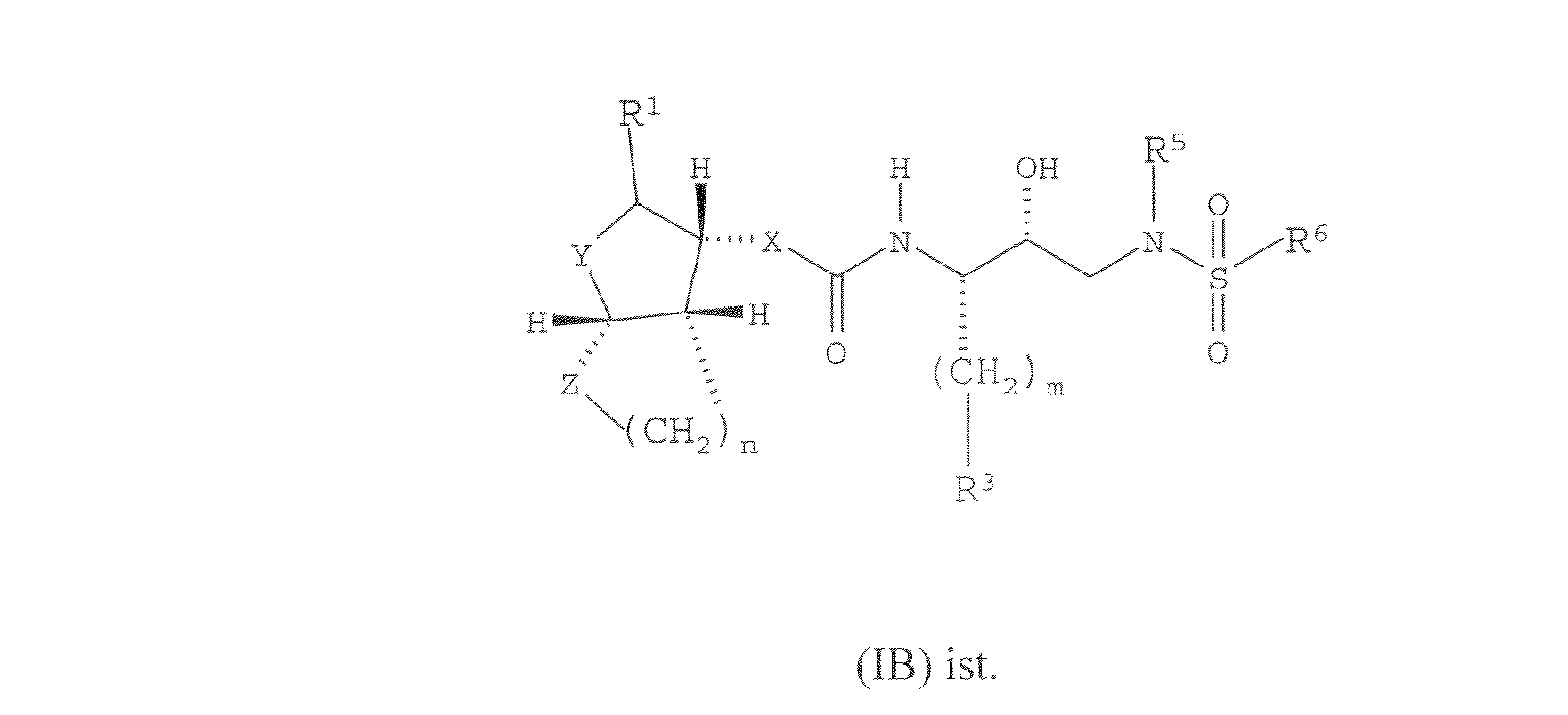
- Verwendung nach Anspruch 4, wobei die Verbindung die Formel


- Verwendung nach Anspruch 5, wobei die Verbindung die Formel


- Verwendung nach Anspruch 5 oder 6, worin X Sauerstoff ist.
- Verwendung nach Anspruch 5 oder 6, worin R5 Isobutyl ist.
- Verwendung nach Anspruch 5 oder 6, wobei Ar ein an der para-Position substituiertes Phenyl ist.
- Verwendung nach Anspruch 5 oder 6, wobei Ar ein an der meta-Position substituiertes Phenyl ist.
- Verwendung nach Anspruch 5 oder 6, wobei Ar ein an der ortho-Position substituiertes Phenyl ist.
- Verwendung nach Anspruch 5 oder 6, wobei Ar ausgewählt ist aus der Gruppe bestehend aus para-Aminophenyl, para-Tolyl, para-Methoxyphenyl, meta-Methoxyphenyl, und meta-Hydroxymethylphenyl
- Verwendung nach Anspruch 1, wobei die Verbindung die Formel:

worin A


- Verwendung nach einem der Ansprüche 1, 2, 4-6 oder 13, wobei das mit HIV infizierte Säugetier mit einem HIV-Wildtyp infiziert ist.
- Verwendung nach einem der Ansprüche 1, 2, 4-6 oder 13, wobei das mit HIV infizierte Säugetier mit einer HIV Mutante infiziert ist, die mindestens eine Proteasemutation aufweist.
- Verwendung nach einem der Ansprüche 1, 2, 4-6 oder 13, wobei das mit HIV infizierte Säugetier mit einer HIV Mutante infiziert ist, die mindestens eine Reverse-Transkriptase-Mutation aufweist.
- Verwendung nach einem der Ansprüche 1, 2, 4-6 oder 13, wobei das Medikament zur Hemmung der Protease eines mutanten Retrovirus in einem mit einem mutanten Retrovirus infizierten Säugetier vorgesehen ist, um so die Proliferation des mutanten Retrovirus in dem Säugetier zu hemmen.
- Verwendung nach einem der Ansprüche 1, 2, 4-6 oder 13, wobei das Medikament zur Behandlung einer Infektion mit einem mutanten Retrovirus in einem mit einem mutanten Retrovirus infizierten Säugetier vorgesehen ist.
- Verwendung nach Anspruch 17 oder 18, wobei das mutante Retrovirus ein mutantes Retrovirus mit einer Mehrfachwirkstoff-Resistenz ist.
- Verwendung nach Anspruch 17 oder 18, wobei das mutante Retrovirus ein HIV-Retrovirus mit einer Mehrfachwirkstoff-Resistenz ist.
- Verwendung nach Anspruch 17 oder 18, wobei das mutante Retrovirus ein HIV-1 Retrovirus mit einer Mehrfachwirkstoff-Resistenz ist.
Priority Applications (3)
| Application Number | Priority Date | Filing Date | Title |
|---|---|---|---|
| EP10179052.5A EP2336134B1 (de) | 1998-06-23 | 1999-06-23 | Fitnesstest und Verfahren zur Verminderung von HIV-Resistenz gegen Therapie |
| CY20111100513T CY1112172T1 (el) | 1998-06-23 | 2011-05-27 | Φαρμακο για την αγωγη θηλαστικων μολυσμενων με hiv |
| CY20161101216T CY1118403T1 (el) | 1998-06-23 | 2016-11-24 | Αναλυση βιοχημικης ικανοτητας και μεθοδοι για τη μειωση της ανθεκτικοτητας του hiv στη θεραπεια |
Applications Claiming Priority (3)
| Application Number | Priority Date | Filing Date | Title |
|---|---|---|---|
| US9039398P | 1998-06-23 | 1998-06-23 | |
| US90393P | 1998-06-23 | ||
| PCT/US1999/014119 WO1999067417A2 (en) | 1998-06-23 | 1999-06-23 | Fitness assay and associated methods |
Related Child Applications (3)
| Application Number | Title | Priority Date | Filing Date |
|---|---|---|---|
| EP10179052.5A Division EP2336134B1 (de) | 1998-06-23 | 1999-06-23 | Fitnesstest und Verfahren zur Verminderung von HIV-Resistenz gegen Therapie |
| EP10179052.5A Division-Into EP2336134B1 (de) | 1998-06-23 | 1999-06-23 | Fitnesstest und Verfahren zur Verminderung von HIV-Resistenz gegen Therapie |
| EP10179052.5 Division-Into | 2010-09-23 |
Publications (3)
| Publication Number | Publication Date |
|---|---|
| EP1088098A2 EP1088098A2 (de) | 2001-04-04 |
| EP1088098B1 EP1088098B1 (de) | 2011-03-09 |
| EP1088098B2 true EP1088098B2 (de) | 2015-07-01 |
Family
ID=22222591
Family Applications (2)
| Application Number | Title | Priority Date | Filing Date |
|---|---|---|---|
| EP10179052.5A Expired - Lifetime EP2336134B1 (de) | 1998-06-23 | 1999-06-23 | Fitnesstest und Verfahren zur Verminderung von HIV-Resistenz gegen Therapie |
| EP99931861.1A Expired - Lifetime EP1088098B2 (de) | 1998-06-23 | 1999-06-23 | Fitnesstest und verfahren zur verminderung von hiv-resistenz gegen therapie |
Family Applications Before (1)
| Application Number | Title | Priority Date | Filing Date |
|---|---|---|---|
| EP10179052.5A Expired - Lifetime EP2336134B1 (de) | 1998-06-23 | 1999-06-23 | Fitnesstest und Verfahren zur Verminderung von HIV-Resistenz gegen Therapie |
Country Status (12)
| Country | Link |
|---|---|
| US (4) | US7470506B1 (de) |
| EP (2) | EP2336134B1 (de) |
| JP (3) | JP4776775B2 (de) |
| AT (1) | ATE500823T1 (de) |
| AU (1) | AU771780B2 (de) |
| CA (2) | CA2336160C (de) |
| CY (2) | CY1112172T1 (de) |
| DE (1) | DE69943266D1 (de) |
| DK (1) | DK1088098T4 (de) |
| ES (2) | ES2604662T3 (de) |
| PT (2) | PT1088098E (de) |
| WO (1) | WO1999067417A2 (de) |
Families Citing this family (47)
| Publication number | Priority date | Publication date | Assignee | Title |
|---|---|---|---|---|
| US7141609B2 (en) | 1992-08-25 | 2006-11-28 | G.D. Searle & Co. | α- and β-amino acid hydroxyethylamino sulfonamides useful as retroviral protease inhibitors |
| PT810209E (pt) | 1992-08-25 | 2002-09-30 | Searle & Co | Hidroxietilamino-sulfonamidas de alfa- e beta-aminoacidos uteis como inibidores de protease retroviral |
| ATE500823T1 (de) | 1998-06-23 | 2011-03-15 | Us Of America Represented By The Secretary Dept Of Health And Human Services | Arzneimittel zur behandlung von hiv-infizierten säugetieren |
| NZ516259A (en) | 1999-05-28 | 2004-02-27 | Virco N | New mutational profiles in HIV-1 reverse transcriptase correlated with phenotypic drug resistance |
| WO2001025240A1 (en) * | 1999-10-06 | 2001-04-12 | Tibotec Pharmaceuticals Ltd. | HEXAHYDROFURO'2,3-B!FURAN-3-YL-N- {3'(1,3-BENZODIOXOL -5- YLSULFONYL) (ISOBUTYL) AMINO! -1-BENZYL-2-HYDROXYPROPYL} CARBAMATE AS RETROVIRAL PROTEASE INHIBITOR |
| WO2002033638A2 (en) | 2000-10-20 | 2002-04-25 | Virco Bvba | Mutational profiles in hiv-1 reverse transcriptase correlated with phenotypic drug resistance |
| ATE343567T1 (de) | 2001-02-14 | 2006-11-15 | Tibotec Pharm Ltd | Breitspektrum 2-(substituierte-amino)- benzothiazol-sulfonamide hiv protease inhibitoren |
| AR035819A1 (es) | 2001-04-09 | 2004-07-14 | Tibotec Pharm Ltd | 2-(amino sustituido)-benzoxazol sulfonamidas, inhibidoras de la proteasa del hiv, composiciones farmaceuticas que comprenden dichos compuestos, metodo in vitro para inhibir la replicacion retroviral y uso de dichos compuestos en la fabricacion de medicamentos |
| US7622490B2 (en) | 2001-05-11 | 2009-11-24 | Tibotec Pharmaceuticals, Ltd. | Broadspecturm 2-amino-benzoxazole sulfonamide HIV protease inhibitors |
| MXPA04002247A (es) * | 2001-09-10 | 2005-09-07 | Tibotec Pharm Ltd | Metodo para la preparacion de hexahidro-furo[2,3-b]furan-3-ol. |
| ES2302860T3 (es) | 2001-11-08 | 2008-08-01 | Tibotec Pharmaceuticals Ltd. | Ensayo de proteasas para la monitorizacion terapeutica de farmacos. |
| AR037797A1 (es) * | 2001-12-12 | 2004-12-01 | Tibotec Pharm Ltd | Combinacion de inhibidores de proteasa dependientes del citocromo p450 |
| MY138657A (en) | 2001-12-21 | 2009-07-31 | Tibotec Pharm Ltd | broadspectrum heterocyclic substituted phenyl containing sulfonamide hiv protease inhibitors |
| WO2003057173A2 (en) | 2002-01-07 | 2003-07-17 | Sequoia Pharmaceuticals | Broad spectrum inhibitors |
| EA007120B8 (ru) | 2002-05-16 | 2012-03-30 | Тиботек Фармасьютикалз Лтд. | Псевдополиморфные формы ингибитора вич-протеазы |
| PT1517899E (pt) * | 2002-05-17 | 2007-11-16 | Tibotec Pharm Ltd | ¿inibidores da protease do hiv de largo espectro benzisoxazolossulfonamidas substituídas¿ |
| CA2490862A1 (en) | 2002-07-01 | 2004-01-08 | Tibotec Pharmaceuticals Ltd. | Mutational profiles in hiv-1 protease correlated with phenotypic drug resistance |
| DE60321466D1 (de) | 2002-07-01 | 2008-07-17 | Tibotec Pharm Ltd | Mit phänotypischer medikamentenresistenz korrelierte mutationsprofile in hiv-1-reverse-transkriptase |
| EA010486B1 (ru) | 2002-08-14 | 2008-10-30 | Тиботек Фармасьютикалз Лтд. | Замещенные оксиндолсульфонамидные ингибиторы вич-протеазы широкого спектра действия |
| US6821744B2 (en) | 2002-10-29 | 2004-11-23 | Roche Diagnostics Operations, Inc. | Method, assay, and kit for quantifying HIV protease inhibitors |
| WO2004060895A1 (ja) * | 2002-12-27 | 2004-07-22 | Sumitomo Chemical Company, Limited | ヘキサヒドロフロフラノール誘導体の製造方法、その中間体及びその製造方法 |
| JP4818124B2 (ja) | 2003-12-23 | 2011-11-16 | テイボテク・フアーマシユーチカルズ・リミテツド | (3R,3aS,6aR)−ヘキサヒドロフロ〔2,3−b〕フラン−3−イル(1S,1R)−3−〔〔(4−アミノフェニル)スルホニル〕(イソブチル)アミノ〕−1−ベンジル−2−ヒドロキシプロピルカルバマートの製造方法 |
| EP1728186A2 (de) | 2004-03-02 | 2006-12-06 | Virco Bvba | Schätzung von klinischen kritischen werten |
| AU2005222435B2 (en) | 2004-03-11 | 2012-03-15 | Sequoia Pharmaceuticals, Inc. | Resistance-repellent retroviral protease inhibitors |
| TWI383975B (zh) | 2004-03-31 | 2013-02-01 | 悌柏泰克醫藥有限公司 | 製備(3R,3aS,6aR)六氫-呋喃并〔2,3-b〕呋喃-3-醇之方法 |
| EP2422780A1 (de) | 2004-05-07 | 2012-02-29 | Sequoia Pharmaceuticals, Inc. | Resistenzabweisende retrovirale Proteaseinhibitoren |
| KR101333627B1 (ko) | 2005-02-25 | 2013-11-27 | 얀센 알 앤드 디 아일랜드 | 프로테아제 저해제 전구체 합성 |
| CA2658545A1 (en) * | 2006-07-24 | 2008-01-31 | Gilead Sciences, Inc. | Bisfuranyl protease inhibitors |
| RU2464266C2 (ru) | 2006-11-09 | 2012-10-20 | Тиботек Фармасьютикалз Лтд. | СПОСОБЫ ПОЛУЧЕНИЯ ГЕКСАГИДРОФУРО[2,3-b] ФУРАН-3-ОЛА |
| WO2008133734A2 (en) * | 2006-11-21 | 2008-11-06 | Purdue Research Foundation | Method and compositions for treating hiv infections |
| CA2682616A1 (en) | 2007-04-27 | 2008-11-06 | Tibotec Pharmaceuticals Ltd. | Methods for the preparation of n-isobutyl-n-(2-hydroxy-3-amino-4-phenylbutyl)-p-nitrobenzenesulfonylamide derivatives |
| AR073248A1 (es) | 2008-09-01 | 2010-10-20 | Tibotec Pharm Ltd | Proceso para la preparacion de (1s, 2r)-3- ((4-aminofenil) sulfonil) ( isobutil) amino)-1- bencil-2- hidroxipropilcarbamato de (3r, 3as,6ar)- hexahidrofuro-(2,3-b) furan-3- ilo (darunavir) y compuestos intermediarios utiles en dicho proceso. |
| MX2011007790A (es) | 2009-01-29 | 2011-11-18 | Mapi Pharma Ltd | Polimorfos de darunavir. |
| US8921415B2 (en) | 2009-01-29 | 2014-12-30 | Mapi Pharma Ltd. | Polymorphs of darunavir |
| PT2513116E (pt) | 2009-12-16 | 2015-10-14 | Hetero Research Foundation | Polimorfos de darunavir |
| EP2521728B1 (de) | 2010-01-05 | 2016-09-07 | Cipla Limited | Kristallinische hydrate von darunavir und verfahren zu seiner herstellung |
| MX2012008627A (es) | 2010-01-28 | 2012-09-21 | Mapi Pharma Ltd | Proceso para la preparacion de darunavir e intermedios de darunavir. |
| US8853430B2 (en) | 2010-05-20 | 2014-10-07 | Hetero Research Foundation | Crystalline hydrochloride salt of darunavir |
| SI2729130T1 (en) | 2011-07-07 | 2018-03-30 | Janssen Sciences Ireland Uc | Combined formulations of darunavir |
| HUE030341T2 (en) | 2011-07-07 | 2017-05-29 | Janssen Sciences Ireland Uc | Darunavir preparations |
| WO2013011485A1 (en) | 2011-07-20 | 2013-01-24 | Ranbaxy Laboratories Limited | Process for the preparation of sulfonamides useful as retroviral protease inhibitors |
| WO2013105118A1 (en) | 2012-01-10 | 2013-07-18 | Council Of Scientific & Industrial Research | A process for synthesis of syn azido epoxide and its use as intermediate the synthesis of amprenavir & saquinavir |
| CN105272991B (zh) * | 2014-06-26 | 2017-11-07 | 成都中医药大学 | 一种化合物晶型 |
| ES2881949T3 (es) | 2016-10-27 | 2021-11-30 | Gilead Sciences Inc | Forma cristalina de base libre de darunavir |
| IT201600115597A1 (it) * | 2016-11-16 | 2018-05-16 | Univ Degli Studi Della Basilicata | Nuovi inibitori dell’hiv proteasi contenenti anelli eteroaromatici: sintesi ed attività |
| CN109627251B (zh) * | 2018-12-29 | 2021-06-15 | 常州吉恩药业有限公司 | 一种高纯度地瑞那韦中间体的工业化生产方法 |
| RU2697392C1 (ru) * | 2019-03-12 | 2019-08-14 | Наталья Юрьевна Пшеничная | Способ прогноза прогрессирования ВИЧ-инфекции у больных, получающих антиретровирусную терапию |
Citations (1)
| Publication number | Priority date | Publication date | Assignee | Title |
|---|---|---|---|---|
| WO1997001349A1 (en) † | 1995-06-29 | 1997-01-16 | Abbott Laboratories | Use of ritonavir (abt-538) for improving the pharmacokinetics of drugs metabolized by cytochrome p450 in a method of treating aids |
Family Cites Families (29)
| Publication number | Priority date | Publication date | Assignee | Title |
|---|---|---|---|---|
| IL89900A0 (en) | 1988-04-12 | 1989-12-15 | Merck & Co Inc | Hiv protease inhibitors useful for the treatment of aids and pharmaceutical compositions containing them |
| DE59009945D1 (de) | 1989-02-10 | 1996-01-18 | Wolfgang Prof Dr Schramm | Mittel zur hemmung von hiv-proteasen. |
| CA2032259A1 (en) | 1989-12-18 | 1991-06-19 | Wayne J. Thompson | Hiv protease inhibitors useful for the treatment of aids |
| US5475027A (en) | 1990-11-19 | 1995-12-12 | G.D. Searle & Co. | Retroviral protease inhibitors |
| JPH05208947A (ja) | 1991-08-16 | 1993-08-20 | Merck & Co Inc | N末端にポリエーテル置換基を有するhivプロテアーゼ抑制剤 |
| EP0534511A1 (de) | 1991-08-16 | 1993-03-31 | Merck & Co. Inc. | HIV-Protease-Hemmer zur Behandlung von AIDS |
| WO1993008184A1 (en) | 1991-10-23 | 1993-04-29 | Merck & Co., Inc. | Hiv protease inhibitors |
| CA2084800A1 (en) | 1991-12-16 | 1993-06-17 | Joseph P. Vacca | Hiv protease inhibitors with an internal lactam ring |
| PT810209E (pt) * | 1992-08-25 | 2002-09-30 | Searle & Co | Hidroxietilamino-sulfonamidas de alfa- e beta-aminoacidos uteis como inibidores de protease retroviral |
| IS2334B (is) | 1992-09-08 | 2008-02-15 | Vertex Pharmaceuticals Inc., (A Massachusetts Corporation) | Aspartyl próteasi hemjari af nýjum flokki súlfonamíða |
| US5723490A (en) | 1992-09-08 | 1998-03-03 | Vertex Pharmaceuticals Incorporated | THF-containing sulfonamide inhibitors of aspartyl protease |
| US5514801A (en) * | 1992-12-29 | 1996-05-07 | Monsanto Company | Cyclic sulfone containing retroviral protease inhibitors |
| US5436131A (en) * | 1993-04-02 | 1995-07-25 | Merck & Co., Inc. | Color screening assay for identifying inhibitor resistant HIV protease mutants |
| ATE174587T1 (de) * | 1993-08-24 | 1999-01-15 | Searle & Co | Hydroxyaminosulfonamide verwendbar als inhibitoren retroviraler proteasen |
| UA49803C2 (uk) | 1994-06-03 | 2002-10-15 | Дж.Д. Сьорль Енд Ко | Спосіб лікування ретровірусних інфекцій |
| US5766842A (en) * | 1994-09-16 | 1998-06-16 | Sepracor, Inc. | In vitro method for predicting the evolutionary response of a protein to a drug targeted thereagainst |
| US5728718A (en) * | 1994-12-20 | 1998-03-17 | The United States Of America As Represented By The Department Of Health And Human Services | 2,5-diamino-3,4-disubstituted-1,6-diphenylhexane isosteres comprising benzamide, sulfonamide and anthranilamide subunits and methods of using same |
| US5756533A (en) * | 1995-03-10 | 1998-05-26 | G.D. Searle & Co. | Amino acid hydroxyethylamino sulfonamide retroviral protease inhibitors |
| US5705500A (en) * | 1995-03-10 | 1998-01-06 | G.D. Searle & Co. | Sulfonylalkanoylamino hydroxyethylamino sulfonamide retroviral protease inhibitors |
| US5691372A (en) * | 1995-04-19 | 1997-11-25 | Vertex Pharmaceuticals Incorporated | Oxygenated-Heterocycle containing sulfonamide inhibitors of aspartyl protease |
| WO1997018205A1 (en) * | 1995-11-15 | 1997-05-22 | G.D. Searle & Co. | Substituted sulfonylalkanoylamino hydroxyethylamino sulfonamide retroviral protease inhibitors |
| DE69621651T2 (de) * | 1995-11-21 | 2002-11-21 | Novartis Ag, Basel | Azahexan-derivate als substratisostere von retroviralen aspartat-proteasen |
| US20020068749A1 (en) | 1996-11-08 | 2002-06-06 | Hideharu Sato | Aids remedy |
| US6251874B1 (en) * | 1998-03-26 | 2001-06-26 | Research Institute For Genetic And Human Therapy (R.I.G.H.T.) | Method of inhibiting human immunodeficiency virus using hydroxurea and a reverse transcriptase inhibitor in vivo |
| DK1086076T3 (da) | 1998-06-19 | 2005-03-29 | Vertex Pharma | Sulfonamidinhibitorer af aspartylprotease |
| ATE500823T1 (de) | 1998-06-23 | 2011-03-15 | Us Of America Represented By The Secretary Dept Of Health And Human Services | Arzneimittel zur behandlung von hiv-infizierten säugetieren |
| WO1999067254A2 (en) | 1998-06-23 | 1999-12-29 | The United States Of America Represented By The Secretary, Department Of Health And Human Services | Multi-drug resistant retroviral protease inhibitors and use thereof |
| EP1155009A2 (de) | 1999-02-19 | 2001-11-21 | Oklahoma Medical Research Foundation | Protease inhibitoren die nicht wirkstoffresistent sind |
| EA007120B8 (ru) | 2002-05-16 | 2012-03-30 | Тиботек Фармасьютикалз Лтд. | Псевдополиморфные формы ингибитора вич-протеазы |
-
1999
- 1999-06-23 AT AT99931861T patent/ATE500823T1/de active
- 1999-06-23 PT PT99931861T patent/PT1088098E/pt unknown
- 1999-06-23 CA CA2336160A patent/CA2336160C/en not_active Expired - Lifetime
- 1999-06-23 AU AU48280/99A patent/AU771780B2/en not_active Expired
- 1999-06-23 PT PT101790525T patent/PT2336134T/pt unknown
- 1999-06-23 ES ES10179052.5T patent/ES2604662T3/es not_active Expired - Lifetime
- 1999-06-23 CA CA2872424A patent/CA2872424C/en not_active Expired - Lifetime
- 1999-06-23 ES ES99931861.1T patent/ES2362404T5/es not_active Expired - Lifetime
- 1999-06-23 US US09/720,276 patent/US7470506B1/en not_active Expired - Fee Related
- 1999-06-23 DK DK99931861.1T patent/DK1088098T4/en active
- 1999-06-23 WO PCT/US1999/014119 patent/WO1999067417A2/en not_active Ceased
- 1999-06-23 EP EP10179052.5A patent/EP2336134B1/de not_active Expired - Lifetime
- 1999-06-23 EP EP99931861.1A patent/EP1088098B2/de not_active Expired - Lifetime
- 1999-06-23 JP JP2000556057A patent/JP4776775B2/ja not_active Expired - Lifetime
- 1999-06-23 DE DE69943266T patent/DE69943266D1/de not_active Expired - Lifetime
-
2005
- 2005-01-06 US US11/030,632 patent/US20050158713A1/en not_active Abandoned
-
2007
- 2007-10-11 US US11/870,931 patent/US8597876B2/en not_active Expired - Fee Related
-
2009
- 2009-11-24 JP JP2009266865A patent/JP5101589B2/ja not_active Expired - Lifetime
-
2011
- 2011-02-21 JP JP2011035193A patent/JP5705581B2/ja not_active Expired - Lifetime
- 2011-05-27 CY CY20111100513T patent/CY1112172T1/el unknown
-
2013
- 2013-07-02 US US13/933,319 patent/US9889115B2/en not_active Expired - Fee Related
-
2016
- 2016-11-24 CY CY20161101216T patent/CY1118403T1/el unknown
Patent Citations (1)
| Publication number | Priority date | Publication date | Assignee | Title |
|---|---|---|---|---|
| WO1997001349A1 (en) † | 1995-06-29 | 1997-01-16 | Abbott Laboratories | Use of ritonavir (abt-538) for improving the pharmacokinetics of drugs metabolized by cytochrome p450 in a method of treating aids |
Non-Patent Citations (9)
| Title |
|---|
| A. K. GHOSH ET AL.: "Bioorganic & Medicinal Chemistry Letters", vol. 8, 17 March 1998, ELSEVIER SCIENCE LTD., pages: 687 - 690 † |
| ANONYMOUS: "Double Protease Inhibitor Regimens Containing Vertex's HIV Protease Inhibitor, Amprenavir, Show Promise -- re> CHICAGO, Feb. 2 /PRNewswire/ --", 2 February 1998 (1998-02-02), XP055167875, Retrieved from the Internet <URL:http://www.prnewswire.com/news-releases/double-protease-inhibitor-regimens-containing-vertexs-hiv-protease-inhibitor-amprenavir-show-promise-76539677.html> [retrieved on 20150206] † |
| B. G. GAZZARD ET AL.: "British HIV Association guidelines for antiretroviral treatment of HIV seropositive individuals", THE LANCET, vol. 349, 12 April 1997 (1997-04-12), pages 1086 - 1092 † |
| G. MOYLE ET AL.: "The role of combinations of HIV protease inhibitors in the management of personswith HIV infection", EXPERT OPINION ON INVESTIGATIONAL DRUGS, vol. 7, no. 3, March 1998 (1998-03-01), pages 413 - 426 † |
| J. C. ADKINS ET AL.: "Adis New Drug Profile", DRUGS, vol. 55, no. 6, June 1998 (1998-06-01), pages 837 - 842 † |
| MARK MASCOLINI: "Darunavir Mutation Rate Dropping in Large Clinical Sample Survey", 1 November 2010 (2010-11-01), XP055167878, Retrieved from the Internet <URL:http://www.natap.org/2010/interHIV/InterHIV_09.htm> [retrieved on 20150206] † |
| ROBERT SCHAFER: "Assays for Antiretroviral Resistance", 1 June 2002 (2002-06-01), XP055167884, Retrieved from the Internet <URL:http://hivinsite.ucsf.edu/InSite?page=kb-02-02-03> [retrieved on 20150206] † |
| S. DE MEYER ET AL.: "Resistance Profile of Darunavir: Combined 24-Week Results from the POWER Trials", AIDS RESEARCH AND HUMAN RETROVIRUSES, vol. 24, no. 3, 2008, pages 379 - 388 † |
| Y. KOH ET AL.: "Loss of Protease Dimerization Inhibition Activity of Darunavir Is Associated with the Acquisition of Resistance to Darunavir by HIV-1", JOURNAL OF VIROLOGY, vol. 85, no. 19, October 2011 (2011-10-01), pages 10079 - 10089 † |
Also Published As
Similar Documents
| Publication | Publication Date | Title |
|---|---|---|
| EP1088098B2 (de) | Fitnesstest und verfahren zur verminderung von hiv-resistenz gegen therapie | |
| WO1999067254A2 (en) | Multi-drug resistant retroviral protease inhibitors and use thereof | |
| US6046228A (en) | Anti-viral pharmaceutical compositions containing saturated 1,2-dithiaheterocyclic compounds and uses thereof | |
| Thaisrivongs et al. | Structure‐based discovery of tipranavir disodium (PNU‐140690E): a potent, orally bioavailable, nonpeptidic HIV protease inhibitor | |
| Rice et al. | Inhibition of multiple phases of human immunodeficiency virus type 1 replication by a dithiane compound that attacks the conserved zinc fingers of retroviral nucleocapsid proteins | |
| Goldman et al. | Inhibition of human immunodeficiency virus-1 reverse transcriptase activity by rubromycins: competitive interaction at the template. primer site. | |
| WO1998001440A9 (en) | Anti-viral pharmaceutical compositions containing saturated 1,2-dithiaheterocyclic compounds and uses thereof | |
| AU2004200629B8 (en) | Method of treating HIV infection | |
| WO2022122968A1 (en) | Compounds for use in the treatment of covid-19 | |
| AU2007203321C1 (en) | Method of treating HIV infections | |
| EP1796662A2 (de) | Hemmung von viren unter verwendung von rnase-h-hemmern | |
| US20060089400A1 (en) | Novel spiro ketone and carboxylic acid derivatives as specific inhibitors for (po3h2) ser/(po3h2)thr-pro-specific peptidyl-prolylcis/trans-isomerases | |
| WO2000053577A1 (en) | Hydrazide inhibitors of hiv-1 integrase | |
| EP0537199A1 (de) | Zusammensetzungen für die behandlung von hiv-type 1 infektionen | |
| HK1099228A1 (en) | Use of adefovir or tenofovir for inhibiting mmtv-like viruses involved in breast cancer and primary biliary cirrhosis |
Legal Events
| Date | Code | Title | Description |
|---|---|---|---|
| PUAI | Public reference made under article 153(3) epc to a published international application that has entered the european phase |
Free format text: ORIGINAL CODE: 0009012 |
|
| 17P | Request for examination filed |
Effective date: 20001207 |
|
| AK | Designated contracting states |
Kind code of ref document: A2 Designated state(s): AT BE CH CY DE DK ES FI FR GB GR IE IT LI LU MC NL PT SE |
|
| RIN1 | Information on inventor provided before grant (corrected) |
Inventor name: MITSUYA, HIROAKI Inventor name: GULNIK, SERGEI, V. Inventor name: ERICKSON, JOHN, W. |
|
| RIN1 | Information on inventor provided before grant (corrected) |
Inventor name: GOSH, ARUN K. Inventor name: MITSUYA, HIROAKI Inventor name: GULNIK, SERGEI, V. Inventor name: ERICKSON, JOHN, W. |
|
| 17Q | First examination report despatched |
Effective date: 20060713 |
|
| GRAP | Despatch of communication of intention to grant a patent |
Free format text: ORIGINAL CODE: EPIDOSNIGR1 |
|
| RIC1 | Information provided on ipc code assigned before grant |
Ipc: A61P 31/18 20060101ALI20100611BHEP Ipc: A61K 31/47 20060101ALI20100611BHEP Ipc: A61K 31/4523 20060101ALI20100611BHEP Ipc: A61K 31/426 20060101ALI20100611BHEP Ipc: A61K 31/35 20060101AFI20100611BHEP |
|
| RTI1 | Title (correction) |
Free format text: FITNESS ASSAY AND METHODS FOR REDUCING RESISTANCE OF HIV TO THERAPY |
|
| RAP1 | Party data changed (applicant data changed or rights of an application transferred) |
Owner name: THE BOARD OF TRUSTEES OF THE UNIVERSITY OF ILLINOI Owner name: THE UNITED STATES OF AMERICA, REPRESENTED BY T |
|
| RIN1 | Information on inventor provided before grant (corrected) |
Inventor name: GOSH, ARUN K. Inventor name: MITSUYA, HIROAKI Inventor name: GULNIK, SERGEI, V. Inventor name: ERICKSON, JOHN, W. |
|
| GRAS | Grant fee paid |
Free format text: ORIGINAL CODE: EPIDOSNIGR3 |
|
| GRAA | (expected) grant |
Free format text: ORIGINAL CODE: 0009210 |
|
| RTI1 | Title (correction) |
Free format text: MEDICAMENT FOR TREATING HIV-INFECTED MAMMALS |
|
| AK | Designated contracting states |
Kind code of ref document: B1 Designated state(s): AT BE CH CY DE DK ES FI FR GB GR IE IT LI LU MC NL PT SE |
|
| REG | Reference to a national code |
Ref country code: GB Ref legal event code: FG4D |
|
| REG | Reference to a national code |
Ref country code: CH Ref legal event code: EP |
|
| REG | Reference to a national code |
Ref country code: IE Ref legal event code: FG4D |
|
| REF | Corresponds to: |
Ref document number: 69943266 Country of ref document: DE Date of ref document: 20110421 Kind code of ref document: P |
|
| REG | Reference to a national code |
Ref country code: DE Ref legal event code: R096 Ref document number: 69943266 Country of ref document: DE Effective date: 20110421 |
|
| REG | Reference to a national code |
Ref country code: PT Ref legal event code: SC4A Free format text: AVAILABILITY OF NATIONAL TRANSLATION Effective date: 20110517 |
|
| REG | Reference to a national code |
Ref country code: DK Ref legal event code: T3 |
|
| REG | Reference to a national code |
Ref country code: NL Ref legal event code: T3 |
|
| REG | Reference to a national code |
Ref country code: SE Ref legal event code: TRGR |
|
| REG | Reference to a national code |
Ref country code: ES Ref legal event code: FG2A Ref document number: 2362404 Country of ref document: ES Kind code of ref document: T3 Effective date: 20110704 |
|
| REG | Reference to a national code |
Ref country code: GR Ref legal event code: EP Ref document number: 20110401261 Country of ref document: GR Effective date: 20110614 |
|
| PLBI | Opposition filed |
Free format text: ORIGINAL CODE: 0009260 |
|
| 26 | Opposition filed |
Opponent name: TEVA PHARMACEUTICAL INDUSTRIES LTD. Effective date: 20111206 |
|
| PLAX | Notice of opposition and request to file observation + time limit sent |
Free format text: ORIGINAL CODE: EPIDOSNOBS2 |
|
| REG | Reference to a national code |
Ref country code: DE Ref legal event code: R026 Ref document number: 69943266 Country of ref document: DE Effective date: 20111206 |
|
| PLAF | Information modified related to communication of a notice of opposition and request to file observations + time limit |
Free format text: ORIGINAL CODE: EPIDOSCOBS2 |
|
| PLBB | Reply of patent proprietor to notice(s) of opposition received |
Free format text: ORIGINAL CODE: EPIDOSNOBS3 |
|
| TPAC | Observations filed by third parties |
Free format text: ORIGINAL CODE: EPIDOSNTIPA |
|
| TPAC | Observations filed by third parties |
Free format text: ORIGINAL CODE: EPIDOSNTIPA |
|
| PLBP | Opposition withdrawn |
Free format text: ORIGINAL CODE: 0009264 |
|
| PUAH | Patent maintained in amended form |
Free format text: ORIGINAL CODE: 0009272 |
|
| STAA | Information on the status of an ep patent application or granted ep patent |
Free format text: STATUS: PATENT MAINTAINED AS AMENDED |
|
| 27A | Patent maintained in amended form |
Effective date: 20150701 |
|
| AK | Designated contracting states |
Kind code of ref document: B2 Designated state(s): AT BE CH CY DE DK ES FI FR GB GR IE IT LI LU MC NL PT SE |
|
| REG | Reference to a national code |
Ref country code: DE Ref legal event code: R102 Ref document number: 69943266 Country of ref document: DE |
|
| REG | Reference to a national code |
Ref country code: CH Ref legal event code: AELC |
|
| REG | Reference to a national code |
Ref country code: DK Ref legal event code: T4 Effective date: 20150911 |
|
| REG | Reference to a national code |
Ref country code: SE Ref legal event code: RPEO |
|
| REG | Reference to a national code |
Ref country code: GR Ref legal event code: EP Ref document number: 20150401781 Country of ref document: GR Effective date: 20150929 |
|
| REG | Reference to a national code |
Ref country code: ES Ref legal event code: DC2A Ref document number: 2362404 Country of ref document: ES Kind code of ref document: T5 Effective date: 20151125 |
|
| REG | Reference to a national code |
Ref country code: NL Ref legal event code: FP |
|
| REG | Reference to a national code |
Ref country code: FR Ref legal event code: PLFP Year of fee payment: 18 |
|
| REG | Reference to a national code |
Ref country code: FR Ref legal event code: PLFP Year of fee payment: 19 |
|
| REG | Reference to a national code |
Ref country code: FR Ref legal event code: PLFP Year of fee payment: 20 |
|
| PGFP | Annual fee paid to national office [announced via postgrant information from national office to epo] |
Ref country code: FI Payment date: 20180627 Year of fee payment: 20 Ref country code: PT Payment date: 20180601 Year of fee payment: 20 Ref country code: NL Payment date: 20180626 Year of fee payment: 20 Ref country code: MC Payment date: 20180604 Year of fee payment: 20 Ref country code: IE Payment date: 20180628 Year of fee payment: 20 Ref country code: LU Payment date: 20180627 Year of fee payment: 20 |
|
| PGFP | Annual fee paid to national office [announced via postgrant information from national office to epo] |
Ref country code: BE Payment date: 20180627 Year of fee payment: 20 Ref country code: GR Payment date: 20180627 Year of fee payment: 20 Ref country code: FR Payment date: 20180626 Year of fee payment: 20 Ref country code: AT Payment date: 20180601 Year of fee payment: 20 |
|
| PGFP | Annual fee paid to national office [announced via postgrant information from national office to epo] |
Ref country code: SE Payment date: 20180627 Year of fee payment: 20 |
|
| PGFP | Annual fee paid to national office [announced via postgrant information from national office to epo] |
Ref country code: IT Payment date: 20180621 Year of fee payment: 20 Ref country code: GB Payment date: 20180627 Year of fee payment: 20 Ref country code: DE Payment date: 20180627 Year of fee payment: 20 Ref country code: ES Payment date: 20180702 Year of fee payment: 20 |
|
| PGFP | Annual fee paid to national office [announced via postgrant information from national office to epo] |
Ref country code: CH Payment date: 20180704 Year of fee payment: 20 Ref country code: DK Payment date: 20180625 Year of fee payment: 20 |
|
| PGFP | Annual fee paid to national office [announced via postgrant information from national office to epo] |
Ref country code: CY Payment date: 20180606 Year of fee payment: 20 |
|
| REG | Reference to a national code |
Ref country code: DE Ref legal event code: R071 Ref document number: 69943266 Country of ref document: DE |
|
| REG | Reference to a national code |
Ref country code: DK Ref legal event code: EUP Effective date: 20190623 |
|
| REG | Reference to a national code |
Ref country code: NL Ref legal event code: MK Effective date: 20190622 |
|
| REG | Reference to a national code |
Ref country code: CH Ref legal event code: PL |
|
| REG | Reference to a national code |
Ref country code: BE Ref legal event code: MK Effective date: 20190623 Ref country code: BE Ref legal event code: FP Effective date: 20150909 |
|
| REG | Reference to a national code |
Ref country code: GB Ref legal event code: PE20 Expiry date: 20190622 |
|
| REG | Reference to a national code |
Ref country code: SE Ref legal event code: EUG |
|
| REG | Reference to a national code |
Ref country code: IE Ref legal event code: MK9A |
|
| REG | Reference to a national code |
Ref country code: AT Ref legal event code: MK07 Ref document number: 500823 Country of ref document: AT Kind code of ref document: T Effective date: 20190623 |
|
| PG25 | Lapsed in a contracting state [announced via postgrant information from national office to epo] |
Ref country code: IE Free format text: LAPSE BECAUSE OF EXPIRATION OF PROTECTION Effective date: 20190623 Ref country code: PT Free format text: LAPSE BECAUSE OF EXPIRATION OF PROTECTION Effective date: 20190702 Ref country code: GB Free format text: LAPSE BECAUSE OF EXPIRATION OF PROTECTION Effective date: 20190622 |
|
| REG | Reference to a national code |
Ref country code: ES Ref legal event code: FD2A Effective date: 20220127 |
|
| PG25 | Lapsed in a contracting state [announced via postgrant information from national office to epo] |
Ref country code: ES Free format text: LAPSE BECAUSE OF EXPIRATION OF PROTECTION Effective date: 20190624 |