EP1088461B1 - Procédé de remise de messages dans un système de communications sans fil, au moyen du même protocole pour tous les types de message - Google Patents
Procédé de remise de messages dans un système de communications sans fil, au moyen du même protocole pour tous les types de message Download PDFInfo
- Publication number
- EP1088461B1 EP1088461B1 EP99931292.9A EP99931292A EP1088461B1 EP 1088461 B1 EP1088461 B1 EP 1088461B1 EP 99931292 A EP99931292 A EP 99931292A EP 1088461 B1 EP1088461 B1 EP 1088461B1
- Authority
- EP
- European Patent Office
- Prior art keywords
- message
- terminal
- service centre
- messages
- condition
- Prior art date
- Legal status (The legal status is an assumption and is not a legal conclusion. Google has not performed a legal analysis and makes no representation as to the accuracy of the status listed.)
- Expired - Lifetime
Links
- 238000000034 method Methods 0.000 title claims description 27
- 238000004891 communication Methods 0.000 title description 2
- 238000012384 transportation and delivery Methods 0.000 claims description 36
- 230000005540 biological transmission Effects 0.000 claims description 25
- 239000013256 coordination polymer Substances 0.000 claims description 12
- 230000004044 response Effects 0.000 claims description 11
- 230000008859 change Effects 0.000 claims description 6
- 238000004806 packaging method and process Methods 0.000 claims description 6
- 230000011664 signaling Effects 0.000 description 20
- 238000010295 mobile communication Methods 0.000 description 19
- 230000004913 activation Effects 0.000 description 16
- 230000008901 benefit Effects 0.000 description 16
- 230000008569 process Effects 0.000 description 10
- 230000006870 function Effects 0.000 description 7
- 230000003213 activating effect Effects 0.000 description 3
- 238000006243 chemical reaction Methods 0.000 description 3
- 230000001419 dependent effect Effects 0.000 description 2
- 238000007726 management method Methods 0.000 description 2
- 230000007246 mechanism Effects 0.000 description 2
- 238000012545 processing Methods 0.000 description 2
- 230000005236 sound signal Effects 0.000 description 2
- 238000012546 transfer Methods 0.000 description 2
- 101100465000 Mus musculus Prag1 gene Proteins 0.000 description 1
- 230000009471 action Effects 0.000 description 1
- 230000001413 cellular effect Effects 0.000 description 1
- 239000012141 concentrate Substances 0.000 description 1
- 230000008094 contradictory effect Effects 0.000 description 1
- 238000010586 diagram Methods 0.000 description 1
- 230000014509 gene expression Effects 0.000 description 1
- 230000009349 indirect transmission Effects 0.000 description 1
- 238000012986 modification Methods 0.000 description 1
- 230000004048 modification Effects 0.000 description 1
- 230000011218 segmentation Effects 0.000 description 1
- 230000005641 tunneling Effects 0.000 description 1
Images


Classifications
-
- H—ELECTRICITY
- H04—ELECTRIC COMMUNICATION TECHNIQUE
- H04W—WIRELESS COMMUNICATION NETWORKS
- H04W4/00—Services specially adapted for wireless communication networks; Facilities therefor
- H04W4/12—Messaging; Mailboxes; Announcements
-
- H—ELECTRICITY
- H04—ELECTRIC COMMUNICATION TECHNIQUE
- H04L—TRANSMISSION OF DIGITAL INFORMATION, e.g. TELEGRAPHIC COMMUNICATION
- H04L51/00—User-to-user messaging in packet-switching networks, transmitted according to store-and-forward or real-time protocols, e.g. e-mail
-
- H—ELECTRICITY
- H04—ELECTRIC COMMUNICATION TECHNIQUE
- H04L—TRANSMISSION OF DIGITAL INFORMATION, e.g. TELEGRAPHIC COMMUNICATION
- H04L51/00—User-to-user messaging in packet-switching networks, transmitted according to store-and-forward or real-time protocols, e.g. e-mail
- H04L51/07—User-to-user messaging in packet-switching networks, transmitted according to store-and-forward or real-time protocols, e.g. e-mail characterised by the inclusion of specific contents
- H04L51/10—Multimedia information
-
- H—ELECTRICITY
- H04—ELECTRIC COMMUNICATION TECHNIQUE
- H04L—TRANSMISSION OF DIGITAL INFORMATION, e.g. TELEGRAPHIC COMMUNICATION
- H04L51/00—User-to-user messaging in packet-switching networks, transmitted according to store-and-forward or real-time protocols, e.g. e-mail
- H04L51/56—Unified messaging, e.g. interactions between e-mail, instant messaging or converged IP messaging [CPM]
-
- H—ELECTRICITY
- H04—ELECTRIC COMMUNICATION TECHNIQUE
- H04L—TRANSMISSION OF DIGITAL INFORMATION, e.g. TELEGRAPHIC COMMUNICATION
- H04L51/00—User-to-user messaging in packet-switching networks, transmitted according to store-and-forward or real-time protocols, e.g. e-mail
- H04L51/58—Message adaptation for wireless communication
-
- H—ELECTRICITY
- H04—ELECTRIC COMMUNICATION TECHNIQUE
- H04W—WIRELESS COMMUNICATION NETWORKS
- H04W4/00—Services specially adapted for wireless communication networks; Facilities therefor
- H04W4/18—Information format or content conversion, e.g. adaptation by the network of the transmitted or received information for the purpose of wireless delivery to users or terminals
-
- H—ELECTRICITY
- H04—ELECTRIC COMMUNICATION TECHNIQUE
- H04W—WIRELESS COMMUNICATION NETWORKS
- H04W88/00—Devices specially adapted for wireless communication networks, e.g. terminals, base stations or access point devices
- H04W88/18—Service support devices; Network management devices
- H04W88/184—Messaging devices, e.g. message centre
-
- H—ELECTRICITY
- H04—ELECTRIC COMMUNICATION TECHNIQUE
- H04W—WIRELESS COMMUNICATION NETWORKS
- H04W92/00—Interfaces specially adapted for wireless communication networks
- H04W92/02—Inter-networking arrangements
Definitions
- the invention relates to a messaging service in a wireless tele-communications system enabling the transmission of various message types, such as text, images, speech, video images or other data or combinations thereof from a sender to a recipient using the same transmission mechanism, and more particularly to a messaging service in a mobile communications system.
- the GPRS service is used for providing packet data transmission between mobile data terminals and external data networks, since the GSM network functions as an access network.
- One of the conditions set for the GPRS service is that it must operate together with various external data networks, such as the Internet or X.25 networks.
- the GPRS service and the GSM network should therefore be able to serve all users, irrespective of the type of data networks they wish to be connected to through the GSM network.
- the data packet processing also comprises routing of packets in a packet radio network.
- the users should be able to roam from their home GPRS network to a visited GPRS network, whose operator backbone network may support a different protocol (for example CLNP) than the home network (for example X.25).
- Known messaging services include short message services and voice mail services. Text messages can be sent as short messages.
- Voice mail services are in general answering services transmitting voice messages.
- a drawback is that neither of said services enable the transmission of images or video images, not to mention the transmission of messages including multimedia.
- Another problem is that a text message is sent to a different service centre than a voice message.
- Still another problem is that the size, or the duration, of at least a voice message is limited.
- WO 98/19438 discloses delivering messages through the same message service centre regardless of the content type of the message, the messages being delivered using the same protocol in the access network.
- WO 95/26088 relates to sending a multimedia message in a situation in which a receiver cannot receive the multimedia messages and to receiving a multimedia message in a situation in which the receiver has no multimedia device.
- WO 98/48560 which was unpublished at the priority date of the present application, discloses a universal mailbox by which a subscriber can retrieve a pending message in a format independent of the format used to store the message, and respond to the message in a format independent of the format used to store or retrieve the message.
- the messages are automatically translated to a format used by a subscriber's telecommunications equipment and the translated messages are deliver to the subscriber's telecommunications equipment independent of any action by the subscriber.
- the invention is based on the idea to concentrate the transmission of messaging services into one logical service centre in such a manner that a message can be sent from a sender to a recipient through the service centre irrespective of the contents or size of the message.
- the message may contain text, images, speech, video images, other data or combinations thereof. From here after such a message will be referred to as a multimedia message.
- multimedia message refers to the content type of the message, meaning that the contents of the message can be represented in a number of ways.
- the contents may Include only text, only speech, text and images, video images and speech, video images including speech and text.
- the invention provides the advantage that different types of messages can be delivered to the recipient through one service centre.
- Another advantage of the invention Is that messages including images, video images and multimedia can be sent to a mobile station.
- a further advantage of the invention is that the size of the multimedia messages does not have to be restricted in any way.
- a message fulfilling certain conditions is sent directly to the terminal, i.e. to the recipient.
- An embodiment provides the advantage that the recipient can decide when he/she wants to receive a multimedia message. This is a particularly useful property especially when large multimedia messages are concerned.
- the user of the mobile station can update the conditions of a direct delivery.
- This embodiment also provides the advantage that the recipient can decide what kind of messages he/she wants to receive as direct deliveries.
- the properties of the terminal are employed in the direct delivery conditions. This embodiment provides the advantage that such messages are not delivered to the recipient that he/she cannot open with a terminal in use.
- the multimedia message service centre changes the message contents into a mode supported by the terminal.
- This embodiment also provides the advantage that the sender does not have to know, for example, what kind of image coding the recipient terminal supports. Furthermore, the recipient receives messages that his/her terminal supports.
- the multimedia message service centre packs the message contents.
- This embodiment has the advantage that the amount of data to be transferred can be minimized, thus saving network resources.
- the multimedia message service centre selects a delivery route for the message based on certain conditions.
- This embodiment also provides the advantage that the message is transferred by employing the best possible route taking the contents into account.
- the invention can be applied to all wireless data transmission networks that support at least two different message types.
- the invention can be applied to what are known as the third generation mobile communications systems UMTS and IMT-2000 supporting, for example, the transmission of video images.
- UMTS third generation mobile communications systems
- IMT-2000 supporting, for example, the transmission of video images.
- a packet radio network offers only a physical connection between a multimedia message service centre and a service recipient, and the exact functionality and structure thereof are not significant for the invention.
- the definitions concerning mobile communications systems in general and the GPRS service in particular improve rapidly. Placing different functionalities into network elements may vary, which is why all words and expressions should be interpreted broadly, as they are intended to describe not to restrict the invention.
- Figure 1 illustrates a GPRS packet radio service implemented in the GSM system, where the GSM network offers circuit-switched data transmission, whereas the GPRS service offers packet-switched data transmission.
- Figure 1 shows the most important elements and functions.
- the basic structure of the GSM network comprises two parts, a base station subsystem (BSS) and a network subsystem (NSS).
- the base station subsystem BSS and mobile stations MS communicate through radio connections 1.
- the network subsystem comprises at least one mobile switching centre MSC, at least one visitor location register VLR and a home location register HLR.
- the function of the mobile switching centre is to switch calls including at least one mobile station MS.
- Some mobile switching centres MSC are connected to other telecommunications networks, such as a public switched telephone network 5 (PSTN), including transmission functionalities for switching calls to and from these networks.
- PSTN public switched telephone network 5
- the visitor location register VLR is generally connected to a mobile switching centre MSC but it may also serve several centres.
- the GPRS service connected to the GSM network comprises one GPRS network having one serving GPRS support node SGSN and one GPRS gateway support node GGSN. These different support nodes SGSN and GGSN are interconnected by an intra-operator backbone network 2 (GPRS Backbone). It should be understood that the GPRS network may comprise any number of support nodes and gateway support nodes.
- GPRS Backbone intra-operator backbone network 2
- the serving GPRS support node SGSN is a node serving a mobile station MS.
- Each support node SGSN manages the packet data service in the area of one or more cells in a cellular packet radio network.
- each support node SGSN is connected to a particular local part of the GSM mobile communications system. This connection is typically made to the base station subsystem BSS, and generally to a base station controller in the BSS.
- the mobile station MS in a cell communicates with a base station across a radio interface 1 and further through the base station controller with the support node SGSN to whose service area the cell belongs.
- the mobile communications network between the support node SGSN and the mobile station MS only transmits packets between the two.
- the mobile communications network offers transmission of packet-switched data packets between the mobile station MS and the serving support node SGSN.
- the GPRS gateway support node GGSN connects the GPRS network of the operator with other GPRS services of the operators and with data networks 5, such as the IP network (Internet, Intranet) or X.25 network.
- the GGSN comprises routing information of GPRS subscribers, or the SGSN addresses.
- the SGSN and GGSN functions can be connected to the same physical node.
- the home location register HLR of the GSM network includes the GPRS subscriber data, the telephone number MSISDN (Mobile Subscriber international ISDN number) of the mobile station subscriber and the routing information connecting the international mobile subscriber identity IMSI of the subscriber with said data.
- the GPRS subscriber data includes PDP-contexts and default GGSNs and addresses thereof, for example as IP addresses.
- the home location register HLR of the invention can maintain an address list for each subscriber in its registers, the address list comprising the address of the multimedia message service centre where a multimedia message is waiting for delivery to the mobile station. The list is maintained in the same way as the address list of short message service centres SMSC.
- the HLR can alert the multimedia message service centre MMSC in the same way as the short message service centre, when the subscriber registers into the network.
- the HLR "considers" the multimedia message service centre MMSC as merely a new network element and is able to perform the functions required by the invention by employing current routines. Only additional memory is needed.
- the home location register HLR of a roaming mobile station MS can be placed in another mobile communications network than the serving SGSN.
- An intra-operator backbone network 2 interconnecting the operator equipment SGSN and GGSN can be implemented, for example, by a local network, such as the IP network. It should be noted that it is also possible to implement the operator GPRS network without the intra-operator network, for example by implementing all the features in one computer.
- An inter-operator GPRS backbone network 3 is a data network through which the gateway support nodes GGSN of different operators can communicate with one another.
- a mobile station MS generally refers to an entity composed of a mobile station subscriber and an actual terminal.
- the terminal can be any terminal that is able to communicate in a mobile communications system or a combination of several terminals, like a multimedia computer, to which, for example, a card phone manufactured by Nokia is connected in order to establish a mobile-like connection.
- the subscriber is identified from a subscriber identification module SIM detachably connected to the terminal. As the identification module is detachable, the subscriber may change terminals and use a terminal that is best suitable for each purpose.
- the mobile station of the invention is described in greater detail below in Figure 8 .
- the system comprises a short message service centre SMSC and a short message service gateway SMSGW.
- the short message service gateway SMSGW transmits short messages to and from a mobile station.
- the system of the invention comprises a multimedia message service centre MMSC for multimedia message service MMS.
- the multimedia message service centre MMSC is not necessarily one entity but can be composed of functionalities decentralized into different units. Hereafter the multimedia message service centre MMSC will, however, for clarity be treated as one entity.
- the MMSC forwards multimedia messages and stores and resends multimedia messages, which have not been delivered.
- the multimedia message service centre MMSC can preferably receive a multimedia message to be delivered to a mobile station through any network.
- the operator can, if he/she desires, restrict such delivering networks to certain network types only, for example to public and private IP networks.
- the operation, structure and interfaces of a multimedia message service centre will be explained below in Figure 7 .
- FIG. 1 shows a first preferred embodiment of the invention, where the multimedia message service centre MMSC is directly connected to the intra-operator backbone network 2, in which case it functions also as a GPRS gateway support node.
- the multimedia message service centre communicates with the home location register HLR and the short message service centre SMSC, a data network 4 and the public switched telephone network 5. These connections are either direct signalling connections or signalling connections implemented through an internal network.
- the home and visitor location registers are used substantially in the same way for routing multimedia messages as for routing calls or short messages.
- the multimedia message route is generally the following: multimedia message service centre MMSC - intra-operator backbone network 2 - serving support node SGSN - base station subsystem BSS - mobile station MS.
- a GPRS air interface is then used as a radio interface.
- Air interfaces, such as W-CDMA, defined in the third generation systems can also be used as the radio interface.
- the advantage of this embodiment is the rapid delivery of the multimedia message. Another advantage is that the solution does not load the circuit-switched network part.
- the solution according to the first preferred embodiment can also support the loading of the multimedia message to the mobile station using circuit switching, in which case the delivery route is, for example, the following: multimedia message service centre MMSC - public switched telephone network 5 - mobile services centre MSC/VLR - base station subsystem BSS - mobile station MS.
- the GSM air interface or air interfaces defined in the third generation systems, such as EDGE, are then used as the radio interface.
- the multimedia message service centre is connected to the short message service gateway SMSGW.
- the multimedia message service centre communicates with the data networks 4 and possibly with the public switched telephone network 5.
- the multimedia message route is in general the following: multimedia message service centre MMSC - short message service gateway SMSGW - serving support node SGSN - base station subsystem BSS - mobile station MS.
- the multimedia message service centre MMSC is connected to a gateway support node GGSN through the intra-operator backbone network 2 or the inter-operator backbone network 3.
- the multimedia message service centre communicates with the data networks 4 and possibly with the public switched telephone network 5.
- the multimedia message route is in general the following: multimedia message service centre MMSC - GPRS gateway support node GGSN - serving support node SGSN - base station subsystem BSS - mobile station MS.
- a multimedia message entity MME can be any means enabling messages to be sent and/or received.
- the most simple MME can transmit only, for example, speech or text, whereas a complex MME can transmit video images including text and speech.
- the MME can be a mobile station, an entity connected directly to the multimedia message service centre or an application sending a multimedia message through the data network 4.
- the sending multimedia message entity and the users thereof must be identifiable as accurately as the billing requires in the embodiments in which the sender pays for the transmission of the message.
- the SGSN When the mobile station MS makes attach to the GPRS network, i.e. in connection with a GPRS Attach procedure, the SGSN forms a mobility management context (MM-context) comprising information associated with, for example, the mobility and safety of a mobile station MS.
- MM-context mobility management context
- the SGSN in connection with a PDP activating procedure the SGSN forms a PDP-context which is used for routing purposes within the GPRS network with the GGSN that the GPRS subscriber employs.
- the multimedia message service centre MMSC operates in the first and second preferred embodiments as the gateway support node GGSN for the multimedia messages, a context can correspondingly be activated between the mobile station and the multimedia message service centre, what can be called a multimedia message service context (MMS-context).
- the mobile station can receive and send multimedia messages.
- An alternative for activating the MMS-context is that the MMSC sends a multimedia message without separately activating the context. Then the MMSC requests for routing instructions from the home location register HLR and upon reception thereof sends a particular message (MMS Datagram) to the SGSN, which finds a user within the area on the basis of the MSISDN number or the IMSI and sends said message over the radio interface to the mobile station MS. The mobile station MS acknowledges the message by sending a reply message (MMS Datagram Acknowledge).
- MMS Datagram Acknowledge MMS Datagram Acknowledge
- GTP GPRS Tunneling Protocol
- SNDCP Subscribe Network Convergence Protocol
- an NSAPI value informing the recipient that a multimedia message is concerned has to be allocated for the transmission of multimedia messages.
- a tunnel identifier (TID) used in the GTP protocol can be composed of the user IMSI and the NSAPI value allocated to multimedia messages. Based on this information the SGSN knows that a multimedia message is concerned and finds the user even if it does not know the MSISDN number thereof.
- the MS wishes to send a multimedia message, it uses corresponding messages in the uplink direction.
- the MMSC can be identified using an APN or in some other way.
- the multimedia message context activation is carried out, for example, using the signalling shown in Figure 2 , where, the mobile station MS sends an activate PDP-context request (ActivatePDPContextRequest) to the serving support node SGSN in message 2-1.
- the message includes at least an access point name APN allowing to identify the multimedia message service centre and an indication of the desire to activate a multimedia context. Other means than the APN for indicating an address can also be used as the multimedia message service centre address. What is essential is that the multimedia message service centre is identified in some way.
- message 2-1 may include information about how much memory the mobile station has available for multimedia messages, what kind of data the mobile station supports (text, images, speech) and the presentation format thereof.
- the message may include values for some condition parameters.
- a separate message that can be sent anytime can be employed for adjusting condition parameters.
- the condition parameters will be described in greater detail below in Figure 7 .
- the serving support node SGSN and the mobile station MS After receiving a message the serving support node SGSN and the mobile station MS perform authentication signalling according to prior art in messages 2-2 (Security functions).
- the serving support node SGSN sends a create PDP-context request (CreatePDPContextRequest) to the multimedia message service centre MMSC in message 2-3, to which the service centre replies by sending a create PDP-context response (CreatePDPContextResponse) to the serving support node in message 2-4.
- CreatePDPContextRequest create PDP-context request
- CreatePDPContextResponse create PDP-context response
- the serving support node SGSN transmits an acceptance to the mobile station MS by sending an activate PDP-context acceptance (ActivePDPContextAccept) in message 2-5.
- activatePDPContextAccept PDP-context acceptance
- the context to the multimedia message service centre MMSC is activated from the mobile station, and the mobile station can send and receive multimedia messages through the multimedia message service centre.
- the multimedia service context activation shown in Figure 2 may occur always when the mobile station makes attach to the GPRS network, the signalling in Figure 2 then being a part of network attachment signalling.
- the user may activate the multimedia service context when desired or activation may occur as a consequence of an activation request received from the GPRS network (GPRS network requested PDP-context activation).
- the activation request can be generated by, for example, a multimedia message service centre, if it observes that the message has to be delivered to such a mobile station that has not activated the MMS-context.
- the multimedia message service centre MMSC is automatically informed about the mobile station being in the network again, and a separate "alarm system" like the one implemented in connection with short message service is not necessarily needed.
- the MMS-context does not necessarily have to be activated.
- the MMS-context is created through the GGSN node, in which the PDP-context has to be activated in accordance with prior art. Then the MMS-context does not have to be activated.
- Figure 3 shows signalling according to a protocol needed for transferring a multimedia message in the first preferred embodiment.
- a specific protocol is needed for transferring multimedia messages between the multimedia message service centre and the mobile station.
- the protocol is overlying the actual transmission protocols.
- the MMS-context in the receiving mobile station is activated. Since the MMS-context is activated, the multimedia message service centre MMSC comprises up-to-date routing information, because the SGSN informs the MMSC as "other" gateway support nodes GGSN about the movements of the user by sending a PDP-context update request (Update PDP-context Request).
- PDP-context update request Update PDP-context Request
- a multimedia message has arrived to the multimedia message service centre MMSC.
- the sender of the message has preferably sent the message directly using an MSISDN telephone number. If the message is sent from another mobile station, then the address of the recipient is only the MSISDN telephone number. If the message is sent by means of an application in, for example, the Internet or Intranet, the address of the recipient can be written, for example, as MSISDN@operator.country or first name.last name@operator.country. However, using the address of the latter example requires that the multimedia message service centre has a connection to a domain name server. The recipient can also be indicated in some other way separately agreed upon.
- the multimedia message service centre MMSC When the multimedia message service centre MMSC has established the location of the mobile station corresponding to the address it sends through the serving support node SGSN to the mobile station MS the contents of the message or if the message is so long that is must be divided into segments the first segment thereof in message 3-1 multimedia message delivery (MMSDeliver).
- the message is transferred in the first preferred embodiment preferably using the GTP protocol between the MMSC and the SGSN and using the SNDCP protocol between the SGSN and the MS.
- Message 3-1 multimedia message delivery preferably includes the following elements: a parameter showing that a reply path exists; a message reference; a segment number; whether a last segment is concerned; an address of the message sender; a parameter indicating how the user data or the actual contents of the message are coded; a service centre time stamp indicating the time when the service centre received a message and user data.
- Message 3-1 may also include the size of the actual multimedia message (particularly if it is divided into several segments). The MS can use this information, for example, when deciding whether it has enough memory available for the message. This is useful particularly in the embodiments where a separate context is not created or where the messages are automatically sent to the user.
- the message may comprise a parameter indicating what the user data is.
- the mobile station identifies whether it received text, video images, ordinary images, speech or a combination thereof in the message.
- the user data type can also be concluded from the coding used.
- the reply path comprises a reply routine used in connection with multimedia messages.
- the reply sent by the subscriber is routed to the mobile station that sent the message, through the multimedia message service centre through which the message was originally delivered to the subscriber, instead of the multimedia message service centre stored as a default value in the terminal.
- Said routine allows the subscriber to reply to the multimedia message without having to know the network address of the multimedia entity or the multimedia message service centre that originally sent the message.
- the reply does not have to be of the same type, as a text message can be sent as a reply to an image message.
- the mobile station When the mobile station has received message 3-1, it sends an acknowledgement in message 3-2 (MMSDeliverAck) which preferably includes the reference and segment number of the received message.
- Message 3-2 is sent from the mobile station to the serving support node SGSN using the SNDCP protocol and using the GRP protocol between the serving support node and the multimedia message service centre.
- Message pairs 3-1 and 3-2 are sent until the last segment of the message has been delivered.
- One acknowledgement message 3-2 can be used to acknowledge one or more messages 3-1.
- the mobile station awaits until it has received all segments belonging to the same multimedia message, and acknowledges the entire message with a single acknowledgement.
- the multimedia message service centre can, for example, form a billing record concerning the sending of the message and acknowledge the delivery of the message from the message sender.
- the mobile station When the mobile station has received the multimedia message, it stores it in the memory and informs the mobile station user about the received multimedia message or triggers a predetermined application. At the same time the mobile station preferably indicates the type and size of the message. If the multimedia message is sent in several segments, the mobile station identifies the symbol of the last segment and is able to compose the message. The user "reads" the message when it suits him/her. The mobile station can also deliver a multimedia message or a message thereof to an external terminal attending to the following measures.
- Message 3-2 can also be a negative acknowledgement (MMSDeliverNack), for example, if the mobile station does not have enough memory available.
- MMSDeliverNack negative acknowledgement
- the mobile station can send an explicit negative acknowledgement message.
- messages are transferred as short message signalling messages over the radio interface using an LLC protocol.
- the MMSC must retrieve routing instructions from the relevant home location register HLR in order to know where to send messages 3-1 and 3-2 in Figure 3 .
- the multimedia message service centre can, for example, send a context activation request (Network Requested Context Activation) to the mobile station after receiving routing instructions. After the reception of the context activation request the mobile station activates the MMS-context as shown in Figure 2 . Alternatively a short message can be sent to the mobile station to inform about the reception of the multimedia message. The user then decides when he/she wishes to receive the message and initiate the MMS-context activation.
- a context activation request Network Requested Context Activation
- the process may proceed as a short message service.
- the multimedia message service centre is informed about failure and the message is stored for retransmission.
- the embodiment requires an "alarm system”
- the home location register HLR is informed about a waiting multimedia message.
- the HLR updates the data needed in the register informing that a multimedia message is waiting for this subscriber in the multimedia message service centre.
- the mobile station next makes the GPRS attach the home location register HLR informs the multimedia message service centre about it, which in turn delivers the message as explained above in Figure 3 assuming that the validity period of the message is still valid.
- the multimedia message service centre MMSC deletes outdated messages from its memory.
- Figure 4 shows signalling according to a protocol needed for transferring a multimedia message in the first preferred embodiment when one of the direct delivery conditions is not fulfilled. The conditions are explained in greater detail in Figure 7 .
- the multimedia message is therefore not delivered directly to a mobile station, but a short message can preferably be sent to the mobile station informing about a waiting multimedia message. It is assumed in the example in Figure 4 that the MMS-context is activated. It is also assumed that the multimedia message can be delivered and that the validity period of the multimedia message is still valid.
- a multimedia message has arrived to the multimedia message service centre MMSC, and the recipient of the multimedia message must be informed about the reception of the multimedia message, which cannot automatically be forwarded.
- the multimedia message service centre issues a command to the short message service centre SMSC to generate and send a short message to the mobile station MS in message 4-1 deliver (Deliver).
- the message includes the telephone number of the recipient MSISDN, the address APN of the multimedia message service centre MMSC, the multimedia message identifier and preferably the multimedia message size.
- the message may include other data as well, such as an indication of the content type of the multimedia message. The more information can be added from the multimedia message to the short message, the better the recipient is able to conclude when he/she wants to receive the message.
- the data in message 4-1 enables the short message service centre to know to whom it sends the short message and from which multimedia message service centre it has received the command.
- SMSC When the short message service centre SMSC has received message 4-1 it generates the short message, in which the multimedia message service centre is indicated as a sender address and the multimedia message identifier is indicated as a message identifier.
- the MMSC can generate the short message, in which case it is included in message 4-1.
- the SMSC studies the address of the recipient and requests a routing address (Send Routing Info For SMS) from the relevant home location register in message 4-2 on the basis of the subscriber's MSISDN telephone number.
- the home location register sends normal routing instructions for short messages to the short message service centre in message 4-3 (Send Routing Info For SMS Ack) including either the address of the support node SGSN serving the mobile station or the address of the mobile switching centre MSC serving the mobile station or both.
- SMSC delivers the short message to the mobile station in message 4-4 (SM delivery) in accordance with prior art through the mobile switching centre MSC or the serving support node SGSN.
- the mobile station user decides to load a multimedia message sent for him/her into the mobile station, he/she issues a command to the mobile station to load the multimedia message.
- the mobile station sends through the support node SGSN serving the mobile station to the address of the multimedia message service centre in the short message informing about the multimedia message a multimedia service request (MMSRequest) in message 4-5, where the multimedia message identifier in the short message is a parameter.
- the message is preferably transferred using the SNDCP protocol between the MS and the SGSN and using the GTP protocol between the SGSN and the MMSC.
- the multimedia message service centre MMSC has received message 4-5 it already knows the routing information of the mobile station, since it received the message from the serving support node SGSN.
- the multimedia message service centre retrieves from its memory a multimedia message according to the identifier in message 4-5.
- the multimedia message service centre MMSC When the multimedia message service centre MMSC has found the message it sends to the mobile station MS through the serving support node SGSN the contents of the message or if the message is so long that it has to be divided into segments the first segment thereof in message 4-6 multimedia message delivery (MMSDeliver).
- MMSDeliver multimedia message delivery
- Message 4-6 corresponds to message 3-1 shown in Figure 3 .
- the mobile station has received message 4-6 it sends an acknowledgement (MMSDeliverAck) in message 4-7.
- Message 4-7 corresponds to message 3-2 shown in Figure 3 .
- Sending the actual message and acknowledging transmission are similar irrespective of whether the multimedia message was sent directly to the mobile station or whether a short message was sent to inform about the multimedia message.
- a multimedia message divided into segments is delivered using message pairs 4-6 and 4-7 as explained in Figure 3 .
- the mobile station informs the user about the received message as shown in Figure 3 .
- a short message is not sent to the user when a multimedia message arrives (for example, an operator does not support the feature, the user does not want a short message to be sent or wants a short message sent only for the first multimedia message waiting)
- the user may be offered a specific operation (MMS Status Request) for the inquiry of attributes of multimedia messages waiting in the multimedia message service centre MMSC.
- MMS Status Request the request of multimedia messages waiting in the multimedia message service centre MMSC.
- MMS Status Response he/she may retrieve only the messages he/she desires from the multimedia message service centre.
- the multimedia message service centre preferably informs the mobile station that the message can no longer be delivered.
- the mobile station can, for example, be arranged to trigger the MMS-context activation as a response to the user's command to load the multimedia message as shown in Figure 2 .
- the multimedia message service centre can also send a multimedia service request after receiving the MMS-context activation request to the mobile station, and after the reception thereof the mobile station activates the MMS-context as shown in Figure 2 .
- an identifier of the multimedia message recipient is also attached to message 4-1.
- the person who possesses the recipient identifier is the correct recipient of the message.
- the recipient identifier is preferably a cryptographic identifier, for example a hash, in which the elements may include the sender of the multimedia message (for instance, MSISDN), the recipient (for instance, MSISDN), the contents and a consecutive number.
- the elements preferably also include the contents of message 4-1 and an MMSC-specific secret value.
- the created recipient identifier can obtain any value which, however, remains the same when the value is calculated using the same element values. If the value of one element changes, then the hash "unexpectedly" changes in such a manner that a new hash cannot be calculated from the old one.
- This recipient identifier is transmitted in message 4-4 to the mobile station user, who employs the recipient identifier in message 4-5 to identify the multimedia message to be received and the correct recipient. Other authentications are not needed in these embodiments.
- Figure 5 shows signalling according to a protocol needed for transferring a multimedia message in the first preferred embodiment, when the mobile station wishes to send a multimedia message.
- the mobile station can, if necessary, divide the message into segments, if the message is so large that it cannot be transferred over the radio interface in one message.
- the mobile station sends through the serving support node SGSN to the multimedia message service centre MMSC the contents of the message or, if the message is so long that it has to be divided into segments the first segment thereof in message 5-1 multimedia message delivery (MMS Submit).
- the message is preferably transferred using the SNDCP protocol between the mobile station MS and the serving support node SGSN and using the GTP protocol between the SGSN and the multimedia message service centre MMSC.
- the multimedia message delivery preferably comprises the following parts: a parameter indicating that a reply path is requested, a message reference, a segment number, whether a last segment is concerned, a destination address of the message, a parameter indicating how the user data, or the actual contents of the message are coded, a validity period of the message indicting when the message is no longer delivered to the recipient and user data.
- message 5-1 may include a parameter indicating what user data is.
- the multimedia message service centre identifies whether it has received text, video images, ordinary images, speech or a combination thereof, and can correspondingly inform the recipient. From the coding information the multimedia message service centre may also conclude the same information.
- the MSISDN telephone number of the recipient is preferably used as the destination address.
- the IP address according to the Internet technique or the form first name.last name@x.y.z can be used as the destination addresses of other recipients.
- the use of the latter alternative requires that the multimedia message service centre communicates with a domain name server enabling the change of a logical name into an IP address.
- the multimedia message service centre MMSC When the multimedia message service centre MMSC has received message 5-1, it sends an acknowledgement (MMS Submit Ack) in message 5-2, preferably comprising the reference and segment number of the received message.
- Message 5-2 is sent using the GTP protocol between the multimedia message service centre and the serving support node and using the SNDCP protocol from the serving support node SGSN to the mobile station MS.
- Message pairs 5-1 and 5-2 are transmitted until the last segment of the message has been sent.
- the message pairs can alternatively be replaced with the acknowledgement mechanisms described in Figure 3 .
- the multimedia message service centre can send a message to the recipient as shown in Figures 3 or 4 , for example.
- Message 5-2 can also be a negative acknowledgement (MMS Submit Nack).
- the signalling messages shown above in Figures 2, 3, 4 and 5 are only presented by way of an example and may include several separate messages for transmitting the same information.
- the messages may also comprise other information, and be freely combined.
- the message names can also change.
- network elements into which different functionalities are spread, can also participate in data transmission and signalling. There is no need for all network elements shown in the Figure to participate in signalling, if the message is, for example, delivered through another route to the mobile station MS.
- the signalling shown above in Figure 3, 4 and 5 is performed in such a manner that the SGSN transmits the messages to the gateway support node GGSN preferably using the GTP protocol, which in turn transmits the messages preferably using the IP protocol to the multimedia message service centre MMSC.
- the short message service gateway SMSGW is not utilized, but instead of a short message the multimedia message service centre MMSC sends a small information message as a multimedia message or data message to the recipient.
- the MMSC can issue a command to the GPRS gateway support node GGSN to inform about the multimedia message in some other way.
- Figure 6 shows the operation of the multimedia message service centre in the first preferred embodiment, where it is assumed that the MMS-context is activated. It is also assumed that the changing conditions and the conditions set by the operator are determined to the multimedia message service centre.
- the conditions refer to conditions that a multimedia message fulfils and can therefore be sent directly to the recipient. Such conditions may include message size, type of message contents, user interface of the recipient's mobile station, codings supported by the mobile station and content type supported by the mobile station user interface, for example the invention does not restrict the number of conditions.
- the conditions are also described in Figure 7 . It is also assumed that if the first segment of the message can be delivered, the entire message can be delivered.
- Figure 6 starts from a situation where the multimedia message service centre has received a multimedia message to be sent to the mobile station MS in step 600.
- the MSISDN telephone number of the recipient is distinguished from the message and the conditions associated with the telephone number and the general conditions determined by the operator are searched for in step 602.
- the values according to the conditions, such as the message size and type are distinguished from the message.
- the routing has been explained in more detail in Figure 3 .
- step 607 it is checked whether the message is so large that it must be divided into segments, i.e. if the message has to be divided. The division must be performed since the SNDCP and GTP protocols of the GPRS network cannot transfer messages exceeding 1500 bytes. If the message has to be divided, it is segmented in step 608. In segmentation the message is divided into segments, which are numbered and the last segment is marked. When the message has been divided, a first segment is sent in step 609 and an acknowledgement is received in step 610. Segments can also be sent gradually as the message is being segmented.
- step 611 If it is noted in step 611 that the acknowledgement is positive, that is the segment has been delivered, the next segment is sent in step 612, and the positive acknowledgement of which is received in step 613. Then, in step 614, it is checked whether any segments remain. If segments are found, the process proceeds to step 612 and sends the next segment. The loop formed of steps 612, 613 and 614 is repeated until all segments are sent. Then, the process proceeds to step 615, where it is noted that the message is sent and an acknowledgement is possibly sent to the sender of the message. In addition, a billing record is formed or the necessary data is sent to the billing centre.
- This solution provides the advantage that depending on the contract either the sender or the recipient or both can be billed. The problem of prior art voice messages can thus be avoided. The problem is that both parties always have to pay, the sender when sending the message and the recipient when receiving the message.
- step 611 If it is noted in step 611 that the received acknowledgement is not positive, then the process proceeds to step 616 where the message is stored into the memory for retransmission, if the mobile station makes attach to the network during the validity period of the message. Processing the message in step 616 can also depend on the reason indicated in the negative acknowledgement. For example, if the user does not want to or is not able to receive the message when it is sent, then the message is stored in the memory. Possible reasons why a user does not want to or is not able to receive messages are, for example, the inadequacy of the memory, the message type, the long transmission time of the message or the sender identification data.
- Such a situation may arise, for example, because the conditions determined in the MMSC are inadequate or because the message is always automatically sent in the embodiment employed.
- the user can also indicate that he/she does not want to receive the message in the future, in which case the message is deleted from the memory, if it has been stored therein.
- step 607 If it is noted in step 607 that the message does not have to be divided, the last segment is then indicated as the message segment in step 617, whereafter the message is sent in step 618 and acknowledged in step 619. If it is observed in step 620 that the acknowledgement is positive, i.e. the segment has been delivered, the process proceeds to step 615, where it is noted that the message has been sent and an acknowledgement is possibly sent to the sender of the message. If it is observed in step 620 that the received acknowledgement is not positive, the process proceeds to step 616, where the message is processed as shown above.
- step 604 If it is observed in step 604 that one of the conditions is not fulfilled, then the message cannot be directly sent to a mobile station. Instead a short message informing the mobile station about a multimedia message is sent in step 621 through the short message service centre SMSC. In step 622 the multimedia message is stored into the memory to wait for delivery. In step 623 a message request is received from the mobile station and the requested message is retrieved from the memory in step 624. Then the process proceeds to step 607 to check if the message must be divided, and thereafter the process proceeds as shown above.
- the multimedia messages stored in the memory are deleted from the memory if the validity period thereof is no longer valid or if the multimedia messages are transmitted successfully to the recipient. If the request in step 623 is received when the validity period of the multimedia message has elapsed, then the message can naturally not be found in the memory, and the mobile station is preferably informed that the message cannot be delivered because the validity period thereof is no longer valid.
- the entire message is stored in the memory for retransmission.
- step 6 The steps presented above in Figure 6 are not shown in an absolutely chronological order and a part of the steps can be performed simultaneously or in a deviating order. Other operations can be performed between the steps. Some of the steps can be left out, for example, the acknowledgement of the message is checked only after the segments have been sent. An example of a step that can be left out is step 602 in which conditions are searched for when all messages include the same condition or conditions.
- the multimedia message service centre can change the coding of the multimedia message to a coding that the receiving mobile station supports, or to an otherwise more optimized form of transmission or presentation.
- a message coded by mpeg-coding can be released in the multimedia message service centre and recoded by jpeg-coding.
- the multimedia message service centre can pack the messages exceeding a particular limit size, if they are not packed already. This measure is preferably performed before the check in step 607.
- the invention does not require restricting the multimedia message size. However, at times the operator or the recipient wishes to restrict the message size. It is then checked in the flow chart shown in Figure 6 , for example after step 602, if the multimedia message is too large. If it is not, the process proceeds as shown in the Figure. If it is, the multimedia message is not delivered to the recipient. Then the sender can be informed that the message cannot be delivered due to the extensive size thereof.
- a value of the recipient identifier can be calculated before step 621 and then sent to the mobile station in the embodiments that employ a separate recipient identifier, like a hash.
- an identifier can be stored in these embodiments in step 622.
- the received message comprises a separate value for the recipient identifier, on the basis of which the correct multimedia message is retrieved in step 624.
- a multimedia message is always sent as packet-data. In some embodiments it may also be sent as circuit-switched data through the mobile switching centre MSC. At present this solution requires that the user has a separate MSISDN telephone number for data calls, but according to what is currently known the situation will change in such a manner that a separate telephone number for transmitting data will no longer be needed.
- a multimedia message is to be sent in circuit-switched and when in data-switched mode can be decided on the basis of the conditions set by the operator or the conditions that can be changed by the user.
- some embodiments allow an attempt to be made to transfer a multimedia message intended to be transferred as packet-data as circuit-switched data, if the transmission as packet-data is not successful.
- the transmission mode can also be selected in some embodiments. For example, a small multimedia message including text can be sent as a packet-switched message to the recipient, whereas a large multimedia message including video images and speech can be sent in circuit-switched mode. A multimedia message can also be sent as concatenated short messages.
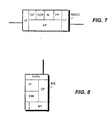
- FIG. 7 illustrates a multimedia message service centre and the essential operations thereof regarding the invention.
- Figure 7 is a block diagram showing a multimedia message service centre MMSC of the invention.
- the multimedia message service centre MMSC comprises an interface part L1 for receiving and sending short messages to and from the mobile station of the mobile communications system.
- the interface part L1 transmits the message through an intra-operator backbone network and a serving support node, and through a short message service centre or a backbone network and a gateway support node.
- the multimedia message service centre MMSC may comprise interface parts L2 (only one shown in the Figure) for connecting a short message service centre to other networks, such as the Internet, another data network and/or a public switched telephone network. These interface parts allow multimedia messages to be sent and received.
- the short message service centre comprises an application part AP transferring the multimedia message received by the multimedia message service centre MMSC to be forwarded as shown, for example, in Figure 6 .
- the application part AP identifies the signalling messages shown in Figures 2, 3 and 4 and knows how to send and receive messages.
- the interface parts attend to interpreting lower level protocols.
- the application part AP stores a multimedia message, which could not be delivered, into its memory M and retrieves it therefrom, when the multimedia message has successfully been delivered or when the mobile station requests the delivery of the multimedia message.
- the application part attends to the fact that the multimedia messages or multimedia message segments sent to the mobile station include at least the parts determined in Figures 3 and 4 .
- the application part can segment the messages, or divide them into segments, as shown in Figure 6 in such a manner that the multimedia message size does not exceed the largest size allowed of the messages transmitted in the network and at the air interface.
- the application part can compose an entire multimedia message from the received segments for further delivery.
- the application part AP can be arranged not to compose an entire multimedia message of the received segments, if the recipient of the message is another mobile station in the same mobile communications system. However, in such an embodiment the application part AP can calculate the size of the message in segments.
- the application part AP also attends to the fact that the multimedia messages whose validity period ends are deleted from the memory, for example, by indicating the memory area allocated for the message as a free area. The deleted message can remain in the memory until a new message is written over it. The application part can no longer find out the contents of the deleted message.
- the application part can be arranged to add a validity period to messages lacking it.
- the application part AP can also be arranged to check whether the MMS-context is activated and to generate the MMS-context activation request to the mobile station MS.
- the application part AP may comprise permanent conditions concerning all multimedia message deliveries allowing the application part to directly filter the messages to be sent from the messages that must be informed.
- the permanent conditions can be located in the memory M.
- the application part AP can also be arranged to retrieve from the memory M subscriber-specific conditions concerning the multimedia message deliveries and permanent conditions possibly located therein.
- the application part AP can also be arranged to inquire about subscriber-specific conditions from the home location register, if they are maintained therein.
- the application part AP can also be arranged to distinguish values concerning the conditions from the multimedia message and to check whether the conditions are fulfilled. If the conditions are met, the application part is arranged to send the multimedia message directly to the mobile station.
- Permanent conditions refer to conditions set by the operator, and which are identical for all messages.
- Subscriber-specific conditions refer to conditions set for each subscriber, and to which a terminal, a subscriber or an operator can provide limiting values. If the embodiment supports subscriber-specific conditions, then the application part AP is arranged to update the conditions. The permanent conditions are preferably updated through the network management system.
- the multimedia message size and type can, for example, be used as permanent conditions. If, for example, the multimedia message size exceeds the size determined in the conditions, the multimedia message will not be delivered directly. Even if the multimedia message size is smaller than what is determined in the conditions in the example, but the contents are not the same as determined in the conditions, then the multimedia message is not delivered directly.
- Subscriber-specific conditions may include a coding mode supported by the terminal, a content type supported by the terminal, the amount of available memory in the terminal, the priority of the multimedia message etc.
- the terminal can indicate coding modes and the amount of available memory, in which case the application part AP updates these values to correspond with the values of the corresponding conditions.
- the subscriber can update the specific conditions thereof, such as the size of the multimedia message to be sent directly, for example by using a WWW interface or a signalling message.
- the operator may in turn determine a condition for some subscribers, on the basis of which the text message having the largest priority must be sent directly irrespective of the size.
- the application part is arranged, when checking the last condition, to "skip" the contradicting conditions.
- the conditions can thus be of different levels.
- When setting conditions logical operators such as AND, OR, XOR, NOT can also be employed.
- the invention does not in any way restrict the conditions, or how they are formed or applied, but they can freely be planned by the operator.
- the application part AP is arranged to select the delivery route based on the given route conditions, and to request for routing instructions for said delivery route.
- the route condition can, for example, be the following: text messages smaller than size X concatenated as short messages, messages including video images and exceeding size Y in circuit-switched mode, others in packet-switched mode.
- the application part AP is arranged to calculate or to allocate in another way the recipient identifier and to add it to the message informing about the multimedia message.
- the application part is arranged to retrieve the multimedia message from the memory on the basis of the recipient identifier.
- the multimedia message service centre can also comprise a generating part GP of the message for generating short messages for example in accordance with the instructions provided by the application part.
- the generating part GP can also transmit a command to the short message service centre to generate a short message.
- the generating part can generate a data message or a small multimedia message informing about a multimedia message waiting for a delivery request.
- the multimedia message service centre may also comprise a packaging part PP that checks whether the contents of the multimedia message are already packed. If the contents are not packed, the packaging part PP performs the packaging. Data is thus transferred more efficiently, as the amount to be transferred is reduced.
- the packaging part preferably checks, for example, through the application part whether packed messages can be sent to the mobile station.
- the packaging part PP can also unpack the packed contents of the received multimedia message, if packed messages cannot be sent to the mobile station.
- the multimedia message service centre may also comprise a coding conversion part CCP.
- the conversion part releases the message codings and codes messages according to instructions provided by the application part. If, for example, a text is coded by ASCII8 coding, but the mobile station supports ASCII7 coding only, the conversion part converts the ASCII8 coding to ASCII7 coding. The message can thus be delivered to the mobile station in such a manner that the contents thereof remain unchanged and that the message can still be read.
- the interfaces located in the interface parts L1, L2 in the multimedia messages service centre are the application interfaces needed in the first preferred embodiment for the data networks such as the IP interface for the Internet or Intranet the interface implemented, for instance, using the protocol shown in Figures 3, 4 and 5 for the mobile station MS, the MAP/SS7 interface for the home location register HLR, the GTP/IP interface for the serving support node SGSN and, for example, the CIMD interface for the short message service centre.
- an interface is needed for the billing gateway centre preferably for billing the sender of sent messages.
- Possible interfaces also include an interface for the domain name server and an interface for the public switching telephone network. The latter is needed if a multimedia message is loaded as circuit-switched data.
- An interface is not needed for the serving support node in the second preferred embodiment of the invention, since the multimedia messages are sent through a short message service gateway SMSGW.
- an X.25 interface is at least currently needed for the short message service gateway SMSGW.
- An interface is not necessarily needed for the home location register nor for the serving support node SSGN in the third preferred embodiment of the invention.
- the gateway support node GGSB requires an interface preferably an IP interface.
- the required interfaces can deviate from the above and are dependent on the protocols supported by the network elements participating in the operation.
- Figures 3, 4, 5 , 6 and 7 show that when certain conditions are met a multimedia message is sent directly to the recipient, it is obvious for those skilled in the art that the same result is achieved even if the conditions are set such that their fulfilment will cause indirect transmission.
- FIG. 8 illustrates the essential parts of the mobile station and the functionalities thereof regarding the invention.
- the mobile station MS consists of an actual terminal and of a subscriber identity module SIM detachably attached thereto.
- the subscriber identity module is a smart card placed in the mobile station including, for example, data associated with identifying the subscriber, such as an international mobile subscriber identity IMSI number identifying the mobile station subscriber, and a certain amount of memory for storing the short messages received by the mobile station.
- the actual terminal comprises a transceiver Tx/Rx including antennas, a user interface UI, a controller CP and a memory M1, from which a certain amount is allocated for storing multimedia messages in the mobile station of the invention.
- the user interface UI generally comprises a keyboard, a display, a loudspeaker and a microphone, which are not shown in Figure 8 .
- the user can compose, send, read, look at and/or listen to, delete and modify multimedia messages and provide the controller CP with other instructions when he/she desires.
- One instruction is the command to request through the mobile station the delivery of the multimedia message as shown in Figure 4 .
- the user interface preferably attends to the release of the multimedia message coding. Through the user interface the user is able to provide the subscriber-specific conditions described in greater detail in Figure 7 with values.
- the controller CP obtains from the user interface, for example, impulses associated with the multimedia messages presented above in Figures 4 and 5 .
- the controller CP preferably informs the mobile station MS user about a multimedia message that has arrived for the subscriber to the mobile station through the user interface Ul, for example, with a sound signal and a message or symbol appearing on the display.
- the controller may include into the above indication information about the message size and type.
- the controller CP can also provide the mobile station user with sound signals, text instructions or instruction signals associated with the operation of the mobile station and/or the mobile communications system through the user interface.
- the controller can also inform an external terminal about the multimedia message and the parameters associated therewith, or it can forward the multimedia message to another external terminal.
- the controller receives and sends multimedia messages, short messages and signalling/control messages through the transceiver Tx/Rx.
- the controller is arranged to send and receive the messages shown above in Figures 2, 3, 4 and 5 , to add necessary parameters and data therein and to interpret said parameters and data as shown above. What the controller does depends on the embodiments.
- the controller CP can be arranged to activate the MMS-context always when registering into the GPRS network or merely as a response to the impulse received from the network or the user.
- the controller can check before receiving the message that memory allocated for multimedia messages is still available.
- the controller can also check the message type and the coding used therein to ensure transmission of the multimedia message to the user through the user interface. This has the advantage that the controller will not in vain store a message that it cannot transmit to the user in the memory.
- the user can receive the message after he/she has changed terminals, if the validity period is still valid.
- the controller of the mobile station according to the invention preferably stores the message in the terminal memory M1. If the multimedia message is sent in several segments, the controller composes the segments into one message before storing the message.
- the controller CP can be arranged to store a multimedia message, which the terminal cannot transmit to the user, into the memory of an identification unit.
- the controller can also be arranged to ask the user where he/she wishes to store the multimedia message.
- the controller can be arranged to distinguish a short message informing about a multimedia message from other short messages and to compose an indication of the data to the user through the user interface. If some other way is used to inform about the multimedia message, then the controller is arranged to transmit the data to the user in accordance with the indication manner employed.
- controller CP segments the message, if needed, and attaches to the message the necessary parameters which are described in greater detail in Figure 5 .
- the controller can be arranged to add conditions, for example information about codings supported by the user interface, data types and available memory to the activation messages of the MMS-context.
- the controller can be arranged to send information on available memory also to an acknowledgement message which the controller sends after the reception of the last segment of the multimedia message.
- the mobile station it is essential for the mobile station that it can identify a multimedia message and is able to interpret and transmit the message to the user by employing the correct means.
- a multimedia message is always received by a mobile station. This is, however, not always the case.
- a multimedia message is always received by a mobile station. This is, however, not always the case.
- the use of such a fixed network is preferably implemented using embodiments employing a separate recipient identifier, for example a hash.
Landscapes
- Engineering & Computer Science (AREA)
- Computer Networks & Wireless Communication (AREA)
- Signal Processing (AREA)
- Multimedia (AREA)
- Mobile Radio Communication Systems (AREA)
Claims (20)
- Procédé de délivrance de messages entre un terminal dans un système de télécommunications utilisant une transmission de données sans fil et un second correspondant quel que soit le type de contenu des messages, le procédé comprenant la délivrance de messages d'au moins deux types de contenu par le biais du même centre de services de messages quel que soit le type de contenu du message,
l'emploi du même protocole pour les messages entre le terminal et le centre de services de messages, caractérisé par
la réception dans le centre de services de messages depuis le terminal d'une valeur associée à une première condition relative à une délivrance directe de messages au terminal, et la détermination de ladite première condition qui détermine au moins la taille maximale d'un message à envoyer directement,
la vérification (604), au niveau du centre de services de messages, de la première condition à partir du message à délivrer au terminal, et qu'il satisfait ou non la première condition associée à la valeur reçue dans le centre de services de messages, et
la délivrance (605) du message directement au terminal, s'il satisfait la première condition, et le renseignement (621) du terminal au sujet du message, s'il ne satisfait pas la première condition, et la délivrance du message en réponse à une requête de message concernant le message. - Procédé selon la revendication 1, caractérisé en ce que la première condition détermine en outre le ou les types de contenus d'un message à envoyer directement.
- Procédé selon la revendication 1 ou 2, caractérisé par
la réception d'une autre valeur associée à la première condition depuis le terminal dans le centre de services de messages, et
l'actualisation consécutive de la première condition. - Procédé selon la revendication 1, 2 ou 3, caractérisé par
la réception d'une propriété de terminal comme valeur associée à la première condition dans le centre de services de messages, et
l'actualisation consécutive de la première condition. - Procédé selon les revendications 1, 2, 3 ou 4, caractérisé par
l'ajout d'un identifiant de destinataire au message renseignant au sujet du message à envoyer au terminal, l'identifiant permettant d'identifier le destinataire du message à recevoir, et
la délivrance du message uniquement si la requête de message comporte l'identifiant de destinataire associé au message. - Procédé selon l'une quelconque des revendications précédentes, caractérisé par
la délivrance de messages depuis le centre de services de messages au terminal en utilisant au moins deux routes de délivrance différentes,
la détermination d'au moins une seconde condition pour le centre de services de messages, et
la sélection de la route de délivrance du message en fonction de la seconde condition. - Procédé selon l'une quelconque des revendications précédentes, caractérisé par
le transfert du message entre le terminal et le centre de services de messages dans des paquets d'une taille particulière,
la vérification avant le transfert du message qu'il entre ou non dans un paquet, et
dans l'affirmative, le transfert du message dans un paquet,
si le paquet n'entre pas dans un paquet,- la division du message en segments de telle sorte qu'un segment entre dans un paquet,- le transfert du message dans des segments consécutifs ; et- la composition du message des segments reçus. - Système de télécommunications sans fil comprenant
au moins un terminal capable de recevoir des messages d'au moins un premier type de contenu et un second type de contenu, le type de contenu indiquant la présentation des contenus des messages, et
un centre de services de messages (MMSC) pour transmettre des messages d'au moins le premier type de contenu et le second type de contenu entre un terminal et un second correspondant, le centre de services de messages (MMSC) délivrant lesdits messages au terminal en tant que messages selon un premier protocole,
caractérisé en ce que le centre de services de messages (MMSC) est agencé pour recevoir depuis le terminal une valeur associée à un première condition se rapportant à une délivrance directe des messages au terminal, vérifier avant de délivrer le message au terminal (MS), que le message satisfait ou non la première condition, et en réponse au résultat de la vérification délivrer le message directement au terminal ou renseigner le terminal au sujet du message, et délivrer le message en réponse à une requête de message concernant le message, la première condition déterminant au moins la taille maximale d'un message à envoyer directement, et
le terminal (MS) est agencé pour envoyer la valeur, recevoir ladite indication au sujet du message, renseigner l'utilisateur du terminal au sujet de l'indication et envoyer la requête de message concernant le message au centre de services de messages (MMSC) en réponse aux instructions reçues de l'utilisateur. - Système selon la revendication 8, caractérisé en ce que la première condition détermine en outre le ou les types de contenus d'un message à envoyer directement.
- Système selon la revendication 8 ou 9, caractérisé en ce que
le terminal (MS) est agencé pour renseigner le centre de services de messages (MMSC) au sujet des codages de contenus de messages qu'il prend en charge, et
le centre de services de messages (MMSC) est agencé pour vérifier le codage du message à délivrer au terminal (MS), le comparer aux codages supportés par le terminal, et si le terminal ne supporte pas le codage du message, changer le codage de message en un codage supporté par le terminal. - Système selon les revendications 8, 9 ou 10, caractérisé par
le transfert des messages dans le système entre le terminal (MS) et le centre de services de messages (MMSC) dans des paquets d'une taille particulière, l'agencement du centre de services de messages (MMSC) pour vérifier avant la délivrance d'un message au terminal, que le message entre ou non dans le paquet, et si le message n'entre pas dans un paquet, diviser le message en segments et délivrer le message au terminal en segments consécutifs. - Système selon la revendication 11, caractérisé en ce que
le centre de services de messages (MMSC) est agencé pour paquétiser un message non paquétisé avec un procédé de paquétisation pris en charge par le terminal avant que le centre de services de messages vérifie que le message entre ou non dans un paquet. - Centre de services de messages (MMSC) connecté à un système de télécommunications sans fil,
le centre de services de messages comprenant un moyen d'interface (L1, L2) pour recevoir des messages d'au moins deux types de contenu différents et pour acheminer des messages d'au moins deux types de contenu différents à un terminal dans un système de télécommunications, les types de contenu indiquant la présentation des contenus de messages,
caractérisé en ce que le centre de services de messages (MMSC) comprend en outre
un moyen de réception depuis le terminal d'une valeur associée à un première condition se rapportant à une délivrance directe de messages au terminal ; et
des moyens d'application (AP) pour sélectionner le mode de délivrance desdits messages en vérifiant que le message satisfait ou non au moins la première condition, et en réponse au résultat de la vérification délivrer le message directement au terminal en utilisant le même protocole quel que soit le type de contenu ou renseigner le terminal au sujet du message, et délivrer le message au terminal en réponse à une requête de message concernant le message, ladite première condition déterminant au moins une taille maximale d'un message à envoyer directement au terminal. - Centre de services de messages (MSMC) selon la revendication 13, caractérisé en ce que la première condition détermine en outre le ou les types de contenus d'un message à envoyer directement.
- Centre de services de messages (MSMC) selon la revendication 13, caractérisé en ce que les moyens d'application (AP) sont agencés
pour vérifier avant la délivrance du message au terminal, que le message entre ou non dans le paquet, et si le message n'entre pas dans un paquet, diviser le message en segments et délivrer le message au terminal en segments consécutifs, et recevoir le message depuis le terminal en segments consécutifs et délivrer les segments à un second terminal du système sans composer de message de ceux-ci. - Centre de services de messages (MSMC) selon les revendications 13, 14 ou 15, caractérisé en ce que les moyens d'application (AP) sont agencés pour sélectionner une route de délivrance pour chaque message en fonction d'une seconde condition prédéterminée ou de secondes conditions prédéterminées.
- Terminal (MS) comprenant
une interface utilisateur (UI) par le biais de laquelle un utilisateur peut recevoir des messages d'au moins un premier type de contenu et un second type de contenu, le type de contenu indiquant la présentation des contenus des messages, et
un contrôleur (CP) pour recevoir des messages d'au moins le premier type de contenu et le second type de contenu utilisant le même protocole, caractérisé en ce que le contrôleur (CP) est agencé pour transmettre à un centre de messages au moins une valeur associée à un première condition se rapportant à une délivrance directe des messages au terminal et déterminer au moins la taille maximale d'un message à envoyer directement, recevoir une indication concernant un message attendant d'être délivré au terminal car au moins la première condition n'a pas été satisfaite, transmettre l'indication à l'utilisateur par le biais de l'interface utilisateur ; et envoyer une requête de délivrance dudit message en réponse à une commande d'utilisateur reçue par le biais de l'interface utilisateur. - Terminal (MS) selon la revendication 17, caractérisé en ce que le contrôleur (CP) est agencé pour déterminer ladite valeur.
- Terminal (MS) selon la revendication 17, caractérisé en ce que le contrôleur (CP) est agencé pour déterminer ladite valeur, la première condition déterminant en outre le ou les types de contenu du message à envoyer directement au terminal.
- Terminal (MS) selon la revendication 17, 18, ou 19, caractérisé en ce que le terminal (MS) est une station mobile.
Applications Claiming Priority (3)
| Application Number | Priority Date | Filing Date | Title |
|---|---|---|---|
| FI981387 | 1998-06-15 | ||
| FI981387A FI108982B (fi) | 1998-06-15 | 1998-06-15 | Sanomapalvelu langattomassa tietoliikennejärjestelmässä |
| PCT/FI1999/000518 WO1999066746A2 (fr) | 1998-06-15 | 1999-06-14 | Procede de remise de messages dans un systeme de communications sans fil, au moyen du meme protocole pour tous les types de message |
Publications (2)
| Publication Number | Publication Date |
|---|---|
| EP1088461A2 EP1088461A2 (fr) | 2001-04-04 |
| EP1088461B1 true EP1088461B1 (fr) | 2015-07-22 |
Family
ID=8552002
Family Applications (1)
| Application Number | Title | Priority Date | Filing Date |
|---|---|---|---|
| EP99931292.9A Expired - Lifetime EP1088461B1 (fr) | 1998-06-15 | 1999-06-14 | Procédé de remise de messages dans un système de communications sans fil, au moyen du même protocole pour tous les types de message |
Country Status (8)
| Country | Link |
|---|---|
| US (1) | US6956832B1 (fr) |
| EP (1) | EP1088461B1 (fr) |
| JP (2) | JP3738184B2 (fr) |
| CN (1) | CN1127865C (fr) |
| AU (1) | AU4784699A (fr) |
| BR (1) | BR9911243A (fr) |
| FI (1) | FI108982B (fr) |
| WO (1) | WO1999066746A2 (fr) |
Families Citing this family (107)
| Publication number | Priority date | Publication date | Assignee | Title |
|---|---|---|---|---|
| FI108603B (fi) * | 1999-04-19 | 2002-02-15 | Nokia Corp | Menetelmä ja järjestelmä multimediaan liittyvän informaation välittämiseksi pakettikytkentäisessä solukkoradioverkossa, jossa on ulkoinen liitäntä |
| FI112427B (fi) * | 1999-11-05 | 2003-11-28 | Nokia Corp | Menetelmä langattoman päätelaitteen ominaisuuksien määrittämiseksi multimediasanoman välityspalvelussa, multimediasanoman välityspalvelu ja multimediapäätelaite |
| FI111314B (fi) * | 1999-11-05 | 2003-06-30 | Nokia Corp | Multimediasanomanvälityspalvelu |
| FI111780B (fi) | 1999-12-23 | 2003-09-15 | Nokia Corp | Sanomanvälityspalvelu |
| US6728530B1 (en) * | 1999-12-28 | 2004-04-27 | Nokia Corporation | Calendar-display apparatus, and associated method, for a mobile terminal |
| FI113231B (fi) | 2000-01-17 | 2004-03-15 | Nokia Corp | Menetelmä sanomien sisältämän informaation esittämiseksi multimediapäätelaitteessa, multimediasanomien välitysjärjestelmä ja multimediapäätelaite |
| WO2001058160A1 (fr) | 2000-02-01 | 2001-08-09 | Swisscom Mobile Ag | Système et procédé pour la diffusion d'objets images |
| DE10004260A1 (de) | 2000-02-02 | 2001-08-09 | Bosch Gmbh Robert | Verfahren zum Übertragen von Nachrichten in einem Telekommunikationsnetzwerk |
| FI20000342A7 (fi) * | 2000-02-16 | 2001-08-17 | Nokia Corp | Verkonhallintajärjestelmä |
| JP3568191B2 (ja) | 2000-03-09 | 2004-09-22 | 株式会社ケンウッド | 移動通信端末とその制御方法 |
| AU4092201A (en) * | 2000-03-21 | 2001-10-03 | Magic4 Limited | Method and system for delivering information services |
| EP1172976A1 (fr) * | 2000-07-14 | 2002-01-16 | N.E. Way S.A. | Procédé de transfert de données stockées sur une base de données |
| ATE309661T1 (de) | 2000-03-24 | 2005-11-15 | Allisblue Sa | Verfahren zur übertragung von gespeicherten daten einer datenbank |
| FI110299B (fi) * | 2000-03-31 | 2002-12-31 | Sonera Oyj | Tilaajan ensimmäisen tunnisteen muuttaminen toiseksi tunnisteeksi |
| AU2001253361A1 (en) | 2000-04-11 | 2001-10-23 | Telecommunication Systems, Inc. | Intelligent delivery agent for short message distribution center |
| FI113606B (fi) * | 2000-05-03 | 2004-05-14 | Nokia Corp | Menetelmä sanomien välittämiseksi, tiedonsiirtojärjestelmä ja päätelaite |
| FI109164B (fi) | 2000-05-15 | 2002-05-31 | Sonera Oyj | Pakettidataprotokollakontekstin aktivoiminen verkon pyynnöstä |
| US7565136B1 (en) | 2000-06-12 | 2009-07-21 | Weeworld Limited | Messaging system |
| US20020032771A1 (en) * | 2000-07-20 | 2002-03-14 | Trond Gledje | Event-based advertisements |
| FI112307B (fi) | 2000-08-02 | 2003-11-14 | Nokia Corp | Viestintäpalvelu |
| US7373422B1 (en) * | 2000-08-04 | 2008-05-13 | Oracle International Corporation | Techniques for supporting multiple devices in mobile applications |
| FI110297B (fi) | 2000-08-21 | 2002-12-31 | Mikko Kalervo Vaeaenaenen | Lyhytäänisanomajärjestelmä, -menetelmä ja -päätelaite |
| WO2002023857A2 (fr) * | 2000-09-11 | 2002-03-21 | Viafone, Inc. | Procede et systeme d'integration d'applications et de reseaux mobiles |
| CA2423278C (fr) * | 2000-10-09 | 2009-12-29 | Nokia Technologies Oy | Liberation de connexion dans un reseau de communication a deux couches |
| SE0004178D0 (sv) * | 2000-11-14 | 2000-11-14 | Ericsson Telefon Ab L M | Network requested packet data protocol context activation |
| FI114364B (fi) * | 2000-11-22 | 2004-09-30 | Nokia Corp | Datan siirto |
| PL356603A1 (pl) * | 2000-12-06 | 2004-06-28 | Ntt Docomo, Inc. | Metoda i urządzenie obsługi wielu sekcji poczty podzielonych listów elektronicznych |
| FI20002814A0 (fi) * | 2000-12-21 | 2000-12-21 | Nokia Mobile Phones Ltd | Asiayhteyspohjainen tiedonsiirronvarmistamismenetelmä ja järjestely, tiedonsiirtoverkko sekä tiedonsiirtoverkon päätelaite |
| US6947738B2 (en) | 2001-01-18 | 2005-09-20 | Telefonaktiebolaget Lm Ericsson (Publ) | Multimedia messaging service routing system and method |
| US8099081B2 (en) | 2001-01-18 | 2012-01-17 | Siemens Aktiengesellschaft | Method and mobile telecommunications device for transmitting data in a mobile radio network |
| JP4123331B2 (ja) * | 2001-03-16 | 2008-07-23 | 日本電気株式会社 | マルチメディア通信システムとマルチメディア通信可能な携帯無線通信端末及びメッセージ送受信方法 |
| GB0107760D0 (en) | 2001-03-28 | 2001-05-16 | British Telecomm | A method and a system of remotely controlling data transfer via a data transfer network |
| FR2824935B1 (fr) * | 2001-05-18 | 2005-09-16 | Christian Bechon | Procede et systeme pour diffuser vers un utilisateur nomade de courtes videos relatives a la vie courante et liees a une pratique gestuelle |
| US20040145660A1 (en) * | 2001-06-06 | 2004-07-29 | Yosuke Kusaka | Electronic imaging apparatus and electronic imaging system |
| DE10130538A1 (de) * | 2001-06-25 | 2003-01-09 | Siemens Ag | Verfahren zum Bereitstellen von Multimedia Messaging Service (MMS)-spezifischen Daten, entsprechende Vorrichtungen und Software-Programme |
| US7110026B2 (en) * | 2001-07-03 | 2006-09-19 | Logitech Europe S.A. | Image tagging for post processing |
| KR20030008820A (ko) * | 2001-07-20 | 2003-01-29 | 엘지전자 주식회사 | 단말기를 이용한 호환 시스템 |
| EP2247086B1 (fr) * | 2001-08-10 | 2017-08-02 | Siemens Aktiengesellschaft | Procédés, dispositifs et programmes logiciel pour l'agrandissement du flux d'information lors de la transmission d'une information |
| FR2828970B1 (fr) * | 2001-08-27 | 2003-12-19 | Cit Alcatel | Systeme d'interoperabilite entre messages mms et messages sms/ems et procede d'echange associe |
| US6658260B2 (en) | 2001-09-05 | 2003-12-02 | Telecommunication Systems, Inc. | Inter-carrier short messaging service providing phone number only experience |
| JP2003110659A (ja) | 2001-09-28 | 2003-04-11 | Toshiba Corp | 移動通信端末 |
| EP1451703A4 (fr) * | 2001-10-31 | 2005-03-30 | Followap Inc | Systeme et procede de communication instantanee de multimedias |
| FR2833447A1 (fr) * | 2001-12-06 | 2003-06-13 | Philip Winne Lewis Winner | Systeme securise d'echanges et de selections d'informations personnelles mettant en oeuvre des telephones portables |
| NO319841B1 (no) * | 2001-12-06 | 2005-09-19 | Beep Science As | Arrangement for innholdsfakturering i et meldingssystem |
| JP3676312B2 (ja) | 2002-03-12 | 2005-07-27 | 株式会社エヌ・ティ・ティ・ドコモ | 送信側移動機、受信側移動機、情報通信システム、情報通信方法及びサーバ装置 |
| DE10215567A1 (de) * | 2002-04-09 | 2003-10-23 | Siemens Ag | Verfahren zur Übertragung von Daten, insbesondere mit multimedialen Inhalten, in einem Mobilfunknetz |
| EP1361712B1 (fr) * | 2002-05-07 | 2006-03-29 | Sony Ericsson Mobile Communications AB | Procédé de communication de messages à un équipment électronique de communication |
| WO2003096636A1 (fr) * | 2002-05-07 | 2003-11-20 | Sony Ericsson Mobile Communications Ab | Procede servant a transferer des messages a un equipement de communication electronique |
| FI20020932A0 (fi) * | 2002-05-17 | 2002-05-17 | Tero Jartti | Kuvaviestien välitys matkaviestinjärjestelmässä |
| US20040140989A1 (en) * | 2002-05-28 | 2004-07-22 | John Papageorge | Content subscription and delivery service |
| US7116995B2 (en) * | 2002-05-31 | 2006-10-03 | Nokia Corporation | System and method for operating intravendor and intervendor messaging systems |
| ES2326263T3 (es) * | 2002-06-19 | 2009-10-06 | Swisscom Ag | Sistema de mensajeria de datos y voz basado en red para redes de comunicacion movil de banda ancha. |
| FI20021314A0 (fi) * | 2002-07-03 | 2002-07-03 | Nokia Corp | Tiedonsiirtomenetelmä ja järjestely |
| US6985720B2 (en) * | 2002-07-12 | 2006-01-10 | Qualcomm, Incorporated | Apparatus and method for transparent and integrated wireless messaging in a multi-mode environment |
| US8645470B2 (en) | 2002-12-06 | 2014-02-04 | Core Wireless Licensing S.A.R.L. | System, method and computer program product for the delivery of media content |
| US20040185883A1 (en) * | 2003-03-04 | 2004-09-23 | Jason Rukman | System and method for threading short message service (SMS) messages with multimedia messaging service (MMS) messages |
| CN100426821C (zh) * | 2003-03-06 | 2008-10-15 | 华为技术有限公司 | 一种短信息处理方法 |
| US20040258063A1 (en) * | 2003-03-25 | 2004-12-23 | Raith Alex Krister | Multimedia message processing |
| US7383042B2 (en) * | 2003-04-17 | 2008-06-03 | Hewlett-Packard Development Company, L.P. | Interoperable voice and data wireless network |
| SE0302040L (sv) * | 2003-07-10 | 2005-01-11 | Telia Ab | System och metod för att lagra tjänster |
| TWI241836B (en) | 2003-07-30 | 2005-10-11 | Sk Telecom Co Ltd | Method of providing multimedia messaging service using unique message identifier |
| FI116440B (fi) | 2003-08-18 | 2005-11-15 | Nokia Corp | Tiedonsiirtomenetelmän valinta |
| US20050064883A1 (en) * | 2003-09-22 | 2005-03-24 | Heck John Frederick | Unified messaging server and method bridges multimedia messaging service functions with legacy handsets |
| FI20031871A0 (fi) * | 2003-12-19 | 2003-12-19 | Nokia Corp | Multimediasanomapalvelujärjestelmä ja menetelmä |
| FR2864648B1 (fr) * | 2003-12-31 | 2006-02-24 | Radiotelephone Sfr | Procede de reveil d'un ordinateur autonome |
| CN100579258C (zh) * | 2004-01-13 | 2010-01-06 | 诺基亚公司 | 用于交互式通信的方法和设备 |
| GB2411544B (en) * | 2004-02-24 | 2009-02-18 | Vodafone Plc | Wireless telecommunication |
| FR2867651B1 (fr) * | 2004-03-09 | 2006-05-19 | Sagem | Procede de transmission d'informations par mms et telephones associes |
| US7853209B2 (en) | 2004-03-30 | 2010-12-14 | Mitsubishi Denki Kabushiki Kaisha | Mobile communication station, base station apparatus, and dedicated-short-range-communications system |
| CN1939014B (zh) * | 2004-04-09 | 2012-06-13 | 意大利电信股份公司 | 用于管理电子邮件服务的方法、设备以及通信网络 |
| US20070232274A1 (en) * | 2004-04-29 | 2007-10-04 | Younghee Jung | Method, System, Wireless Communications Device and Computer Programs for Sending and Receiving Messages |
| US8195205B2 (en) | 2004-05-06 | 2012-06-05 | Telecommunication Systems, Inc. | Gateway application to support use of a single internet address domain for routing messages to multiple multimedia message service centers |
| WO2005109919A2 (fr) * | 2004-05-06 | 2005-11-17 | Telecommunication Systems Inc. | Procede permettant de qualifier un contenu de messages multimedias afin d'activer l'utilisation d'un domaine d'adresses internet unique pour envoyer des messages a des centres de service de messages courts et a des centres de service de messages multimedias |
| US7991411B2 (en) * | 2004-05-06 | 2011-08-02 | Telecommunication Systems, Inc. | Method to qualify multimedia message content to enable use of a single internet address domain to send messages to both short message service centers and multimedia message service centers |
| CN100362873C (zh) * | 2004-05-12 | 2008-01-16 | 华为技术有限公司 | 一种多媒体消息的发送方法 |
| US7580388B2 (en) * | 2004-06-01 | 2009-08-25 | Lg Electronics Inc. | Method and apparatus for providing enhanced messages on common control channel in wireless communication system |
| US20060030297A1 (en) * | 2004-07-02 | 2006-02-09 | Coble John W | Delivery of contents of voice message from voice mailbox to multimedia capable device |
| US7260412B2 (en) | 2004-07-30 | 2007-08-21 | Interdigital Technology Corporation | Wireless communication method and system for establishing a multimedia message service over a WLAN |
| CN1985530B (zh) * | 2004-07-30 | 2012-04-04 | 美商内数位科技公司 | Wlan上建立多媒体信息服务的无线通信方法及系统 |
| ATE487313T1 (de) * | 2004-09-13 | 2010-11-15 | Ericsson Telefon Ab L M | Technik zur bereitstellung von selektivem zugriff auf einen netzwerkknoten |
| JP4695147B2 (ja) | 2004-11-02 | 2011-06-08 | ノキア コーポレイション | メッセージ・コンテント・プロパティの情報受信者装置 |
| TWI267273B (en) * | 2004-11-11 | 2006-11-21 | Mediatek Inc | Method and mobile apparatus of receiving a multimedia message |
| US7796975B2 (en) * | 2004-11-23 | 2010-09-14 | Sony Ericsson Mobile Communications Ab | Method of transferring data files to and from a portable wireless communication device |
| US7430425B2 (en) | 2005-05-17 | 2008-09-30 | Telecommunication Systems, Inc. | Inter-carrier digital message with user data payload service providing phone number only experience |
| US8819143B2 (en) * | 2005-05-31 | 2014-08-26 | Flash Networks Ltd. | Presentation layer adaptation in multimedia messaging |
| US8023971B2 (en) * | 2005-11-21 | 2011-09-20 | Syniverse Icx Corporation | Method and system to deliver multimedia alerts to a mobile phone |
| US7949103B2 (en) * | 2006-06-20 | 2011-05-24 | Vontoo, Llc | System and method for providing voice messaging with dynamic content |
| US9749296B1 (en) * | 2006-06-30 | 2017-08-29 | Avaya Inc. | Method and apparatus for modifying address information in signaling messages to ensure in-path devices remain in signaling path between endpoints |
| US8374586B2 (en) | 2006-09-07 | 2013-02-12 | Pima Electronic Systems Ltd. | Method and system for transmission of images from a monitored area |
| EP1903762B1 (fr) * | 2006-09-20 | 2015-08-12 | Unify GmbH & Co. KG | Prévention d'établissement d' un appel d'un central téléphonique privé à une terminal radio portable qui n'est pas disponible |
| US8943218B2 (en) | 2006-10-12 | 2015-01-27 | Concurrent Computer Corporation | Method and apparatus for a fault resilient collaborative media serving array |
| FI20061057A0 (fi) * | 2006-11-30 | 2006-11-30 | Nokia Corp | Välitystiedot tietoliikennejärjestelmässä |
| WO2008064897A1 (fr) * | 2006-12-01 | 2008-06-05 | Vodafone Holding Gmbh | Échange de données numériques |
| AU2007329088B8 (en) | 2006-12-08 | 2011-02-24 | Lipso Systemes Inc. | System and method for optimisation of media objects |
| RU2482634C2 (ru) * | 2007-03-12 | 2013-05-20 | Нек Корпорейшн | Система мобильной связи и способ управления связью |
| US8856633B2 (en) * | 2007-10-03 | 2014-10-07 | Qualcomm Incorporated | Millimeter-wave communications for peripheral devices |
| DE102008009087B4 (de) | 2008-02-14 | 2024-03-07 | Fraunhofer-Gesellschaft zur Förderung der angewandten Forschung e.V. | Verfahren zum Steuern einer Relaisstation in einem Mobilfunknetzwerk |
| US8909261B1 (en) * | 2008-12-16 | 2014-12-09 | Sprint Communications Company L.P. | Dynamic determination of file transmission chunk size for efficient media upload |
| US8554174B2 (en) * | 2009-06-15 | 2013-10-08 | Alcatel Lucent | Selective first delivery attempt (FDA) processing for text messages |
| CN101997842B (zh) * | 2009-08-11 | 2015-05-20 | 中兴通讯股份有限公司 | 大消息模式cpm消息传输方法及系统 |
| CN102045295A (zh) * | 2009-10-19 | 2011-05-04 | 华为技术有限公司 | 多媒体消息下载结果获取与上报的方法、系统及装置 |
| ZA201006747B (en) * | 2010-07-23 | 2011-05-25 | Capital Supreme (Pty) Ltd T/A Multimedia Solutions | A method for sending out mobile financial summaries |
| CN103988470B (zh) | 2011-12-07 | 2018-03-02 | 三星电子株式会社 | 用于在通信系统中高效递送短消息服务的装置和方法 |
| US10721594B2 (en) * | 2014-06-26 | 2020-07-21 | Microsoft Technology Licensing, Llc | Location-based audio messaging |
| CN105451196A (zh) * | 2014-08-26 | 2016-03-30 | 中国移动通信集团公司 | 多媒体消息路由方法、装置及系统 |
| US10051107B1 (en) | 2017-03-16 | 2018-08-14 | Microsoft Technology Licensing, Llc | Opportunistic timing of device notifications |
| CN109286904A (zh) * | 2018-10-15 | 2019-01-29 | 京信通信系统(中国)有限公司 | Ims系统、消息处理方法、装置和存储介质 |
Family Cites Families (17)
| Publication number | Priority date | Publication date | Assignee | Title |
|---|---|---|---|---|
| US4837798A (en) | 1986-06-02 | 1989-06-06 | American Telephone And Telegraph Company | Communication system having unified messaging |
| US5333266A (en) | 1992-03-27 | 1994-07-26 | International Business Machines Corporation | Method and apparatus for message handling in computer systems |
| US5446678A (en) | 1992-12-18 | 1995-08-29 | Hewlett-Packard Corporation | Transmission of information over an alphanumeric paging network |
| CA2136255A1 (fr) | 1994-01-06 | 1995-07-07 | Ewald Christoph Anderl | Boite a lettres electronique integree |
| US5497373A (en) | 1994-03-22 | 1996-03-05 | Ericsson Messaging Systems Inc. | Multi-media interface |
| AU4161796A (en) | 1994-12-16 | 1996-07-03 | At & T Corporation | Network based multimedia messaging method and system |
| FI103546B (fi) | 1996-09-16 | 1999-07-15 | Nokia Telecommunications Oy | Datapalvelu matkaviestinverkossa |
| SE510664C2 (sv) | 1996-10-29 | 1999-06-14 | Ericsson Telefon Ab L M | Metoder och anordning för meddelandehantering i ett kommunikationssystem |
| US6233318B1 (en) * | 1996-11-05 | 2001-05-15 | Comverse Network Systems, Inc. | System for accessing multimedia mailboxes and messages over the internet and via telephone |
| US6396839B1 (en) * | 1997-02-12 | 2002-05-28 | Abb Automation Inc. | Remote access to electronic meters using a TCP/IP protocol suite |
| US6574216B1 (en) * | 1997-03-11 | 2003-06-03 | Verizon Services Corp. | Packet data network voice call quality monitoring |
| US6249681B1 (en) * | 1997-04-01 | 2001-06-19 | Nokia Mobile Phones Ltd. | Method and apparatus for packet data call re-establishment in a telecommunications system |
| EP0916219B1 (fr) | 1997-04-23 | 2007-07-25 | Nortel Networks Limited | Serveur et methode pour la remise automatique de messages a un dispositif de telecommunication |
| US6333973B1 (en) * | 1997-04-23 | 2001-12-25 | Nortel Networks Limited | Integrated message center |
| US5987100A (en) * | 1997-04-23 | 1999-11-16 | Northern Telecom Limited | Universal mailbox |
| US6208651B1 (en) * | 1997-06-10 | 2001-03-27 | Cornell Research Foundation, Inc. | Method and system for masking the overhead of protocol layering |
| US6421707B1 (en) * | 1998-02-13 | 2002-07-16 | Lucent Technologies Inc. | Wireless multi-media messaging communications method and apparatus |
-
1998
- 1998-06-15 FI FI981387A patent/FI108982B/fi not_active IP Right Cessation
-
1999
- 1999-06-14 EP EP99931292.9A patent/EP1088461B1/fr not_active Expired - Lifetime
- 1999-06-14 US US09/719,589 patent/US6956832B1/en not_active Expired - Lifetime
- 1999-06-14 CN CN99807122A patent/CN1127865C/zh not_active Expired - Lifetime
- 1999-06-14 WO PCT/FI1999/000518 patent/WO1999066746A2/fr not_active Ceased
- 1999-06-14 BR BR9911243-4A patent/BR9911243A/pt not_active IP Right Cessation
- 1999-06-14 AU AU47846/99A patent/AU4784699A/en not_active Abandoned
- 1999-06-14 JP JP2000555454A patent/JP3738184B2/ja not_active Expired - Lifetime
-
2005
- 2005-07-22 JP JP2005212832A patent/JP2005333672A/ja active Pending
Also Published As
| Publication number | Publication date |
|---|---|
| FI108982B (fi) | 2002-04-30 |
| JP2002518957A (ja) | 2002-06-25 |
| JP3738184B2 (ja) | 2006-01-25 |
| CN1304620A (zh) | 2001-07-18 |
| JP2005333672A (ja) | 2005-12-02 |
| WO1999066746A2 (fr) | 1999-12-23 |
| AU4784699A (en) | 2000-01-05 |
| BR9911243A (pt) | 2001-03-06 |
| EP1088461A2 (fr) | 2001-04-04 |
| US6956832B1 (en) | 2005-10-18 |
| WO1999066746A3 (fr) | 2000-02-24 |
| FI981387A0 (fi) | 1998-06-15 |
| CN1127865C (zh) | 2003-11-12 |
| FI981387L (fi) | 1999-12-16 |
Similar Documents
| Publication | Publication Date | Title |
|---|---|---|
| EP1088461B1 (fr) | Procédé de remise de messages dans un système de communications sans fil, au moyen du même protocole pour tous les types de message | |
| CA2314103C (fr) | Telecommunications cellulaires numeriques avec envoi de messages brefs par un canal de donnees par paquets | |
| US10397354B2 (en) | Filtering of electronic information to be transferred to a terminal | |
| EP1338155B1 (fr) | Confirmation automatique assistée par un reseau de l'execution d'un service de livraison de messages courts | |
| US6885870B2 (en) | Transferring of a message | |
| US7127489B2 (en) | Messaging service | |
| JP3500343B2 (ja) | パケット交換型セルラー無線ネットワークでマルチメディア関連情報の送信準備を行なうための方法および構成 | |
| JP3999665B2 (ja) | Mmsシステムからのメッセージ送信方法および該方法のための装置 | |
| US8767673B2 (en) | Transmitting messages in telecommunications system comprising a packet radio network | |
| KR101094120B1 (ko) | 무선 디바이스로부터 메시지를 전송하기 위한 방법 및 장치 | |
| GB2298339A (en) | Transmitting short messages in a cordless phone system | |
| JP2004505525A (ja) | 増強型ショートメッセージサービスの方法と装置 | |
| JP4282902B2 (ja) | ショートメッセージを送信する移動通信システム | |
| US6980792B2 (en) | Billing for replies in a communication system | |
| US20020006797A1 (en) | Service delivery in a mobile communications system supporting two connection types | |
| JP3811356B2 (ja) | 無線通信における最大遠距離サービスペイロードサイズの指示を提供するシステムおよび方法 | |
| KR100442129B1 (ko) | 망간 연동 단문 메시지 서비스를 위한 2세대 망에서발신된 단문 메시지의 착신 처리 방법 | |
| CN101094455B (zh) | 一种实现移动网络中短消息实时传输的方法 | |
| EP1619907A2 (fr) | Procédé de gestion des demandes de service dans un réseau de communication mobile | |
| KR100442127B1 (ko) | 망간 연동 단문 메시지 서비스 방법 | |
| JP3576901B2 (ja) | メッセージ送信方法 | |
| KR101016269B1 (ko) | 해외 로밍 메시징 서비스에서 주번호와 부번호를 이용하여발신 및 착신을 처리하는 무선 통신 방법 및 시스템 | |
| EP1841244A2 (fr) | Transmission de messages dans un système de télécommunications comprenant un réseau de radio par paquets | |
| KR20040000554A (ko) | 이동통신 단말기의 단문메시지 차단 방법 |
Legal Events
| Date | Code | Title | Description |
|---|---|---|---|
| PUAI | Public reference made under article 153(3) epc to a published international application that has entered the european phase |
Free format text: ORIGINAL CODE: 0009012 |
|
| 17P | Request for examination filed |
Effective date: 20001117 |
|
| AK | Designated contracting states |
Kind code of ref document: A2 Designated state(s): AT BE CH CY DE DK ES FI FR GB GR IE IT LI LU MC NL PT SE |
|
| RAP1 | Party data changed (applicant data changed or rights of an application transferred) |
Owner name: NOKIA CORPORATION |
|
| 17Q | First examination report despatched |
Effective date: 20050217 |
|
| 17Q | First examination report despatched |
Effective date: 20050217 |
|
| RIC1 | Information provided on ipc code assigned before grant |
Ipc: H04L 12/58 20060101ALN20090917BHEP Ipc: H04W 4/12 20090101AFI20090917BHEP |
|
| GRAP | Despatch of communication of intention to grant a patent |
Free format text: ORIGINAL CODE: EPIDOSNIGR1 |
|
| RAP1 | Party data changed (applicant data changed or rights of an application transferred) |
Owner name: NOKIA CORPORATION |
|
| GRAP | Despatch of communication of intention to grant a patent |
Free format text: ORIGINAL CODE: EPIDOSNIGR1 |
|
| INTG | Intention to grant announced |
Effective date: 20150105 |
|
| RAP1 | Party data changed (applicant data changed or rights of an application transferred) |
Owner name: NOKIA TECHNOLOGIES OY |
|
| GRAS | Grant fee paid |
Free format text: ORIGINAL CODE: EPIDOSNIGR3 |
|
| GRAA | (expected) grant |
Free format text: ORIGINAL CODE: 0009210 |
|
| AK | Designated contracting states |
Kind code of ref document: B1 Designated state(s): AT BE CH CY DE DK ES FI FR GB GR IE IT LI LU MC NL PT SE |
|
| REG | Reference to a national code |
Ref country code: GB Ref legal event code: FG4D |
|
| REG | Reference to a national code |
Ref country code: CH Ref legal event code: EP |
|
| REG | Reference to a national code |
Ref country code: IE Ref legal event code: FG4D |
|
| REG | Reference to a national code |
Ref country code: AT Ref legal event code: REF Ref document number: 738472 Country of ref document: AT Kind code of ref document: T Effective date: 20150815 |
|
| REG | Reference to a national code |
Ref country code: DE Ref legal event code: R096 Ref document number: 69945369 Country of ref document: DE |
|
| REG | Reference to a national code |
Ref country code: NL Ref legal event code: FP |
|
| REG | Reference to a national code |
Ref country code: AT Ref legal event code: MK05 Ref document number: 738472 Country of ref document: AT Kind code of ref document: T Effective date: 20150722 |
|
| PG25 | Lapsed in a contracting state [announced via postgrant information from national office to epo] |
Ref country code: FI Free format text: LAPSE BECAUSE OF FAILURE TO SUBMIT A TRANSLATION OF THE DESCRIPTION OR TO PAY THE FEE WITHIN THE PRESCRIBED TIME-LIMIT Effective date: 20150722 Ref country code: GR Free format text: LAPSE BECAUSE OF FAILURE TO SUBMIT A TRANSLATION OF THE DESCRIPTION OR TO PAY THE FEE WITHIN THE PRESCRIBED TIME-LIMIT Effective date: 20151023 |
|
| PG25 | Lapsed in a contracting state [announced via postgrant information from national office to epo] |
Ref country code: AT Free format text: LAPSE BECAUSE OF FAILURE TO SUBMIT A TRANSLATION OF THE DESCRIPTION OR TO PAY THE FEE WITHIN THE PRESCRIBED TIME-LIMIT Effective date: 20150722 Ref country code: SE Free format text: LAPSE BECAUSE OF FAILURE TO SUBMIT A TRANSLATION OF THE DESCRIPTION OR TO PAY THE FEE WITHIN THE PRESCRIBED TIME-LIMIT Effective date: 20150722 Ref country code: PT Free format text: LAPSE BECAUSE OF FAILURE TO SUBMIT A TRANSLATION OF THE DESCRIPTION OR TO PAY THE FEE WITHIN THE PRESCRIBED TIME-LIMIT Effective date: 20151123 Ref country code: ES Free format text: LAPSE BECAUSE OF FAILURE TO SUBMIT A TRANSLATION OF THE DESCRIPTION OR TO PAY THE FEE WITHIN THE PRESCRIBED TIME-LIMIT Effective date: 20150722 |
|
| REG | Reference to a national code |
Ref country code: DE Ref legal event code: R097 Ref document number: 69945369 Country of ref document: DE |
|
| PG25 | Lapsed in a contracting state [announced via postgrant information from national office to epo] |
Ref country code: IT Free format text: LAPSE BECAUSE OF FAILURE TO SUBMIT A TRANSLATION OF THE DESCRIPTION OR TO PAY THE FEE WITHIN THE PRESCRIBED TIME-LIMIT Effective date: 20150722 Ref country code: DK Free format text: LAPSE BECAUSE OF FAILURE TO SUBMIT A TRANSLATION OF THE DESCRIPTION OR TO PAY THE FEE WITHIN THE PRESCRIBED TIME-LIMIT Effective date: 20150722 |
|
| PLBE | No opposition filed within time limit |
Free format text: ORIGINAL CODE: 0009261 |
|
| STAA | Information on the status of an ep patent application or granted ep patent |
Free format text: STATUS: NO OPPOSITION FILED WITHIN TIME LIMIT |
|
| 26N | No opposition filed |
Effective date: 20160425 |
|
| PG25 | Lapsed in a contracting state [announced via postgrant information from national office to epo] |
Ref country code: BE Free format text: LAPSE BECAUSE OF FAILURE TO SUBMIT A TRANSLATION OF THE DESCRIPTION OR TO PAY THE FEE WITHIN THE PRESCRIBED TIME-LIMIT Effective date: 20150722 |
|
| PG25 | Lapsed in a contracting state [announced via postgrant information from national office to epo] |
Ref country code: MC Free format text: LAPSE BECAUSE OF FAILURE TO SUBMIT A TRANSLATION OF THE DESCRIPTION OR TO PAY THE FEE WITHIN THE PRESCRIBED TIME-LIMIT Effective date: 20150722 |
|
| REG | Reference to a national code |
Ref country code: CH Ref legal event code: PL |
|
| REG | Reference to a national code |
Ref country code: IE Ref legal event code: MM4A |
|
| REG | Reference to a national code |
Ref country code: FR Ref legal event code: ST Effective date: 20170228 |
|
| PG25 | Lapsed in a contracting state [announced via postgrant information from national office to epo] |
Ref country code: FR Free format text: LAPSE BECAUSE OF NON-PAYMENT OF DUE FEES Effective date: 20160630 Ref country code: LI Free format text: LAPSE BECAUSE OF NON-PAYMENT OF DUE FEES Effective date: 20160630 Ref country code: CH Free format text: LAPSE BECAUSE OF NON-PAYMENT OF DUE FEES Effective date: 20160630 |
|
| PG25 | Lapsed in a contracting state [announced via postgrant information from national office to epo] |
Ref country code: IE Free format text: LAPSE BECAUSE OF NON-PAYMENT OF DUE FEES Effective date: 20160614 |
|
| PG25 | Lapsed in a contracting state [announced via postgrant information from national office to epo] |
Ref country code: CY Free format text: LAPSE BECAUSE OF FAILURE TO SUBMIT A TRANSLATION OF THE DESCRIPTION OR TO PAY THE FEE WITHIN THE PRESCRIBED TIME-LIMIT Effective date: 20150722 |
|
| PG25 | Lapsed in a contracting state [announced via postgrant information from national office to epo] |
Ref country code: LU Free format text: LAPSE BECAUSE OF NON-PAYMENT OF DUE FEES Effective date: 20160614 |
|
| PGFP | Annual fee paid to national office [announced via postgrant information from national office to epo] |
Ref country code: NL Payment date: 20180613 Year of fee payment: 20 Ref country code: DE Payment date: 20180530 Year of fee payment: 20 |
|
| PGFP | Annual fee paid to national office [announced via postgrant information from national office to epo] |
Ref country code: GB Payment date: 20180613 Year of fee payment: 20 |
|
| REG | Reference to a national code |
Ref country code: DE Ref legal event code: R071 Ref document number: 69945369 Country of ref document: DE |
|
| REG | Reference to a national code |
Ref country code: NL Ref legal event code: MK Effective date: 20190613 |
|
| REG | Reference to a national code |
Ref country code: GB Ref legal event code: PE20 Expiry date: 20190613 |
|
| PG25 | Lapsed in a contracting state [announced via postgrant information from national office to epo] |
Ref country code: GB Free format text: LAPSE BECAUSE OF EXPIRATION OF PROTECTION Effective date: 20190613 |