EP1088830A2 - Partikel von Hepatitis B Oberflächenantigen - Google Patents
Partikel von Hepatitis B Oberflächenantigen Download PDFInfo
- Publication number
- EP1088830A2 EP1088830A2 EP00121167A EP00121167A EP1088830A2 EP 1088830 A2 EP1088830 A2 EP 1088830A2 EP 00121167 A EP00121167 A EP 00121167A EP 00121167 A EP00121167 A EP 00121167A EP 1088830 A2 EP1088830 A2 EP 1088830A2
- Authority
- EP
- European Patent Office
- Prior art keywords
- particle
- region
- hbv
- peptide
- sequence
- Prior art date
- Legal status (The legal status is an assumption and is not a legal conclusion. Google has not performed a legal analysis and makes no representation as to the accuracy of the status listed.)
- Withdrawn
Links
Images







Classifications
-
- C—CHEMISTRY; METALLURGY
- C07—ORGANIC CHEMISTRY
- C07K—PEPTIDES
- C07K14/00—Peptides having more than 20 amino acids; Gastrins; Somatostatins; Melanotropins; Derivatives thereof
- C07K14/005—Peptides having more than 20 amino acids; Gastrins; Somatostatins; Melanotropins; Derivatives thereof from viruses
-
- A—HUMAN NECESSITIES
- A61—MEDICAL OR VETERINARY SCIENCE; HYGIENE
- A61P—SPECIFIC THERAPEUTIC ACTIVITY OF CHEMICAL COMPOUNDS OR MEDICINAL PREPARATIONS
- A61P31/00—Antiinfectives, i.e. antibiotics, antiseptics, chemotherapeutics
- A61P31/12—Antivirals
- A61P31/14—Antivirals for RNA viruses
-
- C—CHEMISTRY; METALLURGY
- C07—ORGANIC CHEMISTRY
- C07K—PEPTIDES
- C07K14/00—Peptides having more than 20 amino acids; Gastrins; Somatostatins; Melanotropins; Derivatives thereof
- C07K14/435—Peptides having more than 20 amino acids; Gastrins; Somatostatins; Melanotropins; Derivatives thereof from animals; from humans
- C07K14/44—Peptides having more than 20 amino acids; Gastrins; Somatostatins; Melanotropins; Derivatives thereof from animals; from humans from protozoa
- C07K14/445—Plasmodium
-
- C—CHEMISTRY; METALLURGY
- C12—BIOCHEMISTRY; BEER; SPIRITS; WINE; VINEGAR; MICROBIOLOGY; ENZYMOLOGY; MUTATION OR GENETIC ENGINEERING
- C12N—MICROORGANISMS OR ENZYMES; COMPOSITIONS THEREOF; PROPAGATING, PRESERVING, OR MAINTAINING MICROORGANISMS; MUTATION OR GENETIC ENGINEERING; CULTURE MEDIA
- C12N15/00—Mutation or genetic engineering; DNA or RNA concerning genetic engineering, vectors, e.g. plasmids, or their isolation, preparation or purification; Use of hosts therefor
- C12N15/09—Recombinant DNA-technology
- C12N15/11—DNA or RNA fragments; Modified forms thereof; Non-coding nucleic acids having a biological activity
- C12N15/62—DNA sequences coding for fusion proteins
-
- C—CHEMISTRY; METALLURGY
- C12—BIOCHEMISTRY; BEER; SPIRITS; WINE; VINEGAR; MICROBIOLOGY; ENZYMOLOGY; MUTATION OR GENETIC ENGINEERING
- C12N—MICROORGANISMS OR ENZYMES; COMPOSITIONS THEREOF; PROPAGATING, PRESERVING, OR MAINTAINING MICROORGANISMS; MUTATION OR GENETIC ENGINEERING; CULTURE MEDIA
- C12N7/00—Viruses; Bacteriophages; Compositions thereof; Preparation or purification thereof
-
- A—HUMAN NECESSITIES
- A61—MEDICAL OR VETERINARY SCIENCE; HYGIENE
- A61K—PREPARATIONS FOR MEDICAL, DENTAL OR TOILETRY PURPOSES
- A61K39/00—Medicinal preparations containing antigens or antibodies
- A61K2039/51—Medicinal preparations containing antigens or antibodies comprising whole cells, viruses or DNA/RNA
- A61K2039/525—Virus
- A61K2039/5258—Virus-like particles
-
- A—HUMAN NECESSITIES
- A61—MEDICAL OR VETERINARY SCIENCE; HYGIENE
- A61K—PREPARATIONS FOR MEDICAL, DENTAL OR TOILETRY PURPOSES
- A61K38/00—Medicinal preparations containing peptides
-
- A—HUMAN NECESSITIES
- A61—MEDICAL OR VETERINARY SCIENCE; HYGIENE
- A61K—PREPARATIONS FOR MEDICAL, DENTAL OR TOILETRY PURPOSES
- A61K39/00—Medicinal preparations containing antigens or antibodies
-
- C—CHEMISTRY; METALLURGY
- C07—ORGANIC CHEMISTRY
- C07K—PEPTIDES
- C07K2319/00—Fusion polypeptide
-
- C—CHEMISTRY; METALLURGY
- C07—ORGANIC CHEMISTRY
- C07K—PEPTIDES
- C07K2319/00—Fusion polypeptide
- C07K2319/40—Fusion polypeptide containing a tag for immunodetection, or an epitope for immunisation
-
- C—CHEMISTRY; METALLURGY
- C07—ORGANIC CHEMISTRY
- C07K—PEPTIDES
- C07K2319/00—Fusion polypeptide
- C07K2319/70—Fusion polypeptide containing domain for protein-protein interaction
- C07K2319/735—Fusion polypeptide containing domain for protein-protein interaction containing a domain for self-assembly, e.g. a viral coat protein (includes phage display)
-
- C—CHEMISTRY; METALLURGY
- C12—BIOCHEMISTRY; BEER; SPIRITS; WINE; VINEGAR; MICROBIOLOGY; ENZYMOLOGY; MUTATION OR GENETIC ENGINEERING
- C12N—MICROORGANISMS OR ENZYMES; COMPOSITIONS THEREOF; PROPAGATING, PRESERVING, OR MAINTAINING MICROORGANISMS; MUTATION OR GENETIC ENGINEERING; CULTURE MEDIA
- C12N2730/00—Reverse transcribing DNA viruses
- C12N2730/00011—Details
- C12N2730/10011—Hepadnaviridae
- C12N2730/10111—Orthohepadnavirus, e.g. hepatitis B virus
- C12N2730/10122—New viral proteins or individual genes, new structural or functional aspects of known viral proteins or genes
-
- C—CHEMISTRY; METALLURGY
- C12—BIOCHEMISTRY; BEER; SPIRITS; WINE; VINEGAR; MICROBIOLOGY; ENZYMOLOGY; MUTATION OR GENETIC ENGINEERING
- C12N—MICROORGANISMS OR ENZYMES; COMPOSITIONS THEREOF; PROPAGATING, PRESERVING, OR MAINTAINING MICROORGANISMS; MUTATION OR GENETIC ENGINEERING; CULTURE MEDIA
- C12N2730/00—Reverse transcribing DNA viruses
- C12N2730/00011—Details
- C12N2730/10011—Hepadnaviridae
- C12N2730/10111—Orthohepadnavirus, e.g. hepatitis B virus
- C12N2730/10123—Virus like particles [VLP]
-
- C—CHEMISTRY; METALLURGY
- C12—BIOCHEMISTRY; BEER; SPIRITS; WINE; VINEGAR; MICROBIOLOGY; ENZYMOLOGY; MUTATION OR GENETIC ENGINEERING
- C12N—MICROORGANISMS OR ENZYMES; COMPOSITIONS THEREOF; PROPAGATING, PRESERVING, OR MAINTAINING MICROORGANISMS; MUTATION OR GENETIC ENGINEERING; CULTURE MEDIA
- C12N2740/00—Reverse transcribing RNA viruses
- C12N2740/00011—Details
- C12N2740/10011—Retroviridae
- C12N2740/15011—Lentivirus, not HIV, e.g. FIV, SIV
- C12N2740/15022—New viral proteins or individual genes, new structural or functional aspects of known viral proteins or genes
-
- C—CHEMISTRY; METALLURGY
- C12—BIOCHEMISTRY; BEER; SPIRITS; WINE; VINEGAR; MICROBIOLOGY; ENZYMOLOGY; MUTATION OR GENETIC ENGINEERING
- C12N—MICROORGANISMS OR ENZYMES; COMPOSITIONS THEREOF; PROPAGATING, PRESERVING, OR MAINTAINING MICROORGANISMS; MUTATION OR GENETIC ENGINEERING; CULTURE MEDIA
- C12N2770/00—MICROORGANISMS OR ENZYMES; COMPOSITIONS THEREOF; PROPAGATING, PRESERVING, OR MAINTAINING MICROORGANISMS; MUTATION OR GENETIC ENGINEERING; CULTURE MEDIA ssRNA viruses positive-sense
- C12N2770/00011—Details
- C12N2770/32011—Picornaviridae
- C12N2770/32411—Hepatovirus, i.e. hepatitis A virus
- C12N2770/32422—New viral proteins or individual genes, new structural or functional aspects of known viral proteins or genes
-
- C—CHEMISTRY; METALLURGY
- C12—BIOCHEMISTRY; BEER; SPIRITS; WINE; VINEGAR; MICROBIOLOGY; ENZYMOLOGY; MUTATION OR GENETIC ENGINEERING
- C12N—MICROORGANISMS OR ENZYMES; COMPOSITIONS THEREOF; PROPAGATING, PRESERVING, OR MAINTAINING MICROORGANISMS; MUTATION OR GENETIC ENGINEERING; CULTURE MEDIA
- C12N2770/00—MICROORGANISMS OR ENZYMES; COMPOSITIONS THEREOF; PROPAGATING, PRESERVING, OR MAINTAINING MICROORGANISMS; MUTATION OR GENETIC ENGINEERING; CULTURE MEDIA ssRNA viruses positive-sense
- C12N2770/00011—Details
- C12N2770/32011—Picornaviridae
- C12N2770/32611—Poliovirus
- C12N2770/32622—New viral proteins or individual genes, new structural or functional aspects of known viral proteins or genes
-
- Y—GENERAL TAGGING OF NEW TECHNOLOGICAL DEVELOPMENTS; GENERAL TAGGING OF CROSS-SECTIONAL TECHNOLOGIES SPANNING OVER SEVERAL SECTIONS OF THE IPC; TECHNICAL SUBJECTS COVERED BY FORMER USPC CROSS-REFERENCE ART COLLECTIONS [XRACs] AND DIGESTS
- Y02—TECHNOLOGIES OR APPLICATIONS FOR MITIGATION OR ADAPTATION AGAINST CLIMATE CHANGE
- Y02A—TECHNOLOGIES FOR ADAPTATION TO CLIMATE CHANGE
- Y02A50/00—TECHNOLOGIES FOR ADAPTATION TO CLIMATE CHANGE in human health protection, e.g. against extreme weather
- Y02A50/30—Against vector-borne diseases, e.g. mosquito-borne, fly-borne, tick-borne or waterborne diseases whose impact is exacerbated by climate change
Definitions
- the invention relates to Hepatitis B surface antigen ("HBs antigen” or "HBsAG”) particles which are composed of polypeptides prepared by recombinant DNA processes, DNA sequences coding for these polypeptides and cell lines for the expression of the same.
- HBs antigen or "HBsAG”
- the present invention relates especially to new particles having increased immunogenicity.
- polypeptide antigens produced in vivo are heavily glycosilated (Gerlich, 1984: J. Virol.: 52 (2), 396).
- glycosilation is not an essential process so that polypeptides produced by genetically engineered bacteria are either not glycosilated or are incompletely glycosilated.
- polypeptides corresponding to HBsAg when expressed in bacteria, do not raise antibodies which will see HBsAg sufficiently well for an effective vaccine.
- yeast as a eukaryotic host is capable of more complete glycosilation, polypeptides corresponding to HbsAg expressed in yeast share the same deficiency as in the case of bacterial expression. (Murray et al., 1979: Nature, 282, 575; Valenzuela et al., 1982: Nature, 298, 347; Miyanohara et al., 1983: PNAS, 80, 1).
- the eukaryotic structural gene of the HBsAg is in most cases not efficiently transcribed. Furthermore the structure and function of the eukaryotic HBsAg gene product may be dependent on the additional post-translational processes of the linkage of disulfide bonds which can not be accomplished by the bacterial host.
- the expressed polypeptide is rarely secreted from the bacterial host cells. They must be lysed to harvest the expressed polypeptide. During the purification process bacterial wall components may contaminate the polypeptide and cause serious allergic reactions or lead to anaphylactic shock in patients.
- eukaryotic promoters usually do not work in bacteria and must be substituted by a bacterial promoter which can result in modification of the polypeptide expressed.
- HBV Hepatitis B virus
- the most interesting form for an efficient vaccine is the 20 nm particle because 1) the coding sequences are entirely known, 2) it is completely uninfectious, and 3) it causes some useful immunogenicity in a human organism.
- HBV particles differ in their relative amounts of the protein composition. There are three monomers called the major protein with 226 amino acids, the middle protein with 281 amino acids, and the large protein with 389 or 400 amino acids, depending on the subtype ayw and adw, respectively.
- the large protein is encoded by the complete sequence of the pre-S 1 -, pre-S 2 - and S-regions, whereas the middle protein is derived from only the pre-S 2 - and S-regions, and finally the major protein from only the S-region (Tiollais et al., 1985: Nature, 317, 489; Dubois et al., 1980: PNAS, 77, 4549; McAlzer et al., 1984: Nature, 307, 178).
- the infectious virion of HBV contains 40-80 times more of the high molecular monomers - the pre-S 1 and pre-S 2 peptides - compared to the 20 nm particle. It is now known that these pre-S polypeptides may be associated with some biological and clinical implications.
- the polyalbumin receptor on the pre-S polypeptides can bind polymerized albumins from humans and chimpanzees which are susceptible to HBV (Thung et al., 1983: Liver, 3, 290; Machida et al., 1984: Gastroenterology, 86, 910).
- Literature data would also suggest a better protection against the infectious Dane-particle where the pre-S 1 epitope is present in much higher ratio than on the envelope particles.
- the vaccine obtained from natural sources which causes a limited immunogenic protection, contains (almost) none of the pre-S proteins; this is due to two different reasons.
- the 20 nm particles are isolated from sera of anti-HBE positive carriers (Hevac B, HepaVac B) or are digested by proteases during the purification process. This proteolytic digestion has been shown to cut the pre-S-polypeptides leaving only the S monomers. As a result these vaccines contain none or very little pre-S polypeptides.
- EP-A-72 318 describes the expression of HBsAg in yeast cells, which have been transformed by a vector comprising a yeast replicon, a yeast promoter and a DNA sequence coding for the S peptide.
- Laub et al. J. Virol., Vol. 48, No. 1, pp. 271-280, 1983, disclose the construction of a vector starting from simian virus 40 into which the HBsAg including the 163 codon precursor sequence was incorporated. Laub et al. report that CV-l cells transformed with said vector yield a better expression when the vector contains only the coding sequence for the S protein as compared to the above vector which comprises additionally also the 163 codon precursor sequence.
- Japanese Patent Application No. J5-8194-897-A describes the expression of the entire pre-S and S peptides. Reference is also made to the expression of the adw subtype.
- DE-OS 34 39 400 describes the expression of an immunogenic polypeptide sequence of Hepatitis B virus.
- Said sequence represents a partial sequence of the pre-S 1 polypeptide, comprises 108 or 119 codons and starts with the first starting codon of HBsAg, and terminates 281 codons in front of the stop codon.
- EP-A-154 902 discloses a Hepatitis B vaccine which contains a peptide with an amino acid chain of at least six consecutive amino acids within the pre-S chain coding region of the envelope of Hepatitis B virus. This vaccine is free of an amino acid sequence corresponding to the naturally occurring envelope proteins of Hepatitis B virus.
- the object of this invention is the development of protein particles which contain an amount of the pre-S polypeptide epitopes comparable to the natural composition of the surface structure of the infectious Dane particle.
- HBV S peptide refers to the peptide encoded by the entire S region of the HBV genome.
- HBV pre-S 2 peptide refers to the peptide encoded by the entire pre-S 2 and S regions of the HBV genome.
- HBV pre-S 1 peptide refers to the polypeptide encoded by the entire pre-S 1 , pre-S 2 and S regions of the HBV genome.
- epitope refers to a sequence of at least six consecutive amino acids encoded by the designated genome region (e.g., a "HBV pre-S 2 epitope” refers to a sequence of at least six amino acids encoded by the pre-S 2 region of the HBV genome).
- antigenicity means the ability to provoke an immune response (e.g., acting as a vaccine or an antigen), the ability to cause the production of antibodies (e.g. acting as an antigen) and/or the ability to interact with a cell surface receptor so as to enhance an immune response or production of antibodies (e.g., reacting with a T-cell surface receptor to enhance immune response).
- HBV means any subtype of the virus, particularly adw, ayw, adr and ayr, described in the literature (P. Valenzuela, Nature Vol. 280, p. 815 (1979), Gerlich, EP-A-85 111 361, Neurath, EP-A-85 102 250). Examples of peptide sequences thereof, from which the epitopes of this invention can be derived, are shown in Figures XVI to XX.
- recombinant DNA molecules which comprise a first DNA sequence and a second DNA sequence.
- the first DNA sequence encodes for expression of an amino acid sequence a portion of which displays the antigenicity of an epitope selected from the group consisting of an HBV pre-S 1 epitope and an HBV pre-S 2 epitope.
- the second DNA sequence encodes for expression of a peptide which upon secretion will form particles which are at least 10 nm in diameter. These particles are believed to be the smallest particles which will effectively form a good vaccine.
- the peptide which upon secretion will form particles which are at least 10 nm in diameter is either HBV S peptide, HBV core antigen, polio surface antigen, Hepatitis A surface antigen, Hepatitis A core antigen, HIV surface antigen and HIV core antigen.
- a substantial portion or all of the HBV S peptide is especially preferred as the peptide encoded by the second DNA sequence.
- the recombinant DNA molecules encoding for the first and second DNA sequences must be (1) in the same reading frame, (2) encode for respective discrete regions of a single peptide, and (3) be operatively linked to an expression control sequence. Finally, these recombinant DNA molecules are free of DNA sequences encoding for the expression of the entire HBV pre-S 1 peptide or HBV pre-S 2 peptide.
- the first DNA sequence comprises a nucleotide sequence corresponding to the nucleotide sequence of (1) the HBV pre-S 1 and pre-S 2 regions from which the pre-S 2 start codon ATG has been deleted, (2) the HBV pre-S 1 and pre-S 2 regions and wherein the sequences flanking the pre-S 1 ATG have been changed from the natural sequence, (3) the HBV pre-S 1 and pre-S 2 regions and wherein the sequences flanking the pre-S 2 ATG have been changed from the natural sequence, (4) the HBV pre-S 1 and pre-S 2 regions and wherein the 5' terminus of the pre-S 1 region has been deleted, (5) the HBV pre-S 1 and pre-S 2 regions and wherein the 5' terminus of the pre-S 2 region has been deleted, (6) the HBV pre-S 1 region and wherein the 3' terminus of the pre-S 1 region has been deleted, (7) the HBV pre-S 2 region and wherein
- Host cells transfected with the recombinant DNA molecules of the present invention are also disclosed.
- transfected or transfection refer to the addition of exogenous DNA to a host cell whether by transfection, transformation or other means.
- Host cells include any unicellular organism capable of transcribing and translating recombinant DNA molecules including without limitation mammalian cells, bacteria and yeast.
- Host cells of the present invention may also be cotransfected with a second recombinant DNA molecule comprising a DNA sequence encoding for expression of an amino acid sequence corresponding to a substantial portion or all of the amino acid sequence of the HBV S peptide.
- Peptides comprising a first discrete region and a second discrete region.
- the first region displays the antigenicity of an epitope of an HBV pre-S 1 epitope or an HBV pre-S 2 epitope.
- the second region correspond to a substantial portion of a peptide which upon secretion will form particles which are at least 10 nm in diameter.
- the peptide which upon secretion will form particles which are at least 10 nm in diameter is either HBV S peptide, HBV core antigen, polio surface antigen, Hepatitis A surface antigen, Hepatitis A core antigen, HIV surface antigen and HIV core antigen.
- a substantial portion or all of the HBV S peptide is especially preferred.
- the first region is located closer to the N-terminus of the peptide than the second region.
- Immunogenic particles are also disclosed which comprise a plurality of first peptide monomers.
- Each of said first peptide monomers comprises a first discrete region and a second discrete region which can be the same as the first and second discrete regions of the peptides described above.
- Immunogenic particles are also disclosed which further comprise a plurality of second peptide monomers arid wherein the first and second peptide monomers are bound together by interactive forces between the monomers.
- Each of said second peptide monomers comprising an amino acid sequence corresponding to a substantial portion of or all of the amino acid sequence of the HBV S peptide.
- Immunogenic particles are also disclosed which contain substantially more than one percent, preferably more than five percent, of the pre-S 1 epitope.
- a particle "contains one percent" of a designated epitope if peptide monomers having the designated epitope constitute one percent of all protein in the particle.
- Immunogenic particles which contain substantially more than ten percent, preferably more than fifteen percent, of the pre-S 2 epitope are also disclosed.
- Suitable carriers are known to those skilled in the art and may include simple buffer solutions.
- compositions useful for production of antibodies comprising the above-described immunogenic particles in sufficient concentration to elicit an immune response upon administration of said preparation and a suitable carrier.
- suitable carriers are known to those skilled in the art and may include simple buffer solutions.
- a process for producing a transfected host cell comprises providing host cells which have been made competent for uptake of DNA, exposing the host cells to a first preparation of DNA comprising one of the above-described recombinant DNA molecules, allowing under suitable conditions the host cells to take up DNA from the first preparation of DNA, and selecting for host cells which have taken up exogenous DNA.
- the process may further comprise exposing the host cells to a second preparation of DNA comprising a DNA molecule encoding for a peptide including the amino acid sequence of the HBV S peptide and allowing under suitable conditions the host cells to take up DNA from the second preparation of DNA.
- the exposure and uptake of the second preparation of DNA can be done before or after exposure to and uptake of the first DNA preparation.
- the first DNA preparation can also include a DNA molecule encoding for a peptide including the amino acid sequence of the HBV S peptide.
- a method for producing a peptide comprises preparing an above-described recombinant DNA molecule, transfecting a host cell with the recombinant DNA molecule, culturing the host cell under conditions allowing expression and secretion of protein by the host cell, and collecting the peptide produced as a result of expression of DNA sequences within the recombinant DNA molecule.
- the peptide produced by such method can contain less than the entire amino acid encoded by the coding region of the recombinant DNA molecule. This may result from transcription and/or translation of only a portion of the coding region of the recombinant molecule or by deletions made in the peptide after translation.
- a method of producing immunogenic particles comprising preparing an above-described recombinant DNA molecule, transfecting a host cell with the recombinant DNA molecule, culturing the host cell under conditions allowing expression and secretion of protein by the host cell, and allowing under suitable conditions the aggregation of peptide monomers produced as a result of expression of exogenous DNA sequences within the host cell.
- a method of producing immunogenic particles is also disclosed which further comprises transfecting (cotransfection) the host cell with a DNA molecule encoding for a peptide including the amino acid sequence of the HBV S peptide. The cotransfection can occur before, after or simultaneous with the transfection of the above-described recombinant DNA molecule. Presence of peptides encoded by the cotransfected DNA molecule are necessary to obtain more than trace amounts of particles secreted from the host cell.
- Methods of manufacturing a pharmaceutical preparation and a preparation useful for production of antibodies comprising preparing an above-described recombinant DNA molecule, transfecting a host cell with the recombinant DNA molecule, culturing the host cell under conditions allowing expression and secretion of protein by the host cell, allowing under suitable conditions the aggregation of peptides produced as a result of expression of DNA sequences within the host cell to form immunogenic particles, and combining the immunogenic particles with a suitable carrier such that the immunogenic particles are present in sufficient concentration to cause production of antibodies upon administration of a preparation to an individual.
- Host cells used in these methods can also be cotransfected as previously described.
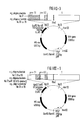
- Figures I to X show gene constructs according to the present invention.
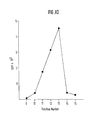
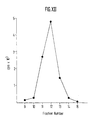
- Figures XI and XII show the results obtained by caesium chloride sedimentation of immunogenic particles according to example 10.
- Figure XIII shows a prior art construct shown in Table XI.
- Figure XIV shows the characterisation of particles derived from a construct according to a further embodiment of the present invention.
- Figure XV shows the oligo sequence of Figure X-2.
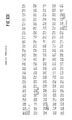
- Figure XVI to XX show examples of peptide sequences from which the epitopes of this invention can be derived.
- Preferred DNA constructs of the present invention are characterized by the presence of a selection marker selected from the group consisting of dhfr (dihydrofolate reductase), MT-neo (a neomycin resistance sequence coupled to a methallothionein and MT-ecogpt (a resistance sequence coupled to a methallothionein promoter).
- a selection marker selected from the group consisting of dhfr (dihydrofolate reductase), MT-neo (a neomycin resistance sequence coupled to a methallothionein and MT-ecogpt (a resistance sequence coupled to a methallothionein promoter).
- the expression rate may be further enhanced by adding to the constructs a dhfr gene as an amplification gene.
- HBV nucleotide sequences used in certain constructs of the present invention can be formed or isolated by any means including isolation and ligation of restriction fragments and synthetic oligonucleotides.
- Constructs specifically described herein were formed by the ligation of synthetic oligonucleotides to a 5' XbaI-BglII 3' fragment from the S region of the HBV genome shown in Figure IX (hereinafter the "XbaI-BglII fragment") which is derived from a BglII-BglII HBV fragment including the entire pro-S 1 -pre-S 2 -S regions (the "Bg1II-Bg1II Fragment").
- the pre-S 1 -pre-S 2 -S region of the HBV genome is shown in Figure IX.
- Oligonucleotides used in making such constructs are summarized in Table I.
- oligonucleotides in Table I were combined with the XbaI-BglII fragment to produce constructs with desired features.
- adapter oligonucleotide sequences (Table II) were used to create proper matching sticky ends on the oligonucleotides and other construct components.
- adapter sequences may be used to combine desired oligonucleotides from Table I with the XbaI-BglII fragment, other restriction fragments, oligonucleotides and other construct components.
- the necessary sequences of such other adapter sequences will be readily apparent to those skilled in the art from consideration of tables of restriction sites [e.g., that found at pages 121-128 of Methods in Enzymology , volume 152, "Guide to Molecular Cloning Techniques," ed. Berger and Kimmel (Academic Press 1987) which is incorporated herein in its entirety by reference] and the sequences of the various nucleotides to be combined.
- Adapter sequences can also be used to introduce additional restriction sites into constructs of the present invention. It should be noted that adapter sequences must be selected or designed so that the proper reading frame is maintained throughout the HBV sequence.
- Each of the constructs shown in Figures I-VIII contain, in addition to a HBV sequence, a neomycin selection marker with the MT promoter, an ampicillin selection marker, a dhfr selection/amplification gene and a promoter for the HBV sequence.
- the promoter for the HBV sequence is preferably the U2 promoter, the MT promoter or the H2K promoter. Isolation of fragments containing the various promoters, the selection markers and amplification gene is described below.
- HBV sequences in the constructs of Figures I-VIII are schematically represented by a rectangular bar in each figure which indicates the oligonucleotides and/or adapter sequences from Tables I and II which were combined with the XbaI-BglII fragment. Shaded areas within the bar indicate generally regions of the entire pre-S 1 -pre-S 2 -S region which are not found in the specific construct. Oligonucleotides from Table I which can be used to construct each type of HBV sequence are indicated in the figures.
- Figure X depicts two additional constructs for expression of peptides including sequence from the pre-S2 region under the control of the MT promoter.
- the above-cited promoters are specially preferable when their use is coupled with a modulation method using the dhfr gene and methotrexate to enhance the expression. This is achieved when in addition to the selection marker the dhfr minigene is also introduced into the plasmid sequence. It is essential that the dhfr gene is located on the same plasmid together with the structural gene to be expressed. An enhancement of the expression rate of the structural gene can then be obtained by adding methotrexate in the micromolar concentration range. Thereby a manyfold enhancement of the expression rate is achieved.
- Suitable cells are e.g. VERO cells (monkey kidney cell line), 3T3-cells (murine fibroblast line), C127-cells (murine fibroblast line), L-cells and CHO - cells (Chinese hamster cells, which are either positive or negative in dehydrofolate reductase).
- HBV protein refers generically to any protein produced in accordance with the present invention which corresponds to HBsAg sequences.
- the supernatant of HBV protein producing cultures was collected and split into portions of 2,400 ml. To each portion 144 g of PEG 6000 (Serva) were added and dissolved by stirring at room temperature for 20 minutes and was stirred for another 6 hours at 4°C. The precipitate was separated by centrifugation in 500 ml bottles in a GS 3 rotor at 9,000 rpm (15,000 x g) for 30 minutes at 10 C. The supernatant was collected and 144 g of PEG 6000 were added and dissolved as described above. The solution was stirred at 4 C for 3 hours. The precipitate from this solution was harvested as described above except that centrifugation was continued for 60 minutes.
- the radioactivity remaining on the beads was counted in a gamma scintillation counter.
- HBsAg micro "sandwich” assay commercially available from Behring
- wells were coated with anti-HBs.
- Serum plasma or purified protein and appropriate controls were added to the wells and incubated.
- peroxidase-labelled antibodies to HBsAg were reacted with the remaining antigenic determinants.
- the unbound enzyme-linked antibodies are removed by washing and the enzyme activity on the solid phase is determined.
- the enzymatically catalyzed reaction of hydrogen peroxide and chromogen was stopped by adding diluted sulfuric acid.
- the colour intensity was proportional to the HBsAg concentration of the sample and was obtained by photometric comparison of the colour intensity of the unknown samples with the colour intensities of the accompanying negative and positive control sera.
- the plasmid pBPV-342-12 (commercially available from ATCC) was digested with the endonucleases Bg1II and BamHI. Three DNA molecules were generated.
- the fragment of interest contains the methallothionein promoter and a pBR322 sequence comprising 4.5 kb and is easily detectable from the other fragments (2.0 kb and 7.6 kb).
- the reaction was performed in a total volume of 200 ul of reaction buffer at a final concentration of 0.5 ug/ul DNA including 100 units of each restriction enzyme. The completion of the digestion was checked after incubation at 37°C for three hours by agarose gel electrophoresis at a 0.8% agarose gel. The reaction was stopped by adding 4 ul 0.5 M EDTA.
- the 4.5 kb fragment was separated from the other fragments by preparative 1.2% agarose gel electrophoresis.
- the DNA was eluted from the agarose gel on DE-81 Whatman filter paper from which the DNA was removed in a high salt buffer.
- the DNA was purified by a phenol/chloroform extraction and two ethanol precipitations.
- a 2.3 kb BglII-BglII fragment containing the HBV pre-S 1 ,pre-S 2 and S coding regions was isolated from HBV-containing DNA.
- the 2-3kb fragment was ligated together with the 4.5 kb fragment (obtained as described in Cl) containing the methallothionein promoter.
- the ligation mixture was added to 150 ul competent bacterial cell suspension for DNA up-take. After the DNA up-date the bacterial cells were spread on LB agar plate containing 50 ug/ml ampicillin at volumes of 50 to 300 ul cell suspension per plate. The agar plates were incubated at 37°C overnight. Single isolated bacterial colonies were screened for the presence of a plasmid containing the desired fragments.
- the plasmid resulting from (3) above was digested with the endonucleases BglII and XbaI. Two molecules were expected, one 550 bp fragment and one 6.250 kb fragment which was isolated after agarose gel electrophoresis.
- the 6.250 kb fragment was ligated together with oligomecleotide No.55 from Table I.
- the ligation mixture was added to 150 ul competent bacterial cell suspension for DNA up-take.
- Single isolated bacterial colonies were screened for the presence of the desired plasmid.
- the new plasmid was proved by a digestion with the endonucleases EcoRI and BglII. Two molecules were expected, one 1.9 kb and one 4.450 kb.
- the plasmid resulting from (4) above was linearized by digestion with the restriction enzyme EcoRI.
- the reaction was performed in a total volume of 50 ul and a final concentration of 1 ug/ul plasmid DNA.
- 50 units of ECORI were added and the digestion was proved after incubation at 37°C for three hours by agarose gel electrophoresis.
- the reaction was stopped by adding 1 ul of 0.5 M EDTA and the DNA was precipitated with a final concentration of 0.3 M sodium acetate and 3-4 volumes of ethanol at -80°C for 30 minutes.
- the precipitated DNA was dissolved in 50 ul distilled water.
- 2 ul of the linearized plasmid were mixed with 3 ul of the DNA fragment containing the methallothionein promoter and the neomycin selection gene [isolated from the plasmid pMT-neo-E (available from ATCC ) by digestion with the endonuclease EcoRI as a 4kb fragment], and ligated together. Single bacterial colonies were screened for the presence of the desired plasmid.
- the plasmid pdhfr3.2 (available from ATCC) was digested with the restriction endonuclease HindIII. Two molecules were generated, one of 3,000 bp containing the dhfr gene sequence and one of 3,400 bp. The 3,000 bp fragment was isolated and ligated into the plasmid resulting from (5) above which was previously opened by digestion with HindIII. The resulting plasmid is represented by Fig. I-2.
- the plasmid pUC-8-42 (available from Exogene ) was digested with the restriction endonucleases EcoRI and Apal. Two DNA molecules were generated.
- the fragment of interest contains the U2-promoter comprising 340 bp and is easily detectable from the other fragment (3160 bp).
- the digestion was performed in a total volume of 200 ul of reaction buffer at a final concentration of 0.5 ug/ul DNA including 100 Units of each restriction enzyme.
- the completion of the digest was checked after incubation at 37°C for three hours by agarose gel electrophoresis in a 0.7% agarose gel. The reaction was stopped by adding 4 ul 0.5 M EDTA.
- the 340 bp fragment was separated from the plasmid DNA by preparative 1.2% agarose gel electrophoresis.
- the DNA was eluted from the agarose gel on DE-81 Whatman filter paper from which the DNA was removed in a high salt buffer.
- the DNA was purified by a phenol/chloroform extraction and two ethanol precipitations.
- the plasmid pSP165 (commercially available from Promega Biotec) containing a polylinker sequence (containing the following restriction sites: EcoRI, SacI, SmaI, AvaI, BamHI, BglII, SalI, PstI, HindIII) was linearized with the restriction enzyme EcoRI. The reaction was performed in a total volume of 50 ul and a final concentration of lug/ul plasmid DNA. 50 Units of EcoRI were added an the digestion was proved after incubation at 37°C for three hours by agarose gel electrophores.
- the reaction was stopped by adding 1 ul of 0.5 M EDTA and the DNA was precipitated with a final concentration of 0.3 M sidium acetate and 3-4 volumes of ethanol at -80°C for 30 minutes.
- the precipitated DNA was dissolved in 50 ul distilled water.
- 2 ul of plasmid DNA were mixed with 10 ul of the fragment DNA containing the V2 promoter sequence, and ligated together in a total volume of 25 ul of ligation buffer containing 2 units T4-DNA ligase and 2 mM ATP at 14°C overnight. Thereafter the DNA was purified by phenol/ chloroform extractions followed by two ethanol precipitations and dissolved in 10 ul distilled water. The resulting sticky ends of EcoRI and ApaI had to be converted into blunt ends and ligated.
- the blunt ends were converted by a removing reaction with the Mung bean nuclease as follows: to 25 ul DNA (1 ug/ul concentration) reaction buffer, 20 units of enzyme and a final concentration of 1% glycerol to the reaction volume of 35 ul were added. After an incubation for 30 minutes at 30 C the DNA was purified by phenol/chloroform extractions followed by two ethanol precipitations. The DNA was dissolved again in 5 ul distilled water. The resulting blunt ends were ligated together in 15 ul reaction volume containing 10 x more T4 ligase then used above and 2 mM ATP at 14°C overnight.
- the ligation mixture was added to 150 ul competent bacterial cell suspension for DNA up-take. After the DNA up-take the bacterial cells were spread on LB agar plates containing 50 ug/ml ampicillin at volumes of 50 to 300 ul cell suspension per plate. The agar plates were incubated at 37°C overnight. Single isolated bacterial colonies were screened for the presence of a plasmid containing the desired U2-promoter fragment.
- the plasmid pBPV-342-12 (commercially available from ATCC) was digested with the endonucleases EcoRI and BamHI. Two molecules were isolated, one containing the MT promoter together with the neomycin selection gene of 4,000 bp and the plasmid of 10,000 bp.
- the plasmid resulting from (3) above was linearized with EcoRI and ligated together with the 4,000 bp fragment containing the MT-promoter together with the neomycin selection gene. The resulting sticky ends were also converted into blunt ends and ligated together as described above.
- the plasmid resulting from (4) above was linearized with Bg1II.
- the 2.3 kb-BgIII-BgIII fragment was ligated together with the linearized plasmid.
- Bacterial colonies were analysed to find the resulting plasmid.
- the plasmid-DNA was digested with EcoRI and two resulting fragments were obtained, a 700 bp fragment (containing the promoter and a part of the HBV-sequence) and a 8,700 bp fragment (containing the rest of the HBV-sequence, MT-neo and plasmid).
- the plasmid resulting from (5) above was digested with the endonucleases BglII and MstII. Two molecules were generated, one of 300 bp containing part of the pre-S sequence and the other (9,100 bp) which was eluted as described above. This 9,100 bp fragment was ligated to another BglII/MstII 216 bp fragment (sequence coding for an altered pre-S 1 gene sequence.
- the desired plasmid was digested with EcoRI and two resulting fragments were isolated, a 616 bp fragment and a 8,700 bp fragment.
- the H2K promoter was isolated as an EcoRI/BglII fragment (2kb) from psp65H2 (available from Exogene).
- the fragment containing the methallothionein promoter and the egpt-selection gene was isolated by digestion of the plasmid pMSG (available from Pharmacia) with the restriction enzyme EcoRI as a 3.6 kb fragment.
- mammalian cells In order to achieve secretion of substantial amounts of the HBV peptides encoded by constructs of the present invention, mammalian cells must be transfected with both the construct of the present invention and a construct which will express entire S protein.
- the cotransfection was performed in two steps (i.e., a separate transfection for each construct) or in a single step (i.e., one transfection using preparation of both constructs). Cotransfection was confirmed either by use of different selection markers on the two constructs or by detection of secretion of expression products of both constructs by immunoassay.
- a sequence encoding the HBV peptide sequence of the present invention and a separate sequence encoding the entire S protein could be combined in a single construct.
- restriction endonucleases used were: BglII, BamHI, HindIII, EcoRI, XbaI, MstII, XhoI, PflMI, commercially available from Gibco/BRL with their respective restriction buffers (10x).
- the agarose gel normally contains 0.8% agarose 1 x running buffer (TBE, Maniatis). Where a fragment (about 100-1000bp) was isolated from an agarose gel the agarose was increased to 1.2 to 1.4%.
- the DNA to be transformed was suspended in 10 mM Tris, pH 7.5, 1 mM EDT 70 ul and added to the 200 ul bacterial cell suspension for DNA take-up.
- the mixture was incubated on ice for 30 minutes and then 1 ml L-broth was added.
- the mixture was incubated at 42°C for 2 minutes and at 37°C for 40 minutes.
- the cells were spread on agar plates containing 50 ug ampicillin/ml agar at volumes of 50-300 ul cell suspension per plate.
- the agar plates were incubated at 37°C overnight. After this incubation period, single isolated bacterial colonies were formed.
- plasmid-bearing cells 1 liter was grown to 0.5 OD 600 in L-broth and amplified for 20 hours with 200 ug/ml chloramphenicol. The culture was then centrifuged at 4,000 rpm for 20 minutes in JA-10 rotor, 4°C. The pellet was resuspended in 18 ml cold 25% sucrose, 50 mM Tris, pH 8.0, transferred to a 250 ml Erlenmeyer flask and kept on ice. 6 ml 5mg/ml lysozyme in 250 mM Tris, pH 8.0 was added and the mixture was left to stand 10-15 minutes.
- Pronase was added to supernatant fluid to 250 ug/ml and incubated 30 minutes, 37°C.
- the solution was extracted with phenol once with 1/2 volume phenol equilibrated with 10 mM Tris, pH 8.0, 1 mM EDTA.
- the aqueous layer was removed.
- Sodium acetate was then added to a final concentration of 300 mM, followed by the addition of 3 volumes cold 100% ethanol and thorough mixing. The mixture was stored at -20°C overnight.
- the mixture was thawed and centrifuged.
- the pellet was resuspended in 6 ml 10 mM Tris, 10 mM EDTA, pH 8.0.
- 9.4 g CsCl and 0.65 ml of 6 mg/ml ethidium bromide were added and the volume was brought up to 10 ml with sterile double-distilled water.
- the 10 ml alignots were put into Beckman heat-sealable gradient tubes and centrifuged, 50,000 rpm, 48 hours in Ti70.1 Beckman rotor.
- Plasmid bands were visualized with UV and removed with syringe and 18 gauge needle by piercing the side of the tube. Ethidium bromide was removed from the plasmid fractions by 3 successive extractions with equal volumes of isobutanol. Fractions were then (1) dialyzed against one 2-liter lot of 10 mM Tris, pH 7.4, 1 mM EDTA, pH 7.5, 5 mM NaCl for 2 hours or more at 4°C; and (2) phenol extracted once with 1/3 volume phenol equilibrated as above. Sodium acetate was then added to a final concentration of 300 mM, followed by addition of two volumes of 100% ethanol. Precipitate formed at -20°C overnight, or at -70°C for 30 minutes.
- the reaction mixture for 32 P-labeling of DNA contained 0.5 ug of a HBV fragment, in a total volume of 30 ul with 50 mM Tris, pH 7.8, 5 mM MgCl 2 , 10 mM mercaptoethanol, 0.1 mM dATP, 0.1 mM dGTP, 0.1 mM dTTP, 50 uCi 32 P-dCTP, 10 units DNA polymerase I, 3 ul of a 2 x 10 -5 fold dilution of 1 mg/ml DNase I and is incubated for 90 minutes at 15°C, yielding 3 x 10 6 to 12 x 10 6 total cpm, i.e. 1 x 10 7 to 5 x 10 7 cpm/ug DNA.
- chromosomal DNA from cell lines producing particles of this invention were isolated and digested with the appropriate restriction enzyme(s) and analysed by the method of Southern (J. Mol. Biol., Vol. 98, pp. 503-517, 1975), which is incorporated herein by reference, using a 32 P-labeled DNA probe.
- the resulting fragments were separated by 0.7% agarose gel electrophoresis. Thereafter, the DNA was denatured by exposing to 366 nm UV light for 10 minutes and by incubation in a solution of 0.5 M NaOH and 1 M NaCl for 45 minutes.
- the gels were neutralized by incubation in 0.5 M Tris, 1.5 M NaCl, pH 7.5 for 60 minutes.
- the DNA was transferred to a nitrocellulose filter by soaking in 3 M NaCl, 0.3 M Sodiumcitrate (20 x SSC) for 20 hours through the gel by covering the top of the nitrocellulose filter with a staple of dry paper towels.
- the nitrocellulose filter was kept for 2 hours in a vacuum oven at 80 C.
- a radioactive DNA probe from the BglII fragment of the pHBV (2.3 kb) was prepared by nick translation.
- the nitrocellulose filter was sealed in a plastic bag containing 10 ml of prehybridization mixture: 50% formamide, 5 x SSC, 50 mM Sodiumphosphate, pH 7.0, 5 x Denhardt's solution, 250 ug/ml denatured salmon sperm DNA.
- the filter was incubated in this mixture for 4 hours at 45°C, after which the pre-hybridization mixture was replaced by the hybridization mixture: 50% formamide, 5 x SSC, 20 mM Sodiumphosphate, pH 7.0, 1 x Denhardt's solution, 100 ug/ml denatured salmon sperm DNA, 5 x 10 5 cmp/ml 32 P-probe.
- the filter after incubating in the hybridization mix for 18 hours at 45°C, was washed three times, 5 minutes each, in 0.1 x SSC, 0.1% SDS at 50°C.
- the filter was dried at 60°C for 10 minutes and exposed to two X-ray films (XAR-5, KODAK) between two intensifying screens and kept at -80°C.
- the first X-ray film is developed after 3 days' exposure; the second film after 7 days' exposure.
- the recipient cells (C127 or CHO-cells available from ATCC) were seeded in normal growth medium (DMEM+10% Fetal Calf Serum, Glycose and Glutamin) into petri-dishes (1-2 x 10 6 cells per dish, ⁇ 10 cm) at day 1. The next day the medium was removed (4 hours before the DNA precipitate was added onto the cells), and the cells were washed twice with 1 x PBS. Then 8 ml DMEM without FCS were added. 4 hours later the DNA precipitate (prepared as described below) was added to the cells.
- DMEM+10% Fetal Calf Serum, Glycose and Glutamin normal growth medium
- petri-dishes 1-2 x 10 6 cells per dish, ⁇ 10 cm
- Glycerol-Mix 50 ml 2 x TBS buffer, 30 ml glycerol, 120 ml distilled water
- the Glycerol-Mix was immediately removed after an incubation at 37°C for 3 minutes and the cells were washed with 1 x PBS.
- the cells were cultivated overnight with 8 ml of DMEM with 10% FCS.
- the cells were recovered from the dish by treating with Trypsin-EDTA-Solution (0.025% Trypsin + 1 mM EDTA). Afterwards, to remove the Trypsin-EDTA the cells were washed with 1 x PBS, suspended in DMEM with 10% FCS and distributed into 24 costar-well-plates (cells from one dish into four 24-well-plates).
- selection medium was added (concentration 0.5 - 1mg/ml of neomycin,or xanthine: 250 ⁇ g/ml, hypoxanthine: 15 ⁇ g/ml (or adenine: 25 ⁇ g/ml), thymidine: 10 ⁇ g/ml, aminopterine 2 ⁇ g/ml mycophenolic acid: 25 ⁇ g/ml for eco-gpt, for example).
- the medium was changed every week. The first growing cell colonies were seen after 2 weeks.
- TE-buffer 10 mM Trix-HCl, 1 mM EDTA, pH 7.05 was added to a final volume of 440 ul and mixed together with 60 ul 2 M CaCl 2 . Then the same amount of 2x TBS (Hepes 50 mM, NaCl 280 mM, Na 2 HPO 4 1.5 mM, pH 7.05) was added and mixed well. The precipitation solution was incubated for 30 minutes at 37°C and added directly to the cells which should be transfected.
- 2x TBS Hepes 50 mM, NaCl 280 mM, Na 2 HPO 4 1.5 mM, pH 7.05
- the selected cells are treated for further cultivation in normal growth medium as described in section 8.
- Tables III - X give some of the results of ELISA analysis of immunogenic particles of the present invention as described below:
Landscapes
- Health & Medical Sciences (AREA)
- Life Sciences & Earth Sciences (AREA)
- Chemical & Material Sciences (AREA)
- Organic Chemistry (AREA)
- Genetics & Genomics (AREA)
- Engineering & Computer Science (AREA)
- Molecular Biology (AREA)
- Zoology (AREA)
- General Health & Medical Sciences (AREA)
- Biomedical Technology (AREA)
- Medicinal Chemistry (AREA)
- Bioinformatics & Cheminformatics (AREA)
- Biochemistry (AREA)
- Wood Science & Technology (AREA)
- Virology (AREA)
- Biotechnology (AREA)
- General Engineering & Computer Science (AREA)
- Biophysics (AREA)
- Microbiology (AREA)
- Proteomics, Peptides & Aminoacids (AREA)
- Gastroenterology & Hepatology (AREA)
- Toxicology (AREA)
- Plant Pathology (AREA)
- Veterinary Medicine (AREA)
- Public Health (AREA)
- Animal Behavior & Ethology (AREA)
- Pharmacology & Pharmacy (AREA)
- Physics & Mathematics (AREA)
- Nuclear Medicine, Radiotherapy & Molecular Imaging (AREA)
- General Chemical & Material Sciences (AREA)
- Tropical Medicine & Parasitology (AREA)
- Chemical Kinetics & Catalysis (AREA)
- Oncology (AREA)
- Communicable Diseases (AREA)
- Immunology (AREA)
- Medicines Containing Antibodies Or Antigens For Use As Internal Diagnostic Agents (AREA)
- Preparation Of Compounds By Using Micro-Organisms (AREA)
- Peptides Or Proteins (AREA)
Priority Applications (1)
| Application Number | Priority Date | Filing Date | Title |
|---|---|---|---|
| EP00121167A EP1088830A3 (de) | 1987-06-22 | 1988-06-22 | Partikel von Hepatitis B Oberflächenantigen |
Applications Claiming Priority (6)
| Application Number | Priority Date | Filing Date | Title |
|---|---|---|---|
| EP87108915 | 1987-06-22 | ||
| EP87108915 | 1987-06-22 | ||
| EP87108914 | 1987-06-22 | ||
| EP87108914 | 1987-06-22 | ||
| EP88109946A EP0304578B1 (de) | 1987-06-22 | 1988-06-22 | Hepatitis-B-Oberflächenantigen enthaltendes Peptid |
| EP00121167A EP1088830A3 (de) | 1987-06-22 | 1988-06-22 | Partikel von Hepatitis B Oberflächenantigen |
Related Parent Applications (1)
| Application Number | Title | Priority Date | Filing Date |
|---|---|---|---|
| EP88109946.9 Division | 1988-06-22 |
Publications (2)
| Publication Number | Publication Date |
|---|---|
| EP1088830A2 true EP1088830A2 (de) | 2001-04-04 |
| EP1088830A3 EP1088830A3 (de) | 2004-04-07 |
Family
ID=27230073
Family Applications (2)
| Application Number | Title | Priority Date | Filing Date |
|---|---|---|---|
| EP88109946A Expired - Lifetime EP0304578B1 (de) | 1987-06-22 | 1988-06-22 | Hepatitis-B-Oberflächenantigen enthaltendes Peptid |
| EP00121167A Withdrawn EP1088830A3 (de) | 1987-06-22 | 1988-06-22 | Partikel von Hepatitis B Oberflächenantigen |
Family Applications Before (1)
| Application Number | Title | Priority Date | Filing Date |
|---|---|---|---|
| EP88109946A Expired - Lifetime EP0304578B1 (de) | 1987-06-22 | 1988-06-22 | Hepatitis-B-Oberflächenantigen enthaltendes Peptid |
Country Status (3)
| Country | Link |
|---|---|
| EP (2) | EP0304578B1 (de) |
| LU (1) | LU90911I2 (de) |
| NL (1) | NL300090I2 (de) |
Cited By (2)
| Publication number | Priority date | Publication date | Assignee | Title |
|---|---|---|---|---|
| EP1281761A1 (de) * | 2001-07-27 | 2003-02-05 | Institut National De La Sante Et De La Recherche Medicale (Inserm) | Synthetische Polypeptide die vom pre-S1 Protein des Hepatitis B Virus ableitbar sind und deren Verwendung |
| US12370237B2 (en) | 2012-11-12 | 2025-07-29 | Ruprecht - Karls - Universität Heidelberg | Lipopeptides for use in treating liver diseases and cardiovascular diseases |
Families Citing this family (46)
| Publication number | Priority date | Publication date | Assignee | Title |
|---|---|---|---|---|
| EP0300213A1 (de) * | 1987-06-22 | 1989-01-25 | Hexal-Pharma Gentechnik GmbH & Co. KG | Virale, immunogen wirksame Peptidpartikel von Hepatitis A |
| PL168787B1 (pl) * | 1989-08-03 | 1996-04-30 | Smithkline Beecham Biolog | Sposób wytwarzania czastki kompozytowej PL |
| EP0491077A1 (de) * | 1990-12-19 | 1992-06-24 | Medeva Holdings B.V. | Zusammensetzung verwendbar als therapeutisches Mittel gegen chronische virale Leberkrankheiten |
| JP2904993B2 (ja) * | 1991-10-09 | 1999-06-14 | ロート製薬株式会社 | オキシトシン受容体およびこれをコードするdna |
| DE69319728T2 (de) | 1992-05-23 | 1999-02-04 | Smithkline Beecham Biologicals S.A., Rixensart | Kombinierte Impfstoffe, die Hepatitis B oberfläche Antigen und andere Antigenen enthalten |
| CA2138997C (en) | 1992-06-25 | 2003-06-03 | Jean-Paul Prieels | Vaccine composition containing adjuvants |
| AT409863B (de) * | 1993-07-30 | 2002-12-27 | Immuno Ag | Hoch effiziente expression eines polypeptids, das eine modifizierte pres1-region des grossen hepatitis b-virus-antigens enthält |
| WO1997008309A2 (en) * | 1995-08-29 | 1997-03-06 | Immusol, Inc. | Ribozyme therapy for hepatitis b infections |
| GB9623233D0 (en) | 1996-11-07 | 1997-01-08 | Smithkline Beecham Biolog | Vaccine composition |
| AU750587B2 (en) | 1998-10-16 | 2002-07-25 | Smithkline Beecham Biologicals (Sa) | Adjuvant systems and vaccines |
| UA79735C2 (uk) | 2000-08-10 | 2007-07-25 | Глаксосмітклайн Байолоджікалз С.А. | Очищення антигенів вірусу гепатиту b (hbv) для використання у вакцинах |
| GB0109297D0 (en) | 2001-04-12 | 2001-05-30 | Glaxosmithkline Biolog Sa | Vaccine |
| DE602004031681D1 (de) | 2003-07-21 | 2011-04-14 | Transgene Sa | Multifunktionelle Cytokine |
| TWI457133B (zh) | 2005-12-13 | 2014-10-21 | Glaxosmithkline Biolog Sa | 新穎組合物 |
| EA015964B1 (ru) | 2006-09-07 | 2012-01-30 | Глаксосмитклайн Байолоджикалс С.А. | Вакцина |
| US20090181078A1 (en) | 2006-09-26 | 2009-07-16 | Infectious Disease Research Institute | Vaccine composition containing synthetic adjuvant |
| KR101378872B1 (ko) | 2006-09-26 | 2014-04-11 | 인펙셔스 디지즈 리서치 인스티튜트 (아이디알아이) | 합성 애주번트를 함유하는 백신 조성물 |
| EP2433648A3 (de) | 2006-10-12 | 2012-04-04 | GlaxoSmithKline Biologicals S.A. | Impfstoff mit einem Öl-in-wasser-emulsionshilfsstoff |
| ES2397714T3 (es) | 2006-10-12 | 2013-03-08 | Glaxosmithkline Biologicals S.A. | Vacuna que comprende un adyuvante de emulsión de aceite en agua |
| PE20090146A1 (es) | 2007-04-20 | 2009-03-23 | Glaxosmithkline Biolog Sa | Composicion inmunogenica contra el virus influenza |
| EA201490303A1 (ru) | 2007-05-02 | 2014-05-30 | Глаксосмитклайн Байолоджикалс С.А. | Вакцина |
| WO2009143524A2 (en) | 2008-05-23 | 2009-11-26 | The Regents Of The University Of Michigan | Nanoemulsion vaccines |
| SI2437753T1 (sl) | 2009-06-05 | 2016-12-30 | Infectious Disease Research Institute | Sintetični glukopiranozil-lipidni adjuvansi in cepivni sestavki, ki jih vsebujejo |
| NZ602892A (en) | 2010-04-13 | 2014-08-29 | Celldex Therapeutics Inc | Antibodies that bind human cd27 and uses thereof |
| AU2012243039B2 (en) | 2011-04-08 | 2017-07-13 | Immune Design Corp. | Immunogenic compositions and methods of using the compositions for inducing humoral and cellular immune responses |
| GB201105981D0 (en) | 2011-04-08 | 2011-05-18 | Glaxosmithkline Biolog Sa | Novel process |
| CN110339160A (zh) | 2012-02-07 | 2019-10-18 | 传染性疾病研究院 | 包含tlr4激动剂的改进佐剂制剂及其使用方法 |
| PT2850431T (pt) | 2012-05-16 | 2018-07-23 | Immune Design Corp | Vacinas para hsv-2 |
| EP3587455A1 (de) | 2012-10-23 | 2020-01-01 | Emory University | Gm-csf- und il-4-konjugate, zusammensetzungen und zugehörige verfahren |
| EP3711768A1 (de) | 2013-04-18 | 2020-09-23 | Immune Design Corp. | Gla-monotherapie zur verwendung in der krebsbehandlung |
| US9463198B2 (en) | 2013-06-04 | 2016-10-11 | Infectious Disease Research Institute | Compositions and methods for reducing or preventing metastasis |
| IL310015B2 (en) | 2013-12-31 | 2026-02-01 | Access To Advanced Health Inst | Single vial formulation |
| EP3268037B1 (de) | 2015-03-09 | 2022-08-31 | Celldex Therapeutics, Inc. | Cd27 agonists |
| JP7038064B2 (ja) | 2016-04-18 | 2022-03-17 | セルデックス セラピューティクス インコーポレイテッド | ヒトcd40に結合するアゴニスト抗体およびその使用 |
| EP4112638A1 (de) | 2016-05-16 | 2023-01-04 | Access to Advanced Health Institute | Formulierung mit tlr-agonist und verfahren zur verwendung |
| IL263030B2 (en) | 2016-05-16 | 2024-11-01 | Access To Advanced Health Inst | Pegylated liposomes and methods of use |
| KR102748354B1 (ko) | 2016-06-01 | 2024-12-31 | 액세스 투 어드밴스드 헬스 인스티튜트 | 사이징제를 함유하는 나노명반 입자 |
| KR102673794B1 (ko) | 2017-06-15 | 2024-06-11 | 액세스 투 어드밴스드 헬스 인스티튜트 | 나노구조 지질 담체 및 안정적인 에멀션 그리고 이들의 용도 |
| CN111315406A (zh) | 2017-09-08 | 2020-06-19 | 传染病研究所 | 包括皂苷的脂质体调配物及其使用方法 |
| WO2019204462A2 (en) | 2018-04-17 | 2019-10-24 | Celldex Therapeutics, Inc. | Anti-cd27 and anti-pd-l1 antibodies and bispecific constructs |
| WO2020123444A1 (en) | 2018-12-11 | 2020-06-18 | Celldex Therapeutics, Inc. | Methods of using cd27 antibodies as conditioning treatment for adoptive cell therapy |
| BR112021023726A2 (pt) | 2019-05-25 | 2022-02-15 | Infectious Disease Res Inst | Composição e método para secagem por pulverização de uma emulsão de vacina adjuvante |
| CA3174411A1 (en) | 2020-09-04 | 2022-03-10 | Ryan M. Kramer | Co-lyophilized rna and nanostructured lipid carrier |
| EP4320159A1 (de) | 2021-04-09 | 2024-02-14 | Celldex Therapeutics, Inc. | Antikörper gegen ilt4, bispezifische anti-ilt4/pd-l1-antikörper und verwendungen davon |
| WO2023077521A1 (en) | 2021-11-08 | 2023-05-11 | Celldex Therapeutics, Inc | Anti-ilt4 and anti-pd-1 bispecific constructs |
| EP4583841A1 (de) | 2022-09-09 | 2025-07-16 | Access to Advanced Health Institute | Immunogene impfstoffzusammensetzung mit einem saponin |
Family Cites Families (7)
| Publication number | Priority date | Publication date | Assignee | Title |
|---|---|---|---|---|
| FR2560890B1 (fr) * | 1984-03-07 | 1987-10-16 | Grp Genie Genetique | Composition utile pour la fabrication de vaccins contenant des particules portant l'antigene de surface du virus de l'hepatite b et le recepteur de l'albumine serique humaine polymerisee, cellules animales capables de produire de telles particules et procede pour leur obtention |
| EP0180012A1 (de) * | 1984-10-27 | 1986-05-07 | Wolfram H. Prof. Dr. Gerlich | Immunogene Polypeptidsequenz des Hepatitis B-Virus |
| US4683136A (en) * | 1985-03-06 | 1987-07-28 | Scripps Clinic And Research Foundation | Proteinaceous antigens with conformation-independent and conformation-dependent determinants |
| FI861417A0 (fi) * | 1985-04-15 | 1986-04-01 | Endotronics Inc | Hepatitis b ytantigen framstaelld med rekombinant-dna-teknik, vaccin, diagnostiskt medel och cellinjer samt foerfaranden foer framstaellning daerav. |
| US4816564A (en) * | 1986-01-31 | 1989-03-28 | Merck & Co., Inc. | Method for producing hepatitis B virus proteins in yeast |
| CA1310602C (en) * | 1986-06-03 | 1992-11-24 | Hajime Horii | Yeast promoter and process for preparing heterologous protein |
| AU617292B2 (en) * | 1986-06-20 | 1991-11-28 | Scripps Clinic And Research Foundation | T and b cell epitopes of the pre-s region of hepatitis b virus surface antigen |
-
1988
- 1988-06-22 EP EP88109946A patent/EP0304578B1/de not_active Expired - Lifetime
- 1988-06-22 EP EP00121167A patent/EP1088830A3/de not_active Withdrawn
-
2002
- 2002-04-19 NL NL300090C patent/NL300090I2/nl unknown
- 2002-04-19 LU LU90911C patent/LU90911I2/fr unknown
Cited By (5)
| Publication number | Priority date | Publication date | Assignee | Title |
|---|---|---|---|---|
| EP1281761A1 (de) * | 2001-07-27 | 2003-02-05 | Institut National De La Sante Et De La Recherche Medicale (Inserm) | Synthetische Polypeptide die vom pre-S1 Protein des Hepatitis B Virus ableitbar sind und deren Verwendung |
| WO2003012107A1 (en) * | 2001-07-27 | 2003-02-13 | Institut National De La Sante Et De La Recherche Medicale (Inserm) | Hepatitis b virus pre-s1 derived synthetic polypeptides and uses thereof |
| JP2004536886A (ja) * | 2001-07-27 | 2004-12-09 | アンスティテュ ナシオナル ドゥ ラ サントゥ エ ドゥ ラ ルシェルシェ メディカル(イーエヌエスエーエールエム) | B型肝炎プレs1由来合成ポリペプチド及びその使用 |
| US10323068B2 (en) | 2001-07-27 | 2019-06-18 | Institut National De La Sante Et De La Recherche Medicale (Inserm) | Hepatitis B virus pre-S1 derived synthetic polypeptides and uses thereof |
| US12370237B2 (en) | 2012-11-12 | 2025-07-29 | Ruprecht - Karls - Universität Heidelberg | Lipopeptides for use in treating liver diseases and cardiovascular diseases |
Also Published As
| Publication number | Publication date |
|---|---|
| LU90911I2 (fr) | 2002-06-19 |
| NL300090I2 (nl) | 2002-12-02 |
| EP1088830A3 (de) | 2004-04-07 |
| EP0304578A1 (de) | 1989-03-01 |
| EP0304578B1 (de) | 2001-10-24 |
| NL300090I1 (nl) | 2002-07-01 |
Similar Documents
| Publication | Publication Date | Title |
|---|---|---|
| EP0304578B1 (de) | Hepatitis-B-Oberflächenantigen enthaltendes Peptid | |
| US6100065A (en) | Hepatitis B surface antigen vaccine | |
| US6306625B1 (en) | Method for obtaining expression of mixed polypeptide particles in yeast | |
| EP0563093B1 (de) | Zusammensetzung verwendbar als therapeutisches mittel gegen chronische virale leberkrankheiten | |
| EP0421635B1 (de) | Schimärische Hepadnavirus-Kernantigenproteine | |
| JP2634371B2 (ja) | 脊椎動物細胞内でb型肝炎表面抗原をコードするdnaを発現するベクター | |
| EP0244924B1 (de) | Herstellung von Vakkzinen gegen Hepatitis B-Virus | |
| US5098704A (en) | Hepatitis surface antigen particle vaccine | |
| US5324513A (en) | Composition useful for the fabrication of vaccines | |
| JP2522825B2 (ja) | 肝炎b型ウィルスワクチン用組換型dna分子 | |
| CA1341021C (en) | Hepatitis surface antigen particle vaccine | |
| AU619753B2 (en) | Hepatitis b surface antigen vaccine | |
| HK1036074A (en) | Hepatitis b surface antigen particles | |
| HK1002900B (en) | Peptide comprising hepatitis b surface antigen | |
| EP0241021A2 (de) | Verfahren zur Herstellung von Aminosäure-Sequenz enthaltendem HBsAg, kodiert durch die späte Pre S-Region des HB-Virus und das HBsAg | |
| AU625348B2 (en) | Heterologous viral peptide particle immunogens | |
| KR960004264B1 (ko) | B형 간염 표면항원, 이의 생성 진핵 세포 및 백신의 제조방법, 검정방법 및 진단용 키트 | |
| HK1002901B (en) | A composition used as a therapeutic agent against chronic viral hepatic diseases |
Legal Events
| Date | Code | Title | Description |
|---|---|---|---|
| PUAI | Public reference made under article 153(3) epc to a published international application that has entered the european phase |
Free format text: ORIGINAL CODE: 0009012 |
|
| AC | Divisional application: reference to earlier application |
Ref document number: 304578 Country of ref document: EP |
|
| AK | Designated contracting states |
Kind code of ref document: A2 Designated state(s): AT BE CH DE ES FR GB GR IT LI LU NL SE |
|
| PUAL | Search report despatched |
Free format text: ORIGINAL CODE: 0009013 |
|
| AK | Designated contracting states |
Kind code of ref document: A3 Designated state(s): AT BE CH DE ES FR GB GR IT LI LU NL SE |
|
| AKX | Designation fees paid | ||
| REG | Reference to a national code |
Ref country code: DE Ref legal event code: 8566 |
|
| STAA | Information on the status of an ep patent application or granted ep patent |
Free format text: STATUS: THE APPLICATION IS DEEMED TO BE WITHDRAWN |
|
| 18D | Application deemed to be withdrawn |
Effective date: 20041008 |
|
| REG | Reference to a national code |
Ref country code: HK Ref legal event code: WD Ref document number: 1036074 Country of ref document: HK |