EP1089519A2 - Verfahren und Vorrichtung zur integrierung von Internet- und drahtlosen Infrastrukturen um eine höhere Auslastung von Diensten durch Benutzer zu ermöglichen - Google Patents
Verfahren und Vorrichtung zur integrierung von Internet- und drahtlosen Infrastrukturen um eine höhere Auslastung von Diensten durch Benutzer zu ermöglichen Download PDFInfo
- Publication number
- EP1089519A2 EP1089519A2 EP00308370A EP00308370A EP1089519A2 EP 1089519 A2 EP1089519 A2 EP 1089519A2 EP 00308370 A EP00308370 A EP 00308370A EP 00308370 A EP00308370 A EP 00308370A EP 1089519 A2 EP1089519 A2 EP 1089519A2
- Authority
- EP
- European Patent Office
- Prior art keywords
- infrastructure
- services
- applications
- internet
- subscribers
- Prior art date
- Legal status (The legal status is an assumption and is not a legal conclusion. Google has not performed a legal analysis and makes no representation as to the accuracy of the status listed.)
- Withdrawn
Links
Images
Classifications
-
- H—ELECTRICITY
- H04—ELECTRIC COMMUNICATION TECHNIQUE
- H04L—TRANSMISSION OF DIGITAL INFORMATION, e.g. TELEGRAPHIC COMMUNICATION
- H04L12/00—Data switching networks
- H04L12/02—Details
- H04L12/14—Charging, metering or billing arrangements specially adapted for data communications, e.g. authentication, authorisation and accounting [AAA] framework
-
- G—PHYSICS
- G06—COMPUTING OR CALCULATING; COUNTING
- G06F—ELECTRIC DIGITAL DATA PROCESSING
- G06F21/00—Security arrangements for protecting computers, components thereof, programs or data against unauthorised activity
- G06F21/30—Authentication, i.e. establishing the identity or authorisation of security principals
- G06F21/31—User authentication
- G06F21/41—User authentication where a single sign-on provides access to a plurality of computers
-
- G—PHYSICS
- G06—COMPUTING OR CALCULATING; COUNTING
- G06F—ELECTRIC DIGITAL DATA PROCESSING
- G06F21/00—Security arrangements for protecting computers, components thereof, programs or data against unauthorised activity
- G06F21/30—Authentication, i.e. establishing the identity or authorisation of security principals
- G06F21/44—Program or device authentication
- G06F21/445—Program or device authentication by mutual authentication, e.g. between devices or programs
-
- G—PHYSICS
- G06—COMPUTING OR CALCULATING; COUNTING
- G06F—ELECTRIC DIGITAL DATA PROCESSING
- G06F21/00—Security arrangements for protecting computers, components thereof, programs or data against unauthorised activity
- G06F21/60—Protecting data
- G06F21/62—Protecting access to data via a platform, e.g. using keys or access control rules
- G06F21/6218—Protecting access to data via a platform, e.g. using keys or access control rules to a system of files or objects, e.g. local or distributed file system or database
- G06F21/6227—Protecting access to data via a platform, e.g. using keys or access control rules to a system of files or objects, e.g. local or distributed file system or database where protection concerns the structure of data, e.g. records, types, queries
-
- G—PHYSICS
- G06—COMPUTING OR CALCULATING; COUNTING
- G06Q—INFORMATION AND COMMUNICATION TECHNOLOGY [ICT] SPECIALLY ADAPTED FOR ADMINISTRATIVE, COMMERCIAL, FINANCIAL, MANAGERIAL OR SUPERVISORY PURPOSES; SYSTEMS OR METHODS SPECIALLY ADAPTED FOR ADMINISTRATIVE, COMMERCIAL, FINANCIAL, MANAGERIAL OR SUPERVISORY PURPOSES, NOT OTHERWISE PROVIDED FOR
- G06Q20/00—Payment architectures, schemes or protocols
- G06Q20/08—Payment architectures
- G06Q20/10—Payment architectures specially adapted for electronic funds transfer [EFT] systems; specially adapted for home banking systems
- G06Q20/108—Remote banking, e.g. home banking
-
- H—ELECTRICITY
- H04—ELECTRIC COMMUNICATION TECHNIQUE
- H04L—TRANSMISSION OF DIGITAL INFORMATION, e.g. TELEGRAPHIC COMMUNICATION
- H04L12/00—Data switching networks
- H04L12/02—Details
- H04L12/14—Charging, metering or billing arrangements specially adapted for data communications, e.g. authentication, authorisation and accounting [AAA] framework
- H04L12/1442—Charging, metering or billing arrangements specially adapted for data communications, e.g. authentication, authorisation and accounting [AAA] framework at network operator level
- H04L12/1446—Charging, metering or billing arrangements specially adapted for data communications, e.g. authentication, authorisation and accounting [AAA] framework at network operator level inter-operator billing
-
- H—ELECTRICITY
- H04—ELECTRIC COMMUNICATION TECHNIQUE
- H04L—TRANSMISSION OF DIGITAL INFORMATION, e.g. TELEGRAPHIC COMMUNICATION
- H04L12/00—Data switching networks
- H04L12/02—Details
- H04L12/14—Charging, metering or billing arrangements specially adapted for data communications, e.g. authentication, authorisation and accounting [AAA] framework
- H04L12/1453—Methods or systems for payment or settlement of the charges for data transmission involving significant interaction with the data transmission network
- H04L12/1482—Methods or systems for payment or settlement of the charges for data transmission involving significant interaction with the data transmission network involving use of telephony infrastructure for billing for the transport of data, e.g. call detail record [CDR] or intelligent network infrastructure
-
- H—ELECTRICITY
- H04—ELECTRIC COMMUNICATION TECHNIQUE
- H04L—TRANSMISSION OF DIGITAL INFORMATION, e.g. TELEGRAPHIC COMMUNICATION
- H04L63/00—Network architectures or network communication protocols for network security
- H04L63/04—Network architectures or network communication protocols for network security for providing a confidential data exchange among entities communicating through data packet networks
- H04L63/0428—Network architectures or network communication protocols for network security for providing a confidential data exchange among entities communicating through data packet networks wherein the data content is protected, e.g. by encrypting or encapsulating the payload
- H04L63/0435—Network architectures or network communication protocols for network security for providing a confidential data exchange among entities communicating through data packet networks wherein the data content is protected, e.g. by encrypting or encapsulating the payload wherein the sending and receiving network entities apply symmetric encryption, i.e. same key used for encryption and decryption
-
- H—ELECTRICITY
- H04—ELECTRIC COMMUNICATION TECHNIQUE
- H04L—TRANSMISSION OF DIGITAL INFORMATION, e.g. TELEGRAPHIC COMMUNICATION
- H04L63/00—Network architectures or network communication protocols for network security
- H04L63/08—Network architectures or network communication protocols for network security for authentication of entities
- H04L63/0815—Network architectures or network communication protocols for network security for authentication of entities providing single-sign-on or federations
-
- H—ELECTRICITY
- H04—ELECTRIC COMMUNICATION TECHNIQUE
- H04L—TRANSMISSION OF DIGITAL INFORMATION, e.g. TELEGRAPHIC COMMUNICATION
- H04L63/00—Network architectures or network communication protocols for network security
- H04L63/08—Network architectures or network communication protocols for network security for authentication of entities
- H04L63/0869—Network architectures or network communication protocols for network security for authentication of entities for achieving mutual authentication
-
- H—ELECTRICITY
- H04—ELECTRIC COMMUNICATION TECHNIQUE
- H04L—TRANSMISSION OF DIGITAL INFORMATION, e.g. TELEGRAPHIC COMMUNICATION
- H04L67/00—Network arrangements or protocols for supporting network services or applications
- H04L67/01—Protocols
- H04L67/04—Protocols specially adapted for terminals or networks with limited capabilities; specially adapted for terminal portability
-
- H—ELECTRICITY
- H04—ELECTRIC COMMUNICATION TECHNIQUE
- H04L—TRANSMISSION OF DIGITAL INFORMATION, e.g. TELEGRAPHIC COMMUNICATION
- H04L67/00—Network arrangements or protocols for supporting network services or applications
- H04L67/14—Session management
-
- H—ELECTRICITY
- H04—ELECTRIC COMMUNICATION TECHNIQUE
- H04L—TRANSMISSION OF DIGITAL INFORMATION, e.g. TELEGRAPHIC COMMUNICATION
- H04L67/00—Network arrangements or protocols for supporting network services or applications
- H04L67/50—Network services
- H04L67/56—Provisioning of proxy services
- H04L67/561—Adding application-functional data or data for application control, e.g. adding metadata
-
- H—ELECTRICITY
- H04—ELECTRIC COMMUNICATION TECHNIQUE
- H04L—TRANSMISSION OF DIGITAL INFORMATION, e.g. TELEGRAPHIC COMMUNICATION
- H04L67/00—Network arrangements or protocols for supporting network services or applications
- H04L67/50—Network services
- H04L67/56—Provisioning of proxy services
- H04L67/564—Enhancement of application control based on intercepted application data
-
- H—ELECTRICITY
- H04—ELECTRIC COMMUNICATION TECHNIQUE
- H04L—TRANSMISSION OF DIGITAL INFORMATION, e.g. TELEGRAPHIC COMMUNICATION
- H04L67/00—Network arrangements or protocols for supporting network services or applications
- H04L67/50—Network services
- H04L67/56—Provisioning of proxy services
- H04L67/567—Integrating service provisioning from a plurality of service providers
-
- H—ELECTRICITY
- H04—ELECTRIC COMMUNICATION TECHNIQUE
- H04L—TRANSMISSION OF DIGITAL INFORMATION, e.g. TELEGRAPHIC COMMUNICATION
- H04L69/00—Network arrangements, protocols or services independent of the application payload and not provided for in the other groups of this subclass
- H04L69/08—Protocols for interworking; Protocol conversion
-
- H—ELECTRICITY
- H04—ELECTRIC COMMUNICATION TECHNIQUE
- H04L—TRANSMISSION OF DIGITAL INFORMATION, e.g. TELEGRAPHIC COMMUNICATION
- H04L9/00—Cryptographic mechanisms or cryptographic arrangements for secret or secure communications; Network security protocols
- H04L9/40—Network security protocols
-
- H—ELECTRICITY
- H04—ELECTRIC COMMUNICATION TECHNIQUE
- H04M—TELEPHONIC COMMUNICATION
- H04M1/00—Substation equipment, e.g. for use by subscribers
- H04M1/26—Devices for calling a subscriber
- H04M1/27—Devices whereby a plurality of signals may be stored simultaneously
- H04M1/274—Devices whereby a plurality of signals may be stored simultaneously with provision for storing more than one subscriber number at a time, e.g. using toothed disc
- H04M1/2745—Devices whereby a plurality of signals may be stored simultaneously with provision for storing more than one subscriber number at a time, e.g. using toothed disc using static electronic memories, e.g. chips
- H04M1/2753—Devices whereby a plurality of signals may be stored simultaneously with provision for storing more than one subscriber number at a time, e.g. using toothed disc using static electronic memories, e.g. chips providing data content
- H04M1/2757—Devices whereby a plurality of signals may be stored simultaneously with provision for storing more than one subscriber number at a time, e.g. using toothed disc using static electronic memories, e.g. chips providing data content by data transmission, e.g. downloading
-
- H—ELECTRICITY
- H04—ELECTRIC COMMUNICATION TECHNIQUE
- H04M—TELEPHONIC COMMUNICATION
- H04M1/00—Substation equipment, e.g. for use by subscribers
- H04M1/72—Mobile telephones; Cordless telephones, i.e. devices for establishing wireless links to base stations without route selection
- H04M1/724—User interfaces specially adapted for cordless or mobile telephones
- H04M1/72403—User interfaces specially adapted for cordless or mobile telephones with means for local support of applications that increase the functionality
- H04M1/72445—User interfaces specially adapted for cordless or mobile telephones with means for local support of applications that increase the functionality for supporting Internet browser applications
-
- H—ELECTRICITY
- H04—ELECTRIC COMMUNICATION TECHNIQUE
- H04W—WIRELESS COMMUNICATION NETWORKS
- H04W12/00—Security arrangements; Authentication; Protecting privacy or anonymity
- H04W12/06—Authentication
- H04W12/068—Authentication using credential vaults, e.g. password manager applications or one time password [OTP] applications
-
- H—ELECTRICITY
- H04—ELECTRIC COMMUNICATION TECHNIQUE
- H04W—WIRELESS COMMUNICATION NETWORKS
- H04W4/00—Services specially adapted for wireless communication networks; Facilities therefor
- H04W4/18—Information format or content conversion, e.g. adaptation by the network of the transmitted or received information for the purpose of wireless delivery to users or terminals
-
- H—ELECTRICITY
- H04—ELECTRIC COMMUNICATION TECHNIQUE
- H04W—WIRELESS COMMUNICATION NETWORKS
- H04W8/00—Network data management
- H04W8/18—Processing of user or subscriber data, e.g. subscribed services, user preferences or user profiles; Transfer of user or subscriber data
-
- H—ELECTRICITY
- H04—ELECTRIC COMMUNICATION TECHNIQUE
- H04W—WIRELESS COMMUNICATION NETWORKS
- H04W88/00—Devices specially adapted for wireless communication networks, e.g. terminals, base stations or access point devices
- H04W88/02—Terminal devices
-
- G—PHYSICS
- G06—COMPUTING OR CALCULATING; COUNTING
- G06F—ELECTRIC DIGITAL DATA PROCESSING
- G06F2221/00—Indexing scheme relating to security arrangements for protecting computers, components thereof, programs or data against unauthorised activity
- G06F2221/21—Indexing scheme relating to G06F21/00 and subgroups addressing additional information or applications relating to security arrangements for protecting computers, components thereof, programs or data against unauthorised activity
- G06F2221/2117—User registration
-
- G—PHYSICS
- G06—COMPUTING OR CALCULATING; COUNTING
- G06F—ELECTRIC DIGITAL DATA PROCESSING
- G06F2221/00—Indexing scheme relating to security arrangements for protecting computers, components thereof, programs or data against unauthorised activity
- G06F2221/21—Indexing scheme relating to G06F21/00 and subgroups addressing additional information or applications relating to security arrangements for protecting computers, components thereof, programs or data against unauthorised activity
- G06F2221/2119—Authenticating web pages, e.g. with suspicious links
-
- H—ELECTRICITY
- H04—ELECTRIC COMMUNICATION TECHNIQUE
- H04L—TRANSMISSION OF DIGITAL INFORMATION, e.g. TELEGRAPHIC COMMUNICATION
- H04L67/00—Network arrangements or protocols for supporting network services or applications
- H04L67/01—Protocols
- H04L67/02—Protocols based on web technology, e.g. hypertext transfer protocol [HTTP]
-
- H—ELECTRICITY
- H04—ELECTRIC COMMUNICATION TECHNIQUE
- H04L—TRANSMISSION OF DIGITAL INFORMATION, e.g. TELEGRAPHIC COMMUNICATION
- H04L67/00—Network arrangements or protocols for supporting network services or applications
- H04L67/2866—Architectures; Arrangements
- H04L67/2871—Implementation details of single intermediate entities
-
- H—ELECTRICITY
- H04—ELECTRIC COMMUNICATION TECHNIQUE
- H04L—TRANSMISSION OF DIGITAL INFORMATION, e.g. TELEGRAPHIC COMMUNICATION
- H04L67/00—Network arrangements or protocols for supporting network services or applications
- H04L67/2866—Architectures; Arrangements
- H04L67/2895—Intermediate processing functionally located close to the data provider application, e.g. reverse proxies
-
- H—ELECTRICITY
- H04—ELECTRIC COMMUNICATION TECHNIQUE
- H04L—TRANSMISSION OF DIGITAL INFORMATION, e.g. TELEGRAPHIC COMMUNICATION
- H04L67/00—Network arrangements or protocols for supporting network services or applications
- H04L67/50—Network services
- H04L67/56—Provisioning of proxy services
- H04L67/565—Conversion or adaptation of application format or content
-
- H—ELECTRICITY
- H04—ELECTRIC COMMUNICATION TECHNIQUE
- H04L—TRANSMISSION OF DIGITAL INFORMATION, e.g. TELEGRAPHIC COMMUNICATION
- H04L69/00—Network arrangements, protocols or services independent of the application payload and not provided for in the other groups of this subclass
- H04L69/30—Definitions, standards or architectural aspects of layered protocol stacks
- H04L69/32—Architecture of open systems interconnection [OSI] 7-layer type protocol stacks, e.g. the interfaces between the data link level and the physical level
- H04L69/322—Intralayer communication protocols among peer entities or protocol data unit [PDU] definitions
- H04L69/329—Intralayer communication protocols among peer entities or protocol data unit [PDU] definitions in the application layer [OSI layer 7]
-
- H—ELECTRICITY
- H04—ELECTRIC COMMUNICATION TECHNIQUE
- H04W—WIRELESS COMMUNICATION NETWORKS
- H04W24/00—Supervisory, monitoring or testing arrangements
-
- H—ELECTRICITY
- H04—ELECTRIC COMMUNICATION TECHNIQUE
- H04W—WIRELESS COMMUNICATION NETWORKS
- H04W88/00—Devices specially adapted for wireless communication networks, e.g. terminals, base stations or access point devices
- H04W88/08—Access point devices
-
- H—ELECTRICITY
- H04—ELECTRIC COMMUNICATION TECHNIQUE
- H04W—WIRELESS COMMUNICATION NETWORKS
- H04W92/00—Interfaces specially adapted for wireless communication networks
- H04W92/16—Interfaces between hierarchically similar devices
Definitions
- This invention relates to the area of mobile Internet applications. More specifically, the invention is directed to a method and system for integrating wireless and Internet portal infrastructures to facilitate higher usage, by users of the wireless infrastructure, of services provided by the combined infrastructures. As a result, more revenues are generated and may be distributed among different entities respectively supporting the combined infrastructures.
- Two-way interactive mobile communication devices are among the fastest emerging communication devices. Such devices enable users to receive, collect, analyse, review and disseminate information as they travel or move about.
- the newer mobile devices combine voice, data, and personal digital assistant (PDA) functions into a single portable device that enables a user to place phone calls as well as access a myriad of public and enterprise information services from a business network or the Internet. These services or applications may be accessed through the mobile, devices from anywhere at anytime, permitting a user to have enormous flexibility with regards to how and when they use the information available. This frees the user from the need to be physically co-located with the source of information or to have access to the more traditional means of accessing such information, e.g., a desktop or portable computer.
- the evolution of these mobile devices has been fuelled by the demand for immediate access to information and has been assisted by the convergence of computing and communications technologies.
- the services for the mobile devices provided by service providers are based on the production and dissemination of data, including voice and messages, over wireless communication networks.
- Service providers e.g., wireless network operators (carriers) working with applications developers
- Providers offer multiple services through the mobile devices, including timed delivery of previously subscribed-to information, user accessible customer care (customer service), and customized group communications.
- wireless device users may desire to have access to in their efforts to obtain and manage the information available from the Internet and other sources.
- applications include both system-oriented applications (electronic mail, account management features, configuration of available features, etc.) and applications that enable a specific type or form of information to be accessed and processed.
- Other desirable applications include those that enable some form of electronic commerce to be carried out over a wireless network (direction finding, banking, credit checking, real estate searches, location of and purchases of goods, etc.).
- wireless carriers it is desirable for wireless carriers to have a means for providing their subscribers with access to such services and applications, especially those that are specifically directed to and tailored for users of mobile devices.
- a web portal i.e. an Internet web-site or page that presents a user with a set of links to pages for service providers or applications.
- the links may be grouped or organized according to topic, function, or type of service offered.
- the web-site or portal acts as an intermediate destination for a user, but one which offers the benefit of collecting and organizing links to desired services and applications.
- the web-site or portal operator (the entity that manages and controls the set of links made available at the site) is able to generate revenue by selling advertising space on the site home page.
- the operator may also generate revenue by charging the operators of the linked locations a fee for placement of the link on the portal, a fee based on the number of users accessing the portal home page or the linked page, or a combination of such fees.
- a company in order to function as a portal operator, a company requires access to financial and employee resources, and to content and applications for linking to the portal site. Typically, at least some of the content or applications will be obtained by paying fees to the source(s) of the content or applications.
- the employee or human capital required is of a specialized nature, in that it must be familiar with the Internet environment, relevant cycle times, advertising, marketing, sales, and customer service requirements, and the prevailing business environment. These requirements are difficult to satisfy for Internet based companies, and even more so for businesses which are not used to operating in such an environment.
- a company capable of setting up and operating a portal may not have the financial resources required to engage in the advertising, marketing, and sales activities needed to attract enough customers to the portal to make it a reliable source of revenue.
- This process of acquiring and retaining users is an important aspect of the success of any Internet based business and typically requires a set of skills different from those involved in developing Internet sites.
- building up a customer base typically requires a substantial amount of time, a situation that may not be compatible with the relatively fast time cycles involved in the Internet economy.
- What is desired is a method for generating revenue from users accessing an Internet web portal or site, without requiring the up front capital and time commitments typically required to establish and operate a portal.
- a wireless network operator i.e., a wireless carrier
- Such a portal may be used to reduce the churn rate of a carrier's subscribers as they seek access to new services and applications, and to attract new subscribers to the carrier's services.
- the present invention is directed to a method and system for integrating at least two infrastructures to facilitate higher usage of services provided by the combined infrastructures as opposed to the services provided respectively by an individual infrastructure alone.
- the combined infrastructures include an Internet web-site for wireless carrier's subscribers, with the web-site being developed and operated by an Internet partner.
- the web-site features applications and services directed to users of mobile wireless communications devices.
- the services and applications are optimized for such users in terms of the information that is made available, the data processing methods, and the user interfaces.
- the services and applications are intended to result in increased use of the wireless network.
- the inventive model i.e. the combined infrastructures, may include a portal or web-site for each of one or more carriers, where the portals are branded for the respective carriers and accessible by the subscribers of the respective carriers.
- the invention provides incentives to increase network usage and conduct transactions that generate value and revenue for both the wireless network operator and the Internet partner. Incentives exist for subscribers of the network operator to utilize the network and participate in transactions because they are provided with access to a desirable set of services and applications that are developed and optimized for users of wireless devices.
- the model also provides incentives for "downstream" companies to enter into relationships with the Internet partner to permit customers of those companies (i.e. carriers) to have access to the services and applications that are made available on the web-site, since such companies can share in the revenue generated from that access.
- the inventive model provides benefits for the network operator, the subscribers to that network, the Internet partner, and to the downstream companies.
- the revenue generated by the model may be generally classified as either Telecom or Internet derived revenue.
- These revenue streams result from the creation of both Telecom and Internet Value from the users of the web-site, with that value being translated into revenue that is shared between the wireless network operator(s) and the Internet partner company (and also the downstream companies, if such are present).
- the wireless network provides a group of users that use the network to access a branded or co-branded web-site that contains services and applications tailored to users of such devices.
- the web-site is provided by the Internet partner and generates network-derived revenue (or supports existing levels of use) when users utilize the network to access the services or applications.
- the web-site thus provides Telecom Value to the wireless carrier because it encourages subscribers to maintain and hopefully increase their usage of the network.
- a payment for this value, or a portion of the web-site generated Telecom revenue may be provided to the Internet Partner since they provided an incentive for the subscribers to increase their use of the network.
- Customers of the downstream companies having access to the web-site will also increase use of the network by using the services and applications available at the site.
- the services and applications available through the web-site generate Internet Value for the Internet Partner, in the form of advertising revenue, sponsor revenue, placement fees, fees from transactions ("e-commerce") engaged in by the users, or some combination of such fees.
- a portion of this web-site generated Internet Value may be provided to the wireless carrier since they have provided the customer base responsible for generating the Internet Value.
- Internet Value generated by customers of the downstream companies may be distributed between the Internet Partner and those companies in some form of revenue sharing.
- the Internet Partner provided web-site enables a wireless carrier to offer its subscribers specially tailored services and applications without some or all of the up front capital costs associated with developing those services and applications, or of establishing a portal. This is accomplished in a manner that maintains the brand strength of the carrier.
- the portal or web-site may also be co-branded to establish brand recognition for the Internet Partner.
- the Internet Partner is able to establish a branded or co-branded web-site for multiple carriers, and thus receive revenue derived from a plurality of customer groups without the need to expend resources on acquiring and retaining those customers.
- advertising revenues for services or applications common to multiple web-sites can be higher than for advertisements targeted at smaller customer groups.
- the advertising rates may be higher as a result of the availability of a targeted audience.
- the Internet Partner is also able to benefit by serving as a gateway for the customers of the downstream companies desiring access to the wireless device directed services and applications.
- the inventive model provides entry into the Internet economy without some or all of the normally associated costs. It also provides the carriers with a means of reducing customer churn rates and a platform for offering services related to the carrier's core business.
- the web-site and its associated services and applications can be used to acquire new customers for the carrier whose brand is on the portal. As noted, the services and applications accessible through the web-site will also increase the subscriber's use of the carrier's wireless network, and in some cases will be responsible for generating additional carrier revenue.
- the present invention is a method and system for integrating at least two different architectures to facilitate higher usage by users of services/applications provided by the combined architectures.
- the present invention described in detail below are a self-consistent sequence of processes or steps leading to a desired result. These steps or processes may require physical manipulations of physical quantities. Usually, though not necessarily, these quantities may take the form of electrical signals capable of being stored, transferred, combined, compared, displayed and otherwise manipulated in a computer system or electronic computing devices.
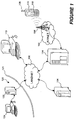
- Landnet 100 is a landline network that may be the Internet, the Intranet, or a data network formed from other private networks. Coupled to landnet 100 are a personal computer (PC) 110 and a network server 104.
- Personal computer 110 may, for example, be a Pentium II -based desktop personal computer.
- personal computer 110 runs a HyperText Markup Language (HTML) browser, such as Netscape Navigator from Netscape Communications Corporation, via land net 100 using HyperText Transfer Protocol (HTTP) to access information stored in network server 104.
- Network server 104 may be a workstation from SUN Microsystems Inc.
- the information stored in network server 104 may be hypermedia, such as mark-up language based pages.
- a private network 120 including a computer 124 and a server 122.
- Private network 120 is protected by a firewall 121 protecting resources of the private network from users on other networks.
- Private network 120 is typically used in a corporate configuration in which secure information is kept in server 122 and is accessible only by computing devices, such as computer 124, on private network 120.
- Mobile stations 106 Serviced by airnet 102 are a number of two-way wireless interactive communication devices, referred to as mobile stations herein.
- Mobile station 106 is one of a group of two-way interactive communication devices that include, but are not limited to, cellular phones, palm-sized personal assistant devices, and Internet-capable appliance controllers, and are capable of communicating wirelessly with antenna 108 via airnet 102.
- antenna 108 also represents a wireless carrier (wireless network operator) infrastructure that generally comprises a base station and an operations and maintenance center.
- the base station controls radio or telecommunication links with the mobile stations.
- the operations and maintenance center typically includes a mobile switching center that performs switching of calls between the mobile stations and other fixed or mobile network users.
- the operations and maintenance center manages mobile account services, such as authentication, and oversees the proper operation and setup of the wireless network.
- mobile account services such as authentication
- the operations and maintenance center manages mobile account services, such as authentication, and oversees the proper operation and setup of the wireless network.
- Each of the hardware components and processes in carrier infrastructure 108 are known to those skilled in the art and are not described herein to avoid unnecessarily obscuring aspects of the present invention.
- a server device 114 functioning as a bridge between the landnet and airnet, and which is generally referred to as a proxy server, It may also be referred to as a link server, a network gateway server, or a wireless data server.
- Proxy server 114 may be a workstation or a personal computer.
- the communication protocol in airnet 102 is different from that in landnet 100.
- one of the functions proxy server 114 performs is to map or translate one communication protocol to another.
- Proxy server 114 may also be responsible for translating content expressed in one markup language to a second markup language that is better suited for use with the mobile devices.
- a mobile station 106 coupled to airnet 102 can communicate and share data with any of the devices coupled to landnet 100.
- the communication protocol in the Internet 104 is the HyperText Transfer Protocol (HTTP) or HTTPS, a secure version of HTTP, that runs on TCP (Transmission Control Protocol).
- HTTP HyperText Transfer Protocol
- HTTPS Transmission Control Protocol
- the protocol controls the connection of the HTML web browser in, for example, PC 110 to server 104, and the exchange of information between them.
- the communication protocol between mobile station 106 and proxy server 114 via airnet 102 may be Handheld Device Transport Protocol (HDTP) (formerly known as Secure Uplink Gateway Protocol (SUGP)), which preferably runs on User Datagram Protocol (UDP).
- HDTP Handheld Device Transport Protocol
- SUGP Secure Uplink Gateway Protocol
- UDP User Datagram Protocol
- This protocol controls the connection of an HDML web browser in mobile station 106 to proxy server 114 (HDML stands for Handheld Device Markup Language).
- HDML is a tag-based document markup language and comprises a set of commands or statements specified in a card that provides instructions for how information is to be displayed on a screen 116 of the mobile station 106. Normally a number of cards are grouped into a deck that is the unit of HDML information exchanged between the mobile station 106 and proxy server 114.
- HDTP is a session-level protocol that resembles HTTP but does not incur the overhead of HTTP, and is optimized for use in "thin" devices, such as the mobile stations, that have less computing power and memory than that of a desktop or portable personal computer.
- UDP does not require a connection to be established between a client and a server before information can be exchanged. This eliminates the need of exchanging a large number of packets during session creation between a client and a server. Exchanging only a small number of packets during a transaction to enable effective interaction with a landline device is one of the desired features of a mobile device having limited computing power and memory.
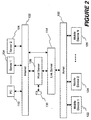
- FIG. 2 is a block diagram of the architecture of Figure 1.
- airnet 102 communicates simultaneously with a plurality of two-way wireless mobile communication devices, 122, 124 and 126, generally selected from a group consisting of mobile phones, two-way pagers and telephones. Due to efforts directed toward reducing the size and weight of such devices, most of the mobile devices (which may be considered as "thin clients") have a limited computing power compared to a desktop, laptop, or other type of portable computing device. In addition, the display size and graphics capabilities of the mobile devices are limited, and the user interface is typically a keypad having smaller and fewer keys than a desktop computer's keyboard.
- a user account resident in a host server 128.
- Host server 128 is typically resident at and under the control of a wireless carrier that operates airnet 102.
- the user account permits the users to access desired services or perform transactions by activating a small number of keys on the keypads of the mobile devices. For example, given a list of stock symbols of interest stored in a user account associated with a mobile phone, a user of the mobile phone is not required to enter the symbols every time she desires to look up the price of one of those stocks. Instead, the list of stock symbols is previously entered and associated with the user account. This permits retrieval or updating of the stock data by entry of a small number of keystrokes.
- a convenient method for entering such data and associating it with the mobile device user's account is by using a computing device that has enhanced information entering capabilities compared with the mobile device.
- a desktop or portable PC is a typical example of such a computing device, where the PC may be equipped with a well-known HTML browser that provides a comparatively rich graphic user interface and a desirable environment in which a user can manage the personalized information in their account.
- Figures 1 or 2 provides access to a common data file or account from both a desktop and mobile device.
- This permits a user to establish an account, configure, or re-configure a common data file or application from a device best suited for that purpose, and then access that data file or application from a different device best suited for the present needs of the user.
- This also permits data to be transferred between the two devices for use at the time and location desired by the user. For example, data entered on the keypad of the mobile device can be accessed and processed by the desktop device, permitting updating of data used by applications executed on the desktop device based on inputs from the mobile device. Similarly, data entered on the keypad of the desktop device can be accessed and processed by the mobile device, permitting updating of data used by applications executed on the mobile device based on inputs from the desktop device.
- the Internet may be represented as a network of networks connecting computers that are provided with an HTML browser.
- Referenced by 110 is a PC representing one of the computers that use the HTML browser running on HTTP to hyperlink to other computers/servers 104 to update/fetch information on line or copy files.
- a database or an allocation of memory hosts a plurality of user accounts, in each of which managed or personalized information is stored.
- Database 130 can be an independent storage location or a part of the host server 128.
- One method of accessing the personalized information is for a user to provide an account entry (sometimes termed a "rendezvous") to a user account in host server 128 or database 130.
- the account entry typically includes a set of credential information, e.g., a username and a password.
- Each mobile phone is assigned a device ID, where the ID can be the phone number of the phone or a combination of an IP address and a port number, for example: 204.163.165.132:01905, where 204.163.165.132 is the IP address and 01905 is the port number.
- the device ID is further associated with a subscriber number (sub #) authorized by a wireless carrier as part of the procedures used to activate the mobile device.
- Each of the mobile devices 122, 124 and 126 has a unique device ID that corresponds to a respective user account in a server.
- link server 114 does not have to be a separate server to perform the communication protocol mapping and other data processing tasks involved in establishing and maintaining communication between a PC (for example) and a mobile device.
- Link server 114 can be a part of the host server 128, in which case the protocol mapping and/or other processing functions are provided by the host server 128.
- the wireless carrier or network operator that operates airnet 102 may desire to operate a portal for its subscribers.
- the motivations for such an endeavour may be to establish a presence on the Internet, maintain brand strength, or provide those customers with access to a group of services and applications developed and optimized for users of mobile wireless devices.
- the carriers may not have, or desire to allocate, the resources to set up and operate a web portal in a timely fashion.
- Other types of business entities desiring to operate a portal or web-site to provide services to their customers and that are faced with similar constraints may also benefit from the present invention.
- downstream companies may desire to provide their customers with access to a set of services and applications developed for mobile wireless devices.
- one of the features in the present invention is to provide a generic solution of integrating two or more different infrastructures to facilitate higher usage by users of services or applications offered by the combined infrastructures so that higher revenues may be generated for each of the operators supporting the combined infrastructures.
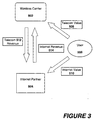
- Figure 3 is a diagram showing the Telecom and Internet Value(s), and respective revenue flows created by an integration of a wireless network operated by a wireless carrier and an Internet portal infrastructure operated by an Internet partner.
- Wireless Carrier 502 is the operator of a wireless network providing communication services to a Carrier Subscriber 506.
- Carrier 502 partners with Internet Partner 504 to provide specially tailored services and applications to mobile device users (Subscribers 506) through a web-site or portal.
- Subscribers 506 mobile device users
- This process generates Telecom Value 508 and Internet Value 510.
- the value generated through the coalition of the wireless carrier 502 and the Internet Partner 504 produces associated revenue flows (shown as elements 512 and 514 in the figure).
- Internet Partner 504 produces and operates a portal or web-site for the Subscribers 506 of Wireless Carrier 502.
- the portal or web-site is "branded" with the trademarks, service marks, or other identifying symbols or features of Carrier 502 so that the subscribers of that carrier's services will associate the portal with the Carrier.
- the portal or web-site may also be "co-branded” with the trademarks, service marks, or other identifying symbols or features of both Carrier 502 and Internet Partner 504.
- Internet Partner 504 may have such web-site development and operation relationships with a plurality of Carriers, each having a respective subscriber group. All such groups are enabled to have access to a set of services and applications tailored to users of mobile devices through the Carrier branded portals.
- Internet Partner 504 will provide a differently branded portal or web-site for each Carrier, with each such portal or web-site having the branding and other user interface elements desired by that Carrier, as well as a set of services and applications specified by that Carrier.
- each such portal or web-site will have the "look and feel" of a site especially tailored for the subscriber group of the respective Carrier.
- the portal or web-site can provide access to both horizontally integrated services or applications (e.g., E-mail or Account Management) and vertically integrated services or applications (e.g., Location Based, Presence Based, or Specialized/Transaction Based (sometimes referred to as "e-commerce" applications)). Some or all of these services or applications may be provided by Internet Partner 504, with others provided by Carrier 502, or by third party companies that pay a fee to Internet Partner 504 for placement of a link to their service or application on the web-site. Note that the portal or web-site may also provide access to other, vertically integrated portals or web-sites that in turn provide additional services or applications to users.
- horizontally integrated services or applications e.g., E-mail or Account Management
- vertically integrated services or applications e.g., Location Based, Presence Based, or Specialized/Transaction Based (sometimes referred to as "e-commerce" applications)
- Some or all of these services or applications may be provided by Internet Partner 504, with others provided by Carrier 502, or by third party
- the portal or web-site may be made accessible to the Customers 522 of other companies (referred to as "Downstream Company 520" in the figure) in addition to the subscribers of the carriers.
- Such access will generate an Internet Value and associated Internet derived Revenue (e.g., placement fees for visibility on web-site, transaction based fees, other forms of revenue sharing; shown as element 524 in the figure) for Internet Partner 504 and Company 520.
- Company 520 may operate its own web-site or portal for its customers, as well as provide applications developed for those customers.
- the Telecom and Internet Value and subsequent revenues generated by the portal or web-site may result from several sources.
- the Internet Partner providing and operating the portal may receive revenue from the Telecom Value derived from a Carrier's subscribers that access the portal. This revenue may consist of a flat fee, a fee per user or user group that accesses the portal, a percentage of the additional Telecom revenue generated by subscribers utilizing the Carrier's network to access the portal and its related services and applications, or another agreed upon basis.
- the additional Telecom revenues resulting from use of the web-site or portal and the increased network traffic produced are shared between the Carrier and the Internet partner. Note that in some situations, the network usage may increase without an increase in carrier revenue.
- Telecom Revenue 512 may be in the form of a payment to Internet Partner 504, in return for which Carrier 502 is able to obtain non-monetary benefits in the form of increased retention of subscribers, etc.
- the Internet Partner will also receive revenue from the Internet value created by the web-site. This is a result of offering the subscribers access to services and applications through the web-site. This revenue may be in the form of a user or transaction fee for those users who access the services or applications available through the portal. Such a fee may be calculated based on the value of the transaction, the type of transaction, or another suitable measure. Another source of such revenue may be a payment made by the companies that benefit from use of those services or applications in return for bringing potential customers to their services.
- the Internet Partner may also receive revenue from fees assessed for additional products or services the Partner may supply. For example, if the Internet Partner provides added value features for customers of a wireless Carrier (provisioning a phone with specific features, etc.), then a fee for that service may be generated for the Internet Partner.
- advertising revenues for advertisements placed on the web-site or portal can generate revenue for the Internet Partner. Advertising revenues may also be generated from companies desiring to place advertisements on the display screens of the mobile devices.
- the companies whose brands appear on the web-sites or portals may provide advertising revenue for the Internet Partner by placing ads on the portal to attract users of the portal to the services those companies can offer.
- the Internet Partner may also receive revenue (placement fees) by acting as a broker for businesses that wish to place a link to a mobile device oriented service or application on the web-site.
- the Internet Partner may also obtain revenue by providing an "incubation" site for service or application providers wishing to encourage visitors to the Partner operated web-site to utilize other, related sites, services, or applications.
- the Internet Partner is able to receive revenue from a plurality of customer groups without the need to expend resources on acquiring and retaining those customers (as these functions are performed by the Carriers).
- the Internet Partner By providing access to an aggregation of groups of customers or subscribers through one or more branded web-sites, placement, broker or other forms of access fees, and advertising rates and revenue for the Internet Partner can be higher than for the situation of providing access to and advertisements for a single customer group.
- advertising rates may be higher than in other circumstances because the advertisements are directed to a targeted user group, i.e., users of wireless communications devices.
- This situation places the Internet Partner in a position to leverage their ability to offer access to a large number of already recruited potential customers and generate revenue from companies willing to pay a fee for that access.
- An example would be vertically integrated portals desiring to attract the visitors to the multiple web-sites or portals to their own portals.
- the present invention provides entry into the Internet economy without some or all of the normally associated costs.
- it provides the Carriers with a means of reducing customer churn rates and a platform for offering services related to the Carrier's core business.
- the web-site and its associated services and applications can thus be used to acquire new customers for the company whose brand (or co-brand) is on the web-site.
- Increased Telecom Value is also generated because of the reduced churn rate of the subscribers (a reduced rate of customers switching carriers and hence a reduction in the associated recruiting and related costs). This benefit arises from customer investment in customizing the services and preferences of the web-site. Increased Telecom Value also arises because of a lower cost of attracting new subscribers (because of new services and applications available through the Carrier's web-site). This increased Telecom based revenue is shared between the Carrier and the Internet Partner responsible for establishing and operating the branded web-sites (since the Internet Partner is responsible for increasing the use of the wireless network).
- the subscribers' use of the services and applications will in turn generate Internet Value and associated revenues in the form of advertising revenues, broker fees for links placed on the web-site, transaction fees, and other forms of revenue sharing.
- This revenue stream is also shared between the Carrier and the Internet Partner responsible for establishing and operating the branded web-sites (since the Carrier is responsible for attracting and retaining the customers who utilize the web-site to generate the Internet value).
- the Internet Value generated is of sufficient magnitude, then it may become equal to or greater than the payment made to the Internet Partner for the increase in Telecom Value. This would enable the Carrier to obtain the benefits of having the branded web-site at no net cost, or at a net profit.
- the relationship between Internet Partner 504 and Downstream Company 520 generates Internet Value and associated Revenue 524 because of the services and applications provided to Customers 522. This can be in the form of payments or fees paid to Partner 504 by Company 520 to permit customer access to the web-site and some form of revenue sharing between them of the revenue arising from transactions engaged in or services utilized by the customers.
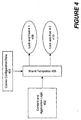
- Figure 4 is a diagram showing how templates may be used to provide a plurality of differently branded portals or web-sites for different Carriers derived from a common set of content and applications.
- the content and application logic 402 for a set of services or applications is presented in the form of a Carrier branded web-site through the use of a Brand Template 406.
- the Brand Template 406 determines the position, color, and other user interface attributes for the web-site based on Carrier Configuration Data 404 specific to that carrier. This means that each Carrier can have a web-site that exhibits the "look and feel" it desires for its subscribers, including such attributes as the location, size, color, and relationship of different elements on the web-site.
- the Internet Partner can generate and operate a plurality of such web-sites, each having a "look and feel" desired by the respective Carriers (shown as elements 408 and 410 in the figure).
- the branded web-site(s) can be accessed from both the mobile device and from a desktop or other computing device. This permits a user to modify their preferences and configure services or applications using the desktop device, and then utilize those preferences, services, and applications from the mobile device. It also permits users to obtain the most efficient use of each platform by configuring those aspects of the services or applications from each platform that are best understood or utilized from that platform. Thus, it is not necessary that the same functionality be available or used on both platforms. For example, when using a travel application, the desktop or PC platform may be used to make reservations, whereas the mobile device platform may be used to rebook flights already reserved in case of a delay or some other change in plans.
- the Internet Partner may also obtain revenue by tracking and compiling data relating to user traffic on the Internet (e.g., types of services or applications utilized, amount of money spent in transactions, etc.) and provide this data to the respective Carrier for that user.
- This permits the Carrier to more efficiently develop services and applications for its subscribers and configure the branded web-site or portal in a manner that maximizes the user's use of the network.
- This feedback can serve to increase the Telecom Value of the web-site.
- Such data can also be sold to advertisers seeking to target potential service users or buyers having a specified profile.
- the present invention provides a generic solution that permits a company to establish a presence on the Internet and provide its customers with access to a variety of services and applications beyond those provided directly by the company.
- the present invention permits this to be accomplished without the necessity of some or all of the investments normally required.
- An intermediary termed an Internet Partner, provides the company's customers with access to a set of services and applications tailored for users of mobile communications devices. This is done in the form of a branded web-site, with the Internet Partner obtaining revenue from access, transaction based, advertising, and other fees.
- the Internet Partner may establish and operate such a web-site or portal for a plurality of Carriers or other companies.
- the branded web-site provides services and applications for the subscribers of a wireless Carrier that are designed to increase the Telecom based revenues of the Carrier and generate access, transaction based, and other Internet revenues for the Internet Partner. These revenue flows are shared between the Carrier and Internet Partner.
- the Carrier has incentives to attract subscribers and encourage their use of the web-site since that will increase use of the Carrier's network.
- the Internet Partner has incentives to develop and maintain a desirable set of services and applications for the Carrier's subscribers since that increases the Internet based revenue for the Internet Partner.
Landscapes
- Engineering & Computer Science (AREA)
- Computer Networks & Wireless Communication (AREA)
- Signal Processing (AREA)
- Computer Security & Cryptography (AREA)
- Computer Hardware Design (AREA)
- Theoretical Computer Science (AREA)
- General Engineering & Computer Science (AREA)
- Business, Economics & Management (AREA)
- Accounting & Taxation (AREA)
- Software Systems (AREA)
- Physics & Mathematics (AREA)
- General Physics & Mathematics (AREA)
- Finance (AREA)
- Computing Systems (AREA)
- Databases & Information Systems (AREA)
- Development Economics (AREA)
- General Health & Medical Sciences (AREA)
- Bioethics (AREA)
- Library & Information Science (AREA)
- Health & Medical Sciences (AREA)
- Economics (AREA)
- Strategic Management (AREA)
- General Business, Economics & Management (AREA)
- Human Computer Interaction (AREA)
- Telephonic Communication Services (AREA)
- Mobile Radio Communication Systems (AREA)
- Information Transfer Between Computers (AREA)
Applications Claiming Priority (2)
| Application Number | Priority Date | Filing Date | Title |
|---|---|---|---|
| US09/408,278 US6754833B1 (en) | 1997-12-09 | 1999-09-29 | Method for generating and distributing telecom and internet revenue |
| US408278 | 1999-09-29 |
Publications (2)
| Publication Number | Publication Date |
|---|---|
| EP1089519A2 true EP1089519A2 (de) | 2001-04-04 |
| EP1089519A3 EP1089519A3 (de) | 2002-08-21 |
Family
ID=23615613
Family Applications (1)
| Application Number | Title | Priority Date | Filing Date |
|---|---|---|---|
| EP00308370A Withdrawn EP1089519A3 (de) | 1999-09-29 | 2000-09-25 | Verfahren und Vorrichtung zur integrierung von Internet- und drahtlosen Infrastrukturen um eine höhere Auslastung von Diensten durch Benutzer zu ermöglichen |
Country Status (4)
| Country | Link |
|---|---|
| EP (1) | EP1089519A3 (de) |
| JP (1) | JP2001169349A (de) |
| KR (1) | KR20010070116A (de) |
| CN (1) | CN1289975A (de) |
Cited By (10)
| Publication number | Priority date | Publication date | Assignee | Title |
|---|---|---|---|---|
| ES2178567A1 (es) * | 2000-10-04 | 2002-12-16 | Lanetro S A | Sistema para la comunicacion de terminales moviles con internet u otras redes. |
| US6826403B1 (en) | 2000-09-12 | 2004-11-30 | Phonepages Of Sweden Ab | Method and system for identifying a user |
| WO2005027416A1 (en) * | 2003-09-17 | 2005-03-24 | Petr Hejl | Method for a accessing users through a network |
| WO2005001729A3 (en) * | 2003-06-30 | 2005-03-24 | Jha I Commerce | A method of and system for authenticating a transaction initiated from a non-internet enabled device |
| US6922721B1 (en) | 2000-10-17 | 2005-07-26 | The Phonepages Of Sweden Ab | Exchange of information in a communication system |
| WO2006010156A3 (en) * | 2004-07-12 | 2009-05-28 | Cingular Wireless Ii Llc | Dedicated wireless device business method |
| US7929470B2 (en) | 2000-01-19 | 2011-04-19 | Sony Ericsson Mobile Communications Ab | Method and apparatus for exchange of information in a communication network |
| US8400946B2 (en) | 2000-01-19 | 2013-03-19 | Sony Corporation | System and method for sharing common location-related information between communication devices |
| US8548010B2 (en) | 2000-01-19 | 2013-10-01 | Sony Corporation | Method and apparatus for event-based synchronization of information between communication devices |
| US9781257B2 (en) | 2000-01-19 | 2017-10-03 | Sony Mobile Communications Ab | Technique for obtaining caller-originated alert signals in IP-based communication sessions |
Families Citing this family (4)
| Publication number | Priority date | Publication date | Assignee | Title |
|---|---|---|---|---|
| US7248862B2 (en) | 2000-01-19 | 2007-07-24 | Sony Ericsson Mobile Communications Ab | Method and apparatus for retrieving calling party information in a mobile communications system |
| US6977909B2 (en) | 2000-01-19 | 2005-12-20 | Phonepages Of Sweden, Inc. | Method and apparatus for exchange of information in a communication network |
| SE0102729D0 (sv) | 2001-08-15 | 2001-08-15 | Phone Pages Sweden Ab | Method and apparatus for exchange of information in a communication network |
| US7711809B2 (en) * | 2002-04-04 | 2010-05-04 | Airmagnet, Inc. | Detecting an unauthorized station in a wireless local area network |
Family Cites Families (4)
| Publication number | Priority date | Publication date | Assignee | Title |
|---|---|---|---|---|
| US6035281A (en) * | 1997-06-16 | 2000-03-07 | International Business Machines Corporation | System and method of multiparty billing for Web access |
| EP0890907B1 (de) * | 1997-07-11 | 2000-06-14 | ICO Services Ltd. | Web-Zugang für Benutzer in einem Fahrzeug |
| FI104668B (fi) * | 1997-07-14 | 2000-04-14 | Nokia Networks Oy | Liittymäpalvelun toteuttaminen |
| AU2684999A (en) * | 1998-02-25 | 1999-09-15 | Wayne A. Little | Method of linking communications |
-
2000
- 2000-09-25 EP EP00308370A patent/EP1089519A3/de not_active Withdrawn
- 2000-09-28 JP JP2000295957A patent/JP2001169349A/ja active Pending
- 2000-09-29 KR KR1020000057400A patent/KR20010070116A/ko not_active Withdrawn
- 2000-09-29 CN CN00129247A patent/CN1289975A/zh active Pending
Cited By (10)
| Publication number | Priority date | Publication date | Assignee | Title |
|---|---|---|---|---|
| US7929470B2 (en) | 2000-01-19 | 2011-04-19 | Sony Ericsson Mobile Communications Ab | Method and apparatus for exchange of information in a communication network |
| US8400946B2 (en) | 2000-01-19 | 2013-03-19 | Sony Corporation | System and method for sharing common location-related information between communication devices |
| US8548010B2 (en) | 2000-01-19 | 2013-10-01 | Sony Corporation | Method and apparatus for event-based synchronization of information between communication devices |
| US9781257B2 (en) | 2000-01-19 | 2017-10-03 | Sony Mobile Communications Ab | Technique for obtaining caller-originated alert signals in IP-based communication sessions |
| US6826403B1 (en) | 2000-09-12 | 2004-11-30 | Phonepages Of Sweden Ab | Method and system for identifying a user |
| ES2178567A1 (es) * | 2000-10-04 | 2002-12-16 | Lanetro S A | Sistema para la comunicacion de terminales moviles con internet u otras redes. |
| US6922721B1 (en) | 2000-10-17 | 2005-07-26 | The Phonepages Of Sweden Ab | Exchange of information in a communication system |
| WO2005001729A3 (en) * | 2003-06-30 | 2005-03-24 | Jha I Commerce | A method of and system for authenticating a transaction initiated from a non-internet enabled device |
| WO2005027416A1 (en) * | 2003-09-17 | 2005-03-24 | Petr Hejl | Method for a accessing users through a network |
| WO2006010156A3 (en) * | 2004-07-12 | 2009-05-28 | Cingular Wireless Ii Llc | Dedicated wireless device business method |
Also Published As
| Publication number | Publication date |
|---|---|
| KR20010070116A (ko) | 2001-07-25 |
| CN1289975A (zh) | 2001-04-04 |
| EP1089519A3 (de) | 2002-08-21 |
| JP2001169349A (ja) | 2001-06-22 |
Similar Documents
| Publication | Publication Date | Title |
|---|---|---|
| US6754833B1 (en) | Method for generating and distributing telecom and internet revenue | |
| Wu et al. | Analysis of E-commerce innovation and impact: a hypercube model | |
| Varshney et al. | Mobile commerce: framework, applications and networking support | |
| US7415715B2 (en) | Transaction execution system interface and enterprise system architecture thereof | |
| AU2001271596A1 (en) | System and method for integrating public and private data | |
| US7835951B1 (en) | Distribution channel management for wireless devices and services | |
| US7076531B2 (en) | Broadband sign-off | |
| JP2001169349A (ja) | ユーザによるサービスの高度な利用を可能にするための無線とインターネット設備を統合する方法及びシステム | |
| WO2002042972A1 (en) | A credit card payment method for electronic commerce | |
| KR20010107406A (ko) | 유무선 전광판 광고시스템 | |
| KR100932288B1 (ko) | 가상현실을 이용한 오프라인매장의 거래 중개 시스템 및방법 | |
| JP2005300806A (ja) | インターネット対応の携帯電話機を利用した広告システム | |
| WO2001020506A1 (en) | Method and system for implementing and billing wap and internet services | |
| Browne et al. | e-Business principles, trends and visions | |
| Schneiderman | The mobile technology question and answer book: A survival guide for business managers | |
| KR20210096878A (ko) | 메신저 서비스 플랫폼에서 실시간 결제 정보 제공 시스템 | |
| KR20010108794A (ko) | 컴퓨터통신 통합서버를 응용한 인터넷상의 사이버중매시스템 및 그 방법 | |
| Ogunlana et al. | E-marketing and digital communications: Implementing an effective knowledge based targeted e-marketing campaign | |
| Akoumianakis et al. | Experience-based social and collaborative performance in an ‘electronic village’of local interest: The eKoNEΣ framework | |
| Jarvenpaa et al. | Competing in mobile business | |
| Maamar | An m-commerce environment based on software agents | |
| Aithal | Ideal Banking System & Its Realization Opportunity | |
| KR20090068534A (ko) | 유, 무선 인터넷망을 이용한 미용, 의료 전문 콘텐츠 및서비스 제공시스템 | |
| KR20010104905A (ko) | 광고정보를 포함하는 패스워드 정보 생성 시스템 및 그운영방법 | |
| JP2003316937A (ja) | 移動通信端末を用いたマーケティング調査方法、並びに該方法に用いるマーケティング調査用サーバ及び通信システム |
Legal Events
| Date | Code | Title | Description |
|---|---|---|---|
| PUAI | Public reference made under article 153(3) epc to a published international application that has entered the european phase |
Free format text: ORIGINAL CODE: 0009012 |
|
| AK | Designated contracting states |
Kind code of ref document: A2 Designated state(s): AT BE CH CY DE DK ES FI FR GB GR IE IT LI LU MC NL PT SE |
|
| AX | Request for extension of the european patent |
Free format text: AL;LT;LV;MK;RO;SI |
|
| PUAL | Search report despatched |
Free format text: ORIGINAL CODE: 0009013 |
|
| AK | Designated contracting states |
Kind code of ref document: A3 Designated state(s): AT BE CH CY DE DK ES FI FR GB GR IE IT LI LU MC NL PT SE |
|
| AX | Request for extension of the european patent |
Free format text: AL;LT;LV;MK;RO;SI |
|
| RIC1 | Information provided on ipc code assigned before grant |
Free format text: 7H 04L 29/06 A, 7G 06F 17/60 B, 7H 04L 12/14 B, 7H 04L 29/08 B, 7H 04M 15/00 B |
|
| AKX | Designation fees paid | ||
| REG | Reference to a national code |
Ref country code: DE Ref legal event code: 8566 |
|
| STAA | Information on the status of an ep patent application or granted ep patent |
Free format text: STATUS: THE APPLICATION IS DEEMED TO BE WITHDRAWN |
|
| 18D | Application deemed to be withdrawn |
Effective date: 20030222 |