EP1090133B1 - Production de il-10 dans un bioreacteur de plantes cultivees non alimentaires - Google Patents
Production de il-10 dans un bioreacteur de plantes cultivees non alimentaires Download PDFInfo
- Publication number
- EP1090133B1 EP1090133B1 EP99926204A EP99926204A EP1090133B1 EP 1090133 B1 EP1090133 B1 EP 1090133B1 EP 99926204 A EP99926204 A EP 99926204A EP 99926204 A EP99926204 A EP 99926204A EP 1090133 B1 EP1090133 B1 EP 1090133B1
- Authority
- EP
- European Patent Office
- Prior art keywords
- plant
- food crop
- plants
- tobacco
- protein
- Prior art date
- Legal status (The legal status is an assumption and is not a legal conclusion. Google has not performed a legal analysis and makes no representation as to the accuracy of the status listed.)
- Expired - Lifetime
Links
Images



Classifications
-
- C—CHEMISTRY; METALLURGY
- C12—BIOCHEMISTRY; BEER; SPIRITS; WINE; VINEGAR; MICROBIOLOGY; ENZYMOLOGY; MUTATION OR GENETIC ENGINEERING
- C12N—MICROORGANISMS OR ENZYMES; COMPOSITIONS THEREOF; PROPAGATING, PRESERVING, OR MAINTAINING MICROORGANISMS; MUTATION OR GENETIC ENGINEERING; CULTURE MEDIA
- C12N15/00—Mutation or genetic engineering; DNA or RNA concerning genetic engineering, vectors, e.g. plasmids, or their isolation, preparation or purification; Use of hosts therefor
- C12N15/09—Recombinant DNA-technology
- C12N15/63—Introduction of foreign genetic material using vectors; Vectors; Use of hosts therefor; Regulation of expression
- C12N15/79—Vectors or expression systems specially adapted for eukaryotic hosts
- C12N15/82—Vectors or expression systems specially adapted for eukaryotic hosts for plant cells, e.g. plant artificial chromosomes (PACs)
- C12N15/8241—Phenotypically and genetically modified plants via recombinant DNA technology
- C12N15/8242—Phenotypically and genetically modified plants via recombinant DNA technology with non-agronomic quality (output) traits, e.g. for industrial processing; Value added, non-agronomic traits
-
- C—CHEMISTRY; METALLURGY
- C12—BIOCHEMISTRY; BEER; SPIRITS; WINE; VINEGAR; MICROBIOLOGY; ENZYMOLOGY; MUTATION OR GENETIC ENGINEERING
- C12N—MICROORGANISMS OR ENZYMES; COMPOSITIONS THEREOF; PROPAGATING, PRESERVING, OR MAINTAINING MICROORGANISMS; MUTATION OR GENETIC ENGINEERING; CULTURE MEDIA
- C12N15/00—Mutation or genetic engineering; DNA or RNA concerning genetic engineering, vectors, e.g. plasmids, or their isolation, preparation or purification; Use of hosts therefor
- C12N15/09—Recombinant DNA-technology
- C12N15/63—Introduction of foreign genetic material using vectors; Vectors; Use of hosts therefor; Regulation of expression
- C12N15/79—Vectors or expression systems specially adapted for eukaryotic hosts
- C12N15/82—Vectors or expression systems specially adapted for eukaryotic hosts for plant cells, e.g. plant artificial chromosomes (PACs)
- C12N15/8241—Phenotypically and genetically modified plants via recombinant DNA technology
- C12N15/8242—Phenotypically and genetically modified plants via recombinant DNA technology with non-agronomic quality (output) traits, e.g. for industrial processing; Value added, non-agronomic traits
- C12N15/8243—Phenotypically and genetically modified plants via recombinant DNA technology with non-agronomic quality (output) traits, e.g. for industrial processing; Value added, non-agronomic traits involving biosynthetic or metabolic pathways, i.e. metabolic engineering, e.g. nicotine, caffeine
-
- C—CHEMISTRY; METALLURGY
- C12—BIOCHEMISTRY; BEER; SPIRITS; WINE; VINEGAR; MICROBIOLOGY; ENZYMOLOGY; MUTATION OR GENETIC ENGINEERING
- C12N—MICROORGANISMS OR ENZYMES; COMPOSITIONS THEREOF; PROPAGATING, PRESERVING, OR MAINTAINING MICROORGANISMS; MUTATION OR GENETIC ENGINEERING; CULTURE MEDIA
- C12N15/00—Mutation or genetic engineering; DNA or RNA concerning genetic engineering, vectors, e.g. plasmids, or their isolation, preparation or purification; Use of hosts therefor
- C12N15/09—Recombinant DNA-technology
- C12N15/63—Introduction of foreign genetic material using vectors; Vectors; Use of hosts therefor; Regulation of expression
- C12N15/79—Vectors or expression systems specially adapted for eukaryotic hosts
- C12N15/82—Vectors or expression systems specially adapted for eukaryotic hosts for plant cells, e.g. plant artificial chromosomes (PACs)
- C12N15/8241—Phenotypically and genetically modified plants via recombinant DNA technology
- C12N15/8242—Phenotypically and genetically modified plants via recombinant DNA technology with non-agronomic quality (output) traits, e.g. for industrial processing; Value added, non-agronomic traits
- C12N15/8257—Phenotypically and genetically modified plants via recombinant DNA technology with non-agronomic quality (output) traits, e.g. for industrial processing; Value added, non-agronomic traits for the production of primary gene products, e.g. pharmaceutical products, interferon
Definitions
- the present invention relates to the use of a non-food crop plant as a bioreactor. More specifically this invention relates to the expression of IL-10 for oral administration using non-food crop plants.
- non-food crop plants are ideal species for the transgenic production of biologically active proteins.
- Non-food crop plants minimize the risk of accidental leakage of transgenic plant material expressing genes for biologically active proteins into the humane food chain.
- Other plant bioreactor systems based on canola (Rooijen et al. 1995), potato (Manson et al 1996), rice and cassava (Ma and Hein 1995) do not offer this advantage.
- non-food crop plants can be selected so that production in areas where there are no naturally occurring wild species further minimizes the risk of gene leakage to the local flora, an example of this would be to grow tobacco in regions where tobacco does not overwinter, such as Canada.
- transgenic proteins can be produced using any tissue or organ of the plant.
- protein production is based on leaves, not seeds or tubers, and when coupled with the fact that the leaves are harvested before flowering there is virtually no risk of uncontrolled bioreactor plants occurring in future crop seasons.
- the present invention relates to the production of a protein of interest using a non-food crop plant.
- a method for the preparation of IL-10 suitable for oral administration within a non-food crop plant comprising, transforming the non-food crop plant with a suitable vector containing a nucleic acid encoding human IL-10 and appropriate regulatory regions to ensure expression of the nucleic acid within the non-food crop plant, such that the non-food crop plant is characterized as being non-toxic, non-addictive, palatable, and requiring little or no processing prior to oral administration , selecting non-food crop plants that express human IL-10 to obtain transformed non-food crop plants; growing and harvesting said transformed plants and obtaining plant tissu comprising human IL-10 from said transformed plants.
- This invention further relates to the above method wherein the non-food plant is characterized in having a low alkaloid level.
- This invention also includes methods utilizing a plant characterized in having a low nicotine level.
- the protein of interest includes pharmaceutically active proteins, such as growth regulators, insulin, interferon and related compounds, interleukins, growth hormone, erythropoietin, G-CSF, GM-CSF, hPG-CSF, M-CSF, Factor VIII, Factor IX, tPA, antibodies, antigens and any combinations and derivatives thereof.
- pharmaceutically active proteins such as growth regulators, insulin, interferon and related compounds, interleukins, growth hormone, erythropoietin, G-CSF, GM-CSF, hPG-CSF, M-CSF, Factor VIII, Factor IX, tPA, antibodies, antigens and any combinations and derivatives thereof.
- this invention includes the above method wherein a suitable vector contains a gene of interest along with appropriate regulatory regions to ensure expression of the IL-10 within desired plant tissues.
- compositions comprising a tissue from a non-food crop containing a transgenic IL-10.
- Another aspect of an embodiment of this invention is a method for the treatment of a medical aliment by administering a suitable amount of the above composition comprising a tissue from a non-food crop plant containing as a pharmaceutically active component a transgenic IL-10.
- This invention is also directed to a method for preparing human IL-10 within a non-food crop plant comprising;
- the method for the preparation of IL-10 may comprise
- said IL-10 is human IL-10.
- the vector may comprise sequences that enhance expression of said IL-10, such as an ER retention signal.
- the vector may also encode a proteolytic cleavage site, an affinity tag, or a combination thereof.
- the present invention is exemplified by the preparation of transgenic proteins of interest using tobacco, in practice any non-food crop plant may be used for the preparation of a protein of interest following the methods as disclosed herein.
- non-food crop plants are ideal species for the transgenic production of biologically active proteins since the risk of leakage of transgenic plant material into the human food chain is negligible.
- Other plant bioreactor systems based on food crops do not offer this advantage.
- non-food crop plants are ideal species for use as bioreactors from both a regulatory and public safety point of view, there a several obstacles that must be overcome prior to their use as bioreactors.
- Non-food crop plants for example tobacco
- bioreactors A major problem with the use of non-food crop plants, for example tobacco, as bioreactors is that these plants may contain undesirable secondary plant products.
- Secondary plant products are constituents that are generally toxic or reduce the palatability of the plant tissue or that are addictive in nature. This is a significant concern since one of the benefits of preparing proteins of interest within a plant is that large quantities of protein may be required for administration (Ma and Hein, 1995), therefore any toxic, addictive, or otherwise non-desirable products should be avoided within the plant tissue.
- tobacco plants contain high levels of secondary plant products such as nicotine and related alkaloids, making the plant tissue unsuitable for the direct oral administration.
- Earlier studies have described the administration of tobacco-derived proteins to mice, however, the proteins were in a partially purified form.
- non-food crop plant it is meant a plant that has traditionally not been used, or grown for food purposes.
- non-food crop plants include, but are not limited to, ornamental plants, tobacco, hemps, weeds, and the like and trees. It is contemplated that such non-food crops plants may be used for the production of a protein of interest.
- a non-food crop plant is characterized as being:
- any non-food crop plant may be used for the production of a protein of interest following the methods of the present invention as described herein.
- the protein of interest may be combined with other nucleic acid sequences that are useful for the purification of the protein of interest in order that the protein be suitable for further use.
- a low alkaloid tobacco plant may be defined as a plant that contains less than from about 0.2% to about 70 % of the total alkaloids present in plants comprising a regular level of alkaloids. More preferably a low-alkaloid plant is one that contains about 0.2% to about 10% of the total alkaloids present in plants comprising a regular level of alkaloids.
- a low alkaloid plant that comprises about 2.8% of the total alkaloid level of a regular tobacco, is 81 V-9 (see Table 1, Example 4).
- a low nicotine tobacco plant is one that contains a significantly lower concentration of nicotine when compared with a similar plant comprising regular nicotine content.
- a low nicotine tobacco plant may be defined as a plant that contains less than from about 0.2% to about 70 % of the total nicotine present in plants comprising a regular level of nicotine. More preferably a low-nicotine plant is one that contains from about 0.2% to about 10% of the total nicotine present in plants comprising a regular level of nicotine.
- An Example of a low nicotine plant, that comprises about 2.6% of the total nicotine level of regular tobacco, is 81V-9 (Table 1. Example 4).
- Such low alkaloid or low nicotine plants may be obtained through conventional breeding programs (e.g. Chaplin, 1977), through selective down regulation of undesired genes (e.g. U.S. 5,260,205, issued November 9, 1993 and U.S. 5,369,023, issued November 29, 1994; inventors Nakatani and Malik ), or by any other means e.g. mutagenesis followed by selection of desired traits.
- the ultimate nicotine or alkaloid level may still depend upon the environment under which the plant is grown.
- minimal processing it is meant the rapid processing of transgenic proteins produced within non-food crop plants.
- rapid processing could involve, but is not limited to, methods as those employed for the preparation of FIP as disclosed in Woodleif et al (1981). These include the aqueous extraction of soluble protein from green tobacco leaves by precipitation with KHSO 4 , following removal of chloroplastic debris. Other methods may include large scale maceration and juice extraction in order to permit the direct use of the extract. If mechanically extracted at the filed site in the presence of water, this extract may be further processed prior to administration. Protein compositions prepared from minimally processed plant tissues comprise the transgenic protein of interest along within plant-derived components including cellular components and other soluble materials.
- suitable vector it is meant a vector comprising a gene of interest that is capable of being expressed within plant tissue.
- a vector may also include ubiquitous or tissue specific promoters and other 5' and 3' regulatory elements as would be known to one of skill in the art.
- Other elements that may be included with this vector include sequences for targeting the protein of interest to the cytosol or secretory pathway such as, but not limited to, the C-terminal KDEL sequence, an endoplasmic reticulum retention motif (Schouten et al 1966).
- Other retention signals as would be known to one of skill in the art, may also be used for this purpose.
- such a vector may include marker genes for the detection of expression within the transgenic plant, and other sequences that aid in the purification of a protein of interest encoded by the gene of interest, including proteolytic cleavage, column chromatography and the like.
- An example, which is not to be considered limiting in any manner, of a sequence that aids in the purification of a protein of interest includes an affinity tag, for example, sequences that encode a His tag.
- affinity tags as are known within the art, may also be used for the purpose of purification.
- An example which is not to be considered limiting in any manner of a sequence that aids in proteolytic cleavage, and is used to separate the protein of interest from other translated sequences such as a KDEL sequence includes, for example, a sequence encoding a thrombin cleavage site. Again, it is to be understood that other proteolytic cleavage sites may also be used as would be evident to one of skill in the art.
- protein of interest any protein that is to be expressed in a transformed plant.
- proteins may include, but are not limited to, pharmaceutically active proteins, for example IL-1, IL-2, IL-3 ... IL-12, EPO, CSF, including G-CSF. GM-CSF, hPGCSF, M-CSF, Factor VIII, Factor IX, tPA, hGH, receptors, receptor agonists, antibodies, neuropolypeptides, insulin, vaccines, growth factors, growth regulators, antigens, their derivatives and the like.
- pharmaceutically active proteins for example IL-1, IL-2, IL-3 ... IL-12, EPO, CSF, including G-CSF. GM-CSF, hPGCSF, M-CSF, Factor VIII, Factor IX, tPA, hGH, receptors, receptor agonists, antibodies, neuropolypeptides, insulin, vaccines, growth factors, growth regulators, antigens, their derivatives and the like.
- tissue or organ of a non-food crop plant for example the leaf, root, fruit etc with minimal or no prior processing.
- tissue or organs may be provided in the form of a salad or the like along with other pharmaceutical ingredients, or ingredients to increase palatability, if desired.
- minimal processing of the tissue or organ may take place prior to administration of the extract.
- proteins secreted within the extracellular space of leaf tissues could be readily obtained using vacuum or centrifugal extraction, or tissues could be extracted under pressure by passage through rollers or grinding or the like to squeeze or liberate the protein free from within the extracellular space.
- Minimal processing could also involve preparation of crude extracts of soluble proteins, since these preparations would have negligible contamination from secondary plant products.
- Bv "medical aliment” it is meant a defined medical condition that can be treated a specific pharmaceutical suitable for the treatment of the condition.
- medical ailments and their corresponding suitable pharmaceutical include, but are not limited to: diabetes and the administration of IL-4 or insulin or a combination thereof; conditions related to blood clotting and the administration of Factor VIII, Factor IX or tPA or combinations thereof; medical conditions requiring the stimulation of progenitor cells to monocytes/macrophages and the administration of G-CSF, GM-CSF, hPG-CSF, M-CSF or combinations thereof; viral infections and the administration of interferons e.g. interferon- ⁇ , interferon- ⁇ , interferon- ⁇ .
- proteins of interest were expressed within a low alkaloid plant. These proteins include IL-4, IL-10, and a Type II antifreeze protein (AFP), however, it is to be understood that other proteins of interest may be also used to transform a low alkaloid, or low nicotine plant according to the methods of this invention.
- a nicotine-free tobacco such as but not limited to 81V-9
- proteins of interest include IL-4, IL-10, and a Type II antifreeze protein (AFP), however, it is to be understood that other proteins of interest may be also used to transform a low alkaloid, or low nicotine plant according to the methods of this invention.
- AFP Type II antifreeze protein
- IL-4 is a growth and differentiation factor for T-cells.
- IL-4 promotes the development of the subset of T helper (Th2) cells from native T cells upon antigen stimulation.
- Th2 cells generally protect against the onset of many organ-specific autoimmune diseases, including type 1 diabetes.
- Transgenic low-nicotine tobacco plants can be used in direct feeding studies to determine the efficacy of the recombinantly produced protein.
- Crohn's disease is a chronic inflammatory bowel disease with frequent remissions and exacerbations, and several extra-GI manifestations. Lesions are typically discontinuous and can occur anywhere within the GI tract. The most common locations are ileum and colon, and formation of strictures and fistulas are common. In contrast, ulcerative colitis is contiguous and characteristically affects the colon. While the etiology of both these inflammatory bowel diseases remain unknown, there is data demonstrating the participation of immune cells in these conditions. Cytokines may direct the intensity, extent, and eventual outcome of inflammatory lesions.
- mice made deficient for IL-10 by targeted gene disruption, develop bowel inflammation and lesions resembling inflammatory bowel disease, which can be improved by systemic or topical administration of IL-10 (Kuhn et al. 1993).
- proinflammatory cytokines such as interleukin-1.
- interleukin-6, y-interferon and tumor necrosis factor and anti-inflammatory cytokines such as receptor antagonists, IL-10, IL-4, and transforming growth factor beta (TGF ⁇ ) might ultimately determine the outcome of inflammatory bowel disease (Fiocchi 1993) .
- TGF ⁇ transforming growth factor beta
- IL-10 may be an effective strategy to treat inflammatory bowel disease.
- the present treatments for inflammatory bowel disease are empirically designed to reduce inflammation and rely heavily on corticosteroids and immuno-solisolates (5-ASA).
- cytokines orally may offer an alternative to systemic application or topical application and may have local and systemic effects.
- acid inactivation and protease digestion does not appear to inactivate all cytokine effects, in the limited experience to date using an oral approach.
- Bioactivity may be retained even in the presence of trypsin and chymotrypsin, at least for IL-6, suggesting heavy glycosylation and other factors confer acids stability to cytokines (Rollwagen and Baqar 1996).
- interferons can suppress collagen induced arthritis in rats when given in high dose orally.
- Oral cytokines may simplify an approach to delivery and could be useful in modele of infection, HIV, autoimmunity and transplantation rejection.
- Human IL10 has also been cloned, and both mouse and human cDNA encode functionally and structurally similar proteins (with 178 amino acids) including a hydrophobic leader sequence and greater than 70% homology in predicted amino acid sequences.
- IL-10 is produced by B cells, activated mast cells, macrophages, monocytes and keratinocytes.
- B cells activated mast cells, macrophages, monocytes and keratinocytes.
- cytokines particularly those of the TH-1 T cell subset (interferon gamma) and inhibition of B cell proliferation.
- the inhibition of various cytokines such as interferon gamma.
- GM-CSF and TNF following lectin or anti-CD3 activation is both transcriptional and translational.
- MHC class 1 antigen expression which is a protein central to the recognition of antigen presenting cells by T-cell.
- IL-10 also inhibits the production of hydrogen peroxide and nitric oxide following interferon-gamma activation. Therefore there is a strong basis for the concept that IL-10 naturally occurs to provide negative regulation to immune responses.
- Gene constructs were transformed into N. tabacum cv. Xanthi and 81 V9-4 tobacco strains (available from Agricuture and Agri-Food Canada, Pest Management Research Center, Delhi Farm. Genetics Section) .
- 81 V9-4 is a flue-cured tobacco line containing only trace amounts of alkaloids and is an ideal component for tobacco-based molecular farming applications.
- Gene constructs were built for production of pro and mature forms of a Type II antifreeze protein (AFP) or IL-4, to be accumulated in the cell cytosol and extracelluar space.
- AFP Type II antifreeze protein
- IL-4 Type II antifreeze protein
- IgG expression in plants lends support to the idea that passage through the endoplasmic reticulum may enhance protein accumulation.
- the amount of each protein increased up to 60-fold over that seen when expressed individually into the same compartment (Hiatt et al 1989).
- Expression of both protein components into the cytosol did not affect their level of accumulation.
- IgG processing and assembly in lymphocytes occurs through the action of heavy-chain binding proteins present in the endoplasmic reticulum (ER).
- ER endoplasmic reticulum
- the observed increase in yield when both proteins were targeted to the extracelluar space has been attributed to an enhanced stability contingent on IgG assembly. Consistent with this hypothesis, active antibody complexes were observed when the proteins were targeted to the extracelluar space but not when targeted to the cytosol.
- the codon usage within the non-crop plant of interest should be determined. Also, it has been shown that endoplasmic reticulum retention signals can dramatically increase transgene protein levels, for example the KDEL motif (Schouten et al 1996). Replacing any secretory signal sequence with a plant secretory signal will also ensure targeting to the endoplasmic reticulum (Denecke et al 1990).
- Examples 1 and 2 are for comparative purpose.
- the native 5'-untranslated region of the fish cDNA was replaced with the 5'-untranslated leader region of the tobacco mosaic virus (TMV) (Richards et al 1977 & 1978, Sleat et al 1988).
- TMV tobacco mosaic virus
- the fish signal peptide sequence was also replaced with that of the tobacco pathogenesis-related protein 1b (PR-1b) (Cornelissen et al 1986, Sijmons et al 1990, Denecke et al 1990).
- PR-1b tobacco pathogenesis-related protein 1b
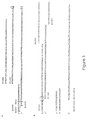
- Oligonucleotide cassettes were designed: three oligonucleotides, #1091, (SEQ ID NO:1); # 1092 (SEQ ID NO:4); and # 1309 (SEQ ID NO:2), which would hybridize to generate the complete TMV leader sequence (TMV Cassette: Figure 1A ); and five oligonucleotides #4361-#4365 (SEQ ID NOs: 3, 5, 6, 8 and 9, respetively) which in concert with oligonucleotides #1091 and #1092 (SEQ ID NO:1 and 4) would hybridize to generate a linked TMV leader and PR-1b signal peptide DNA sequence (TMV-PR Cassette: Figure 1B ).
- the 5' end of these cassettes corresponded to a Bam H I sticky end restriction site.
- the 3' end of the TMV cassette was blunt and incorporated an additional adenine nucleotide intended to form the first nucleotide of the start codon while the 3' end of the TMV-PR cassette was compatible with Nde I-cut DNA but would not be able to re-generate the restriction site following ligation.
- Type II AFP cDNA was site-specifically mutated according to the method described by Kunkel (1985) to incorporate an Nde I restriction site at either bp 157 or 207. These mutations also introduced appropriate in-frame methionine start codons at the junctions between sequences encoding pre and pro, or pro and mature portions of the AFP.
- plasmids containing the mutated Type II AFP cDNAs were initially cut with Nde I and made blunt-ended with mung bean nuclease.
- the cDNA fragments were released by cleavage with Sal I, were isolated and directionally ligated into a Bam H I/ Sal I-cut pTZ 18 vector together with annealed TMV oligonucleotides #1091, #1092 and #1309.
- the TMV-proAFP and TMV-mAFP constructs were then cut with Bam H I and Hinc II, and the isolated AFP gene fragments ligated separately into pMON 893.
- the mutated Type II AFP cDNAs were initially subcloned from their pTZ 19 vectors into Hin d III/ Sal I-cut pBluescript vectors to position a Bam H I restriction site 5' to the AFP coding sequence.
- the pBluescript-AFP clones were cut with Bam H I and Nde I restriction enzymes to remove the sea raven signal peptide sequence or signal peptide and pro-region DNA.
- the gene constructs were then cut with Xba I and Kpn I, and separately cloned into pCDX-1.
- AFP encoded by the transgene constructs was identical to the pro and mature AFP forms present in fish with the exception of one additional methionine at the N-terminal end of the proteins.
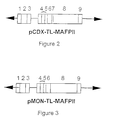
- the T-DNA portion of the final constructs are depicted in Figures 2 and 3 .
- transgenic plants were regenerated carrying gene constructs for AFP accumulation into the extracellular space: two proAFP transgenics in each strain and four mature AFP transgenics in 81 V-9. Transformed and regenerated plants were initially selected for kanamycin resistance. Transgenic status was subsequently determined by direct PCR screening for the AFP transgene using primers #3339 5'-TATTTTTTACAACAATTACCAACAAC-3' (SEQ ID NO:10) and #4708 5'-CAGCAGTCATCTGCATACAGCAC-3' (SEQ ID NO:11) which hybridize to the TMV leader and at the 3' end of the sea raven AFP coding sequence, respectively.
- Type II AFP gene constructs were amplified in 30 cycles of denaturation for 1 min at 95 °C, annealing for 1 min at 55°C, and elongation for 2 min at 72°C. This generated amplification products of 440 and 388 bp from the gene constructs for cytosolic accumulation of the pro and mature AFPs, and 532 and 480 bp fragments from gene constructs designed for accumulation of the same AFPs into the extracellular space.
- Total soluble protein extracts were prepared from three to four leaves taken from the upper half of a healthy plant according to the method described by Gensenheimer (1990). Extracts were dialysed at 4°C against 0.1%, 0.01% and 0.001% ascorbic acid in SpectraPor ® #3 dialysis tubing (MWCO 3.5 kDa) and centrifuged for 15 min at 12.000xg to remove precipitate formed during dialysis prior to lyophilization. Samples were resuspended in Millipore ® -filtered water and their protein concentrations determined by Bradford assay (16) relative to a BSA standard.
- Lyophilized protein was resuspended directly in loading buffer (60 mM Tris-HCl, pH 6.8/10% glycerol/5% ⁇ -mercaptoethanol/2% (w/v) SDS/ 1.3 x 10 -3 % (w/v) bromophenol blue), and were electrophoresed through a 17% polyacrylamide/0.1 M sodium phosphate, pH 6.8/4 M Urea/0.1% SDS gel using 0.1 M sodium phosphate, pH 6.8/0.1% SDS running buffer. Electrophoresis was conducted at 50 V for 3-4 h or until the 6 kDa pre-stained marker was at the bottom of the gel.
- Western blots were prepared according to the method described by Burnette et al (1981) and probed with polyclonal antibody to the mature sea raven AFP.
- a chemiluminescence detection kit (Amersham) for probing of Western blots was used to detect bound first antibody. All reactions were carried out according to the manufacturer's directions.
- RNA extracts of plants transgenic with gene constructs for cytosolic AFP accumulation were analysed by Northern blot to determine if the AFP transgene was transcribed.
- Two plants, Xanthi TmSR # 1 and 8 1 V9-4 TmSR #1, carrying transgenes for AFP accumulation into the cell cytosol were found to produce a 0.96 kb RNA transcript which hybridized with the AFP cDNA used as a probe: on longer exposure of the blots, the same RNA transcript was also seen in extract from Xanthi TmSR #2 and slightly larger one of approximately 1.02 kb was detected in extract from 81V9-4 TpSR #3. Transcripts from pro and mature AFP transgene constructs were expected to differ by 51 nucleotides.
- Both plant-produced AFP gene transcripts were both considerably larger than a PCR-generated control sample estimated to be 0.36 kb and representing the size of the mature AFP transgene between the TMV leader and the 3' end of the coding sequence. This was consistent with the size difference expected based on the additional coding sequence and 3'-untranslated region (155 nt total) present in the transgene construct, and with the use of the NOS polyadenylation sequence to obtain polyadenylated transcripts. Both transcripts were smaller than an equivalent gene transcript of 1.06 kb produced in a plant carrying the transgene for targeted mature AFP accumulation into the extracellular space.
- Vacuum infiltration extracts were prepared from AFP-producing plants to determine if the expressed AFP was present in the extracellular space. These extracts were not subject to the viscosity and sample distortion associated with total soluble protein extracts, so were also considered more suitable to estimate the sizes of the plant AFPs.
- Western blot analysis confirmed the presence of AFP.
- AFP was detected in plants pII3a-#7 and II4c 2 -#1 which carried mature and proAFP transgenes respectively, as a diffuse band of approximately 14.7 kDa which migrated at a similar rate to mature AFP isolated from fish sera. A small mobility difference was observed between the AFPs produced by the two plants, however, proAFP isolated from fish sera was distinctly larger than either plant-produced AFP.
- RNA analysis of the transgenic plants has shown that they are able to transcribe the integrated transgene constructs, and that the size of the plant AFP mRNA from both construct types is consistent with that expected for a full-length, polyadenylated transcript. mRNA produced from the transgene for AFP accumulation into the extracellular space was obviously translatable.
- the presence of plant-produced AFPs in vacuum infiltration extracts indicates that the plant recognized the PR-1b signal peptide component and correctly targeted the attached AFPs to the extracellular space.
- the predicted size of the AFPs for export to the extracellular space is 18.7 or 17 kDa with the signal peptide component attached and 15.8 or 14.1 kDa without the signal peptide for the pro and mature AFPs, respectively.
- Western blot analysis of the plant vacuum infiltration extracts showed that the AFPs produced from the proAFP and mature AFP transgene constructs and present in the extracellular space both co-migrated with mature Type II AFP and were approximately 14.7 kDa. This suggests that not only is the plant capable of cleaving the signal peptide from the expressed AFP but that it can remove most or all of the pro-region of the AFP.
- this example demonstrates that a low alkaloid plant is capable of expressing an imminologically detectable protein of interest that retains its native activity.
- Full length murine IL-4 cDNA is 585 base pairs long (Lee et al 1988) and codes for a 140 amino acid preprotein with a 40 amino acid secretory signal (Otsuka et al 1987). This gene sequence encoding the 40 amino acid secretory signal was replaced with a plant secretory signal obtained from the tobacco PR1-b secretory signal (Denecke et al 1990) to ensure targeting to the endoplasmic reticulum. The resultant vector was introduced into low-nicotine tobacco plants using the methods described above.
- CT.4S cell line In order to determine the biological activity of plant recombinant IL-4, in vitro, the stimulation of growth of murine IL-4 dependent CT.4S cell line (Rapoport et al 1993) is determined. Appropriate dilutions of purified plant recombinant IL-4 is added to cultures containing 5x10 3 CT.4S cells in flat bottom 96-well plates in a final volume of 100 ml for 48 hr. CT.4S cell proliferation is assessed by addition of 1 mCi/well of [ 3 H]thymidine 18 hr before termination of culture, and [ 3 H] thymidine incorporation is determined by liquid scintillation counting.
- the immunoreactivity of plant recombinant IL-4 is determined by solid phase sandwich ELISA (Abrams et al 1992). Briefly, the BVD4-1D11 anti-IL-4 mAB is used as a capture antibody and is paired with the biotinylated BVD6-24G2 antiIL-4 mAB as the detecting antibody. Mouse rIL-4 (Pharmingen) is used a standard.
- NOD mice In vivo activity of plant produced IL-4 is determined in NOD mice.
- NOD and control strain insulitis- and diabetes-free female mice (20 mice/group) are fed either transgenic low nicotine tobacco leaves expressing recombinantly produced IL-4.
- circulating serum levels of plant recombinant IL-4-fed and un-fed NOD and control mice are analyzed by ELISA as described above. Both NOD and control mice are monitored for any potential toxic effects arising from the plant recombinant IL-4 feeding, and their serum concentrations of IgE and IgG quantified by ELISA. Increase in serum IgE levels indicate that recipient mice are more susceptible to allergic responses.
- Feeding of plant recombinant IL-4 to protect against the onset of insulitis and/or Type 1 diabetes in NOD mice is also determined.
- Neonatal female NOD mice (2-3 weeks of age) fed or not fed with plant recombinant IL-4 are maintained in a specific pathogen free animal facility.
- Mice are monitored weekly for their blood glucose levels (BGL), and mice that are hyperglycemic (i.e. BGL > 11.1 mmol/L) for two consecutive weeks are diagnosed as Type 1 diabetic.
- BGL blood glucose levels
- mice that are hyperglycemic i.e. BGL > 11.1 mmol/L
- the onset of insulitis is monitored by immunohistochemical analysis of pancreatic tissue by sacrificing mice at various times (2 weeks to 2 months) after plant recombinant IL-4-feeding is initiated.
- Full length mRNA encoding human IL-10 is 1601 nucleotides long, with a short 5' UTR of 30 nucleotides (nt) and a long 3' UTR of 1037 nt.
- the hIL-10 coding sequence is 534 base pairs long and codes for a 178 amino acid preprotein with a 18 amino acid secretory signal (Vieira et al., 1991).
- the full length human IL10 cDNA is isolated from polyA RNA by RT-PCR and fully sequenced to ensure fidelity. In order to maximize expression levels and transgene protein production, the IL 10 cDNA is examined for codon usage patterns and optimized as necessary (Perlak et al. 1991).
- the KDEL ER retention motif may be added to the IL-10 cDNA using site directed mutagenesis.
- SEQ ID NO:12 an identical synthetic gene, without the KDEL signal, is prepared and used in the transformation studies (SEQ ID NO:12).
- the expression system adopts a duplicated 35S enhancer-promoter plus AMV leader sequence (Kay et al. 1987; Jobbing and Gehrke 1987). However other constitutive promoters may also be employed, for example. Agriculture and Agrifood Canadas T1276 constitutive promoter from tobacco (see copending application US application serial No.08/593,121 ).
- the IL-10 gene is cloned into a T-DNA vector between the T-DNA border sequences using the Bin19 derived plant expression vector pCamTerX.
- the synthetic IL-10 gene is transformed to tobacco using Agrobacterium mediated transformation (Horsch et al. 1989).
- the Agrobacterium strain used is EHA 101 carrying the disarmed Ti plasmid pEHA 104.
- the plant selectable marker is neomycin phosphotransferase.
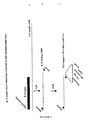
- a sequence containing the hIL-10 open reading frame and a truncated 3' UTR is amplified by PCR using oligonuleotides hIL-10-5'-BanxHI and hIL-10-3'-EcoRI ( Figure 5(B) : transformed plants comprising this contruct are denoted "E” in Figure 7 ).
- the 5' oligonucleotide is designed with a BamHI site at the 5' end, and the 3' oligo is designed with an EcoRI site at the 5' end.
- the endoplasmic reticulum (ER) retention signal To maximize protein accumulation in the plant cell, the endoplasmic reticulum (ER) retention signal. KDEL (Schouten et al., 1996), is added to the 3' end of hIL-10 coding sequence; transformed plants comprising this contruct are denoted "G” in Figure 7 ). A His tag is also added before the KDEL signal to facilitate purification of the transgenic protein (see Figure 5 (C) , and SEQ ID NO:12, nucleotides 544-630). A thrombin recognition sequence is inserted immediately preceding the His tag that allows the cleavage of the His tag and the KDEL peptides. This third construct encodes a preprotein of 197 amino acids.
- a single oligonucleotide is used to fuse these sequences to the end of hIL-10 reading frame (see Figures 5 and 6 ).
- This oligonucleotide is used in conjunction with oligonucleotide hIL-10-5'-BamHI in a PCR to generate the fragment which was then cloned both in pBluescript and in pCaMter X.
- IL-10 IL-10 gene constructs into pCaMter X orientes the gene between the double CaMS double 35S promoter (Kay et al., 1987) and the NOS (Nopaline synthase) polyadenylation sequence (Frisch et al., 1995).
- the plant recombinant IL-10 (prIL-10) encoded by the native transgene constructs was identical to the native human IL-10. After purification and thrombin cleavage, the prIL-10 encoded by the tagged construct differs in only its two terminal amino acids from the native hIL-10..
- Gene constructs are transformed into N . tabacum cv. 81 V9-4 low alkaloid tobacco strains according to the method described by Miki et al. (1998).
- Transformed and regenerated plants are initially selected for kanamycin resistance.
- Regenerated plants are analyzed for expression of the IL10 protein by solid phase sandwich Enzyme-Linked ImmunoSorbent Assay (ELISA). Briefly, the JES3-9D7 anti-IL-10 mAB (PharMingen) is used as a capture antibody and is paired with the biotinylated JES3-12G8 anti-IL-10 mAB (PharMingen) as the detecting antibody. Recombinant human IL-10 (PharMingen) is used as standard.
- Total soluble protein extracts are prepared from 1 gram of young leaf tissue by homogenizing the tissue in 1 ml of a buffer containing phosphate buffered saline-Tween (PBS-T), 2% polyvinylpolypyrrolidone (PVPP), 1mM ethylenediaminetetraacetic acid (EDTA), 1 mM phenylmethyl sulfonyl fluoride (PMSF) and 1 ⁇ /ml Leupeptin.
- PBS-T phosphate buffered saline-Tween
- PVPP polyvinylpolypyrrolidone
- EDTA ethylenediaminetetraacetic acid
- PMSF phenylmethyl sulfonyl fluoride
- the homogenate is then collected in a tube and spun at 10,000 g for 15 min in a refrigerated centrifuge. The supernatant is collected and used directly in the ELISA.
- the results are presented in Figure 7 .
- transgenic plants are regenerated from the native construct containing only a short stretch of 3' UTR (called E6 and E 15 in Figure 7 ), and nineteen plants are regenerated from the native construct containing the entire 3' UTR (called F10 in Figure 7 ). All of those and the first two plants regenerated from the construct containing the His tag and KDEL ER retention signal (called G7 in Figure 7 ) are tested for presence of IL-10 protein by ELISA.
- MHC class II proteins Surface expression of MHC class II proteins is determined on human lymphocytes activated by either PHA or ConA in the presence of increasing concentrations of IL-10. And compared to control plant extracts.
- Peripheral blood lymphocytes are stimulated with LPS (1-10 ⁇ /ml) for 24-48 hours, and levels of cytokines determined by ELISA or bioassay. Inhibition is determined as well, at the RNA level, by Northern blot analysis.
- IL-10 is beneficial in prevention of lethal endotoxemia. Following appropriate approval the effect of IL-10 purified from plant extract on endotoxic injury in BALB/c mice is tested. E.coli is administered interperitoneally or intravenously in the presence of various amounts of recombinant munne IL 10. Plant extract is given to mice orally in addition to purified IL-10 from plants given intravenously. Outcomes are determined by survival of mice, which is essentially zero percent in untreated mice. Appropriate controls include PBS treated mice as well as mice given standard animal chow.
- IL-10 deficient mice develop bowel inflammation and lesions resembling inflammatory bowel disease, which is improved by systemic IL-10.
- transgenic plant material is administered to IL-10 null mice daily from age 4 weeks and mice are assessed for the presence of bowel lesions from age 8 to 30 weeks by weight gain and histology of tissue.
- Example 4 Alkaloid levels in leaf tissue of the non-food bioreactor
- the tissue was then lyophillized and tobacco alkaloid concentrations in the tissue determined by gas chromatography.
- approximately 1 gram of lyophilized tobacco tissue was ground to pass a 20 mesh screen and was then extracted with dichloromethane and aqueous sodium hydroxide by shaking for 10 min on a wrist action shaker.
- the dichloromethane layer was filtered and collected for alkaloid analysis.
- the internal standard method was used with anethole being that standard. All gas chromatographic analyses were performed on an Hewlett Packard 5890 series II using a DB5 60m x.25mm i.d. column with splitless injection and a 2 ⁇ l sample volume.
Landscapes
- Health & Medical Sciences (AREA)
- Genetics & Genomics (AREA)
- Life Sciences & Earth Sciences (AREA)
- Engineering & Computer Science (AREA)
- Biotechnology (AREA)
- Molecular Biology (AREA)
- Chemical & Material Sciences (AREA)
- Wood Science & Technology (AREA)
- Zoology (AREA)
- Biomedical Technology (AREA)
- General Engineering & Computer Science (AREA)
- Organic Chemistry (AREA)
- Bioinformatics & Cheminformatics (AREA)
- General Health & Medical Sciences (AREA)
- Physics & Mathematics (AREA)
- Microbiology (AREA)
- Cell Biology (AREA)
- Biochemistry (AREA)
- Biophysics (AREA)
- Plant Pathology (AREA)
- Nutrition Science (AREA)
- Medicinal Chemistry (AREA)
- Pharmacology & Pharmacy (AREA)
- Breeding Of Plants And Reproduction By Means Of Culturing (AREA)
- Preparation Of Compounds By Using Micro-Organisms (AREA)
- Peptides Or Proteins (AREA)
- Coloring Foods And Improving Nutritive Qualities (AREA)
- Fertilizers (AREA)
Claims (20)
- Procédé de préparation d'IL-10 pour l'administration orale comprenant :i) transformer une plante cultivée non alimentaire, caractérisée en ce qu'elle est non toxique, n'entraîne pas d'accoutumance et est de goût agréable, avec un vecteur contenant un acide nucléique codant IL-10 humaine lié de manière fonctionnelle à des régions régulatrices en 5' et 3' ;ii) sélectionner des plantes cultivées non alimentaires qui expriment IL-10 humaine pour obtenir des plantes cultivées non alimentaires transformées ;iii) cultiver et récolter lesdites plantes cultivées non alimentaires transformées ; etiv) obtenir un tissu végétal comprenant IL-10 humaine à partir desdites plantes cultivées non alimentaires transformées.
- Procédé selon la revendication 1 où ledit acide nucléique est optimisé pour l'usage des codons.
- Procédé selon la revendication 1 ou la revendication 2 où ladite plante non alimentaire est caractérisée en ce qu'elle a un bas niveau d'alcaloïdes.
- Procédé selon la revendication 3 où ladite plante cultivée non alimentaire est une plante de type tabac caractérisée en ce qu'elle a un bas niveau de nicotine.
- Procédé selon la revendication 4 où, dans ladite étape de transformation, ladite région régulatrice en 5' est choisie dans le groupe consistant en les promoteurs ubiquitaires et les promoteurs spécifiques de tissus.
- Procédé selon la revendication 5 où, dans ladite étape de transformation, ledit acide nucléique inclut un motif de rétention du réticulum endoplasmique.
- Procédé selon la revendication 6 où ledit acide nucléique inclut une séquence signal végétale.
- Procédé selon la revendication 1 ou la revendication 2 où ledit tissu végétal comprenant IL-10 obtenu dans ladite étape d'obtention (étape iv) est destiné à l'administration orale à un animal.
- Procédé de préparation d'IL-10 comprenant l'extraction d'IL-10 desdites plantes cultivées non alimentaires transformées selon la revendication 1
ou la revendication 2. - Composition de protéine préparée par le procédé selon la revendication 1 ou la revendication 2 comprenant IL-10 et des composants végétaux.
- Composition de protéine selon la revendication 10 où la culture non alimentaire est le tabac.
- Composition de protéine selon la revendication 10 où le tissu végétal est une feuille.
- Composition de protéine préparée par le procédé selon la revendication 9 comprenant IL-10 et des composants végétaux solubles.
- Procédé selon la revendication 1 où, dans ladite étape de transformation, ledit vecteur comprend aussi des séquences qui augmentent l'expression de ladite IL-10.
- Procédé selon la revendication 1 où, dans ladite étape de transformation, ledit vecteur code un marqueur d'affinité.
- Procédé selon la revendication 1 où ledit vecteur code aussi un site de clivage protéolytique.
- Procédé selon la revendication 1 où ladite étape d'obtention comprend l'extraction d'IL-10 de ladite plante transformée pour produire un extrait brut.
- Procédé selon la revendication 17 où ladite étape d'obtention comprend l'extraction d'IL-10 de ladite plante transformée et la purification partielle de ladite IL-10.
- Procédé selon la revendication 4 où ladite plante de type tabac comprend de 0,2 % à 20 % d'alcaloïdes totaux de Delgold.
- Utilisation de la composition de protéine selon la revendication 10
ou la revendication 13 dans la préparation d'un médicament pour le traitement d'un trouble médical chez un patient, où le trouble médical est la maladie de Crohn, l'arthrite induite par le collagène, le diabète, les affections liées à la coagulation sanguine, les affections médicales nécessitant la stimulation de cellules souches en monocytes/macrophages, les infections virales ou la régulation de réponses immunitaires.
Applications Claiming Priority (3)
| Application Number | Priority Date | Filing Date | Title |
|---|---|---|---|
| US10205098A | 1998-06-22 | 1998-06-22 | |
| US102050 | 1998-06-22 | ||
| PCT/CA1999/000577 WO1999067401A2 (fr) | 1998-06-22 | 1999-06-21 | Bioreacteur de plantes cultivees non alimentaires |
Publications (3)
| Publication Number | Publication Date |
|---|---|
| EP1090133A2 EP1090133A2 (fr) | 2001-04-11 |
| EP1090133B1 true EP1090133B1 (fr) | 2009-08-12 |
| EP1090133B8 EP1090133B8 (fr) | 2009-11-25 |
Family
ID=22287857
Family Applications (1)
| Application Number | Title | Priority Date | Filing Date |
|---|---|---|---|
| EP99926204A Expired - Lifetime EP1090133B8 (fr) | 1998-06-22 | 1999-06-21 | Production de il-10 dans un bioreacteur de plantes cultivees non alimentaires |
Country Status (6)
| Country | Link |
|---|---|
| EP (1) | EP1090133B8 (fr) |
| AT (1) | ATE439446T1 (fr) |
| AU (1) | AU4355099A (fr) |
| DE (1) | DE69941261D1 (fr) |
| ES (1) | ES2336861T3 (fr) |
| WO (1) | WO1999067401A2 (fr) |
Families Citing this family (14)
| Publication number | Priority date | Publication date | Assignee | Title |
|---|---|---|---|---|
| US7361331B2 (en) * | 1996-10-18 | 2008-04-22 | Her Majesty The Queen In Right Of Canada, As Represented By The Minister Of Agriculture And Agri-Food | Plant bioreactors |
| GB2364705A (en) * | 2000-07-14 | 2002-02-06 | Icgeb | Fusion protein expression in plastids |
| WO2002096923A1 (fr) | 2001-05-30 | 2002-12-05 | Chromos Molecular Systems, Inc. | Chromosomes artificiels de plantes, utilisation de ces derniers et procedes de preparation de chromosomes artificiels de plantes |
| US7329798B2 (en) | 2002-06-28 | 2008-02-12 | University Of Guelph | Harvest-inducible regulatory elements and methods of using same |
| CA2490781A1 (fr) | 2002-06-28 | 2004-01-08 | University Of Guelph | Nouveaux genes inductibles issus de la luzerne et procede d'utilisation de ces genes |
| US7951557B2 (en) | 2003-04-27 | 2011-05-31 | Protalix Ltd. | Human lysosomal proteins from plant cell culture |
| AU2012241058B2 (en) * | 2005-07-18 | 2014-04-17 | Protalix Ltd. | Mucosal or Enteral Administration of Biologically Active Macromolecules |
| EP2484768A3 (fr) * | 2005-07-18 | 2012-11-21 | Protalix Ltd. | Administration mucosale ou enterale de macromolecules biologiquement actives |
| US9194011B2 (en) | 2009-11-17 | 2015-11-24 | Protalix Ltd. | Stabilized alpha-galactosidase and uses thereof |
| WO2012045334A1 (fr) | 2010-10-05 | 2012-04-12 | Synthon Bv | Protéines de fusion de l'il‑10 biologiquement actives |
| US9603907B2 (en) | 2012-02-01 | 2017-03-28 | Protalix Ltd. | Dry powder formulations of dNase I |
| US20160017021A1 (en) | 2013-03-06 | 2016-01-21 | Protalix Ltd. | TNF alpha INHIBITOR POLYPEPTIDES, POLYNUCLEOTIDES ENCODING SAME, CELLS EXPRESSING SAME AND METHODS OF PRODUCING SAME |
| AU2014224174B2 (en) | 2013-03-06 | 2018-08-30 | Hadasit Medical Research Services And Development Ltd. | Use of plant cells expressing a TNFalpha polypeptide inhibitor in therapy |
| US10000551B2 (en) | 2014-09-11 | 2018-06-19 | Protalix Ltd. | Chimeric polypeptides, polynucleotides encoding same, cells expressing same and methods of producing same |
Family Cites Families (2)
| Publication number | Priority date | Publication date | Assignee | Title |
|---|---|---|---|---|
| JPH07503361A (ja) * | 1991-08-01 | 1995-04-13 | バイオソース テクノロジーズ インコーポレイティド | 組み換え植物ウィルス核酸 |
| CA2188220A1 (fr) * | 1996-10-18 | 1998-04-18 | Kimberley Kenward | Bioreacteur pour plantes cultivees non vivrieres |
-
1999
- 1999-06-21 ES ES99926204T patent/ES2336861T3/es not_active Expired - Lifetime
- 1999-06-21 AT AT99926204T patent/ATE439446T1/de not_active IP Right Cessation
- 1999-06-21 EP EP99926204A patent/EP1090133B8/fr not_active Expired - Lifetime
- 1999-06-21 AU AU43550/99A patent/AU4355099A/en not_active Abandoned
- 1999-06-21 DE DE69941261T patent/DE69941261D1/de not_active Expired - Lifetime
- 1999-06-21 WO PCT/CA1999/000577 patent/WO1999067401A2/fr not_active Ceased
Non-Patent Citations (7)
Also Published As
| Publication number | Publication date |
|---|---|
| AU4355099A (en) | 2000-01-10 |
| WO1999067401A3 (fr) | 2000-03-23 |
| ES2336861T3 (es) | 2010-04-16 |
| DE69941261D1 (de) | 2009-09-24 |
| EP1090133B8 (fr) | 2009-11-25 |
| EP1090133A2 (fr) | 2001-04-11 |
| WO1999067401A2 (fr) | 1999-12-29 |
| ATE439446T1 (de) | 2009-08-15 |
Similar Documents
| Publication | Publication Date | Title |
|---|---|---|
| US7361331B2 (en) | Plant bioreactors | |
| Menassa et al. | A self-contained system for the field production of plant recombinant interleukin-10 | |
| EP1090133B1 (fr) | Production de il-10 dans un bioreacteur de plantes cultivees non alimentaires | |
| DE60221051T2 (de) | Herstellung von peptiden und proteinen durch anhäufung in vom endoplasmatischen reticulum abgeleiteten proteinkörpern | |
| EP2441840B1 (fr) | Administration mucosale ou enterale de macromolecules biologiquement actives | |
| HUP0103616A2 (hu) | Gyógyászatilag hatásos fehérjék növényekben | |
| US20040093643A1 (en) | Production of pharmaceutically active proteins in sprouted seedlings | |
| CA2642138A1 (fr) | Production d'acides nucleiques et de polypeptides etrangers dans des systemes vegetaux | |
| US20110070609A1 (en) | Production of Foreign Nucleic Acids and Polypeptides in Sprout Systems | |
| US20030093832A1 (en) | Methods for the production of multimeric immunoglobulins, and related compositions | |
| US20020038470A1 (en) | Non-food crop plant bioreactor | |
| US20220195449A1 (en) | Methods to increase antigenicity of membrane-bound polypeptides produced in plants | |
| TW201139672A (en) | Immunization of fish with plant-expressed recombinant proteins | |
| CA2188220A1 (fr) | Bioreacteur pour plantes cultivees non vivrieres | |
| US7554006B2 (en) | Commercial production of insulin and insulin-like protein in plants | |
| CA2427574A1 (fr) | Bioreacteur pour plante | |
| US20050050602A1 (en) | Production of GM-CSF in plants | |
| US20040093644A1 (en) | Recombinant subunit proteins from porcine parvovirus produced in plants | |
| WO2006030492A1 (fr) | Plante et organe de stockage de plante ayant un derive du glp-1 accumule dans ceux-ci et procede de production de ceux-ci | |
| CA2695809A1 (fr) | Bioreacteur vegetal pour la production de cytokine interleukine-24 | |
| AU2012241058B2 (en) | Mucosal or Enteral Administration of Biologically Active Macromolecules | |
| HK1169670A (en) | Mucosal or enteral administration of biologically active macromolecules | |
| HK1174062A (en) | Mucosal or enteral administration of biologically active macromolecules | |
| CA2451001A1 (fr) | Production du gm-csf dans les plantes |
Legal Events
| Date | Code | Title | Description |
|---|---|---|---|
| PUAI | Public reference made under article 153(3) epc to a published international application that has entered the european phase |
Free format text: ORIGINAL CODE: 0009012 |
|
| 17P | Request for examination filed |
Effective date: 20010119 |
|
| AK | Designated contracting states |
Kind code of ref document: A2 Designated state(s): AT BE CH CY DE DK ES FI FR GB GR IE IT LI LU MC NL PT SE |
|
| 17Q | First examination report despatched |
Effective date: 20030415 |
|
| RTI1 | Title (correction) |
Free format text: PRODUCTION OF IL-10 IN NON-FOOD CROP PLANT BIOREACTOR |
|
| GRAP | Despatch of communication of intention to grant a patent |
Free format text: ORIGINAL CODE: EPIDOSNIGR1 |
|
| RIC1 | Information provided on ipc code assigned before grant |
Ipc: A61K 38/17 20060101ALI20080423BHEP Ipc: C12N 15/12 20060101ALI20080423BHEP Ipc: C12N 15/82 20060101AFI20080423BHEP |
|
| GRAS | Grant fee paid |
Free format text: ORIGINAL CODE: EPIDOSNIGR3 |
|
| RIN1 | Information on inventor provided before grant (corrected) |
Inventor name: KENWARD, KIMBERLEY, D. Inventor name: DELOVITCH, TERRY Inventor name: JEVNIKAR, TONY Inventor name: MENASSA, RIMA Inventor name: DAVIES, PETER, L. Inventor name: BRANDLE, JIM |
|
| RAP1 | Party data changed (applicant data changed or rights of an application transferred) |
Owner name: LONDON HEALTH SCIENCES CENTER Owner name: THE JOHN P. ROBARTS RESEARCH INSTITUTE Owner name: QUEEN'S UNIVERSITY Owner name: HER MAJESTY THE QUEEN IN RIGHT OF CANADA, A |
|
| GRAA | (expected) grant |
Free format text: ORIGINAL CODE: 0009210 |
|
| AK | Designated contracting states |
Kind code of ref document: B1 Designated state(s): AT BE CH CY DE DK ES FI FR GB GR IE IT LI LU MC NL PT SE |
|
| REG | Reference to a national code |
Ref country code: GB Ref legal event code: FG4D |
|
| REG | Reference to a national code |
Ref country code: CH Ref legal event code: EP |
|
| REG | Reference to a national code |
Ref country code: IE Ref legal event code: FG4D |
|
| REF | Corresponds to: |
Ref document number: 69941261 Country of ref document: DE Date of ref document: 20090924 Kind code of ref document: P |
|
| RAP2 | Party data changed (patent owner data changed or rights of a patent transferred) |
Owner name: LONDON HEALTH SCIENCES CENTER Owner name: THE JOHN P. ROBARTS RESEARCH INSTITUTE Owner name: QUEEN'S UNIVERSITY Owner name: HER MAJESTY THE QUEEN IN RIGHT OF CANADA, A |
|
| NLT2 | Nl: modifications (of names), taken from the european patent patent bulletin |
Owner name: HER MAJESTY THE QUEEN IN RIGHT OF CANADA, EN QUEEN Effective date: 20091028 |
|
| PG25 | Lapsed in a contracting state [announced via postgrant information from national office to epo] |
Ref country code: SE Free format text: LAPSE BECAUSE OF FAILURE TO SUBMIT A TRANSLATION OF THE DESCRIPTION OR TO PAY THE FEE WITHIN THE PRESCRIBED TIME-LIMIT Effective date: 20090812 Ref country code: FI Free format text: LAPSE BECAUSE OF FAILURE TO SUBMIT A TRANSLATION OF THE DESCRIPTION OR TO PAY THE FEE WITHIN THE PRESCRIBED TIME-LIMIT Effective date: 20090812 Ref country code: AT Free format text: LAPSE BECAUSE OF FAILURE TO SUBMIT A TRANSLATION OF THE DESCRIPTION OR TO PAY THE FEE WITHIN THE PRESCRIBED TIME-LIMIT Effective date: 20090812 |
|
| PG25 | Lapsed in a contracting state [announced via postgrant information from national office to epo] |
Ref country code: PT Free format text: LAPSE BECAUSE OF FAILURE TO SUBMIT A TRANSLATION OF THE DESCRIPTION OR TO PAY THE FEE WITHIN THE PRESCRIBED TIME-LIMIT Effective date: 20091212 |
|
| REG | Reference to a national code |
Ref country code: ES Ref legal event code: FG2A Ref document number: 2336861 Country of ref document: ES Kind code of ref document: T3 |
|
| PG25 | Lapsed in a contracting state [announced via postgrant information from national office to epo] |
Ref country code: DK Free format text: LAPSE BECAUSE OF FAILURE TO SUBMIT A TRANSLATION OF THE DESCRIPTION OR TO PAY THE FEE WITHIN THE PRESCRIBED TIME-LIMIT Effective date: 20090812 |
|
| RAP2 | Party data changed (patent owner data changed or rights of a patent transferred) |
Owner name: HER MAJESTY THE QUEEN IN RIGHT OF CANADA, A |
|
| PLBE | No opposition filed within time limit |
Free format text: ORIGINAL CODE: 0009261 |
|
| STAA | Information on the status of an ep patent application or granted ep patent |
Free format text: STATUS: NO OPPOSITION FILED WITHIN TIME LIMIT |
|
| PG25 | Lapsed in a contracting state [announced via postgrant information from national office to epo] |
Ref country code: BE Free format text: LAPSE BECAUSE OF FAILURE TO SUBMIT A TRANSLATION OF THE DESCRIPTION OR TO PAY THE FEE WITHIN THE PRESCRIBED TIME-LIMIT Effective date: 20090812 |
|
| 26N | No opposition filed |
Effective date: 20100517 |
|
| PGFP | Annual fee paid to national office [announced via postgrant information from national office to epo] |
Ref country code: FR Payment date: 20100609 Year of fee payment: 12 Ref country code: ES Payment date: 20100526 Year of fee payment: 12 |
|
| PGFP | Annual fee paid to national office [announced via postgrant information from national office to epo] |
Ref country code: NL Payment date: 20100527 Year of fee payment: 12 Ref country code: IT Payment date: 20100531 Year of fee payment: 12 |
|
| PG25 | Lapsed in a contracting state [announced via postgrant information from national office to epo] |
Ref country code: GR Free format text: LAPSE BECAUSE OF FAILURE TO SUBMIT A TRANSLATION OF THE DESCRIPTION OR TO PAY THE FEE WITHIN THE PRESCRIBED TIME-LIMIT Effective date: 20091113 |
|
| PGFP | Annual fee paid to national office [announced via postgrant information from national office to epo] |
Ref country code: GB Payment date: 20100528 Year of fee payment: 12 Ref country code: DE Payment date: 20100531 Year of fee payment: 12 |
|
| PG25 | Lapsed in a contracting state [announced via postgrant information from national office to epo] |
Ref country code: MC Free format text: LAPSE BECAUSE OF NON-PAYMENT OF DUE FEES Effective date: 20100630 |
|
| REG | Reference to a national code |
Ref country code: CH Ref legal event code: PL |
|
| PG25 | Lapsed in a contracting state [announced via postgrant information from national office to epo] |
Ref country code: IE Free format text: LAPSE BECAUSE OF NON-PAYMENT OF DUE FEES Effective date: 20100621 Ref country code: LI Free format text: LAPSE BECAUSE OF NON-PAYMENT OF DUE FEES Effective date: 20100630 Ref country code: CH Free format text: LAPSE BECAUSE OF NON-PAYMENT OF DUE FEES Effective date: 20100630 |
|
| REG | Reference to a national code |
Ref country code: NL Ref legal event code: SD Effective date: 20110406 |
|
| REG | Reference to a national code |
Ref country code: NL Ref legal event code: V1 Effective date: 20120101 |
|
| GBPC | Gb: european patent ceased through non-payment of renewal fee |
Effective date: 20110621 |
|
| PG25 | Lapsed in a contracting state [announced via postgrant information from national office to epo] |
Ref country code: IT Free format text: LAPSE BECAUSE OF NON-PAYMENT OF DUE FEES Effective date: 20110621 |
|
| REG | Reference to a national code |
Ref country code: FR Ref legal event code: ST Effective date: 20120229 |
|
| REG | Reference to a national code |
Ref country code: DE Ref legal event code: R119 Ref document number: 69941261 Country of ref document: DE Effective date: 20120103 |
|
| PG25 | Lapsed in a contracting state [announced via postgrant information from national office to epo] |
Ref country code: DE Free format text: LAPSE BECAUSE OF NON-PAYMENT OF DUE FEES Effective date: 20120103 Ref country code: FR Free format text: LAPSE BECAUSE OF NON-PAYMENT OF DUE FEES Effective date: 20110630 |
|
| PG25 | Lapsed in a contracting state [announced via postgrant information from national office to epo] |
Ref country code: NL Free format text: LAPSE BECAUSE OF NON-PAYMENT OF DUE FEES Effective date: 20120101 |
|
| PG25 | Lapsed in a contracting state [announced via postgrant information from national office to epo] |
Ref country code: GB Free format text: LAPSE BECAUSE OF NON-PAYMENT OF DUE FEES Effective date: 20110621 |
|
| REG | Reference to a national code |
Ref country code: ES Ref legal event code: FD2A Effective date: 20120717 |
|
| PG25 | Lapsed in a contracting state [announced via postgrant information from national office to epo] |
Ref country code: ES Free format text: LAPSE BECAUSE OF NON-PAYMENT OF DUE FEES Effective date: 20110622 |
|
| PG25 | Lapsed in a contracting state [announced via postgrant information from national office to epo] |
Ref country code: CY Free format text: LAPSE BECAUSE OF FAILURE TO SUBMIT A TRANSLATION OF THE DESCRIPTION OR TO PAY THE FEE WITHIN THE PRESCRIBED TIME-LIMIT Effective date: 20090812 |
|
| PG25 | Lapsed in a contracting state [announced via postgrant information from national office to epo] |
Ref country code: LU Free format text: LAPSE BECAUSE OF NON-PAYMENT OF DUE FEES Effective date: 20100621 |