EP1090630A1 - Agents de normalisation pour la peau - Google Patents
Agents de normalisation pour la peau Download PDFInfo
- Publication number
- EP1090630A1 EP1090630A1 EP99907899A EP99907899A EP1090630A1 EP 1090630 A1 EP1090630 A1 EP 1090630A1 EP 99907899 A EP99907899 A EP 99907899A EP 99907899 A EP99907899 A EP 99907899A EP 1090630 A1 EP1090630 A1 EP 1090630A1
- Authority
- EP
- European Patent Office
- Prior art keywords
- skin
- group
- conditioner according
- rice
- skin conditioner
- Prior art date
- Legal status (The legal status is an assumption and is not a legal conclusion. Google has not performed a legal analysis and makes no representation as to the accuracy of the status listed.)
- Withdrawn
Links
- 0 CNC(*)(*(*)*)*(*)C* Chemical compound CNC(*)(*(*)*)*(*)C* 0.000 description 1
Images

















Classifications
-
- A—HUMAN NECESSITIES
- A61—MEDICAL OR VETERINARY SCIENCE; HYGIENE
- A61K—PREPARATIONS FOR MEDICAL, DENTAL OR TOILETRY PURPOSES
- A61K8/00—Cosmetics or similar toiletry preparations
- A61K8/18—Cosmetics or similar toiletry preparations characterised by the composition
- A61K8/30—Cosmetics or similar toiletry preparations characterised by the composition containing organic compounds
- A61K8/40—Cosmetics or similar toiletry preparations characterised by the composition containing organic compounds containing nitrogen
-
- A—HUMAN NECESSITIES
- A61—MEDICAL OR VETERINARY SCIENCE; HYGIENE
- A61K—PREPARATIONS FOR MEDICAL, DENTAL OR TOILETRY PURPOSES
- A61K8/00—Cosmetics or similar toiletry preparations
- A61K8/18—Cosmetics or similar toiletry preparations characterised by the composition
- A61K8/30—Cosmetics or similar toiletry preparations characterised by the composition containing organic compounds
- A61K8/40—Cosmetics or similar toiletry preparations characterised by the composition containing organic compounds containing nitrogen
- A61K8/41—Amines
-
- A—HUMAN NECESSITIES
- A61—MEDICAL OR VETERINARY SCIENCE; HYGIENE
- A61K—PREPARATIONS FOR MEDICAL, DENTAL OR TOILETRY PURPOSES
- A61K8/00—Cosmetics or similar toiletry preparations
- A61K8/18—Cosmetics or similar toiletry preparations characterised by the composition
- A61K8/30—Cosmetics or similar toiletry preparations characterised by the composition containing organic compounds
- A61K8/40—Cosmetics or similar toiletry preparations characterised by the composition containing organic compounds containing nitrogen
- A61K8/44—Aminocarboxylic acids or derivatives thereof, e.g. aminocarboxylic acids containing sulfur; Salts; Esters or N-acylated derivatives thereof
-
- A—HUMAN NECESSITIES
- A61—MEDICAL OR VETERINARY SCIENCE; HYGIENE
- A61P—SPECIFIC THERAPEUTIC ACTIVITY OF CHEMICAL COMPOUNDS OR MEDICINAL PREPARATIONS
- A61P17/00—Drugs for dermatological disorders
- A61P17/16—Emollients or protectives, e.g. against radiation
-
- A—HUMAN NECESSITIES
- A61—MEDICAL OR VETERINARY SCIENCE; HYGIENE
- A61Q—SPECIFIC USE OF COSMETICS OR SIMILAR TOILETRY PREPARATIONS
- A61Q17/00—Barrier preparations; Preparations brought into direct contact with the skin for affording protection against external influences, e.g. sunlight, X-rays or other harmful rays, corrosive materials, bacteria or insect stings
-
- A—HUMAN NECESSITIES
- A61—MEDICAL OR VETERINARY SCIENCE; HYGIENE
- A61Q—SPECIFIC USE OF COSMETICS OR SIMILAR TOILETRY PREPARATIONS
- A61Q19/00—Preparations for care of the skin
Definitions
- the present invention relates to a skin conditioner that can be used in a broad range of fields including cosmetics, quasi-drugs and pharmaceuticals.
- oils such as Vaseline have long been used for treatment of symptoms and diseases caused by drying of the skin, these are also merely carried on the surface of the skin, thereby forcing the affected person to wait for the symptoms or disease to heal naturally.
- oils such as Vaseline have long been used for treatment of symptoms and diseases caused by drying of the skin, these are also merely carried on the surface of the skin, thereby forcing the affected person to wait for the symptoms or disease to heal naturally.
- typical drugs since the effects of typical drugs only act on the particular symptom and do not promote the health of the skin itself, in environments like those found at present, if confronted with the same cause after use is discontinued, there are many cases in which the symptom or disease recurs.
- drugs also constantly present the risk of being accompanied by adverse side effects.
- the object of the present invention is to condition the corneal layer, condition the entire epidermis and finally condition all skin tissue including the dermis.
- the invention of claim 1 provides a skin conditioner containing one kind or two or more kinds of a compound represented by the following general formula (1):
- Lower alkyl groups in the present invention are straight or branched alkyl groups having 1 to 10 carbon atoms, and preferably 1 to 5 carbon atoms, examples of which include a methyl group and an ethyl group.
- Lower alkoxy groups are those which are derived from the above-mentioned lower alkyl groups, examples of which include a methoxy group and ethoxy group.
- Aryl groups having 6 to 18 carbon atoms, and preferably 6 to 10 carbon atoms, examples of which include a phenyl group and ⁇ -naphthyl group.
- Aralkyl groups are those in which an aryl group is substituted for the above-mentioned lower alkyl group, examples of which include a benzyl group and phenythyl group.
- these groups may optionally be substituted with a substituent, while preferable examples of substituent include a hydroxyl group, amino group and carboxyl group.
- the invention of claim 2 provides a skin conditioner wherein the compound represented by general formula (1) is L-arginine.
- the invention of claim 3 provides a skin conditioner wherein the compound represented by general formula (1) is ethanolamine.
- the invention of claim 4 provides a skin conditioner wherein the compound represented by general formula (1) is a compound selected from the group consisting of 2-methoxyethylamine, O-phosphorylethanolamine, 2-ethylaminoethanol, diethanolamine, 2-dimethylaminoethanol, choline, 2-amino-2-hydroxymethyl-1,3-propanediol, noradrenalin, phenethylamine, ethylenediamine, taurine, phosphatidylethanolamine, N-(2-hydroxyethyl)acetamide, 2-(methylamino)ethanol, 2-anilinoethanol, 2-(benzylamino)ethanol, 3-amino-1-propanol, 2-amino-1-butanol, putrescine, DL-pyroglutamic acid and triethanolamine.
- the compound represented by general formula (1) is a compound selected from the group consisting of 2-methoxyethylamine, O-phosphorylethanolamine, 2-ethylaminoethanol, diethanol
- a collagen production recovery test was conducted on damaged fibroblasts.
- Fibroblasts are cells that compose the dermis which is on the inside of the skin epidermis. Collagen produced by fibroblasts accounts for approximately 70% of the weight of the dermis, and gives the skin tightness, elasticity and flexibility. In addition, when the skin becomes injured and so forth, it also fulfills the role of the regenerative function of the skin. As the skin ages, the amount of collagen decreases dramatically. Consequently, the skin loses its tightness and elasticity, and wounds are known to heal more slowly. In addition, even in the absence of aging of the skin, the ability to produce collagen decreases due to various causes such as routine exposure to ultraviolet rays and radiation, and the generation of active oxygen.
- the mixture was cooled to 20°C followed by the addition of 200 g of malted rice (Aspergillus oryzae) and pre-cultured Saccharomyces cereviciae culture broth, and fermenting at 20-25°C for 20 days.
- malted rice Aspergillus oryzae
- hypoxanthine at a final concentration of 50 ⁇ M and 34.5 mU/dish of xanthine oxidase were added to the culture broth to generate active oxygen and lower the collagen production ability of the cells.
- Measurement of collagen production ability of a confluent in the steady state was performed according to the method of Webster et al. based on the uptake of 3 H-proline into the produced collagen. Furthermore, the samples were mixed with the cells to a final concentration of 3.3% (taking 1% to be 100% for a 1% aqueous solution) and after incubating at 37°C for 24 hours and 5% CO 2 , the 3 H activity taken up into the collagen in the cells was measured.
- proline is a main component of the amino acids that compose collagen
- fibroblasts are cultured in a medium containing 3 H-proline, and the 3 H activity taken up into collagen in the cells is measured. Units are in d.p.m., and represent the number of daltons of radioactivity released per minute.
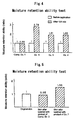
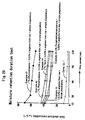
- Moisture retention refers to the peak of the amount of skin moisture (skin electrical conductivity) 15 minutes after application, while moisture retention duration refers to the integral value of a curve indicated by the amount of skin moisture (skin electrical conductivity) from 30 minutes to 120 minutes after application.
- Ethanolamine (Nakarai Tesuku) 1.00 g 95% Ethanol 2.00 mL Parabene 0.18 g Purified soy bean lecithin 0.05 g
- Example 3 90.00 mL 95% Ethanol 2.00 mL Parabene 0.18 g Purified soy bean lecithin 0.05 g
- Test Method Each sample was applied to the side of the forearm of the panelists (4 x 4 cm 2 ) followed by measurement of epidermal keratin moisture content at 15, 30, 60, 90 and 120 minutes after application.
- Keratin contains salts, amino acids and other electrolytes in addition to moisture. Consequently, although current does not flow through pure water, since electrolytes are contained in keratin in the skin, current flows corresponding to the amount of moisture present if moisture is present.
- the parameter that is actually measured is electrical conductivity, which is the inverse of the resistance that composes impedance.
- a moisture retention ability test was conducted as an indicator of the state of skin health.
- Moisture retention ability is determined in the manner indicated below.
- Moisture retention ability (%) [Keratin moisture content 30-120 seconds after moisture loading/Keratin moisture content immediately after moisture loading] x 100
- moisture retention ability was expressed as the ratio obtained when the moisture retention ability before washing (%) is given a value of 1.
- Test Apparatus Same as Test Example 2.
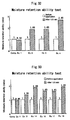
- Example 6 Although there was no increase whatsoever in moisture retention ability, which represents the health of the skin, observed for Comparative Example 1, the moisture retention ability 2 hours after application in Examples 4, 5 and 6 increased considerably as compared with the moisture retention ability before application. When the moisture retention ability before application is taken to have a value of 1, although that of Examples 4 and 5 is nearly two times greater, in Example 6, the moisture retention ability increased to nearly three times greater.
- Panelists 6 volunteers with chapped skin
- Test Apparatus Same as Test Example 2.
- Example 6 As shown in Figs. 6 and 7, although the peaks increased and moisture retention effects were remarkable after 15 minutes for Examples 4, 5 and 6, moisture retention continued beyond 30 minutes and lasted for 2 hours. Although this continuation of moisture retention was also observed in Examples 4 and 5, the duration of moisture retention was even greater in Example 6 that contained both L-arginine and ethanolamine.
- 1,3-butyleneglycol 6.00 g Concentrated glycerin 6.00 g Methylpolysiloxane 6.00 g Stearic acid 3.00 g Cetanol 3.00 g Cetyl 2-ethylhexanoate 6.00 g Squalene 6.00 g Sucrose fatty acid ester 3.00 g Natural vitamin E 0.30 g Sodium casein 1.50 g Disodium edetate 0.03 g Parabene 0.30 g
- Test Method After inducing chapped skin by treating a healthy site of the skin for 30 minutes with 5% SDS, each sample was applied twice per day, and the instantaneous moisture retention ability before application and from 1 day to 2 weeks after application was measured according to the same method as Test Example 3.
- Chapped Skin Induction Method A glass cylinder was placed on the test site and fixed in position with tape. Next, 10 mL of 5% SDS (sodium lauryl sulfate) was poured into the glass cylinder to perform chapped skin treatment for 30 minutes while stirring occasionally. Finally, the SDS was suctioned out of the glass cylinder and the glass cylinder was removed.
- SDS sodium lauryl sulfate
- Test Apparatus Same as Test Example 2.
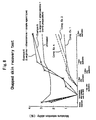
- Examples 6 and 8 were clearly demonstrated to rapidly restore damaged skin and improve the skin to healthy skin to a greater extent than the untreated site.
- the present invention was proven to rapidly restore damaged skin in a short period of time, enable the skin to reach a state that is healthier than its original state, and have effects that improve the skin to its healthiest state.
- the present invention was proven to act on chapped skin itself and condition it, be able to prevent skin diseases caused by chapped skin, and demonstrate chapped skin therapeutic effects.
- a clinical test was conducted on dry eczema, xeroderma and facial dry eczema patients to observe the therapeutic effects on skin diseases produced by skin conditioning, and those effects were evaluated in terms of the severity score of itchiness, sclerosis, cornification, scaling, cracking, erythema, dryness and wrinkles, as well as overall improvement (usefulness) with respect to each disease.
- L-arginine (Nakarai Tesuku) 0.10 g 1,3-butyleneglycol 10.00 g Concentrated glycerin 1.00 g Stearic acid 0.50 g Myristic acid 0.50 g Bleached beeswax 0.50 g Tri-2-ethylhexanoate glycerin 4.80 g Octyldodecylmyristic acid 2.00 g Squalene 1.00 g Sucrose fatty acid ester 0.60 g Xanthane rubber 0.10 g Natural vitamin E 0.10 g Sodium casein 0.30 g Citric acid q.s. Disodium edetate 0.02 g Parabene 0.20 g
- the evaluation items were evaluated according to the following four levels of a severity score as determined by visual examination.
- Example 9 The results for overall improvement (usefulness) are as shown in Fig. 9.
- Example 9 product was used in patients with dry eczema, xeroderma and facial dry eczema, the results demonstrated overall improvement of 100%, a high degree of usefulness was obtained, and Example 9 was recognized to be extremely useful against these diseases.
- Fig. 10 shows the changes in severity scores for itchiness, sclerosis and cornification.
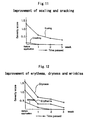
- Fig. 11 shows the changes in severity scores for scaling and cracking.
- Fig. 12 shows the changes in severity scores for erythema, dryness and wrinkles. All effects appeared rapidly, and all symptoms were alleviated considerably after 1 week of use. Favorable improvement effects were also observed after 1 week, and nearly all symptoms had either been alleviated or disappeared after 3 weeks. It should be noted that, there were no adverse side effects observed at all, there were no cases of relapse after use was discontinued, and the patients were completely healed.
- the present invention is able to improve symptoms observed in skin diseases such as itchiness, sclerosis, cornification, scaling, cracking, erythema, dryness and wrinkles through conditioning of the skin.
- a clinical test was conducted on histosis, xeroderma, facial dry eczema and progressive volar keratoderma patients to observe the therapeutic effects on skin diseases produced by skin conditioning, and those effects were evaluated in terms of the severity score of itchiness, sclerosis, cornification, scaling, cracking, erythema, dryness and wrinkles, as well as overall improvement (usefulness) with respect to each disease.
- Example 3 35.00 mL 1,3-butyleneglycol 10.00 g Concentrated glycerin 1.00 g Stearic acid 0.50 g Myristic acid 0.50 g Bleached beeswax 0.50 g Tri-2-ethylhexanoate glycerin 4.80 g Octyldodecylmyristic acid 2.00 g Squalene 1.00 g Sucrose fatty acid ester 0.60 g Xanthane rubber 0.10 g Natural vitamin E 0.10 g Sodium casein 0.30 g Citric acid q.s. Disodium edetate 0.02 g Parabene 0.20 g
- the evaluation items were evaluated according to the following four levels of a severity score as determined by visual examination.
- Example 10 When Example 10 was used in histosis, xeroderma, facial dry eczema and progressive volar keratoderma patients, it demonstrated overall improvement of 94.74%, a high degree of usefulness was obtained, and Example 10 was observed to be extremely useful against these diseases.
- Fig. 14 shows the changes in severity scores for itchiness, sclerosis and cornification
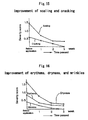
- Fig. 15 shows the changes in severity scores for scaling and cracking
- Fig. 16 shows the changes in severity scores for erythema, dryness and wrinkles. All effects appeared rapidly, and all symptoms were alleviated considerably after 1 week of use. Favorable improvement effects were also observed after 1 week, and nearly all symptoms had either been alleviated or disappeared after 3 weeks. Furthermore, there were no adverse side effects observed at all, there were no cases of relapse after use was discontinued, and the patients were completely healed.
- the present invention is able to improve symptoms observed in skin diseases such as itchiness, sclerosis, cornification, scaling, cracking, erythema, dryness and wrinkles through conditioning of the skin.
- Guinea pigs were irradiated with ultraviolet light, a phlogogenic factor, followed by histological examination of the degree of inflammatory changes in epidermal tissue and dermal tissue to observe the preventive and therapeutic effects on inflammation and photoinflammation.
- the backs of the experimental animals were shaved and hair was removed with a depilatory cream three days before irradiation with ultraviolet light.
- test site was irradiated with ultraviolet light, and application of samples was started immediately after irradiation.
- biopsies were performed with a 6 mm disposable punch on days 7 and 14 after irradiation, the specimens were immersed in 10% neutral formalin solution and fixed followed by preparing tissue sections.
- tissue sections were observed and evaluations were made according to the following five levels of a severity score (inflammation intensity).
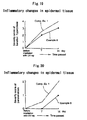
- test results are as shown in Figs. 17, 18, 19 and 20.
- Example 6 of the present invention was clearly demonstrated to have an effect that heals vasodilation in the early stage of the occurrence of inflammation in dermal tissue, and was also observed to not only have a therapeutic effect in the early stage, but also a preventive effect that prevents full-scale onset of inflammation. In addition, it was also clearly shown to rapidly heal cellular infiltration, which is a symptom of inflammation in the dermis. Furthermore, keratin hyperplasia and parakeratosis, which are abnormalities in the epidermis accompanying inflammation, were also observed to be alleviated.
- Panelists 7 persons with atopic skin
- Ethanolamine (Nakarai Tesuku) 1.00 g 95% Ethanol 2.00 mL Parabene 0.18 g Purified soy bean lecithin 0.05 g
- Example 3 90.00 mL 95% Ethanol 2.00 mL Parabene 0.18 g Purified soy bean lecithin 0.05 g
- O-Phosphorylethanolamine (Tokyo Kasei Kogyo) 1.00 g 95% Ethanol 2.00 mL Parabene 0.18 g Purified soy bean lecithin 0.05 g
- Noradrenaline (Nakarai Tesuku) 1.00 g 95% Ethanol 2.00 mL Parabene 0.18 g Purified soy bean lecithin 0.05 g
- Phenethylamine (Kanto Kagaku) 1.00 g 95% Ethanol 2.00 mL Parabene 0.18 g Purified soy bean lecithin 0.05 g
- Ethylenediamine (Nakarai Tesuku) 1.00 g 95% Ethanol 2.00 mL Parabene 0.18 g Purified soy bean lecithin 0.05 g
- Triethanolamine (Mitsui Toatsu Chemicals) 1.00 g 95% Ethanol 2.00 mL Parabene 0.18 g Purified soy bean lecithin 0.05 g
- Example 32 (containing 0.03% L-arginine from rice) 90.00 mL 95% Ethanol 2.00 mL Parabene 0.18 g Purified soy bean lecithin 0.05 g
- Example 32 (containing 0.03% L-arginine from rice) 90.00 mL 2-Methoxyethylamine (Tokyo Kasei Kogyo) 0.90 g 95% Ethanol 2.00 mL Parabene 0.18 g Purified soy bean lecithin 0.05 g
- Example 35 (1% O-Phosphorylethanolamine + rice preparation containing 0.03% L-arginine + simple preparation)
- Example 32 (containing 0.03% L-arginine from rice) 90.00 mL O-Phosphorylethanolamine (Tokyo Kasei Kogyo) 0.90 g 95% Ethanol 2.00 mL Parabene 0.18 g Purified soy bean lecithin 0.05 g
- Example 36 (1% 2-Ethylaminoethanol + rice preparation containing 0.03% L-arginine + simple preparation)
- Example 32 (containing 0.03% L-arginine from rice) 90.00 mL 2-Ethylaminoethanol (Tokyo Kasei Kogyo) 0.90 g 95% Ethanol 2.00 mL Parabene 0.18 g Purified soy bean lecithin 0.05 g
- Example 37 (1% Diethanolamine + rice preparation containing 0.03% L-arginine + simple preparation)
- Example 32 (containing 0.03% L-arginine from rice) 90.00 mL Diethanolamine (Mitsui Toatsu Chemicals) 0.90 g 95% Ethanol 2.00 mL Parabene 0.18 g Purified soy bean lecithin 0.05 g
- Example 38 (1% 2-Dimethylaminoethanol + rice preparation containing 0.03% L-arginine + simple preparation)
- Example 32 (containing 0.03% L-arginine from rice) 90.00 mL 2-Dimethylaminoethanol (Kanto Kagaku) 0.90 g 95% Ethanol 2.00 mL Parabene 0.18 g Purified soy bean lecithin 0.05 g
- Example 39 (1% Choline + rice preparation containing 0.03% L-arginine + simple preparation)
- Example 32 (containing 0.03% L-arginine from rice) 90.00 mL Choline (Nakaral Tesuku) 0.90 g 95% Ethanol 2.00 mL Parabene 0.18 g Purified soy bean lecithin 0.05 g
- Example 40 (1% 2-Amino-2-hydroxymethyl-1,3-propanediol + rice preparation containing 0.03% L-arginine + simple preparation)
- Example 32 (containing 0.03% L-arginine from rice) 90.00 mL 2-Amino-2-hydroxymethyl-1,3-propanediol (Kanto Kagaku) 0.90 g 95% Ethanol 2.00 mL Parabene 0.18 g Purified soy bean lecithin 0.05 g
- Example 41 (1% Noradrenaline + rice preparation containing 0.03% L-arginine + simple preparation)
- Example 32 (containing 0.03% L-arginine from rice) 90.00 mL Noradrenaline (Nakarai Tesuku) 0.90 g 95% Ethanol 2.00 mL Parabene 0.18 g Purified soy bean lecithin 0.05 g
- Example 32 (containing 0.03% L-arginine from rice) 90.00 mL Phenethylamine (Kanto Kagaku) 0.90 g 95% Ethanol 2.00 mL Parabene 0.18 g Purified soy bean lecithin 0.05 g
- Example 43 (1% Ethylenediamine + rice preparation containing 0.03% L-arginine + simple preparation)
- Example 32 (containing 0.03% L-arginine from rice) 90.00 mL Ethylenediamine (Nakarai Tesuku) 0.90 g 95% Ethanol 2.00 mL Parabene 0.18 g Purified soy bean lecithin 0.05 g
- Example 44 1% Taurine + rice preparation containing 0.03% L-arginine + simple preparation
- Example 32 (containing 0.03% L-arginine from rice) 90.00 mL Taurine (Nakarai Tesuku) 0.90 g 95% Ethanol 2.00 mL Parabene 0.18 g Purified soy bean lecithin 0.05 g
- Example 45 (1% Phosphatidylethanolamine + rice preparation containing 0.03% L-arginine + simple preparation)
- Example 32 (containing 0.03% L-arginine from rice) 90.00 mL Phosphatidylethanolamine (Kanto Kagaku) 0.90 g 95% Ethanol 2.00 mL Parabene 0.18 g Purified soy bean lecithin 0.05 g
- Example 46 (1% N-(2-Hydroxyethyl)acetamide + rice preparation containing 0.03% L-arginine + simple preparation)
- Example 32 (containing 0.03% L-arginine from rice) 90.00 mL N-(2-Hydroxyethyl)acetamide (Kanto Kagaku) 0.90 g 95% Ethanol 2.00 mL Parabene 0.18 g Purified soy bean lecithin 0.05 g
- Example 32 (containing 0.03% L-arginine from rice) 90.00 mL 2-(Methylamino)ethanol (Kanto Kagaku) 0.90 g 95% Ethanol 2.00 mL Parabene 0.18 g Purified soy bean lecithin 0.05 g
- Example 48 (1% 2-Anilinoethanol + rice preparation containing 0.03% L-arginine + simple preparation)
- Example 32 (containing 0.03% L-arginine from rice) 90.00 mL 2-Anilinoethanol (Kanto Kagaku) 0.90 g 95% Ethanol 2.00 mL Parabene 0.18 g Purified soy bean lecithin 0.05 g
- Example 32 (containing 0.03% L-arginine from rice) 90.00 mL 2-(Benzylamino)ethanol (Kanto Kagaku) 0.90 g 95% Ethanol 2.00 mL Parabene 0.18 g Purified soy bean lecithin 0.05 g
- Example 50 (1% 3-Amino-1-propanol + rice preparation containing 0.03% L-arginine + simple preparation)
- Example 32 (containing 0.03% L-arginine from rice) 90.00 mL 3-Amino-1-propanol (Kanto Kagaku) 0.90 g 95% Ethanol 2.00 mL Parabene 0.18 g Purified soy bean lecithin 0.05 g
- Example 51 (1% 2-Amino-1-butanol + rice preparation containing 0.03% L-arginine + simple preparation)
- Example 32 (containing 0.03% L-arginine from rice) 90.00 mL 2-Amino-1-butanol (Nakarai Tesuku) 0.90 g 95% Ethanol 2.00 mL Parabene 0.18 g Purified soy bean lecithin 0.05 g
- Example 52 (1% Putrescine + rice preparation containing 0.03% L-arginine + simple preparation)
- Example 32 (containing 0.03% L-arginine from rice) 90.00 mL Putrescine (Sigma Chemical) 0.90 g 95% Ethanol 2.00 mL Parabene 0.18 g Purified soy bean lecithin 0.05 g
- Example 53 (1% DL-Pyroglutamine acid + rice preparation containing 0.03% L-arginine + simple preparation)
- Example 32 (containing 0.03% L-arginine from rice) 90.00 mL DL-Pyroglutamine acid (Tokyo Kasei Kogyo) 0.90 g 95% Ethanol 2.00 mL Parabene 0.18 g Purified soy bean lecithin 0.05 g
- Example 54 (1% Triethanolamine + rice preparation containing 0.03% L-arginine + simple preparation)
- Example 32 (containing 0.03% L-arginine from rice) 90.00 mL Triethanolamine (Mitsui Toatsu Chemicals) 0.90 g 95% Ethanol 2.00 mL Parabene 0.18 g Purified soy bean lecithin 0.05 g
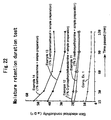
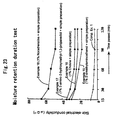
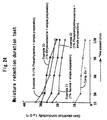
- Examples 34 through 54 are mixtures containing 0.03% L-arginine in Examples 11 through 31 (referred to as the “latter”), respectively, the former demonstrated higher moisture retention duration than the latter (see Figs. 27 through 31).
- a moisture retention ability test was performed on atopic skin.
- Panelists 4 persons with atopic skin
- Test Apparatus Same as test apparatus of Test Example 2
- Examples 34 through 41 are mixtures of rice preparations containing 0.03% L-arginine with Examples 11 through 18 (referred to as the “latter”), respectively, the former demonstrated higher moisture retention ability than the latter (Fig. 34).
- the samples of the present invention increased the skin's barrier function by acting on the corneal layer, and acted on epidermal keratocytes not present in the corneal layer to produce a corneal layer having a high barrier function.
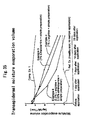
- transepidermal moisture evaporation volume The amount of moisture loss from the skin (transepidermal moisture evaporation volume) was measured to confirm barrier function improvement effects.
- Panelists 4 persons with atopic skin Test Method: Each sample was applied to the side of the forearm of the panelists (approx. 0.3 x 0.3 cm) followed by measurement of transepidermal moisture evaporation volume at 60 and 120 minutes after application.
- the amount of moisture loss is greater in atopic skin prior to application of the samples of the present invention as compared with healthy skin due to a decrease in the skin's barrier function.
- the amount of moisture loss was decreased nearly to the level of healthy skin following application of the samples of the present invention to atopic skin for 4 weeks, and the skin's barrier mechanism and function were determined to have been improved.
- Examples 34 through 41 are mixtures of rice preparations containing 0.03% L-arginine with Examples 11 through 18 (referred to as the “latter”), respectively, the former demonstrated greater effects that reduced the amount of moisture loss than the latter (Fig. 37).
- Example 55 (Simple preparation containing 40% Example 3)
- Example 3 (containing 0.2% L-arginine and 0.02% ethanolamine from rice) 40.00 mL 95% Ethanol 2.00 mL Parabene 0.18 g Purified soy bean lecithin 0.05 g
- a clinical test was conducted on atopic skin of patients with atopic dermatitis.
- Panelists 12 patients with atopic dermatitis
- test sites consisted of sites having symptoms suitable for evaluation that enabled comparison of a site using Example 8 and a site using Comparative Example 5 either to the, left and right or above and below.
- Evaluation items consisted of the main symptoms of atopic skin.
- Example 8 The results of the site where Example 8 was applied were evaluated for the evaluation items according to the following four levels of a severity score as determined by visual examination.
- Example 8 (Example 3 + cream preparation)
- Example 3 (containing 0.2% L-arginine and 0.02% ethanolamine from rice) 40.00 mL Dipotassium glycyrrhetinate 0.10 g 1,3-Butyleneglycol 6.00 g Concentrated glycerin 6.00 g Methylpolysiloxane 6.00 g Stearic acid 3.00 g Cetanol 3.00 g Cetyl 2-Ethylhexanoate 6.00 g Squalene 6.00 g Sucrose fatty acid ester 3.00 g dl- ⁇ -Tocopherol acetate 0.30 g Sodium casein 1.50 g Disodium edetate 0.03 g Parabene 0.30 g
- Dipotassium glycyrrhetinate 0.10 g 1,3-Butyleneglycol 6.00 g Concentrated glycerin 6.00 g Methylpolysiloxane 6.00 g Stearic acid 3.00 g Cetanol 3.00 g Cetyl 2-ethylhexanoate 6.00 g Squalene 6.00 g Sucrose fatty acid ester 3.00 g dl- ⁇ -Tocopherol acetate 0.30 g Sodium casein 1.50 g Disodium edetate 0.03 g Parabene 0.30 g
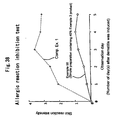
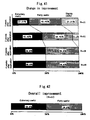
- Figs. 39 through 42 show the changes in severity scores of skin dryness, scaling and itchiness. According to these results, the present invention alleviated skin symptoms, such as skin dryness, scaling and itchiness associated with atopic dermatitis, and was observed to demonstrate a high degree of usefulness against each of these symptoms. There were no adverse side effects observed and a high degree of safety was observed.
- the present invention Since the present invention has remarkable effects against itchiness, the vicious circle of itchiness leading to scratching, scratching leading to increased itchiness, and further scratching leading to exacerbation of atopic dermatitis can be terminated, thereby making it possible to prevent the onset and exacerbation of atopic dermatitis.
- the present invention also has effects on the mental state of atopic dermatitis patients.
- the present invention is able to improve skin symptoms of skin dryness, scaling and itchiness observed in atopic skin, thereby being able to prevent the onset and exacerbation of atopic dermatitis, by restoring the skin's barrier mechanism and function through conditioning of the skin.
- a clinical test was conducted on the affected skin of atopic dermatitis patients to observe the therapeutic effects on atopic dermatitis as a result of skin conditioning and restoration of the skin's barrier mechanism and function.
- Panelists 7 patients with atopic dermatitis
- Example 8 (Example 3 + cream preparation)
- test sites consisted of sites having symptoms suitable for evaluation that enabled comparison of a site using Example 8 and a site using Comparative Example 5 either to the left and right or above and below.
- Example 8 The results of the site where Example 8 was applied were evaluated for the evaluation items according to the following four levels of a severity score as determined by visual examination.
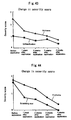
- Figs. 43 through 46 show the changes in severity scores of itchiness, dry marks, erythema and lichenification at the site of use of Example 8 of the present invention. According to these results, the present invention alleviated skin symptoms such as itchiness, dry marks, erythema and lichenification associated with atopic dermatitis, and was observed to demonstrate a high degree of usefulness against each of these symptoms. There were no adverse side effects, rebound phenomena were not observed following discontinuation of use, and there were no cases of recurrence.
- the present invention Since the present invention has remarkable effects against itchiness, the vicious circle of itchiness leading to scratching and scratching leading to exacerbation of atopic dermatitis can be terminated, and it is possible to prevent the onset and exacerbation of atopic dermatitis. In addition, as a result of being freed from itchiness, the present invention also has effects on the mental state of atopic dermatitis patients.
- the present invention is able to improve skin symptoms of itchiness, dry marks, erythema and lichenification observed in atopic dermatitis, thereby being able to heal this disease, through conditioning of the skin.
- a clinical test was conducted on the affected skin of atopic dermatitis patients to observe the therapeutic effects on atopic dermatitis as a result of skin conditioning and restoration of the skin's barrier mechanism and function.
- Panelists 5 patients with atopic dermatitis
- Ethanolamine 1.00 g Dipotassium glycyrrhetinate 0.10 g 1,3-Butyleneglycol 6.00 g Concentrated glycerin 6.00 g Methylpolysiloxane 6.00 g Stearic acid 3.00 g Cetanol 3.00 g Cetyl 2-ethylhexanoate 6.00 g Squalene 6.00 g Sucrose fatty acid ester 3.00 g dl- ⁇ -Tocopherol acetate 0.30 g Sodium casein 1.50 g Disodium edetate 0.03 g Parabene 0.30 g
- test sites consisted of sites having symptoms suitable for evaluation that enabled comparison of a site using Example 56 and a site using Comparative Example 5 either to the left and right or above and below.
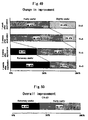
- Example 56 of the present invention demonstrated a high degree of usefulness as shown in Figs. 47 through 50.
- Figs. 47 through 50 show the changes in severity scores of itchiness, dry marks, erythema and lichenification at the site of use of Example 56 of the present invention. According to these results, Example 56 of the present invention alleviated skin symptoms such as itchiness, dry marks, erythema and lichenification associated with atopic dermatitis, and was observed to demonstrate a high degree of usefulness against each of these symptoms. There were no adverse side effects, rebound phenomena were not observed following discontinuation of use, and there were no cases of recurrence.
- the present invention Since the present invention has remarkable effects against itchiness, the vicious circle of itchiness leading to scratching and scratching leading to exacerbation of atopic dermatitis can be terminated, and it is possible to prevent the onset and exacerbation of atopic dermatitis. In addition, as a result of being freed from itchiness, the present invention also has effects on the mental state of atopic dermatitis patients.
- the present invention is able to improve skin symptoms of itchiness, dry marks, erythema and lichenification observed in atopic dermatitis, thereby being able to heal this disease, through conditioning of the skin.
- the moisture retention agent used in the present invention contains one or more kinds of substances selected from the group consisting of polyvalent alcohols represented by glycerin, dipropyleneglycol and 1,3-butyleneglycol; sugars represented by sorbitol, maltitol, dextrin, hyaluronic acid and chitosan; mucopolysaccharides and sugar derivatives; polypeptides represented by elastin and collagen; organic acids and their salts represented by pyrrolidone carboxylic acid, citric acid and lactic acid; biopharmaceutical and natural moisture retention agents represented by refined rice wine, rice bran, aloe, glycyrrhizac radix and chamomile; bio-component moisture retention agents represented by vitamins, placental extract, urea, lecithins, phospholipids, ceramides, cholesterols and sphingolipids; and, vegetable extracts, fruit extracts, kelp extracts, enzymes and inorganic salts
- Drugs that can be used in pharmaceuticals, quasi-drugs and cosmetics which are externally applied skin preparations as claimed in the present invention are one or more kinds of substances selected from the group consisting of bactericidal drugs, wound protective agents, wound healing agents, drugs for suppurative diseases, analgesic, anti-itching, astringent and antiphlogistic agents, immunosuppresants, drugs for parasitic skin diseases, skin softeners, hair agents, vitamin agents and biopharmaceuticals, while the bases are one or more kinds of substances selected from the group consisting of moisture retention agents, astringents, refrigerants, antioxidants, ultraviolet absorbers, infrared dispersants, preservatives, antibiotics, chelating agents, surfactants, foaming agents, stabilizers, penetrants, assistants, pH adjusters, buffers, emulsifiers, opacefiers, fragrances and pigments.
- the dry skin symptoms which are targets of the present invention are symptoms selected from atopic skin, dry or rough skin, aged skin, ichthyosis, dry skin, chapped skin, beautosis, xeroderma, dry eczema, facial dry eczema and progressive volar keratoderma, and/or selected from erythema, sclerosis and cornification, cracking, scaling, wrinkles, itching and dry marks, while skin aging symptoms are selected from wrinkles and decreased skin tightness and elasticity, skin damage caused by ultraviolet rays is selected from spots and freckles, skin disorders arising from the epidermis are selected from turnover abnormalities, fineness and moistness, physicochemical skin disorders are selected from cuts, burns and floor burns, biological skin disorders are selected from athlete's foot and skin infections, while dermatitis and eczema are inflammatory cornification disorders (psoriasis).
- the present invention demonstrates remarkable effectiveness in the prevention and treatment of skin diseases such as atopic dermatitis, dry skin symptoms, pruritis, frostbite, cracking, chapped skin, skin aging symptoms, skin damage caused by ultraviolet rays, darkening, blackening, skin disorders arising in the epidermis, physicochemical skin disorders, skin symptoms caused by the use of water, soap, detergents, surfactants or solvents, adverse side effects of externally applied skin preparations, biological skin disorders, dermatitis, eczema and other skin diseases.
- skin diseases such as atopic dermatitis, dry skin symptoms, pruritis, frostbite, cracking, chapped skin, skin aging symptoms, skin damage caused by ultraviolet rays, darkening, blackening, skin disorders arising in the epidermis, physicochemical skin disorders, skin symptoms caused by the use of water, soap, detergents, surfactants or solvents, adverse side effects of externally applied skin preparations, biological skin disorders, dermatiti
- the present invention relates to a skin conditioner comprising the compound represented by the general formula: (wherein, the symbols are the same as those defined in the text).
- active ingredients of the present invention include L-arginine and ethanolamine. These active ingredients can be acquired as chemical synthesis products, or they may also be acquired in the form of natural substances. Preferable Examples of natural substances include substances containing L-arginine and/or ethanolamine obtained from rice.
- the skin conditioner as claimed in the present invention demonstrates remarkable effectiveness as an agent for the prevention and treatment of atopic dermatitis and as a skin moisture retention agent.
Landscapes
- Health & Medical Sciences (AREA)
- Life Sciences & Earth Sciences (AREA)
- Veterinary Medicine (AREA)
- Public Health (AREA)
- General Health & Medical Sciences (AREA)
- Animal Behavior & Ethology (AREA)
- Epidemiology (AREA)
- Birds (AREA)
- Dermatology (AREA)
- Chemical & Material Sciences (AREA)
- Bioinformatics & Cheminformatics (AREA)
- Pharmacology & Pharmacy (AREA)
- Nuclear Medicine, Radiotherapy & Molecular Imaging (AREA)
- Medicinal Chemistry (AREA)
- General Chemical & Material Sciences (AREA)
- Chemical Kinetics & Catalysis (AREA)
- Organic Chemistry (AREA)
- Engineering & Computer Science (AREA)
- Toxicology (AREA)
- Acyclic And Carbocyclic Compounds In Medicinal Compositions (AREA)
- Cosmetics (AREA)
- Pharmaceuticals Containing Other Organic And Inorganic Compounds (AREA)
- Medicines That Contain Protein Lipid Enzymes And Other Medicines (AREA)
Applications Claiming Priority (3)
| Application Number | Priority Date | Filing Date | Title |
|---|---|---|---|
| JP10328098 | 1998-03-11 | ||
| JP10328098 | 1998-03-11 | ||
| PCT/JP1999/001161 WO1999045900A1 (fr) | 1998-03-11 | 1999-03-10 | Agents de normalisation pour la peau |
Publications (2)
| Publication Number | Publication Date |
|---|---|
| EP1090630A1 true EP1090630A1 (fr) | 2001-04-11 |
| EP1090630A4 EP1090630A4 (fr) | 2004-06-16 |
Family
ID=14349940
Family Applications (1)
| Application Number | Title | Priority Date | Filing Date |
|---|---|---|---|
| EP99907899A Withdrawn EP1090630A4 (fr) | 1998-03-11 | 1999-03-10 | Agents de normalisation pour la peau |
Country Status (10)
| Country | Link |
|---|---|
| EP (1) | EP1090630A4 (fr) |
| JP (1) | JP4522580B2 (fr) |
| KR (1) | KR100876742B1 (fr) |
| CN (2) | CN1235559C (fr) |
| AU (1) | AU2747199A (fr) |
| CA (1) | CA2323451C (fr) |
| DE (1) | DE99907899T1 (fr) |
| ES (1) | ES2220257T1 (fr) |
| TW (2) | TWI246428B (fr) |
| WO (1) | WO1999045900A1 (fr) |
Cited By (35)
| Publication number | Priority date | Publication date | Assignee | Title |
|---|---|---|---|---|
| EP1192940A1 (fr) * | 2000-10-02 | 2002-04-03 | Johnson & Johnson Consumer Companies, Inc. | Composition et method pour achever de la peau nette en utilisant des alkanolamines |
| FR2821554A1 (fr) * | 2001-03-05 | 2002-09-06 | Johnson & Johnson Consumer Fr | Compositions topiques contenant au moins un derive d'ethanolamine pour le traitement ou la prevention des dommages de la peau associes au vieillissement de la peau et procedes comestique associes |
| WO2002083136A1 (fr) * | 2001-04-17 | 2002-10-24 | Process & Industrial Design Consultants Ltd | Compositions therapeutiques contenant des acides amino sulfoniques et leurs utilisations |
| EP1295593A1 (fr) * | 2001-09-24 | 2003-03-26 | Johnson & Johnson Consumer Companies, Inc. | Produit de nettoyage cutané contenant un agent actif contre le vieillissement |
| EP1192939A3 (fr) * | 2000-10-02 | 2003-12-03 | Johnson & Johnson Consumer Companies, Inc. | Méthodes pour réduire l'inflammation et l'érythème |
| WO2003099251A1 (fr) * | 2002-05-29 | 2003-12-04 | Unilever Plc | Compositions cosmetiques contenant des malonates d'ammonium |
| WO2003099238A1 (fr) * | 2002-05-29 | 2003-12-04 | Unilever Plc | Maitrise de l'odeur dans des compositions cosmetiques contenant un sel d'amine |
| WO2003099252A1 (fr) * | 2002-05-29 | 2003-12-04 | Unilever Plc | Compositions cosmetiques comprenant des sels d'hydroxy-amine d'acide malonique |
| WO2004004674A1 (fr) * | 2002-07-04 | 2004-01-15 | Beiersdorf Ag | Preparation cosmetique pour traiter une peau seche ou sensible |
| EP1405633A1 (fr) * | 2002-10-03 | 2004-04-07 | L'oreal | Composition, notamment cosmétique, comprenant une aminecétone aromatique |
| FR2846882A1 (fr) * | 2002-09-05 | 2004-05-14 | Oreal | Utilisation d'une amine phenylee secondaire ou tertiaire pour lisser les rides et ridules |
| EP1420008A1 (fr) * | 2002-11-15 | 2004-05-19 | L'oreal | Composition, notamment cosmétique, comprenant une amine secondaire ou tertiaire |
| EP1304323A4 (fr) * | 2000-07-19 | 2005-01-12 | Kyowa Hakko Kogyo Kk | Agents de prevention ou de traitement de la dermite atopique |
| WO2006048671A1 (fr) * | 2004-11-05 | 2006-05-11 | Bioforskning As | Formules de polyamine |
| FR2877568A1 (fr) * | 2004-11-10 | 2006-05-12 | Oreal | Composition cosmetique comprenant un hydrolysat de proteines de riz et un agent augmentant la synthese des glycosaminoglycannes |
| US7396526B1 (en) | 1998-11-12 | 2008-07-08 | Johnson & Johnson Consumer Companies, Inc. | Skin care composition |
| US7404949B2 (en) | 2004-03-15 | 2008-07-29 | Unilever Home & Personal Care Usa, Division Of Conopco, Inc. | Methods and compositions useful to prevent in-grown hair arising from shaving |
| EP2182960A4 (fr) * | 2007-07-27 | 2010-10-27 | Galderma Lab Inc | Composés, formulations et procédés pour réduire les rides, le froissement et l'affaissement de la peau |
| US7935682B2 (en) | 2002-12-23 | 2011-05-03 | William Marsh Rice University | Wound healing dressing for enhancing fibrocyte formation |
| WO2011075267A1 (fr) * | 2009-11-19 | 2011-06-23 | Galderma Laboratories Lp | Procédé et kit pour traiter ou prévenir le psoriasis |
| US8012472B2 (en) | 2002-12-23 | 2011-09-06 | William Marsh Rice University | Compositions and methods for suppressing fibrocytes |
| US8053427B1 (en) | 2010-10-21 | 2011-11-08 | Galderma R&D SNC | Brimonidine gel composition |
| US8057802B2 (en) | 2002-12-23 | 2011-11-15 | William Marsh Rice University | Treatment methods for fibrosis related disorders |
| US8410102B2 (en) | 2003-05-27 | 2013-04-02 | Galderma Laboratories Inc. | Methods and compositions for treating or preventing erythema |
| US8513249B2 (en) | 2010-03-26 | 2013-08-20 | Galderma Laboratories, L.P. | Methods and compositions for safe and effective treatment of erythema |
| US8916562B2 (en) | 2010-03-26 | 2014-12-23 | Galderma Research & Development Snc | Methods and compositions for safe and effective treatment of telangiectasia |
| US9186358B2 (en) | 2009-11-18 | 2015-11-17 | Galderma Laboratories, L.P. | Combination therapy for treating or preventing an inflammatory skin disorder |
| US9233140B2 (en) | 2009-03-11 | 2016-01-12 | Promedior, Inc. | Treatment methods for hypersensitive disorders |
| US9296800B2 (en) | 2009-06-04 | 2016-03-29 | Promedior, Inc. | Serum amyloid P derivatives and their preparation and use |
| US9556246B2 (en) | 2009-06-17 | 2017-01-31 | Promedior, Inc. | SAP variants and their use |
| US9884899B2 (en) | 2007-07-06 | 2018-02-06 | Promedior, Inc. | Methods for treating fibrosis using CRP antagonists |
| US10201517B2 (en) | 2010-10-21 | 2019-02-12 | Galderma Laboratories, L.P. | Brimonidine gel compositions and methods of use |
| US10702583B2 (en) | 2009-03-11 | 2020-07-07 | Promedior, Inc. | Treatment methods for autoimmune disorders |
| WO2023039220A1 (fr) * | 2021-09-10 | 2023-03-16 | Colgate-Palmolive Company | Compositions de soins personnels à base d'acides aminés et d'activateur de pénétration de la peau |
| US12133908B2 (en) | 2015-12-31 | 2024-11-05 | Colgate-Palmolive Company | Personal care composition comprising taurine, arginine, glycine |
Families Citing this family (29)
| Publication number | Priority date | Publication date | Assignee | Title |
|---|---|---|---|---|
| US6365623B1 (en) * | 1997-11-17 | 2002-04-02 | Nicholas V. Perricone | Treatment of acne using lipoic acid |
| US20040067212A1 (en) | 1998-03-11 | 2004-04-08 | Kabushiki Kaisha Soken | Skin conditioner |
| FR2792202B1 (fr) * | 1999-04-19 | 2003-06-13 | Pharmascience Lab | Extrait peptidique de lupin et composition pharmaceutique ou cosmetique ou nutraceutique comprenant un tel extrait |
| CA2384080C (fr) * | 1999-09-07 | 2012-03-20 | Kabushiki Kaisha Soken | Revitalisant pour la peau |
| FR2799125B1 (fr) * | 1999-10-05 | 2002-01-18 | Centre Nat Rech Scient | Procede de preparation d'une composition par extraction de nacre, comprenant l'integralite des composants de la nacre, composition obtenue par ce procede et son utilisation en pharmacie et cosmetique. |
| JP2002128683A (ja) * | 2000-10-24 | 2002-05-09 | Umano Tekko Kk | 皮膚塗布剤又は洗浄剤 |
| US6607735B2 (en) | 2000-12-21 | 2003-08-19 | Johnson & Johnson Consumer Companies, Inc. | Method for reducing the appearance of dark circles under the eyes |
| KR100467501B1 (ko) * | 2001-08-25 | 2005-01-24 | 주식회사 코리아나화장품 | 현미 추출물을 함유하는 피부주름 개선 화장료 조성물 |
| KR100470241B1 (ko) * | 2001-12-27 | 2005-02-05 | 나드리화장품주식회사 | 청주 마이크로베지클 함유 화장료 조성물 |
| JP4693623B2 (ja) * | 2005-03-07 | 2011-06-01 | 共栄化学工業株式会社 | 化粧料 |
| JP5383963B2 (ja) * | 2005-03-29 | 2014-01-08 | エンザイム株式会社 | 腐植、腐植抽出液および保湿液、ならびにそれらの製造方法および使用 |
| JP4173909B1 (ja) | 2005-04-28 | 2008-10-29 | ファイザー・リミテッド | アミノ酸誘導体 |
| KR100879411B1 (ko) * | 2006-07-13 | 2009-01-19 | (주)아모레퍼시픽 | 스핑고실포스포릴콜린의 작용을 억제하는 약학 조성물 |
| JP5216228B2 (ja) * | 2007-03-27 | 2013-06-19 | 東洋紡株式会社 | 細胞外マトリックス産生向上剤 |
| JP2008239548A (ja) * | 2007-03-27 | 2008-10-09 | Toyobo Co Ltd | 細胞賦活化剤 |
| JP5018171B2 (ja) * | 2007-03-27 | 2012-09-05 | 東洋紡績株式会社 | 植物由来の賦活化剤及び細胞外マトリックス産生促進剤 |
| JP5259601B2 (ja) * | 2007-08-28 | 2013-08-07 | ユニチカ株式会社 | コラーゲン産生促進剤 |
| KR100915426B1 (ko) * | 2007-10-26 | 2009-09-03 | 김포시(농업기술센터) | 쌀과 연을 이용한 아토피 피부염 개선용 기능성 화장품 및그 제조방법 |
| ITBS20070177A1 (it) * | 2007-11-15 | 2009-05-16 | Paoli Ambrosi Gianfranco De | Composizione per uso topico per ottenere un rapido ed intenso effetto lifting |
| JP2010070500A (ja) * | 2008-09-18 | 2010-04-02 | Sanei Gen Ffi Inc | ハトムギ抽出物の製造方法 |
| KR101023041B1 (ko) | 2009-01-20 | 2011-03-24 | (주)더페이스샵 | 피부 보습용 화장료 조성물 |
| KR101445068B1 (ko) * | 2012-12-21 | 2014-09-26 | (주)엔코스 | 자외선에 손상을 입은 피부의 보호용 패치 |
| WO2015011750A1 (fr) * | 2013-07-22 | 2015-01-29 | 株式会社コーセー | Agent hydratant |
| KR101781589B1 (ko) * | 2015-10-01 | 2017-09-25 | (주)삼경코스텍 | 식물성 오일의 효소 반응 조성물을 함유하는 화장료 조성물 |
| KR101828241B1 (ko) * | 2016-10-17 | 2018-02-13 | (주)네오팜 | 항염용 조성물 |
| KR101828240B1 (ko) | 2016-10-17 | 2018-02-13 | (주)네오팜 | 항염용 조성물 |
| JP2018183105A (ja) * | 2017-04-27 | 2018-11-22 | 日光ケミカルズ株式会社 | 皮膚刺激評価方法 |
| KR101983569B1 (ko) * | 2017-10-26 | 2019-05-29 | 리봄화장품 주식회사 | 동백씨오일 아미노프로판디올 아마이드/에스터를 함유한 피부 보습용 화장료 조성물 |
| CN108452294A (zh) * | 2018-02-07 | 2018-08-28 | 嘉善县圣康生物科技有限公司 | 一种治疗皮肤过敏的外用药 |
Family Cites Families (21)
| Publication number | Priority date | Publication date | Assignee | Title |
|---|---|---|---|---|
| US5126136A (en) * | 1988-08-05 | 1992-06-30 | Merat Pierre H | Skin protection lotion |
| JPH0495008A (ja) * | 1990-08-10 | 1992-03-27 | Kanebo Ltd | 皮膚老化防止剤及びそれを含有する皮膚化粧料 |
| ATE218330T1 (de) * | 1992-03-23 | 2002-06-15 | Univ Manitoba | Verwendung von transglutaminasehemmer zur behandlung des narbegewebes |
| JPH05310549A (ja) * | 1992-05-13 | 1993-11-22 | Taisho Pharmaceut Co Ltd | 皮膚外用剤 |
| JPH06122611A (ja) * | 1992-10-12 | 1994-05-06 | Seiwa Kasei:Kk | 化粧品用配合剤 |
| JP3073862B2 (ja) * | 1992-10-30 | 2000-08-07 | 鐘紡株式会社 | ヒアルロン酸産生促進剤 |
| DE4341000A1 (de) * | 1993-12-02 | 1995-06-08 | Beiersdorf Ag | Verwendung von L-Arginin, L-Ornithin oder L-Citrullin und topischen Zubereitungen mit diesen Stoffen |
| DE4341001A1 (de) * | 1993-12-02 | 1995-06-08 | Beiersdorf Ag | Topische Zubereitungen mit einem Gehalt an L-Arginin |
| JP3678449B2 (ja) * | 1993-12-15 | 2005-08-03 | 株式会社創研 | 米からの水分保持能改善剤 |
| JPH07233046A (ja) * | 1993-12-28 | 1995-09-05 | Kose Corp | 外用剤 |
| US6821780B2 (en) * | 1995-01-09 | 2004-11-23 | Jean-Noel Thorel | Complete nutrient medium for use as a cosmetic and cosmetic use thereof |
| JPH08217695A (ja) * | 1995-02-10 | 1996-08-27 | Pola Chem Ind Inc | 皮膚外用剤 |
| JP3459857B2 (ja) * | 1995-09-29 | 2003-10-27 | 株式会社資生堂 | 皮膚外用剤 |
| JP3459856B2 (ja) * | 1995-09-29 | 2003-10-27 | 株式会社資生堂 | 皮膚外用剤 |
| US5571518A (en) * | 1995-10-30 | 1996-11-05 | Chesebrough-Pond's Usa Co., Division Of Conopco, Inc. | Cosmetic compositions containing tricholine citrate |
| JPH09175983A (ja) * | 1995-12-28 | 1997-07-08 | Kao Corp | 皮膚外用剤 |
| JP4020989B2 (ja) * | 1996-03-06 | 2007-12-12 | 株式会社ノエビア | 血流促進剤及びこれを配合して成る皮膚外用剤 |
| JP3703904B2 (ja) * | 1996-03-22 | 2005-10-05 | 株式会社クラブコスメチックス | 皮膚保湿剤 |
| CN1164996A (zh) * | 1996-05-14 | 1997-11-19 | 李丽江 | 营养护肤乳 |
| JP3928746B2 (ja) * | 1996-06-12 | 2007-06-13 | 花王株式会社 | 皮膚化粧料 |
| JP3544080B2 (ja) * | 1996-11-14 | 2004-07-21 | 花王株式会社 | 油中水型乳化化粧料 |
-
1999
- 1999-03-10 JP JP2000535315A patent/JP4522580B2/ja not_active Expired - Lifetime
- 1999-03-10 CN CNB998038687A patent/CN1235559C/zh not_active Expired - Lifetime
- 1999-03-10 EP EP99907899A patent/EP1090630A4/fr not_active Withdrawn
- 1999-03-10 DE DE1999907899 patent/DE99907899T1/de active Pending
- 1999-03-10 KR KR1020007010051A patent/KR100876742B1/ko not_active Expired - Lifetime
- 1999-03-10 ES ES99907899T patent/ES2220257T1/es active Pending
- 1999-03-10 CN CN2005100036786A patent/CN1663559B/zh not_active Expired - Lifetime
- 1999-03-10 WO PCT/JP1999/001161 patent/WO1999045900A1/fr not_active Ceased
- 1999-03-10 CA CA2323451A patent/CA2323451C/fr not_active Expired - Lifetime
- 1999-03-10 AU AU27471/99A patent/AU2747199A/en not_active Abandoned
- 1999-03-11 TW TW092131562A patent/TWI246428B/zh not_active IP Right Cessation
- 1999-03-11 TW TW088103781A patent/TW576749B/zh not_active IP Right Cessation
Cited By (51)
| Publication number | Priority date | Publication date | Assignee | Title |
|---|---|---|---|---|
| US7396526B1 (en) | 1998-11-12 | 2008-07-08 | Johnson & Johnson Consumer Companies, Inc. | Skin care composition |
| EP1304323A4 (fr) * | 2000-07-19 | 2005-01-12 | Kyowa Hakko Kogyo Kk | Agents de prevention ou de traitement de la dermite atopique |
| EP1192940A1 (fr) * | 2000-10-02 | 2002-04-03 | Johnson & Johnson Consumer Companies, Inc. | Composition et method pour achever de la peau nette en utilisant des alkanolamines |
| EP1192939A3 (fr) * | 2000-10-02 | 2003-12-03 | Johnson & Johnson Consumer Companies, Inc. | Méthodes pour réduire l'inflammation et l'érythème |
| FR2821554A1 (fr) * | 2001-03-05 | 2002-09-06 | Johnson & Johnson Consumer Fr | Compositions topiques contenant au moins un derive d'ethanolamine pour le traitement ou la prevention des dommages de la peau associes au vieillissement de la peau et procedes comestique associes |
| WO2002083136A1 (fr) * | 2001-04-17 | 2002-10-24 | Process & Industrial Design Consultants Ltd | Compositions therapeutiques contenant des acides amino sulfoniques et leurs utilisations |
| EP1295593A1 (fr) * | 2001-09-24 | 2003-03-26 | Johnson & Johnson Consumer Companies, Inc. | Produit de nettoyage cutané contenant un agent actif contre le vieillissement |
| WO2003099252A1 (fr) * | 2002-05-29 | 2003-12-04 | Unilever Plc | Compositions cosmetiques comprenant des sels d'hydroxy-amine d'acide malonique |
| WO2003099238A1 (fr) * | 2002-05-29 | 2003-12-04 | Unilever Plc | Maitrise de l'odeur dans des compositions cosmetiques contenant un sel d'amine |
| WO2003099251A1 (fr) * | 2002-05-29 | 2003-12-04 | Unilever Plc | Compositions cosmetiques contenant des malonates d'ammonium |
| CN1326514C (zh) * | 2002-05-29 | 2007-07-18 | 荷兰联合利华有限公司 | 含有胺盐的化妆品组合物中气味的控制 |
| WO2004004674A1 (fr) * | 2002-07-04 | 2004-01-15 | Beiersdorf Ag | Preparation cosmetique pour traiter une peau seche ou sensible |
| FR2846882A1 (fr) * | 2002-09-05 | 2004-05-14 | Oreal | Utilisation d'une amine phenylee secondaire ou tertiaire pour lisser les rides et ridules |
| EP1405633A1 (fr) * | 2002-10-03 | 2004-04-07 | L'oreal | Composition, notamment cosmétique, comprenant une aminecétone aromatique |
| FR2845288A1 (fr) * | 2002-10-03 | 2004-04-09 | Oreal | Composition, notamment cosmetique, comprenant une amine secondaire ou tertiaire carbonylee |
| EP1420008A1 (fr) * | 2002-11-15 | 2004-05-19 | L'oreal | Composition, notamment cosmétique, comprenant une amine secondaire ou tertiaire |
| FR2847250A1 (fr) * | 2002-11-15 | 2004-05-21 | Oreal | Composition, notamment cosmetique, comprenant une amine secondaire ou tertiaire |
| US8012472B2 (en) | 2002-12-23 | 2011-09-06 | William Marsh Rice University | Compositions and methods for suppressing fibrocytes |
| US8057802B2 (en) | 2002-12-23 | 2011-11-15 | William Marsh Rice University | Treatment methods for fibrosis related disorders |
| US8187599B2 (en) | 2002-12-23 | 2012-05-29 | William Marsh Rice University | Compositions and methods for suppressing fibrocytes |
| US8187608B2 (en) | 2002-12-23 | 2012-05-29 | William Marsh Rice University | Treatment of Fibrosis related disorders |
| US7935682B2 (en) | 2002-12-23 | 2011-05-03 | William Marsh Rice University | Wound healing dressing for enhancing fibrocyte formation |
| US8410102B2 (en) | 2003-05-27 | 2013-04-02 | Galderma Laboratories Inc. | Methods and compositions for treating or preventing erythema |
| US8586586B2 (en) | 2003-05-27 | 2013-11-19 | Galderma Laboratories Inc. | Methods and compositions for treating or preventing erythema |
| US7404949B2 (en) | 2004-03-15 | 2008-07-29 | Unilever Home & Personal Care Usa, Division Of Conopco, Inc. | Methods and compositions useful to prevent in-grown hair arising from shaving |
| WO2006048671A1 (fr) * | 2004-11-05 | 2006-05-11 | Bioforskning As | Formules de polyamine |
| EP1656970A1 (fr) | 2004-11-10 | 2006-05-17 | L'oreal | Composition cosmétique comprenant un hydrolysat de protéines de riz et un agent augmentant la synthèse des glycosaminoglycanes |
| FR2877568A1 (fr) * | 2004-11-10 | 2006-05-12 | Oreal | Composition cosmetique comprenant un hydrolysat de proteines de riz et un agent augmentant la synthese des glycosaminoglycannes |
| US9884899B2 (en) | 2007-07-06 | 2018-02-06 | Promedior, Inc. | Methods for treating fibrosis using CRP antagonists |
| EP2182960A4 (fr) * | 2007-07-27 | 2010-10-27 | Galderma Lab Inc | Composés, formulations et procédés pour réduire les rides, le froissement et l'affaissement de la peau |
| US8440688B2 (en) | 2007-07-27 | 2013-05-14 | Galderma Laboratories Inc. | Compounds, formulations and methods for reducing skin wrinkles, creasing and sagging |
| US10702583B2 (en) | 2009-03-11 | 2020-07-07 | Promedior, Inc. | Treatment methods for autoimmune disorders |
| US9233140B2 (en) | 2009-03-11 | 2016-01-12 | Promedior, Inc. | Treatment methods for hypersensitive disorders |
| US9296800B2 (en) | 2009-06-04 | 2016-03-29 | Promedior, Inc. | Serum amyloid P derivatives and their preparation and use |
| US9556246B2 (en) | 2009-06-17 | 2017-01-31 | Promedior, Inc. | SAP variants and their use |
| US9186358B2 (en) | 2009-11-18 | 2015-11-17 | Galderma Laboratories, L.P. | Combination therapy for treating or preventing an inflammatory skin disorder |
| WO2011075267A1 (fr) * | 2009-11-19 | 2011-06-23 | Galderma Laboratories Lp | Procédé et kit pour traiter ou prévenir le psoriasis |
| US8394800B2 (en) | 2009-11-19 | 2013-03-12 | Galderma Laboratories, L.P. | Method for treating psoriasis |
| US9072739B2 (en) | 2009-11-19 | 2015-07-07 | Galderma Laboratories, L.P. | Method for treating psoriasis |
| RU2538729C2 (ru) * | 2009-11-19 | 2015-01-10 | ГАЛДЕРМА ЛЭБОРЕТРИЗ ЭлПи | Применение агонистов альфа 2 адренергических рецепторов для лечения или предотвращения псориаза |
| US9861631B2 (en) | 2010-03-26 | 2018-01-09 | Galderma Laboratories, L.P. | Methods and compositions for safe and effective treatment of erythema |
| US8513249B2 (en) | 2010-03-26 | 2013-08-20 | Galderma Laboratories, L.P. | Methods and compositions for safe and effective treatment of erythema |
| US8513247B2 (en) | 2010-03-26 | 2013-08-20 | Galderma Laboratories, L.P. | Methods and compositions for safe and effective treatment of erythema |
| US8916562B2 (en) | 2010-03-26 | 2014-12-23 | Galderma Research & Development Snc | Methods and compositions for safe and effective treatment of telangiectasia |
| US9861632B2 (en) | 2010-03-26 | 2018-01-09 | Galderma Laboratories, L.P. | Methods and compositions for safe and effective treatment of erythema |
| US8163725B1 (en) | 2010-10-21 | 2012-04-24 | Galderma R&D SNC | Gel compositions and methods of use |
| US10201517B2 (en) | 2010-10-21 | 2019-02-12 | Galderma Laboratories, L.P. | Brimonidine gel compositions and methods of use |
| US8053427B1 (en) | 2010-10-21 | 2011-11-08 | Galderma R&D SNC | Brimonidine gel composition |
| US12133908B2 (en) | 2015-12-31 | 2024-11-05 | Colgate-Palmolive Company | Personal care composition comprising taurine, arginine, glycine |
| WO2023039220A1 (fr) * | 2021-09-10 | 2023-03-16 | Colgate-Palmolive Company | Compositions de soins personnels à base d'acides aminés et d'activateur de pénétration de la peau |
| AU2022341300B2 (en) * | 2021-09-10 | 2025-06-26 | Colgate-Palmolive Company | Personal care compositions based on aminoacids and skin penetration enhancer |
Also Published As
| Publication number | Publication date |
|---|---|
| KR100876742B1 (ko) | 2009-01-07 |
| TW200404575A (en) | 2004-04-01 |
| WO1999045900A1 (fr) | 1999-09-16 |
| TW576749B (en) | 2004-02-21 |
| TWI246428B (en) | 2006-01-01 |
| KR20010034587A (ko) | 2001-04-25 |
| AU2747199A (en) | 1999-09-27 |
| DE99907899T1 (de) | 2005-01-13 |
| CN1292682A (zh) | 2001-04-25 |
| CN1235559C (zh) | 2006-01-11 |
| CN1663559B (zh) | 2010-10-06 |
| CN1663559A (zh) | 2005-09-07 |
| CA2323451C (fr) | 2013-01-08 |
| JP4522580B2 (ja) | 2010-08-11 |
| EP1090630A4 (fr) | 2004-06-16 |
| CA2323451A1 (fr) | 1999-09-16 |
| ES2220257T1 (es) | 2004-12-16 |
Similar Documents
| Publication | Publication Date | Title |
|---|---|---|
| CA2323451C (fr) | Creme revitalisante | |
| US9381146B2 (en) | Skin conditioner | |
| CA2384080C (fr) | Revitalisant pour la peau | |
| JPWO1999045900A1 (ja) | 皮膚健全化剤 | |
| KR100519638B1 (ko) | 지질 장벽 합성을 강화시키는 조성물 및 그 방법 | |
| US20240197677A1 (en) | Putrescine slow-release topical formulations | |
| WO1997014403A1 (fr) | Traitements de rupture de barriere pour peaux presentant une structure deterioree | |
| JP2003221328A (ja) | 皮膚健全化剤 | |
| CN113693966B (zh) | 一种美白淡斑亮采霜及其制备方法 | |
| US20040191203A1 (en) | Cosmetic or dermatological composition comprising n-acylaminoamide derivatives | |
| AU2006203098B2 (en) | Skin conditioner | |
| US20040180031A1 (en) | Skin conditioner | |
| AU2009200059B2 (en) | Skin conditioner | |
| EP1080719A2 (fr) | Méthodes pour la potentialisation de l'efficacité d'actifs topiques par les mono-acyl-(lyso)-glycerophospholipides | |
| JP2002128702A (ja) | 局所活性成分の効力のモノ−アシル−(リゾ)−グリセロリン脂質による増強方法およびその用途 | |
| JPWO2001017499A1 (ja) | 皮膚健全化剤 | |
| CN116747147B (zh) | 一种靶向祛痘的壬二酸微纳晶混悬液及其应用 | |
| WO2012117340A1 (fr) | Procédé pour le traitement cosmétique d'une rougeur de la peau | |
| CN117815115A (zh) | 一种提高耐受性的保湿修护沐浴油及其制备方法 | |
| KR20080029055A (ko) | 피부에 도포되어 향균 작용 및 5 알파 - 리덕테이즈의활성억제 작용에 의해 여드름성 피부 개선에 도움을 주는화장료 조성물. | |
| HK1031684A1 (en) | Use of ellagic acid and its derivatives in cosmetics and dermatology |
Legal Events
| Date | Code | Title | Description |
|---|---|---|---|
| PUAI | Public reference made under article 153(3) epc to a published international application that has entered the european phase |
Free format text: ORIGINAL CODE: 0009012 |
|
| 17P | Request for examination filed |
Effective date: 20001009 |
|
| AK | Designated contracting states |
Kind code of ref document: A1 Designated state(s): AT CH DE ES FR GB IT LI |
|
| A4 | Supplementary search report drawn up and despatched |
Effective date: 20040504 |
|
| TCAT | At: translation of patent claims filed | ||
| DET | De: translation of patent claims | ||
| EL | Fr: translation of claims filed | ||
| APBN | Date of receipt of notice of appeal recorded |
Free format text: ORIGINAL CODE: EPIDOSNNOA2E |
|
| APBR | Date of receipt of statement of grounds of appeal recorded |
Free format text: ORIGINAL CODE: EPIDOSNNOA3E |
|
| APAF | Appeal reference modified |
Free format text: ORIGINAL CODE: EPIDOSCREFNE |
|
| APBT | Appeal procedure closed |
Free format text: ORIGINAL CODE: EPIDOSNNOA9E |
|
| STAA | Information on the status of an ep patent application or granted ep patent |
Free format text: STATUS: THE APPLICATION IS DEEMED TO BE WITHDRAWN |
|
| 18D | Application deemed to be withdrawn |
Effective date: 20091001 |