EP1092417B1 - Festigende Haarreinigungsmittel - Google Patents
Festigende Haarreinigungsmittel Download PDFInfo
- Publication number
- EP1092417B1 EP1092417B1 EP00121717A EP00121717A EP1092417B1 EP 1092417 B1 EP1092417 B1 EP 1092417B1 EP 00121717 A EP00121717 A EP 00121717A EP 00121717 A EP00121717 A EP 00121717A EP 1092417 B1 EP1092417 B1 EP 1092417B1
- Authority
- EP
- European Patent Office
- Prior art keywords
- water
- group
- alkyl
- formula
- copolymer
- Prior art date
- Legal status (The legal status is an assumption and is not a legal conclusion. Google has not performed a legal analysis and makes no representation as to the accuracy of the status listed.)
- Expired - Lifetime
Links
Classifications
-
- A—HUMAN NECESSITIES
- A61—MEDICAL OR VETERINARY SCIENCE; HYGIENE
- A61Q—SPECIFIC USE OF COSMETICS OR SIMILAR TOILETRY PREPARATIONS
- A61Q5/00—Preparations for care of the hair
- A61Q5/06—Preparations for styling the hair, e.g. by temporary shaping or colouring
-
- A—HUMAN NECESSITIES
- A61—MEDICAL OR VETERINARY SCIENCE; HYGIENE
- A61K—PREPARATIONS FOR MEDICAL, DENTAL OR TOILETRY PURPOSES
- A61K8/00—Cosmetics or similar toiletry preparations
- A61K8/18—Cosmetics or similar toiletry preparations characterised by the composition
- A61K8/30—Cosmetics or similar toiletry preparations characterised by the composition containing organic compounds
- A61K8/40—Cosmetics or similar toiletry preparations characterised by the composition containing organic compounds containing nitrogen
- A61K8/44—Aminocarboxylic acids or derivatives thereof, e.g. aminocarboxylic acids containing sulfur; Salts; Esters or N-acylated derivatives thereof
-
- A—HUMAN NECESSITIES
- A61—MEDICAL OR VETERINARY SCIENCE; HYGIENE
- A61K—PREPARATIONS FOR MEDICAL, DENTAL OR TOILETRY PURPOSES
- A61K8/00—Cosmetics or similar toiletry preparations
- A61K8/18—Cosmetics or similar toiletry preparations characterised by the composition
- A61K8/30—Cosmetics or similar toiletry preparations characterised by the composition containing organic compounds
- A61K8/46—Cosmetics or similar toiletry preparations characterised by the composition containing organic compounds containing sulfur
- A61K8/463—Cosmetics or similar toiletry preparations characterised by the composition containing organic compounds containing sulfur containing sulfuric acid derivatives, e.g. sodium lauryl sulfate
-
- A—HUMAN NECESSITIES
- A61—MEDICAL OR VETERINARY SCIENCE; HYGIENE
- A61K—PREPARATIONS FOR MEDICAL, DENTAL OR TOILETRY PURPOSES
- A61K8/00—Cosmetics or similar toiletry preparations
- A61K8/18—Cosmetics or similar toiletry preparations characterised by the composition
- A61K8/30—Cosmetics or similar toiletry preparations characterised by the composition containing organic compounds
- A61K8/60—Sugars; Derivatives thereof
-
- A—HUMAN NECESSITIES
- A61—MEDICAL OR VETERINARY SCIENCE; HYGIENE
- A61K—PREPARATIONS FOR MEDICAL, DENTAL OR TOILETRY PURPOSES
- A61K8/00—Cosmetics or similar toiletry preparations
- A61K8/18—Cosmetics or similar toiletry preparations characterised by the composition
- A61K8/72—Cosmetics or similar toiletry preparations characterised by the composition containing organic macromolecular compounds
- A61K8/81—Cosmetics or similar toiletry preparations characterised by the composition containing organic macromolecular compounds obtained by reactions involving only carbon-to-carbon unsaturated bonds
- A61K8/8141—Compositions of homopolymers or copolymers of compounds having one or more unsaturated aliphatic radicals, each having only one carbon-to-carbon double bond, and at least one being terminated by only one carboxyl radical, or of salts, anhydrides, esters, amides, imides or nitriles thereof; Compositions of derivatives of such polymers
- A61K8/8152—Homopolymers or copolymers of esters, e.g. (meth)acrylic acid esters; Compositions of derivatives of such polymers
-
- A—HUMAN NECESSITIES
- A61—MEDICAL OR VETERINARY SCIENCE; HYGIENE
- A61Q—SPECIFIC USE OF COSMETICS OR SIMILAR TOILETRY PREPARATIONS
- A61Q5/00—Preparations for care of the hair
- A61Q5/02—Preparations for cleaning the hair
Definitions
- Zwitterionic surfactants are surface-active compounds that contain at least one quaternary ammonium group and at least one -COO (-) - or -SO 3 (-) group in the molecule.
- Particularly suitable zwitterionic surfactants are the so-called betaines such as the N-alkyl-N, N-dimethylammonium glycinate, for example coconut alkyl dimethylammonium glycinate, N-acylaminopropyl-N, N-dimethylammonium glycinate, for example coconut acylaminopropyldimethylammonium glycinate, and 2-alkyl-3 -carboxymethyl-3-hydroxyethyl-imidazolines each having 8 to 18 carbon atoms in the alkyl or acyl group and the cocoacylaminoethylhydroxyethylcarboxymethylglycinate.
- a preferred zwitterionic surfactant is the fatty acid amide derivative known under
Landscapes
- Life Sciences & Earth Sciences (AREA)
- Health & Medical Sciences (AREA)
- Animal Behavior & Ethology (AREA)
- General Health & Medical Sciences (AREA)
- Public Health (AREA)
- Veterinary Medicine (AREA)
- Birds (AREA)
- Epidemiology (AREA)
- Cosmetics (AREA)
- Detergent Compositions (AREA)
Description
- 1-30 Gew.%
- eines wasserlöslichen schäumenden Tensids und
- 0,1-10 Gew. %
- eines darin dispergierten filmbildenden Polymers, welches ein
Copolymerisat aus Monomereinheiten der Formel I darstellt

1-8 C-Atomen ist, in welchem 1-10 Mol% der Monomeren als R2 eine quartäre Ammoniumgruppe enthalten und dessen mittlere Molmasse oberhalb von 130 000 D (Dalton) liegt.
- Alkylsulfate und Alkylpolyglycolethersulfate der Formel R3O-(CH2CH2O)x-SO3H, in der R3 eine bevorzugt lineare Alkylgruppe mit 10 bis 16 C-Atomen und x=0 oder eine Zahl von 1-10 ist,
- Sulfobernsteinsäuremonoester von Alkylpolyglycolethern mit 10-16 C-Atomen in der Alkylgruppe und 1-10 Glycolethergruppen,
- Ethercarbonsäuren der Formel R4O(CH2CH2O)x-CH2-COOH, in der R4 eine lineare Alkylgruppe mit 10-16 C-Atomen und x=0 oder eine Zahl von 1-10 ist,
- lineare Alkansulfonate mit 12-18 C-Atomen,
- lineare Alpha-Olefinsulfonate mit 12-18 C-Atomen,
- Acylisethionate mit 10-18 C-Atomen in der Acylgruppe,
- Acylsarkoside mit 10 bis 18 C-Atomen in der Acylgruppe,
- Acyltauride mit 10 bis 18 C-Atomen in der Acylgruppe,
- Citronensäure- oder Weinsäuremonoester von Alkylpolyglycolethem mit 10-16 C-Atomen in der Alkylgruppe und 1-10 Glycolethergruppen und
- Acylierte Proteinhydrolysate mit 12-18 C-Atomen in der Acylgruppe, jeweils in Form der gut wasserlöslichen Alkali-, Magnesium-, Ammonium oder Alkanolammoniumsalze.
- Anlagerungsprodukte von 2-30 Mol Ethylenoxid und/oder von 1-5 Mol Propylenoxid an lineare Fettalkohole mit 8-18 C-Atomen, an Fettsäuren mit 12-18 C-Atomen, an Fettsäuremonoglyceride von C12-C18-Fettsäuren, an Sorbitanmonofettsäureester von Fettsäuren mit 12-18 C-Atomen, an Fettsäurealkanolamide, an Methylglucosid-Fettsäureester, an gehärtetes Rizinusöl und an andere Lipide mit alkoxylierbaren funktionellen Gruppen,
- Aminoxid-Tenside, z. B. Alkylaminoxide mit 12-18 C-Atomen und
Acylamidopropyl-dimethylaminoxid mit 12-18 C-Atomen in der Acylgruppe.
Auch selbst nicht wasserlösliche Tenside, die aber in Gegenwart wasserlöslicher Tenside solubilisiert werden und dann sowohl zur Viskosität und zur Verdickbarkeit durch Elektrolyte als auch zur Feinblasigkeit und Cremigkeit des Schaumes beitragen, können in Mengen bis zu 5 Gew.% in den erfindungsgemäßen Haarreinigungsmitteln enthalten sein. Solche Produkte sind z. B. - Fettsäuremonoethanolamide, Fettsäurediethanolamide und Fettsäuremonoisopropano lamide von C12-C18-Fettsäuren,
- Fettsäurepartialgyceride (Monoglyceride und Mono-/Diglyceridgemische) und
- Sorbitanmono- und difettsäureester
- emulgierte Ölkomponenten, bevorzugt in mikroemulgierter Form mit Tröpfchengrößen unter 100 nm. Geeignete Ölkomponenten sind z. B. Pflanzenöle, synthetische Triglyceridöle, Fettsäureester, Silikone, Paraffinöle, Squalan und synthetische Kohlenwasserstoffe wie z. B. Dioctylcyclohexan,
- emulgierte Wachse, bevorzugt in Form von Nanodispersionen,
- wasserlösliche nichtionische Polymere wie z. B. Polyvinylalkohol, Polyethylenglycole, Polyacrylamide,
- Verdickungsmittel wie z. B. Guar-Gum, Alginate, Xanthan-Gum, Cellulosederivate wie z. B. Methylcellulose, Hydroxyethylcellulose, Carboxymethylcellulose, lösliche Stärkederivate,
- wasserlösliche anionische Polymere wie z. B. die löslichen Salze von Polyacrylsäure und Polymethacrylsäure und deren Copolymeren mit Acryl- und Methacrylsäureestem,
- wasserlösliche zwitterionische und amphotere Polymeriate,
- wasserlösliche kationische Polymere, z. B. quaternierte Hydroxyethylcellulose (durch Umsetzung mit Epoxypropyl-trimethylammoniumchlorid), Dimethyldialkylammoniumchlorid-Polymere und deren Copolymere mit Acrylamid, Dimethylaminoethylmethacrylat-Vinylpyrrolidon-Copolymere und deren quaternierte Derivate und Vinylpyrrolidon-Imidazoliniummethochlorid-Copolymere,
- haarkonditionierende und strukturierende Zusätze wie z. B. Phospholipide (Lecithin), Silikonöle, Glucose, Maleinsäure,
- Proteinhydrolysate, wie z. B. Collagenhydrolysate oder Weizenproteinhydrolysate,
- haarkosmetische Wirkstoffe wie z. B. Vitamine, Panthenol, Allantoin, Pyrrolidoncarbonsäure, Cholesterin, Antischuppenwirkstoffe wie z. B. Salicylsäure, Zink Omadine oder Piroctone Olamine,
- Quell- und Penetrationshilfsmittel wie z. B. Guanidin, Harnstoff, Hydrogencarbonate,
- pH-Einstellmittel wie z. B. Citronensäure, Milchsäure und Puffergemische,
- Komplexbildner wie z. B. EDTA, NTA, Acetophosphonsäuren,
- Konservierungsmittel und Antioxydantien,
- Farbstoffe, Trübungsmittel und Perlglanzmittel,
- Duftstoffe und Deodorantien,
| 1 | 2 | V1 | V2 | |
| Texapon® NSO | 34,3 | - | 34,3 | - |
| Plantacare® 818 | - | 19,23 | - | 19,23 |
| Dehyton® K | 9,67 | 9,67 | 9,67 | 9,67 |
| Polymer A oder B (AS) | 1,0 | 1,0 | - | - |
| Wasser mit Citronen-Säure bis pH=4 | ad 100 | ad 100 | ad 100 | ad 100 |
| Polymer A | |
| Eudragit® RL30D (Dispersion, 30 % Gew.%AS) | Copolymerisat von Acryl- und Methacrylsäureestern R1=H, CH3 und R2= -CH3, -C2H5 und 5 Mol % -(CH2)2-N(+)(CH3)3Cl(-) mittleres Molekulargewicht: 150 000 D Glasübergangstemperatur: 55°C |
| Polymer B: | |
| Eudragit® RS 30 D (Pulver, 100 Gew.% AS) | Copolymerisat von Acryl- und Methacrylsäureestem R1=H, CH3 und R2=CH3,-C2H5- und ca. 2,5 Mol %: -(CH2)2-N(+)(CH3)3 Cl(-) mittleres Molgewicht: 150 000 D Glasübergangstemperatur: 50°C |
| Texapon®NSO | Alkyl(C12/14)-polyglycolether (2EO)-sulfat, Na-Salz (28 Gew.% AS in Wasser) |
| Plantacare® 818 | Kokosalkyl (1,4)-glucosid (50 Gew.% AS in Wasser) |
| Dehyton®K | Kokosacylamidopropyl-dimethylammoniumacetobetain (30 Gew.%AS + 5 Gew.% NaCl in Wasser) |
- Lo =
- Länge der gelockten Strähne nach der Entfernung der Wickler (zur Beginn der Klimatisierung) in cm
- Lt =
- Länge der gelockten Strähne nach Klimalagerung in cm
- L =
- Länge der gestreckten Haarsträhne in cm. Dieser Wert wird zuletzt ermittelt, um die Bestimmung von Lo und Lt nicht zu stören.
| 2 h, 60 % relative Luftfeuchte | 24 h, 60 % relative Luftfeuchte | |||
| Prüfvorprodukt | C.R. | % Verbesserung | C.R. | % Verbesserung |
| Wasser | 47,5 | - | 40,1 | - |
| V1 (pH=4) | 45,2 | - 4,9 % | 38,9 | - 3 % |
| V2 (pH=4) | 47,2 | - 0,7 % | 39,3 | - 2 % |
| Wasser | 43,1 | - | 36,2 | - |
| Wasser + 1 Gew.%A | 45,6 | + 5,8 % | 37,9 | + 4,7% |
| Wasser + 1 Gew.%C | 47,8 | +10,9 % | 39,4 | + 8,8% |
| Wasser | 39,0 | - | 35,7 | - |
| 1 (Polymer A) | 57,9 | + 48,5 % | 43,8 | + 22,7 % |
| 1 (Polymer B) | 46,7 | + 19,7 % | 45,3 | + 26,9 % |
| Wasser | 44,1 | - | 35,7 | - |
| 2 (Polymer A) | 57,9 | + 31,3 % | 51,1 | + 43,1 % |
| 2 (Polymer B) | 57,9 | + 30,8 % | 50,9 | + 42,6 % |
Claims (6)
- Festigendes Haarreinigungsmittel in Form einer wäßrigen Zubereitung mit einem Gehalt von
- 1-30 Gew.%
- eines wasserlöslichen, schäumenden Tensids und
- 0,1-10 Gew.%
- eines darin dispergierten filmbildenden Polymers, welches
ein Copolymerisat aus Monomereinheiten der Formel (I) darstellt,
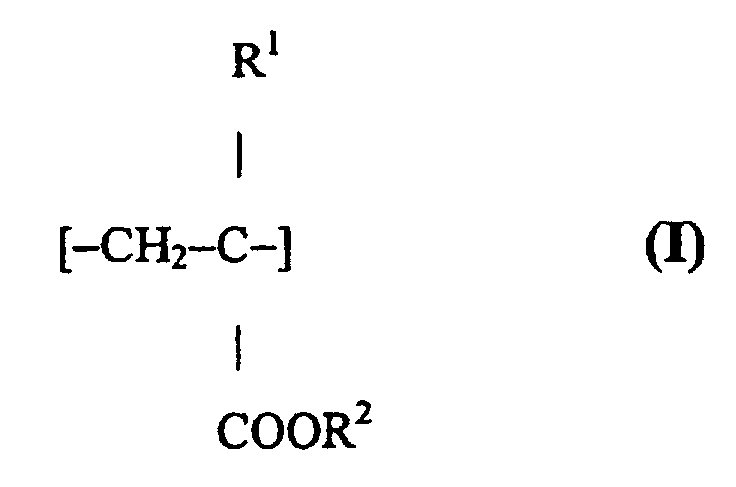
- Festigendes Haarreinigungsmittel nach Anspruch 1, dadurch gekennzeichnet, daß als filmbildendes Polymer ein Copolymerisat aus Monomereinheiten der Formel I enthalten ist, in der R1 Wasserstoff oder eine Methylgruppe und R2 eine quartäre Ammoniumgruppe der Formel -(CH2)2-N(+)(-CH3)3 Cl(-) oder eine Methyl-oder Ethylgruppe ist.
- Festigendes Haarreinigungsmittel nach einem der Ansprüche 1 oder 2, dadurch gekennzeichnet, daß das Mittel von organischen Lösungsmitteln im wesentlichen frei ist.
- Festigendes Haarreinigungsmittel nach einem der Ansprüche 1-3, dadurch gekennzeichnet, daß als wasserlösliches, schäumendes Tensid ein anionisches Tensid, ein Alkyl(oligo)-glucosid-Tensid oder ein Gemisch solcher Tenside enthalten ist.
- Festigendes Haarreinigungsmittel und Anspruch 4, dadurch gekennzeichnet, daß als anionisches Tensid ein Alkylsulfat- oder Alkylpolyglycolethersulfat-Tensid mit 10-16 C-Atomen in der Alkylgruppe und bis zu 10 Glycolethergruppen in Form eines Alkali-, Magnesium-, Ammonium oder Alkanolammoniumsalzes enthalten ist.
- Verwendung eines dispergierten filmbildenden Polymers, welches ein Copolymerisat aus Monomereinheiten der Formel (I) darstelltin der R1 Wasserstoff oder eine Methylgruppe und R2 eine quartäre Ammoniumgruppe der Formel -(CnH2n)-N(+)(CH3)3Cl(-), in der n eine Zahl von 2-4 ist, oder eine Alkylgruppe mit 1-8 C-Antomen ist, in welchem 1-10 Mol% der Monomeren als R2 eine quartäre Ammoniumgruppe enthalten und dessen mittlere Molmasse oberhalb von 130 000 D (Dalton) liegt,
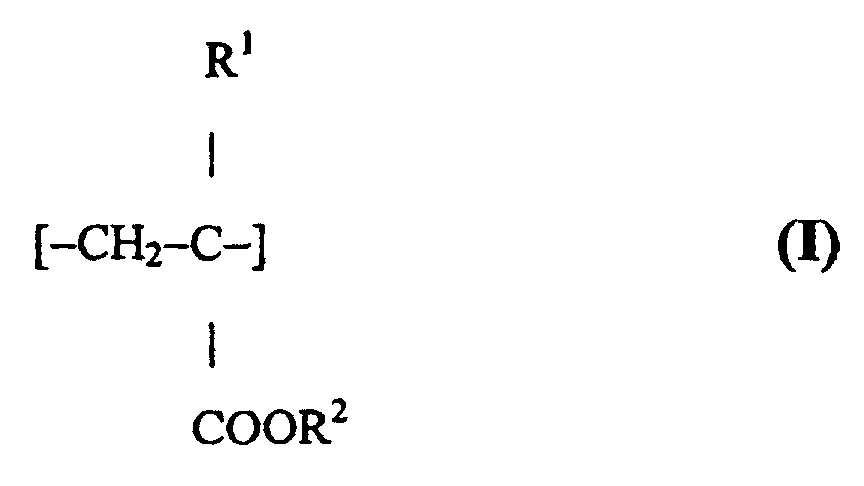
als haarfestigende Komponente in einem wäßrigen Haarreinigungsmittel mit einem Gehalt von 1-30 Gew.% wasserlöslicher, schäumender Tenside.
Applications Claiming Priority (2)
| Application Number | Priority Date | Filing Date | Title |
|---|---|---|---|
| DE19949517A DE19949517A1 (de) | 1999-10-14 | 1999-10-14 | Festigende Haarreinigungsmittel |
| DE19949517 | 1999-10-14 |
Publications (2)
| Publication Number | Publication Date |
|---|---|
| EP1092417A1 EP1092417A1 (de) | 2001-04-18 |
| EP1092417B1 true EP1092417B1 (de) | 2004-07-07 |
Family
ID=7925610
Family Applications (1)
| Application Number | Title | Priority Date | Filing Date |
|---|---|---|---|
| EP00121717A Expired - Lifetime EP1092417B1 (de) | 1999-10-14 | 2000-10-05 | Festigende Haarreinigungsmittel |
Country Status (3)
| Country | Link |
|---|---|
| EP (1) | EP1092417B1 (de) |
| AT (1) | ATE270540T1 (de) |
| DE (2) | DE19949517A1 (de) |
Families Citing this family (3)
| Publication number | Priority date | Publication date | Assignee | Title |
|---|---|---|---|---|
| DE10243037A1 (de) * | 2002-09-17 | 2004-03-25 | Henkel Kgaa | Haarbehandlungsmittel mit festigenden Eigenschaften |
| US8114855B2 (en) | 2006-11-22 | 2012-02-14 | L'oreal | Low density cosmetic formulations, cosmetic products containing the same and methods of treating hair, nails and/or skin using the same |
| EP2550863A1 (de) | 2011-07-27 | 2013-01-30 | Bayer Intellectual Property GmbH | Aktivstoffhaltige Partikel auf Polyacrylat-Basis |
Family Cites Families (10)
| Publication number | Priority date | Publication date | Assignee | Title |
|---|---|---|---|---|
| DE3708451A1 (de) * | 1987-03-16 | 1988-10-06 | Henkel Kgaa | Zwitterionische polymere und deren verwendung in haarbehandlungsmitteln |
| US5330746A (en) * | 1988-05-03 | 1994-07-19 | Yissum Research Development Company Of The Hebrew University Of Jerusalem | Dental varnish composition, and method of use |
| US5120532A (en) * | 1990-04-06 | 1992-06-09 | The Procter & Gamble Company | Hair styling shampoos |
| HU219480B (hu) * | 1991-05-23 | 2001-04-28 | Novartis Ag. | Eljárás gombás körömmegbetegségek ellen helyileg alkalmazható, allil-amin-származékot tartalmazó gyógyászati készítmények előállítására |
| US5883058A (en) * | 1995-08-29 | 1999-03-16 | The Procter & Gamble Company | High lather styling shampoos |
| FR2740033B1 (fr) * | 1995-10-18 | 1998-01-23 | Oreal | Composition cosmetique pour le traitement des matieres keratiniques comprenant au moins un polymere silicone greffe et au moins une dispersion aqueuse de particules insolubles de polymere non-ionique ou cationique |
| FR2745174B1 (fr) * | 1996-02-22 | 1998-04-30 | Oreal | Composition cosmetique de fixation et de brillance |
| IL118439A (en) * | 1996-05-28 | 2000-06-29 | Univ Ben Gurion | Topical pediculicidal compositions |
| FR2751221B1 (fr) * | 1996-07-17 | 1998-09-04 | Oreal | Composition pressurisee a base de polymere fixant, de solvant et de silicone oxyalkylenee, et mousse resultante |
| CA2278328C (en) * | 1998-02-09 | 2008-07-22 | Macrochem Corporation | Antifungal nail lacquer and method using same |
-
1999
- 1999-10-14 DE DE19949517A patent/DE19949517A1/de not_active Withdrawn
-
2000
- 2000-10-05 AT AT00121717T patent/ATE270540T1/de active
- 2000-10-05 DE DE50007003T patent/DE50007003D1/de not_active Expired - Lifetime
- 2000-10-05 EP EP00121717A patent/EP1092417B1/de not_active Expired - Lifetime
Also Published As
| Publication number | Publication date |
|---|---|
| DE19949517A1 (de) | 2001-04-19 |
| EP1092417A1 (de) | 2001-04-18 |
| ATE270540T1 (de) | 2004-07-15 |
| DE50007003D1 (de) | 2004-08-12 |
Similar Documents
| Publication | Publication Date | Title |
|---|---|---|
| EP0662816B1 (de) | Haarnachbehandlungsmittel | |
| EP0490982A1 (de) | Haarpflegemittel | |
| EP0681469B1 (de) | Oberflächenaktive mischungen, die ein temporär kationisches copolymer enthalten | |
| EP0929285B1 (de) | Verwendung wasserlöslicher copolymere als wirkstoffe in kosmetischen formulierungen | |
| WO1995022313A1 (de) | Emulsionen | |
| EP0144975A2 (de) | Quaternäre oxalkylierte Polyester, Verfahren zu deren Herstellung und deren Verwendung | |
| DE102015223832A1 (de) | Leistungsstarke Haarbehandlungsmittel mit Anti-Auswasch-Effekt | |
| EP0965322B1 (de) | Haar- und Körperreinigungsmittel mit verminderter Hautirritation | |
| DE102015223817A1 (de) | Leistungsstarke Haarbehandlungsmittel mit strukturstärkendem-Effekt | |
| DE19523596A1 (de) | Zubereitung zur Behandlung keratinischer Fasern | |
| EP0259678A2 (de) | Mittel zur Pflege und Nachbehandlung der Haare | |
| DE19613567A1 (de) | Zubereitung zur Behandlung keratinischer Fasern | |
| WO2000061099A1 (de) | Wässriges kosmetisches mittel, welches weinsäure- oder zitronensäure-ester der alkylpolyglukose und ein sauren wirkstoff mitt konservierenden eigenschaften enthält | |
| EP1092417B1 (de) | Festigende Haarreinigungsmittel | |
| EP1013257B1 (de) | Haarbehandlungsmittel enthaltend Oligoester | |
| EP1092418B1 (de) | Festigende Haarreinigungsmittel | |
| WO1990003779A1 (de) | Verwendung von amphoteren und zwitterionischen celluloseethern in haarpflegemitteln | |
| WO1990006105A2 (de) | Oberflächenaktive mischungen | |
| DE102004045253A1 (de) | Kationische Copolymere und ihre Verwendung in haarkosmetischen Zubereitungen | |
| EP0605503A1 (de) | Zubereitungen zur haarbehandlung. | |
| DE102015223839A1 (de) | Leistungsstarke Haarbehandlungsmittel mit Anti-Auswasch-Effekt | |
| DE102015223847A1 (de) | Leistungsstarke Haarbehandlungsmittel mit strukturstärkendem Effekt | |
| WO2006021350A1 (de) | Neues mittel zur behandlung keratinischer fasern | |
| DE19717687A1 (de) | Zubereitung zur Behandlung keratinischer Fasern | |
| DE4317576A1 (de) | Haarnachbehandlungsmittel |
Legal Events
| Date | Code | Title | Description |
|---|---|---|---|
| PUAI | Public reference made under article 153(3) epc to a published international application that has entered the european phase |
Free format text: ORIGINAL CODE: 0009012 |
|
| 17P | Request for examination filed |
Effective date: 20001005 |
|
| AK | Designated contracting states |
Kind code of ref document: A1 Designated state(s): AT BE CH CY DE DK ES FI FR GB GR IE IT LI LU MC NL PT SE |
|
| AX | Request for extension of the european patent |
Free format text: AL;LT;LV;MK;RO;SI |
|
| AKX | Designation fees paid |
Free format text: AT BE CH CY DE DK ES FI FR GB GR IE IT LI LU MC NL PT SE |
|
| GRAP | Despatch of communication of intention to grant a patent |
Free format text: ORIGINAL CODE: EPIDOSNIGR1 |
|
| GRAS | Grant fee paid |
Free format text: ORIGINAL CODE: EPIDOSNIGR3 |
|
| GRAA | (expected) grant |
Free format text: ORIGINAL CODE: 0009210 |
|
| AK | Designated contracting states |
Kind code of ref document: B1 Designated state(s): AT BE CH CY DE DK ES FI FR GB GR IE IT LI LU MC NL PT SE |
|
| PG25 | Lapsed in a contracting state [announced via postgrant information from national office to epo] |
Ref country code: IT Free format text: LAPSE BECAUSE OF FAILURE TO SUBMIT A TRANSLATION OF THE DESCRIPTION OR TO PAY THE FEE WITHIN THE PRE;WARNING: LAPSES OF ITALIAN PATENTS WITH EFFECTIVE DATE BEFORE 2007 MAY HAVE OCCURRED AT ANY TIME BEFORE 2007. THE CORRECT EFFECTIVE DATE MAY BE DIFFERENT FROM THE ONE RECORDED.SCRIBED TIME-LIMIT Effective date: 20040707 Ref country code: FI Free format text: LAPSE BECAUSE OF FAILURE TO SUBMIT A TRANSLATION OF THE DESCRIPTION OR TO PAY THE FEE WITHIN THE PRESCRIBED TIME-LIMIT Effective date: 20040707 Ref country code: CY Free format text: LAPSE BECAUSE OF FAILURE TO SUBMIT A TRANSLATION OF THE DESCRIPTION OR TO PAY THE FEE WITHIN THE PRESCRIBED TIME-LIMIT Effective date: 20040707 Ref country code: NL Free format text: LAPSE BECAUSE OF FAILURE TO SUBMIT A TRANSLATION OF THE DESCRIPTION OR TO PAY THE FEE WITHIN THE PRESCRIBED TIME-LIMIT Effective date: 20040707 Ref country code: IE Free format text: LAPSE BECAUSE OF FAILURE TO SUBMIT A TRANSLATION OF THE DESCRIPTION OR TO PAY THE FEE WITHIN THE PRESCRIBED TIME-LIMIT Effective date: 20040707 |
|
| REG | Reference to a national code |
Ref country code: GB Ref legal event code: FG4D Free format text: NOT ENGLISH |
|
| REG | Reference to a national code |
Ref country code: CH Ref legal event code: EP |
|
| REG | Reference to a national code |
Ref country code: IE Ref legal event code: FG4D Free format text: GERMAN |
|
| REF | Corresponds to: |
Ref document number: 50007003 Country of ref document: DE Date of ref document: 20040812 Kind code of ref document: P |
|
| PG25 | Lapsed in a contracting state [announced via postgrant information from national office to epo] |
Ref country code: LU Free format text: LAPSE BECAUSE OF NON-PAYMENT OF DUE FEES Effective date: 20041005 |
|
| PG25 | Lapsed in a contracting state [announced via postgrant information from national office to epo] |
Ref country code: SE Free format text: LAPSE BECAUSE OF FAILURE TO SUBMIT A TRANSLATION OF THE DESCRIPTION OR TO PAY THE FEE WITHIN THE PRESCRIBED TIME-LIMIT Effective date: 20041007 Ref country code: GR Free format text: LAPSE BECAUSE OF FAILURE TO SUBMIT A TRANSLATION OF THE DESCRIPTION OR TO PAY THE FEE WITHIN THE PRESCRIBED TIME-LIMIT Effective date: 20041007 Ref country code: DK Free format text: LAPSE BECAUSE OF FAILURE TO SUBMIT A TRANSLATION OF THE DESCRIPTION OR TO PAY THE FEE WITHIN THE PRESCRIBED TIME-LIMIT Effective date: 20041007 |
|
| PG25 | Lapsed in a contracting state [announced via postgrant information from national office to epo] |
Ref country code: ES Free format text: LAPSE BECAUSE OF FAILURE TO SUBMIT A TRANSLATION OF THE DESCRIPTION OR TO PAY THE FEE WITHIN THE PRESCRIBED TIME-LIMIT Effective date: 20041018 |
|
| PG25 | Lapsed in a contracting state [announced via postgrant information from national office to epo] |
Ref country code: MC Free format text: LAPSE BECAUSE OF NON-PAYMENT OF DUE FEES Effective date: 20041031 |
|
| GBT | Gb: translation of ep patent filed (gb section 77(6)(a)/1977) |
Effective date: 20041021 |
|
| NLV1 | Nl: lapsed or annulled due to failure to fulfill the requirements of art. 29p and 29m of the patents act | ||
| REG | Reference to a national code |
Ref country code: IE Ref legal event code: FD4D |
|
| PLBE | No opposition filed within time limit |
Free format text: ORIGINAL CODE: 0009261 |
|
| STAA | Information on the status of an ep patent application or granted ep patent |
Free format text: STATUS: NO OPPOSITION FILED WITHIN TIME LIMIT |
|
| ET | Fr: translation filed | ||
| 26N | No opposition filed |
Effective date: 20050408 |
|
| PG25 | Lapsed in a contracting state [announced via postgrant information from national office to epo] |
Ref country code: PT Free format text: LAPSE BECAUSE OF NON-PAYMENT OF DUE FEES Effective date: 20041207 |
|
| REG | Reference to a national code |
Ref country code: DE Ref legal event code: R084 Ref document number: 50007003 Country of ref document: DE Effective date: 20130807 |
|
| PGFP | Annual fee paid to national office [announced via postgrant information from national office to epo] |
Ref country code: AT Payment date: 20130926 Year of fee payment: 14 Ref country code: BE Payment date: 20131014 Year of fee payment: 14 Ref country code: CH Payment date: 20131014 Year of fee payment: 14 |
|
| REG | Reference to a national code |
Ref country code: CH Ref legal event code: PL |
|
| REG | Reference to a national code |
Ref country code: AT Ref legal event code: MM01 Ref document number: 270540 Country of ref document: AT Kind code of ref document: T Effective date: 20141005 |
|
| PG25 | Lapsed in a contracting state [announced via postgrant information from national office to epo] |
Ref country code: BE Free format text: LAPSE BECAUSE OF NON-PAYMENT OF DUE FEES Effective date: 20141031 |
|
| PG25 | Lapsed in a contracting state [announced via postgrant information from national office to epo] |
Ref country code: LI Free format text: LAPSE BECAUSE OF NON-PAYMENT OF DUE FEES Effective date: 20141031 Ref country code: CH Free format text: LAPSE BECAUSE OF NON-PAYMENT OF DUE FEES Effective date: 20141031 |
|
| PG25 | Lapsed in a contracting state [announced via postgrant information from national office to epo] |
Ref country code: AT Free format text: LAPSE BECAUSE OF NON-PAYMENT OF DUE FEES Effective date: 20141005 |
|
| REG | Reference to a national code |
Ref country code: FR Ref legal event code: PLFP Year of fee payment: 16 |
|
| REG | Reference to a national code |
Ref country code: FR Ref legal event code: PLFP Year of fee payment: 17 |
|
| REG | Reference to a national code |
Ref country code: FR Ref legal event code: PLFP Year of fee payment: 18 |
|
| REG | Reference to a national code |
Ref country code: FR Ref legal event code: PLFP Year of fee payment: 19 |
|
| PGFP | Annual fee paid to national office [announced via postgrant information from national office to epo] |
Ref country code: DE Payment date: 20191021 Year of fee payment: 20 |
|
| PGFP | Annual fee paid to national office [announced via postgrant information from national office to epo] |
Ref country code: FR Payment date: 20191028 Year of fee payment: 20 |
|
| PGFP | Annual fee paid to national office [announced via postgrant information from national office to epo] |
Ref country code: GB Payment date: 20191021 Year of fee payment: 20 |
|
| REG | Reference to a national code |
Ref country code: DE Ref legal event code: R071 Ref document number: 50007003 Country of ref document: DE |
|
| REG | Reference to a national code |
Ref country code: GB Ref legal event code: PE20 Expiry date: 20201004 |
|
| PG25 | Lapsed in a contracting state [announced via postgrant information from national office to epo] |
Ref country code: GB Free format text: LAPSE BECAUSE OF EXPIRATION OF PROTECTION Effective date: 20201004 |