EP1092777A1 - Séquences d' ARN auto-clivantes et leur utilisation dans le contrôle de la synthèse protéique - Google Patents
Séquences d' ARN auto-clivantes et leur utilisation dans le contrôle de la synthèse protéique Download PDFInfo
- Publication number
- EP1092777A1 EP1092777A1 EP99402552A EP99402552A EP1092777A1 EP 1092777 A1 EP1092777 A1 EP 1092777A1 EP 99402552 A EP99402552 A EP 99402552A EP 99402552 A EP99402552 A EP 99402552A EP 1092777 A1 EP1092777 A1 EP 1092777A1
- Authority
- EP
- European Patent Office
- Prior art keywords
- ligand
- gene
- rna
- self
- cleavage
- Prior art date
- Legal status (The legal status is an assumption and is not a legal conclusion. Google has not performed a legal analysis and makes no representation as to the accuracy of the status listed.)
- Withdrawn
Links
- 230000014616 translation Effects 0.000 title abstract description 32
- 108091032973 (ribonucleotides)n+m Proteins 0.000 title abstract description 4
- 238000001243 protein synthesis Methods 0.000 title abstract description 4
- 108090000623 proteins and genes Proteins 0.000 claims abstract description 162
- 238000003776 cleavage reaction Methods 0.000 claims abstract description 74
- 108091023045 Untranslated Region Proteins 0.000 claims abstract description 54
- 108020004999 messenger RNA Proteins 0.000 claims abstract description 49
- 239000003446 ligand Substances 0.000 claims description 133
- 229920002477 rna polymer Polymers 0.000 claims description 98
- 150000007523 nucleic acids Chemical group 0.000 claims description 71
- 108091028043 Nucleic acid sequence Proteins 0.000 claims description 58
- 210000004027 cell Anatomy 0.000 claims description 58
- 238000000034 method Methods 0.000 claims description 52
- 108020004414 DNA Proteins 0.000 claims description 47
- 102000053602 DNA Human genes 0.000 claims description 45
- 108090000765 processed proteins & peptides Proteins 0.000 claims description 44
- 102000004169 proteins and genes Human genes 0.000 claims description 41
- 238000004519 manufacturing process Methods 0.000 claims description 31
- 108090000994 Catalytic RNA Proteins 0.000 claims description 25
- 102000053642 Catalytic RNA Human genes 0.000 claims description 25
- 108091092562 ribozyme Proteins 0.000 claims description 25
- 229920001184 polypeptide Polymers 0.000 claims description 22
- 102000004196 processed proteins & peptides Human genes 0.000 claims description 22
- 102000039446 nucleic acids Human genes 0.000 claims description 18
- 108020004707 nucleic acids Proteins 0.000 claims description 18
- 230000001419 dependent effect Effects 0.000 claims description 17
- 239000013612 plasmid Substances 0.000 claims description 15
- 238000000338 in vitro Methods 0.000 claims description 14
- 230000007017 scission Effects 0.000 claims description 13
- 239000007787 solid Substances 0.000 claims description 12
- 108020004635 Complementary DNA Proteins 0.000 claims description 11
- 238000010804 cDNA synthesis Methods 0.000 claims description 11
- 239000002299 complementary DNA Substances 0.000 claims description 11
- 210000001519 tissue Anatomy 0.000 claims description 9
- 239000002773 nucleotide Substances 0.000 claims description 8
- 125000003729 nucleotide group Chemical group 0.000 claims description 8
- 239000013598 vector Substances 0.000 claims description 8
- 108700026220 vif Genes Proteins 0.000 claims description 8
- 102000004163 DNA-directed RNA polymerases Human genes 0.000 claims description 7
- 108090000626 DNA-directed RNA polymerases Proteins 0.000 claims description 7
- 238000001727 in vivo Methods 0.000 claims description 7
- 108020003589 5' Untranslated Regions Proteins 0.000 claims description 6
- 230000003321 amplification Effects 0.000 claims description 6
- 230000027455 binding Effects 0.000 claims description 6
- 150000004676 glycans Chemical class 0.000 claims description 6
- 239000007791 liquid phase Substances 0.000 claims description 6
- 238000003199 nucleic acid amplification method Methods 0.000 claims description 6
- 229920001282 polysaccharide Polymers 0.000 claims description 6
- 239000005017 polysaccharide Substances 0.000 claims description 6
- 238000010187 selection method Methods 0.000 claims description 6
- 235000000346 sugar Nutrition 0.000 claims description 6
- 210000004962 mammalian cell Anatomy 0.000 claims description 5
- 108091092195 Intron Proteins 0.000 claims description 4
- 108091036066 Three prime untranslated region Proteins 0.000 claims description 4
- 241000700605 Viruses Species 0.000 claims description 4
- 238000005406 washing Methods 0.000 claims description 4
- 108091023037 Aptamer Proteins 0.000 claims description 3
- 241000251131 Sphyrna Species 0.000 claims description 3
- 230000007423 decrease Effects 0.000 claims description 3
- 230000003100 immobilizing effect Effects 0.000 claims description 3
- 210000000056 organ Anatomy 0.000 claims description 3
- 230000001717 pathogenic effect Effects 0.000 claims description 3
- 150000008163 sugars Chemical class 0.000 claims description 3
- 108091027874 Group I catalytic intron Proteins 0.000 claims description 2
- 108091029499 Group II intron Proteins 0.000 claims description 2
- 241000724709 Hepatitis delta virus Species 0.000 claims description 2
- 108091026898 Leader sequence (mRNA) Proteins 0.000 claims description 2
- 241000221960 Neurospora Species 0.000 claims description 2
- 210000003527 eukaryotic cell Anatomy 0.000 claims description 2
- 210000001236 prokaryotic cell Anatomy 0.000 claims description 2
- 230000002103 transcriptional effect Effects 0.000 claims description 2
- 230000004913 activation Effects 0.000 abstract description 2
- 230000014509 gene expression Effects 0.000 description 23
- 239000003814 drug Substances 0.000 description 16
- 229940079593 drug Drugs 0.000 description 15
- 229960003722 doxycycline Drugs 0.000 description 11
- XQTWDDCIUJNLTR-CVHRZJFOSA-N doxycycline monohydrate Chemical compound O.O=C1C2=C(O)C=CC=C2[C@H](C)[C@@H]2C1=C(O)[C@]1(O)C(=O)C(C(N)=O)=C(O)[C@@H](N(C)C)[C@@H]1[C@H]2O XQTWDDCIUJNLTR-CVHRZJFOSA-N 0.000 description 11
- 230000000694 effects Effects 0.000 description 10
- 238000011534 incubation Methods 0.000 description 10
- 238000013518 transcription Methods 0.000 description 10
- 230000035897 transcription Effects 0.000 description 10
- 108700008625 Reporter Genes Proteins 0.000 description 9
- FHFYDNQZQSQIAI-UHFFFAOYSA-N pefloxacin Chemical compound C1=C2N(CC)C=C(C(O)=O)C(=O)C2=CC(F)=C1N1CCN(C)CC1 FHFYDNQZQSQIAI-UHFFFAOYSA-N 0.000 description 9
- 229960004236 pefloxacin Drugs 0.000 description 9
- 108091023040 Transcription factor Proteins 0.000 description 7
- 102000040945 Transcription factor Human genes 0.000 description 7
- 238000006243 chemical reaction Methods 0.000 description 7
- 238000003780 insertion Methods 0.000 description 7
- 230000037431 insertion Effects 0.000 description 7
- 231100000219 mutagenic Toxicity 0.000 description 7
- 230000003505 mutagenic effect Effects 0.000 description 7
- 238000013519 translation Methods 0.000 description 7
- 108090000331 Firefly luciferases Proteins 0.000 description 6
- 241000699670 Mus sp. Species 0.000 description 6
- 239000000499 gel Substances 0.000 description 6
- 108020005345 3' Untranslated Regions Proteins 0.000 description 5
- 108091026890 Coding region Proteins 0.000 description 5
- 239000000411 inducer Substances 0.000 description 5
- XLYOFNOQVPJJNP-UHFFFAOYSA-N water Substances O XLYOFNOQVPJJNP-UHFFFAOYSA-N 0.000 description 5
- 241000196324 Embryophyta Species 0.000 description 4
- 241001465754 Metazoa Species 0.000 description 4
- 108010052090 Renilla Luciferases Proteins 0.000 description 4
- FAPWRFPIFSIZLT-UHFFFAOYSA-M Sodium chloride Chemical compound [Na+].[Cl-] FAPWRFPIFSIZLT-UHFFFAOYSA-M 0.000 description 4
- 230000003197 catalytic effect Effects 0.000 description 4
- 238000002474 experimental method Methods 0.000 description 4
- 229920002521 macromolecule Polymers 0.000 description 4
- 239000002207 metabolite Substances 0.000 description 4
- 239000000203 mixture Substances 0.000 description 4
- 238000012546 transfer Methods 0.000 description 4
- 230000007306 turnover Effects 0.000 description 4
- KCXVZYZYPLLWCC-UHFFFAOYSA-N EDTA Chemical compound OC(=O)CN(CC(O)=O)CCN(CC(O)=O)CC(O)=O KCXVZYZYPLLWCC-UHFFFAOYSA-N 0.000 description 3
- 108060001084 Luciferase Proteins 0.000 description 3
- 108091034117 Oligonucleotide Proteins 0.000 description 3
- 108700019146 Transgenes Proteins 0.000 description 3
- JLCPHMBAVCMARE-UHFFFAOYSA-N [3-[[3-[[3-[[3-[[3-[[3-[[3-[[3-[[3-[[3-[[3-[[5-(2-amino-6-oxo-1H-purin-9-yl)-3-[[3-[[3-[[3-[[3-[[3-[[5-(2-amino-6-oxo-1H-purin-9-yl)-3-[[5-(2-amino-6-oxo-1H-purin-9-yl)-3-hydroxyoxolan-2-yl]methoxy-hydroxyphosphoryl]oxyoxolan-2-yl]methoxy-hydroxyphosphoryl]oxy-5-(5-methyl-2,4-dioxopyrimidin-1-yl)oxolan-2-yl]methoxy-hydroxyphosphoryl]oxy-5-(6-aminopurin-9-yl)oxolan-2-yl]methoxy-hydroxyphosphoryl]oxy-5-(6-aminopurin-9-yl)oxolan-2-yl]methoxy-hydroxyphosphoryl]oxy-5-(6-aminopurin-9-yl)oxolan-2-yl]methoxy-hydroxyphosphoryl]oxy-5-(6-aminopurin-9-yl)oxolan-2-yl]methoxy-hydroxyphosphoryl]oxyoxolan-2-yl]methoxy-hydroxyphosphoryl]oxy-5-(5-methyl-2,4-dioxopyrimidin-1-yl)oxolan-2-yl]methoxy-hydroxyphosphoryl]oxy-5-(4-amino-2-oxopyrimidin-1-yl)oxolan-2-yl]methoxy-hydroxyphosphoryl]oxy-5-(5-methyl-2,4-dioxopyrimidin-1-yl)oxolan-2-yl]methoxy-hydroxyphosphoryl]oxy-5-(5-methyl-2,4-dioxopyrimidin-1-yl)oxolan-2-yl]methoxy-hydroxyphosphoryl]oxy-5-(6-aminopurin-9-yl)oxolan-2-yl]methoxy-hydroxyphosphoryl]oxy-5-(6-aminopurin-9-yl)oxolan-2-yl]methoxy-hydroxyphosphoryl]oxy-5-(4-amino-2-oxopyrimidin-1-yl)oxolan-2-yl]methoxy-hydroxyphosphoryl]oxy-5-(4-amino-2-oxopyrimidin-1-yl)oxolan-2-yl]methoxy-hydroxyphosphoryl]oxy-5-(4-amino-2-oxopyrimidin-1-yl)oxolan-2-yl]methoxy-hydroxyphosphoryl]oxy-5-(6-aminopurin-9-yl)oxolan-2-yl]methoxy-hydroxyphosphoryl]oxy-5-(4-amino-2-oxopyrimidin-1-yl)oxolan-2-yl]methyl [5-(6-aminopurin-9-yl)-2-(hydroxymethyl)oxolan-3-yl] hydrogen phosphate Polymers Cc1cn(C2CC(OP(O)(=O)OCC3OC(CC3OP(O)(=O)OCC3OC(CC3O)n3cnc4c3nc(N)[nH]c4=O)n3cnc4c3nc(N)[nH]c4=O)C(COP(O)(=O)OC3CC(OC3COP(O)(=O)OC3CC(OC3COP(O)(=O)OC3CC(OC3COP(O)(=O)OC3CC(OC3COP(O)(=O)OC3CC(OC3COP(O)(=O)OC3CC(OC3COP(O)(=O)OC3CC(OC3COP(O)(=O)OC3CC(OC3COP(O)(=O)OC3CC(OC3COP(O)(=O)OC3CC(OC3COP(O)(=O)OC3CC(OC3COP(O)(=O)OC3CC(OC3COP(O)(=O)OC3CC(OC3COP(O)(=O)OC3CC(OC3COP(O)(=O)OC3CC(OC3COP(O)(=O)OC3CC(OC3COP(O)(=O)OC3CC(OC3CO)n3cnc4c(N)ncnc34)n3ccc(N)nc3=O)n3cnc4c(N)ncnc34)n3ccc(N)nc3=O)n3ccc(N)nc3=O)n3ccc(N)nc3=O)n3cnc4c(N)ncnc34)n3cnc4c(N)ncnc34)n3cc(C)c(=O)[nH]c3=O)n3cc(C)c(=O)[nH]c3=O)n3ccc(N)nc3=O)n3cc(C)c(=O)[nH]c3=O)n3cnc4c3nc(N)[nH]c4=O)n3cnc4c(N)ncnc34)n3cnc4c(N)ncnc34)n3cnc4c(N)ncnc34)n3cnc4c(N)ncnc34)O2)c(=O)[nH]c1=O JLCPHMBAVCMARE-UHFFFAOYSA-N 0.000 description 3
- 239000003242 anti bacterial agent Substances 0.000 description 3
- 229940088710 antibiotic agent Drugs 0.000 description 3
- 230000015572 biosynthetic process Effects 0.000 description 3
- 239000000872 buffer Substances 0.000 description 3
- 230000001276 controlling effect Effects 0.000 description 3
- 230000003247 decreasing effect Effects 0.000 description 3
- 230000003297 denaturating effect Effects 0.000 description 3
- 238000010828 elution Methods 0.000 description 3
- 238000001415 gene therapy Methods 0.000 description 3
- 239000000463 material Substances 0.000 description 3
- 238000012986 modification Methods 0.000 description 3
- 230000004048 modification Effects 0.000 description 3
- 238000010369 molecular cloning Methods 0.000 description 3
- 210000003205 muscle Anatomy 0.000 description 3
- 230000008569 process Effects 0.000 description 3
- 230000002829 reductive effect Effects 0.000 description 3
- 241000894007 species Species 0.000 description 3
- 238000003786 synthesis reaction Methods 0.000 description 3
- 230000001225 therapeutic effect Effects 0.000 description 3
- 102000040650 (ribonucleotides)n+m Human genes 0.000 description 2
- 108091092584 GDNA Proteins 0.000 description 2
- 239000005089 Luciferase Substances 0.000 description 2
- FYYHWMGAXLPEAU-UHFFFAOYSA-N Magnesium Chemical compound [Mg] FYYHWMGAXLPEAU-UHFFFAOYSA-N 0.000 description 2
- TWRXJAOTZQYOKJ-UHFFFAOYSA-L Magnesium chloride Chemical compound [Mg+2].[Cl-].[Cl-] TWRXJAOTZQYOKJ-UHFFFAOYSA-L 0.000 description 2
- XSQUKJJJFZCRTK-UHFFFAOYSA-N Urea Chemical compound NC(N)=O XSQUKJJJFZCRTK-UHFFFAOYSA-N 0.000 description 2
- 210000004507 artificial chromosome Anatomy 0.000 description 2
- 230000008901 benefit Effects 0.000 description 2
- 239000004202 carbamide Substances 0.000 description 2
- 238000004113 cell culture Methods 0.000 description 2
- 238000010367 cloning Methods 0.000 description 2
- 210000004748 cultured cell Anatomy 0.000 description 2
- 239000003687 estradiol congener Substances 0.000 description 2
- 229910052749 magnesium Inorganic materials 0.000 description 2
- 239000011777 magnesium Substances 0.000 description 2
- 230000007170 pathology Effects 0.000 description 2
- 239000013600 plasmid vector Substances 0.000 description 2
- 229920002401 polyacrylamide Polymers 0.000 description 2
- 238000000746 purification Methods 0.000 description 2
- 108091008146 restriction endonucleases Proteins 0.000 description 2
- 239000011780 sodium chloride Substances 0.000 description 2
- ATHGHQPFGPMSJY-UHFFFAOYSA-N spermidine Chemical compound NCCCCNCCCN ATHGHQPFGPMSJY-UHFFFAOYSA-N 0.000 description 2
- 239000000758 substrate Substances 0.000 description 2
- 238000002560 therapeutic procedure Methods 0.000 description 2
- 238000001890 transfection Methods 0.000 description 2
- 230000009261 transgenic effect Effects 0.000 description 2
- 239000011534 wash buffer Substances 0.000 description 2
- JKMHFZQWWAIEOD-UHFFFAOYSA-N 2-[4-(2-hydroxyethyl)piperazin-1-yl]ethanesulfonic acid Chemical compound OCC[NH+]1CCN(CCS([O-])(=O)=O)CC1 JKMHFZQWWAIEOD-UHFFFAOYSA-N 0.000 description 1
- QKNYBSVHEMOAJP-UHFFFAOYSA-N 2-amino-2-(hydroxymethyl)propane-1,3-diol;hydron;chloride Chemical compound Cl.OCC(N)(CO)CO QKNYBSVHEMOAJP-UHFFFAOYSA-N 0.000 description 1
- DIDGPCDGNMIUNX-UUOKFMHZSA-N 2-amino-9-[(2r,3r,4s,5r)-5-(dihydroxyphosphinothioyloxymethyl)-3,4-dihydroxyoxolan-2-yl]-3h-purin-6-one Chemical compound C1=2NC(N)=NC(=O)C=2N=CN1[C@@H]1O[C@H](COP(O)(O)=S)[C@@H](O)[C@H]1O DIDGPCDGNMIUNX-UUOKFMHZSA-N 0.000 description 1
- NKDFYOWSKOHCCO-YPVLXUMRSA-N 20-hydroxyecdysone Chemical compound C1[C@@H](O)[C@@H](O)C[C@]2(C)[C@@H](CC[C@@]3([C@@H]([C@@](C)(O)[C@H](O)CCC(C)(O)C)CC[C@]33O)C)C3=CC(=O)[C@@H]21 NKDFYOWSKOHCCO-YPVLXUMRSA-N 0.000 description 1
- DNXDWMHPTVQBIP-ZQIUZPCESA-N 5-[(3as,4s,6ar)-2-oxo-1,3,3a,4,6,6a-hexahydrothieno[3,4-d]imidazol-4-yl]-n-[6-[(2-iodoacetyl)amino]hexyl]pentanamide Chemical compound N1C(=O)N[C@@H]2[C@H](CCCCC(=O)NCCCCCCNC(=O)CI)SC[C@@H]21 DNXDWMHPTVQBIP-ZQIUZPCESA-N 0.000 description 1
- 229920000936 Agarose Polymers 0.000 description 1
- 108020000948 Antisense Oligonucleotides Proteins 0.000 description 1
- 241000894006 Bacteria Species 0.000 description 1
- 108020004394 Complementary RNA Proteins 0.000 description 1
- 108010041986 DNA Vaccines Proteins 0.000 description 1
- 230000006820 DNA synthesis Effects 0.000 description 1
- 229940021995 DNA vaccine Drugs 0.000 description 1
- 230000004568 DNA-binding Effects 0.000 description 1
- 102000016928 DNA-directed DNA polymerase Human genes 0.000 description 1
- 108010014303 DNA-directed DNA polymerase Proteins 0.000 description 1
- 241000702421 Dependoparvovirus Species 0.000 description 1
- 238000003718 Dual-Luciferase Reporter Assay System Methods 0.000 description 1
- 102000004190 Enzymes Human genes 0.000 description 1
- 108090000790 Enzymes Proteins 0.000 description 1
- 241000588724 Escherichia coli Species 0.000 description 1
- 108700039691 Genetic Promoter Regions Proteins 0.000 description 1
- 239000007995 HEPES buffer Substances 0.000 description 1
- 108090001102 Hammerhead ribozyme Proteins 0.000 description 1
- 241000282412 Homo Species 0.000 description 1
- 102100024319 Intestinal-type alkaline phosphatase Human genes 0.000 description 1
- 101710184243 Intestinal-type alkaline phosphatase Proteins 0.000 description 1
- 241000254158 Lampyridae Species 0.000 description 1
- 108091027974 Mature messenger RNA Proteins 0.000 description 1
- 241001529936 Murinae Species 0.000 description 1
- 101710163270 Nuclease Proteins 0.000 description 1
- 102000043276 Oncogene Human genes 0.000 description 1
- 108700020796 Oncogene Proteins 0.000 description 1
- 102000035195 Peptidases Human genes 0.000 description 1
- 108091005804 Peptidases Proteins 0.000 description 1
- 108091093037 Peptide nucleic acid Proteins 0.000 description 1
- OAICVXFJPJFONN-UHFFFAOYSA-N Phosphorus Chemical compound [P] OAICVXFJPJFONN-UHFFFAOYSA-N 0.000 description 1
- 239000004952 Polyamide Substances 0.000 description 1
- 108010021757 Polynucleotide 5'-Hydroxyl-Kinase Proteins 0.000 description 1
- 102000008422 Polynucleotide 5'-hydroxyl-kinase Human genes 0.000 description 1
- 239000004365 Protease Substances 0.000 description 1
- 108020004682 Single-Stranded DNA Proteins 0.000 description 1
- 230000002411 adverse Effects 0.000 description 1
- 230000003281 allosteric effect Effects 0.000 description 1
- 230000000692 anti-sense effect Effects 0.000 description 1
- 239000000074 antisense oligonucleotide Substances 0.000 description 1
- 238000012230 antisense oligonucleotides Methods 0.000 description 1
- 230000001580 bacterial effect Effects 0.000 description 1
- 239000011324 bead Substances 0.000 description 1
- 210000001124 body fluid Anatomy 0.000 description 1
- 239000010839 body fluid Substances 0.000 description 1
- 244000309466 calf Species 0.000 description 1
- 230000015556 catabolic process Effects 0.000 description 1
- 230000036978 cell physiology Effects 0.000 description 1
- 230000001413 cellular effect Effects 0.000 description 1
- 239000000919 ceramic Substances 0.000 description 1
- 239000003184 complementary RNA Substances 0.000 description 1
- 150000001875 compounds Chemical class 0.000 description 1
- 238000004590 computer program Methods 0.000 description 1
- 238000007796 conventional method Methods 0.000 description 1
- 231100000433 cytotoxic Toxicity 0.000 description 1
- 230000001472 cytotoxic effect Effects 0.000 description 1
- 238000006731 degradation reaction Methods 0.000 description 1
- 238000004925 denaturation Methods 0.000 description 1
- 230000036425 denaturation Effects 0.000 description 1
- 230000000994 depressogenic effect Effects 0.000 description 1
- 238000013461 design Methods 0.000 description 1
- 239000003651 drinking water Substances 0.000 description 1
- 235000020188 drinking water Nutrition 0.000 description 1
- 238000004520 electroporation Methods 0.000 description 1
- 238000012869 ethanol precipitation Methods 0.000 description 1
- 230000001747 exhibiting effect Effects 0.000 description 1
- 210000003414 extremity Anatomy 0.000 description 1
- -1 genomic Proteins 0.000 description 1
- 239000011521 glass Substances 0.000 description 1
- 230000003054 hormonal effect Effects 0.000 description 1
- 210000005260 human cell Anatomy 0.000 description 1
- 238000009396 hybridization Methods 0.000 description 1
- RAXXELZNTBOGNW-UHFFFAOYSA-N imidazole Substances C1=CNC=N1 RAXXELZNTBOGNW-UHFFFAOYSA-N 0.000 description 1
- 230000028993 immune response Effects 0.000 description 1
- 239000003112 inhibitor Substances 0.000 description 1
- 230000003993 interaction Effects 0.000 description 1
- 230000003834 intracellular effect Effects 0.000 description 1
- 230000000670 limiting effect Effects 0.000 description 1
- 239000012160 loading buffer Substances 0.000 description 1
- 210000003141 lower extremity Anatomy 0.000 description 1
- 239000012139 lysis buffer Substances 0.000 description 1
- 229910001629 magnesium chloride Inorganic materials 0.000 description 1
- 239000003550 marker Substances 0.000 description 1
- 230000003278 mimic effect Effects 0.000 description 1
- 238000001823 molecular biology technique Methods 0.000 description 1
- 238000000329 molecular dynamics simulation Methods 0.000 description 1
- 231100000350 mutagenesis Toxicity 0.000 description 1
- 238000002703 mutagenesis Methods 0.000 description 1
- 230000035772 mutation Effects 0.000 description 1
- 231100000252 nontoxic Toxicity 0.000 description 1
- 230000003000 nontoxic effect Effects 0.000 description 1
- 108091008104 nucleic acid aptamers Proteins 0.000 description 1
- 244000045947 parasite Species 0.000 description 1
- 230000037361 pathway Effects 0.000 description 1
- 238000002205 phenol-chloroform extraction Methods 0.000 description 1
- 230000035479 physiological effects, processes and functions Effects 0.000 description 1
- 229920002647 polyamide Polymers 0.000 description 1
- 238000002360 preparation method Methods 0.000 description 1
- 230000000069 prophylactic effect Effects 0.000 description 1
- 238000010791 quenching Methods 0.000 description 1
- 238000005215 recombination Methods 0.000 description 1
- 230000006798 recombination Effects 0.000 description 1
- 230000001105 regulatory effect Effects 0.000 description 1
- 230000000754 repressing effect Effects 0.000 description 1
- 238000010839 reverse transcription Methods 0.000 description 1
- 230000002441 reversible effect Effects 0.000 description 1
- 230000000630 rising effect Effects 0.000 description 1
- 238000012216 screening Methods 0.000 description 1
- 238000012163 sequencing technique Methods 0.000 description 1
- 229940063673 spermidine Drugs 0.000 description 1
- 238000010561 standard procedure Methods 0.000 description 1
- 230000005026 transcription initiation Effects 0.000 description 1
- 230000001131 transforming effect Effects 0.000 description 1
- 241000701161 unidentified adenovirus Species 0.000 description 1
- 241001430294 unidentified retrovirus Species 0.000 description 1
- 238000002255 vaccination Methods 0.000 description 1
- 108090000883 varkud satellite ribozyme Proteins 0.000 description 1
- 230000003612 virological effect Effects 0.000 description 1
Images



Classifications
-
- C—CHEMISTRY; METALLURGY
- C12—BIOCHEMISTRY; BEER; SPIRITS; WINE; VINEGAR; MICROBIOLOGY; ENZYMOLOGY; MUTATION OR GENETIC ENGINEERING
- C12N—MICROORGANISMS OR ENZYMES; COMPOSITIONS THEREOF; PROPAGATING, PRESERVING, OR MAINTAINING MICROORGANISMS; MUTATION OR GENETIC ENGINEERING; CULTURE MEDIA
- C12N15/00—Mutation or genetic engineering; DNA or RNA concerning genetic engineering, vectors, e.g. plasmids, or their isolation, preparation or purification; Use of hosts therefor
- C12N15/09—Recombinant DNA-technology
- C12N15/63—Introduction of foreign genetic material using vectors; Vectors; Use of hosts therefor; Regulation of expression
- C12N15/67—General methods for enhancing the expression
-
- A—HUMAN NECESSITIES
- A61—MEDICAL OR VETERINARY SCIENCE; HYGIENE
- A61P—SPECIFIC THERAPEUTIC ACTIVITY OF CHEMICAL COMPOUNDS OR MEDICINAL PREPARATIONS
- A61P43/00—Drugs for specific purposes, not provided for in groups A61P1/00-A61P41/00
-
- C—CHEMISTRY; METALLURGY
- C12—BIOCHEMISTRY; BEER; SPIRITS; WINE; VINEGAR; MICROBIOLOGY; ENZYMOLOGY; MUTATION OR GENETIC ENGINEERING
- C12N—MICROORGANISMS OR ENZYMES; COMPOSITIONS THEREOF; PROPAGATING, PRESERVING, OR MAINTAINING MICROORGANISMS; MUTATION OR GENETIC ENGINEERING; CULTURE MEDIA
- C12N15/00—Mutation or genetic engineering; DNA or RNA concerning genetic engineering, vectors, e.g. plasmids, or their isolation, preparation or purification; Use of hosts therefor
- C12N15/09—Recombinant DNA-technology
- C12N15/10—Processes for the isolation, preparation or purification of DNA or RNA
- C12N15/1034—Isolating an individual clone by screening libraries
- C12N15/1048—SELEX
-
- C—CHEMISTRY; METALLURGY
- C12—BIOCHEMISTRY; BEER; SPIRITS; WINE; VINEGAR; MICROBIOLOGY; ENZYMOLOGY; MUTATION OR GENETIC ENGINEERING
- C12N—MICROORGANISMS OR ENZYMES; COMPOSITIONS THEREOF; PROPAGATING, PRESERVING, OR MAINTAINING MICROORGANISMS; MUTATION OR GENETIC ENGINEERING; CULTURE MEDIA
- C12N15/00—Mutation or genetic engineering; DNA or RNA concerning genetic engineering, vectors, e.g. plasmids, or their isolation, preparation or purification; Use of hosts therefor
- C12N15/09—Recombinant DNA-technology
- C12N15/63—Introduction of foreign genetic material using vectors; Vectors; Use of hosts therefor; Regulation of expression
Definitions
- This invention relates to the control of protein synthesis from a mRNA sequence (activation or repression) by inserting a sequence into an untranslated region (UTR) of a gene which confers conditional self-cleavage to the transcribed RNA.
- UTR untranslated region
- the first level is the transcription of the gene to generate a pre-messengerRNA (pre-mRNA).
- pre-mRNA pre-messengerRNA
- the rate of transcription initiation as well as the transcript elongation are under tight physiological control by the basal transcription machinery.
- Another level is pre-mRNA splicing into a mature mRNA.
- Alternative splicing events can occur in tissue-specific manner or under hormonal control, hence the active protein is synthesized in a restricted set of tissue or physiological environment.
- Other levels of control are the mRNA turn-over and the ability of the mRNA to be translated into protein. Hence drug-control of protein synthesis can theoretically be addressed at each of the aforementioned levels.
- a drug can control the expression of a target gene within a genome by altering the rate of synthesis of the RNA. It can be achieved by drugs which bind DNA with high affinity and sequence- specificity and hence compete with the transcription factors necessary for the transcription of the target gene.
- drugs may be triple helix-forming oligonucleotides (C. Helene et al., Ciba Found Symp. (1997) 209: 94-106), peptide nucleic acids (Pooga, M. et al.; Nat Biotechnol. (1998) 16(9):857-61) or pyrrole-imidazole polyamides (Dickinson, L.A. et al.; Proc Natl Acad Sci U S A.
- RNA molecules which have enzyme-like catalytic activities usually associated with cleavage, splicing or ligation of nucleic acid sequence.
- ribozymes The typical substrates for catalytically active ribozymes are RNA molecules, although ribozymes can catalyze reactions in which DNA molecules serve as substrates.
- ribozymes can be engineered to act in trans, in a truly catalytic manner, with a turnover greater than one and without being self-modified.
- ribozyme Two distinct regions can be identified in a ribozyme: the binding region which gives the ribozyme its specificity through hybridization to a specific nucleic acid sequence, and a catalytic region which gives the ribozyme the activity of cleavage, ligation or splicing.
- Drug-control of the protein production from a specific target gene within a genome can be addressed by controlling the translation of the mRNA into protein.
- Control of gene expression which takes advantage of the interaction of a specific ligand-binding RNA (aptamer) and its cognate ligand has been published (Werstuck, G. & Green, M.R.; Science (1998) 282, 296-298).
- Translation of the mRNA is inhibited by a drug which binds in the vicinity of the 5' cap structure of the mRNA. In this setting, the intracellular presence of the drug is repressing protein production.
- the control of gene expression and protein production is advantageous in the field of gene therapy and DNA vaccines. It is intended to prevent the occurrence of adverse side effects and to tune the level of expression within an efficient therapeutic window.
- the use of the above-mentioned systems for the control of gene expression in gene therapy faces major hurdles.
- the DNA binding drugs, as well as anti-sense and ribozyme oligonucleotides have a poor bio-availability and are readily degraded by nucleases and proteases within tissues or body fluids. Xenogenic transcription factors may elicit a cytotoxic immune response which will destroy the cells expressing the transgenes and hence undermine the therapy or the vaccination (S. K. Tripathy et al., Nature Medicine (1996) 2, 545-550).
- the drugs which activate the xenogenic transcription factors are antibiotics, estrogen analogs or immuno-suppressors. They are not therapeutics per se for the gene therapy and may have undesired side effects. Therefore it would be advantageous to choose an inducer drug which is at least innocuous, for the therapy considered.
- An additional drawback is the large cloning space needed in the vectors, in order to accommodate the control sequences and the genes encoding the transcription factors. Therefore it is highly advantageous i) to avoid the use of xenogenic proteins for the control of gene expression and ii) to choose the inducer drug according to the therapeutic objectives.
- Control of gene expression and protein production is advantageous in the field of functional genomics, transgenic plants and transgenic animals.
- the conditional expression of a gene into cell cultures or whole plants or animals and the comparison of the phenotypes with and without gene expression enables one to decipher the function of the gene.
- the drawbacks of the xenogenic transcription factor-based gene switches are two-fold: i) the expression of the target gene and the translation of the mRNA are no more under control of the endogenous physiological stimuli and ii) the effect of the inducer drug on the physiology of the cells.
- genes according to the instant invention can be any nucleic acid encoding a biological product, comprising one or more naturally present or artifically produced untranslated region(s).
- Untranslated region (UTR) of a gene :
- the UTR may be located before the 5'-end of the coding region (5'-UTR), after the 3'-end of the coding (3'-UTR), or may be an intron inserted within the coding region.
- the UTR may be located before the 5'-end of the coding region (5'-UTR), after the 3'-end of the coding (3'-UTR), or may be an intron inserted within the coding region.
- the ligand can be a nucleic acid molecule, a protein, polysaccharide or sugar, or an organic or inorganic molecule which interacts with the self-cleaving RNA sequence and either inhibits or stimulates self-cleavage.
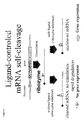
- the instant invention provides methods and compositions for the control of protein production in a cell. More particularly, the invention provides methods and compositions for the control of protein production using particular nucleic acid sequences, inserted within at least one UTR of a gene, which confer ligand-dependant self-cleavage to RNAs transcribed from said gene. Hence, the pre-mRNA or the mRNA can undergo self-cleavage that can be regulated through the presence, or the absence of a ligand. The ligand-controlled cleavage enables one to control protein production with this ligand (figure 1).
- the amount of a protein synthesized in a cell is proportional to the amount of its mRNA, and depends on efficient translation of its mRNA into protein.
- Two features of mRNAs are essential for their efficient translation into proteins (Gallie, R.; Genes & Dev. (1991) 5: 2108-2116) and for their stability (Beelman, C.A. & Parker, R.; Cell (1995) 81: 179-183): the 5'-cap structure and the 3'-polyA tail.
- Figure 2 shows that the expression of the luciferase gene can be controlled by removing either 3'-polyA or 5'-cap from the mRNA.
- the insertion of an active nucleic acid sequence of this invention in the 5'- or 3'-UTR of the reporter gene entails the cleavage of the transcribed RNA and hence the removal of, respectively, the 5'-cap and 3'-polyA.
- the active nucleic acid sequence in either location; decreases the luciferase protein production whereas an inactive nucleic acid sequence in the same location does not affect gene expression.
- This invention can be used to control production of essentially all types of proteins, in essentially all types of cells, in vitro ex vivo or in vivo.
- a first object of this invention resides more particularly in a modified gene encoding a protein, polypeptide or peptide, wherein said modified gene contains, inserted in an untranslated region thereof (UTR), a nucleic acid sequence conferring ligand-dependant self-cleavage to a RNA molecule transcribed from the gene.
- UTR untranslated region thereof
- the modified gene can be a genomic DNA, a cDNA or a synthetic DNA.
- the modified gene comprises at least one UTR region, which can be naturally present in said gene or artificially inserted therein.
- the gene comprises naturally-ocurring UTRs such as 5'-UTR, introns and 3'-UTRs.
- UTR regions may be introduced, such as introns.
- additional UTR can be inserted, in addition thereto or in replacement thereof.
- the modified gene may further comprise a transcriptional promoter, to direct transcription of the coding region into pre-mRNA.
- the gene may, in addition, be contained in a vector, such as a plasmid, a virus, a cosmid, a phage, an artificial chromosome, etc.
- the modified gene may encode any type of protein, polypeptide or peptide, including protein, polypeptide or peptide of human, other mammalian, plant, viral or bacterial origin, or derivatives thereof for instance.
- the encoded biological product may exhibit therapeutic or prophylactic activity, and may also represent a marker molecule, for instance.
- the modified gene of this invention comprises at least one particular nucleic acid sequence inserted in a UTR of said gene.
- the UTR can be a 5'-UTR, a 3'-UTR or an intron.
- the modified gene may comprise several copies of such a nucleic acid sequence, inserted in various UTRs or in various locations of a UTR, or different nucleic acid sequences inserted in various UTRs or in various locations of a UTR.
- the self-cleavage of the RNA sequence inserted into a UTR of the pre-mRNA is inhibited by a ligand.
- the pre-mRNA or mRNA is cleaved in the absence of ligand and protein production is decreased ; the pre-mRNA or mRNA is not cleaved in the presence of ligand and protein production is restored.
- a particular modified gene of this invention thus comprises a nucleic acid sequence which confers ligand-inhibited self-cleavage to a RNA transcribed from the gene.
- the self-cleavage of the RNA sequence inserted into a UTR of the pre-mRNA is activated by a ligand.
- the pre-mRNA or mRNA is cleaved in the presence of ligand and protein production is repressed; the pre-mRNA or mRNA is not cleaved in the absence of ligand and protein production is restored.
- Another particular modified gene of this invention thus comprises a nucleic acid sequence which confers ligand-activated self-cleavage to a RNA transcribed from the gene.
- the invention also relates to a method of modifying a gene, comprising inserting, within at least one untranslated region of the gene, a nucleic acid sequence conferring ligand-dependent self-cleavage to a RNA transcribed from said gene.
- the nucleic acid can be inserted in various sites within a UTR sequence. Where 5'-UTR or 3'- UTR are concerned, insertion can be performed in different sites which essentially do not affect transcription of the DNA into pre-mRNA. Such sites may be determined by analyzing the sequence of a UTR, and by using restriction sites available or artificially created. Insertion may also be accomplished by recombination, mutagenesis, etc. Where introns are concerned, insertion can take place in any region which do not affect transcription.
- RNAfold Zuker, M.; Methods Mol Biol (1994) 25:267-94
- the surrounding sequence may provide the nucleic acid sequence with alternative folding pathways which lead to inactive or ligand-independent conformations (Stage- Zimmermann, T.K. RNA (1998) 4:875-889).
- Various sites of insertion of the nucleic acid sequence within a UTR can be selected according to the above methodologies.
- the particular nucleic acid sequence used in the instant invention to provide production control can be any nucleic acid sequence encoding a ligand-dependant self-cleavable RNA.
- the size of this nucleic acid sequence can vary, depending on its nature and/or origin. Generally, the nucleic acid sequence comprises between 10 and 500 base pairs, preferably below 300 base pairs. Typical such nucleic acids comprise between 20 and 200 bp.
- the nucleic acid can be of different origin.
- the nucleic acid can be derived from naturally occuring self-cleavable RNA sequences.
- RNAs can be prepared artificially and used according to the instant invention.
- DNAs encoding such RNAs can be prepared by conventional techniques and used to modify a gene in accordance with the instant invention.
- any DNA sequences whose RNA transcripts have self-cleaving activity may be chosen and inhibitors of self-cleavage may be identified from a library of compounds.
- an advantageous ligand is chosen first and DNA sequences whose RNA transcripts feature ligand-dependant self-cleavage are produced in vitro.
- the invention also describes a particular method that can be used to produce artificial, non-naturally ocurring ligand-dependant self-cleavable RNA and DNA encoding them. Said artificial, non-naturally ocurring ligand-dependant self-cleavable RNA are called aptazymes, and represent another object of the instant invention.
- the nucleic acid sequence is an artificial DNA encoding an aptazyme.
- Said aptazyme can be obtained by an in vitro evolution and selection method, as described below.
- the ligand can be selected first, and then corresponding activated or inhibited aptazymes are produced.
- the ligand can be a nucleic acid molecule, a protein, polysaccharide or sugar, or an organic or inorganic molecule.
- the nature of the ligand can be chosen to be exogenously supplied, such as some non-toxic molecule or drug which readily enters at least the cells transfected with the transgene.
- an entirely endogenous system can be designed in which the controlling ligand is a molecule (e.g., some small metabolite or macromolecule) present within the target cell.
- the ligand can be a molecule present within the target cell population and essentially absent (or present at a lower concentration) within other cell population, thereby conferring tissue selectivity to the expression.
- the ligand may be a molecule present within the target cell population, which is directly or indirectly related to a pathology or condition to be corrected, and essentially absent from cells or tissues not affected by the pathology.
- the activity of the ligand-dependant self-cleavage nucleic acid is then dependent on its binding to the metabolite or macromolecule.
- the expression of the gene is then restricted essentially to the cells which express sufficient amounts of the metabolite or macromolecule, i.e., the diseased cell population (examples of such ligands include mutated p53 molecules, activated oncogenes, etc.).
- ligands include antibiotics (e.g., doxycycline, pefloxacine, etc.), molecules which are used in humans (such as drugs, adjuvents, substitutes, etc.) and any molecule which would be innocuous in a human subject, for instance.
- antibiotics e.g., doxycycline, pefloxacine, etc.
- molecules which are used in humans such as drugs, adjuvents, substitutes, etc.
- any molecule which would be innocuous in a human subject for instance.
- This process requires a very high degree of specificity in the molecular recognition between the aptazyme and the ligand.
- Such a specificity can in principle is achieved by a nucleic acid aptamers (Famulok, M. ; Curr. Opin. Struct. Biol. (1999); 9: 324-329).
- Aptazymes that undergo ligand-dependent self-cleavage can be prepared and isolated by an in vitro evolution and selection method.
- This method is related to the SELEX technology (US Patent 5270163, incorporated therein by reference) which is a technique that allows the simultaneous screening of highly diverse combinatorial libraries of different RNA or DNA (single stranded or double stranded DNA) molecules for a particular feature.
- SELEX technology US Patent 5270163, incorporated therein by reference
- These features may be i) catalytic activity of a nucleic acid, ii) the ability of a nucleic acid to specifically complex a desired target molecule with high affinity and selectivity.
- a production method of this invention (as depicted in figure 3), comprises:
- This method can also be used to select aptamers, i.e. ligand-binding RNA sequences.
- the molecules in the pool are comprised of an entirely random sequence with the exception of two short flanking sequences which encompass the RNA polymerase promoter and the attachment sites of the amplification primers.
- the molecules in the pool are constructed based on a known ribozyme sequence.
- the molecule may be comprised of a constant, ribozyme-derived sequence attached to a random or semi-random sequence.
- the random sequence contains between 10 and 300 nucleotides, preferably between 20 and 200, more preferably between 20 and 180 nucleotides.
- a «random» sequence it is understood that the sequence is random only as originally used in the selection process, that the product of the selection process is not random but a set of specific sequences displaying ligand-dependent self-cleaving ability.
- the initial pool may comprise a various number of DNA molecules.
- the initial pool may comprise up to 10 20 molecules or more.
- Typical pools comprise between 10 4 and 10 16 molecules.
- the ionic composition of the selection medium will be set accordingly and the temperature will be set to 37 degrees Celsius.
- mutations can be introduced in the selected DNA pool obtained during step 9 by performing the amplification (e.g., the PCR) under mutagenic conditions. This mutagenic step broadens the sequence diversity of the pool which is subjected to the selection.
- the in vitro selection of the aptazyme generally yields a set of several sequences, which exhibit the desired property of ligand-dependent self-cleavage. It is then possible to clone the selected aptazymes and determine their exact sequence. This can be achieved by ligation of the double-stranded DNA pool encoding the aptazymes to an appropriate linearized plasmid vector and transforming bacteria with the resulting circular plasmid vectors (Sambrook et al (1989). Molecular cloning, a laboratory manual, Second Edition, N. Ford, ed., Cold Spring Harbor: Cold Spring Harbor Laboratory Press). The cloned plasmids containing the aptazymes can be sequenced by the method of Sanger et al.
- reporter genes expression cassettes and vectors carrying them can be constructed by standard molecular biology techniques (Sambrook et al (1989). Molecular cloning, a laboratory manual, Second Edition, N. Ford, ed., Cold Spring Harbor: Cold Spring Harbor Laboratory Press).
- the target cells are transfected with two reporter genes; reporter gene (1) contains the sequence of an in vitro-selected aptazyme within at least one UTR, and reporter gene (2) does not contain any aptazyme. Two sets of cells are cultured in the absence and in the presence of the ligand.
- the ratio of reporter gene (1) expression over reporter gene (2) expression is assessed in the presence and in the absence of ligand.
- the aptazyme clone which yields the lowest ratio where protein production is to be repressed and the highest ratio where protein production is to be induced is selected.
- the invention can be used to control protein production in vitro, in vivo or ex vivo in various cell types.
- the invention also resides in a method for controlling production of a protein, polypeptide or peptide from a gene, comprising inserting, within at least one untranslated region of the gene, a nucleic acid sequence conferring ligand-dependent self-cleavage to a RNA transcribed from said gene.
- the invention provides a method for removing, in a ligand-dependant manner, the 5'-cap structure and/or the 3'-polyA tail from a pre-mRNA or a mRNA of a gene whose expression is to be controlled. This can be achieved by inserting a sequence in at least one UTR of the gene which entails ligand-dependent self-cleavage of the transcribed RNA.
- the invention thus also resides in a method of removing a 5'-cap structure and/or a 3'-polyA tail from a pre-mRNA or a mRNA transcribed from a gene, comprising inserting, within at least one untranslated region of the gene, a nucleic acid sequence conferring ligand-dependent self-cleavage to a RNA transcribed from said gene.
- the method is for removing a 5'-cap structure from a pre-mRNA or a mRNA transcribed from a gene, and the nucleic acid sequence is inserted within at least a 5'-untranslated region of the gene.
- the method is for removing a 3'-polyA structure from a pre-mRNA or a mRNA transcribed from a gene, and the nucleic acid sequence is inserted within at least a 3'- untranslated region of the gene.
- the invention also relates to a method of controlled production of a protein, polypeptide or peptide within a cell, comprising (i) introducing into a cell a modified gene encoding the protein, polypeptide or peptide, wherein said modified gene contains, inserted in an untranslated region thereof (UTR), a nucleic acid sequence conferring ligand-dependant self-cleavage to a RNA molecule transcribed from the gene, and (ii) contacting the cell in the presence or absence of the ligand.
- UTR untranslated region thereof
- the modified gene contains, inserted in an untranslated region thereof (UTR), a nucleic acid sequence conferring ligand-activated self-cleavage to a RNA molecule transcribed from the gene, and production is repressed by contacting the cell with the ligand, while production is restored (or increased) by removing (or stopping contacting or in the absence of) the ligand.
- UTR untranslated region thereof
- the modified gene contains, inserted in an untranslated region thereof (UTR), a nucleic acid sequence conferring ligand-inhibited self-cleavage to a RNA molecule transcribed from the gene, and production is increased by contacting the cell with the ligand, while production is depressed (or inhibited) by removing (or stopping contacting or in the absence of) the ligand.
- UTR untranslated region thereof
- the ligand can be either exogenously supplied to the cell or be an endogenous component of the cell, as described above.
- the ligand can be a molecule which is preferentially present in cells where production of the protein, polypeptide or peptide is sought (and essentially absent or express at a lower concentration in other cells or tissues).
- the above method can be used for production of a protein, polypeptide or peptide in a cell (or in a cell population or culture) in vitro or ex vivo.
- the above method can also be applied to the production of a protein, polypeptide or peptide in a cell, tissue or organ in vivo.
- the above cell can be selected from prokaryotic cells, eukaryotic cells, mammalian cells and plant cells, for instance. It may be a tissue, organ, an isolated cell culture, established cell lines or primary cultures. Preferred cells are mammalian cells, in particular murine or human cells, more preferably ex vivo or in vivo.
- the gene can be introduced into the cells by administration to an organism, and the ligand can be supplied exogenously or contained within the cell.
- the gene may be contained in a vector selected from plasmids, viruses, cosmids, artificial chromosomes, etc., or combinations thereof.
- Preferred vectors include plasmids and viruses, such as adenoviruses, retroviruses, AAV, HSV, HIV, etc.
- the instant invention also discloses and claims combinations of a ligand and a modified gene (or vector containing the same) as described above, for simultaneous, separate or sequential use.
- Preferred combinations comprise:
- the ligand is selected from the group of nucleic acid molecules, proteins, polysaccharides, sugars and organic and inorganic molecules.
- RNA sequence e.g., a ribozyme hammerhead sequence
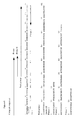
- Panel A reporter protein production without ribozyme sequence, with inactive ribozyme sequence or with active ribozyme sequence in one UTR of the gene.
- Panel B site of insertion of the ribozyme sequences (restriction enzymes sites) within the pre-mRNA of the reporter gene.
- Panel C sequence of the active and the inactive ribozyme.
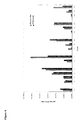
- RNA eluted after each selection cycle is shown for the two selections, using doxycycline or pefloxacine as a ligand.
- An empty space between two cycles indicates an increase in the selection pressure (either by changing incubation times or/and by decreasing ligand concentration (see Table 1).
- Example 1 Selection of aptazymes inhibited by doxycycline and pefloxacine
- the initial degenerated pool was produced using standard DNA synthesis chemistry on an Expedite nucleic acids synthesis system (Millipore). Oligonucleotides were purified on denaturating polyacrylamide gels. The following primers were synthesized:
- This DNA library was used as a template for T 7 RNA polymerase during the initial in vitro selection cycle.
- Standard transcription reactions contained the following components: 250 units T 7 RNA polymerase (Stratagene), T 7 Buffer (Stratagene), 2,5 mM of each dNTP, 20 mM of GMPS, 20 ⁇ Ci ⁇ 32 P GTP, RNasin (50 U), ligand (lmM).
- the transcription reaction was incubated over night at 37°C.
- the uncleaved RNA transcripts were then purified on a 8% denaturating polyacrylamide gel. After purification, the RNA was treated with Iodo-Acetyl-LC-Biotin (Pierce - 200 fold excess) for 90 min. at room temperature.
- Primed RNA was gel purified under the same conditions as described above and incubated with streptavidine agarose (Pierce) for 30 min. at room temperature. The column material was then washed 6 times alternatively in lml washing buffer A (WA ; 25 mM HEPES pH 7.4, 1M NaCl, 5mM EDTA), washing buffer B (WB ; 3M urea, 5mM EDTA) and water. Finally, it was rinsed five times with water.
- washing buffer A WA ; 25 mM HEPES pH 7.4, 1M NaCl, 5mM EDTA
- washing buffer B washing buffer B
- WB 3M urea, 5mM EDTA
- the immobilized RNA was incubated at 37°C for 2 to 4 hours in selection buffer (SB ; 40 mM Tris HCl pH 8, 50 mM NaCl, 10 mM Spermidine, 8 mM MgCl 2 ;) in the presence of the ligand (1 mM to 1 ⁇ M).
- the incubation was started upon the addition of magnesium. After round 5, this incubation was interrupted 10 times during the first 2h30 of incubation and the column was washed twice with 1 ml WB (denaturating conditions) and rinsed 3 times with water. The column material was then washed again thoroughly (6 times 1 ml WA - WB - H 2 O; 5 times 1 ml H 2 O).
- the positive selection was performed under similar conditions as the negative selection, without the ligand. Incubation time was considerably shorter (10 to 1 min.). Cleaved nucleic acid sequences were eluted with 1 ml of WB. Eluted RNA was purified by 2 phenol-chloroform extractions and ethanol precipitation.
- RNA was finally reverse transcribed with Tth DNA polymerase (Boehringer) and amplified by PCR using primers 3 and 4 under standard conditions. This DNA template was used as a template for T 7 RNA polymerase for the next round of selection.
- RNA quantity was reduced.
- the ligand concentration, and the different incubation times were also adjusted to increase the stringency.
- the pool was subjected to a mutagenic PCR under previously described conditions (Cadwell R.C. & Joyce G.F.; in PCR Methods and Applications (1992): 28-33).
- the mutagenic PCR creates a new diversity of RNA molecules closely related to selected sequences.
- the selection scheme was modified by introduction of several denaturation steps during the negative selection (see ii-b).
- Radio-labeled RNA molecules were gel purified and incubated at a 10 nM concentration in SB with various amounts of ligand at 37°C. Reaction was initiated upon addition of magnesium. Aliquots were taken at different time points and mixed with an equal volume of loading buffer (9M urea, 5 mM EDTA) on ice to quench the reaction. The samples were then loaded on a 12 % sequencing gel, and the bands corresponding to intact (103 nt) or cleaved (13 nt) nucleic acid sequences were quantified using a phosphor imager (Molecular Dynamics).
- Example 2 Selection of doxycycline- and pefloxacine-induced expression cassettes in mammalian cells
- the DNA pools obtained after selection cycles 10, 13 and 16 are cut by the restriction enzymes Xhol and KpnI.
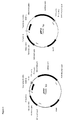
- the plasmids pNPG1 and pNPG2 (figure 4) are cut with the same enzymes and the three DNA pools are ligated to each of the two plasmids.
- E. Coli strain DH5a is transfected by each one of the six ligation mixture according to standard procedures (Sambrook et al (1989). Molecular cloning, a laboratory manual, Second Edition, N. Ford, ed., Cold Spring Harbor: Cold Spring Harbor Laboratory Press). One hundred colonies are isolated for each transfection. Plasmid DNA is extracted and purified from each of these colonies.
- the aptazymes cloned into the plasmids are sequenced by the method of Sanger et al. (Proc. Natl. Acad. Sci. USA, 74 (1977) 5463-5467) with an Applied Biosystems kit according to the manufacturer's instructions.
- Human cultured cell lines HeLa and HEK293 are transfected by plasmid DNA complexed to lipofectamine (Gibco-Life Sciences, Bethesda, MD USA) according to the manufacturer's instructions (6 ml lipofectamine per mg DNA). In one set of experiments the cells are incubated with 10 mM doycycline or 10 mM pefloxacine, in another set of experiment the cells are incubated without ligand. 48 hours after transfection, the cells are lysed and the amount of Renilla luciferase and firefly lucifease are recorded according to the manufacturer's instructions (Promega, Madison, WI USA).
- the ratio of firefly luciferase activity (aptazme-controlled) over Renilla luciferase activity (Ratio R) is computed for each experimental condition (i.e. plasmid, ligand).
- the plasmids which yield production of high amount of firefly luciferase in the presence of ligand (doxycycline or pefloxacine) and low amount of firefly luciferase in the absence of ligand are identified by the highest ratio R. These plasmids are selected for further use in gene transfer experiments where production of a protein is to be controlled by doxycycline or pefloxacine.
- 10 mg of aptazyme-containing plasmids pNPG1 or pNPG2 are injected into tibialis cranialis muscles (posterior limbs) of eight weeks-old Balb/C mice, the limbs are subsequently subjected to electroporation in order to enhance gene transfer (Mir, L.M. et al.; P.N.A.S. USA (1999); 96(8):4262-7).
- One group of five mice is given doxycycline in the drinking water (0.2 mg/ml), the other group is not. 7 days after gene transfer the animals are sacrificed and the tibialis cranialis muscles are collected.
- the muscles are resuspended in lml of lysis buffer (Dual-Luciferase reporter Assay System, Promega, Madison, WI USA) homogenized by glass and ceramic beads into a Fast-Prep homogenizer (Bio 101, Vista, CA USA).
- the amount of firefly luciferase and Renilla luciferase are assessed according to Promega's instructions.
- the amount of firefly luciferase synthesized by the mice of each group (treated or not by doxycycline) is compared. Inter-individual variations in gene transfer efficiency can be compensated by comparing the ratio firefly luciferase over renilla luciferase between the 2 groups of mice.
Landscapes
- Health & Medical Sciences (AREA)
- Genetics & Genomics (AREA)
- Life Sciences & Earth Sciences (AREA)
- Engineering & Computer Science (AREA)
- Chemical & Material Sciences (AREA)
- Organic Chemistry (AREA)
- Bioinformatics & Cheminformatics (AREA)
- Wood Science & Technology (AREA)
- Biomedical Technology (AREA)
- Biotechnology (AREA)
- General Engineering & Computer Science (AREA)
- Zoology (AREA)
- General Health & Medical Sciences (AREA)
- Biochemistry (AREA)
- Microbiology (AREA)
- Plant Pathology (AREA)
- Molecular Biology (AREA)
- Biophysics (AREA)
- Physics & Mathematics (AREA)
- Nuclear Medicine, Radiotherapy & Molecular Imaging (AREA)
- Animal Behavior & Ethology (AREA)
- Chemical Kinetics & Catalysis (AREA)
- General Chemical & Material Sciences (AREA)
- Medicinal Chemistry (AREA)
- Bioinformatics & Computational Biology (AREA)
- Pharmacology & Pharmacy (AREA)
- Crystallography & Structural Chemistry (AREA)
- Public Health (AREA)
- Veterinary Medicine (AREA)
- Medicines That Contain Protein Lipid Enzymes And Other Medicines (AREA)
- Preparation Of Compounds By Using Micro-Organisms (AREA)
- Pharmaceuticals Containing Other Organic And Inorganic Compounds (AREA)
- Micro-Organisms Or Cultivation Processes Thereof (AREA)
- Medicines Containing Material From Animals Or Micro-Organisms (AREA)
Priority Applications (17)
| Application Number | Priority Date | Filing Date | Title |
|---|---|---|---|
| EP99402552A EP1092777A1 (fr) | 1999-10-15 | 1999-10-15 | Séquences d' ARN auto-clivantes et leur utilisation dans le contrôle de la synthèse protéique |
| EP00977426A EP1224305A2 (fr) | 1999-10-15 | 2000-10-13 | Sequences d'arn auto-clivantes et leurs utilisations dans la regulation de la synthese des proteines |
| CA002387185A CA2387185A1 (fr) | 1999-10-15 | 2000-10-13 | Sequences d'arn auto-clivantes et leurs utilisations dans la regulation de la synthese des proteines |
| JP2001532217A JP2003512059A (ja) | 1999-10-15 | 2000-10-13 | 自己切断するrna配列、およびタンパク質合成を調節するためのその使用 |
| BR0014632-3A BR0014632A (pt) | 1999-10-15 | 2000-10-13 | Gene modificado que codifica um rna, proteìna, polipeptìdeo ou peptìdeo, vetor, métodos para controlar a produção de uma proteìna, polipeptìdeo ou peptìdeo a partir de um gene, para modificar um gene, para remover uma estrutura 5'-cap e/ou uma cauda 3'-polia de um pré mrna ou um mrna transcritos de um gene, para produção controlada de uma proteìna, polipeptìdeo ou peptìdeo dentro de uma célula, de evolução e seleção in vitro para a produção de uma sequênica de rna ligada a ligante e de evolução e seleção in vitro para a produção de uma sequência de rna auto-clivável dependente de ligante, molécula de dna sintética, combinação de ligante e gene modificado, dna, e, molécula sintética de rna auto-clivável dependente de ligante |
| CN00813861A CN1377414A (zh) | 1999-10-15 | 2000-10-13 | 自切割rna序列及其在控制蛋白质合成中的应用 |
| AU15149/01A AU784832B2 (en) | 1999-10-15 | 2000-10-13 | Self-cleaving RNA sequences and their use for the control of protein synthesis |
| NZ518396A NZ518396A (en) | 1999-10-15 | 2000-10-13 | Control of target gene expression within a genome by altering RNA synthesis rate |
| MXPA02002864A MXPA02002864A (es) | 1999-10-15 | 2000-10-13 | Secuencias de arn de auto- escision y su uso para el control de sintesis de proteinas. |
| PL00355165A PL355165A1 (en) | 1999-10-15 | 2000-10-13 | Self-cleaving rna sequences and their use for the control of protein synthesis |
| KR1020027004832A KR20020037384A (ko) | 1999-10-15 | 2000-10-13 | 자가-절단 알엔에이 서열 및 이의 단백질 합성 조절용 용도 |
| HU0203268A HUP0203268A3 (en) | 1999-10-15 | 2000-10-13 | Self-cleaving rna sequences and their use for the control of protein synthesis |
| IL14857200A IL148572A0 (en) | 1999-10-15 | 2000-10-13 | Self-cleaving rna sequences and their use for the control of protein synthesis |
| CZ20021313A CZ20021313A3 (cs) | 1999-10-15 | 2000-10-13 | Sekvence RNA se samoątěpící schopností a způsob řízení produkce proteinu pomocí takové RNA |
| PCT/EP2000/010423 WO2001029234A2 (fr) | 1999-10-15 | 2000-10-13 | Sequences d'arn auto-clivantes et leurs utilisations dans la regulation de la synthese des proteines |
| ZA200202823A ZA200202823B (en) | 1999-10-15 | 2002-04-10 | Self-cleaving RNA sequences and their use for the control of protein synthesis. |
| NO20021713A NO20021713L (no) | 1999-10-15 | 2002-04-11 | Selv-kuttende RNA-sekvenser og deres anvendelse for kontroll av proteinsyntese |
Applications Claiming Priority (1)
| Application Number | Priority Date | Filing Date | Title |
|---|---|---|---|
| EP99402552A EP1092777A1 (fr) | 1999-10-15 | 1999-10-15 | Séquences d' ARN auto-clivantes et leur utilisation dans le contrôle de la synthèse protéique |
Publications (1)
| Publication Number | Publication Date |
|---|---|
| EP1092777A1 true EP1092777A1 (fr) | 2001-04-18 |
Family
ID=8242144
Family Applications (2)
| Application Number | Title | Priority Date | Filing Date |
|---|---|---|---|
| EP99402552A Withdrawn EP1092777A1 (fr) | 1999-10-15 | 1999-10-15 | Séquences d' ARN auto-clivantes et leur utilisation dans le contrôle de la synthèse protéique |
| EP00977426A Withdrawn EP1224305A2 (fr) | 1999-10-15 | 2000-10-13 | Sequences d'arn auto-clivantes et leurs utilisations dans la regulation de la synthese des proteines |
Family Applications After (1)
| Application Number | Title | Priority Date | Filing Date |
|---|---|---|---|
| EP00977426A Withdrawn EP1224305A2 (fr) | 1999-10-15 | 2000-10-13 | Sequences d'arn auto-clivantes et leurs utilisations dans la regulation de la synthese des proteines |
Country Status (16)
| Country | Link |
|---|---|
| EP (2) | EP1092777A1 (fr) |
| JP (1) | JP2003512059A (fr) |
| KR (1) | KR20020037384A (fr) |
| CN (1) | CN1377414A (fr) |
| AU (1) | AU784832B2 (fr) |
| BR (1) | BR0014632A (fr) |
| CA (1) | CA2387185A1 (fr) |
| CZ (1) | CZ20021313A3 (fr) |
| HU (1) | HUP0203268A3 (fr) |
| IL (1) | IL148572A0 (fr) |
| MX (1) | MXPA02002864A (fr) |
| NO (1) | NO20021713L (fr) |
| NZ (1) | NZ518396A (fr) |
| PL (1) | PL355165A1 (fr) |
| WO (1) | WO2001029234A2 (fr) |
| ZA (1) | ZA200202823B (fr) |
Cited By (2)
| Publication number | Priority date | Publication date | Assignee | Title |
|---|---|---|---|---|
| WO2003027319A1 (fr) * | 2001-09-24 | 2003-04-03 | Ingeneus Corporation | Aptameres contenant des sequences d'acides nucleiques ou d'analogues d'acides nucleiques liees de maniere homogene ou dans des nouveaux complexes |
| CN108350451A (zh) * | 2015-11-12 | 2018-07-31 | 贝勒医学院 | 通过适体介导的多腺苷酸化调节来外源性控制哺乳动物基因表达 |
Families Citing this family (3)
| Publication number | Priority date | Publication date | Assignee | Title |
|---|---|---|---|---|
| EP3880812A4 (fr) * | 2018-11-13 | 2022-09-07 | Oncorus, Inc. | Polynucléotides encapsulés et procédés d'utilisation |
| CN116555253A (zh) * | 2022-01-30 | 2023-08-08 | 中国科学院分子细胞科学卓越创新中心 | 含高均一性poly(A)尾的mRNA及其制备方法 |
| WO2024182395A1 (fr) * | 2023-02-28 | 2024-09-06 | William Marsh Rice University | Arn catalytique pour l'induction de l'expression de protéines et/ou le codage d'une population de consortiums |
Citations (4)
| Publication number | Priority date | Publication date | Assignee | Title |
|---|---|---|---|---|
| WO1994013791A1 (fr) * | 1992-12-04 | 1994-06-23 | Innovir Laboratories, Inc. | Acide nucleique regulable a usage therapeutique et procedes d'utilisation associes |
| WO1996021730A2 (fr) * | 1995-01-13 | 1996-07-18 | University Of Vermont And State Agricultural College | Ribozymes comportant un site de liaison de proteine arn |
| WO1998043993A2 (fr) * | 1997-03-31 | 1998-10-08 | Yale University | Acides nucleiques en tant que catalyseurs |
| WO1999018116A1 (fr) * | 1997-10-07 | 1999-04-15 | Smithkline Beecham Corporation | Procede relatif a la modulation de l'expression genique |
Family Cites Families (1)
| Publication number | Priority date | Publication date | Assignee | Title |
|---|---|---|---|---|
| WO2000024912A1 (fr) * | 1998-10-23 | 2000-05-04 | The Children's Medical Center Corporation | Utilisation d'un motif d'arn auto-clivant |
-
1999
- 1999-10-15 EP EP99402552A patent/EP1092777A1/fr not_active Withdrawn
-
2000
- 2000-10-13 NZ NZ518396A patent/NZ518396A/en unknown
- 2000-10-13 CN CN00813861A patent/CN1377414A/zh active Pending
- 2000-10-13 AU AU15149/01A patent/AU784832B2/en not_active Ceased
- 2000-10-13 MX MXPA02002864A patent/MXPA02002864A/es not_active Application Discontinuation
- 2000-10-13 PL PL00355165A patent/PL355165A1/xx not_active Application Discontinuation
- 2000-10-13 BR BR0014632-3A patent/BR0014632A/pt not_active Application Discontinuation
- 2000-10-13 EP EP00977426A patent/EP1224305A2/fr not_active Withdrawn
- 2000-10-13 IL IL14857200A patent/IL148572A0/xx unknown
- 2000-10-13 CZ CZ20021313A patent/CZ20021313A3/cs unknown
- 2000-10-13 HU HU0203268A patent/HUP0203268A3/hu unknown
- 2000-10-13 CA CA002387185A patent/CA2387185A1/fr not_active Abandoned
- 2000-10-13 KR KR1020027004832A patent/KR20020037384A/ko not_active Ceased
- 2000-10-13 WO PCT/EP2000/010423 patent/WO2001029234A2/fr not_active Ceased
- 2000-10-13 JP JP2001532217A patent/JP2003512059A/ja not_active Withdrawn
-
2002
- 2002-04-10 ZA ZA200202823A patent/ZA200202823B/xx unknown
- 2002-04-11 NO NO20021713A patent/NO20021713L/no not_active Application Discontinuation
Patent Citations (4)
| Publication number | Priority date | Publication date | Assignee | Title |
|---|---|---|---|---|
| WO1994013791A1 (fr) * | 1992-12-04 | 1994-06-23 | Innovir Laboratories, Inc. | Acide nucleique regulable a usage therapeutique et procedes d'utilisation associes |
| WO1996021730A2 (fr) * | 1995-01-13 | 1996-07-18 | University Of Vermont And State Agricultural College | Ribozymes comportant un site de liaison de proteine arn |
| WO1998043993A2 (fr) * | 1997-03-31 | 1998-10-08 | Yale University | Acides nucleiques en tant que catalyseurs |
| WO1999018116A1 (fr) * | 1997-10-07 | 1999-04-15 | Smithkline Beecham Corporation | Procede relatif a la modulation de l'expression genique |
Non-Patent Citations (6)
| Title |
|---|
| BARTEL ET AL: "Isolation of new ribozymes from a large pool of random sequences", SCIENCE, vol. 261, 10 September 1993 (1993-09-10), pages 1411 - 1418, XP002115117, ISSN: 0036-8075 * |
| DENISON C. ET AL.: "Small-molecule-based strategies for controlling gene expression.", CHEM BIOL 1998 JUN;5(6):R129-45, XP000892765 * |
| SOUKUP GARRETT A ET AL: "Design of allosteric hammerhead ribozymes activated by ligand-induced structure stabilization.", STRUCTURE (LONDON), vol. 7, 15 July 1999 (1999-07-15), pages 783 - 791, XP000865658, ISSN: 0969-2126 * |
| TAIRA K ET AL: "CONSTRUCTION OF A NOVEL RNA-TRANSCRIPT-TRIMMING PLASMID WHICH CAN BE USED BOTH IN VITRO IN PLACE OF RUN-OFF AND (G)-FREE TRANSCRIPTIONS AND IN VIVO AS MULTI-SEQUENCES TRANSCRIPTION VECTORS", NUCLEIC ACIDS RESEARCH, vol. 19, 11 October 1991 (1991-10-11), pages 5125 - 5130, XP000645087, ISSN: 0305-1048 * |
| TANG JIN ET AL: "Mechanism for allosteric inhibition of an ATP-sensitive ribozyme.", NUCLEIC ACIDS RESEARCH SEPT. 15, 1998, vol. 26, no. 18, pages 4214 - 4221, XP002133772, ISSN: 0305-1048 * |
| WERSTUCK AND GREEN: "CONTROLLING GENE EXPRESSION IN LIVING CELLS THROUGH SMALL MOLECULE-RNA INTERACTIONS", SCIENCE, vol. 282, 9 October 1998 (1998-10-09), pages 296 - 298, XP002113355, ISSN: 0036-8075 * |
Cited By (4)
| Publication number | Priority date | Publication date | Assignee | Title |
|---|---|---|---|---|
| US6858390B2 (en) | 1998-12-31 | 2005-02-22 | Ingeneus Corporation | Aptamers containing sequences of nucleic acid or nucleic acid analogues bound homologously, or in novel complexes |
| WO2003027319A1 (fr) * | 2001-09-24 | 2003-04-03 | Ingeneus Corporation | Aptameres contenant des sequences d'acides nucleiques ou d'analogues d'acides nucleiques liees de maniere homogene ou dans des nouveaux complexes |
| CN108350451A (zh) * | 2015-11-12 | 2018-07-31 | 贝勒医学院 | 通过适体介导的多腺苷酸化调节来外源性控制哺乳动物基因表达 |
| US12215323B2 (en) | 2015-11-12 | 2025-02-04 | Baylor College Of Medicine | Exogenous control of mammalian gene expression through aptamer-mediated modulation of polyadenylation |
Also Published As
| Publication number | Publication date |
|---|---|
| MXPA02002864A (es) | 2003-07-21 |
| CN1377414A (zh) | 2002-10-30 |
| IL148572A0 (en) | 2002-09-12 |
| HUP0203268A2 (hu) | 2003-01-28 |
| EP1224305A2 (fr) | 2002-07-24 |
| AU784832B2 (en) | 2006-07-06 |
| PL355165A1 (en) | 2004-04-05 |
| NO20021713D0 (no) | 2002-04-11 |
| NZ518396A (en) | 2004-01-30 |
| JP2003512059A (ja) | 2003-04-02 |
| CA2387185A1 (fr) | 2001-04-26 |
| WO2001029234A2 (fr) | 2001-04-26 |
| ZA200202823B (en) | 2003-09-23 |
| NO20021713L (no) | 2002-06-12 |
| WO2001029234A3 (fr) | 2001-11-29 |
| HUP0203268A3 (en) | 2005-08-29 |
| BR0014632A (pt) | 2002-06-18 |
| AU1514901A (en) | 2001-04-30 |
| CZ20021313A3 (cs) | 2002-07-17 |
| KR20020037384A (ko) | 2002-05-18 |
Similar Documents
| Publication | Publication Date | Title |
|---|---|---|
| US5834186A (en) | Regulatable RNA molecule | |
| US8207318B2 (en) | Methods and compositions for generating recombinant nucleic acid molecules | |
| KR100386337B1 (ko) | 진핵세포에서부위-특이적돌연변이를위한화합물과그방법 | |
| US5639595A (en) | Identification of novel drugs and reagents | |
| US6083702A (en) | Methods and compositions for use in spliceosome mediated RNA trans-splicing | |
| US8017755B2 (en) | RNA-based transcriptional regulators | |
| CN101679962A (zh) | 单链环状rna及制备该单链环状rna的方法 | |
| JP2005517450A (ja) | 短干渉核酸(siNA)を用いるRNA干渉媒介性標的発見および標的評価 | |
| JP2004524031A (ja) | 合成遺伝子、およびCpGを欠く細菌プラスミド | |
| AU2003299970A1 (en) | Rna interference | |
| JP2023002469A (ja) | 抗ウイルス及び抗がんワクチンに用いる新規なmRNA組成物及びその製造方法 | |
| US9012620B2 (en) | DNA constructs for specific inhibition of gene expression by RNA interference | |
| EP1092777A1 (fr) | Séquences d' ARN auto-clivantes et leur utilisation dans le contrôle de la synthèse protéique | |
| EP1668144B1 (fr) | Sequences nucleotidiques promouvant le transport transmembranaire d'acides nucleiques | |
| WO1997040060A1 (fr) | Ribosomes en tant que vecteurs d'arn | |
| JPH05505529A (ja) | 新規な薬物および試薬の同定 | |
| Spöring | Design and Optimization of Artificial Riboswitches for Regulation of Eukaryotic Gene Expression | |
| CN110312798A (zh) | 用于基因组修饰的稳定剂 | |
| US20160193362A1 (en) | New cell-specifically active nucleotide molecules and application kit for the application thereof | |
| Thompson | [14] Strategies to express structural and catalytic RNAs in mammalian cells | |
| Bahramian et al. | GENE impedance: a natural process for control of gene expression and the origin of RNA interference | |
| HK1125407B (en) | Dna constructs for specific inhibition of gene expression by rna interference |
Legal Events
| Date | Code | Title | Description |
|---|---|---|---|
| PUAI | Public reference made under article 153(3) epc to a published international application that has entered the european phase |
Free format text: ORIGINAL CODE: 0009012 |
|
| AK | Designated contracting states |
Kind code of ref document: A1 Designated state(s): FR |
|
| AX | Request for extension of the european patent |
Free format text: AL;LT;LV;MK;RO;SI |
|
| 17P | Request for examination filed |
Effective date: 20010607 |
|
| AKX | Designation fees paid |
Free format text: FR |
|
| REG | Reference to a national code |
Ref country code: DE Ref legal event code: 8566 |
|
| 17Q | First examination report despatched |
Effective date: 20050225 |
|
| APBN | Date of receipt of notice of appeal recorded |
Free format text: ORIGINAL CODE: EPIDOSNNOA2E |
|
| APBR | Date of receipt of statement of grounds of appeal recorded |
Free format text: ORIGINAL CODE: EPIDOSNNOA3E |
|
| APBV | Interlocutory revision of appeal recorded |
Free format text: ORIGINAL CODE: EPIDOSNIRAPE |
|
| 17Q | First examination report despatched |
Effective date: 20050225 |
|
| STAA | Information on the status of an ep patent application or granted ep patent |
Free format text: STATUS: THE APPLICATION IS DEEMED TO BE WITHDRAWN |
|
| 18D | Application deemed to be withdrawn |
Effective date: 20070306 |