EP1093096A2 - Méthode et dispositif pour le traitement sécurisé d'opérations de paiement par cartes de crédit - Google Patents
Méthode et dispositif pour le traitement sécurisé d'opérations de paiement par cartes de crédit Download PDFInfo
- Publication number
- EP1093096A2 EP1093096A2 EP00117383A EP00117383A EP1093096A2 EP 1093096 A2 EP1093096 A2 EP 1093096A2 EP 00117383 A EP00117383 A EP 00117383A EP 00117383 A EP00117383 A EP 00117383A EP 1093096 A2 EP1093096 A2 EP 1093096A2
- Authority
- EP
- European Patent Office
- Prior art keywords
- credit card
- file
- date
- customer
- card number
- Prior art date
- Legal status (The legal status is an assumption and is not a legal conclusion. Google has not performed a legal analysis and makes no representation as to the accuracy of the status listed.)
- Ceased
Links
Images


Classifications
-
- G—PHYSICS
- G06—COMPUTING OR CALCULATING; COUNTING
- G06Q—INFORMATION AND COMMUNICATION TECHNOLOGY [ICT] SPECIALLY ADAPTED FOR ADMINISTRATIVE, COMMERCIAL, FINANCIAL, MANAGERIAL OR SUPERVISORY PURPOSES; SYSTEMS OR METHODS SPECIALLY ADAPTED FOR ADMINISTRATIVE, COMMERCIAL, FINANCIAL, MANAGERIAL OR SUPERVISORY PURPOSES, NOT OTHERWISE PROVIDED FOR
- G06Q20/00—Payment architectures, schemes or protocols
- G06Q20/04—Payment circuits
-
- G—PHYSICS
- G06—COMPUTING OR CALCULATING; COUNTING
- G06Q—INFORMATION AND COMMUNICATION TECHNOLOGY [ICT] SPECIALLY ADAPTED FOR ADMINISTRATIVE, COMMERCIAL, FINANCIAL, MANAGERIAL OR SUPERVISORY PURPOSES; SYSTEMS OR METHODS SPECIALLY ADAPTED FOR ADMINISTRATIVE, COMMERCIAL, FINANCIAL, MANAGERIAL OR SUPERVISORY PURPOSES, NOT OTHERWISE PROVIDED FOR
- G06Q20/00—Payment architectures, schemes or protocols
- G06Q20/08—Payment architectures
- G06Q20/12—Payment architectures specially adapted for electronic shopping systems
-
- G—PHYSICS
- G06—COMPUTING OR CALCULATING; COUNTING
- G06Q—INFORMATION AND COMMUNICATION TECHNOLOGY [ICT] SPECIALLY ADAPTED FOR ADMINISTRATIVE, COMMERCIAL, FINANCIAL, MANAGERIAL OR SUPERVISORY PURPOSES; SYSTEMS OR METHODS SPECIALLY ADAPTED FOR ADMINISTRATIVE, COMMERCIAL, FINANCIAL, MANAGERIAL OR SUPERVISORY PURPOSES, NOT OTHERWISE PROVIDED FOR
- G06Q20/00—Payment architectures, schemes or protocols
- G06Q20/22—Payment schemes or models
- G06Q20/24—Credit schemes, i.e. "pay after"
-
- G—PHYSICS
- G06—COMPUTING OR CALCULATING; COUNTING
- G06Q—INFORMATION AND COMMUNICATION TECHNOLOGY [ICT] SPECIALLY ADAPTED FOR ADMINISTRATIVE, COMMERCIAL, FINANCIAL, MANAGERIAL OR SUPERVISORY PURPOSES; SYSTEMS OR METHODS SPECIALLY ADAPTED FOR ADMINISTRATIVE, COMMERCIAL, FINANCIAL, MANAGERIAL OR SUPERVISORY PURPOSES, NOT OTHERWISE PROVIDED FOR
- G06Q20/00—Payment architectures, schemes or protocols
- G06Q20/38—Payment protocols; Details thereof
- G06Q20/385—Payment protocols; Details thereof using an alias or single-use codes
Definitions
- the method according to the invention relates to the protection of Payment processes using credit cards, especially when using E-commerce based services provided by service providers Communication connections are provided. Among them are in particular Understand services offered over the Internet.
- the object of the solution according to the invention is therefore to provide customers with a safe solution Procedure for handling payment transactions via communication links offer the anonymity of the customer's credit card number guaranteed.
- the above method which is based on a virtual credit card, is the Customers preferably as a service from a service provider in connection with a Bank and / or at least one credit card company offered.
- the customer who is electronically supported wants to participate in payment processes, for example over the Internet, from this Service providers with a customer-specific number of credit card numbers associated code numbers in the form of a ZON block.
- a ZON block contains so-called assignment numbers, ZON, as code numbers.
- the Allocation numbers are assigned to credit card numbers, whereby it is guaranteed Each assignment number ZON must always have a unique credit card number is assigned and thus clearly identifies them.
- a ZON block is sent to the customer, for example by registered mail.
- the customer must treat the data transferred to him in the form of a ZON block as his password and in particular protect it against unauthorized access.
- the provider / service provider who gave the customer the credit card numbers as part of the ZON block has an identical data record.
- the customer wants to make a payment transaction, for example via the Internet, he connects to the service provider's / provider's designated place via an agreed medium, such as e-mail, and requests the release of one on his ZON- Block credit card number.
- the customer will automatically be given an assignment number ZON and the valid-to date for the credit card number clearly defined by the assignment number ZON as a response from the service provider / provider.
- the credit card number belonging to the assignment number ZON, its valid-to date, the manufacturer's ID and additional information are transmitted to the bank involved in the process.
- the bank shows, based on the content of the additional information (mail date / time and frequency of use), the defined time frame in which this credit card number can be booked.
- the time frame is / was determined by agreements between the provider (hereInstitut / T-Online) and the bank and is known to the e-commerce customer (customer 1).
- the time frame for the usability of a credit card number can be freely agreed.
- a useful definition would be, for example, a usability period of 24 hours, starting with the mail date / time of the automatic mail response to the customer (ZON, valid-to date). It is also possible to only allow the use of a single payment process for the credit card number within the specified period of use.
- the security needs of the customer can be taken into account to a large extent by differently determining the usability frequency, for example the restriction to only one payment process.
- the credit card number is deactivated by the account manager for a certain period of time, such as 3 months, to ensure correct billing.
- the customer For purchase requests after the expiry of the usability period of the relevant credit card number, or after reaching the maximum permissible usability frequency, the customer must request the assignment of a new credit card number according to the procedure described above.
- the customer, the provider of the new service, a bank and one or more credit card companies are involved in the method according to the invention.
- the prerequisite is that the legal conditions are regulated between the parties involved in the procedure.
- the credit card company e.g. VISA
- VISA serves only as a generator of credit card numbers (number contingents, at random) for the bank and as a transmitter (pass-through station) of the provider's booking request on the Internet to the bank and back again.
- the creditability of the credit card number entered by the customer at the provider on the Internet is checked for the credit card company as Credit card manufacturer "in connection with the valid-to date entered for the" virtual credit card ".
- the customer-specific assignment of time-limited credit card numbers (including the valid-to date) made in accordance with the described procedure is preferably designed as a new service that is offered to the customer.
- the provider of the service can be the operator of an access platform to the Internet, such as T-Online from DeutscheTec AG in connection with a bank and a credit card company.
- T-Online The basis of the process is that the customer has informed the provider of the service, here T-Online, in advance that he would like to participate in the Internet in e-commerce or similar services in which billing is carried out electronically using credit card numbers, and that the customer does so Service requested.
- T-Online concludes a contract with the customer to participate in the new service, which also includes approval to obtain one Schufa information "contains and at the same time obtains a direct debit authorization from the customer concerned for his account.
- the bank is preferably connected to the provider (here T-Online by DeutscheInstitut AG) via an online connection in duplex mode with data encryption.
- T-Online has access to a booking server that contains four files, file 1 to file 4.
- File 1 is designed as a customer file and contains the list of all e-commerce customers for identification.
- Data contents of file 1 are the customer number, the identification / code number, the name of the customer, the e-mail address and the customer's telecommunications account number, which is the Weg AG account number.
- File 2 is the file of all credit card numbers that can currently be booked.
- File 2 contains the credit card number, the manufacturer's ID, the usable-from date and the usable-to-date of all credit card numbers that can currently be booked.
- File 3 is designed as a booking file for the entry for each e-commerce customer.
- File 3 contains the customer number, the credit card number, the ZON, the manufacturer ID, information on the usability frequency, the number of the ZON block, the validity of the ZON block, the valid-to date, the mail date in connection with the mail Time and the number of credit card numbers that can still be booked at a time. valid ZON block.
- File 4 is designed as a booking file for the entry of billing data for each e-commerce customer. It contains the customer number, the credit card number, the manufacturer's ID, the number of the ZON block, the validity of the ZON block, the valid-to date, the customer's telecommunications account number, the date of purchase in connection with the purchase time, as data Mail date in connection with the mail time, the purpose and the booking amount.
- File 4 has a link to the DeutscheInstitut AG accounting center and each data cluster in file 4 corresponds to a data cluster in file 3. Files 4 and 3 can thus be summarized under certain circumstances.
- File 1B serves as an inbox for all credit card numbers supplied by credit card companies involved in the process. It contains the credit card number, the manufacturer's ID of the credit card number, the usable-from-date and the usable-to-date.
- the file 2B contains the credit card number, the manufacturer's ID, the usable-from-date and the usable-to-date of all credit card numbers that can currently be used.
- File 3B contains the credit card number, the manufacturer's ID, the valid-to date, counter 1 (control) of all the credit card numbers currently identified as bookable by T-Online Valid-to-date ") and 2 (control Usability frequency "), the mail date in connection with the mail time, information on the usability frequency, the purchase date in connection with the purchase time, the intended use and the purchase amount.
- File 4B currently contains all of T-Online's to block "reported credit card numbers, the credit card number and the manufacturer's ID card of the relevant credit card number and only serves as a buffer until the usable-from date has been changed in file 2B or the complete data record has been moved from file 2B to file 6B.
- the file 5B is formed as a file of the correct booking inquiries including the billing data of the credit card number and contains the credit card number, the manufacturer's ID, the valid-to date, the mail date in connection with the mail time, information on the usability frequency, the purchase date in connection with the purchase time, the purpose and the purchase amount.
- File 6B is designed as an outbox for all credit card numbers to be returned to the credit card companies.
- File 6B contains the credit card number and the manufacturer's ID of the relevant credit card.
- the procedure is described in more detail below:
- the bank transfers contingents of credit card numbers, which it has received from one or more credit card companies, for example, toDeutsch / T-Online and, on the initiative ofTec / T-Online, issues a credit card number in connection with a customer order (e.g. email) a "valid-from date" as bookable.
- the credit card number is already contained in the file 3B of the credit card number server because it was previously indicated as bookable by T-Online, it will be deleted there (deletion of the complete data record).
- the usable-to date is reached or even exceeded by increasing the usable-from date by 3 months, the data record belonging to this credit card number is moved from file 2B of the credit card number server to file 6B.
- File 6B contains all of them used "credit card numbers and is transmitted cyclically (eg every day) or acyclically (eg when 50 data sets, ie 50 used credit card numbers are reached) to the manufacturer (eg VISA).
- file 6B which is quasi as The file 4B serves as a catch basin for the credit card numbers reported by T-Online, which are to be blocked temporarily (ie their usable-from date is increased by 3 months compared to the current date in file 2B, insofar as this is the case from the usable-from date is possible.
- T-Online the credit card numbers reported by T-Online
- the complete data record is moved from file 2B to file 6B.
- the complete data record in file 4B is changed after the usable from date in file 2B or after the data has possibly been moved from file 2B to file 6B.
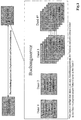
- a booking server is accessed via an online connection (duplex operation with data encryption), as shown in FIG. 1.
- the file 2B of the credit card number server is linked there to the file 2 of the booking server and then automatically updates the data records there in this way. Both files are therefore identical in terms of data content.
- the booking server consists of four storage areas (files): The customer file of the customers involved in the process is stored in file 1. The customer file contains data that uniquely enable customer identification. All credit card numbers that can currently be booked for the customers involved in the process are stored in file 2.
- File 3 is designed as a booking file and contains the entries for each e-commerce customer with regard to the credit card numbers received (ZON block and manufacturer ID) and the credit card numbers requested by the customer for a ZON block, with the respective valid-to date, the current date and the time at the time of the email sent to the customer.
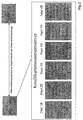
- File 4 contains the billing data which were transferred from file 5B of the credit card number server shown in FIG. 2 via an online connection.
- the files 3 and 4 thus contain customer-related clusters within which only the data of a customer are stored.
- file 3 contains the data of the ZON block (s) and file 4 contains the customer-specific accounting data with a link to the Weg AG accounting center.
- There is a data connection between the provider (T-Online) and the bank involved in the process for transmitting the data preferably a fixed connection (Online) in duplex mode with data encryption.
- File 1B which is designed as an inbox, contains, in the form of a number catalog, a list of all credit card numbers previously supplied by credit card companies with additional system information (manufacturer ID, usable from and usable until date).
- the usable-from date corresponds to the current date of the data delivery, and the usable-to date is set with the current date of the data delivery + 2 years.
- File 2B contains all credit card numbers that can currently be booked. The only indicator for a credit card number that can currently be booked is the check whether the current date is within the timeframe of the usable-from to usable-to date.
- File 3B contains a list of all credit card numbers currently registered as bookable by T-Online with the respective valid-to date, the manufacturer's ID and additional information.
- File 4B contains the credit card numbers reported by the booking server, which are to be blocked and whose usable-from date must then be corrected upwards in file 2B by 3 months with respect to the current date, insofar as this is possible. However, if the new usable-from date is greater than or equal to the usable-to date, the complete data record for this credit card number is transferred from file 2B to file 6B used "credit card numbers shifted and is therefore no longer available via the online connection in the booking server in file 2. After increasing the usable-from date or after possibly moving the data record from file 2B to file 6B, the complete data record becomes deleted in file 4B.
- File 5B contains the correct booking requests from providers on the Internet.
- the computer checks each incoming booking request for plausibility using the data stored in file 3B.
- the test subject's criteria for plausibility of the incoming booking request are credit card number, manufacturer, valid-to date, usability frequency and the email date transmitted by T-Online to determine the usability period in connection with the email time. If the plausibility is determined, the message valid "sent back to the provider on the Internet and the customer's purchase order can then be processed. This is done by transferring this data from file 3B to file 5B of the credit card number server and at the same time (online) transferring it to the booking server and there in the File 4.
- the data record on which the plausibility check was carried out in file 3B is deleted after the maximum permissible usability frequency (counter 2 in file 3B above the maximum value) or after the period of usability has expired.
- the booking request does not lead to a complete request Match (plausibility) for a data record in file 3B, then the message invalid "transmitted to the provider on the Internet. If only the valid-to date was incorrect, a counter 1 (start status 0 ") around 1 "increased. When a defined number of failed attempts is reached (counter 1, for example, on 3 ”) the data record is deleted from the file 3B.
- a new e-mail is automatically sent to the customer activated for this credit card number with a note that a new ZON (credit card number) with the also newly transmitted valid-to date from system-technical
- the usable-to date is increased by 3 months in relation to the current date, insofar as this is possible, and the same applies to a booking request for a credit card number from a manufacturer, which is only contained in the file 2B (Increase the usable-from date insofar as this is possible).
- File 6B contains all of them used "credit card numbers and monitors the return delivery of the credit card numbers to the suppliers, which are clearly identified by the manufacturer's ID of the relevant credit card numbers. The delivery can, for example, be sent monthly to everyone 1 ". Of the month. The successfully returned data records are then deleted in file 6B.
- the customer is sent a ZON block with, for example, 100 credit card numbers and the associated ZON's assignment numbers, preferably by registered mail.
- Each ZON block also has a consecutive number, clearly identifies a manufacturer (e.g. VISA), contains an indication of the validity of this ZON block (validity period e.g. 1 year) and the email address for requesting the ZON assignment number ( valid-to date) for a bookable credit card number.
- the booking server of T-Online compares daily all credit card numbers (file 3) entered on each currently valid ZON block with the credit card numbers currently bookable from file 2 on the basis of the day's date and the period of use of each individual credit card number.
- the result (the number) is documented in file 3. If the number of credit card numbers that can still be booked for a ZON block is less than 10, for example, a new ZON block is automatically sent with, for example, 100 new credit card numbers from the same manufacturer (eg VISA) and the associated 100 ZON number.
- the ZON block is automatically put together, taking into account the numbers still bookable on the previous ZON block, and sent to the customer 1 concerned, preferably by registered mail.
- a prerequisite for compiling the new ZON block is that each credit card number listed there has a usable-to date that is greater than or equal to the period of validity of the ZON block, i.e. at least 1 year.
- Each new ZON block completely replaces its predecessor, which the customer may have, and the old ZON block can then be destroyed by the customer. If a ZON block does not currently credit card numbers that can be booked, the customer will be informed of this in the form of an email and a new ZON block will be sent to them immediately. If customer 1 can no longer meet his payment obligations, then his data is deleted from file 1 of the booking server, or he is marked there as no longer solvent, and all credit card numbers that can still be booked on the customer's ZON block are saved in file 4B transferred from the credit card number server and then treated there as described above.
- the customer when there is a purchase request, for example by e-mail, the customer requests the assignment of a bookable credit card number to an address specially set up for this new service.
- This address is the address of the service provider agreed with the customer, here email address from T-Online, broken down according to the credit card companies involved in the process.
- customer 1 and the type and number of the ZON block used by him are automatically identified by the email address and the data of his email. Identification is preferably done by automatically checking the information in the email as part of a comparison with the customer data stored in file 1 in the booking server.
- Each ZON block has a specific validity period, at the end of which the customer is automatically sent a new ZON block.
- this credit card number is deleted in file 2B and via file 6B of the credit card number server to the credit card company when a certain number (e.g. 50 pieces) is reached in the form of a quota or sent back cyclically. This check is done daily.
- the credit card company automatically uploads new credit card numbers to the bank in file 1B of the credit card number server. In this way, it is ensured that the credit card numbers used by T-Online via e-commerce are always in the "flow", within the complete number inventory of the credit card company.
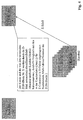
- the size of the quota of credit card numbers to be provided by the credit card company via the bank to the provider of this service depends on the number of credit card numbers per ZON block, the number of ZON blocks, and the frequency of repetition (probability) of using identical credit card numbers different ZON blocks and the growth forecast for this service (number of customers entered in the file 1 booking server with X ZON blocks with a buying behavior Y today and in the future.). If the customer is identified, the booking server always compares a credit card number selected from the file 3 according to the random principle on the customer's ZON block, corresponding to FIG. 5 in connection with FIG. 1, with the file 2 until a usable credit card number is determined. The basis for comparison is whether the current date is within the usability period.
- the booking server then provides this credit card number with a valid-to date and transfers it to file 3B of the credit card number server.
- the valid-to date is preferably determined by a random generator. However, the valid-to date should still be in the future for a certain period of time, eg at least 3 months.
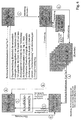
- the customer 1 then automatically receives the assignment number ZON of the ZON block no. X corresponding to the credit card number and the valid-to date to be used for the credit card number as an email. 6 shows a flow chart for the billing processes for the purchase of the customer 1 via a credit card number with the associated valid-to date.
- a customer 1 wants to use an e-commerce service of a seller on the Internet within the scope of T-Online and initiates a corresponding purchase order using the credit card number specified to him as bookable, including the valid-to date
- the seller will use the Internet started a request about the bookability of the credit card number transmitted by the customer in connection with the valid-from date via the respective credit card company to the bank. If the bookability is confirmed, the seller fulfills the purchase order on the Internet.
- the billing is done by the bank on an excerpt from the file 5B to T-Online to check whether the file 5B that are available billing data with comparable data in the file server 4 of the book agree n.
- the invoice contains at least the credit card number, the manufacturer's ID, the valid-to date of the card number, the purchase date in connection with the purchase time, the purpose and the purchase amount.
- the total invoice for customer 1 is created based on the information in file 4 of the booking server and is forwarded to the Weg accounting center if the data is completely identical.
- the telecommunications account number which was designed as the Weg billing number, is a good choice.
- the bill is stored in the master data of e-commerce customers (file 1) and can also be directly interpreted by the accounting center. From the Weg billing center, the bill is either sent to the customer on an extra sheet together with the phone bill or even as a separately shown item on the phone bill.
- the direct debit authorization of the customer is used to debit the amount of money for the telephone / T-Online bill, including the amount for paying the bill (s) for the credit card number (s) used, after a period customary for credit card purchases.
- the amount for the settlement of the invoice (s) for the credit card number (s) used by customer 1 is transmitted from the telecom settlement center to the bank involved in the process. The bank settles the bills booked under the relevant credit card numbers with the seller (s) on the Internet.
- the method according to the invention is characterized in that the customer can safely shop for his own card-bound credit card number on the Internet, since this new service gives him a special credit card number that he can only use for a certain period of time, such as a day. rented "and only knows the manufacturer, sequence of digits, valid-to date, period of usability and frequency of usability virtual credit card ", which can only be used temporarily at the request of a customer involved in the process.
Landscapes
- Business, Economics & Management (AREA)
- Accounting & Taxation (AREA)
- Strategic Management (AREA)
- Physics & Mathematics (AREA)
- General Business, Economics & Management (AREA)
- General Physics & Mathematics (AREA)
- Engineering & Computer Science (AREA)
- Theoretical Computer Science (AREA)
- Finance (AREA)
- Financial Or Insurance-Related Operations Such As Payment And Settlement (AREA)
Applications Claiming Priority (2)
| Application Number | Priority Date | Filing Date | Title |
|---|---|---|---|
| DE1999150391 DE19950391A1 (de) | 1999-10-11 | 1999-10-11 | Verfahren und Anordnung zur sicheren Abwicklung von E-Commerce Bezahlvorgängen über Kreditkarten |
| DE19950391 | 1999-10-11 |
Publications (2)
| Publication Number | Publication Date |
|---|---|
| EP1093096A2 true EP1093096A2 (fr) | 2001-04-18 |
| EP1093096A3 EP1093096A3 (fr) | 2003-11-19 |
Family
ID=7926189
Family Applications (1)
| Application Number | Title | Priority Date | Filing Date |
|---|---|---|---|
| EP00117383A Ceased EP1093096A3 (fr) | 1999-10-11 | 2000-08-24 | Méthode et dispositif pour le traitement sécurisé d'opérations de paiement par cartes de crédit |
Country Status (2)
| Country | Link |
|---|---|
| EP (1) | EP1093096A3 (fr) |
| DE (1) | DE19950391A1 (fr) |
Cited By (1)
| Publication number | Priority date | Publication date | Assignee | Title |
|---|---|---|---|---|
| US7770606B2 (en) | 2006-04-08 | 2010-08-10 | Andritz Technology And Asset Management Gmbh | Upper side, in particular paper side, and papermaking-machine fabric |
Families Citing this family (1)
| Publication number | Priority date | Publication date | Assignee | Title |
|---|---|---|---|---|
| DE10205025A1 (de) * | 2002-02-07 | 2003-08-21 | Deutsche Telekom Ag | Fernadministration von Wertkarten |
Family Cites Families (7)
| Publication number | Priority date | Publication date | Assignee | Title |
|---|---|---|---|---|
| US5794221A (en) * | 1995-07-07 | 1998-08-11 | Egendorf; Andrew | Internet billing method |
| US5671279A (en) * | 1995-11-13 | 1997-09-23 | Netscape Communications Corporation | Electronic commerce using a secure courier system |
| AU8596098A (en) * | 1997-07-25 | 1999-02-16 | Main Street Marketing | Automated credit card payment system |
| EP1010149A1 (fr) * | 1997-08-26 | 2000-06-21 | The Chase Manhattan Bank | Appareil et procede de traitement automatise d'achats de produits et de validations de transactions d'achats |
| US5883810A (en) * | 1997-09-24 | 1999-03-16 | Microsoft Corporation | Electronic online commerce card with transactionproxy number for online transactions |
| US6000832A (en) * | 1997-09-24 | 1999-12-14 | Microsoft Corporation | Electronic online commerce card with customer generated transaction proxy number for online transactions |
| DE19946256A1 (de) * | 1999-09-27 | 2000-06-15 | Ingo Morgenstern | Erhöhung der Sicherheit im elektronischen Handel durch Verwendung von Intelligenz-Karten mit mehreren Einzelcodes |
-
1999
- 1999-10-11 DE DE1999150391 patent/DE19950391A1/de not_active Withdrawn
-
2000
- 2000-08-24 EP EP00117383A patent/EP1093096A3/fr not_active Ceased
Cited By (1)
| Publication number | Priority date | Publication date | Assignee | Title |
|---|---|---|---|---|
| US7770606B2 (en) | 2006-04-08 | 2010-08-10 | Andritz Technology And Asset Management Gmbh | Upper side, in particular paper side, and papermaking-machine fabric |
Also Published As
| Publication number | Publication date |
|---|---|
| EP1093096A3 (fr) | 2003-11-19 |
| DE19950391A1 (de) | 2001-04-12 |
Similar Documents
| Publication | Publication Date | Title |
|---|---|---|
| DE69610719T2 (de) | System und verfahren für treuhandvermittler gebrauchende geschäfliche zahlungen | |
| DE60121135T2 (de) | Dienstaktiverung mittels einer virtuellen vorausbezahlten karte | |
| DE69618157T2 (de) | On-line-Einkaufssystem und Verfahren zum Begleichen der Rechnung | |
| EP1574007A1 (fr) | Authentification automatique d'un terminal ou d'un utilisateur dans des reseaux de communication, en fonction de la connexion | |
| DE10154410A1 (de) | Informationsmanagementvorrichtung und Informationsmanagementsystem | |
| EP1306789A2 (fr) | Serveur pour bloquer des cartes bancaires | |
| DE60000576T2 (de) | Verfahren zum einführen von handelsdienstleistungen | |
| EP1158471B1 (fr) | Système, méthode et programme pour le paiement dans un réseau de télécommunication | |
| EP1093096A2 (fr) | Méthode et dispositif pour le traitement sécurisé d'opérations de paiement par cartes de crédit | |
| DE10049164A1 (de) | Verfahren zur gesicherten Durchführung einer Transaktion im elektronischen Zahlungsverkehr | |
| EP1128340A1 (fr) | Méthode pour charger un compte client pour services de télécommunication et système de chargement associé | |
| EP1388138B1 (fr) | Procede et dispositif de paiement de donnees pouvant etre appelees par l'intermediaire d'un reseau de donnees | |
| EP1277185B1 (fr) | Procede pour reduire les risques dans des transactions de commerce electronique | |
| DE10008280C1 (de) | Verfahren und System zur automatischen Abwicklung von bargeldlosen Kaufvorgängen | |
| DE10336519B4 (de) | Verfahren zur Durchführung von Bezahlvorgängen in einem rechnerbasierten Kommunikationsnetzwerk | |
| WO2001063569A1 (fr) | Procede pour alimenter un compte client de services de telecommunication et systeme de chargement correspondant | |
| EP1371038B1 (fr) | Procede et dispositif permettant d'effectuer au moins une transaction a titre onereux | |
| WO2003101082A1 (fr) | Procede, programme informatique et systeme informatique pour service de telecommunication prepaye | |
| EP1770946B1 (fr) | Procédé et dispositif pour la provision sécurisée des services de web | |
| DE19913096A1 (de) | Verfahren und Vorrichtung zur elektronischen Abwicklung von Kauf- und Verkaufshandlungen | |
| EP1292087A1 (fr) | Procédé pour communication anonymisée et pour addresser un terminal anonymisé | |
| WO2003070493A2 (fr) | Systeme informatique et procede pour la transmission electronique de paiements | |
| EP1717738A1 (fr) | Système informatique et méthode implementés sur ordinateur pour la gestion d'un système de bonus | |
| DE19925427A1 (de) | Verfahren zur Abwicklung einer Transaktion, insbesondere im Internet | |
| EP1298613A2 (fr) | Méthode pour effectuer des transactions de paiement dans un réseau informatique |
Legal Events
| Date | Code | Title | Description |
|---|---|---|---|
| PUAI | Public reference made under article 153(3) epc to a published international application that has entered the european phase |
Free format text: ORIGINAL CODE: 0009012 |
|
| AK | Designated contracting states |
Kind code of ref document: A2 Designated state(s): AT BE CH CY DE DK ES FI FR GB GR IE IT LI LU MC NL PT SE |
|
| AX | Request for extension of the european patent |
Free format text: AL;LT;LV;MK;RO;SI |
|
| PUAL | Search report despatched |
Free format text: ORIGINAL CODE: 0009013 |
|
| AK | Designated contracting states |
Kind code of ref document: A3 Designated state(s): AT BE CH CY DE DK ES FI FR GB GR IE IT LI LU MC NL PT SE |
|
| AX | Request for extension of the european patent |
Extension state: AL LT LV MK RO SI |
|
| 17P | Request for examination filed |
Effective date: 20040519 |
|
| AKX | Designation fees paid |
Designated state(s): AT BE CH CY DE DK ES FI FR GB GR IE IT LI LU MC NL PT SE |
|
| 17Q | First examination report despatched |
Effective date: 20080902 |
|
| STAA | Information on the status of an ep patent application or granted ep patent |
Free format text: STATUS: THE APPLICATION HAS BEEN REFUSED |
|
| 18R | Application refused |
Effective date: 20090115 |