EP1093623B1 - Systeme d'extraction de donnees gerant la co-presence et indiquant des observateurs de donnees - Google Patents
Systeme d'extraction de donnees gerant la co-presence et indiquant des observateurs de donnees Download PDFInfo
- Publication number
- EP1093623B1 EP1093623B1 EP99919505A EP99919505A EP1093623B1 EP 1093623 B1 EP1093623 B1 EP 1093623B1 EP 99919505 A EP99919505 A EP 99919505A EP 99919505 A EP99919505 A EP 99919505A EP 1093623 B1 EP1093623 B1 EP 1093623B1
- Authority
- EP
- European Patent Office
- Prior art keywords
- awareness
- data
- data object
- client
- server
- Prior art date
- Legal status (The legal status is an assumption and is not a legal conclusion. Google has not performed a legal analysis and makes no representation as to the accuracy of the status listed.)
- Expired - Lifetime
Links
Images



Classifications
-
- H—ELECTRICITY
- H04—ELECTRIC COMMUNICATION TECHNIQUE
- H04L—TRANSMISSION OF DIGITAL INFORMATION, e.g. TELEGRAPHIC COMMUNICATION
- H04L67/00—Network arrangements or protocols for supporting network services or applications
- H04L67/01—Protocols
- H04L67/10—Protocols in which an application is distributed across nodes in the network
- H04L67/1097—Protocols in which an application is distributed across nodes in the network for distributed storage of data in networks, e.g. transport arrangements for network file system [NFS], storage area networks [SAN] or network attached storage [NAS]
-
- G—PHYSICS
- G06—COMPUTING OR CALCULATING; COUNTING
- G06F—ELECTRIC DIGITAL DATA PROCESSING
- G06F16/00—Information retrieval; Database structures therefor; File system structures therefor
- G06F16/20—Information retrieval; Database structures therefor; File system structures therefor of structured data, e.g. relational data
-
- G—PHYSICS
- G06—COMPUTING OR CALCULATING; COUNTING
- G06F—ELECTRIC DIGITAL DATA PROCESSING
- G06F16/00—Information retrieval; Database structures therefor; File system structures therefor
- G06F16/20—Information retrieval; Database structures therefor; File system structures therefor of structured data, e.g. relational data
- G06F16/25—Integrating or interfacing systems involving database management systems
- G06F16/252—Integrating or interfacing systems involving database management systems between a Database Management System and a front-end application
Definitions
- the present invention relates to data retrieval systems generally and to data retrieval systems with co-presence mechanisms in particular.
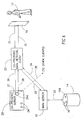
- Data retrieval systems are known in the art. A typical one is shown in Fig. 1 to which reference is now made.
- Data retrieval systems typically consist of a data server 10 and multiple data-retrieval clients 12 which are typically separate computers. Upon command of a data-retrieval client 12, the data server 10 accesses a data repository 14, or database, that contains data objects 16 therein. Data objects 16 are typically files of information.
- the data-retrieval clients 12 also communicate with a user 17, typically through an interactive display 18.
- a typical data retrieval operation proceeds as follows: upon receipt of an instruction (arrow 1) from the user 17 to retrieve a certain data object 16, the data-retrieval client 12 sends (arrow 2) a request to the data server 10 on which the object resides.
- the data server 10 retrieves the requested data object 16 (arrow 3) from the data repository 14 and sends the object 16 back (arrow 4) to the data-retrieval client 12.
- the data-retrieval client 12 displays (arrow 5) the retrieved data object 16 to the user 17.
- Additional features incorporated in a data retrieval system may include a data-management mechanism that allows a data-retrieval client 12 to create a new data object 16, to modify a retrieved data object 16 and to send the created or modified data object 16 back to the data server 10 for storage in the data repository 14, and a permission mechanism that allows the server 10 to approve or deny certain client requests.
- Examples of data retrieval systems include the file transfer protocol (FTP), hypertext transfer protocol (HTTP), Gopher and network file systems (NFS) standards, network news servers (NNTP), DEC Notes of Digital Electric Corporation of the USA, Lotus Notes of Lotus Inc. of the USA, Novell NetWare of Novell Inc. of the USA, and the relational database management systems (RDBMS) such as those manufactured by Oracle, Sybase, and Informix, all of the USA.
- FTP file transfer protocol
- HTTP hypertext transfer protocol
- NFS network file systems
- NTP network news servers
- RDBMS relational database management systems
- Benford S et al "Visualising and populating the Web: Collaborative virtual environments for browsing, searching and inhabiting Webspace", Computer networks and ISDN Systems, vol.29, no. 15, 1 November 1997, pages 1751 to 1761 , discloses a service for accessing, exploring and collaborating via the World Wide Web. Services are described which address the issues of directly representing the presence of other users on the Web and enabling communication between them. Representation is handled on a Mutuality basis, that is if a user declines the opportunity to be tracked, then the user does not see the list of other people who are present.
- GB patent application 2,289,149A discloses a data retrieval system which includes a data server which retrieves a data object from a data repository and a system for associating a virtual place with a retrieved data object.
- the virtual place provides co-presence to users which access the retrieved data object.
- each data object has its own virtual place.
- the co-presence may be provided by a separate server or on the data retrieval server and allows the user to communicate.
- a data retrieval system has a data server, a co-presence server and at least one awareness co-presence client.
- the data server retrieves at least one data object from among a plurality of data objects stored in a data repository.
- the co-presence server opens communication and observation channels associated with at least one of the data objects.
- the awareness co-presence clients communicate with the co-presence server and define an awareness state of the client.
- the co-presence server opens a communication channel or an observation channel with each client depending on the awareness state of each client per retrieved data object. For observation channels, the co-presence server indicates to each client which other clients have retrieved the same data object.
- the co-presence server opens a communication channel associated with a retrieved data object to those clients which retrieved the data object and which are in a communication type of awareness state.
- the co-presence server indicates to the one client which other clients have retrieved the same data object and provides a communication channel associated with the retrieved data object to those clients which retrieved the data object and which are in a communication type of awareness state.
- the co-presence server generates one virtual place per data object retrieved from the data server, associates each virtual place with its data object once its data object is accessed and generates communication and observation channels to awareness co-presence clients in response to the awareness state of each the client.
- the awareness co-presence client associates a data object received from the data server with one of the at least one virtual places in the co-presence server.
- the step of opening includes the steps of:
- the awareness state is one of: public observation, private observation and communication.
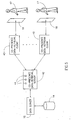
- the system of the present invention typically comprises data server 10 and data repository 14 as in the prior art. It also comprises, in accordance with a preferred embodiment of the present invention, a co-presence server 20 and a multiplicity of co-presence data-retrieval clients 22 each communicating with data server 10, co-presence server 20, and, through the associated display 18, with a user 17.
- each data-retrieval client 22 requests a data object 16 through the data server 10 which retrieves the requested data object 16 from the data repository 14.
- the co-presence data-retrieval client 22 also informs the co-presence server 20 that it has retrieved a specific data object 16, for example object 16a.
- the co-presence server 20 adds the data-retrieval client 22 to a virtual place 24 associated with the retrieved data object 16a.
- Client 22 associates virtual places 24a - 24c with retrieved data objects 16a-16c.
- the co-presence server 20 maintains a virtual place 24 for each data object 16 stored in the data server 10. It will be appreciated that the co-presence server 20 can also create a virtual place 24 on demand, when the first user becomes present at the data object 16, and can remove the virtual place 24 when no one is present.
- co-presence server 20 provides each virtual place 24 with inter-user communication capabilities such that any user which accesses a data object 16 can communicate, if he so desires, with the other users which are currently utilizing the same data object 16.
- the co-presence server 20 allows a user 17 who is present at a data object 16 to become aware of other co-present users 17 and provides a means for co-present users 17 to communicate with each other in real time.
- the communication between users 17 can also be client-to-client if communication through the co-presence server 20 is slow.
- the co-presence server 20 essentially turns each data object into a virtual place where users 17 can meet to view the data object 16, to modify it, and to discuss it. For example, if a data server 10 contains user manuals for a certain product. then it might be useful for the product's vendor to place a help-desk person at the virtual place, or places, associated with the user manuals. The help-desk person can then assist, in real-time, those users who access the user manuals, if they need additional assistance or have difficulties "finding their way" through the product's documentation.
- the co-presence server 20 and the co-presence data-retrieval client 22 follow a co-presence protocol which is illustrated with arrows 31 - 38 of Fig. 4 .
- a user 17 retrieves a data object 16d from a certain data server 10 in accordance with the protocol described in the prior art (arrows 31 - 35, similar to arrows 1 - 5 of Fig. 2 ).
- the co-presence data-retrieval client 22 sends (arrow 36) a message to virtual place 24d within the co-presence server 20 which is associated with the data object 16d, to the effect that the user has accessed the data object 16d.
- the data objects 16 have well-defined names on the data server 10.
- Clients 22 utilize the same or corresponding names to identify the corresponding virtual places 24).
- the virtual place 24d then adds (step 37) the user to the list of co-present users, and sends a message (arrow 38) to that effect to all co-present users, including to the user which just joined the virtual place 24d.
- a user 17 present at a data object 16 wishes to send a message to selected ones of the co-present users 17, the first user 17 sends a message to that effect, via co-presence data-retrieval client 22 and the co-presence server 20, to the associated virtual place 24 which, in turn, relays the message to the selected users 17 present at the data object 16.
- the co-presence data-retrieval client 22 sends a message (arrow 36) to that effect to the virtual place 24 which, in turn, deletes the user 17 from the list of co-present user.
- Virtual place 24 then sends a message (arrow 38) to all remaining co-present users 17 notifying them of the event.
- the co-presence protocol can be described by the operations performed by the co-presence data-retrieval client 22 and by the co-presence server 20 and virtual place 24.
- the following pseudocode describes the protocol:
- the co-presence server 20 can be implemented in any way which provides co-presence.
- the co-presence server 20 is implemented as a UNIX process, executing a concurrent programming language called flat concurrent Prolog (FCP).
- FCP flat concurrent Prolog
- each virtual place 24 can be implemented as a place process, each formed of a collection of FCP processes.
- Each FCP process obeys the co-presence protocol described hereinabove.
- the co-presence server 20 receives communications on a pre-assigned and published port whose identify is incorporated in the co-presence data-retrieval client 22.
- the co-presence server 20 typically receives messages from the co-presence data-retrieval clients 22 and provides them to the appropriate virtual place 24.
- the managing UNIX process can also create a featherweight process (virtual place 24) whenever a first user accesses a data object 16 and can remove a process whenever there cease to be users co-present at the relevant virtual place 24.
- the data-retrieval system of the present invention can operate with standard data-retrieval clients 12 which do not have any co-presence capability.
- the upgrading process involves adding a co-presence server 20, as described hereinabove, and modifying the data-retrieval clients 12 to become co-presence data-retrieval clients 22 through the addition of the following capabilities:
- the data-retrieval system comprises the same elements but they are configured in a different manner. Specifically, the data-retrieval system comprises co-presence data-retrieval clients, labeled 40, and a co-presence data-retrieval server 42, as well as data server 10 and data repository 14 as in the prior art.
- the co-presence data-retrieval clients 40 communicate only with the co-presence data-retrieval server 42, providing to it their data retrieval requests, which the server 42, in turn, passes to the data server 10, and their co-presence communication.
- the co-presence data-retrieval server 42 includes virtual places 44. There can also be many servers 42, each of which handles data retrieval requests for its associated data server 10.
- the co-presence data retrieval client placed the user in communication with the other user's at the data object as soon as the user retrieved to the data object. This is similar to walking into a room and having to talk with everyone before knowing how many and who the people in the room are.
- Fig. 6 illustrates an alternative embodiment of the present invention in which the user can define an awareness state by which he is aware of the people who had requested the same data object 16.
- Fig. 6 is similar to Fig. 3 , and thus, similar reference numerals refer to similar elements, except that the data retrieval clients are awareness data retrieval clients 50 which have two, mutually exclusive, states 52 of awareness associated therewith.
- Fig. 6 shows two clients 50a and 50b which, respectively, have the states of observation (52a) and communication (52b) associated therewith with respect to the same data object. If desired, the state of observation can be defined as either public or private.
- the co-presence system operates as described hereinabove wherein a message is sent to all other users when a new user requests the same data object.
- the new user joins the associated virtual place 24 and the communication channel is opened to that user.
- the new user can then send and receive messages with the other users who are in the communication state.
- an observation channel In the observation state, an observation channel, but no communication channel, is opened in which the user receives an indication of (i.e. is aware of) how many and which people are at the virtual place.
- the indication When new people retrieve the same data object, the indication is updated.
- the indication only includes information regarding public observers; private observers will receive the indication and its update but are not listed therein.
- the user can define in his client a list of data objects of interest. Associated with each data object is an awareness state. Thus, the user can have multiple channels, some for communications and some for observation. For each, the user will be aware of any change regarding the users associated with these data objects.
- the client 50 when the user requests a data object, the client 50 sends his request to the data server 10 which retrieves the object and returns it to the client 50. Client 50 also sends a message to the associated virtual place 24 within the co-presence server 20 which is associated with the retrieved data object 16, to the effect that the user has accessed the data object 16.
- the message includes the awareness state 52 of the user, for that data object 16.
- the virtual place 24 then adds the user, and its awareness state, to the list of co-present users.
- the virtual place 24 opens a communication channel 54, shown in solid lines, thereto.
- the virtual place 24 opens an observation channel 56 and sends along it the number and/or the list of names of the users at the virtual place 24 which are communicating and the number and/or the list of names of the users which are publicly observing.
- the user can redefine his awareness state for that data object and the virtual place at which he is present will change the channel (communication or observation) accordingly.
- a user can request a list of users currently at the virtual place along with an indication of their awareness state. With this information, a user can 'scope out' the virtual place before deciding to begin communication.
Landscapes
- Engineering & Computer Science (AREA)
- Theoretical Computer Science (AREA)
- Physics & Mathematics (AREA)
- Databases & Information Systems (AREA)
- General Engineering & Computer Science (AREA)
- General Physics & Mathematics (AREA)
- Data Mining & Analysis (AREA)
- Computer Networks & Wireless Communication (AREA)
- Signal Processing (AREA)
- Information Retrieval, Db Structures And Fs Structures Therefor (AREA)
- Computer And Data Communications (AREA)
- Information Transfer Between Computers (AREA)
- Burglar Alarm Systems (AREA)
- Electrophonic Musical Instruments (AREA)
- Selective Calling Equipment (AREA)
Claims (9)
- Système de récupération de données comprenant :un serveur de données (10) destiné à récupérer au moins un objet de données (16) parmi une pluralité d'objets de données mémorisés dans une réserve de données (14),un serveur de co-présence (20) destiné à ouvrir des canaux de communication (52B) et d'observation (52A) associés à au moins un desdits objets de données,au moins un client de co-présence de conscience (50A, 50B) destiné à communiquer avec ledit serveur de co-présence,caractérisé en ce que :le au moins un client de co-présence de conscience définit un état de conscience pour chaque objet de données récupéré par le biais dudit au moins un client de co-présence, ledit état de conscience indiquant si ledit client de co-présence de conscience souhaite que d'autres clients de co-présence de conscience soient conscients de la présence dudit client de co-présence de conscience et/ou si ledit client de co-présence de conscience souhaite communiquer avec d'autres clients de co-présence de conscience,dans lequel le nombre de canaux d'observation et le nombre de canaux de communication ouverts par ledit serveur de co-présence avec chaque dit client dépend dudit état de conscience de chaque dit client pour chaque objet de données récupéré, un canal d'observation étant ouvert pour chaque objet de données récupéré pour lequel ledit client de co-présence de conscience souhaite que d'autres clients de co-présence de conscience soient conscients de la présence dudit client de co-présence de conscience ou pour lequel ledit client de co-présence de conscience souhaite être conscient de la présence d'autres clients de co-présence de conscience, et un canal de communication étant ouvert pour chaque objet de données récupéré pour lequel ledit client de co-présence de conscience souhaite communiquer avec d'autres clients de co-présence de conscience qui ont récupéré ledit objet de données.
- Système selon la revendication 1 et dans lequel ledit serveur de co-présence (20) comprend :un moyen destiné à générer un emplacement virtuel (24a, 24b, 24c) par objet de données récupéré à partir dudit serveur de données (10),un moyen destiné à associer chaque emplacement virtuel à son objet de données (16a, 16b, 16c) une fois que son objet de données a fait l'objet d'un accès, etun moyen destiné à générer des canaux de communication (52B) et d'observation (52A) pour les clients de co-présence de conscience en réponse à l'état de conscience de chaque dit client.
- Système selon la revendication 2 et dans lequel ledit client de co-présence de conscience (50A, 50B) inclut un moyen d'association d'objet destiné à associer un objet de données (16) reçu dudit serveur de données à l'un dudit au moins un emplacement virtuel (24) dans ledit serveur de co-présence (20).
- Système selon la revendication 1 et dans lequel ledit état de conscience est l'un des suivants : observation publique, observation privée et communication.
- Système selon l'une quelconque des revendications 1 à 4, dans lequel, pour un objet de données (16) récupéré par ledit serveur de données (10) pour l'un desdits clients (50A, 50B), ledit serveur de co-présence (20) indique audit client quels autres clients ont récupéré le même objet de données et fournit un canal de communication (52B) associé audit objet de données récupéré aux clients qui ont récupéré l'objet de données et qui sont dans un état de conscience de type communication.
- Procédé de récupération de données comprenant les étapes consistant à :récupérer par le biais d'un client (50A, 50B) au moins un objet de données (16) à partir d'une pluralité d'objets de données mémorisés dans un dépôt de données (14),caractérisé en ce que le procédé comprend en outre les étapes consistant à :définir un état de conscience dudit client par objet de données récupéré, ledit état de conscience indiquant si ledit client de co-présence de conscience souhaite que d'autres clients de co-présence de conscience soient conscients de la présence dudit client de co-présence de conscience et/ou si ledit client de co-présence de conscience souhaite communiquer avec que d'autres clients de co-présence de conscience,ouvrir des canaux de communication (52B) et d'observation (52A) associés à au moins un desdits objets de données, où le nombre de canaux d'observation et le nombre de canaux de communication ouverts avec chaque dit client dépend dudit état de conscience de chaque dit client par objet de données récupéré, un canal d'observation étant ouvert pour chaque objet de données récupéré pour lequel ledit client de co-présence de conscience souhaite que d'autres clients de co-présence de conscients soient conscients de la présence dudit client de co-présence de conscience ou pour lequel ledit client de co-présence de conscience souhaite être conscient de la présence d'autres clients de co-présence de conscience, et un canal de communication étant ouvert pour chaque objet de données récupéré pour lequel ledit client de co-présence de conscience souhaite communiquer avec d'autres clients de co-présence de conscience qui ont récupéré ledit objet de données.
- Procédé selon la revendication 6 et ladite étape d'ouverture comprend les étapes consistant à :générer un emplacement virtuel (24) par objet de données récupéré (16),associer chaque emplacement virtuel à son objet de données une fois que son objet de données a fait l'objet d'un accès, etgénérer des canaux de communication (52B) et d'observation (52A) pour lesdits clients en réponse à l'état de conscience de chaque dit client.
- Procédé selon la revendication 6 et dans lequel ledit état de conscience est l'un des suivants : observation publique, observation privée et communication.
- Procédé selon l'une quelconque des revendications 6 à 8, dans lequel :au moins deux clients (50A, 50B) récupèrent au moins un objet de données (16) parmi une pluralité d'objets de données mémorisés dans un dépôt de données (14), etle procédé comprenant en outre l'étape consistant à :fournir un canal de communication (52B) associé au dit objet de données récupéré aux clients qui ont récupéré l'objet de données et qui sont dans l'état de conscience de type communication.
Applications Claiming Priority (3)
| Application Number | Priority Date | Filing Date | Title |
|---|---|---|---|
| US74527 | 1993-06-11 | ||
| US7452798A | 1998-05-07 | 1998-05-07 | |
| PCT/IL1999/000239 WO1999057653A1 (fr) | 1998-05-07 | 1999-05-06 | Systeme d'extraction de donnees gerant la co-presence et indiquant des observateurs de donnees |
Publications (3)
| Publication Number | Publication Date |
|---|---|
| EP1093623A1 EP1093623A1 (fr) | 2001-04-25 |
| EP1093623A4 EP1093623A4 (fr) | 2001-08-01 |
| EP1093623B1 true EP1093623B1 (fr) | 2009-11-25 |
Family
ID=22120040
Family Applications (1)
| Application Number | Title | Priority Date | Filing Date |
|---|---|---|---|
| EP99919505A Expired - Lifetime EP1093623B1 (fr) | 1998-05-07 | 1999-05-06 | Systeme d'extraction de donnees gerant la co-presence et indiquant des observateurs de donnees |
Country Status (7)
| Country | Link |
|---|---|
| EP (1) | EP1093623B1 (fr) |
| AT (1) | ATE450008T1 (fr) |
| AU (1) | AU767447B2 (fr) |
| CA (1) | CA2332057C (fr) |
| DE (1) | DE69941705D1 (fr) |
| IL (1) | IL139291A0 (fr) |
| WO (1) | WO1999057653A1 (fr) |
Citations (2)
| Publication number | Priority date | Publication date | Assignee | Title |
|---|---|---|---|---|
| US5388196A (en) * | 1990-09-07 | 1995-02-07 | Xerox Corporation | Hierarchical shared books with database |
| GB2289149A (en) * | 1994-05-02 | 1995-11-08 | Ubique Ltd | Data retrieval system providing co-presence |
Family Cites Families (5)
| Publication number | Priority date | Publication date | Assignee | Title |
|---|---|---|---|---|
| US5226161A (en) * | 1987-08-21 | 1993-07-06 | Wang Laboratories, Inc. | Integration of data between typed data structures by mutual direct invocation between data managers corresponding to data types |
| US5511196A (en) * | 1992-11-17 | 1996-04-23 | International Business Machines Corporation | Method and system in a data processing system for the enhancement of relationships between reference objects in an object oriented environment and a data object outside an object oriented environment |
| US5452299A (en) * | 1993-10-14 | 1995-09-19 | Intel Corporation | Optimized transfer of large object data blocks in a teleconferencing system |
| US5408470A (en) * | 1993-10-14 | 1995-04-18 | Intel Corporation | Deferred synchronization of distributed objects |
| US5862330A (en) * | 1996-07-16 | 1999-01-19 | Lucent Technologies Inc. | Technique for obtaining and exchanging information on wolrd wide web |
-
1999
- 1999-05-06 IL IL13929199A patent/IL139291A0/xx active IP Right Grant
- 1999-05-06 CA CA002332057A patent/CA2332057C/fr not_active Expired - Lifetime
- 1999-05-06 WO PCT/IL1999/000239 patent/WO1999057653A1/fr not_active Ceased
- 1999-05-06 EP EP99919505A patent/EP1093623B1/fr not_active Expired - Lifetime
- 1999-05-06 AT AT99919505T patent/ATE450008T1/de not_active IP Right Cessation
- 1999-05-06 AU AU37268/99A patent/AU767447B2/en not_active Expired
- 1999-05-06 DE DE69941705T patent/DE69941705D1/de not_active Expired - Lifetime
Patent Citations (2)
| Publication number | Priority date | Publication date | Assignee | Title |
|---|---|---|---|---|
| US5388196A (en) * | 1990-09-07 | 1995-02-07 | Xerox Corporation | Hierarchical shared books with database |
| GB2289149A (en) * | 1994-05-02 | 1995-11-08 | Ubique Ltd | Data retrieval system providing co-presence |
Also Published As
| Publication number | Publication date |
|---|---|
| ATE450008T1 (de) | 2009-12-15 |
| IL139291A0 (en) | 2001-11-25 |
| EP1093623A4 (fr) | 2001-08-01 |
| DE69941705D1 (de) | 2010-01-07 |
| EP1093623A1 (fr) | 2001-04-25 |
| AU3726899A (en) | 1999-11-23 |
| WO1999057653A1 (fr) | 1999-11-11 |
| CA2332057C (fr) | 2007-05-29 |
| CA2332057A1 (fr) | 1999-11-11 |
| AU767447B2 (en) | 2003-11-13 |
Similar Documents
| Publication | Publication Date | Title |
|---|---|---|
| US6651050B2 (en) | Co-presence data retrieval system which indicates observers of data | |
| AU757787B2 (en) | A co-presence data retrieval system | |
| EP0841622B1 (fr) | Système de gestion de la co-présence dans des communautés | |
| US5819084A (en) | Co-presence data retrieval system | |
| JP3278406B2 (ja) | ドキュメント検索仲介装置、ドキュメント検索システム、および、ドキュメント検索仲介プログラムを記録した記録媒体 | |
| US20040128327A1 (en) | System and method for synchronizing data of wireless devices | |
| US7302643B1 (en) | System and method for scheduled events to subscribe to live information topics | |
| US20040088286A1 (en) | System and method for enhancing network-based collaboration | |
| US20040205540A1 (en) | Document management system | |
| WO2007047300A1 (fr) | Gestion des relations existant entre des ressources stockees dans un organe d'archivage | |
| US7610304B2 (en) | Techniques for performing file operations involving a link at a database management system | |
| CN109766320A (zh) | 一种网络文件中共享标签展示的方法及系统 | |
| AU767447B2 (en) | A co-presence data retrieval system which indicates observers of data | |
| CA2587414C (fr) | Gestion de bases de donnees hierarchiques | |
| IL139291A (en) | A co-presence data retrieval system which indicates observers of data | |
| US20060168138A1 (en) | Resource providing system, mediating agent, resource providing method and computer program product | |
| IL139146A (en) | A co-presence data retrieval system | |
| JPH11175451A (ja) | 情報配信装置 | |
| JP2000347923A (ja) | データ管理システム及びデータ管理・検索システム、並びにコンピュータ読み取り可能な記録媒体 | |
| JP2001154934A (ja) | 情報発信支援システムおよび情報発信支援方法 | |
| ZA200206732B (en) | Method of and system for managing electronic files. | |
| WO2002059783A2 (fr) | Procede et systeme pour gerer des fichiers electroniques | |
| JPWO1991004532A1 (ja) | 分散型データベースシステムにおける仮センター方式 |
Legal Events
| Date | Code | Title | Description |
|---|---|---|---|
| PUAI | Public reference made under article 153(3) epc to a published international application that has entered the european phase |
Free format text: ORIGINAL CODE: 0009012 |
|
| 17P | Request for examination filed |
Effective date: 20001115 |
|
| AK | Designated contracting states |
Kind code of ref document: A1 Designated state(s): AT BE CH CY DE DK ES FI FR GB GR IE IT LI LU MC NL PT SE |
|
| A4 | Supplementary search report drawn up and despatched |
Effective date: 20010615 |
|
| AK | Designated contracting states |
Kind code of ref document: A4 Designated state(s): AT BE CH CY DE DK ES FI FR GB GR IE IT LI LU MC NL PT SE |
|
| RAP1 | Party data changed (applicant data changed or rights of an application transferred) |
Owner name: INTERNATIONAL BUSINESS MACHINESCORPORATION |
|
| GRAP | Despatch of communication of intention to grant a patent |
Free format text: ORIGINAL CODE: EPIDOSNIGR1 |
|
| GRAS | Grant fee paid |
Free format text: ORIGINAL CODE: EPIDOSNIGR3 |
|
| GRAA | (expected) grant |
Free format text: ORIGINAL CODE: 0009210 |
|
| AK | Designated contracting states |
Kind code of ref document: B1 Designated state(s): AT BE CH CY DE DK ES FI FR GB GR IE IT LI LU MC NL PT SE |
|
| REG | Reference to a national code |
Ref country code: GB Ref legal event code: FG4D |
|
| REG | Reference to a national code |
Ref country code: CH Ref legal event code: NV Representative=s name: IBM RESEARCH GMBH ZURICH RESEARCH LABORATORY INTEL Ref country code: CH Ref legal event code: EP |
|
| REG | Reference to a national code |
Ref country code: IE Ref legal event code: FG4D |
|
| REG | Reference to a national code |
Ref country code: GB Ref legal event code: 746 Effective date: 20091215 |
|
| REF | Corresponds to: |
Ref document number: 69941705 Country of ref document: DE Date of ref document: 20100107 Kind code of ref document: P |
|
| REG | Reference to a national code |
Ref country code: NL Ref legal event code: VDEP Effective date: 20091125 |
|
| PG25 | Lapsed in a contracting state [announced via postgrant information from national office to epo] |
Ref country code: SE Free format text: LAPSE BECAUSE OF FAILURE TO SUBMIT A TRANSLATION OF THE DESCRIPTION OR TO PAY THE FEE WITHIN THE PRESCRIBED TIME-LIMIT Effective date: 20091125 Ref country code: PT Free format text: LAPSE BECAUSE OF FAILURE TO SUBMIT A TRANSLATION OF THE DESCRIPTION OR TO PAY THE FEE WITHIN THE PRESCRIBED TIME-LIMIT Effective date: 20100325 Ref country code: FI Free format text: LAPSE BECAUSE OF FAILURE TO SUBMIT A TRANSLATION OF THE DESCRIPTION OR TO PAY THE FEE WITHIN THE PRESCRIBED TIME-LIMIT Effective date: 20091125 |
|
| PG25 | Lapsed in a contracting state [announced via postgrant information from national office to epo] |
Ref country code: CY Free format text: LAPSE BECAUSE OF FAILURE TO SUBMIT A TRANSLATION OF THE DESCRIPTION OR TO PAY THE FEE WITHIN THE PRESCRIBED TIME-LIMIT Effective date: 20091125 |
|
| PG25 | Lapsed in a contracting state [announced via postgrant information from national office to epo] |
Ref country code: BE Free format text: LAPSE BECAUSE OF FAILURE TO SUBMIT A TRANSLATION OF THE DESCRIPTION OR TO PAY THE FEE WITHIN THE PRESCRIBED TIME-LIMIT Effective date: 20091125 Ref country code: AT Free format text: LAPSE BECAUSE OF FAILURE TO SUBMIT A TRANSLATION OF THE DESCRIPTION OR TO PAY THE FEE WITHIN THE PRESCRIBED TIME-LIMIT Effective date: 20091125 |
|
| PG25 | Lapsed in a contracting state [announced via postgrant information from national office to epo] |
Ref country code: NL Free format text: LAPSE BECAUSE OF FAILURE TO SUBMIT A TRANSLATION OF THE DESCRIPTION OR TO PAY THE FEE WITHIN THE PRESCRIBED TIME-LIMIT Effective date: 20091125 Ref country code: ES Free format text: LAPSE BECAUSE OF FAILURE TO SUBMIT A TRANSLATION OF THE DESCRIPTION OR TO PAY THE FEE WITHIN THE PRESCRIBED TIME-LIMIT Effective date: 20100308 Ref country code: DK Free format text: LAPSE BECAUSE OF FAILURE TO SUBMIT A TRANSLATION OF THE DESCRIPTION OR TO PAY THE FEE WITHIN THE PRESCRIBED TIME-LIMIT Effective date: 20091125 |
|
| PLBE | No opposition filed within time limit |
Free format text: ORIGINAL CODE: 0009261 |
|
| STAA | Information on the status of an ep patent application or granted ep patent |
Free format text: STATUS: NO OPPOSITION FILED WITHIN TIME LIMIT |
|
| PG25 | Lapsed in a contracting state [announced via postgrant information from national office to epo] |
Ref country code: GR Free format text: LAPSE BECAUSE OF FAILURE TO SUBMIT A TRANSLATION OF THE DESCRIPTION OR TO PAY THE FEE WITHIN THE PRESCRIBED TIME-LIMIT Effective date: 20100226 |
|
| 26N | No opposition filed |
Effective date: 20100826 |
|
| PG25 | Lapsed in a contracting state [announced via postgrant information from national office to epo] |
Ref country code: MC Free format text: LAPSE BECAUSE OF NON-PAYMENT OF DUE FEES Effective date: 20100531 |
|
| REG | Reference to a national code |
Ref country code: CH Ref legal event code: PL |
|
| PG25 | Lapsed in a contracting state [announced via postgrant information from national office to epo] |
Ref country code: LI Free format text: LAPSE BECAUSE OF NON-PAYMENT OF DUE FEES Effective date: 20100531 Ref country code: CH Free format text: LAPSE BECAUSE OF NON-PAYMENT OF DUE FEES Effective date: 20100531 |
|
| PG25 | Lapsed in a contracting state [announced via postgrant information from national office to epo] |
Ref country code: IT Free format text: LAPSE BECAUSE OF FAILURE TO SUBMIT A TRANSLATION OF THE DESCRIPTION OR TO PAY THE FEE WITHIN THE PRESCRIBED TIME-LIMIT Effective date: 20091125 |
|
| PG25 | Lapsed in a contracting state [announced via postgrant information from national office to epo] |
Ref country code: IE Free format text: LAPSE BECAUSE OF NON-PAYMENT OF DUE FEES Effective date: 20100506 |
|
| PGFP | Annual fee paid to national office [announced via postgrant information from national office to epo] |
Ref country code: FR Payment date: 20110523 Year of fee payment: 13 |
|
| PG25 | Lapsed in a contracting state [announced via postgrant information from national office to epo] |
Ref country code: LU Free format text: LAPSE BECAUSE OF NON-PAYMENT OF DUE FEES Effective date: 20100506 |
|
| REG | Reference to a national code |
Ref country code: FR Ref legal event code: ST Effective date: 20130131 |
|
| PG25 | Lapsed in a contracting state [announced via postgrant information from national office to epo] |
Ref country code: FR Free format text: LAPSE BECAUSE OF NON-PAYMENT OF DUE FEES Effective date: 20120531 |
|
| PGFP | Annual fee paid to national office [announced via postgrant information from national office to epo] |
Ref country code: DE Payment date: 20170519 Year of fee payment: 19 Ref country code: GB Payment date: 20170530 Year of fee payment: 19 |
|
| REG | Reference to a national code |
Ref country code: DE Ref legal event code: R079 Ref document number: 69941705 Country of ref document: DE Free format text: PREVIOUS MAIN CLASS: G06F0017300000 Ipc: G06F0016000000 |
|
| REG | Reference to a national code |
Ref country code: DE Ref legal event code: R119 Ref document number: 69941705 Country of ref document: DE |
|
| GBPC | Gb: european patent ceased through non-payment of renewal fee |
Effective date: 20180506 |
|
| PG25 | Lapsed in a contracting state [announced via postgrant information from national office to epo] |
Ref country code: DE Free format text: LAPSE BECAUSE OF NON-PAYMENT OF DUE FEES Effective date: 20181201 Ref country code: GB Free format text: LAPSE BECAUSE OF NON-PAYMENT OF DUE FEES Effective date: 20180506 |