EP1094413A2 - Auf das Internet gestütztes Werbesystem - Google Patents
Auf das Internet gestütztes Werbesystem Download PDFInfo
- Publication number
- EP1094413A2 EP1094413A2 EP00109184A EP00109184A EP1094413A2 EP 1094413 A2 EP1094413 A2 EP 1094413A2 EP 00109184 A EP00109184 A EP 00109184A EP 00109184 A EP00109184 A EP 00109184A EP 1094413 A2 EP1094413 A2 EP 1094413A2
- Authority
- EP
- European Patent Office
- Prior art keywords
- user
- advertising system
- internet based
- based advertising
- advertisement
- Prior art date
- Legal status (The legal status is an assumption and is not a legal conclusion. Google has not performed a legal analysis and makes no representation as to the accuracy of the status listed.)
- Withdrawn
Links
Images

Classifications
-
- G—PHYSICS
- G06—COMPUTING OR CALCULATING; COUNTING
- G06Q—INFORMATION AND COMMUNICATION TECHNOLOGY [ICT] SPECIALLY ADAPTED FOR ADMINISTRATIVE, COMMERCIAL, FINANCIAL, MANAGERIAL OR SUPERVISORY PURPOSES; SYSTEMS OR METHODS SPECIALLY ADAPTED FOR ADMINISTRATIVE, COMMERCIAL, FINANCIAL, MANAGERIAL OR SUPERVISORY PURPOSES, NOT OTHERWISE PROVIDED FOR
- G06Q30/00—Commerce
- G06Q30/02—Marketing; Price estimation or determination; Fundraising
Definitions
- the present invention relates to an Internet based advertising system, more particularly to an Internet based advertising algorithm which is embedded to a homepage as a program code that functions inside a browser as a normal html format depending on user's usage interval.
- Internet homepages host banner advertisements to attract viewers which may be composed of image files (*.jpg, *.gif, for example) or animated images that contain a link to the advertiser's homepage.
- image files *.jpg, *.gif, for example
- animated images that contain a link to the advertiser's homepage.
- USA Today www.usatoday.com
- a newspaper company has about 20 banner advertisements in its front page, and its sub-pages also contain several banner advertisements.
- the viewers at such homepage are presented with 20 or more banner advertisements that can cause the decrease of reader's concentration.
- the advertiser's banners are placed in selection competition among other banners and an advertiser can only passively hope that the viewer will select one of their banners.
- the homepage owner must allocate great amount of space by hosting the banners, which will reduce its own homepage space.
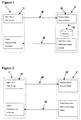
- Figure 1 depicts a general diagram in making client's connection to a homepage.
- a client an internet user
- the browser 1 then generates a request header and sends it 30 to the server 2.
- the server 2 interprets the client's requests and asks for approval 20. If they are approved, the server accesses the hard disk 40 and starts sending files to the Web browser where the request has originated 50. Next, if these files are received on the browser, the browser starts displaying the homepages.
- Advertising in Internet usually takes the form of allocating certain banner spaces in the homepages and waiting for a user's connection request through the banners. Therefore, banners at homepages employ many kinds of fancy techniques such as animation or changing phrases as an anchor to attract Internet viewers. Certain homepages host the same advertising banner in the exact same position in all its sub homepages for advertising repetition effect to maximize the advertisement efficiency.
- the current Internet homepage based advertising has four major problems. First, it always associates with banners where their size are limited. With the limited banner size, advertisers find difficulties in fully expressing their advertisement phrases. Second, the homepage space is reduced when the advertisers' banners are hosted. Third, the simultaneous display of several banners cause contention and selection competition among banners which will confuse the viewers. Fourth, the viewer departs from homepage to a advertiser's homepage in case of a banner selection by a viewer.
- the primary object of the present invention is to provide an Internet based advertising system which will eliminate the above described problems encountered in the conventional art. If an Internet World Wide Web user connects to a specific homepage, the user is associated with normal browsing activities such as a mouse click or keyboard press to navigate or read the contents of that homepage.
- the present invention supplements an original homepage by implicitly providing advertisement during a user's normal viewing process.
- the system constantly monitors for a user's end of mouse movement within a browser, and constantly tests if the time from a user's end of mouse movement has reached a predetermined period to qualify for fully or partially covering the original homepage with advertisement.
- advertisers can intensify their advertisement by using the whole browser window space for their advertising with bigger images, lengthier texts, and moving images that will create more dynamic and effective advertisement than any other methods in the current market.
- the present invention there are benefits for three parties, the advertisers, the homepage owners, and the viewers.
- the advertisers will find a way to resolve problems in attracting users with limited banner size and find an opportunity to enlarge their advertising area for their advertisement phrases or images.
- the homepage owners will have advantages by placing advertisement without allocating certain space for banners that is normally required.
- the advertisement viewers will find a way to minimize any confusion that may be a result by simultaneously viewing several banners that are displayed together at one homepage.
- the system of the present invention has at least one web server and a browser for providing information in response to a request from a user.
- the algorithm of the present invention which is embedded into web server's content (homepage) includes three stages, the advertisement activating stage, the advertisement terminating stage, and the modified advertisement activating stage which itself contains a link to a sponsor's homepage.
- the advertisement activating stage starts during a user's normal browsing process in the browser when no event, such as a mouse input, is captured for a predetermined time period. It covers the original homepage that a user is currently viewing with the advertisement phrases (including image files).
- the advertising activating stage changes to an advertising terminating stage, which will remove the advertisement so that the user can view the original homepage, when an event, such as a mouse move, is sensed from the user.
- an event such as a mouse move
- the user can be moved to the advertiser's homepage by an event, such as, a user's keyboard press.
- the system of the present invention is embedded in a normal homepage(server) and operates inside a browser(client).
- This advertisement mechanism does not disturb a user's normal browsing behavior since the system will guarantee sufficient time for users to read the homepage until the advertisement starts operating. Moreover, the operating advertisement will be removed right after the user's intention for viewing the original homepage. Users do not perceive the presence of the mechanism, instead the viewers will find themselves in a full screen of advertisement while they are still in the homepage if they do not move the mouse for a certain period.
- an Internet based advertising system comprising: a web browser connecting to a website; and, a web server of the website which sends an ordinary homepage file and a forced message to the user's browser without the user's request when a user connects to the website, wherein the forced message is being capable of monitoring whether the time from a user's last mouse move or keyboard press has reached a predetermined period, after a user connects to the website on the Internet; displaying an advertisement content on the homepage, if the time exceeds the predetermined period; monitoring whether an event occurs during the displaying; and, terminating the displaying when an event occurs by the user.
- the forced message can be referred to advertisement message in the present invention that is embedded to the original html format since the advertisement message will start displaying without the user's consent. Its logic that controls FM is called as forced message algorithm (FMA). Therefore, a server sends FM and FMA to a client system (to a web browser) along with the homepage files that the user has requested.
- FM will be referred as both of FM and FMA above.
- the forced message is capable of removing the displaying advertisement when an event occurs by the user, so that the user can view the original web site.
- the event may be a mouse movement, a mouse click, or a keyboard press.
- the advertisement content may be a text, image, animated image, sound, and/or shockwave files, and may appear or disappear in random fashion, or may stay stationary or move to a certain direction in the user's browser.
- the forced message is capable of removing the advertisement and moving the user to a designated website, when an event occurs by the user.
- the advertisement content may be displayed regardless of the size of the activated current browser window or the state of the browser such as a scrolled state of the website or a background state(minimized state) of the browser window.
- the forced message is being capable of displaying a background screen on the homepage and an advertisement content on the background screen in a part of the browser window or in the entire browser window, if the time exceeds the predetermined period.
- the advertisement content may cover the entire background screen or a part of the background screen.
- the forced message is capable of terminating the displaying, of removing the background screen and the advertisement, and of redisplaying to the original web site.
- the forced message is capable of removing the background screen and the advertisement and moving the user to a designated website, when an event occurs by the user.
- the background screen may be displayed regardless of the size of the activated browser window or the state of the browser such as a scrolled state of the website and a background state of the browser window and can contain text based advertisement phrases or image based advertisement.
- FIG 2 is a diagram of a client and a Web server communication to show the difference between the conventional communication of figure 1 and the communication of the present invention.
- an user writes a specific URL or clicks to a link 10' on the homepage from a user's browser 1'.
- the browser 1' then generates a request header and sends it 30' to the server 2'.
- the server 2' interprets the client's requests and asks for approval 20'. If they are approved, the server accesses the hard disk and starts sending the homepage files together with the forced message algorithm (FMA) which contains the forced messages (FM) and its functioning logic to the Web browser where the request is originated 40'.
- FMA forced message algorithm
- FM forced messages
- the downloaded forced message algorithm constantly operates until the end of the homepage session.
- the FMA keeps counting until the predetermined period has been reached starting from the last mouse movement or keyboard press from the user, and keeps measuring the current browser window size.
- the downloaded FMA starts presenting the forced message according to the client's browser window size if the predetermined period has been reached.
- the FMA also controls the removal of the forced messages if an event occurs from the user again.
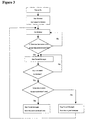
- FIG 3 shows the block diagram of the embodiment of the present invention.
- a user turns the PC on and starts accessing the Internet with a browser.
- the FMA constantly monitors whether the time from user's last mouse movement has reached the predetermined period (user's usage interval monitoring). If the time exceeds the predetermined period, the FMA starts covering the original homepage with background screen.
- An advertisement (forced message) will be displayed above the background screen (forced message displaying).
- the FMA monitors the user's state (capturing the user's event type). If no user's events are captured, forced messages will continue to be displayed.
- the forced messages will be removed and the user will be moved to a designated web site (new connection building). Further, if the FMA senses a new mouse movement during the forced message displaying time, the forced messages will be removed and the user will be displayed with the original homepage for normal browsing (returning the original homepage).
- the above code distinguishes the browser type, and is written separatety for each type of the browsers (Netscape and Explorer). Each code contains the logic to check the time period from the user's last action. If the time period reaches the predetermined period, the code calls for a background screen that will cover the user's original browsing window. Advertisements will be presented over the background screen as if the user views the whole page with the advertisement (user cannot view the original content at this stage).
- the code also contains a logic that can distinguish the user's event type. The code understands two types of user event. The first event is the mouse movement event, which the system interprets as to remove the background screen and the advertisement so that the user will return to the original homepage. The other event is the keyboard press event, which the system interprets as to remove the background screen, and to move the user to a designated homepage.
- the script "This is document area” in the code is the original homepage content. Therefore, the present invention can be embedded to any homepages (html format). If the user does not move the mouse for a certain period (while the user is viewing "This is document area"), the user will see an automatic advertisement presented to the user. The user may view the original document, "This is document area", if the user moves the mouse again. Otherwise, if the user presses any key on the keyboard, the user will be moved to a designated web site.
- Figure 4 shows an example of the operation of the forced message.
- Background screen 70 will cover the browser screen 60 to hide the original homepage from the viewer.
- the background screen 70 may vary in color, size or style to match the advertisement 80 that is displayed above the background screen 70.
- the advertisement 80 may be of any size and any form, such as, image file, animated file, and/or shockwave file. Its position may vary, and its moving direction may be also controlled to maximize the viewer's attention. As it was indicated in the figure, a full screen can be used for advertising area to maximize the advertising effect.
- the user may be moved to the specific site upon the user's any keyboard press. In this case, background screen 70 and advertisement content 80 will be removed and the user will be not returned to the original homepage, but the user will be moved to the designated homepage.
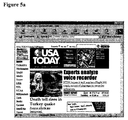
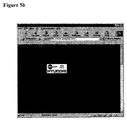
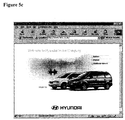
- Figure 5a, 5b, and 5c show an actual example in accordance with the present invention.
- an user is initially viewing the Usatoday homepage using a Netscape navigator ( Figure 5a).
- the FMA prepares to act in the Netscape mode.
- the homepage will be covered with Hyundai Motor Company's advertisement ( Figure 5b).
- Hyundai's advertisement asks for a key press for a visit to their homepage in the corner of the advertisement. If the user presses any key, the user will be moved to Hyundai's homepage at Figure 5c. If the user simply moves his mouse, he will be able to see the original homepage again (Figure 5a).
Landscapes
- Business, Economics & Management (AREA)
- Strategic Management (AREA)
- Engineering & Computer Science (AREA)
- Accounting & Taxation (AREA)
- Development Economics (AREA)
- Finance (AREA)
- Economics (AREA)
- Game Theory and Decision Science (AREA)
- Entrepreneurship & Innovation (AREA)
- Marketing (AREA)
- Physics & Mathematics (AREA)
- General Business, Economics & Management (AREA)
- General Physics & Mathematics (AREA)
- Theoretical Computer Science (AREA)
- Information Transfer Between Computers (AREA)
- Management, Administration, Business Operations System, And Electronic Commerce (AREA)
- User Interface Of Digital Computer (AREA)
- Information Retrieval, Db Structures And Fs Structures Therefor (AREA)
Applications Claiming Priority (2)
| Application Number | Priority Date | Filing Date | Title |
|---|---|---|---|
| KR4535299 | 1999-10-19 | ||
| KR1019990045352A KR20010037695A (ko) | 1999-10-19 | 1999-10-19 | 사용자의 휴지상태를 감지한 웹브라우저의 광고 표시방법 |
Publications (2)
| Publication Number | Publication Date |
|---|---|
| EP1094413A2 true EP1094413A2 (de) | 2001-04-25 |
| EP1094413A3 EP1094413A3 (de) | 2004-03-17 |
Family
ID=19615957
Family Applications (1)
| Application Number | Title | Priority Date | Filing Date |
|---|---|---|---|
| EP00109184A Withdrawn EP1094413A3 (de) | 1999-10-19 | 2000-05-09 | Auf das Internet gestütztes Werbesystem |
Country Status (5)
| Country | Link |
|---|---|
| EP (1) | EP1094413A3 (de) |
| JP (1) | JP2001118006A (de) |
| KR (1) | KR20010037695A (de) |
| AU (1) | AU736343C (de) |
| CA (1) | CA2307950A1 (de) |
Cited By (7)
| Publication number | Priority date | Publication date | Assignee | Title |
|---|---|---|---|---|
| NL1028483C2 (nl) * | 2005-03-08 | 2006-09-11 | Matthieu Roland Elvers | Internetbanner. |
| US7680506B2 (en) | 2006-03-14 | 2010-03-16 | Nec Corporation | Method for inserting advertisement into PoC and extended-PoC communication system |
| WO2013173390A1 (en) * | 2012-05-14 | 2013-11-21 | Feadler Matthew Aaron | Systems and methods for providing timely advertising to portable devices |
| CN107070873A (zh) * | 2017-01-20 | 2017-08-18 | 腾讯科技(深圳)有限公司 | 网页非法数据筛查方法、系统、数据筛查服务器和浏览器 |
| US11599907B2 (en) | 2012-05-14 | 2023-03-07 | Iqzone, Inc. | Displaying media content on portable devices based upon user interface state transitions |
| US11663628B2 (en) | 2012-05-14 | 2023-05-30 | Iqzone, Inc. | Systems and methods for unobtrusively displaying media content on portable devices |
| US11736777B2 (en) | 2019-10-25 | 2023-08-22 | Iqzone, Inc. | Using activity-backed overlays to display rich media content on portable devices during periods of user inactivity |
Families Citing this family (14)
| Publication number | Priority date | Publication date | Assignee | Title |
|---|---|---|---|---|
| KR100400891B1 (ko) * | 1999-12-31 | 2003-10-08 | 김영준 | 픽쳐마크를 이용한 인터넷 접속화면 구성방법 |
| US7065712B2 (en) | 2000-09-01 | 2006-06-20 | Nippon Telegraph And Telephone Corp. | Scheme for posting advertisements on comprehensive information viewing device |
| JP3693938B2 (ja) | 2000-11-07 | 2005-09-14 | 信佳 酒谷 | 情報配信システム、広告配信システム、情報配信プログラム、サーバ、情報配信サーバ、広告情報配信方法、およびセーバページ表示方法 |
| TWI248304B (en) * | 2004-12-01 | 2006-01-21 | Tatung Co Ltd | A method for displaying dynamic design |
| KR20070103960A (ko) * | 2006-04-20 | 2007-10-25 | 주식회사 유온커뮤니케이션 | 방송수신장치의 광고방법 |
| KR101217828B1 (ko) * | 2009-04-30 | 2013-01-02 | 주식회사 엔톰애드 | 스크롤 바의 위치 정보를 이용한 복수개의 온라인 광고의 제공 방법 및 장치 |
| KR101028009B1 (ko) * | 2010-05-07 | 2011-04-07 | 김안종 | 온라인 광고 제공 방법 및 장치 |
| JP2013057918A (ja) | 2011-09-09 | 2013-03-28 | Shigeto Umeda | 可変長の広告を表示また、入札するシステム |
| JP5814324B2 (ja) * | 2013-10-18 | 2015-11-17 | ヤフー株式会社 | 広告配信装置、広告配信方法及び広告配信プログラム |
| JP6047209B2 (ja) * | 2015-09-17 | 2016-12-21 | ヤフー株式会社 | 広告配信装置、広告配信方法、広告配信プログラム、情報表示装置、情報表示方法および情報表示プログラム |
| JP6761327B2 (ja) * | 2016-11-04 | 2020-09-23 | 株式会社半導体エネルギー研究所 | 電子機器 |
| KR102327280B1 (ko) * | 2017-04-26 | 2021-11-17 | 엔에이치엔 주식회사 | 수신 메시지 노출 방법, 이를 수행하는 메시지 애플리케이션 프로그램 및 이를 수행하는 모바일 단말기 |
| KR102504752B1 (ko) * | 2017-12-21 | 2023-03-02 | 삼성전자주식회사 | 전자 장치 및 이의 제어 방법 |
| JP6868597B2 (ja) * | 2018-09-12 | 2021-05-12 | ヤフー株式会社 | 情報表示プログラム、情報表示装置、情報表示方法および配信装置 |
-
1999
- 1999-10-19 KR KR1019990045352A patent/KR20010037695A/ko not_active Ceased
-
2000
- 2000-05-04 AU AU32533/00A patent/AU736343C/en not_active Ceased
- 2000-05-08 CA CA002307950A patent/CA2307950A1/en not_active Abandoned
- 2000-05-09 EP EP00109184A patent/EP1094413A3/de not_active Withdrawn
- 2000-06-08 JP JP2000171644A patent/JP2001118006A/ja active Pending
Non-Patent Citations (1)
| Title |
|---|
| No Search * |
Cited By (13)
| Publication number | Priority date | Publication date | Assignee | Title |
|---|---|---|---|---|
| WO2006096046A3 (en) * | 2005-03-08 | 2006-11-09 | Der Helm Peter Van | Variable internet banner |
| NL1028483C2 (nl) * | 2005-03-08 | 2006-09-11 | Matthieu Roland Elvers | Internetbanner. |
| US7680506B2 (en) | 2006-03-14 | 2010-03-16 | Nec Corporation | Method for inserting advertisement into PoC and extended-PoC communication system |
| US11663628B2 (en) | 2012-05-14 | 2023-05-30 | Iqzone, Inc. | Systems and methods for unobtrusively displaying media content on portable devices |
| WO2013173390A1 (en) * | 2012-05-14 | 2013-11-21 | Feadler Matthew Aaron | Systems and methods for providing timely advertising to portable devices |
| US8924252B2 (en) | 2012-05-14 | 2014-12-30 | Iqzone, Inc. | Systems and methods for providing timely advertising to portable devices |
| US12307487B2 (en) | 2012-05-14 | 2025-05-20 | Iqzone, Inc. | Activity-backed overlay technique for media display on mobile devices |
| US11599907B2 (en) | 2012-05-14 | 2023-03-07 | Iqzone, Inc. | Displaying media content on portable devices based upon user interface state transitions |
| CN107070873B (zh) * | 2017-01-20 | 2020-08-04 | 腾讯科技(深圳)有限公司 | 网页非法数据筛查方法、系统、数据筛查服务器和浏览器 |
| CN107070873A (zh) * | 2017-01-20 | 2017-08-18 | 腾讯科技(深圳)有限公司 | 网页非法数据筛查方法、系统、数据筛查服务器和浏览器 |
| US11736777B2 (en) | 2019-10-25 | 2023-08-22 | Iqzone, Inc. | Using activity-backed overlays to display rich media content on portable devices during periods of user inactivity |
| US11736776B2 (en) | 2019-10-25 | 2023-08-22 | Iqzone, Inc. | Monitoring operating system methods to facilitate unobtrusive display of media content on portable devices |
| US12375777B2 (en) | 2019-10-25 | 2025-07-29 | Qzone, Inc. | System and method for using activity-backed overlays to display media content on portable devices during periods of user inactivity |
Also Published As
| Publication number | Publication date |
|---|---|
| KR20010037695A (ko) | 2001-05-15 |
| AU736343C (en) | 2002-03-28 |
| AU736343B2 (en) | 2001-07-26 |
| CA2307950A1 (en) | 2001-04-19 |
| JP2001118006A (ja) | 2001-04-27 |
| EP1094413A3 (de) | 2004-03-17 |
| AU3253300A (en) | 2001-04-26 |
Similar Documents
| Publication | Publication Date | Title |
|---|---|---|
| EP1094413A2 (de) | Auf das Internet gestütztes Werbesystem | |
| US9569555B2 (en) | Method for adding a user-selectable function to a hyperlink | |
| US7076495B2 (en) | Browser rewind and replay feature for transient messages by periodically capturing screen images | |
| EP0888604B1 (de) | Erregung der visuellen aufmerksamkeit einer person in der nähe eines anzeigegerätes | |
| US7379976B2 (en) | Method and apparatus for displaying intermediate content messages in the unused portion of a web browser display space | |
| US20110035263A1 (en) | Process for increasing user-interaction rates for document elements | |
| US6457025B2 (en) | Interstitial advertising display system and method | |
| US7216290B2 (en) | System, method and apparatus for selecting, displaying, managing, tracking and transferring access to content of web pages and other sources | |
| US6295061B1 (en) | Computer system and method for dynamic information display | |
| US8913082B2 (en) | Information display device, information display method, information display program, recording medium and information display system | |
| US20050071776A1 (en) | Multifunction hyperlink and methods of producing multifunction hyperlinks | |
| US20010049701A1 (en) | Internet web page background advertising system | |
| US20080071881A1 (en) | Advertising on Idle Web Browser Windows | |
| JP2003022042A (ja) | インターネット環境における背景広告 | |
| US20110125571A1 (en) | Method and system for speed efficient and relevancy efficient advertising through a web enabled element | |
| US20030002070A1 (en) | Data processing system for converting content relative to a space used as an advertising medium into a printable object | |
| JP4256621B2 (ja) | ネットワークを介して受信した一時メッセージを表示する方法、プログラム製品、およびシステム | |
| US20030028450A1 (en) | System, method, and computer program product for storing internet advertisements at a user computer | |
| KR20000037344A (ko) | 인터넷 검색시 광고 방법 | |
| KR20100061136A (ko) | 통신망을 이용한 광고 제공 시스템 및 광고 제공방법 | |
| KR100602325B1 (ko) | 인터넷 웹 페이지 광고 제어 시스템 및 방법과 컴퓨터 판독 가능 기록 매체 | |
| KR20000017693A (ko) | 인터넷광고방법 | |
| EP3029585A1 (de) | Verbesserter hyperlink | |
| KR20010000276A (ko) | 웹 브라우저 상 유동 광고기법 | |
| KR20000063484A (ko) | 네트워크 기반 바이러스 검사 겸용 광고 방법 및 시스템 |
Legal Events
| Date | Code | Title | Description |
|---|---|---|---|
| PUAI | Public reference made under article 153(3) epc to a published international application that has entered the european phase |
Free format text: ORIGINAL CODE: 0009012 |
|
| AK | Designated contracting states |
Kind code of ref document: A2 Designated state(s): AT BE CH CY DE DK ES FI FR GB GR IE IT LI LU MC NL PT SE |
|
| AX | Request for extension of the european patent |
Free format text: AL;LT;LV;MK;RO;SI |
|
| RAP1 | Party data changed (applicant data changed or rights of an application transferred) |
Owner name: EXTANT SYSTEMS, INC. |
|
| RIN1 | Information on inventor provided before grant (corrected) |
Inventor name: EXTANT SYSTEMS, INC. |
|
| PUAL | Search report despatched |
Free format text: ORIGINAL CODE: 0009013 |
|
| AK | Designated contracting states |
Kind code of ref document: A3 Designated state(s): AT BE CH CY DE DK ES FI FR GB GR IE IT LI LU MC NL PT SE |
|
| AX | Request for extension of the european patent |
Extension state: AL LT LV MK RO SI |
|
| AKX | Designation fees paid |
Designated state(s): DE FR GB IT |
|
| STAA | Information on the status of an ep patent application or granted ep patent |
Free format text: STATUS: THE APPLICATION IS DEEMED TO BE WITHDRAWN |
|
| 18D | Application deemed to be withdrawn |
Effective date: 20041201 |