EP1096408A2 - Système de communication pour distributeurs automatiques - Google Patents
Système de communication pour distributeurs automatiques Download PDFInfo
- Publication number
- EP1096408A2 EP1096408A2 EP00309499A EP00309499A EP1096408A2 EP 1096408 A2 EP1096408 A2 EP 1096408A2 EP 00309499 A EP00309499 A EP 00309499A EP 00309499 A EP00309499 A EP 00309499A EP 1096408 A2 EP1096408 A2 EP 1096408A2
- Authority
- EP
- European Patent Office
- Prior art keywords
- vending machine
- operating software
- additional
- memory
- port
- Prior art date
- Legal status (The legal status is an assumption and is not a legal conclusion. Google has not performed a legal analysis and makes no representation as to the accuracy of the status listed.)
- Withdrawn
Links
- 238000004891 communication Methods 0.000 title claims abstract description 59
- 238000012546 transfer Methods 0.000 claims abstract description 155
- 230000015654 memory Effects 0.000 claims abstract description 114
- 238000000034 method Methods 0.000 claims abstract description 23
- 230000008569 process Effects 0.000 claims abstract description 22
- 230000006870 function Effects 0.000 claims abstract description 10
- 230000003287 optical effect Effects 0.000 claims description 7
- 238000004590 computer program Methods 0.000 claims description 4
- 238000010586 diagram Methods 0.000 description 5
- 230000000977 initiatory effect Effects 0.000 description 5
- 235000011888 snacks Nutrition 0.000 description 4
- 230000008901 benefit Effects 0.000 description 3
- 230000005055 memory storage Effects 0.000 description 2
- 230000004224 protection Effects 0.000 description 2
- 230000008672 reprogramming Effects 0.000 description 2
- 230000004044 response Effects 0.000 description 2
- XLYOFNOQVPJJNP-UHFFFAOYSA-N water Substances O XLYOFNOQVPJJNP-UHFFFAOYSA-N 0.000 description 2
- 238000004458 analytical method Methods 0.000 description 1
- 230000009118 appropriate response Effects 0.000 description 1
- 238000012550 audit Methods 0.000 description 1
- 235000013361 beverage Nutrition 0.000 description 1
- 230000008859 change Effects 0.000 description 1
- 238000010276 construction Methods 0.000 description 1
- 238000013500 data storage Methods 0.000 description 1
- 230000007812 deficiency Effects 0.000 description 1
- 238000011161 development Methods 0.000 description 1
- 230000018109 developmental process Effects 0.000 description 1
- 230000000694 effects Effects 0.000 description 1
- 235000013305 food Nutrition 0.000 description 1
- 238000012423 maintenance Methods 0.000 description 1
- 238000007726 management method Methods 0.000 description 1
- 238000004519 manufacturing process Methods 0.000 description 1
- 208000012584 pre-descemet corneal dystrophy Diseases 0.000 description 1
- 238000012545 processing Methods 0.000 description 1
- 238000012360 testing method Methods 0.000 description 1
- 230000000007 visual effect Effects 0.000 description 1
Images


Classifications
-
- G—PHYSICS
- G07—CHECKING-DEVICES
- G07F—COIN-FREED OR LIKE APPARATUS
- G07F5/00—Coin-actuated mechanisms; Interlocks
- G07F5/18—Coin-actuated mechanisms; Interlocks specially adapted for controlling several coin-freed apparatus from one place
-
- G—PHYSICS
- G07—CHECKING-DEVICES
- G07F—COIN-FREED OR LIKE APPARATUS
- G07F9/00—Details other than those peculiar to special kinds or types of apparatus
- G07F9/001—Interfacing with vending machines using mobile or wearable devices
-
- G—PHYSICS
- G07—CHECKING-DEVICES
- G07F—COIN-FREED OR LIKE APPARATUS
- G07F9/00—Details other than those peculiar to special kinds or types of apparatus
- G07F9/002—Vending machines being part of a centrally controlled network of vending machines
-
- G—PHYSICS
- G07—CHECKING-DEVICES
- G07F—COIN-FREED OR LIKE APPARATUS
- G07F9/00—Details other than those peculiar to special kinds or types of apparatus
- G07F9/02—Devices for alarm or indication, e.g. when empty; Advertising arrangements in coin-freed apparatus
- G07F9/026—Devices for alarm or indication, e.g. when empty; Advertising arrangements in coin-freed apparatus for alarm, monitoring and auditing in vending machines or means for indication, e.g. when empty
Definitions
- This invention relates generally to improvements in vending machine information transfer and communication systems and, particularly, to a highly versatile vending machine communication system and process in which it is possible to download and upload vending machine operating software and vending machine data using a handheld data transfer device.
- vending machines have evolved from purely mechanical devices into complicated, electronically controlled machines. Modem vending machines often employ microprocessors or similar devices that control machine operations. The addition of electronic controllers has facilitated the ability to automatically record and store various types of sales data associated with a given machine. For example, vending machines can store information related to the sales patterns associated with particular vendable products. Such information allows, among other things, vending machine operators to optimize the products they stock in their machines, and to maximize the sales associated with a particular machine and/or with a particular location.
- Electronic controllers also allow vending machine operators, including service technicians and stock personnel, to tailor various configuration parameters associated with their vending machines. For example, vending machine operators can set parameters related to price data, temperature settings, brewing times, product type, and product location within the machine. In some situations, vending machine operators must update the configuration data quite often. If, for example, the product type or price varies on a regular basis, vending machine service personnel may need to update the configuration data each time the machine is stocked.
- EVA-DTS electronic data transfer standard
- the EVA-DTS uses a portable handheld electronic terminal to exchange information with a vending machine.
- the handheld unit can be preprogrammed using a standard PC and can be loaded with a complete set of configuration data that is subsequently transferred to a vending machine.
- the handheld unit can read sales and other operational data from the vending machine. Such data may then be displayed directly on the handheld unit or stored for later use by a PC-based system and database.
- a data transfer protocol is a recognized set and sequence of commands that provide for structured communcations between a vending machine control processor and another electronic terminal such as the handheld unit mentioned above.
- United States vending machine operators and manufacturers typically prefer a data exchange protocol referred to in the industry as the DEX/UCS protocol.
- the DEX/UCS protocol uses a 1 ⁇ 4 inch (0.64cm) jack/plug and an associated cable to establish a communication channel between the vending machine and the handheld unit.
- the EVA-DTS uses a communications system based on the so-called Enhanced Optical Protocol (EOP), defined in the EVA-DTS, Version 4, January 4, 1997.
- EOP is similar to the Digital Equipment Corporation Data Communications Mesage Protocol (DDCMP).
- DDCMP Digital Equipment Corporation Data Communications Mesage Protocol
- the EOP also referred to as the Enhanced DDCMP, basically follows the DDCMP except that the EOP supports higher data transfer rates and uses an IrDA® optical interface.
- the Infrared Data Association developed the IrDA® optical interface which is commonly used in the palmtop and palm PC industry. It should be understood that although the EOP preferably uses a wireless optical interface, it may also be employed in a conventional jack-and-plug, physical cable configuration.
- vending machine data transfer systems and devices do not offer vending machine operators with a user-friendly system that fulfills all of their information transfer requirements.
- current data transfer systems and handheld storage devices cannot be used to download vending machine operating software for use by the vending machine controller.
- current systems upload vending machine operating software from the vending machine to a handheld storage device.
- present systems do not facilitate convenient vending machine to vending machine software and data transfers.
- Existing data transfer devices and systems cannot be easily used to upload operating software or configuration data from one vending machine and thereafter download the uploaded software or data into another vending machine.
- the invention meets the above needs and overcomes the deficiencies of the prior art by providing an improved system for transferring vending machine operating software and vending machine data. This is accomplished by providing a handheld data transfer device that is adapted to communicate and exchange information with a vending machine controller over wired and wireless communication interfaces.
- the system also provides software for selecting the vending machine operating software or vending machine data to be transferred, as well as software for controlling various software/data transfer processes.
- the present invention provides the ability to download and upload vending machine operating software and vending machine data electronically, without opening the vending machine and without replacing EPROMs or similar hardware. Such a system allows for rapid reprogramming of vending machine software during manufacture, test, or in operation.
- the system further provides for the transfer of manufacturer-specific vending machine data that may be tailored to meet the unique requirements of a particular class of vending machine.
- this manufacturer-specific data is transferred and stored in binary form, the form most readily used by computers and vending machine controllers. Additionally, the system is economically feasible, commercially practical, and compatible with existing vending machine data transfer protocols.
- a system embodying aspects of the invention includes a vending machine vending a product.
- An operating software memory is associated with the vending machine.
- the operating software memory stores a vending machine operating software.
- a vending machine controller controls the vending machine as a function of the vending machine operating software stored in the operating software memory.
- a vending machine I/O port is associated with the vending machine controller.
- a handheld data transfer device has a data transfer I/O port for communicating with the vending machine I/O port.
- the handheld data transfer device also has a storage.
- the transfer device and the vending machine controller are adapted to transfer the vending machine operating program between the storage of the handheld data transfer device and the operating software memory via the data transfer I/O port, the vending machine I/O port, and the vending machine controller. As such, the vending machine operating software is transferred between the operating software memory and the storage of the handheld data transfer device.
- Another system embodying aspects of the invention includes a vending machine vending a product.
- An operating software memory is associated with the vending machine.
- the operating software memory stores a vending machine operating software.
- a configuration data memory is associated with the vending machine.
- the configuration data memory stores vending machine configuration data.
- a data memory is associated with the vending machine.
- the data memory stores vending machine operational data.
- a vending machine controller controls the vending machine as a function of the vending machine operating software stored in the operating software memory and of the vending machine configuration data stored in the configuration data memory.
- the vending machine controller stores the vending machine operational data corresponding to operation of the vending machine in the data memory.
- a vending machine I/O port is associated with the vending machine controller.
- a handheld data transfer device has a data transfer I/O port for communicating with the vending machine I/O port.
- the handheld data transfer device also has a storage.
- the transfer device initiates a transfer of the vending machine operating software between the storage of the handheld data transfer device and the operating software memory via the data transfer I/O port, the vending machine I/O port, and the vending machine controller. As such, the vending machine operating software is transferred between the operating software memory and the storage of the handheld data transfer device.
- the invention also includes a process for transferring vending machine operating software stored in a vending machine operating software memory associated with a vending machine.
- the process includes positioning a handheld data transfer device adjacent a vending machine I/O port associated with the vending machine; establishing a communication channel between a data transfer I/O port of the handheld data transfer device and the vending machine I/O port; and transferring the vending machine operating software from the vending machine operating software memory associated with the vending machine to a storage associated with the handheld data transfer device. The transfer occurs via the communication channel. As such, the vending machine operating software is transferred form the vending machine operating software memory to the storage.
- the invention in another form, includes a process for transferring vending machine configuration data stored in a configuration memory associated with a vending machine.
- the process includes positioning a handheld data transfer device adjacent a vending machine I/O port associated with the vending machine; establishing a communication channel between a data transfer I/O port of the handheld data transfer device and the vending machine I/O port; and transferring the vending machine configuration data from the configuration data memory associated with the vending machine to a storage associated with the handheld data transfer device. The transfer occurs via the communication channel.
- the process further includes positioning the handheld data transfer device adjacent an additional vending machine I/O port associated with an additional vending machine; establishing an additional communication channel between the data transfer I/O port and the additional vending machine I/O port; and transferring the vending machine configuration data stored in the storage to an additional configuration data memory associated with the additional vending machine.
- the transfer occurs via the additional communication channel.
- the vending machine configuration data stored in the configuration data memory associated with the vending machine is transferred to the additional configuration data memory associated with the additional vending machine.
- the invention further includes a process for transferring vending machine operating software from a handheld data transfer device having a storage to a vending machine operating software memory associated with a vending machine.
- the process includes loading the vending machine operating software into the storage; positioning a data transfer I/O port associated with the handheld data transfer device adjacent a vending machine I/O port associated with the vending machine; establishing a communication channel between the data transfer I/O port and the vending machine I/O port; and transferring the vending machine operating software from the storage to the vending machine operating software memory associated with the vending machine. The transfer occurs via the communication channel.
- the invention may comprise various other systems and/or processes.
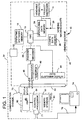
- Fig. 1 is block diagram of one preferred embodiment of a vending machine communication system of the invention.
- Fig. 2 is a block diagram of a database structure suitable for use with the vending machine communication system of Fig. 1.
- Fig. 3 is a block diagram illustrative of a data transfer aspect of the vending machine communication system of Fig. 1.
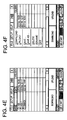
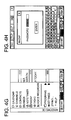
- Figs. 4A-4H are exemplary computer displays for a menu-driven palmtop computer suitable for use with the vending machine communication system of Fig. 1.
- a vending machine controller 10 generally controls the operations of a vending machine 12 such that a product dispenser 14 connected to the VMC 10 dispenses a vendable product (e.g., food, beverages, toiletries, etc.), typically by means of an electro-mechanical device.
- VMC 10 controls the vending machine 12 as a function of three types of vending machine-related information: vending machine operating software stored in an operating software memory 18; configuration data stored in configuration data memory 20; and operational data stored in operational data memory 24.
- the vending machine operating software comprises a combination or series of computer instructions and definitions for use by VMC 10 to perform computational or control functions in response to various system inputs and events, including inputs from customers, sensors, operators, and the like.
- the configuration data memory 20 stores the configuration data associated with vending machine 12.
- VMC 10 also controls some of the operations of vending machine 12 as a function of the configuration data.
- the configuration data includes, for example, information regarding the prices of the vendable products, information regarding product configuration and location within vending machine 12, time-of-day information, and such other information as may be required to tailor the operation of vending machine 12 to its location and to the specific vendable products contained therein.
- the configuration data may also be referred to as pricing or point-of-sale data.
- the operational data memory 24 stores operational data associated with vending machine operations.
- Such operational data includes, for example, sales information related to the vendable products that have been sold by vending machine 12.
- the operational data may also include information such as machine and subassembly serial numbers, machine location codes, software version numbers, system date and time codes, the date and time of recent data transfers, and the name or I.D. of the route persons/service technicians who have accessed the machine.
- the operational data may further include information that is particularly relevant to the maintenance of vending machine 12 such as self-diagnostic data or indications of power outages.
- VMC 10 stores the operational data in operational data memory 24 in response to a vending machine event 28.
- a sale of a vendable product would cause VMC 10 to store and/or update the values of various types of operational data in operational data memory 24.
- the value of the vendable product would be added to the sales total for that product selection; the total number of vends for that product selection would be incremented; and the time and date of the last vend would be recorded.
- Operational data may also be referred to as sales data, meter data, or audit data.
- operating software memory 18 preferably comprises a flash memory.
- flash memories generally have non-volatile characteristics similar to EPROMs, yet may be rapidly reprogrammed without removing or replacing any memory chips. Further, flash memories are relatively inexpensive devices. It is expected that replacing EPROMs with flash memories will result in a negligible increase in parts costs while simultaneously expanding the size of software memory 18 and eliminating an EPROM subassembly. Additionally, it is preferable that the controller clock (not shown in Fig. 1) operate at a sufficiently fast speed to accommodate faster software and data transfer rates.
- vending machine operating software may be downloaded into operating software memory 18, and likewise uploaded from memory 18, without opening the vending machine or removing any hardware from the vending machine.
- configuration data memory 20 and operational data memory 24 need not necessarily comprise flash memories. Preferably, however, configuration data memory 20 and operational data memory 24 are such that the data stored therein (e.g., configuration and operational data) is not lost if a power disruption occurs. Note also that configuration data memory 20 and operational data memory 24 may comprise a single memory or separate memories.
- a customer display window 40 is located on an outer housing 42 of vending machine 12.
- the customer display window 40 is usually positioned at a position that is easily viewable by a typical vending machine customer, such as in the front door of the vending machine 12.
- a customer display 44 is positioned behind customer display window 40 such that the customer display 44 is viewable by a customer through customer display window 40.
- VMC 10 controls one or more messages that are to be displayed on customer display 44.
- the messages may be stored as configuration data in configuration data memory 20, or as part of the operating software in operating software memory 18.
- Messages displayed on customer display 44 typically include, for instance, greetings, advertising, indications that the machine currently requires exact change, or out of stock information.
- customer display 44 preferably comprises a vacuum fluorescent display (VFD) such as that available from Noritake Co., Ltd. (part no. AH1016A).
- An infrared interface port 46 also referred to as an IR port, an I/O port, or an optical interface port, is disposed behind customer display window 40, adjacent to customer display 44.
- vending machine operators such as service technicians, may communicate and transfer software and data with VMC 10 via the IR port 46.
- customer display 44 may emit noise signals such as electromagnetic or optical noise signals.
- An isolator 48 positioned between customer display 44 and IR port 46 reduces the effect that such interference signals may have on IR port 46.
- the isolator 48, customer display 44, and IR port 46 are mounted on a single printed circuit board.
- IR port 46 comprises an IrDA® compatible, surface mounted IR transceiver, such as that available from Hewlett-Packard Company (part no. HSDL-3610). VMC 10 communicates with IR port 46 via an encoder/decoder integrated circuit 50, such as HSDL-7001, also available from Hewlett-Packard Company. It should be understood that although IR port 46 is described by reference to an IR transceiver only, IR port 46 could also be described by reference to the combination of the IR transceiver and the encoder/decoder 50, or by reference to other circuit combinations, such as a single integrated circuit comprising a transceiver and an encoder/decoder.
- the vending machine 12 further comprises a cable input/output port 52 for transferring and exchanging software and data using a physical cable interface in lieu of, or in addition to, IR port 46.
- Cable input/output port 52 may also be referred to as an I/O port.
- the cable input port 52 requires the use of a physical cable connection 54 (shown in phantom), using a standard 1 ⁇ 4 inch (0.64cm) jack-and-plug arrangement-wireless communications are not typically used when VMC 10 communicates using cable input/output port 52.
- the vending machine communication system further includes a handheld data transfer device 60, also referred to as a portable data carrier device (PDCD).
- PDCD 60 is generally referred to as a data carrier device, it has been found, according to the invention, that PDCD 60 may also be used to store and transfer vending machine operating software.
- PDCD 60 preferably comprises a palmtop computer with an integrated IrDA® compatible data transfer port 62.
- palmtop computers are readily available with such integrated data transfer ports 62.
- PDCD 60 further includes a display and a user input capability via a keyboard and/or a touch/tap screen, and runs WINDOWS CE® or a similar operating system.
- the PDCD 60 further comprises a control processor 64 and a memory 65, also referred to as a storage.
- the control processor 64 communicates across a wireless communication channel 70 via IrDA® compatible data transfer port 62.
- PDCD 60 can transfer and exchange software and data with other IrDA® compatible devices via data transfer port 62.
- IrDA® data transfer port 62 PDCD 60 may also include one or more cable I/O ports 71 so that PDCD 60 may communicate with other devices, such as, for example, a base station 74 via a physical cable connection 76.
- the base station 74 preferably comprises a desktop or laptop PC running a widely available operating system, such as WINDOWS 98®. Although it is possible for base station 74 to communicate and exchange data with PDCD 60 using a wireless interface such as an IrDA® port, in the embodiment shown in Fig. 1, base station 74 communicates with PDCD 60 via a standard cable interface 76, such as, for example, an RS-232 interface.
- a standard cable interface 76 such as, for example, an RS-232 interface.
- Fig. 2 is a block diagram generally illustrating one possible database structure for use with the vending machine communication system shown in Fig. 1.
- base station 74 preferably includes one or more databases or libraries 80 for storing software, data, and other information relevant to vending machine 12 or PDCD 60.
- an operating software library 82 stores the vending machine operating software for use with one or more class of vending machine 12.
- a configuration data library 84 stores the configuration data for one or more class of vending machine 12.
- a sales data library 86 stores sales or other operational data for one or more class of vending machine 12.
- each database/library 82, 84, 86 is illustrated separately in Fig. 2, the libraries 80 may be organized and store software and data in many different ways.
- the data and software may be stored by specific reference to a class/type of vending machine 12. Conversely, the data and software may be stored by reference to vending machine locations.
- Fig. 2 illustrates the libraries 80 as existing in databases stored on base station 74, libraries 80 may be simultaneously and/or separately maintained on other devices such as, for example, PDCD 60, a main frame, or the like.
- vending machine operating software or configuration data may be transferred between PDCD 60 and vending machine 12 without opening vending machine 12 and without replacing any hardware such as EPROMs.
- vending machine operating software as an example, a vending machine service technician or similar person selects and, if desired, amends/edits an appropriate version of the vending machine operating software stored on base station 74.
- Cable port 71 on PDCD 60 is connected to a corresponding port associated with base station 74 and the service technician initiates a software transfer.
- the vending machine operating software is thereafter transferred to PDCD 60 which stores the software in the memory/storage 65.
- PDCD 60 After the selected vending machine operating software is loaded on PDCD 60, PDCD 60 is placed near vending machine window 44 so that the IrDA® port 62 associated with PDCD 60 may communicate with the IR port 46 mounted behind vending machine window 44.
- the technician Using a keyboard, mouse, or touch/tap screen associated with PDCD 60, the technician initiates a software transfer between PDCD 60 and vending machine 12 by selecting a desired transfer option on the user display associated with PDCD 60 (see Figs. 4A-4H and related discussion below).
- the transfer initiation command is transmitted by IrDA® port 62 and received at IR port 46.
- the transfer initiation command identifies the type of information to be transferred, in this case the vending machine operating software.
- VMC 10 receives the transfer initiation command and, when ready, responds with an appropriate acknowledgment message indicating that it has received the command and is ready to receive the information, including the vending machine operating software.
- PDCD 60 Upon the transfer of the last software item, PDCD 60 typically transmits a transfer complete message, and VMC 10 typically provides an appropriate response acknowledging that the transfer is complete.
- the transfer occurs in discrete blocks with appropriate handshaking between PDCD 60 and VMC 10 occurring between each block transfer.
- appropriate handshaking between PDCD 60 and VMC 10 occurring between each block transfer.
- standard information transfer integrity checks may also be employed such as, for example, checksums, parity checks, or the like.
- the vending machine communication system of the present system also provides for uploading the vending machine operating software from vending machine 12.
- the present invention allows users to transfer the operating software from vending machine 12 to PDCD 60 for subsequent transfer to another vending machine (see reference character 12' in Fig. 3 and associated discussion below) or to base station 74.
- PDCD 60 is placed near vending machine window 40.
- An upload is initiated on PDCD 60 which transmits an appropriate upload initiation message to vending machine 12 via IrDA® data port 62, wireless communication channel 70, IR port 46, encoder/decoder 50, and VMC 10.
- VMC 10 Upon receipt of the upload initiation message, VMC 10 responds with an appropriate acknowledgment or ready indication. When ready, VMC 10 retrieves the vending machine operating software from operating software memory 18 and outputs the operating software to IR port 46 via encoder/decoder 50.
- PDCD 60 receives the operating software at IrDA® port 62 via wireless communication channel 70.
- the control processor 64 associated with PDCD 60 thereafter stores the operating software in memory storage 65. After the vending machine operating software has been uploaded from vending machine 12 to PDCD 60, it may be thereafter transferred to base station 74 or to another vending machine 12' (Fig. 3). Further, as explained above, the vending machine operating software is preferably transferred in discrete blocks.
- Fig. 3 illustrates the process by which the vending machine communication system of the present invention may be used to transfer vending machine operating software (or other information such as, for example, configuration data ) from one vending machine 12 to another or an additional vending machine 12' of the same type or class as vending machine 12 shown in Fig. 1.
- vending machine operating software or other information such as, for example, configuration data
- the vending machine operating software residing in operating software memory 18 on vending machine 12 is transferred (as indicated by arrow UT) to PDCD 60 in a manner similar to that described above with respect to uploading the vending machine operating software.
- vending machine 12 and vending machine 12' both have the same operating software stored in their respective operating software memories 18, 18'.
- operating software memories 18, 18' preferably comprise flash memories that facilitate rapid reprogramming and reloading of the vending machine operating program.
- vending machine 12' is substantially identical to vending machine 12 with respect to the relevant aspects of the present invention.
- vending machine 12' includes a display window 40' and a customer display 44'.
- vending machine 12' includes comparable memories and I/O interfaces, and communicates via an additional communication channel 70' (as indicated by arrow DT).
- the process for transferring vending machine operating software from PDCD 60 to operating software memory 18, as shown in Fig. 1, may also be described in terms of the following steps: loading the vending machine operating software into storage 65, either manually or from base station 74 over interface cable 76; positioning PDCD 60 near vending machine 12 such that IrDA® port 62 is adjacent IR port 46; establishing a communication channel between IrDA® port 62 and IR port 46 via wireless communication channel 70; and transferring the vending machine operating software from storage 65 to operating software memory 18, via IrDA® port 62, wireless communication channel 70, IR port 46, encoder/decoder 50, and VMC 10.
- the process for uploading/transferring vending machine operating software from vending machine 12 to PDCD 60 may also be described in terms of the following steps: positioning PDCD 60 near window 40 on vending machine 12 such that PDCD 60 is adjacent IR port 46; establishing a communication channel between IrDA® port 62 and IR port 46 via wireless communication channel 70 (see also reference character UT in Fig. 3); and transferring the vending machine operating software from the vending machine operating software memory 18 to storage 65 associated with PDCD 60 via VMC 10, encoder decoder 50, IR port 46, wireless communication channel 70, and IrDA® port 62.
- vending machine operating software When the vending machine operating software is stored in storage 65, it may thereafter be downloaded/transferred into the additional vending machine 12', as shown in Fig. 3.
- the process for transferring the vending machine operating software from PDCD 60 to the additional vending machine 12', as shown in Figs. 1 and 3, may be also be described in terms of the following steps: positioning PDCD 60 near additional window 40' on additional vending machine 12' such that PDCD 60 is adjacent the additional IR port 46'; establishing an additional communication channel between IrDA® port 62 and the additional IR port 46' via an additional wireless communication channel 70' (see also reference character DT in Fig.
- vending machine operating software stored in storage 65 to the additional vending machine operating software memory 18' associated with the additional vending machine 12' via IrDA® port 62, the additional wireless communication channel 70', the additional IR port 46', the additional encoder/decoder 50', and the additional VMC 10'.
- vending machine configuration data from vending machine 12 to the additional vending machine 12' may also be described in terms of the following steps: positioning PDCD 60 near window 40 on vending machine 12 such that PDCD 60 is adjacent IR port 46; establishing a communication channel between IrDA® port 62 and IR port 46 via wireless communication channel 70 (see also reference character UT in Fig. 3); and transferring the vending machine configuration data from the configuration data memory 20 to storage 65 associated with PDCD 60 via VMC 10, encoder decoder 50, IR port 46, wireless communication channel 70, and IrDA® port 62.
- the process for thereafter downloading the data into the additional vending machine 12' may be described in terms of the following steps: positioning PDCD 60 near additional window 40' on vending machine 12' such that PDCD 60 is adjacent additional IR port 46'; establishing an additional communication channel between IrDA® port 62 and additional IR port 46' via an additional wireless communication channel 70' (see also reference character DT in Fig. 3); and transferring vending machine configuration data stored in storage 65 to additional configuration data memory 20' associated with additional vending machine 12'.
- the vending machine configuration data stored in configuration data memory 20 also resides (e.g., is transferred) in additional configuration data memory 20' associated with additional vending machine 12'.
- vending machine manufacturers may load software into multiple vending machines in much less time that it would take to program and replace EPROMs.
- vending machine software developers can download and upload vending machine software with much shorter turn-around times. If, for instance, software problems are suspected with a particular machine or machine class, the suspect operating software may be uploaded from vending machine 10 into PDCD 60 for subsequent analysis and debugging.
- Base station 74 or PDCD 60 may be optionally equipped with suitable software analysis and debugging tools.
- Vending machine manufacturers may provide software updates to vending machine operators, without sending any EPROMs or other hardware. Operators may, in turn, load the new software in their machines using PDCD 60 whenever it is convenient, such as when a machine is scheduled to be re-stocked. Advantageously, there is no need to use specially trained technicians.
- vending machine configuration data and/or the vending machine operational data may be transferred to or from vending machine 12, or between vending machines 12, 12', in the same way that the vending machine operating software may be transferred to or from vending machine 12, or between vending machines 12, 12'.
- control processor 64 of PDCD 60 may optionally execute software that allows persons operating PDCD 60 to view and edit the vending machine operating software, configuration data, and/or the vending machine operational data on a display (not shown) of PDCD 60. Similar software could also run on base station 74. It should be noted, however, that due to the nature of the type of information stored as operational data, it is unlikely that such data would be edited. Thus, the operational data can be stored in a read-only format. In fact, in one preferred embodiment of the present invention, operational data is not transferred (e.g., uploaded or downloaded) using PDCD 60. In such an embodiment, prior art devices using the DEX/UCS protocol may be used to retrieve vending machine sales or operational data.
- the configuration data also comprises one or more manufacturer-specific lists that are independent of the lists specified in the EVA-DTS, Version 4, January 4, 1997. Tables I & II are illustrative of typical manufacturer-specific lists.
- Exemplary Configuration List from a Snack Vending Machine Data Type Data Class Identifier 1580 prices A0-A9 00230023001E001E0028002800230023003D0023 prices B0-B9 0064002300690023001E001E0028002800230045 ... ...
- prices H1-H5 0023000A000E000130018 Coin/Bill/Card Config. 2A0400010345008912 Messages 120A230E240A2418130C0E240DA202424242424242424 201E0E0A1D0E241F1D0E240E210A0C18240C120A12130E ... ...
- VMC 10 may be programmed using vending machine software that causes VMC 10 to automatically reject lists containing mismatched class identifiers.
- PDCD may also be used to transfer the configuration data from one vending machine to another vending machine in a similar fashion to that described above with respect to vending machine operating software.
- PDCD 60 need not be specifically programmed or have any special knowledge with respect to the data other than to know that it is manufacturer-specific list data.
- One way to identify such configuration data is to use a unique list number that identifies the data as manufacturer-specific data. In other words, PDCD 60 may initiate data transfers simply by reference to a particular manufacturer-specific list number or other convenient identifier.
- a List 66 may also be created that includes only message data (e.g., the messages displayed on customer display 44).
- message data e.g., the messages displayed on customer display 44.
- Such sublists provide flexibility and allow updating and transferring common data between different classes of machines that use a common data structure for like data.
- the vending machine communication system of the present invention advantageously provides for manufacturer-specific data transfers between similar and dissimilar vending machines even though PDCD 60 requires only very limited information regarding the particular data involved (e.g., only a list number).
- PDCD 60 may also be programmed to allow a user to view and edit the information contained in any manufacturer-specific list.
- a sublist code may be embedded within the a primary list identifier.
- List 66 may be embedded and identified as sublist data within List 65.
- PDCD 60 only needs to interpret the primary list identifier to determine that the list comprises a manufacturer-specific list-PDCD 60 would not need to be programmed to recognize specific sublists or sublist identifiers.
- vending machine operating software may also be stored and transferred in a list format. In that way, PDCD 60 need only know the specific list number or identifier when uploading or downloading vending machine operating software.
- the configuration data and the operational data are transferred and stored in binary form.
- Prior art systems such as that described in the EVA-DTS specification mentioned above, transfer and store data in ASCII form.
- Computers and processors such as VMC 10, PDCD 60, and base station 74, on the other hand, cannot readily use ASCII data-the data must normally be converted from ASCII for processing.
- data remains in binary form.
- transferring data in ASCII form tends to expand the size of the data formats used and requires the addition of identifiers and delimiters. Consequently, ASCII data transfers require more time and memory than comparable binary data transfers.
- a vending machine communication system that transfers and stores data in binary form provides distinct advantages in terms of data transfer rates, data storage requirements, and data message size requirements.
- the vending machine operating software is preferably transferred and stored in binary form.
- Figs. 4A through 4H illustrate several possible graphical user interface screens for a menu-driven software application associated with PDCD 60.
- Figs. 4A through 4H illustrate user selection screens that are compatible with a palmtop computer running the WINDOWS CE® operating system.
- Fig. 4A illustrates a menu selection whereby a person using PDCD 60 may select between an infrared connection using wireless communication channel 70, or a direct connection using physical cable connection 54.
- Fig. 4B depicts a typical vending machine selection window wherein the selection options are organized by vending machine class. It should be noted that the selection window may also be customized to allow users to select the type of information/data to be transferred (e.g., vending machine operating code, vending machine configuration data, or vending machine operational data).
- type of information/data e.g., vending machine operating code, vending machine configuration data, or vending machine operational data.
- Figs. 4A and 4B both show separate "Download” and "Upload” selection buttons. By selecting one of these buttons, a user can initiate a data download or upload.
- the meaning of the words download and upload may vary among those skilled in the art, depending upon the context in which those words are used. For example, one person might refer to all transfers from PDCD 60 to vending machine 10 as downloads, and similarly refer to all transfers from vending machine 10 to PDCD 60 as uploads. This is the convention generally adhered to herein. Conversely, another person may prefer to refer to such transfers in opposite terms, e.g., referring to all transfers from PDCD 60 to vending machine 10 as uploads. Either convention is acceptable, so long as the terms are used consistently.
- Figs. 4C and 4D illustrate typical displays indicative of the status of a selected data transfer.
- Figs. 4E and 4F depict typical file management displays for use with PDCD 60.
- a file pull down menu allows users to manipulate various file attributes such as file names. Users may also initiate data transfers (e.g., uploads or downloads) from the file menu.
- Fig. 4G shows a representative list of options available if a user selects the "Start” option associated with a palmtop computer running the WINDOWS CE® operating system.
- the palmtop application software associated with the vending machine communication system of the present invention is referred to as "nvzap" in the illustrated list of "Start” options.
- Application software such as nvzap may be created using an object-oriented authoring tool such as Visual C++®, available from Microsoft.
- Fig. 4H is a typical security feature that may be used with PDCD 60.
- access to specific data, and to the ability to transfer data may be limited by the use of passwords or similar such devices.
- base station 74 may also provide additional data manipulation and programming capabilities that are not easily implemented on a handheld unit such as PDCD 60.
- a computer program executing on base station 74 provides a menu-drive, graphical user interface whereby a user has access to vending machine operating software, operational data, or configuration data in a form that is readable and understandable by the user.
- Such a program could also allow certain users to edit or otherwise alter the accessed vending machine operating software, operational data, or configuration data.
- security and integrity checks may control or limit any or all of the above-described data transfer operations.
- password protections can be used to limit access to data, portions of data, the system, or portions of the system. Access to specific data may be denied altogether or limited in some other way such as "read only" access.
- password protections may be used to limit a person's ability to initiate data transfers between base station 74 and PDCD 60, and between PDCD 60 and vending machine 12.
- Other possible integrity checks include embedded codes contained within the data/information exchanged.
- vending machine 12 can provide a code indicative of a vending machine's class/type to ensure that only software or configuration data associated with that type of machine is downloaded into the operating software memory of that machine.
- transfer is used broadly herein.
- software and data transfers are intended to include copying wherein after a transfer occurs, a copy of the original information remains on the source device (e.g., PDCD 60) and a copy of the original information is also stored on the target device (e.g., operating software memory 18).
- software and data may be literally transferred such that after a transfer, the software and/or data resides on the target device but not on the source device.
- a transfer can also involve overwriting existing information. If, for instance, a copy of the vending machine operating software already existed in the memory storage 65 associated with PDCD 60, and if an overwrite occurs, the new software that is downloaded to PDCD 60 overwrites the existing software on PDCD 60.
- the vending machine communication system of the present invention supports partial transfers, partial copies, and partial overwrites of software and data.
Landscapes
- Physics & Mathematics (AREA)
- General Physics & Mathematics (AREA)
- Business, Economics & Management (AREA)
- Accounting & Taxation (AREA)
- Control Of Vending Devices And Auxiliary Devices For Vending Devices (AREA)
- Management, Administration, Business Operations System, And Electronic Commerce (AREA)
- Information Transfer Between Computers (AREA)
Applications Claiming Priority (2)
| Application Number | Priority Date | Filing Date | Title |
|---|---|---|---|
| US42862799A | 1999-10-27 | 1999-10-27 | |
| US428627 | 1999-10-27 |
Publications (2)
| Publication Number | Publication Date |
|---|---|
| EP1096408A2 true EP1096408A2 (fr) | 2001-05-02 |
| EP1096408A3 EP1096408A3 (fr) | 2002-08-14 |
Family
ID=23699717
Family Applications (1)
| Application Number | Title | Priority Date | Filing Date |
|---|---|---|---|
| EP00309499A Withdrawn EP1096408A3 (fr) | 1999-10-27 | 2000-10-27 | Système de communication pour distributeurs automatiques |
Country Status (3)
| Country | Link |
|---|---|
| EP (1) | EP1096408A3 (fr) |
| JP (1) | JP2001188940A (fr) |
| CA (1) | CA2323292A1 (fr) |
Cited By (5)
| Publication number | Priority date | Publication date | Assignee | Title |
|---|---|---|---|---|
| WO2004051583A1 (fr) * | 2002-11-27 | 2004-06-17 | Cac Vending Systems, L.L.C. | Systeme, procede et dispositif de verification sans fil d'appareils distributeurs et acheminement de transactions electroniques |
| US7181501B2 (en) | 1998-03-19 | 2007-02-20 | Isochron, Inc. | Remote data acquisition, transmission and analysis system including handheld wireless equipment |
| US7693602B1 (en) | 2001-03-26 | 2010-04-06 | Usa Technologies, Inc. | Cashless vending transaction management by a vend assist mode of operation |
| US20110173535A1 (en) * | 2010-01-12 | 2011-07-14 | Crane Merchandising Systems, Inc. | Mechanism for a vending machine graphical user interface utilizing xml for on-the-fly language selection by an end user |
| DE102010054374A1 (de) * | 2010-12-13 | 2012-06-14 | National Rejectors, Inc. Gmbh | Verfahren und System zum Auslesen von Informationen aus einem Verkaufsautomaten |
Families Citing this family (20)
| Publication number | Priority date | Publication date | Assignee | Title |
|---|---|---|---|---|
| US8631093B2 (en) | 1998-03-19 | 2014-01-14 | Crane Merchandising Systems, Inc. | Remote data acquisition, transmission and analysis system including handheld wireless equipment |
| US7020680B2 (en) | 1998-03-19 | 2006-03-28 | Isochron, Llc | System and method for monitoring and control of beverage dispensing equipment |
| US6457038B1 (en) | 1998-03-19 | 2002-09-24 | Isochron Data Corporation | Wide area network operation's center that sends and receives data from vending machines |
| US7167892B2 (en) | 1998-03-19 | 2007-01-23 | Isochron, Inc. | System, method and apparatus for vending machine wireless audit and cashless transaction transport |
| US7013337B2 (en) | 2000-05-12 | 2006-03-14 | Isochron, Llc | Method and system for the optimal formatting, reduction and compression of DEX/UCS data |
| US7010594B2 (en) | 2000-05-26 | 2006-03-07 | Isochron, Llc | System using environmental sensor and intelligent management and control transceiver for monitoring and controlling remote computing resources |
| US7865430B1 (en) | 2001-03-26 | 2011-01-04 | Usa Technology, Inc. | Cashless transaction payment module |
| US7131575B1 (en) | 2001-03-26 | 2006-11-07 | Usa Technologies, Inc. | MDB transaction string effectuated cashless vending |
| US8596529B1 (en) | 2001-03-26 | 2013-12-03 | Usa Technologies, Inc. | Interactive interface effectuated vending |
| US7630939B1 (en) | 2001-03-26 | 2009-12-08 | Usa Technologies, Inc. | System and method for locally authorizing cashless transactions at point of sale |
| US7690495B1 (en) | 2001-03-26 | 2010-04-06 | Usa Technologies, Inc. | Card reader assembly |
| US7593897B1 (en) | 2001-06-19 | 2009-09-22 | Usa Technologies, Inc. | Wireless system for communicating cashless vending transaction data and vending machine audit data to remote locations |
| US7778600B2 (en) | 2001-06-29 | 2010-08-17 | Crane Merchandising Systems, Inc. | Apparatus and method to provide multiple wireless communication paths to and from remotely located equipment |
| US7164884B2 (en) | 2001-06-29 | 2007-01-16 | Isochron, Llc | Method and system for interfacing a machine controller and a wireless network |
| US6925335B2 (en) | 2001-07-05 | 2005-08-02 | Isochron, Llc | Real-time alert mechanism for monitoring and controlling field assets via wireless and internet technologies |
| US7523182B2 (en) | 2001-11-27 | 2009-04-21 | Isochron, Inc. | Method and system for predicting the services needs of remote point of sale devices |
| US8484068B2 (en) | 2005-12-14 | 2013-07-09 | Crane Merchandising Systems, Inc. | Method and system for evaluating consumer demand for multiple products and services at remotely located equipment |
| US7997484B2 (en) | 2006-09-13 | 2011-08-16 | Crane Merchandising Systems, Inc. | Rich content management and display for use in remote field assets |
| US8959028B2 (en) | 2007-07-02 | 2015-02-17 | Crane Merchandising Systems, Inc. | Apparatus and method for monitoring and control of remotely located equipment |
| US8533315B2 (en) | 2007-10-25 | 2013-09-10 | Crane Merchandising Systems, Inc. | Systems and methods for monitoring performance of field assets |
Family Cites Families (4)
| Publication number | Priority date | Publication date | Assignee | Title |
|---|---|---|---|---|
| US4417450A (en) * | 1980-10-17 | 1983-11-29 | The Coca-Cola Company | Energy management system for vending machines |
| DE3113946A1 (de) * | 1981-04-07 | 1982-10-28 | Hollmann Gmbh & Co, 4800 Bielefeld | "warenautomat, insbesondere warenselbstverkaeufer" |
| KR0124369B1 (ko) * | 1990-10-03 | 1997-12-11 | 이우에 사또시 | 자동판매기 |
| US5299113A (en) * | 1992-04-22 | 1994-03-29 | Maytag Corporation | Control board having dual means of configuration |
-
2000
- 2000-10-12 CA CA002323292A patent/CA2323292A1/fr not_active Abandoned
- 2000-10-27 JP JP2000328773A patent/JP2001188940A/ja active Pending
- 2000-10-27 EP EP00309499A patent/EP1096408A3/fr not_active Withdrawn
Cited By (6)
| Publication number | Priority date | Publication date | Assignee | Title |
|---|---|---|---|---|
| US7181501B2 (en) | 1998-03-19 | 2007-02-20 | Isochron, Inc. | Remote data acquisition, transmission and analysis system including handheld wireless equipment |
| US7693602B1 (en) | 2001-03-26 | 2010-04-06 | Usa Technologies, Inc. | Cashless vending transaction management by a vend assist mode of operation |
| WO2004051583A1 (fr) * | 2002-11-27 | 2004-06-17 | Cac Vending Systems, L.L.C. | Systeme, procede et dispositif de verification sans fil d'appareils distributeurs et acheminement de transactions electroniques |
| US20110173535A1 (en) * | 2010-01-12 | 2011-07-14 | Crane Merchandising Systems, Inc. | Mechanism for a vending machine graphical user interface utilizing xml for on-the-fly language selection by an end user |
| US20110173568A1 (en) * | 2010-01-12 | 2011-07-14 | Crane Merchandising Systems, Inc. | Mechanism for a vending machine graphical user interface utilizing xml for a versatile customer experience |
| DE102010054374A1 (de) * | 2010-12-13 | 2012-06-14 | National Rejectors, Inc. Gmbh | Verfahren und System zum Auslesen von Informationen aus einem Verkaufsautomaten |
Also Published As
| Publication number | Publication date |
|---|---|
| CA2323292A1 (fr) | 2001-04-27 |
| JP2001188940A (ja) | 2001-07-10 |
| EP1096408A3 (fr) | 2002-08-14 |
Similar Documents
| Publication | Publication Date | Title |
|---|---|---|
| EP1096408A2 (fr) | Système de communication pour distributeurs automatiques | |
| US6095674A (en) | Windows based network configuration and control method for a digital control system | |
| US5955718A (en) | Integrated credit/information exchange module | |
| US6118860A (en) | Public communications services vending method and apparatus | |
| US6223984B1 (en) | Distinct smart card reader having wiegand, magnetic strip and bar code types emulation output | |
| US6722985B2 (en) | Universal player tracking system | |
| US5440479A (en) | Apparatus and method for purchasing floral arrangements | |
| US20040158499A1 (en) | System and method for providing self-service restaurant ordering and payment | |
| US20040133653A1 (en) | System, method and apparatus for vending machine wireless audit and cashless transaction transport | |
| US20040046033A1 (en) | Electronic warranty system and method | |
| US20020169849A1 (en) | Method and apparatus for providing software for office equipment at point-of-sale | |
| US20070096867A1 (en) | Vending machines with field-programmable electronic locks | |
| JPH0713824B2 (ja) | データ収集システム | |
| WO1997010562A1 (fr) | Interface de programmation pour kiosque a cartes a puce | |
| EP1221651A2 (fr) | Système et méthode de configuration de l'environnement d'un appareil, et support d'enregistrement des dates pour ceux | |
| CA1154164A (fr) | Methode et appareil d'enregistrement sur cartes a bande magnetique | |
| HK1036659A (en) | Vending machine communication system | |
| EP1197897A1 (fr) | Méthode et système d'affichage d'informations spécifiques relatives à un produit personnalisé, serveur et terminal dudit système, et méthode pour la sélection des spécifications du produit personnalisé | |
| CN100397268C (zh) | 利用plc的存储设备的方法和结构 | |
| JP7685122B1 (ja) | 自動販売機、情報処理装置、自動販売方法、情報処理方法、及びプログラム | |
| WO1996036023A1 (fr) | Procedes de mise a jour de prix et affichage de messages dans un point de vente | |
| WO2004051583A1 (fr) | Systeme, procede et dispositif de verification sans fil d'appareils distributeurs et acheminement de transactions electroniques | |
| GB2348729A (en) | A money validator reprogrammable using externally recieved data | |
| KR100795341B1 (ko) | 제어 시스템으로서의 저울 | |
| JP3700169B2 (ja) | 自動販売機の制御システム |
Legal Events
| Date | Code | Title | Description |
|---|---|---|---|
| PUAI | Public reference made under article 153(3) epc to a published international application that has entered the european phase |
Free format text: ORIGINAL CODE: 0009012 |
|
| AK | Designated contracting states |
Kind code of ref document: A2 Designated state(s): AT BE CH CY DE DK ES FI FR GB GR IE IT LI LU MC NL PT SE |
|
| AX | Request for extension of the european patent |
Free format text: AL;LT;LV;MK;RO;SI |
|
| PUAL | Search report despatched |
Free format text: ORIGINAL CODE: 0009013 |
|
| AK | Designated contracting states |
Kind code of ref document: A3 Designated state(s): AT BE CH CY DE DK ES FI FR GB GR IE IT LI LU MC NL PT SE |
|
| AX | Request for extension of the european patent |
Free format text: AL;LT;LV;MK;RO;SI |
|
| AKX | Designation fees paid | ||
| REG | Reference to a national code |
Ref country code: DE Ref legal event code: 8566 |
|
| STAA | Information on the status of an ep patent application or granted ep patent |
Free format text: STATUS: THE APPLICATION IS DEEMED TO BE WITHDRAWN |
|
| 18D | Application deemed to be withdrawn |
Effective date: 20030215 |
|
| REG | Reference to a national code |
Ref country code: HK Ref legal event code: WD Ref document number: 1036659 Country of ref document: HK |