EP1096730A1 - Kanalauswahlverfahren - Google Patents
Kanalauswahlverfahren Download PDFInfo
- Publication number
- EP1096730A1 EP1096730A1 EP99926909A EP99926909A EP1096730A1 EP 1096730 A1 EP1096730 A1 EP 1096730A1 EP 99926909 A EP99926909 A EP 99926909A EP 99926909 A EP99926909 A EP 99926909A EP 1096730 A1 EP1096730 A1 EP 1096730A1
- Authority
- EP
- European Patent Office
- Prior art keywords
- radio communication
- channel
- channels
- communication system
- selectable
- Prior art date
- Legal status (The legal status is an assumption and is not a legal conclusion. Google has not performed a legal analysis and makes no representation as to the accuracy of the status listed.)
- Withdrawn
Links
Images

Classifications
-
- H—ELECTRICITY
- H04—ELECTRIC COMMUNICATION TECHNIQUE
- H04W—WIRELESS COMMUNICATION NETWORKS
- H04W16/00—Network planning, e.g. coverage or traffic planning tools; Network deployment, e.g. resource partitioning or cells structures
- H04W16/14—Spectrum sharing arrangements between different networks
-
- H—ELECTRICITY
- H04—ELECTRIC COMMUNICATION TECHNIQUE
- H04W—WIRELESS COMMUNICATION NETWORKS
- H04W72/00—Local resource management
- H04W72/50—Allocation or scheduling criteria for wireless resources
- H04W72/54—Allocation or scheduling criteria for wireless resources based on quality criteria
- H04W72/541—Allocation or scheduling criteria for wireless resources based on quality criteria using the level of interference
Definitions
- the present invention relates to a channel selection method in a radio communication system, and more particularly to a channel selection method for selecting a channel for use in a radio communication from a plurality of selectable channels including channels to be shared by plurality of radio communication systems.
- Radio communication systems that have been studied recently to realize a high-speed data transmission by wireless includes a wireless LAN system.
- a plurality of radio stations constitutes one wireless link.
- One radio channel is shared by radio stations contained in the wireless link (hereinafter, referred to as a channel) with CSMA/CA (Carrier Sense Multiple Access with Collision Avoidance).
- CSMA/CA Carrier Sense Multiple Access with Collision Avoidance
- each radio station determines that another radio station is using a channel and does not perform transmission.
- therfore in order to perform communication efficiently in the radio communication system such as the wireless LAN system, it is important to select a channel so that interference waves from radio stations other than the radio stations contained in the wireless link are not received as much as possible.
- the radio stations that transmit signals that cause the interference waves include two types: radio stations contained in other wireless links within local radio communication system that use the same channel; and radio stations in other radio communication systems that use the same frequency band.
- This technology allows any radio station to avoid interference with other radio stations in local radio communication system.
- a radio station wishes to establish a new wireless link, it transmits a control packet. If the control packet returned from another radio station is received through a channel, the radio station determines that the channel is used by another radio station contained in local radio communication system. Then, the radio station selects another channel through which the control packet from another radio station is not received.
- a wireless device capable of avoiding interference from other radio stations contained in a different radio communication system that use a frequency band in common is also proposed (see JPA 4-189700).
- the device determines if the channel is employed in another radio communication system by detecting a reception level, signal length and periodicity of a received signal and avoids the use of the channel that is employed in another radio communication system.
- an apparatus have either one of means for detecting the presence of interference from radio stations contained in local radio communication system and means for measuring interference waves from radio stations contained in other radio communication systems. Therefore, it is not possible to select a channel that enables to minimize affection of interference waves both from radio stations that belong to local radio communication system and from radio stations that belong to other radio communication systems. It is also not possible to share a frequency band efficiently by local radio communication system and other radio communication systems.
- the same type of control packet is not always used in other radio communication systems. Further, the control packet from another radio communication system can not be always received and analyzed even if the same type of control packet is used because another radio communication system may use another communication format.
- the present invention has been made and accordingly, has an object to provide a channel selection method capable of sharing effectively a frequency band among local and other radio communication systems.
- the present invention has made to attain the above object and is a channel selection method for selecting a channel used for a radio communication from a plurality of selectable channels in local radio communication system, local radio communication system comprising a plurality of radio stations, the plurality of selectable channels including channels to be used also in other radio communication systems comprising a plurality of radio stations, the method comprising steps of: investigating situation concerning both use of each of the selectable channels by local radio communication system and use of the each of selectable channels by the other radio communication systems; and selecting a channel used for the radio communication in local radio communication system from the selectable channels based on the investigation.
- a channel is selected based on both investigation of situation concerning use of each of the selectable channels by local radio communication system and investigation of situation concerning use of each of the selectable channels by the other radio communication systems.
- the present invention comprises steps of detecting an interference wave power of each of said selectable channels as the investigation of situation of use of said each of selectable channels by said other radio communication systems; extracting unused selectable channels on the basis of the investigation of situation of use of said each of selectable channels by said local radio communication system; and selecting a channel having the least interference wave power from the unused selectable channels.
- a certain reference is set beforehand, a channel used for the radio communication in local radio communication system is selected from channels having a interference wave power lower than the reference level.
- common channels shared by local radio communication system and other radio communication systems are registered beforehand, and a channel which is not the common channel is selected preferentially.
- a certain common reference level is set beforehand, and a channel used for the radio communication in local radio communication system is selected from common channels having interference wave power lower than the common reference level.
- a certain restriction reference level is set beforehand, and if the interference wave power of each channel is higher than a certain reference level, a channel having interference wave power lower than a certain restriction reference level is selected and the power for the selected channel is set to a restricted transmission power which is lower than normal transmission power.
- the common reference level, the restriction reference level, and the restricted transmission power are set individually per selectable channel.
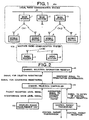
- Fig. 1 is a general diagram showing a radio communication system according to an embodiment of the present invention, which includes local radio communication system 10A and another radio communication system 10B which are mixed.
- Local radio communication system 10A comprises a plurality of base stations including base stations 1-3 connected to wire network 8 and a plurality of mobile stations including mobile stations 4-7.
- Another radio communication system 10B comprises of a plurality of radio stations including radio stations 11 and 12.
- the radio station herein means any radio communication equipment such as the base stations, mobile stations and the like.
- the mobile stations including mobile stations 4 and 5 connect with base station 1 for communications.
- Base station 1 communicates with mobile stations 4, 5 and other mobile stations that are connect with base station 1 through a single channel (CH1). Mobile stations 4, 5 and other mobile stations that are connect with base station 1 also communicate with one another through channel CH1 that is used by base station 1.
- CH1 single channel
- the mobile stations including mobile stations 6 and 7 connect with base station 3 for communications.
- Base station 3 communicates with mobile stations 6, 7 and other mobile stations that are connect with base station 3 through a single channel (CH2). Mobile stations 6, 7 and other mobile stations that are connect with base station 3 also communicate with one another through channel CH2 that is used by base station 3.
- CH2 single channel
- CH1 and CH2 may be the same channel.
- the channel herein means a frequency band for use in a radio communication.
- radio stations 11 and 12 that are contained in another radio communication system 10B that differs from base stations 1-3 and mobile stations 4-7, communicate through a single channel (CH10) or a plurality of channels.
- CH10 single channel
- Channel CH10 and a plurality of other channels used in another radio communication system 10B may be the same as those used in local radio communication system 10A, such as CH1 and CH2.
- Channel CH10 and a plurality of other channels used in another radio communication system 10B may partly overlap with the channels used in local radio communication system 10A, such as CH1 and CH2, and may include the frequency bands of the plural channels used in local radio communication system 10A.
- Fig. 2 is a block diagram showing a channel selection processor contained in base stations 1-3 in Fig. 1.
- the channel selection processor includes control packet transceiver 21, received power measurement unit 22, channel selection controller 23 and channel selection information register 24.
- Control packet transceiver 21 transmits a control packet for channel selection control in response to an instruction signal from channel selection controller 23. Upon receiving a control packet from another radio station, control packet transceiver 21 notifies the contents of the received packet to channel selection controller 23 by using a notice signal of control packet reception.
- Received power measurement unit 22 monitors each radio line that is selected, that is, selectable channel, at the time of a radio communication. Received power measurement unit 22 notifies each received power per packet and an interference wave power per channel to channel selection controller 23 in the form of a packet reception level signal and a interference wave level signal, respectively.
- a level of the interference wave power is herein given by obtaining a time average of received powers in respective channel.
- Channel selection controller 23 based on a received state and received power of the control packet, examines the use of each selectable channel to select and set a channel for use in the local station from the selectable channels.
- Channel selection information register 24 files the state of each channel notified from channel selection controller 23 by a signal for deleting registration, and stores control information which have been set per channel by a user or manufacturer.
- Channel selection information register 24 also notifies the state of channel by a response signal to registration confirmation in response to a registration confirmation signal from channel selection controller 23.
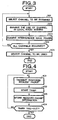
- Channel selection controller 23 of base station 2 selects arbitrary one non-examined channel from plural selectable channels (step 301).
- the controller 23 transmits a control packet to and receives it from other radio stations in local radio communication system 10A in order to examine the use of the channel by other radio stations in local radio communication system 10A (step 302).
- the received power measurement unit 22 detects the interference wave power of the channel and channel selection controller 23 stores the power in channel selection information register 24.
- Procedure orders of step 302 and step 303 may be changed to each other.
- channel selection controller 23 Upon making the examination of the selected channel, channel selection controller 23 determine whether or not all selectable channels have been examined (step 304). If not (step 304: NO), then a control return to step 301 for selecting another non-examined channel from plural selectable channels (step 301) to make the examination at the steps 302 and 303.
- channel selection controller selects a channel based on the examined result of each channel, that is, the presence of response from radio stations in local radio communication system 10A and the level of interference wave power (step 305).
- Channels are thus selected based on the results that are obtained by examining the use of channels in both local radio communication system 10A and another radio communication system 10B. It is accordingly possible to select a channel while avoiding interference between local radio communication system 10A and another radio communication system 10B and to share a frequency band effectively between both radio communication systems (claim 1).
- Base station 2 wishing to select a channel informs other radio stations in local radio communication system 10A of a control packet for requesting a response (hereinafter, referred to as a response request packet) using a selectable channel to be examined (step 401).
- Other base stations and mobile stations in local radio communication system 10A send respective response packets in response to the received response request packet.
- Base station 2 starts a timer for measuring a certain time period after sending the response request packet (step 402).
- the time period measured by the timer is set in channel selection information register 24.
- channel selection controller 23 stores the latest information with respect to each received response packet into channel selection information register 24 (step 403) until the timer times out (step 404: YES).
- the information with respect to each received response packet includes both information for identifying an originated radio station such as a MAC address, and information indicating the received power of the response packed which is informed from received power measurement unit 22.
- step 302 a series of procedures at step 302 is finished when the timer time-outs (step 404: YES).
- each radio station may inform of the response packet periodically as another embodiment of step 302.
- the latest information that includes a MAC address for identifying an originated radio station and a received power of the received response packet are periodically stored in channel selection information register 24 in each radio station.
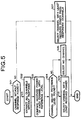
- Base station 2 wishing to select a channel firstly determines whether or not there is a channel in which no response packet has been received (step 501). If there is (step 501: YES), base station 2 determines that the channel is not used by other radio stations in local radio communication system, and extracts all the channels in which no response packet has been received (step 502).
- channel selection controller 23 compares the interference wave power of each of extracted channels with a reference level that is previously registered with channel selection information register 24 (step 503). If there are channels of which the interference wave powers are below the reference level (step 504: YES), channel selection controller 23 selects from such channels a channel with the least interference wave power which is supposed to have the lowermost probability to be used by another radio communication system 10B (step 505). Then, channel selection controller 23 finishes a series of procedures of step 305.
- channel selection controller 23 finishes a series of procedures, selecting no channel (step 506).
- channel selection controller selects a channel with the least received power among all the channels (step 507), and finish a series of procedures.
- a channel with the least interference wave power is selected from the selectable channels unused in local radio communication system 10A (steps 501, 502, 505). Therefore, the channel that is not used in local radio communication system 10A and has the lowermost probability of being used in other radio communication system 10B is surely selected (claim 2).
- a channel for use in a radio communication is also selected from channels whose interference wave powers are below the reference level among the selectable channels unused in local radio communication system 10A (steps 501-504). Therefore, the channel that is not used in local radio communication system 10A and has interference wave power lower than the reference level is surely selected, thereby suppressing mutual interference between local radio communication system 10A and another radio communication system 10B, resulting in an excellent radio communication (claim 3).
- a channel with the least interference wave power is selected (steps 501-505). ). Therefore, the channel that is not used in local radio communication system 10A and has interference wave power lower than the reference level is surely selected, thereby minimizing mutual interference between local radio communication system 10A and another radio communication system 10B, resulting in an excellent radio communication (claims 3-9).
- a channel with the least interference wave power among all the selectable channels is selected if all the selectable channels are used in local radio communication system 10A (steps 501, 507). Therefore, the channel with the lowermost probability of being used in other radio communication system 10B is surely selected even if all the selectable channels are already used in local radio communication system 10A (claim 4).
- channels that may also be used in another radio communication system 10B which are common channels, are previously registered with channel selection information register 24 as common channel information and the channels other than the common channels are not used in another radio communication system 10B.
- step 501 If there is a channel in which no response packet has been received (step 501: YES), base station 2 wishing to select a channel firstly extracts all the channels in which no response packet has been received, which are unused channels (step 502). Then, channel selection controller 23 determines whether or not channels other than the common channels are contained in the unused channels (step 601).
- channel selection controller 23 selects from such channels a channel with the least interference wave power (step 602) and finish a series of procedures of step 305.
- channel selection controller 23 compares interference wave powers of all the common channels with a common reference level that is registered with channel selection information register 24 (step 603).
- channel selection controller 23 selects a channel with the least interference wave power (step 605) and finish a series of procedures.
- channel selection controller selects no channel (step 606) and finish a series of procedures.
- step 601 It is also possible to proceed from step 601: YES to step 605.
- the channel with the least interference wave power is selected from the channels which are unused in local radio communication system 10A and other than the common channels (steps 501, 502, 601, 602). Therefore, the channel that is not used in local radio communication system 10A and another radio communication system 10B is surely selected (claim 5).
- a channel for use in a radio communication is also selected from channels which are not used in local radio communication system 10A and of which the interference wave powers are below the common reference level (steps 501, 502, 601-604). Therefore, a common channel which is not used in local radio communication system 10A and of which the interference wave power is below the common reference level is surely selected, thereby suppressing mutual interference between local radio communication system 10A and another radio communication system 10B, resulting in an excellent radio communication (claim 6).
- a channel with the least interference wave power is selected (steps 501, 502, 601-605). Therefore, the channel with a lower interference wave power than the common reference level is surely selected, thereby suppressing mutual interference between local radio communication system 10A and another radio communication system 10B, resulting in an excellent radio communication (claim 6-9).
- the common reference level may be determined individually per channel. In this case, an optimum selective condition per channel is determined even if influence from other communication system differs among channels due to difference of a degree of overlap of frequency band with another radio communication system 10B, difference of communication format, and the number of other communication system 10B (claim 10).
- channels that are also used in another radio communication system 10B which are common channels, are previously registered with channel selection information register 24 as common channel information, and the channels other than the common channels are not used in another radio communication system 10B.
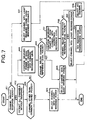
- Fig. 7 shows a substituted part for step 506 of Fig. 6 and other steps are the same as those of Fig. 6.
- step 604 If all the channels that are not used in local radio communication system 10A are the common channels, and interference wave powers of all the channels that are not used in local radio communication system 10A are above the common reference level at step 604 (step 604: YES), base station 2 wishing to select a channel compares these interference wave powers with a restriction reference level that is registered with channel selection information register 24 (step 701).
- channel selection controller 23 selects a channel with the least interference wave power from those channels (step 703), and determines a certain restriction transmission power that is below a normal transmission power for use in this channel (step 704). Then, channel selection controller 23 finishs a series of procedures of step 305.
- step 506 of Fig. 6 is exemplified in Fig. 7, however, step 506 of Fig. 5 also may be modified in the same way to take the same effects (claim 7).
- channel selection controller 23 selects no channel (step 506) and finish a series of procedures.
- the restriction reference level may be determined individually per channel (claim 11).
- the restriction transmission power of the channel to be used may also be determined individually per channel. In this case, an optimum selective condition per channel is determined even if influence from other communication system differs among channels due to difference of a degree of overlap of frequency band with another radio communication system 10B, difference of communication format, and the number of other communication system 10B (claim 12).
- the present invention examines both the use of each selectable channel in local radio communication system and the use of each selectable channel in other radio communication systems, and based on the results selects a channel for use in a radio communication.
Landscapes
- Engineering & Computer Science (AREA)
- Computer Networks & Wireless Communication (AREA)
- Signal Processing (AREA)
- Mobile Radio Communication Systems (AREA)
- Small-Scale Networks (AREA)
Applications Claiming Priority (3)
| Application Number | Priority Date | Filing Date | Title |
|---|---|---|---|
| JP10190189A JP2000022712A (ja) | 1998-07-06 | 1998-07-06 | チャネル選択方法 |
| JP19018998 | 1998-07-06 | ||
| PCT/JP1999/003590 WO2000002353A1 (en) | 1998-07-06 | 1999-07-02 | Channel selecting method |
Publications (2)
| Publication Number | Publication Date |
|---|---|
| EP1096730A1 true EP1096730A1 (de) | 2001-05-02 |
| EP1096730A4 EP1096730A4 (de) | 2003-07-09 |
Family
ID=16253942
Family Applications (1)
| Application Number | Title | Priority Date | Filing Date |
|---|---|---|---|
| EP99926909A Withdrawn EP1096730A4 (de) | 1998-07-06 | 1999-07-02 | Kanalauswahlverfahren |
Country Status (4)
| Country | Link |
|---|---|
| EP (1) | EP1096730A4 (de) |
| JP (1) | JP2000022712A (de) |
| CA (1) | CA2336550C (de) |
| WO (1) | WO2000002353A1 (de) |
Cited By (22)
| Publication number | Priority date | Publication date | Assignee | Title |
|---|---|---|---|---|
| EP1502369A4 (de) * | 2002-04-22 | 2005-11-30 | Cognio Inc | System und verfahren zur verwaltung eines gemeinsam benutzten frequenzbandes |
| WO2006045097A3 (en) * | 2004-10-20 | 2006-08-03 | Qualcomm Inc | Multiple frequency band operation in wireless networks |
| EP1708419A3 (de) * | 2003-08-01 | 2007-01-24 | Bandspeed, Inc. | Verfahren und Gerät zur Verbesserung von Abdeckung und Datendurchsatz in einem Mobilfunksystem |
| US7248877B2 (en) | 2002-11-21 | 2007-07-24 | Bandspeed, Inc. | Multiple access wireless communications architecture |
| US7269151B2 (en) | 2002-04-22 | 2007-09-11 | Cognio, Inc. | System and method for spectrum management of a shared frequency band |
| EP1627537A4 (de) * | 2003-05-19 | 2007-12-05 | Motorola Inc | Verfahren und vorrichtung zum kanal-sharing zwischen mehreren kommunikaitonssystemen |
| CN100405769C (zh) * | 2003-03-10 | 2008-07-23 | 巴比禄股份有限公司 | 接入点 |
| US7424268B2 (en) | 2002-04-22 | 2008-09-09 | Cisco Technology, Inc. | System and method for management of a shared frequency band |
| US7512404B2 (en) | 2002-11-21 | 2009-03-31 | Bandspeed, Inc. | Method and apparatus for sector channelization and polarization for reduced interference in wireless networks |
| US7555301B2 (en) | 2002-11-21 | 2009-06-30 | Bandspeed, Inc. | Method and apparatus for coverage and throughput enhancement in a wireless communication system |
| WO2009130361A1 (en) * | 2008-04-23 | 2009-10-29 | Elektrobit Wireless Communications Oy | Monitoring channels |
| WO2011058274A1 (fr) * | 2009-11-12 | 2011-05-19 | France Telecom | Procede de selection d'au moins un canal de transmission, point d'acces et programme d'ordinateur correspondants |
| US7983298B2 (en) | 2004-10-20 | 2011-07-19 | Qualcomm Incorporated | Multiple frequency band operation in wireless networks |
| CN1930899B (zh) * | 2004-03-05 | 2012-05-16 | 株式会社Ntt都科摩 | 频道分配系统、基站、控制站、不同系统间公共控制装置、频道分配方法及控制方法 |
| EP1803239A4 (de) * | 2004-10-20 | 2013-01-02 | Nokia Corp | System und verfahren zur verwendung eines kognitiven senders/empfängers für ad-hoc-vernetzung |
| WO2013023556A1 (zh) * | 2011-08-17 | 2013-02-21 | 电信科学技术研究院 | 可用频谱的确定方法和设备 |
| US8493886B2 (en) | 2007-05-16 | 2013-07-23 | Canon Kabushiki Kaisha | Allocation of a secondary band to expand the capacity of a primary band in a WLAN 802.11 system |
| US8804648B2 (en) | 2010-01-12 | 2014-08-12 | Sharp Kabushiki Kaisha | Wireless communication system, base station apparatus, mobile station apparatus, communication control method, and communication control program |
| EP2785094A1 (de) * | 2013-03-25 | 2014-10-01 | British Telecommunications public limited company | Kanalauswahl in einem drahtlosen Netzwerk |
| EP2728956A4 (de) * | 2011-08-10 | 2015-05-13 | Huawei Tech Co Ltd | Ressourcenplanungsverfahren, drahtlose zugangsvorrichtung und kommunikationssystem |
| US11337077B2 (en) | 2018-03-29 | 2022-05-17 | British Telecommunications Public Limited Company | Method of channel selection in a wireless network |
| US12137383B2 (en) | 2018-10-16 | 2024-11-05 | British Telecommunications Public Limited Company | Measuring channel performance in wireless local area networks |
Families Citing this family (28)
| Publication number | Priority date | Publication date | Assignee | Title |
|---|---|---|---|---|
| JP4654507B2 (ja) * | 2000-11-17 | 2011-03-23 | パナソニック株式会社 | アクセスポイント |
| JP4250875B2 (ja) | 2001-03-28 | 2009-04-08 | 日本電気株式会社 | 警報装置及びそれに用いる警報発生方法並びにそのプログラム |
| EP1257093B1 (de) * | 2001-05-08 | 2006-07-26 | Agere Systems Guardian Corporation | Schnurloses Netzwerksystem welches Zugriffspunkte beinhaltet |
| EP2259624B1 (de) | 2001-11-27 | 2020-06-24 | Sharp Kabushiki Kaisha | Funkkommunikationssystem |
| US6850735B2 (en) | 2002-04-22 | 2005-02-01 | Cognio, Inc. | System and method for signal classiciation of signals in a frequency band |
| WO2003090376A1 (en) | 2002-04-22 | 2003-10-30 | Cognio, Inc. | System and method for classifying signals occuring in a frequency band |
| US20030206532A1 (en) | 2002-05-06 | 2003-11-06 | Extricom Ltd. | Collaboration between wireless lan access points |
| US7408907B2 (en) | 2002-09-11 | 2008-08-05 | Cisco Technology, Inc. | System and method for management of a shared frequency band using client-specific management techniques |
| JP4016777B2 (ja) * | 2002-09-20 | 2007-12-05 | 日本電気株式会社 | 無線lanシステムの周波数設定方式とその方法 |
| US7184777B2 (en) | 2002-11-27 | 2007-02-27 | Cognio, Inc. | Server and multiple sensor system for monitoring activity in a shared radio frequency band |
| US7035593B2 (en) | 2003-07-28 | 2006-04-25 | Cognio, Inc. | Signal classification methods for scanning receiver and other applications |
| US7363008B2 (en) | 2003-10-30 | 2008-04-22 | Microsoft Corporation | Spectrum sharing in the unlicensed band |
| WO2007053125A1 (en) * | 2005-11-07 | 2007-05-10 | Agency For Science, Technology And Research | Method and devices for determining available frequency ranges |
| JP2009515468A (ja) * | 2005-11-07 | 2009-04-09 | エージェンシー フォー サイエンス,テクノロジー アンド リサーチ | 周波数域を割り当てる方法及び装置 |
| EP2016694B1 (de) | 2006-05-09 | 2019-03-20 | Cognio, Inc. | System und verfahren zur identifikation drahtloser geräte über impuls-fingerabdrücke und sequenzanalyse |
| JP4600439B2 (ja) * | 2007-06-25 | 2010-12-15 | ソニー株式会社 | ワイヤレスlanシステムのベース装置および端末装置 |
| JP5430390B2 (ja) | 2009-12-24 | 2014-02-26 | 京セラ株式会社 | 無線基地局及び無線基地局の周波数帯域選択方法 |
| JP5016700B2 (ja) * | 2010-03-31 | 2012-09-05 | 京セラコミュニケーションシステム株式会社 | 無線lanシステム |
| WO2011134517A1 (en) * | 2010-04-29 | 2011-11-03 | Nokia Siemens Networks Oy | Interference management |
| US8588844B2 (en) | 2010-11-04 | 2013-11-19 | Extricom Ltd. | MIMO search over multiple access points |
| JP5680482B2 (ja) * | 2011-05-24 | 2015-03-04 | 日本電信電話株式会社 | 無線通信方法 |
| JP5966455B2 (ja) * | 2012-03-08 | 2016-08-10 | ヤマハ株式会社 | 無線中継装置 |
| JP2014060785A (ja) * | 2013-11-26 | 2014-04-03 | Kyocera Corp | 無線基地局及び無線基地局の周波数帯域選択方法 |
| CN105578607B (zh) * | 2014-11-05 | 2019-12-10 | 电信科学技术研究院 | 一种进行载波调度的方法和设备 |
| JP6174640B2 (ja) | 2015-08-11 | 2017-08-02 | 京セラ株式会社 | 基地局および無線通信方法 |
| JP2016187215A (ja) * | 2016-06-29 | 2016-10-27 | ヤマハ株式会社 | 無線中継装置、およびプログラム |
| JP6689934B2 (ja) * | 2018-09-20 | 2020-04-28 | 京セラ株式会社 | 基地局、無線通信方法および無線通信システム |
| JP2019050584A (ja) * | 2018-10-24 | 2019-03-28 | ヤマハ株式会社 | 無線中継装置、無線中継方法およびプログラム |
Family Cites Families (7)
| Publication number | Priority date | Publication date | Assignee | Title |
|---|---|---|---|---|
| JP2643689B2 (ja) * | 1991-10-21 | 1997-08-20 | 松下電器産業株式会社 | マイクロセルラーシステムにおけるチャネル割り当て方法 |
| US5752164A (en) * | 1992-04-27 | 1998-05-12 | American Pcs L.P. | Autonomous remote measurement unit for a personal communications service system |
| GB9214107D0 (en) * | 1992-07-03 | 1992-08-12 | Ncr Int Inc | Power control method in a wireless communication system |
| JP2650011B2 (ja) * | 1992-09-08 | 1997-09-03 | 移動通信システム開発株式会社 | 移動通信システムのチャネル割当て方式 |
| KR100319309B1 (ko) * | 1995-01-25 | 2002-04-24 | 다치카와 게이지 | 이동통신시스템 |
| JP3382806B2 (ja) * | 1997-02-13 | 2003-03-04 | 日本電気株式会社 | 子無線局 |
| JPH11234284A (ja) * | 1998-02-12 | 1999-08-27 | Ricoh Co Ltd | 通信システム及びその送信電力制御方法 |
-
1998
- 1998-07-06 JP JP10190189A patent/JP2000022712A/ja active Pending
-
1999
- 1999-07-02 CA CA002336550A patent/CA2336550C/en not_active Expired - Fee Related
- 1999-07-02 WO PCT/JP1999/003590 patent/WO2000002353A1/ja not_active Ceased
- 1999-07-02 EP EP99926909A patent/EP1096730A4/de not_active Withdrawn
Cited By (34)
| Publication number | Priority date | Publication date | Assignee | Title |
|---|---|---|---|---|
| US7269151B2 (en) | 2002-04-22 | 2007-09-11 | Cognio, Inc. | System and method for spectrum management of a shared frequency band |
| US8175539B2 (en) | 2002-04-22 | 2012-05-08 | Cisco Technology, Inc. | System and method for management of a shared frequency band |
| EP1502369A4 (de) * | 2002-04-22 | 2005-11-30 | Cognio Inc | System und verfahren zur verwaltung eines gemeinsam benutzten frequenzbandes |
| US7424268B2 (en) | 2002-04-22 | 2008-09-09 | Cisco Technology, Inc. | System and method for management of a shared frequency band |
| US7512404B2 (en) | 2002-11-21 | 2009-03-31 | Bandspeed, Inc. | Method and apparatus for sector channelization and polarization for reduced interference in wireless networks |
| US7248877B2 (en) | 2002-11-21 | 2007-07-24 | Bandspeed, Inc. | Multiple access wireless communications architecture |
| US7555301B2 (en) | 2002-11-21 | 2009-06-30 | Bandspeed, Inc. | Method and apparatus for coverage and throughput enhancement in a wireless communication system |
| CN100405769C (zh) * | 2003-03-10 | 2008-07-23 | 巴比禄股份有限公司 | 接入点 |
| EP1603275A4 (de) * | 2003-03-10 | 2009-04-22 | Buffalo Inc | Zugangspunkt |
| US7574225B2 (en) | 2003-03-10 | 2009-08-11 | Buffalo Inc. | Access point |
| EP1627537A4 (de) * | 2003-05-19 | 2007-12-05 | Motorola Inc | Verfahren und vorrichtung zum kanal-sharing zwischen mehreren kommunikaitonssystemen |
| CN100459731C (zh) * | 2003-05-19 | 2009-02-04 | 摩托罗拉公司 | 用于在多个通信系统之间共享信道的方法和设备 |
| EP1708419A3 (de) * | 2003-08-01 | 2007-01-24 | Bandspeed, Inc. | Verfahren und Gerät zur Verbesserung von Abdeckung und Datendurchsatz in einem Mobilfunksystem |
| CN1930899B (zh) * | 2004-03-05 | 2012-05-16 | 株式会社Ntt都科摩 | 频道分配系统、基站、控制站、不同系统间公共控制装置、频道分配方法及控制方法 |
| US7983298B2 (en) | 2004-10-20 | 2011-07-19 | Qualcomm Incorporated | Multiple frequency band operation in wireless networks |
| US8462709B2 (en) | 2004-10-20 | 2013-06-11 | Qualcomm Incorporated | Multiple frequency band operation in wireless networks |
| US9883486B2 (en) | 2004-10-20 | 2018-01-30 | Qualcomm, Incorporated | Multiple frequency band operation in wireless networks |
| RU2371867C2 (ru) * | 2004-10-20 | 2009-10-27 | Квэлкомм Инкорпорейтед | Работа в множестве частотных диапазонов в беспроводных сетях |
| WO2006045097A3 (en) * | 2004-10-20 | 2006-08-03 | Qualcomm Inc | Multiple frequency band operation in wireless networks |
| EP1803239A4 (de) * | 2004-10-20 | 2013-01-02 | Nokia Corp | System und verfahren zur verwendung eines kognitiven senders/empfängers für ad-hoc-vernetzung |
| US8493886B2 (en) | 2007-05-16 | 2013-07-23 | Canon Kabushiki Kaisha | Allocation of a secondary band to expand the capacity of a primary band in a WLAN 802.11 system |
| US8219031B2 (en) | 2008-04-23 | 2012-07-10 | Elektrobit Wireless Communications Oy | Monitoring channels |
| WO2009130361A1 (en) * | 2008-04-23 | 2009-10-29 | Elektrobit Wireless Communications Oy | Monitoring channels |
| WO2011058274A1 (fr) * | 2009-11-12 | 2011-05-19 | France Telecom | Procede de selection d'au moins un canal de transmission, point d'acces et programme d'ordinateur correspondants |
| US8804648B2 (en) | 2010-01-12 | 2014-08-12 | Sharp Kabushiki Kaisha | Wireless communication system, base station apparatus, mobile station apparatus, communication control method, and communication control program |
| EP2728956A4 (de) * | 2011-08-10 | 2015-05-13 | Huawei Tech Co Ltd | Ressourcenplanungsverfahren, drahtlose zugangsvorrichtung und kommunikationssystem |
| US9392611B2 (en) | 2011-08-10 | 2016-07-12 | Huawei Technologies, Co., Ltd. | Resource scheduling method, radio access device, and communications system |
| WO2013023556A1 (zh) * | 2011-08-17 | 2013-02-21 | 电信科学技术研究院 | 可用频谱的确定方法和设备 |
| US9762421B2 (en) | 2011-08-17 | 2017-09-12 | China Academy Of Telecommunications Technology | Method and device for determining available spectrums |
| EP2785094A1 (de) * | 2013-03-25 | 2014-10-01 | British Telecommunications public limited company | Kanalauswahl in einem drahtlosen Netzwerk |
| WO2014155037A1 (en) * | 2013-03-25 | 2014-10-02 | British Telecommunications Public Limited Company | Channel selection in a wireless network |
| US10075961B2 (en) | 2013-03-25 | 2018-09-11 | British Telecommunications Public Limited Company | Channel selection in a wireless network |
| US11337077B2 (en) | 2018-03-29 | 2022-05-17 | British Telecommunications Public Limited Company | Method of channel selection in a wireless network |
| US12137383B2 (en) | 2018-10-16 | 2024-11-05 | British Telecommunications Public Limited Company | Measuring channel performance in wireless local area networks |
Also Published As
| Publication number | Publication date |
|---|---|
| WO2000002353A1 (en) | 2000-01-13 |
| CA2336550C (en) | 2003-11-11 |
| WO2000002353A9 (en) | 2000-07-20 |
| CA2336550A1 (en) | 2000-01-13 |
| JP2000022712A (ja) | 2000-01-21 |
| EP1096730A4 (de) | 2003-07-09 |
Similar Documents
| Publication | Publication Date | Title |
|---|---|---|
| EP1096730A1 (de) | Kanalauswahlverfahren | |
| US6278877B1 (en) | Handover method for mobile wireless station | |
| US5881095A (en) | Repeater assisted channel hopping system and method therefor | |
| US5732077A (en) | Resource allocation system for wireless networks | |
| US6791996B1 (en) | Wireless network system and communication method employing both contention mode and contention-free mode | |
| US8526349B2 (en) | Serial clear to send (CTS) to self (CTS2SELF) messaging procedure | |
| US8830986B2 (en) | Wireless communication system, wireless communication apparatus and wireless communication method and computer program | |
| US20150215828A1 (en) | Method and system for delivery of assistance data | |
| CN101039462B (zh) | 在相同信道的基本服务集之间选择动态频率的方法和设备 | |
| US20020167963A1 (en) | Method and apparatus for spread spectrum medium access protocol with collision avoidance using controlled time of arrival | |
| US20020141375A1 (en) | Increasing link capacity via concurrent transmissions in centralized wireless LANs | |
| US20080008147A1 (en) | Wireless station, wireless communication system, wireless communication control method, and computer-readable medium | |
| EP1931086A2 (de) | Verfahren und System zur Koexistenz zwischen 20 MHZ- und 40 MHZ-OBSS in drahtlosen LANs | |
| CA2344839C (en) | Transmission of mobile unit requests in wireless uplink systems | |
| KR930010645B1 (ko) | 무선통신장치 및 그 제어방법 | |
| WO2006022477A1 (en) | Wireless networking apparatus and channel switching method using the same | |
| US8295261B2 (en) | Method for detecting hidden nodes in cognitive radio networks | |
| JP3915021B2 (ja) | チャネル選択方法 | |
| US8102824B2 (en) | Method and arrangement for reducing the average time needed for a communication unit to connect to a communication network | |
| KR20050076900A (ko) | 전송 환경에 따라 피기백의 적용 여부를 적응적으로결정하는 단계를 포함하는 무선 랜 통신방법 | |
| EP2098015B1 (de) | Drahtloses nichtzellulares netz | |
| JP3183487B2 (ja) | 無線チャネル割当方法 | |
| US20090046680A1 (en) | Data transmission system for wireless local area network and method thereof | |
| JPH0787560A (ja) | 電波を用いたデータ伝送システム | |
| EP2637462A2 (de) | Sendevorrichtung, mobiles Kommunikationssystem, Basisstation und Vorrichtung zum Senden eines Kommunikationsaktivierungssignals |
Legal Events
| Date | Code | Title | Description |
|---|---|---|---|
| PUAI | Public reference made under article 153(3) epc to a published international application that has entered the european phase |
Free format text: ORIGINAL CODE: 0009012 |
|
| 17P | Request for examination filed |
Effective date: 20010201 |
|
| AK | Designated contracting states |
Kind code of ref document: A1 Designated state(s): AT BE CH CY DE DK ES FI FR GB GR IE IT LI LU MC NL PT SE |
|
| A4 | Supplementary search report drawn up and despatched |
Effective date: 20030528 |
|
| RIC1 | Information provided on ipc code assigned before grant |
Ipc: 7H 04Q 7/36 B Ipc: 7H 04L 12/28 A |
|
| 17Q | First examination report despatched |
Effective date: 20030731 |
|
| 18D | Application deemed to be withdrawn |
Effective date: 20031212 |