EP1100921B1 - Proteines de streptococcus pneumoniae et molecules d'acide nucleique - Google Patents
Proteines de streptococcus pneumoniae et molecules d'acide nucleique Download PDFInfo
- Publication number
- EP1100921B1 EP1100921B1 EP99934989A EP99934989A EP1100921B1 EP 1100921 B1 EP1100921 B1 EP 1100921B1 EP 99934989 A EP99934989 A EP 99934989A EP 99934989 A EP99934989 A EP 99934989A EP 1100921 B1 EP1100921 B1 EP 1100921B1
- Authority
- EP
- European Patent Office
- Prior art keywords
- sequence
- protein
- polypeptide
- sequences
- nucleic acid
- Prior art date
- Legal status (The legal status is an assumption and is not a legal conclusion. Google has not performed a legal analysis and makes no representation as to the accuracy of the status listed.)
- Expired - Lifetime
Links
- 150000007523 nucleic acids Chemical class 0.000 title claims abstract description 19
- 241000193998 Streptococcus pneumoniae Species 0.000 title claims abstract description 9
- 229940031000 streptococcus pneumoniae Drugs 0.000 title claims abstract description 9
- 108090000623 proteins and genes Proteins 0.000 title claims description 69
- 102000004169 proteins and genes Human genes 0.000 title claims description 50
- 108020004707 nucleic acids Proteins 0.000 title description 8
- 102000039446 nucleic acids Human genes 0.000 title description 8
- 229960005486 vaccine Drugs 0.000 claims abstract description 16
- 229920001184 polypeptide Polymers 0.000 claims description 28
- 108090000765 processed proteins & peptides Proteins 0.000 claims description 28
- 102000004196 processed proteins & peptides Human genes 0.000 claims description 28
- 239000012634 fragment Substances 0.000 claims description 15
- 230000002163 immunogen Effects 0.000 claims description 12
- 230000000295 complement effect Effects 0.000 claims description 6
- 239000002671 adjuvant Substances 0.000 claims description 2
- 239000003085 diluting agent Substances 0.000 claims description 2
- 239000000203 mixture Substances 0.000 claims description 2
- 239000000546 pharmaceutical excipient Substances 0.000 claims description 2
- 108091033380 Coding strand Proteins 0.000 claims 1
- 238000000034 method Methods 0.000 abstract description 15
- 102000036639 antigens Human genes 0.000 abstract description 6
- 108091007433 antigens Proteins 0.000 abstract description 6
- 238000012216 screening Methods 0.000 abstract description 3
- 239000013615 primer Substances 0.000 description 38
- 241000699670 Mus sp. Species 0.000 description 14
- 230000002441 reversible effect Effects 0.000 description 12
- 230000000890 antigenic effect Effects 0.000 description 11
- 230000004083 survival effect Effects 0.000 description 11
- 239000013598 vector Substances 0.000 description 11
- 238000010367 cloning Methods 0.000 description 10
- 108010041986 DNA Vaccines Proteins 0.000 description 8
- 229940021995 DNA vaccine Drugs 0.000 description 8
- 108091028043 Nucleic acid sequence Proteins 0.000 description 8
- 108020004414 DNA Proteins 0.000 description 7
- 241000699666 Mus <mouse, genus> Species 0.000 description 7
- 230000014509 gene expression Effects 0.000 description 7
- 208000015181 infectious disease Diseases 0.000 description 7
- 239000002054 inoculum Substances 0.000 description 7
- PEDCQBHIVMGVHV-UHFFFAOYSA-N Glycerine Chemical compound OCC(O)CO PEDCQBHIVMGVHV-UHFFFAOYSA-N 0.000 description 6
- 238000013459 approach Methods 0.000 description 6
- 229930182555 Penicillin Natural products 0.000 description 5
- JGSARLDLIJGVTE-MBNYWOFBSA-N Penicillin G Chemical compound N([C@H]1[C@H]2SC([C@@H](N2C1=O)C(O)=O)(C)C)C(=O)CC1=CC=CC=C1 JGSARLDLIJGVTE-MBNYWOFBSA-N 0.000 description 5
- 208000035109 Pneumococcal Infections Diseases 0.000 description 5
- 108010076504 Protein Sorting Signals Proteins 0.000 description 5
- 208000037265 diseases, disorders, signs and symptoms Diseases 0.000 description 5
- 229940049954 penicillin Drugs 0.000 description 5
- 208000024891 symptom Diseases 0.000 description 5
- 238000012360 testing method Methods 0.000 description 5
- 150000001413 amino acids Chemical class 0.000 description 4
- 239000000427 antigen Substances 0.000 description 4
- 239000006161 blood agar Substances 0.000 description 4
- 230000034994 death Effects 0.000 description 4
- 231100000517 death Toxicity 0.000 description 4
- 238000011161 development Methods 0.000 description 4
- 201000010099 disease Diseases 0.000 description 4
- 238000002474 experimental method Methods 0.000 description 4
- 150000004676 glycans Chemical class 0.000 description 4
- 230000028993 immune response Effects 0.000 description 4
- 229920001282 polysaccharide Polymers 0.000 description 4
- 239000005017 polysaccharide Substances 0.000 description 4
- 230000001681 protective effect Effects 0.000 description 4
- 239000000523 sample Substances 0.000 description 4
- 108091032973 (ribonucleotides)n+m Proteins 0.000 description 3
- 230000005875 antibody response Effects 0.000 description 3
- 239000008280 blood Substances 0.000 description 3
- 210000004369 blood Anatomy 0.000 description 3
- 210000004027 cell Anatomy 0.000 description 3
- 230000002209 hydrophobic effect Effects 0.000 description 3
- 230000005847 immunogenicity Effects 0.000 description 3
- 239000000463 material Substances 0.000 description 3
- 239000013612 plasmid Substances 0.000 description 3
- 238000002360 preparation method Methods 0.000 description 3
- 108091008146 restriction endonucleases Proteins 0.000 description 3
- 238000007619 statistical method Methods 0.000 description 3
- 241000894006 Bacteria Species 0.000 description 2
- 241000701022 Cytomegalovirus Species 0.000 description 2
- 102000053602 DNA Human genes 0.000 description 2
- WQZGKKKJIJFFOK-GASJEMHNSA-N Glucose Natural products OC[C@H]1OC(O)[C@H](O)[C@@H](O)[C@@H]1O WQZGKKKJIJFFOK-GASJEMHNSA-N 0.000 description 2
- 241001465754 Metazoa Species 0.000 description 2
- 108091081024 Start codon Proteins 0.000 description 2
- 238000007792 addition Methods 0.000 description 2
- 125000003275 alpha amino acid group Chemical group 0.000 description 2
- 239000003708 ampul Substances 0.000 description 2
- 210000004899 c-terminal region Anatomy 0.000 description 2
- 239000002775 capsule Substances 0.000 description 2
- 238000012217 deletion Methods 0.000 description 2
- 230000037430 deletion Effects 0.000 description 2
- 238000013461 design Methods 0.000 description 2
- 108020001507 fusion proteins Proteins 0.000 description 2
- 102000037865 fusion proteins Human genes 0.000 description 2
- 239000008103 glucose Substances 0.000 description 2
- 230000036541 health Effects 0.000 description 2
- 238000002649 immunization Methods 0.000 description 2
- 210000004962 mammalian cell Anatomy 0.000 description 2
- 210000003205 muscle Anatomy 0.000 description 2
- 239000002773 nucleotide Substances 0.000 description 2
- 125000003729 nucleotide group Chemical group 0.000 description 2
- 244000052769 pathogen Species 0.000 description 2
- 230000002035 prolonged effect Effects 0.000 description 2
- 230000010076 replication Effects 0.000 description 2
- 230000004044 response Effects 0.000 description 2
- 238000006467 substitution reaction Methods 0.000 description 2
- 239000001974 tryptic soy broth Substances 0.000 description 2
- 108010050327 trypticase-soy broth Proteins 0.000 description 2
- 238000011144 upstream manufacturing Methods 0.000 description 2
- 229940125575 vaccine candidate Drugs 0.000 description 2
- 208000030507 AIDS Diseases 0.000 description 1
- 208000007848 Alcoholism Diseases 0.000 description 1
- 206010053622 Asplenia Diseases 0.000 description 1
- 201000001178 Bacterial Pneumonia Diseases 0.000 description 1
- 108020004705 Codon Proteins 0.000 description 1
- 108700010070 Codon Usage Proteins 0.000 description 1
- 108010036941 Cyclosporins Proteins 0.000 description 1
- 239000003155 DNA primer Substances 0.000 description 1
- 238000011238 DNA vaccination Methods 0.000 description 1
- 206010011906 Death Diseases 0.000 description 1
- 108090000790 Enzymes Proteins 0.000 description 1
- 102000004190 Enzymes Human genes 0.000 description 1
- 241000588724 Escherichia coli Species 0.000 description 1
- 241000192125 Firmicutes Species 0.000 description 1
- 241000606768 Haemophilus influenzae Species 0.000 description 1
- 241000701024 Human betaherpesvirus 5 Species 0.000 description 1
- 241000194035 Lactococcus lactis Species 0.000 description 1
- 206010024264 Lethargy Diseases 0.000 description 1
- 102000004895 Lipoproteins Human genes 0.000 description 1
- 108090001030 Lipoproteins Proteins 0.000 description 1
- 208000019693 Lung disease Diseases 0.000 description 1
- 108010052285 Membrane Proteins Proteins 0.000 description 1
- 102000018697 Membrane Proteins Human genes 0.000 description 1
- 201000009906 Meningitis Diseases 0.000 description 1
- 206010027253 Meningitis pneumococcal Diseases 0.000 description 1
- 108091005461 Nucleic proteins Proteins 0.000 description 1
- 108091034117 Oligonucleotide Proteins 0.000 description 1
- 206010033078 Otitis media Diseases 0.000 description 1
- 241001442654 Percnon planissimum Species 0.000 description 1
- 101710099976 Photosystem I P700 chlorophyll a apoprotein A1 Proteins 0.000 description 1
- 206010035039 Piloerection Diseases 0.000 description 1
- 206010054047 Pneumococcal sepsis Diseases 0.000 description 1
- 101710194807 Protective antigen Proteins 0.000 description 1
- 108010008281 Recombinant Fusion Proteins Proteins 0.000 description 1
- 102000007056 Recombinant Fusion Proteins Human genes 0.000 description 1
- 206010057190 Respiratory tract infections Diseases 0.000 description 1
- 108090000233 Signal peptidase II Proteins 0.000 description 1
- 235000014897 Streptococcus lactis Nutrition 0.000 description 1
- 210000001744 T-lymphocyte Anatomy 0.000 description 1
- JLCPHMBAVCMARE-UHFFFAOYSA-N [3-[[3-[[3-[[3-[[3-[[3-[[3-[[3-[[3-[[3-[[3-[[5-(2-amino-6-oxo-1H-purin-9-yl)-3-[[3-[[3-[[3-[[3-[[3-[[5-(2-amino-6-oxo-1H-purin-9-yl)-3-[[5-(2-amino-6-oxo-1H-purin-9-yl)-3-hydroxyoxolan-2-yl]methoxy-hydroxyphosphoryl]oxyoxolan-2-yl]methoxy-hydroxyphosphoryl]oxy-5-(5-methyl-2,4-dioxopyrimidin-1-yl)oxolan-2-yl]methoxy-hydroxyphosphoryl]oxy-5-(6-aminopurin-9-yl)oxolan-2-yl]methoxy-hydroxyphosphoryl]oxy-5-(6-aminopurin-9-yl)oxolan-2-yl]methoxy-hydroxyphosphoryl]oxy-5-(6-aminopurin-9-yl)oxolan-2-yl]methoxy-hydroxyphosphoryl]oxy-5-(6-aminopurin-9-yl)oxolan-2-yl]methoxy-hydroxyphosphoryl]oxyoxolan-2-yl]methoxy-hydroxyphosphoryl]oxy-5-(5-methyl-2,4-dioxopyrimidin-1-yl)oxolan-2-yl]methoxy-hydroxyphosphoryl]oxy-5-(4-amino-2-oxopyrimidin-1-yl)oxolan-2-yl]methoxy-hydroxyphosphoryl]oxy-5-(5-methyl-2,4-dioxopyrimidin-1-yl)oxolan-2-yl]methoxy-hydroxyphosphoryl]oxy-5-(5-methyl-2,4-dioxopyrimidin-1-yl)oxolan-2-yl]methoxy-hydroxyphosphoryl]oxy-5-(6-aminopurin-9-yl)oxolan-2-yl]methoxy-hydroxyphosphoryl]oxy-5-(6-aminopurin-9-yl)oxolan-2-yl]methoxy-hydroxyphosphoryl]oxy-5-(4-amino-2-oxopyrimidin-1-yl)oxolan-2-yl]methoxy-hydroxyphosphoryl]oxy-5-(4-amino-2-oxopyrimidin-1-yl)oxolan-2-yl]methoxy-hydroxyphosphoryl]oxy-5-(4-amino-2-oxopyrimidin-1-yl)oxolan-2-yl]methoxy-hydroxyphosphoryl]oxy-5-(6-aminopurin-9-yl)oxolan-2-yl]methoxy-hydroxyphosphoryl]oxy-5-(4-amino-2-oxopyrimidin-1-yl)oxolan-2-yl]methyl [5-(6-aminopurin-9-yl)-2-(hydroxymethyl)oxolan-3-yl] hydrogen phosphate Polymers Cc1cn(C2CC(OP(O)(=O)OCC3OC(CC3OP(O)(=O)OCC3OC(CC3O)n3cnc4c3nc(N)[nH]c4=O)n3cnc4c3nc(N)[nH]c4=O)C(COP(O)(=O)OC3CC(OC3COP(O)(=O)OC3CC(OC3COP(O)(=O)OC3CC(OC3COP(O)(=O)OC3CC(OC3COP(O)(=O)OC3CC(OC3COP(O)(=O)OC3CC(OC3COP(O)(=O)OC3CC(OC3COP(O)(=O)OC3CC(OC3COP(O)(=O)OC3CC(OC3COP(O)(=O)OC3CC(OC3COP(O)(=O)OC3CC(OC3COP(O)(=O)OC3CC(OC3COP(O)(=O)OC3CC(OC3COP(O)(=O)OC3CC(OC3COP(O)(=O)OC3CC(OC3COP(O)(=O)OC3CC(OC3COP(O)(=O)OC3CC(OC3CO)n3cnc4c(N)ncnc34)n3ccc(N)nc3=O)n3cnc4c(N)ncnc34)n3ccc(N)nc3=O)n3ccc(N)nc3=O)n3ccc(N)nc3=O)n3cnc4c(N)ncnc34)n3cnc4c(N)ncnc34)n3cc(C)c(=O)[nH]c3=O)n3cc(C)c(=O)[nH]c3=O)n3ccc(N)nc3=O)n3cc(C)c(=O)[nH]c3=O)n3cnc4c3nc(N)[nH]c4=O)n3cnc4c(N)ncnc34)n3cnc4c(N)ncnc34)n3cnc4c(N)ncnc34)n3cnc4c(N)ncnc34)O2)c(=O)[nH]c1=O JLCPHMBAVCMARE-UHFFFAOYSA-N 0.000 description 1
- 230000001154 acute effect Effects 0.000 description 1
- 201000007930 alcohol dependence Diseases 0.000 description 1
- 229960000723 ampicillin Drugs 0.000 description 1
- AVKUERGKIZMTKX-NJBDSQKTSA-N ampicillin Chemical compound C1([C@@H](N)C(=O)N[C@H]2[C@H]3SC([C@@H](N3C2=O)C(O)=O)(C)C)=CC=CC=C1 AVKUERGKIZMTKX-NJBDSQKTSA-N 0.000 description 1
- 230000003321 amplification Effects 0.000 description 1
- 238000004458 analytical method Methods 0.000 description 1
- 238000004873 anchoring Methods 0.000 description 1
- 239000003242 anti bacterial agent Substances 0.000 description 1
- 230000000845 anti-microbial effect Effects 0.000 description 1
- 229940088710 antibiotic agent Drugs 0.000 description 1
- 239000004599 antimicrobial Substances 0.000 description 1
- 230000001580 bacterial effect Effects 0.000 description 1
- 238000004364 calculation method Methods 0.000 description 1
- 210000000170 cell membrane Anatomy 0.000 description 1
- 210000002421 cell wall Anatomy 0.000 description 1
- 230000000052 comparative effect Effects 0.000 description 1
- 230000001268 conjugating effect Effects 0.000 description 1
- 239000000356 contaminant Substances 0.000 description 1
- 229930182912 cyclosporin Natural products 0.000 description 1
- 230000001419 dependent effect Effects 0.000 description 1
- 238000001514 detection method Methods 0.000 description 1
- 206010012601 diabetes mellitus Diseases 0.000 description 1
- 238000003745 diagnosis Methods 0.000 description 1
- 208000035475 disorder Diseases 0.000 description 1
- 230000000694 effects Effects 0.000 description 1
- 239000003623 enhancer Substances 0.000 description 1
- 239000013604 expression vector Substances 0.000 description 1
- 230000008014 freezing Effects 0.000 description 1
- 238000007710 freezing Methods 0.000 description 1
- 238000012215 gene cloning Methods 0.000 description 1
- 230000002068 genetic effect Effects 0.000 description 1
- 238000012268 genome sequencing Methods 0.000 description 1
- 229940047650 haemophilus influenzae Drugs 0.000 description 1
- BCQZXOMGPXTTIC-UHFFFAOYSA-N halothane Chemical compound FC(F)(F)C(Cl)Br BCQZXOMGPXTTIC-UHFFFAOYSA-N 0.000 description 1
- 229960003132 halothane Drugs 0.000 description 1
- 238000003306 harvesting Methods 0.000 description 1
- 210000002216 heart Anatomy 0.000 description 1
- 208000019622 heart disease Diseases 0.000 description 1
- 230000001506 immunosuppresive effect Effects 0.000 description 1
- 238000000338 in vitro Methods 0.000 description 1
- 238000001727 in vivo Methods 0.000 description 1
- 230000001939 inductive effect Effects 0.000 description 1
- 239000003999 initiator Substances 0.000 description 1
- 208000017169 kidney disease Diseases 0.000 description 1
- 231100000636 lethal dose Toxicity 0.000 description 1
- 210000004072 lung Anatomy 0.000 description 1
- 238000012423 maintenance Methods 0.000 description 1
- 238000013507 mapping Methods 0.000 description 1
- 230000007246 mechanism Effects 0.000 description 1
- 230000000813 microbial effect Effects 0.000 description 1
- 238000012986 modification Methods 0.000 description 1
- 230000004048 modification Effects 0.000 description 1
- 238000010369 molecular cloning Methods 0.000 description 1
- 238000003199 nucleic acid amplification method Methods 0.000 description 1
- SUWZHLCNFQWNPE-LATRNWQMSA-N optochin Chemical compound C([C@H]([C@H](C1)CC)C2)CN1[C@@H]2[C@H](O)C1=CC=NC2=CC=C(OCC)C=C21 SUWZHLCNFQWNPE-LATRNWQMSA-N 0.000 description 1
- 230000037361 pathway Effects 0.000 description 1
- 230000005371 pilomotor reflex Effects 0.000 description 1
- 238000007747 plating Methods 0.000 description 1
- 208000004593 pneumococcal meningitis Diseases 0.000 description 1
- 229940031937 polysaccharide vaccine Drugs 0.000 description 1
- 239000002243 precursor Substances 0.000 description 1
- 230000002265 prevention Effects 0.000 description 1
- 230000008569 process Effects 0.000 description 1
- 230000005180 public health Effects 0.000 description 1
- 238000000746 purification Methods 0.000 description 1
- 230000003362 replicative effect Effects 0.000 description 1
- 238000011160 research Methods 0.000 description 1
- 230000029058 respiratory gaseous exchange Effects 0.000 description 1
- 210000003705 ribosome Anatomy 0.000 description 1
- 230000035945 sensitivity Effects 0.000 description 1
- 238000012163 sequencing technique Methods 0.000 description 1
- 238000013207 serial dilution Methods 0.000 description 1
- 201000009890 sinusitis Diseases 0.000 description 1
- 238000000527 sonication Methods 0.000 description 1
- 239000000725 suspension Substances 0.000 description 1
- 238000003786 synthesis reaction Methods 0.000 description 1
- 238000013518 transcription Methods 0.000 description 1
- 230000035897 transcription Effects 0.000 description 1
- 230000010474 transient expression Effects 0.000 description 1
- 108010087967 type I signal peptidase Proteins 0.000 description 1
- 238000010200 validation analysis Methods 0.000 description 1
- 230000035899 viability Effects 0.000 description 1
- 230000003612 virological effect Effects 0.000 description 1
Images

Classifications
-
- C—CHEMISTRY; METALLURGY
- C07—ORGANIC CHEMISTRY
- C07K—PEPTIDES
- C07K14/00—Peptides having more than 20 amino acids; Gastrins; Somatostatins; Melanotropins; Derivatives thereof
- C07K14/195—Peptides having more than 20 amino acids; Gastrins; Somatostatins; Melanotropins; Derivatives thereof from bacteria
- C07K14/315—Peptides having more than 20 amino acids; Gastrins; Somatostatins; Melanotropins; Derivatives thereof from bacteria from Streptococcus (G), e.g. Enterococci
- C07K14/3156—Peptides having more than 20 amino acids; Gastrins; Somatostatins; Melanotropins; Derivatives thereof from bacteria from Streptococcus (G), e.g. Enterococci from Streptococcus pneumoniae (Pneumococcus)
-
- A—HUMAN NECESSITIES
- A61—MEDICAL OR VETERINARY SCIENCE; HYGIENE
- A61P—SPECIFIC THERAPEUTIC ACTIVITY OF CHEMICAL COMPOUNDS OR MEDICINAL PREPARATIONS
- A61P11/00—Drugs for disorders of the respiratory system
-
- A—HUMAN NECESSITIES
- A61—MEDICAL OR VETERINARY SCIENCE; HYGIENE
- A61P—SPECIFIC THERAPEUTIC ACTIVITY OF CHEMICAL COMPOUNDS OR MEDICINAL PREPARATIONS
- A61P31/00—Antiinfectives, i.e. antibiotics, antiseptics, chemotherapeutics
- A61P31/04—Antibacterial agents
-
- A—HUMAN NECESSITIES
- A61—MEDICAL OR VETERINARY SCIENCE; HYGIENE
- A61K—PREPARATIONS FOR MEDICAL, DENTAL OR TOILETRY PURPOSES
- A61K38/00—Medicinal preparations containing peptides
-
- A—HUMAN NECESSITIES
- A61—MEDICAL OR VETERINARY SCIENCE; HYGIENE
- A61K—PREPARATIONS FOR MEDICAL, DENTAL OR TOILETRY PURPOSES
- A61K39/00—Medicinal preparations containing antigens or antibodies
Definitions
- the present invention relates to proteins derived from Streptococcus pneumoniae , nucleic acid molecules encoding such proteins, the use of the nucleic acid and/or proteins as antigens/immunogens and in detection/diagnosis, as well as methods for screening the proteins/nucleic acid sequences as potential anti-microbial targets.
- Streptococcus pneumoniae commonly referred to as the pneumococcus
- pneumococcus is an important pathogenic organism.
- the continuing significance of Streptoccocus pneumoniae infections in relation to human disease in developing and developed countries has been authoritatively reviewed (Fiber, G.R., Science, 265 : 1385-1387 (1994)). That indicates that on a global scale this organism is believed to be the most common bacterial cause of acute respiratory infections, and is estimated to result in 1 million childhood deaths each year, mostly in developing countries (Stansfield, S.K., Pediatr. Infect. Dis., 6: 622 (1987)). In the USA it has been suggested (Breiman et al, Arch. Intern.
- pneumococcus is still the most common cause of bacterial pneumonia, and that disease rates are particularly high in young children, in the elderly, and in patients with predisposing conditions such as asplenia, heart, lung and kidney disease, diabetes, alcoholism, or with immunosupressive disorders, especially AIDS.
- predisposing conditions such as asplenia, heart, lung and kidney disease, diabetes, alcoholism, or with immunosupressive disorders, especially AIDS.
- These groups are at higher risk of pneumococcal septicaemia and hence meningitis and therefore have a greater risk of dying from pneumococcal infection.
- the pneumococcus is also the leading cause of otitis media and sinusitis, which remain prevalent infections in children in developed countries, and which incur substantial costs.
- a modification of the approach using capsule antigens relies on conjugating the polysaccharide to a protein in order to derive an enhanced immune response, particularly by giving the response T-cell dependent character.
- This approach has been used in the development of a vaccine against Haemophilus influenzae. There are issues of cost concerning both the multi-polysaccharide vaccines and those based on conjugates.
- a third approach is to look for other antigenic components which offer the potential to be vaccine candidates.
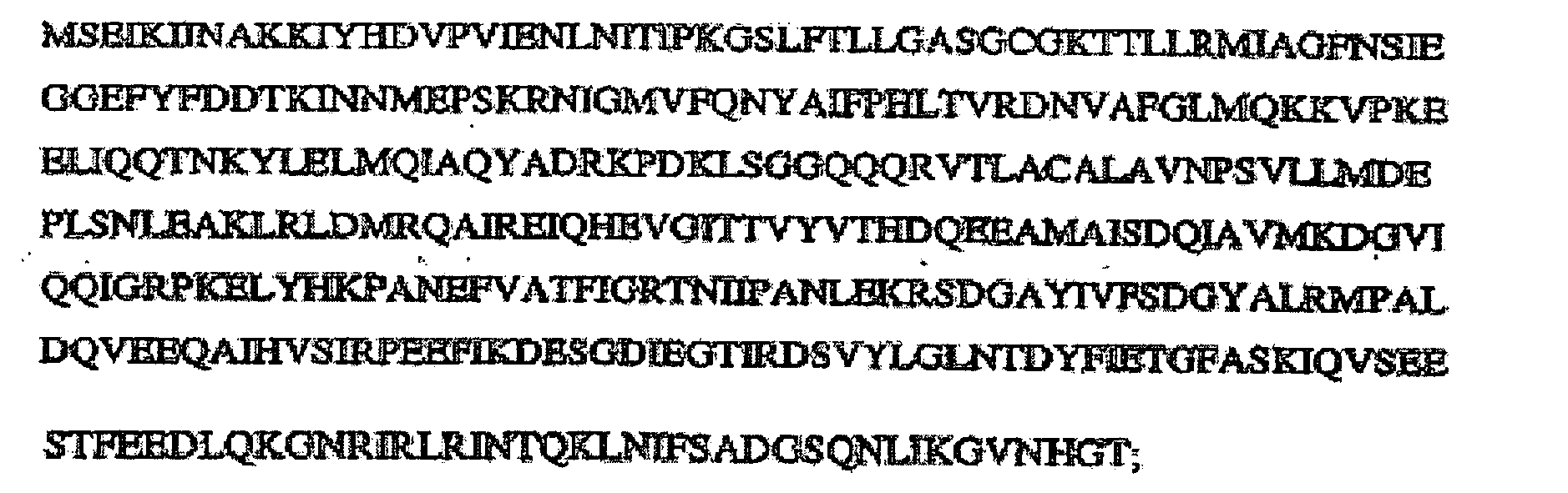
- the present invention provides a vaccine comprising a Streptococcus pneumoniae protein or polypeptide having the sequence
- the proteins and polypeptides of the invention are useful as antigenic material.
- Such material can be "antigenic” and/or “immunogenic”.
- antigenic is taken to mean that the protein or polypeptide is capable of being used to raise antibodies or indeed is capable of inducing an antibody response in a subject.
- immunogenic is taken to mean that the protein or polypeptide is capable of eliciting a protective immune response in a subject.
- the protein or polypeptide may be capable of not only generating an antibody response and in addition non-antibody based immune responses.
- proteins or polypeptides of the invention will also find use in the context of the present invention, ie as antigenic/immunogenic material.
- proteins or polypeptides which include one or more additions, deletions, substitutions or the like are encompassed by the present invention.
- a program like BLASTx will align the longest stretch of similar sequences and assign a value to the fit. It is thus possible to obtain a comparison where several regions of similarity are found, each having a different score. Both types of analysis are contemplated in the present invention.
- homologues and derivatives the degree of identity with a protein or polypeptide as described herein is less important than that the homologue or derivative should retain its antigenicity or immunogenicity to streptoccocus pneumoniae.
- homologues or derivatives having at least 60% similarity (as discussed above) with the proteins or polypeptides described herein are provided.
- homologues or derivatives having at least 70% similarity, more preferably at least 80% similarity are provided. Most preferably, homologues or derivatives having at least 90% or even 95% similarity are provided.
- the homologues or derivatives could be fusion proteins, incorporating moieties which render purification easier, for example by effectively tagging the desired protein or polypeptide. It may be necessary to remove the "tag” or it may be the case that the fusion protein itself retains sufficient antigenicity to be useful.
- vaccine of the present invention may also comprise antigenic fragments of the proteins or polypeptides of the invention.
- fragments of the proteins or polypeptides described herein the situation is slightly different. It is well known that is possible to screen an antigenic protein or polypeptide to identify epitopic regions, ie those regions which are responsible for the protein or polypeptide's antigenicity or immunogenicity. Methods for carrying out such screening are well known in the art. Thus, the fragments of the present invention should include one or more such epitopic regions or be sufficiently similar to such regions to retain their antigenic/immunogenic properties. Thus, for fragments according to the present invention the degree of identity is perhaps irrelevant, since they may be 100% identical to a particular part of a protein or polypeptide, homologue or derivative as described herein. The key issue, once again, is that the fragment retains the antigenic/immunogenic properties.
- homologues, derivatives and fragments possess at least a degree of the antigenicity/immunogenicity of the protein or polypeptide from which they are derived.
- the present invention provides a vaccine composition comprising one or more nucleic acid sequences selected from
- the nucleic acid molecules of the invention may include a plurality of such sequences, and/or fragments.
- the skilled person will appreciate that the present invention can include novel variants of those particular novel nucleic acid molecules which are exemplified herein. Such variants are encompassed by the present invention. These may occur in nature, for example because of strain variation. For example, additions, substitutions and/or deletions are included.
- one may wish to engineer the nucleic acid sequence by making use of known preferred codon usage in the particular organism being used for expression.
- synthetic or non-naturally occurring variants are also included within the scope of the invention.
- RNA equivalent when used above indicates that a given RNA molecule has a sequence which is complementary to that of a given DNA molecule (allowing for the fact that in RNA "U” replaces "T” in the genetic code).
- BESTFIT When comparing nucleic acid sequences for the purposes of determining the degree of homology or identity one can use programs such as BESTFIT and GAP (both from the Wisconsin Genetics Computer Group (GCG) software package) BESTFIT, for example, compares two sequences and produces an optimal alignment of the most similar segments. GAP enables sequences to be aligned along their whole length and finds the optimal alignment by inserting spaces in either sequence as appropriate. Suitably, in the context of the present invention compare when discussing identity of nucleic acid sequences, the comparison is made by alignment of the sequences along their whole length.
- GCG Wisconsin Genetics Computer Group
- sequences which have substantial identity have at least 50% sequence identity, desirably at least 75% sequence identity and more desirably at least 90 or at least 95% sequence identity with said sequences.
- sequence identity may be 99 % or above.
- the term "substantial identity” indicates that said sequence has a greater degree of identity with any of the sequences described herein than with prior art nucleic acid sequences.
- nucleic acid sequence of the present invention codes for at least part of a novel gene product
- the present invention includes within its scope all possible sequence coding for the gene product or for a novel part thereof.
- the nucleic acid molecule may be in isolated or recombinant form. It may be incorporated into a vector and the vector may be incorporated into a host.
- genes in Streptococcus pneumoniae can be identified. They can then be excised using restriction enzymes and cloned into a vector. The vector can be introduced into a suitable host for expression.
- Nucleic acid molecules of the present invention may be obtained from S.pneumoniae by the use of appropriate probes complementary to part of the sequences of the nucleic acid molecules. Restriction enzymes or sonication techniques can be used to obtain appropriately sized fragments for probing.
- PCR techniques may be used to amplify a desired nucleic acid sequence.
- sequence data provided herein can be used to design two primers for use in PCR so that a desired sequence, including whole genes or fragments thereof, can be targeted and then amplified to a high degree.
- One primer will normally show a high degree of specificity for a first sequence located on one strand of a DNA molecule, and the other primer will normally show a high degree of specificity for a second sequence located pn the complementary strand of the DNA sequence and being spaced from the complementary sequence to the first sequence.
- primers will be at least 15-25 nucleotides long.
- chemical synthesis may be used. This may be automated. Relatively short sequences may be chemically synthesised and ligated together to provide a longer sequence.
- the second aspect relates to the use of so-called DNA vaccines.
- DNA vaccines The use of such DNA vaccines is described in the art. See for instance, Donnelly et al, Ann. Rev. Immunol., 15:617-648 (1997).
- the protein leader sequences of different known exported proteins were used as a starting point for a search of the local pneumococcus database described above.
- the hypothetical proteins found with this search were then submitted to a Blast search in general databases such as EMBL, Swissprot etc. Proteins remaining unknown in the pneumococcus are kept and annotated. Then the search is performed again using the new potential protein leader sequence as a probe, using the TfastA procedure.
- the vector chosen for use as a DNA vaccine vector was pcDNA3.1 (Invitrogen) (actually pcDNA3.1 +, the forward orientation was used in all cases but may be referred to as pcDNA3.1 here on).
- This vector has been widely and successfully employed as a host vector to test vaccine candidate genes to give protection against pathogens in the literature (Zhang, et al. , Kurar and Splitter, Anderson et al.).
- the vector was designed for high-level stable and non-replicative transient expression in mammalian cells.
- pcDNA3.1 contains the ColE1 origin of replication which allows convenient high-copy number replication and growth in E. coli . This in turn allows rapid and efficient cloning and testing of many genes.
- the pcDNA3.1 vector has a large number of cloning sites and also contains the gene encoding ampicillin resistance to aid in cloning selection and the human cytomegalovirus (CMV) immediate-early promoter/enhancer which permits efficient, high-level expression of the recombinant protein.
- CMV human cytomegalovirus
- the CMV promoter is a strong viral promoter in a wide range of cell types including both muscle and immune (antigen presenting) cells. This is important for optimal immune response as it remains unknown as to which cells types are most important in generating a protective response in vivo .
- a T7 promoter upstream of the multiple cloning site affords efficient expression of the modified insert of interest and which allows in vitro transcription of a cloned gene in the sense orientation.
- Oligonucleotide primers were designed for each individual gene of interest derived using the LEEP system. Each gene was examined thoroughly, and where possible, primers were designed such that they targeted that portion of the gene thought to encode only the mature portion of the gene protein. It was hoped that expressing those sequences that encode only the mature portion of a target gene protein, would facilitate its correct folding when expressed in mammalian cells. For example, in the majority of cases primers were designed such that putative N-terminal signal peptide sequences would not be included in the final amplification product to be cloned into the pcDNA3.1 expression vector.
- the signal peptide directs the polypeptide precursor to the cell membrane via the protein export pathway where it is normally cleaved off by signal peptidase I (or signal peptidase II if a lipoprotein). Hence the signal peptide does not make up any part of the mature protein whether it be displayed on the surface of the bacteria surface or secreted. Where a N-terminal leader peptide sequence was not immediately obvious, primers were designed to target the whole of the gene sequence for cloning and ultimately, expression in pcDNA3.1.
- PCR primers were designed for each gene of interest and any and all of the regions encoding the above features was removed from the gene when designing these primers.
- the primers were designed with the appropriate enzyme restriction site followed by a conserved Kozak nucleotide sequence (in all cases) GCCACC was used.
- the Kozak sequence facilitates the recognition of initiator sequences by eukaryotic ribosomes) and an ATG start codon upstream of the insert of the gene of interest.
- the forward primer using a BamH1 site the primer would begin GCGGGATCCGCCACCATG followed by a small section of the 5' end of the gene of interest.
- the reverse primer was designed to be compatible with the forward primer and with a Not1 restriction site at the 5' end in all cases (this site is TTGCGGCCGC).
- PCR primers were designed and used to amplify the truncated genes of interest.
- the insert along with the flanking features described above was amplified using PCR against a template of genomic DNA isolated from type 4 S. pneumoniae strain 11886 obtained from the National Collection of Type Cultures.
- the PCR product was cut with the appropriate restriction enzymes and cloned in to the multiple cloning site of pcDNA3.1 using conventional molecular biological techniques.
- Suitably mapped clones of the genes of interested were cultured and the plasmids isolated on a large scale (> 1.5 mg) using Plasmid Mega Kits (Qiagen).
- Successful cloning and maintenance of genes was confirmed by restriction mapping and sequencing ⁇ 700 base pairs through the 5' cloning junction of each large scale preparation of each construct.
- a strain of type 4 was used in cloning and challenge methods which is the strain from which the S. pneumoniae genome was sequenced.
- a freeze dried ampoule of a homogeneous laboratory strain of type 4 S. pneumoniae strain NCTC 11886 was obtained from the National Collection of Type Strains. The ampoule was opened and the cultured re suspended with 0.5 ml of tryptic soy broth (0.5 % glucose, 5% blood). The suspension was subcultured into 10 ml tryptic soy broth (0.5% glucose, 5% blood) and incubated statically overnight at 37°C.
- This culture was streaked on to 5 % blood agar plates to check for contaminants and confirm viability and on to blood agar slopes and the rest of the culture was used to make 20% glycerol stocks. The slopes were sent to the Public Health Laboratory Service where the type 4 serotype was confirmed.
- a glycerol stock of NCTC 11886 was streaked on a 5% blood agar plate and incubated overnight in a CO2 gas jar at 37°C. Fresh streaks were made and optochin sensitivity was confirmed.
- a standard inoculum of type 4 S. pneumoniae was prepared and frozen down by passaging a culture of pneumococcus 1x through mice, harvesting from the blood of infected animals, and grown up to a predetermined viable count of around 10 9 cfu/ml in broth before freezing down.
- the preparation is set out below as per the flow chart.
- mice were lightly anaesthetised using halothane and then a dose of 1.4 x 10 5 cfu of pneumococcus was applied to the nose of each mouse. The uptake was facilitated by the normal breathing of the mouse, which was left to recover on its back.
- mice Vaccine trials in mice were carried out by the administration of DNA to 6 week old CBA/ca mice (Harlan, UK). Mice to be vaccinated were divided into groups of six and each group was immunised with recombinant pcDNA3.1 + plasmid DNA containing a specific target-gene sequence of interest. A total of 100 ⁇ g of DNA in Dulbecco's PBS (Sigma) was injected intramuscularly into the tibialis anterior muscle of both legs (50 ⁇ l in each leg). A boost was carried using the same procedure 4 weeks later. For comparison, control groups were included in all vaccine trials.
- mice were challenged intra-nasally with a lethal dose of S. pneumoniae serotype 4 (strain NCTC 11886). The number of bacteria administered was monitored by plating serial dilutions of the inoculum on 5% blood agar plates.
- a problem with intranasal immunisations is that in some mice the inoculum bubbles out of the nostrils, this has been noted in results table and taken account of in calculations. A less obvious problem is that a certain amount of the inoculum for each mouse may be swallowed.
- mice remaining after the challenge were killed 3 or 4 days after infection.
- challenged mice were monitored for the development of symptoms associated with the onset of S. pneumoniae induced-disease. Typical symptoms in an appropriate order included piloerection, an increasingly hunched posture, discharge from eyes, increased lethargy and reluctance to move. The latter symptoms usually coincided with the development of a moribund state at which stage the mice were culled to prevent further suffering.
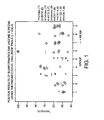
- a positive result was taken as any DNA sequence that was cloned and used in challenge experiments as described above which gave protection against that challenge. Protection was taken as those DNA sequences that gave statistically significant protection (to a 95% confidence level (p ⁇ 0.05)) and also those which were marginal or close to significant using Mann-Whitney or which show some protective features for example there were one or more outlying mice or because the time to the first death was prolonged. It is acceptable to allow marginal or non-significant results to be considered as potential positives when it is considered that the clarity of some of the results may be clouded by the problems associated with the administration of intranasal infections.
Landscapes
- Health & Medical Sciences (AREA)
- Chemical & Material Sciences (AREA)
- Organic Chemistry (AREA)
- Medicinal Chemistry (AREA)
- Life Sciences & Earth Sciences (AREA)
- General Health & Medical Sciences (AREA)
- Chemical Kinetics & Catalysis (AREA)
- General Chemical & Material Sciences (AREA)
- Veterinary Medicine (AREA)
- Nuclear Medicine, Radiotherapy & Molecular Imaging (AREA)
- Pulmonology (AREA)
- Pharmacology & Pharmacy (AREA)
- Animal Behavior & Ethology (AREA)
- Public Health (AREA)
- Bioinformatics & Cheminformatics (AREA)
- Proteomics, Peptides & Aminoacids (AREA)
- Oncology (AREA)
- Communicable Diseases (AREA)
- Gastroenterology & Hepatology (AREA)
- Biochemistry (AREA)
- Biophysics (AREA)
- Genetics & Genomics (AREA)
- Molecular Biology (AREA)
- Engineering & Computer Science (AREA)
- Medicines Containing Antibodies Or Antigens For Use As Internal Diagnostic Agents (AREA)
- Peptides Or Proteins (AREA)
- Preparation Of Compounds By Using Micro-Organisms (AREA)
- Medicines That Contain Protein Lipid Enzymes And Other Medicines (AREA)
- Measuring Or Testing Involving Enzymes Or Micro-Organisms (AREA)
- Medicines Containing Material From Animals Or Micro-Organisms (AREA)
- Micro-Organisms Or Cultivation Processes Thereof (AREA)
- Investigating Or Analysing Biological Materials (AREA)
Claims (2)
- Vaccin comprenant :(a) une protéine ou un polypeptide de Streptococcus pneumoniae ayant la séquenceet/ou
 (b) un fragment immunogène d'une protéine ou d'un polypeptide de (a) dans lequel ledit fragment conserve les propriétés immunogènes de ladite protéine ou dudit polypeptide ; et
un ou plusieurs composants additionnels sélectionnés parmi des excipients, diluants, adjuvants, ou similaires. - Composition vaccinale comprenant une ou plusieurs séquences d'acide nucléique sélectionnées parmi :i.

 ii. une séquence qui est complémentaire des séquences de (i) ;iii. une séquence qui code pour la même protéine ou le même polypeptide que les séquences de (i) ;iv. une séquence qui a au moins 80% d'identité de séquence avec l'une quelconque de celles de (i), (ii) et (iii), dans laquelle la protéine ou le polypeptide codé par le brin codant conserve les propriétés immunogènes de la protéine ou du polypeptide codé par la séquence de (i) ;v. une séquence qui code pour un fragment immunogène d'une protéine ou d'un polypeptide codé par la séquence de (i), dans laquelle ledit fragment conserve les propriétés immunogènes de ladite protéine ou dudit polypeptide.
Priority Applications (4)
| Application Number | Priority Date | Filing Date | Title |
|---|---|---|---|
| EP07000626A EP1783224A3 (fr) | 1998-07-27 | 1999-07-27 | Protéines de Streptococcus pneumoniae et molécules d'acide nucléique |
| EP07000637A EP1790730A3 (fr) | 1998-07-27 | 1999-07-27 | Protéines et acides nucléiques de streptococcus pneumoniae |
| EP07000625A EP1790729A3 (fr) | 1998-07-27 | 1999-07-27 | Protéines de Streptococcus pneumoniae et molécules d'acide nucléique |
| EP07000636A EP1785486A3 (fr) | 1998-07-27 | 1999-07-27 | Protéines de Streptococcus pneumoniae et molécules d'acide nucléique |
Applications Claiming Priority (5)
| Application Number | Priority Date | Filing Date | Title |
|---|---|---|---|
| GB9816337 | 1998-07-27 | ||
| GBGB9816337.1A GB9816337D0 (en) | 1998-07-27 | 1998-07-27 | Proteins |
| US12516499P | 1999-03-19 | 1999-03-19 | |
| US125164P | 1999-03-19 | ||
| PCT/GB1999/002451 WO2000006737A2 (fr) | 1998-07-27 | 1999-07-27 | Proteines de streptococcus pneumoniae et molecules d'acide nucleique |
Related Child Applications (4)
| Application Number | Title | Priority Date | Filing Date |
|---|---|---|---|
| EP07000637A Division EP1790730A3 (fr) | 1998-07-27 | 1999-07-27 | Protéines et acides nucléiques de streptococcus pneumoniae |
| EP07000625A Division EP1790729A3 (fr) | 1998-07-27 | 1999-07-27 | Protéines de Streptococcus pneumoniae et molécules d'acide nucléique |
| EP07000626A Division EP1783224A3 (fr) | 1998-07-27 | 1999-07-27 | Protéines de Streptococcus pneumoniae et molécules d'acide nucléique |
| EP07000636A Division EP1785486A3 (fr) | 1998-07-27 | 1999-07-27 | Protéines de Streptococcus pneumoniae et molécules d'acide nucléique |
Publications (2)
| Publication Number | Publication Date |
|---|---|
| EP1100921A2 EP1100921A2 (fr) | 2001-05-23 |
| EP1100921B1 true EP1100921B1 (fr) | 2007-05-02 |
Family
ID=26314125
Family Applications (2)
| Application Number | Title | Priority Date | Filing Date |
|---|---|---|---|
| EP99934989A Expired - Lifetime EP1100921B1 (fr) | 1998-07-27 | 1999-07-27 | Proteines de streptococcus pneumoniae et molecules d'acide nucleique |
| EP09001462A Ceased EP2053126A1 (fr) | 1998-07-27 | 1999-07-27 | Protéines de pneumonie à streptocoques et molécules d'acide nucléique |
Family Applications After (1)
| Application Number | Title | Priority Date | Filing Date |
|---|---|---|---|
| EP09001462A Ceased EP2053126A1 (fr) | 1998-07-27 | 1999-07-27 | Protéines de pneumonie à streptocoques et molécules d'acide nucléique |
Country Status (5)
| Country | Link |
|---|---|
| EP (2) | EP1100921B1 (fr) |
| JP (6) | JP2002531055A (fr) |
| AT (1) | ATE361365T1 (fr) |
| DE (1) | DE69935986D1 (fr) |
| WO (1) | WO2000006737A2 (fr) |
Families Citing this family (42)
| Publication number | Priority date | Publication date | Assignee | Title |
|---|---|---|---|---|
| US6800744B1 (en) * | 1997-07-02 | 2004-10-05 | Genome Therapeutics Corporation | Nucleic acid and amino acid sequences relating to Streptococcus pneumoniae for diagnostics and therapeutics |
| DE69940439D1 (de) * | 1998-12-21 | 2009-04-02 | Medimmune Inc | Streptococcus pneumoniae proteine und immunogene fragmente für impstoffe |
| US7128918B1 (en) | 1998-12-23 | 2006-10-31 | Id Biomedical Corporation | Streptococcus antigens |
| EP1950302B1 (fr) | 1998-12-23 | 2012-12-05 | ID Biomedical Corporation of Quebec | Nouveaux antigènes de streptocoque |
| KR100802198B1 (ko) * | 1998-12-23 | 2008-02-11 | 샤이어 바이오켐 인코포레이티드 | 신규한 스트렙토코커스 항원 |
| EP1075841A1 (fr) * | 1999-08-13 | 2001-02-14 | Erasmus Universiteit Rotterdam | Vaccins pneumococciques |
| WO2001098334A2 (fr) * | 2000-06-20 | 2001-12-27 | Shire Biochem Inc. | Antigenes de streptocoque |
| US7074415B2 (en) | 2000-06-20 | 2006-07-11 | Id Biomedical Corporation | Streptococcus antigens |
| US7892552B2 (en) | 2001-08-08 | 2011-02-22 | University Of Utah Research Foundation | Group B Streptococcus polypeptides nucleic acids and therapeutic compositions and vaccines thereof |
| AU2001281168A1 (en) | 2000-08-08 | 2002-02-18 | St. Jude Children's Research Hospital | Group b streptococcus polypeptides nucleic acids and therapeutic compositions and vaccines thereof |
| ATE439372T1 (de) | 2000-10-27 | 2009-08-15 | Novartis Vaccines & Diagnostic | Nukleinsäuren und proteine von gruppen a und b- streptokokken |
| US7595057B2 (en) | 2000-12-21 | 2009-09-29 | Id Biomedical Corporation | Streptococcus pyogenes antigens and corresponding DNA fragments |
| GB0107658D0 (en) * | 2001-03-27 | 2001-05-16 | Chiron Spa | Streptococcus pneumoniae |
| EP1456231A2 (fr) | 2001-12-20 | 2004-09-15 | Shire Biochem Inc. | Antigenes de streptococcus |
| CN100443116C (zh) * | 2002-11-07 | 2008-12-17 | 新纳几美国公司 | 治疗或预防肺炎球菌感染的组合物及其用途 |
| EP2333114A1 (fr) * | 2003-04-15 | 2011-06-15 | Intercell AG | S. pneumoniae antigènes |
| JP4875490B2 (ja) | 2003-07-31 | 2012-02-15 | ノバルティス バクシンズ アンド ダイアグノスティックス,インコーポレーテッド | StreptococcusPyogenesについての免疫原組成物 |
| US8945589B2 (en) | 2003-09-15 | 2015-02-03 | Novartis Vaccines And Diagnostics, Srl | Immunogenic compositions for Streptococcus agalactiae |
| CN1909921B (zh) * | 2003-11-10 | 2012-09-26 | Uab研究基金会 | 减少细菌携带和中枢神经系统侵害的组合物及其使用方法 |
| EP2059807B1 (fr) | 2006-08-17 | 2013-02-20 | The UAB Research Foundation | Diagnostic d'une pneumonie à pneumocoques |
| US8722055B2 (en) | 2006-09-27 | 2014-05-13 | St. Jude Children's Research Hospital | Synthetic Streptococcus pneumoniae vaccine |
| EP2251035A3 (fr) * | 2007-04-12 | 2011-03-16 | Stichting Katholieke Universiteit, more particularly the Radboud University Nijmegen Medical Centre | Nouveaux facteurs de virulence de la pneumonie à streptocoques |
| MX2009012676A (es) | 2007-05-23 | 2010-02-12 | Uab Research Foundation | Neuraminidasa neumococica no toxica y sus usos. |
| GB0714963D0 (en) | 2007-08-01 | 2007-09-12 | Novartis Ag | Compositions comprising antigens |
| CA2699513C (fr) | 2007-09-12 | 2018-03-13 | Novartis Ag | Antigenes mutants gas57 et anticorps gas57 |
| ES2546213T3 (es) | 2008-03-03 | 2015-09-21 | Novartis Ag | Compuestos y composiciones como moduladores de la actividad de TLR |
| CA2765112A1 (fr) | 2009-06-10 | 2010-12-16 | Novartis Ag | Vaccins contenant de la benzonaphtyridine |
| AU2010290896B2 (en) | 2009-09-02 | 2014-07-03 | Glaxosmithkline Biologicals S.A. | Immunogenic compositions including TLR activity modulators |
| JO3257B1 (ar) | 2009-09-02 | 2018-09-16 | Novartis Ag | مركبات وتركيبات كمعدلات لفاعلية tlr |
| WO2011057148A1 (fr) | 2009-11-05 | 2011-05-12 | Irm Llc | Composés et compositions permettant de moduler l'activité des tlr-7 |
| US9408907B2 (en) | 2009-12-15 | 2016-08-09 | Glaxosmithkline Biologicals Sa | Homogenous suspension of immunopotentiating compounds and uses thereof |
| EP2538971B1 (fr) | 2010-02-23 | 2015-10-28 | Stichting Katholieke Universiteit | Vaccin combiné pour streptococcus |
| EP3165531B1 (fr) | 2010-03-12 | 2020-11-25 | Children's Medical Center Corporation | Composition immunogène, vaccin et leurs utilisations |
| AU2011232421B2 (en) | 2010-03-23 | 2015-08-13 | Novartis Ag | Compounds (cystein based lipopeptides) and compositions as TLR2 agonists used for treating infections, inflammations, respiratory diseases etc. |
| CN104519910B (zh) | 2012-03-07 | 2017-05-03 | 诺华股份有限公司 | 肺炎链球菌抗原的含佐剂制剂 |
| TR201807340T4 (tr) | 2013-02-01 | 2018-06-21 | Glaxosmithkline Biologicals Sa | Çan benzeri reseptör agonistleri içeren immünolojik kompozisyonların intradermal yoldan verilmesi. |
| CA2900008C (fr) | 2013-02-07 | 2025-10-07 | Children's Medical Center Corporation | Antigenes de proteine qui conferent une protection contre une colonisation et/ou une maladie pneumococcique |
| GB201509782D0 (en) * | 2015-06-05 | 2015-07-22 | Isis Innovation | Methods and products for fusion protein synthesis |
| PL3752182T3 (pl) | 2018-02-12 | 2024-11-25 | Inimmune Corporation | Ligandy receptorów toll-podobnych |
| IL281204B2 (en) | 2018-09-12 | 2025-07-01 | Affinivax Inc | Multivalent pneumococcal vaccines |
| CA3198876A1 (fr) | 2020-11-04 | 2022-05-12 | Eligo Bioscience | Phages recombinants de cutibacterium acnes, leur procede de production et leurs utilisations |
| AU2022342080A1 (en) | 2021-09-09 | 2024-03-28 | Affinivax, Inc. | Multivalent pneumococcal vaccines |
Family Cites Families (8)
| Publication number | Priority date | Publication date | Assignee | Title |
|---|---|---|---|---|
| US5980909A (en) * | 1991-02-15 | 1999-11-09 | Uab Research Foundation | Epitopic regions of pneumococcal surface protein A |
| CA2116261A1 (fr) * | 1993-04-20 | 1994-10-21 | David E. Briles | Regions epitopiques de la proteine pneumococcique de surface a |
| US5928900A (en) * | 1993-09-01 | 1999-07-27 | The Rockefeller University | Bacterial exported proteins and acellular vaccines based thereon |
| JP2000514308A (ja) * | 1996-08-16 | 2000-10-31 | スミスクライン・ビーチャム・コーポレイション | 新規原核生物ポリヌクレオチド、ポリペプチドおよびそれらの使用 |
| CA2271720A1 (fr) * | 1996-10-31 | 1998-05-07 | Human Genome Sciences, Inc. | Polynucleotides et sequences de streptococcus pneumoniae |
| EP0885966A3 (fr) * | 1997-06-20 | 1999-12-29 | Smithkline Beecham Corporation | Nouveau compose's |
| EP0891984A3 (fr) * | 1997-06-20 | 2000-01-19 | Smithkline Beecham Corporation | Acide nucleique codant pour streptococcus pneumoniae regulateur de response |
| EP1790730A3 (fr) * | 1998-07-27 | 2007-09-12 | Sanofi Pasteur Limited | Protéines et acides nucléiques de streptococcus pneumoniae |
-
1999
- 1999-07-27 EP EP99934989A patent/EP1100921B1/fr not_active Expired - Lifetime
- 1999-07-27 WO PCT/GB1999/002451 patent/WO2000006737A2/fr not_active Ceased
- 1999-07-27 EP EP09001462A patent/EP2053126A1/fr not_active Ceased
- 1999-07-27 DE DE69935986T patent/DE69935986D1/de not_active Expired - Lifetime
- 1999-07-27 AT AT99934989T patent/ATE361365T1/de not_active IP Right Cessation
- 1999-07-27 JP JP2000562519A patent/JP2002531055A/ja active Pending
-
2008
- 2008-03-26 JP JP2008081183A patent/JP2008263969A/ja active Pending
- 2008-03-26 JP JP2008081417A patent/JP2008263970A/ja active Pending
- 2008-03-26 JP JP2008080545A patent/JP2008263966A/ja active Pending
- 2008-03-26 JP JP2008080923A patent/JP2008263968A/ja active Pending
-
2009
- 2009-02-19 JP JP2009035978A patent/JP2009148283A/ja active Pending
Also Published As
| Publication number | Publication date |
|---|---|
| JP2008263969A (ja) | 2008-11-06 |
| WO2000006737A8 (fr) | 2000-11-09 |
| ATE361365T1 (de) | 2007-05-15 |
| WO2000006737A3 (fr) | 2000-06-29 |
| JP2008263968A (ja) | 2008-11-06 |
| DE69935986D1 (de) | 2007-06-14 |
| WO2000006737A2 (fr) | 2000-02-10 |
| JP2008263970A (ja) | 2008-11-06 |
| EP2053126A1 (fr) | 2009-04-29 |
| JP2002531055A (ja) | 2002-09-24 |
| JP2009148283A (ja) | 2009-07-09 |
| JP2008263966A (ja) | 2008-11-06 |
| EP1100921A2 (fr) | 2001-05-23 |
Similar Documents
| Publication | Publication Date | Title |
|---|---|---|
| US8110199B2 (en) | Streptococcus pneumoniae proteins and nucleic acid molecules | |
| EP2053126A1 (fr) | Protéines de pneumonie à streptocoques et molécules d'acide nucléique | |
| WO2000006738A2 (fr) | Acides nucleiques et proteines de streptococcus pneumoniae | |
| US20100143415A1 (en) | Streptococcus Pneumoniae Antigens | |
| US20040265933A1 (en) | Proteins | |
| DK2450054T3 (en) | New virulence factors of Streptococcus pneumoniae | |
| EP1075841A1 (fr) | Vaccins pneumococciques | |
| WO2010150242A2 (fr) | Peptides de streptococcus pneumoniae immunogènes et multimères peptidiques | |
| ES2325911T3 (es) | Fragmento genomico de streptococcus suis y usos clinicos del mismo. | |
| US8632784B2 (en) | Nucleic acids and proteins from Streptococcus pneumoniae | |
| CN1367833B (zh) | 肺炎链球菌的蛋白质和核酸分子 | |
| EP1783224A2 (fr) | Protéines de Streptococcus pneumoniae et molécules d'acide nucléique | |
| EP1801218A2 (fr) | Acides nucléiques et protéines de la pneumonie à streptocoques | |
| EP1624064A2 (fr) | Acides nucléiques et protéines de streptococcus pneumoniae | |
| CN101108877A (zh) | 肺炎链球菌的核酸和蛋白质 |
Legal Events
| Date | Code | Title | Description |
|---|---|---|---|
| PUAI | Public reference made under article 153(3) epc to a published international application that has entered the european phase |
Free format text: ORIGINAL CODE: 0009012 |
|
| 17P | Request for examination filed |
Effective date: 20010227 |
|
| AK | Designated contracting states |
Kind code of ref document: A2 Designated state(s): AT BE CH CY DE DK ES FI FR GB GR IE IT LI LU MC NL PT SE |
|
| 17Q | First examination report despatched |
Effective date: 20040607 |
|
| GRAP | Despatch of communication of intention to grant a patent |
Free format text: ORIGINAL CODE: EPIDOSNIGR1 |
|
| RAP1 | Party data changed (applicant data changed or rights of an application transferred) |
Owner name: SANOFI PASTEUR LIMITED |
|
| GRAS | Grant fee paid |
Free format text: ORIGINAL CODE: EPIDOSNIGR3 |
|
| GRAA | (expected) grant |
Free format text: ORIGINAL CODE: 0009210 |
|
| AK | Designated contracting states |
Kind code of ref document: B1 Designated state(s): AT BE CH CY DE DK ES FI FR GB GR IE IT LI LU MC NL PT SE |
|
| PG25 | Lapsed in a contracting state [announced via postgrant information from national office to epo] |
Ref country code: LI Free format text: LAPSE BECAUSE OF FAILURE TO SUBMIT A TRANSLATION OF THE DESCRIPTION OR TO PAY THE FEE WITHIN THE PRESCRIBED TIME-LIMIT Effective date: 20070502 Ref country code: FI Free format text: LAPSE BECAUSE OF FAILURE TO SUBMIT A TRANSLATION OF THE DESCRIPTION OR TO PAY THE FEE WITHIN THE PRESCRIBED TIME-LIMIT Effective date: 20070502 Ref country code: CH Free format text: LAPSE BECAUSE OF FAILURE TO SUBMIT A TRANSLATION OF THE DESCRIPTION OR TO PAY THE FEE WITHIN THE PRESCRIBED TIME-LIMIT Effective date: 20070502 |
|
| REG | Reference to a national code |
Ref country code: GB Ref legal event code: FG4D |
|
| REG | Reference to a national code |
Ref country code: CH Ref legal event code: EP |
|
| REG | Reference to a national code |
Ref country code: IE Ref legal event code: FG4D |
|
| REF | Corresponds to: |
Ref document number: 69935986 Country of ref document: DE Date of ref document: 20070614 Kind code of ref document: P |
|
| PG25 | Lapsed in a contracting state [announced via postgrant information from national office to epo] |
Ref country code: SE Free format text: LAPSE BECAUSE OF FAILURE TO SUBMIT A TRANSLATION OF THE DESCRIPTION OR TO PAY THE FEE WITHIN THE PRESCRIBED TIME-LIMIT Effective date: 20070802 |
|
| PG25 | Lapsed in a contracting state [announced via postgrant information from national office to epo] |
Ref country code: ES Free format text: LAPSE BECAUSE OF FAILURE TO SUBMIT A TRANSLATION OF THE DESCRIPTION OR TO PAY THE FEE WITHIN THE PRESCRIBED TIME-LIMIT Effective date: 20070813 |
|
| NLV1 | Nl: lapsed or annulled due to failure to fulfill the requirements of art. 29p and 29m of the patents act | ||
| REG | Reference to a national code |
Ref country code: CH Ref legal event code: PL |
|
| PG25 | Lapsed in a contracting state [announced via postgrant information from national office to epo] |
Ref country code: AT Free format text: LAPSE BECAUSE OF FAILURE TO SUBMIT A TRANSLATION OF THE DESCRIPTION OR TO PAY THE FEE WITHIN THE PRESCRIBED TIME-LIMIT Effective date: 20070502 |
|
| EN | Fr: translation not filed | ||
| PG25 | Lapsed in a contracting state [announced via postgrant information from national office to epo] |
Ref country code: BE Free format text: LAPSE BECAUSE OF FAILURE TO SUBMIT A TRANSLATION OF THE DESCRIPTION OR TO PAY THE FEE WITHIN THE PRESCRIBED TIME-LIMIT Effective date: 20070502 |
|
| PG25 | Lapsed in a contracting state [announced via postgrant information from national office to epo] |
Ref country code: PT Free format text: LAPSE BECAUSE OF FAILURE TO SUBMIT A TRANSLATION OF THE DESCRIPTION OR TO PAY THE FEE WITHIN THE PRESCRIBED TIME-LIMIT Effective date: 20071002 Ref country code: NL Free format text: LAPSE BECAUSE OF FAILURE TO SUBMIT A TRANSLATION OF THE DESCRIPTION OR TO PAY THE FEE WITHIN THE PRESCRIBED TIME-LIMIT Effective date: 20070502 Ref country code: DK Free format text: LAPSE BECAUSE OF FAILURE TO SUBMIT A TRANSLATION OF THE DESCRIPTION OR TO PAY THE FEE WITHIN THE PRESCRIBED TIME-LIMIT Effective date: 20070502 Ref country code: DE Free format text: LAPSE BECAUSE OF FAILURE TO SUBMIT A TRANSLATION OF THE DESCRIPTION OR TO PAY THE FEE WITHIN THE PRESCRIBED TIME-LIMIT Effective date: 20070806 |
|
| PLBE | No opposition filed within time limit |
Free format text: ORIGINAL CODE: 0009261 |
|
| STAA | Information on the status of an ep patent application or granted ep patent |
Free format text: STATUS: NO OPPOSITION FILED WITHIN TIME LIMIT |
|
| 26N | No opposition filed |
Effective date: 20080205 |
|
| PG25 | Lapsed in a contracting state [announced via postgrant information from national office to epo] |
Ref country code: IT Free format text: LAPSE BECAUSE OF FAILURE TO SUBMIT A TRANSLATION OF THE DESCRIPTION OR TO PAY THE FEE WITHIN THE PRESCRIBED TIME-LIMIT Effective date: 20070502 Ref country code: GR Free format text: LAPSE BECAUSE OF FAILURE TO SUBMIT A TRANSLATION OF THE DESCRIPTION OR TO PAY THE FEE WITHIN THE PRESCRIBED TIME-LIMIT Effective date: 20070803 Ref country code: FR Free format text: LAPSE BECAUSE OF FAILURE TO SUBMIT A TRANSLATION OF THE DESCRIPTION OR TO PAY THE FEE WITHIN THE PRESCRIBED TIME-LIMIT Effective date: 20071228 |
|
| PGFP | Annual fee paid to national office [announced via postgrant information from national office to epo] |
Ref country code: IE Payment date: 20080117 Year of fee payment: 9 |
|
| PG25 | Lapsed in a contracting state [announced via postgrant information from national office to epo] |
Ref country code: FR Free format text: LAPSE BECAUSE OF FAILURE TO SUBMIT A TRANSLATION OF THE DESCRIPTION OR TO PAY THE FEE WITHIN THE PRESCRIBED TIME-LIMIT Effective date: 20070502 |
|
| PG25 | Lapsed in a contracting state [announced via postgrant information from national office to epo] |
Ref country code: IE Free format text: LAPSE BECAUSE OF NON-PAYMENT OF DUE FEES Effective date: 20080728 Ref country code: CY Free format text: LAPSE BECAUSE OF FAILURE TO SUBMIT A TRANSLATION OF THE DESCRIPTION OR TO PAY THE FEE WITHIN THE PRESCRIBED TIME-LIMIT Effective date: 20070502 |
|
| PGFP | Annual fee paid to national office [announced via postgrant information from national office to epo] |
Ref country code: MC Payment date: 20120626 Year of fee payment: 14 |
|
| PGFP | Annual fee paid to national office [announced via postgrant information from national office to epo] |
Ref country code: LU Payment date: 20120727 Year of fee payment: 14 |
|
| PGFP | Annual fee paid to national office [announced via postgrant information from national office to epo] |
Ref country code: GB Payment date: 20120725 Year of fee payment: 14 |
|
| PG25 | Lapsed in a contracting state [announced via postgrant information from national office to epo] |
Ref country code: MC Free format text: LAPSE BECAUSE OF NON-PAYMENT OF DUE FEES Effective date: 20130731 |
|
| GBPC | Gb: european patent ceased through non-payment of renewal fee |
Effective date: 20130727 |
|
| PG25 | Lapsed in a contracting state [announced via postgrant information from national office to epo] |
Ref country code: GB Free format text: LAPSE BECAUSE OF NON-PAYMENT OF DUE FEES Effective date: 20130727 |
|
| PG25 | Lapsed in a contracting state [announced via postgrant information from national office to epo] |
Ref country code: LU Free format text: LAPSE BECAUSE OF NON-PAYMENT OF DUE FEES Effective date: 20130727 |