EP1107110A2 - Befehlsschleifenspuffer - Google Patents
Befehlsschleifenspuffer Download PDFInfo
- Publication number
- EP1107110A2 EP1107110A2 EP00310559A EP00310559A EP1107110A2 EP 1107110 A2 EP1107110 A2 EP 1107110A2 EP 00310559 A EP00310559 A EP 00310559A EP 00310559 A EP00310559 A EP 00310559A EP 1107110 A2 EP1107110 A2 EP 1107110A2
- Authority
- EP
- European Patent Office
- Prior art keywords
- cache
- loop
- instruction
- branch
- fetch
- Prior art date
- Legal status (The legal status is an assumption and is not a legal conclusion. Google has not performed a legal analysis and makes no representation as to the accuracy of the status listed.)
- Granted
Links
Images


Classifications
-
- G—PHYSICS
- G06—COMPUTING OR CALCULATING; COUNTING
- G06F—ELECTRIC DIGITAL DATA PROCESSING
- G06F9/00—Arrangements for program control, e.g. control units
- G06F9/06—Arrangements for program control, e.g. control units using stored programs, i.e. using an internal store of processing equipment to receive or retain programs
- G06F9/30—Arrangements for executing machine instructions, e.g. instruction decode
- G06F9/38—Concurrent instruction execution, e.g. pipeline or look ahead
- G06F9/3802—Instruction prefetching
- G06F9/3808—Instruction prefetching for instruction reuse, e.g. trace cache, branch target cache
- G06F9/381—Loop buffering
-
- G—PHYSICS
- G06—COMPUTING OR CALCULATING; COUNTING
- G06F—ELECTRIC DIGITAL DATA PROCESSING
- G06F9/00—Arrangements for program control, e.g. control units
- G06F9/06—Arrangements for program control, e.g. control units using stored programs, i.e. using an internal store of processing equipment to receive or retain programs
- G06F9/30—Arrangements for executing machine instructions, e.g. instruction decode
- G06F9/30003—Arrangements for executing specific machine instructions
- G06F9/3005—Arrangements for executing specific machine instructions to perform operations for flow control
- G06F9/30065—Loop control instructions; iterative instructions, e.g. LOOP, REPEAT
Definitions
- This invention is in the field of integrated circuits, and is more specifically directed to microprocessor and digital signal processor architecture.
- CPUs are implemented in connection with random access memory (RAM) for the storage of data operands and results, and also for the storage of the program instructions that direct the desired data processing.
- RAM random access memory
- the necessary memory resources require the use of external RAM (relative to the CPU), considering that on-chip memory resources are necessarily quite limited.
- the use of external memory generally results in reduced performance because of the overhead operations that are required for external memory access, and because of bandwidth limitations in the communication of data between external memory and the CPU.
- the power consumed in the use of external memory is typically much greater than that required by on-chip memory in the CPU, primarily due to inter-chip signal driving requirements.
- cache memories are implemented by way of small high-speed memories that are "closer" to the CPU both physically (i.e., on-chip, or connected by way of a special short range bus such as a "backside” cache bus) and logically (i.e., not requiring the use of general interface circuitry, bus mastering, and the like).
- the cache memory stores data and instruction codes for which the CPU has a relatively high likelihood of accessing, based on certain assumptions.
- cache memories rely on an assumption that data operands and instruction opcodes are often accessed in sequence, in which case the associated CPU loads cache memories in blocks (i.e., cache lines) based upon a fetched memory address. Accesses to cache are typically carried out by the CPU comparing the memory address of a data operand or instruction to be fetched with the addresses of the current entries in the cache, to determine whether the target of the fetch can be retrieved from the cache or must instead be accessed from the external memory. Many strategies for the storage, access, and updating of cache memories, as well as the arrangement of cache memories into multiple levels, are well known in the art.
- the determination of which instructions are to be stored in the instruction cache may vary, in efforts toward maximizing the cache "hit" rate (i.e., the percentage of fetches made from the cache).
- a high cache hit rate will improve the performance of the CPU and the power efficiency of the system.
- Other factors beside cache hit rate are important in this regard, however; for example, significant power dissipation may result from frequent reloading of the cache from memory.
- prior CPUs include a "repeat block" instruction in their instruction set, in response to which the CPU loads an instruction loop buffer with the indicated block.
- An example of such a prior CPU is the 320C54x family of digital signal processors available from Texas Instruments Incorporated.
- an instruction-programmable logic device such as a microprocessor or digital signal processor
- the present invention provides an instruction-programmable processor, comprising:
- Embodiments of the invention shown in the accompanying drawings relate to such a device in which an on-chip instruction buffer is efficiently used for the storage of instructions for small program loops.
- the instruction buffer is automatically utilized in a manner that is transparent to the programmer.
- the illustrated device is capable of utilizing the instruction buffer for nested program loops.
- the present invention may be implemented by way of a loop cache, preferably implemented on-chip with the central processing unit (CPU) and in parallel with the lowest level instruction cache memory.
- a base address register stores a base address of a sequence of fetch addresses for which instructions may be stored in entries of a branch cache register file. Valid bits are maintained for each entry of the branch cache register file, to indicate whether the corresponding register file entry contains a valid instruction.
- a multiplexer selects either the output of the instruction cache memory or the output of the branch cache register file, depending upon whether the fetched instruction is validly present in the branch cache register file; control logic also disables reads from the instruction cache memory for its in the branch cache register file.
- the branch cache register file is loaded in the event of a backward branch which misses the current contents of the instruction register file.
- the branch cache register file is loaded for a loop beginning with a backward branch that has been taken twice in succession, with no intervening backward branch occurring.
- the present invention can be implemented in connection with a wide range of instruction-programmable logic devices, and systems including such logic devices.
- One example of such logic devices is a digital signal processor (DSP), in connection with which the preferred embodiments of the present invention will be described.
- DSP digital signal processor
- the present invention can also be beneficially realized in a general purpose microprocessor, or in other application-specific processors such as graphics processors, instruction-programmable custom logic functions, and the like. It is of course contemplated that the present invention, as claimed hereinbelow, has a scope sufficient to include these and other alternative implementations.
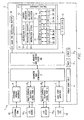
- FIG. 1 is a block diagram illustrating the construction of electronic system 1, including digital signal processor (DSP) 2 of the preferred embodiments of the present invention.
- DSP 2 is realized as a 32-bit eight-way VLIW pipelined processor, including dual-data path central processing unit 3.
- Central processing unit 3 includes instruction fetch unit 10, instruction dispatch unit 11, and instruction decode unit 12, for initiating and controlling simultaneous instruction execution in pipelined fashion, over the two data paths. Functionally, instruction fetch unit 10, instruction dispatch unit 11 and instruction decode unit 12 recall instructions from program memory (described in further detail hereinbelow), decode the instructions, and deliver control signals to the functional units in the data paths to effect execution of the instructions. As many as eight 32-bit instructions can be executed in each instruction cycle, with processing occurring simultaneously in each of the two data paths of central processing unit 3.
- a first data path of central processing unit 3 includes four functional execution units, designated in this example as L1 unit 22, S1 unit 23, M1 unit 24 and D1 unit 25. These execution units 22, 23, 24, 25 are each operable in connection with register file 21.
- the second data path is similarly constructed, and includes four functional execution units designated L2 unit 32, S2 unit 33, M2 unit 34 and D2 unit 35, each coupled to register file 31.
- Each of register files 21, 31 in this example include sixteen 32-bit general purpose registers, which can be used for data, as data address pointers, or as condition registers, depending upon the instruction.
- L functional units 22, 32 are arithmetic and logical units for performing operations such as 32- and 40-bit arithmetic and compare operations, bit and normalization counts, and 32 bit logical operations.
- S functional units 23, 33 are arithmetic and logical units for performing 32-bit arithmetic and logical operations, shifts and bit-field operations, constant generation, branching, and register transfers to and from control registers 13.
- M functional units 24, 34 are 16 x 16 bit multipliers, which are particularly useful in digital signal processing operations involving multiply-and-accumulates.
- D functional units 25, 35 are arithmetic units for performing 32bit adds and subtracts, and 32-bit linear and circular address calculation.
- central processing unit includes cross register paths that permit L1 unit 22, S1 unit 23 and M1 unit 24 to receive operands from register file 31, and permit L2 unit 32, S2 unit 33 and M2 unit 34 to receive operands from register file 21.
- Central processing unit 3 further includes control registers 13 and control logic (not shown) which control its configuration and operation. Central processing unit 3 also includes special functions such as test logic (not shown), emulation logic 16 and interrupt logic 17, for controlling those conventional functions.
- Central processing unit 3 is coupled to program memory (also referred to as instruction memory), by way of L1I cache and instruction buffer system 38 constructed according to the preferred embodiments of the invention.
- instruction fetch unit 10 applies one or more thirty-two bit addresses to L1I cache and instruction buffer system 38, and receives corresponding instruction codes therefrom (e.g., over a 256-bit instruction bus) to complete the instruction fetch operation.
- L1I cache and instruction buffer system 38 is bidirectionally coupled to L2 memory and unified cache 40, from (or through) which instruction codes can be fetched when not present in L1I cache and instruction buffer system 38.
- each of the two data paths of central processing unit 3 are bidirectionally coupled to L1D data cache 36, which operates as a first level cache for data.
- L1D data cache 36 is organized as a two-way set associative cache, for example having a 32-byte line size.
- L1D data cache 36 is in turn bidirectionally coupled to L2 memory and unified cache 40; in the event of a miss in L1D data cache 36, L1D data cache 36 requests a cache line of data from L2 memory and unified cache 40.
- L2 memory and unified cache 40 in DSP 2 is implemented on-chip with central processing unit 3, and in this example is a unified memory that can be software-configured.
- the selectable configuration defines the size of level two unified (i.e. both program and data) cache versus the size of memory mapped random access memory (RAM) sectors within L2 memory and unified cache 40.
- the configuration of L2 memory and unified cache 40 can be defined, for example, by setting control bits in control registers 13.
- L2 memory and unified cache 40 simultaneously stores the same memory locations as are stored in L1I cache and instruction buffer 38 and L1D data cache 36, as well as additional memory location contents; in this example, L2 memory and unified cache 40 "snoops" L1D data cache 36 to determine whether it contains modified versions of the contents of its own memory locations, to ensure cache coherency.
- L2 memory and unified cache 40 forwards the requested memory address to enhanced DMA controller 5 which, via external memory interface 4 of DSP 2, effects the necessary read or write access of external random access memory (RAM) 42, which can be in the form of synchronous SRAM, asynchronous SRAM, or synchronous DRAM; the accessed memory location is then written into L2 memory and unified cache 40, and into lower level caches as appropriate.
- RAM random access memory
- enhanced DMA controller 5 also controls the communication of data to and from L2 memory and unified cache 40, and thus to and from central processing unit 3, relative to input/output devices 44 0 , 44 1 , respectively.
- Host port interface 7 is also coupled to enhanced DMA controller 5, by way of which a host central processing unit 50 can communicate with DSP 2.
- DSP 2 digital signal processor
- power-down logic 6 is provided, for halting central processing unit activity, peripheral activity, and phase lock loop (PLL) clock synchronization activity to reduce power consumption.
- Programmable timers 41 0 , 41 1 are also provided in this example, to permit DSP 2 to effect controller-like functions.
- L1I cache and instruction buffer 38 according to the preferred embodiments of the present invention will now be described in detail. Of course, it is contemplated that alternative realizations of the construction of L1I cache and instruction buffer 38 will become apparent to those skilled in the art having reference to this specification, and it is therefore understood that these and other such realizations will be within the scope of the present invention.
- L1I cache and instruction buffer 38 is arranged as a conventional level 1 program cache in parallel with loop cache 62.
- L1I tag RAM 54 is a cache tag memory for storing portions of the memory addresses for which the contents are retained in L1I data RAM 60 in L1I cache and instruction buffer 38.
- L1I tag RAM 54 is coupled to tag comparator 52, which receives a fetch address from instruction fetch unit 10 in central processing unit 3 at another input.
- Tag comparator 52 is operable to compare the fetch address received from instruction fetch unit 10 against the current contents of L1I tag RAM 54, to determine whether the fetch address matches one of the tags stored in L1I tag RAM 54 (i.e., corresponds to a cache "hit" in L1I data RAM 60).
- Tag comparator 52 presents the results of this comparison to L1I control logic in L1I cache and instruction buffer 38, which controls the operation of L1I data RAM 60 accordingly.
- L1I data RAM 60 is a dedicated program cache memory, containing in this example the contents of memory locations corresponding to the tag addresses stored in L1I tag RAM 54.
- the particular construction and arrangement of L1I data RAM 60 can correspond to any conventional cache memory architecture, including multiple-way set associative cache arrangements. According to the preferred embodiments of the invention, however, and primarily because of its use as an instruction cache in a digital signal processor, L1I data RAM 60 is a direct-mapped cache. The direct-mapped arrangement is particularly useful in DSP architectures, because of the tendency of DSP code to consist of small and tight program loops that rarely "thrash".
- L1I data RAM 60 can be of a 4k-byte capacity, arranged as sixty-four cache lines of sixty-four bytes each.
- L1I tag RAM 54 will include sixty-four tag entries, one for each cache line in L1I data RAM 60; preferably, L1I tag RAM 54 also includes a valid bit for each of the cache entries, although the valid bit can alternatively be located elsewhere (such as in L1I data RAM 60 or even in L1I control logic 58), if so desired.
- L1I data RAM 60 also includes a port coupled to L2 memory and unified cache 40. This connection permits the reloading of L1I data RAM 60 from L2 memory and unified cache 40 with cache lines corresponding to instruction fetch addresses that "miss" the tags in L1I tag RAM 54. This loading is carried out under the control of L1I control logic 58, by the issuing of a memory address to L2 memory and unified cache 40 (and, if a "miss" occurs at that level, to external RAM 42 via external memory interface 4), in response to which the memory location contents are written into L1I data RAM 60.
- the output of L1I data RAM 60 which presents an instruction opcode in response to the fetch address from fetch unit 10 in both the cache miss and cache hit cases, is applied to one input of multiplexer 64.
- loop cache 62 is provided in L1I cache and instruction buffer 38 in parallel with L1I data RAM 60.
- loop cache 62 is an instruction buffer subsystem for storing the contents of memory locations corresponding to instruction fetch addresses that are being repetitively accessed, such as in a small program loop.
- loop cache 62 is constructed so that accesses thereto consume significantly less power than accesses to other program memory, including accesses to L1I data ram 60 (and, of course, accesses to L2 memory and unified cache 40, and of course external memory 42).
- the capacity of loop cache 62 is preferably relatively small, and its storage arrangement preferably in the form of a register file to which indexed accesses are made.
- loop cache 62 has an input connected to receive the fetch address and corresponding control signals from instruction fetch unit 10 of central processing unit 3; such control signals can include, for example, a signal indicating that the fetch address is valid. Loop cache 62 provides a read control signal on line RD to L1I data RAM 60. Loop cache 62 also has an output for presenting, to one input of multiplexer 64, an instruction opcode corresponding to the fetch address in the event of a "hit" thereto.
- Loop cache 62 also has a control signal output that drives line SEL, and thus select control input of multiplexer 64, to control the selection of either the output of L1I data RAM 60 or of loop cache 62 itself for application to fetch unit 10, responsive to the comparison of the fetch address to the addresses stored in loop cache 62. Additionally, loop cache 62 has a data input coupled to the output of L1I data RAM 60, by way of which loop cache 62 can be loaded with the contents of memory locations.
- loop cache 62 receives the fetch address from fetch unit 10, and effectively compares this fetch address with a range of addresses for which loop cache 62 currently contains the corresponding contents. If the fetch address matches, loop cache 62 presents a read disable signal on line RD to L1I data RAM 60 to preclude its operation (and thus saving power) in favour of loop cache 62 itself presenting the fetched instruction opcode to multiplexer 64, and controlling multiplexer 64 to select this output for application to fetch unit 10. In addition, loop cache 62 can also provide a control signal to L1I tag RAM 54 to disable tag reads upon a hit of loop cache 62 by the fetch address.
- loop cache 62 asserts a read enable signal on line RD to L1I data RAM 60 (whether the contents are currently stored in L1I data RAM 60, in L2 memory and unified cache 40, or in external RAM 42), and controls multiplexer 64 to select the output of L1I data RAM 60 for application to fetch unit 10.
- L1I data RAM 60 is also applied to an input of loop cache 62, so that storage locations in loop cache 62 can be loaded with the contents of memory locations.
- loop cache 62 The determination of when to load loop cache 62, and from which memory locations, will now be described in connection with the preferred embodiments of the invention.
- loop cache 62 operates according to an approach, referred to herein as "loop front cache", in which a register file in loop cache 62 is loaded in the event of any backward branch that is a miss relative to loop cache 62, following which fetches to those access loop cache 62 rather than L1I data RAM 60.
- the loop front cache technique will provide significant power savings, including in program sequences involving nested loops.
- FIG. 3 Attention is directed to Figure 3, by way of which the operation of the loop front cache according to this first preferred embodiment of the invention will be described relative to a memory map representation of an example of a sequence of instructions, arranged as a sequence of cache lines (it being understood that each cache line will likely contain multiple instructions).
- outer loop 66 surrounds inner loop 68, with the portion of outer loop code preceding inner loop 68 represented by prologue 66p and the portion of outer loop code subsequent to inner loop 68 represented by epilogue 66e.
- the capacity C62 of loop cache 62 is represented in Figure 3, covering the number of contiguous cache lines including prologue 66p, inner loop 68, and a portion of epilogue 66e.
- loop cache 62 is loaded upon each backward branch that is a miss.
- loop cache is originally loaded with the contents indicated by capacity C62 upon the first occurrence of the backward branch from the end of epilogue 66e; this includes the entirety of inner loop 68.
- the fetch of each instruction within prologue 66p and within inner loop 68 is made from loop cache 62 rather than from L1I data RAM 60, saving significant power for each access, especially if the loop counts for loops 66, 68 are large.
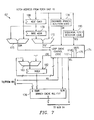
- Loop cache 62 includes base address register 70, which has a data input receiving the fetch address from fetch unit 10, and a control input driven by loop cache control logic 74; base address register 70 effectively operates as a single entry cache tag memory, as will be described hereinbelow relative to the operation of loop cache 62.
- a data output of base address register 70 and the fetch address from fetch unit 10 are applied to complementary inputs of adder 72, which generates a digital output on lines INDX corresponding to the difference between the current fetch address and the current contents of base address register 70, and divided by the number of bytes per cache line.
- This division can be carried out by simply selecting the most significant bits of the output of the subtraction by adder 72, in the preferred case where the number of bytes per cache line is a power of two (e.g., 32).
- Lines INDX carrying this index value, are applied to loop cache control logic 74 and also as an address input to branch cache register file 76.
- Branch cache register file 76 in loop cache 62 is arranged as an indexed set of N registers, each for storing a cache line of instruction opcodes, where the value N refers to the depth of the loop front cache.
- the optimal depth N of loop cache 62 depends upon the specifics of the cache architecture, as well as upon the nature of the code to be executed thereby. For purposes of power efficiency, it is desirable that N be maintained relatively small (e.g., thirty-two or less), as significant benefit can be obtained with as few as four entries; in any event, the value of N need not correspond to a power of two.
- branch cache register file 76 receives the index value from adder 72, responsive to which one of the registers of branch cache register file 76 is selected for read or write access, depending upon the state of control signals generated by loop cache control logic 74 and applied to control inputs R/W of branch cache register file 76.
- Data input D receives data from L1I data RAM 60, for storing in the selected register during write accesses, and data output Q is applied to multiplexer 64 to present the contents of the selected register during read accesses.
- Loop cache control logic 74 controls the operation of loop cache 62 in response to the index value presented by adder 72 on lines INDX, and in response to a control signal presented on line BW that indicates whether the current fetch address is a backward branch. The operation of loop cache control logic 74 also depends upon the state of valid bits corresponding to the entries in branch cache register file 76, such valid bits stored in register 75 within loop cache control logic 74 itself.
- the control signal on line BW is produced by backward branch detection logic 78 within loop cache 62 itself.
- backward branch detection logic 78 includes last fetch register 79, which stores the previous fetch address; in operation, last fetch register 79 stores the current fetch address from fetch unit 10 while presenting its current contents, corresponding to the previous fetch address, to one input of comparator 80.
- the other input of comparator 80 receives the current fetch address from fetch unit 10 as shown in Figure 4, and asserts a signal on line BW responsive to the current fetch address being less than or equal to the previous fetch address stored in last fetch register 79.
- line BW can carry a control signal generated by instruction fetch unit 10 itself in central processing unit 3, indicating that the current fetch address corresponds to a backward branch.
- backward branch detection logic 78 will not be present within loop cache 62 but will instead be provided within central processing unit 3.
- Loop cache control logic 74 controls the operation of loop cache 62 in response to the control signal on line BW, in response to the value presented by adder 72 on lines INDX, and in response to the status of valid bits in register 75. This control is effected by way of control signals applied to control inputs R/W of branch cache register file 76, and the control signal on line SEL applied to the select input of multiplexer 64 ( Figure 2). Additionally, loop cache control logic 74 enables and disables reads from L1I data RAM 60, by way of a control signal on line RD. It is contemplated that loop cache control logic 74 can be readily realized, by those skilled in the art having reference to this specification, for example by way of combinational or sequential logic suitable for carrying out the operation of loop cache 62 described below.
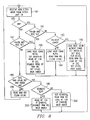
- loop cache 62 under the control of loop cache control logic 74, according to this first preferred embodiment of the invention will now be described in detail.
- the operation of loop cache 62 is initialized in process 81 by the clearing of the valid bit in register 75 for index value 0 (which corresponds to the base address).
- process 82 loop cache 62 receives a new fetch address from instruction fetch unit 10 of central processing unit 3.
- loop cache control logic 74 Upon receipt of the new fetch address in process 82, loop cache control logic 74 first performs decision 83, to effectively determine whether the fetch address is a "hit" relative to loop cache 62. Decision 83 is performed by adder 72 generating a digital value on lines INDX corresponding to the difference between the current contents of base address register 70 (which corresponds to the lowest memory address currently stored in branch cache register file 76) and the fetch address received in process 82, divided by the number of bytes per cache line. Loop cache control logic 74 compares this value on lines INDX with zero and with depth N of loop cache 62, to determine whether the fetch address is within the range of addresses that are stored in loop cache 62.
- loop cache control logic 74 tests the valid bit for index value 0, in register 75, to determine whether branch cache register file 76 has a valid instruction code stored in its initial entry corresponding to the contents of base address register 70; if not, branch cache register file 76 does not contain any valid instruction opcodes and the fetch address therefore cannot correspond to a hit of loop cache 62.
- loop cache 62 stores a sequential set of cache lines, rather than cache lines having non-sequential tag addresses.
- loop cache control logic 74 next executes decision 85 to determine whether the current fetch address is indicative of a backward branch.
- Decision 85 can be performed by the operation of backward branch detection logic 78, which compares the current fetch address to the contents of last fetch register 79 and generates a signal on line BW accordingly; alternatively, decision 85 can be performed by central processing unit 3 itself, with the result communicated to loop cache control logic 74 on line BW.
- loop cache control logic 74 enables the reading of the desired instruction opcode from L1I data RAM 60 by asserting a signal on line RD, and also controls multiplexer 64 to select the output of L1I data RAM 60 by way of the appropriate signal on line SEL; these operations are shown in Figure 5 by way of process 86. Control then passes back to process 82, to await the receipt of the next fetch address from instruction fetch unit 10.
- loop cache 62 is operable to begin loading branch cache register file 76 in the event of a fetch that is a cache miss but which corresponds to a backward branch.
- decision 83 is NO
- decision 85 is YES
- loop cache control logic 74 executes process 88 to initiate loading of branch cache register file 76.
- loop cache control logic 74 issues a control signal to base address register 70 to cause the storing of the current fetch address therein, as the base address.
- loop cache control logic 74 sets the valid bit for index value 0, and clears all other valid bits in register 75.
- Loop cache control logic 74 then performs process 90 by asserting a signal on line RD to enable the reading of the desired instruction opcode from L1I data RAM 60, and by controlling multiplexer 64 to select the output of L1I data RAM 60.
- loop cache control logic 74 issues a write control signal to control input R/W of branch cache register file 76, so that the opcode presented at the output of L1I data RAM 60 and thus at the D input of branch cache register file 76 is loaded into its entry[0] (i.e., corresponding to the base address, which has an index value of 0). Control then passes back to process 82 to await the next fetch address.
- loop cache control logic 74 upon the receipt of a fetch address that is within the range N of the base address stored in base address register 70 (i.e., decision 83 is YES), loop cache control logic 74 next performs decision 91 to determine if the valid bit corresponding to the digital value on lines INDX (i.e., the difference between the fetch address and the base address) is set. If not (decision 91 is NO), the entry corresponding to the current index value on lines INDX is not the correct opcode.
- Process 92 is then performed by loop cache 62 under the control of loop cache control logic 74, by enabling the reading of the desired instruction opcode from L1I data RAM 60 (via line RD) and by loading the output of L1I data RAM 60 into branch cache register file 76 at its entry corresponding to the current index value on lines INDX; loop cache control logic 74 then also sets the valid bit in register 75 corresponding to the current index value. Additionally, loop cache control logic 74 controls multiplexer 64 to select the output of L1I data RAM 60 by way of the appropriate signal on line SEL, thus forwarding the desired instruction opcode to central processing unit 3.
- loop cache 62 indeed is storing the currently valid opcode for the instruction addressed by the fetch address received in process 82.
- Loop cache control logic 74 then performs process 94 to fetch the opcode from the entry of branch cache register file 76 indicated by the index value on lines INDX, by applying a read control signal to control input R/W of branch cache register file 76.
- This read of branch cache register file 76 is performed to the exclusion of L1I data RAM 60, by loop cache control logic 74 applying a disable signal on line RD; this disabling of a read access of L1I data RAM 60 saves significant power, providing one of the important benefits of the present invention.
- L1I tag RAM 54 can also be disabled by loop cache control logic 74 upon a YES result of decision 91, to save additional power by preventing tag address reads for loop cache 62 hits.
- loop cache control logic 74 also controls multiplexer 64, by way of a signal on line SEL, to select loop cache 62 for application at its output, so that the opcode stored in branch cache register file 76 is presented to instruction fetch unit 10.
- loop cache 62 is loaded with instruction opcodes in response to a backward branch that is a miss relative to loop cache 62.
- This loading occurs by decisions 83, 85 first detecting a miss by a backward branch (decisions 83, 85 are NO and YES, respectively).
- the first entry of branch cache register file 76 is then loaded with the opcode of the base address, in process 90, with base address register 70 storing the base address, and with all valid bits in register 75 except for the first entry being cleared in process 88.
- next successive sequential instruction fetches will load branch cache register file 76 with opcodes through the operation of decision 83 (being YES), decision 91 (NO), and process 92, until the end of branch cache register file 76 is reached.
- decision 83 is YES
- the instruction opcodes will be read (in process 94) from branch cache register file 76 rather than from L1I data RAM 60, thus saving power that otherwise would result from such accesses.
- This first preferred embodiment of the invention thus provides the important benefit of reduced power dissipation, by eliminating the necessity of accessing level one program cache memory for instructions that are within a small tight program loop. In applications such as DSP routines, in which such loops are prevalent, the overall power savings can be significant. Additionally, the operation of this preferred embodiment of the invention does not require special instructions or alteration of the program, nor are all instruction opcodes automatically fetched and loaded.
- loop front cache approach provides this benefit of reduced power consumption, and in a manner in which the instruction opcodes of the loop are loaded into loop cache 62 during the first return pass through the loop
- the loop front cache approach presents certain limitations. For the example of nested loops, with reference to Figure 3, if the sum of the cache lines required for prologue 66p and inner loop 68 exceeds loop cache capacity C 62 , instructions in inner loop 68 will not be present in loop cache 62, reducing the overall benefit for a significant portion of the nested loop cycles (i.e., prologue 66p instructions are in loop cache 62, despite being accessed only 1/m as often as inner loop 68 instructions, m being the loop count of inner loop 68).
- loop cache 62 will "thrash" between the top of inner loop 68 and the top of outer loop 66. Still further, many fetch packets will be stored in loop cache 62 that are only executed once, which may degrade power savings in some circumstances.
- a second preferred embodiment of the present invention addresses these limitations, at a cost of requiring each loop to execute twice from the level one program cache memory before being loaded into the loop cache.
- the loop tail cache approach loads the loop cache for backward branches that miss the loop cache (as in the loop front cache), but only in the case where the backward branch miss has occurred twice in a row.
- the term "twice in a row” refers to the fetching of the same backward branch twice, with no other backward branch fetch occurring therebetween.
- the top of the loop cache corresponds to the top of inner loop 68, rather than to the top of outer loop 66. This results from the backward branch to the top of inner loop 68 occurring twice in a row, while the backward branch to the top of outer loop 66 will not occur twice in a row (as one or more instances of the backward branch of inner loop 68 will necessarily occur between successive backward branches of outer loop 66).
- loop cache 62' occupying capacity C 62 , of Figure 7, will therefore always begin with and include inner loop 68, and can also include part or all of epilogue 66e (and can even include instructions beyond outer loop 66).
- loop cache 62' includes several similar elements as included within loop cache 62 described hereinabove.
- Loop cache 62' operates to access (read or write) entries in branch cache register file 176, depending upon a current fetch address received from instruction fetch unit 10 in central processing unit 3.
- branch cache register file 176 in this example is an indexed set of N registers, each register location, or entry, storing a full cache line of instruction opcodes.
- the value N refers to the depth of the loop tail cache implemented by loop cache 62'.
- branch cache register file 176 has an address input coupled to receive an index value from index register 182, responsive to which an entry of branch cache register file 176 will be selected for read or write access, under the control of signals applied by loop cache control logic 174 to its control input R/W.
- Data input D of branch cache register file 176 receives opcode data from L1I data RAM 60, and data output Q of branch cache register file 176 is applied to an input of multiplexer 64, by way of which the contents of the selected entry can be presented to central processing unit 3.
- Next candidate address register 168 in loop cache 62' has a data input receiving the fetch address from fetch unit 10, and has an output coupled to one input of comparator 173 and to a data input of base address register 170.
- Base address register 170 has an output connected to an input of comparator 172.
- Each of next candidate address register 168 and base address register 170 have a control input that is driven by loop cache control logic 174 (such connection not shown in Figure 7).
- Comparators 172, 173 each have a second input that directly receives the fetch address from fetch unit 10. As such, comparator 172 compares the current fetch address with the current contents of base address register 170, while comparator 173 compares the current fetch address with the current contents of next candidate address register 168. Outputs of comparators 172, 173 are forwarded to loop cache control logic 174 on lines EQF, EQN, respectively.
- backward branch detection logic 178 determines whether the current fetch address is a backward branch; the result of this determination is forwarded to loop cache control logic 174 over line BW.
- Backward branch detection logic 178 is constructed similarly as backward branch detection logic 78 in loop cache 62 of Figure 4, described hereinabove.
- a signal on line BW can be generated by fetch unit 10 in central processing unit 3 itself, which would eliminate the need for backward branch detection logic 178 in loop cache 62'.
- loop cache 62' also operates in response to whether the current fetch address from fetch unit 10 is in sequence relative to the previous fetch address.
- loop cache 62' includes sequential fetch detection logic 180 for making this determination and, in the event the current fetch address is the next in sequence from the previous fetch address, asserts a signal on line SEQ that is applied to loop cache control logic 174.
- Sequential fetch detection logic 180 can be constructed to include a register for storing the previous fetch address, and combinational logic that generates the signal on line SEQ responsive to the difference between the contents of that register and the current fetch address differing by one (i.e., are in sequence).
- a + (-B) 1 where -B is the two's complement, or arithmetic complement of the previous fetch address in a representation including a sign bit.
- a + ( ⁇ B + 1) 1 where ⁇ B is the one's complement, or bitwise complement, of the previous fetch address.
- central processing unit 3 can itself generate a signal on line SEQ, forwarded to loop cache control logic 174, to indicate that the current fetch address is the next in sequence from the previous fetch address.
- Loop cache 62' further includes index register 182, which receives a reset input from loop cache control logic 174 on line LDO.
- Index register 182 has an output that is applied to the address input of branch cache register file 176, and also to loop cache control logic 174 for interrogation of its contents.
- This output of index register 182 is also presented to one input of adder 183, which has a hardwired "1" applied to its other input, and which has its output coupled to the input of index register 182, so that each operation of adder 183 increments the contents of index register 182 to update its contents for the next fetch address operation.
- a control signal (not shown) from loop cache control logic 174 controls the storing of values in index register 182.
- Loop cache control logic 174 includes valid bit register 175 for storing a valid bit associated with each entry of branch cache register file 176. Each valid bit indicates, when set, that the contents of the associated entry of branch cache register file 176 contains a valid opcode for the associated fetch address. Loop cache control logic 174 also includes flag LFLAG which, when set, indicates that the most recent fetch of the address currently stored in base address register 170 was a "hit" relative to loop cache 62'.
- loop cache control logic 174 controls the operation of loop cache 62' by control signals applied to control inputs R/W of branch cache register file 176, by the control signal on line SEL applied to the select input of multiplexer 64 ( Figure 2), and by controlling the storing of values into next candidate address register 168, base address register 170, and index register 182.
- loop cache control logic 174 also enables and disables reads of L1I data RAM 60 by issuing control signals on line RD. It is contemplated that loop cache control logic 174 can be readily realized, by those skilled in the art having reference to this specification, for example by way of combinational or sequential logic suitable for carrying out the operation of loop cache 62' as will now be described relative to Figure 8.
- loop cache 62' For purposes of this description, the operation of loop cache 62' will be described from an initial state in which all of the valid bits in register 175 are clear, and in which flag LFLAG is also clear.
- This state corresponds to the condition in which no valid opcodes are stored in branch cache register file 176, and in which no backward branch instructions have yet been executed, for example in the initial execution of a first program after reset. As will be apparent from the following description, this state also effectively corresponds to that in which a loop has been exited and will not be re-entered.
- the following description of the operation of loop cache 62' will be presented for an exemplary sequence that includes the loading of branch cache register file 176, followed by execution of instructions from branch cache register file 176.
- a new fetch address is received by loop cache 62' from instruction fetch unit 10 of central processing unit 3. As shown in Figure 7, this new fetch address is received by next candidate address register 168 (but not yet loaded thereinto), by one input of comparator 172, and by backward branch detection logic 178 and sequential fetch detection logic 180 (in this example where central processing unit 3 itself does not generate the backward branch and sequential fetch control signals on lines BW and SEQ, respectively).
- Loop cache 62' next performs decision 185 through the operation of backward branch detection logic 178, or alternatively by receiving a signal on line BW from central processing unit 3, to determine whether the current fetch address represents a backward branch. If not (decision 185 is NO), as indicated by an inactive signal on line BW that is received by loop cache control logic 174, control passes to decision 187.
- Comparator 172 compares the current fetch address to the current contents of base address register 170, and asserts an active signal on line EQF if the two addresses are equal.
- Loop cache control logic 174 interrogates the state of line EQF from comparator 172, as well as the state of the valid bit associated with entry 0 in register 175.
- sequential fetch detection logic 180 receives the current fetch address and determines whether this fetch address is sequential to the previous fetch address, asserting line SEQ if such is the case.
- Decision 189 is performed by loop cache control logic 174 interrogating the state of line SEQ from sequential fetch detection logic 180 (or from central processing unit 3, if generated thereby), and by interrogating the state of flag LFLAG and the contents of index register 182. If the current fetch address is not a sequential fetch (line SEQ is inactive), or flag LFLAG is clear, or the contents of index register 182 are greater than or equal to the capacity N of branch cache register file 176, decision 189 returns a NO result. This corresponds to the event of a cache miss of loop cache 62'.
- Process 190 is then performed, by loop cache control logic 174 enabling a read of L1I data RAM 60 via an active signal on line RD; loop cache control logic 174 also causes multiplexer 64 to use the output of L1I data RAM 60 as the fetched opcode, by issuing the appropriate signal on line SEL. Loop cache control logic 174 clears flag LFLAG 177, indicating that the last fetch address corresponded to a miss. Control then passes back to process 184 for receipt of the next fetch address.
- loop cache control logic 174 Upon receipt of a fetch address that is a backward branch (decision 185 is YES), loop cache control logic 174 then executes decision 191 to determine whether the current fetch address equals the contents of base address 170, and if the valid bit in register 175 is set for the index value of 0 (i.e., the base address). If either of these conditions is not met (i.e., decision 191 is NO), control passes to decision 193.
- the loop tail cache technique embodied by loop cache 62' according to this second preferred embodiment of the present invention effectively loads branch cache register file 176 only upon the second pass through a loop.
- decision 191 returns a NO result for each of the first and second instances of the backward branch determined by decision 185 and, as will be apparent from the following description, returns a YES result for third and subsequent instances of this backward branch.
- comparator 173 compares the contents of next candidate address register 168 with the current fetch address, issuing an active signal on line EQN when the two values are equal.
- the state of line EQN is interrogated by loop cache control logic 174 in decision 193 ( Figure 8).
- loop cache control logic 174 causes next candidate address register 168 to store the current fetch address; this effectively establishes the current fetch address as a candidate for possible storage of its sequence in branch cache register file 176 (if the loop is executed a second time).
- the instruction opcode for the current fetch address is enabled to be read from L1I data RAM 60 and applied to fetch unit 10, by assertion of signals on lines RD and SEL, and flag LFLAG is also cleared, both in process 194. Control then again passes to process 184 to await the next fetch address.
- loop cache control logic 174 causes the current fetch address, which equals the contents of next candidate address register 168, to be stored in base address register 170. Loop cache control logic 174 also issues an active signal on line LDO, resetting the contents of index register 182 to zero (and applying a zero index value to the address input of branch cache register file 176). In register 175, the valid bit for entry 0 is set (as its contents will be written with the correct opcode), and the valid bits for all other entries cleared.
- Loop cache control logic 174 causes multiplexer 64 to use the output of L1I data RAM 60 as the fetched opcode, by issuing the appropriate signal on line SEL.
- Flag LFLAG is set, indicating that this loop will now correspond to a hit of loop cache 62'. Adder 183 then increments the contents of index register 182 in preparation for the next fetch address in process 184.
- decisions 185 and 187 Upon the receipt of the fetch addresses for sequential instructions to the twice-received backward branch (i.e., for those instructions within the loop), decisions 185 and 187 will return NO results (as these addresses are in sequence, but are not the address currently stored in base address register 170, which is the backward branch address). However, because these fetch addresses in the loop are in sequence (line SEQ active) with flag LFLAG set (from process 196), and so long as the fetch address is within the capacity of branch cache register file 176 (the contents of index register 182 being less than N), decision 189 will return a YES result.
- Loop cache control logic 174 will then interrogate the valid bit of register 175 corresponding to the current index value, in decision 199, to determine if the corresponding entry of branch cache register file 176 contains the valid opcode for the current fetch address. If not (decision 199 is NO), such as is the case for this second pass through the loop, control passes to process 200, in which the valid bit in register 175 for the current index value is set; the contents of L1I data RAM 60 corresponding to the current fetch address are read (line RD active), applied to central processing unit 3 (line SEL causing multiplexer 64 to select L1I data RAM 60), and loaded into the corresponding entry of branch cache register file 176. Index register 182 is then incremented by adder 183, in preparation for the next fetch address received in process 184.
- Control then passes to process 198, in which next candidate address register 168 loads (or reloads, as the case may be) the current fetch address value; this operation precludes the reloading of branch cache register file 176 except for two successive different backward branches. Additionally, since the current backward branch is again beginning at the top, index register 182 is reset to zero, to provide the correct address to branch cache register file 176 for the fetch at the top of the loop. This 0 th entry of branch cache register file 176 is then read, by assertion of a read control signal at control input R/W, and its output applied to multiplexer 64 and selected under the control of a signal on line SEL from loop cache control logic 174.
- loop cache control logic 174 disables the read operation of L1I data RAM 60, by deasserting line RD; additionally, if desired, a similar disable signal can be applied to L1I tag RAM 54 to save additional power by preventing reads thereto.
- Process 174 completes with flag LFLAG being set (if not already set), and adder 183 incrementing the contents of index register 182 in preparation for the next fetch address, received in process 184.
- Successive fetches of the instructions in the stored loop can then be made from branch cache register file 176, rather than from L1I data RAM 60.
- decision 185 is NO
- decision 187 is NO
- decision 189 will return a YES result so long as the fetch is within the capacity of branch cache register file 176. Since branch cache register file 176 is loaded with these instructions, for which the valid bit in register 175 is set, decision 199 returns a YES result and control passes to process 202.
- loop cache control logic 174 effects a read of the opcode from branch cache register file 176 from the entry corresponding to the current contents of index register 182, while disabling L1I data RAM 60 from performing the read; multiplexer 64 is also controlled to select the output of branch cache register file 176 for application of the opcode to central processing unit 3.
- the contents of index register 182 are again incremented, awaiting the next fetch address in process 184.
- loop cache 62' also permits the fetch of instructions from branch cache register file 176 in the event that a loop has been executed at least twice, but is then next entered in a sequential manner (and not from a backward branch, but rather from decision 185 returning a NO result).
- decision 187 which, for any instruction of a fetch address equal to the contents of base address register 170 for which the valid bit in register 175 for entry 0 is set, transfers control to process 198, to effect the fetch of the opcode from branch cache register file 176 even though the loop is not entered from a backward branch. Operation continues from this point forward in the manner described above.
- loop cache 62 As in the case of loop cache 62 according to the first preferred embodiment of the invention, the operation of loop cache 62' according to this second preferred embodiment of the invention provides significant advantages in the operation of a programmable logic device, such as a digital signal processor or microprocessor.
- a programmable logic device such as a digital signal processor or microprocessor.
- the opcode fetches can be made from a register file rather than from a higher level cache memory.
- the register file containing the opcodes is only loaded when appropriate, and no special repeat block instruction is required.
- the loop tail cache reduces the possibility of "thrashing" (i.e., the repeated and inefficient reloading of the loop cache) that can occur according to the loop front cache approach of the first preferred embodiment of the invention; additionally, the branch cache register file is not loaded with opcodes for loops that are only executed once.
- the loop tail cache requires an additional pass through the loop in order to load the branch cache register file, but it is contemplated that many code sequences, particularly those performed by DSPs, utilize loops that are executed many times, and as such this additional pass is not contemplated to significantly limit the benefit of the present invention.
- the present invention is therefore contemplated to provide important power savings in programmable devices.
- the hit rates for thirty-two cache line entry register files according to the loop front cache can average on the order of 85%, while hit rates for the loop tail cache can average on the order of 80%; the loop tail cache was found to have higher hit rates for smaller register files.
Landscapes
- Engineering & Computer Science (AREA)
- Software Systems (AREA)
- Theoretical Computer Science (AREA)
- Physics & Mathematics (AREA)
- General Engineering & Computer Science (AREA)
- General Physics & Mathematics (AREA)
- Memory System Of A Hierarchy Structure (AREA)
- Advance Control (AREA)
- Executing Machine-Instructions (AREA)
- Microcomputers (AREA)
Applications Claiming Priority (2)
| Application Number | Priority Date | Filing Date | Title |
|---|---|---|---|
| US16826099P | 1999-11-30 | 1999-11-30 | |
| US168260P | 1999-11-30 |
Publications (3)
| Publication Number | Publication Date |
|---|---|
| EP1107110A2 true EP1107110A2 (de) | 2001-06-13 |
| EP1107110A3 EP1107110A3 (de) | 2003-05-07 |
| EP1107110B1 EP1107110B1 (de) | 2006-04-19 |
Family
ID=22610771
Family Applications (1)
| Application Number | Title | Priority Date | Filing Date |
|---|---|---|---|
| EP00310559A Expired - Lifetime EP1107110B1 (de) | 1999-11-30 | 2000-11-29 | Befehlsschleifenspuffer |
Country Status (3)
| Country | Link |
|---|---|
| EP (1) | EP1107110B1 (de) |
| JP (1) | JP2001195302A (de) |
| DE (1) | DE60027395T2 (de) |
Cited By (10)
| Publication number | Priority date | Publication date | Assignee | Title |
|---|---|---|---|---|
| US7360023B2 (en) | 2003-09-30 | 2008-04-15 | Starcore, Llc | Method and system for reducing power consumption in a cache memory |
| US20120159125A1 (en) * | 2007-10-25 | 2012-06-21 | International Business Machines Corporation | Efficiency of short loop instruction fetch |
| CN104516829A (zh) * | 2013-09-26 | 2015-04-15 | 晶心科技股份有限公司 | 微处理器及使用指令循环高速缓存的方法 |
| US9471322B2 (en) | 2014-02-12 | 2016-10-18 | Apple Inc. | Early loop buffer mode entry upon number of mispredictions of exit condition exceeding threshold |
| US9557999B2 (en) | 2012-06-15 | 2017-01-31 | Apple Inc. | Loop buffer learning |
| US9753733B2 (en) | 2012-06-15 | 2017-09-05 | Apple Inc. | Methods, apparatus, and processors for packing multiple iterations of loop in a loop buffer |
| CN108845832A (zh) * | 2018-05-29 | 2018-11-20 | 西安微电子技术研究所 | 一种提高处理器主频的流水线细分装置 |
| CN112230992A (zh) * | 2019-07-15 | 2021-01-15 | 杭州中天微系统有限公司 | 一种包含分支预测循环的指令处理装置、处理器及其处理方法 |
| CN117524287A (zh) * | 2024-01-04 | 2024-02-06 | 合肥奎芯集成电路设计有限公司 | 内存芯片自测试电路和内存芯片自测试方法 |
| CN119690514A (zh) * | 2024-11-12 | 2025-03-25 | 北京辉羲智能科技有限公司 | 控制电路、控制装置及处理器 |
Family Cites Families (3)
| Publication number | Priority date | Publication date | Assignee | Title |
|---|---|---|---|---|
| DE69718278T2 (de) * | 1996-10-31 | 2003-08-21 | Texas Instruments Inc., Dallas | Methode und System zur Einzel-Zyklus-Ausführung aufeinanderfolgender Iterationen einer Befehlsschleife |
| US5920890A (en) * | 1996-11-14 | 1999-07-06 | Motorola, Inc. | Distributed tag cache memory system and method for storing data in the same |
| US5893142A (en) * | 1996-11-14 | 1999-04-06 | Motorola Inc. | Data processing system having a cache and method therefor |
-
2000
- 2000-11-29 JP JP2000362477A patent/JP2001195302A/ja active Pending
- 2000-11-29 DE DE60027395T patent/DE60027395T2/de not_active Expired - Lifetime
- 2000-11-29 EP EP00310559A patent/EP1107110B1/de not_active Expired - Lifetime
Cited By (17)
| Publication number | Priority date | Publication date | Assignee | Title |
|---|---|---|---|---|
| US7360023B2 (en) | 2003-09-30 | 2008-04-15 | Starcore, Llc | Method and system for reducing power consumption in a cache memory |
| US9772851B2 (en) * | 2007-10-25 | 2017-09-26 | International Business Machines Corporation | Retrieving instructions of a single branch, backwards short loop from a local loop buffer or virtual loop buffer |
| US20120159125A1 (en) * | 2007-10-25 | 2012-06-21 | International Business Machines Corporation | Efficiency of short loop instruction fetch |
| US9395995B2 (en) * | 2007-10-25 | 2016-07-19 | International Business Machines Corporation | Retrieving instructions of a single branch, backwards short loop from a virtual loop buffer |
| US9632788B2 (en) | 2007-10-25 | 2017-04-25 | International Business Machines Corporation | Buffering instructions of a single branch, backwards short loop within a virtual loop buffer |
| US9557999B2 (en) | 2012-06-15 | 2017-01-31 | Apple Inc. | Loop buffer learning |
| US9753733B2 (en) | 2012-06-15 | 2017-09-05 | Apple Inc. | Methods, apparatus, and processors for packing multiple iterations of loop in a loop buffer |
| CN104516829A (zh) * | 2013-09-26 | 2015-04-15 | 晶心科技股份有限公司 | 微处理器及使用指令循环高速缓存的方法 |
| CN104516829B (zh) * | 2013-09-26 | 2017-07-21 | 晶心科技股份有限公司 | 微处理器及使用指令循环高速缓存的方法 |
| US9471322B2 (en) | 2014-02-12 | 2016-10-18 | Apple Inc. | Early loop buffer mode entry upon number of mispredictions of exit condition exceeding threshold |
| CN108845832A (zh) * | 2018-05-29 | 2018-11-20 | 西安微电子技术研究所 | 一种提高处理器主频的流水线细分装置 |
| CN108845832B (zh) * | 2018-05-29 | 2023-05-30 | 西安微电子技术研究所 | 一种提高处理器主频的流水线细分装置 |
| CN112230992A (zh) * | 2019-07-15 | 2021-01-15 | 杭州中天微系统有限公司 | 一种包含分支预测循环的指令处理装置、处理器及其处理方法 |
| CN117524287A (zh) * | 2024-01-04 | 2024-02-06 | 合肥奎芯集成电路设计有限公司 | 内存芯片自测试电路和内存芯片自测试方法 |
| CN117524287B (zh) * | 2024-01-04 | 2024-03-22 | 合肥奎芯集成电路设计有限公司 | 内存芯片自测试电路和内存芯片自测试方法 |
| CN119690514A (zh) * | 2024-11-12 | 2025-03-25 | 北京辉羲智能科技有限公司 | 控制电路、控制装置及处理器 |
| CN119690514B (zh) * | 2024-11-12 | 2025-10-31 | 北京辉羲智能科技有限公司 | 控制电路、控制装置及处理器 |
Also Published As
| Publication number | Publication date |
|---|---|
| DE60027395D1 (de) | 2006-05-24 |
| JP2001195302A (ja) | 2001-07-19 |
| DE60027395T2 (de) | 2007-02-01 |
| EP1107110B1 (de) | 2006-04-19 |
| EP1107110A3 (de) | 2003-05-07 |
Similar Documents
| Publication | Publication Date | Title |
|---|---|---|
| US5860107A (en) | Processor and method for store gathering through merged store operations | |
| US5870616A (en) | System and method for reducing power consumption in an electronic circuit | |
| US8606998B2 (en) | System and method for instruction-based cache allocation policies | |
| US6745336B1 (en) | System and method of operand value based processor optimization by detecting a condition of pre-determined number of bits and selectively disabling pre-determined bit-fields by clock gating | |
| US6687789B1 (en) | Cache which provides partial tags from non-predicted ways to direct search if way prediction misses | |
| KR101456860B1 (ko) | 메모리 디바이스의 전력 소비를 감소시키기 위한 방법 및 시스템 | |
| US5805907A (en) | System and method for reducing power consumption in an electronic circuit | |
| US20260037265A1 (en) | Processor subroutine cache | |
| US5893142A (en) | Data processing system having a cache and method therefor | |
| US7430642B2 (en) | System and method for unified cache access using sequential instruction information | |
| JPH11312122A (ja) | 使用者が構築可能なオンチッププログラムメモリシステム | |
| EP2097809B1 (de) | Verfahren und vorrichtung für befehlsvorausladesystem geringer komplexität | |
| US20040205326A1 (en) | Early predicate evaluation to reduce power in very long instruction word processors employing predicate execution | |
| US5958045A (en) | Start of access instruction configured to indicate an access mode for fetching memory operands in a microprocessor | |
| JPH076151A (ja) | オンチップメモリデバイスのアクセスのために最適化されたcpuコアバス | |
| US5920890A (en) | Distributed tag cache memory system and method for storing data in the same | |
| EP1107110B1 (de) | Befehlsschleifenspuffer | |
| KR100929461B1 (ko) | 저전력 마이크로프로세서 캐시 메모리 및 그 동작 방법 | |
| US6963965B1 (en) | Instruction-programmable processor with instruction loop cache | |
| US20030196072A1 (en) | Digital signal processor architecture for high computation speed | |
| CN101189574A (zh) | 指令存储器单元和操作方法 | |
| US6963988B2 (en) | Fixed point unit power reduction mechanism for superscalar loop execution | |
| JP3048978B2 (ja) | 電子回路内の電力消費を減少させる方法及びシステム | |
| JP3048979B2 (ja) | 電子回路内の電力消費を減少させる方法及びシステム | |
| US5717891A (en) | Digital signal processor with caching of instructions that produce a memory conflict |
Legal Events
| Date | Code | Title | Description |
|---|---|---|---|
| PUAI | Public reference made under article 153(3) epc to a published international application that has entered the european phase |
Free format text: ORIGINAL CODE: 0009012 |
|
| AK | Designated contracting states |
Kind code of ref document: A2 Designated state(s): AT BE CH CY DE DK ES FI FR GB GR IE IT LI LU MC NL PT SE TR |
|
| AX | Request for extension of the european patent |
Free format text: AL;LT;LV;MK;RO;SI |
|
| PUAL | Search report despatched |
Free format text: ORIGINAL CODE: 0009013 |
|
| AK | Designated contracting states |
Designated state(s): AT BE CH CY DE DK ES FI FR GB GR IE IT LI LU MC NL PT SE TR |
|
| AX | Request for extension of the european patent |
Extension state: AL LT LV MK RO SI |
|
| 17P | Request for examination filed |
Effective date: 20031107 |
|
| AKX | Designation fees paid |
Designated state(s): DE FR GB |
|
| 17Q | First examination report despatched |
Effective date: 20040525 |
|
| GRAP | Despatch of communication of intention to grant a patent |
Free format text: ORIGINAL CODE: EPIDOSNIGR1 |
|
| GRAP | Despatch of communication of intention to grant a patent |
Free format text: ORIGINAL CODE: EPIDOSNIGR1 |
|
| GRAS | Grant fee paid |
Free format text: ORIGINAL CODE: EPIDOSNIGR3 |
|
| GRAA | (expected) grant |
Free format text: ORIGINAL CODE: 0009210 |
|
| AK | Designated contracting states |
Kind code of ref document: B1 Designated state(s): DE FR GB |
|
| REG | Reference to a national code |
Ref country code: GB Ref legal event code: FG4D |
|
| REF | Corresponds to: |
Ref document number: 60027395 Country of ref document: DE Date of ref document: 20060524 Kind code of ref document: P |
|
| PLBE | No opposition filed within time limit |
Free format text: ORIGINAL CODE: 0009261 |
|
| STAA | Information on the status of an ep patent application or granted ep patent |
Free format text: STATUS: NO OPPOSITION FILED WITHIN TIME LIMIT |
|
| 26N | No opposition filed |
Effective date: 20070122 |
|
| EN | Fr: translation not filed | ||
| PG25 | Lapsed in a contracting state [announced via postgrant information from national office to epo] |
Ref country code: FR Free format text: LAPSE BECAUSE OF FAILURE TO SUBMIT A TRANSLATION OF THE DESCRIPTION OR TO PAY THE FEE WITHIN THE PRESCRIBED TIME-LIMIT Effective date: 20070309 |
|
| PG25 | Lapsed in a contracting state [announced via postgrant information from national office to epo] |
Ref country code: FR Free format text: LAPSE BECAUSE OF FAILURE TO SUBMIT A TRANSLATION OF THE DESCRIPTION OR TO PAY THE FEE WITHIN THE PRESCRIBED TIME-LIMIT Effective date: 20060419 |
|
| PGFP | Annual fee paid to national office [announced via postgrant information from national office to epo] |
Ref country code: GB Payment date: 20151027 Year of fee payment: 16 |
|
| GBPC | Gb: european patent ceased through non-payment of renewal fee |
Effective date: 20161129 |
|
| PG25 | Lapsed in a contracting state [announced via postgrant information from national office to epo] |
Ref country code: GB Free format text: LAPSE BECAUSE OF NON-PAYMENT OF DUE FEES Effective date: 20161129 |
|
| PGFP | Annual fee paid to national office [announced via postgrant information from national office to epo] |
Ref country code: DE Payment date: 20171130 Year of fee payment: 18 |
|
| REG | Reference to a national code |
Ref country code: DE Ref legal event code: R119 Ref document number: 60027395 Country of ref document: DE |
|
| PG25 | Lapsed in a contracting state [announced via postgrant information from national office to epo] |
Ref country code: DE Free format text: LAPSE BECAUSE OF NON-PAYMENT OF DUE FEES Effective date: 20190601 |