EP1107132A2 - Verfahren und Gerät zum Vermindern des Netzwerkverkehrs während Hinzufüge-Operationen zu Ferndateien - Google Patents
Verfahren und Gerät zum Vermindern des Netzwerkverkehrs während Hinzufüge-Operationen zu Ferndateien Download PDFInfo
- Publication number
- EP1107132A2 EP1107132A2 EP00203933A EP00203933A EP1107132A2 EP 1107132 A2 EP1107132 A2 EP 1107132A2 EP 00203933 A EP00203933 A EP 00203933A EP 00203933 A EP00203933 A EP 00203933A EP 1107132 A2 EP1107132 A2 EP 1107132A2
- Authority
- EP
- European Patent Office
- Prior art keywords
- file
- computer system
- local computer
- token
- allocated
- Prior art date
- Legal status (The legal status is an assumption and is not a legal conclusion. Google has not performed a legal analysis and makes no representation as to the accuracy of the status listed.)
- Withdrawn
Links
Images
Classifications
-
- G—PHYSICS
- G06—COMPUTING OR CALCULATING; COUNTING
- G06F—ELECTRIC DIGITAL DATA PROCESSING
- G06F16/00—Information retrieval; Database structures therefor; File system structures therefor
- G06F16/10—File systems; File servers
-
- Y—GENERAL TAGGING OF NEW TECHNOLOGICAL DEVELOPMENTS; GENERAL TAGGING OF CROSS-SECTIONAL TECHNOLOGIES SPANNING OVER SEVERAL SECTIONS OF THE IPC; TECHNICAL SUBJECTS COVERED BY FORMER USPC CROSS-REFERENCE ART COLLECTIONS [XRACs] AND DIGESTS
- Y10—TECHNICAL SUBJECTS COVERED BY FORMER USPC
- Y10S—TECHNICAL SUBJECTS COVERED BY FORMER USPC CROSS-REFERENCE ART COLLECTIONS [XRACs] AND DIGESTS
- Y10S707/00—Data processing: database and file management or data structures
- Y10S707/99931—Database or file accessing
- Y10S707/99938—Concurrency, e.g. lock management in shared database
Definitions
- the present invention relates to file systems that are accessible across computer networks. More particularly, the present invention relates to a method and an apparatus for reducing network traffic for append operations to files that are located on a remote file server. This method and apparatus operates by keeping track of file append operations on a local computer system when possible instead of always communicating with the remote file server.
- distributed operating systems have been developed to control interactions between computer systems across a computer network.
- Some distributed operating systems allow client computer systems to access resources on server computer systems.
- a client computer system may be able to access a file on a server computer system across a network.
- Such distributed file systems make it easy to manipulate files located on a remote server.
- such distributed file systems are not designed carefully, they can easily generate unnecessary communications across the network, which can degrade overall system performance.
- Unnecessary network data transfers are often generated when an application appends data to a file located on a remote file server. For example, many applications continually append data to a log file. If the application is located on a client and the log file is located on a remote file server, each time data is appended to the log file, a packet is sent across the network to transfer data to the remote file server and another packet is returned to confirm that the data was received. These packets consume valuable network bandwidth and cause corresponding interrupts on the client in order to process the packets. These interrupts are time-consuming for an application on the client, because the application must typically save state in order to service each interrupt.
- each append operation invoives about 100 bytes of data, and each packet can transfer about 1000 bytes of data, the application generates ten packets to transfer an amount of data that could have been transferred in a single packet. Also suppose that each append operation generates a disk access on the file server to commit the data to non-volatile storage. If the disk block size is 8K bytes, then the application generates 80 disk accesses to write an amount of data to disk that could have been written to the disk in a single access.
- What is needed is a method and apparatus for accessing a file located on a remote server that does not generate unnecessary overhead in appending small amounts of data to a file.
- One embodiment of the present invention provides a system that reduces network traffic and other system overhead for remote file append operations.
- This system operates by keeping track of file append operations on a local computer system when possible instead of always communicating with a remote file server. More specifically, the system operates by receiving a request at the local computer system to append additional data to a file residing in non-volatile storage on the remote file server. If sufficient space has been allocated to accommodate the additional data on the remote file server, the system writes the additional data to the end of a locally cached copy of the file in the local computer system. Next, the system updates a file length value stored in the local computer system to reflect the additional data.
- the system requests additional space to be allocated past the end of the file on the remote file server. If the request is granted, the system updates an allocated space value for the file stored on the local computer system to reflect the additional space.
- the system after writing the additional data to the end of a locally cached copy of the file in the local computer system, the system also updates the file length value stored on the local computer system to reflect the additional data.
- the system propagates the additional data from the locally cached copy of the file to the non-volatile storage on the remote file server in a lazy manner. In a variation on the above embodiment, this propagation takes place during one of, an automatic periodic file system flush operation, a file synchronization operation, or a cache invalidation operation.
- the system if the local computer system does not posses a write token allowing the local computer system to write to the file, the system requests the write token from the remote file server.
- the additional space for the file is allocated in block-sized units that match a block size for the non-volatile storage, or that match a payload size for a network packet.
- One embodiment of the present invention provides a system that reduces network traffic and other system overhead for remote file append operations.
- the system operates by receiving a request at the remote file server from a local computer system for additional space to be allocated past the end of a file residing in non-volatile storage on the remote file server. If sufficient space is available in the non-volatile storage, the system allocates and initializes the additional space. Next, the system informs the local computer system how much additional space was allocated so that the local computer system can update an allocated space value for the file stored on the local computer system. The system allows the local computer system to append data into the additional space without making requests to the remote file server. The system eventually receives data written into the addition space from the local computer system in a lazy manner. If sufficient space is not available in the non-volatile storage, the system informs the local computer system that the additional space cannot be allocated.
- the system receives a request at the remote file server for a token for the file from a second client.
- This token allows a holder of the token to read from the file if the token is a read token and to write to the file if the token is a write token.
- the system sends a request from the remote file server to the local computer system to invalidate the write token. This allows the local computer system to invalidate the write token.
- the remote file server receives a file length value from the local computer system, and writes the file length value to the non-volatile storage. Finally, the system sends the requested token to the second client.
- the local computer system invalidates the write token by downgrading the write token to a read token if the request from the second client is for a read token, and by invalidating the write token if the request from the second client is for the write token.
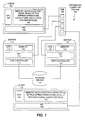
- FIG. 1 illustrates a distributed computer system in accordance with an embodiment of the present invention.
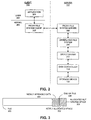
- FIG. 2 illustrates a layered architecture for a distributed file system in accordance with an embodiment of the present invention.
- FIG. 3 illustrates a file to be appended in accordance with an embodiment of the present invention.
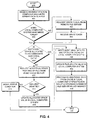
- FIG. 4 is a flow chart illustrating the process of performing an append operation from the client side in accordance with an embodiment of the present invention.
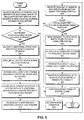
- FIG. 5 is a flow chart illustrating the process of performing an append operation from the server side in accordance with an embodiment of the present invention.
- a computer readable storage medium which may be any device or medium that can store code and/or data for use by a computer system.
- the transmission medium may include a communications network, such as the Internet.
- FIG. 1 illustrates a distributed computer system 100 in accordance with an embodiment of the present invention.
- Distributed computer system 100 includes clients, 102 and 132, and servers, 112 and 122.
- Clients 102 and 132 can include any node on a network including computational capability and including a mechanism for communicating across the network.
- Servers 112 and 122 can include any node on a network including computational capability and data storage capability, as well as a mechanism for servicing requests from a client for computational and data storage resources.
- Hub 108 implements a network that couples together clients 102 and 132 with servers 112 and 122. Clients, 102 and 132, and servers, 112 and 122, use hub 108 to communicate with each other.
- Hub 108 is a special case of a general network that can be used with the present invention. This general network can include any type of wire or wireless link between computers including, but not limited to, a local area network, a wide area network, or a combination of networks.
- clients 102 and 132 are coupled to hub 108 through network interface controllers (NICs) 106 and 136.
- servers 112 and 122 are coupled to hub 108 through NICs 116 and 126, respectively.
- NICs 106, 116, 126 and 136 can include any type of interface for coupling clients, 102 and 132, and servers, 112 and 122, with hub 108.
- FIG. 1 also includes storage device 130, which is coupled to servers 112 and 122.
- Storage device 130 includes non-volatile storage for code and/or data and operates under control of servers 112 and 122.
- storage device 130 includes a disk drive.
- Storage device 130 is coupled to disk controller 118 within server 112 and disk controller 128 within server 122.
- Disk controllers 118 and 128 include circuitry and software to control a number of disk spindles.
- Clients 102 and 132 include central processing units (CPUs) 104 and 134.
- servers 112 and 122 include CPUs 114 and 124.
- Central processing units 104, 114, 124 and 134 can include any type of processing engines that can be used in a computer system, including, but not limited to, microprocessors, mainframe processors, device controllers and processing circuitry within appliances.
- CPUs 104 and 134 are coupled to memories 105 and 135, which include code to implement a client portion of a file system that keeps track of append operations locally in accordance with an embodiment of the present invention.
- CPUs 114 and 124 are coupled to memories 115 and 125, which include code to implement a server portion of a file system in accordance with an embodiment of the present invention.
- Memories 105, 115, 125 and 135 can include any type of random access memory containing code and/or data for CPUs 104, 114, 124 and 134, respectively.
- servers 112 and 122 are fault-tolerant.
- server 112 is the primary server and server 122 is the secondary server, if primary server 112 fails during a file system operation, secondary server 122 takes its place.
- server 112 is the primary server and server 122 is the secondary server, if primary server 112 fails during a file system operation, secondary server 122 takes its place.
- the present invention can be applied to any type of distributed file system, and is not limited to fault-tolerant file systems.
- the system illustrated in FIG. 1 operates under control of the SOLARIS TM MC operating system, which is a product of Sun Microsystems, Inc. of Palo Alto, California.
- the Solaris MC operating system is a UNIX-based operating system.
- UNIX terminology and concepts are frequently used. However, this usage is for purposes of illustration and is not to be construed as limiting the invention to this particular operating system.
- Sun the Sun logo, Sun Microsystems and Solaris are trademarks or registered trademarks of Sun Microsystems, Inc. in the United States and other countries.
- FIG. 2 illustrates a layered architecture for a distributed file system in accordance with an embodiment of the present invention.
- the left-hand side of FIG. 2 illustrates layers that are present on a client side of the distributed file system.
- the right-hand side of FIG. 2 illustrates layers that are present on a server side of the distributed file system.
- the client side of the distributed file system includes an application 203, which makes file system references.
- Application 203 operates in user space 202 and makes file system calls to proxy file system client 205 within kernel space 204.
- Proxy file system client 205 is the client-side portion of a distributed file system. Proxy file system client 205 communicates with proxy file system server 206 within server 122. Note that this communication takes place across a network through hub 108.
- Proxy file system server 206 is the server-side portion of the distributed file system. Proxy file system server 206 communicates with underlying file system 208 on server 112.
- storage device 130 includes a disk drive.
- FIG. 3 illustrates the structure of a file to be appended in accordance with an embodiment of the present invention.
- File 300 resides on storage device 130 in FIG. 1 and includes newly allocated space 302, which may extend beyond the end of file 300. Space is typically allocated to file 300 in disk block-sized units during append operations. However, the newly appended data 304 may not take up all of the newly allocated space 302. Hence, there often remains a certain amount of allocated but unused space 308. When newly allocated space 302 is completely filled with additional appended data, a new block of space will be allocated for append operations to file 300.
- FIG. 4 is a flow chart illustrating the process of performing an append operation from the client side in accordance with an embodiment of the present invention.
- the system starts by receiving a request to append additional data to file 300 at client 102 (step 401).
- This request results from application 203 performing a system call to perform a file append operation.
- a file append operation can include an explicit file append operation or can include a seek to the end of file 300 and then a write to the end of file 300.
- the system first determines if client 102 has a write token for file 300 (step 402).
- a write token allows client 102 to modify file 300, whereas a read token allows client 102 to read file 300.
- the use of tokens prevents multiple clients from simultaneously writing to and reading from file 300, which can produce unpredictable results.
- client 102 If client 102 does not have a write token, client 102 requests the write token from server 112 (step 403). when the write token becomes available, client 102 receives the write token from server 112 (step 405).
- the system determines if there is sufficient space allocated for file 300 within storage device 130 to accommodate the additional data to file 300 (step 404). If so, client 102 proceeds to step 406. If not, client 102 requests additional space past the end of file 300 from server 112 (step 410). Client 102 then waits to see if the request for additional space is granted (step 412). If not, client 102 signals an error condition to application 203 (step 414). If so, client 102 updates an allocated space value stored locally on client 102 to account for the addition space (step 416).
- client 102 proceeds to write additional data to the end of a locally cached copy of file 300 in client 102 (step 406). Note that this write operation does not immediately result in data being transferred to file 300 within storage device 130.
- the system additionally updates a file length value stored locally in client 102 to indicate the new file length (step 408).
- the system eventually propagates the append data from the local cache to storage device 130 within server 112 in a lazy manner (step 418). This propagation can take place during an automatic periodic file system flush operation, during a file synchronization operation, or during a cache invalidation operation.
- FIG. 5 is a flow chart illustrating the process of performing an append operation from the server side in accordance with an embodiment of the present invention.
- the system starts by receiving a request at server 112 for additional space to be allocated past the end of file 300 residing in storage device 130 (step 502). This request was generated in step 410 of the flow chart illustrated in FIG. 4.
- the system first determines if sufficient space is available on storage device i3u to allocate the additional space (step 504). If not, server 112 returns an error condition to client 102 (step 505). If so, server 112 allocates additional space past the end of file 300 in storage device 130 (step 506). Server 112 then initializes the additional space in order to erase any old data that may reside in the newly allocated space (step 508). Server 112 also tells client 102 how much additional space was allocated so that client 102 can update its allocated space value (step 510).
- server 112 allows client 102 to append data into the additional space in its locally cached copy of file 300 without communicating with server 112 (step 512).
- Server 112 receives the appended data when the appended data eventually propagates back to server 112 in lazy manner (step 514).
- Server 112 also manages tokens that control access to file 300. (Token management is not part of the process of steps 502-516.) For example, suppose server 112 receives a request for a token for file 300 from client 132 (step 516). The system determines whether another client holds a token for file 300 (step 518). If so, server 112 has to invalidate the token on the other client. Suppose client 102 holds a write token for file 300. In this case, server 112 sends a request to client 102 to invalidate the write token (step 520). Next, server 112 allows client 102 to invalidate the write token (step 522). If client 132 requested a read token, this invalidation process involves downgrading the write token on client 102 to a read token. On the other hand, if client 132 requested a write token, this invalidation process involves invalidating the write token on client 102.
- server 112 receives the file length value from client 102 as well as all of the data that has been appended to the locally cached copy of file 300 on client 102 (step 524). Server 112 writes the file length value to non-volatile storage in storage device 130 (step 526), and then sends the requested token to client 132. At this point client 132 can access file 300.
Landscapes
- Engineering & Computer Science (AREA)
- Theoretical Computer Science (AREA)
- Data Mining & Analysis (AREA)
- Databases & Information Systems (AREA)
- Physics & Mathematics (AREA)
- General Engineering & Computer Science (AREA)
- General Physics & Mathematics (AREA)
- Information Retrieval, Db Structures And Fs Structures Therefor (AREA)
Applications Claiming Priority (2)
| Application Number | Priority Date | Filing Date | Title |
|---|---|---|---|
| US09/454,247 US6405201B1 (en) | 1999-12-02 | 1999-12-02 | Method and apparatus for reducing network traffic for remote file append operations |
| US454247 | 1999-12-02 |
Publications (2)
| Publication Number | Publication Date |
|---|---|
| EP1107132A2 true EP1107132A2 (de) | 2001-06-13 |
| EP1107132A3 EP1107132A3 (de) | 2004-06-09 |
Family
ID=23803895
Family Applications (1)
| Application Number | Title | Priority Date | Filing Date |
|---|---|---|---|
| EP00203933A Withdrawn EP1107132A3 (de) | 1999-12-02 | 2000-11-08 | Verfahren und Gerät zum Vermindern des Netzwerkverkehrs während Hinzufüge-Operationen zu Ferndateien |
Country Status (2)
| Country | Link |
|---|---|
| US (1) | US6405201B1 (de) |
| EP (1) | EP1107132A3 (de) |
Cited By (1)
| Publication number | Priority date | Publication date | Assignee | Title |
|---|---|---|---|---|
| EP1333676A3 (de) * | 2002-01-31 | 2004-01-02 | Microsoft Corporation | Zeitbasierte Auswahl von Daten eines elektronischen Programmführers bestimmt für Klienten mit geringen Ressourcen |
Families Citing this family (22)
| Publication number | Priority date | Publication date | Assignee | Title |
|---|---|---|---|---|
| JP4251757B2 (ja) * | 1999-10-28 | 2009-04-08 | 三洋電機株式会社 | ディジタルカメラ |
| US7203731B1 (en) | 2000-03-03 | 2007-04-10 | Intel Corporation | Dynamic replication of files in a network storage system |
| US7506034B2 (en) | 2000-03-03 | 2009-03-17 | Intel Corporation | Methods and apparatus for off loading content servers through direct file transfer from a storage center to an end-user |
| US7428540B1 (en) * | 2000-03-03 | 2008-09-23 | Intel Corporation | Network storage system |
| US7266555B1 (en) | 2000-03-03 | 2007-09-04 | Intel Corporation | Methods and apparatus for accessing remote storage through use of a local device |
| US6952737B1 (en) * | 2000-03-03 | 2005-10-04 | Intel Corporation | Method and apparatus for accessing remote storage in a distributed storage cluster architecture |
| US7281168B1 (en) | 2000-03-03 | 2007-10-09 | Intel Corporation | Failover architecture for local devices that access remote storage |
| US6640233B1 (en) * | 2000-08-18 | 2003-10-28 | Network Appliance, Inc. | Reserving file system blocks |
| US7266556B1 (en) | 2000-12-29 | 2007-09-04 | Intel Corporation | Failover architecture for a distributed storage system |
| US7484216B2 (en) * | 2002-06-18 | 2009-01-27 | Microsoft Corporation | System and method for decoupling space reservation in transactional logging systems |
| US7774466B2 (en) * | 2002-10-17 | 2010-08-10 | Intel Corporation | Methods and apparatus for load balancing storage nodes in a distributed storage area network system |
| KR20050054034A (ko) * | 2003-12-03 | 2005-06-10 | 엘지전자 주식회사 | 고밀도 광디스크 및 고밀도 광디스크의 파일 관리방법 및재생방법과 기록재생장치 |
| US7454581B2 (en) * | 2004-10-27 | 2008-11-18 | International Business Machines Corporation | Read-copy update grace period detection without atomic instructions that gracefully handles large numbers of processors |
| US8074041B2 (en) * | 2004-12-09 | 2011-12-06 | International Business Machines Corporation | Apparatus, system, and method for managing storage space allocation |
| US7467169B2 (en) * | 2005-10-31 | 2008-12-16 | Network Appliance, Inc. | Circular and bi-directional mirroring of flexible volumes |
| US7840618B2 (en) * | 2006-01-03 | 2010-11-23 | Nec Laboratories America, Inc. | Wide area networked file system |
| FI20060427L (fi) * | 2006-05-03 | 2007-11-04 | Tellabs Oy | Menetelmä ja laitteisto peräkkäistiedoston käsittelemiseksi |
| US9734086B2 (en) | 2006-12-06 | 2017-08-15 | Sandisk Technologies Llc | Apparatus, system, and method for a device shared between multiple independent hosts |
| US8151082B2 (en) | 2007-12-06 | 2012-04-03 | Fusion-Io, Inc. | Apparatus, system, and method for converting a storage request into an append data storage command |
| US8161353B2 (en) * | 2007-12-06 | 2012-04-17 | Fusion-Io, Inc. | Apparatus, system, and method for validating that a correct data segment is read from a data storage device |
| US20180188976A1 (en) * | 2016-12-30 | 2018-07-05 | Intel Corporation | Increasing read pending queue capacity to increase memory bandwidth |
| US11928084B2 (en) * | 2020-02-28 | 2024-03-12 | Nebulon, Inc. | Metadata store in multiple reusable append logs |
Family Cites Families (3)
| Publication number | Priority date | Publication date | Assignee | Title |
|---|---|---|---|---|
| US4887204A (en) * | 1987-02-13 | 1989-12-12 | International Business Machines Corporation | System and method for accessing remote files in a distributed networking environment |
| US5218695A (en) * | 1990-02-05 | 1993-06-08 | Epoch Systems, Inc. | File server system having high-speed write execution |
| US5717919A (en) * | 1995-10-02 | 1998-02-10 | Sybase, Inc. | Database system with methods for appending data records by partitioning an object into multiple page chains |
-
1999
- 1999-12-02 US US09/454,247 patent/US6405201B1/en not_active Expired - Lifetime
-
2000
- 2000-11-08 EP EP00203933A patent/EP1107132A3/de not_active Withdrawn
Cited By (2)
| Publication number | Priority date | Publication date | Assignee | Title |
|---|---|---|---|---|
| EP1333676A3 (de) * | 2002-01-31 | 2004-01-02 | Microsoft Corporation | Zeitbasierte Auswahl von Daten eines elektronischen Programmführers bestimmt für Klienten mit geringen Ressourcen |
| US7168085B2 (en) | 2002-01-31 | 2007-01-23 | Microsoft Corporation | Time-based selection of EPG data destined for low resource clients |
Also Published As
| Publication number | Publication date |
|---|---|
| US6405201B1 (en) | 2002-06-11 |
| EP1107132A3 (de) | 2004-06-09 |
Similar Documents
| Publication | Publication Date | Title |
|---|---|---|
| US6405201B1 (en) | Method and apparatus for reducing network traffic for remote file append operations | |
| US6421769B1 (en) | Efficient memory management for channel drivers in next generation I/O system | |
| EP1100001B1 (de) | Speichersystem mit Unterstützung von Dateistufenzugriffen und Blockstufenzugriffen | |
| US8229899B2 (en) | Remote access agent for caching in a SAN file system | |
| US7200695B2 (en) | Method, system, and program for processing packets utilizing descriptors | |
| US7624207B2 (en) | Method, system and program products for reducing data movement within a computing environment | |
| US7115919B2 (en) | Storage system for content distribution | |
| US6425051B1 (en) | Method, system, program, and data structures for enabling a controller accessing a storage device to handle requests to data in a first data format when the storage device includes data in a second data format | |
| US20080271130A1 (en) | Minimizing client-side inconsistencies in a distributed virtual file system | |
| US6775738B2 (en) | Method, system, and program for caching data in a storage controller | |
| EP1667026A2 (de) | Verwaltung von Datenersatz in einem Cachespeicher auf einem Knoten auf Basis von Cachespeichern von anderen Knoten | |
| US6988145B2 (en) | Method, system, and program for managing client access to a shared resource | |
| JP2000507428A (ja) | 有限メモリコンピュータシステム上におけるクライアント管理フロー制御方法及び装置 | |
| AU2001289180A1 (en) | Managing replacement of data in a cache on a node based on caches of other nodes | |
| JPH08153014A (ja) | クライアントサーバシステム | |
| US7376679B2 (en) | Facilitating delayed block allocation in a distributed file system | |
| CN111124255A (zh) | 数据存储方法、电子设备和计算机程序产品 | |
| EP1122924B1 (de) | Verfahren und Einrichtung zur Bereitstellung eines lokalen Ein-/Ausgabe-Übertagungsweges in einem verteilten Dateisystem | |
| US7155492B2 (en) | Method and system for caching network data | |
| US5974509A (en) | Method for purging unused data from a cache memory | |
| US7260576B2 (en) | Implementing a distributed file system that can use direct connections from client to disk | |
| US6516344B1 (en) | Reducing network traffic for remote file system accesses by keeping track of unallocated regions in files | |
| US20120158682A1 (en) | Scatter-gather list usage for a configuration database retrieve and restore function and database blocking and configuration changes during a database restore process | |
| JPH07239808A (ja) | 分散データ管理方式 | |
| US20050235005A1 (en) | Computer system configuring file system on virtual storage device, virtual storage management apparatus, method and signal-bearing medium thereof |
Legal Events
| Date | Code | Title | Description |
|---|---|---|---|
| PUAI | Public reference made under article 153(3) epc to a published international application that has entered the european phase |
Free format text: ORIGINAL CODE: 0009012 |
|
| AK | Designated contracting states |
Kind code of ref document: A2 Designated state(s): AT BE CH CY DE DK ES FI FR GB GR IE IT LI LU MC NL PT SE TR |
|
| AX | Request for extension of the european patent |
Free format text: AL;LT;LV;MK;RO;SI |
|
| PUAL | Search report despatched |
Free format text: ORIGINAL CODE: 0009013 |
|
| AK | Designated contracting states |
Kind code of ref document: A3 Designated state(s): AT BE CH CY DE DK ES FI FR GB GR IE IT LI LU MC NL PT SE TR |
|
| AX | Request for extension of the european patent |
Extension state: AL LT LV MK RO SI |
|
| 17P | Request for examination filed |
Effective date: 20040723 |
|
| AKX | Designation fees paid |
Designated state(s): AT BE CH CY DE DK ES FI FR GB GR IE IT LI LU MC NL PT SE TR |
|
| STAA | Information on the status of an ep patent application or granted ep patent |
Free format text: STATUS: THE APPLICATION IS DEEMED TO BE WITHDRAWN |
|
| 18D | Application deemed to be withdrawn |
Effective date: 20050531 |