EP1107578B1 - Kalibrierungssystem für ein Farberzeugungsgerät - Google Patents
Kalibrierungssystem für ein Farberzeugungsgerät Download PDFInfo
- Publication number
- EP1107578B1 EP1107578B1 EP00126005A EP00126005A EP1107578B1 EP 1107578 B1 EP1107578 B1 EP 1107578B1 EP 00126005 A EP00126005 A EP 00126005A EP 00126005 A EP00126005 A EP 00126005A EP 1107578 B1 EP1107578 B1 EP 1107578B1
- Authority
- EP
- European Patent Office
- Prior art keywords
- output
- domain
- model
- parameters
- color
- Prior art date
- Legal status (The legal status is an assumption and is not a legal conclusion. Google has not performed a legal analysis and makes no representation as to the accuracy of the status listed.)
- Expired - Lifetime
Links
Images


Classifications
-
- G—PHYSICS
- G06—COMPUTING OR CALCULATING; COUNTING
- G06K—GRAPHICAL DATA READING; PRESENTATION OF DATA; RECORD CARRIERS; HANDLING RECORD CARRIERS
- G06K15/00—Arrangements for producing a permanent visual presentation of the output data, e.g. computer output printers
-
- H—ELECTRICITY
- H04—ELECTRIC COMMUNICATION TECHNIQUE
- H04N—PICTORIAL COMMUNICATION, e.g. TELEVISION
- H04N1/00—Scanning, transmission or reproduction of documents or the like, e.g. facsimile transmission; Details thereof
- H04N1/40—Picture signal circuits
- H04N1/40006—Compensating for the effects of ageing, i.e. changes over time
-
- H—ELECTRICITY
- H04—ELECTRIC COMMUNICATION TECHNIQUE
- H04N—PICTORIAL COMMUNICATION, e.g. TELEVISION
- H04N1/00—Scanning, transmission or reproduction of documents or the like, e.g. facsimile transmission; Details thereof
- H04N1/46—Colour picture communication systems
- H04N1/56—Processing of colour picture signals
- H04N1/60—Colour correction or control
- H04N1/603—Colour correction or control controlled by characteristics of the picture signal generator or the picture reproducer
- H04N1/6033—Colour correction or control controlled by characteristics of the picture signal generator or the picture reproducer using test pattern analysis
Definitions
- the subject invention pertains to the art of color management and image/text printing or display systems, and is especially applicable to a method and apparatus wherein a color print output is monitored for adaptive on-line construction of an analytical model useful for feedforward control of printer operation. More particularly, the invention relates to system controls for modeling the printer with a piecewise homeomorphism (PH) by implementing an adaptive algorithm for estimation of model parameters corresponding to selected PH configurations and based upon processing of a relatively small number of control samples, target colors or other input signals, whereby the model is then useful for regular on-line calibrating of the printer.
- PH piecewise homeomorphism
- Color correction and/or control should not be confused with color registration systems and sensors for insuring that colors are positioned properly, printed accurately, superposed correctly and/or adjacent to one another.
- Color perception is a psychological and physiological phenomenon that involves three elements: light, object and observer. Color changes as light, medium (i.e., paper, monitor) and observer interact. Color may be perceived differently under different types of lighting. Light sources that affect color include incandescent and fluorescent light. The first makes color seem more red and orange while the second emphasizes green and yellow tones. Different types of media also affect color perception. Observers view images on paper using reflection. In other cases the medium can be transmissive or emissive. Transparencies are an example of a transmissive medium while a computer monitor is emissive. The third element in the phenomenon is the observer. Different people may see the same color slightly differently. In order to characterize color image quality, the interaction of these elements must be understood so that when colors are intended to be matched, i.e., monitor to printer, scanner to printer, etc., acceptable appearance results.
- spectral data is often used to represent color perception as a pattern of wavelengths that leave the object before being interpreted by a viewer.
- Spectral data defines color independent of observer influence.
- Spectrophotometers or colorimeters are sensing devices used to measure spectral data.
- RGB red, blue and green
- color has become essential as a component of communication. Color facilitates the sharing of knowledge and ideas. Companies involved in the development of digital color print engines are continuously looking for ways to improve the accuracy and total image quality of their products.
- One of the elements that affects image quality is the ability to consistently produce the same quality image output on a printer from one day to another, from one week to the next, month after month. Colors on a printer tend to drift over time. The variations arise from changes in the properties of the marking process (toner tribo, photoreceptor charge, transfer variations, temperature, humidity, and other marking and environmental factors).
- Maintaining an accurate printer operation requires regular recalibration, usually a time consuming, and accordingly undesirable task of sampling large numbers of test patches which are additionally interpolated to construct the color rendition dictionary (CRD) describing the printer transforming process.
- CCD color rendition dictionary
- L*, a*, b* are the independent space representations of the CIE (Commission Internationale de L'éclairage) for color standards utilized in the functional modeling of these color demands.
- CIE Commission Internationale de L'éclairage
- L* defines lightness
- a* corresponds to the red/green value
- b* denotes the amount of yellow/blue.
- Accurate transformation between L*, a*, b* representations and CMYK representations and vise versa are the principal applications of the subject invention.
- These recipes are typically formulated using a large number of sampled data patches that are then interpolated to describe the transformation between the input and output spaces of the printing device. Because of the nature of the printer, these recipes are non-linear, time varying functions and thus are prone to inaccuracies if not updated at least occasionally. The updating process is tedious for customers and service representatives and is thus performed infrequently. If the process could be streamlined, it might be performed more frequently leading to improved color accuracy. With proper color calibration, customers could specify colors at document creation time and have an increased assurance that the printed colors would "match"(i.e. appear similarly to) the desired colors.
- the input space describes all the possible ways of mixing the three printer colorants (for example, cyan, magenta, and yellow but many other triplets are possible.)
- the halftone density of a colorant is specified by an eight bit integer (a whole number between 0 and 255).
- the domain of the transformation consists of a three dimensional cube, two hundred fifty-five units on a side with one corner at the origin.
- the co-domain space of the transformation is the color gamut of the printer, the three dimensional volume that indicates all the L*, a*, b* values which are accessible by mixing the three colorants.
- This co-domain volume is of irregular shape and represents a sampled non-linear function of the input space. Since customers specify their desired colors in this space, the problem is to accurately print/display them and therefore derive the reverse transformation by inversion of the functional relationship between the domain and co-domain spaces detailed above.
- On-line model prediction is also known as "system identification" in automatic controls literature. It is the terminology used for the process of characterizing a given control system. Characterization of the system can be done in two ways; non-parametric and parametric.
- non-parametric system identification the profile of the device can be measured by printing specific target colors as specified by the ICC standards. This profile is used as it is (without constructing any model of the device) while making rendering decisions/viewing of the customer colors on the monitor. This is one time measurement and does not use the historical information to construct any model.
- target colors can be printed as chronological jobs in the banner sheet/header sheet or else the target colors can be extracted from the customer image and measured either by measuring straight from the output image or by rendering a subset of customer colors as target color patches.
- the intention in the parametric system identification is to adjust the parameters of the model and refine it over time by using past and present color data so that the model is accurate.
- homeomorphism in the context of this subject invention is meant the properties of the functions that are chosen to describe the transformations between sub-spaces in corresponding domains and co-domains where a particular parametric model defines the transformation from a domain value to a co-domain value.
- the homeomorphic transformations concerning a color marking device operation comprise the transformation function for data value conversion between the domain and co-domain.
- the subject deals with altering the defining boundary space of each of a set of subspaces, so that the parametric models associated with each subspace are varied to a set which cumulatively most accurately estimates the non-linear printer transforming process, and further can be updated or recalibrated much more easily than could be done in the past.
- the subject invention exploits a key enabling factor for these operational advantages by constructing and maintaining a current model of the reproducing device operation (also known as the device profile or characteristic, input-output model of reproducible color).
- the new and improved method constructs a dynamic model by segregating color spaces into a set of homeomorphisms each having an associated parametric model.
- monitors CRT, LCD, etc.
- printers xerographic, ink jet, ionographic, etc.
- EP 0 891 078 A2 describes colour correction apparatus and method for an image system.
- a colour correction apparatus and method thereof in an image system capable of automatically processing the colour correction by storing a reference colorimetric data regarding a predetermined test pattern for estimating the colour correction in a storage medium and then scanning the estimating test pattern so that the colour correction can be performed minimizing an error between the reference data and the scanning data obtained by scanning the test pattern.
- the colour correction can be performed without using an optical densitometer or a colorimeter, and the operation for correcting the colour can be performed without the knowledge of the colour coordinate system or colour signal.
- WO 96/41309 describes an iterative technique for refining color correction look-up tables.
- a color correction table is generated from a set of RGB color patches printed by a printer. The color patches are measured by a measuring device to produce RGB colorimetric locations for each color patch. The transformer determines the transformation for each colorimetric RGB location and its corresponding device RGB location which are then stored in the RGB locations of the color correction table.
- a comparator compares the table device RGB values with the originally printed device RGB values and determines the residual error for each colorimetric location.
- An interpolator interpolates the found residual errors to the other location of the color correction table based on a weighted sum of the found residual errors and an Euclidean distance between the RGB locations.
- DIMACS TECHNICAL REPORT 94-52, DECEMBER 1994 This document describes how to construct a piecewise linear homeomorphism.
- a control system A which addresses the problems of variability in color mixing operations to better stabilize color reproduction for an individual marking device 10 .
- the customer specified input target signal, L*, a*, b* is converted by a CRD 12 to a device dependent signal, CMYK, which produces a particular corresponding output signal that can be measured in device independent space L*, a*, b*.
- CMYK device dependent signal
- the initial calibration 100 of the CRD 12 is obtained through a larger number (more than 1000 typically) of sample input signals which are printed as test patches and read for their corresponding output.
- f (CMYK) L*, a*, b*.
- the true printer transfer function " f" is continuous and differentiable within the printer gamut. Outside the gamut the function is undefined.
- a PH approximation 14 is generated 102 .
- the PH approximation f ⁇ is invertable and is constructed using the algorithm described in Figure 2 below.
- the approximation has an associated error " e " .
- the error is computed by converting 104 an input signal with an inverse of f ⁇ in the CRD 12 and then that signal is processed by the marking device.
- the actual output is compared in estimation model 14 for detecting 106 the error e between the device actual output signal and the output estimated by the model 14 .
- the output signal can either be measured with a sensor manually in the conventional manner, or for improved on-line operation of the subject invention, the sensor 16 can be included in the system A to regularly monitor marking device 10 outputs.
- the error e exceeds some predetermined value, the PH representation of the original function f is recomputed 108 , i.e., reconfigured.
- a new functional representation f ⁇ ' is next computed using the adjusted PH representations and newly sampled data.
- a new more accurate CRD 12 can then be reconstructed 112.
- a particular advantage of the PH representation is that it may be readily inverted and sampled to yield the desired LUT and corresponding CRD 12 .
- Another advantage is that by partitioning the printer gamut into a plurality of PHs, each having an associated parametric model for the data values within corresponding PHs in the input and output gamuts, the cumulative model for the marking device is more accurate.
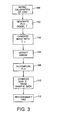
- a parameterization 40 determines the degree or number of analytical, parametric models that are utilized for the functional approximation of the color processing transformation. Parameterization comprises choosing how many points the user wishes to use in the approximation of the function. Such a choice will determine the degree of accuracy possible. More points will yield improved accuracy.
- the input domain (CMY) to the printer 10 is cubic by definition.
- the cube is, of course, defined by eight corner points.
- tetrahedra are preferably employed, as opposed to another cube, because each tetrahedron can be defined with only four points as opposed to eight.
- the parameterization step essentially determines how many vertices are chosen to represent the input domain. It must also be kept in mind though, that the corresponding tetrahedra in the co-domain or output space (L*, a*, b*) which is, as noted above, not normally cubic, will enclose the co-domain. More importantly, the transforming of data values from the input domain to the output domain is nonlinear so that any linear, invertable approximation will not be completely accurate. However, it is a feature of the invention that each set of corresponding tetrahedra will have a parametric linear or non-linear model that will define a transformation process.
- an initial definition of the coordinate positions of the interior vertices is generated 42 .
- the actual initial conditions will not be optimal and the convergence process is designed to effect the best available representation using the given parameterization. Accordingly, the generation step merely requires some definition of coordinates in the domain and co-domain for the tetrahedral vertices within the corners of the domain cube.
- Tessellation 44 comprises defining the domain and co-domain volumes into a plurality of tetrahedra with a standard tessellation protocol program. Such a known program is a Delaunay tessellation, but of course other choices are possible.
- the objective of tessellation is to take the vertices defined by the parameterization step and connect them into tetrahedra so that the sub-spaces are defined.
- the tessellation program not only deals with uniform tessellation of the domain and co-domain spaces but also may acknowledge a nonuniformed distribution of data within the domain and co-domain spaces.
- the tessellation in the domain is the same as the tessellation in the co-domain in that the domain tessellation is translated to co-domain tessellation.
- the tessellation must fill or enclose the domain space leaving no region uncounted.
- Assigning 46 data points to the tetrahedra comprises assigning predetermined transformation data derived from a large number of sampled test patches to corresponding domain and co-domain tetrahedra.
- the transformation data is acquired by specifying many input values, printing the values as color patches and reading the corresponding output value coordinates of the output color in the co-domain space.
- Such acquisition of sample data is similar to prior art calibration methods used for building an LUT and a conventional CRD.
- the data values are then assigned to the tetrahedra by determining which tetrahedron encloses the data point in the domain and co-domain.
- Known computational geometric techniques are available for determination of which points are in which tetrahedral volumes.
- the parametric model is determined in accordance with a conventional mathematical computation evaluation for minimizing the error by performing 48 a least squares analysis on the contents of each tetrahedron.
- the error in the approximation is calculated by comparing the A and the vector b .
- the error in the approximation is calculated by comparing the Ax + b value to the actual transformation data value.
- the various corresponding tetrahedra each having a respectively assigned parametric model, comprise cumulatively a piecewise homeomorphism (PH) representing the transforming process of input data values to output data values.
- the parametric model comprising part of the homeomorphism is a functional, invertable model which can be used to adjust a customer requested color as defined in device independent space (L*, a*, b*) to the appropriate device dependent CMYK input signal so that the printer can output the customer desired color (L*, a*, b*).
- An objective function must be assigned to the performance of the cumulative set of functional models. For example, if the objective were that the functional models are exactly accurate with the predetermined transformation data, i.e., no error, then an objective function would measure the error between the models and the actual data. The least squares analysis above is such an objective function for error minimization. Other objectives could be chosen such as forcing continuity across the tetrahedra or minimizing the maximum approximation error. Of course other objectives are also possible. In any event, the error or discrepancy between the performance of the parametric model, and the actual test data value can be used as an important criterion for determining if the PHs should be altered for purposes of achieving a new and more accurate PH better satisfying the selected objective for the system.
- new vertex locations can be calculated 50 for the corresponding tetrahedra.
- Each vertex serves as a corner of some number of tetrahedra. Moving the vertex to a new location may better achieve the objective.
- One way to effect such moving is by calculating the average A matrix parameters and b vector parameters over the tetrahedra in which the vertex participates. These values are then used to determine a new value of the vertex position that will accordingly change the parametric model for that particular domain and co-domain tetrahedron set.
- This particular calculation scheme for adjusting vertex locations is particularly useful because using the average A and b values encourages continuity across the piecewise volumes, an important factor in color rendition.
- the other predetermined objects could also be used individually or in combination for selectively moving the vertex points.
- the new vertex location effects a changing of the tetrahedron, and consequent redefinition of the parametric model based upon the change in data values within the tetrahedral volume.
- the new models which when compared against the objective function, will determine if yet another iteration 52 of the subject algorithm, and consequent adjusting of the tetrahedral sets, is appropriate until convergence is achieved wherein the cumulative set of parametric models best satisfy the objective in approximating the device transformation process. In other words, the algorithm will iterate 52 until some predetermined set of convergence criteria is met.
- Such criteria may include a minimum total step distance covered by all the interior grid points, a means squared error for the approximation or a maximum number of iterations.
- the motion of the vertices may have resulted in a mesh tangle.
- the iteration also requires retessellation to resolve the mesh tangle but, of course, alternatively, a retessellation may occur in each iteration anyway.
- the result of this algorithm is a piecewise representation of the transformation that minimizes some objective function - the one used to determine vertex motion in step 50 .
- an assessment of the precision of the approximation may be made by examination of the errors between the approximation and the data values taken during the initial data collection. If the approximation meets the application's requirements, the sequence terminates. If not, additional parameterization is performed and the sequence begun again but omitting the data collection exercise.
- the recomputing PH step 108 comprises adjusting a set of vertices for the tetrahedra that are used together with the least squares calculation on the enclosed data points to generate a continuous representation of the true transfer function f .
- These vertices have CMY values and corresponding L*, a*, b* values at each time, t , during the operation of the marking device.
- New vertices are computed in the recomputing step for correspondingly reconfiguring the tetrahedra for enclosing a different set of actual data values, and hopefully, the new set will facilitate a better and more accurate, i.e., less error e , function f '.
- the computing of the new f ⁇ ' function step 110 comprises sampling the data values at the vertex locations of the newly configured tetrahedra.
- the recalibration sampling is, thus, of a much lesser extent than the type of sampling needed to generate the initial calibration so that the system A can effectively use the estimation model 14 and adjusted mechanism 18 for continually upgrading the CRD 12 and thereby recalibrating the system A.
- the new co-domain vertex points, the original tessellation, and the original least squares approximations all comprise important considered aspects of the reconstruction of the CRD 12 in accordance with the subject PH form of modeling.
- the adaptive feedforward approach for on-line color control illustrated in Figure 1 provides the advantage of, given an approximate inverse of the marking device function f , a straightforward processing system is provided for determining inputs that will give a desired color output. It is within the scope of the invention that the CRD can merely comprise the inverse of the function f , as opposed to a nonparametric LUT, although it is an alternative feature of the invention that the PH model could also be used to construct an LUT functioning as the CRD.
- a particular advantage of the subject invention is that the adaptive feedfoward control systems succeeds particularly due to the fact that changes in marking device operation occur slowly relative to the data acquisition time for a small number of samples, so that the continual and gradual upgrading of the function f can be satisfactorily accomplished with essentially minor adjustments in PH configuration and parametric recomputation. Nonetheless, the effect of a continual recalibrating of the device presents a dramatic improvement in color consistency for the life of the marking device and ease of operation for the users of the device because of the removal of the requirements for manual calibration to maintain printer color predictability.
Landscapes
- Engineering & Computer Science (AREA)
- Multimedia (AREA)
- Signal Processing (AREA)
- General Engineering & Computer Science (AREA)
- Physics & Mathematics (AREA)
- General Physics & Mathematics (AREA)
- Theoretical Computer Science (AREA)
- Facsimile Image Signal Circuits (AREA)
- Color Image Communication Systems (AREA)
- Color, Gradation (AREA)
- Image Processing (AREA)
Claims (2)
- Verfahren zum Vorhersagen eines Modells für eine Farb-Zeichenerzeugungsvorrichtung (10), wobei das Modell einen stückweisen Homomorphismus umfasst und die Farb-Zeichenerzeugungsvorrichtung (10) Farbverarbeitung einschließt, die durch eine vorausgewählte Form des Modells repräsentiert wird, die einen Anfangssatz von Parametern enthält, wobei das Verfahren die folgenden Schritte einschließt:Erzeugen eines Ausgabebildes mit der Farb-Zeichenerzeugungsvorrichtung (10) in Reaktion auf ein Eingabesignal;Erfassen des Ausgabebildes, um ein Ausgabesignal zu schaffen, das repräsentativ für das Ausgabebild ist;Berechnen (104) einer Modellausgabe aus dem Modell in Reaktion auf das Eingabesignal, die mit dem Bildausgabesignal verglichen werden kann;Bestimmen (106) einer Abweichung zwischen dem Bildausgabesignal und der Modellausgabe;Anpassen des stückweisen Homomorphismus, wenn die festgestellte Abweichung einen vorgegebenen Wert überschreitet;Erzeugen eines aktualisierten Satzes von Parametern für das Modell unter Verwendung eines Echtzeit-Anpassungsalgorithmus, der den angepassten stückweisen Homomorphismus nutzt, und Anwenden des aktualisierten Satzes von Parametern auf das Modell; undselektives Ausführen der Schritte mit nachfolgenden Eingabesignalen, bis die Abweichung geringer ist als der vorgegebene Wert, so dass das Modell, das den angepassten stückweisen Homomorphismus und den aktualisierten Satz von Parametern enthält, eine genaue Repräsentation der Funktion der Vorrichtung umfasst,wobei der stückweise Homomorphismus eine stückweise Gruppe invertierbarer, funktionaler Näherungen einer Farbraum-Transformation der Farb-Zeichenerzeugungsvorrichtung (10) umfasst, bei der ein Datenwert von einer Eingabe-Domäne zu einer Ausgabe-Domäne transformiert wird, und wobei der Anpassungsalgorithmus einschließt:Parametrisieren (40) der funktionalen Näherungen;Erzeugen (42) eines Anfangssatzes von Parametern für die funktionalen Näherungen;Tessellieren (44) der Eingabe-Domäne und der Ausgabe-Co-Domäne gemäß den Parametern, um die Eingabe-Domäne und die Ausgabe-Co-Domäne in entsprechende Sätze von Stücken der Eingabe-Domäne und Stücken der Ausgabe-Co-Domäne zu unterteilen;Zuweisen (46) vorgegebener Transformationsdaten zu den entsprechenden Sätzen von Stücken der Eingabe-Domäne und Stücken der Ausgabe-Co-Domäne und Berechnen jeweiliger invertierbarer funktionaler Näherungen für die vorgegebenen Transformationsdaten für jeden der entsprechenden Sätze;Bewerten (48) einer Genauigkeit der jeweiligen Näherungen anhand eines vorausgewählten Ziels;Anpassen (48, 50) ausgewählter der Parameter; undselektives Iterieren (52) der Schritte gemäß den angepassten ausgewählten der Parameter, bis die Bewertung eine Abschlussbedingung relativ zu dem vorausgewählten Ziel erfüllt, so dass die jeweiligen Näherungen kumulativ die Farbraum-Transformation repräsentieren.
- Farbdrucker, der umfasst:ein Bildwiedergabesystem (10) zum Erzeugen eines Ausgabebildes in Reaktion auf ein Eingabesignal;einen Sensor (16) zum Erfassen eines Ausgabesignals, das repräsentativ für das Ausgabebild ist; undeine Verarbeitungseinrichtung, die umfasst:wobei der stückweise Homomorphismus eine stückweise Gruppe invertierbarer, funktionaler Näherungen einer Farbraum-Transformation der Farb-Zeichenerzeugungsvorrichtung (10) umfasst, bei der ein Datenwert von einer Eingabe-Domäne zu einer Ausgabe-Co-Domäne transformiert wird, und wobei der Anpassungsalgorithmus einschließt:ein stückweises homomorphes Modell (14) des Bildwiedergabesystems (10) zum Berechnen einer Modellausgabe in Reaktion auf das Eingabesignal;einen Echtzeit-Parameteranpassungsalgorithmus (18); undeine Vergleichseinrichtung zum Vergleichen des Ausgabesignals des Systems mit der Modellausgabe, wobei auf Basis einer Ausgabe von der Vergleichseinrichtung der Echtzeit-Parameteranpassungsalgorithmus (18) eine aktualisierte Gruppe von Parametern für das stückweise homomorphe Modell (14) berechnet wird und das stückweise homomorphe Modell (14) gemäß dem aktualisierten Satz von Parametern aktualisiert wird, um ein folgendes Eingabesignal mit dem aktualisierten stückweisen homomorphen Modell (14) zu transformieren, bis die Ausgabe von der Vergleichseinrichtung kleiner ist als ein vorgegebener Abweichungswert,eine Einrichtung zum Parametrisieren (40) der funktionalen Näherungen;eine Einrichtung zum Erzeugen (42) eines Anfangssatzes von Parametern für die funktionalen Näherungen;eine Einrichtung zum Tessellieren (44) der Eingabe-Domäne und der Ausgabe-Co-Domäne gemäß den Parametern, um die Eingabe-Domäne und die Ausgabe-Co-Domäne in entsprechende Sätze von Stücken der Eingabe-Domäne und Stücken der Ausgabe-Co-Domäne zu unterteilen;eine Einrichtung zum Zuweisen (46) vorgegebener Transformationsdaten zu den entsprechenden Sätzen von Stücken der Eingabe-Domäne und Stücken der Ausgabe-Co-Domäne und Berechnen jeweiliger invertierbarer funktionaler Näherungen für die vorgegebenen Transformationsdaten für jeden der entsprechenden Sätze;eine Einrichtung zum Bewerten (48) einer Genauigkeit der jeweiligen Näherungen anhand eines vorausgewählten Ziels;eine Einrichtung zum Anpassen (48, 50) ausgewählter der Parameter; undeine Einrichtung zum selektiven Iterieren (52) der Schritte gemäß den angepassten ausgewählten der Parameter, bis die Bewertung eine Abschlussbedingung relativ zu dem vorausgewählten Ziel erfüllt, so dass die jeweiligen Näherungen kumulativ die Farbraumtransformation repräsentieren.
Applications Claiming Priority (2)
| Application Number | Priority Date | Filing Date | Title |
|---|---|---|---|
| US454431 | 1999-12-03 | ||
| US09/454,431 US6714319B1 (en) | 1999-12-03 | 1999-12-03 | On-line piecewise homeomorphism model prediction, control and calibration system for a dynamically varying color marking device |
Publications (3)
| Publication Number | Publication Date |
|---|---|
| EP1107578A2 EP1107578A2 (de) | 2001-06-13 |
| EP1107578A3 EP1107578A3 (de) | 2004-01-21 |
| EP1107578B1 true EP1107578B1 (de) | 2011-02-23 |
Family
ID=23804575
Family Applications (1)
| Application Number | Title | Priority Date | Filing Date |
|---|---|---|---|
| EP00126005A Expired - Lifetime EP1107578B1 (de) | 1999-12-03 | 2000-11-28 | Kalibrierungssystem für ein Farberzeugungsgerät |
Country Status (4)
| Country | Link |
|---|---|
| US (1) | US6714319B1 (de) |
| EP (1) | EP1107578B1 (de) |
| JP (1) | JP2001223914A (de) |
| DE (1) | DE60045656D1 (de) |
Families Citing this family (10)
| Publication number | Priority date | Publication date | Assignee | Title |
|---|---|---|---|---|
| US7177047B2 (en) * | 2000-12-19 | 2007-02-13 | Eastman Kodak Company | Gamut-preserving color imaging |
| US7277196B2 (en) * | 2003-01-15 | 2007-10-02 | Xerox Corporation | Iterative printer control and color balancing system and method using a high quantization resolution halftone array to achieve improved image quality with reduced processing overhead |
| US7139741B1 (en) * | 2003-07-31 | 2006-11-21 | The United States Of America As Represented By The Secretary Of The Navy | Multi-objective optimization method |
| EP1700252B1 (de) * | 2003-12-31 | 2011-11-16 | Eastman Kodak Company | Selektive verflachung von seitenbeschreibungsdateien zur unterstützung von farbkorrektur |
| US7483171B2 (en) * | 2004-09-13 | 2009-01-27 | Hewlett-Packard Development Company, L.P. | Determining inverse transfer functions of output devices having limited bit depth |
| US7869087B2 (en) * | 2007-03-31 | 2011-01-11 | Xerox Corporation | Color printer characterization or calibration to correct for spatial non-uniformity |
| JP5142890B2 (ja) * | 2008-08-27 | 2013-02-13 | キヤノン株式会社 | 画像処理方法及び画像処理装置 |
| US8390906B2 (en) * | 2009-09-11 | 2013-03-05 | Palo Alto Research Center Incorporated | Membrane-based methods and system for color characterization |
| AU2009251147B2 (en) * | 2009-12-23 | 2012-09-06 | Canon Kabushiki Kaisha | Dynamic printer modelling for output checking |
| US8548621B2 (en) | 2011-01-31 | 2013-10-01 | Xerox Corporation | Production system control model updating using closed loop design of experiments |
Family Cites Families (71)
| Publication number | Priority date | Publication date | Assignee | Title |
|---|---|---|---|---|
| US2790844A (en) | 1954-05-11 | 1957-04-30 | Adalia Ltd | Color correction selector |
| US3870968A (en) | 1971-01-15 | 1975-03-11 | Monroe Electronics Inc | Electrometer voltage follower having MOSFET input stage |
| JPS6013167Y2 (ja) | 1977-09-07 | 1985-04-26 | 株式会社日立製作所 | マグネトロン |
| US4275413A (en) | 1978-03-30 | 1981-06-23 | Takashi Sakamoto | Linear interpolator for color correction |
| US4500919A (en) | 1982-05-04 | 1985-02-19 | Massachusetts Institute Of Technology | Color reproduction system |
| US4403866A (en) | 1982-05-07 | 1983-09-13 | E. I. Du Pont De Nemours And Company | Process for making paints |
| US4887217A (en) | 1985-01-04 | 1989-12-12 | The Sherwin-Williams Company | Process for manufacturing paints |
| DE3578241D1 (de) | 1985-06-19 | 1990-07-19 | Ibm | Verfahren zum identifizieren dreidimensionaler objekte mittels zweidimensionaler bilder. |
| US4853639A (en) | 1986-10-09 | 1989-08-01 | Monroe Electronics, Inc. | Non-contacting voltage metering apparatus |
| US4724461A (en) | 1987-04-06 | 1988-02-09 | Eastman Kodak Company | Dynamic process control for electrostatographic machines |
| US5045882A (en) | 1989-04-27 | 1991-09-03 | Xerox Corporation | Xerographic setup and operating system for electrostatographic reproduction machines |
| US5107332A (en) | 1989-05-17 | 1992-04-21 | Hewlett-Packard Company | Method and system for providing closed loop color control between a scanned color image and the output of a color printer |
| IL92132A (en) | 1989-10-27 | 1994-07-31 | Gelchinsky Boris | Homeomorphic character method for analyzing the structure of the medium |
| US5003327A (en) | 1989-11-15 | 1991-03-26 | Delphax Systems | Printer autocontrast control |
| WO1995033331A1 (en) | 1990-06-01 | 1995-12-07 | Cymbolic Sciences International Ltd. | Real time transformation between color spaces |
| US5544258A (en) | 1991-03-14 | 1996-08-06 | Levien; Raphael L. | Automatic tone correction of images using non-linear histogram processing |
| JP2712116B2 (ja) | 1991-04-12 | 1998-02-10 | 関西ペイント株式会社 | 液状色材の調色方法 |
| US5185661A (en) | 1991-09-19 | 1993-02-09 | Eastman Kodak Company | Input scanner color mapping and input/output color gamut transformation |
| EP0539868B1 (de) | 1991-10-29 | 1999-02-24 | SHARP Corporation | Farbkopiergerät ausgerüstet mit einer Farbkorrekturschaltung |
| JP2994153B2 (ja) | 1991-12-03 | 1999-12-27 | 株式会社リコー | 色信号変換装置 |
| DE4305693C2 (de) | 1992-04-06 | 1996-12-19 | Hell Ag Linotype | Verfahren zur Farbkalibrierung |
| US5243383A (en) | 1992-06-26 | 1993-09-07 | Xerox Corporation | Image forming apparatus with predictive electrostatic process control system |
| US5305119A (en) | 1992-10-01 | 1994-04-19 | Xerox Corporation | Color printer calibration architecture |
| US5471313A (en) | 1993-02-24 | 1995-11-28 | Xerox Corporation | Method and control system architecture for controlling tone reproduction in a printing device |
| US5508826A (en) | 1993-04-27 | 1996-04-16 | Lloyd; William J. | Method and apparatus for calibrated digital printing using a four by four transformation matrix |
| JP2959385B2 (ja) | 1993-08-23 | 1999-10-06 | ブラザー工業株式会社 | カラー出力用データの色値データ変換装置 |
| DE69421990T9 (de) | 1993-10-04 | 2011-05-26 | Sabic Innovative Plastics Ip B.V. | System für die Kontrolle der Farbe gemischter Polymere mittels kontinuierlicher Farbemessung |
| JP3436572B2 (ja) | 1993-10-27 | 2003-08-11 | 株式会社リコー | 画像処理装置 |
| US5416613A (en) | 1993-10-29 | 1995-05-16 | Xerox Corporation | Color printer calibration test pattern |
| EP0674430A1 (de) | 1994-03-24 | 1995-09-27 | Eastman Kodak Company | Verfahren und Vorrichtung zur interaktiven Farbtransformation von Farbwerten zwischen Farbräumen |
| US5471324A (en) | 1994-04-05 | 1995-11-28 | Xerox Corporation | Color printer calibration with improved color mapping linearity |
| US5798764A (en) | 1994-05-27 | 1998-08-25 | Nec Corporation | Method for determining the intersections of Delaunay partitioned tetrahedra with the boundary of a body to be analyzed |
| US5483360A (en) | 1994-06-06 | 1996-01-09 | Xerox Corporation | Color printer calibration with blended look up tables |
| US5491568A (en) | 1994-06-15 | 1996-02-13 | Eastman Kodak Company | Method and apparatus for calibrating a digital color reproduction apparatus |
| US5828781A (en) | 1994-08-11 | 1998-10-27 | Toyo Ink Manufacturing Co., Ltd. | Color image reproducing system with image signal correction function |
| JPH0877341A (ja) | 1994-08-29 | 1996-03-22 | Xerox Corp | カラー画像処理装置及び方法 |
| US5612902A (en) | 1994-09-13 | 1997-03-18 | Apple Computer, Inc. | Method and system for analytic generation of multi-dimensional color lookup tables |
| US5594557A (en) | 1994-10-03 | 1997-01-14 | Xerox Corporation | Color printer calibration correcting for local printer non-linearities |
| DE19506425B4 (de) | 1995-02-24 | 2004-11-18 | Heidelberger Druckmaschinen Ag | Offsetdruckverfahren |
| JP3536407B2 (ja) | 1995-03-07 | 2004-06-07 | ミノルタ株式会社 | デジタル画像形成装置 |
| US5969725A (en) | 1995-03-17 | 1999-10-19 | Canon Kabushiki Kaisha | Unification of three-dimensional image data having plural surface shapes |
| US5734407A (en) | 1995-03-31 | 1998-03-31 | Fuji Xerox Co., Ltd. | Image quality control at restart of image forming apparatus |
| US5781206A (en) | 1995-05-01 | 1998-07-14 | Minnesota Mining And Manufacturing Company | Apparatus and method for recalibrating a multi-color imaging system |
| US5649072A (en) * | 1995-06-07 | 1997-07-15 | Xerox Corporation | Iterative technique for refining color correction look-up tables |
| US5739927A (en) | 1995-06-07 | 1998-04-14 | Xerox Corporation | Method for refining an existing printer calibration using a small number of measurements |
| US5852443A (en) | 1995-08-04 | 1998-12-22 | Microsoft Corporation | Method and system for memory decomposition in a graphics rendering system |
| US5671059A (en) | 1995-09-21 | 1997-09-23 | Hewlett-Packard Company | Electroluminescent color device |
| US5748221A (en) | 1995-11-01 | 1998-05-05 | Xerox Corporation | Apparatus for colorimetry gloss and registration feedback in a color printing machine |
| JP2991098B2 (ja) | 1995-12-28 | 1999-12-20 | 富士ゼロックス株式会社 | 画像形成装置および方法 |
| US5760913A (en) | 1996-02-12 | 1998-06-02 | Splash Technology, Inc. | Color calibration method and system having independent color scanner profiles |
| US5809213A (en) | 1996-02-23 | 1998-09-15 | Seiko Epson Corporation | Automatic color calibration of a color reproduction system |
| US5734802A (en) | 1996-02-29 | 1998-03-31 | Xerox Corporation | Blended look-up table for printing images with both pictorial and graphical elements |
| US5717978A (en) | 1996-05-13 | 1998-02-10 | Xerox Corporation | Method to model a xerographic system |
| US6133921A (en) | 1996-05-24 | 2000-10-17 | University Of Washington | Constructing shape skeletons of 3D objects using generalized Voronoi diagrams |
| US6188486B1 (en) | 1996-06-18 | 2001-02-13 | Canon Aptex Inc. | Printing method and printing system |
| US5749019A (en) | 1996-09-09 | 1998-05-05 | Xerox Corporation | Look up table to control non-linear xerographic process |
| US5923770A (en) | 1996-09-30 | 1999-07-13 | Siemens Corporate Research, Inc. | 3D cardiac motion recovery system using tagged MR images |
| US5963244A (en) | 1996-11-21 | 1999-10-05 | Xerox Corporation | Optimal reconstruction of tone reproduction curve |
| US5884118A (en) | 1996-11-26 | 1999-03-16 | Xerox Corporation | Printer having print output linked to scanner input for automated image quality adjustment |
| US5708916A (en) | 1996-11-26 | 1998-01-13 | Xerox Corporation | Developed mass per unit area controller without using electrostatic measurements |
| US5754918A (en) | 1996-12-04 | 1998-05-19 | Xerox Corporation | Electrostatic control with compensation for coupling effects |
| US5749021A (en) | 1996-12-04 | 1998-05-05 | Xerox Corporation | Developed mass per unit area (DMA) controller to correct for development errors |
| US6178007B1 (en) | 1997-01-21 | 2001-01-23 | Xerox Corporation | Method for continuous incremental color calibration for color document output terminals |
| KR100240070B1 (en) * | 1997-07-10 | 2000-01-15 | Samsung Electronics Co Ltd | Apparatus and method for color calibration in image system |
| US6208353B1 (en) * | 1997-09-05 | 2001-03-27 | ECOLE POLYTECHNIQUE FEDéRALE DE LAUSANNE | Automated cartographic annotation of digital images |
| US6204939B1 (en) | 1998-03-30 | 2001-03-20 | Seiko Epson Corporation | Color matching accuracy inside and outside the gamut |
| US6181445B1 (en) | 1998-03-30 | 2001-01-30 | Seiko Epson Corporation | Device-independent and medium-independent color matching between an input device and an output device |
| US6404511B1 (en) | 1998-12-11 | 2002-06-11 | Seiko Epson Corporation | Self-calibration of network copier system |
| US6342951B1 (en) | 1998-12-16 | 2002-01-29 | Xerox Corporation | Gamut mapping algorithm using inverted gamma function |
| US6373489B1 (en) | 1999-01-12 | 2002-04-16 | Schlumberger Technology Corporation | Scalable visualization for interactive geometry modeling |
| US6400843B1 (en) | 1999-04-22 | 2002-06-04 | Seiko Epson Corporation | Color image reproduction with accurate inside-gamut colors and enhanced outside-gamut colors |
-
1999
- 1999-12-03 US US09/454,431 patent/US6714319B1/en not_active Expired - Fee Related
-
2000
- 2000-11-28 EP EP00126005A patent/EP1107578B1/de not_active Expired - Lifetime
- 2000-11-28 DE DE60045656T patent/DE60045656D1/de not_active Expired - Lifetime
- 2000-11-30 JP JP2000365514A patent/JP2001223914A/ja active Pending
Non-Patent Citations (1)
| Title |
|---|
| DIANE SOUVAINE: "Constructing Piecewise Linear Homeomorphisms", DIMACS TECHNICAL REPORT 94-52, DECEMBER 1994 * |
Also Published As
| Publication number | Publication date |
|---|---|
| JP2001223914A (ja) | 2001-08-17 |
| DE60045656D1 (de) | 2011-04-07 |
| US6714319B1 (en) | 2004-03-30 |
| EP1107578A3 (de) | 2004-01-21 |
| EP1107578A2 (de) | 2001-06-13 |
Similar Documents
| Publication | Publication Date | Title |
|---|---|---|
| Vrhel et al. | Color device calibration: A mathematical formulation | |
| US5612902A (en) | Method and system for analytic generation of multi-dimensional color lookup tables | |
| EP1104175B1 (de) | Kalibrierungssystem für ein Farberzeugungsgerät | |
| EP0475554B1 (de) | Farbeichungsgerät und -verfahren | |
| US5333069A (en) | Technique for use in conjunction with an imaging system for providing an appearance match between two images and for calibrating the system thereto | |
| US7433102B2 (en) | Reproduction color prediction apparatus and method | |
| EP1152598B1 (de) | On-line Kalibrierungssystem für eine dynamisch veränderliche Farberzeugungsvorrichtung | |
| US5818960A (en) | Characterization calibration | |
| US7199900B2 (en) | Color conversion coefficient preparation apparatus, color conversion coefficient preparation method, storage medium, and color conversion system | |
| US5881209A (en) | Method and system for automatically generating printer profiles | |
| EP1001610B1 (de) | Modellbasierte spektrale Kalibration eines Farbabtasters | |
| JPH08125880A (ja) | ローカルプリンタの非線形性を補正する、カラープリンタのキャリブレーション方法 | |
| JPH11317883A (ja) | カラ―画像再生システムの再校正変換の方法並びに装置、及び媒体 | |
| JP4164214B2 (ja) | 色処理装置およびその方法 | |
| US7375851B2 (en) | State-space based modeling of pixel elements of a dynamically varying color marking device | |
| US6072589A (en) | Arrangement for efficient characterization of printing devices and method therefor | |
| EP1107578B1 (de) | Kalibrierungssystem für ein Farberzeugungsgerät | |
| US6873432B1 (en) | Method and apparatus for representing color space transformations with a piecewise homeomorphism | |
| JPH11317882A (ja) | カラ―画像再生システム、及びカラ―変換方法、装置並びに媒体 | |
| US7535596B2 (en) | Colorant control values for color printing devices | |
| US20100182649A1 (en) | Halftone independent device characterization accounting for colorant interactions | |
| US8928901B2 (en) | Generating an image profile LUT for a N-color marking device via multi-objective cost minimization | |
| Ostromoukhov et al. | Two approaches in scanner-printer calibration: colorimetric space-based versus closed-loop | |
| WO2004012442A1 (en) | Image processing system, apparatus, and method, and color reproduction method | |
| JPH11132850A (ja) | 色表現データの変換およびこれを用いたカラー印刷物のシミュレーション |
Legal Events
| Date | Code | Title | Description |
|---|---|---|---|
| PUAI | Public reference made under article 153(3) epc to a published international application that has entered the european phase |
Free format text: ORIGINAL CODE: 0009012 |
|
| AK | Designated contracting states |
Kind code of ref document: A2 Designated state(s): AT BE CH CY DE DK ES FI FR GB GR IE IT LI LU MC NL PT SE TR |
|
| AX | Request for extension of the european patent |
Free format text: AL;LT;LV;MK;RO;SI |
|
| PUAL | Search report despatched |
Free format text: ORIGINAL CODE: 0009013 |
|
| AK | Designated contracting states |
Kind code of ref document: A3 Designated state(s): AT BE CH CY DE DK ES FI FR GB GR IE IT LI LU MC NL PT SE TR |
|
| AX | Request for extension of the european patent |
Extension state: AL LT LV MK RO SI |
|
| 17P | Request for examination filed |
Effective date: 20040721 |
|
| AKX | Designation fees paid |
Designated state(s): DE FR GB |
|
| 17Q | First examination report despatched |
Effective date: 20080220 |
|
| GRAP | Despatch of communication of intention to grant a patent |
Free format text: ORIGINAL CODE: EPIDOSNIGR1 |
|
| GRAS | Grant fee paid |
Free format text: ORIGINAL CODE: EPIDOSNIGR3 |
|
| GRAA | (expected) grant |
Free format text: ORIGINAL CODE: 0009210 |
|
| AK | Designated contracting states |
Kind code of ref document: B1 Designated state(s): DE FR GB |
|
| REG | Reference to a national code |
Ref country code: GB Ref legal event code: FG4D |
|
| REF | Corresponds to: |
Ref document number: 60045656 Country of ref document: DE Date of ref document: 20110407 Kind code of ref document: P |
|
| REG | Reference to a national code |
Ref country code: DE Ref legal event code: R096 Ref document number: 60045656 Country of ref document: DE Effective date: 20110407 |
|
| PLBE | No opposition filed within time limit |
Free format text: ORIGINAL CODE: 0009261 |
|
| STAA | Information on the status of an ep patent application or granted ep patent |
Free format text: STATUS: NO OPPOSITION FILED WITHIN TIME LIMIT |
|
| 26N | No opposition filed |
Effective date: 20111124 |
|
| REG | Reference to a national code |
Ref country code: DE Ref legal event code: R097 Ref document number: 60045656 Country of ref document: DE Effective date: 20111124 |
|
| PGFP | Annual fee paid to national office [announced via postgrant information from national office to epo] |
Ref country code: DE Payment date: 20131022 Year of fee payment: 14 Ref country code: GB Payment date: 20131025 Year of fee payment: 14 Ref country code: FR Payment date: 20131121 Year of fee payment: 14 |
|
| REG | Reference to a national code |
Ref country code: DE Ref legal event code: R119 Ref document number: 60045656 Country of ref document: DE |
|
| GBPC | Gb: european patent ceased through non-payment of renewal fee |
Effective date: 20141128 |
|
| REG | Reference to a national code |
Ref country code: FR Ref legal event code: ST Effective date: 20150731 |
|
| PG25 | Lapsed in a contracting state [announced via postgrant information from national office to epo] |
Ref country code: DE Free format text: LAPSE BECAUSE OF NON-PAYMENT OF DUE FEES Effective date: 20150602 Ref country code: GB Free format text: LAPSE BECAUSE OF NON-PAYMENT OF DUE FEES Effective date: 20141128 |
|
| PG25 | Lapsed in a contracting state [announced via postgrant information from national office to epo] |
Ref country code: FR Free format text: LAPSE BECAUSE OF NON-PAYMENT OF DUE FEES Effective date: 20141201 |