EP1108734A1 - Verfahren zur Herstellung von Phenolharz - Google Patents
Verfahren zur Herstellung von Phenolharz Download PDFInfo
- Publication number
- EP1108734A1 EP1108734A1 EP00127371A EP00127371A EP1108734A1 EP 1108734 A1 EP1108734 A1 EP 1108734A1 EP 00127371 A EP00127371 A EP 00127371A EP 00127371 A EP00127371 A EP 00127371A EP 1108734 A1 EP1108734 A1 EP 1108734A1
- Authority
- EP
- European Patent Office
- Prior art keywords
- reaction
- phenol
- parts
- acid
- phenol resin
- Prior art date
- Legal status (The legal status is an assumption and is not a legal conclusion. Google has not performed a legal analysis and makes no representation as to the accuracy of the status listed.)
- Granted
Links
- 239000005011 phenolic resin Substances 0.000 title claims abstract description 46
- 238000000034 method Methods 0.000 title claims description 11
- 238000006243 chemical reaction Methods 0.000 claims abstract description 83
- XLYOFNOQVPJJNP-UHFFFAOYSA-N water Substances O XLYOFNOQVPJJNP-UHFFFAOYSA-N 0.000 claims abstract description 61
- ISWSIDIOOBJBQZ-UHFFFAOYSA-N Phenol Chemical compound OC1=CC=CC=C1 ISWSIDIOOBJBQZ-UHFFFAOYSA-N 0.000 claims abstract description 57
- 239000002253 acid Substances 0.000 claims abstract description 28
- 239000003054 catalyst Substances 0.000 claims abstract description 16
- 125000002485 formyl group Chemical class [H]C(*)=O 0.000 claims abstract 2
- 125000004432 carbon atom Chemical group C* 0.000 claims description 3
- 125000003178 carboxy group Chemical group [H]OC(*)=O 0.000 claims description 3
- 238000009826 distribution Methods 0.000 abstract description 18
- 238000010438 heat treatment Methods 0.000 description 34
- 238000004821 distillation Methods 0.000 description 32
- 239000011541 reaction mixture Substances 0.000 description 19
- MUBZPKHOEPUJKR-UHFFFAOYSA-N Oxalic acid Chemical compound OC(=O)C(O)=O MUBZPKHOEPUJKR-UHFFFAOYSA-N 0.000 description 15
- 239000008346 aqueous phase Substances 0.000 description 14
- 150000001299 aldehydes Chemical class 0.000 description 13
- 238000010992 reflux Methods 0.000 description 13
- WSFSSNUMVMOOMR-UHFFFAOYSA-N Formaldehyde Chemical compound O=C WSFSSNUMVMOOMR-UHFFFAOYSA-N 0.000 description 11
- 239000008098 formaldehyde solution Substances 0.000 description 11
- 230000000052 comparative effect Effects 0.000 description 10
- 238000004817 gas chromatography Methods 0.000 description 9
- 239000011369 resultant mixture Substances 0.000 description 9
- 238000005406 washing Methods 0.000 description 9
- 230000000694 effects Effects 0.000 description 8
- 239000011347 resin Substances 0.000 description 8
- 229920005989 resin Polymers 0.000 description 8
- 239000007788 liquid Substances 0.000 description 5
- 235000006408 oxalic acid Nutrition 0.000 description 5
- LFQSCWFLJHTTHZ-UHFFFAOYSA-N Ethanol Chemical compound CCO LFQSCWFLJHTTHZ-UHFFFAOYSA-N 0.000 description 4
- VEXZGXHMUGYJMC-UHFFFAOYSA-N Hydrochloric acid Chemical compound Cl VEXZGXHMUGYJMC-UHFFFAOYSA-N 0.000 description 4
- 241000282320 Panthera leo Species 0.000 description 4
- QAOWNCQODCNURD-UHFFFAOYSA-N Sulfuric acid Chemical compound OS(O)(=O)=O QAOWNCQODCNURD-UHFFFAOYSA-N 0.000 description 4
- YDONNITUKPKTIG-UHFFFAOYSA-N [Nitrilotris(methylene)]trisphosphonic acid Chemical compound OP(O)(=O)CN(CP(O)(O)=O)CP(O)(O)=O YDONNITUKPKTIG-UHFFFAOYSA-N 0.000 description 4
- 238000009833 condensation Methods 0.000 description 4
- 230000005494 condensation Effects 0.000 description 4
- 238000004519 manufacturing process Methods 0.000 description 4
- 239000012074 organic phase Substances 0.000 description 4
- JOXIMZWYDAKGHI-UHFFFAOYSA-N toluene-4-sulfonic acid Chemical compound CC1=CC=C(S(O)(=O)=O)C=C1 JOXIMZWYDAKGHI-UHFFFAOYSA-N 0.000 description 4
- 230000003197 catalytic effect Effects 0.000 description 3
- 238000004811 liquid chromatography Methods 0.000 description 3
- 239000000203 mixture Substances 0.000 description 3
- 239000002994 raw material Substances 0.000 description 3
- 239000002904 solvent Substances 0.000 description 3
- NKTOLZVEWDHZMU-UHFFFAOYSA-N 2,5-xylenol Chemical compound CC1=CC=C(C)C(O)=C1 NKTOLZVEWDHZMU-UHFFFAOYSA-N 0.000 description 2
- HGINCPLSRVDWNT-UHFFFAOYSA-N Acrolein Chemical compound C=CC=O HGINCPLSRVDWNT-UHFFFAOYSA-N 0.000 description 2
- ZTQSAGDEMFDKMZ-UHFFFAOYSA-N Butyraldehyde Chemical compound CCCC=O ZTQSAGDEMFDKMZ-UHFFFAOYSA-N 0.000 description 2
- LRHPLDYGYMQRHN-UHFFFAOYSA-N N-Butanol Chemical compound CCCCO LRHPLDYGYMQRHN-UHFFFAOYSA-N 0.000 description 2
- NBIIXXVUZAFLBC-UHFFFAOYSA-N Phosphoric acid Chemical compound OP(O)(O)=O NBIIXXVUZAFLBC-UHFFFAOYSA-N 0.000 description 2
- YSMRWXYRXBRSND-UHFFFAOYSA-N TOTP Chemical compound CC1=CC=CC=C1OP(=O)(OC=1C(=CC=CC=1)C)OC1=CC=CC=C1C YSMRWXYRXBRSND-UHFFFAOYSA-N 0.000 description 2
- WYURNTSHIVDZCO-UHFFFAOYSA-N Tetrahydrofuran Chemical compound C1CCOC1 WYURNTSHIVDZCO-UHFFFAOYSA-N 0.000 description 2
- IISBACLAFKSPIT-UHFFFAOYSA-N bisphenol A Chemical compound C=1C=C(O)C=CC=1C(C)(C)C1=CC=C(O)C=C1 IISBACLAFKSPIT-UHFFFAOYSA-N 0.000 description 2
- PXKLMJQFEQBVLD-UHFFFAOYSA-N bisphenol F Chemical compound C1=CC(O)=CC=C1CC1=CC=C(O)C=C1 PXKLMJQFEQBVLD-UHFFFAOYSA-N 0.000 description 2
- 238000002425 crystallisation Methods 0.000 description 2
- 230000008025 crystallization Effects 0.000 description 2
- 238000000354 decomposition reaction Methods 0.000 description 2
- 238000004090 dissolution Methods 0.000 description 2
- 239000000463 material Substances 0.000 description 2
- QWVGKYWNOKOFNN-UHFFFAOYSA-N o-cresol Chemical compound CC1=CC=CC=C1O QWVGKYWNOKOFNN-UHFFFAOYSA-N 0.000 description 2
- 239000003960 organic solvent Substances 0.000 description 2
- 239000012071 phase Substances 0.000 description 2
- 150000002989 phenols Chemical class 0.000 description 2
- GHMLBKRAJCXXBS-UHFFFAOYSA-N resorcinol Chemical compound OC1=CC=CC(O)=C1 GHMLBKRAJCXXBS-UHFFFAOYSA-N 0.000 description 2
- 238000001256 steam distillation Methods 0.000 description 2
- SZHQPBJEOCHCKM-UHFFFAOYSA-N 2-phosphonobutane-1,2,4-tricarboxylic acid Chemical compound OC(=O)CCC(P(O)(O)=O)(C(O)=O)CC(O)=O SZHQPBJEOCHCKM-UHFFFAOYSA-N 0.000 description 1
- NTDQQZYCCIDJRK-UHFFFAOYSA-N 4-octylphenol Chemical compound CCCCCCCCC1=CC=C(O)C=C1 NTDQQZYCCIDJRK-UHFFFAOYSA-N 0.000 description 1
- QHPQWRBYOIRBIT-UHFFFAOYSA-N 4-tert-butylphenol Chemical compound CC(C)(C)C1=CC=C(O)C=C1 QHPQWRBYOIRBIT-UHFFFAOYSA-N 0.000 description 1
- PIICEJLVQHRZGT-UHFFFAOYSA-N Ethylenediamine Chemical compound NCCN PIICEJLVQHRZGT-UHFFFAOYSA-N 0.000 description 1
- 229930040373 Paraformaldehyde Natural products 0.000 description 1
- 239000004793 Polystyrene Substances 0.000 description 1
- IKHGUXGNUITLKF-XPULMUKRSA-N acetaldehyde Chemical compound [14CH]([14CH3])=O IKHGUXGNUITLKF-XPULMUKRSA-N 0.000 description 1
- 150000007513 acids Chemical class 0.000 description 1
- 229910000147 aluminium phosphate Inorganic materials 0.000 description 1
- 239000003125 aqueous solvent Substances 0.000 description 1
- 239000011230 binding agent Substances 0.000 description 1
- YXVFYQXJAXKLAK-UHFFFAOYSA-N biphenyl-4-ol Chemical compound C1=CC(O)=CC=C1C1=CC=CC=C1 YXVFYQXJAXKLAK-UHFFFAOYSA-N 0.000 description 1
- 239000002801 charged material Substances 0.000 description 1
- 239000003638 chemical reducing agent Substances 0.000 description 1
- 238000006297 dehydration reaction Methods 0.000 description 1
- 239000012153 distilled water Substances 0.000 description 1
- 239000003480 eluent Substances 0.000 description 1
- CNUDBTRUORMMPA-UHFFFAOYSA-N formylthiophene Chemical compound O=CC1=CC=CS1 CNUDBTRUORMMPA-UHFFFAOYSA-N 0.000 description 1
- 239000002783 friction material Substances 0.000 description 1
- 238000000227 grinding Methods 0.000 description 1
- 230000020169 heat generation Effects 0.000 description 1
- 230000036571 hydration Effects 0.000 description 1
- 238000006703 hydration reaction Methods 0.000 description 1
- 238000010813 internal standard method Methods 0.000 description 1
- -1 metha-cresol Chemical compound 0.000 description 1
- WSFSSNUMVMOOMR-NJFSPNSNSA-N methanone Chemical compound O=[14CH2] WSFSSNUMVMOOMR-NJFSPNSNSA-N 0.000 description 1
- 150000007522 mineralic acids Chemical class 0.000 description 1
- 239000012778 molding material Substances 0.000 description 1
- 150000004682 monohydrates Chemical class 0.000 description 1
- 238000006386 neutralization reaction Methods 0.000 description 1
- 229920003986 novolac Polymers 0.000 description 1
- 150000007524 organic acids Chemical class 0.000 description 1
- 150000002894 organic compounds Chemical class 0.000 description 1
- IWDCLRJOBJJRNH-UHFFFAOYSA-N p-cresol Chemical compound CC1=CC=C(O)C=C1 IWDCLRJOBJJRNH-UHFFFAOYSA-N 0.000 description 1
- 229920002866 paraformaldehyde Polymers 0.000 description 1
- 238000005191 phase separation Methods 0.000 description 1
- 125000001476 phosphono group Chemical group [H]OP(*)(=O)O[H] 0.000 description 1
- 229920002223 polystyrene Polymers 0.000 description 1
- BDERNNFJNOPAEC-UHFFFAOYSA-N propan-1-ol Chemical compound CCCO BDERNNFJNOPAEC-UHFFFAOYSA-N 0.000 description 1
- 239000000376 reactant Substances 0.000 description 1
- 239000000565 sealant Substances 0.000 description 1
- 239000000126 substance Substances 0.000 description 1
- ISIJQEHRDSCQIU-UHFFFAOYSA-N tert-butyl 2,7-diazaspiro[4.5]decane-7-carboxylate Chemical compound C1N(C(=O)OC(C)(C)C)CCCC11CNCC1 ISIJQEHRDSCQIU-UHFFFAOYSA-N 0.000 description 1
- YLQBMQCUIZJEEH-UHFFFAOYSA-N tetrahydrofuran Natural products C=1C=COC=1 YLQBMQCUIZJEEH-UHFFFAOYSA-N 0.000 description 1
- HGBOYTHUEUWSSQ-UHFFFAOYSA-N valeric aldehyde Natural products CCCCC=O HGBOYTHUEUWSSQ-UHFFFAOYSA-N 0.000 description 1
- 150000003739 xylenols Chemical class 0.000 description 1
Images
Classifications
-
- C—CHEMISTRY; METALLURGY
- C08—ORGANIC MACROMOLECULAR COMPOUNDS; THEIR PREPARATION OR CHEMICAL WORKING-UP; COMPOSITIONS BASED THEREON
- C08G—MACROMOLECULAR COMPOUNDS OBTAINED OTHERWISE THAN BY REACTIONS ONLY INVOLVING UNSATURATED CARBON-TO-CARBON BONDS
- C08G8/00—Condensation polymers of aldehydes or ketones with phenols only
- C08G8/04—Condensation polymers of aldehydes or ketones with phenols only of aldehydes
- C08G8/08—Condensation polymers of aldehydes or ketones with phenols only of aldehydes of formaldehyde, e.g. of formaldehyde formed in situ
- C08G8/20—Condensation polymers of aldehydes or ketones with phenols only of aldehydes of formaldehyde, e.g. of formaldehyde formed in situ with polyhydric phenols
-
- C—CHEMISTRY; METALLURGY
- C08—ORGANIC MACROMOLECULAR COMPOUNDS; THEIR PREPARATION OR CHEMICAL WORKING-UP; COMPOSITIONS BASED THEREON
- C08G—MACROMOLECULAR COMPOUNDS OBTAINED OTHERWISE THAN BY REACTIONS ONLY INVOLVING UNSATURATED CARBON-TO-CARBON BONDS
- C08G8/00—Condensation polymers of aldehydes or ketones with phenols only
-
- C—CHEMISTRY; METALLURGY
- C08—ORGANIC MACROMOLECULAR COMPOUNDS; THEIR PREPARATION OR CHEMICAL WORKING-UP; COMPOSITIONS BASED THEREON
- C08G—MACROMOLECULAR COMPOUNDS OBTAINED OTHERWISE THAN BY REACTIONS ONLY INVOLVING UNSATURATED CARBON-TO-CARBON BONDS
- C08G8/00—Condensation polymers of aldehydes or ketones with phenols only
- C08G8/04—Condensation polymers of aldehydes or ketones with phenols only of aldehydes
-
- C—CHEMISTRY; METALLURGY
- C08—ORGANIC MACROMOLECULAR COMPOUNDS; THEIR PREPARATION OR CHEMICAL WORKING-UP; COMPOSITIONS BASED THEREON
- C08G—MACROMOLECULAR COMPOUNDS OBTAINED OTHERWISE THAN BY REACTIONS ONLY INVOLVING UNSATURATED CARBON-TO-CARBON BONDS
- C08G8/00—Condensation polymers of aldehydes or ketones with phenols only
- C08G8/04—Condensation polymers of aldehydes or ketones with phenols only of aldehydes
- C08G8/08—Condensation polymers of aldehydes or ketones with phenols only of aldehydes of formaldehyde, e.g. of formaldehyde formed in situ
-
- C—CHEMISTRY; METALLURGY
- C08—ORGANIC MACROMOLECULAR COMPOUNDS; THEIR PREPARATION OR CHEMICAL WORKING-UP; COMPOSITIONS BASED THEREON
- C08G—MACROMOLECULAR COMPOUNDS OBTAINED OTHERWISE THAN BY REACTIONS ONLY INVOLVING UNSATURATED CARBON-TO-CARBON BONDS
- C08G8/00—Condensation polymers of aldehydes or ketones with phenols only
- C08G8/04—Condensation polymers of aldehydes or ketones with phenols only of aldehydes
- C08G8/08—Condensation polymers of aldehydes or ketones with phenols only of aldehydes of formaldehyde, e.g. of formaldehyde formed in situ
- C08G8/10—Condensation polymers of aldehydes or ketones with phenols only of aldehydes of formaldehyde, e.g. of formaldehyde formed in situ with phenol
Definitions
- the present invention relates to a process for producing a novolak type phenol resin with less unreacted phenol and a narrow molecular weight distribution in high yield.
- the novolak-type phenol resin produced according to the present invention is used as a suitable binder for molding materials, friction materials, grinding materials, sealants, etc.
- a novolak-type phenol resin has been obtained by reaction of a phenol with an aldehyde, using an inorganic or organic acid such as hydrochloric acid, sulfuric acid, phosphoric acid, phosphorous acid, oxalic acid, p-toluenesulfonic acid, etc. as a catalyst.
- a novolak-type phenol resin can be adjusted in the molecular weight generally by changing a charge ratio of a phenol to an aldehyde, etc. but has a broader molecular weight distribution.
- the ordinary means for narrowing the molecular weight distribution includes a method of conducting the reaction in an organic solvent and a method of removing low-molecular weight components by steam distillation or solvent washing. In the case of the former method, no low-molecular weight novolak-type phenol resin can be obtained, whereas in the case of the latter method, the yield is considerably lowered.
- An object of the present invention is to produce a novolak-type phenol resin with less unreacted phenols and a narrow molecular weight distribution in high yield.
- the present inventors have found a process for producing a novolak-type phenol resin, which comprises conducting reaction of a phenol with an aldehyde by use of an organophosphonic acid as a catalyst and have established the present invention.
- reaction of a phenol with an aldehyde is carried out by keeping a water concentration of reaction system at not more than 30% by weight and a reaction temperature at 110°-200°C.
- an organophosphonic acid represented by the following general formula (1) is used: R-PO(OH) 2 where R is a group containing carbon atoms and at least one of -COOH and -PO(OH) 2 .
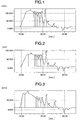
- Fig. 1 is a liquid chromatographic chart of the novolak-type phenol resin obtained in Example 1.
- Fig. 2 is a liquid chromatographic chart of the novolak-type phenol resin obtained in Example 2.
- Fig. 3 is a liquid chromatographic chart of the novolak-type phenol resin obtained in Comparative Example 1.
- the phenol for use in the present invention is not particularly limited, and preferably includes at least one of phenols selected from phenol, orthocresol, metha-cresol, para-cresol, xylenol, para-t-butylphenol, para-octylphenol, para-phenylphenol, bisphenol A, bisphenol F, resorcinol, etc.
- the aldehyde for use in the present invention is not particularly limited, and preferably includes formaldehyde, acetaldehyde, butyraldehyde, acrolein, etc. or mixtures thereof. Materials serving as a source for generating such an aldehyde or solutions of such an aldehyde can be also used.
- Molar ratio of phenol to aldehyde as reactants is 1.0:0.1-3.0, preferably 0.5-1.0. All the amounts of phenol and aldehyde can be charged in one lump before the start of reaction, and then the catalyst can be added thereto to start the reaction, or in order to suppress heat generation at the initial stage of reaction, phenol and the catalyst can be charged at first and then aldehyde can be consecutively added thereto to start the reaction.
- the organophosphonic acid as a catalyst for use in the present invention is an organic compound containing a phosphono group-PO(OH) 2 and is not particularly limited, but the organo-phosphonic acid represented by the following general formula (1) is preferable from the viewpoint of producing novolak-type phenol resin with less unreacted phenol and a narrow molecular weight distribution in high yield: R-PO(OH) 2 where R is a group containing carbon atoms and at least one of -COOH and -PO (OH) 2 .
- the oranophosphonic acid represented by the general formula (1) includes aminopolyphosphonic acids such as ethylenediamine tetrakismethylenephosphonic acid, ethylenediaminebismethylenephosphonic acid, aminotrimethylenephosphonic acid, ⁇ -aminoethylphosphono-N,N-diacetic acid and aminomethylphosphono-N,N-diacetic acid, and 1-hydroxyethylidene-1,1'-diphosphonic acid, 2-phosphonobutane-1,2,4-tricaroxylic acid, etc.
- aminopolyphosphonic acids such as ethylenediamine tetrakismethylenephosphonic acid, ethylenediaminebismethylenephosphonic acid, aminotrimethylenephosphonic acid, ⁇ -aminoethylphosphono-N,N-diacetic acid and aminomethylphosphono-N,N-diacetic acid, and 1-hydroxyethylidene-1,1'-diphosphonic acid, 2-phosphonobutane-1
- aminotrimethylenephosphonic acid, 1-hydroxyethylidene-1,1'-diphosphonic acid and 2-phosphonobutane-1, 2, 4-tricarboxylic acid which can be commercially produced in bulk at a low cost, are preferable.
- organophosphonic acid 0.001-4.0 parts by mole, preferably 0.01-0.5 parts by mole, of organophosphonic acid is added to one part by mole of phenol.
- An acid usually used in the production of a novolak-type phenol resin such as oxalic acid, sulfuric acid, hydrochloric acid, p-toluenesulfonic acid, etc. can be used at the same time. Simultaneous use of such an acid is effective particularly for reaction promotion in the higher molecular weight region such as 4- or higher nucleus members, and thus can be regarded as an effective means for controlling the molecular weight distribution.
- reaction conditions of keeping a water concentration of reaction system at not more than 30% by weight and a reaction temperature at 110°-200°C are effective for selective reaction of not only unreacted phenol but also a novolak-type phenol resin in the low molecular weight region such as 2-and 3-nucleus members and thus are conditions for effectively narrowing the molecular weight distribution.
- reaction of unreacted phenol can be readily carried out even under conditions outside the above-mentioned reaction conditions, i.e. at a higher water concentration and a lower temperature, but the selective reaction in the low molecular weight region such as 2- and 3-nucleus members is not satisfactory and the molecular weight distribution tends to be broadened.
- Water concentration of reaction system in the present invention is a proportion of water to total amount of phenol, aldehyde, novolak-type phenol resin, organophosphonic acid, etc. present in the reaction system.
- Water includes water added at the charging, water derived from the charged raw materials such as water contained in the added aldehyde, water contained in the added organophosphonic acid, and water of crystallization in the organophosphonic acid, water of condensation formed by the reaction, etc.
- a concentration of these kinds of water present in the reaction system is not more than 30% by weight, preferably 1-20% by weight.
- Water concentration of reaction system can be calculated by dividing total amount of the water contained in the charged raw materials and the water of condensation formed by the reaction in the reaction system by total amount of all the charged materials.
- a water concentration of reaction system is calculated on the basis of the amount of water obtained by subtracting the amount of distilled water from the total amount of the water in the charged raw materials and the water of condensation formed by the reaction.
- the reaction temeprature is preferably 110°-200°C.
- the catalyst organophosphonic acid becomes highly viscous or solidified under the above-mention condition of low water concentration, lowering the catalytic effect, whereas above 200°C decomposition of organophosphonic acid and novolak-type phenol resin will take place.
- Decomposition of organophosphonic acid and novolak-type phenol resin will take place less at a low temperature, and a temperature range for obtaining the satisfactory catalyst effect without becoming highly viscous and solidified at a water concentration of 1-20% by weight is 130°-160°C.
- the reflux temperature nearly corresponds to 110°-200°C at a water concentration of not more than 30% by weight, and thus the reaction under the atmospheric pressure is a preferable condition for controlling the temperature and water concentration.
- Other conceivable reaction conditions include solvent reflux dehydration reaction using a non-aqueous solvent such as butanol, propanol, etc., high pressure reaction, etc.
- conditions of removing formed water of condensation by distillation, etc. while adding an aldehyde are preferable because the water concentration of reaction system can be kept constant, but attention must be paid to such a disadvantage that the unreacted phenol is likely to be removed together with water by the distillation.
- the reaction is carried out so that the unreacted phenol may not be distilled away until the unreacted phenol reaches a predetermined amount or less, and then after or while removing water by distillation the reaction is continued while keeping the water concentration at not more than 30% by weight and the reaction temperature at 110°C-200°C.
- atmospheric distillation, subatmospheric distillation, steam distillation, etc. can be also carried out for removal of water, organic solvent or even unreacted phenol.
- the organophosphonic acid for use in the present invention has such properties as a very high solubility in water with easy hydration, a low solubility in phenol and a lower solubility in novolak-type phenol resin which tends to decrease with its increasing molecular weight.
- phase separation takes place during the reaction. That is, an aqueous phase rich in the organophosphonic acid as a catalyst is separated from an organic phase comprising phenol and novolak-type phenol resin, substantially free from the catalyst.
- Phenol and low molecular weight components such as 2-nucleus members are more liable to dissolve in the aqueous phase and the dissolved matters will react with aldehyde.
- the present invention is characterized by using an organophosphonic acid as a catalyst and preferably by keeping a water concentration of reaction system at not more than 30% by weight and a reaction temperature at 110°-200°C as reaction conditions.
- a novolak-type phenol resin with less unreacted phenol and a narrow molecular weight distribution can be produced in high yield in the preferable mode of the present invention seems to be based on the following facts.
- Low water concentration of reaction system i.e. not more than 30% by weight
- high reaction temperature i.e. not less than 110°C
- the high reaction temperature makes even the low molecular weight region of 2- and 3-nucleus members easily dissolve into the aqueous phase, enabling the reaction to easily proceed in the aqueous phase.
- the water concentration of reaction system is kept low and the ionic concentration of the aqueous phase is kept high.
- the boundary between the aqueous phase and the organic phase can be maintained to distinctly separate the phases from each other, thereby preventing reaction in the organic phase.
- Organophosphonic acid at a high concentration has an increased viscosity and a solidifying tendency, but the high reaction temperature can keep the organophosphonic acid in a molten state, thereby preventing loss of catalytic function. Due to these effects, a novolak-type phenol resin with less unreacted phenol and a narrow molecular weight distribution can be effectively produced in high yield.
- the washed reaction mixture was subjected to atmospheric distillation followed by heating up to 130°C and then to subatmospheric distillation under reduced pressure of 5,000 Pa followed by heating up to 150°C, whereby 1,056 parts of phenol resin C was obtained.
- reaction mixture was sampled to quantitatively determine unreacted phenol by gas chromatography. Then, 500 parts of pure water was added thereto, and the aqueous phase separated from the resin was removed. This water washing process was carried out three times. Then, the washed reaction mixture was subjected to atmospheric distillation followed by heating up to 130°C and to subatmospheric distillation under reduced pressure of 5,000 Pa followed by heating up to 150°C, whereby 1,076 parts of phenol resin G was obtained.
- 1,000 parts of an aqueous 60% 1-hydroxyethylidene-1,1'-diphosphonic acid solution (Feliox 115, product manufactured by Lion Corp.) was added to a 3-l three-necked flask and subjected to atmospheric distillation to increase the concentration to 80%. Then, 1,000 parts of phenol was added thereto, followed by heating up to 100°C and consecutive addition of 550 parts of an aqueous 37% formaldehyde solution thereto over 30 minutes. Then, the mixture was subjected to atmospheric distillation followed by heating up to 130°C to adjust a water concentration of reaction system at 6%.
- aqueous 60% 1-hydroxyethylidene-1,1'-diphosphonic acid solution (Feliox 115, product manufactured by Lion Corp.) was added to a 3-l three-necked flask and subjected to atmospheric distillation to increase the concentration to 80%. Then, 1,000 parts of phenol was added thereto, followed by heating up to 100°C and consecutive addition of
- the washed reaction mixture was subjected to atmospheric distillation followed by heating up to 130°C and then to subatmospheric distillation under reduced pressure of 5,000 Pa followed by heating up to 150°C, whereby 972 parts of phenol resin K was obtained.
- Liquid chromatography determined by GPC, using GPC columns (one G1000HXL column, two G2000HXL columns and one G3000HXL column) manufactured by Tosoh Corp. with tetrahydrofuran as an eluent solvent at a flow rate of 1.0 ml/min. and a column temperature of 40°C and with a differential refractometer as a detector.
- a novolak-type phenol resin with less unreacted phenol and a narrow molecular weight distribution can be obtained in high yield in the present invention.
Landscapes
- Chemical & Material Sciences (AREA)
- Health & Medical Sciences (AREA)
- Chemical Kinetics & Catalysis (AREA)
- Medicinal Chemistry (AREA)
- Polymers & Plastics (AREA)
- Organic Chemistry (AREA)
- Phenolic Resins Or Amino Resins (AREA)
Applications Claiming Priority (4)
| Application Number | Priority Date | Filing Date | Title |
|---|---|---|---|
| JP35704799 | 1999-12-16 | ||
| JP35704799 | 1999-12-16 | ||
| JP2000318893 | 2000-10-19 | ||
| JP2000318893 | 2000-10-19 |
Publications (2)
| Publication Number | Publication Date |
|---|---|
| EP1108734A1 true EP1108734A1 (de) | 2001-06-20 |
| EP1108734B1 EP1108734B1 (de) | 2011-03-09 |
Family
ID=26580543
Family Applications (1)
| Application Number | Title | Priority Date | Filing Date |
|---|---|---|---|
| EP00127371A Expired - Lifetime EP1108734B1 (de) | 1999-12-16 | 2000-12-13 | Verfahren zur Herstellung von Phenolharz |
Country Status (5)
| Country | Link |
|---|---|
| US (1) | US6326453B2 (de) |
| EP (1) | EP1108734B1 (de) |
| CN (1) | CN1170864C (de) |
| DE (1) | DE60045704D1 (de) |
| ID (1) | ID28672A (de) |
Cited By (3)
| Publication number | Priority date | Publication date | Assignee | Title |
|---|---|---|---|---|
| FR2860515A1 (fr) * | 2003-10-03 | 2005-04-08 | Ceca Sa | Resines alkylphenol-novolaques, leurs procedes de preparation et leurs utilisations comme resines tackifiantes et/ou renforcatrices pour caoutchoucs |
| CN102585124A (zh) * | 2012-01-21 | 2012-07-18 | 山东圣泉化工股份有限公司 | 一种窄分子量分布酚醛树脂的制备方法 |
| WO2017153050A1 (en) | 2016-03-09 | 2017-09-14 | Sumitomo Bakelite Europe N.V. | Process for the preparation of novolac alkylphenol resins |
Families Citing this family (7)
| Publication number | Priority date | Publication date | Assignee | Title |
|---|---|---|---|---|
| US7312250B2 (en) | 2002-03-12 | 2007-12-25 | University Of Iowa Research Foundation | Fluorine-substituted alkyl phenol compounds and their uses |
| US7087703B2 (en) * | 2004-07-26 | 2006-08-08 | Georgia-Pacific Resins, Inc. | Phenolic resin compositions containing etherified hardeners |
| JP4727958B2 (ja) * | 2004-08-19 | 2011-07-20 | 旭有機材工業株式会社 | ノボラック型フェノール樹脂の製造方法 |
| WO2011158751A1 (ja) * | 2010-06-14 | 2011-12-22 | 住友ベークライト株式会社 | ノボラック型フェノール樹脂の製造方法 |
| US8859098B2 (en) | 2012-05-18 | 2014-10-14 | Lord Corporation | Acrylic adhesion promoters |
| CN113461885B (zh) * | 2021-08-09 | 2022-07-05 | 北京彤程创展科技有限公司 | 一种光刻胶用酚醛树脂及其制备方法 |
| CN118878764B (zh) * | 2024-07-24 | 2025-09-05 | 西安交通大学 | 一种窄分子量分布的高分子量热塑性酚醛树脂及其制备方法 |
Citations (4)
| Publication number | Priority date | Publication date | Assignee | Title |
|---|---|---|---|---|
| US3988386A (en) * | 1972-07-17 | 1976-10-26 | Hoechst Aktiengesellschaft | Synthetic resins |
| JPH0867728A (ja) * | 1994-08-30 | 1996-03-12 | Sumitomo Durez Co Ltd | ノボラック型フェノール樹脂の製造方法 |
| EP0789041A1 (de) * | 1995-10-30 | 1997-08-13 | Gun Ei Chemical Industry Co., Ltd. | Novolakphenolharzen und Verfahren zu deren Herstellung |
| EP1076069A2 (de) * | 1999-08-13 | 2001-02-14 | Bakelite AG | Resole, Verfahren zu ihrer Herstellung und Verwendung |
Family Cites Families (4)
| Publication number | Priority date | Publication date | Assignee | Title |
|---|---|---|---|---|
| DE2509496A1 (de) * | 1975-03-05 | 1976-09-09 | Dynamit Nobel Ag | Druckgaspatrone fuer brandschutzzwecke |
| DE4028534A1 (de) * | 1990-09-07 | 1992-03-12 | Bayer Ag | Armomatische kondensationsprodukte |
| US5859153A (en) * | 1996-06-21 | 1999-01-12 | Minnesota Mining And Manufacturing Company | Novolak compounds useful as adhesion promoters for epoxy resins |
| US5864003A (en) * | 1996-07-23 | 1999-01-26 | Georgia-Pacific Resins, Inc. | Thermosetting phenolic resin composition |
-
2000
- 2000-12-13 DE DE60045704T patent/DE60045704D1/de not_active Expired - Lifetime
- 2000-12-13 EP EP00127371A patent/EP1108734B1/de not_active Expired - Lifetime
- 2000-12-13 US US09/734,734 patent/US6326453B2/en not_active Expired - Lifetime
- 2000-12-15 CN CNB00131050XA patent/CN1170864C/zh not_active Expired - Fee Related
- 2000-12-15 ID IDP20001089A patent/ID28672A/id unknown
Patent Citations (4)
| Publication number | Priority date | Publication date | Assignee | Title |
|---|---|---|---|---|
| US3988386A (en) * | 1972-07-17 | 1976-10-26 | Hoechst Aktiengesellschaft | Synthetic resins |
| JPH0867728A (ja) * | 1994-08-30 | 1996-03-12 | Sumitomo Durez Co Ltd | ノボラック型フェノール樹脂の製造方法 |
| EP0789041A1 (de) * | 1995-10-30 | 1997-08-13 | Gun Ei Chemical Industry Co., Ltd. | Novolakphenolharzen und Verfahren zu deren Herstellung |
| EP1076069A2 (de) * | 1999-08-13 | 2001-02-14 | Bakelite AG | Resole, Verfahren zu ihrer Herstellung und Verwendung |
Non-Patent Citations (1)
| Title |
|---|
| PATENT ABSTRACTS OF JAPAN vol. 1996, no. 07 31 July 1996 (1996-07-31) * |
Cited By (6)
| Publication number | Priority date | Publication date | Assignee | Title |
|---|---|---|---|---|
| FR2860515A1 (fr) * | 2003-10-03 | 2005-04-08 | Ceca Sa | Resines alkylphenol-novolaques, leurs procedes de preparation et leurs utilisations comme resines tackifiantes et/ou renforcatrices pour caoutchoucs |
| WO2005033162A1 (fr) * | 2003-10-03 | 2005-04-14 | Schenectady International Inc. | Resines alkylphenol-novolaques, leurs procedes de preparation et leurs utilisations comme resines tackifiantes et/ou renforçatrices pour caoutchoucs |
| KR100801909B1 (ko) * | 2003-10-03 | 2008-02-12 | 에스아이 그룹 인코포레이티드 | 노볼락 알킬페놀 수지, 이의 제조 방법, 및 고무용 강화및/또는 점착 수지로서의 이의 용도 |
| CN102585124A (zh) * | 2012-01-21 | 2012-07-18 | 山东圣泉化工股份有限公司 | 一种窄分子量分布酚醛树脂的制备方法 |
| CN102585124B (zh) * | 2012-01-21 | 2014-04-30 | 山东圣泉化工股份有限公司 | 一种窄分子量分布酚醛树脂的制备方法 |
| WO2017153050A1 (en) | 2016-03-09 | 2017-09-14 | Sumitomo Bakelite Europe N.V. | Process for the preparation of novolac alkylphenol resins |
Also Published As
| Publication number | Publication date |
|---|---|
| EP1108734B1 (de) | 2011-03-09 |
| US6326453B2 (en) | 2001-12-04 |
| CN1170864C (zh) | 2004-10-13 |
| US20010004664A1 (en) | 2001-06-21 |
| ID28672A (id) | 2001-06-21 |
| DE60045704D1 (de) | 2011-04-21 |
| CN1303877A (zh) | 2001-07-18 |
Similar Documents
| Publication | Publication Date | Title |
|---|---|---|
| EP1108734A1 (de) | Verfahren zur Herstellung von Phenolharz | |
| JPH0251457B2 (de) | ||
| JP3651843B2 (ja) | フェノール樹脂の製造方法 | |
| JPH0632756A (ja) | ビス(ヒドロキシフェニル)メタン類の製造方法 | |
| CN103130971B (zh) | 新型苯甲醛酚醛清漆树脂、其制备方法和用其制备的环氧树脂 | |
| JP2005075938A (ja) | ハイオルソノボラック型フェノール樹脂の製造方法 | |
| JP2004238618A (ja) | ノボラック型アルキルフェノール樹脂の製造方法 | |
| JPH11171954A (ja) | ナフトール樹脂の製造方法 | |
| JP3874338B2 (ja) | ノボラック型フェノール樹脂の製造方法 | |
| US8822627B2 (en) | Method of manufacture of novolac-type phenol resin | |
| US10843990B2 (en) | Processes for preparing calix[4]arenes from calix[8]arenes | |
| JP4399977B2 (ja) | 芳香族炭化水素変性フェノール樹脂の製造方法 | |
| JP4595751B2 (ja) | ビフェニルアラルキル変性フェノール樹脂及びその製造方法、これを含むエポキシ樹脂成形材料。 | |
| JP2002302525A (ja) | ノボラック型フェノール樹脂の製造方法 | |
| JP2005075936A (ja) | ノボラック型フェノール樹脂およびその製造方法 | |
| JP4191019B2 (ja) | フェノールアラルキル樹脂の製造方法 | |
| JP2003137949A (ja) | ノボラック樹脂の製造方法 | |
| JP4720057B2 (ja) | エポキシ樹脂の製造方法 | |
| JP2005179383A (ja) | アラルキル変性フェノール樹脂の製造方法 | |
| JP4206909B2 (ja) | トリアジン変性ノボラック型フェノール樹脂の製造方法 | |
| JP2003212806A (ja) | ビスフェノールfの製造方法 | |
| JP2002179751A (ja) | 芳香族炭化水素フェノール樹脂の製造方法 | |
| JP2001329034A (ja) | フェノール樹脂の製造方法 | |
| JP2005154480A (ja) | ノボラック型フェノール樹脂の製造方法 | |
| JP2002105157A (ja) | フェノール樹脂の製造方法 |
Legal Events
| Date | Code | Title | Description |
|---|---|---|---|
| PUAI | Public reference made under article 153(3) epc to a published international application that has entered the european phase |
Free format text: ORIGINAL CODE: 0009012 |
|
| AK | Designated contracting states |
Kind code of ref document: A1 Designated state(s): BE DE FR GB |
|
| AX | Request for extension of the european patent |
Free format text: AL;LT;LV;MK;RO;SI |
|
| 17P | Request for examination filed |
Effective date: 20010717 |
|
| AKX | Designation fees paid |
Free format text: BE DE FR GB |
|
| 17Q | First examination report despatched |
Effective date: 20040930 |
|
| GRAP | Despatch of communication of intention to grant a patent |
Free format text: ORIGINAL CODE: EPIDOSNIGR1 |
|
| GRAS | Grant fee paid |
Free format text: ORIGINAL CODE: EPIDOSNIGR3 |
|
| GRAA | (expected) grant |
Free format text: ORIGINAL CODE: 0009210 |
|
| RAP1 | Party data changed (applicant data changed or rights of an application transferred) |
Owner name: SUMITOMO BAKELITE COMPANY LIMITED |
|
| AK | Designated contracting states |
Kind code of ref document: B1 Designated state(s): BE DE FR GB |
|
| REG | Reference to a national code |
Ref country code: GB Ref legal event code: FG4D |
|
| REF | Corresponds to: |
Ref document number: 60045704 Country of ref document: DE Date of ref document: 20110421 Kind code of ref document: P |
|
| REG | Reference to a national code |
Ref country code: DE Ref legal event code: R096 Ref document number: 60045704 Country of ref document: DE Effective date: 20110421 |
|
| PLBE | No opposition filed within time limit |
Free format text: ORIGINAL CODE: 0009261 |
|
| STAA | Information on the status of an ep patent application or granted ep patent |
Free format text: STATUS: NO OPPOSITION FILED WITHIN TIME LIMIT |
|
| 26N | No opposition filed |
Effective date: 20111212 |
|
| REG | Reference to a national code |
Ref country code: DE Ref legal event code: R097 Ref document number: 60045704 Country of ref document: DE Effective date: 20111212 |
|
| REG | Reference to a national code |
Ref country code: FR Ref legal event code: PLFP Year of fee payment: 16 |
|
| PGFP | Annual fee paid to national office [announced via postgrant information from national office to epo] |
Ref country code: GB Payment date: 20151209 Year of fee payment: 16 Ref country code: DE Payment date: 20151208 Year of fee payment: 16 |
|
| PGFP | Annual fee paid to national office [announced via postgrant information from national office to epo] |
Ref country code: FR Payment date: 20151110 Year of fee payment: 16 Ref country code: BE Payment date: 20151207 Year of fee payment: 16 |
|
| PG25 | Lapsed in a contracting state [announced via postgrant information from national office to epo] |
Ref country code: BE Free format text: LAPSE BECAUSE OF NON-PAYMENT OF DUE FEES Effective date: 20161231 |
|
| REG | Reference to a national code |
Ref country code: DE Ref legal event code: R119 Ref document number: 60045704 Country of ref document: DE |
|
| GBPC | Gb: european patent ceased through non-payment of renewal fee |
Effective date: 20161213 |
|
| REG | Reference to a national code |
Ref country code: FR Ref legal event code: ST Effective date: 20170831 |
|
| PG25 | Lapsed in a contracting state [announced via postgrant information from national office to epo] |
Ref country code: FR Free format text: LAPSE BECAUSE OF NON-PAYMENT OF DUE FEES Effective date: 20170102 |
|
| PG25 | Lapsed in a contracting state [announced via postgrant information from national office to epo] |
Ref country code: GB Free format text: LAPSE BECAUSE OF NON-PAYMENT OF DUE FEES Effective date: 20161213 Ref country code: DE Free format text: LAPSE BECAUSE OF NON-PAYMENT OF DUE FEES Effective date: 20170701 |
|
| REG | Reference to a national code |
Ref country code: BE Ref legal event code: MM Effective date: 20161231 |